Category Archives: Water

Photo of the Week – Nahal Darga

A limestone canyon formed by water erosion over many years beckons – Nahal Darga runs to the Dead Sea. Water fills depressions in the stone floor of the canyon so there are places on this hike where you have to swim across pools of water. Make sure to put your camera (I brought along a smaller one on this hike), car key and cell phone in a watertight container so they won’t get wet.

Please share this post with your friends by clicking on one of the icons below

Nahal Darga

The technical details – the photo was taken with a Lumix (point and shoot) digital camera on March 26 (ISO 80, 4.1mm, F3.5 at 1/100 sec).

Photographs on this website are © Shmuel Browns (unless marked otherwise) – if you are interested in purchasing one of my photos or using one of my photos for your own project please contact me.

Archaeology in Israel Tour

I’m delighted to announce that Dan McLerran at Popular Archaeology and I are creating a phenomenal tour of archaeological sites in Israel that I will be guiding October 2013.
I invite you to join us on this adventure, 12 days of touring in Israel, where we’ll cover the famous sites like Megiddo and Hazor and uncover some of the less well-known gems like Sussita-Hippos, one of the Decapolis cities overlooking the Sea of Galilee that was destroyed in the earthquake of 749CE and never rebuilt.
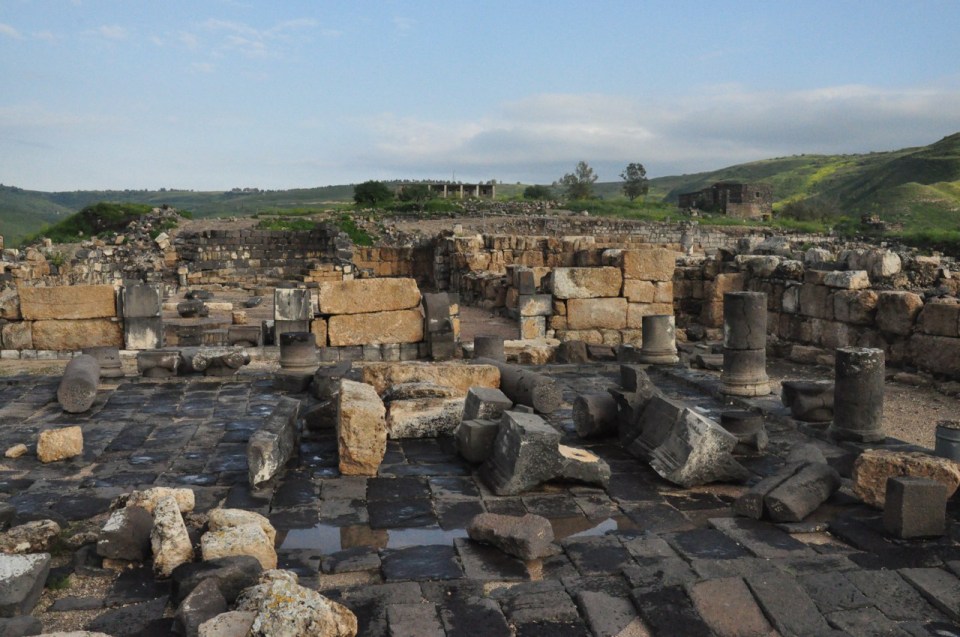
Sussita excavation

We’ll start by going back 6500 years to the Chalcolithic period and tour up on the Golan Heights to learn about burial at that time. We’ll see dolmens, the megalithic tombs consisting of a flat rock resting on two vertical rocks that mark a grave. We’ll hike to the cultic site of Rujm el Hiri – is it a site that is connected to the calendar or to burial? At Ein Gedi we’ll see the ruins of a Chalcolithic temple. We’ll see artifacts at the Israel museum, examples of clay ossuaries and fine bronze castings of ritual objects.

We’ll follow in the path of the Kings from 1000BCE to 586BCE by traveling from Dan where a piece of a basalt victory stella in Aramaic was found mentioning the kings of Israel and the house of David. We will explore the City of David, the walled Jebusite city on the ridge between the Kidron and Tyropean valleys. We’ll walk through Hezekiah’s tunnel that brought the water of the Gihon spring to the Siloam pool inside the walls. From there we will follow in the steps of pilgrims to the Temple mount. Part of the 650m distance will be in Jerusalem’s drainage channel until we come out right under Robinson’s Arch. We’ll see the Broad wall, the remains of an 8 meter high wall that protected Jerusalem from the north in the time of the Kings.
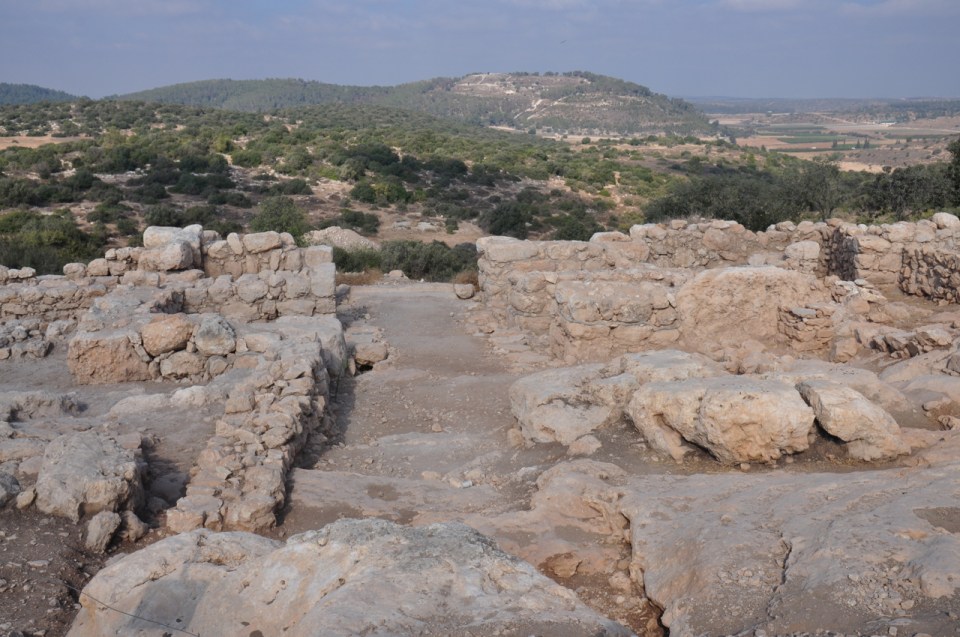
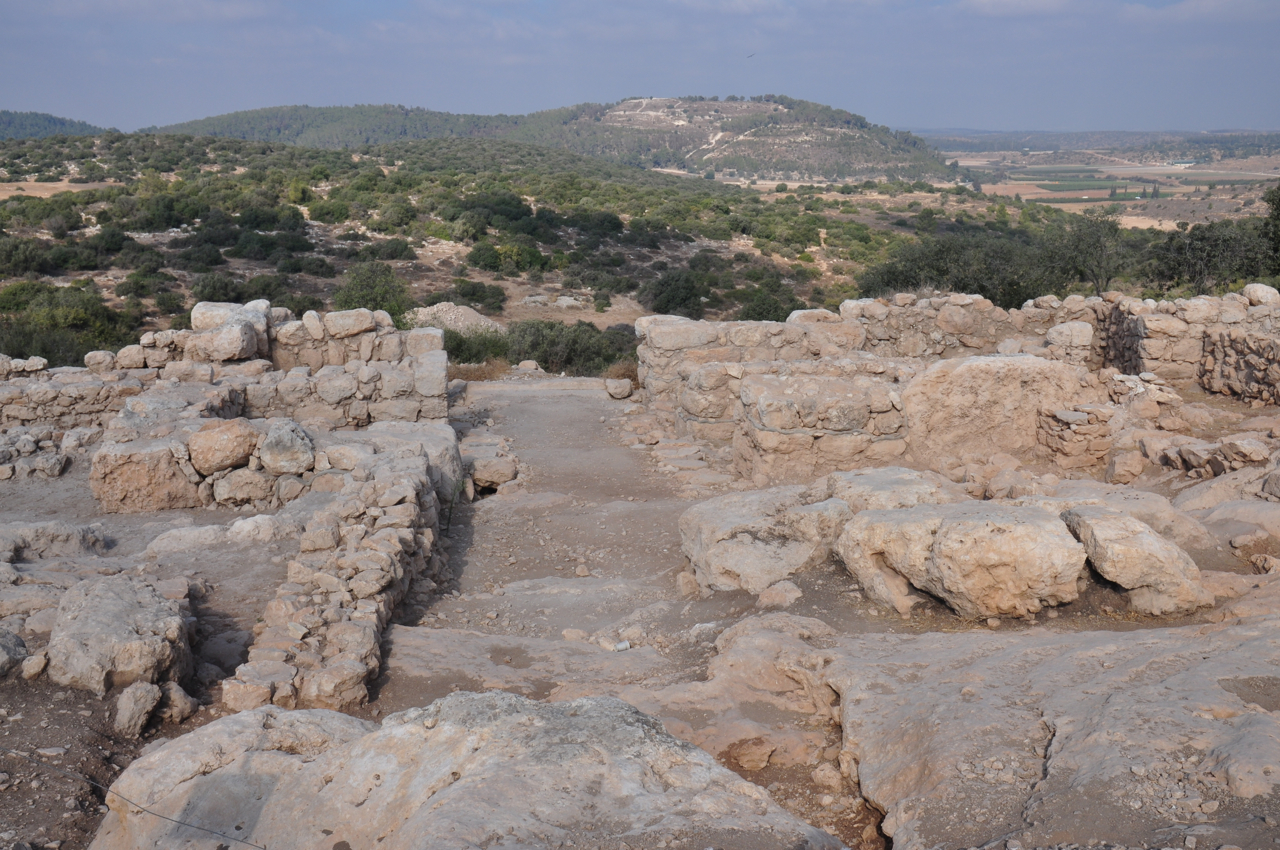
Khirbet Qeiyafa

We’ll explore the walled Judean city of Khirbet Qeiyafa, with two gates and hence identified as Shaarayim, situated on the border of Judea facing the Phillistines.

We’ll learn about the Second Temple Period, specifically the time of the Hasmoneans and King Herod who ruled under the auspices of the Romans. We’ll check out Herod’s impressive building projects. At Caesarea, we have the temple to Augustus, the protected harbor, the palace as well as a theater and a hippodrome later used as an amphitheater. At Sebaste there is another temple to Augustus. Josephus writes that Herod built a third temple at Banias. It’s unclear whether the temple was at Banias or nearby, perhaps at Omrit. We’ll visit Herod’s palaces at Masada, the Western palace and the 3 tier hanging palace on the northern end of the site. We’ll explore the palace and administrative complex at Lower Herodium and the palace/fortress on the top of a manmade mountain where the base of a mausoleum was discovered by Prof. Ehud Netzer in 2007.
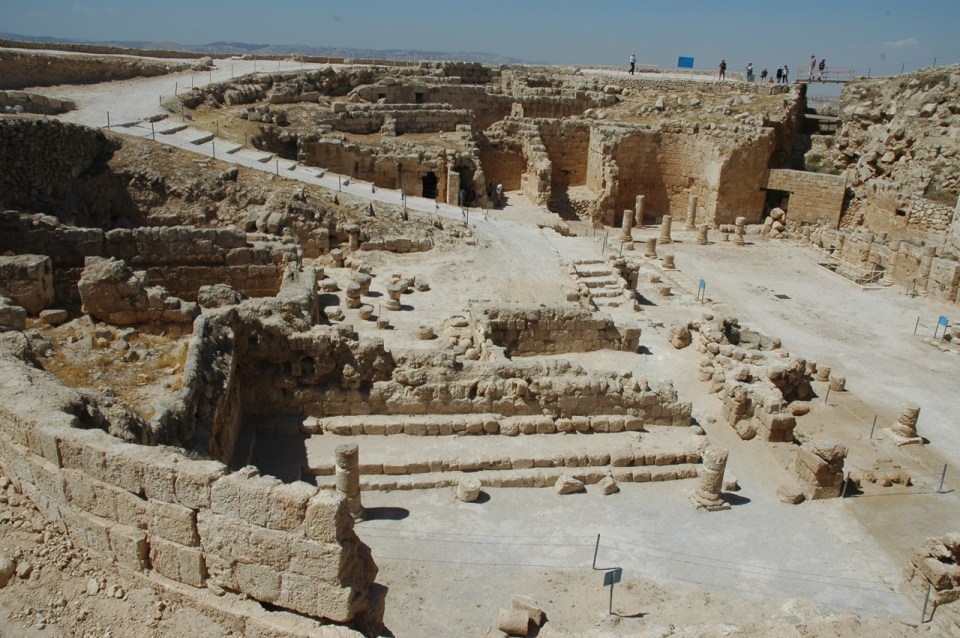
Herodium Palace:fortress

We’ll visit the newly opened exhibit at the Israel museum Herod the Great: The King’s Final Journey, artifacts from Herodium on display for the first time. We’ll also visit the Second Temple period model that displays Jerusalem at its peak just before its destruction at the hand of the Romans. We’ll visit the Shrine of the Book that houses the Dead Sea scrolls and other artifacts and combine that with the archaeological site of Qumran by the Dead Sea where the scrolls were found.

We’ll focus on the architecture of sacred space and check out various churches, in the basilica and martyrium form from the Byzantine period (4th to 7th century) and synagogues from the same period. We’ll see some amazing mosaics by visiting the  museum at the Inn of Good Samaritan, the archaeological sites of Sepphoris/Tzippori, and the synagogue at Beit Alfa. We’ll visit sites off the beaten path like the Kathisma church on the way to Bethlehem and Samaritan site on Mount Gerizim.
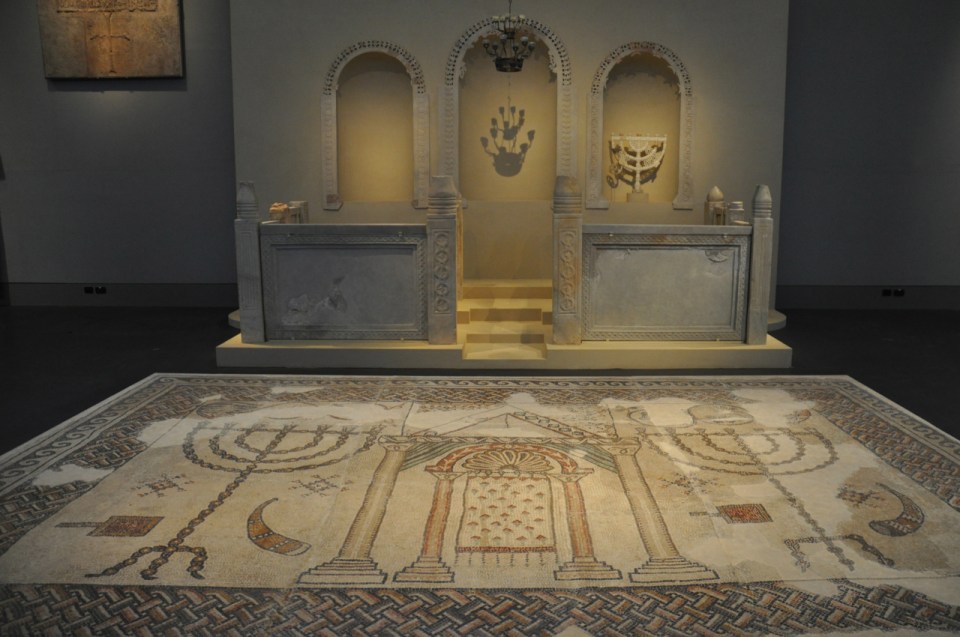
Synagogue mosaic floor at Israel Museum

Besides the Western wall, Judaism’s holy site, we will visit the Church of the Holy Sepulcher, the holiest site to Christianity and go up onto the Haram el-Sharif to see the Dome of the Rock and the Al Aqsa mosque, the third holiest site to Islam.

We’ll travel around the Sea of Galilee stopping at sites important to Christianity like Kursi, Capernaum and Magdala. We’ll even go up to the Golan Heights to the Jewish city of Gamla, the Masada of the north.
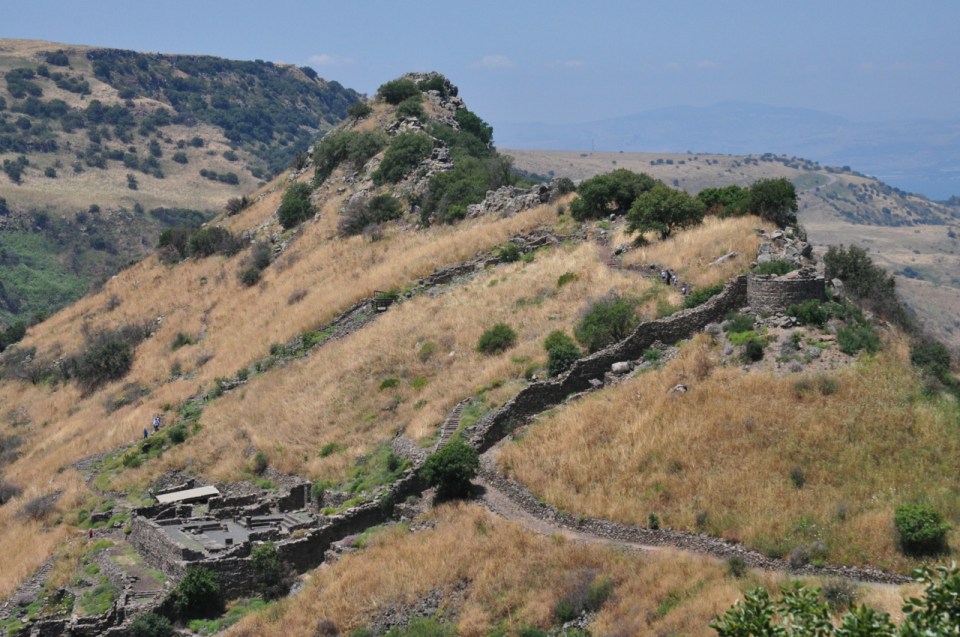
Gamla

For anyone who enjoys taking photographs, there will be plenty of opportunities and as an special incentive to join the tour, participants will be able to submit their best photographs from the tour to a special Pinterest site and will have a chance to win up to $1000. for the “best photo”.

If you’re interested in participating in an archaeological tour of the Holy Land, contact  me.

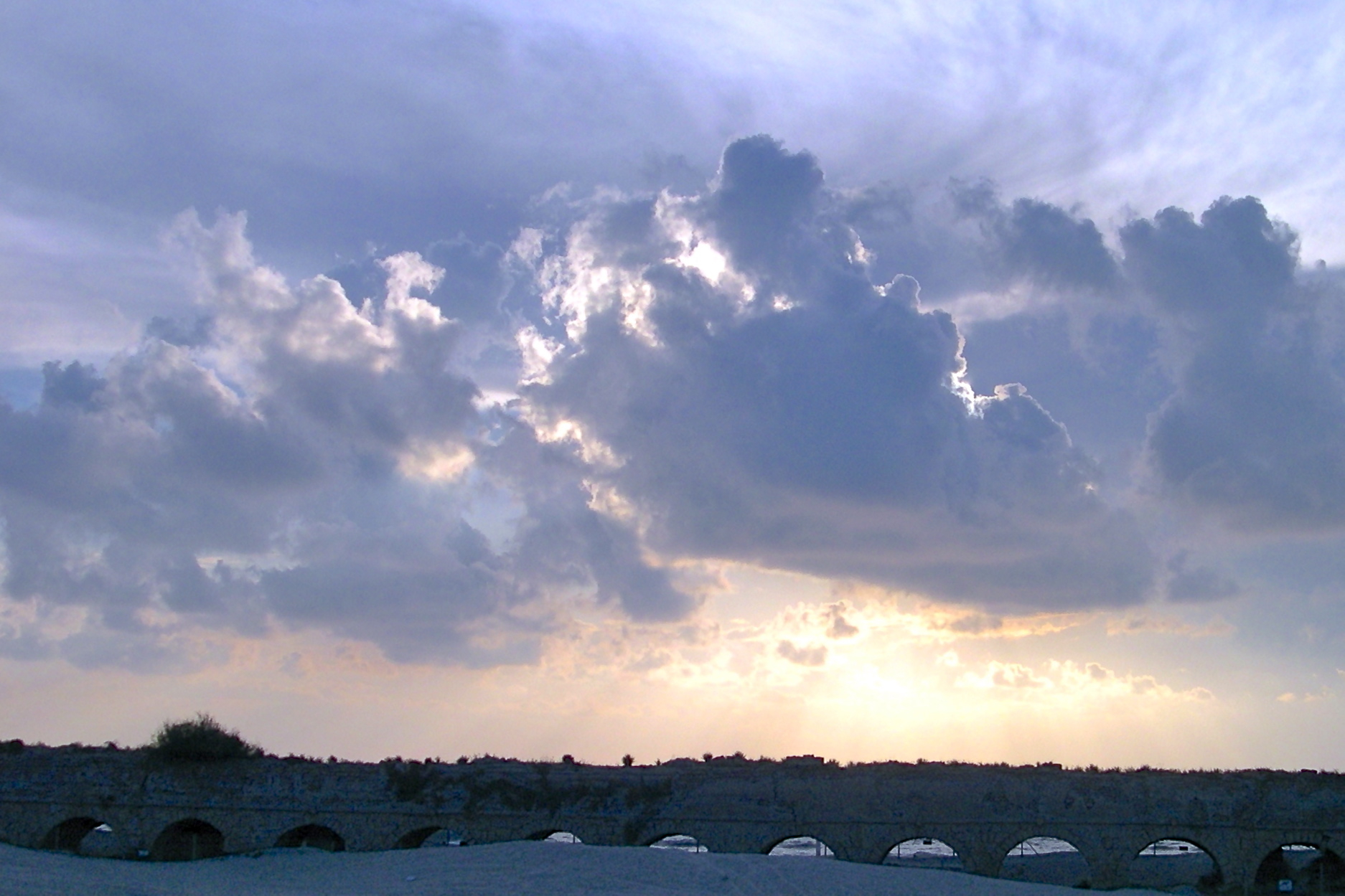
Photo of the Week – Aqueduct to Caesarea

When visiting the archaeological site at Caesarea don’t miss the lovely beach just north of the site with the aqueduct. The aqueduct was built by King Herod to bring water from the Shuni spring, south of Mount Carmel, about 10km to the northeast to the city. In the second century, to provide additional water, a second aqueduct was built alongside the first by the 10th legion under the Emperor Hadrian that brought water from Tanninim (Crocodiles) river. The aqueduct continued to supply water to Caesarea for 1200 years.

Aquaduct to CaesareaYou can click on the image for a larger view (which may take some time to load depending on your Internet connection). Please share this post with your friends by clicking on the icons at the end of this message.

The technical details – the photo was taken with a Nikon point and shoot camera in May (ISO 100, 11mm, F8.8 at 1/218 sec).

For more information about the archaeological site of Caesarea see my post at https://israeltours.wordpress.com/2011/01/03/caesarea-maritima-herods-promontory-palace/

Photographs on this website are © Shmuel Browns (unless marked otherwise) – if you are interested in purchasing one of my photos or using one of my photos for your own project please contact me.

Photo of the Week near Avdat

Route <40> connects the city of Beersheva in the middle of the Negev to the makhtesh, a unique geological formation at Mitzpe Ramon. Avdat, founded by the Nabateans in the 3rd century BCE, was the most important city on the Incense Route after Petra, “the rose-red city half as old as time” for some eight centuries until its destruction by earthquake in the early 7th century CE. This photo was taken across from Avdat in the area of Ramilye cisterns.

near AvdatYou can click on the image for a larger view (which may take some time to load depending on your Internet connection). Please share this post with your friends by clicking on the icons at the end of this message.

The technical details – the photo was taken with a Nikon D90 DSLR and 18-70mm lens in November (ISO 200, 18mm, F10 at 1/320 sec).

For more information about the Negev see my post at https://israeltours.wordpress.com/2009/10/26/negev-desert/

Photographs on this website are © Shmuel Browns (unless marked otherwise) – if you are interested in purchasing one of my photos or using one of my photos for your own project please contact me.

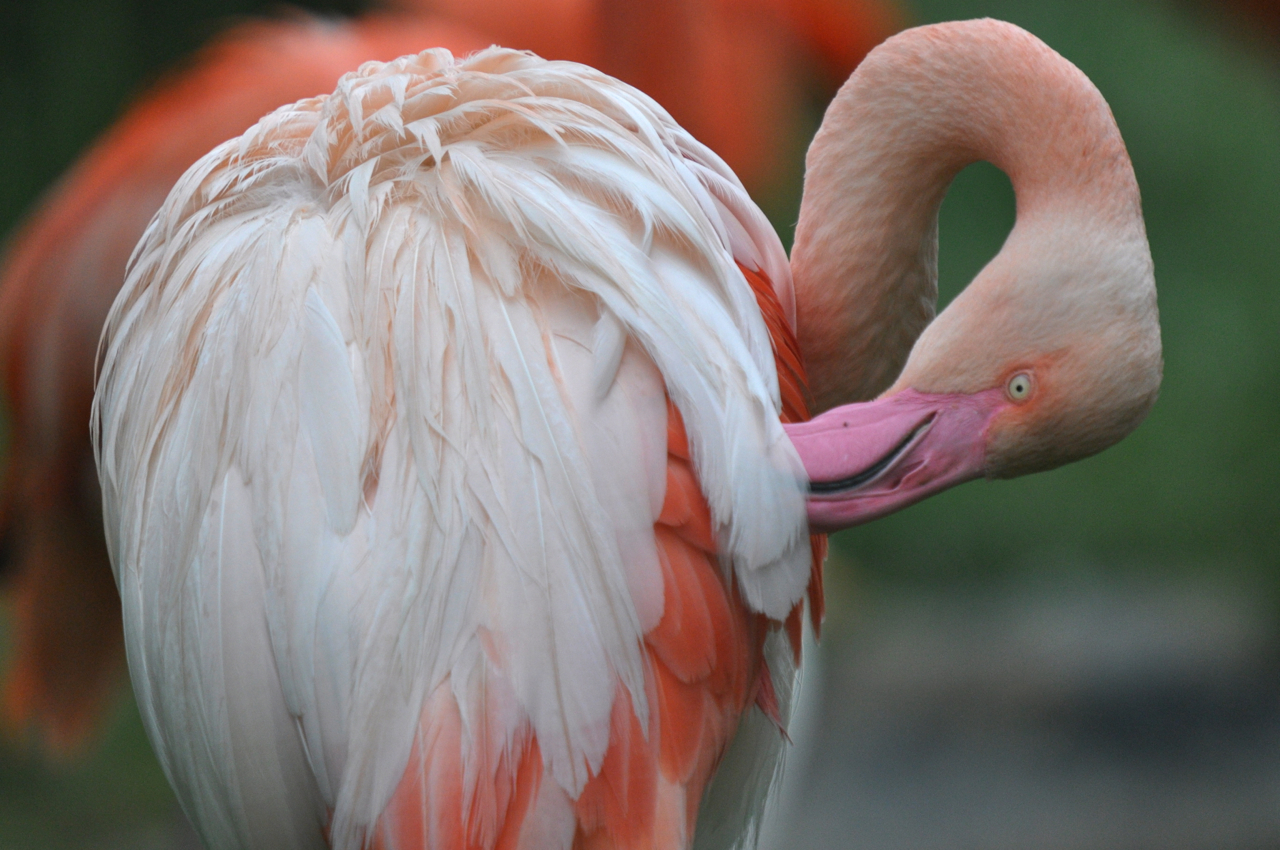
Photo of the Week – Flamingo

The Greater Flamingo (Phoenicopterus roseus) is the most widespread species of the flamingo family. At the salt marsh you can find a colony of more than 100 flamingos that vacation just north of Eilat most of the year. According to expert Keith Marsh from Bird Forum besides the flamingos you will be able to spot white storks, herons, waders and a wide variety and number of raptors, especially in the autumn and spring during migration. There are few better birding areas in the Western Palaearctic than Eilat on the Red Sea coast of Israel where more than 420 species of birds have been recorded.

DSC_0458You can click on the image for a larger view (which may take some time to load depending on your Internet connection). Please share this post with your friends by clicking on the icons at the end of this message.

The technical details – the photo was taken with a Nikon D90 digital camera and a 50-500mm Sigma lens in November (ISO 800, 500mm, F6.3 at 1/400 sec).

FlamingosEven to get a group portrait (shot at 270mm) my regular 18-200mm lens would not have been enough.

Photographs on this website are © Shmuel Browns (unless marked otherwise) – if you are interested in purchasing one of my photos or using one of my photos for your own project please contact me.

Photo of the Week – Cranes at Agamon HaHula

Today’s Agamon HaHula (covering an area of one square kilometer — the same size as the walled Old City of Jerusalem) was established as part of a JNF rehabilitation project in the 1990s in the southern part of the Hula Valley, north of the Hula nature reserve. The site has become a winter home or stopover for an estimated 500 million migrating birds (cranes, storks, pelicans, cormorants, …) flying from Europe to Africa and back, and hence a great birdwatching site.

Cranes at Agam HaHula

You can click on the image for a larger view (which may take some time to load depending on your Internet connection). Please share this post with your friends by clicking on the icons at the end of this message.

The photo was taken at Agamon HaHula (snow-capped mountain is the Hermon). The technical details – the photo was taken with a Lumix (DMC-ZS5) point and shoot digital camera on February 28 (ISO 25, 18.2mm, F5 at 1/500 sec).

For more of the history of the Hula read my post at https://israeltours.wordpress.com/2010/05/03/agamon-hula-lake/

Cranes

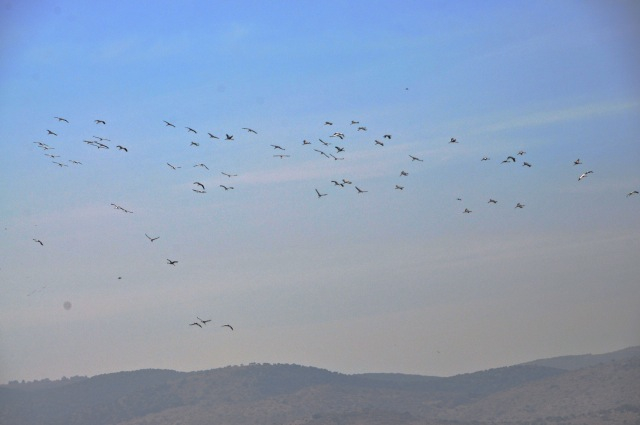
Some of the birds soaring over Hula valley

You can also visit the Hula nature reserve (part of the Israel Nature and Parks Authority), the first nature reserve that was created in Israel in 1963. At the Visitor’s center there is an exhibition about the Hula and a theater (with moving seats) showing a video about the marvel of migration. From there you can walk a 1.5 km circular trail through the reserve.

Photographs on this website are © Shmuel Browns (unless marked otherwise) – if you are interested in purchasing one of my photos or using one of my photos for your own project please contact me.