Author Archives: Shmuel Browns

Unknown's avatar

About Shmuel Browns

I am a tour guide, licensed by the Israel Ministry of Tourism. I do tours throughout Israel, personalized to your interests, time and budget.

Nahal Prat or Wadi Qelt

Nahal Prat (nahal: נחל=stream bed) or Wadi Qelt (wadi: وادي‎=valley) flows from west to east across the northern Judean Desert, from near Jerusalem to Jericho, a distance of 28 km, from 770 meters above sea level to where it flows into the Jordan River at 395 m below sea level. Hiking trails follow the stream bed, which has water all year around fed by three springs, En Prat, En Mabu’a and En Qelt. My blog post about Wadi Qelt and the St. George Monastery is one of my most popular so I want to tell you about another destination in the area, the Nahal Prat nature reserve. Take highway 1 from Jerusalem towards the Dead Sea and then a left onto road 437 towards Ramallah. Turn right to the Jewish settlement of Anatot (the Levite city mentioned in Jeremiah 1:1), now called Almon (from Joshua 21:18).

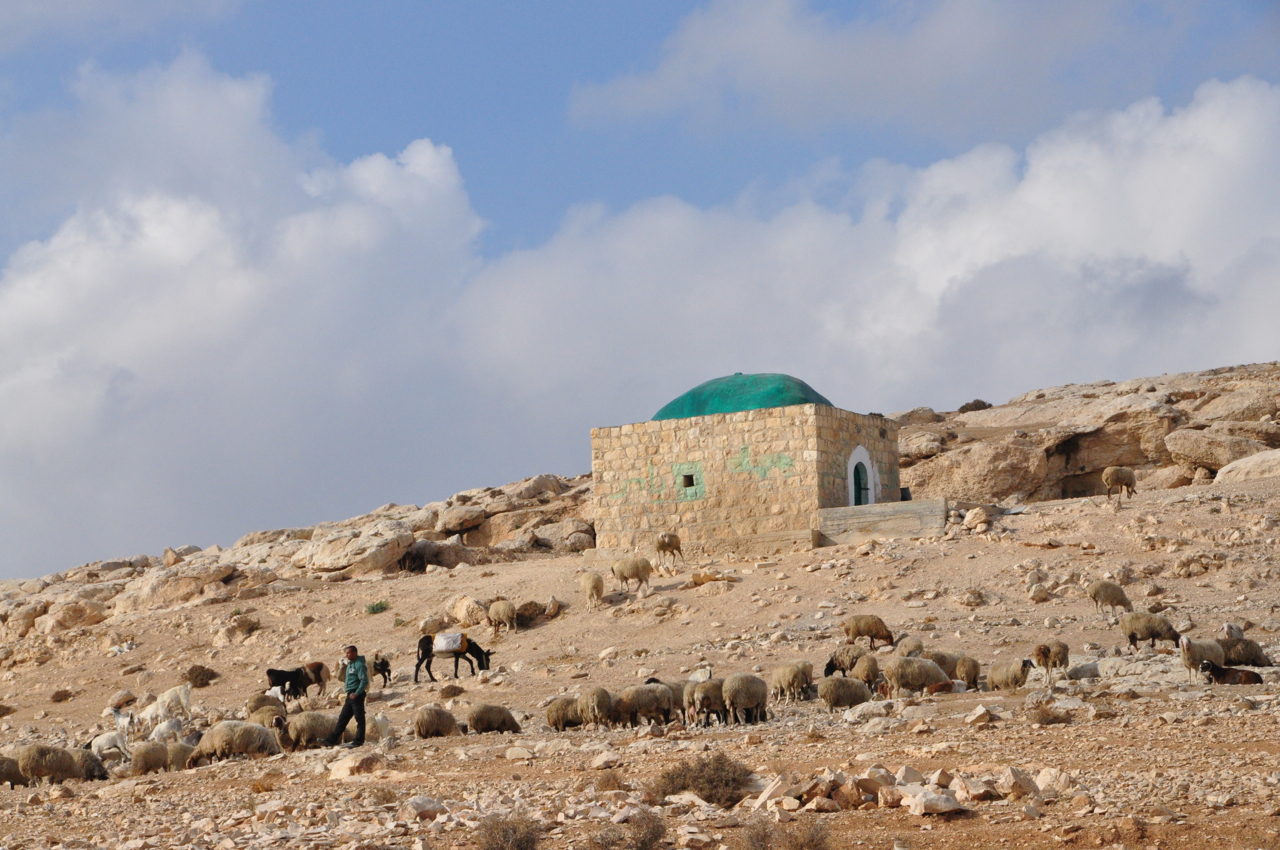
Tomb ibn Taymiyya

Ruins of the Jewish Iron age village, time of Kings is at the turning, with the 13th century Arab tomb of Sheikh Ibn Taymiyya (תָקִי אל-דין אבו אל-עבאס אחמד בן עבד אל-חלים בן עבד אל סָלאם בן תימיה אל-חָרַאנִי) on the hill. Drive through Almon to the entrance of the reserve and descend the winding road to a parking lot.

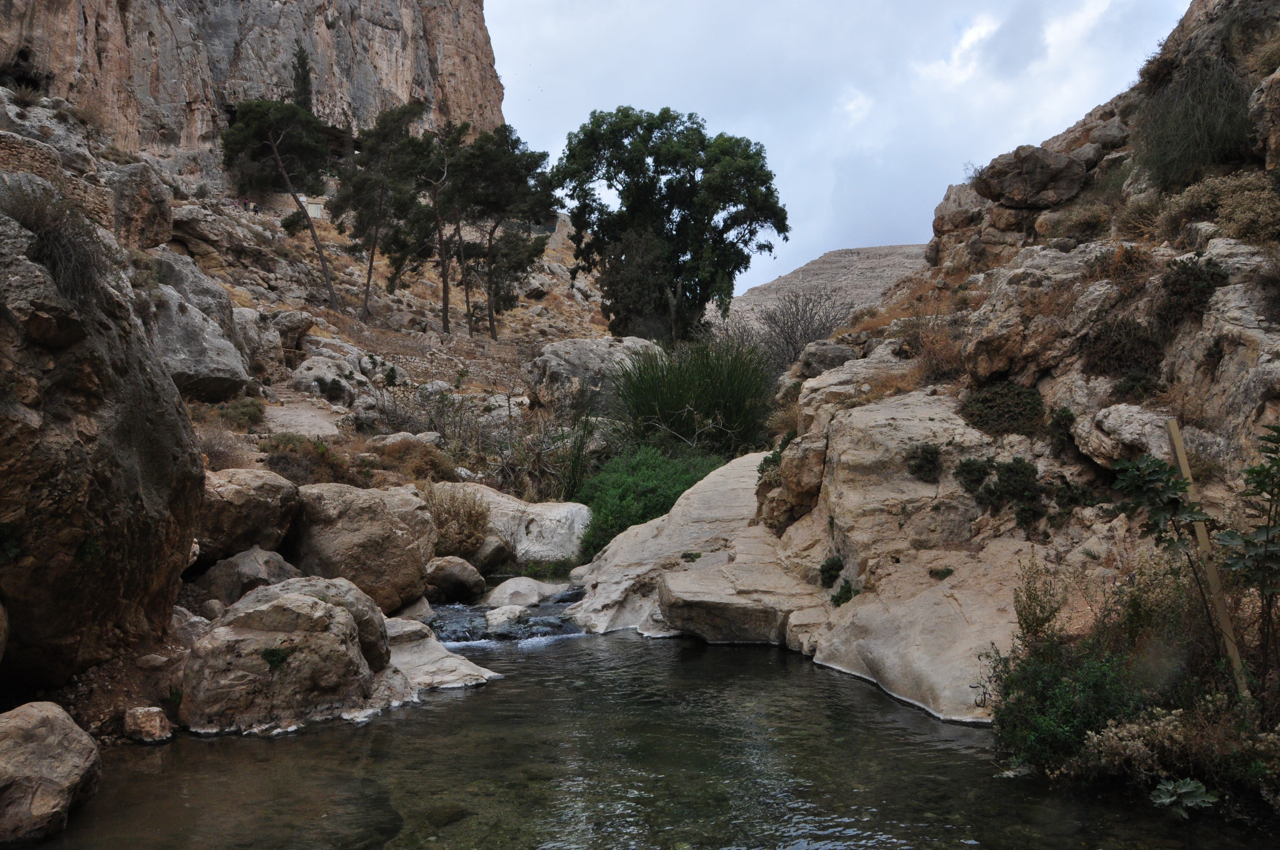
Ein Prat

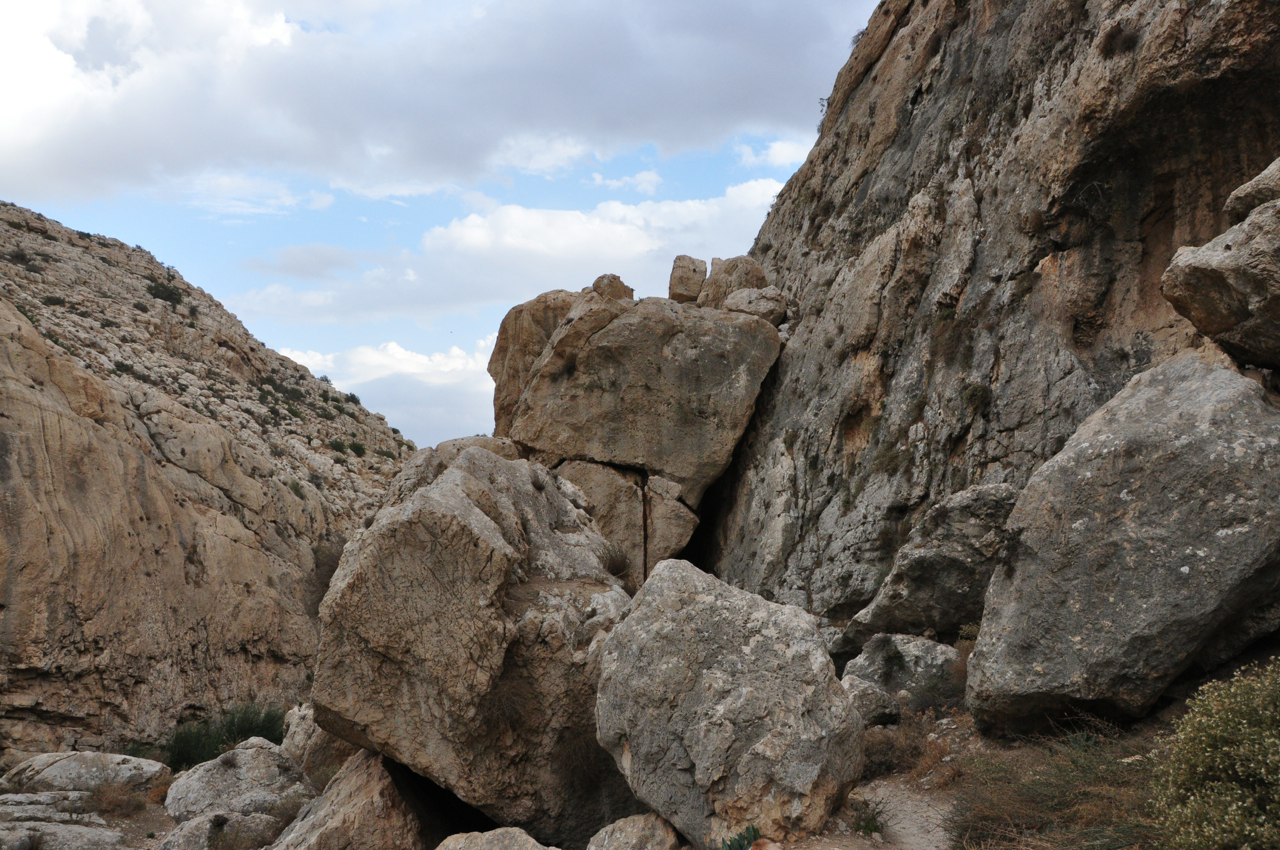
I took these photographs of En Prat, the valley formed by the steep limestone cliffs and the pools within the reserve.

Fallen Rocks Ein Prat

The remnants of settlements, monasteries and palaces are scattered along the stream, as are signs of stream-based cultivation. A number of aqueducts were found along the stream, the earliest of which dates to the Hasmonean period, used to channel water to the winter palaces near Jericho. These channels continued to be used through the Roman, Byzantine and early Arab periods. This enabled the growing of fruit trees like fig, pomegranate, date and citrus.

Ruins of a later water-operated flour mill can be seen on the ascent to the Faran Monastery, originally founded by the monk Haritoun in the 3rd century, believed to be the first monastery in the Judean Desert. This area, in the desert and not far from the holy city of Jerusalem, with many natural caves, springs and abandoned Second Temple period fortresses, attracted monks seeking seclusion.

Today, for the same reasons, the area is a popular recreation site to hike, picnic and swim in the natural pools.

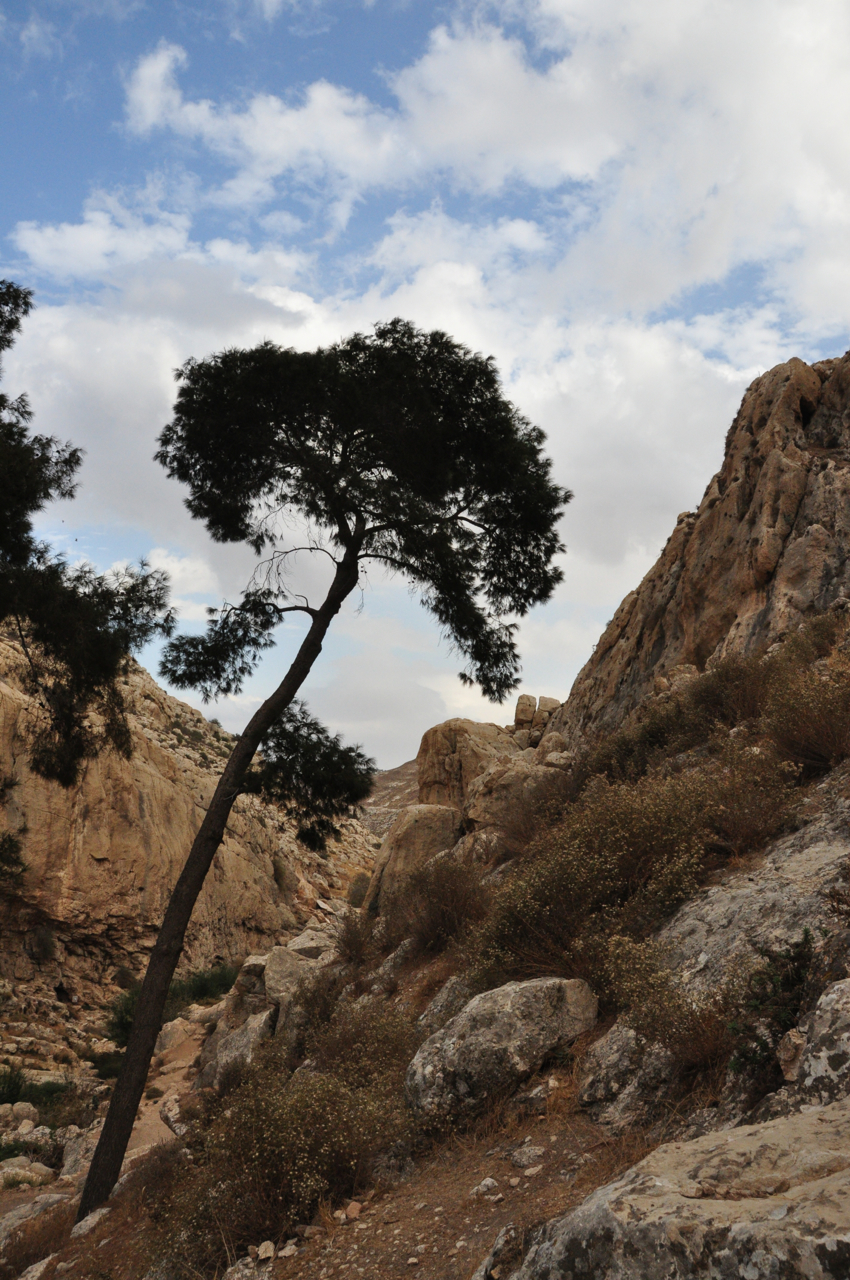
Pine Ein Prat

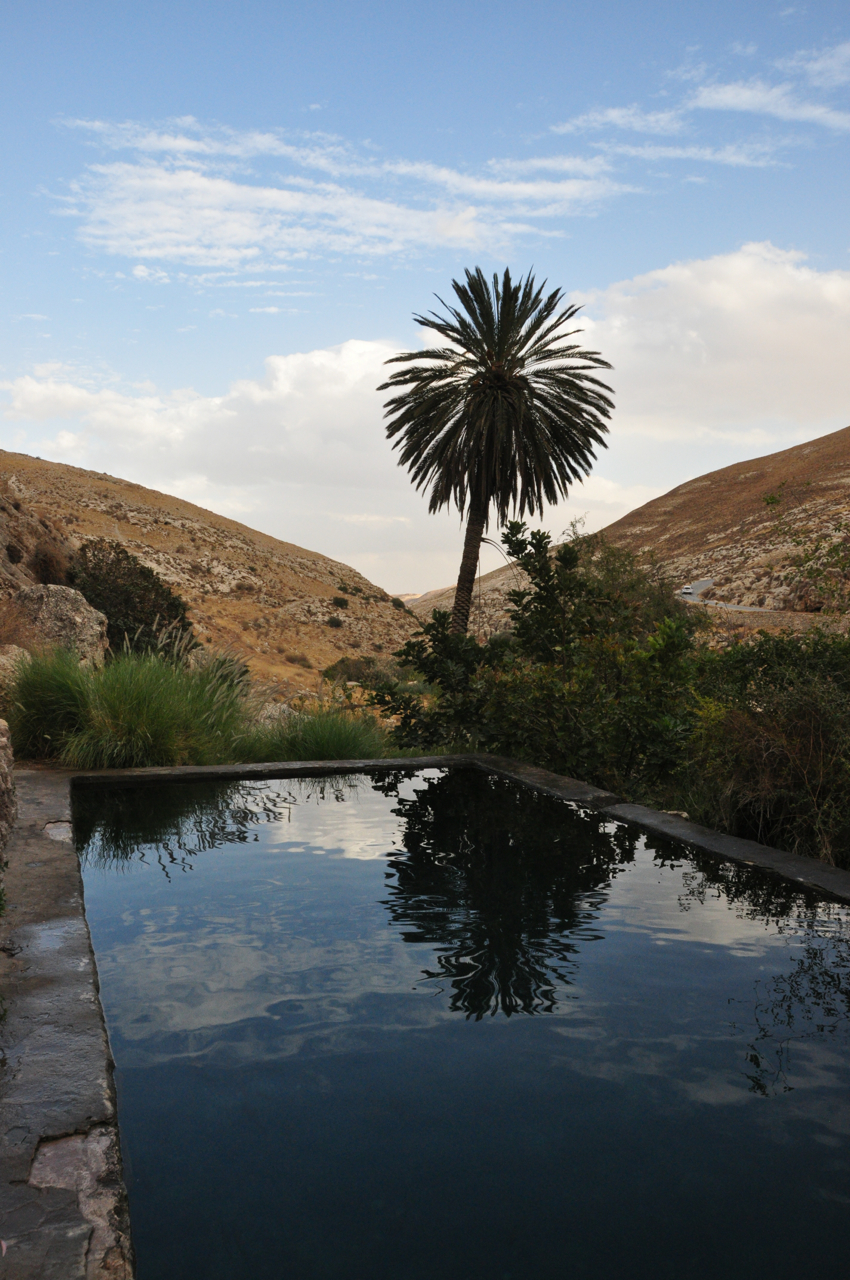
Tamat Pool


Guiding in the Snow

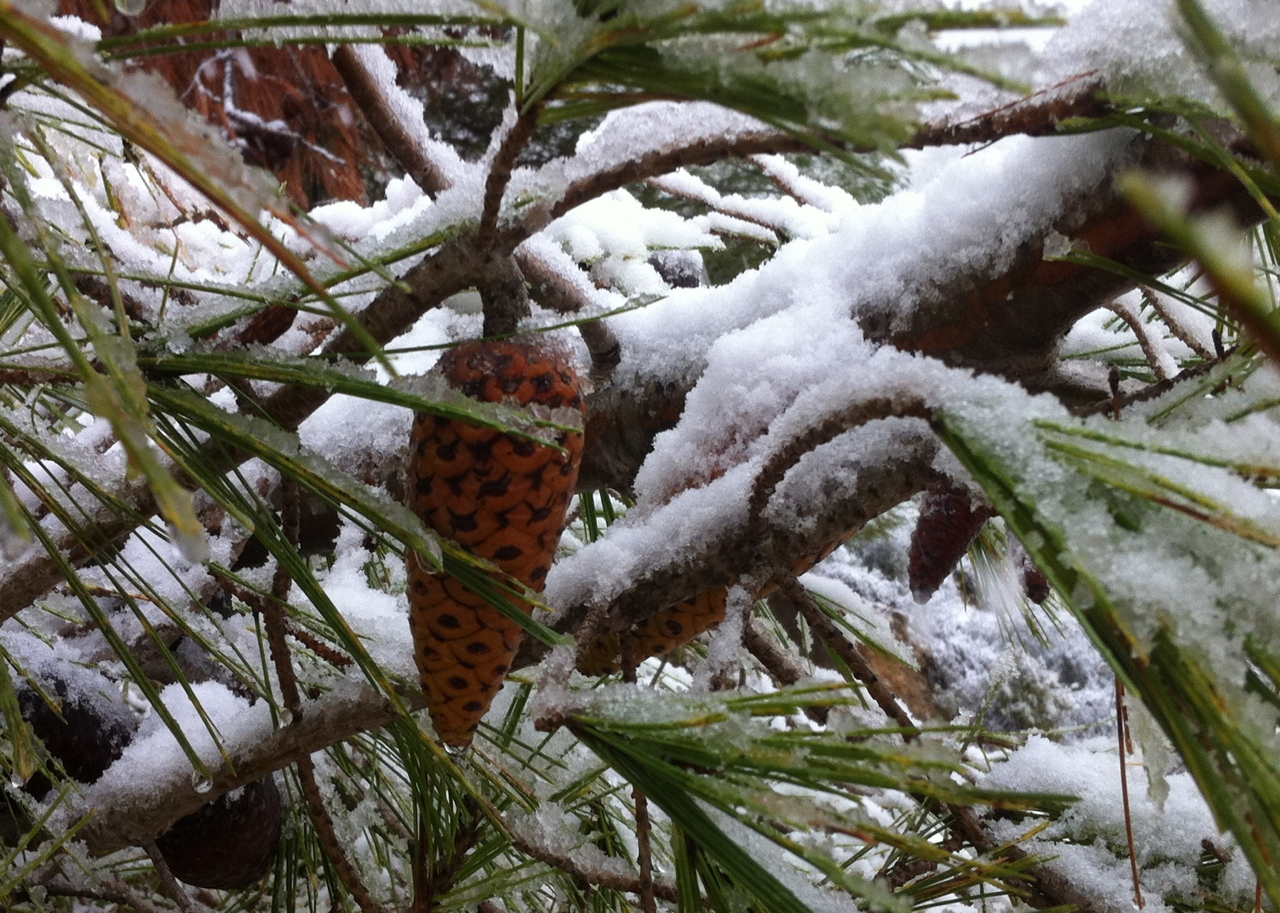
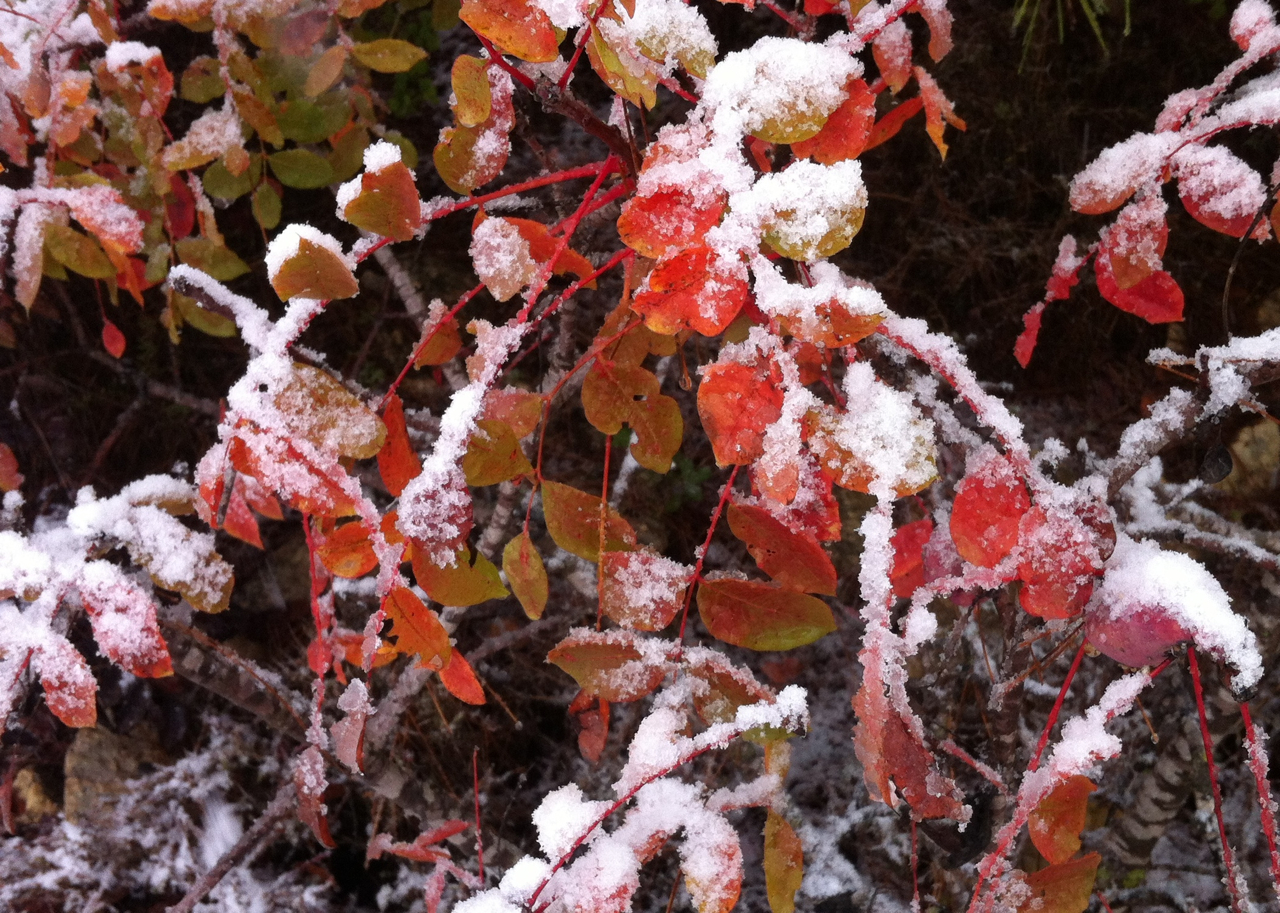
Thursday it started snowing in Jerusalem and I went for a run on a trail behind the Jerusalem Biblical zoo. Took these two photos that I’ve entitled “Green and red in the Snow”.

Pine in snow Red leaves in snow

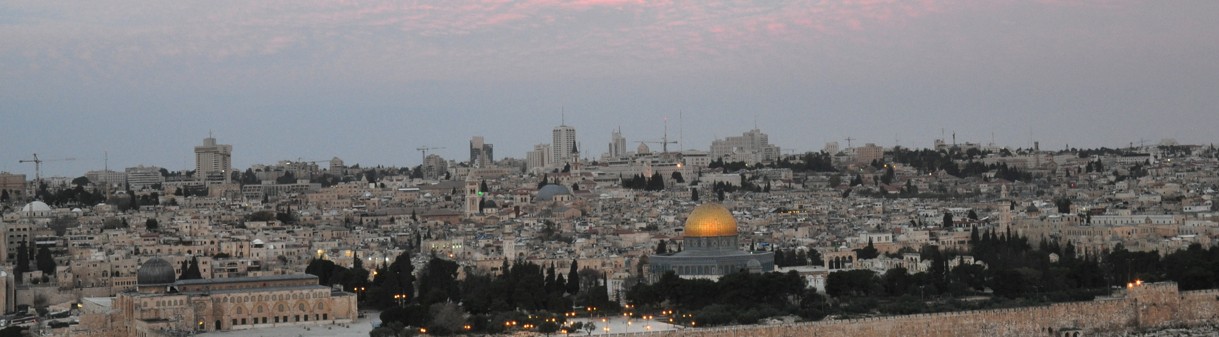
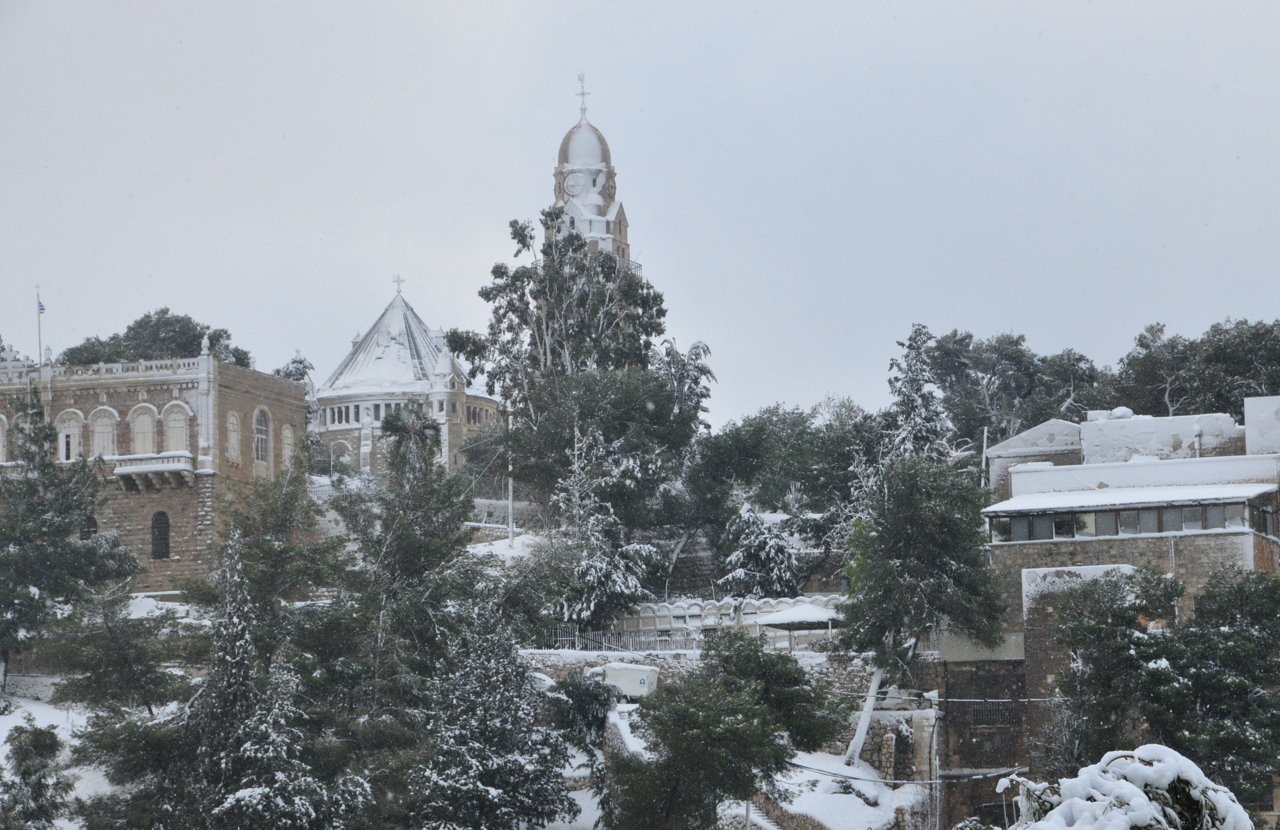
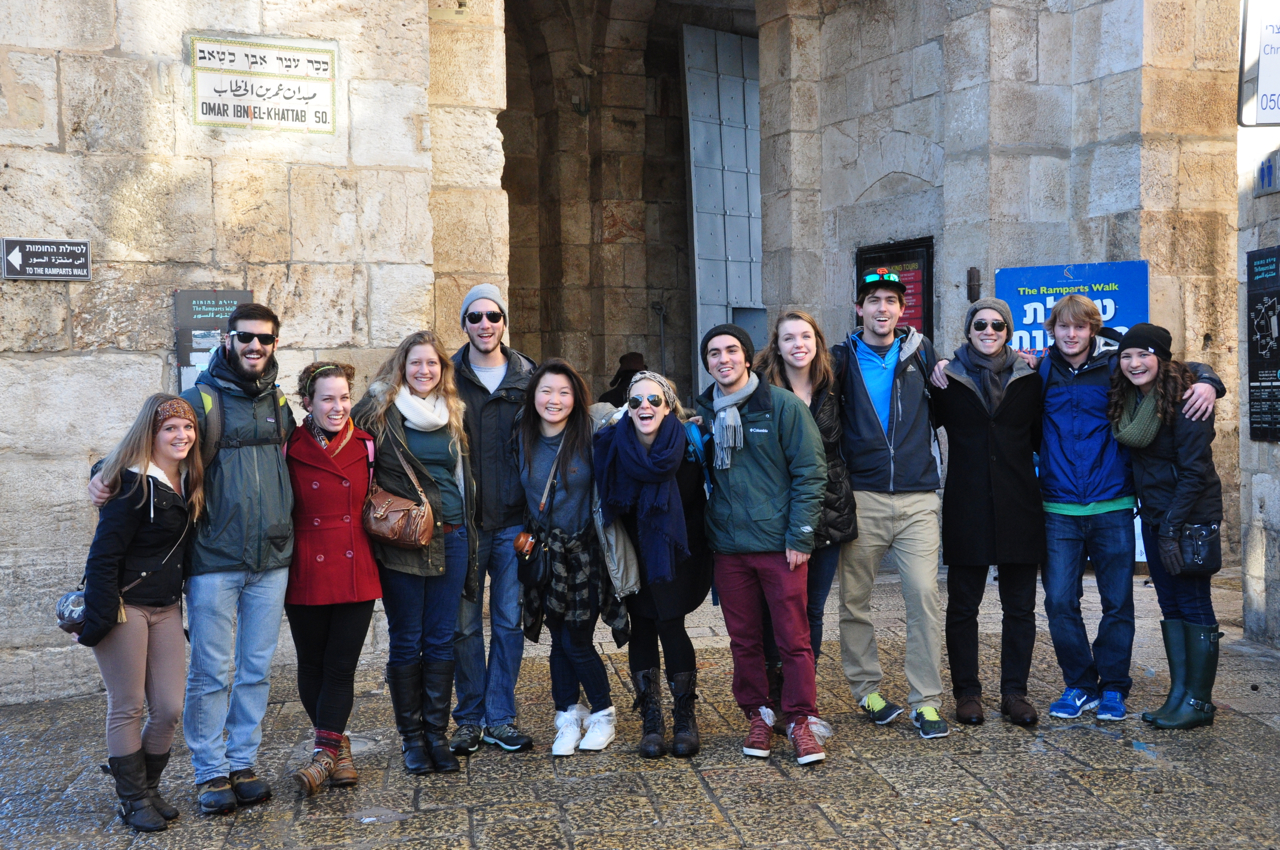
Friday it snowed most of the day and I guided a group of university students from California in the Old City. Most of the sites in the city were closed. This is a photograph I took from Yemin Moshe of Mount Zion on my way to meet the group at Jaffa gate.

Mount Zion in Snow

Today we returned to the Old City in the morning hoping to visit the Haram el-Sharif but it was closed. Instead we were able to do a tour of the Western Wall Tunnels. Afterwards although the White Fathers compound was closed we did find four churches on our way to the rooftop view at the Austrian Hospice, only to find it closed too.

Then off to Bethlehem in the afternoon. Even with all the snow we had a great couple of days.

Pepperdine University students

Neither snow nor rain nor heat nor gloom of night stays these couriers from the swift completion of their appointed rounds.

Like this guide. Having grown up in Canada I know snow.

This inscription can be found on the front of the James Farley Post Office in Manhattan, NYC at 8th Avenue and 33rd Street. The inscription was chosen by William Mitchell Kendall of the firm of McKim, Mead & White, the architects who designed the building in 1912. The sentence appears in the works of Herodotus (in Greek) and describes the expedition of the Greeks against the Persians under Cyrus, about 500 BCE. The Persians operated a system of mounted postal couriers, and the sentence describes the fidelity with which their work was done.

The Central Post Office on Jaffa Road in Jerusalem is a Mandatory style building built between 1934 and 1938 to the design of the main architect of the public works department of the British Mandate, Austen St. Barbe Harrison and government architect Percy Harold Winter. Harrison also designed the Rockefeller Museum and the British High Commissioner’s residence in Armon HaNatziv.

I have photos of Jerusalem in the snow from last January here.

Golan Heights Tour

The Golan Heights, Israel’s mountainous north-eastern region, is one of the most beautiful areas of the country. In the Golan, rather than desert, we have streams and waterfalls. There are also numerous archeological sites and ancient synagogues dating back to the Roman and Byzantine periods, evidence of flourishing Jewish communities in the area going back 2000 years. The remains of 25 synagogues from the period between the Great Revolt in 66 and the Islamic conquest in 636, when organized Jewish settlement on the Golan came to an end, have been discovered – 6 have been excavated.

The Golan was settled in the modern period beginning in 1886 when Jews from Tzfat and Tiberias settled there. The Bnei Yehuda society of Tzfat purchased a plot of land in the village of Ramataniya in central Golan (4 km north-west of the present day religious moshav of Keshet) and named their settlement “Golan BeBashan” and settled there for about a year.

In 1887, they purchased lands between the modern day Bnei Yehuda and Kibbutz Ein Gev. This community survived until 1920, when two of its last members were murdered in the anti-Jewish riots which erupted in the spring of that year. In 1891, Baron Rothschild purchased approximately 18,000 acres of land about 15 km east of Ramat Hamagshimim, in what is now Syria. First Aliyah (1881-1903) immigrants established five small communities on this land, but were forced to leave by the Turks in 1898. The lands continued to be farmed until 1947 by the Palestine Colonization Association and the Israel Colonization Association, when they were seized by the Syrian army. Most of the Golan Heights were included within Mandatory Palestine when the Mandate was formally granted in 1922, but Britain ceded the area to France in the Franco-British Agreement of 7 March 1923. Consequently, the Golan Heights became part of Syria after the termination of the French mandate in 1944.

During the 1948-49 War of Independence  the Syrians army attacked the adjacent Jewish areas and managed to advance beyond the international border. After the war, the Syrians built extensive fortifications on the Heights, which were used for shelling of civilian targets in Israel. 140 Israelis were killed and many more were injured in these attacks between 1949 and 1967, and particularly in the spring of 1957. Because of this pounding, Israel Defense Forces captured the Golan Heights during the Six-Day war.
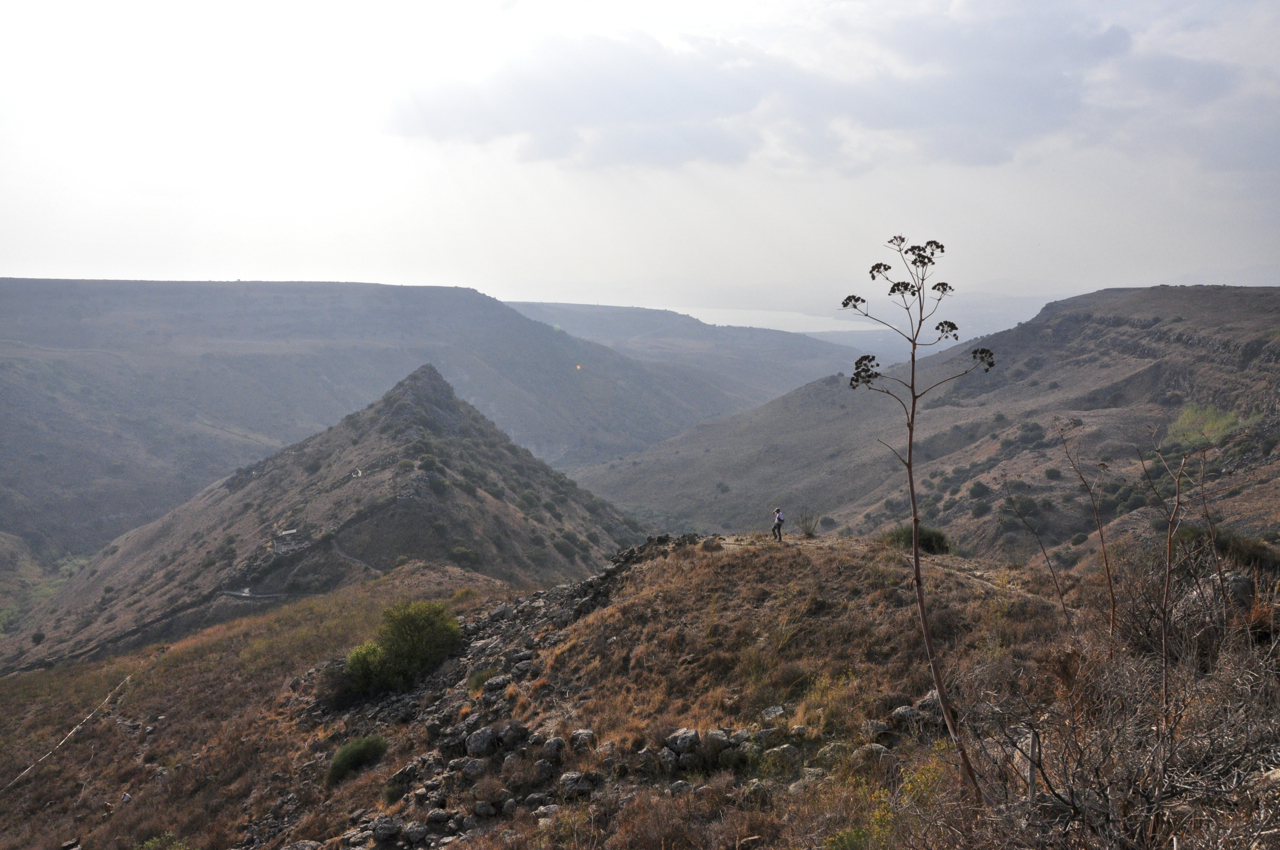
Gamla view

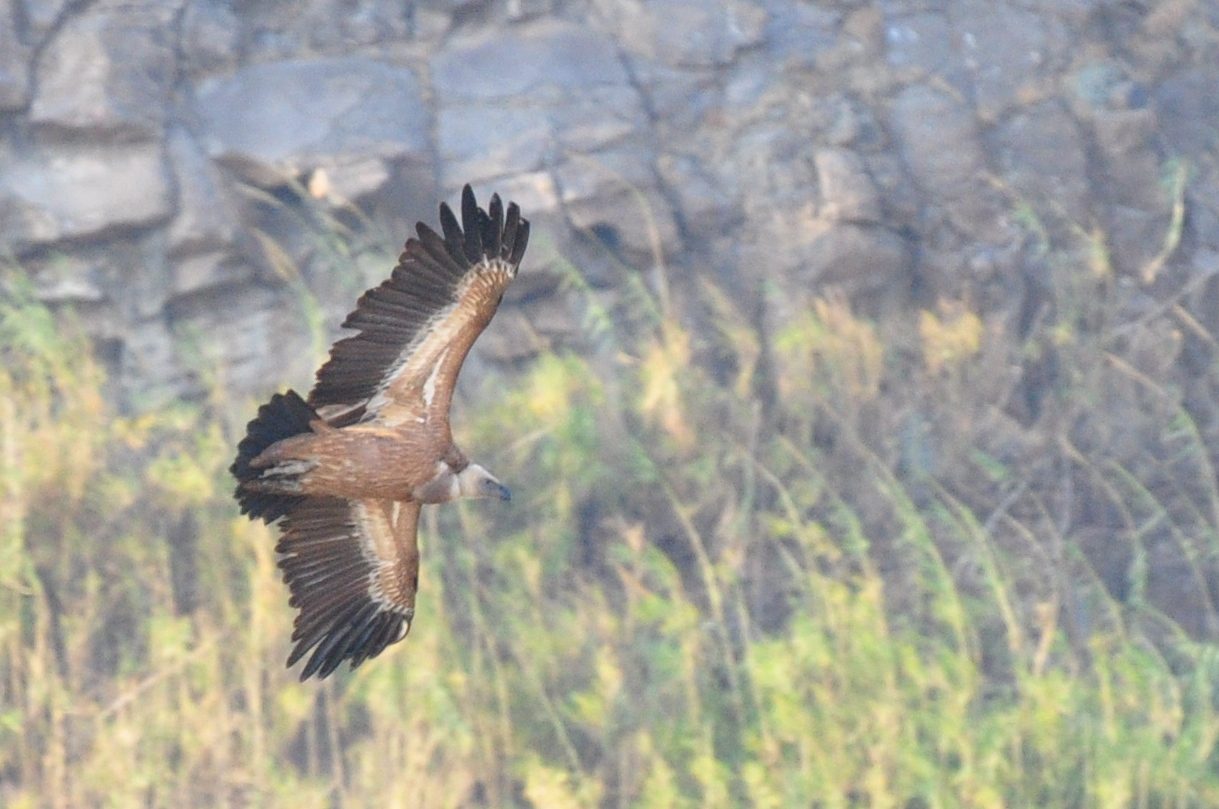
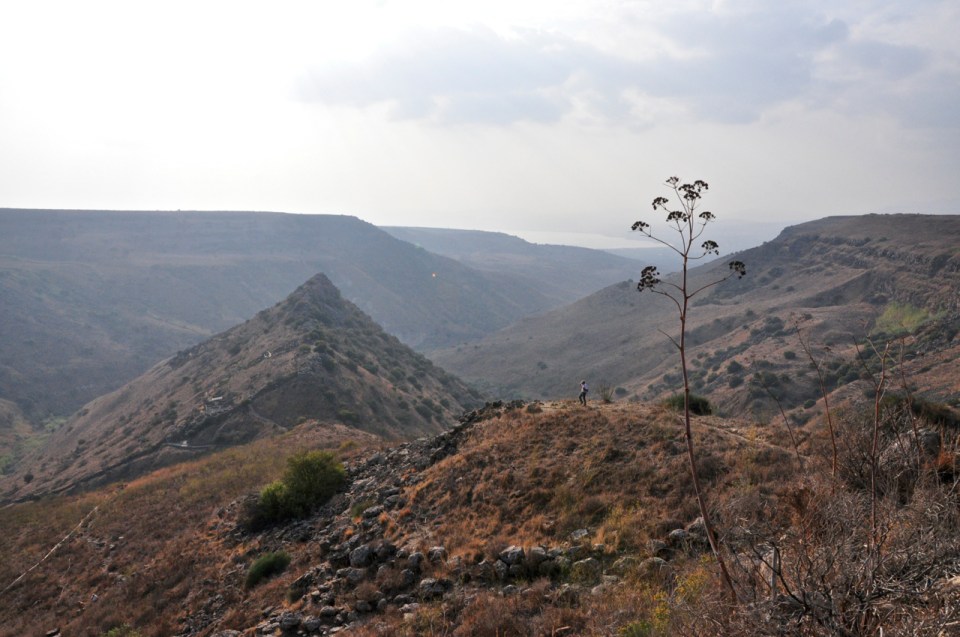
On a recent tour of the Golan I took clients to the archaeological park with ruins of the ancient Jewish city of Gamla to see the Second Temple period synagogue, hiked through dolmens to a 50 meter waterfall and from a panoramic lookout with a view of the Sea of Galilee watched the Griffon vultures soar through the canyon.
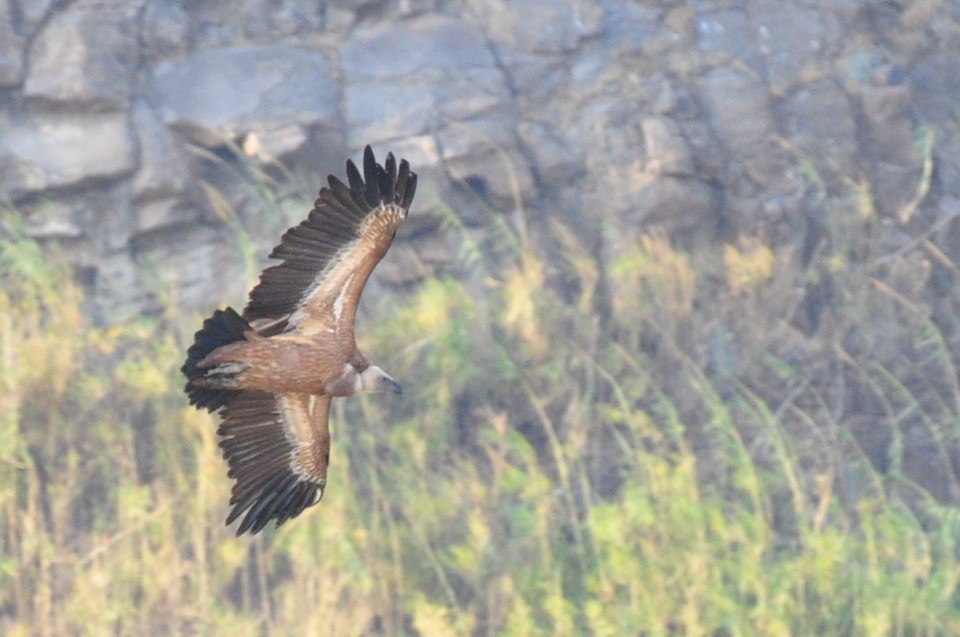
Griffon vulture, Gamla

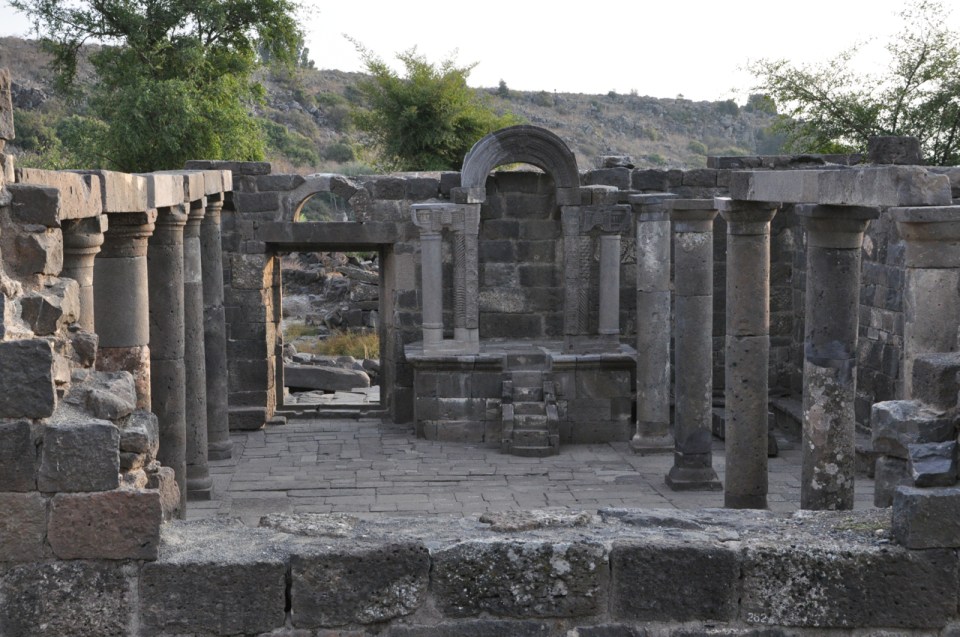
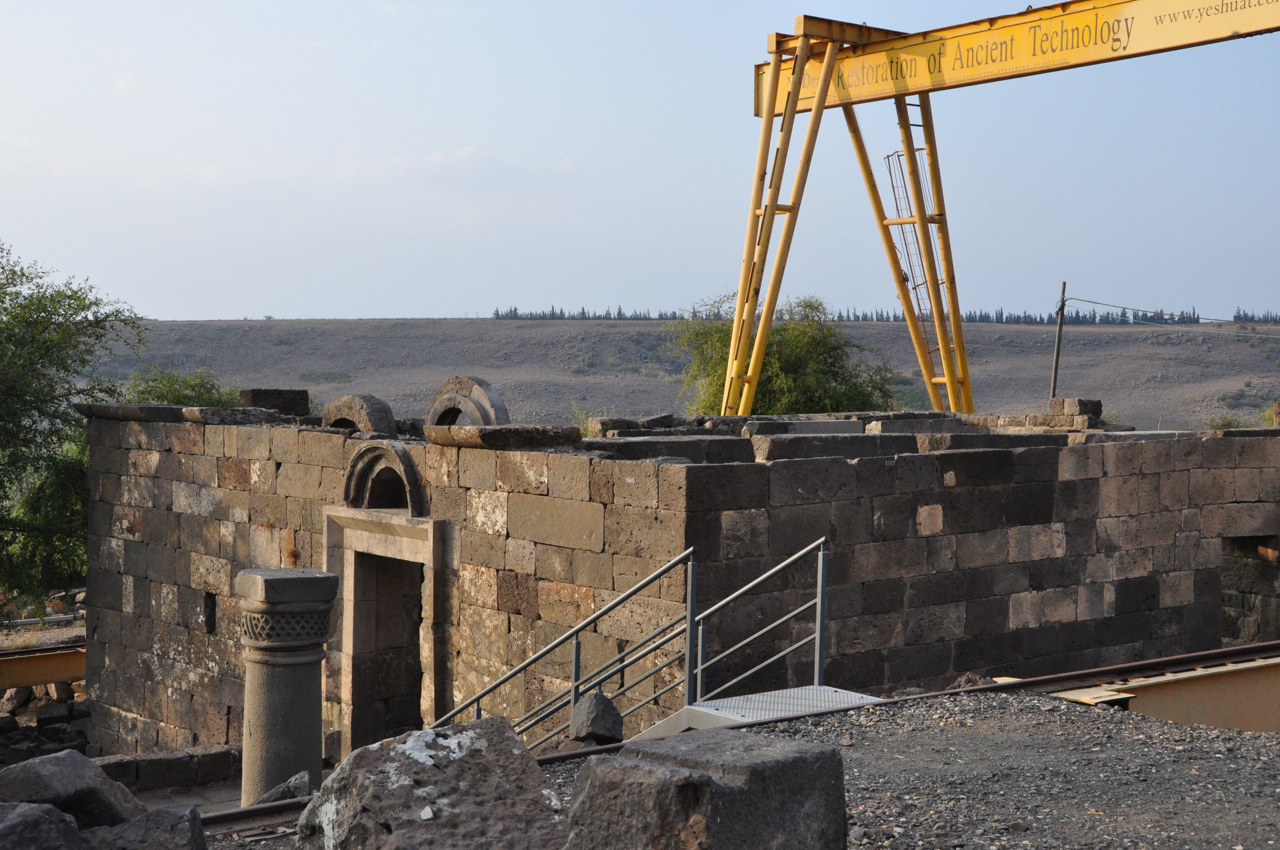
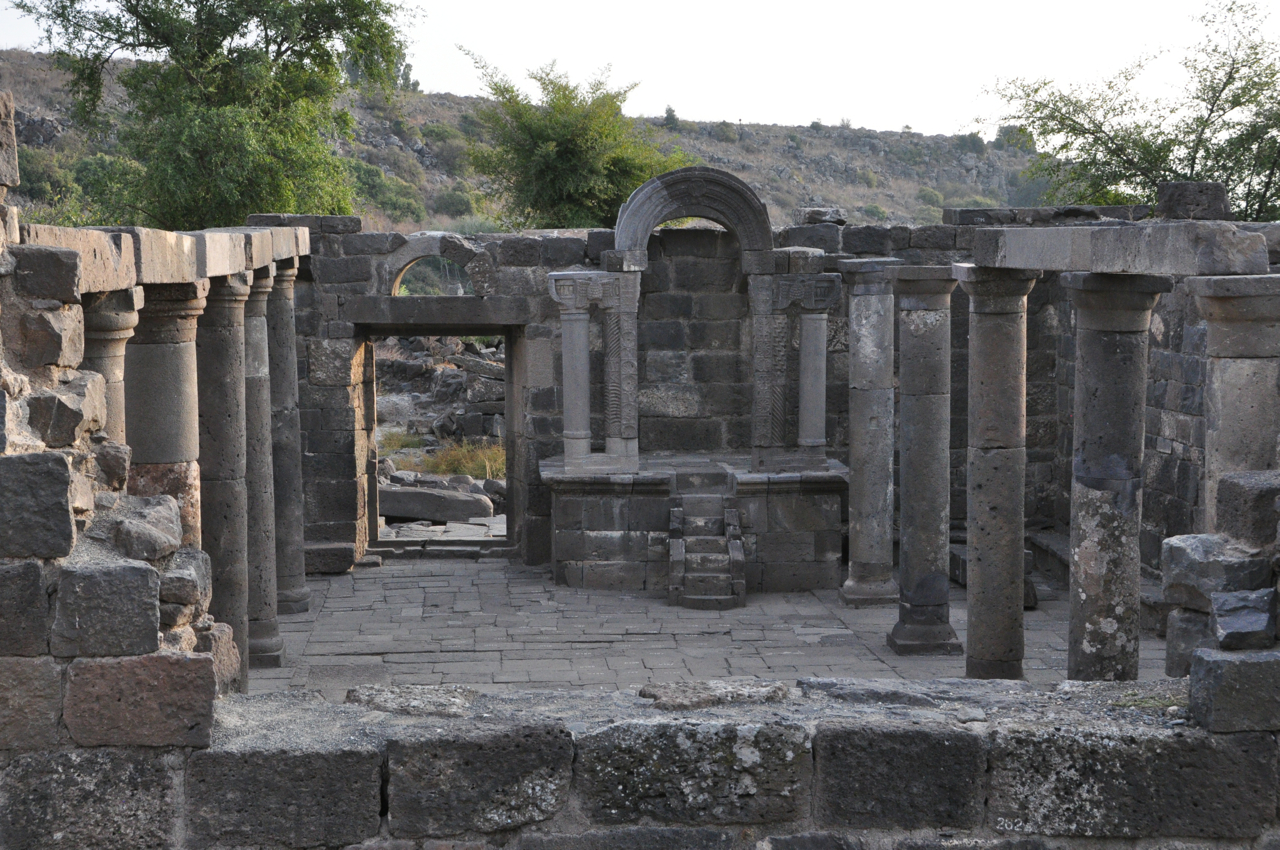
From there we visited Um el-Kanatir (Arabic for Mother of the Arches) an impressive set of standing ruins of a Jewish village from the Byzantine era to see the ongoing reconstruction of the synagogue there. The ruins of a very large synagogue of local basalt stone were found, destroyed by the earthquake of 749 CE. I hadn’t visited in a year and there has been a lot of progress in the reconstruction of the synagogue, the walls extend to ceiling height now and the bima has been set in place (the work has now been completed).
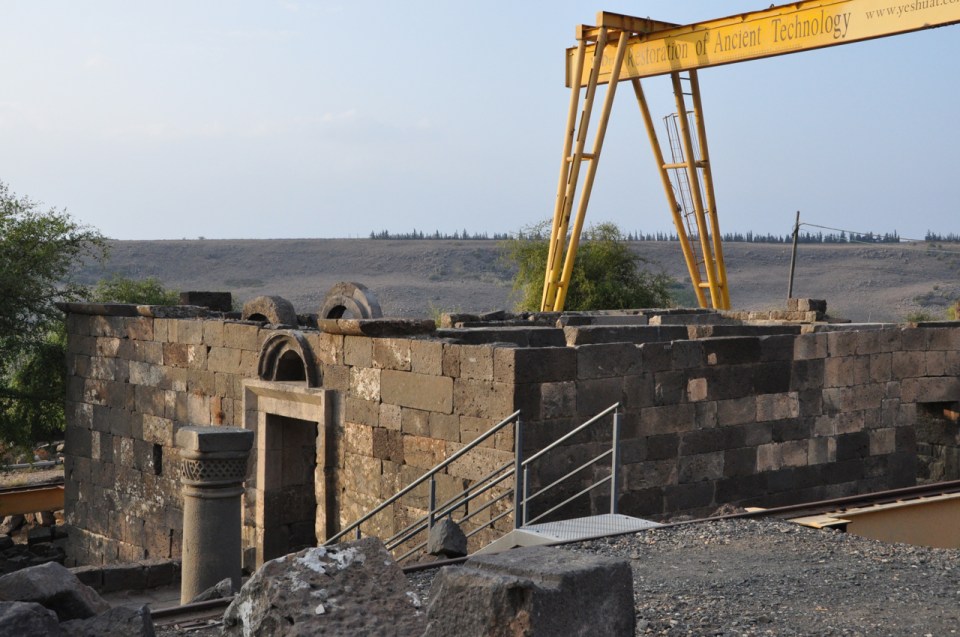
Um el Kanatir synagogue

Um el Kanatir synagogue interior

Katzrin is also well worth a visit. The Talmudic Village lets us explore the 4th century CE village of Katzrin which includes a 6th century synagogue (built on an earlier more modest one) similar to the one at Um el Kanatir. The nearby Archaeological Museum displays artifacts uncovered on the Golan. One fascinating find is an 1,800-year-old door lintel carved of basalt with a Hebrew inscription “this is the beit midrash (study house) of Rabbi Eliezer HaKapar” that was  discovered in the village of Daburiye, situated near a steep ravine with a pair of spectacular waterfalls. We know of the tanna (70-200 CE) Eliezer HaKapar, whose name refers to his work, making wine from the fruit of the caper. There is a discussion in the Talmud about wearing new shoes on the Sabbath: What are new shoes? Shoes that have not “walked” a certain distance, the distance between the synagogue at Katzrin and the beit midrash of Rabbi Eliezer KaKapar.

The Golan Heights Winery which changed the world’s impression of Israeli wines and placed Israel firmly on the international wine map or one of a number of smaller wineries is definitely worth a visit if you are into wine. One of my favorites is the Pelter winery on Kibbutz Ein Zivan where you can have a tour and learn how Tal Pelter produces a sparkling white wine in the traditional way, as well as an unwooded Chardonnay and a Gewurztraminer described as “Sweet peach, liche, melon, citrus on a lively acidic background” and taste the wine along with the artisan goat cheeses that Tal’s spouse/partner makes.

Hamat Gader is the site of natural hot mineral springs with temperatures reaching 50 °C (122 °F) and includes a 2000 seat Roman theatre built in the 3rd century CE and a large synagogue from the 5th century CE.

Cranes at the Hula

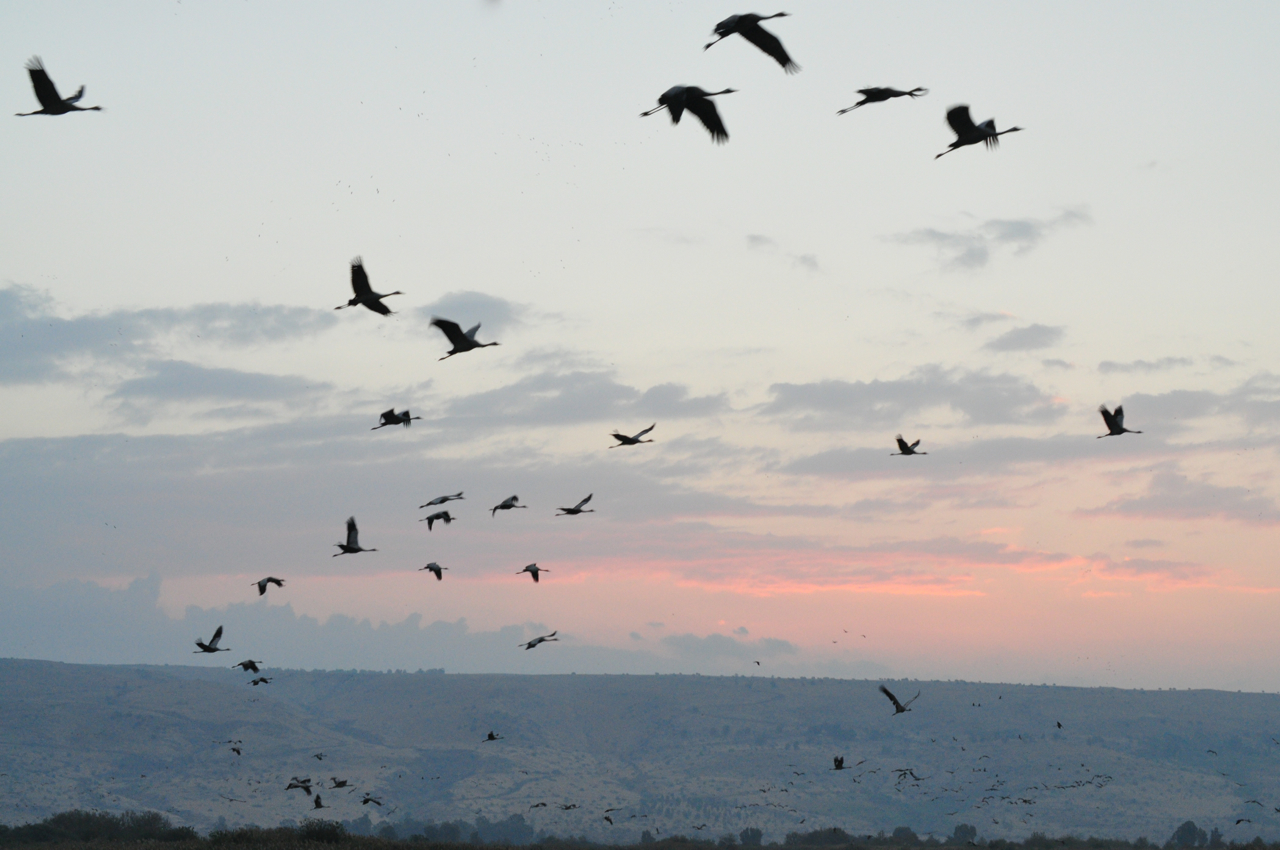
The months of November-December are when thousands of Common Cranes stop over at the Hula Lake in northern Israel on their migratory path from Europe and Asia (the heart of the breeding population for the species is in Russia) to its wintering sites in northern Africa, the river valleys of Sudan, Ethiopia, Tunisia and Eritrea. The best place to see and photograph them in Israel is the Agamon HaHula reserve and I can take you there. If you are interested in getting photographs you will need a fast SLR camera with a large lens (I’d recommend a zoom that goes up to 500mm).

Cranes lift off

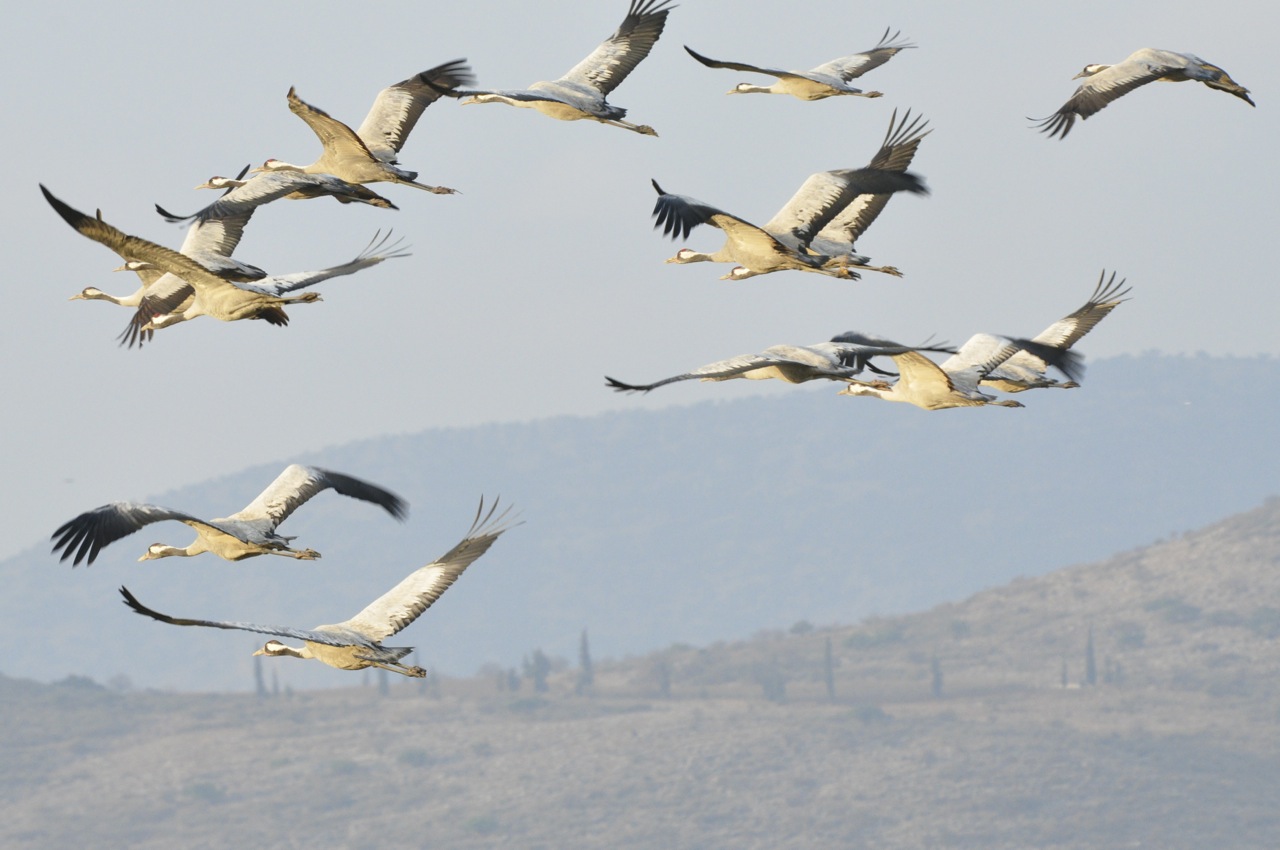
Check the Agamon Hula page on Facebook for the most recent figures – they counted more than 35,000 cranes at the park on a typical day. The cranes spend the night in the lake (for protection) and at sunrise when they awaken fly off to forage for food. It is an incredible sight to see thousands of cranes take to the sky.

Cranes taking off

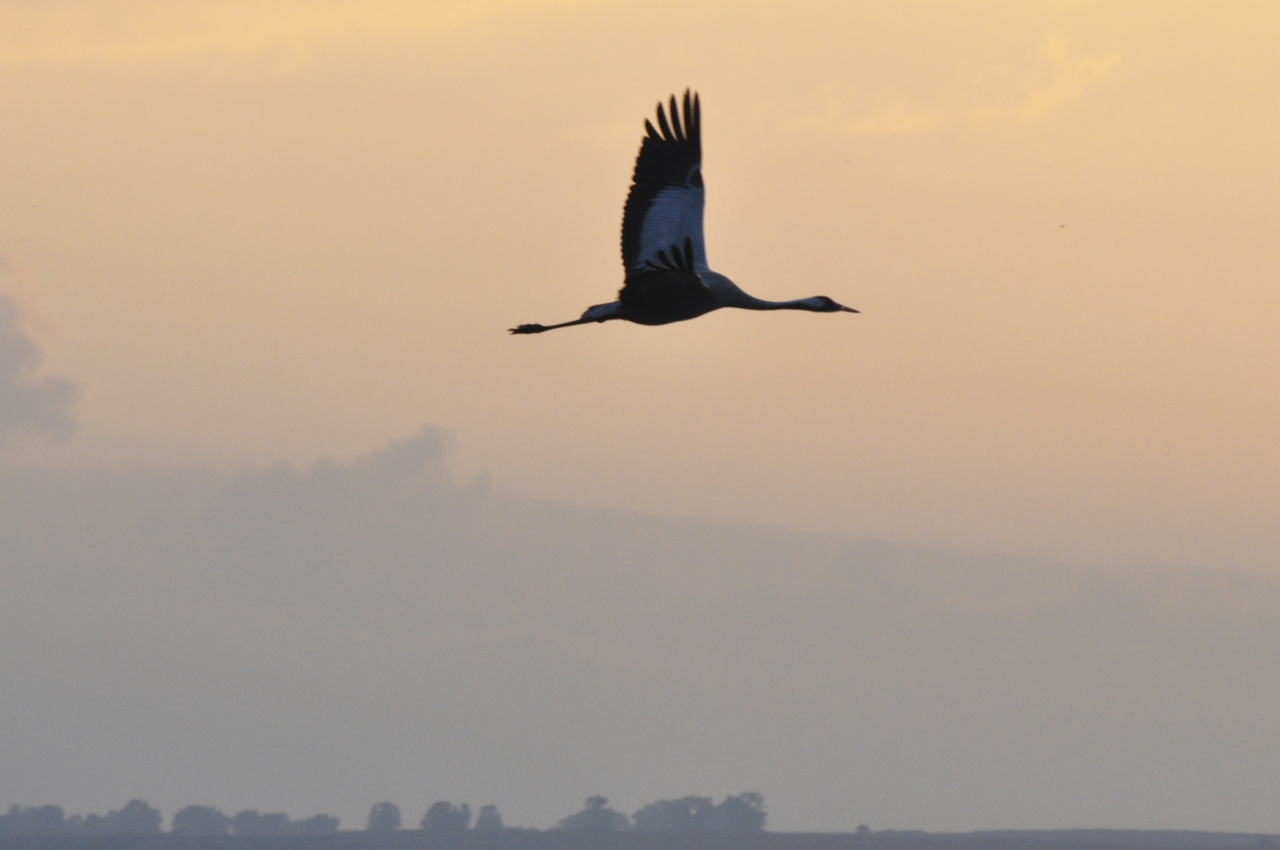
Lone craneThe Common Crane (Grus grus, also known as the Eurasian Crane) is mainly slate-gray, with black on the forehead and lores with a red cap on the top of the head and white stretching from behind the eyes to the upper back.

Cranes at Hula

Cranes in flight

Autumn on Mount Hermon

Last week, on a crisp autumn day up on the Golan, I had the opportunity to visit the Hermon and take these photos.

Hermon Autumn foliage

Mount Hermon is actually a cluster of mountains extending for about 150 km in a northeast-southwest direction with three distinct summits that straddle the border between Syria and Lebanon. The southern slopes of Mount Hermon extend to the Golan Heights and a peak in this area rising to 2,236 meters is the highest elevation in Israel. The Hermon range covers an area of about 1000 square km, of which about 70 km² are under Israeli control.

Trees and Rocks Hermon

As a geological and biogeographical region, the Golan Heights is a basaltic plateau bordered by Mount Hermon in the north, the Yarmouk River in the south, the Sea of Galilee and Hula Valley in the west and the Raqqad Wadi in the east. The western two thirds of this region is currently controlled by Israel, whereas the eastern third is controlled by Syria.

Clouds over Hermon

Because of its height the Hermon captures a great deal of precipitation in a very dry area of the world; because of the elevation plants grow and bloom later, in August instead of the spring. One that I saw still blooming under the ski lift was the Lotus Sweetjuice. Water from the snow-covered mountain’s western and southern bases seeps into the rock faults and channels in the Jurassic limestone, feeding springs at the base of the mountain. At the important archaeological sites of Banias and Tel Dan the water forms streams and rivers that merge to become the Jordan River. From the Hermon it’s about a 40 minute drive to these streams, fascinating sites that I can take you to to experience the nature of Israel’s north.

A Look into Loggia at Herodium

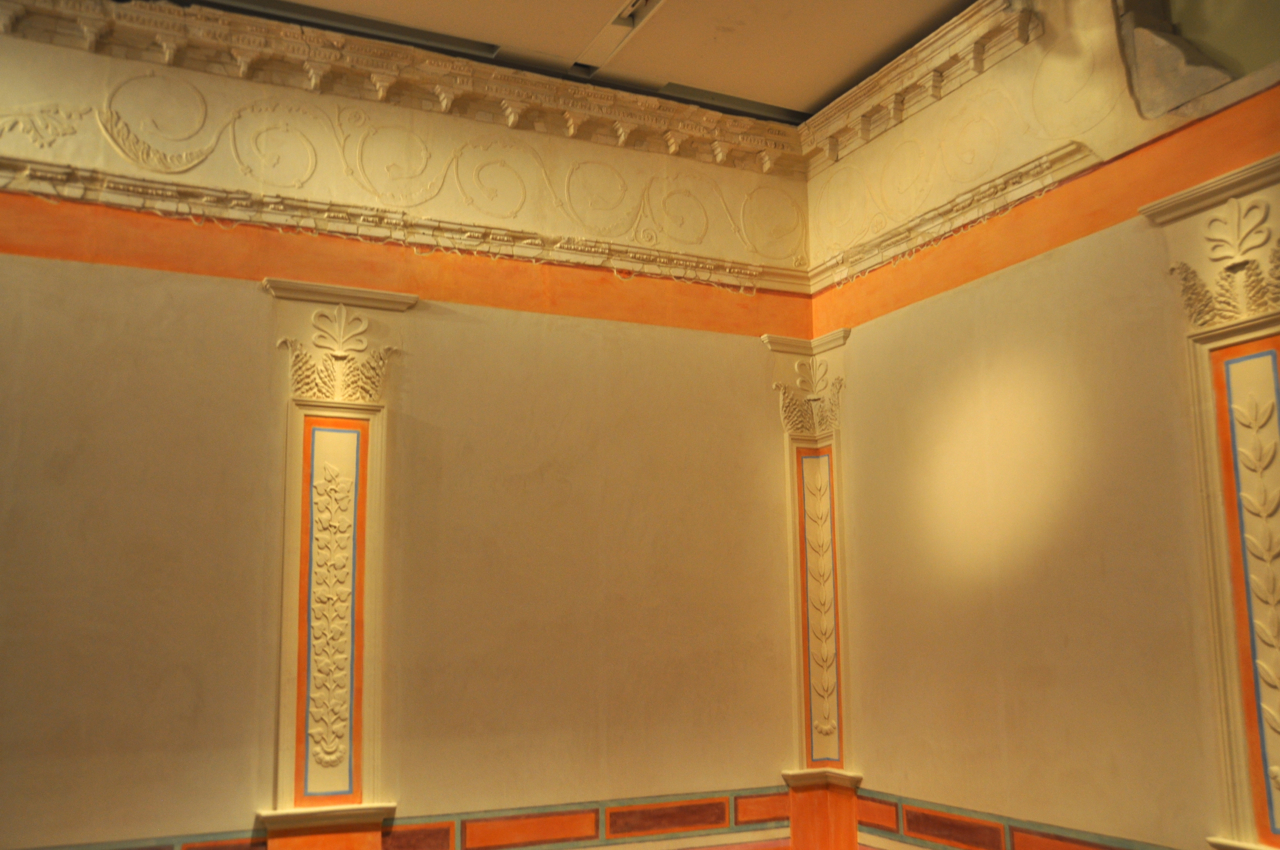
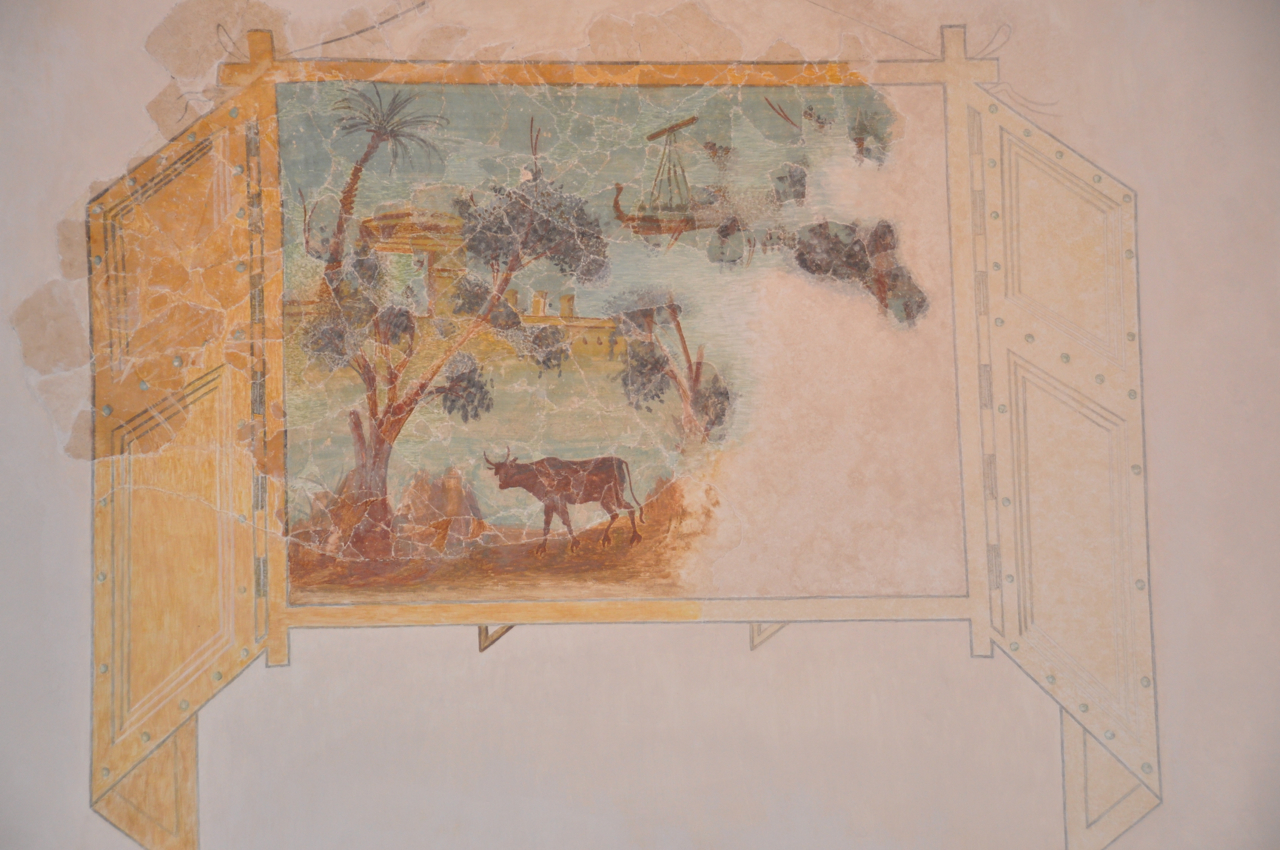
At the Herod exhibit at the Israel museum there is a room that is a reconstruction of the loggia, the VIP box from the Herodium theater with its colorful panels on the lower part of the wall and above on light-colored plaster, unique paintings in secco, trompe de l’oeil views through an open window. Secco is a technique that requires less artisan skill and used when time is short as in the approaching visit of Marcus Aggripa in 15 BCE. In secco paint is applied on top of dry plaster whereas in fresco the paint is added while the plaster is still wet. The fresco technique requires skilled craftsmen who have to work applying small areas of plaster, smoothing it and then adding the mineral pigments.

Loggia at museum

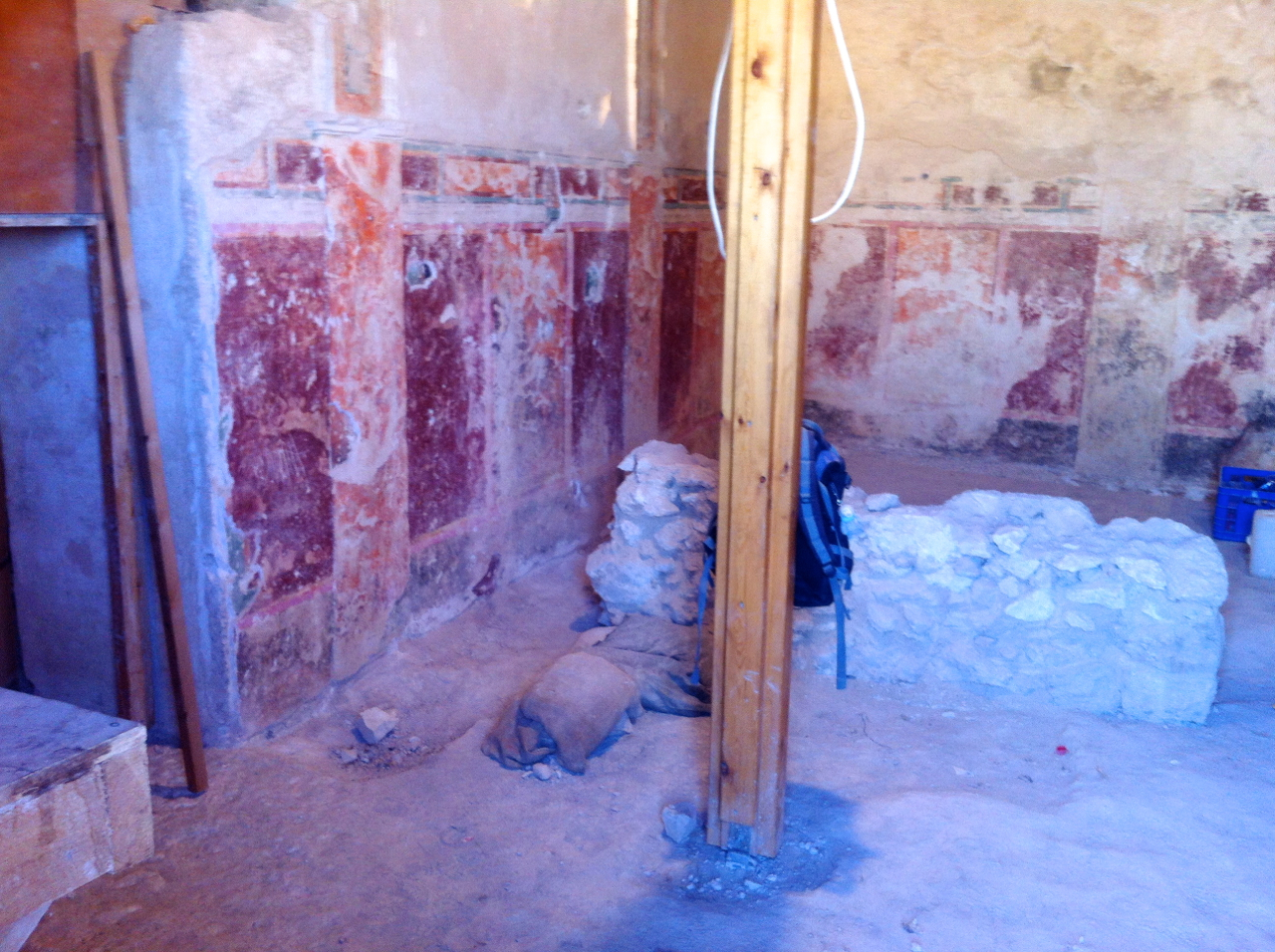
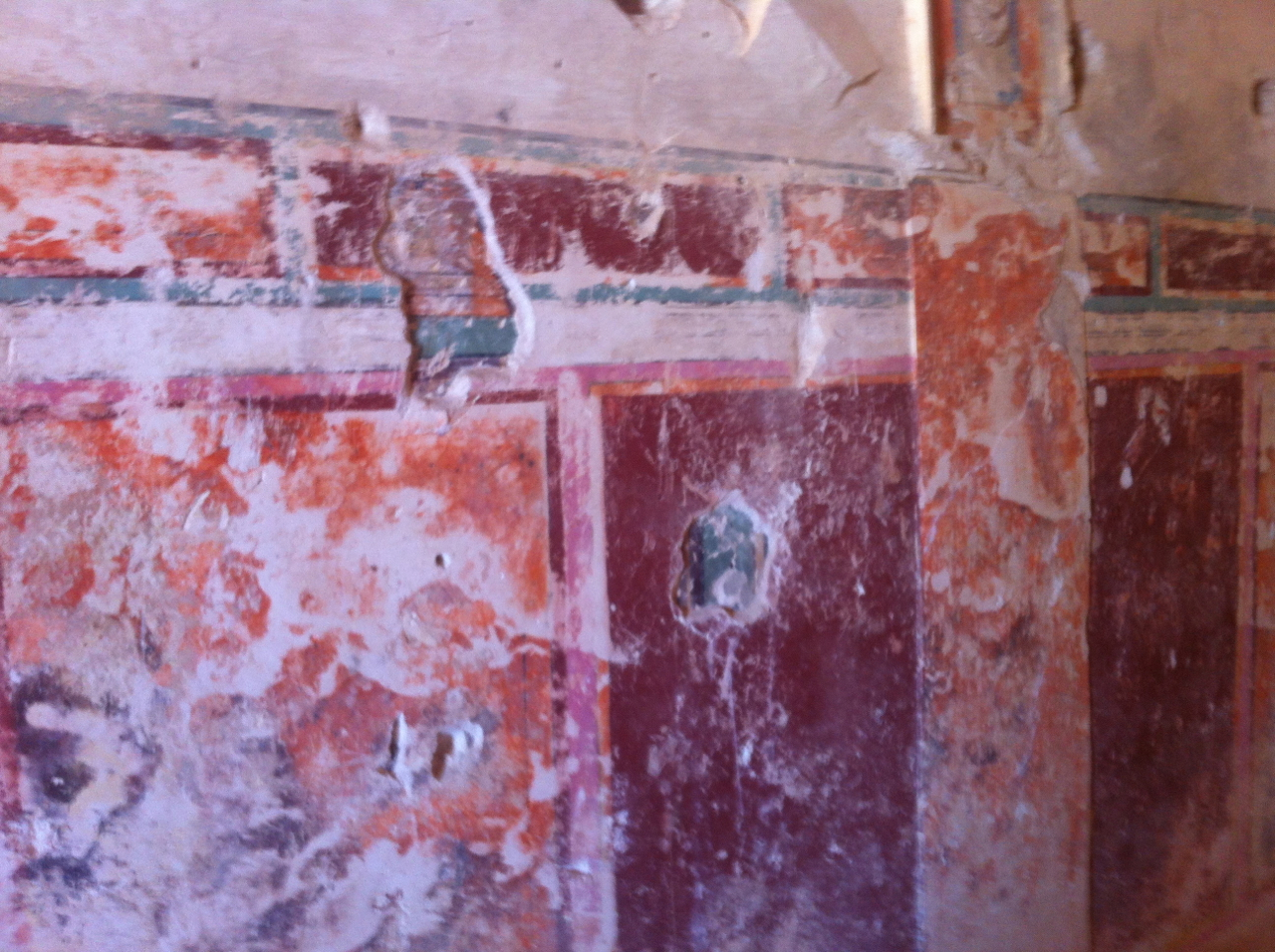
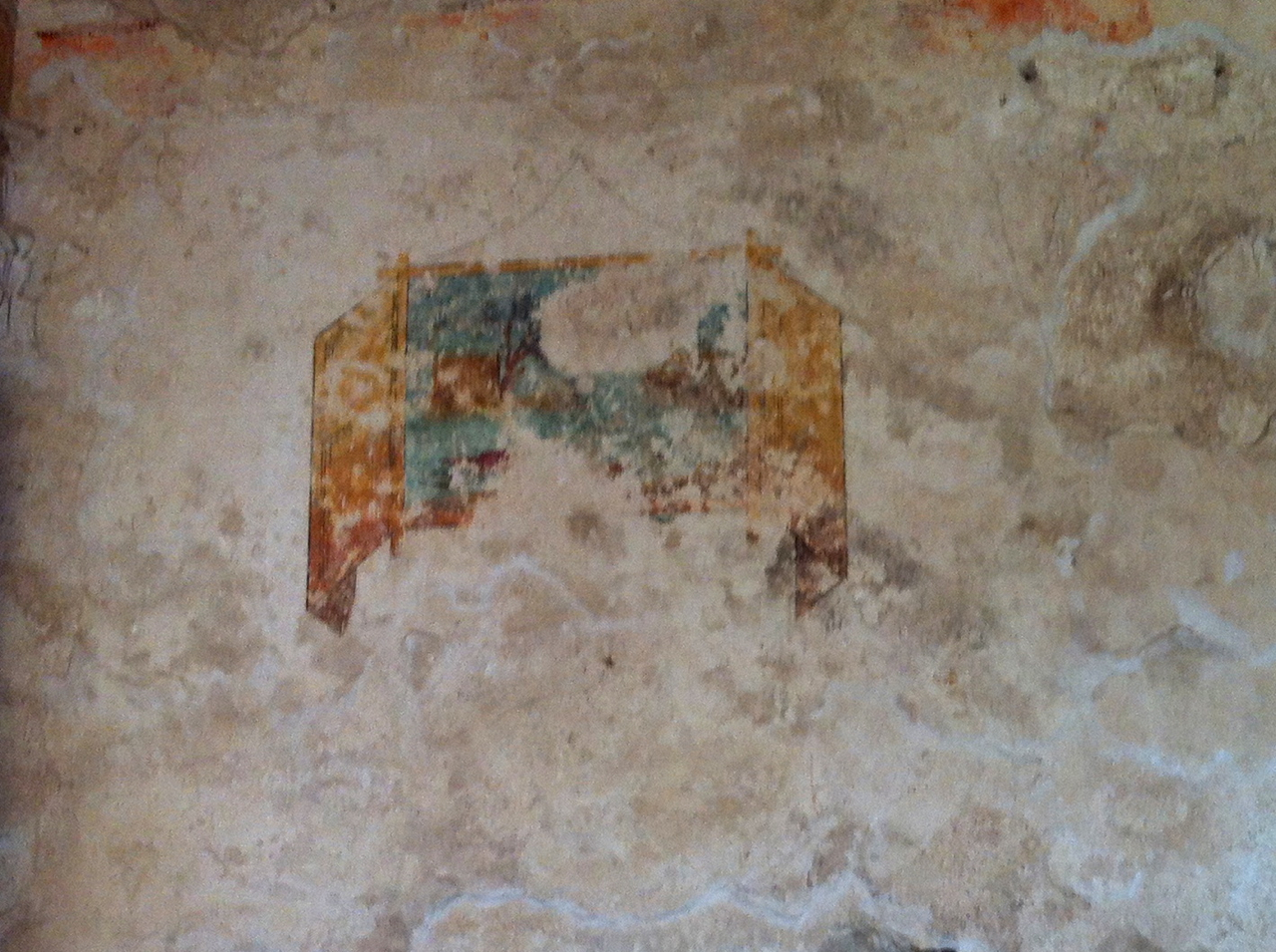
The loggia at Herodium is not accessible to the public, room is enclosed by a wooden structure and a team of conservators are working to protect the delicate secco painting. Last week while guiding at Herodium I found the door open and was able to look in for a moment. Hence the photos below were taken in a rush, using my iPhone – since few images of the loggia have been shared I offer them for viewing here.

Loggia at Herodium

Two things struck me: 1) Through holes in the plaster you can see that the lower panels have two layers of paint and plaster implying that the walls were redecorated, probably for Marcus Aggripa’s visit. In talking to Dudi Mevorah, curator at the Israel museum, the outer layer is not fresco but a covering done in secco.

Loggia frescoes

2) There are delicate paintings still on the upper section of the wall that are being conserved in place. The painting on display in the museum exhibit is a painstaking reconstruction of thousand of tiny pieces of paint found on the floor of the loggia by museum staff. You can view it at https://israel-tourguide.info/wp-content/uploads/2013/02/secco-loggia.jpg

Secco wall painting