Tag Archives: Jerusalem

Crusader Jerusalem

A reader asked me to post something about the Crusaders in Jerusalem. I am happy to and also to lead tours focussing on the Crusader period.

Raymond of Aguilers, who wrote a chronicle of the First Crusade (1096–1099), relates that on the morning of June 7, 1099, the Crusaders reached the summit of Nebi Samuel, from which they saw Jerusalem for the first time. The elated Crusaders fell to the ground and wept with joy, calling it Mons Gaudi, mount of joy. The same day they reached the walls of Jerusalem.
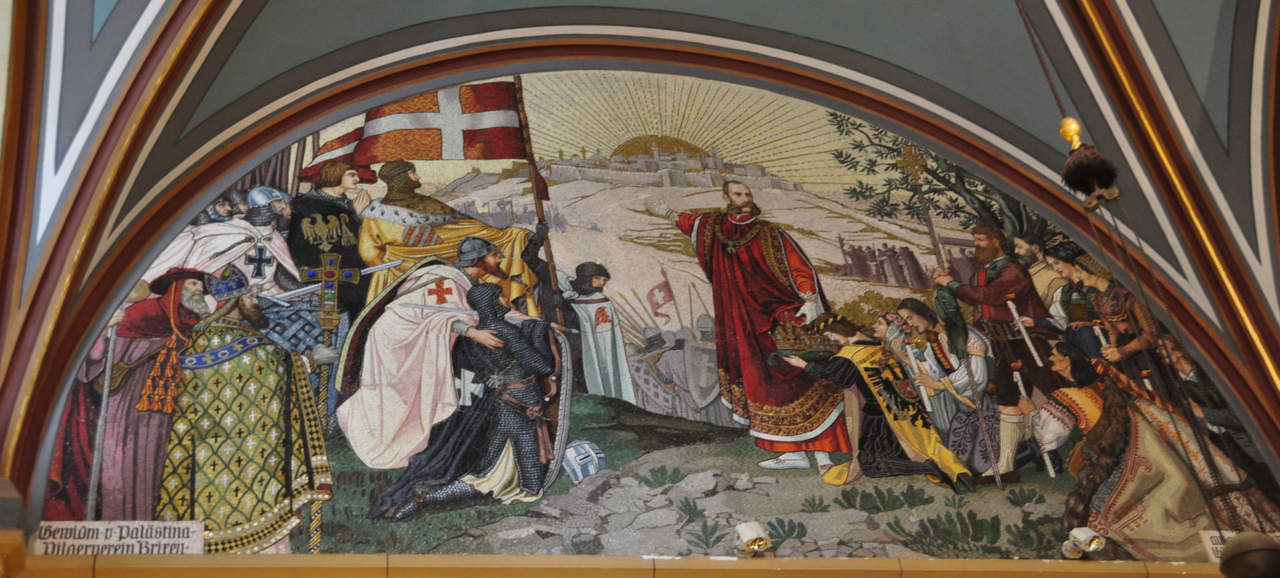
Austrian Emperor Franz Joseph as Crusader

With insufficient troops and supplies and rumor of a Fatimid advance, the Crusaders could not besiege the city for long but had to organize a direct assault.  After about a month they were able to get skilled builders and wood by cannibalizing Genoan ships that had arrived at Jaffa port for siege towers. This enabled the Crusaders to breach the walls in 3 places on July 15th. The Crusaders massacred most of the Muslims and Jews and evicted the remainder leaving Jerusalem almost uninhabited until Christians could be encouraged to settle there. On 22 July, a council was held in the Church of the Holy Sepulcher that chose Godfrey as the princeps for the newly created Kingdom of Jerusalem which became an important Christian center.

Crusader sites in Jerusalem

In 1160 the Crusaders added a glacis to the tower at the Citadel and dug a moat around it.

The Roman Cardo was subdivided into 3 covered markets: Vegetable or Spice market, Market of Malcuisinat and Covered market – this property was donated to the convent at Santa Anna. Nearby along David St. today, was the poultry market selling eggs, milk, cheese.

The Crusaders built a church in Kidron valley that contained the Tomb to the VIrgin Mary  and Queen Melisende was buried there. Beside it was Gethsemane and a Barluzzi church in 1920s was built on earlier Byzantine and Crusader ruins.

The remains of the Church of Mary of Latina can be seen in part of the German Lutheran Church of Redeemer that was dedicated in 1898 during the German Kaiser’s visit.
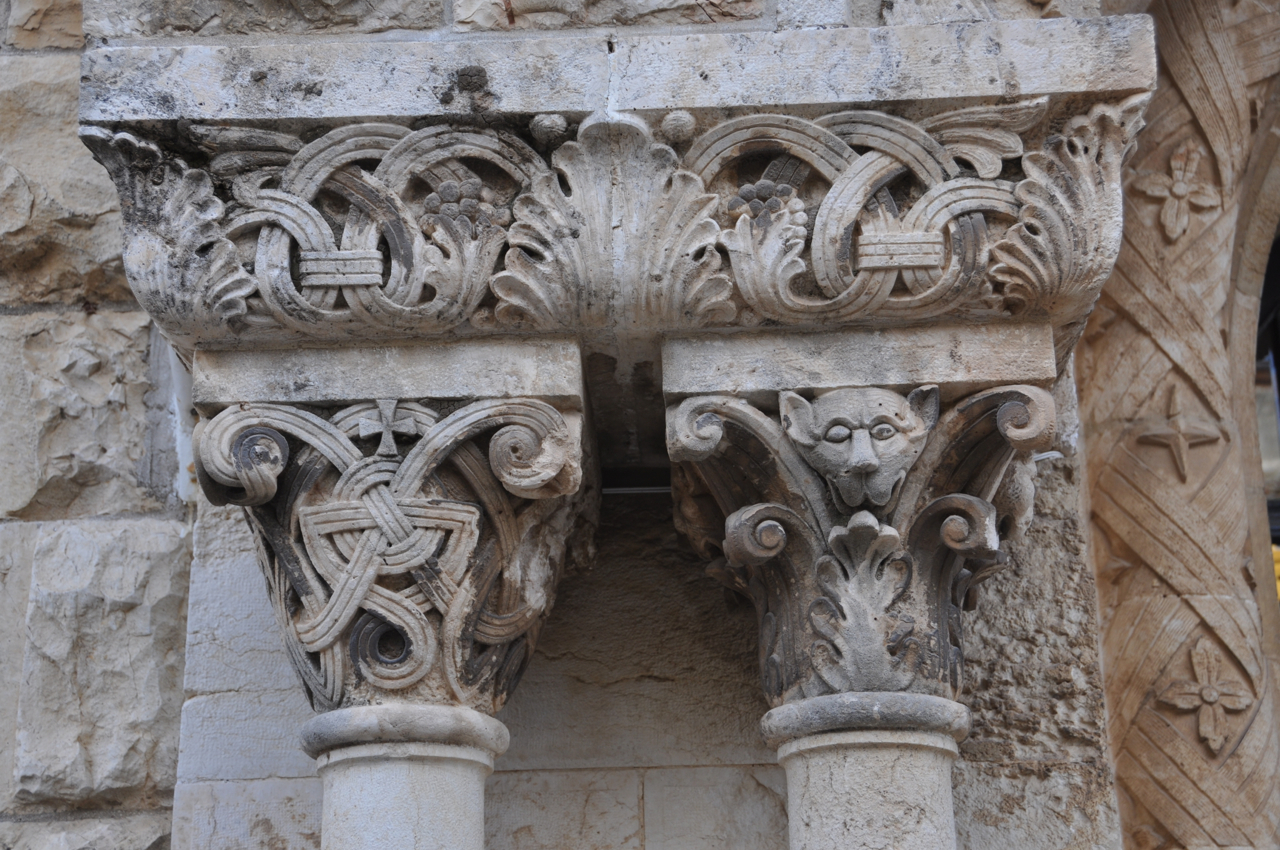
Capitals outside German Lutheran church

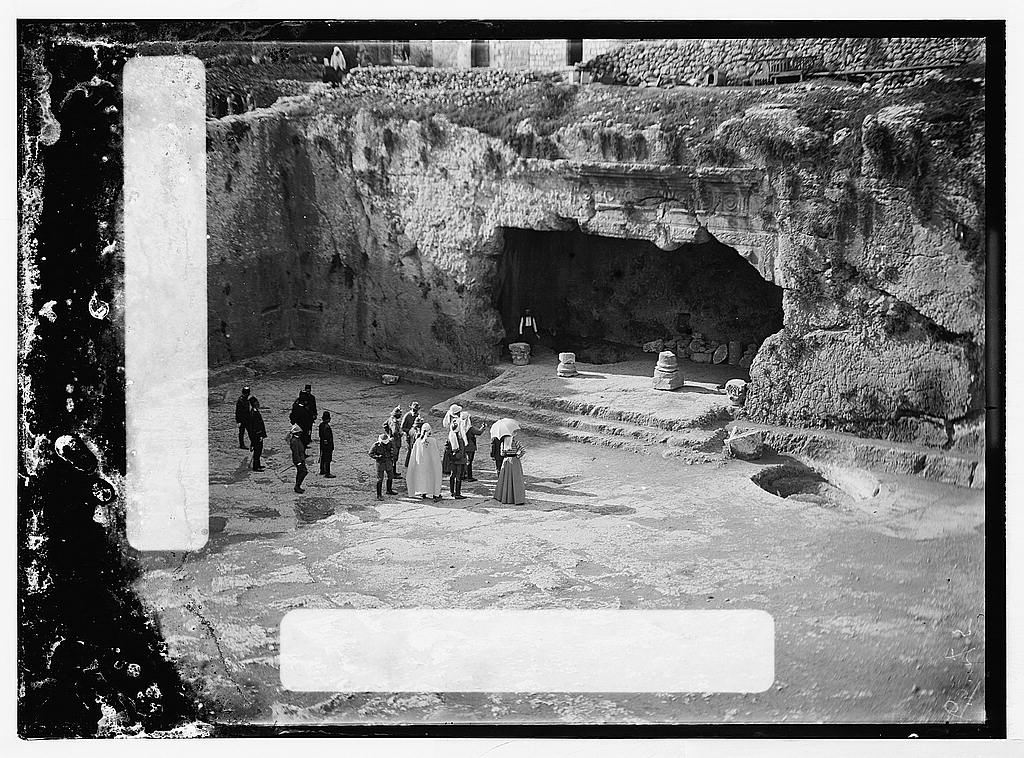
Close by is the Church of Holy Sepulcher, rebuilt by the Crusaders and dedicated in 1149. The sculpted marble panels on lintels over the two main doors, in Romanesque style, are now in the Rockefeller museum.
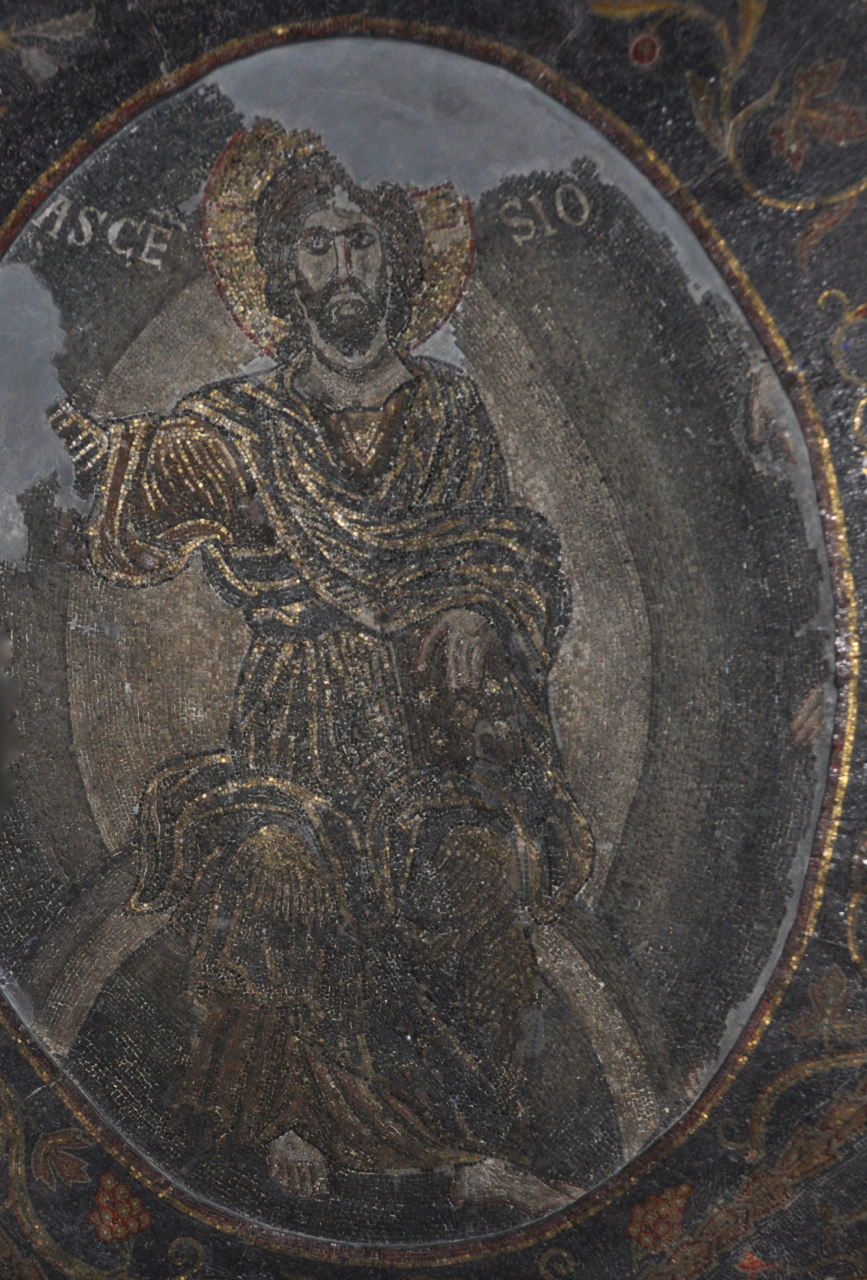
Ascension of Jesus Crusader mosaicOn the ceiling of the Catholic Chapel of the Nailing to the Cross (11th station) is a 12th-century medallion of the Ascension of Jesus — the only surviving Crusader mosaic in the building. Small geometric-shaped pieces of marble inlaid in the floor is a style known as Cosmati or Cosmatesque a traditional technique from the Crusader period though it was done when the chapel was renovated in 1937 by Barluzzi.

There are Hospitaler sites in the Muristan and German knights in the Jewish quarter, remains of a hospice, hospital and church, St. Mary of Germans.

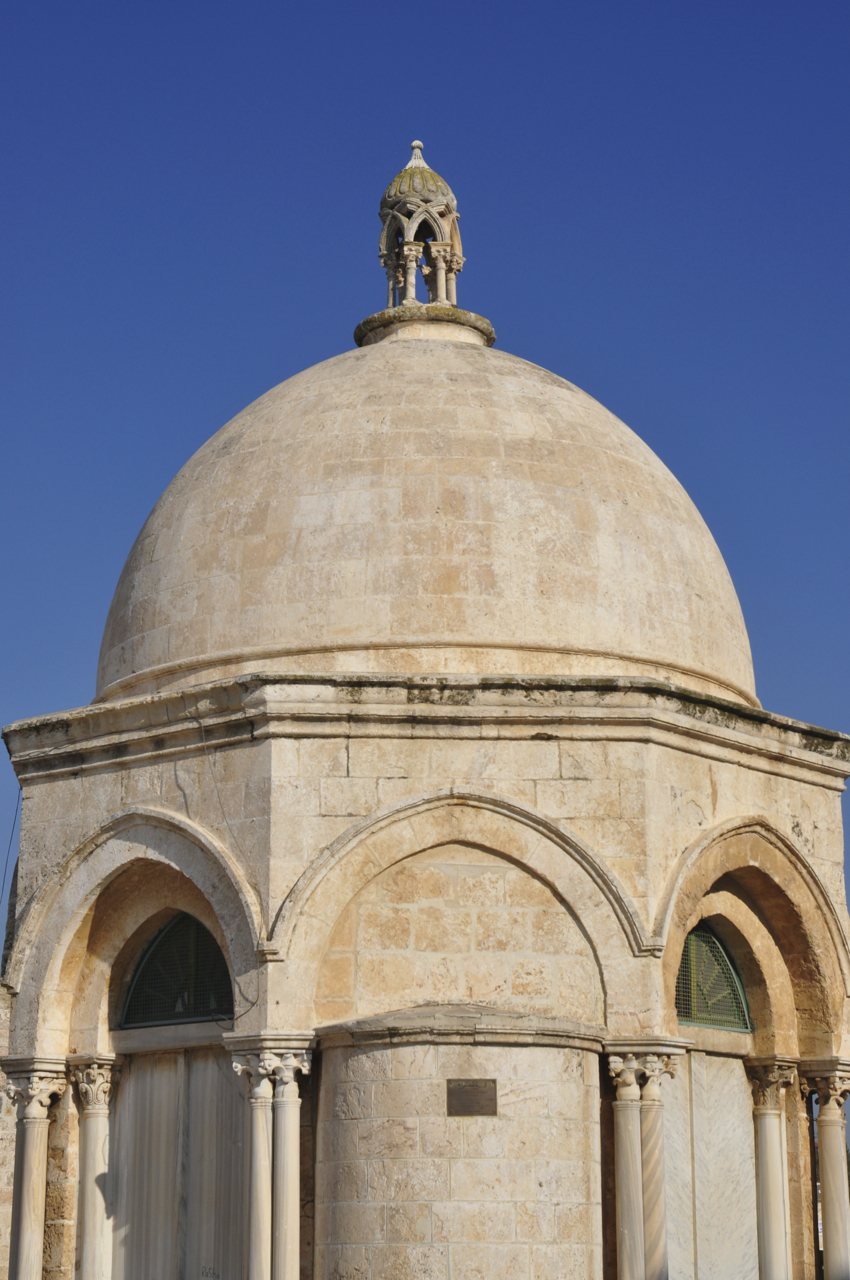
Up on the Haram el-Sharif, the Knights Templar, used the Al Dome of AscensionAqsa mosque, called Templum Solomonis by the Crusaders, and the underground arches of Solomon’s stables. The Dome of the Rock functioned as a church, Templum Domini. A short distance to the northwest, is the Dome of the Ascension, which served as its baptistery. The Dome of the Chain to the east was a Christian chapel to St. James.
If you have the chance, visit the Temple Mount Sifting Project to try some hands-on archaeology and take the opportunity to see artifacts like arrowheads, coins and relics from the Crusader period.

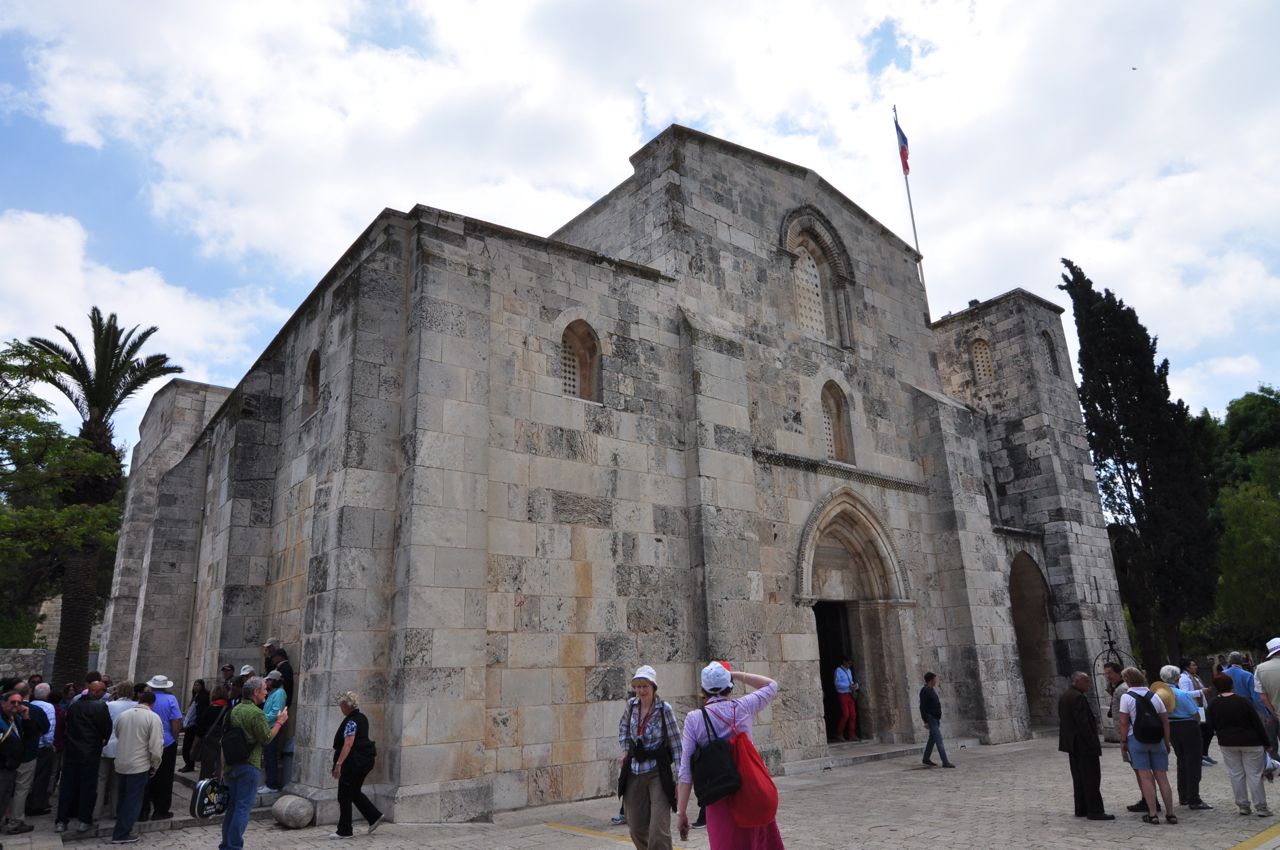
At Bethesda Pools is the ruins of a Crusader chapel, Mary of Bethesda, built on the ruins of a much larger Byzantine church from the 5th century named for St. Mary (Church of the Probatica) and the Church of Santa Anna, one of the most exquisite examples of Crusader architecture in the country.
Santa Anna

On Mount Zion, the German Dormition Abbey was built on the ruins of the Crusader church of St Mary of Mount Zion which includes an upstairs room which can be visited today, the Coenaculum or Room of the Last Supper.

The Crusaders built many buildings which affected the city’s image, adding a Christian flavor to the 450 year old Muslim city and many of these changes can still be seen in the Old City today.

Israel Roundup

ARTIFAX magazine and The Book & The Spade radio program have published the Top Ten Discoveries in Biblical Archaeology in 2012. At #3 is a First Temple period cistern with a 250 cubic meter capacity that was discovered by chance during the ongoing clearing of the drainage channel near Robinson’s arch. Press release at http://www.antiquities.org.il/article_Item_eng.asp?sec_id=25&subj_id=240&id=1958&module_id=#as

Photo credit: Courtesy of the Israel Antiquities Authority/Vladimir Naykhin

Photo credit: Courtesy of the Israel Antiquities Authority/Vladimir Naykhin

Found while sifting material from City of David, at #4 is a fiscal bulla, a clay seal impression with three lines of script, related to the taxing of shipments at the time of King Hezekiah, the earliest mention of Bethelehem. Found while sifting material from drainage channel near Robinson’s arch, at #5 a personal seal with the name Matanyahu inscribed on it dated to the end of the First Temple period, see https://israeltours.wordpress.com/2012/05/03/first-temple-period-seal/

Jewish National Fund (JNF) has published a map of Israel with 110 “great old” trees marked. One example, #91, a Common Oak, called the “Lone Tree” symbolizing the Gush Etzion bloc south of Jerusalem that has a height of 10 meters, trunk circumference of 3.5 meters and is estimated to be 500 years old. I do a tour that includes the moving audio-visual presentation on the history of the Gush at Kibbutz Kfar Etzion, gourmet lunch at Gavna in the forest with a view all the way to the Mediterranean and a tour of the Lone Tree microbrewery.

Lone Oak

Herod the Great: The King’s Final Journey exhibit at the Israel Museum is an exceptional opportunity to encounter the material opus of Herod the Great – his architecture and aesthetics, and the work of his chief archaeologist, Professor Ehud Netzer. Evidence of Herod, the meaning, struggles, and accomplishments of his life beckon beyond the exhibit halls, to the sites where he fought, ruled, dreamed, and built – Herodium, Masada, CyprosSebasteCaesarea, Banias and Omrit

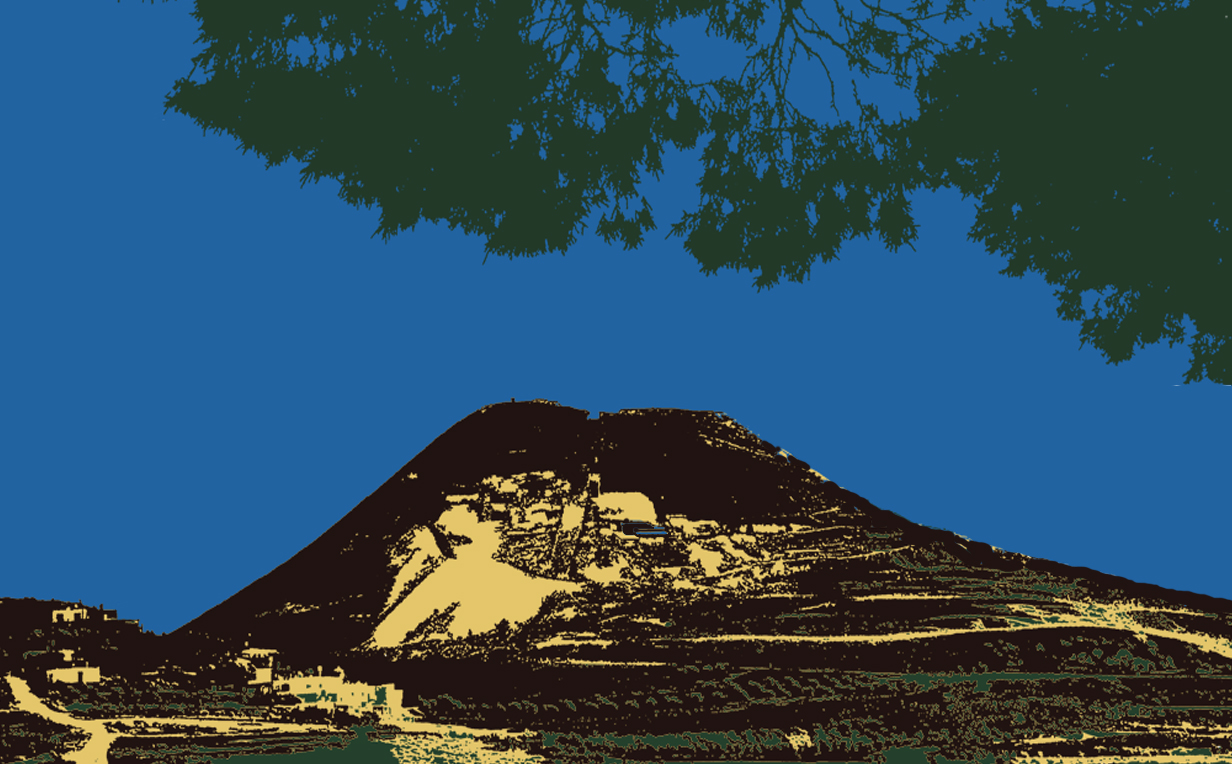
Herodium-4colourFor those who will be in Israel, I am leading in-depth full-day tours of Herodium and the Israel Museum’s Herod exhibit, for details see https://israeltours.wordpress.com/herod-the-great-tour

For those who will not be able to visit Israel, I posted a few articles with photos of the exhibit.
Here are the links to check for photos:

The Israel museum has published a 277 page hardcover catalog of the exhibit. You can order a copy by sending an email to shop at imj.org.il
ARIEL has released volume 201-200 Art and Architecture in Jerusalem and Israel in the Second Temple Period (in Hebrew) in memory of Prof. Ehud Netzer.

From the pantry at Herod’s palace-fortress at Masada, amphorae – large clay jars that held imported delicacies – attest to the luxury and sophistication of Herod’s palate: apples, honey, fine wine, and garum, a savory Roman fish sauce. One amphora bears an inscription of Herod’s name in Latin and Greek. For more about garum, https://israeltours.wordpress.com/2010/11/25/food-discoveries-masada-garum/

Film documentary: Volunteers with military experience, many from America, came to Israel around 1947 to help the fledgling Jewish state. Their acronym, Mahal (MH”L}, stands for מתנדבי חוץ לארץ. The 3 large Hebrew letters, מח’’לֹ, stand as a monument at Sha’ar Hagai, on the road to Jerusalem. Playmount Productions has released a sample from their upcoming documentary Above and Beyond: The Birth of the Israeli Air Force.

Emek Habacha project: Estimated at €250 million to install 50 130 meter tall (height of the Azrielli Towers in Tel Aviv) wind turbines able to produce 120 megawatts has received approval. These will replace the 10 wind turbines that produce 6 megawatts at Tel Asania. I blogged about the old wind turbines in May 2011 at https://israeltours.wordpress.com/2011/05/02/wind-turbines-on-golan-trail/

From Israel – what to call this?

This week I’m trying something new, a post of some of the interesting things I’ve discovered as a guide this week. If anyone has a good idea what to call this post, leave a comment.

Hansen “Leper” Hospital  The old Hansen “Leper” hospital built by Conrad Schick in 1887 has an interesting exhibit “Behind the Walls” of the history of the place. Plans are underway to turn the hospital into a municipal cultural center, a meeting place for the arts, media and technology.

Jerusalem Train Station  Work continues on the 19th-century abandoned Jerusalem train station to be transformed into a cultural and culinary complex, which developers promise will be open on Shabbat and will serve non-kosher food. “There is something a little kitschy when you try to reconstruct the feeling of the past,” says architect David Kroyanker, but he adds, “The fact is that it attracts people.” from Haaretz

Archaeology Tour  Popular Archaeology is organizing an extraordinary archaeological tour of Israel in April. I’m the guide! Among the highlights will be a visit to the new exhibit at the Israel museum, Herod the Great: The King’s Final Journey.
Additional incentive, if you enjoy taking photographs, submit your best ones to win up to $1000. – plenty of photogenic opportunities, for example, the ruins of a Roman temple on night of a full moon and partial eclipse.
More details at http://popular-archaeology.com/page/archaeological-travel-tours

Shroud of Turin  Fascinating exhibit on the Shroud of Turin at Notre Dame across from New Gate. Also an incredible view of the Old City from their wine and cheese bar on the roof.

Almonds BlossomsCherry Blossoms 桜花見  Just past Tu Bishvat, the New Year of Trees and the almond trees are blossoming. Jerusalem Botanical gardens reports that the Japanese cherry trees behind the visitors center are in bloom. While you’re there check out the newly renovated Bonsai section.

Dead Sea Scrolls  Israel Antiquities Authority and Google announced that 5,000 Dead Sea Scroll fragments found in Cave 4 at Qumran have been digitized at high-resolution and are now available on the Internet. These include fragments containing the Ten Commandments and sections of Genesis, that recount the first three days of creation. I learned that there are more than 100 fragments of documents in Greek as well. Check out the excellent website at http://www.deadseascrolls.org.il/

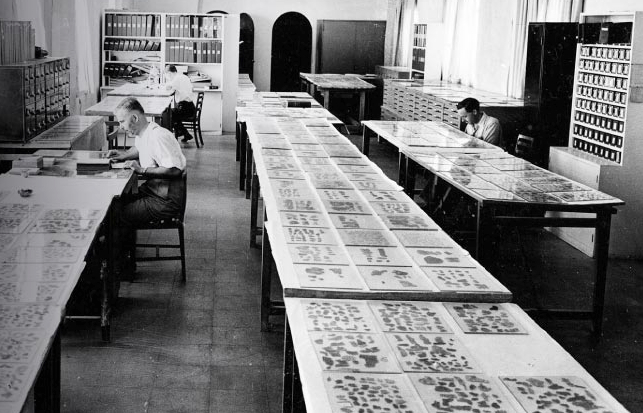
Scrollery room at Rockefeller museumAmazing since for years these fragments were at the Rockefeller museum, only accessible to a few scholars and now they are viewable from the comfort of your home.

Christ Church Exhibit  Not everyone knows about the exhibit at Christ Church that includes some Conrad Schick models, one of Haram al-Sharif (~1:125) and photographs and mementos of Jerusalem’s Old City from the turn of the century. Look closely at this photo to make out part of the sign of VESTER & CO.

In 1904 Bertha Spafford married Frederick Vester, whose father’s curio shop in Jerusalem had recently been bought by the American Colony. Renamed “Fr. Vester & Co., The American Colony Store,” the business greatly expanded its clientele and range of offerings to include photographs and collections of antiquities.

Jerusalem Old City ~1900

Jerusalem Old City ~1900

Dome of the Chain on Haram el-Sharif

The enigmatic building known as the Dome of the Chain was inaccessible and hidden for eight months by metal sheeting as the Waqf did some renovations on the structure. Just a few weeks ago the building was made accessible once again so I went and took these photographs.

Dome of ChainThe Dome of the Chain is not a mosque or a shrine and is one of the most ancient buildings on the Haram. It was probably built in 691 during the Umayyad period by Abd al-Malik who also built the Dome of the Rock. Some think the structure, because of its position in the precise center of the Haram, existed prior to Islamic rule in Jerusalem and refers back to the days of the Jewish temple or at least to the traditions that surrounded it. There is a tradition that the Dome of the Chain is the site where King David hung a chain that could not be grasped or touched by anyone deceitful, unjust or wicked and where his son King Solomon administered justice.

With the Crusader conquest it became a Christian chapel to St. James, restored as an Islamic prayer house by the Ayyubids and has been renovated by the Mamluks, Ottomans and the Palestinian-based waqf. It seems that the Mamluk sultan Baibars renovated it, refacing the mihrab with marble and reducing the number of outer columns. The ceramic tiles were added in the time of the Ottoman sultan, Suleiman the Magnificent.

Dome of Chain interiorOne of the most unusual things about the structure is that it combines an interior hexagon defined by marble columns with open arches supporting the dome surrounded by an eleven-sided polygon of columns with eleven open arches. Note that each of the column capitals is different. In the southern wall one arch has been closed as a mihrab. It is the third largest building on the Haram after the mosque of al-Aqsa and the Dome of the Rock with a diameter of 14 meters.

Dome interior

Closeup of Hanging lantern

Lantern hanging from the dome of Dome of the Chain


Biodiversity at Jerusalem Botanical Gardens

A human is like a tree, like a human the tree also grows, like a tree a human life can be cut down and I don’t know…

…כי האדם עץ השדה  כמו האדם גם העץ צומח  כמו העץ האדם נגדע  ואני לא יודע

I feel my lifeblood being sapped by the ongoing rocket/missile exchanges between the Israel Defense Forces and Hamas. Israel is trying to protect us by getting rid of Hamas’ rockets and weakening Hamas. Hamas is trying to get Israel to lift the blockade of Gaza, to improve Palestinians’ living conditions in one of the most densely populated areas in the world. Hamas is also trying to make life so stressful and unbearable that we lose hope, with the aim, clearly outlined in their charter (1988), of uprooting us from this land.

This week I visited the Jerusalem Botanical Garden on the edge of the Givat Ram campus of Hebrew University, a tranquil retreat in the midst of the city, welcoming to all (explanatory signs are being put up in English, Hebrew and Arabic). Their vision statement makes it clear:

Just as biodiversity is a key to a healthy natural world, so human diversity is a cornerstone of a healthy society. We promote and encourage both.

The 30 acre park is divided into six geographical zones, European, North American, South African, Australian, Asian and Mediterranean and has more than 10,000 species of plants. I was delighted to find Sternbergia, a young sycamine sapling and not only the five species of oak trees indigenous to Israel but some 75 different oaks of the 700 species that exist in the world growing at the botanical gardens, a refuge for endangered species. More than just replicating the flora of Eretz Yisrael the botanical gardens teach respect and awe for the biodiversity of our world. There is an African savannah grass maze for children to explore, there is a section on herbs and medicinal plants, a path of Biblical plants, water plants and plants of the desert.

Jerusalem has two botanical gardens (the first planted in 1931 on Mount Scopus campus of the Hebrew University), two university campuses and two Hadassah hospitals. History explains why – the institutions on Scopus were cut off from Israel for 19 years when Jordan occupied the West Bank and East Jerusalem after the war in 1948. An Israeli convoy under Red Cross auspices delivered supplies and exchanged personnel every two weeks.  Scopus and Jerusalem were only reunited by Israeli paratroopers during the Six Day War in 1967.

In 1947 Tuvia Kushnir, a brilliant young man, was studying and researching the plants of Palestine (under the British mandate, before the State of Israel was declared) at the Hebrew University on Mount Scopus. Tuvia discovered a rare flower, the Galilee fumitory (Fumaria thuretii Boiss) near Kibbbutz Eilon in the Upper Galilee, the southernmost extent of its range. The flower was not seen again for 60 years until Prof. Avi Shmida and other botanists discovered 80 individual plants of Galilee fumitory in April 2012. Tuvia was one of the first iris researchers in Palestine and identified an iris that bears his name Iris tuviae (also known as the King Uzziae iris). And Tuvia identified a kind of crocus that grows only in the desert that was named after him, Colchicum tuviae.

On January 15th, 1948 Tuvia was part of a group of Haganah soldiers given the task of carrying supplies to the defenders of Gush Etzion (on Friday two rockets fell in the Gush, the first fired towards Jerusalem), 4 kibbutzim south of Jerusalem that were under blockade by Arab forces. They set out at 11pm on foot from Har Tuv, making a detour past the British police station so as not to be detected (it was a capital offense to carry arms) and past Arab villages. Three soldiers turned back when one soldier twisted his ankle and was unable to continue leaving 35, the march of the lamed-heh (two Hebrew letters that have the value 35). Towards dawn the group was discovered near the Arab village of Tsurif, the alarm was raised and hundreds of Arabs from the neighboring villages attacked the convoy. Though the British heard the shots they did not investigate until all was quiet. The Israeli soldiers fought until they had no more ammunition – all were killed including Tuvia. When the British arrived on the scene they found the bodies horribly mutilated making identification very difficult. Rabbi Arye Levin performed the rare Goral Ha-gra ceremony, a mystical procedure devised by the Vilna Gaon where the rabbi opened a Tanakh and was drawn to read certain verses which gave hints to the identity of the bodies.

2:15pm Jerusalem time  I’m at home writing this post. By the time we hear the siren there are about 15 seconds until we hear a distant boom. Channel 2 reports that the rocket fell somewhere near Bethlehem, about 6.5 km south of where I am sitting.

At the Jerusalem Botanical Gardens work has begun on a Children’s Discovery Garden that will offer Jewish, Muslim and Christian young people an opportunity to explore and discover the wondrous natural world, to learn that diversity is important and in the process meet each other. Discovery and play will be used to show how plants adapt to their environment and the interaction between the two. Activities will include a canopy walk in the treetops and a descent down to a roots exhibit. Perhaps plants which are apolitical, are concerned less with borders and which speak to us all can show us the advantages of diversity and living together.

Photographs 1900

Walking around in the Arab shuq you might notice that many of the shops have matted black and white photographs from the turn of the century of Jerusalem and Israel for sale. It’s not clear who the photographers are or when the photos were taken but you can learn a lot about how Jerusalem developed at the end of the Ottoman period and transition to the British mandate from these photos. It’s interesting to compare a photograph taken today at the same place with the similar early photo.

If you are walking through the Muslim quarter toward the Church of the Holy Sepulcher on Al Khanka Street you will find the shop Elia’s Photo with black and white photographs going back to the 1920s in the window. On entering you will meet Kevork Kahvedjian a delightful gentleman who I’ve heard speak English, Hebrew and Arabic (he’s Armenian so most likely he speaks that too) who will be happy to talk with you and show you the photographs. Most of the photos on display were taken by his father Elia (reprinted from the original negatives) but some are even earlier that Mr Kahvedjian has collected. There is also a hardcover book of 131 of his father’s photographs, “Jerusalem Through My Father’s Eyes” (their website lists it at 230 NIS, on Amazon  it’s $200. – it makes a great present or souvenir).

Elijah Meyers founded the American Colony Photo Department in 1898 (though some photos are earlier). Meyers, who emigrated from India, was a Jewish convert to Christianity. 1898 was the year of the German Kaiser Wilhelm II and Augusta Victoria’s visit, an auspicious start to the photographic enterprise as people were interested in photos of the visit.

Meyers instructed the young Swede Lewis Larsson in photography. Larsson (1881?-1958) was among the original group of Swedish colonists who arrived in Jerusalem in 1896 and became one of the most skillful of the photographers. Not only a keen observer, Larson travelled extensively in the Middle East between 1903 and 1910.

Larson knew what scenes were important to capture visually – he photographed landscapes, scenes of village life, the violent struggles at the end of World War I with the collapse of Ottoman empire. In 1904, Lewis Larsson succeeded Elijah Meyers as head of the Photo Department. Larsson ran the department for the next thirty years, even while he served as Vice Consul and later Swedish Consul for Palestine from 1920 to 1925.

G. Eric Matson (1888-1977) also came to the American Colony from Sweden in 1896 with his family as a young child. He began working in the Photo Department darkroom as a teenager in the early 1900s, although it is uncertain when he actually began taking photographs. Matson married an American, Edith Yantiss who also worked in the darkroom.

Together the Matsons excelled in innovative techniques, such as coloring photographs with oil paint, producing double stereoscopic photographs to create 3-D pictures, taking photographs with infrared film and aerial shots.

In 1934, the original colony disbanded and Matson gained control of the Photo Department with its large collection of photographs. The Matsons continued their photographic work under the American Colony Photo Department name until 1940, when they renamed the business the “Matson Photo Service.” In 1946, in the face of increasing violence in Palestine, the Matsons left Jerusalem for southern California. The staff shipped the bulk of the glass plate negatives to the United States, with the remaining negatives relocated to the basement of the International YMCA for safekeeping (unfortunately when retrieved in 1970 they had sustained water damage). By the early 1950s, with tourism on the decline, the Photo Service’s staff dispersed, forcing the closing of the Jerusalem operation.

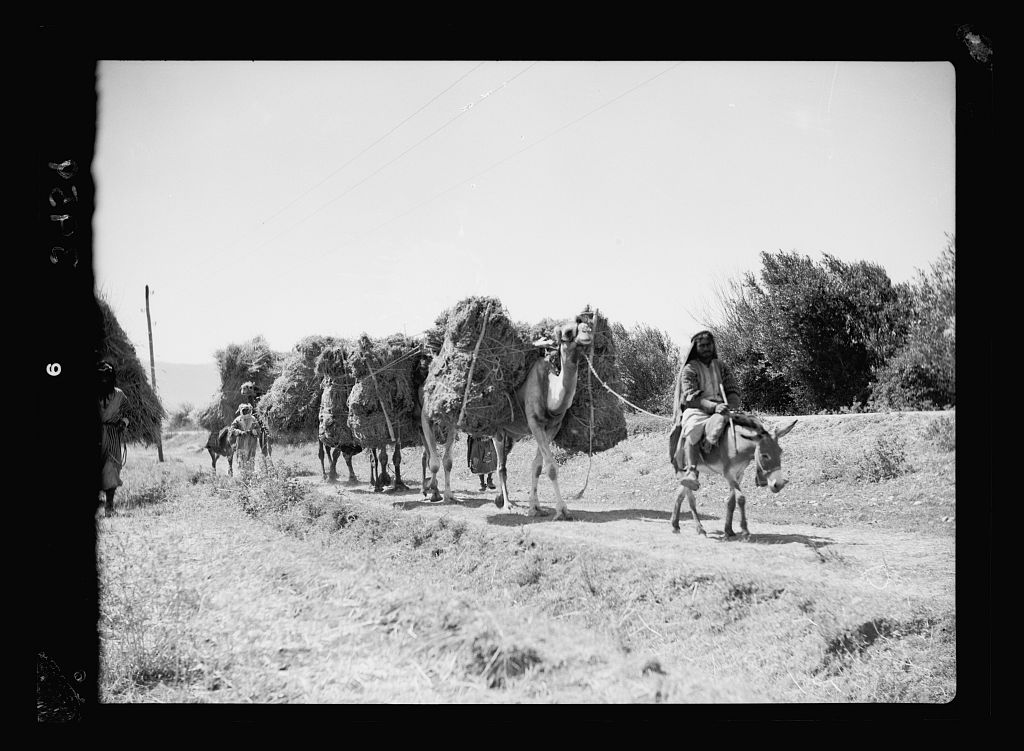
Realizing the Collection’s historic value, in 1966 Eric Matson donated the thousands of negatives and 11 albums of contact prints to the Library of Congress who have digitized the images and made them freely available on the Internet at http://www.loc.gov/pictures/collection/matpc/ – a great record of Jerusalem and Palestine during the first 50 years of the 20th century.