Category Archives: Tomb

Ketef Hinnom Silver Amulet

I wrote this post about First Temple Period tombs found in Jerusalem in 2011 and over the years the post got 1 Like, a few hundred views a year which is an average of less than 1 view a day, until this year! Since 2021 the post has 1672 views or 30 views on average per day and I can’t figure out why. If you’re reading this post could you please leave a comment about how you found it and why it is of interest. Thanks so much.

In 1979 Prof. Gabriel Barkay decided to do some archaeological research outside the walls of Jerusalem’s Old City and chose a ridge above the Hinnom valley by the Scottish Church of St. Andrew.

He called the area Ketef Hinnom (ketef means shoulder in Hebrew) and did a survey that uncovered the remains of a Byzantine church with mosaic floor and some tombs hewn in the rock whose roofs had collapsed. With the help of 12-13 year olds from a youth group from Tel Aviv run by the Society for the Protection of Nature he began excavating. They found one bead – it was clear that the tombs had been looted in antiquity.

A boy by the name of Nathan was assigned to clean a nook underneath one of the burial benches. By chance he also had a hammer and after cleaning, he got bored and started banging on the floor of the nook. To his surprise the stone bottom broke revealing an entryway to another room full of treasure. The burial chamber with its objects has been faithfully recreated at the Israel Museum.

As Prof. Barkay explained:

“In [that] one chamber more than a thousand objects were found.  They included 125 objects of silver, 40 iron arrowheads, gold, ivory, glass, [ceramics, oil lamps,] bone and 150 semi-precious stones.  There was 60 centimeters (two feet) of accumulation filled with objects and skeletal remains…

Judy Hadley, a girl from Toledo Ohio, now a professor of Bible at Villanova University in Philadelphia, showed me a purplish-colored object looking like a cigarette butt.  It took us three years to unroll it properly.  It was 2.5 cm wide, about 1 inch.  When unrolled, it was 10 cm in length.  It was made of pure silver, 99% silver. Very delicately scratched on the silver were ancient Hebrew characters.  I saw it at the Israel Museum lab and immediately recognized the four letters of the Divine Name, YHVH.”

Courtesy of the Israel Museum

All the dirt removed from the tombs was stored in large plastic boxes donated by Tnuva [Israel’s largest dairy and today a billion dollar food conglomerate] and sifted under lab conditions. In the sifting, a second, smaller silver object, 4 cm in length, was also found. Both objects have the Priestly Blessings from Numbers 6:24-26 engraved on the silver in proto-Hebrew script.

The Lord bless you and protect you.
The Lord make His face to shine upon you and be gracious to you.
The Lord lift up His countenance upon you and grant you peace.

Because of the pottery and the script, the objects are dated to the 7th century BCE (while the First Temple was still standing), to the time of the prophet Jeremiah. These are the oldest examples that we have found of a Biblical text on an archaeological artifact, about 400 years older than the Dead Sea Scrolls.

The discovery of the silver amulets received very wide public interest.  In the 1990s Dr. Bruce Zuckerman from the University of Southern California, an expert who specializes in photographing ancient texts (various Dead Sea Scrolls and the Leningrad Codex) arranged to photograph the amulets using the latest photographic and computer imaging techniques.  This made it possible to zoom in on every letter and even superimpose complete letters on broken letters, reconstructing broken letters in the scribe’s own peculiar style to better decipher those that were unclear. The result was that they were able to identify another biblical verse on the larger scroll, from Deuteronomy 7:9.

Know, therefore, that only the Lord your God is God, the steadfast God, who keeps His covenant faithfully to the thousandth generation of those who love Him and keep His commandments.

Read the Life and Land blog for a first-hand report from Gordon Franz who as a 25-year old was at Ketef Hinnom working with Prof. Gaby Barkai. The two amulets are on display in the Archaeology wing of the Israel Museum. I can take you to Ketef Hinnom to see the First Temple period tombs where the amulets were found.
Archaeological Artifacts with Names

Of the myriad names of people that are familiar from the Bible and I’ll expand it to include the New Testament, Josephus and the Talmud, we have very little confirmation from archaeological evidence, inscriptions, papyrus or parchment, that these figures actually existed. I am excluding, for the moment, the names of rulers who appear on coins minted during their reign or names on bullae or seals.

Here are some of the names that have been found on archaeological artifacts:

  • The name Nicanor, from Alexandria who brought 2 large bronze gates to the Herodian Temple in Jerusalem, recounted in the Talmud Yoma 38a, was found on an ossuary in a burial cave on Mt. Scopus.
  • The name of the priestly family of Hezir, mentioned in the Bible (Nehemiah 10:20; 1 Chronicles 24:15), was found in an epitaph in the family mausoleum in the Kidron Valley.
  • The name of the priestly family Qatros, mentioned in the Babylonian Talmud, was inscribed on a stone weight, found in the basement of the Burnt House, a private dwelling on the Western Hill in Jerusalem.
  • The name of the priestly family Caiaphas, mentioned in the New Testament, Josephus and the Talmud was found on two ossuaries found in Jerusalem.
  • The name Yehohanah, a granddaughter of the high priest Theophilus nominated high priest in 37CE the year Herod became king mentioned in Josephus was found inscribed on an ossuary.
  • The name “tzaddan malka” and “tzadda malkata,” the Aramaic equivalent of the Greek “Queen Helena”,  spoken of in Josephus and the Tosefta for her giving of charity to the poor of Jerusalem during a period of famine (Peah 4:1) was found inscribed on a sarcophagus from the Tomb of the Kings in Jerusalem.
  • The name Simon bar Kosiba or Bar Kokhba, the leader of the Second Jewish Revolt (132–135CE) against the Roman was found on letters in caves at Wadi Murabba’at and Nahal Hever and 4 lead weights. You can see images of these weights at this site: http://www.archaeological-center.com/en/monographs/
  • The name David was found in the excavations at Tel Dan when a piece of basalt, part of a victory stele (on display at the Israel Museum in Jerusalem) describing how the Aramaean King Hazael was victorious over the House of David was found in the southern end of the wall by the outer gate.
  • The name Pontius Pilate was found on a stone inscription, part of a larger dedication to Tiberius Caesar in Caesarea. In 2018 a thin, all copper-alloy signet ring found at Herodium in 1969 was deciphered to read PILATO (“for Pilate” in Greek), conceivably some administrator pushing papyrus for Pilate would have worn a ring like this at a southern administrative center like Herodium.
  • The name James (brother of Jesus) was found on an ossuary with the Aramaic inscription Ya’akov bar-Yosef akhui diYeshua, “James, son of Joseph, brother of Jesus” as recorded in the New Testament and Josephus; the authenticity of the inscription has been contested and is the subject of ongoing scholarly debate.

Caiaphas Family Tomb and Ossuary

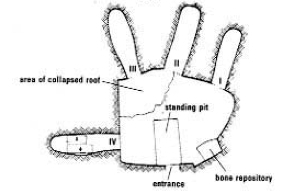
Tomb layout from IAA via Biblical Archaeology Review article

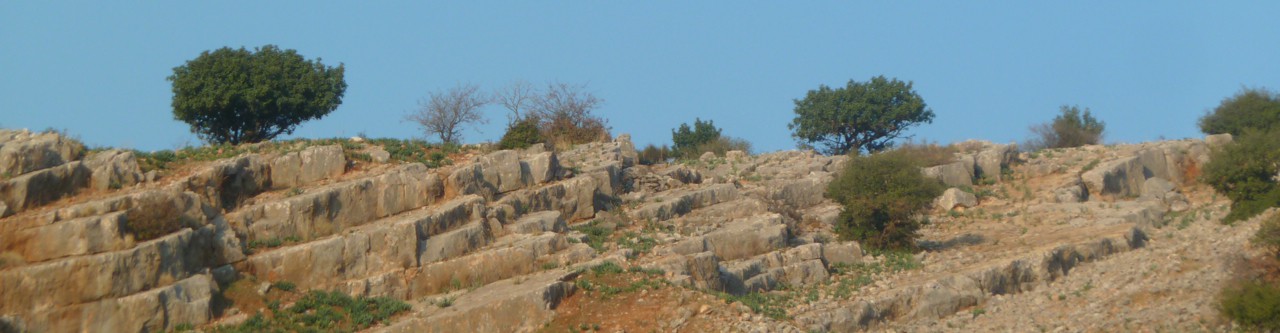
In the winter of 1990 while doing some work in the Peace Forest just below the Haas promenade (in Hebrew known as the tayelet) workers discovered a burial cave made up of 4 recesses (called loculi), rectangular spaces about 6 feet deep and 1.5 feet wide, cut in the limestone bedrock. The promenade, a dream of Teddy Kollek and designed by the Israeli landscape architect, Shlomo Aronson, is built on the ridge with an impressive view of the Old City walls and ancient city of David; I often take people there to begin a tour.

Since many tombs have been found in the Kidron and Ben Hinnom valleys around the Old City it was not a surprise to find this burial cave. Inside were found 12 ossuaries, 6 scattered about indicating that the cave had been robbed in antiquity but 6 in their original places.  Zvi Greenhut, the IAA archaeologist called to the site, identified it as a Jewish burial cave from the Second Temple period. At this time, burial for those who could afford a family tomb, the body was laid out in a recess carved in the wall of the cave and closed off. A year later, after the flesh had decomposed, the family returned, opened the loculus and gathered up the bones and deposited them in a cavern with earlier bones. That’s the explanation of the expression in the Bible “to be gathered up with his forefathers” and why it is a custom to revisit the grave after a year. Later it became customary to put the bones in a special limestone box and to write the name of the deceased on the outside – this coincided with the rise in belief of a physical resurrection at the End of Days.

Of the five ossuaries with inscriptions we find the names of two women: Miryam berat Shimon and Shlom… the full version would be Shlomzion.

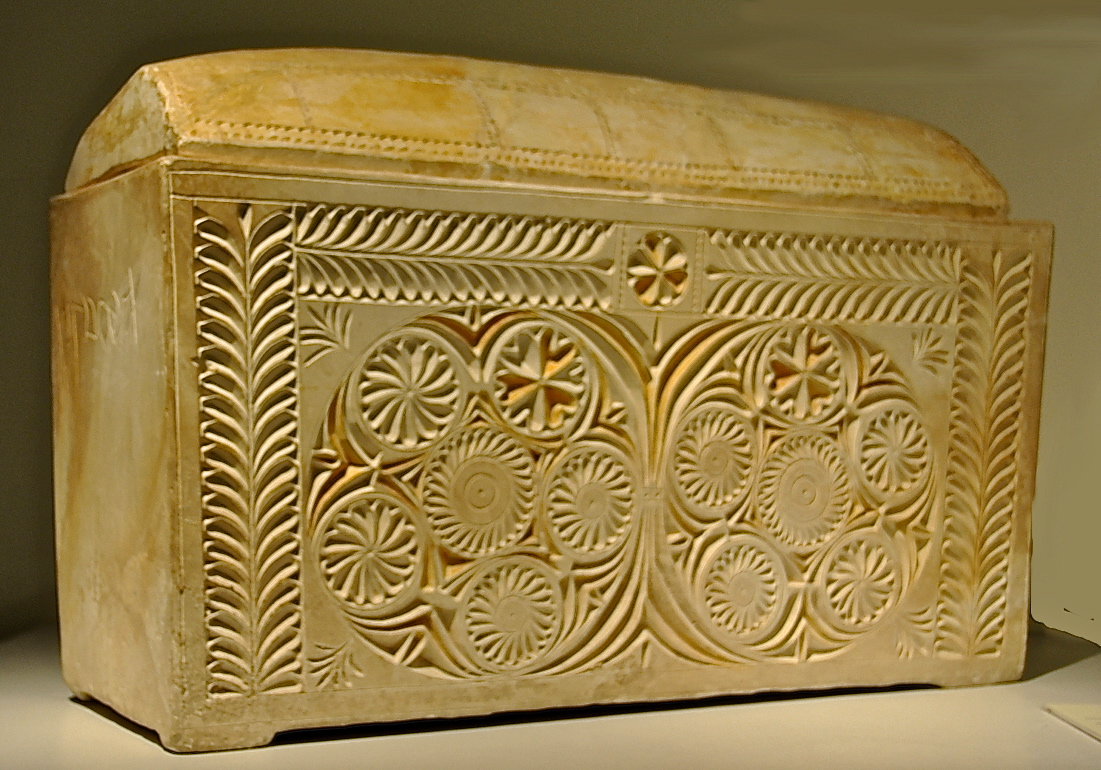
Caiaphas ossuaryFrom the name written on two of the ossuaries the cave seems to be the family tomb of Qafa, in Greek Caiaphas, a name known to us from the New Testament and writings of Josephus, one of whom was the high priest who presided at the trial of Jesus. One of these ossuaries is decorated beautifully in a rare and intricate pattern of two circles, each made up of six whorl rosettes, bordered by a pattern of palm branches. Inside were found bones from six different people, two infants, a child between 2 and 5, a young boy between 13 and 18, an adult woman and a male of about 60.

On the undecorated end is inscribed “Joseph bar Caiaphas” not necessarily “the son of” – here Caiaphas is a nickname which became a sort of family name. A fascinating statistic from the Second Temple period based on personal names mentioned in literary sources and inscriptions is that 28% of men had one of 4 names (Joseph and Shimon being the two most popular), 9 names account for 44% of men (so a family nickname would help identify people); for women it was even more extreme, 50% of women had 2 names, Miryam, which later became Mary and Shlomzion the equivalent of Salome in Greek.

A coin found in one of the ossuaries was minted by Herod Agrippa (37–44 C.E.). This would help us date the two Caiaphas ossuaries perhaps as early as the beginning of the century. The evidence suggests that we may have recovered the burial box (ossuary) and even the bones of the high priest Caiaphas who handed Jesus over to the Romans.

4–Day Itinerary

I’m happy when people contact me looking for a multi-day itinerary based from Jerusalem. It’s definitely worth a few days if you have the time. I’d like to share one itinerary that I guided for clients a couple of weeks ago. Of course, this itinerary is just to give you the idea – when you hire me as your guide you get a personalized itinerary that matches your interests.

Day 1

  • We started with an overview of Jerusalem from the promenade at Armon HaNatziv, learned about the aquaduct that brought water to the city from Hasmonean times (100 BCE). From there we drove to Herodium for a comprehensive tour: the lower city (pool, Roman bath, monumental building, Byzantine church) outside the park and the palace/fortress on the manmade mountain top built by King Herod including the latest excavation by Netzer of the tomb and Roman theater discovered on the north-east side of the mountain.
  • Visit to Gush Etzion (Etzion Bloc) to learn about the history of the Gush and memorial to the defenders of Kibbutz Kfar Etzion in 1948. Lunch at a lovely restaurant called Gavna in the forest of Kibbutz Massuot Yitzhak with a view all the way to the coastal plain.
  • Visit to Hebron and the Cave of Machpela, that Abraham purchased to bury Sarah in which our forefathers and 3/4 mothers are buried. The building over the cave was built by Herod. Walk around the city to try to understand the current political reality.

Day 2

  • Walking tour of the Old City covering the 4 quarters, the 3 religions and 3000 years of history, including Herodian, Roman, Byzantine, Arab, Crusader periods. Views of the city from above and exploring underground. Tastes of the city for lunch.

Day 3

  • Visit the Israel museum to see the 2nd Temple model of Jerusalem. Tour of the Shrine of the Book, the unique architecture, the exhibits of artifacts from Qumran and the Dead Sea Scrolls.
  • Opportunity to stroll through the Sculpture garden.
  • Visit the City of David, the walled Jebusite city captured by King David in 1004BCE and made the capital of his kingdom. Learn about the extensive archaeology going on there and the politics. Possibility of walking through Hezekiah’s tunnel.

Day 4

  • Drive from Jerusalem to the Dead Sea and Judean desert, the lowest point on earth, only 42 km away but 1170 meters lower. Learn about the African Rift valley, water, shrinking of Dead Sea, sink-holes, flora and fauna.
  • Qumran where the Dead Sea Scrolls were discovered in passing.
  • At Ein Gedi, hike Nahal David to waterfalls and natural pools (it’s delightful to take a dip even in the winter months). Visit the ruins of the Jewish synagogue with mosaic floor.
  • Continue south to Masada, Hasmonean fortress in the desert extensively renovated by Herod, used by the Jewish rebels against the Roman and later by some Byzantine monks. Visit the new museum at Masada.

Negev desert

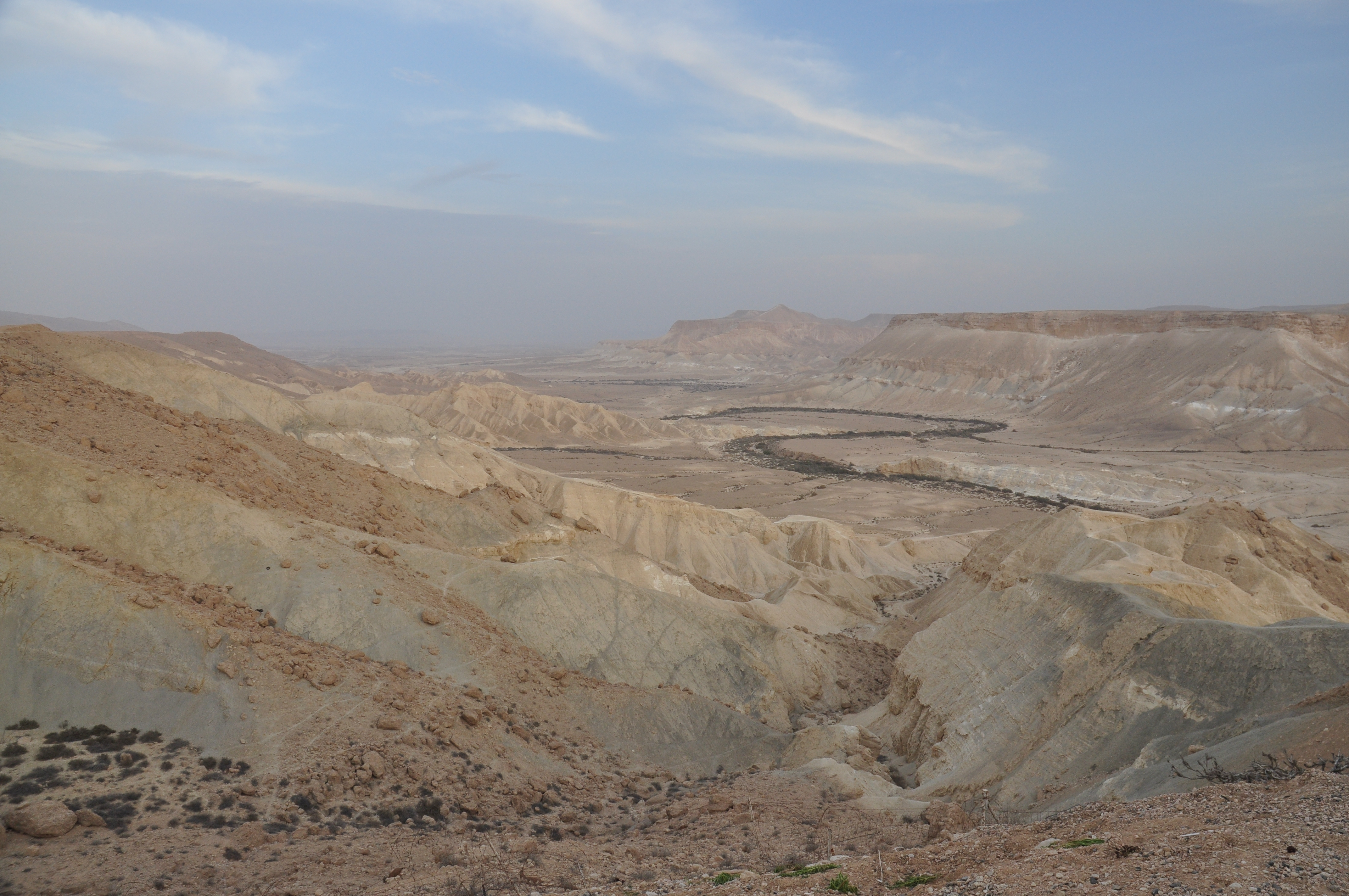
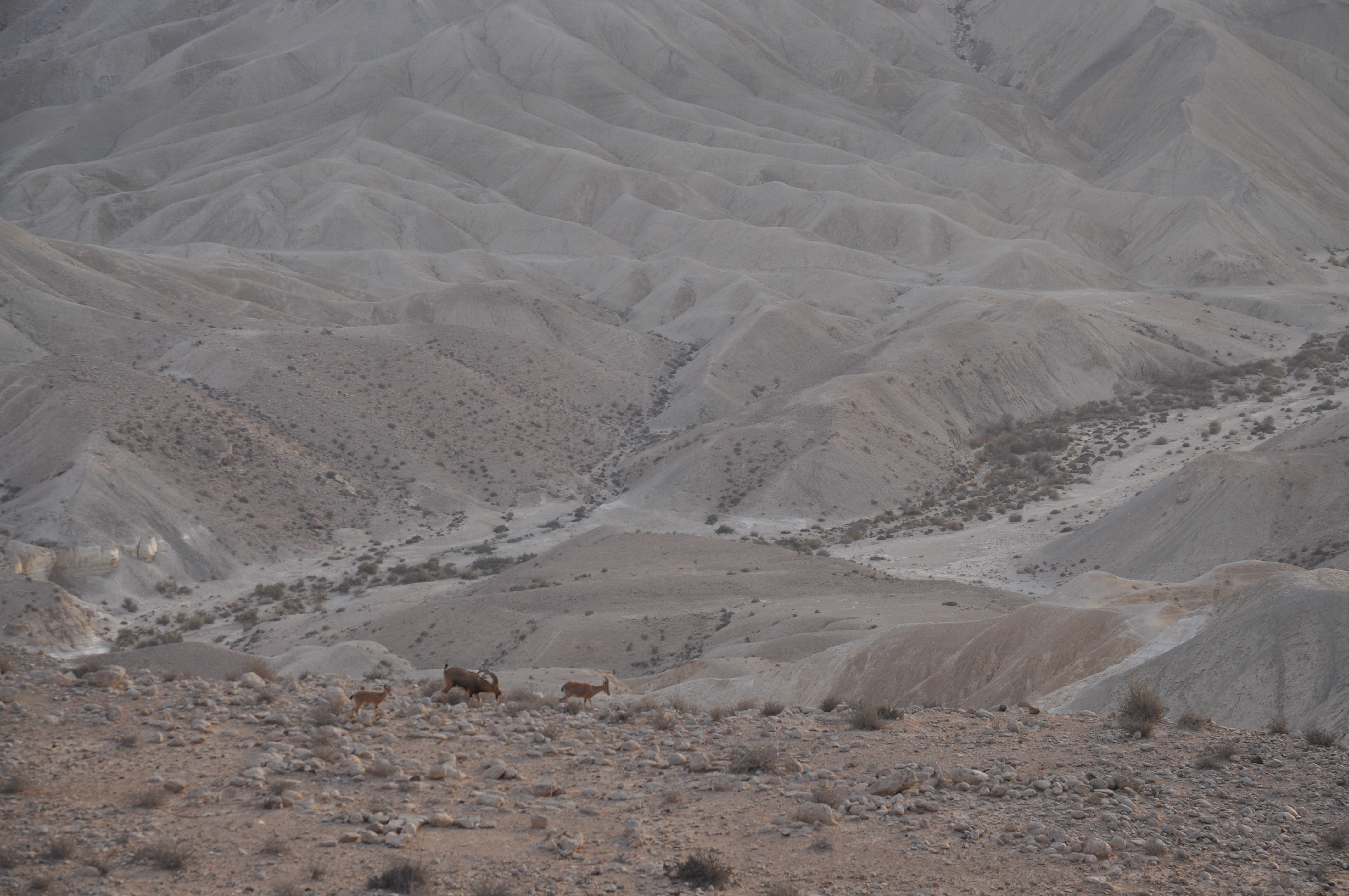
The Negev desert, shaped like a 4700 square mile inverted triangle in the south of Israel, makes up more than half of the country’s land area. I can arrange to make a visit to the Negev part of your itinerary, you have to experience the desert to understand its importance.

Geographically the Negev can be divided into 5 areas: the northern, western and central Negev, the high plateau and the Arava Valley. This article focuses on the high plateau area, Ramat HaNegev (Negev Heights). The plateau stands between 370 metres and 520 metres above sea level and has extreme temperatures in summer and winter and significant differences in temperature between day and night. Even though the area gets only 100 mm of rainfall per year and the soil is poor and quite salty, Israel is successfully growing olives, pomegranates, pistachios and grapes for wine.

DSC_0042

Here are some places to add to your itinerary as you explore Ramat HaNegev.

  • Kibbutz Revivim is growing 5 varieties of olives using brackish water and selling the olives and olive oil in an upmarket boutique dedicated to their products in Tel Aviv.

DSC_0017

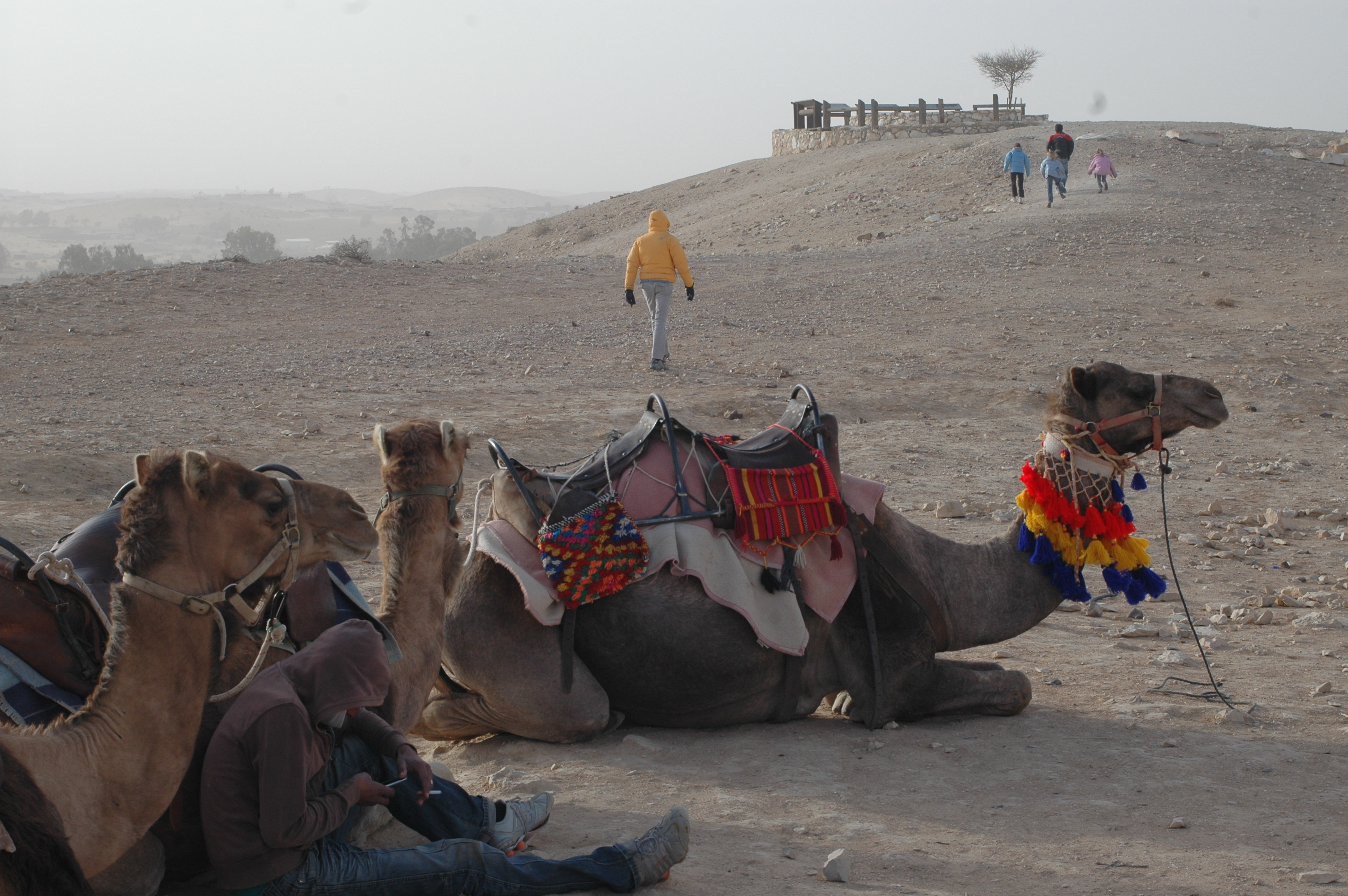
  • Park Golda includes a lake and picnic tables to eat your lunch or for an unforgettable desert experience, try Beduin hospitality in a black goat’s hair tent followed by a camel ride.

IMG_0931

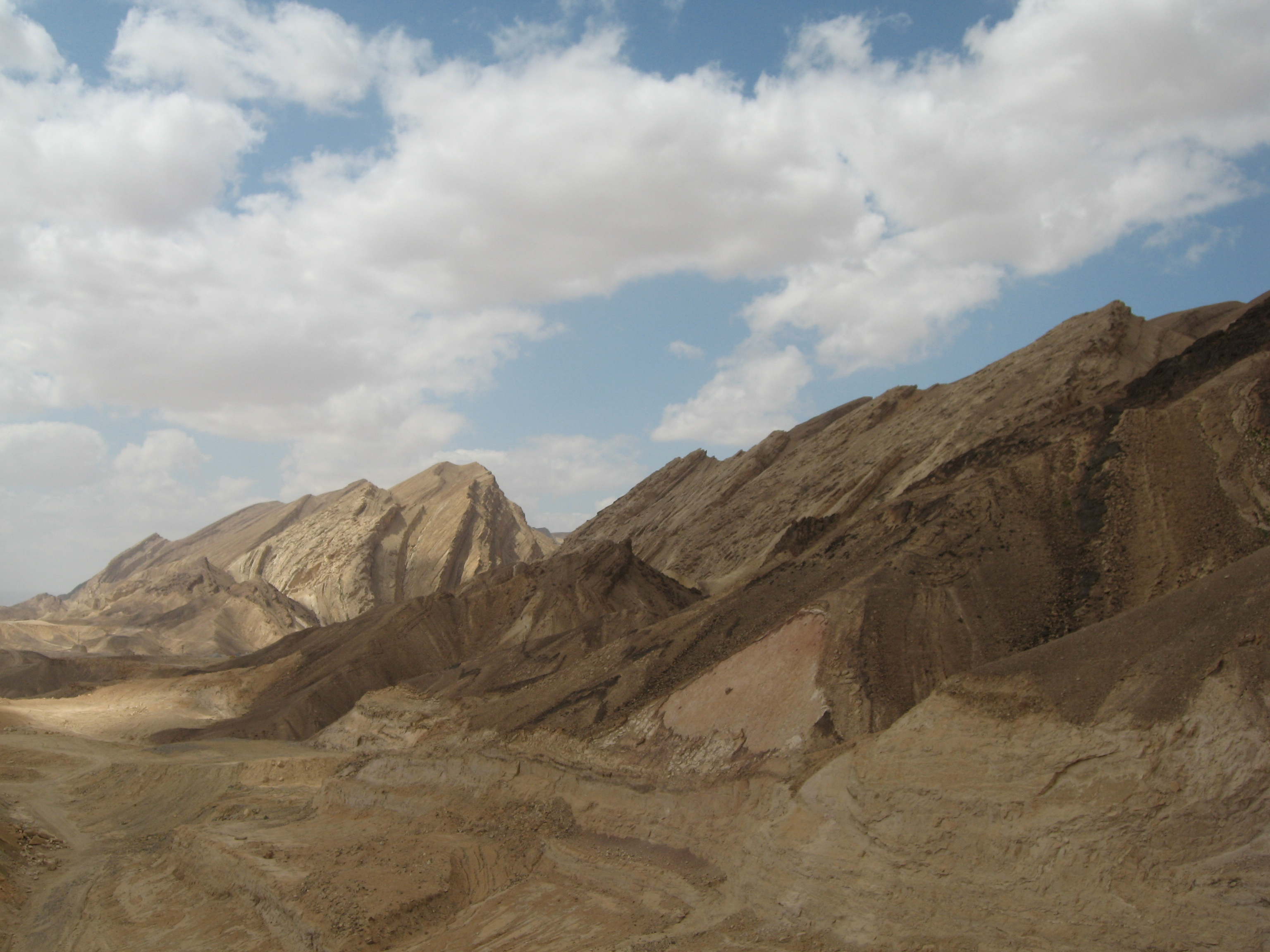
  • The Large Makhtesh is one of 3 craters in the region, a unique formation to the Negev, where the inside of a mountain is eroded by water, leaving the outer shell.
  • Visit the tzrif on Kibbutz Sde Boker to get a glimpse of how Ben-Gurion and Paula lived. The Ben-Gurion Institute, a research facility for the study and the dissemination of his writings, offers visitors a multi-media program about the man and his vision.
  • You can visit a string of family farms along route <40> for wine and cheese tasting and even sleep over in one of their cabins under the desert stars. On farms that are growing grapes and making wine, the vines have been planted on the same 1500 year old terraces that were prepared by the Nabateans and take advantage of runoff from the winter rains. These farms are also a symbol of Israel’s pioneering spirit in the 21st century, composting their waste, recycling their grey water and generating electricity using solar photovoltaic panels.

DSC_0033

  • Hike into the canyon at the Ein Avdat National Park with springs, pools and waterfalls, an oasis in the desert or from the Roman bath house (below Avdat) supplied with water drawn from a well tunneled 70 meters through bedrock hike north along the Israel Trail to the Ein Eikev spring that flows year round.
  • Visit the remains of the Nabatean city of Avdat which was probably the regional capital. Located at the crossroads that join Petra in Trans-Jordan to Eilat and to Gaza, Avdat controlled the passage of the caravans from India and Arabia. Conquered in 106 CE by the Roman Emperor Trajan, it lost its importance when a road was built between Eilat and Damascus. Avdat adjusted by adopting agriculture, particularly the production of wine, as its means of subsistence. Numerous terraced farms and water channels were built throughout the region in order to collect enough run-off from winter rains to support agriculture in the hyper arid zone of the Negev. At least five wine presses dated to the Byzantine period have been found at the site showing us how important wine-making was in this region. In the Byzantine period (5th and 6th century) a citadel and a monastery with two churches were built on the acropolis of Avdat on the ruins of earlier pagan temples. The town was totally destroyed by a local earthquake in the early seventh century and was never reinhabited.

Heap of the Wild Cat

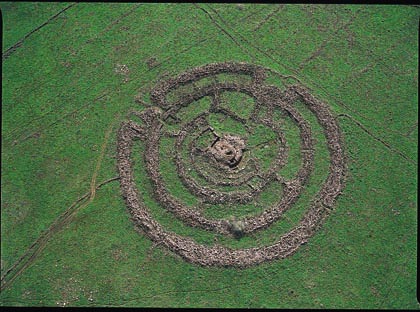
Rogem Hiri (Rujm al-Hiri in Arabic, meaning stone heap of the wild cat) is one of the most intriguing archeological sites in Israel.

The megalithic complex is located in the central Golan, on the Golan trail, near Daliyot reservoir (32.908705°N 35.800705°E). It consists of four concentric circles of local basalt fieldstones (42,000 stones are the estimated number) of varying sizes enclosing a central, round cairn. The outer, largest circle is about 500 meters long and 156 meter in diameter. Several radial walls connect the circular walls, creating a labyrinth-like structure which has only two entryways, one facing northeast, the other southeast. At the center of the circles is a cairn, an irregular mound of stones 20-25 meters in diameter and preserved to a height of 6 meters. A geophysical survey using Ground Penetrating Radar (GPR) revealed the pile of stones to be hollow suggesting that it might be a burial chamber, a monumental commemorative tomb or the mausoleum of an Early Bronze Age ruler in the Golan.

Rogem Hiri, RogemHiri, megalithic complex in Golan (photo from Israel Ministry of Foreign Affairs website)

Rogem Hiri, Heap of the Wild Cat, megalithic complex in Golan (photo: Israel Ministry of Foreign Affairs website)

Archaeologists have proposed a variety of theories concerning the function of this structure, which has no parallel in the Middle East: a religious center; a defensive enclosure; a large burial complex; a center for astronomical observation, a sort of Middle Eastern Stonehenge since the northeastern entryway is roughly oriented towards the solstitial sunrise on 21 June and a calendrical device. The structure was even identified as the tomb of Og, King of the Bashan and last of the giants (see Deuteronomy 3:11).

The structure is not easy to appreciate from the ground so wouldn’t it be great to fly over it in a hot air balloon or glider?