Category Archives: Nature

Agamon Hula Lake

I just guided a group in the north of Israel and can report that Agamon Lake received rave reviews. Matt, steering the 7-cycle that we rented, said “This is the greatest day in my life”. Aunt Ruth who had just come from the birding festival in Eilat helped us identify the many birds that we saw. Some of the younger at heart rode bicycles, the older people drove in an electric golf cart (all available for rental at the site).
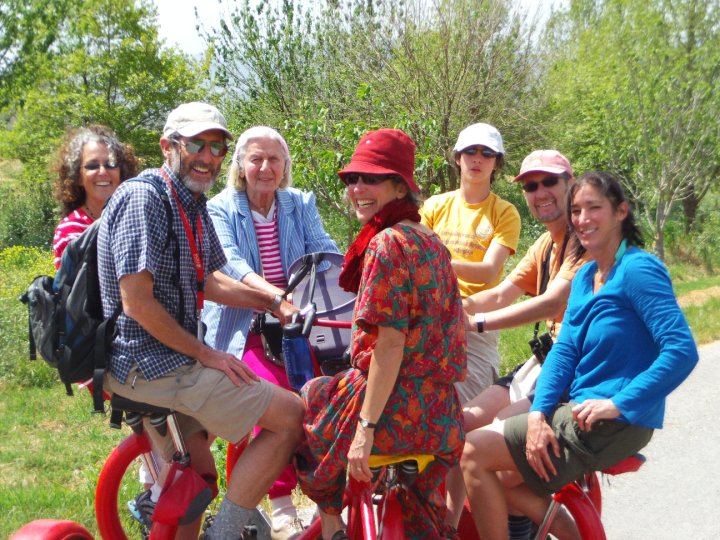
Matt steering the 7-cycle, photo Steven Browns

Agamon Lake is in the Hula Valley (עמק החולה‎, Emek HaHula) an agricultural area in northern Israel in the Syrian-African Rift Valley with abundant fresh water. The Hula is bordered on the east by the Golan Heights and to the west by the Naftali mountains rising 400 to 900 meters above sea level. Basalt hills about 200 meters above sea level formed during late Pleistocene volcanic activity along the southern side of the valley impede the Jordan River flowing into the Sea of Galilee, referred to as the basalt “plug” formed the historic Hula Lake about 20,000 years ago and the surrounding wetlands. It is an important route for birds migrating between Africa, Europe, and Asia.

The Hula Lake existed until the 1950s, a shallow, pear-shaped basin 5.3 kilometers long and 4.4 kilometers wide, extending over 12-14 km². It probably contained the richest diversity of aquatic life in the Middle East (south of Lake Amiq, Turkey which was drained at about the same time as the Hula). Based on research 260 species of insects, 95 crustaceans, 30 snails and clams, 21 fishes, 7 amphibians and reptiles, 131 birds and 3 mammals were noted.
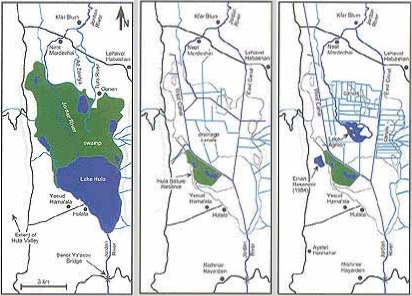
Between 1951 and 1958 draining operations were carried out by the Jewish National Fund (JNF). The declared objectives of the Hula draining project were two-fold: the addition of arable land and the eradication of malaria; additional perceived benefits were more water (by reducing evaporation losses) and peat as fertilizer. Hula Lake was drained by deepening and widening of the Jordan River downstream and digging two peripheral canals diverting the Jordan at the north of the valley (to bypass the plug).

In response to environmental concerns a small (3.50 km²) area of recreated papyrus swampland in the southwest of the valley was set aside and in 1963 became Israel’s first nature reserve.

Unfortunately, what originally seemed like a good idea over time created severe agricultural and ecological problems due to peat sediment degradation: uncontrollable underground fires, formation of dangerous caverns within the peat, proliferation of field mice, release of nitrates and sulfates into the Kinneret, 119 animal species were lost to the region, 37 totally lost from Israel, many freshwater plant species became extinct. So from 1980 to 1994 under the auspices of the JNF a program for the Hula’s rehabilitation was inaugurated.
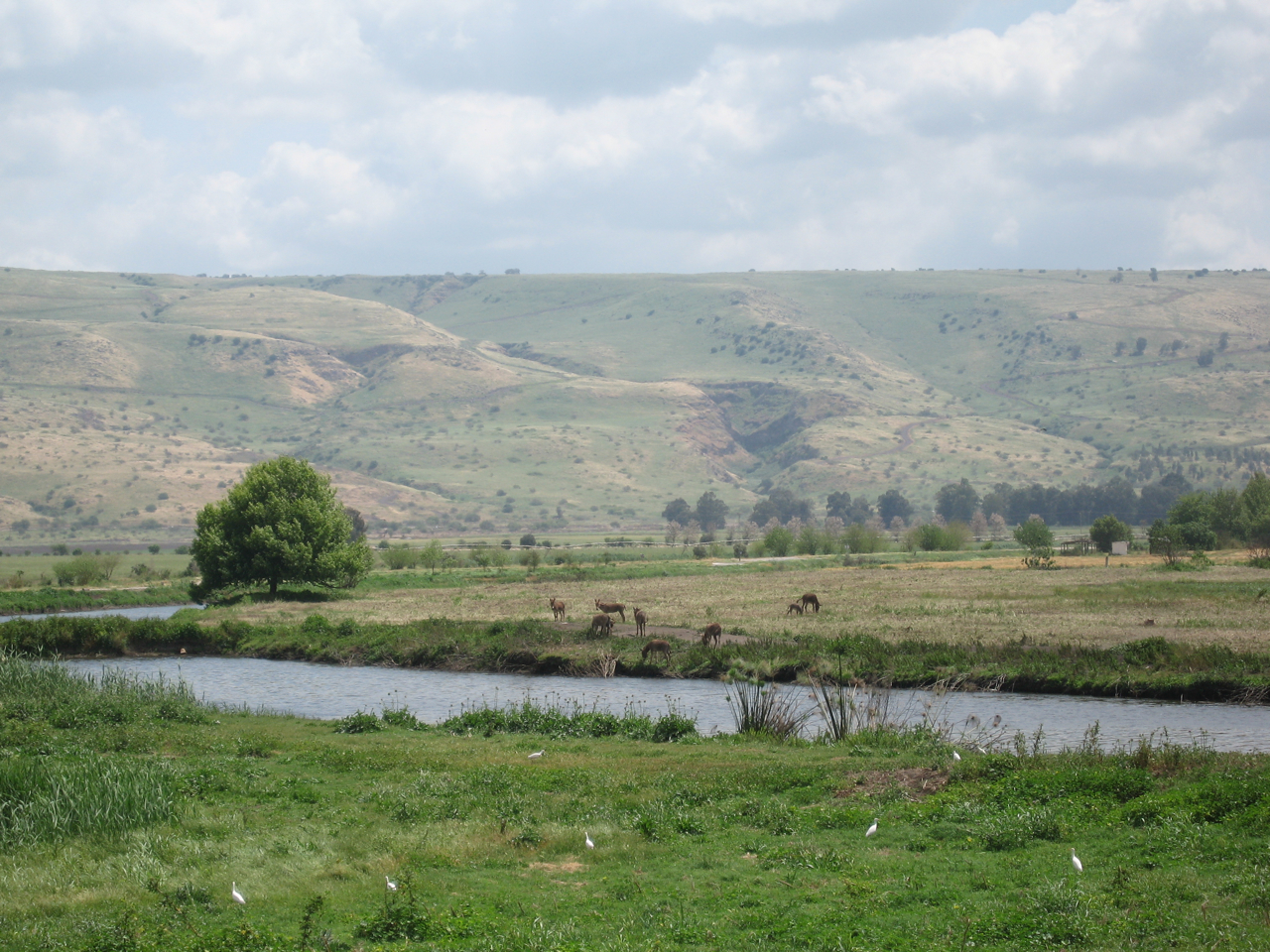
In 1994 a small area in the southern part of the Hula Valley, in the area that once served as the transition between the original Lake Hula and the surrounding swamps was reflooded to create Agamon HaHula (אגמון החולה‎, literally: “Little Hula Lake”).  It has an irregular shape, covering an area of 1 km², several smaller islands were created in the middle of the lake to provide protected nesting sites for birds. At least 120 species of birds have been recorded in or around the lake including large flocks of migratory pelicans, storks, cormorants, cranes, and other birds en route between Europe and Africa that spend days to weeks in the vicinity of Agamon HaHula. Also, new nesting colonies of various species such as herons and plovers have been established. As well, water buffalo and donkeys have been introduced and a small furry rodent called a nutria (also called a coypu), which was brought to Israel from South America for its fur, has made its home here.

You can check out the Agamon website at http://www.agamon-hula.co.il/

7-cycle, photo Steven Browns

Nahal Saar

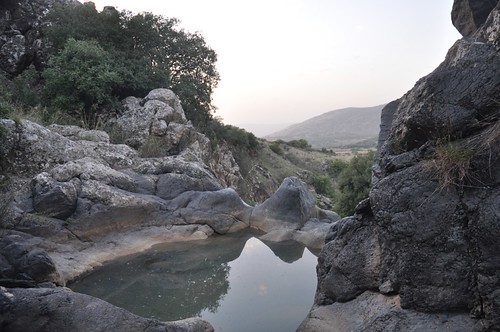
Just 4 km from Nimrod fortress at the junction of highway <989> with <99> is the Saar waterfall and pool. This photo was taken in November before we had much rain so there was no waterfall – you can see that the pool is very quiet and serene. This is one of the places that I suggest to people who are interested in a tour focussed on photography.

DSC_0153

A couple of weeks later I was touring with a family to the Golan and we stopped at Saar Falls. With the rain the water was now cascading down the rocks in three waterfalls.

Nahal Saar is the divider between the basalt plateau of the Golan and the limestone Mount Hermon. The root of Hermon, hrm, is the same as the Arabic Haram indicating a holy, untouchable or sacred precinct (as in the Haram el-Sharif in Jerusalem).

Spring wildflowers


From mid-February the country is covered with a mantle of wildflowers. Though it may vary from year to year, this is when

“the winter is past, the rain is over and gone, the wildflowers appear on the earth…” Song of Songs.

Tradition marks the beginning of spring in Israel with the flowering of the almond tree (shkedia in Hebrew) at Tu B’Shvat. One of the first flowers to bloom is the red anemone (anemone coronaria from Greek Άνεμος ‘wind’, in Hebrew kalaniot), a perennial in the buttercup (Ranunculaceae) family. Don’t confuse the anemone with red poppies (of the genera Papaver) that bloom later in the season

  • anemone has a variable number of petals but never less than 5; poppy has 4 petals
  • anemone floral bud is cupped by 3 dissected leaflets that remains; poppy has 2 that drop away

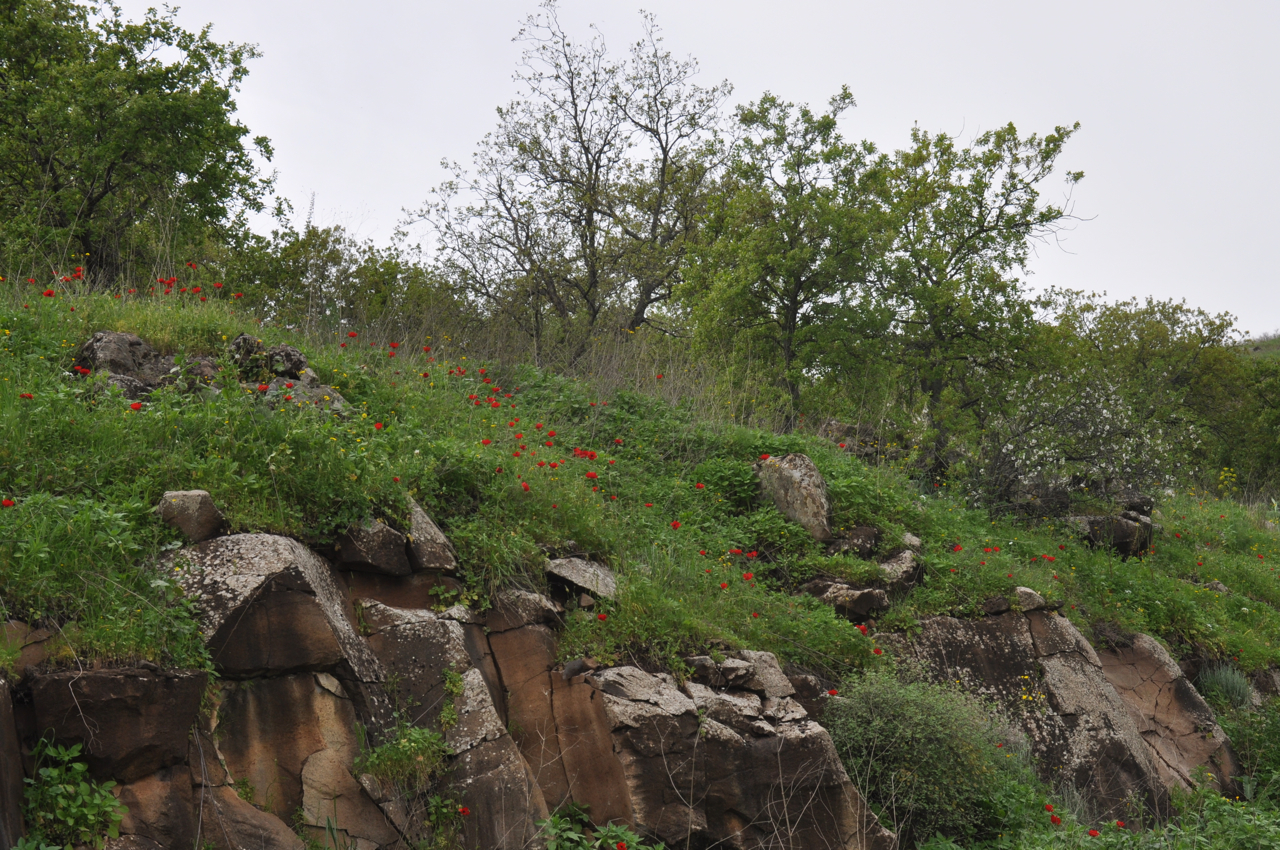
On a tour of the Golan last week we saw red anemones growing on the hill as we walked down into the wadi to Breikhat Meshushim (Hexagonal Pool).

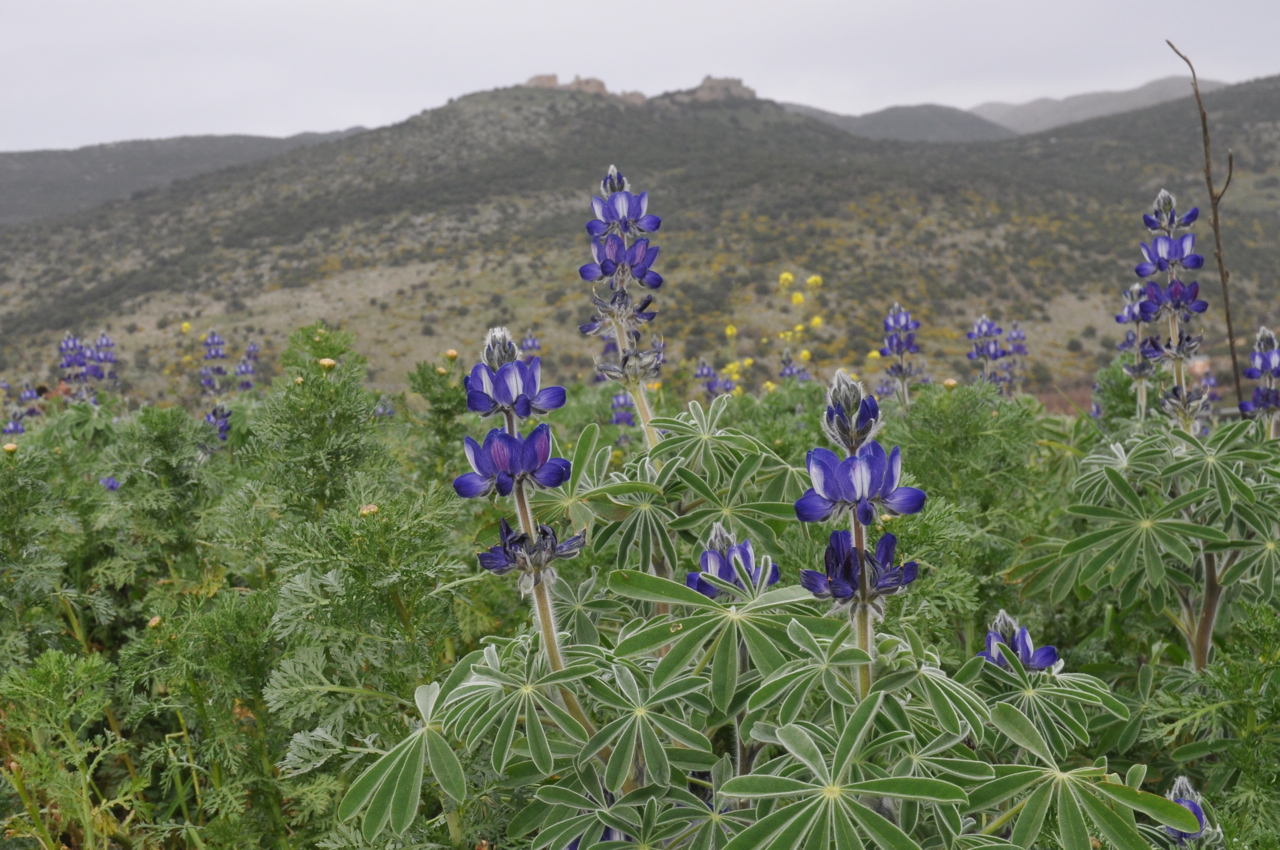
From there we continued north on the Golan to Saar Falls where I found this field of lupines with a view of Nimrod fortress in the background. The legume seeds of the lupine were popular with the Romans who spread the plant’s cultivation throughout the Roman Empire. Today there are 2 lupins that are indigenous to Israel, the blue Lupinus pilosus and white-grey Lupinus palaestinus. Lupins can fix nitrogen from the atmosphere into ammonia via a rhizobium-root nodule symbiosis, fertilizing the soil for other plants. This adaption allows lupins to grow in poor quality soil and in fact, improve soil quality so that other plants can grow.


On the same trip I came across red tulips (Tulipa montana) a member of the lily family growing on the hill overlooking the Sea of Galilee above Ein Gev.

Mount Sodom

Mount Sodom

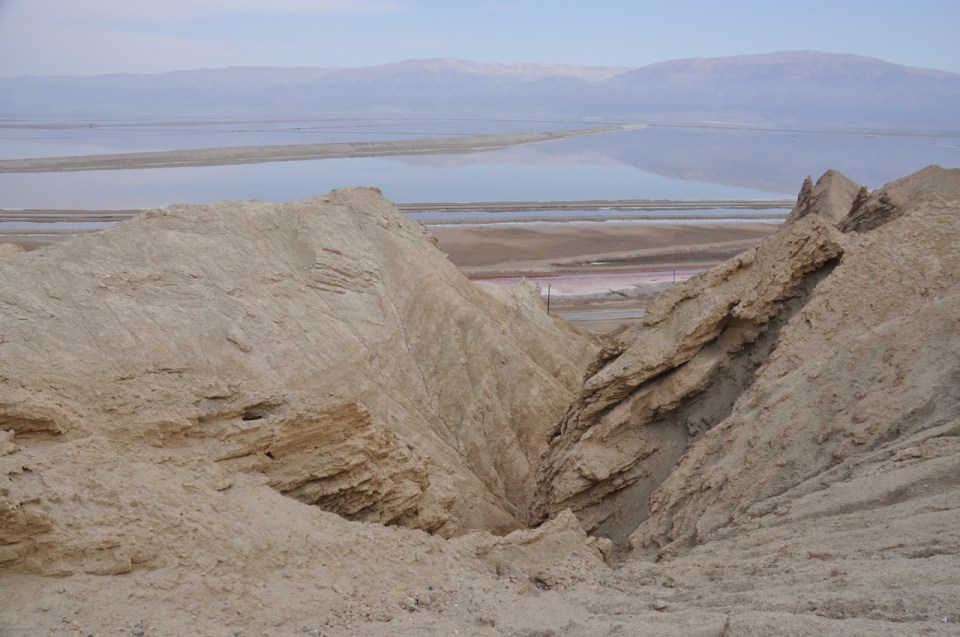
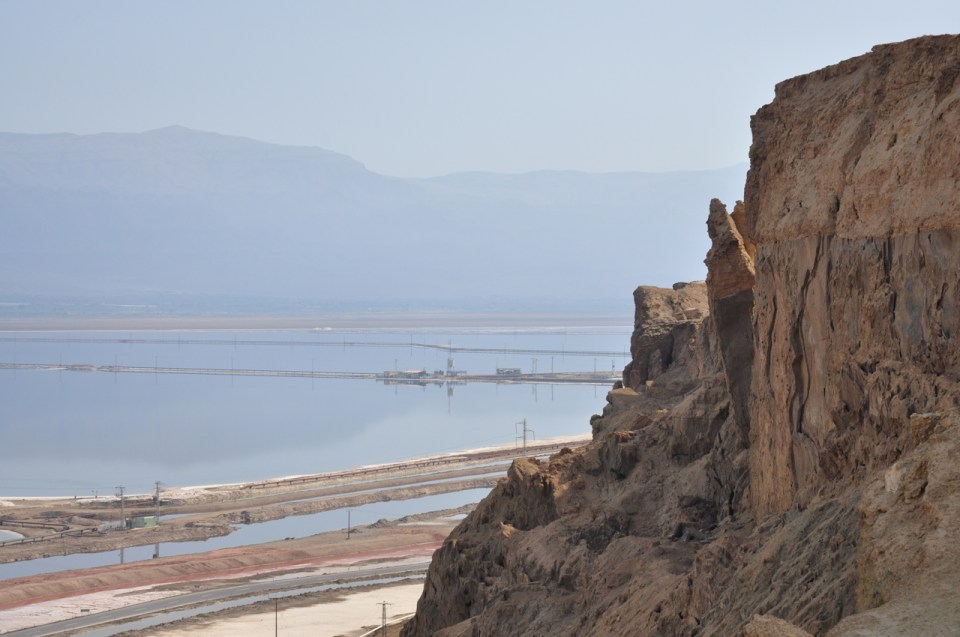
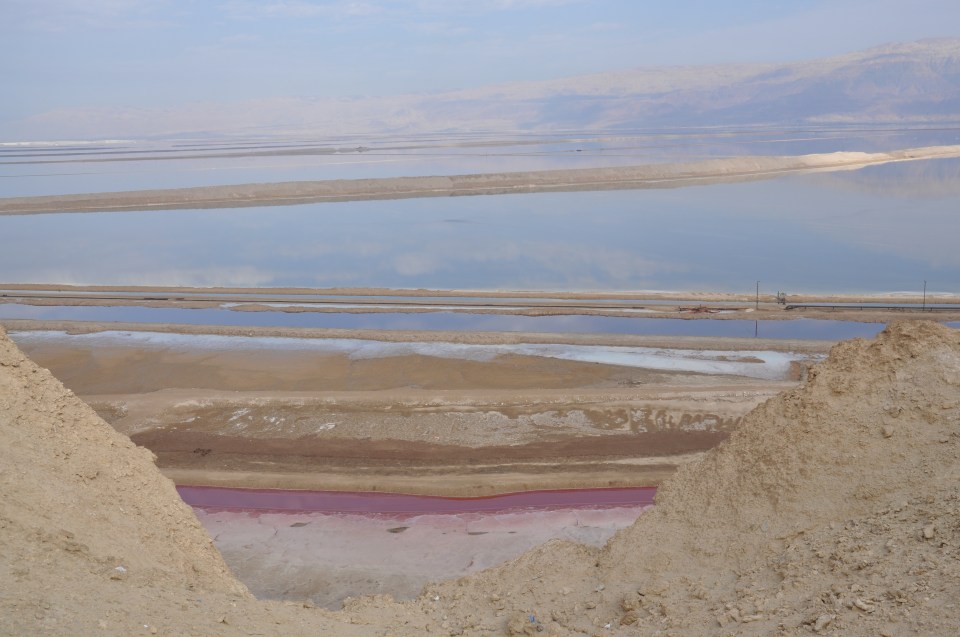
South of Masada along highway 90 there is a hike up Mount Sodom, a hill that is made up almost entirely of halite or rock salt. It is 226 meters above the Dead Sea with some great views (and photography opportunities) but still 170 meters below sea level. Don’t miss the rock formation that has separated from the cliff face due to weathering. It is known as Lot’s wife, a reference to the Biblical story of the destruction of Sodom and Gomorrah and how Lot’s wife looked back as they left and was turned into a pillar of salt. Interestingly there are other rock outcrops that are called Lot’s wife in other parts of the world, check Wikipedia for some fascinating accounts like a basalt pillar, a deserted, volcanic island in the Philipines Sea, at the southernmost tip of the Izu archipelago in Japan.

Lot's wife as a pillar of salt, © 2009 Shmuel Browns

Dead Sea pools

Masada at Sunrise

Masada is one of the most visited historical/archaeological sites in Israel, an isolated rock cliff in the Judean desert overlooking the Dead Sea.

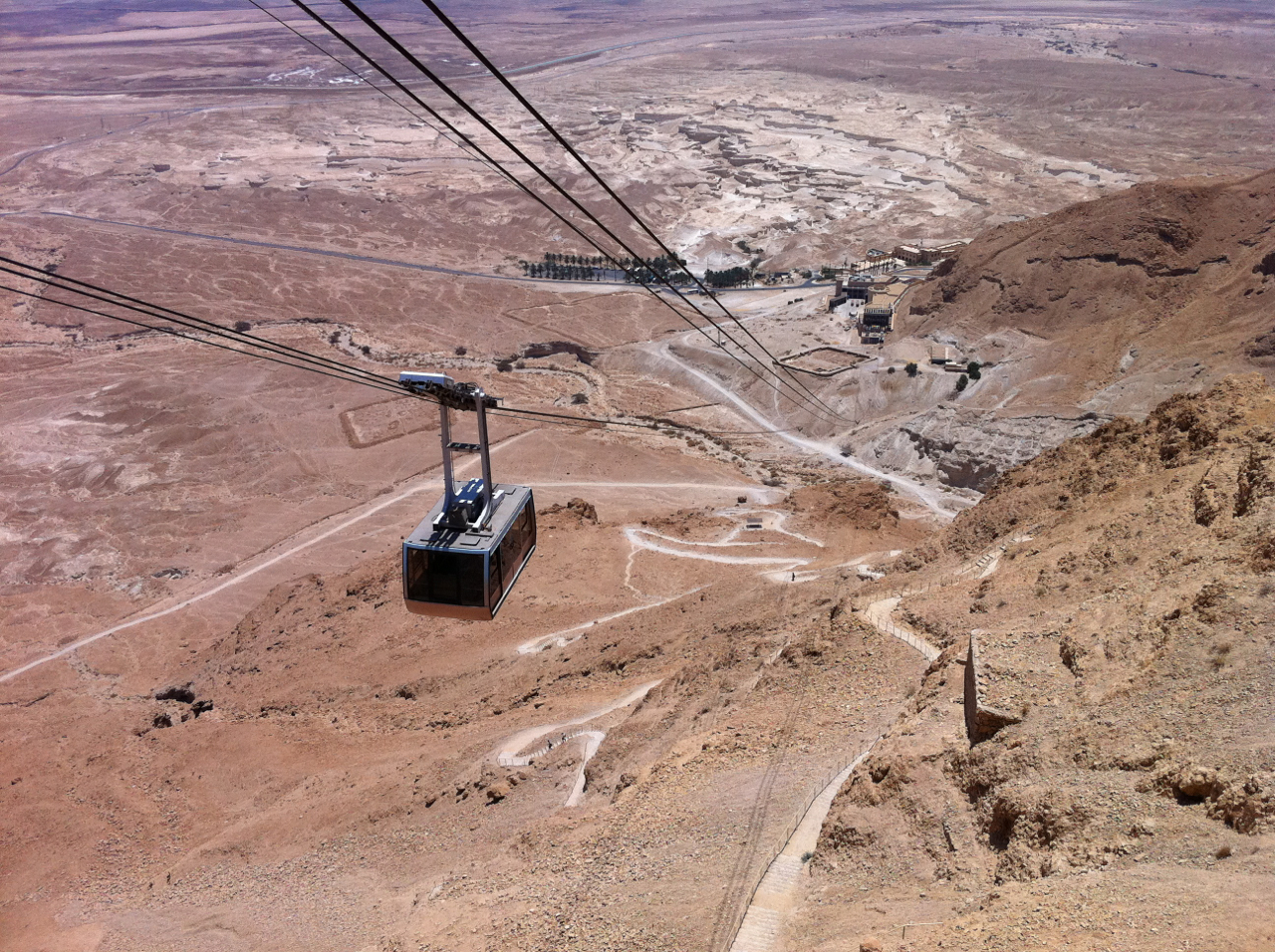
Masada cable carAlthough there is a cable car that will take you to the top of the mountain, a tradition has grown up to climb the Snake Path, a zig-zag trail, early in the morning in order to reach the summit in time to watch the sunrise – that’s what we did. The top is only 59 meters above sea level but remember that you’re starting at about 400 meters below sea level. You should be able to climb it in 45 minutes to 1 hour. If you want to do this the best place to stay the night before is the youth hostel at the base of Masada.

I recently read an article on the Israelity website about a group of 7 seniors from the Cedar Village retirement community near Cincinnati who came to Israel to celebrate their bar/bat mitzvahs and tour Israel including climbing Masada – their average age was 85 years old, the oldest was 97!

I guided two families traveling together, a group of four adults and five children, during their time in Israel. When we reached Masada and saw the mountain some were interested in climbing the Snake path. We didn’t really have enough time so one of the Dads suggested running it. At first no one took him seriously, so Chris said he’d do it. I showed him where the path started and he was off. The rest of us took the cable car and on our way up looked for Chris. I finally saw him on the last turn of the path before the summit – his time 17 minutes! For Bernie’s description of their experience check out their blog at http://keepingupwiththemounts.blogspot.co.il/2011/11/masada.html

Masada (from Arad)

Another option is a nice hike that starts at the same but splits from the Snake Path, you walk north on the red trail following the circumvallation wall built by the Romans around the mountain. You pass the 4th siege camp (northernmost) and follow the trail west and then south. As you climb there’s a great view of the Northern Palace hanging on the cliff and the water cisterns on the western side. You can go to see the cisterns and/or climb the Roman ramp to the summit.

Wildflowers, after the rain

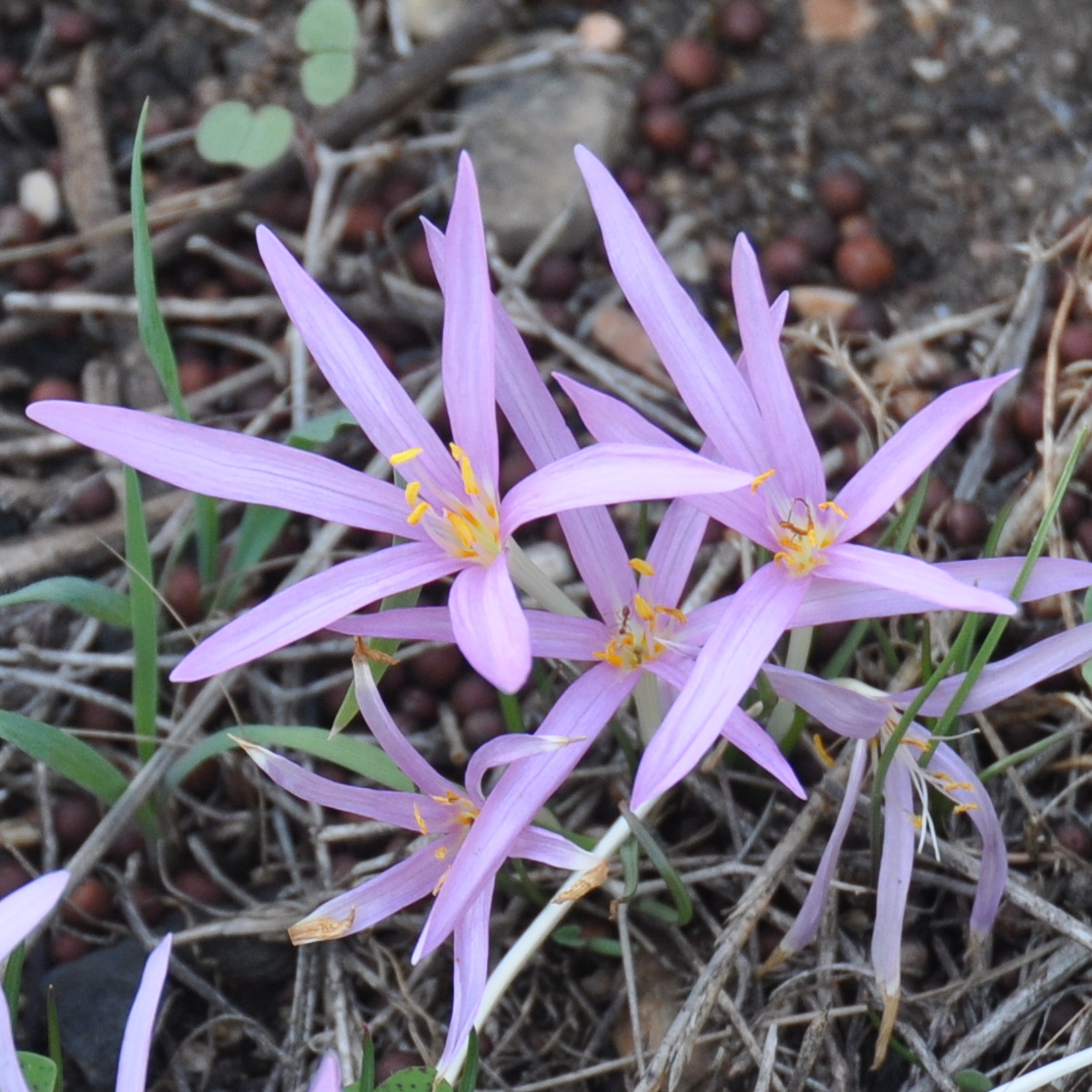
Shortly after the first autumn rains, a perennial called Steven’s meadow saffron (Colchicum steveni, סתונית היורה), with small, delicate pink flowers appears in the fields and woods. I don’t know who Steven is but in Hebrew some clever person called it Sitvanit from Stav meaning autumn and HaYoreh, the first rain.

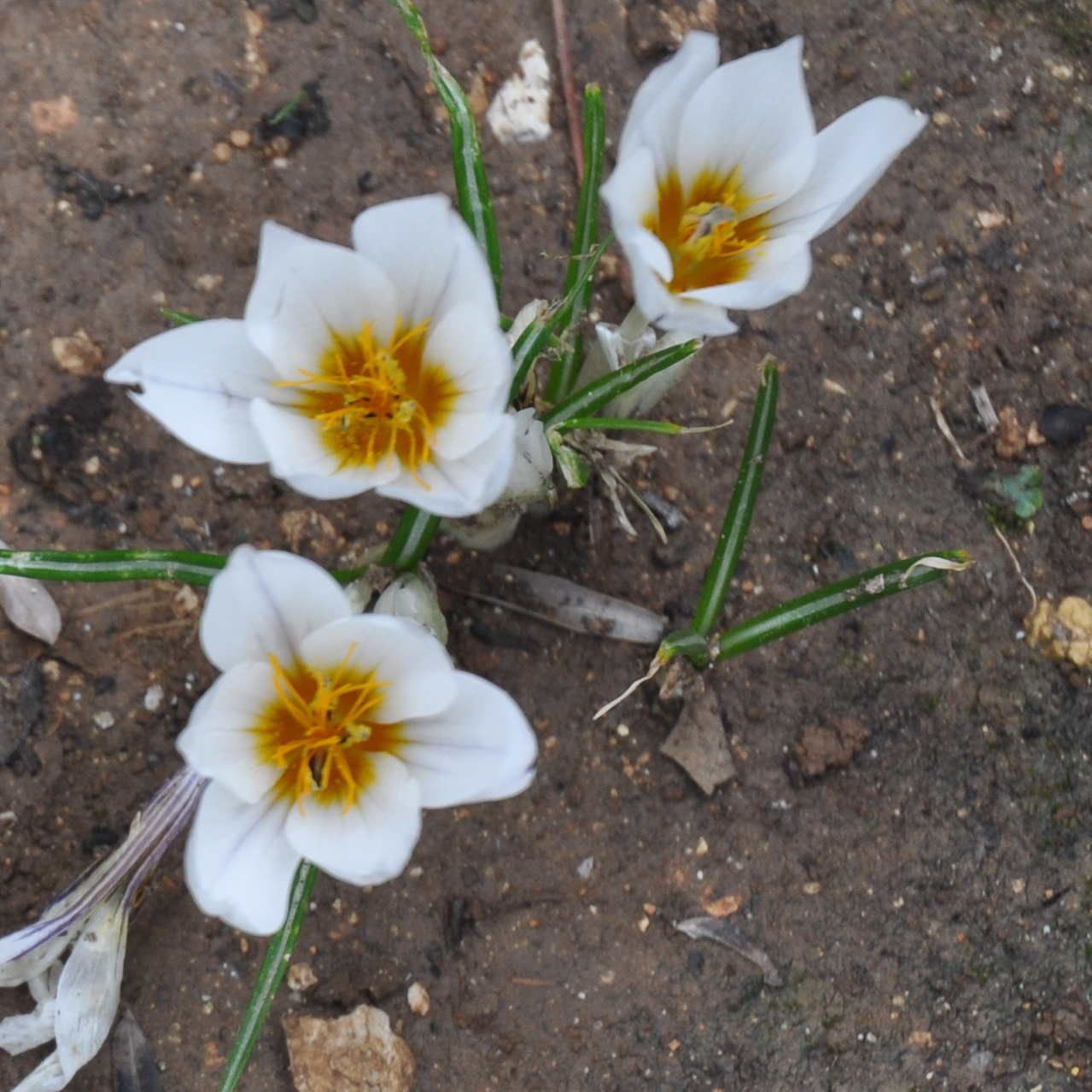
Another flower that comes up at this time is crocus. These flowers are  Winter crocus (Crocus hyemalis, כרכם חרפי) and I saw bunches of them while hiking in Nahal Katlav just south of Jerusalem.

On the Golan, specifically Nahal Yehudia, I saw some narcissus (Narcissus tazetta, נרקיס) with white petals and yellow crowns and cyclamen (Cyclamen persicum, רקפת) already in bloom. I saw the leaves of lupines (Lupinus varius, תורמוס ההרים) just pushing out of the earth.

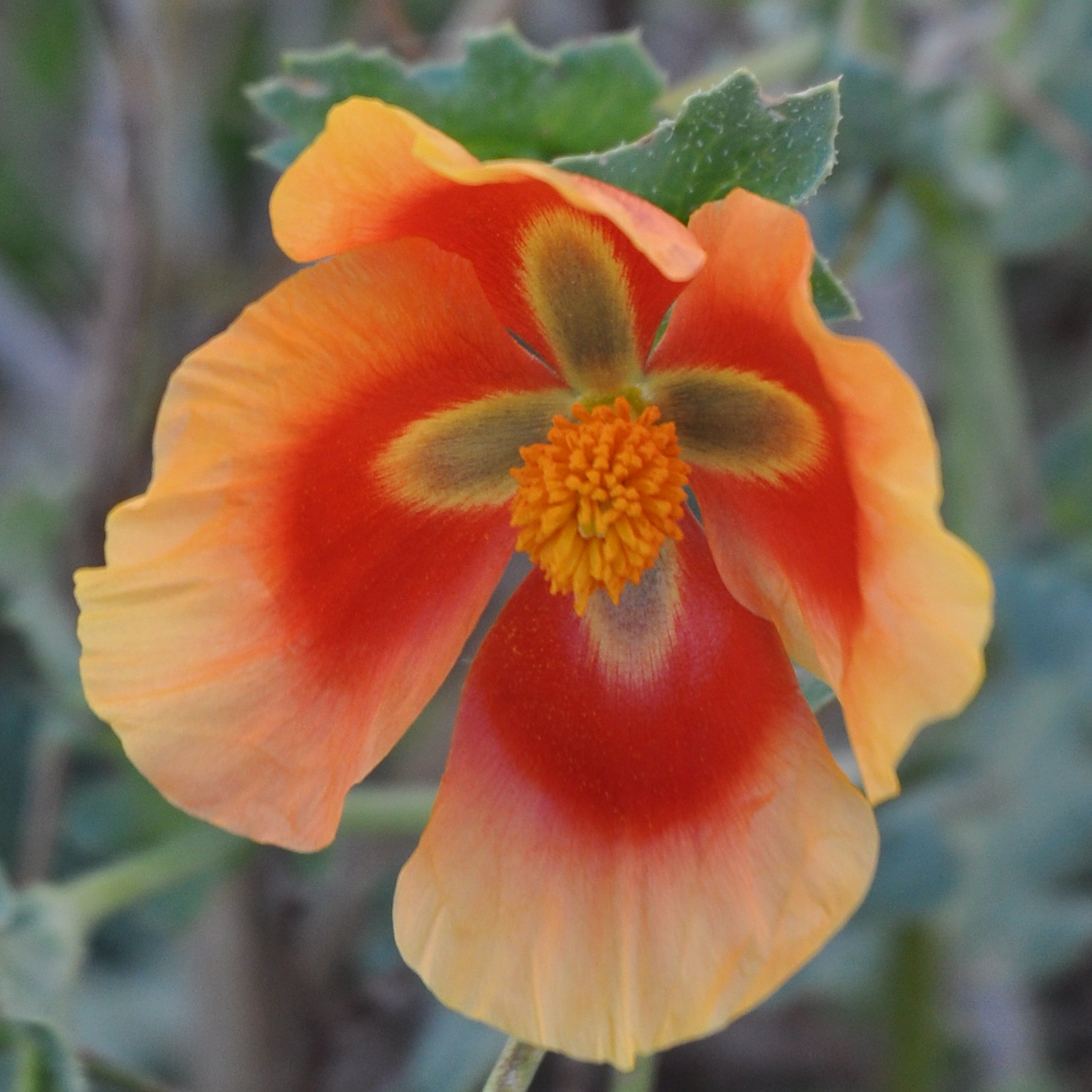
I was hiking under the ski lifts on the Hermon and found this flower, which I learned from my very knowledgeable colleague Zvi Bessin is Lotus Sweetjuice (Glaucium leiocarpum, פרגה קירחת). This perennial grows only in the area of the Hermon and is left over from the summer.

Also check out the post Wildflowers, before the rain.