Category Archives: Nature

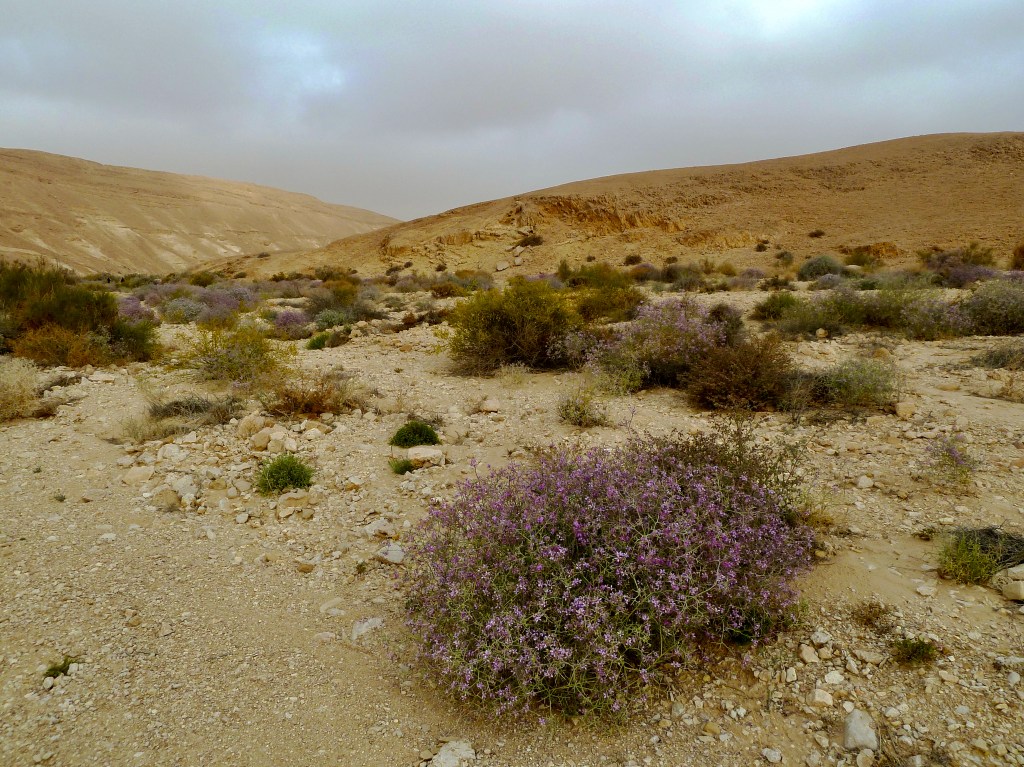
Just north of Timna continuing along the Israel trail you follow the Milhan ridge, a great area for hiking and photographs. We stayed overnight at the nearby campground, Be’er Milhan, a site that affords some protection from the wind (no toilets or running water). This photo was taken in the morning. Purple flowering bush is Spiny zilla (Zilla spinosa), a member of the brassicaceae family, you can eat the purple flowers which taste like cabbage.

Milhan well

The technical details – the photo was taken with a Lumix point and shoot camera in March (ISO 80,4.1mm, F4 at 1/320 sec).

For more information about desert wildflowers see my post at https://israeltours.wordpress.com/2011/03/14/desert-wildflowers/

Photographs on this website are © Shmuel Browns (unless marked otherwise) – if you are interested in purchasing one of my photos or using one of my photos for your own project please contact me.

Introducing Fallow Deer

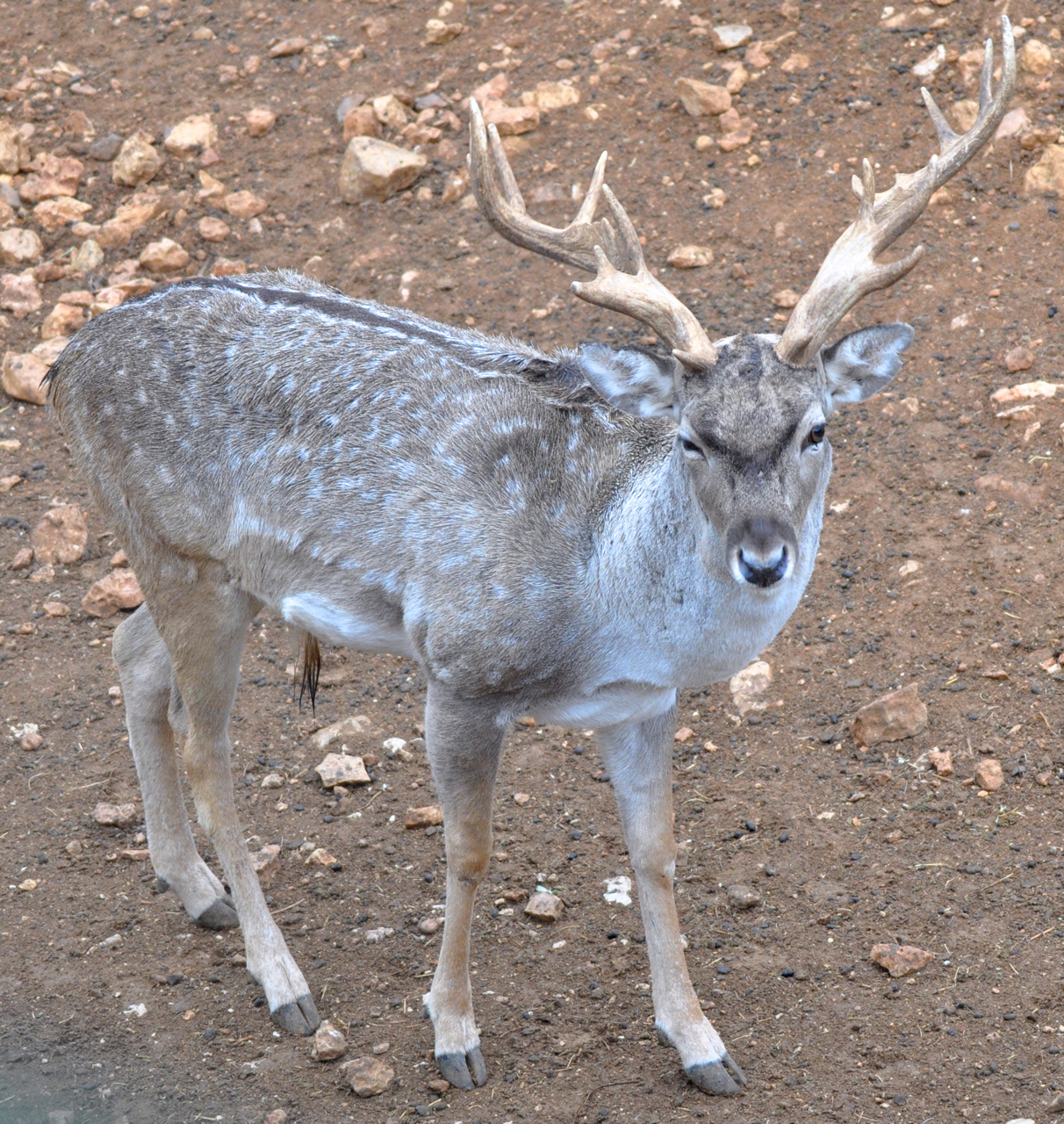
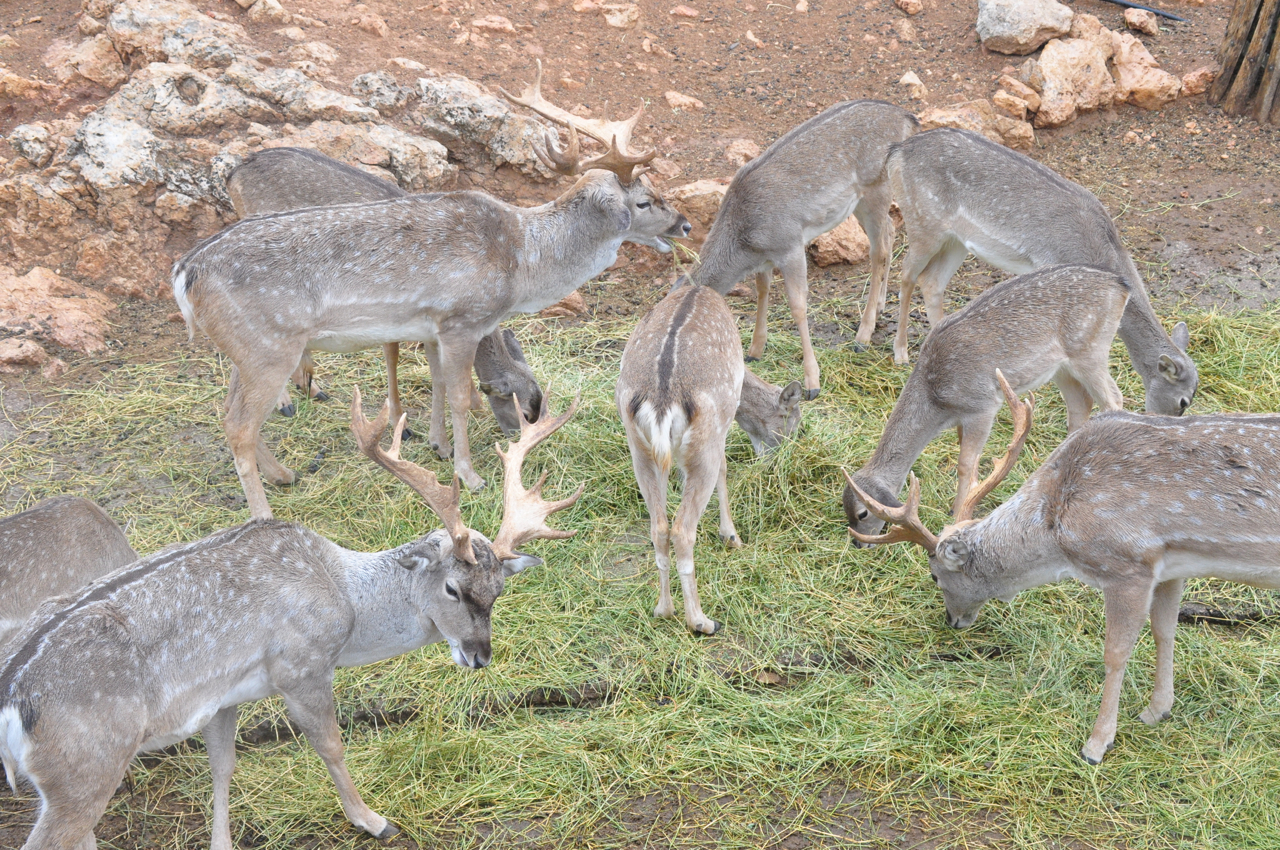
Fallow deerPersian fallow deer (Dama Mesopotamica) native to Israel from Biblical times were hunted to extinction in the early 1900s. The fallow deer is mentioned among the eight other kosher mammals listed in Deuteronomy 14: 4-5 — the roe deer, gazelle, addax, bison, oryx, wild goat, wild ox and ibex. Only the gazelle and ibex remained in Israel by the 1960s. In the biblical Book of Kings, the fallow deer is one of the many animals presented to King Solomon as a tithe. Until the late 1950s the species was thought to be extinct in the world — then a small herd was discovered in Iran. Here is the incredible story of how fallow deer have been introduced again into the Biblical landscape of Israel.

In 1962 the Israeli government enacted a conservation law to help restore the wildlife population decimated by hunting and wars and created the Israel Nature and Parks Authority, headed by General Avraham Yoffe. Yoffe had the idea to resettle fallow deer in Israel so he began courting high-ranking Iranian officials. He invited the Shah’s brother Prince Abdol Reza Pahlavi, an avid hunter, to Israel’s Negev desert to hunt the rare Nubian ibex. Months later, he arranged a second hunting trip for another senior Iranian wildlife official, Rashid Jamsheed, who bagged an ibex with 53-inch horns, the world record to this day. It is against the law to hunt ibex but special permission was granted in this case by then Minister of Agriculture, Ariel Sharon (an Israeli army general who became an important politician). In 1978, with the stirrings of the Iranian Revolution, the prince agreed to give Israel four fallow deer.

When Yoffe arrived in Tehran, he suffered a mild heart attack. As he was being airlifted out he left instructions with General Segev, the Israeli military attaché in Tehran to fulfill his mission to bring the deer to Israel. Segev made the rounds to obtain the necessary export licenses. Meanwhile, Dutch zoologist Dr. Van Grevenbroek who was in charge of the project arrived from Israel to capture four deer. He was armed with a blow-dart gun disguised as a cane. Passing burned-out storefronts throughout the city, burning tires, angry mobs and the acrid smell of tear gas Segev reported, “There was shooting all over the streets, and there I was, an Israeli general, going to the zoo”. Van Grevenbroek assembled his supplies, and left Tehran on a 10-hour drive to a game reserve on the Caspian Sea. He spent five days tracking, capturing and crating four female deer. He returned safely to Tehran. On December 8th, the deer were loaded on the last El Al flight out of Tehran, packed between piles of carpets and the personal effects of Iranian Jews and Israeli officials fleeing the country. Fallow deer These four deer arrived in Israel to the Carmel Hai Bar Reserve where they were cared for and bred. Today there are also fallow deer herds in the Yotvata Hai Bar reserve, Jerusalem zoo and Neot Kedumim. The Jerusalem Biblical Zoo was involved in the initial reintroduction of fallow deer into the wild in Israel in the Nahal Kziv area (the route of the Yam l’Yam hike from the Mediterranean coast to the Sea of Galillee). In December 2009 officials released a small group of fallow deer from their acclimation enclosure into Nahal Sorek in the Jerusalem hills. Since then other Biblical animals, onagers, oryx and roe deer have been acquired and reintroduced into Israel’s wild, as part of Israel’s conservation efforts.

Photo of the Week – Flamingo

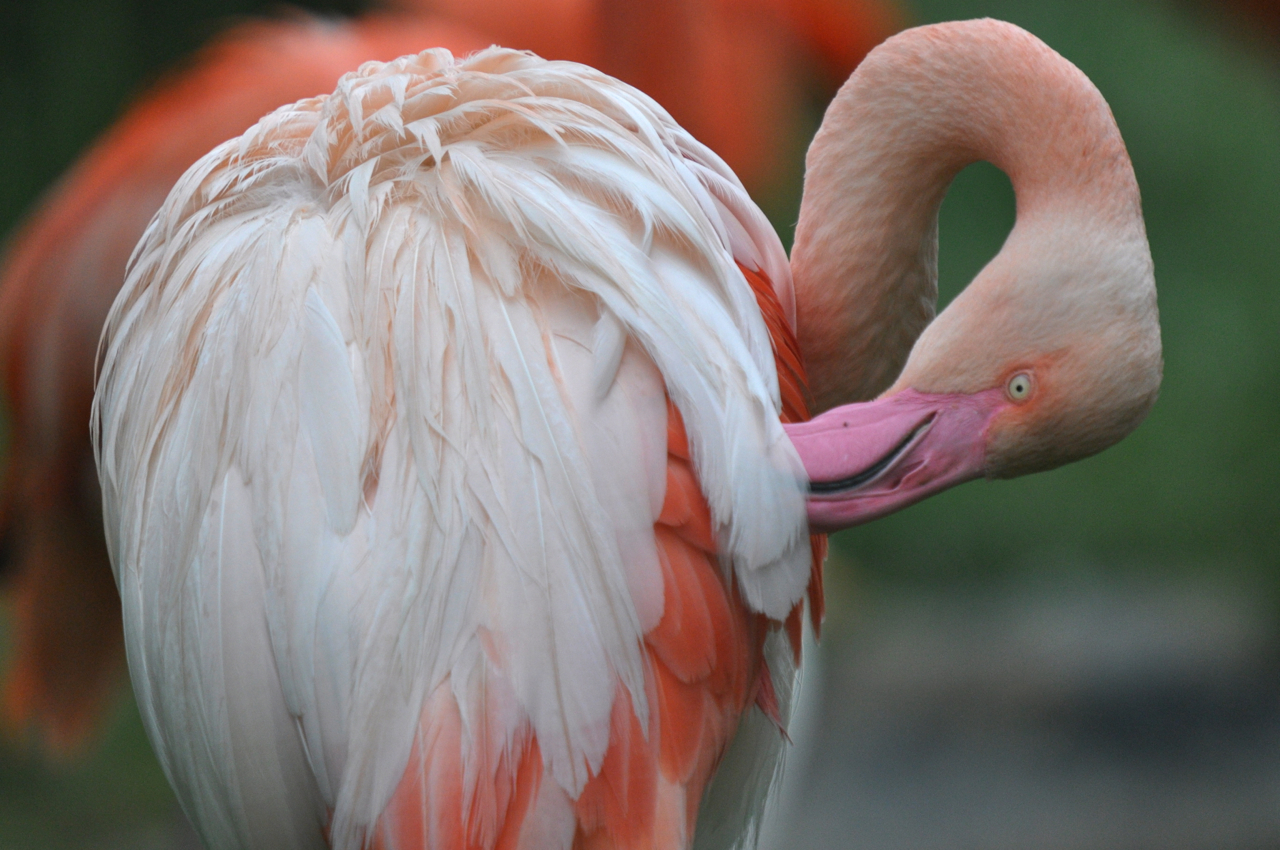
The Greater Flamingo (Phoenicopterus roseus) is the most widespread species of the flamingo family. At the salt marsh you can find a colony of more than 100 flamingos that vacation just north of Eilat most of the year. According to expert Keith Marsh from Bird Forum besides the flamingos you will be able to spot white storks, herons, waders and a wide variety and number of raptors, especially in the autumn and spring during migration. There are few better birding areas in the Western Palaearctic than Eilat on the Red Sea coast of Israel where more than 420 species of birds have been recorded.

DSC_0458You can click on the image for a larger view (which may take some time to load depending on your Internet connection). Please share this post with your friends by clicking on the icons at the end of this message.

The technical details – the photo was taken with a Nikon D90 digital camera and a 50-500mm Sigma lens in November (ISO 800, 500mm, F6.3 at 1/400 sec).

FlamingosEven to get a group portrait (shot at 270mm) my regular 18-200mm lens would not have been enough.

Photographs on this website are © Shmuel Browns (unless marked otherwise) – if you are interested in purchasing one of my photos or using one of my photos for your own project please contact me.

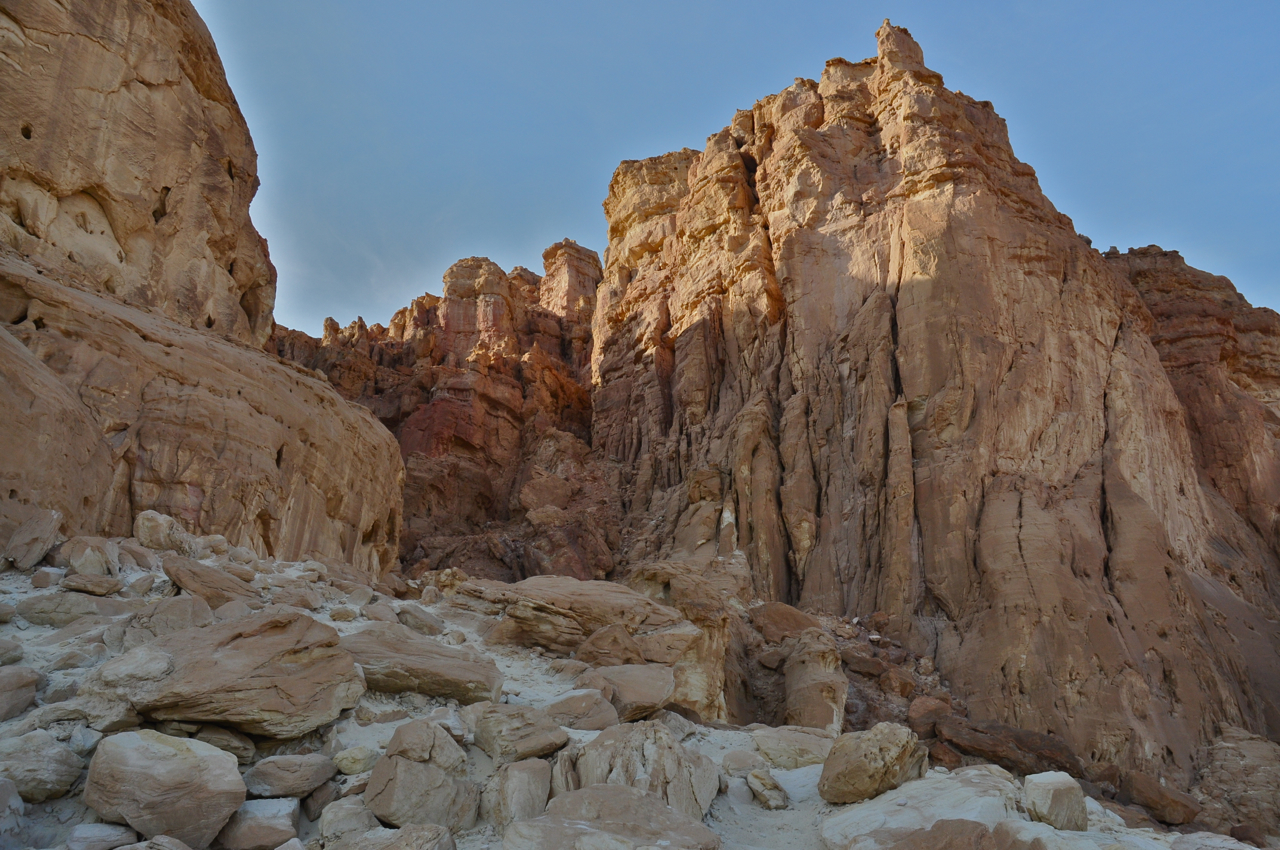
Timna is a horseshoe-shaped valley in the south of Israel in the southwestern Arava about 30 km north of the Eilat just off of highway <90>. The area is rich in copper ore and has been mined by humans as far back as the 6th millennium BCE. An Egyptian temple from the end of the 14th century BCE dedicated to Hathor, the Egyptian goddess of mining was discovered. Water and wind erosion have created several unique rock formations and there are remains of fossilized trees that grew here some 150 million years ago. In 2002 it was declared a nature reserve. There are marked trails and paved roads to the various attractions; the Israel Trail traverses the valley.

Timna cliffs

You can click on the image for a larger view (which may take some time to load depending on your Internet connection). Please share this post with your friends by clicking on the icons at the end of this message.

The technical details – the photo was taken with a Nikon D90 DSLR camera with Nikkor 18-70mm lens in February (ISO 400,18mm, F10 at 1/200 sec).

Photographs on this website are © Shmuel Browns (unless marked otherwise) – if you are interested in purchasing one of my photos or using one of my photos for your own project please contact me.

Photo of the Week – Cranes at Agamon HaHula

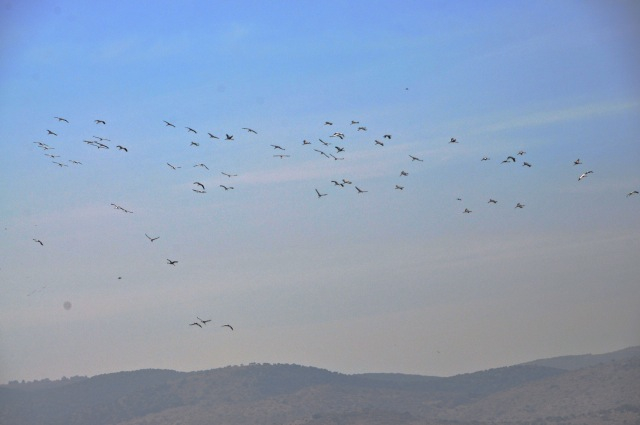
Today’s Agamon HaHula (covering an area of one square kilometer — the same size as the walled Old City of Jerusalem) was established as part of a JNF rehabilitation project in the 1990s in the southern part of the Hula Valley, north of the Hula nature reserve. The site has become a winter home or stopover for an estimated 500 million migrating birds (cranes, storks, pelicans, cormorants, …) flying from Europe to Africa and back, and hence a great birdwatching site.

Cranes at Agam HaHula

You can click on the image for a larger view (which may take some time to load depending on your Internet connection). Please share this post with your friends by clicking on the icons at the end of this message.

The photo was taken at Agamon HaHula (snow-capped mountain is the Hermon). The technical details – the photo was taken with a Lumix (DMC-ZS5) point and shoot digital camera on February 28 (ISO 25, 18.2mm, F5 at 1/500 sec).

For more of the history of the Hula read my post at https://israeltours.wordpress.com/2010/05/03/agamon-hula-lake/

Cranes

Some of the birds soaring over Hula valley

You can also visit the Hula nature reserve (part of the Israel Nature and Parks Authority), the first nature reserve that was created in Israel in 1963. At the Visitor’s center there is an exhibition about the Hula and a theater (with moving seats) showing a video about the marvel of migration. From there you can walk a 1.5 km circular trail through the reserve.

Photographs on this website are © Shmuel Browns (unless marked otherwise) – if you are interested in purchasing one of my photos or using one of my photos for your own project please contact me.

Biodiversity at Jerusalem Botanical Gardens

A human is like a tree, like a human the tree also grows, like a tree a human life can be cut down and I don’t know…

…כי האדם עץ השדה  כמו האדם גם העץ צומח  כמו העץ האדם נגדע  ואני לא יודע

I feel my lifeblood being sapped by the ongoing rocket/missile exchanges between the Israel Defense Forces and Hamas. Israel is trying to protect us by getting rid of Hamas’ rockets and weakening Hamas. Hamas is trying to get Israel to lift the blockade of Gaza, to improve Palestinians’ living conditions in one of the most densely populated areas in the world. Hamas is also trying to make life so stressful and unbearable that we lose hope, with the aim, clearly outlined in their charter (1988), of uprooting us from this land.

This week I visited the Jerusalem Botanical Garden on the edge of the Givat Ram campus of Hebrew University, a tranquil retreat in the midst of the city, welcoming to all (explanatory signs are being put up in English, Hebrew and Arabic). Their vision statement makes it clear:

Just as biodiversity is a key to a healthy natural world, so human diversity is a cornerstone of a healthy society. We promote and encourage both.

The 30 acre park is divided into six geographical zones, European, North American, South African, Australian, Asian and Mediterranean and has more than 10,000 species of plants. I was delighted to find Sternbergia, a young sycamine sapling and not only the five species of oak trees indigenous to Israel but some 75 different oaks of the 700 species that exist in the world growing at the botanical gardens, a refuge for endangered species. More than just replicating the flora of Eretz Yisrael the botanical gardens teach respect and awe for the biodiversity of our world. There is an African savannah grass maze for children to explore, there is a section on herbs and medicinal plants, a path of Biblical plants, water plants and plants of the desert.

Jerusalem has two botanical gardens (the first planted in 1931 on Mount Scopus campus of the Hebrew University), two university campuses and two Hadassah hospitals. History explains why – the institutions on Scopus were cut off from Israel for 19 years when Jordan occupied the West Bank and East Jerusalem after the war in 1948. An Israeli convoy under Red Cross auspices delivered supplies and exchanged personnel every two weeks.  Scopus and Jerusalem were only reunited by Israeli paratroopers during the Six Day War in 1967.

In 1947 Tuvia Kushnir, a brilliant young man, was studying and researching the plants of Palestine (under the British mandate, before the State of Israel was declared) at the Hebrew University on Mount Scopus. Tuvia discovered a rare flower, the Galilee fumitory (Fumaria thuretii Boiss) near Kibbbutz Eilon in the Upper Galilee, the southernmost extent of its range. The flower was not seen again for 60 years until Prof. Avi Shmida and other botanists discovered 80 individual plants of Galilee fumitory in April 2012. Tuvia was one of the first iris researchers in Palestine and identified an iris that bears his name Iris tuviae (also known as the King Uzziae iris). And Tuvia identified a kind of crocus that grows only in the desert that was named after him, Colchicum tuviae.

On January 15th, 1948 Tuvia was part of a group of Haganah soldiers given the task of carrying supplies to the defenders of Gush Etzion (on Friday two rockets fell in the Gush, the first fired towards Jerusalem), 4 kibbutzim south of Jerusalem that were under blockade by Arab forces. They set out at 11pm on foot from Har Tuv, making a detour past the British police station so as not to be detected (it was a capital offense to carry arms) and past Arab villages. Three soldiers turned back when one soldier twisted his ankle and was unable to continue leaving 35, the march of the lamed-heh (two Hebrew letters that have the value 35). Towards dawn the group was discovered near the Arab village of Tsurif, the alarm was raised and hundreds of Arabs from the neighboring villages attacked the convoy. Though the British heard the shots they did not investigate until all was quiet. The Israeli soldiers fought until they had no more ammunition – all were killed including Tuvia. When the British arrived on the scene they found the bodies horribly mutilated making identification very difficult. Rabbi Arye Levin performed the rare Goral Ha-gra ceremony, a mystical procedure devised by the Vilna Gaon where the rabbi opened a Tanakh and was drawn to read certain verses which gave hints to the identity of the bodies.

2:15pm Jerusalem time  I’m at home writing this post. By the time we hear the siren there are about 15 seconds until we hear a distant boom. Channel 2 reports that the rocket fell somewhere near Bethlehem, about 6.5 km south of where I am sitting.

At the Jerusalem Botanical Gardens work has begun on a Children’s Discovery Garden that will offer Jewish, Muslim and Christian young people an opportunity to explore and discover the wondrous natural world, to learn that diversity is important and in the process meet each other. Discovery and play will be used to show how plants adapt to their environment and the interaction between the two. Activities will include a canopy walk in the treetops and a descent down to a roots exhibit. Perhaps plants which are apolitical, are concerned less with borders and which speak to us all can show us the advantages of diversity and living together.