Category Archives: Hiking

Hiking Wadi Qelt – St George Monastery

Hiking Wadi Qelt is best in the early morning on the way down to the Dead Sea, a great place to experience the Judean desert and for photographs of the desert landscape.

From Jerusalem on highway <1> take the left at Mizpe Yericho, left again and left at the T. Park the car here for a great view of Wadi Qelt/Nahal Prat. Follow the black trail down to the stream bed. Here you will see the remains of the stone arches of the bridge of the aquaduct.

Continuing another 450 meters you’ll come to a wooden bridge that crosses Nahal Prat and to your left is the Ein Qelt pool. There are two possibilities from here: hike west along the streambed to a string of pools in Lower Nahal Prat or east along the red trail which will take you after about 2 kilometers to the monastery of St George of Koziba perched on the northern cliff.

From the monastery you can climb up to the road where you drive back to the highway or continue to the ruins of Herod’s fortress at Cypros.

Christian monks began to settle in the Judean Desert in the early 4th century identifying with Moses, Elijah, Jesus and others who spent time in the desert, as a respite from the secular world. By the fifth to seventh centuries, there were some 65 monasteries in the area: St. George, Martyrius, Euthymius, Deir Hijla, Mar Saba can be visited to this day.

Originally founded as a laura, a cluster of cells or caves for hermits about 420 CE, a small chapel was added later and about 480CE St. John of Thebes transformed the site into a monastery. In the 6th century it became known as St. George under the leadership of Gorgias of Koziba, born in Cyprus about 550 CE. The Persians destroyed it in 614 and it was rebuilt during the Crusader period but abandoned when the Crusaders were defeated and was reported in ruins by a pilgrim who visited in 1483. In 1878 a Greek monk, Kalinikos, settled here and restored the monastery, completing it in 1901.
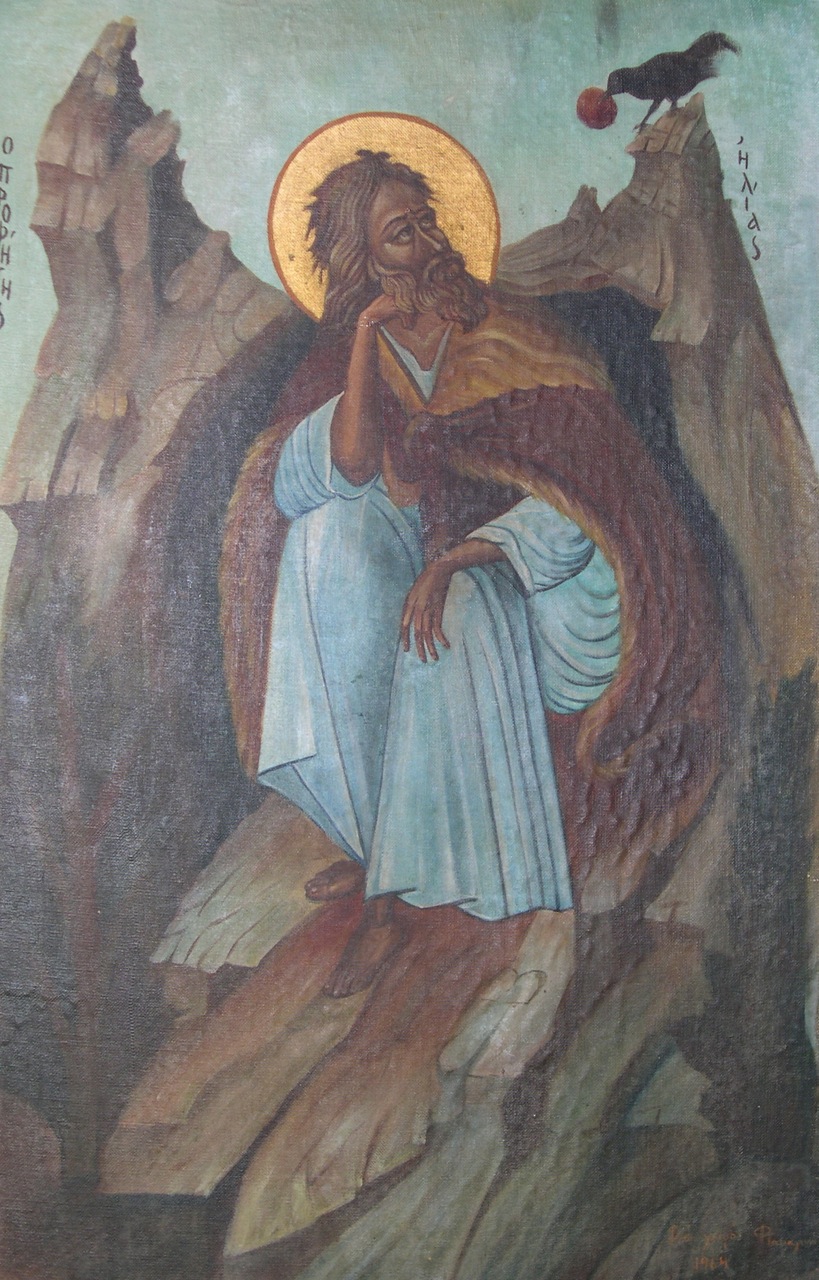
According to tradition this is the place where Elijah stayed when God commanded him to leave King Ahab during the drought and was fed by ravens:

5 So he went and did according unto the word of the LORD; for he went and dwelt by the brook Cherith, that is before the Jordan.

6 And the ravens brought him bread and flesh in the morning, and bread and flesh in the evening; and he drank of the brook.

I Kings 17

There is also the story that Joachim, father of the Virgin Mary, hid here for forty days bewailing the barrenness of his wife Anne, whereupon an angel came to him to announce that Anne was pregnant with a daughter.

Gamla – Nature, Archaeology and History

Gamla is both a nature reserve and archaeological site making it a great place to visit. We started with an easy hike, through a field of dolmens, prehistoric megalith tombs erected in the early Middle Bronze period about 2200BCE. A dolmen is made up of three large basalt stones, one lying on two other stones standing vertically. The hike takes us across a wooden bridge to the other side of Nahal Gamla for a view of the waterfall, at 51m the highest in Israel.

Gamla Waterfall

Take the trail past a Byzantine town to the Raptor lookout – the nahal is home to a large nesting population of Griffon vultures (that Israel has successfully resettled there) who did a fly past for us over the valley, it’s an incredible sight to see them gliding on the thermals.

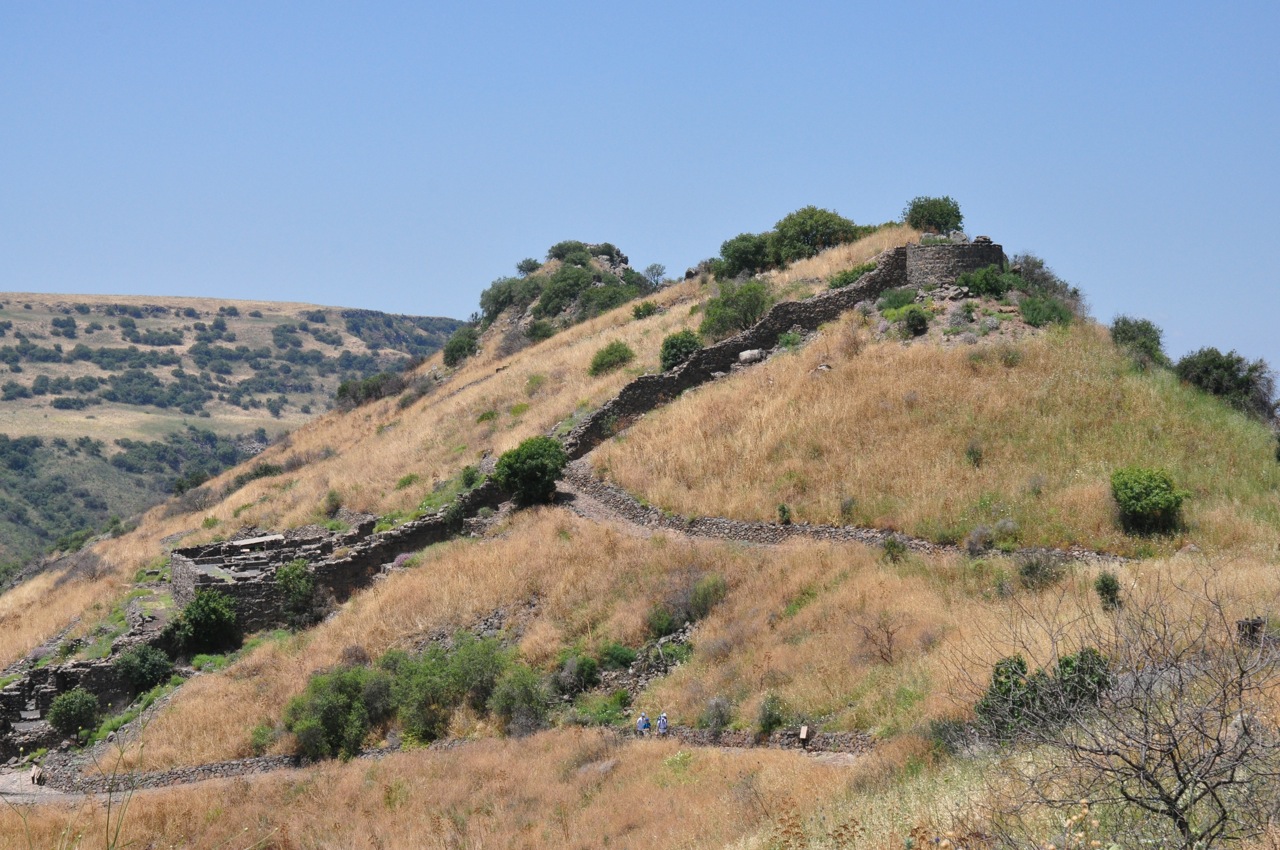
The ancient city is situated on a steep hill (a horst like Masada) shaped like a camel’s hump, from which it derives its name (gamal means ‘camel’ in Hebrew). Jews inhabited it from the last quarter of the 2nd century BCE, and it was annexed to the Hasmonean state under Alexander Jannaeus in about 81BCE. Josephus Flavius, commander of the Galilee during the Jewish Revolt against Rome fortified Gamla as the main stronghold on the Golan. It’s fascinating to compare Gamla, a city and one of the first to stand against Vespasian’s legions with Masada, a fortress and the last to fall to the Romans.

Josephus provides a detailed description of the Roman siege and destruction of Gamla (like at Masada). Vespasian and his son Titus led the X Fretensis, XV Apollinaris and V Macedonica legions against Gamla, built a siege ramp in an attempt to take the city but were repulsed by the defenders. Only on the second attempt did the Romans succeed in breaching the wall at three different locations and invading the city. There they engaged the Jewish defenders in hand-to-hand combat up the steep hill. Fighting in the cramped streets from an inferior position, the Roman soldiers climbed onto the roofs that subsequently collapsed under the heavy weight, killing many soldiers and forcing a Roman retreat. The legionnaires re-entered the town a few days later, eventually beating Jewish resistance and completing the capture of Gamla.

According to Josephus, some 4,000 inhabitants were slaughtered, while 5,000, trying to escape down the steep northern slope, were either trampled to death or fell or threw themselves into the ravine (perhaps exaggerated by Josephus, the number of inhabitants has been estimated at less than 4,000 – at Masada 960 lost their lives).

Abandoned after its destruction, Gamla lay in ruins for almost 2000 years and was only identified in 1968 by Itzhaki Gal who was doing an archaeological survey of sites in the Golan after the Six Day War. It was excavated by Shemaryahu Gutmann (who did the original survey at Masada and who excavated there with Yigal Yadin) and Danny Syon for 14 seasons from 1976. The excavations uncovered 7.5 dunam, about 5% of the site, revealing a typical Jewish city.

The Gamla excavations revealed widespread evidence of the battle, about 100 catapult bolts, 1600 arrowheads and 2000 ballista stones, made from local basalt, 200 artifacts of Roman army equipment, quantities unsurpassed anywhere in the Roman Empire. Most were collected near the wall, placing the heavy fighting in the vicinity of the wall and the Roman siege engines to the northeast of the town.

Only one human jawbone was found during the exploration of Gamla, raising a question about what happened to the bodies of the Jewish defenders (like Masada). A tentative answer is suggested by archaeologist Danny Syon – he suggests that the dead would have been buried at nearby mass graves that have yet to be found (as at Yodfat).

One of the most interesting finds is the remains of a typical “Galilean” style synagogue inside the city walls, with rows of columns, tiers of side benches, heart-shaped corner pillars and an alcove for Torah scrolls in the northwest corner. A mikveh (ritual bath) was found nearby. Interesting to compare this to the synagogue found at Masada. The synagogue is thought to date from the late 1st century BCE making it one of the oldest synagogues in the world.

Also found were six coins minted at Gamla during the Revolt, with the inscription “For the redemption of Holy Jerusalem” in a mixture of paleo-Hebrew and Aramaic that shows that the defenders of Gamla saw their fight against the Romans as no less than a struggle for national independence.

The Golan Archaeological Museum in nearby Katzrin displays artifacts from Gamla and other sites on the Golan and a moving film about Gamla – definitely worth a visit.

Springs in Jerusalem Hills

Around Jerusalem there are some special hikes that let you combine nature, history and archaeology. Two that I’ve already written about are Nahal Katlav and Shaar HaGai. Before heading out pick up some artisan bread, cheese, wine, hummus (you can find zatar growing wild) and salads for a picnic, drive into the hills, hike the trail and enjoy. In Psalms it says

הַמְשַׁלֵּחַ מַעְיָנִים בַּנְּחָלִים בֵּין הָרִים יְהַלֵּכוּן God sends the springs into the valleys, between the mountains. (Psalms 104:10)

A hike to a maayan, a natural spring where water finds its way out of the limestone hillside, is a great outing for the whole family. At some point someone cut into the bedrock to make a pool, perfect for a dip on a hot summer day. There is even a trail, Shvil HaMayaanot, from just before Even Sapir that goes by a number of springs and pools. Drive out to the Jerusalem Biblical Zoo near Malcha (itself a fun destination for the whole family) and park the car at the farthest parking lot, a road with a blue trail marker continues west to 2 springs (it’s also possible to drive it but then it won’t be a hike).  To your right the hill above the trail is called Rekhes Lavan (White Ridge) because of the kirton (chalk, a soft kind of limestone) and the valley below to the left with the train tracks is Nahal Refaim (Valley of Ghosts). After following the winding road you will come to a small parking area, a green Parks sign and steps on your right. Climb the stairs to Ein Lavan that fills 2 pools, a shallow one for smaller children or for cooling your feet and a deeper one, about 1.5 meters, great for swimming. After your picnic follow the spring back towards it source to find a burial cave from the Second Temple period. The second spring, Ein Itamar (also known as Ein Balad), is farther and more challenging to find. Our youngest son, AdirChai, who is the family expert on maayanot told me about it.
 

From Ein Lavan descend the steps and continue along the road. At the fork stay right, you will see that the blue trail joins the black. The road becomes paved again, there is a gravel path that forks to the left (don’t take it, follow the black trail). When the road turns right and is climbing there’s a dirt path to the left that leads down (marked with a blue trail marker), follow it until it turns sharply to the left. Look for the ruins of a stone building, the pool is below it. If you need a guide contact me.

Mount Arbel

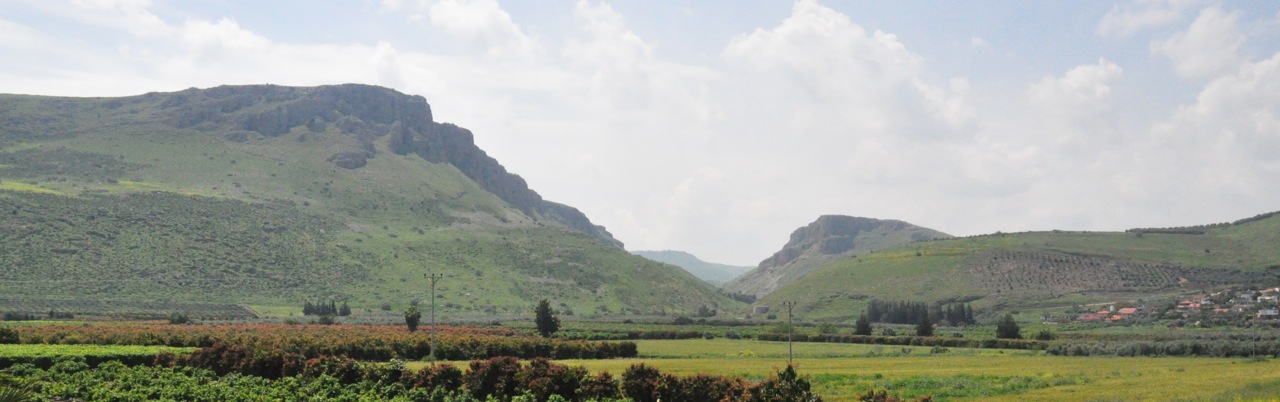
Rising majestically above the western shore of the Sea of Galilee (in Hebrew, Kinneret) are two sheer limestone and dolomite cliffs, facing each other. The Arbel stream flows in the valley between them past Migdal (the home town of Mary Magdalene). Part of a national park and nature reserve, it’s a great place to hike.

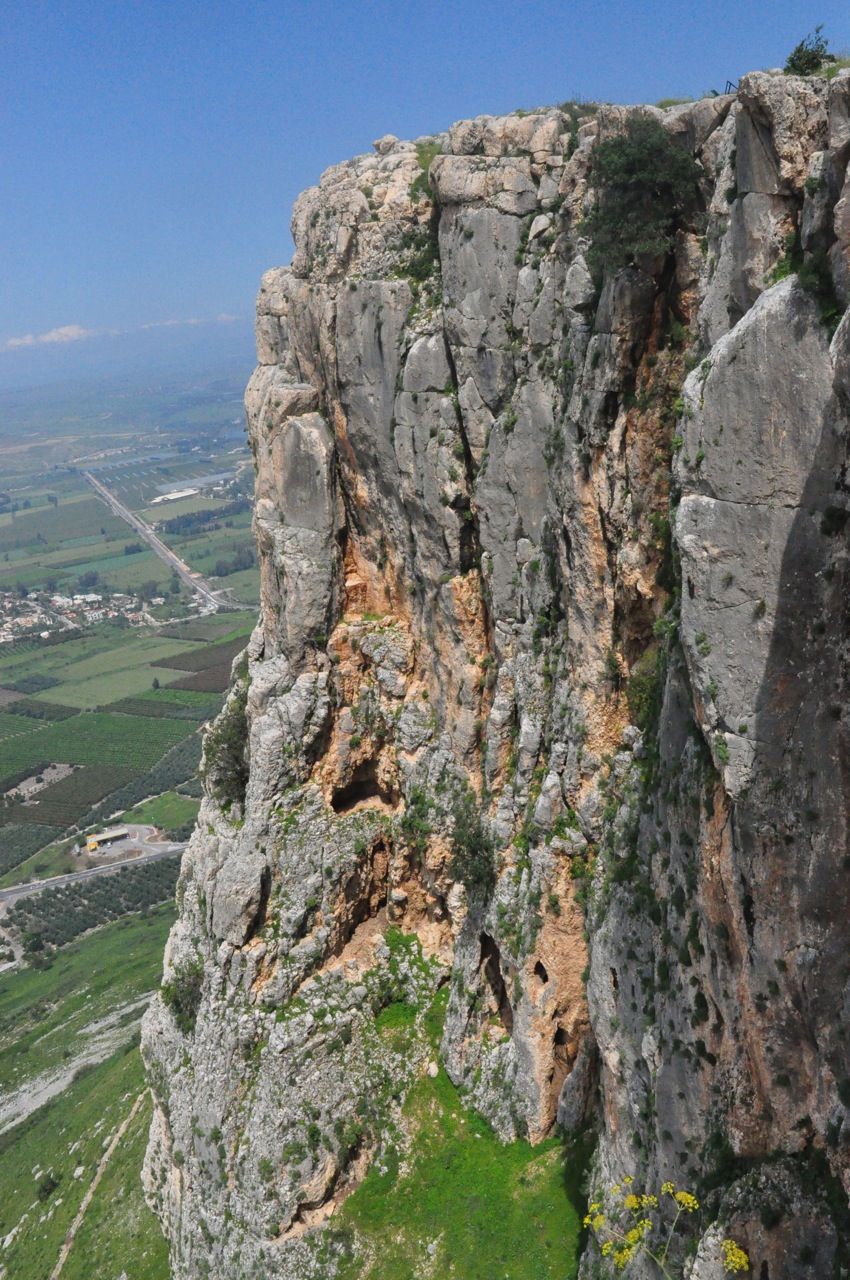
The higher mountain is Mount Arbel, 181 meters above sea level but since the Kinneret is the lowest freshwater lake in the world at 209 meters below sea level Arbel is actually 390 meters above the valley and lake below. The second mountain, north of the stream, is Mount Nitay (98 meters above sea level) but this part of the reserve is closed to visitors to protect the flora and fauna. Looking down over the cliff it is easy to forget that you are standing on a broad plateau and not flying over the valley.

As early as the Hasmonean period there was a town Arbel that overlooked the ancient road from Galilee to the town on the Kinneret. The sage Nittai of Arbela, one of the Tanaim is recorded in Mishna Avot 1,7 where he advises “Keep far from an evil neighbor and do not associate with the wicked and do not lose belief in retribution”. Josephus mentions Arbel when he describes the battle in 37BCE between Herod and Jewish rebels who barricaded themselves in the caves in the cliff. Because the access to the caves was by extremely narrow paths, Herod had soldiers lowered over the cliff in baskets to reach the caves. In the early first century CE, Jesus of Nazareth performed miracles at the foot of the Arbel, moving between Migdal and Capernaum with his followers.

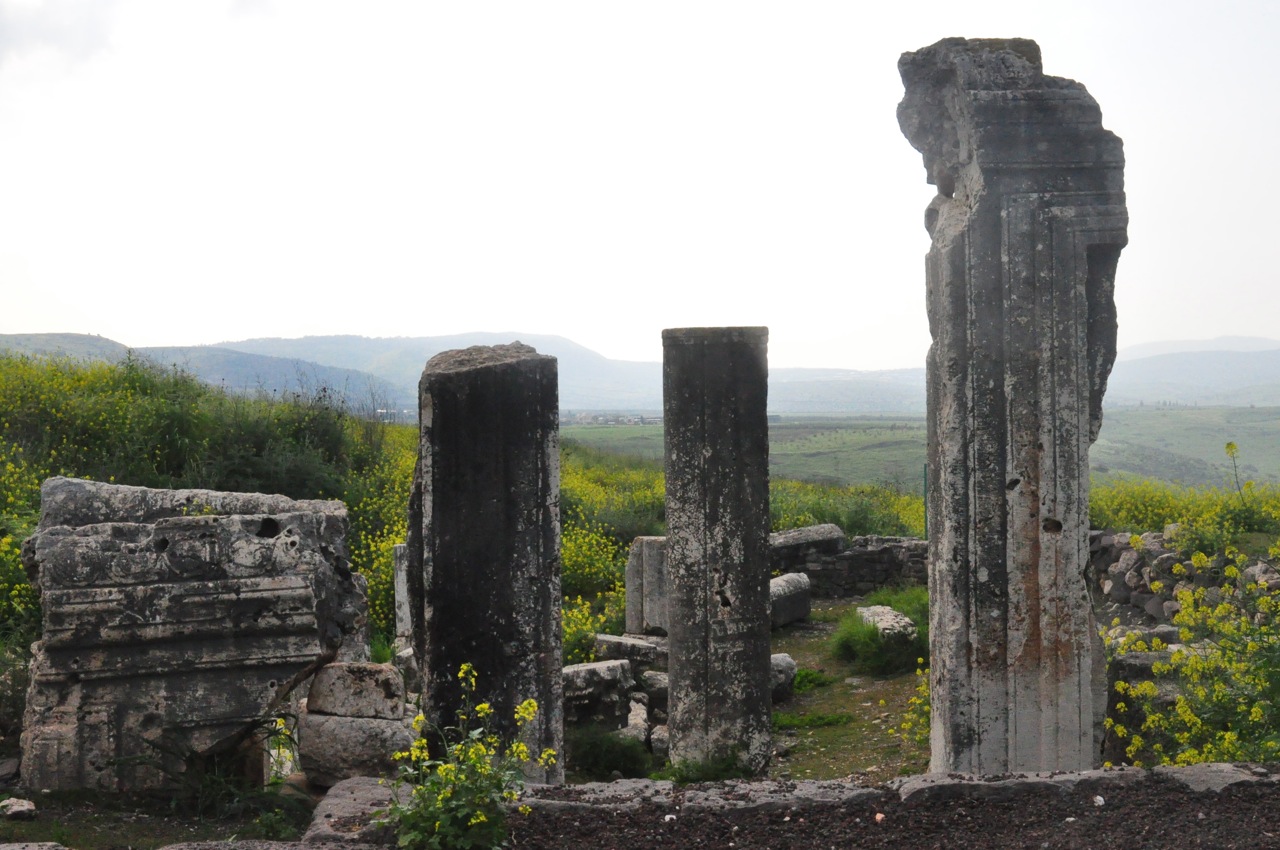
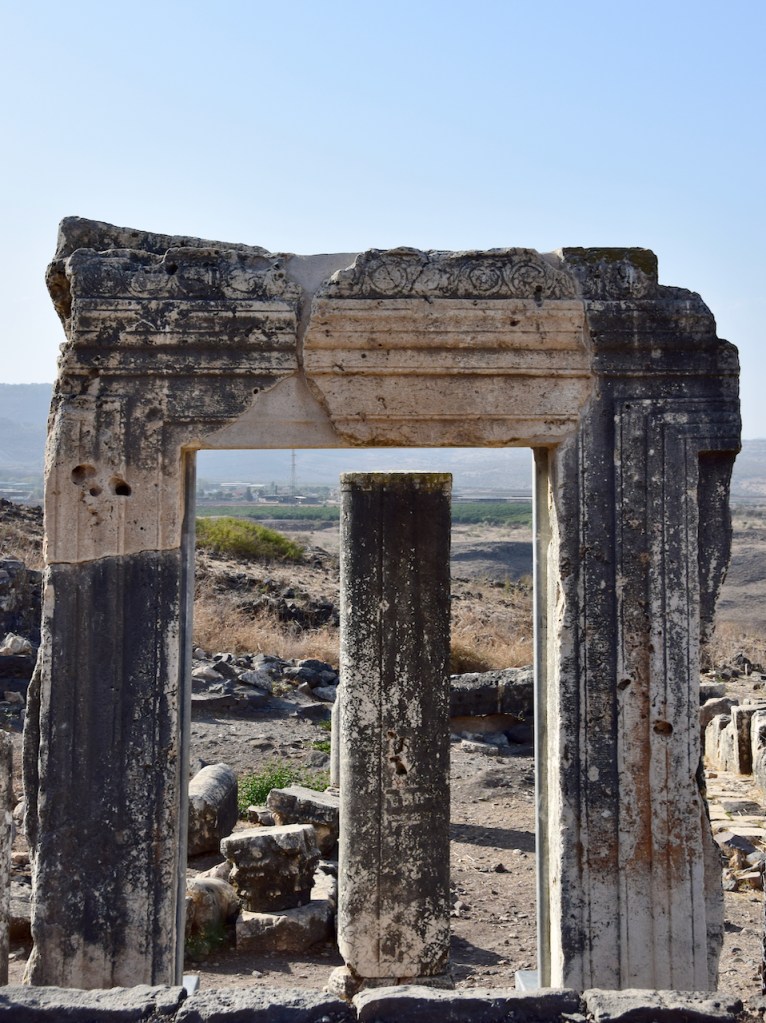
Outside the park, closer to Moshav Arbel are the remains of an ancient synagogue from the 4th century . It was first discovered in 1852 by the explorer and scholar Edward Robinson (who also recognized Herodium, Ein Gedi and Masada and after whom the arch at the the southern end of the Western Wall is named). Situated in the center of the village, it was built from large limestone blocks, in contrast to the other buildings which were of black basalt common to the region.

Drawing of Arbel synagogue by Leen Ritmeyer

The synagogue’s facade faced east which was rare for Galilean synagogues. The entranceway was cut out of a single large stone – three quarters of the frame remain in situ and was reconstructed in 1990.  The synagogue consisted of a main hall with three rows of columns topped by Corinthian capitals in the shape of a “U” that supported a second-story gallery. The hall was lined with stone benches and the floor was about 1.5 m lower than the threshold alluding to Psalm 130 “Out of the depths have I called you O Lord”.

The building seems to have been destroyed and rebuilt in the 6th century. At this time the orientation was changed – a doorway in the northern wall, a round niche in the southern wall facing Jerusalem for the Torah scroll and a platform for Torah reading were added. This synagogue was apparently destroyed by a fire in 749CE, conceivably resulting from the devastating earthquake that destroyed Bet Shean, Zippori, Sussita and other sites.

Related articles

Wind Turbines on Golan Trail

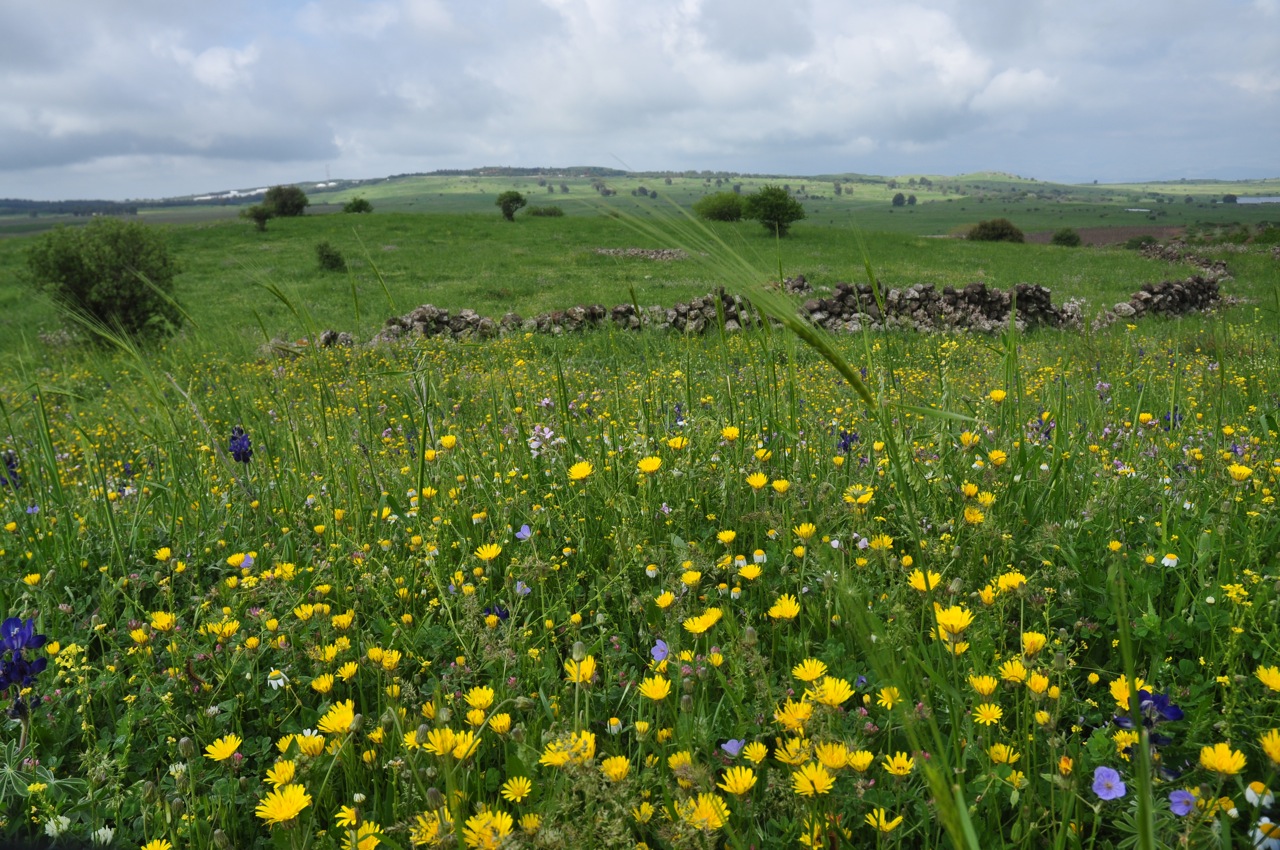
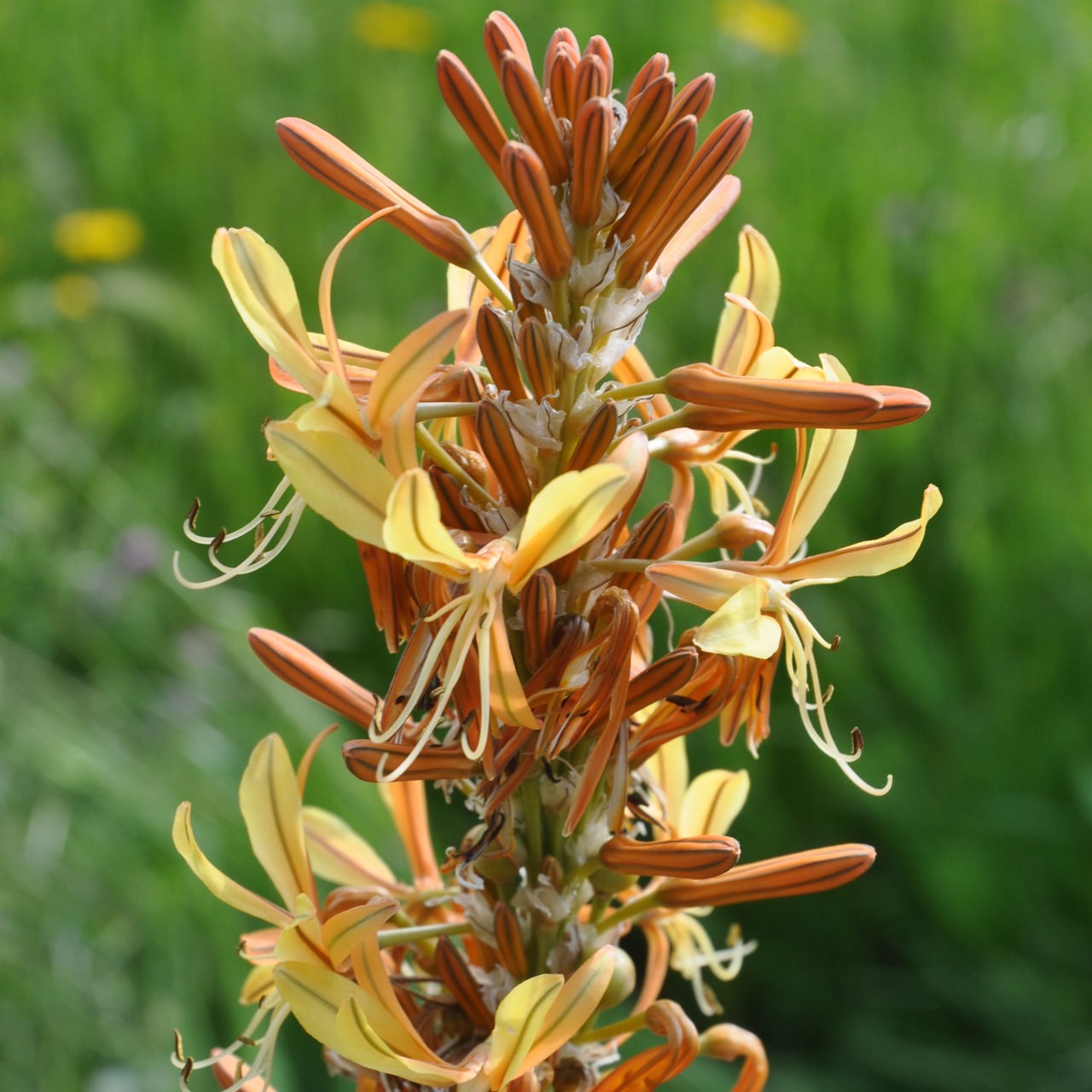
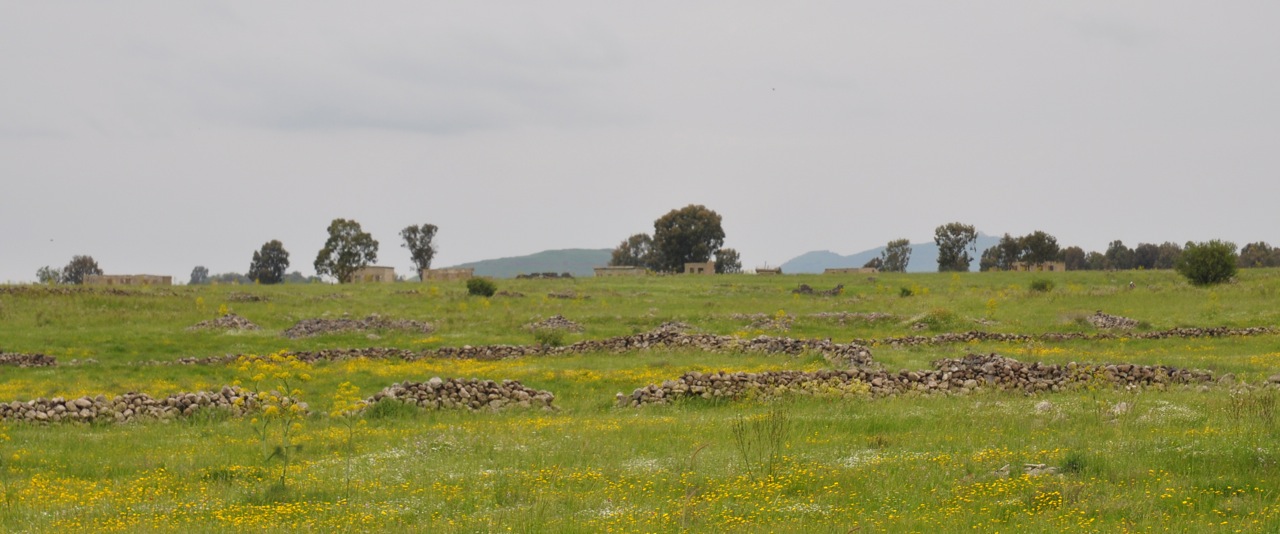
Whenever I spend some time on the Golan I am struck by its quiet expansiveness (compared to other parts of Israel). This time over the Passover holiday it was especially beautiful, everything was so green and the fields were covered with early wheat and wildflowers, poppy, lupine, asphodel, daisy, mustard, clover and some I had never seen.


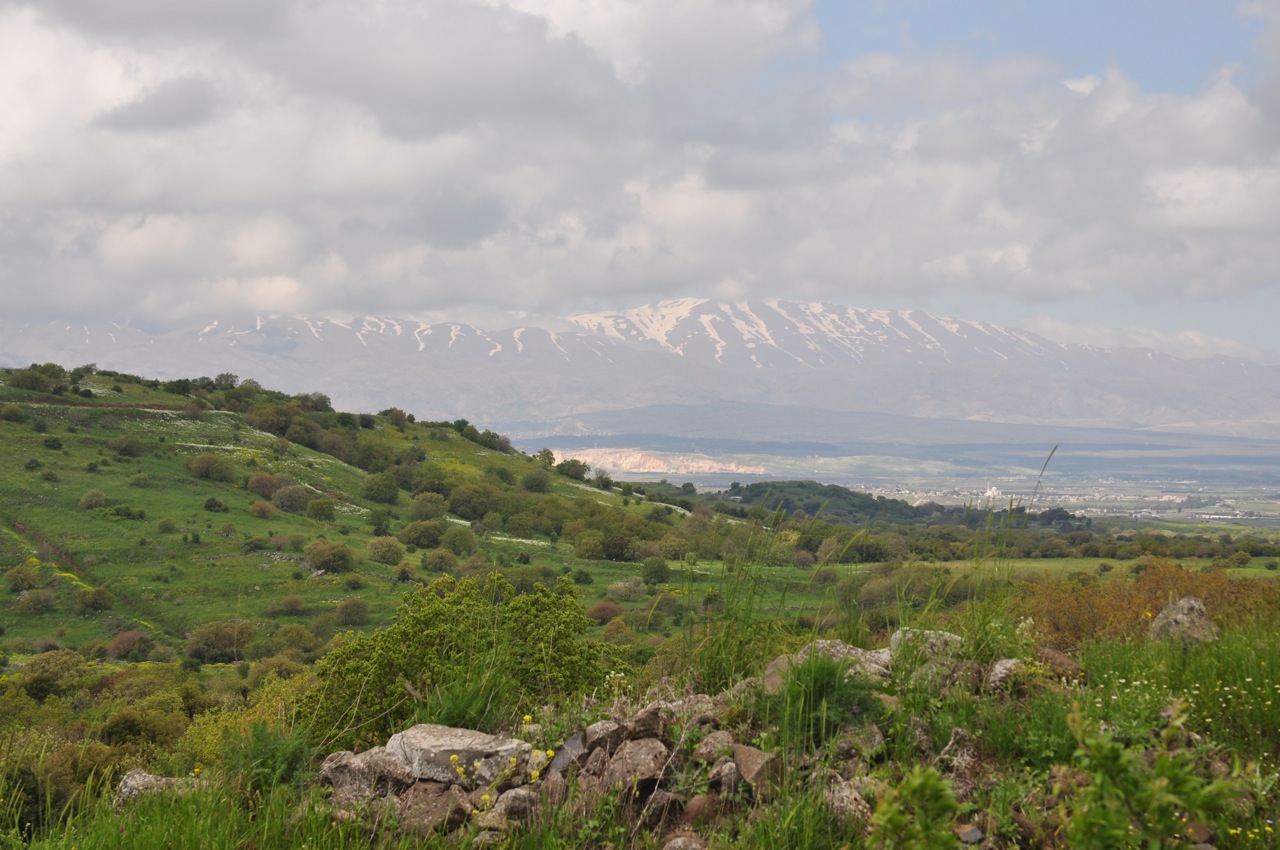
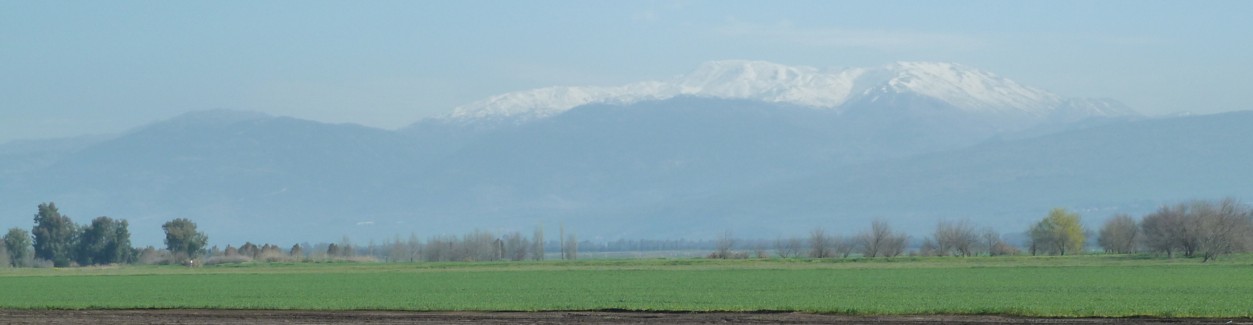
The Golan trail is a 130km trail that snakes along from Mount Hermon in the north at an altitude of 1500 meters above sea level to the Taufik spring above Hamat Gader. I went up to hike 3 days of the Golan Trail from Har Bental to Alonei HaBashan and from there to Faraj intersection. On the first day we could see the snow-capped Hermon to the north and the Sea of Galilee below us to the south.

Unfortunately the third day to Nahal Daliyot and Rujm el-Hiri was cancelled due to inclement weather. These couple of days hiking were the closing parenthesis of the 8 days I hiked from Eilat in March.

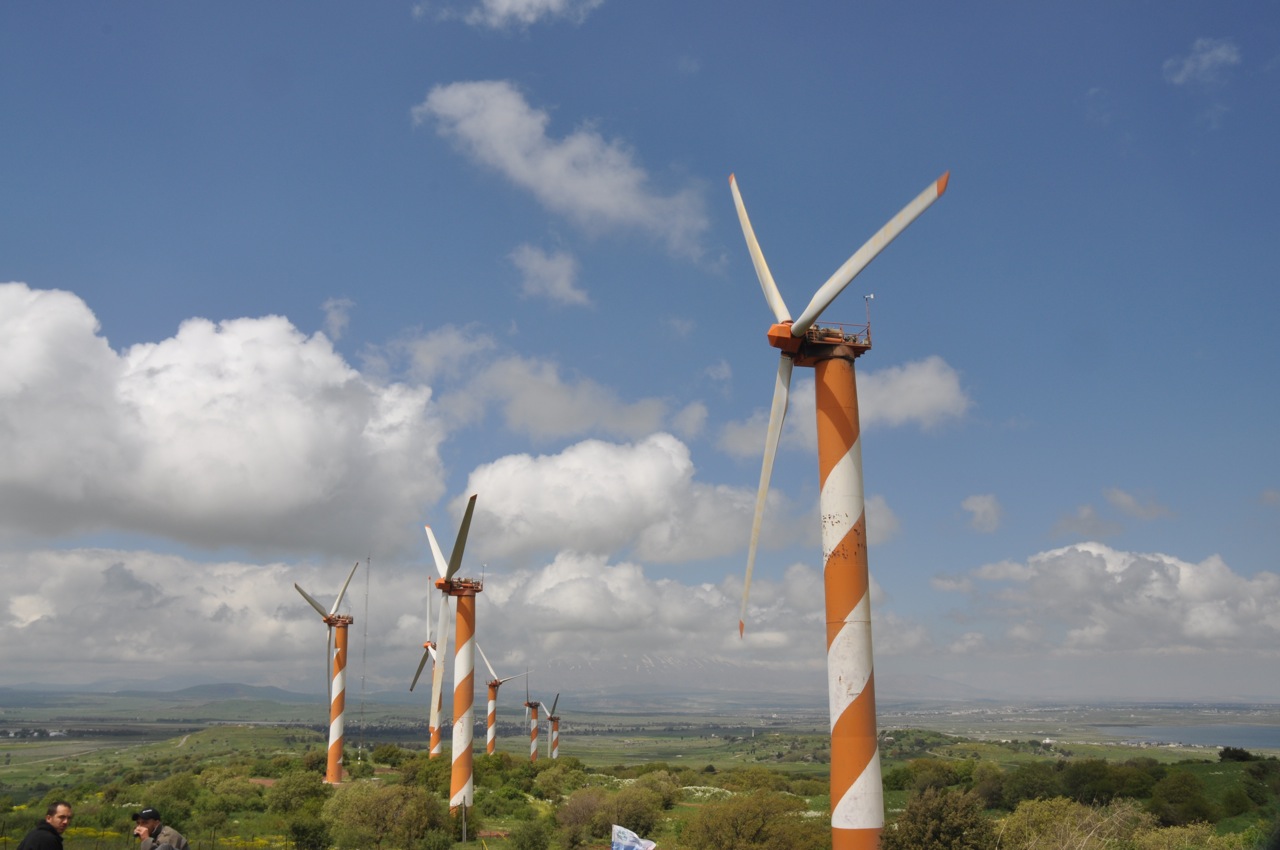
The Golan Trail goes by and then climbs a hill, the Bashan ridge on which 10 wind turbines, 30 meters high were installed in 1992. When I went by only 5 were working, producing about 3 megawatts of electricity that is used by the Mey Eden and Golan Heights winery and some 20,000 residents of the Golan in 32 settlements.

Plans have been in place for 150 new, larger wind turbines to be installed over an area of 140 square kilometers of the northern Golan that would cost about $500 million and produce 400 megawatts of electricity, enough to power the entire eastern Galilee. A company has been established to build a wind farm in the northern Golan, in the valley known as the Vale of Tears with investments in place amounting to some $120 million. The Golan has some of the strongest levels of wind energy in the entire region but there are problems. One is that such a large number of tall (80 meters high) wind turbines could be hazardous to the migratory birds that pass over the Golan in the thousands. Also, photovoltaic panels have become more efficient and less expensive. Individuals and companies can install the panels and the electric company buys the electricity generated at 4 times the current rate. So far, some 150 photovoltaic systems have been installed generating 7 megawatts of electricity with another 200 installations approved.

Golan landscape

Desert Wildflowers

If you are going to be in the south of Israel, there is a nice hike from the Timna valley through Nahal Mangan climbing onto the Milhan ridge; from there you can descend and camp at the Milhan well. This area gets less than 100mm of rain per year but in March we saw a lot of plants in bloom for a desert.

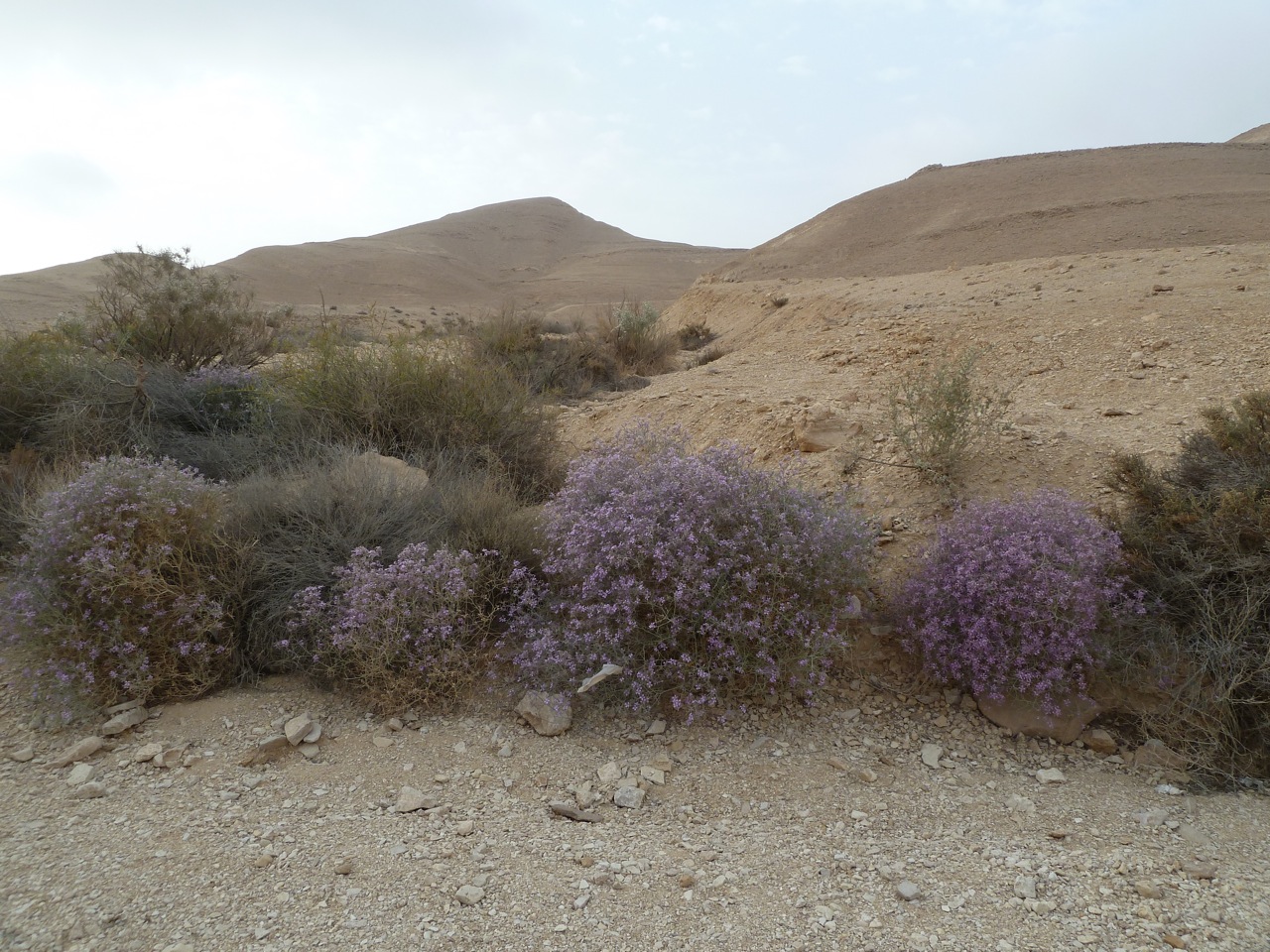
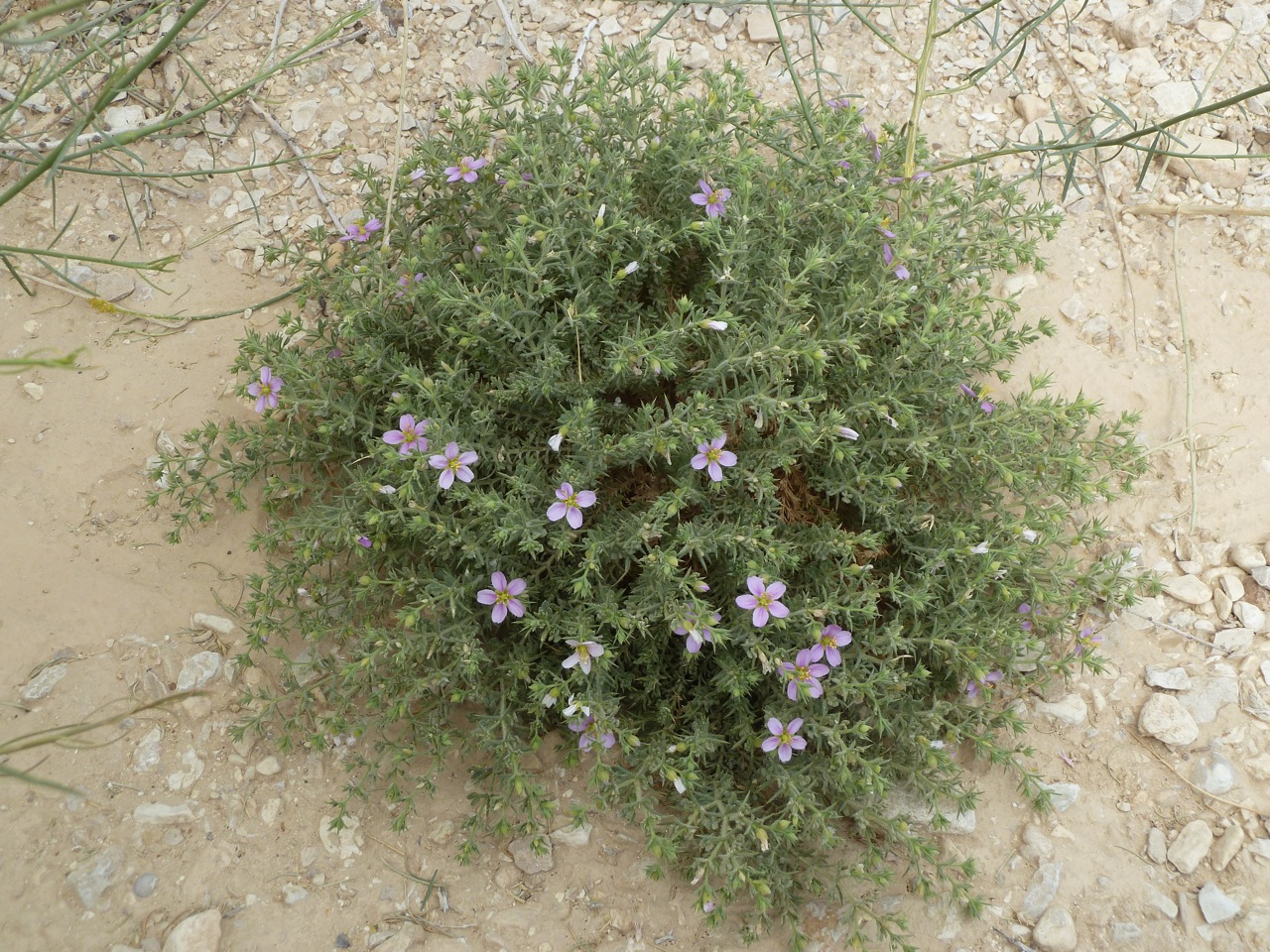
The Silon Kotzani (Zilla spinosa) is a perennial but only lives a couple of years dying from drought or flash floods. The plant grows into a sphere of stems and thorns that is typical of thorny plants in the desert. The peak of its flowering is March, afterwards it dries up. The small purple flowers are edible and have a mild cabbage taste. When dry the stems of the bush can be used as kindling to start your campfire.

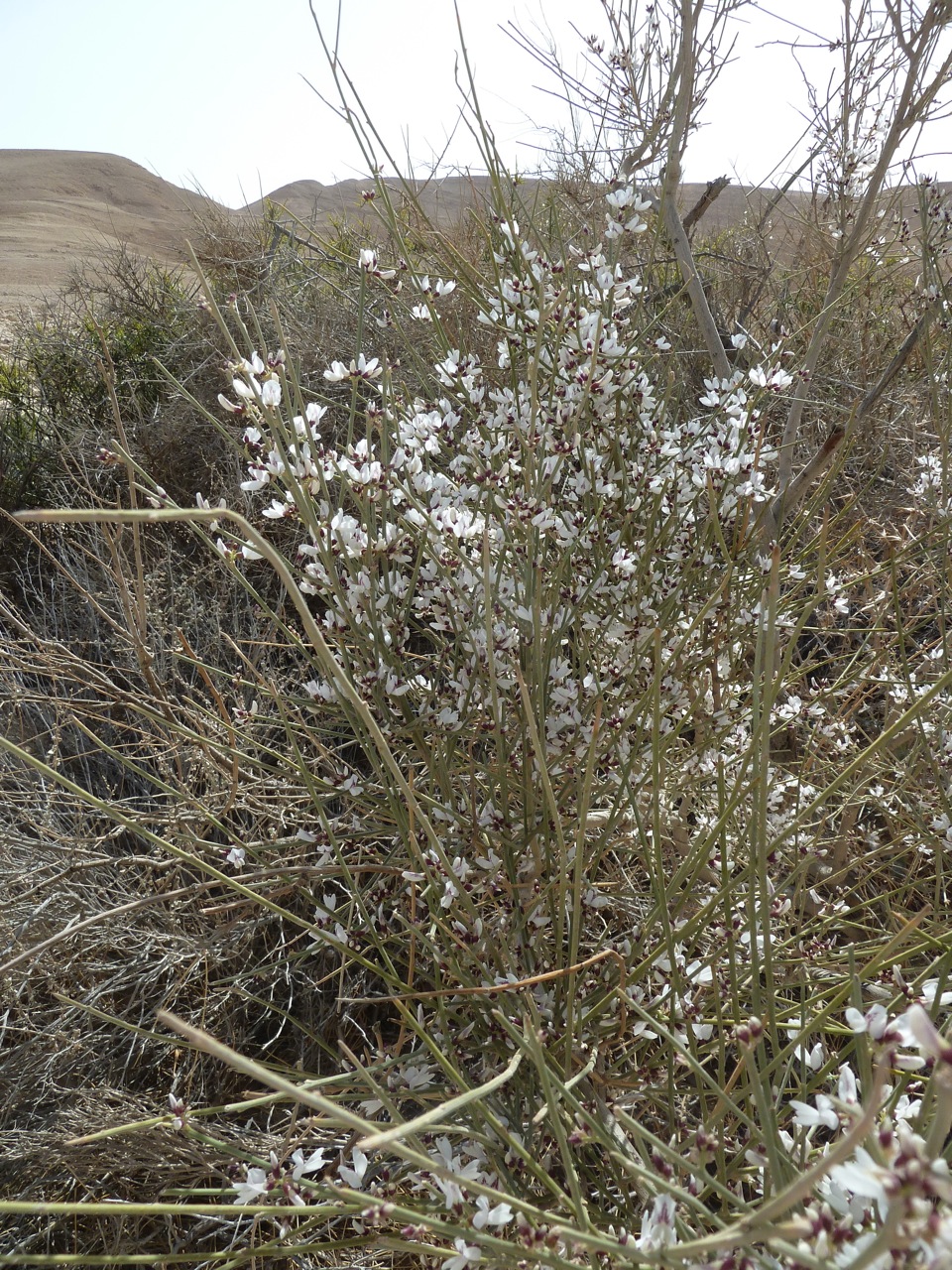
The White Broom, Rotem HaMidbar (Retama raetam) was blossoming, bunches of small, delicate white flowers. This is the bush under which the prophet Elijah sat.

But he went a day’s journey into the wilderness, and came and sat down under a broom-bush. Kings I 19, 4

The Broomrape, Yahnuk HaMidbar (Cistanche tubulosa) is a parasite that grows on and gets its nourishment from the roots of other plants. There are no leaves, just a spike of yellow flowers.

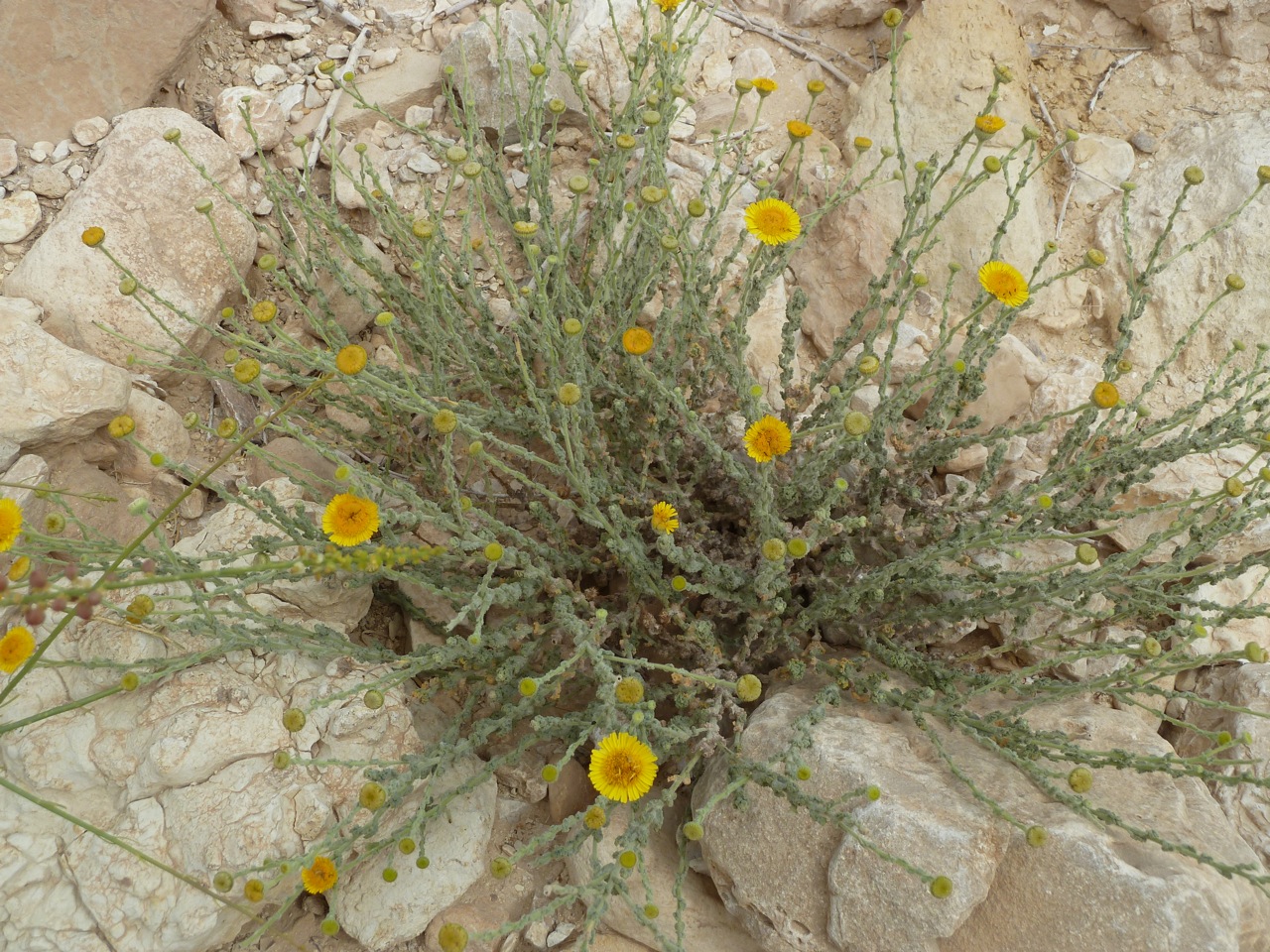
Parosheet Galonit (Pulicaria desertorum) is a low-lying plant with yellow flowers that grows in desert areas. The leaves and flowers can be used to make tea, the plant has a pleasant scent.

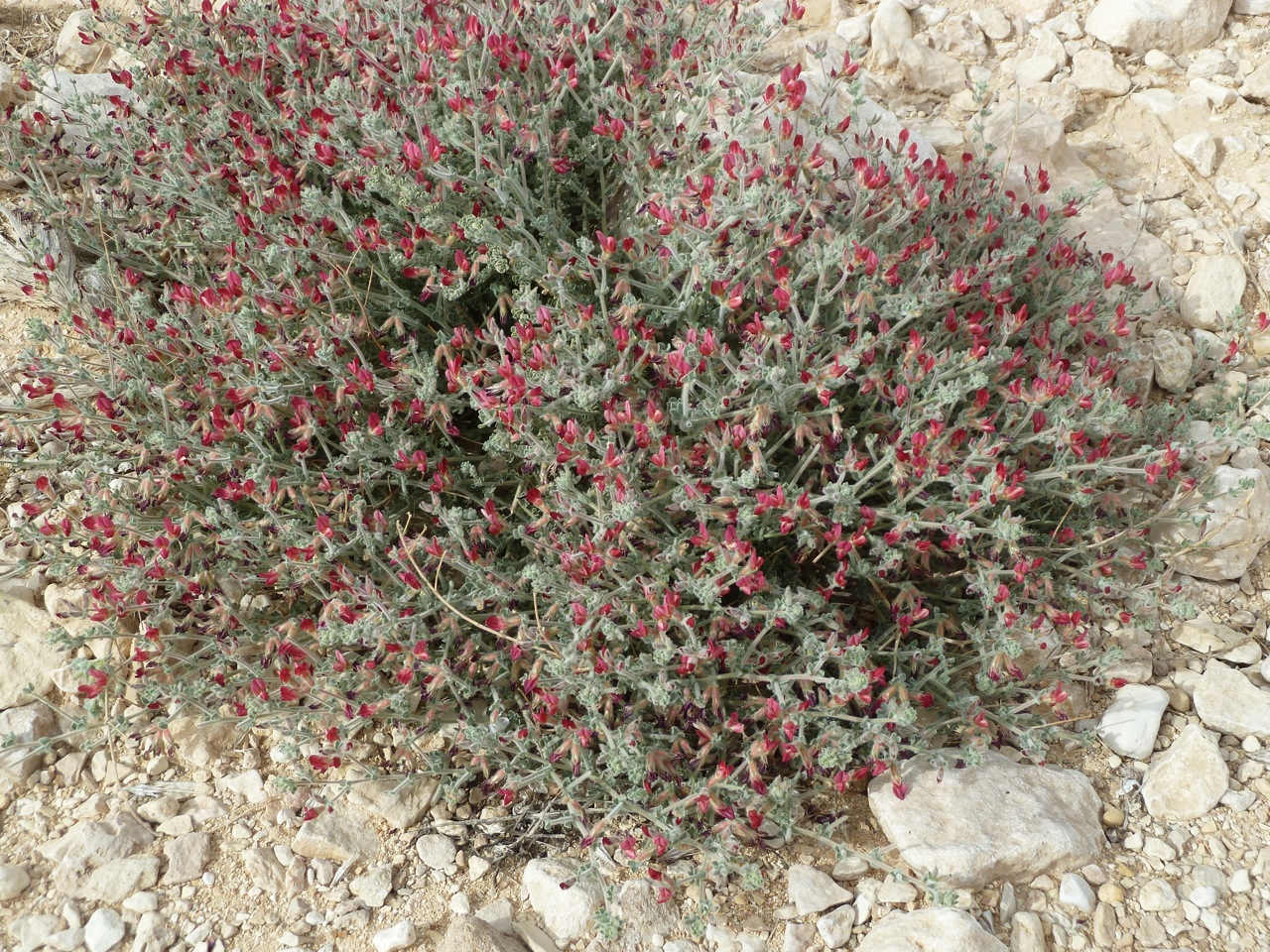
Lotus HaMidbar, Desert Lotus (Lotus lanuginosus) is a low-lying perennial with small red flowers that grows in desert areas.

Fagonia Rakah (Fagonia mollis) is one of the typical and most widespread plants that grows in the desert.

For other posts about wildflowers click on “Wildflowers”  under Categories in the right hand column or https://israeltours.wordpress.com/category/wildflowers/