Category Archives: Archaeology

Mosaics at Inn of Good Samaritan

On the main highway <1> between Jerusalem and Jericho is a site identified with the Inn of the Good Samaritan (mentioned in the parable in Luke 10:25-37). Remains from the first century BCE to the first century CE were found throughout the area. Abundant finds from this period include pottery, clay lamps, glass vessels, metal implements and numerous coins attesting to intensive activity that befits an inn for Jewish and then Christian pilgrims and travelers making their way between Galilee and Jerusalem.

Byzantine artifacts

In the Ottoman period, a rectangular structure was built over the southern wall of the Crusader fortress. This building underwent numerous alterations and was restored after being damaged during WWI. It served as a roadside inn guarding the Jerusalem-Jericho road from attacks by brigands as it had for centuries.

Since the parable of the good Samaritan includes men of three faiths, the newly opened museum has chosen to display the mosaic floors and other artifacts found in churches and Jewish and Samaritan synagogues in Judea, Samaria and Gaza, you can see part of the mosaic floor of a 6th C Jewish synagogue that stood in Gaza (I even got to do some conservation work on the mosaic).

It is fascinating to see the similarities and differences among the images displayed in mosaic.

Mosaic Khirbet Huriya

The art of mosaic began in the Greek world around the 4th C BCE and reached Israel during the Hellenistic period. It continued to develop and by the end of the Second Temple and Roman periods simple, plain and geometric mosaics became more ornate, complex with representations of flora and fauna, people, instruments, religious symbols. It became the chief means of paving public buildings, private homes, bath houses, churches and synagogues.

Places Nearby

Take the cutoff to Maale Adumim to visit the Martyrius monastery (there is a combined entrance ticket; note you need to phone in advance), the largest in the Judean desert. Inside the complex the main church was paved with colorful mosaics in geometric patterns interspersed with pictures of animals; the refectory floor, discovered intact, is covered with mosaics in geometrical designs and the kitchen was also paved with mosaics.

On the opposite side of the road along Wadi Qelt visit one of Herod’s fortresses, named after his mother, Cypros. There are 2 bath houses with remains of mosaic floors.

If you are planning a trip down to the Dead Sea and Ein Gedi don’t forget to take a few minutes to check out the mosaic floor in the synagogue (your entrance ticket to the nature reserve is good for the archaeological park). The synagogue has a detailed 18 line inscription in Hebrew and Aramaic including the 12 signs of the zodiac (indicated by their names but not depicted graphically as in most other synagogues of the same period, eg. Tiberia, Bet Alfa, Tzippori). The central hall has 4 birds within a medallion, peacocks grasping a bunch of grapes, a menora and geometric patterns.
Masada at Sunrise

Masada is one of the most visited historical/archaeological sites in Israel, an isolated rock cliff in the Judean desert overlooking the Dead Sea.

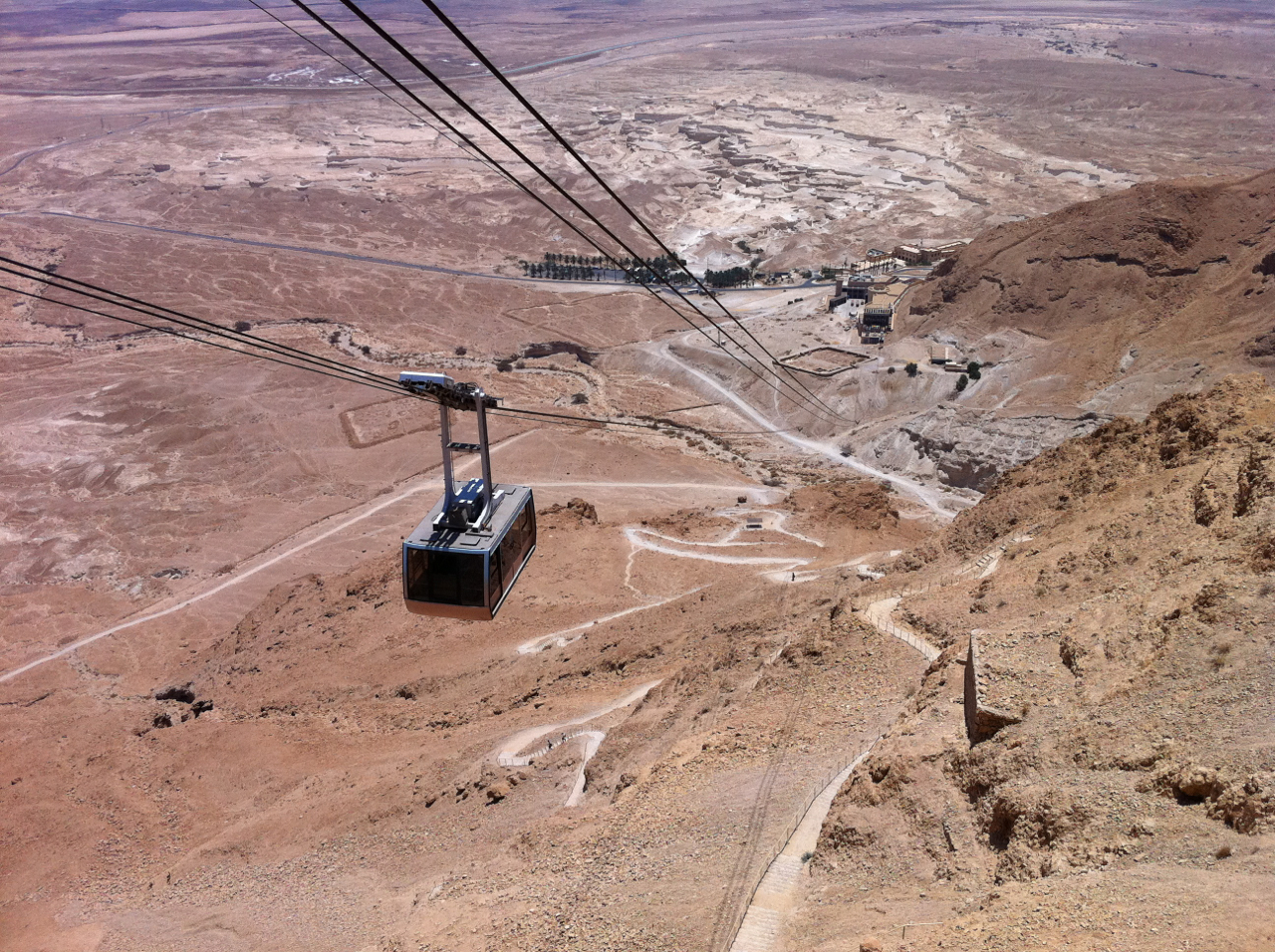
Masada cable carAlthough there is a cable car that will take you to the top of the mountain, a tradition has grown up to climb the Snake Path, a zig-zag trail, early in the morning in order to reach the summit in time to watch the sunrise – that’s what we did. The top is only 59 meters above sea level but remember that you’re starting at about 400 meters below sea level. You should be able to climb it in 45 minutes to 1 hour. If you want to do this the best place to stay the night before is the youth hostel at the base of Masada.

I recently read an article on the Israelity website about a group of 7 seniors from the Cedar Village retirement community near Cincinnati who came to Israel to celebrate their bar/bat mitzvahs and tour Israel including climbing Masada – their average age was 85 years old, the oldest was 97!

I guided two families traveling together, a group of four adults and five children, during their time in Israel. When we reached Masada and saw the mountain some were interested in climbing the Snake path. We didn’t really have enough time so one of the Dads suggested running it. At first no one took him seriously, so Chris said he’d do it. I showed him where the path started and he was off. The rest of us took the cable car and on our way up looked for Chris. I finally saw him on the last turn of the path before the summit – his time 17 minutes! For Bernie’s description of their experience check out their blog at http://keepingupwiththemounts.blogspot.co.il/2011/11/masada.html

Masada (from Arad)

Another option is a nice hike that starts at the same but splits from the Snake Path, you walk north on the red trail following the circumvallation wall built by the Romans around the mountain. You pass the 4th siege camp (northernmost) and follow the trail west and then south. As you climb there’s a great view of the Northern Palace hanging on the cliff and the water cisterns on the western side. You can go to see the cisterns and/or climb the Roman ramp to the summit.

The Dead Sea

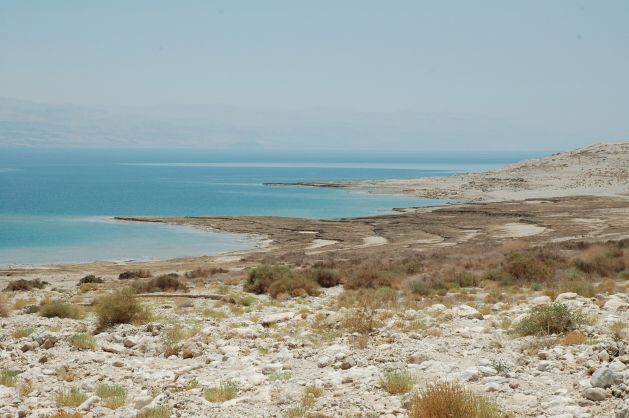
Driving on highway 90 from Jerusalem down to the Dead Sea takes half an hour as you descend from more than 700 meters above sea level to 400 meters below sea level. The Dead Sea is situated at the lowest point on earth, in the Great Rift valley that runs from Turkey in the north to Mozambique in the south, in the crack in the earth’s crust created when Asia and Africa were torn apart five million years ago. Originally it was an ancient larger sea connected to the Mediterranean when water flowed across the Jezreel valley and Jordan River to fill the rift. Although it has no outlet, evaporation in the hot Judean desert reaches 25 mm per day in the summer so in four days it loses the equivalent of the annual rainfall. When the amount of water flowing into the Dead Sea from the Jordan River was equal to the amount lost to evaporation, 1.2 billion cubic meters, the level stayed in equilibrium. Today the Dead Sea is receding at the alarming rate of one meter a year as Israel and Jordan divert the waters flowing into it. The sea is still 1100 meters deep at the northern end so it isn’t going to disappear tomorrow but it is a serious problem that needs to be addressed.

Hilton, Dead Sea

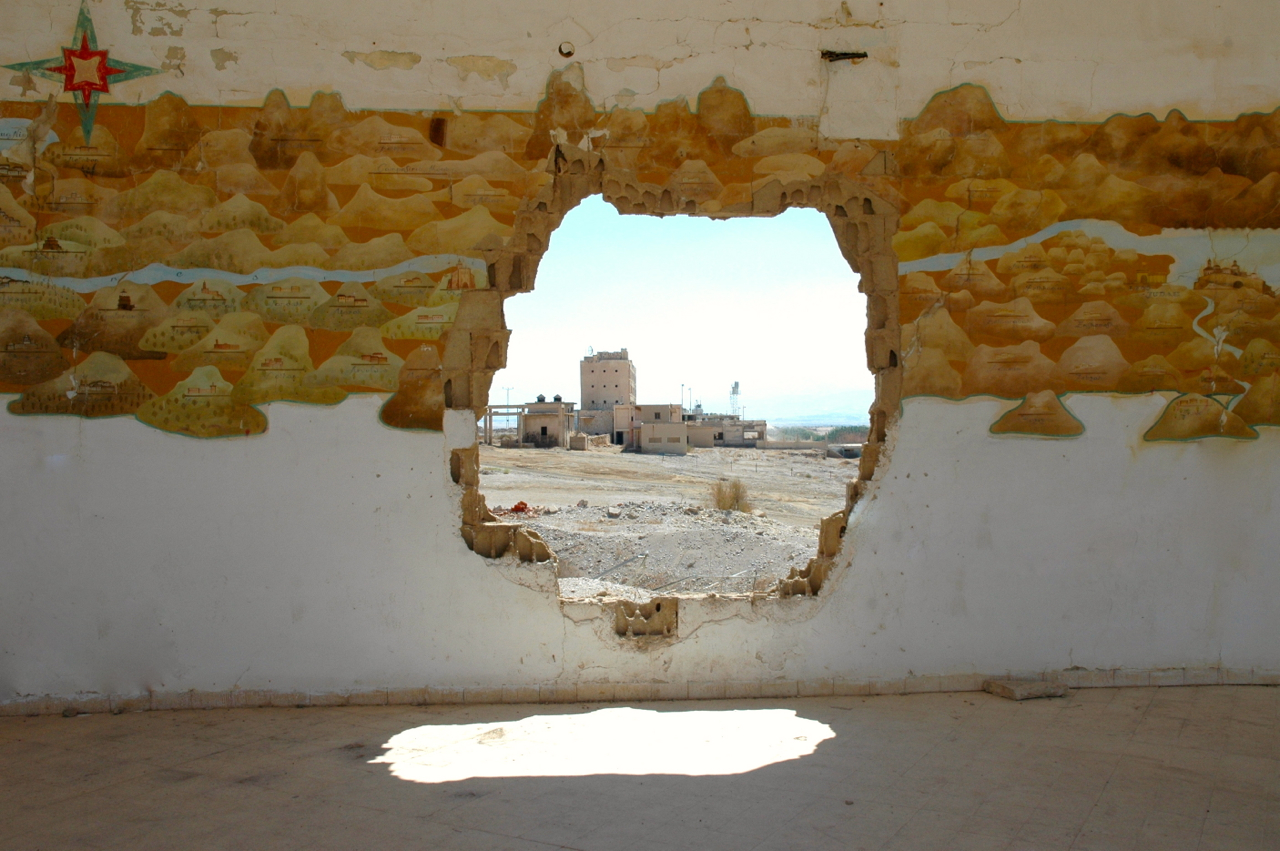
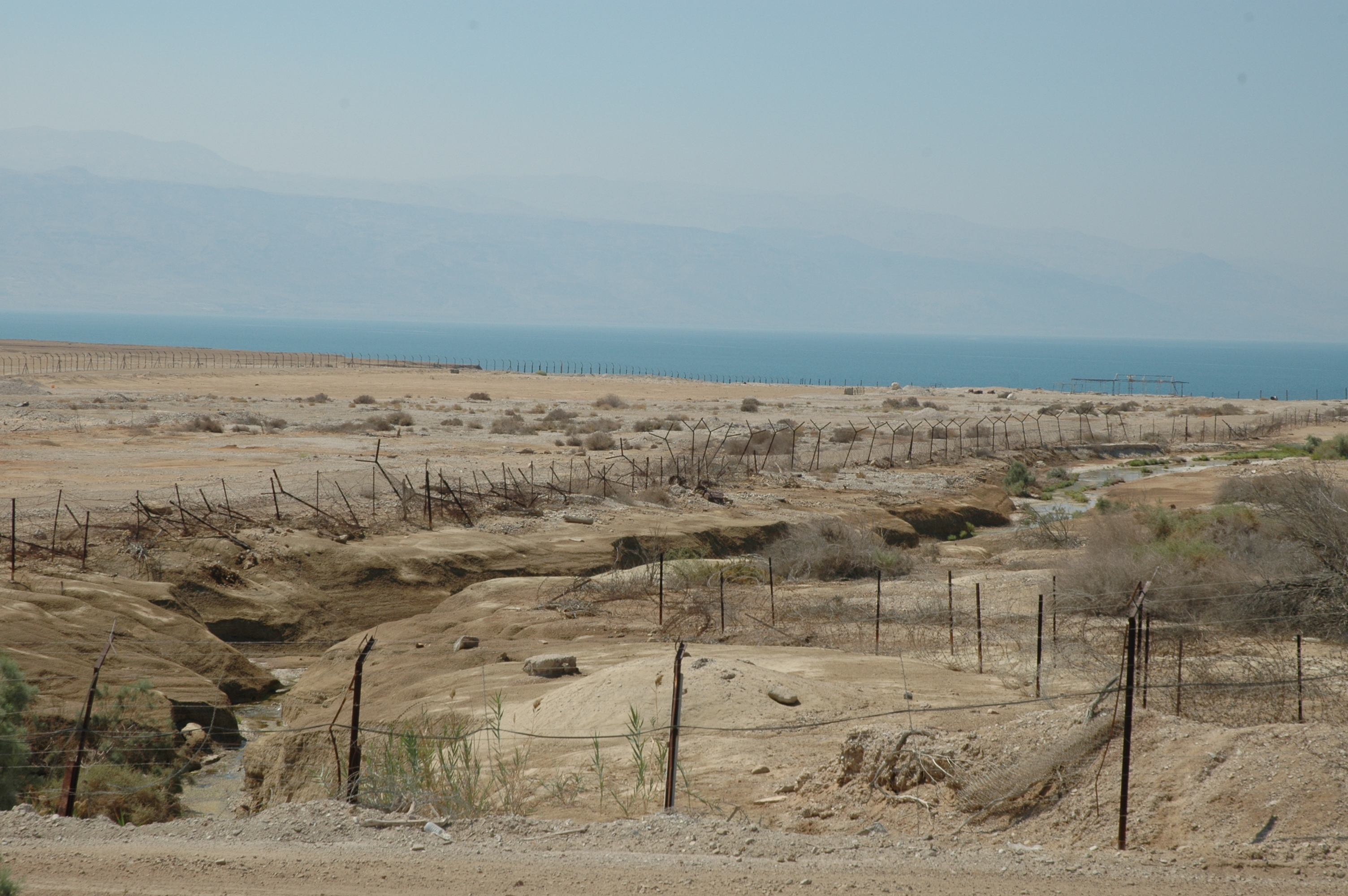
At Lido junction at the northern end of the Dead Sea I often stop to show people the replica of a Crusader map painted on the curved walls of what was a fancy Jordanian restaurant on the shores of the Dead Sea. The artwork was done in March 1973 by Kohavi, who served like me as a reserve soldier at the nearby “Hilton” hotel, now an Israeli army base. Here you can see the trickle that is the Jordan River today flowing into the Dead Sea.Jordan River flowing into Dead Sea

Continuing south along highway 90 we’ll pass some private beaches on your left where you can float in the salty water of the Dead Sea and cover yourself in mineral rich mud. The mud contains magnesium, potassium, sodium, bromide and calcium, all beneficial to our skin; in fact, as the mud dries it even draws out toxins from your skin.

On your right we’ll pass Qumran where the Dead Sea scrolls were discovered in the nearby caves. At that time, Qumran was a land terminal, you couldn’t continue southward except by boat. The Dead Sea was an important transportation route because even heavily-laden barges would float easily (the Madaba mosaic map shows 2 such boats carrying salt and grain). On your left is En Feshka (also called Einot Tsukim). Excavations were carried out here in 1958 by de Vaux (when he was excavating Qumran) and in 2001 by Hirshfeld. The concensus is that this was a farm that prepared balsam perfume. Today it is a nature reserve, 1500 dunam of which has restricted access and can only be visited with an authorized guide like me.

Just before we reach En Feshka look up on the cliffs to your right for the PEF markings, 2 black horizontal lines drawn in 1900 and 1927 by members of the Palestine Exploration Fund and the letters PEF in red. To help you understand how much the Dead Sea has receded these lines were painted from a boat floating on the Dead Sea in the 1900s.

East of the main highway (on your left) we’ll see a few sinkholes and more across from Ein Gedi. As the Dead Sea recedes fresh water from runoff dissolves the salt in the newly uncovered salt-laden earth creating an empty cavern. When the top crust of earth collapses a sinkhole is formed. More than a 1000 sinkholes have appeared on the Israeli and Jordanian coasts of the Dead Sea in the past 15 years. The holes fill up with water and the naturally occurring minerals create pools of orange, yellow, green and indigo with borders of encrusted salt, incredible to see. I’ve taken a series of photographs of sinkholes that you can see on my Flickr site http://www.flickr.com/photos/27944012@N06/sets/72157621040678204/

Sinkholes at Dead Sea © Shmuel Browns

Negev desert

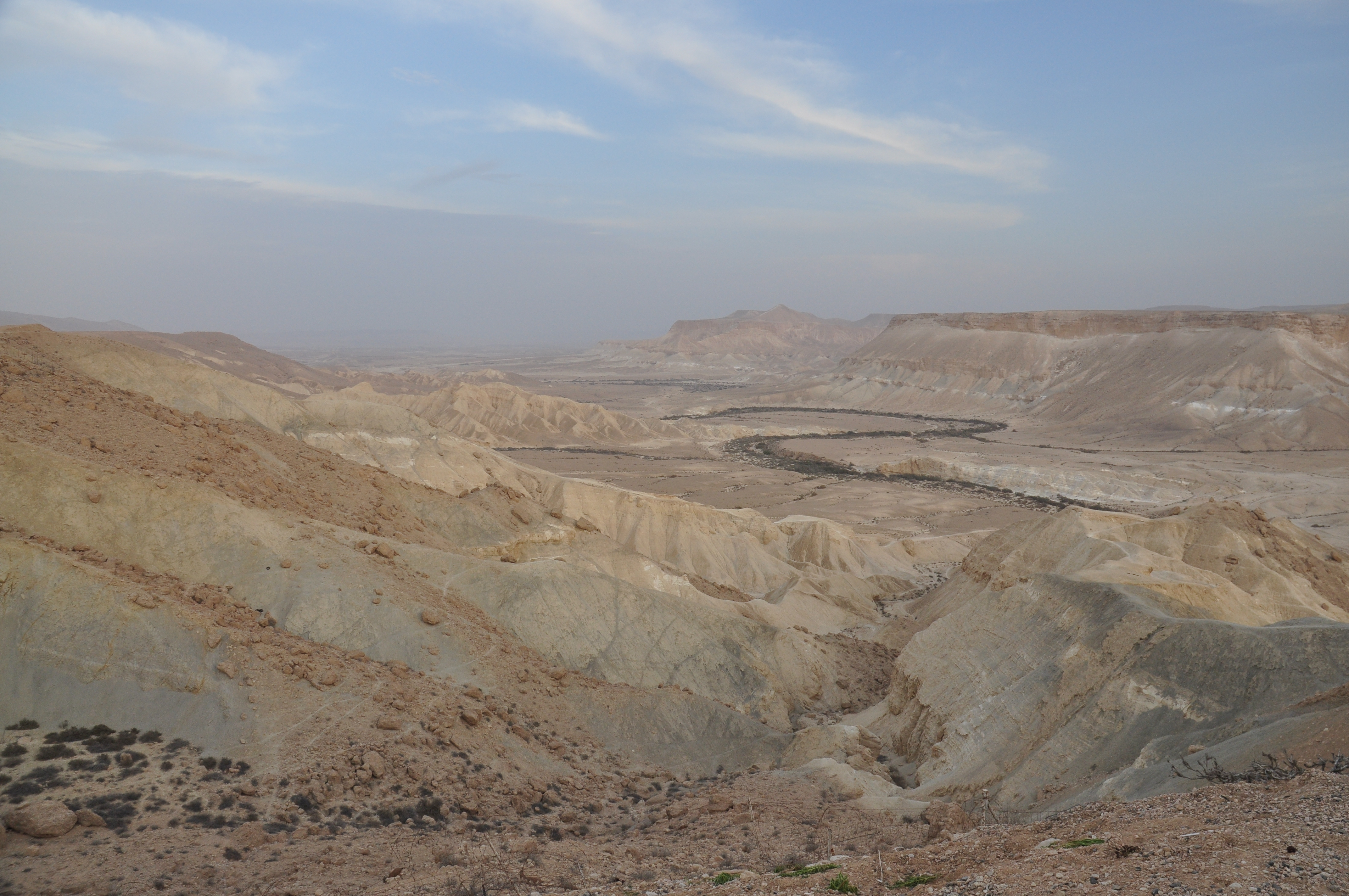
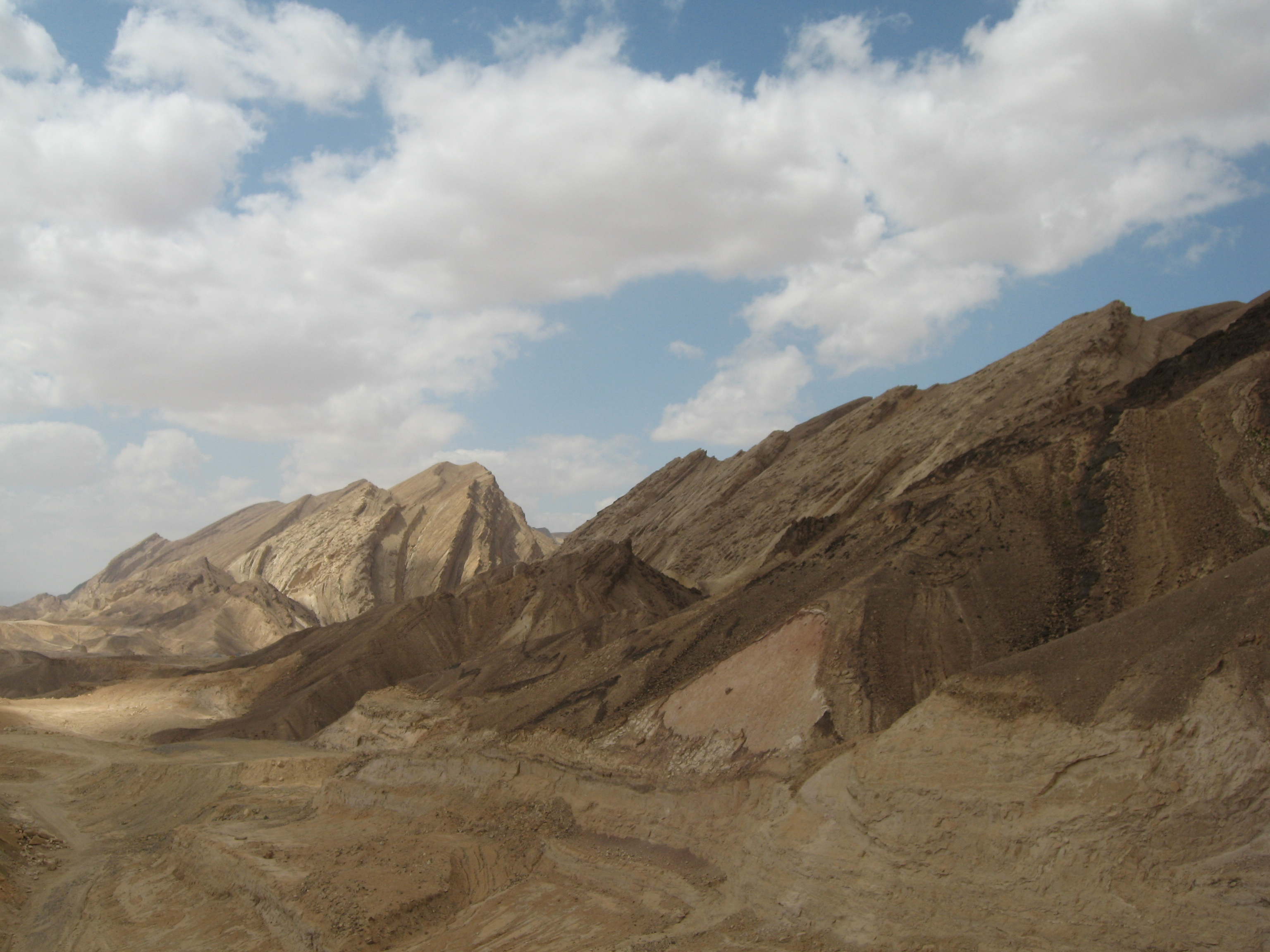
The Negev desert, shaped like a 4700 square mile inverted triangle in the south of Israel, makes up more than half of the country’s land area. I can arrange to make a visit to the Negev part of your itinerary, you have to experience the desert to understand its importance.

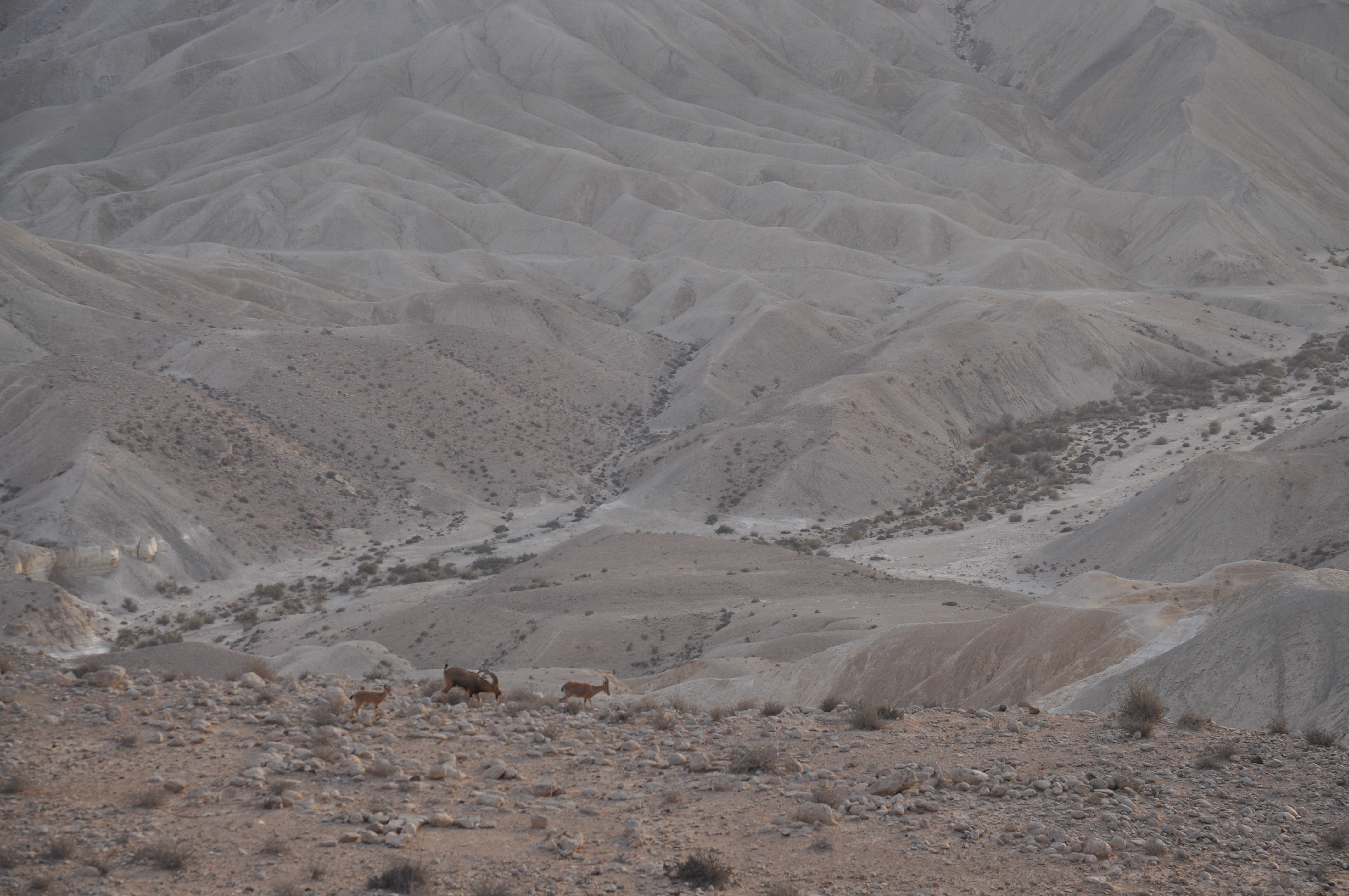
Geographically the Negev can be divided into 5 areas: the northern, western and central Negev, the high plateau and the Arava Valley. This article focuses on the high plateau area, Ramat HaNegev (Negev Heights). The plateau stands between 370 metres and 520 metres above sea level and has extreme temperatures in summer and winter and significant differences in temperature between day and night. Even though the area gets only 100 mm of rainfall per year and the soil is poor and quite salty, Israel is successfully growing olives, pomegranates, pistachios and grapes for wine.

DSC_0042

Here are some places to add to your itinerary as you explore Ramat HaNegev.

  • Kibbutz Revivim is growing 5 varieties of olives using brackish water and selling the olives and olive oil in an upmarket boutique dedicated to their products in Tel Aviv.

DSC_0017

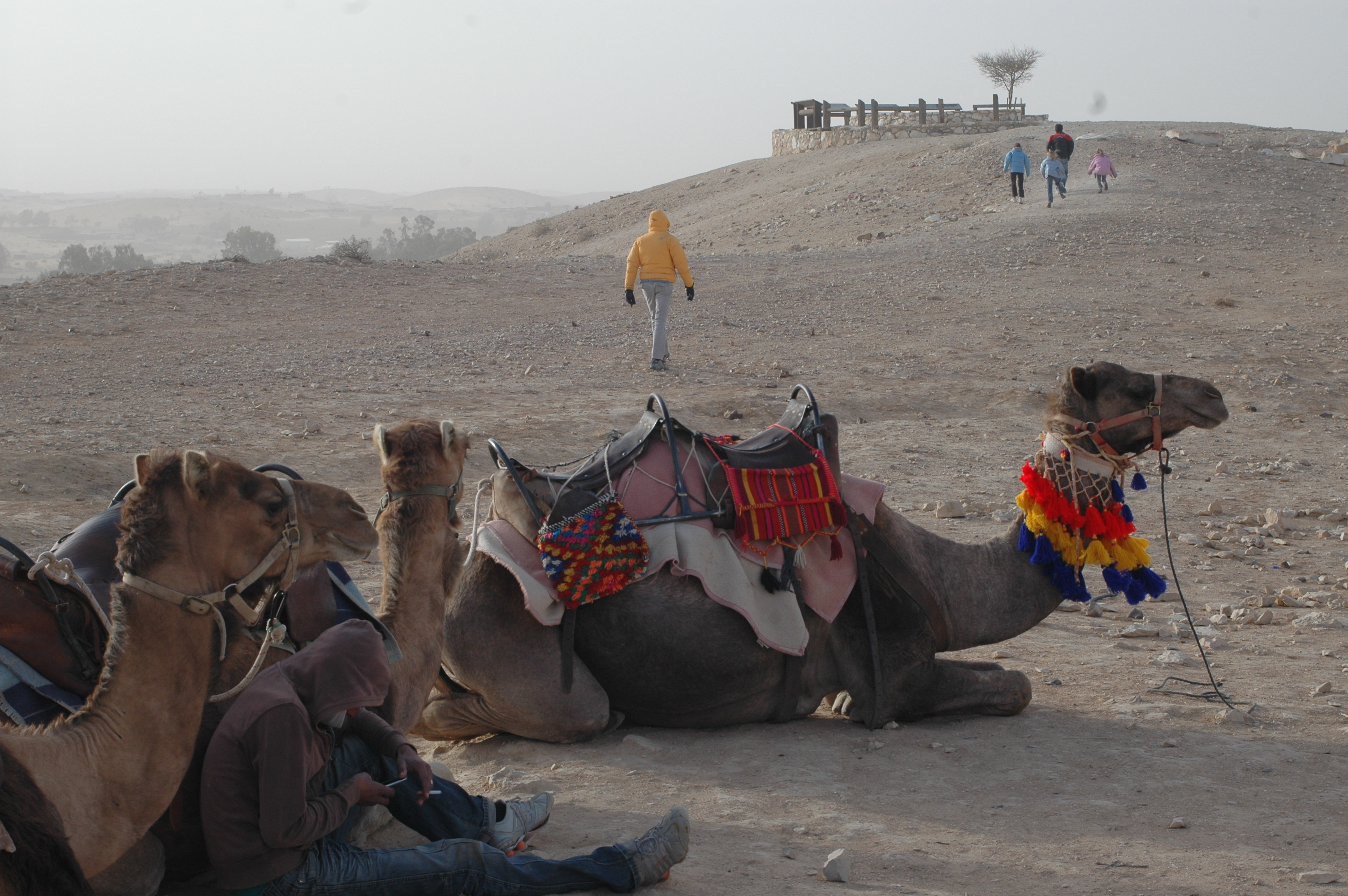
  • Park Golda includes a lake and picnic tables to eat your lunch or for an unforgettable desert experience, try Beduin hospitality in a black goat’s hair tent followed by a camel ride.

IMG_0931

  • The Large Makhtesh is one of 3 craters in the region, a unique formation to the Negev, where the inside of a mountain is eroded by water, leaving the outer shell.
  • Visit the tzrif on Kibbutz Sde Boker to get a glimpse of how Ben-Gurion and Paula lived. The Ben-Gurion Institute, a research facility for the study and the dissemination of his writings, offers visitors a multi-media program about the man and his vision.
  • You can visit a string of family farms along route <40> for wine and cheese tasting and even sleep over in one of their cabins under the desert stars. On farms that are growing grapes and making wine, the vines have been planted on the same 1500 year old terraces that were prepared by the Nabateans and take advantage of runoff from the winter rains. These farms are also a symbol of Israel’s pioneering spirit in the 21st century, composting their waste, recycling their grey water and generating electricity using solar photovoltaic panels.

DSC_0033

  • Hike into the canyon at the Ein Avdat National Park with springs, pools and waterfalls, an oasis in the desert or from the Roman bath house (below Avdat) supplied with water drawn from a well tunneled 70 meters through bedrock hike north along the Israel Trail to the Ein Eikev spring that flows year round.
  • Visit the remains of the Nabatean city of Avdat which was probably the regional capital. Located at the crossroads that join Petra in Trans-Jordan to Eilat and to Gaza, Avdat controlled the passage of the caravans from India and Arabia. Conquered in 106 CE by the Roman Emperor Trajan, it lost its importance when a road was built between Eilat and Damascus. Avdat adjusted by adopting agriculture, particularly the production of wine, as its means of subsistence. Numerous terraced farms and water channels were built throughout the region in order to collect enough run-off from winter rains to support agriculture in the hyper arid zone of the Negev. At least five wine presses dated to the Byzantine period have been found at the site showing us how important wine-making was in this region. In the Byzantine period (5th and 6th century) a citadel and a monastery with two churches were built on the acropolis of Avdat on the ruins of earlier pagan temples. The town was totally destroyed by a local earthquake in the early seventh century and was never reinhabited.

Ein Gedi

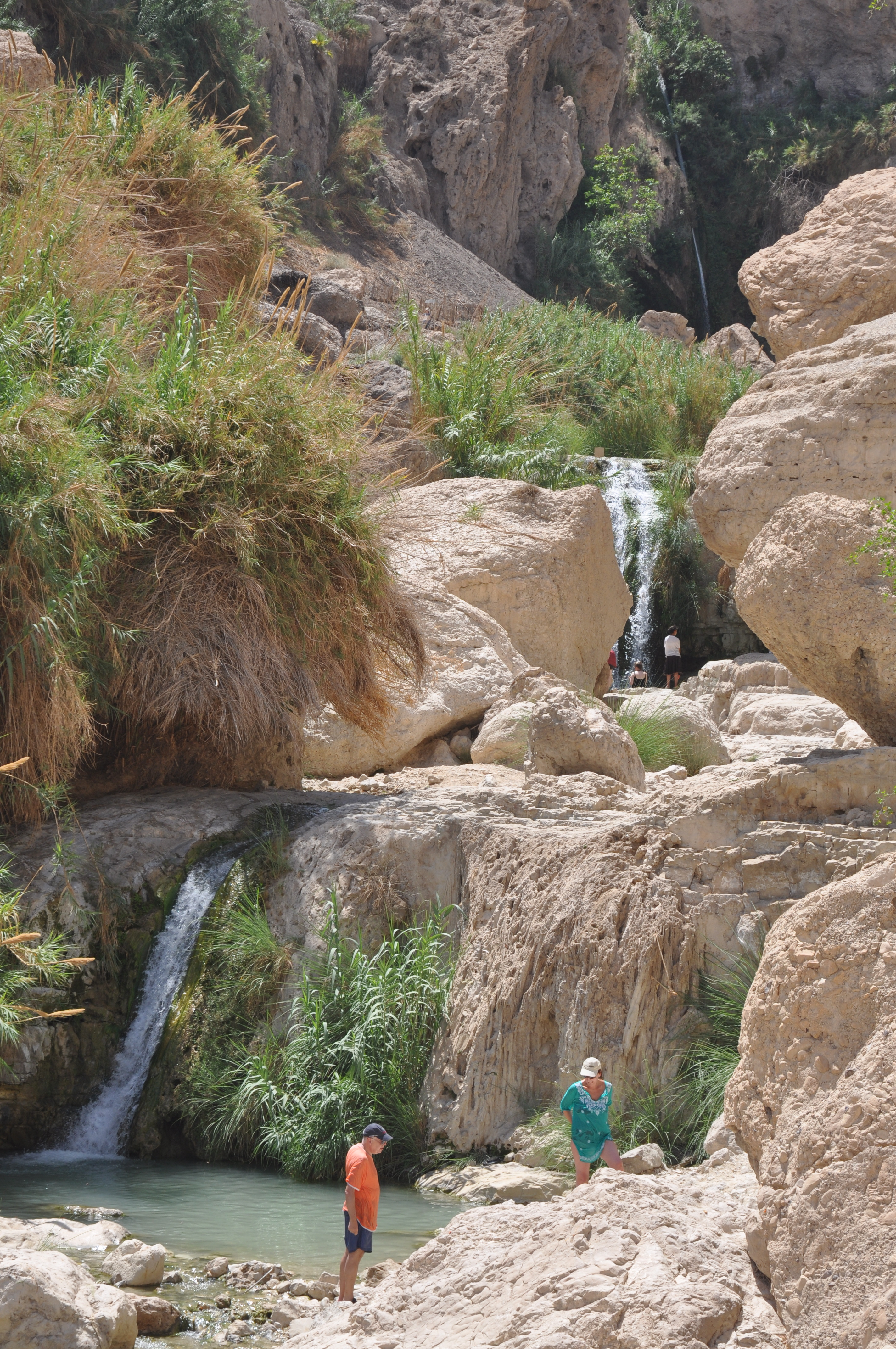
Ein Gedi-waterfalls and pools

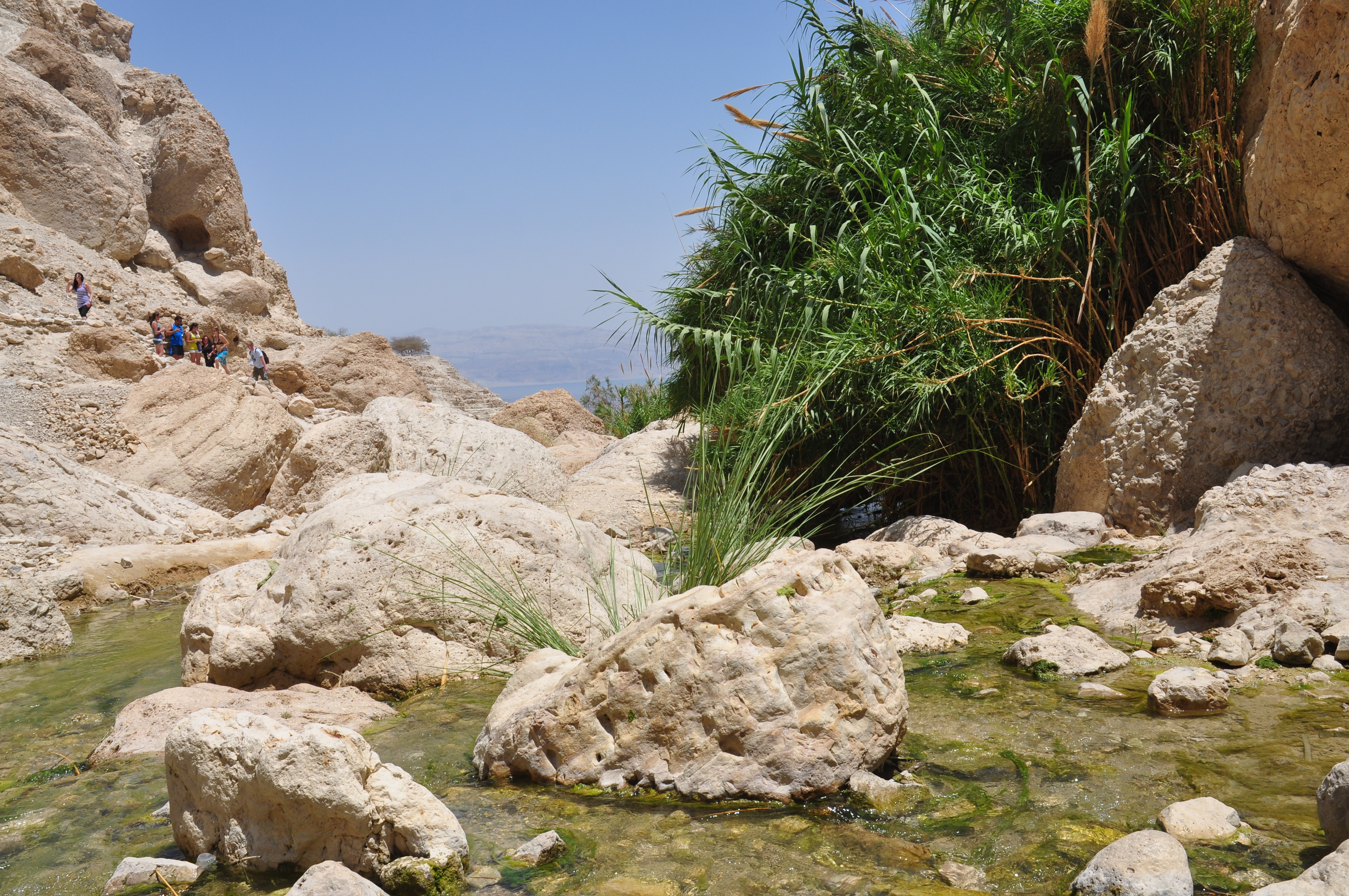
Ein Gedi (literally Spring of the Goats, refers to Nubian Ibex that come to the spring to drink) is an oasis in the Judean desert along the western shore of the Dead Sea. Here are two hikes (each about 5 km) in the Ein Gedi reserve that are perfect for families, Nahal David and Nahal Arugot.
On entering the reserve follow the marked the path and after about 15 minutes of easy walking we’ll reach the first waterfall, Mapal Shulamit that cascades 30 meters down the rock to a pool below. After a refreshing dip we’ll continue to a fork in the trail, we’ll take the steeper one on the right (the other path would take us back to the entrance) to the Shulamit spring and from there above the wadi to the Dudim cave. Retracing our steps we’ll continue to the Ein Gedi spring and beside it the flour mill. From there we can walk to the ruins of the Chalcolithic temple (3500 BCE), one of the oldest remains of human settlement in the Judean desert. We’ll descend through a cranny along a dry canyon to discover a 50 meter high waterfall and a great view of Nahal David and the Dead Sea beyond.

Ein Gedi-Nahal DavidAccording to the Roman historian Pliny the Elder the area of Ein Gedi was settled during the Second Temple period by a Jewish ascetic sect called the Essenes. The archaeological evidence uncovered by Hirschfeld suggests that they lived   near the spring where he found more than 20 tiny stone cells and two pools, one for irrigation and one a miqve or ritual bath. Pottery shards date it to the first century BCE.

The second hike starts from Tel Goren along the Nahal Arugot river bed past acacia trees and salvadora to a large pool used for irrigation of crops like balsam; the pool was filled by a channel that brought runoff from the wadi. Continuing we will pass reeds, maidenhead ferns, willow and poplar; we may see a rare orchid called Ben Horesh. A little farther the wadi narrows to a steep walled canyon at whose end is a waterfall and pool.
Excavations at Tel Goren by Mazar of the Hebrew University in  the 1960s show that the site was settled in the Israelite period and functioned as a royal estate for growing dates of the now extinct Judean palm Phoenix dactylifera, considered uniquely medicinal. Balsam was grown for the production of perfume (in Hebrew, afarsimon).
The Romans were interested in the production of balsam perfume; Mark Anthony confiscated the groves from Herod and gave them to Cleopatra. After their deaths, Herod was able to lease them back. During the Great Revolt, the Jews uprooted the groves so they would not fall into the hands of the Romans.
Excavations have revealed a small Jewish village and a synagogue from the 4th century with a beautiful mosaic floor. Written in Hebrew and Aramaic,  inscriptions list the signs of the zodaic and months of the year (later displayed graphically in mosaic floors in synagogues in Bet Alpha and Tiberius) and the expression “Peace unto Israel” (also found in the ancient synagogue in Jericho) and a dire warning at the end: “whoever reveals the secret of the town to the Gentiles – He whose eyes range through the whole earth and who sees hiddens things, He will set his face on that man and on his seed and will uproot him from under the heavens.” The secret seems to be the production of perfume from balsam.

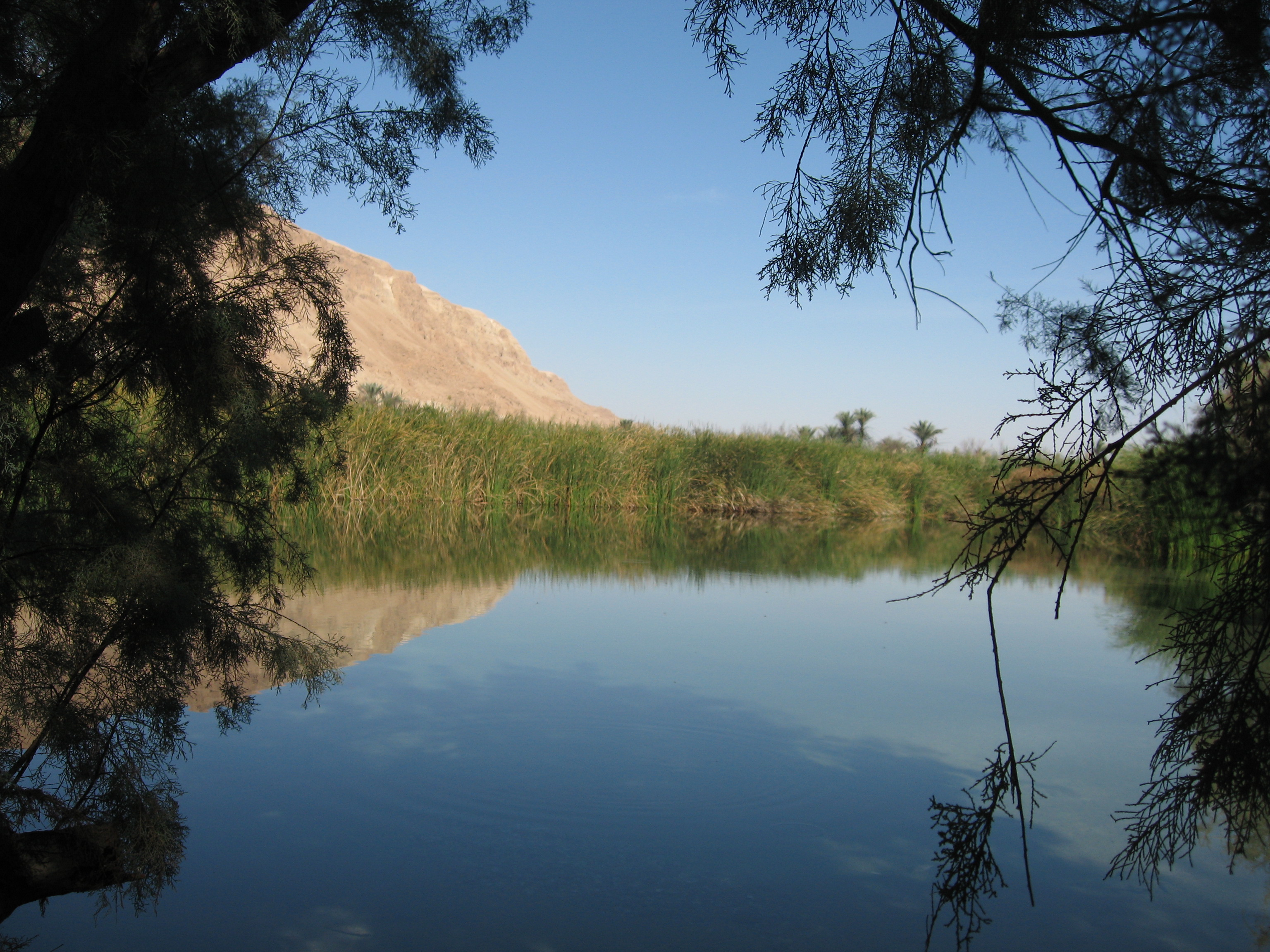
En Feshka pondThe other natural source of fresh water in the Judean desert is Ein Feshka 30 km to the north of Ein Gedi. The lowest nature reserve in the world consists of 3 parts of which one is closed to visitors except research scientists who are studying the desert. The public part includes a small archaeological site from the Second Temple period and pools of fresh water, picnic tables and facilities for the enjoyment of visitors. The closed reserve is 1500 dunams (370 acres) that can only be visited with an authorized guide like me. It’s incredible to find a large freshwater pond with fish, shaded by trees in the middle of the desert next to the Dead Sea.

Judean palm

The scientific name of the Judean palm Phoenix dactylifera refers to its remarkable ability to grow again and even fruit after near death due to drought.

The Judean palm was endemic to Israel. It is the one referred to when the palm tree is mentioned in the Bible and Koran and appears in Roman writing, referring to its medicinal properties, and is pictured on various coins. This would imply as well that the lulav or palm frond used for the Four Species (Arba’at HaMinim) on the festival of Sukkot (Tabernacles) would be the branches of the Judean palm. Looking at the barren landscape of the Judean desert it is hard to imagine this area covered by palm forests.

Along Dead Sea

The Judean palm, like the balsam plant that used to grow around Ein Gedi and Jericho, became extinct sometime after the Romans, around 500 CE. Today there are palm groves along the Dead Sea shore but these were all imported from the date groves of California or varieties smuggled to Israel from Iraq, Morocco and Egypt in the 1950s.

In mid 1960s, during the archaeological excavations of King Herod’s palace on Masada, Ehud Netzer who was the architect  working with Yigal Yadin found some dry date pits in a clay jar. He passed them along to botanical archaeologist Mordechai Kislev at Bar Ilan where they sat in a lab drawer for more than 40 years. Then in 2004 the seeds were rediscovered by Dr Sarah Sallon of the Natural Medicine Research Center who passed them to Dr Elaine Solloway at the NMRC cultivation site on Kibbutz Ketura to try to germinate them. A small specimen of pit was checked and independent carbon dating at University of Zurich dated the seeds dated between 155 BCE to 64 CE.

First Solloway soaked the seeds in hot water to make them once again able to absorb liquids. Then she soaked them in a solution of nutrients followed by an enzymatic fertilizer made from seaweed. On the auspicious date of the 15th of the Jewish month of Shvat, the Jewish new year of trees, the date pits were planted.

Amazingly, one of the seeds sprouted. It is now about 40 months old, 1.2 meters high with a half dozen leaves. As of February 2020, the palm, named Methuselah had reached 3.5 metres (11 ft).

Date palms are dioecious, meaning that they are either male or female. Researchers are hoping for a female palm which would bear fruit.

Phoenix dactylifera growing after 2000 years at Kibbutz Ketura; photo from March 2022.


UPDATE: An article in the Jerusalem Post reports that the Judean palm (grown from the 2000 year old seed from Masada) that has been growing in a greenhouse at Kibbutz Ketura is now 2.5 meters tall and in a ceremony on Thursday, Tu Bishvat (the Jewish New Year of trees) was transplanted to Israeli soil.

The palm bloomed in April 2011, just past it’s 5th birthday – it’s male.

UPDATE: As of 2019, thirty-two Judean date palm seeds from sites near the Dead Sea have been planted and six saplings (Adam, Jonah, Uriel, Boaz, Judith, and Hannah; 4 males and 2 females) have survived. As of February 2020, Adam was 1.5 meters high; both Adam and Jonah have produced flowers. As of June 2021, dates have grown from the pollination of Hannah, one of the female specimens, by Methuselah.

Researchers at the Arava Institute for Environmental Studies at Kibbutz Ketura plan to grow dates resurrected from seeds found at archaeological sites in the Judaean Desert and Masada in large quantities using tissue culture, and then establish them in commercial plantations.

Other Readings
  • Frankincense comes home for Christmas (blogs.timesofisrael.com) – Soloway has successfully grown frankincense from seed at Kibbutz Ketura, another native plant extinct here for over 1500 years.
  • Afarsimon (Commiphora gileadensis) or balsam used to grow along the shore of the Dead Sea and the perfume made from the plant was very expensive and in high demand during the Roman period. By the 6th century after the destruction of the Jewish temple and exile the industry had disappeared. Rumor has it that some wild afarsimon plants were smuggled from Saudi Arabia and had been planted at the Jerusalem Botanical garden even though the weather is too cold. Fortunately, Elaine Soloway got some of the plants and grew them in the desert climate at Ketura and from there they were planted at Guy Ehrlich’s Balm of Gilead Farm at Almog junction along with frankincense and myrrh.