Author Archives: Shmuel Browns

Unknown's avatar

About Shmuel Browns

I am a tour guide, licensed by the Israel Ministry of Tourism. I do tours throughout Israel, personalized to your interests, time and budget.

Dead Sea: Hiking Nahal Zohar

Friends have told me that they’ve already had snow and that it’s bitter cold in Ottawa, Canada (where I grew up) but here in Israel the weather is fantastic, sunny and in the 70s. It’s great weather to go hiking and yesterday I hiked Nahal Zohar. Since it is at the southern end of the Dead Sea it takes longer to drive there from Jerusalem, about 2 hours, than the hike I posted 2 weeks ago, starting at Qumran. The hike took us 5 hours at a leisurely pace including a stop for lunch.

The hike can be walked in either direction – this time we did it from the lookout on the Sodom-Arava Road to the Dead Sea, you come out of the wadi near the hotels at Ein Boqeq.

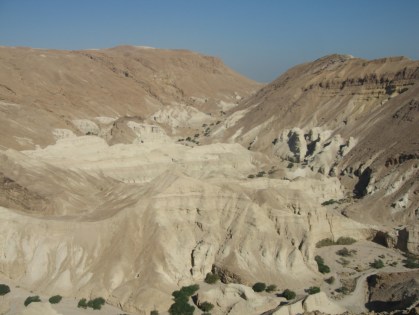
View of Nahal Zohar and where we started our hike

View of Nahal Zohar and where we started our hike

Nahal Zohar was used as early as Israelite times 7th C BCE and during Roman-Byzantine times as a way to carry products from the Dead Sea: salt, asphalt, afarsimon perfume and dates to ports on the Mediterranean coast, Gaza and Ashkelon. In order to safeguard the way and collect the appropriate custom taxes there were forts, the remains of which can be seen today.

Remains of Byzantine fortress in Nahal Zohar with water system

Remains of Byzantine fortress in Nahal Zohar with water system

canyon-pool

Pool in rock, Nahal Rom

From Nahal Zohar we switched into Nahal Yizrakh and then Nahal Rom, the last part of the hike through a very lovely canyon with Acacia trees and pools of water.

Finding a guide at the last minute

In Hebrew there’s an expression daka tish’im which means at the last minute. I’ve been able to help people who realized at the last minute that they wanted to see a particular site – the best way to do that is to hire a guide who can arrange everything. One couple hoped they would get to visit Herodium, King Herod’s palace/fortress in the desert but it was the day before they were leaving. They searched on Google and found an article I’d written and contacted me. I picked them up at their hotel, drove them to Herodium and guided them. This is what they had to say:

The tour of Herodium was awe-inspiring, largely because of Shmuel Browns, our guide. He is highly knowledgeable, and comes equipped with graphic documentation that fills the gaps of what one sees. He gave us a taste of the detective work of archaeologists. Further, Shmuel is very professional and a real “mensch”.

A businessman was flying to Zurich, Switzerland in the afternoon, but at the last minute he had the morning available so he contacted me to take him around the Old City before his flight (I ensured that we were back in time to meet his taxi to the airport; alternatively, after the tour I can take you to the airport, I’m a licensed chauffeur). So if you have limited time but want to have the fullest experience while here in Israel (good reasons for hiring a guide) I can guide you for as little as ½ day. The tour will be personalized to your interests and you can book at the last minute. If you’re staying in Jerusalem then phone me at +972 53 280 6537 (also WhatsApp or Telegram) when you wake up and tell me what you’d like to do, then you can go for breakfast. If I’m available, I’ll meet you within the hour to start your tour.

Here is what one traveler who hired me shared on TripAdvisor:

First off, I made the very grave error of only booking a private tour guide for one day. That caused me a lot of stress while on vacation. I did a lot of research prior to my departure and based on the forum discussions I decided that one day of touring with a guide would be enough and decided that I was enough of a ‘seasoned’ traveller to be able to guide my party on my own.

The other reason I was swayed away from hiring a guide was the costs involved. I’ve used private guides in China and Africa and the costs for a private guide were very very inexpensive compared to guides in Israel – I had a hard time justifying the $500. per day.

Boy was I ever wrong and was I ever sorry for having listened to the feedback that you can do Israel on your own with a good guide book. This was not the case for me or my travel companions. We found we really needed the professional assistance of a guide for there is just so much a guide book can teach you. Few sights have good signage telling you where you are and what you are seeing or much historical reference. The cost of a guide definitely reflects what you get, an organized and informative visit to a land filled with a very rich narrative history!

If you decide at the last minute that you really do need a guide whether for one day or a week contact me. You can hire an expert, licensed guide at the last minute and for less than $500. per day.

Dead Sea: Hiking and Qumran

For a great day trip from Jerusalem visit the archaeological site at Qumran in the Judean desert. It takes just ½ hour by car to travel the 42 km from Jerusalem and descend the 1170 meters to the northern shore of the Dead Sea. Another option is to take a jeep ride across the desert to the site. Qumran is where scrolls written on parchment were discovered in a cave by Beduin shepherds. Take a guided tour of the site to learn who lived at Qumran, how they were able to live in such an isolated place in the desert without a natural source of water and how they supported themselves.

The settlement at Qumran is named after the wadi (stream bed) that during the winter rainy season brings flood waters via channels to the pools and cisterns dug at Qumran. There is a nice hike in Wadi Qumran where you climb up to the top of the cliffs, along the plateau with great views of the Dead Sea and descend at Ein Feshka – the whole trek takes about 4 hours and can be done by families.

Hiking at Qumran

Hiking up above Wadi Qumran and the Dead Sea.

Hiking Qumran cliffs

Hiking the cliffs above Wadi Qumran with Sumsum.

Complete your day back in Jerusalem by visiting the Shrine of the Book at the Israel Museum to see the Dead Sea Scrolls and other artifacts discovered at Qumran. As your guide I will point out the conceptual design of the building by Kresler and Bartok, described as “a milestone in the history of world architecture”. The combination of experiencing the Qumran site and the very special artifacts discovered there on display at the museum is the key to understanding this historical period.

German Colony Walking Tour

I have lived in Jerusalem, in the German Colony for more than 15 years. We bought our house in 1988 from the widow who had been given it in 1948 when she and her family had fled from Persia and arrived here as refugees. Just in the last 4 years we’ve renovated it twice – I don’t think Mrs. Hakimian would recognize it. The neighborhood too has changed, hardware stores and green grocers have made way for fancy restaurants and shops. Walking down the street you hear English and French spoken as much as Hebrew.

The land that became the German Colony was purchased in 1872 by Mattheus Frank from Arabs in Beit Safafa, as a farm for his father-in-law. Frank came to Israel from Germany in 1867 with a sect of Protestants called the German Templers. Unfortunately, the father-in-law died on his way to Israel and so it was decided to divide the parcel of land into 1 dunam lots and build a colony, planned as a street village, a strassendorf. Even with all the changes you can recognize the same layout today – individual stone houses of one or 2 stories, with gardens surrounded by stone walls, green wooden shutters and red peaked roofs along Emeq Refaim Street. Often on the lintel over the front entrance of the house is a Biblical verse in German. At the entrance to the colony was the gemeindehaus, their community center and house of worship built in 1882.

  • Learn the stories, history, culture, and architecture of this popular Jerusalem neighborhood from a licensed guide.
  • Become acquainted with the personalities and the experiences of the settlers – Germans who came to Israel in 1867 and built one of the first neighborhoods outside the walls of the Old City.
  • Find out about their contributions to the development of Israel and the intrigues that led to their deportation.
Take a guided walking tour of the popular German Colony neighborhood. Contact me to book your tour. Ask about combining a tour with lunch or dinner at one of the restaurants in the German Colony.

Dead Sea – Lowest Place on Earth

From Jerusalem (elevation of 750 meters above sea level) it is about a half hour drive, on routes <1> and <90> down to the northernmost end of the Dead Sea (elevation 420 meters below sea level), the lowest place on earth. As the highway continues along the western shore of the Dead Sea you will pass Qumran, Ein Gedi, Masada, Ein Boqeq and the Dead Sea Works. There are numerous places along the route to take photos of the Dead Sea and the mountains that rise above it. In one day I took almost 150 photographs, filling all 3 of the CompactFlash cards (digital film) that I had with me, more photos than I have ever taken in one day.

It is very hot in the Judean desert so a stop for a dip at the springs at Ein Gedi is delightful. While enjoying the cool water pool in Nahal David, a family asked if I would take a photo of them under the falls – little did they know that they were getting someone who was so practised. With a little patience you will be able to observe the wildlife that lives in the reserve: hyrax, ibex, tristram grackle and red dragonfly.

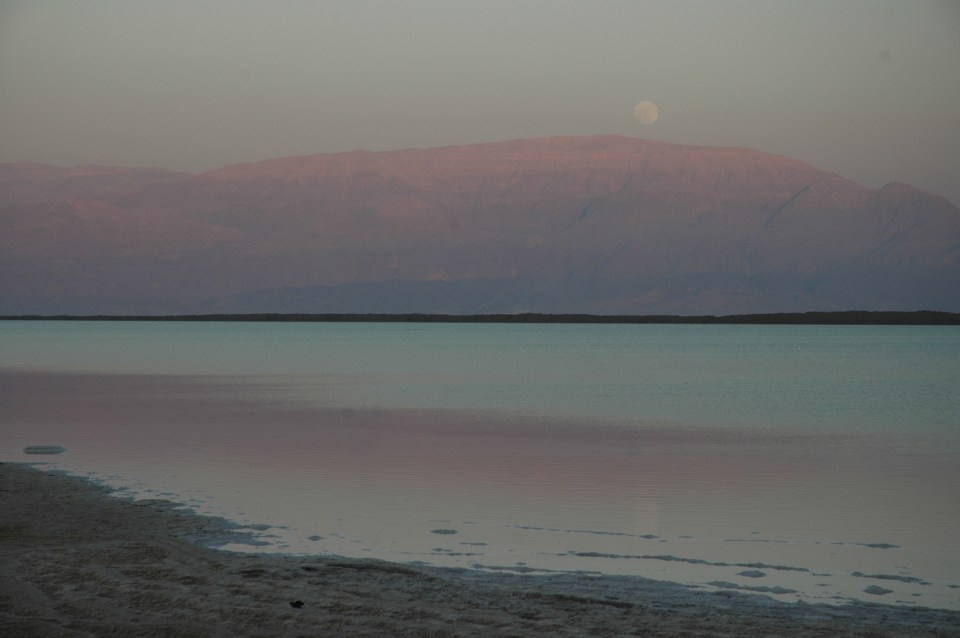
If you drive along the Dead Sea in the late afternoon you will be able to watch the setting sun as it paints the blue-green sea different colors of pink and purple. This photo is at Ein Boqeq – only as I was focussing on my composition in the viewfinder did I notice the full moon rising over the mountains of Moab.
Moonrise over Dead Sea at sunset
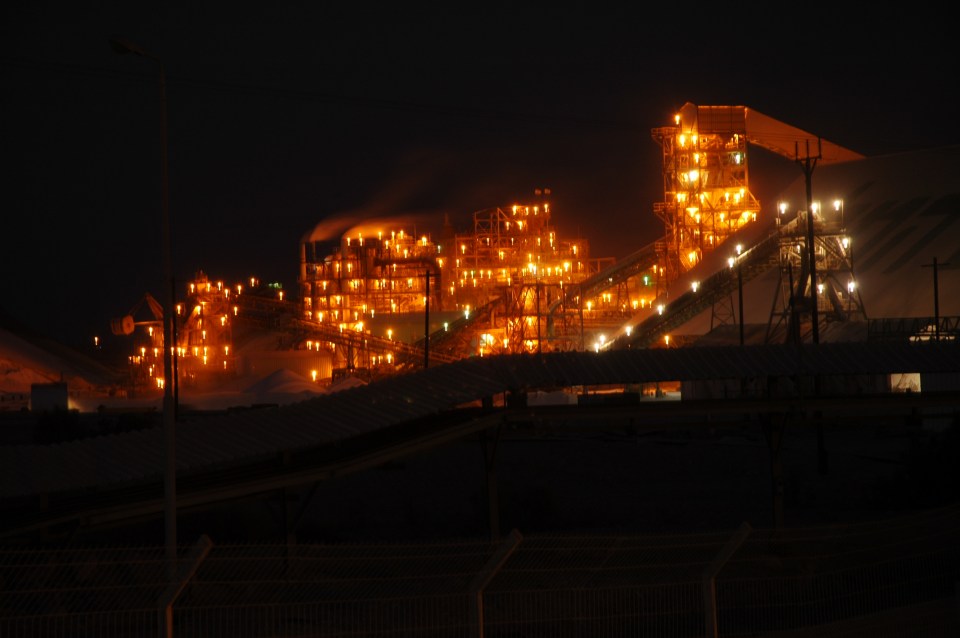
From there it is a short drive south to the Dead Sea Works, these are a series of photos of the industrial complex as night fell.
Full moon over Dead Sea Works
Nightfall at Dead Sea Works
Dead Sea Works lit up at night

I would be happy to arrange a tour and guide you if you want to focus on Israel through a camera lens.

In the last 3 years I’ve taken more than 4000 photographs in Israel. In July I am going to Kathmandu, in the foothills of the Himalayas, the highest place on earth–I am looking forward to an exhibit of my photos “From the Lowest Place on Earth” that will be on show there in August. To view the photos click here.

Tour of Herodium and Herod’s Tomb

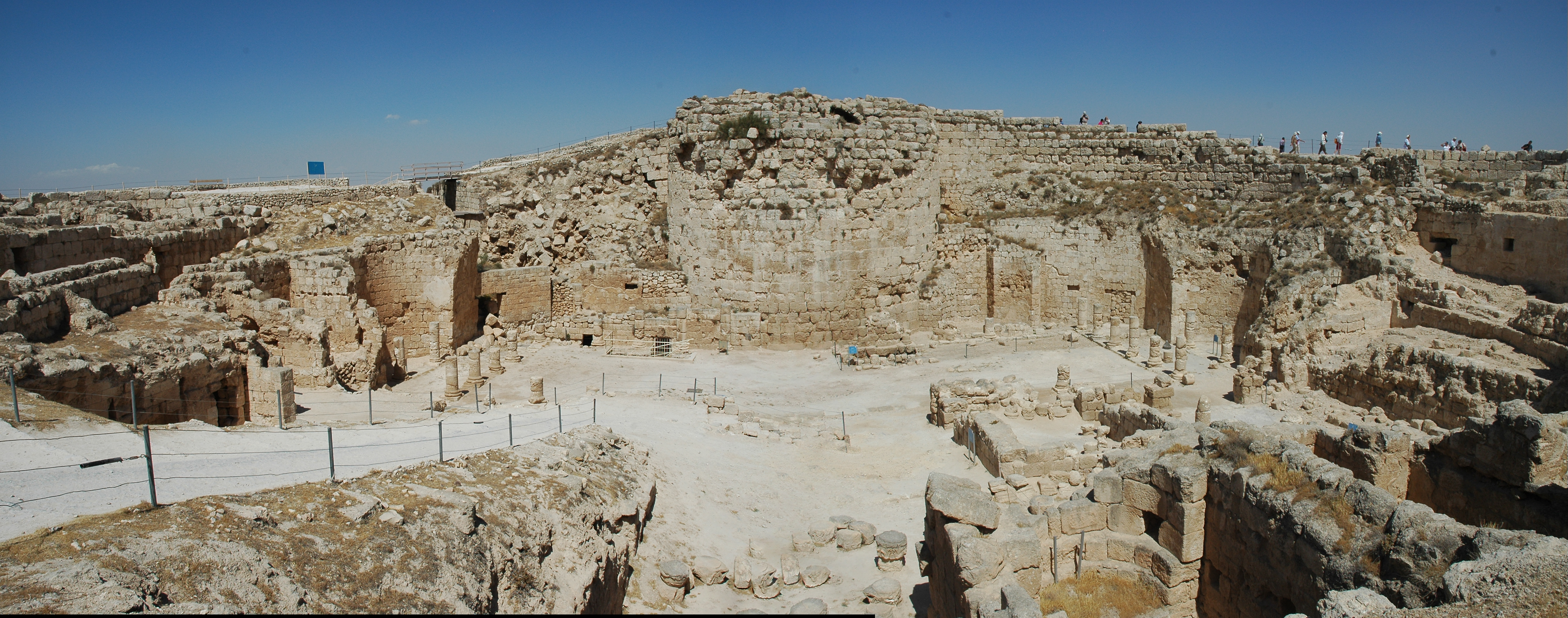
herodium mountain top palace fortress panorama

Panoramic view looking down into Herod’s palace-fortress

A guided tour of an archaeological site like Herodium can be a unique birthday present for a friend or family member. It was a hot and sunny day but there was a cool breeze on the mountaintop and you could understand one reason why Herod would have chosen this site.

When I guide Herodium I often start in the Old City to show people the remains of the buildings at the Wohl museum and the stones of the walls and streets from the Herodion period along the western wall below Robinson’s Arch. Also, the Herodion stones forming the base of the tower at the Roman Gate are impressive. Seeing examples of Herod’s architecture help people know what to look for when we get to Herodium.

Last summer, I participated for a few days in the latest excavations that Ehud Netzer is leading on the eastern side of the mountain, excavating the tomb area. We were working on the pool and besides many pottery shards we found some catapult stones (size of snowballs, not to be confused with the larger ones rolled down from the walls by the Jewish rebels) and some coins from the Great Revolt.

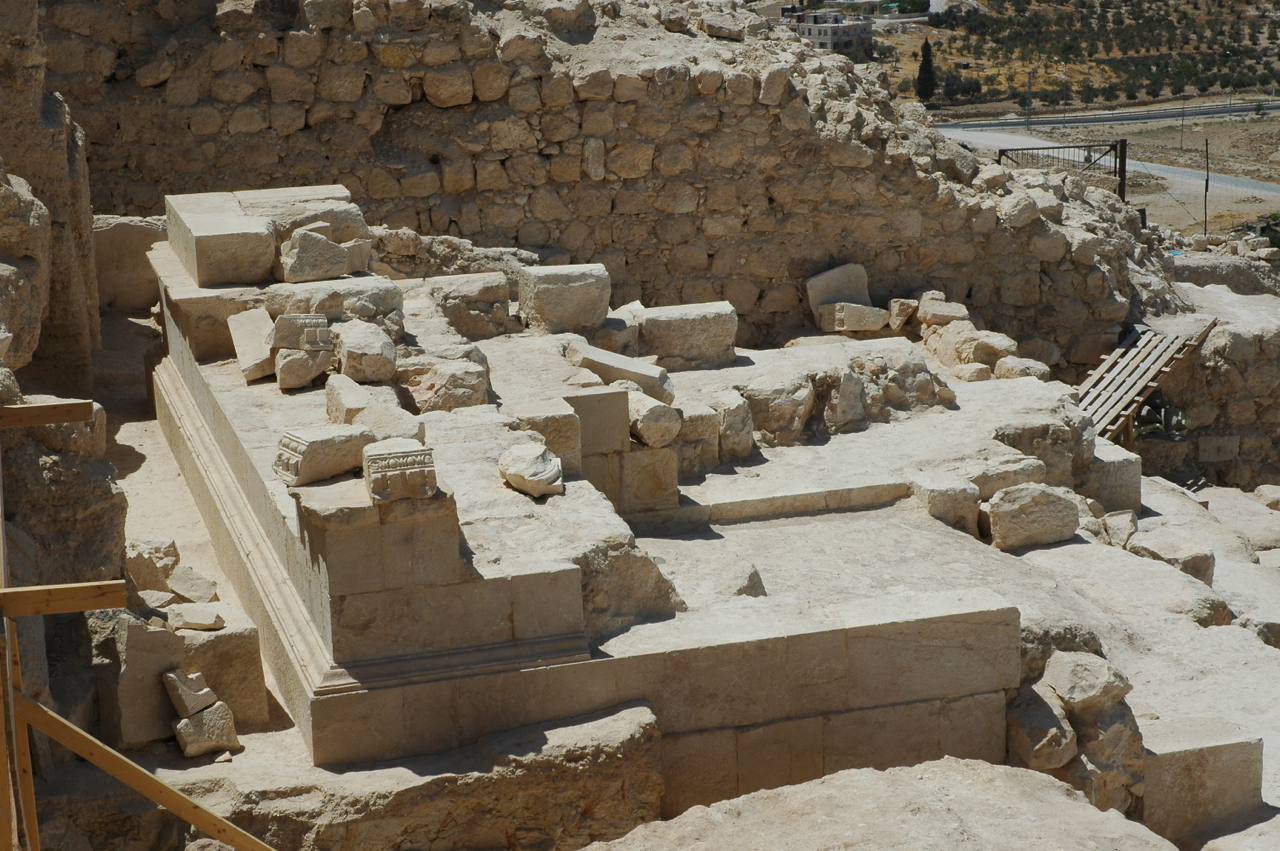
Excavations are continuing and they’ve excavated a much larger area now. More of the base of the mausoleum is now exposed. Additional stone architectural details of a very high quality can be seen. These are not of the local soft limestone but a more royal stone, called meleke, that would have been quarried some distance away and brought here. Netzer thinks that the base supported a nefesh or monument, cylindrical in shape, something like Yad Avshalom in the Kidron Valley.

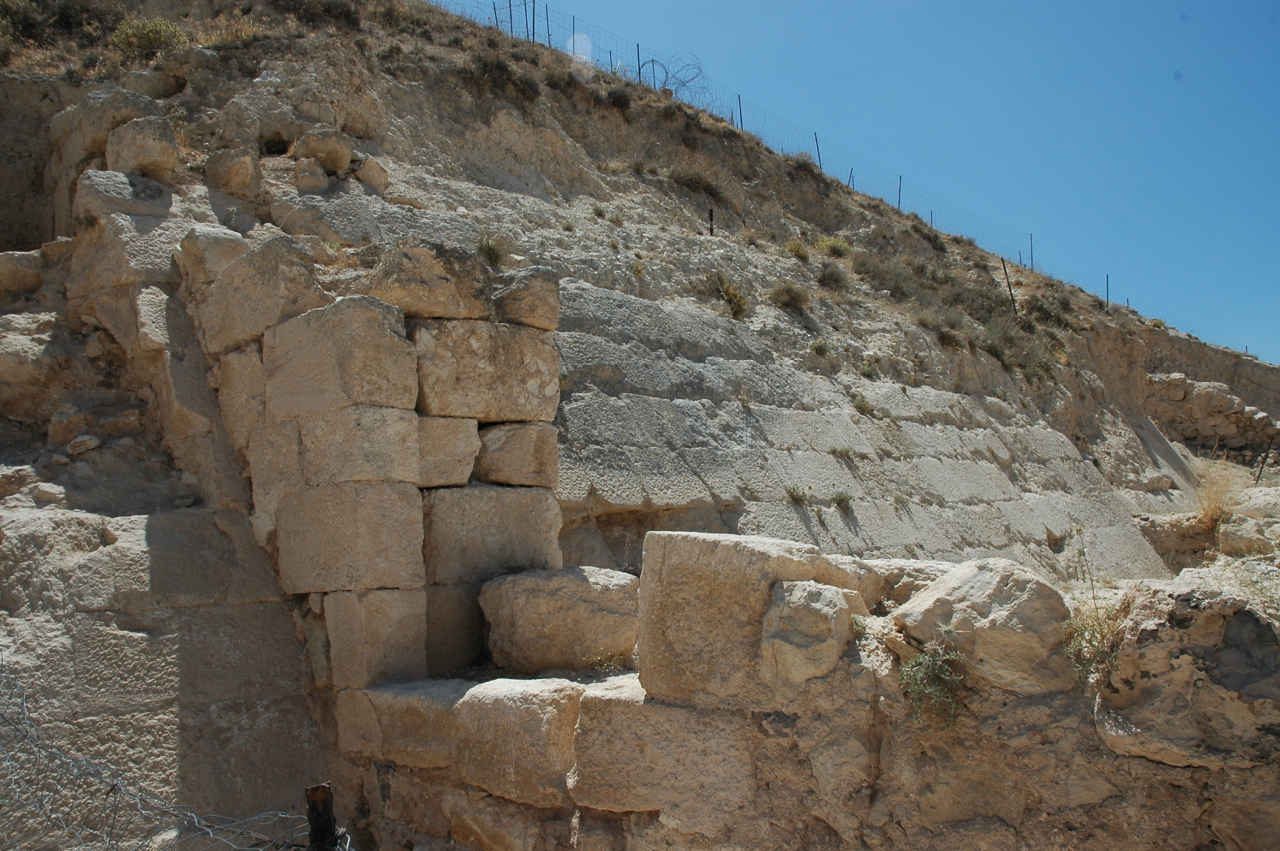
Tomb area at HerodiumThe latest findings are changing our understanding of Herodium. For example, it seems that the earth that was piled up around the mountain palace/fortress is not from the time of Herod but later. Originally, there was a glacis, a sloping wall, that circumvented the mountain.

Glacis at Herodium

Also, the archaeological evidence suggests that the staircase that is described by Josephus “and provided an easy ascent by two hundred steps of the purest white marble” was built later, that originally there was a “snake path” like at Masada. Archaeologists are left with some interesting unanswered questions: When was it done, why and by whom?

I’ve uploaded additional photographs of Herodium to Flickr at http://www.flickr.com/photos/27944012@N06/sets/72157615671440473/