Author Archives: Shmuel Browns

Unknown's avatar

About Shmuel Browns

I am a tour guide, licensed by the Israel Ministry of Tourism. I do tours throughout Israel, personalized to your interests, time and budget.

Herzl and Kaiser Wilhelm II

Herzl and German Kaiser

Herzl and Kaiser Wilhelm II, 1898

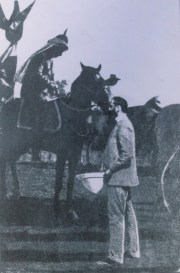
This photograph was taken on October 28, 1898 outside of the agricultural school at Mikve Israel when Kaiser Wilhelm II of Germany, astride a white stallion, with helmet of gold stopped for a moment on his way to Jerusalem. By the roadside, stood a solemn figure with a black beard: Theodor Herzl, founder of modern Zionism. Herzl considered the Kaiser’s recognition crucial for international approval of his plan to resettle the Jews in the land of Israel. All the Kaiser could muster was the observation: “The land needs water, very much water.”

What’s wrong with the photo? First, the Kaiser is on a dark horse. The original unusable photo can be viewed by clicking here.

On the right edge of the original photo you can just make out Herzl holding his safari hat. The Kaiser’s horse has its head completely out of the frame. Can you imagine taking such a poor photo? Have you ever had one of those days, when nothing seems to go right?

To salvage the situation a photo of Herzl was taken on the roof of the school and superimposed onto the photo after seating Kaiser Wilhelm II on the dark horse and cropping the photo on the right.

Surprised? Actually there are quite a few examples. See the Time magazine website http://www.time.com/time/photogallery/0,29307,1924226,00.html on “Doctored Photos” with the warning “photographers have been manipulating imagery since the medium was invented”.

Here are another two photographs from the early 1900s of Jaffa Gate, after the Kaiser’s visit (the wall has been breached and the moat filled in so that the Empress Augusta Victoria’s carriage can enter). These photos were taken by one of the photographers of the American Colony, probably Lars Larsson. Which one is the earlier one? Do you think the image in either one of them has been manipulated?
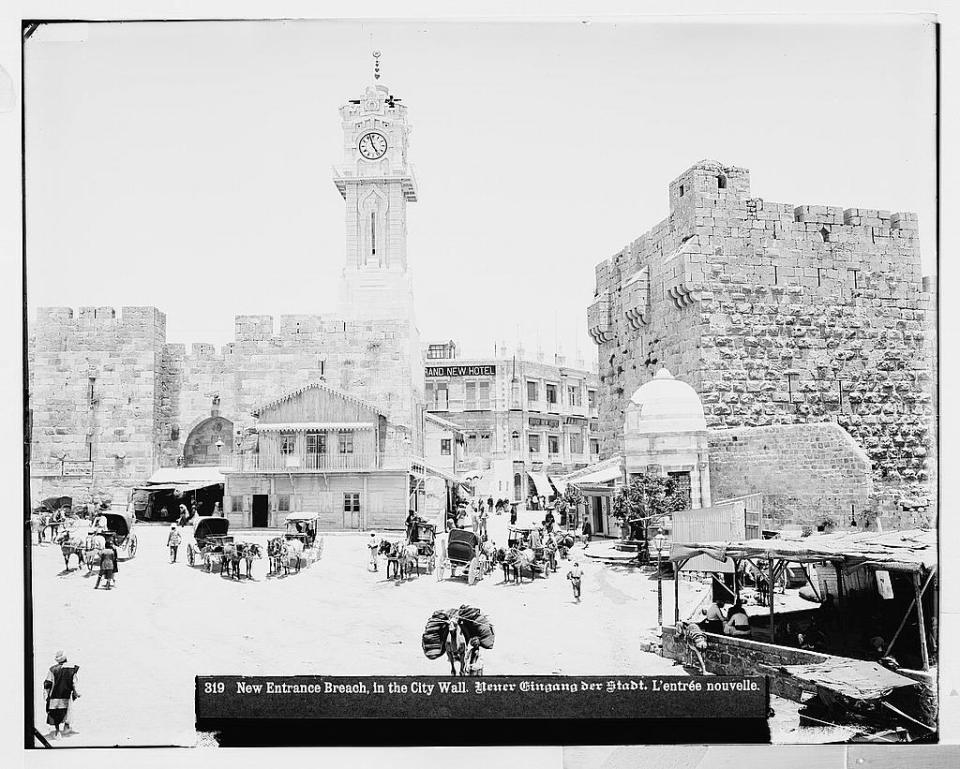
Jaffa Gate, Old City, ~1900

Jaffa Gate, Old City, ~1900 (American Colony Photo Department)
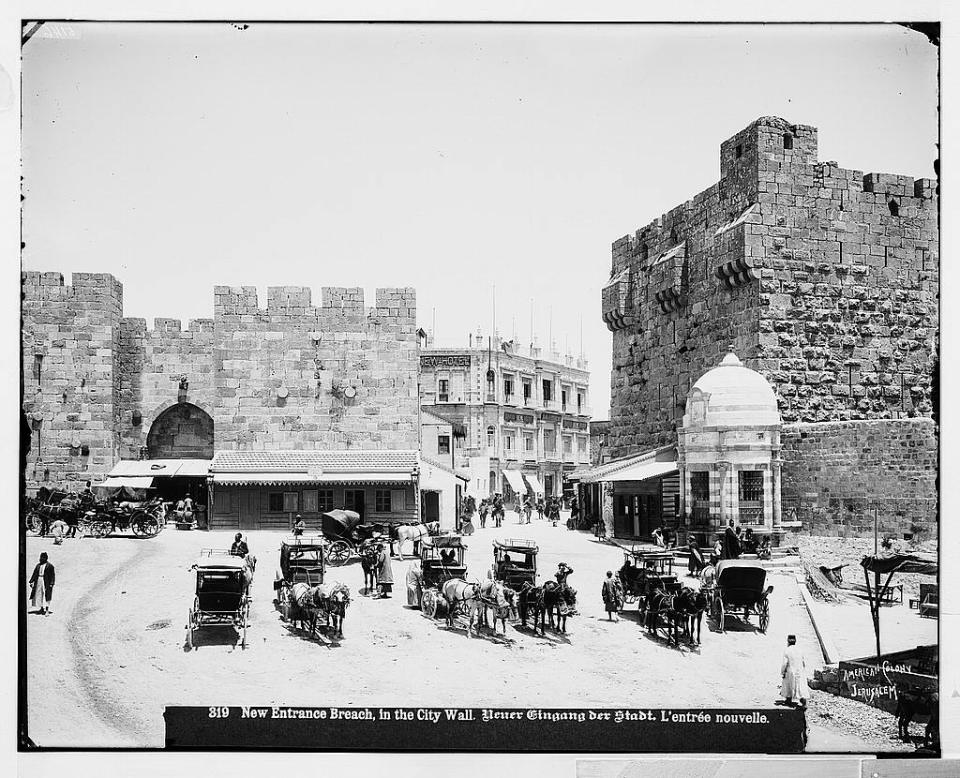
Jaffa Gate, Old City, ~1900 (photographer: Eric Matson)

Jaffa Gate, Old City, ~1900 (American Colony Photo Department)

The clock tower at Jaffa Gate was one of seven built by the Ottoman Turks in 1908 on the occasion of the silver jubilee of the reign of the Sultan abd al-Hamid II (there are still clock towers in Jaffa, Safed, Nablus, Haifa, Nazareth and Akko) but was taken down by the British about 1920.

The entire American Colony/Matson collection of photographs, some 22,000 negatives were donated by Eric Matson’s heirs to the American Library of Congress who have digitized the collection and made it available for viewing at http://memory.loc.gov/pp/matpchtml/matpcac.html
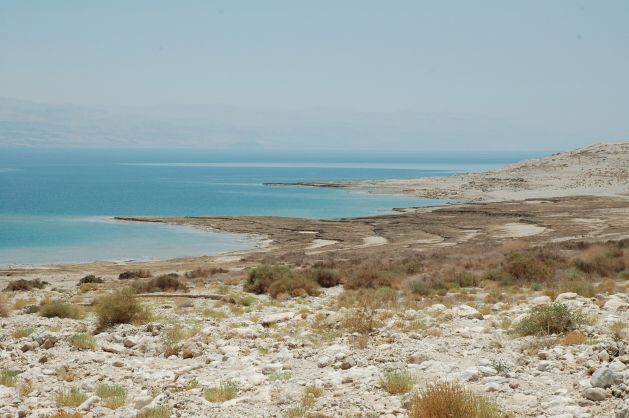
Judean palm

The scientific name of the Judean palm Phoenix dactylifera refers to its remarkable ability to grow again and even fruit after near death due to drought.

The Judean palm was endemic to Israel. It is the one referred to when the palm tree is mentioned in the Bible and Koran and appears in Roman writing, referring to its medicinal properties, and is pictured on various coins. This would imply as well that the lulav or palm frond used for the Four Species (Arba’at HaMinim) on the festival of Sukkot (Tabernacles) would be the branches of the Judean palm. Looking at the barren landscape of the Judean desert it is hard to imagine this area covered by palm forests.

Along Dead Sea

The Judean palm, like the balsam plant that used to grow around Ein Gedi and Jericho, became extinct sometime after the Romans, around 500 CE. Today there are palm groves along the Dead Sea shore but these were all imported from the date groves of California or varieties smuggled to Israel from Iraq, Morocco and Egypt in the 1950s.

In mid 1960s, during the archaeological excavations of King Herod’s palace on Masada, Ehud Netzer who was the architect  working with Yigal Yadin found some dry date pits in a clay jar. He passed them along to botanical archaeologist Mordechai Kislev at Bar Ilan where they sat in a lab drawer for more than 40 years. Then in 2004 the seeds were rediscovered by Dr Sarah Sallon of the Natural Medicine Research Center who passed them to Dr Elaine Solloway at the NMRC cultivation site on Kibbutz Ketura to try to germinate them. A small specimen of pit was checked and independent carbon dating at University of Zurich dated the seeds dated between 155 BCE to 64 CE.

First Solloway soaked the seeds in hot water to make them once again able to absorb liquids. Then she soaked them in a solution of nutrients followed by an enzymatic fertilizer made from seaweed. On the auspicious date of the 15th of the Jewish month of Shvat, the Jewish new year of trees, the date pits were planted.

Amazingly, one of the seeds sprouted. It is now about 40 months old, 1.2 meters high with a half dozen leaves. As of February 2020, the palm, named Methuselah had reached 3.5 metres (11 ft).

Date palms are dioecious, meaning that they are either male or female. Researchers are hoping for a female palm which would bear fruit.

Phoenix dactylifera growing after 2000 years at Kibbutz Ketura; photo from March 2022.


UPDATE: An article in the Jerusalem Post reports that the Judean palm (grown from the 2000 year old seed from Masada) that has been growing in a greenhouse at Kibbutz Ketura is now 2.5 meters tall and in a ceremony on Thursday, Tu Bishvat (the Jewish New Year of trees) was transplanted to Israeli soil.

The palm bloomed in April 2011, just past it’s 5th birthday – it’s male.

UPDATE: As of 2019, thirty-two Judean date palm seeds from sites near the Dead Sea have been planted and six saplings (Adam, Jonah, Uriel, Boaz, Judith, and Hannah; 4 males and 2 females) have survived. As of February 2020, Adam was 1.5 meters high; both Adam and Jonah have produced flowers. As of June 2021, dates have grown from the pollination of Hannah, one of the female specimens, by Methuselah.

Researchers at the Arava Institute for Environmental Studies at Kibbutz Ketura plan to grow dates resurrected from seeds found at archaeological sites in the Judaean Desert and Masada in large quantities using tissue culture, and then establish them in commercial plantations.

Other Readings
  • Frankincense comes home for Christmas (blogs.timesofisrael.com) – Soloway has successfully grown frankincense from seed at Kibbutz Ketura, another native plant extinct here for over 1500 years.
  • Afarsimon (Commiphora gileadensis) or balsam used to grow along the shore of the Dead Sea and the perfume made from the plant was very expensive and in high demand during the Roman period. By the 6th century after the destruction of the Jewish temple and exile the industry had disappeared. Rumor has it that some wild afarsimon plants were smuggled from Saudi Arabia and had been planted at the Jerusalem Botanical garden even though the weather is too cold. Fortunately, Elaine Soloway got some of the plants and grew them in the desert climate at Ketura and from there they were planted at Guy Ehrlich’s Balm of Gilead Farm at Almog junction along with frankincense and myrrh.

Bar/Bat mitzva in Israel

We celebrated our daughter Tiferet becoming a bat mitzva with family and friends in the archaeological park along the southern wall of the Temple Mount early in the morning – that was back in August 1996 and I still remember how hot it was by mid morning and how our younger son Amitai who was 6 years old at the time foraged for figs that grew on the trees nearby.

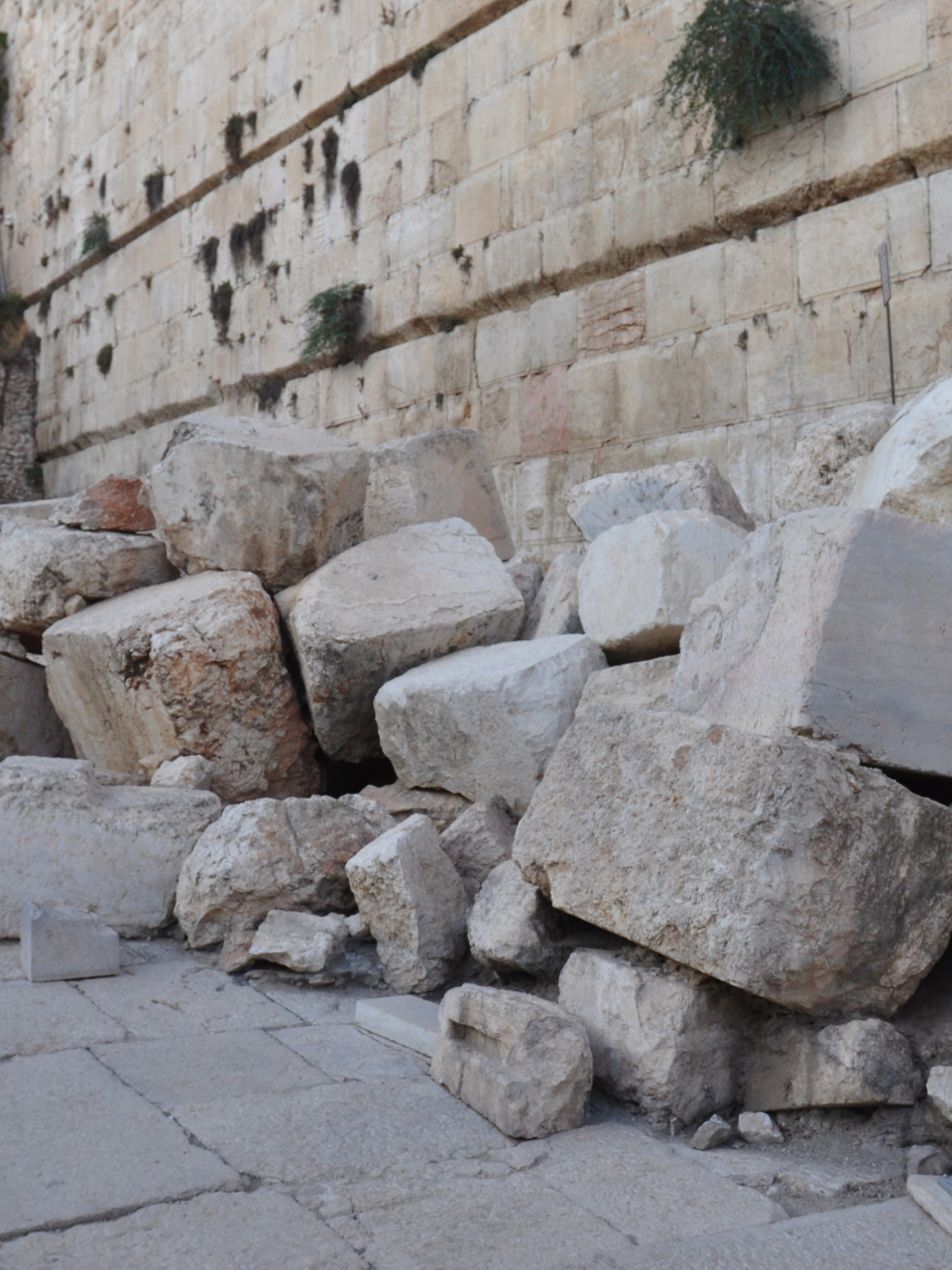
Today the popular place is on the Herodian street that runs along the Western Wall, among the massive stones that were pushed from the wall by the Romans almost 2000 years ago, a silent reminder to the destruction of the Second Temple and the downfall of Jerusalem.

We celebrated our son Uriel becoming a bar mitzva by organizing a trip to Peru with close friends, hiking for 4 days along the Cuzco trail to the sacred Inca site of Machu Pichu. We carried a Sefer Torah with us which we read on Monday and Thursday on the trail, on Rosh Hodesh (the new month) at Machu Pichu and on Shabbat back in Cuzco.

Some families decide to celebrate with family and friends in Israel and have climbed the Snake Path to the top of Masada at sunrise, as a sort of physical rite of passage and celebrated a bat mitzva in the ancient synagogue or one of the rooms in the casement wall used by the Zealots. You might like to celebrate a bar or bat mitzva within the ruins of one of the ancient synagogues, for example at Baram or Korazim in the Galilee or at Herodium.

Besides it being meaningful to experience Israel as part of becoming a bar or bat mitzva, friends and family can explore and enjoy the sites and nature of Israel and feel the connection between the Torah reading and the land. As Reb Shlomo Carlebach used to say, “The Torah is a commentary on the world and the world is a commentary on the Torah“.

Not every guide is able to make all the arrangements necessary for a bar or bat mitzva celebration in Israel – provide a Sefer Torah, take professional photographs, arrange the prayer service, do the guiding that makes Israel part of the experience. I handle the logistics and you get to experience a memorable time. I would be happy to help you arrange your bar or bat mitzva in Israel, just contact me.

Here are some of the photos that I took at Rachel’s bat mitzva in the summer.


Wildflowers, before the rain

One of the things about taking a tour of Israel is that you get to see a lot in a small amount of space. Because Israel is located on the land bridge that connects Europe, Asia and Africa it has some of the best features of each. Although it only extends from the Mediterranean Sea to the Jordan River in the Great African Rift Valley and from the Red Sea to mountains in the north it has a diversity of climates and habitats. These unique conditions are the main cause for the rich diversity of Israeli flora, more than 2500 species (compared to 1500 in the British Isles for example which is 10 times the size).
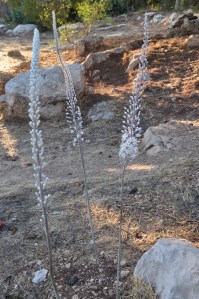
The Sea Squill (Urginea maritima, חצב מצוי) is a perennial of the lily family with a large poisonous bulb. The squill is one of ten species of plants called geophytes which bloom before the rains in Israel, in the driest part of the year and are a harbinger of winter. You’ll probably find the tall spikes of squill flowering by mid September. I saw some in Jerusalem while running along the tayelet, at the Museum HaTeva (Nature museum) and while hiking in the cliffs above Qumran.


You also won’t see the bright yellow Sternbergia (Sternbergia clusiana, חלמונית, from the same root as yolk of an egg) until just before the first autumn rains – don’t confuse them with the saffron and crocus that come after the first rains. Sternbergia belong to the daffodil family. This image was captured in November in the Yatir forest near Arad. On a hike we found Sternbergia growing in the wadi below Maale Rehavam near Herodium. I was touring in Ramat HaNegev and learned that there are Sternbergia in bloom in the wadi behind the Nahal Boker family farm. Moshe Zohar who lives there told me that this is the southern most point that they grow. I learned from a colleague who did a tour in the Golan that there are Sternbergia blooming below Har Hozek (conceivably the most northern point). If you are interested in touring Israel including hikes to see and/or photograph wildflowers please contact me.

You can check out these two excellent websites, that give you a lot of information about wildflowers in Israel:

http://www.wildflowers.co.il/english/

http://www.flowersinisrael.com/

Golan Wineries

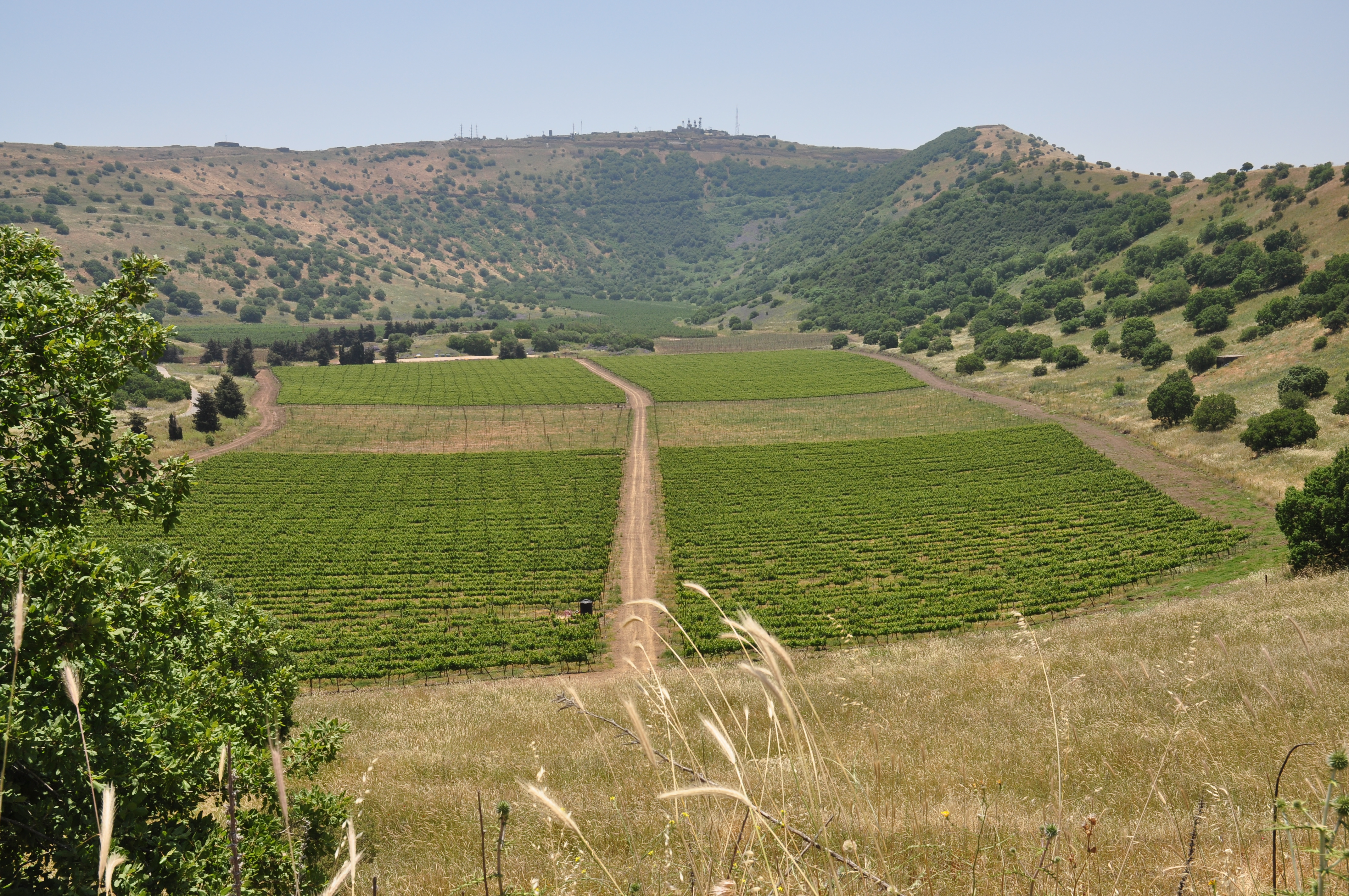
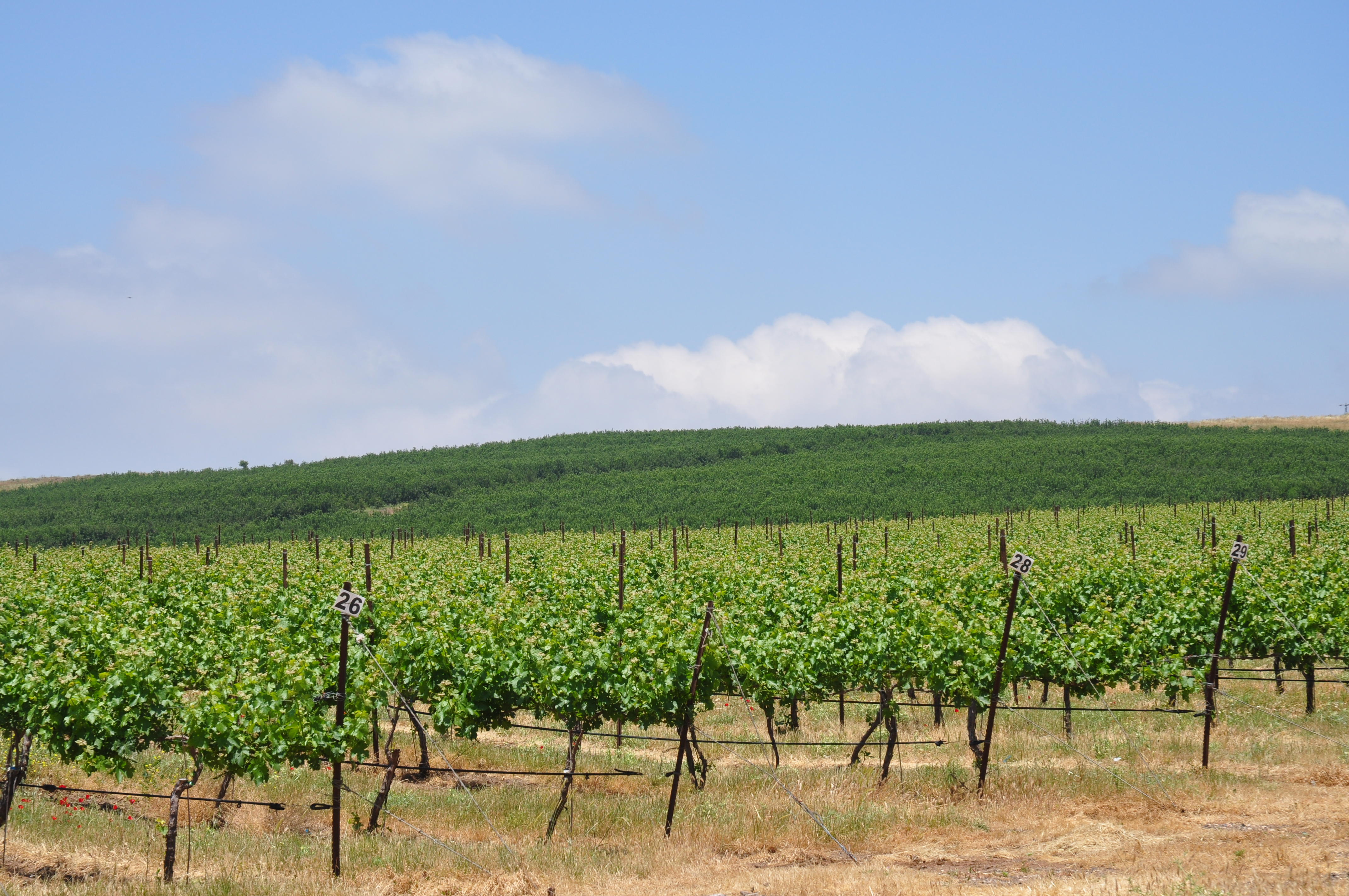
When you are planning to do some touring up in the Golan it is worth including a visit to some of the vineyards that have been planted in the volcanic soil that is unique to this area in Israel and learn about how grapes are grown and harvested. Follow up with a visit to a winery to learn about how wine is made. If you are really into wine I am happy to arrange a wine tour for you.

DSC_0017

Golan Heights Winery

I think it’s fair to say that the Golan Heights winery founded in 1983 in the town of Katzrin, high up on the Golan Heights changed the world’s impression of Israeli wines and placed Israel firmly on the international wine map. Unique to Israel, the winery is owned by 4 kibbutzim and 4 moshavim. They manage 16 vineyards on the Golan (and one in the Upper Galillee), from Geshur and Nov which rise above the Sea of Galilee to Odem and El Rom below the snow-capped Mount Hermon, processing 6,000 tons of grapes and producing 6 million bottles of wine annually at 3 levels: Golan, Gamla and Yarden. They are also the parent of Galil Mountain Winery with Kibbutz Yiron.

I can arrange a tour of the facility including a visit to the oak barrel cellar, viewing of the bottling line (when in operation) and of course wine tasting.

Pelter Winery

Tal Pelter established his boutique winery in 2002, after studying enology in Australia, on the grounds of the family farm in Moshav Zofit near Kfar Saba where he produced four vintages of wine. During the summer of 2005 the winery was transferred to Kibbutz Ein Zivan adjacent to Merom Golan and resulted in a production of approximately 24,000 bottles. Pelter produces a sparkling wine in the traditional way, as well as 3 white wines, a Sauvignon Blanc, an unwooded Chardonnay and a Gewurztraminer, a first of this varietal for Pelter, described as “Sweet peach, liche, melon, citrus on a lively acidic background”. He also produces a series of red wines at two levels from Cabernet Sauvignon, Cabernet Franc, Merlot and Shiraz grapes grown on the Golan Heights and the hills of Jerusalem.

At the end of August 2005, Pelter supervised the planting of a new vineyard on the Golan, that he calls Vineyard of the Wind with a view of Mount Bental and the Hermon, 35 dunams (8.75 acres) of vines. Pelter is pursuing his dream of a quality winery on the Golan. I can arrange a visit to the facility for serious wine afficionados.

DSC_0034

There are other small wineries on the Golan. In the midst of an ancient oak forest at Odem is the Odem Mountain Winery. Next to a natural spring is the Bazelet HaGolan winery and not far, the Assaf winery. Farther south you’ll find the Bashan Organic Winery and the Chateau Golan Winery. For a complete and up-to-date overview of the wine industry in Israel, I recommend Rogov’s Guide to Israeli Wines available at bookstores and the Internet.

Someone to Tour With – Kids Tour with a Golden Retriever

This is a tour of Jerusalem sites based on David Grossman’s prize-winning novel Someone to Run With/משהוא לרוץ איתו (written in Hebrew but translated into English, available at Amazon and made into a movie). The story is about two young people: Assaf, who gets a summer job with the Jerusalem municipality and is given the task of returning a lost and found dog to it’s master and Tamar, a talented musician who goes looking to rescue her brother who has gotten into trouble at the edge where youth, music and drugs overlap. As the dog, a golden retriever named Dinka, runs through Jerusalem with Assaf in tow, we too become entangled in the story.

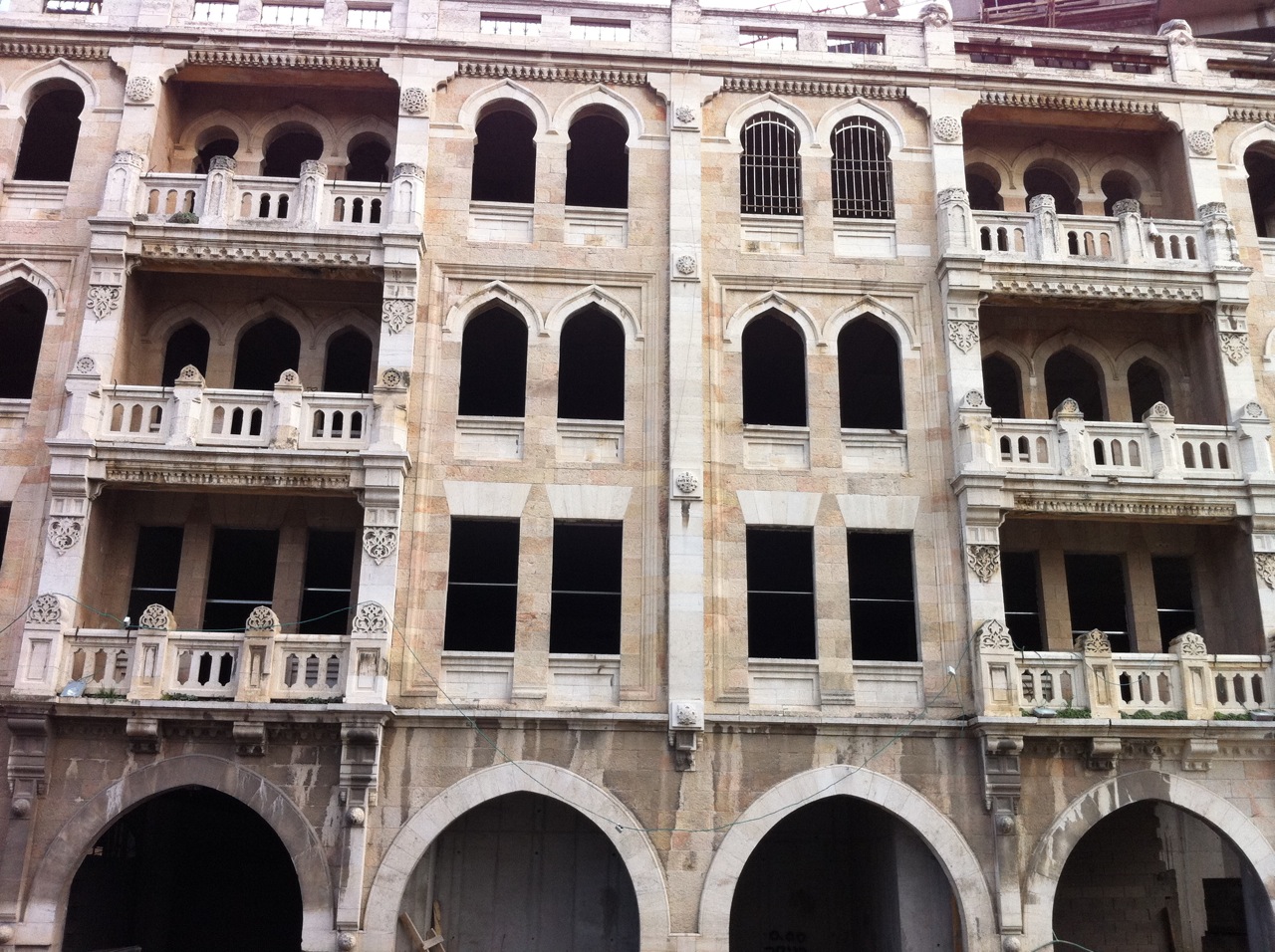
Familiar Jerusalem landmarks pass by: the midrahov/Ben Yehuda pedestrian mall, music store, Yoel Salomon neighborhood, Jaffa Street, Mahane Yehuda market, the Central bus station, Independence Park, the historic Palace Hotel.

The Palace was built in 1929 by the Waqf, Supreme Muslim Council headed by the mufti of Jerusalem, Haj Amin al-Husseini. In its day it was a beautiful building with stone carvings and arches, a combination of Moorish, Roman and Arab architecture. The Reichman Brothers and the Hilton chain renovated the hotel to the tune of $100 million, to become a Waldorf-Astoria, only the 6th in the world.

Another scene takes place outside the facade of Talitha Kumi (from Mark 5:41), all that is left of the girl’s orphanage and school and the Mashbir (the large department store) that stood on King George Street where Tamar sings HaTikva, the Israeli national anthem to her brother’s electric guitar accompaniment. To me it is reminiscent of Jimi Hendrix playing the Star Spangled Banner at Woodstock (unfortunately, the clip on YouTube has been removed).

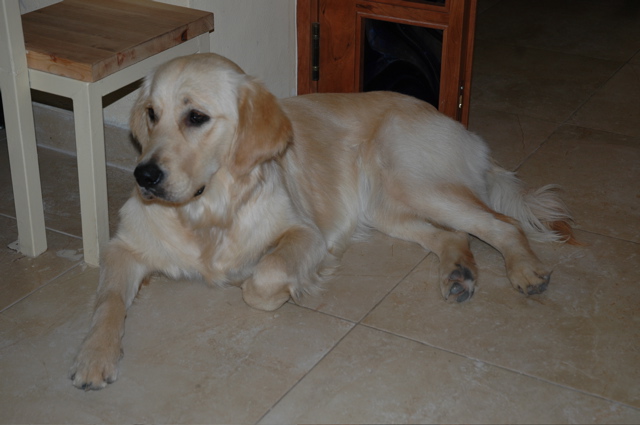
I have a golden retriever, whose name is Sumsum (which is Hebrew for sesame, the seeds that they make tehina from and also a kind of finish on Jerusalem stone which is her color) who is an offspring of one of the dogs who starred in the movie.

Sumsum1yr

Join me and Sumsum as we explore Jerusalem following in the footsteps of Assaf and Dinka, experience the Mahane Yehuda market, head down to Ben Yehuda Street to listen to the buskers, have pizza, walk through Independence Park, check out the Palace Hotel, have hummus and felafel at a local restaurant. Having read the book or seen the movie before taking this tour adds to the experience.