Author Archives: Shmuel Browns

Unknown's avatar

About Shmuel Browns

I am a tour guide, licensed by the Israel Ministry of Tourism. I do tours throughout Israel, personalized to your interests, time and budget.

Nature and Nurture

You’re on vacation. It might seem weird to shop for food in the local outdoor market of a foreign country and then go to someone’s house that you don’t know and cook up the produce you just bought, set the table and serve. But it’s a lot of fun for the whole family and you don’t have to do the dishes afterwards. After eating out at restaurants, day after day, it can be a refreshing break and in this case, you’re being invited to a renovated 100 year old house in Abu Tor, a mixed Jewish and Arab neighborhood that was right on the border between Israel and Jordan from 1948 to 1967 with a great view of the Old City. In consultation with Ruti Yudecovitz of Shuk and Cook you choose what you’ll be preparing for dinner then you all head out to Mahane Yehuda market to buy the ingredients and then come back to Ruti’s and prepare the meal. Then when everything is ready, you sit down with a glass of fine Israeli wine and enjoy your meal. A unique Israel experience.

And if you are interested in tasting locally prepared foods and visiting other areas in Israel, Orly Ziv of Cook in Israel offers a number of culinary tours, one day tours in Tel Aviv and Jerusalem and a two-day tour of the Galilee, including accommodation at a boutique hotel and traditional hospitality and dinner in an Arab-Israeli home. Each tour includes a cooking lesson or workshop where you will not only learn about cooking in Israel and Israeli cuisine, but prepare a full meal using local and in season ingredients to be enjoyed by all.

DSCN3153

These culinary focused tours can be combined with nature tours throughout Israel. In the hills of Jerusalem and in the Galil we can harvest zatar, the green oregano-like herb (hyssop in English) used in Middle Eastern cookery.
DSC_0007

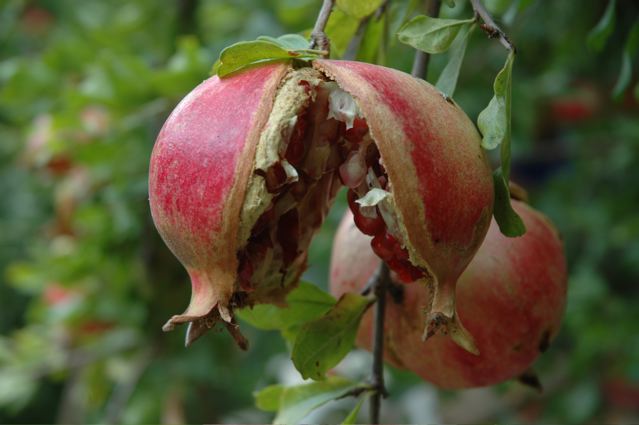
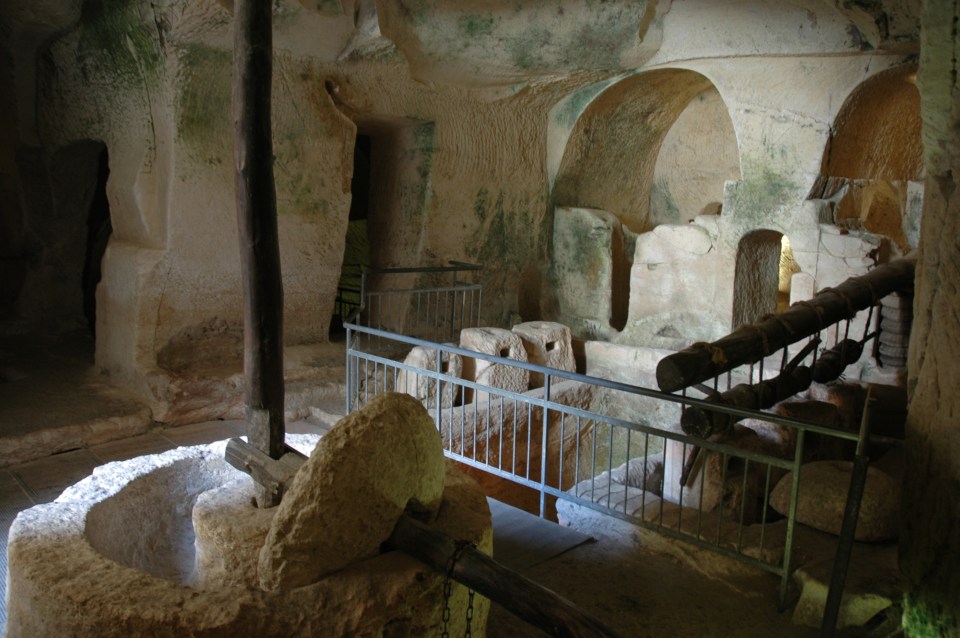
Depending on the season we will be able to find the 7 species that grow here: wheat, barley, grapes, figs, pomegranates, olives and oil and dates (honey). Vines are grown throughout Israel – you’ve probably heard of the vineyards growing in the volcanic soil of the Golan but there are also vineyards in the Galil, the hills of Jerusalem, the Shfela and even the plateau of the Negev. There are some 200 wineries throughout Israel and most encourage you to visit and taste their wines. There are also olive presses that go back thousands of years that we can find on our hikes and we can visit places to learn how olives are pressed into oil today.
DSC_0025

Golan Vineyards and Wineries

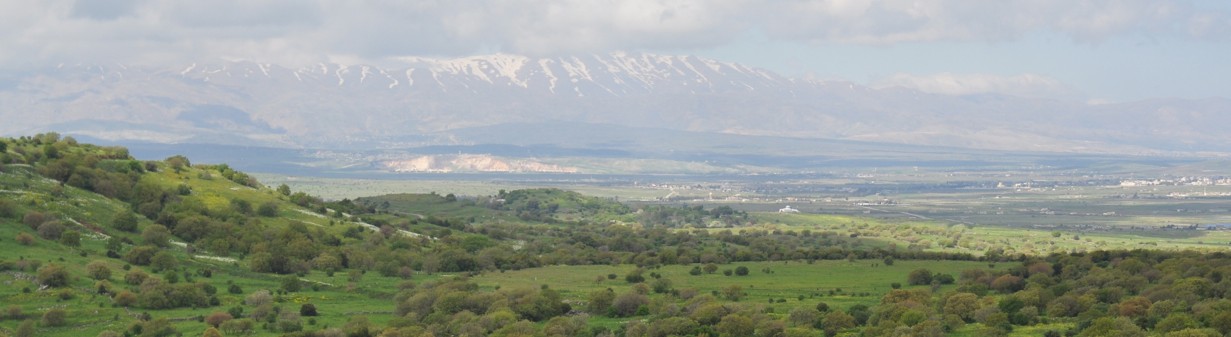
I was on the Golan this week near Har Avital. It was delightful – the weather was superb, the wheat was golden, there were still poppies, the grapevines are blossoming. You can feel the broad expanse of the Golan, it lets you breathe.

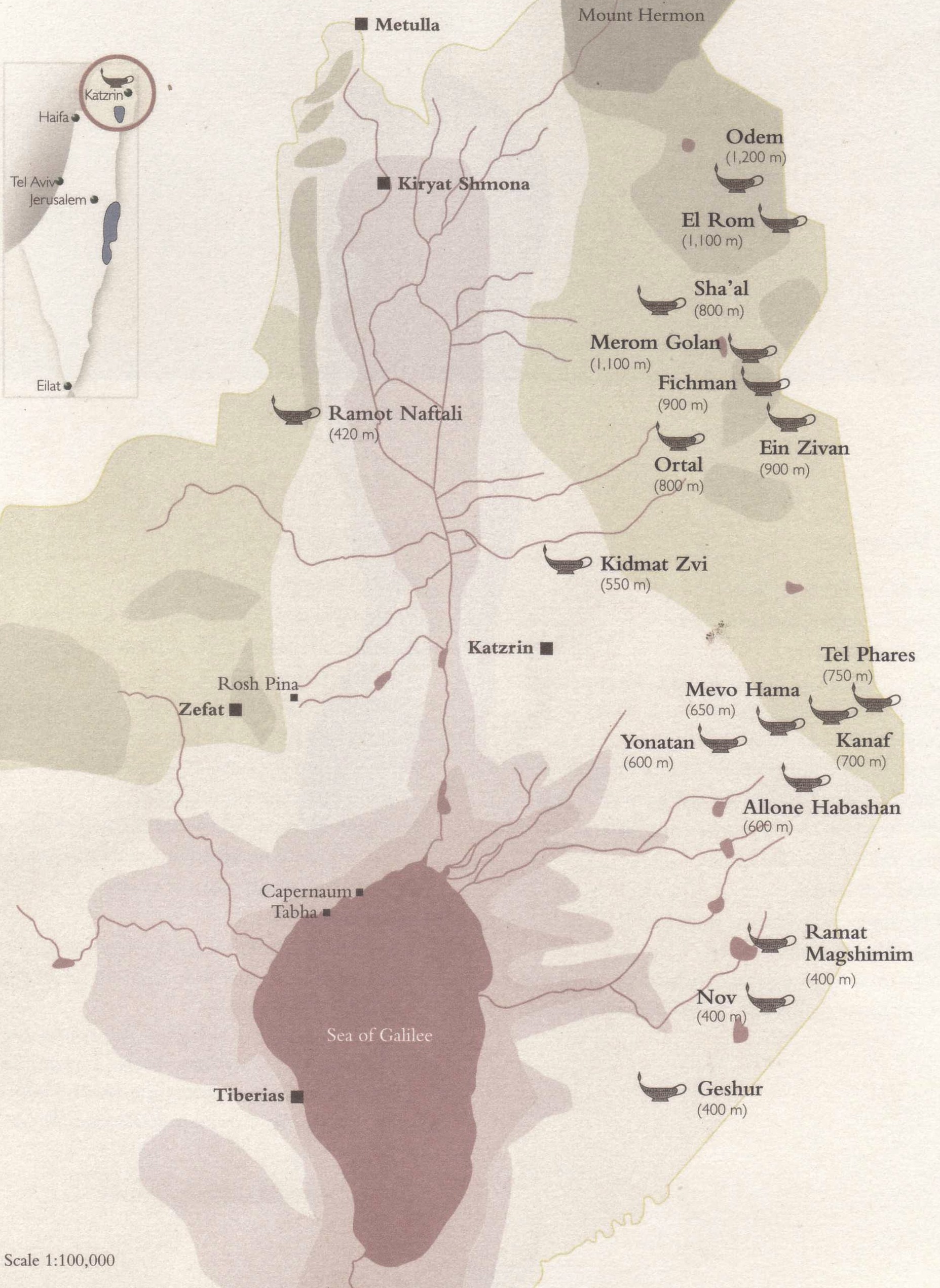
We visited vineyards on the Golan, one growing in a caldera, a large crater caused by the violent explosion of a volcano that collapses into a depression. The caldera creates a different micro climate from the surrounding area. We visited an organic vineyard at Odem and learned about how the growers control aphids and grapevine fan leaf virus using natural methods. We visited vineyards growing around Tel El-Makhfi right beside abandoned Syrian bunkers. The Golan Heights Winery has 16 vineyards on the Golan and 1 in the Galil.

We ended the day with wine tasting (Yarden Blanc de Blancs, Gewurztraminer, Chardonnay, a blend of Pinot Noir, Merlot and Syrah and a Heights wine, their version of iced wine for desert) at the Golan Heights Winery in Katzrin.

Golan Sparkling Wine

I was up on the Golan this week visiting the Pelter winery at Kibbutz Ein Zivan and learning about the traditional way that Pelter makes his sparkling wine (in France it’s called champagne). The cuvée is a Chardonnay grape grown at Neve Atiq that is picked early so that it is tart, the grapes are pressed and centrifuged to get rid of the skins and pips and then sugar and yeast are added, the concoction is called the tirage and the mixture put in special, thick glass bottles with a cap. These bottles are stored upside down for 3 years in a cool place so that they ferment slowly producing alcohol and carbon dioxide. Since the bottle is sealed, the carbon dioxide cannot escape, producing the sparkle. The yeast eats the sugar for about 6 months and then dies ending the fermentation. The dead yeast cells are removed by a process called riddling where the bottles are rotated everyday until the yeast drops down into the neck of the bottle. The final step is to freeze the neck in an ice bath at -25ºC for 4-5 minutes resulting in a frozen plug. The bottles are then opened and the pressure pops out the plug (with the yeast). The bottles are then adjusted topped off with a dosage, a mixture of sugar, sweet wine, grape juice. Pelter adds champagne from previous years. The final alcohol content is 10.5%.

Pelter is able to produce between 1000 and 2000 bottles of sparkling wine. Only 3 wineries in Israel produce sparkling wines and only Pelter and the Golan Heights Winery do it in this tradional way (though Golan is much more automated).

Israel with kids

Israel is a great place to visit with kids. The country is small but varied. One day you can be bumping along in a jeep on the Golan Heights with a view into Syria and hear the stories of Israel’s capture of the area during the Six Day War in 1967. The next day you can be riding on a camel across the sands in the Negev, sleeping in a Beduin tent or under the stars. On the Mediterranean coast, in Akko there is a Crusader fortress that was buried in sand by Al Jazar in order to build his citadel that we can explore. At Masada there is a Herodian fortress in the desert later used by Zealots in the Great Revolt against the Romans. There is an opportunity to climb through caves more than two thousand years old, an experience out of “Raiders of the Lost Ark”. In Jerusalem you can walk around the Old City on the ramparts from the time of Suleiman the Magnificent, walk on paving stones that go back to Roman times and even the Second Temple period or walk underground along the length of the Western Wall.

Check out this article by Nancy Better in the May 17th edition of the New York Times, Taking the Kids – In Israel, With a Whiff of Adventure.

All the sites mentioned in the NY Times article can be incorporated into your personalized tour. There are less expensive accommodations for those on a tighter budget.

Brandy

DSC_0023

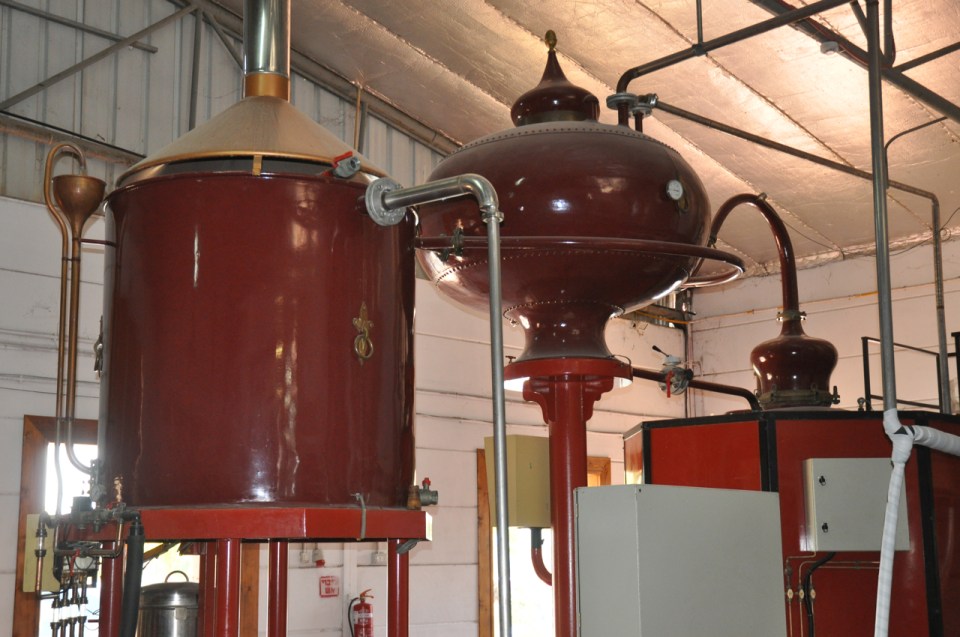
In a previous post about wine tours I mentioned that one of the unique things about the Tishbi winery is that it makes a fine brandy, 40% alcohol, aged 12 years in oak barrels giving it “a beautifully golden rich and smooth experience of oak and vanilla overtones, blended with delicate floral and hazelnut scents”. Tishbi does this by distilling its own wine from the finest Columbard grapes in a 1912 Remy Martin original charentais alembic (a fancy way to say a melon-shaped distilling apparatus), a contraption that looks right out of Willy Wonka.

Heap of the Wild Cat

Rogem Hiri (Rujm al-Hiri in Arabic, meaning stone heap of the wild cat) is one of the most intriguing archeological sites in Israel.

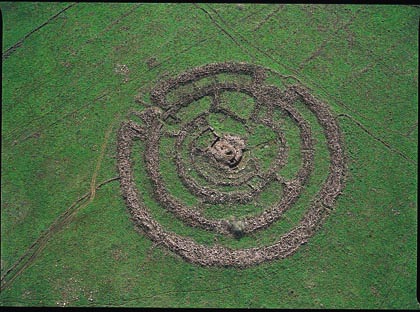
The megalithic complex is located in the central Golan, on the Golan trail, near Daliyot reservoir (32.908705°N 35.800705°E). It consists of four concentric circles of local basalt fieldstones (42,000 stones are the estimated number) of varying sizes enclosing a central, round cairn. The outer, largest circle is about 500 meters long and 156 meter in diameter. Several radial walls connect the circular walls, creating a labyrinth-like structure which has only two entryways, one facing northeast, the other southeast. At the center of the circles is a cairn, an irregular mound of stones 20-25 meters in diameter and preserved to a height of 6 meters. A geophysical survey using Ground Penetrating Radar (GPR) revealed the pile of stones to be hollow suggesting that it might be a burial chamber, a monumental commemorative tomb or the mausoleum of an Early Bronze Age ruler in the Golan.

Rogem Hiri, RogemHiri, megalithic complex in Golan (photo from Israel Ministry of Foreign Affairs website)

Rogem Hiri, Heap of the Wild Cat, megalithic complex in Golan (photo: Israel Ministry of Foreign Affairs website)

Archaeologists have proposed a variety of theories concerning the function of this structure, which has no parallel in the Middle East: a religious center; a defensive enclosure; a large burial complex; a center for astronomical observation, a sort of Middle Eastern Stonehenge since the northeastern entryway is roughly oriented towards the solstitial sunrise on 21 June and a calendrical device. The structure was even identified as the tomb of Og, King of the Bashan and last of the giants (see Deuteronomy 3:11).

The structure is not easy to appreciate from the ground so wouldn’t it be great to fly over it in a hot air balloon or glider?