Tag Archives: postaweek2011

Falafel Fast Food Israel

Probably everyone who has been to Israel has tasted one of Israel’s most popular fast foods, falafel. It’s made out of mashed chickpeas with parsley, scallions, garlic, coriander and cumin. Formed into balls or croquettes it is fried until crunchy, stuffed in a pita with an Israeli salad of finely cut tomatoes and cucumbers and drizzled with tehina.

There’s no point arguing about where to find the best falafel, everyone has their favorite. Since we live in Jerusalem, our family swears by the Levi brothers on the corner of Etz Hayyim and Tut street in Mahane Yehuda. There you can have falafel in a pita or rolled up in a lafa, a large, round flatbread.

As a guide I spend quite a lot of time in the Old City and there are two fellows I’ve gotten to know who sell falafel on El Wad street that I like to support. Amin will give you a falafel ball to taste as you go by and gives a falafel snack to quite a few of the Arab children on their way home from school. You can’t beat his price, he sells a falafel in a pita with salad for 5NIS.

A little farther along, on the opposite side of the street is a fellow selling falafel in pita from a cart; I don’t know if he’s deaf but he’s not able to speak – he’ll be happy to make you a sandwich.

When you’re touring in the Galilee check out Falafel HaNasi in Afula. This video is on YouTube at https://www.youtube.com/watch?v=5iCcaL1uzuQ that captures Golan in a virtuoso falafel in pita performance.

If you have your favorite falafel stand, take a moment to tell us about it in a comment.

Hiking Israel

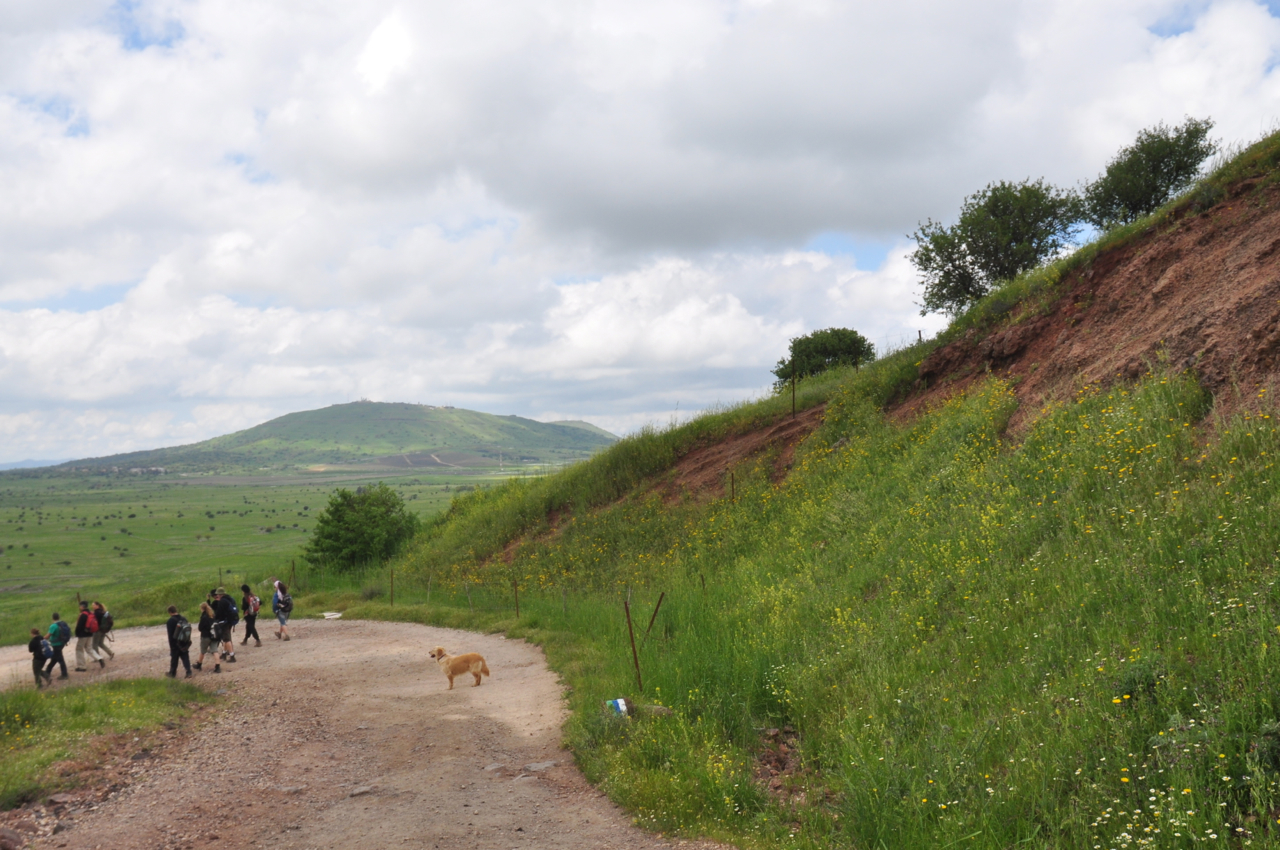
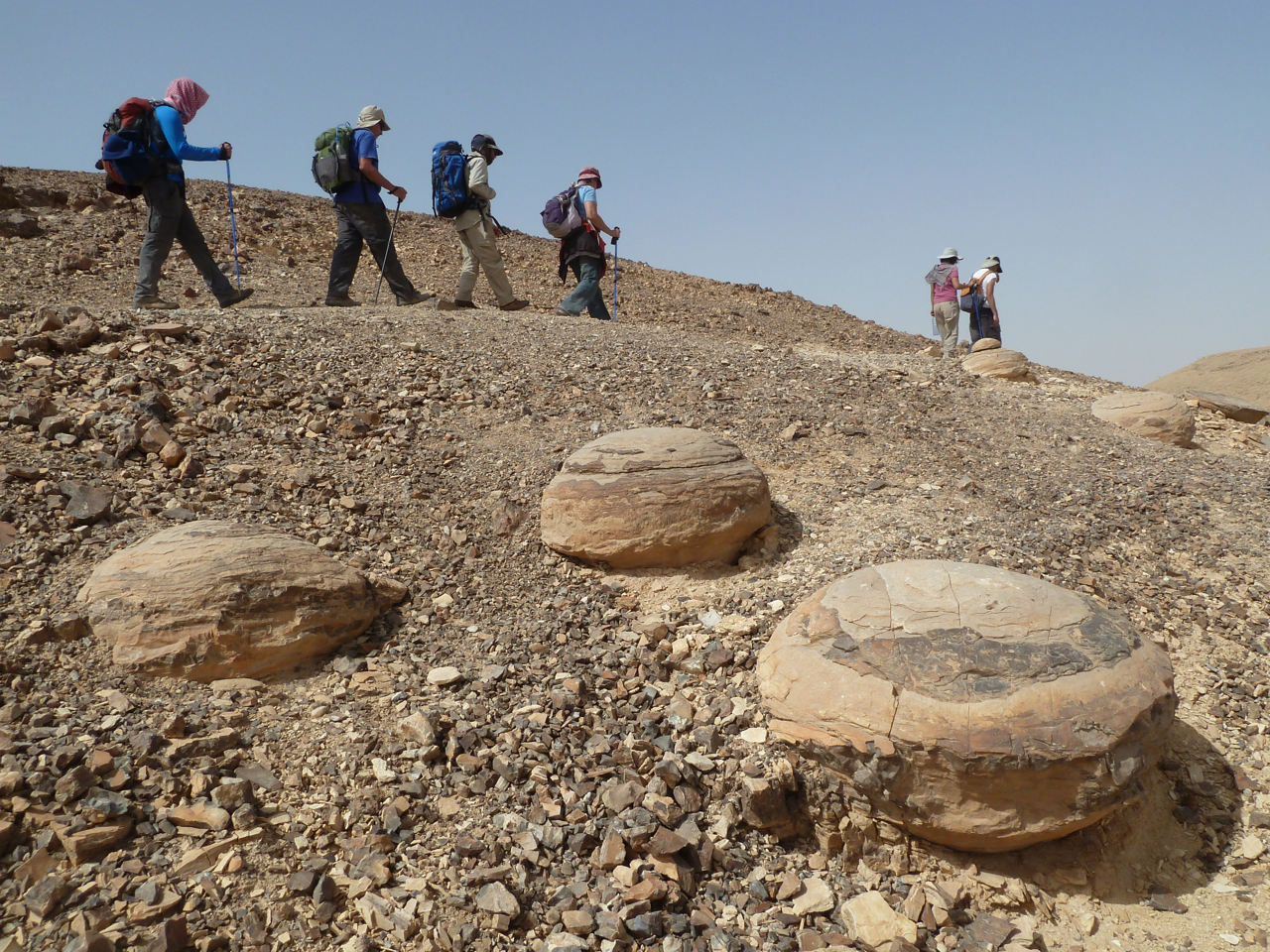
Hiking throughout Israel is a national pastime – youth groups, the scouts, the army connect to the Biblical land with their feet. School classes have a tiyul shnati, an annual hike. Many young people who have just finished their army service reconnect with friends by hiking together on Shvil Yisrael, the Israel Trail, a 945 km trail that crisscrosses Israel, from Dan in the north to Eilat in the south. There is also a Golan trail, a Jerusalem trail, the Jesus/Gospel trail, a hike Sea to Sea from the Mediterranean to the Sea of Galilee. If you want to really experience and understand Israel you should take to the trails. Hiking takes you off the beaten track and besides the beauty of nature you will often come across archaeological ruins from thousands of years ago. If you don’t have a lot of experience hiking in Israel it’s recommended you hire a guide. Besides guiding you on the trail I can suggest what to bring, help with logistics, transportation and explain the nature and history and archaeology on the hike.

Israel is a small country which means you don’t have to travel far to start your hike. But although small in size there is incredible diversity so there are many different hiking experiences. Living in Jerusalem I know some hikes that are very close by, for example shvil hamayanot a trail that takes you to natural springs and pools that are particular to the hills of Jerusalem. A hike in Nahal Katlav (a nahal or wadi is a dry stream or river bed) in December is an opportunity to see wildflowers like crocus blooming after the first winter rains.

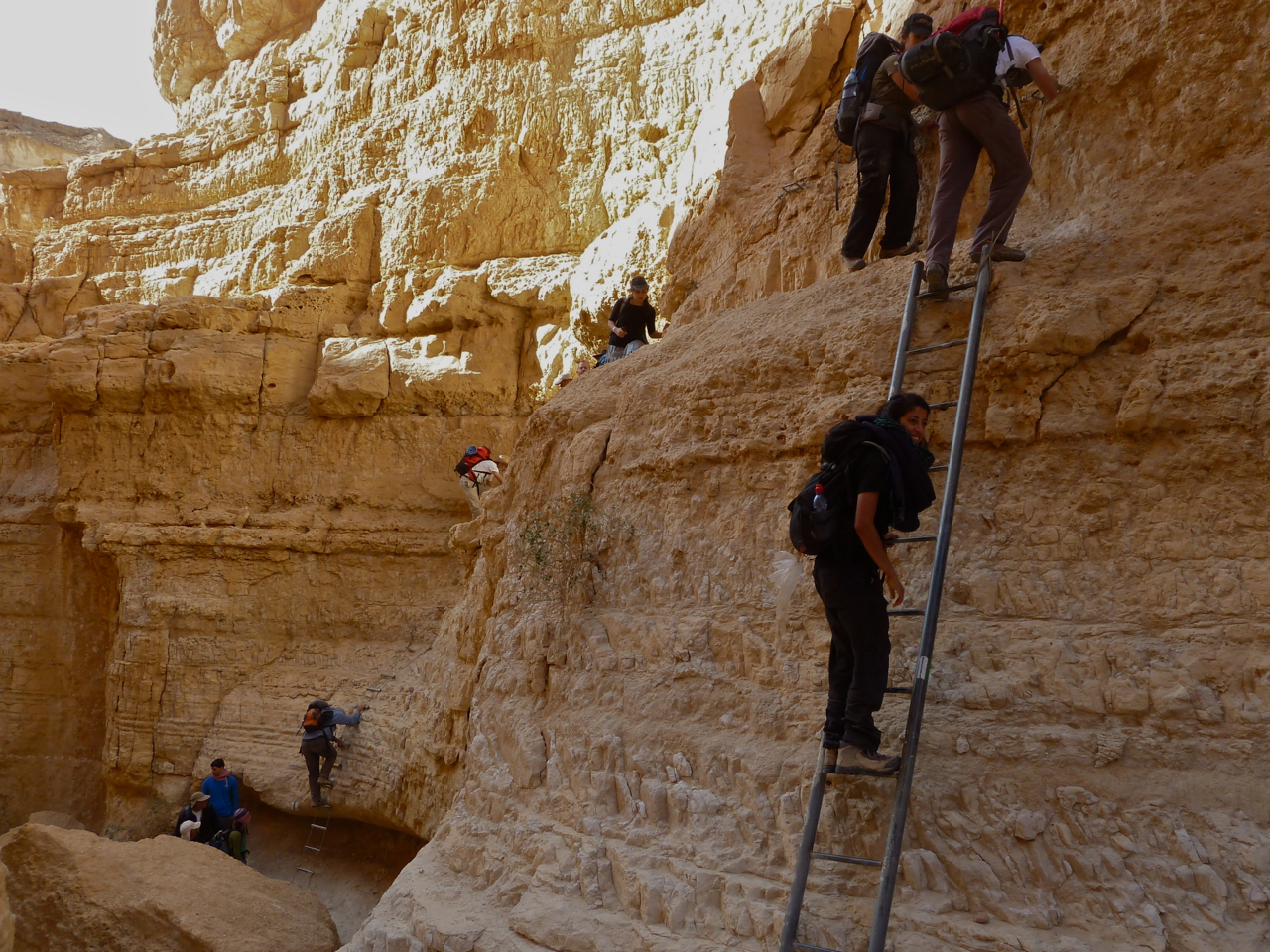
Jerusalem is a great base for day hikes because of its location in the hills and on the edge of the Judean desert and only a half hour drive to the northern edge of the Dead Sea. For starters I’d recommend hiking Nahal Og, desert landscape, narrow canyon, iron rung ladders – a really classic Israeli hike. Nearby is Wadi Qelt with a hike that takes you to a monastery hanging on the cliff. There are two wadis at the Ein Gedi reserve, Nahal David is the one most people hike and Nahal Arugot; you can choose trails, from 20 minute family hikes to challenging 4-6 hour hikes that will take you to pools and waterfalls in the middle of the desert.

If you are planning to be farther south there is hiking at Mount Sodom, a salt mountain or try a night hike by the light of the full moon in Nahal Peratzim. The Negev south of Beersheva is another desert with its canyons, mountains and springs to explore. Unique to the Negev is a geological phenomenon called the makhtesh or erosion crater that should not be missed. Probably the most picturesque hike in Israel is a short hike that is appropriate for the whole family not far from Eilat called the Red Canyon where erosion has sculpted the red and orange sandstone cliffs.


In the north of Israel there is a hike in the Mount Arbel reserve, where you descend the steep cliffs and then climb back up with great views of the Sea of Galilee and the Golan. Just a little farther north is the Nahal Yehudia reserve with a whole variety of hikes, Meshushim (hexagonal basalt) pool, Nahal Zavitan, Gamla.

For good hikers there are two hikes that are legendary, in the north it is Nahal Yehudia and in the south Nahal Dragot. If you want to test your mettle against the real Israeli experience, these are the hikes. For recommendation on some dozen other hikes, click on this link https://israeltours.wordpress.com/category/hiking/

Dome of the Rock

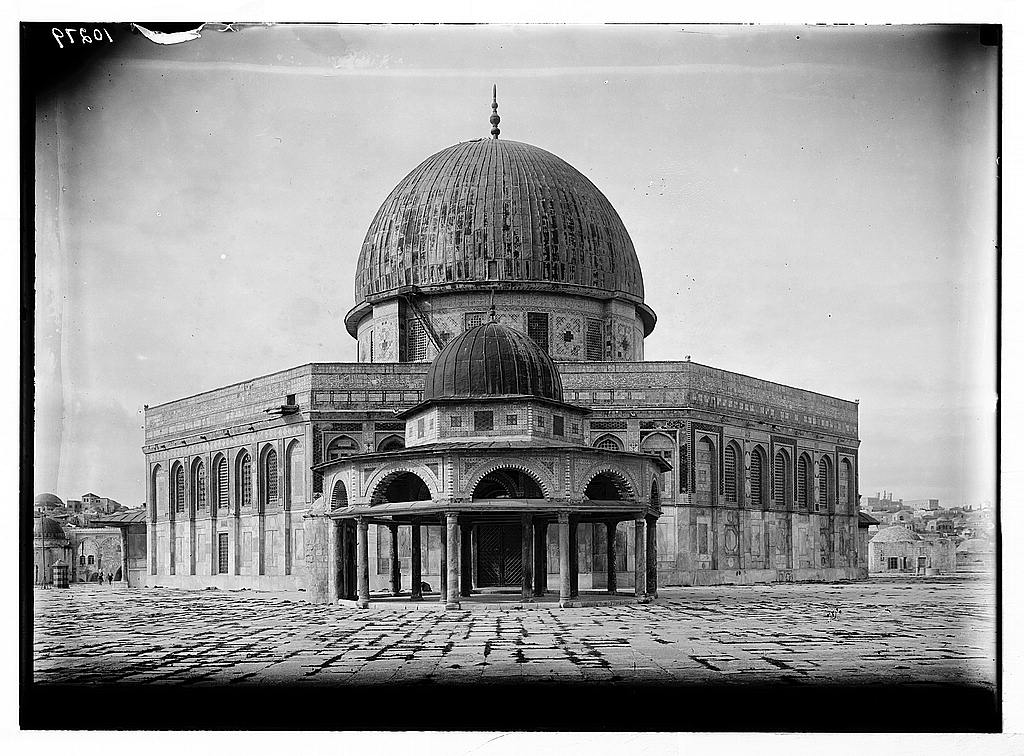
When viewing the Old City skyline probably the most striking sight is the gold dome of the Dome of the Rock. The Umayyad Caliph Abd el-Malik had this shrine built like a Byzantine martyrium, octagonal in shape, in 691CE over a rock on the Temple Mount.

Dome of the Rock ~1934, Matson collection

Over the years various metal coverings have been tried on the dome. In 1993 King Hussein of Jordan donated $8.2 million to cover the dome with a layer of  gold, 80kg in total. In Muslim tradition the rock is the place where the prophet Mohammed ascended to heaven on his Night Journey. The platform is called the Haram el-Sharif, the Noble Sanctuary.

In Jewish tradition the rock is the foundation stone from which the whole world was created, where later Abraham was commanded to go and sacrifice his son Isaac. King David purchased the area from Araunah the Jebusite who was using it as a threshing floor (2 Samuel 24) and built an altar there marking the place where Solomon built the First Temple. The platform was extended by King Herod in 20BCE while renovating the Second Temple.

There is a special feeling on the Haram el-Sharif, away from the hustle of the Old City – you can feel a lot of history there. While most of the buildings are Islamic there are remnants of Crusader architecture and even capitals from the Byzantine period, Roman marble columns and a sarcophagus (check out the similarity to the one discovered at Herodium). The First and Second Temples stood for 1000 years on this site. It is important to understand the centrality of the Old City of Jerusalem to Judaism, Christianity and Islam.

The other day I visited the Haram el-Sharif in the early morning light. I passed through the airport-like security by the Western Wall plaza and walked up the wooden ramp that leads to the Mugrabi gate and shot these photos. Click on an image below to view it full-size. I’d be interested in hearing your comments.


Hiking Nahal Og

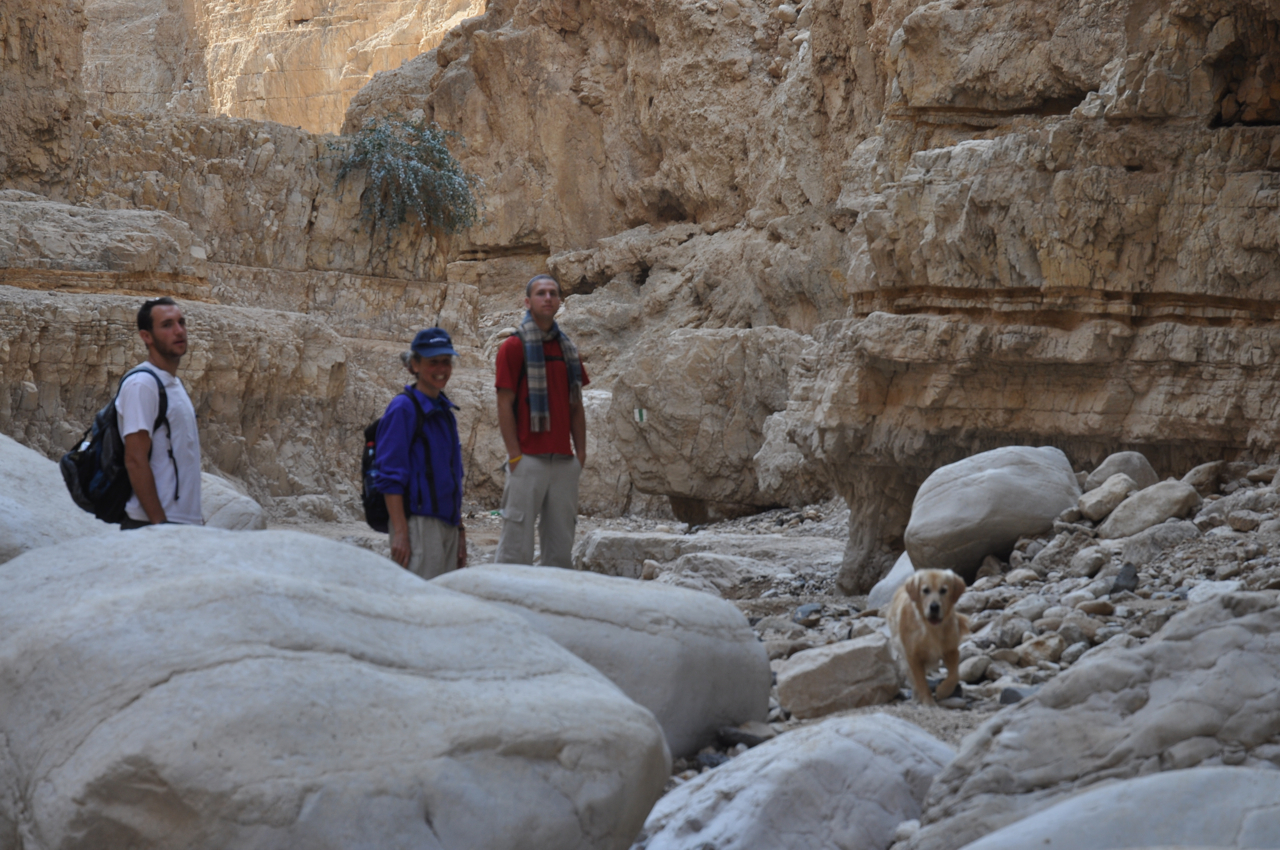
This is a real gem of a hike. Nahal Og is less than a half hour from Jerusalem in the Judean desert. It’s picturesque in a rugged, desert kind of way so it’s a good opportunity for taking photographs of the scenery and of course your family/group.

You might find that parts of the hike are challenging but this is a hike that is doable by parents and kids. There are three places where metal rungs have been hammered into the rock to give you hand and foot holds to help you traverse the steep rock faces. In the winter months there will be parts of the trail that have filled with water that you will have to cross.

The trail is a loop so you end back where you parked your car and in fact, you can do the trail in either direction, depending on whether you want to ascend or descend the rungs. Most people find that climbing up the rungs is easier than going down. The hike itself should take you about two hours.


To fill out your day combine the hike with one of the many other attractions in the area, the mosaics at the Inn of the Good Samaritan, St George’s monastery in Wadi Qelt, the archaeological site at Qumran, a float in the Dead Sea.

Not in Herod’s Lifetime

Just came back from a press conference with Ronny Reich, archaeologist and professor at Haifa University. Probably every guide talks about the Western Wall, the supporting wall of the Temple Mount built by King Herod in 22BCE. According to the historian Josephus, Herod elongated the square Hasmonean platform (250 meters by 250m) by rebuilding new northern, western and southern supporting walls. The eastern wall was extended and the “seam” between the earlier Hasmonean wall and Herod’s can be seen near the south-eastern corner. Along the western wall Herod designed a main street (Ronnie Reich calls it the original Wall Street, the Palestinians probably call it occupied) and a vault supporting a large staircase crossing over the street and leading to the Royal Stoa, a building 288 meters long with 160 columns (it takes 3 people with arms extended to go around a single column). When Herod moved the western wall he had to move some residences that were in the way, at the bottom of the slope from the Western Hill. These buildings were destroyed but the basements, underground cisterns and mikvaot (ritual baths) were just filled in with debris/earth. One mikva directly under the path of the planned western wall, was filled in and covered with 3 large stones. In clearing out the drainage channel under Robinson’s Arch, the mikva was discovered under the Herodian stones of the western wall.

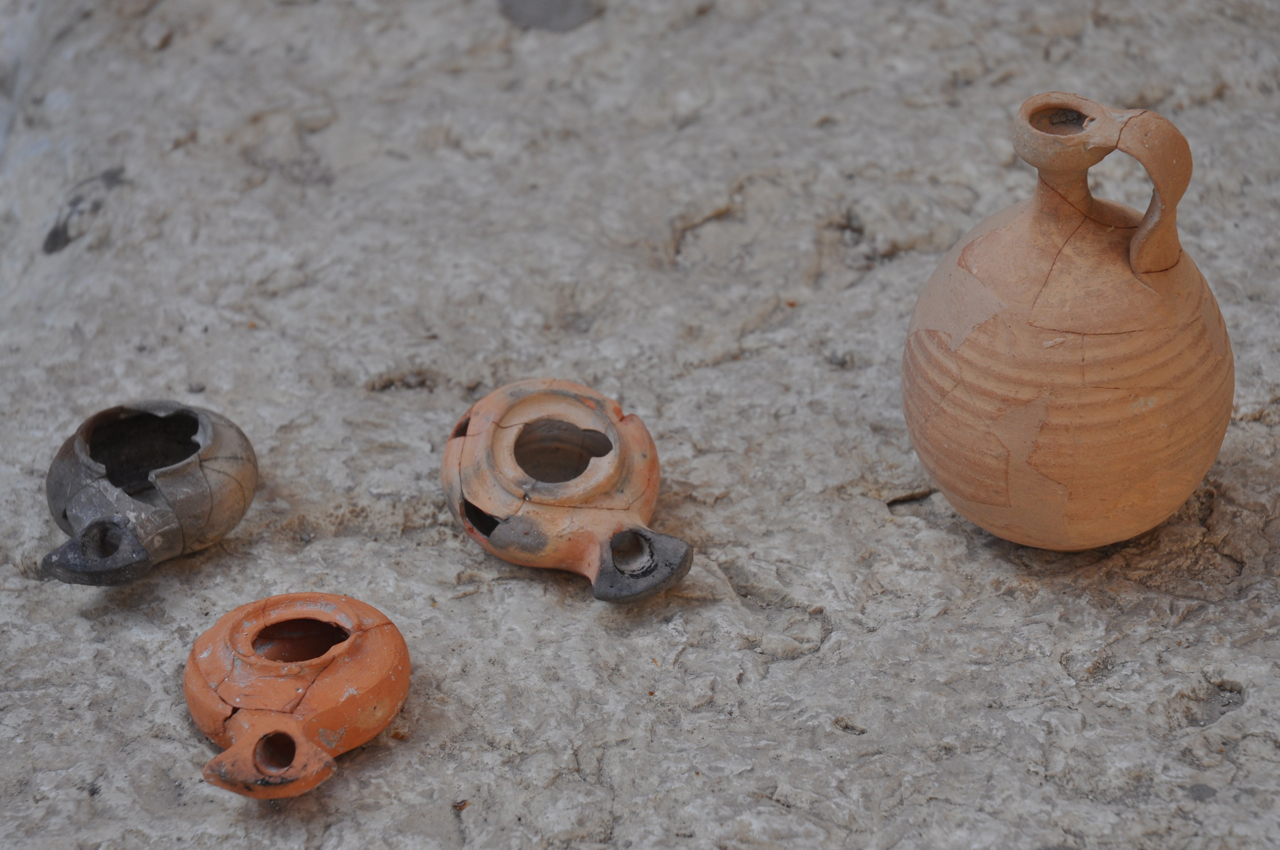
Some clay oil lamps and a small pottery jug typical of the Second Temple period were found.

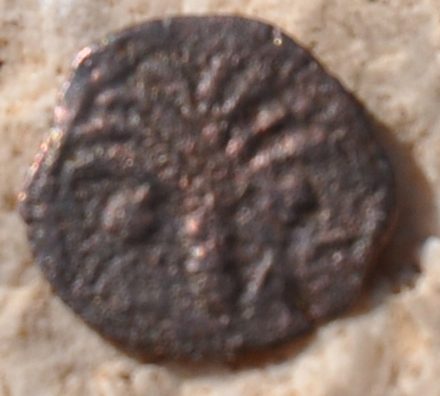
When the mikva was emptied and the soil sifted 19 coins were found, the latest ones were from the rule of Valerius Gratus, the Roman Prefect (governor) of Judaea province under Tiberius from 15 to 26CE. He was succeeded by Pontius Pilate.


Reich said four small bronze coins were found with dates of 15CE and 16CE (IAA press release says 17 coins with dates of 17/18CE). Since the coins were found in the fill in the mikva under the wall, the first (lowest) row of stones in the wall must have been placed there after 16CE so the wall was built more than 20 years after the death of Herod (who died in 4BCE). If that is the case, then the Herodian street, the staircase and probably the Royal Stoa were all later additions, not completed in Herod’s lifetime!

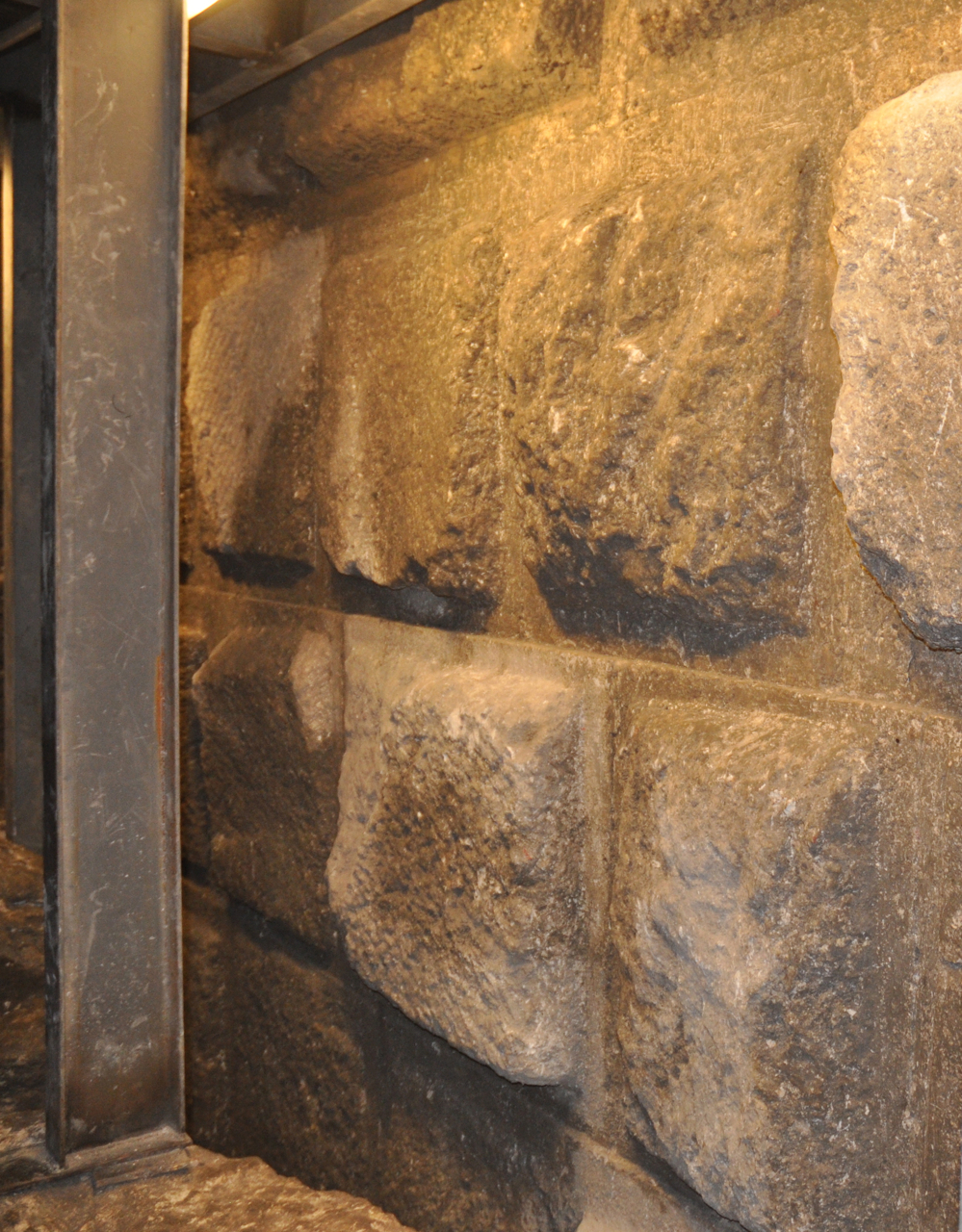
By the way, these stones have the frame but were left with the boss (protuberance) since they were underground and would never be seen.

This confirms Josephus’ account in the last book of Jewish Antiquities that the Temple building project was the largest project the ancient world had ever heard of and was not completed until about 50CE in the rule of King Agrippa II, Herod’s great grandson (even though some 15-18,000 workers were employed on the project).

Rujm el-Hiri Revisited

I wrote about Rujm el-Hiri in a post on May 2009 and concluded with a variety of suggestions about what the structure may have been used for. Now Dr. Rami Arav who has been excavating at nearby Bethsaida since the late 1980s has proposed a new theory reported in the Nov/Dec issue of Biblical Archaeology Review based on a broader look at the local Chalcolithic civilization (4500-3500BCE) and on similarities he noticed with more distant cultures.

Rujm el-Hiri consists of four concentric circles, the outermost more than 150 meters across, made up of an estimated 42,000 tons of basalt rock. Experts believe that these are the remains of massive walls that once rose as high as 8 meters (think of the ruins of the walls of the storehouses and the Roman camps at Masada).

Excavations at Rujm el-Hiri by archaeologist Mike Freikman of Hebrew University in Jerusalem over the past five years have yielded almost no material remains of the kind that are commonly found at most archaeological sites. The lack of artifacts confirms that the site was never inhabited and so was not a town or fortress but most likely a ritual center — possibly linked to a cult of the dead. What is the reason to go to such great lengths to construct something that was never inhabited, whose location was not strategic?
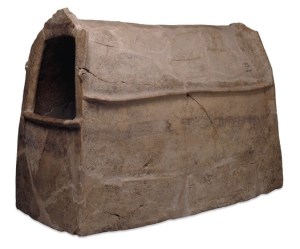
Chalcolithic Ossuary, British Museum

Burial in the Chalcolithic period was in ossuaries, small clay boxes used to house the bones. Stone ossuaries were seen next in the Second Temple period for Jewish burial – bodies were buried for an initial period of about a year in temporary tombs until the flesh decomposed and only the bones remained. In archaeology, this process is called excarnation. But archaeologists have not found evidence of such preliminary graves from Chalcolithic times.


Artifact from Hamatmon Cave, courtesy of Israel Antiquities Authority

Arav found a clue in the treasure of Chalcolithic bronze artifacts discovered in a cave, in the cliffs above the Dead Sea. He looked at a small copper cylinder with a square opening like a gate with figures of birds perched on the edge and saw it as a ceremonial miniature of an excarnation site.

He also noticed a similarity to round, high-walled structures used by Zoroastrians in Iran and India, known as dokhmas or towers of silence. These are structures used for a process known as sky burial — the removal of flesh from corpses by vultures. The winged scavengers perch on the high circular walls, swoop in when the pallbearers depart and can peck a corpse clean in a couple of hours.

Further evidence is a mural showing vultures and headless human corpses several millennia earlier in southern Turkey, where the local Chalcolithic residents are thought to have originated suggesting that excarnation was practiced there.

Arav’s answer is that excarnation was used — vultures did the job. To this day there are Griffon vultures and other large birds of prey that swoop above the valleys of the Golan. Arav concludes that Rujm el-Hiri was an excarnation facility.

Arav also identified a smaller structure consisting of concentric stone circles on a promontory overlooking the Jordan River as an excarnation site, outer circle is 50 meters in diameter and the inner circle 33 meters. Another round structure was recently identified at Palmahim where only ossuaries were found.

It may be hard to come to terms with Arav’s theory given the Judeo-Christian view of honoring the dead and human body but excarnation is practised in other parts of the world and it’s important to remember that the Chalcolithic period predates the Israelites by as much as three millenia.