Tag Archives: Judean desert

Mar Saba and Judean Desert Revisited

I received an email a few weeks ago from Kevin with the BBC in England that he gave me permission to share here.

Dear Shmuel,

I’m producing  a BBC radio series, presented by the British broadcaster John McCarthy. We have been commissioned by BBC Radio 4 to make a series of ten 15 minute programmes to follow in the footsteps of Edward Prince of Wales who toured much of the Middle East in 1862.  I’ve been looking at your blog, and saw your excellent entry Photography and Visitors to the Holy Land about his time in Israel.

As you know, he visited Egypt, the Holy Land, Lebanon, Syria, Turkey and Greece. His journey and the sights along the way were recorded by the photographer Francis Bedford. This was the first time that a royal tour was captured by the still new medium of photography.

As you are clearly interested in this tour, I would very much like to discuss our recording with you, perhaps with a view to interviewing you as a part of the programme.  We will be intending to visit each of these sites, to take a new photograph to match the old one, and to discuss the changes over the intervening 150 years in each location.

Very best and thanks for your time.
Kevin

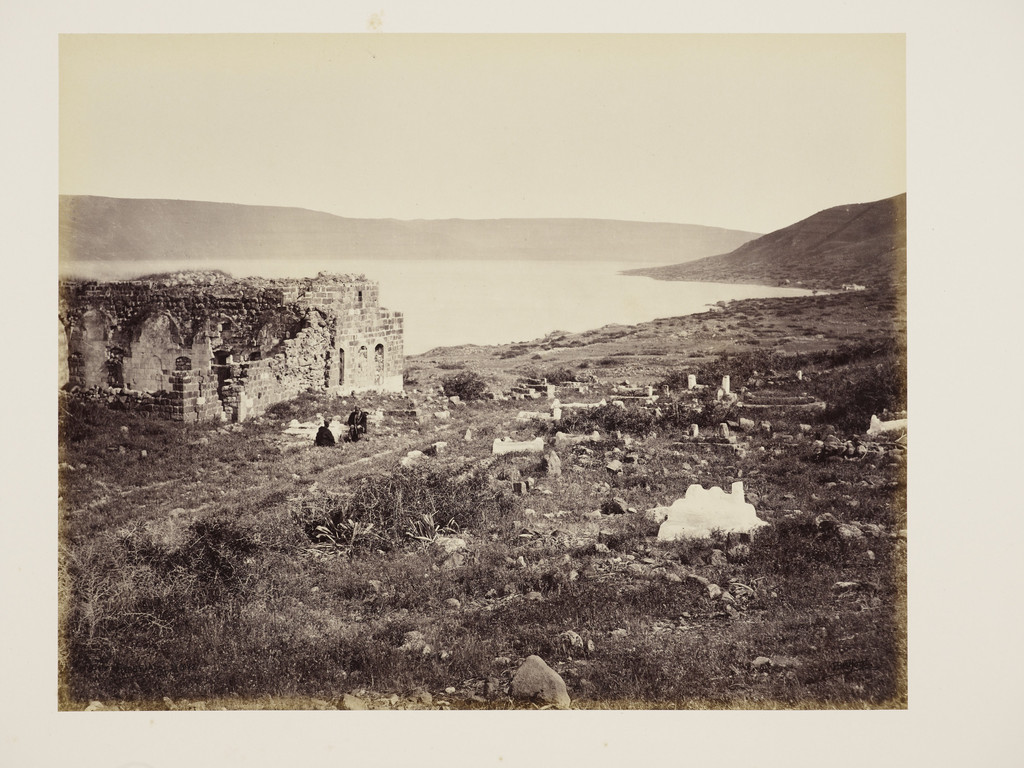
Here are another few Bedford photographs.

Tiberias-Sea-Galilee-Bedford

Tomb of Absalom

Mar-Saba-Kidron-Bedford

In reviewing the photographs taken by Bedford in Israel and talking with Kevin we decided to do Mar Saba, the monastery in the Judean desert.

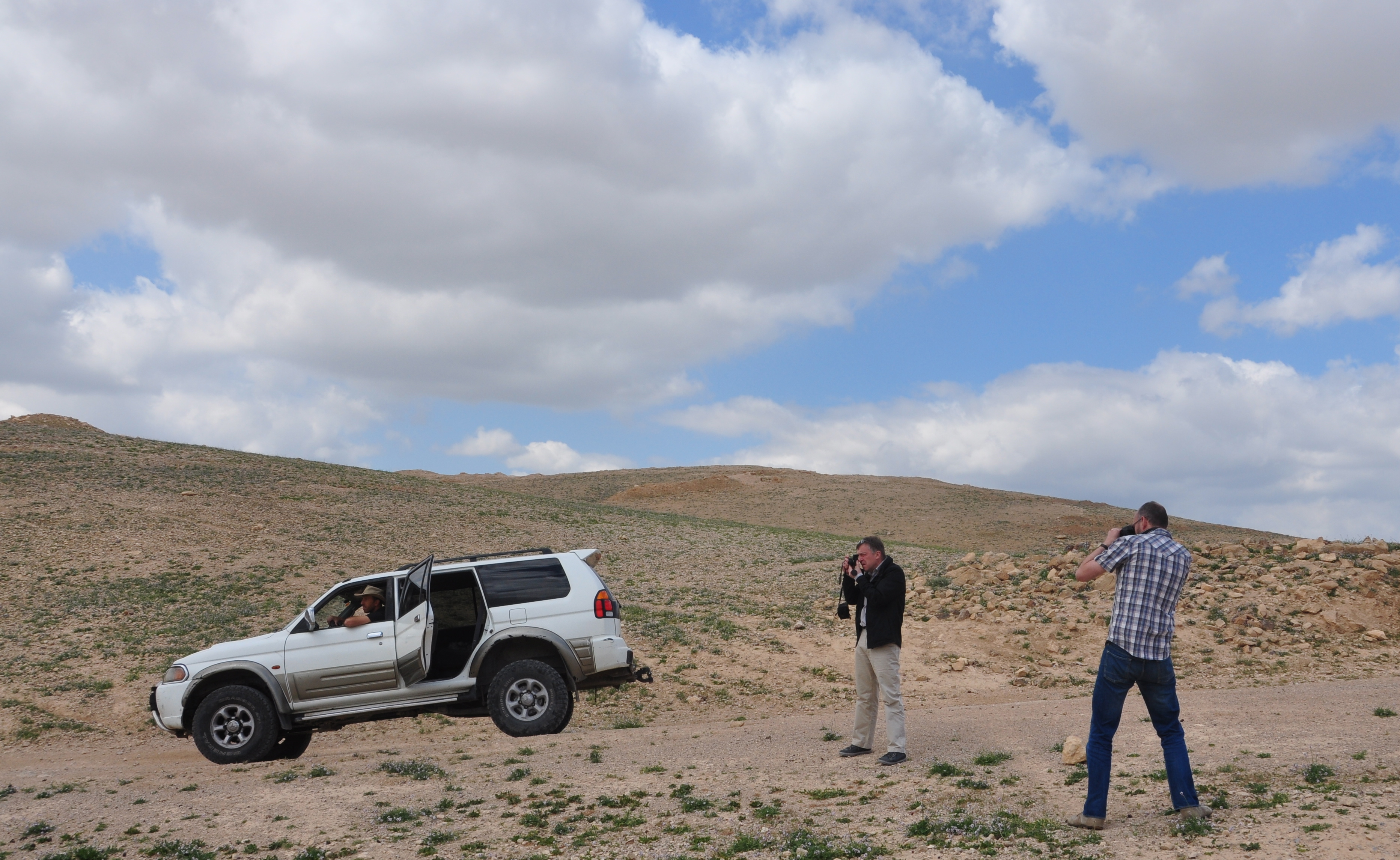
Jeep tour

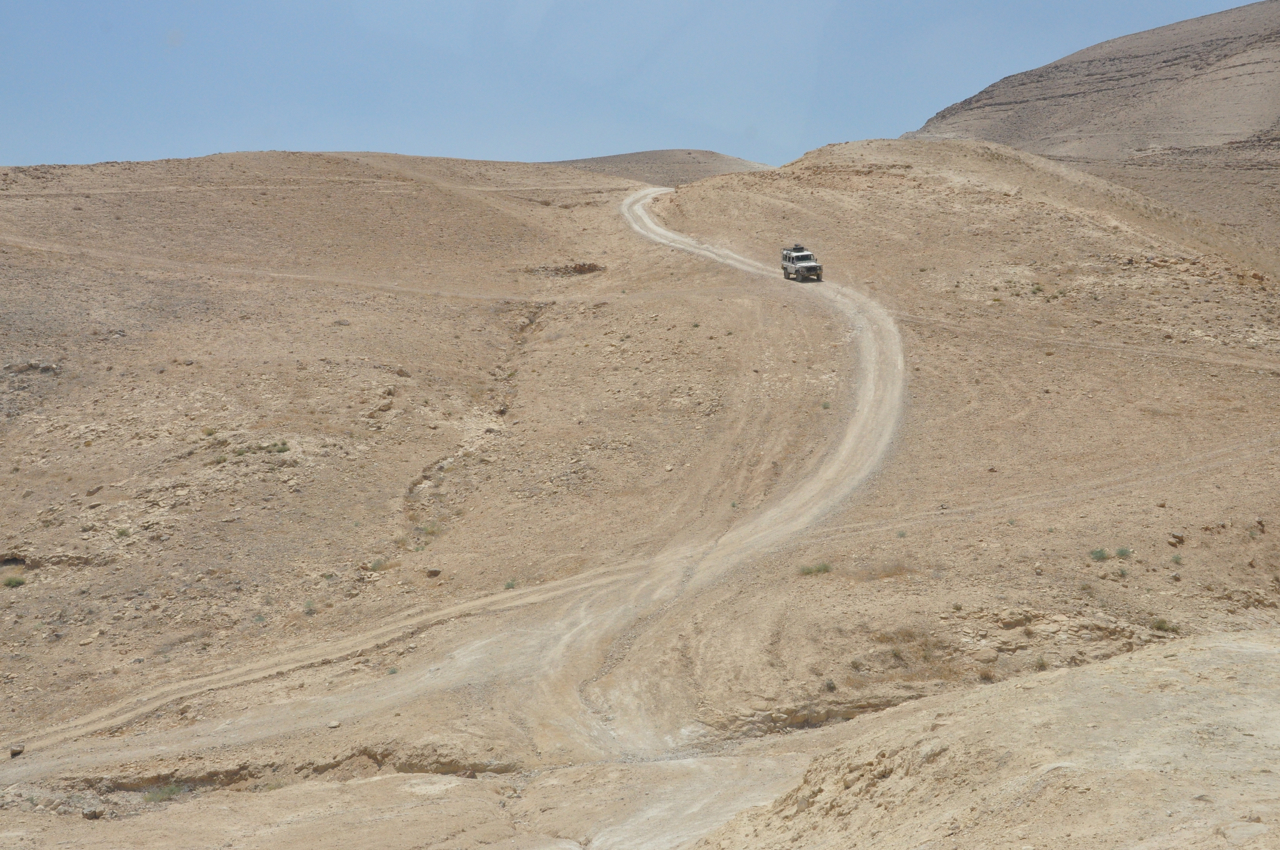
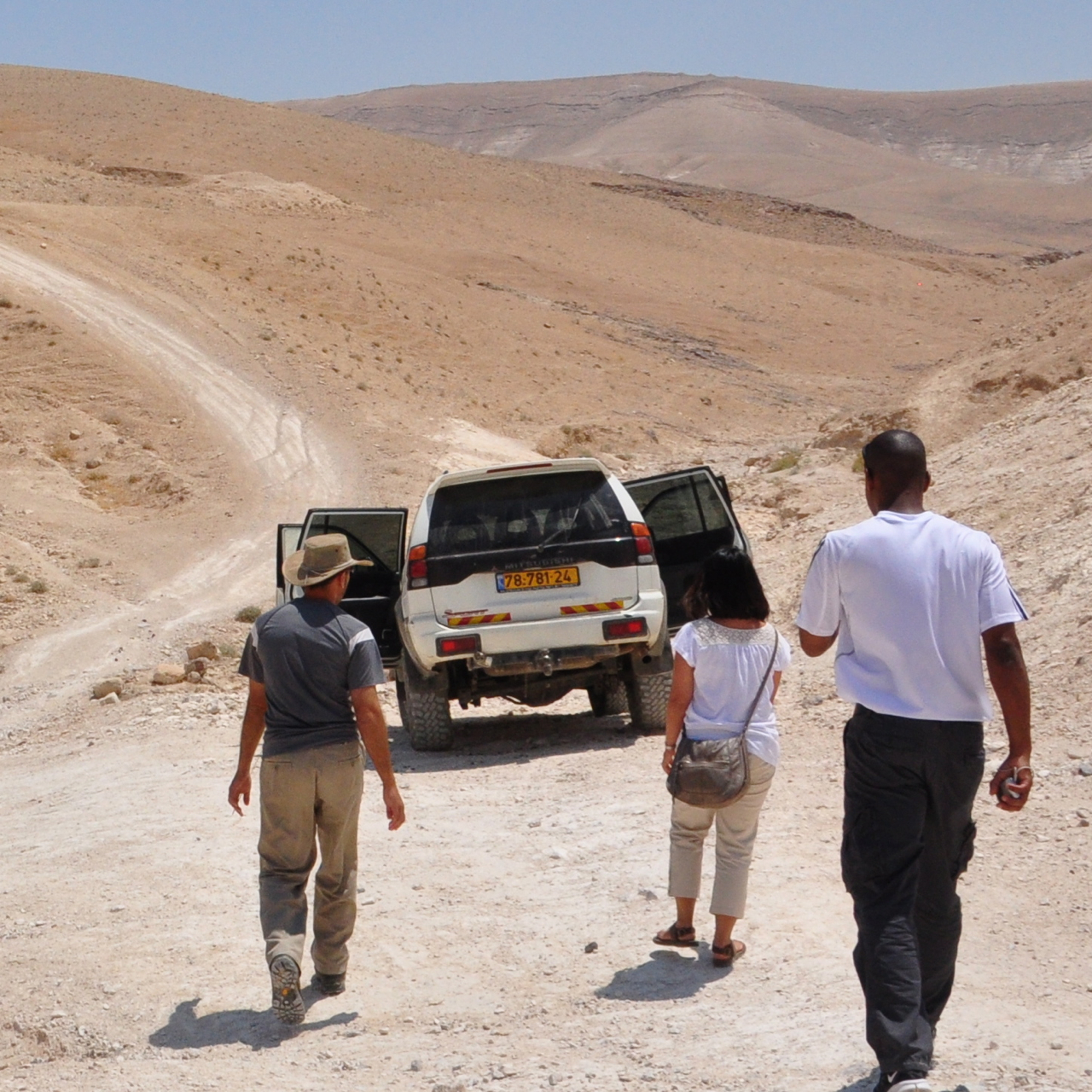
So we met up with Raanan, a great jeep driver, who took us off-road across the Judean desert to the overlook of the monastery in the Kidron valley. The desert is very green after the winter rains we had this year. We saw sheep, goats, donkeys and camels grazing on the plants and wildflowers. I took the opportunity to photograph some wildflowers (but that’s for another post).

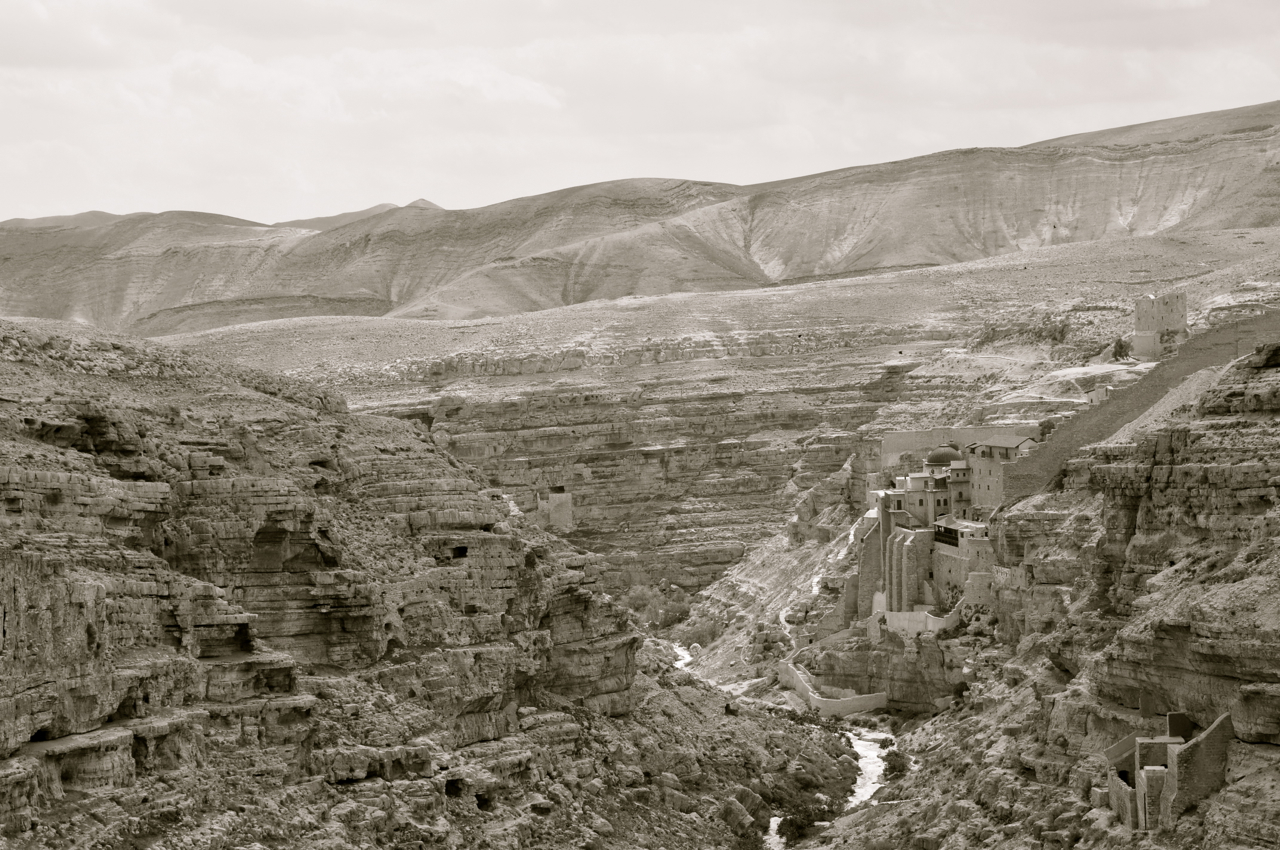
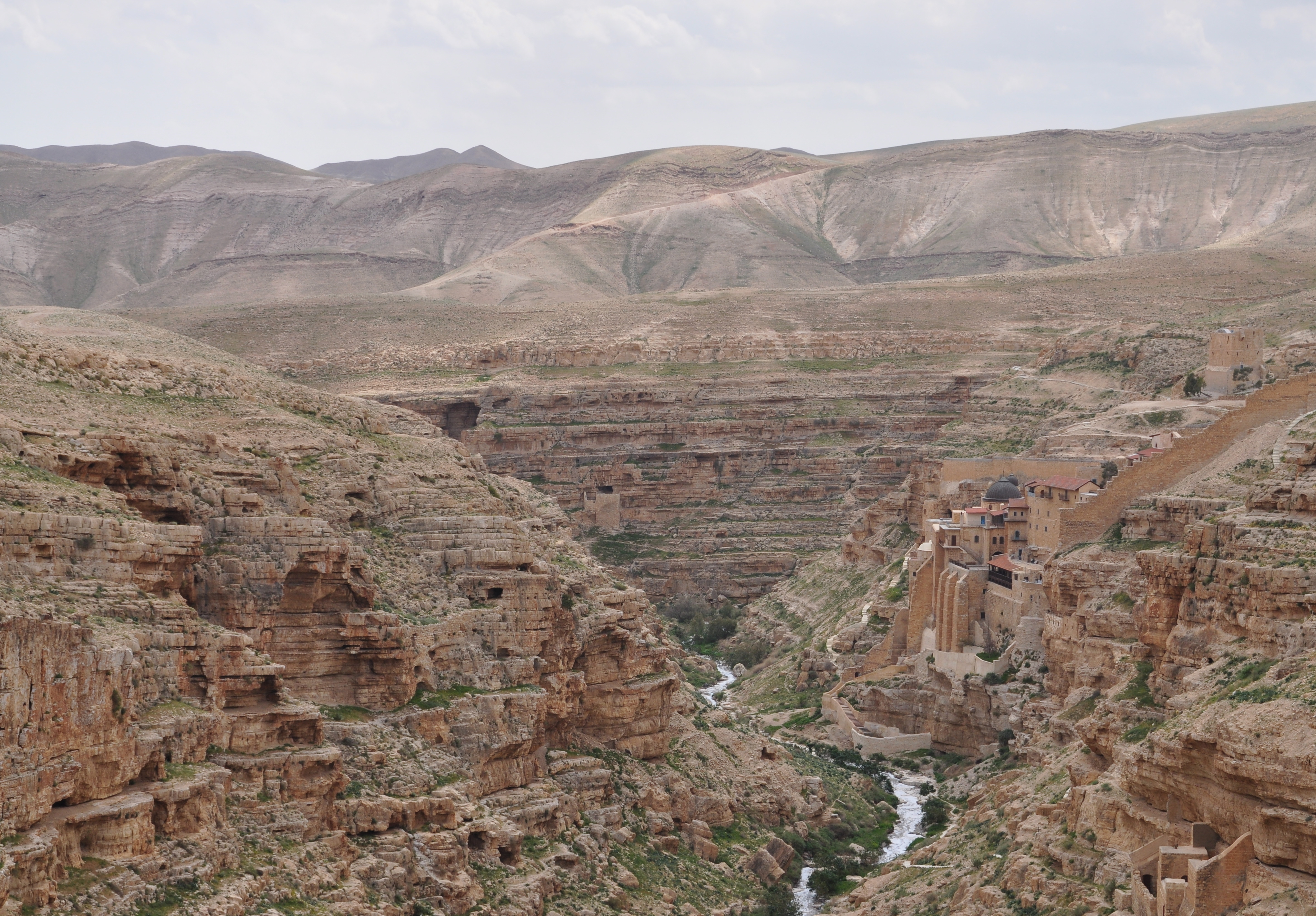
Our challenge was to try to shoot a photograph that matched the one Bedford took 150 years ago. Bedford’s is a very interesting image because of the angle. Bedford had a good eye and chose to shoot the monastery complex cascading down the cliff, focussing on the channel of the Kidron stream between the two cliffs. Here is my image shot March 18, 2013 with a Nikon D90 digital SLR camera and 18-200mm zoom lens (ISO 200 50 mm f/10 1/320) in black and white and color.

Mar-Saba-Kidron-B&W

Mar-Saba-Kidron-Browns

Camels in the Bible

The image displayed below “Ploughing with Camel and Cow” is a scanned copy of a small gelatine silver print (probably from the mid-1920s) of an American Colony photograph taken between 1898 and 1911 and published by Fr. Vester & Co. whose shop was in Jerusalem, just inside Jaffa Gate. The photograph shows a ploughing scene probably taken in southern Palestine. The plough is driven by the farmer and the animals are led by a boy in front.

Ploughing w camel and ox

There is something very jarring about this scene. The camel, tall and lithe, suited to journeys across the desert and the cow or ox, short and heavier-set, expected to pull the plough together. The yoke sits at an extreme angle on the animals’ backs. The Biblical text in Deuteronomy 22:10 immediately springs to mind: Thou shalt not plow with an ox and an ass together.
The rabbis explained that “Scripture spoke what was customary,” that is, people were accustomed to plow with an ox or an ass, but the prohibition applies equally to plowing with any two other species and in fact other activities like riding, leading, and driving with them (Mishna Kilaim 8:2).

Camels are first mentioned in the Bible in Genesis 12:16

And because of her [Sarai], it went well with Abram; he acquired sheep, oxen, asses, male and female servants, she-asses, and camels.

The word “camel(s)” appears 23 times in 21 verses in the book of Genesis. The first book of the Bible declares that camels existed in Egypt during the time of Abraham (12:14-17), in Palestine in the days Isaac (24:63), in Padan Aram while Jacob was working for Laban (30:43), and were owned by the Midianites during the time Joseph was sold into Egyptian slavery (37:25,36).

Most scholars, including W.F. Albright, American archaeologist and biblical scholar, who supports the historicity of the patriarchal narratives, conclude that references to camels and hence the domestication of camels are an anachronism, added by a later scribe.

Finkelstein and Silberman confidently asserted:

We now know through archaeological research that camels were not domesticated as beasts of burden earlier than the late second millennium and were not widely used in that capacity in the ancient Near East until well after 1000 BCE.

However, more recent archaeological discoveries: a pottery camel’s head and a terra cotta tablet with men riding on and leading camels from predynastic Egypt (before 3150 BCE), three clay camel heads and a limestone vessel in the form of camel lying down (3050-2890 BCE), a petroglyph depicting a camel and a man (2345-2184 B.C.) and a rope made of camel’s hair found in the Fayum oasis suggest that camels were domesticated as early as the third millennium, before the time of Abram, dated to the earliest part of the second millennium BCE.

Much of this evidence has been examined by MacDonald of the University of Oxford who concludes:

Recent research has suggested that domestication of the camel took place in southeastern Arabia some time in the third millennium BCE. Originally, it was probably bred for its milk, hair, leather, and meat, but it cannot have been long before its usefulness as a beast of burden became apparent.

On a jeep tour of the Judean desert we saw this herd of camels. Doesn’t the hill in the background look just like a camel hump?

Camels

Euthemius, Judean Desert Monastery

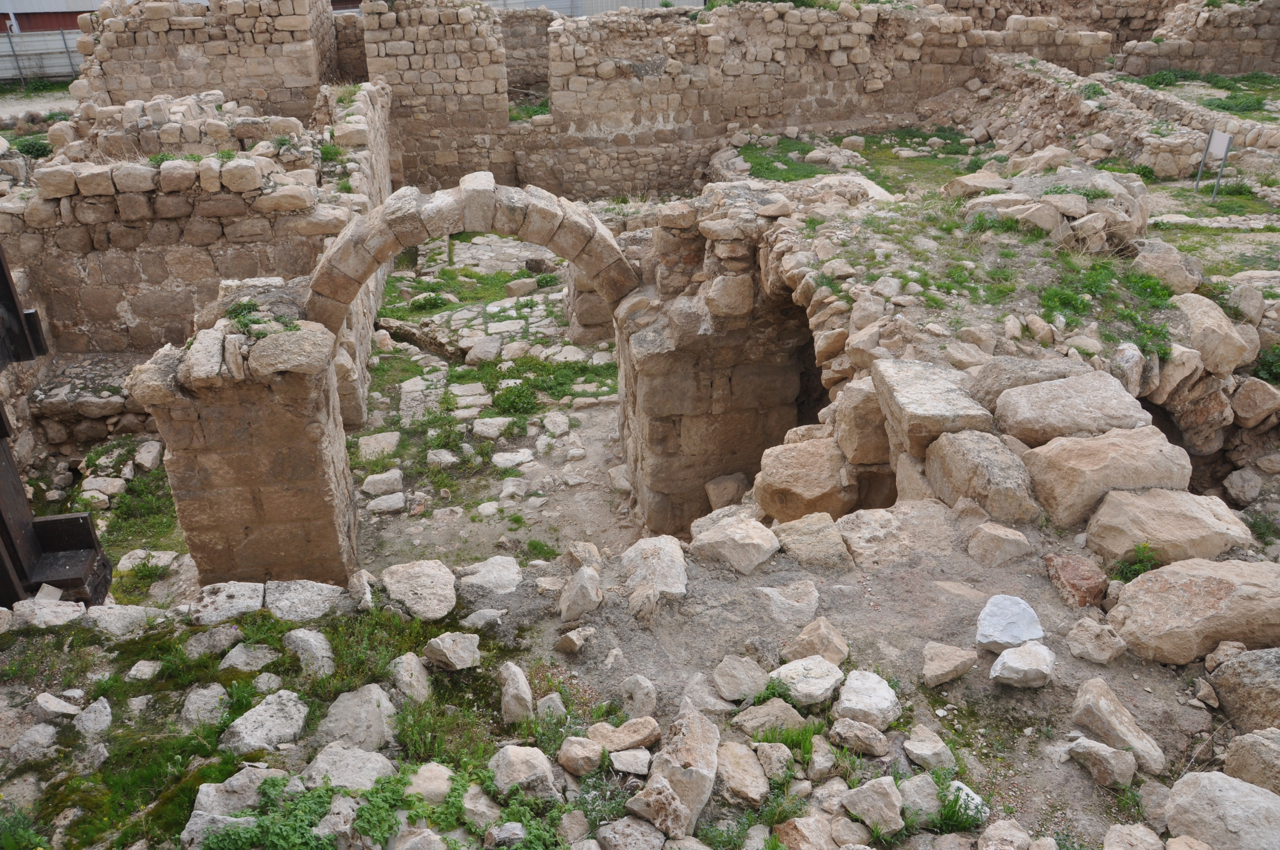
The history of the third monastery of Euthemius, which bears his name, illustrates the history of Christian monasticism in the Judean desert. Young monks were drawn to the holy Euthemius and the monastery became the most important and central among the Byzantine monasteries in the 5th century CE.

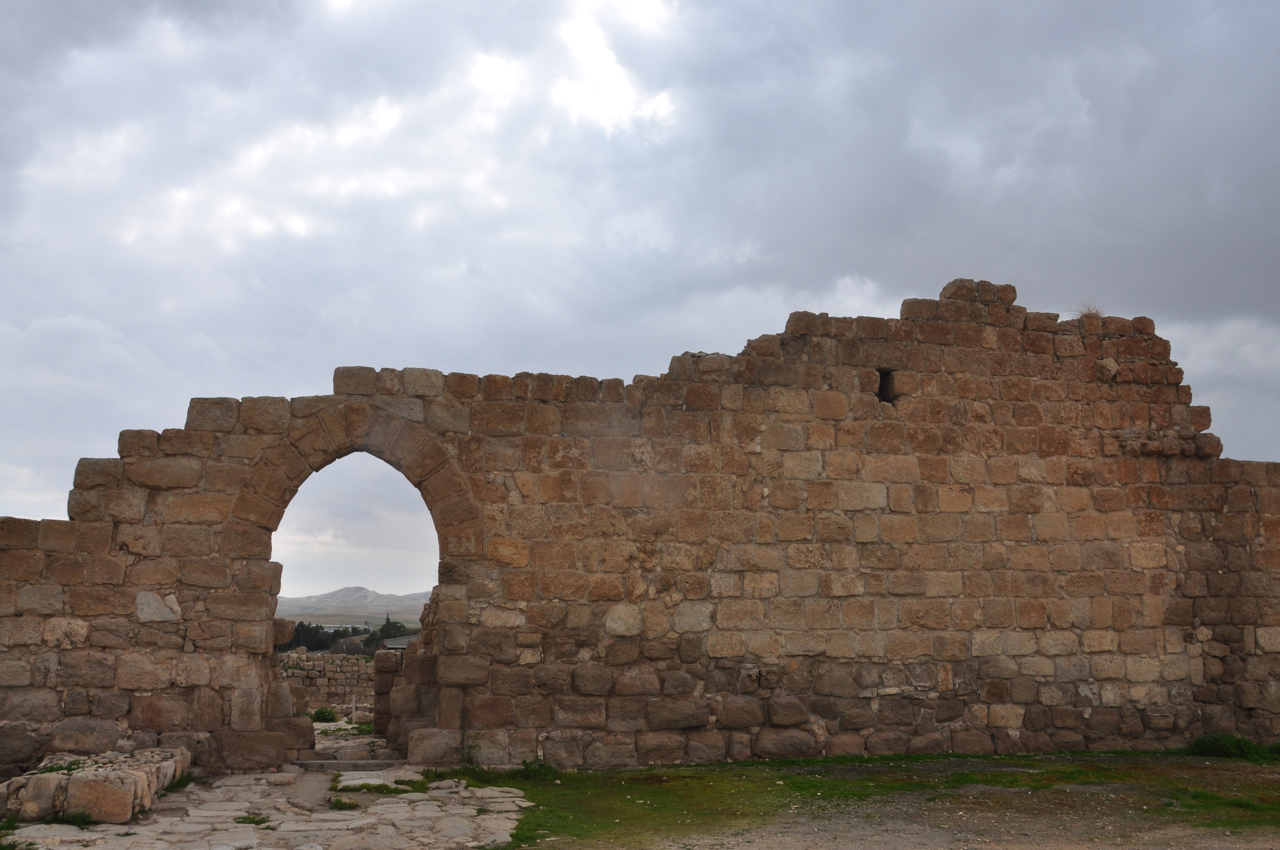
Northern wall Euthemius

Euthemius came to the Holy Land as a pilgrim in 406 from Armenia and stayed at the laura of Faran, founded by the monk Chariton at Wadi Qelt. A laura is a cluster of caves or cells where monks live in seclusion and meditation. They gathered centrally once a week, generally on Sunday, for prayer. After five years, he and a fellow hermit, Theoktistus, moved to a cave on the cliffs of Nahal Og. With additional monks attracted to Euthemius, the site became the first coenobium in the Judean desert. A coenobium is a communal monastery where the monks live together with a strict daily schedule of work and prayer, a walled complex that consists of living quarters, refectory and church.

Inside Euthemius monasteryTo continue in solitude, Euthemius and a fellow hermit, left the monastery and moved to the ruins of Masada. In 428 CE he returned to the monastery of Theoktistus but preferring solitude went to live in a cave to the west of the monastery off the main Jericho-Jerusalem road. When other monks joined him, it grew into a laura. In 475, after a full life, Euthemius died at the age of 97.  After his death, the laura became a coenobium and a crypt was built in the center of the monastery around the same cave where the monastery had begun and his bones re-interred there. Pilgrims came to visit the monastery to pay their respects to Euthemius and a tradition arose to pour wine down a chute to the crypt which poured over his bones – the wine was collected as a keepsake.

By the end of the fifth century many important monasteries were established, including Mar Saba, Martyrius, Gerasimus and St. George – all of which can be visited on a tour of monasteries in the northern Judean desert, also called the desert of Jerusalem because of its proximity to Jerusalem and Bethlehem.

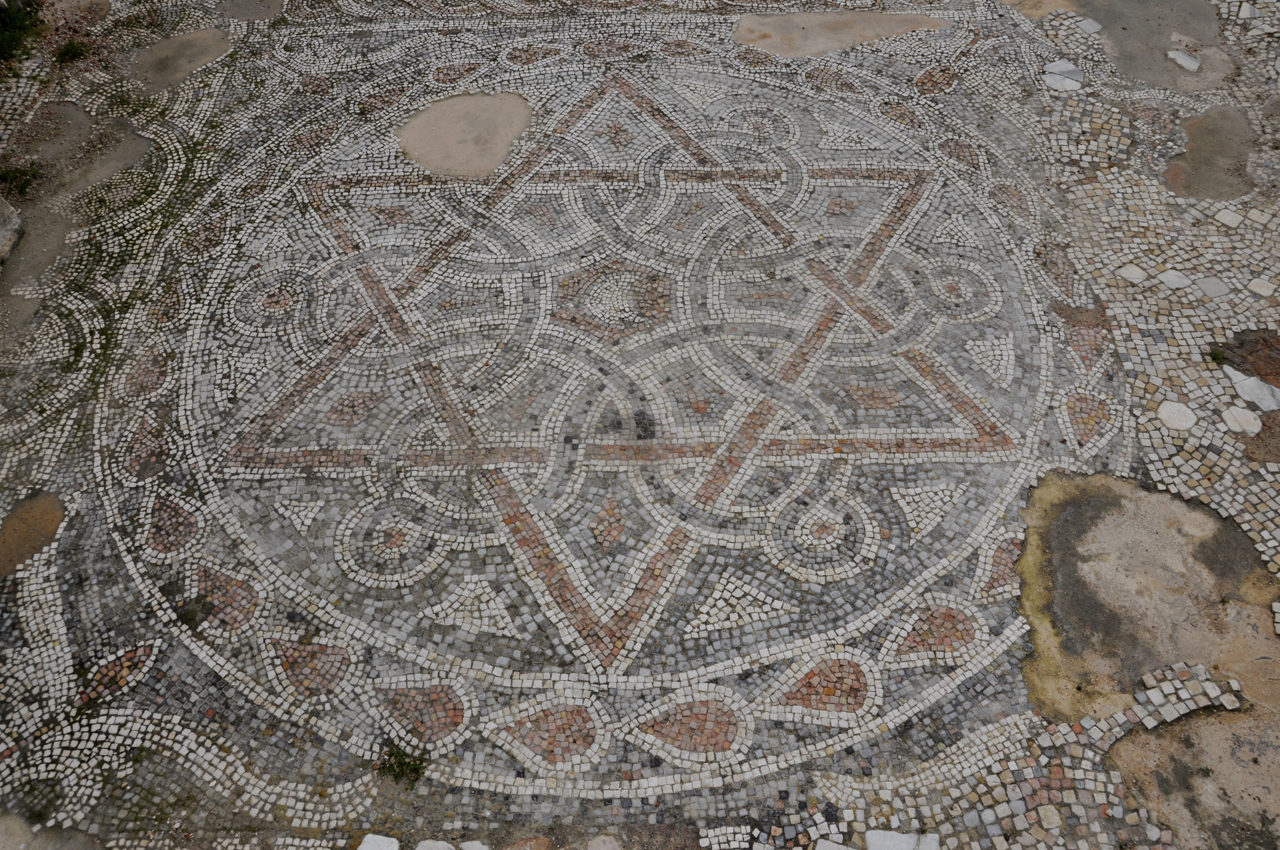
Unlike most Christian sites, the monastery was not damaged by the Islamic conquest of 638. However, it was severely damaged in the 659 earthquake – the ruins of the church that we see today are from after the earthquake, the mosaic floor is from the Byzantine period.

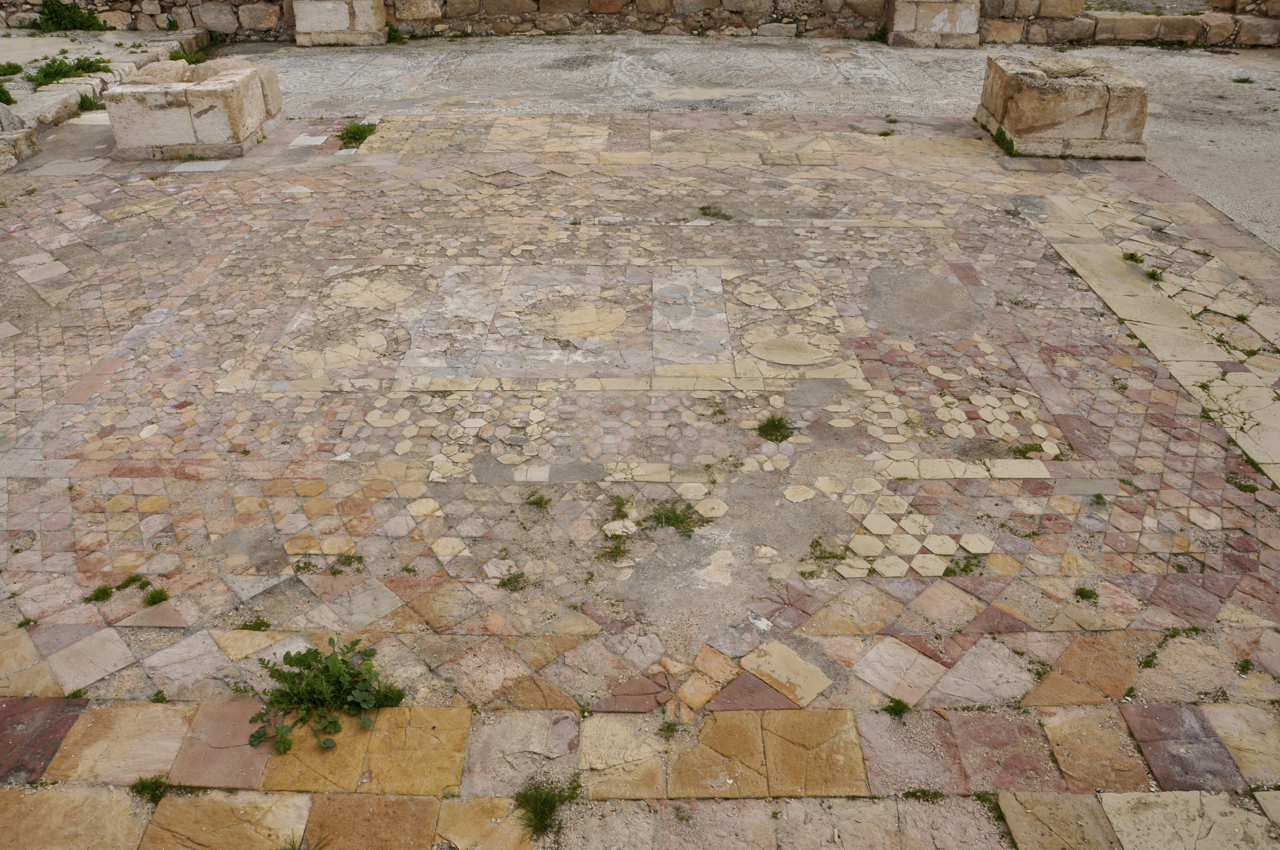
Mosaic floorThe monasteries in the Judean desert were frequently attacked during the Islamic period and in 809 the monastery was plundered and destroyed in the 12th century. The main arched gate on the northern wall and the eastern wall and the opus sectile floor in the church are from the Crusader period.

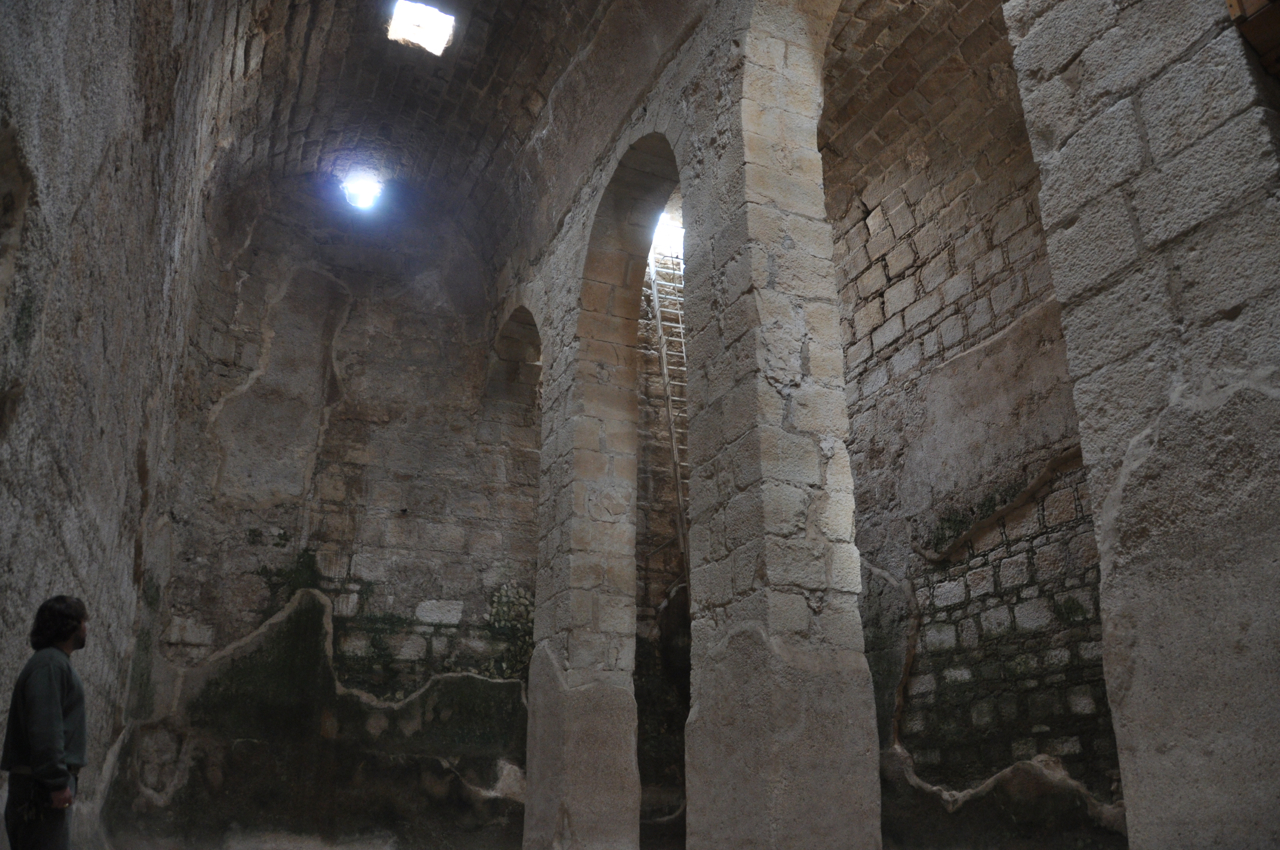
Crusader opus sectileThe other important aspect of the Judean desert monasteries are their water systems, for little rainfall falls in the region and water had to be accumulated or it would be impossible to live there. Four tremendous cisterns were discovered in the monastery. You can enter the largest one (12 meters by 18 meters and 12 meters deep that would hold 3000 cubic meters) which is outside the eastern wall. Channels bring water from runoff to a collecting pool and then to the covered cistern.

Large cistern Euthemius

Mar Saba, a Judean Desert Monastery

Jerusalem sits on the edge of the Judean desert which make exploring this area a great day trip. It’s a fun adventure to take a jeep and drive off road where all you see is a barren landscape and suddenly bump into camels or have a a cluster of buildings come into view over the hill. It’s also a great place for a photo shoot.


Christian monks came to the quiet of the Judean desert in the early 4th century identifying with Moses, Elijah, Jesus and others who spent time here. Mar Saba, who lived at Euthymius for 12 years before receiving permission to live alone in the desert, found the spring and caves in the Kidron valley. Some 15 years later, in 483CE he built a laura, a cluster of caves for hermits around the monastery, that bears his name to this day.

This is the largest monastery complex in the Judean desert, multiple buildings enclosed by a wall and tower for protection. He directed it for 50 years. At its peak it accommodated hundreds of monks, today there are about 20 monks who live there. Women are not allowed inside the monastery, the closest they can get is to view the complex from the Women’s Tower; interesting that meat and apples are also prohibited.

As a guide, I can take you to experience the desert and discover that isolated monastery in the Kidron valley.

For more information about Mar Saba, including photographs inside the compound see the entry at the excellent BibleWalks site http://www.biblewalks.com/sites/MarSaba.html

It’s worth combining a visit with other sites in the area, the monastery of St. George tucked into the cliff in Wadi Qelt, the monastery of Euthymius and Martyrius, in the midst of an Industrial park and housing project respectively, museum of mosaics at the Inn of the Good Samaritan and Qasr el Yahud, the site on the Jordan River where according to tradition John baptized Jesus.

Hiking Nahal Mikhmas

On Monday we drove out of Jerusalem on highway 437 past Pisgat Zeev to get to the starting point of our hike in the northern Judean desert. On the way, about 5km north of Jerusalem on the left along the watershed ridge at 839m above sea level is Gibeah (of Saul) or Givat Shaul usually pointed out as the location, Tel el-Ful, where King Hussein of Jordan began construction of his Royal Palace in the 1960s.

The site has a number of important Biblical/historical references:

• The Concubine of Gibeah, and the ensuing Battle of Gibeah between the Israelite tribes against Benjamin (Judges 19-21)

• Israel’s first king, Saul, reigned from Gibeah for 38 years (1 Samuel 8-31)

• Prophetic mention during the period of the Divided Kingdom (Hosea 5:8, 9:9, 10:9; Isaiah 10:29)

• The encampment of the 10th Roman Legion in their assault on Jerusalem in 70CE (Josephus, War of the Jews)

Just before we arrived at our destination on the right we passed another site, Qubur Bani Israel (Tombs of Children of Israel), 4 large narrow rectangular walled structures measuring 15 by 3 meters which rise from a rocky plateau overlooking Wadi Qelt. The megaliths still have two or three rows of gigantic, rough-hewn stones carefully in place. The name refers to the site being an ancient Jewish burial ground in the territory of Benjamin; archaeologists estimate the date as 2000BCE. A theory proposed by Noga Reuveni (who also established the biblical gardens of Neot Kedumim) is that in fact this site marks the tomb of Rachel who was buried “on the road to Efrat, now Bet Lehem (Bereishit 35:19)”. There is a city Farah settled near the spring Ein Farah that is mentioned among the cities of Binyamin (Joshua 18:23) and it is not unreasonable to posit that it was alternatively called Efrat (same Hebrew root). Since the city was in an area of wheat and barley, it was later renamed (like other cities) Bet Lehem. This also matches the description to Saul before his return home to Gibeah.

When you leave me today, you will meet two men near the tomb of Rachel in the territory of Benjamin (1 Sam. 10:2)

This should have been a clue that this was not going to be just a nature hike.
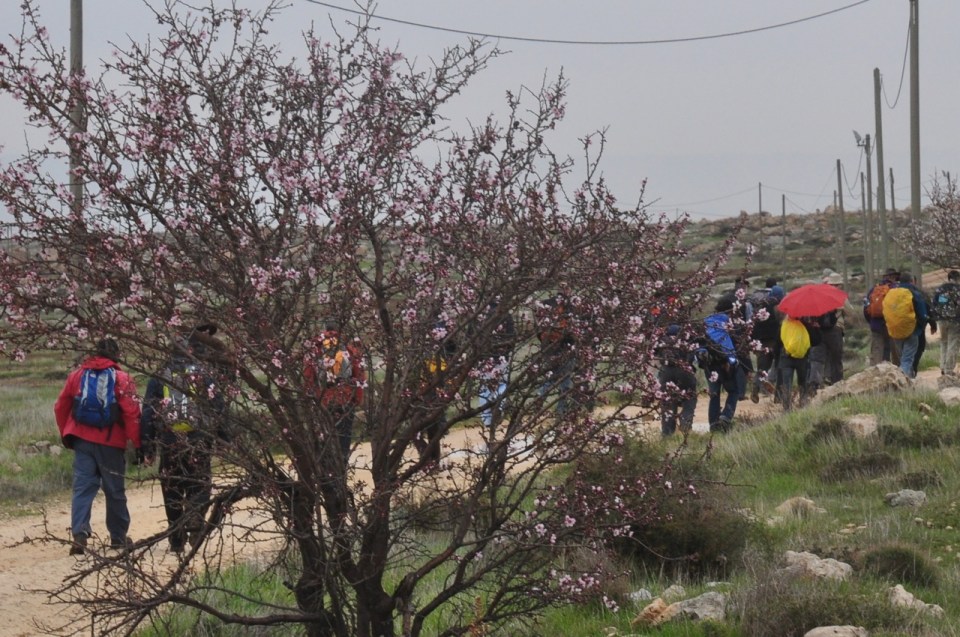
We started hiking from Geva Binyamin, also called Adam. Because the area is in Judea and Shomron/the West Bank we had to arrange clearance with the army and get the security officer to open the gate from the settlement. Geva Binyamin was founded in 1984 and in 2007 had a population of 3500 people. It sits between the Arab towns of Jabah and Mikhmus that recall the towns of Geva and Mikhmas mentioned in the Bible.

Open a TaNaKh and read 1 Samuel, chapters 13 and 14 for the account of the battle between King Saul and his son Jonathan against the Philistines. The Israelite forces are camped at Geva and the Philistines are on Mikhmas with the wadi separating them. Jonathan sneaks out of the camp at night and hidden by the deep walls of the canyon makes his way to the Philistine garrison… We were standing on the ridge reading the account of the battle, overlooking the area where it took place.

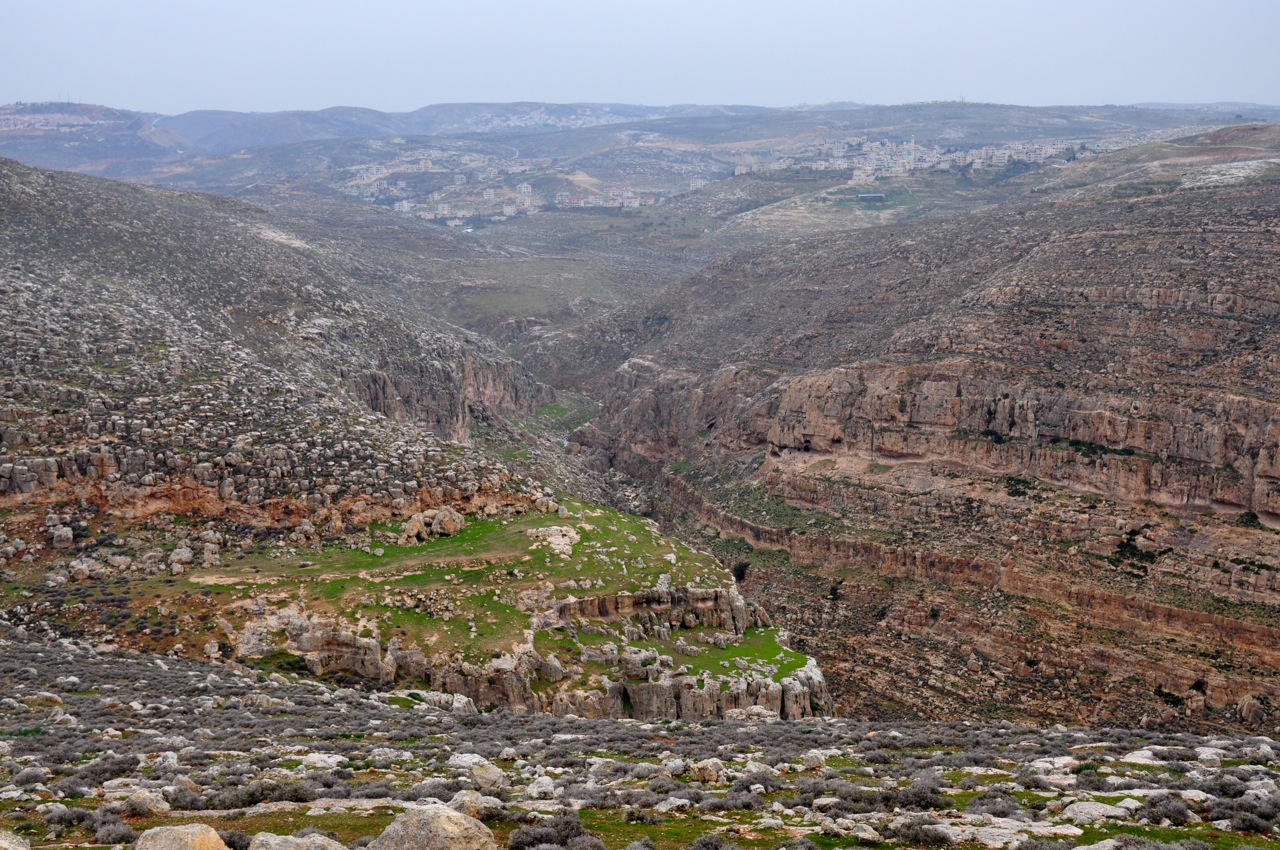
The black trail follows the ridge above Nahal Mikhmas. Hidden among a pile of rocks is the spring of Ein Suweinit. Many caves can be seen and we stopped at two of them, El-Jai is one of the largest in the Shomron.

From there we descended the steep cliff to the nahal, actually quite challenging because of the slippery rocks and mud.

Because of the rains we saw two flowers, the tiny purple Grape Hyacinth, in Hebrew, Kadan and bunches of white Desert Bulbs, Bezalziya.

Dark Grape Hyacinth (Muscari commutatum), also bulb, cluster of tiny flowers like jugs that hang upside down to protect the pollen from rain.

A rosette of grey-green leaves emerges before the flowers, 6 petals with a stamen on each, blooms for 5-6 weeks which is long for bulbs, grows among rocks to protect the bulbs from being dug up by porcupines and other animals.
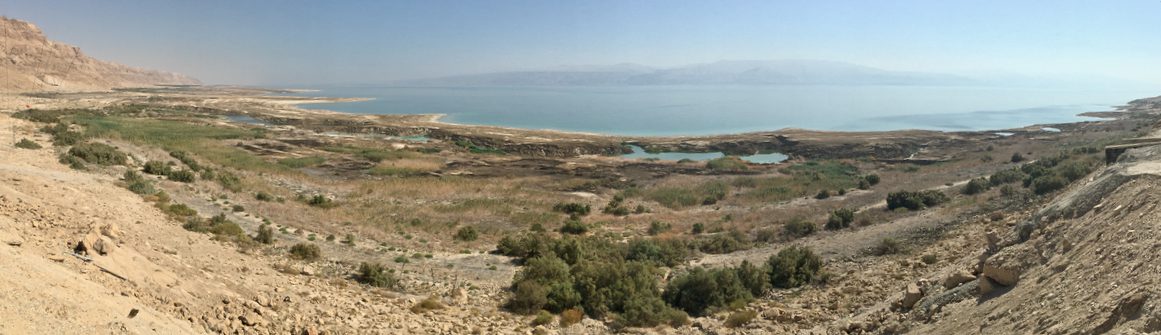
Where Nahal Mikhmas joins Wadi Qelt the trail changes to red and we followed it to the left/east to Ein Mabu’a/Ein Fawwar. This spring is an artesian or karstic fountain, which flows from a cave into a round concrete pool built by the British in the 1920s. Until the Six Day War, the water was pumped to East Jerusalem, but today it is no longer used. In the Second Temple period an aqueduct brought water to the fortress at Cypros and there is a mosaic floor from a Byzantine church. If mosaics interest you then visit the nearby museum at Inn of the Good Samaritan.
Hiking Israel

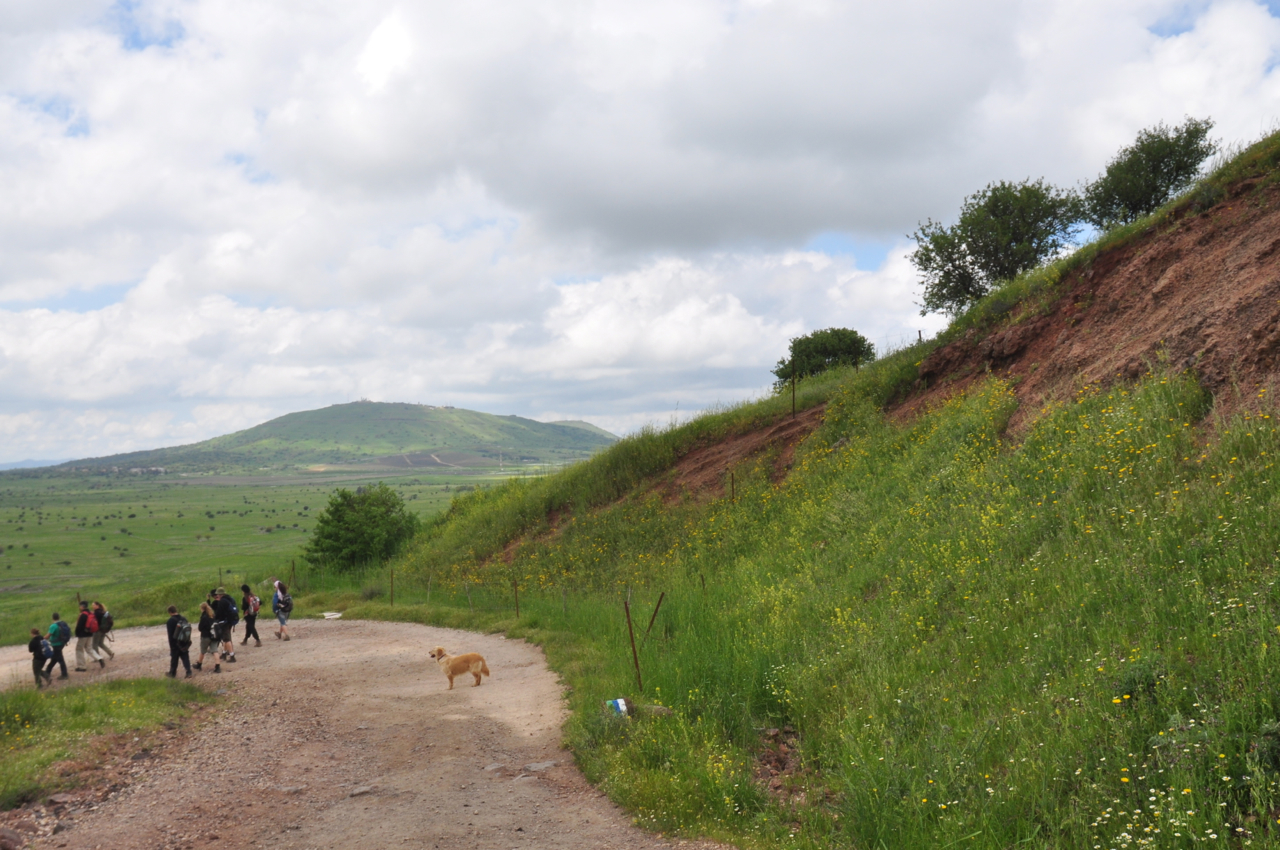
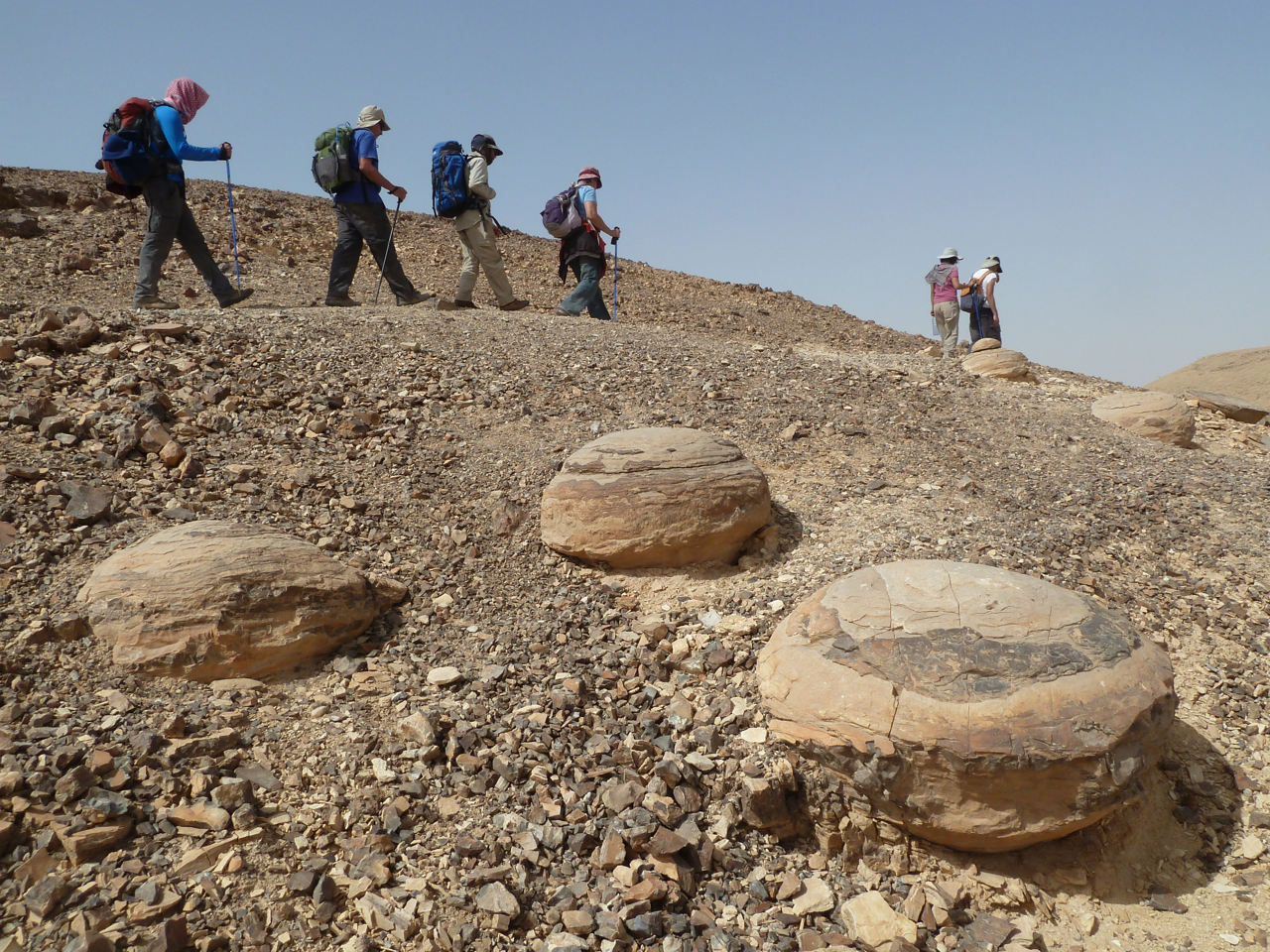
Hiking throughout Israel is a national pastime – youth groups, the scouts, the army connect to the Biblical land with their feet. School classes have a tiyul shnati, an annual hike. Many young people who have just finished their army service reconnect with friends by hiking together on Shvil Yisrael, the Israel Trail, a 945 km trail that crisscrosses Israel, from Dan in the north to Eilat in the south. There is also a Golan trail, a Jerusalem trail, the Jesus/Gospel trail, a hike Sea to Sea from the Mediterranean to the Sea of Galilee. If you want to really experience and understand Israel you should take to the trails. Hiking takes you off the beaten track and besides the beauty of nature you will often come across archaeological ruins from thousands of years ago. If you don’t have a lot of experience hiking in Israel it’s recommended you hire a guide. Besides guiding you on the trail I can suggest what to bring, help with logistics, transportation and explain the nature and history and archaeology on the hike.

Israel is a small country which means you don’t have to travel far to start your hike. But although small in size there is incredible diversity so there are many different hiking experiences. Living in Jerusalem I know some hikes that are very close by, for example shvil hamayanot a trail that takes you to natural springs and pools that are particular to the hills of Jerusalem. A hike in Nahal Katlav (a nahal or wadi is a dry stream or river bed) in December is an opportunity to see wildflowers like crocus blooming after the first winter rains.

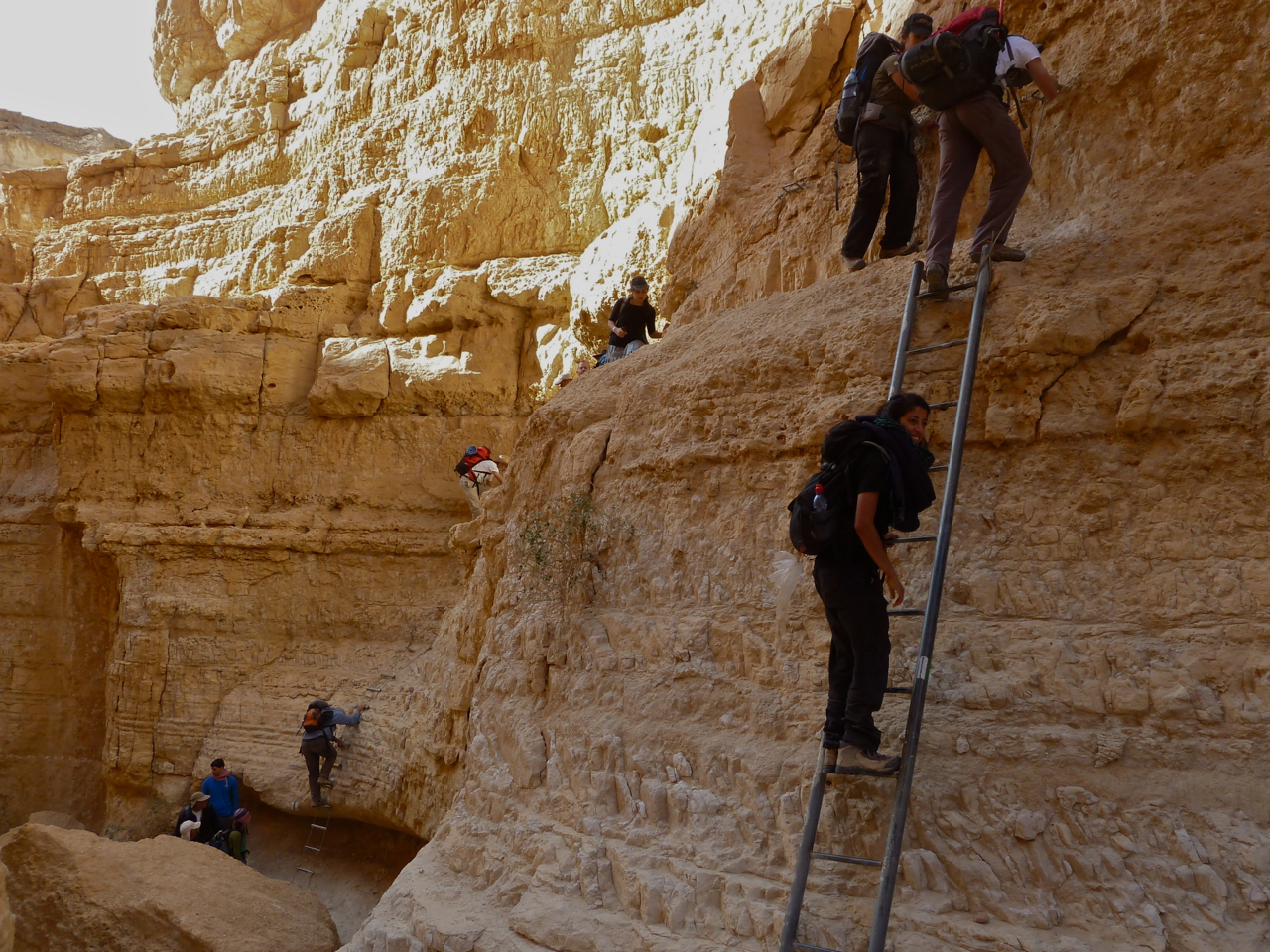
Jerusalem is a great base for day hikes because of its location in the hills and on the edge of the Judean desert and only a half hour drive to the northern edge of the Dead Sea. For starters I’d recommend hiking Nahal Og, desert landscape, narrow canyon, iron rung ladders – a really classic Israeli hike. Nearby is Wadi Qelt with a hike that takes you to a monastery hanging on the cliff. There are two wadis at the Ein Gedi reserve, Nahal David is the one most people hike and Nahal Arugot; you can choose trails, from 20 minute family hikes to challenging 4-6 hour hikes that will take you to pools and waterfalls in the middle of the desert.

If you are planning to be farther south there is hiking at Mount Sodom, a salt mountain or try a night hike by the light of the full moon in Nahal Peratzim. The Negev south of Beersheva is another desert with its canyons, mountains and springs to explore. Unique to the Negev is a geological phenomenon called the makhtesh or erosion crater that should not be missed. Probably the most picturesque hike in Israel is a short hike that is appropriate for the whole family not far from Eilat called the Red Canyon where erosion has sculpted the red and orange sandstone cliffs.


In the north of Israel there is a hike in the Mount Arbel reserve, where you descend the steep cliffs and then climb back up with great views of the Sea of Galilee and the Golan. Just a little farther north is the Nahal Yehudia reserve with a whole variety of hikes, Meshushim (hexagonal basalt) pool, Nahal Zavitan, Gamla.

For good hikers there are two hikes that are legendary, in the north it is Nahal Yehudia and in the south Nahal Dragot. If you want to test your mettle against the real Israeli experience, these are the hikes. For recommendation on some dozen other hikes, click on this link https://israeltours.wordpress.com/category/hiking/