Category Archives: Wildflowers

Spring wildflowers


From mid-February the country is covered with a mantle of wildflowers. Though it may vary from year to year, this is when

“the winter is past, the rain is over and gone, the wildflowers appear on the earth…” Song of Songs.

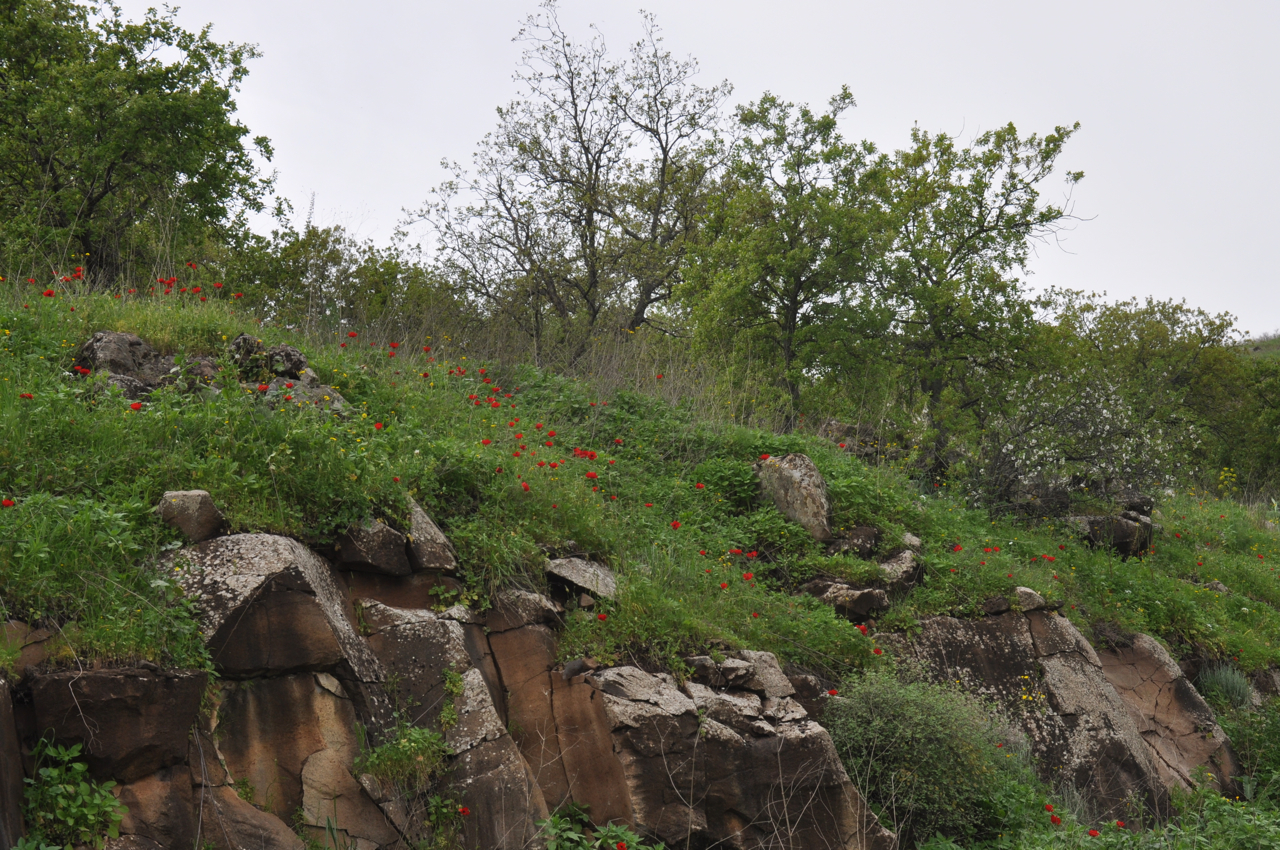
Tradition marks the beginning of spring in Israel with the flowering of the almond tree (shkedia in Hebrew) at Tu B’Shvat. One of the first flowers to bloom is the red anemone (anemone coronaria from Greek Άνεμος ‘wind’, in Hebrew kalaniot), a perennial in the buttercup (Ranunculaceae) family. Don’t confuse the anemone with red poppies (of the genera Papaver) that bloom later in the season

  • anemone has a variable number of petals but never less than 5; poppy has 4 petals
  • anemone floral bud is cupped by 3 dissected leaflets that remains; poppy has 2 that drop away

On a tour of the Golan last week we saw red anemones growing on the hill as we walked down into the wadi to Breikhat Meshushim (Hexagonal Pool).
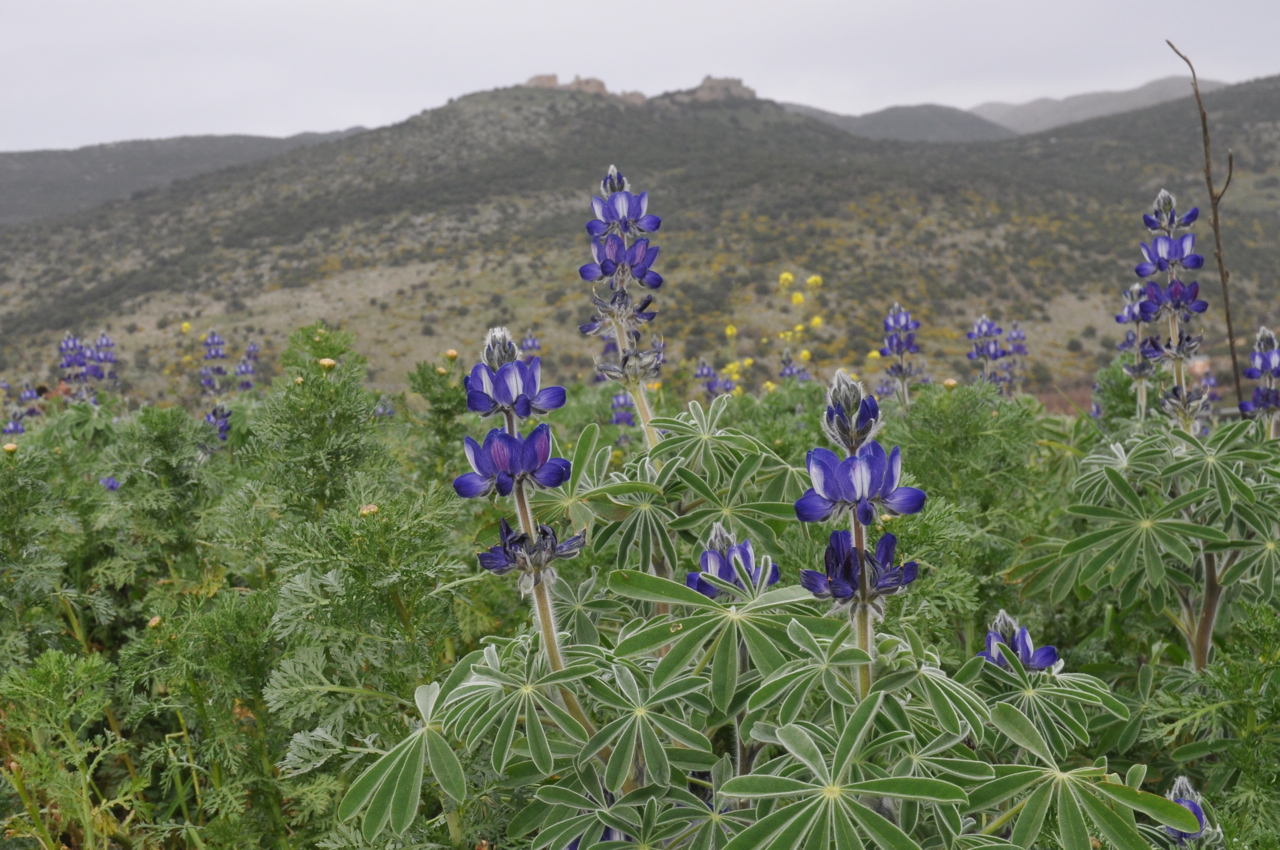
From there we continued north on the Golan to Saar Falls where I found this field of lupines with a view of Nimrod fortress in the background. The legume seeds of the lupine were popular with the Romans who spread the plant’s cultivation throughout the Roman Empire. Today there are 2 lupins that are indigenous to Israel, the blue Lupinus pilosus and white-grey Lupinus palaestinus. Lupins can fix nitrogen from the atmosphere into ammonia via a rhizobium-root nodule symbiosis, fertilizing the soil for other plants. This adaption allows lupins to grow in poor quality soil and in fact, improve soil quality so that other plants can grow.

On the same trip I came across red tulips (Tulipa montana) a member of the lily family growing on the hill overlooking the Sea of Galilee above Ein Gev.
Wildflowers, after the rain

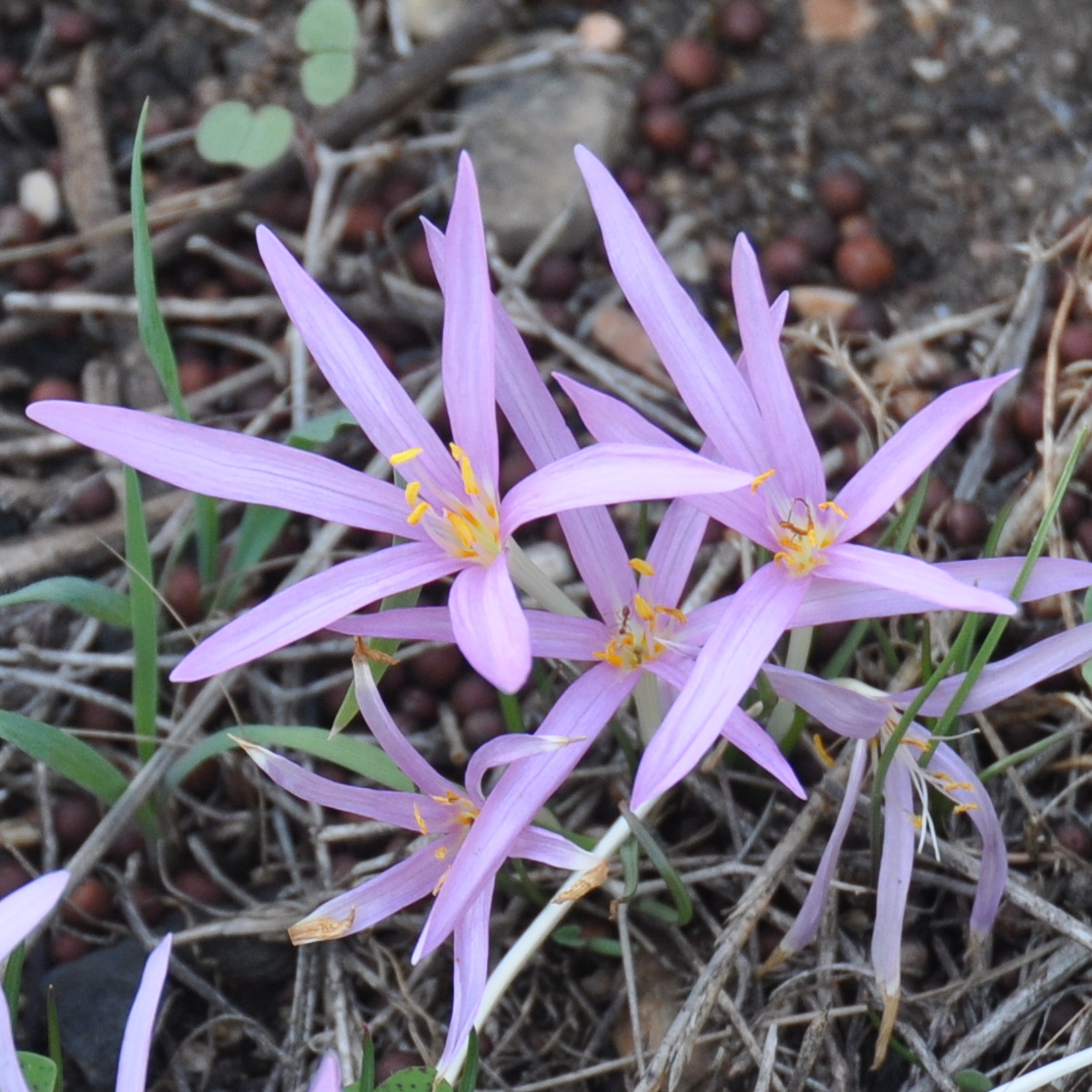
Shortly after the first autumn rains, a perennial called Steven’s meadow saffron (Colchicum steveni, סתונית היורה), with small, delicate pink flowers appears in the fields and woods. I don’t know who Steven is but in Hebrew some clever person called it Sitvanit from Stav meaning autumn and HaYoreh, the first rain.

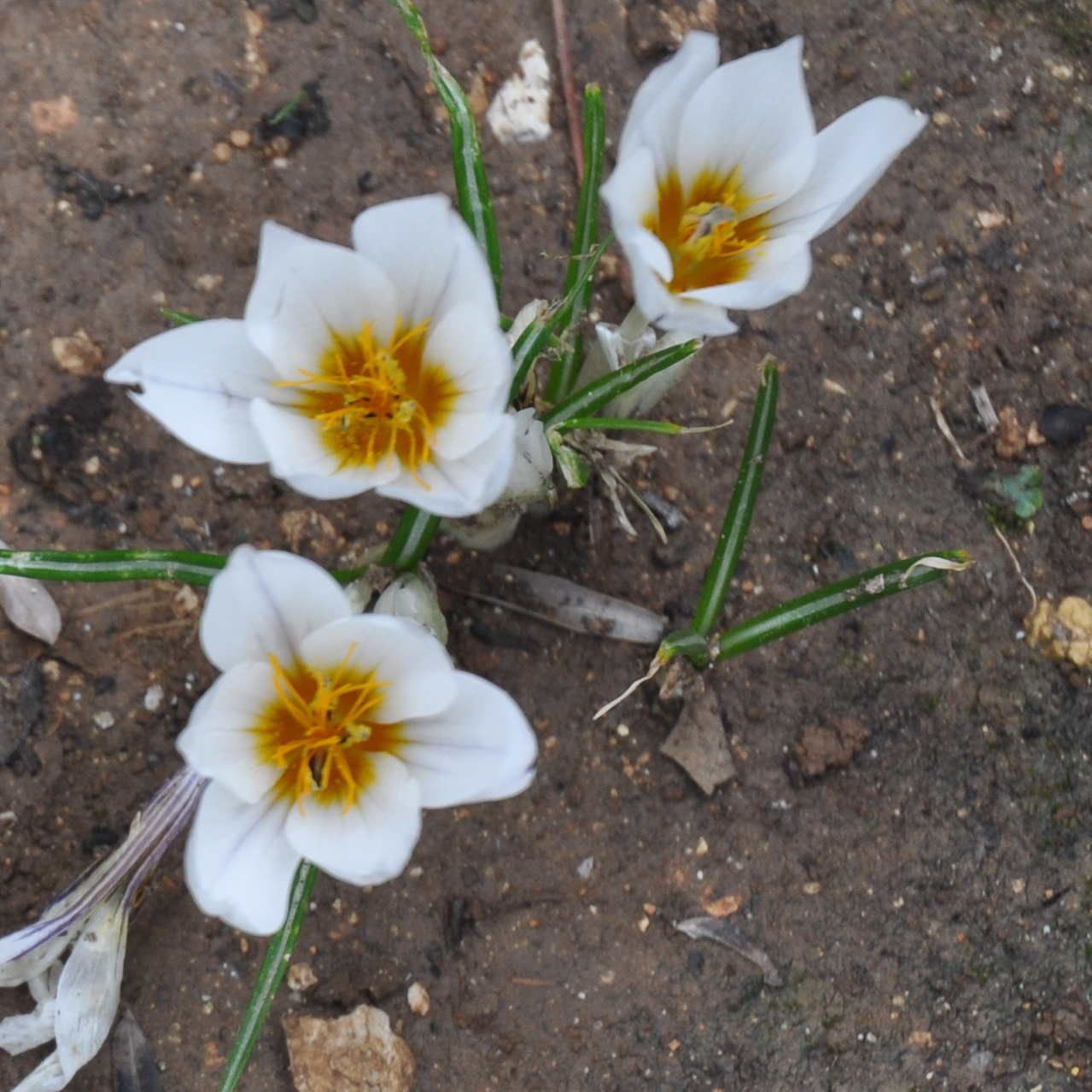
Another flower that comes up at this time is crocus. These flowers are  Winter crocus (Crocus hyemalis, כרכם חרפי) and I saw bunches of them while hiking in Nahal Katlav just south of Jerusalem.

On the Golan, specifically Nahal Yehudia, I saw some narcissus (Narcissus tazetta, נרקיס) with white petals and yellow crowns and cyclamen (Cyclamen persicum, רקפת) already in bloom. I saw the leaves of lupines (Lupinus varius, תורמוס ההרים) just pushing out of the earth.

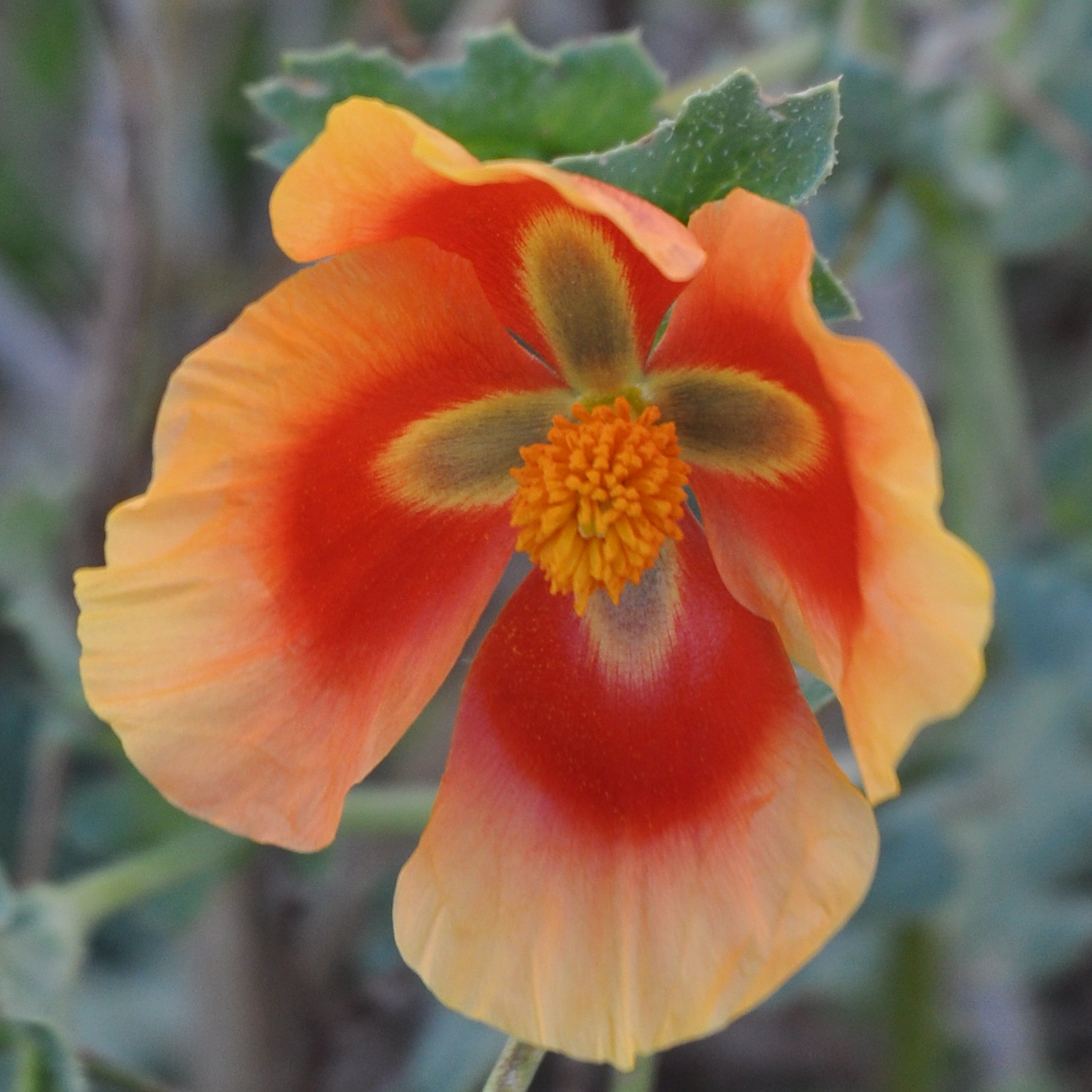
I was hiking under the ski lifts on the Hermon and found this flower, which I learned from my very knowledgeable colleague Zvi Bessin is Lotus Sweetjuice (Glaucium leiocarpum, פרגה קירחת). This perennial grows only in the area of the Hermon and is left over from the summer.

Also check out the post Wildflowers, before the rain.

Wildflowers, before the rain

One of the things about taking a tour of Israel is that you get to see a lot in a small amount of space. Because Israel is located on the land bridge that connects Europe, Asia and Africa it has some of the best features of each. Although it only extends from the Mediterranean Sea to the Jordan River in the Great African Rift Valley and from the Red Sea to mountains in the north it has a diversity of climates and habitats. These unique conditions are the main cause for the rich diversity of Israeli flora, more than 2500 species (compared to 1500 in the British Isles for example which is 10 times the size).

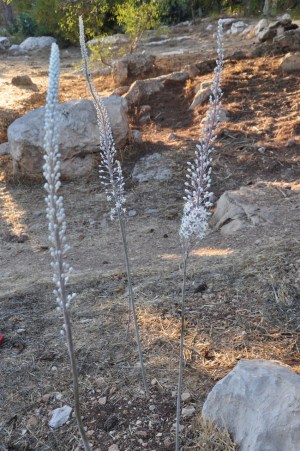
The Sea Squill (Urginea maritima, חצב מצוי) is a perennial of the lily family with a large poisonous bulb. The squill is one of ten species of plants called geophytes which bloom before the rains in Israel, in the driest part of the year and are a harbinger of winter. You’ll probably find the tall spikes of squill flowering by mid September. I saw some in Jerusalem while running along the tayelet, at the Museum HaTeva (Nature museum) and while hiking in the cliffs above Qumran.


You also won’t see the bright yellow Sternbergia (Sternbergia clusiana, חלמונית, from the same root as yolk of an egg) until just before the first autumn rains – don’t confuse them with the saffron and crocus that come after the first rains. Sternbergia belong to the daffodil family. This image was captured in November in the Yatir forest near Arad. On a hike we found Sternbergia growing in the wadi below Maale Rehavam near Herodium. I was touring in Ramat HaNegev and learned that there are Sternbergia in bloom in the wadi behind the Nahal Boker family farm. Moshe Zohar who lives there told me that this is the southern most point that they grow. I learned from a colleague who did a tour in the Golan that there are Sternbergia blooming below Har Hozek (conceivably the most northern point). If you are interested in touring Israel including hikes to see and/or photograph wildflowers please contact me.

You can check out these two excellent websites, that give you a lot of information about wildflowers in Israel:

http://www.wildflowers.co.il/english/

http://www.flowersinisrael.com/

Yatir forest

In 1964 the Jewish National Fund planted tens of thousands of trees in the barren lands just south of the Hebron hills on the edge of the Negev. Today Yatir forest is the largest of Israel’s planted forests, including pine trees, carob and pistachio. In the spring, this is one of the areas where you can see the yellow, crocus-like Sternbergia flower blooming (another place is the wadi below Maale Rehavam, near the site of Herodium).

dscn2506

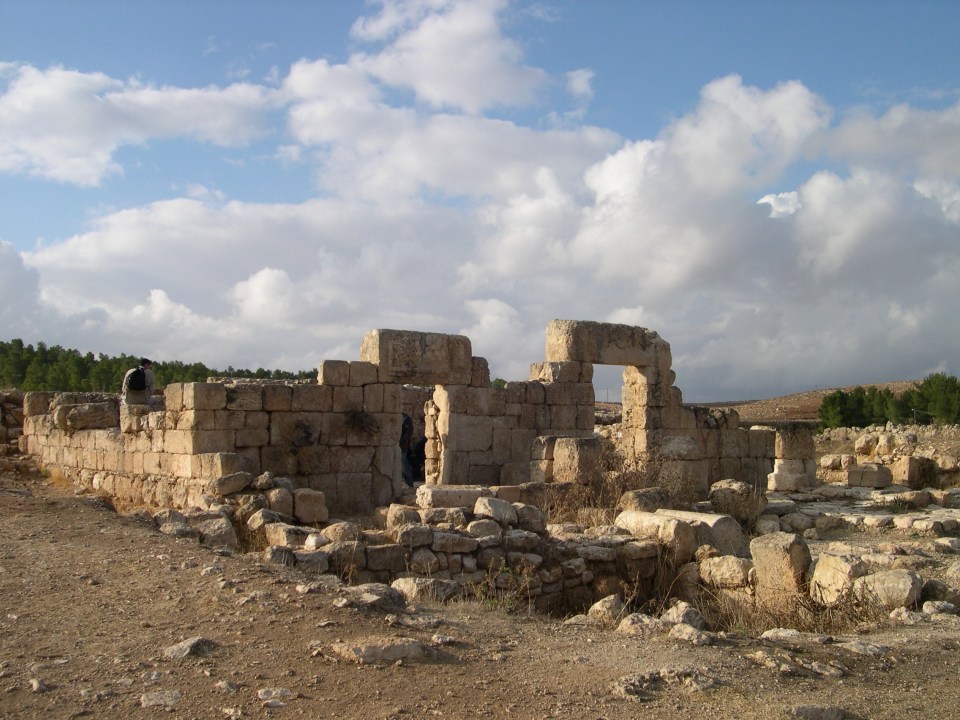
The area includes Jewish and Beduin settlements, a fine winery, vineyards, orchards, agricultural fittings from the 3rd and 4th C and the ruins of a synagogue at Hurvat Anime.
dscn2499

Yatir is just one of the JNF forests and recreational areas. Check their website at
http://www.kkl.org.il/eng/tourism-and-recreation/forests-and-parks/yatir-forest.aspx

Along the trails in the Yatir forest you will see ancient wine presses, cisterns and olive presses, evidence of settlement and wine and oil production 2500 years ago. Tel Arad, another archaeological site that goes back to the Chalcolithic period is nearby. On the upper hill is the only Judean temple discovered by archaeologists to date. The incense altars and two “standing stones” may have been dedicated to Yahweh and Asherah. The Yatir winery sits at the foot of Tel Arad and tours of the winery should be arranged in advance.

Related articles

Hike above Bab el Wad

We’ve just passed Tu B’Shvat, the New Year of the Trees – the almond trees are blossoming in the hills of Jerusalem. There’s a special hike in the Masger reserve, overlooking the road to Jerusalem above Bab el Wad, the gorge that marks the entrance to the hills that leads to the city. We should remember that in 1948, the convoys of trucks carrying food for the inhabitants of Jerusalem were attacked along this road and Israelis lost their lives. Just like in the Haim Gouri poem, Bab el Wad, the cyclamen and anemones were blooming.

יום אביב יבוא ורקפות תפרחנה,
אודם כלנית בהר ובמורד.

באב אל וואד
לנצח זכור נא את שמותינו,
באב אל וואד בדרך אל העיר.

A spring day will come, the cyclamens will bloom,
Red of anemone on the mountain and on the slope.

Bab-el-wad,
Do remember our names forever,
Bab-el-wad on the way to the City.
img_1975

To hear Shlomo Gronich singing Bab el Wad and see some film footage from the 1948 War of Independence check out this URL on YouTube.