Category Archives: Water

Negev desert

The Negev desert, shaped like a 4700 square mile inverted triangle in the south of Israel, makes up more than half of the country’s land area. I can arrange to make a visit to the Negev part of your itinerary, you have to experience the desert to understand its importance.

Geographically the Negev can be divided into 5 areas: the northern, western and central Negev, the high plateau and the Arava Valley. This article focuses on the high plateau area, Ramat HaNegev (Negev Heights). The plateau stands between 370 metres and 520 metres above sea level and has extreme temperatures in summer and winter and significant differences in temperature between day and night. Even though the area gets only 100 mm of rainfall per year and the soil is poor and quite salty, Israel is successfully growing olives, pomegranates, pistachios and grapes for wine.

DSC_0042

Here are some places to add to your itinerary as you explore Ramat HaNegev.

  • Kibbutz Revivim is growing 5 varieties of olives using brackish water and selling the olives and olive oil in an upmarket boutique dedicated to their products in Tel Aviv.
DSC_0017

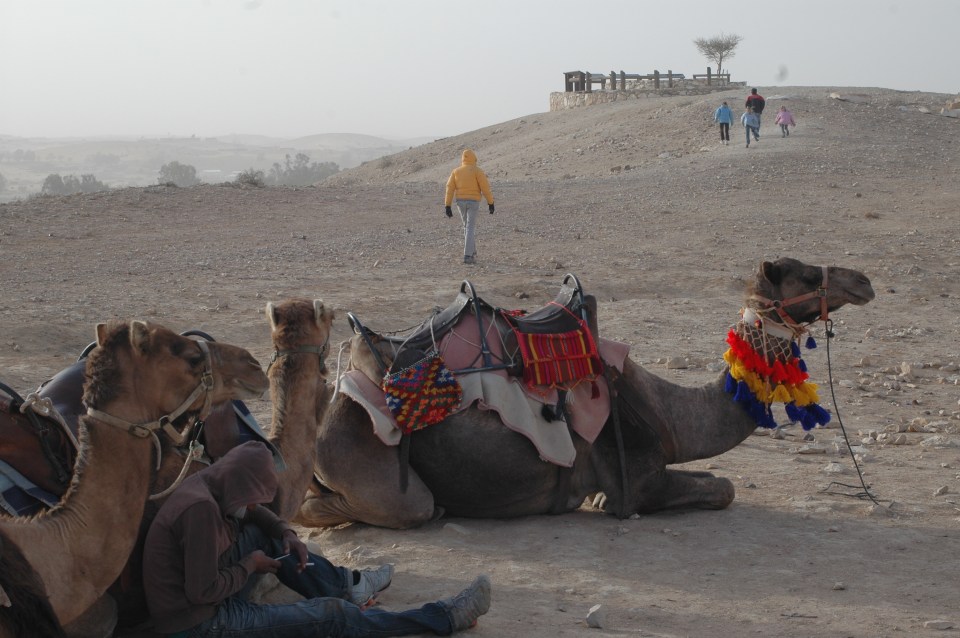
  • Park Golda includes a lake and picnic tables to eat your lunch or for an unforgettable desert experience, try Beduin hospitality in a black goat’s hair tent followed by a camel ride.
IMG_0931

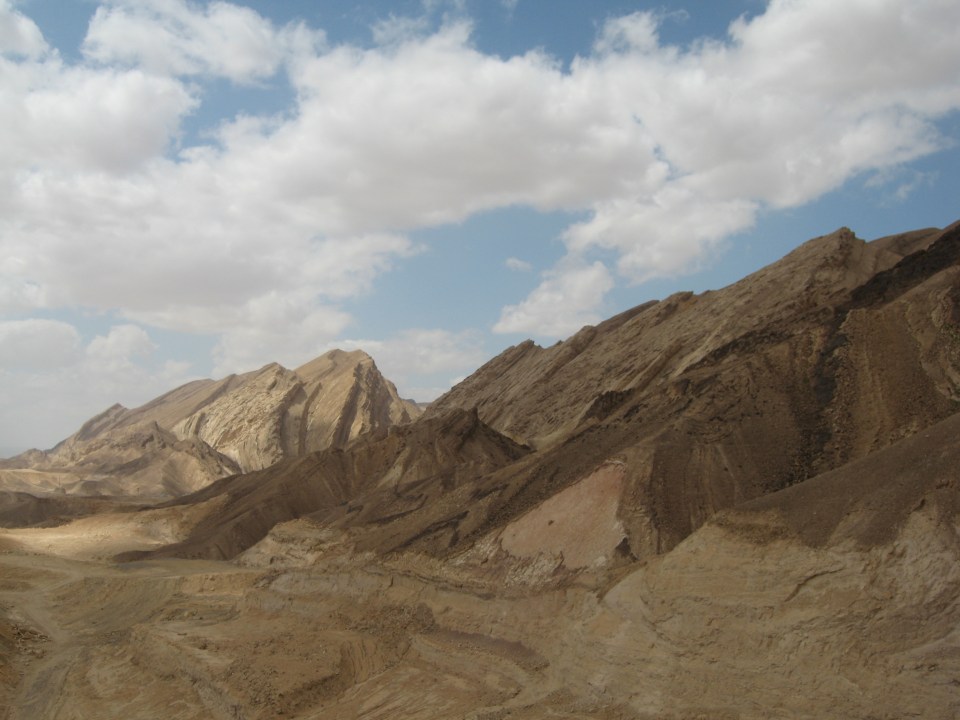
  • The Large Makhtesh is one of 3 craters in the region, a unique formation to the Negev, where the inside of a mountain is eroded by water, leaving the outer shell.
  • Visit the tzrif on Kibbutz Sde Boker to get a glimpse of how Ben-Gurion and Paula lived. The Ben-Gurion Institute, a research facility for the study and the dissemination of his writings, offers visitors a multi-media program about the man and his vision.
  • You can visit a string of family farms along route <40> for wine and cheese tasting and even sleep over in one of their cabins under the desert stars. On farms that are growing grapes and making wine, the vines have been planted on the same 1500 year old terraces that were prepared by the Nabateans and take advantage of runoff from the winter rains. These farms are also a symbol of Israel’s pioneering spirit in the 21st century, composting their waste, recycling their grey water and generating electricity using solar photovoltaic panels.

DSC_0033

  • Hike into the canyon at the Ein Avdat National Park with springs, pools and waterfalls, an oasis in the desert or from the Roman bath house (below Avdat) supplied with water drawn from a well tunneled 70 meters through bedrock hike north along the Israel Trail to the Ein Eikev spring that flows year round.
  • Visit the remains of the Nabatean city of Avdat which was probably the regional capital. Located at the crossroads that join Petra in Trans-Jordan to Eilat and to Gaza, Avdat controlled the passage of the caravans from India and Arabia. Conquered in 106 CE by the Roman Emperor Trajan, it lost its importance when a road was built between Eilat and Damascus. Avdat adjusted by adopting agriculture, particularly the production of wine, as its means of subsistence. Numerous terraced farms and water channels were built throughout the region in order to collect enough run-off from winter rains to support agriculture in the hyper arid zone of the Negev. At least five wine presses dated to the Byzantine period have been found at the site showing us how important wine-making was in this region. In the Byzantine period (5th and 6th century) a citadel and a monastery with two churches were built on the acropolis of Avdat on the ruins of earlier pagan temples. The town was totally destroyed by a local earthquake in the early seventh century and was never reinhabited.
Ein Gedi

Ein Gedi-waterfalls and pools

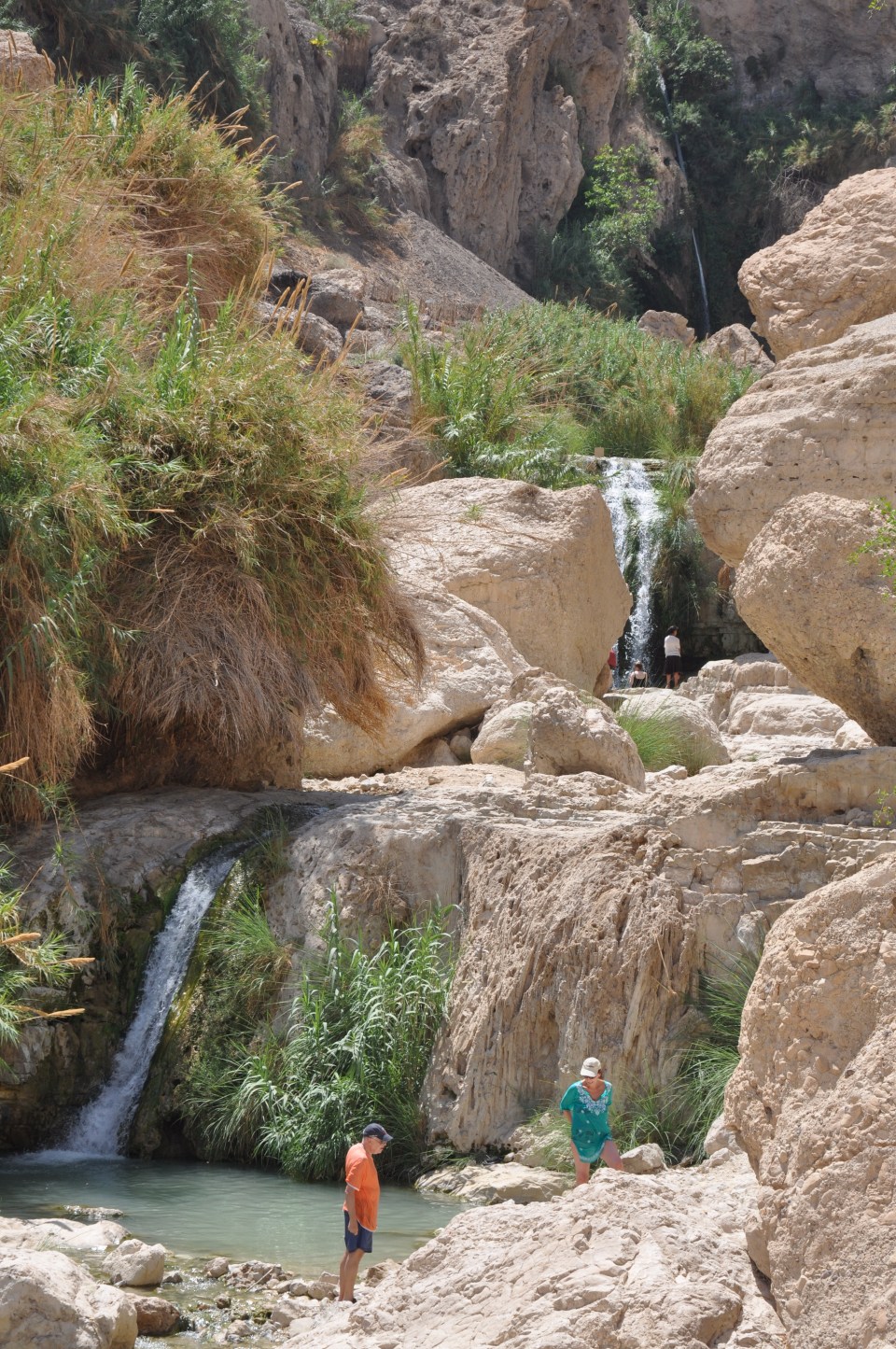
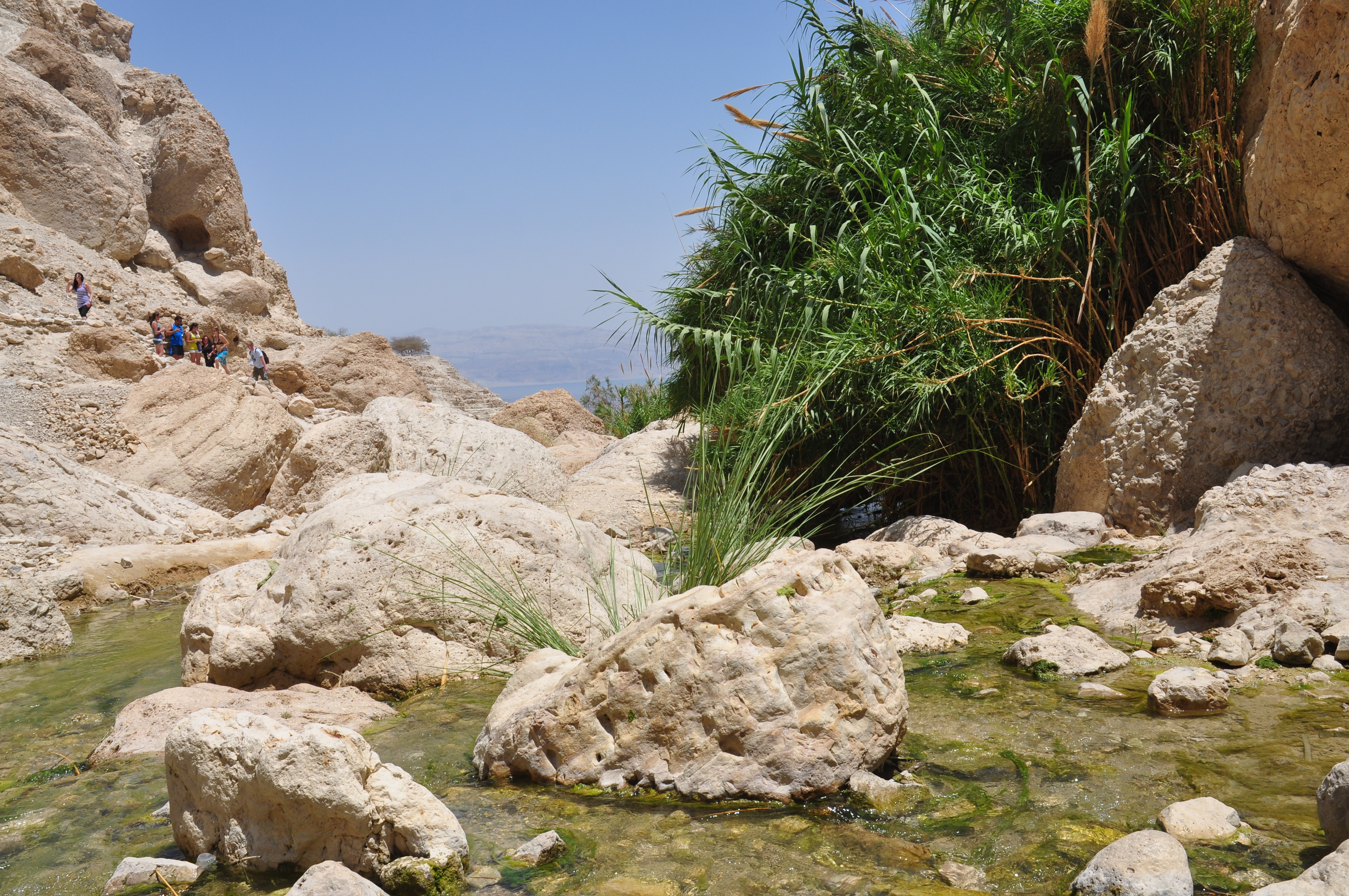
Ein Gedi (literally Spring of the Goats, refers to Nubian Ibex that come to the spring to drink) is an oasis in the Judean desert along the western shore of the Dead Sea. Here are two hikes (each about 5 km) in the Ein Gedi reserve that are perfect for families, Nahal David and Nahal Arugot.
On entering the reserve follow the marked the path and after about 15 minutes of easy walking we’ll reach the first waterfall, Mapal Shulamit that cascades 30 meters down the rock to a pool below. After a refreshing dip we’ll continue to a fork in the trail, we’ll take the steeper one on the right (the other path would take us back to the entrance) to the Shulamit spring and from there above the wadi to the Dudim cave. Retracing our steps we’ll continue to the Ein Gedi spring and beside it the flour mill. From there we can walk to the ruins of the Chalcolithic temple (3500 BCE), one of the oldest remains of human settlement in the Judean desert. We’ll descend through a cranny along a dry canyon to discover a 50 meter high waterfall and a great view of Nahal David and the Dead Sea beyond.

Ein Gedi-Nahal DavidAccording to the Roman historian Pliny the Elder the area of Ein Gedi was settled during the Second Temple period by a Jewish ascetic sect called the Essenes. The archaeological evidence uncovered by Hirschfeld suggests that they lived   near the spring where he found more than 20 tiny stone cells and two pools, one for irrigation and one a miqve or ritual bath. Pottery shards date it to the first century BCE.

The second hike starts from Tel Goren along the Nahal Arugot river bed past acacia trees and salvadora to a large pool used for irrigation of crops like balsam; the pool was filled by a channel that brought runoff from the wadi. Continuing we will pass reeds, maidenhead ferns, willow and poplar; we may see a rare orchid called Ben Horesh. A little farther the wadi narrows to a steep walled canyon at whose end is a waterfall and pool.
Excavations at Tel Goren by Mazar of the Hebrew University in  the 1960s show that the site was settled in the Israelite period and functioned as a royal estate for growing dates of the now extinct Judean palm Phoenix dactylifera, considered uniquely medicinal. Balsam was grown for the production of perfume (in Hebrew, afarsimon).
The Romans were interested in the production of balsam perfume; Mark Anthony confiscated the groves from Herod and gave them to Cleopatra. After their deaths, Herod was able to lease them back. During the Great Revolt, the Jews uprooted the groves so they would not fall into the hands of the Romans.
Excavations have revealed a small Jewish village and a synagogue from the 4th century with a beautiful mosaic floor. Written in Hebrew and Aramaic,  inscriptions list the signs of the zodaic and months of the year (later displayed graphically in mosaic floors in synagogues in Bet Alpha and Tiberius) and the expression “Peace unto Israel” (also found in the ancient synagogue in Jericho) and a dire warning at the end: “whoever reveals the secret of the town to the Gentiles – He whose eyes range through the whole earth and who sees hiddens things, He will set his face on that man and on his seed and will uproot him from under the heavens.” The secret seems to be the production of perfume from balsam.

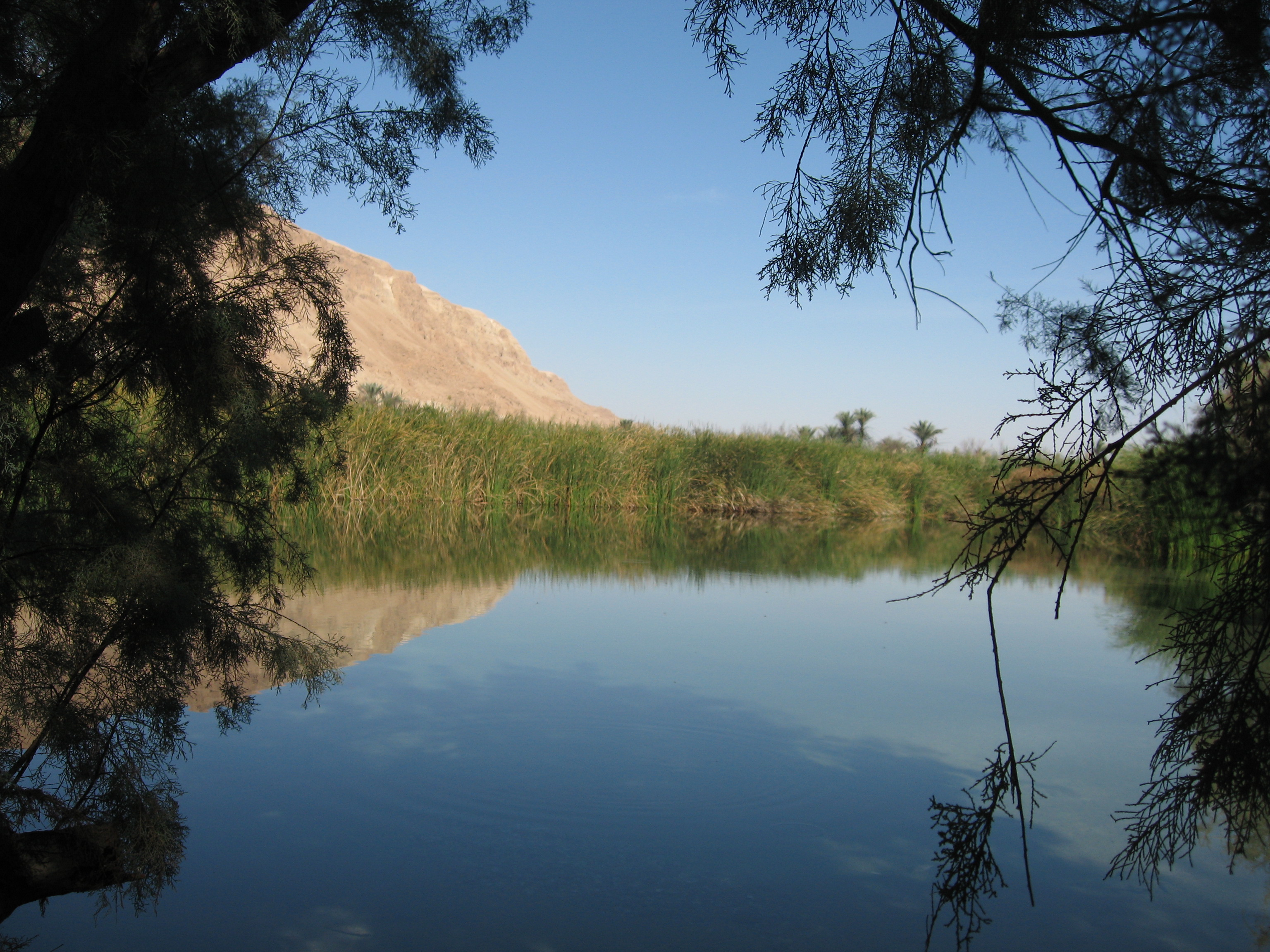
En Feshka pondThe other natural source of fresh water in the Judean desert is Ein Feshka 30 km to the north of Ein Gedi. The lowest nature reserve in the world consists of 3 parts of which one is closed to visitors except research scientists who are studying the desert. The public part includes a small archaeological site from the Second Temple period and pools of fresh water, picnic tables and facilities for the enjoyment of visitors. The closed reserve is 1500 dunams (370 acres) that can only be visited with an authorized guide like me. It’s incredible to find a large freshwater pond with fish, shaded by trees in the middle of the desert next to the Dead Sea.

Israel with kids

Israel is a great place to visit with kids. The country is small but varied. One day you can be bumping along in a jeep on the Golan Heights with a view into Syria and hear the stories of Israel’s capture of the area during the Six Day War in 1967. The next day you can be riding on a camel across the sands in the Negev, sleeping in a Beduin tent or under the stars. On the Mediterranean coast, in Akko there is a Crusader fortress that was buried in sand by Al Jazar in order to build his citadel that we can explore. At Masada there is a Herodian fortress in the desert later used by Zealots in the Great Revolt against the Romans. There is an opportunity to climb through caves more than two thousand years old, an experience out of “Raiders of the Lost Ark”. In Jerusalem you can walk around the Old City on the ramparts from the time of Suleiman the Magnificent, walk on paving stones that go back to Roman times and even the Second Temple period or walk underground along the length of the Western Wall.

Check out this article by Nancy Better in the May 17th edition of the New York Times, Taking the Kids – In Israel, With a Whiff of Adventure.

All the sites mentioned in the NY Times article can be incorporated into your personalized tour. There are less expensive accommodations for those on a tighter budget.

Jerusalem Underground

Jerusalem and the Old City are great places to walk around but there’s also a Jerusalem underground (not to be confused with the light rail :-) ). Remember that in archaeological sites as you go to lower layers you go back in history, for example, under Damascus Gate from the Ottoman period is the Roman gate to the city from the time of Hadrian. Not far is Zedekiah’s Cave, also known as Solomon’s Quarries, a 5-acre (20,000 m2) underground meleke limestone quarry that runs under the Muslim Quarter as far as the Sisters of Zion. According to legend, King Zedekiah escaped from the Chaldeans who had surrounded Jerusalem by fleeing through the cave all the way to the plains of Jericho.

If you like caves, there is also a very fine stalactite cave not far from Jerusalem, Soreq cave in the Avshalom Reserve that you can visit about 2 km from Beit Shemesh. Since you will be nearby this would be a good opportunity to visit Tel Maresha and explore underground, the caves, columbarium and tombs from the Hellenistic period.

Herodium has a series of tunnels dug in the mountain during the Great Revolt and then extended during the Bar Kochba Revolt. Near Herodium in Nahal Tekoa the Haritoun Cave is great for spelunking.

In the Jewish Quarter go underground to the Wohl Archaeological museum to see the remains of mansions from the Second Temple period. You can also take a guided tour of the Western Wall tunnel (you must reserve places in advance) that uncovers the part of the western support wall of the Temple Mount built by Herod that runs under the Muslim Quarter. Afterwards walk down the Via Dolorosa and enter the Sisters of Zion to see the Lithostratus and Struthion pool, from the time of Hadrian.

If you like tunnels, exit Dung gate and walk over to the City of David. There you can walk underground in the passageway from the Canaanite period – then you have 2 options: 1) walk the Canaanite tunnel (dry) and exit in Area E park 2) wade through Hezekiah’s tunnel (wet) and exit at the Byzantine Siloam pool. This site contains a lot of history and archaeology and is worth doing with a knowledgeable guide.

Theses are some ideas for exploring underground Jerusalem. Contact me if you would like me to take you exploring.

City of David: Inscription & bulla

I just received the latest newsletter from Ir David (in Hebrew) and they have a riddle which I’ve modified slightly and include here.

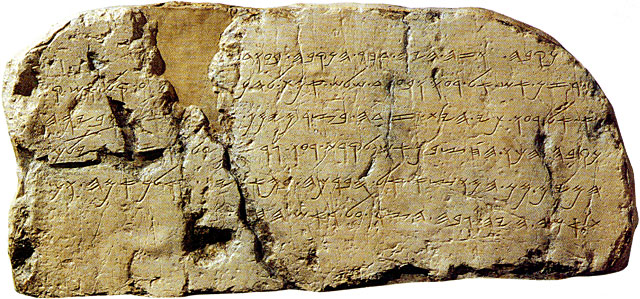
This inscription, carved in stone in proto-Hebrew was discovered in 1880 by chance at the southern end of Hezekiah’s tunnel in the City of David by a young boy named Jacob Eliahu who was playing hooky from school. Because Israel was part of the Ottoman Empire at the time, the Turkish authorities took the stone (which broke when it was pried off the wall) to the Istanbul Archaeological museum, Turkey.

siloam-inscription

Photo: from the Internet

Subtract the sum of the numbers mentioned in the text of this inscription from the year that it was discovered and then add the units digit of the year that Parker began his excavations in the City of David and you’ll get a year that is important in Jewish history and in relation to the bulla (a seal impression in clay affixed to legal documents) of Gedalya ben Pashur that Eilat Mazar found in her recent excavations below the stepped support wall in Area G. Explain the relationship. Email me your answer. Have fun. 8-)

bulla

Photo: Gabri Laron/Hebrew University/Dr. Eilat Mazar

Hints: Who was Gedalya ben Pashur and where in the Bible is he mentioned?

Siloam Pool

In summer 2004 Ronnie Reich and Eli Shukron uncovered the stone steps to a large (50m x 60m, 3 dunam) pool at the southern end of Ir David, the City of David, dated to the end of the Second Temple period and built by King Herod. Further excavations unearthed the north-east corner and northern edge of the pool and a promenade that ascends via steps to a square overlooking the pool and the beginning of a stepped street that runs 800 meters from the bottom of the City of David to the Temple Mount, connecting with the Herodian street below Robinson’s Arch. The stone surface covers an earlier pool from the Hasmonean period.
shiloach-pool21
For Jews, this is the Shiloach Pool, where the ‘living waters’ were used for ritual cleansing in the Temple and the Festival of the Water Libation during Sukkot. For Christians, the Siloam Pool is one of the two places in Jerusalem where Jesus performed miracles (the other is the Bethesda Pool in the Old City), see John 9: “The man called Jesus made mud, smeared it on my eyes and told me, ‘Go to Siloam and wash.’ So I went and washed, and was able to see.” Until this discovery, the Siloam Pool was thought to be the small pool at the end of Hezekiah’s tunnel, part of the Church of Siloam built by the Empress Eudocia between 400 and 450. The round parts of stone columns visible in the pool apparently came from the columns that adorned the promenade of the Herodian pool.

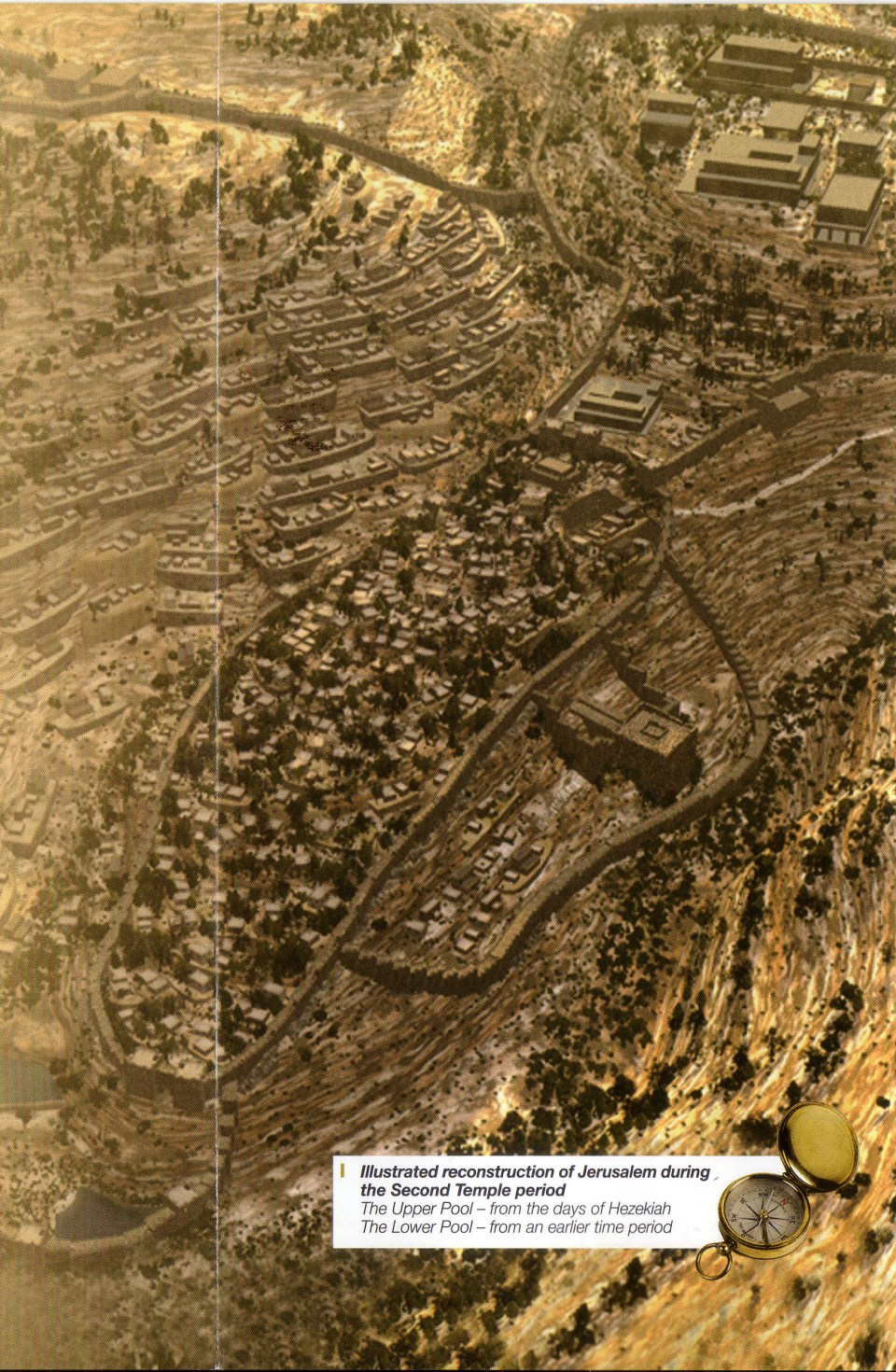
The site of yet another Pool of Siloam which would predate these two is still unknown. That first pool (Shelah Pool, mentioned in Nehemiah 3:15) was constructed in the 8th century BC by Judean King Hezekiah, in anticipation that the Assyrians would lay siege to Jerusalem to hold the waters of the Gihon Spring, brought to it by Hezekiah’s tunnel.

“Now the rest of the acts of Hezekiah, and all his might, and how he made the pool, and the conduit, and brought water into the city, are they not written in the Book of the Chronicles of the Kings of Judah?”                 (2 Kings 20:20)

Even earlier, in the 18th C BCE (MB II), the inhabitants of Canaanite Jerusalem collected both rainwater and runoff from the City of David hill and the Western hill in a pool at the mouth of the central valley. They also channeled the water of the Gihon Spring to the pool through a conduit (open to the sky), known as the Canaanite Tunnel which runs along the eastern slope of the city.

shiloach_pool

Illustrations are from the INPA-City of David brochure on the Shiloach Pool