Category Archives: Water

Hiking the Makhtesh

Approximately 50km from the development town of Dimona named after the Biblical city of the same name mentioned in Joshua 15:21-22 are two examples of makhteshim or erosion cirques, unique to the Negev and Sinai deserts. So far geologists have only identified 7 makhteshim, Makhtesh Ramon, Makhtesh HaGadol, Makhtesh HaKatan and two even smaller ones on Har Harif in the Negev; there are two in the Sinai. One of the special things about the Makhtesh HaKatan is that because of its small size you can view it in its entirety, a 5km by 7km oval shaped bowl with steep walls of resistant rock, in this case limestone and dolomite that covered a softer layer of chalk and Nubian sandstone that comes in colors of pink, purple, yellow and green.

There are two access points into the makhtesh, Maale Hatzera on the northern wall is more gentle, an ancient camel pass and Maale Eli. We started our hike from Maale Eli a route originally discovered by local Bedouin that traverses the steep limestone (from the Cenomanian epoch 100 million years ago) walls of the makhtesh connecting the floor of the makhtesh with Hatzera Ridge. I’ve heard various reasons for the name – Eli means upper from the same root as ascend; Eli means pestle to the bowl-shaped mortar of the makhtesh. In fact, it is named after Eli Ben Zvi, son of Rahel Yanait and Yitzhak Ben Zvi who was the second president of Israel. Eli was wounded during a training exercise with the Palmach in the makhtesh in the 1940s and this ascent was discovered in evacuating him to the nearest road joining Beersheva to Maale Aqrabim, the Scorpion Ascent built by the British. Like Masada the Makhtesh HaKatan became a symbol of knowing the desert and the land of Israel by a people who had come home after 2000 years of exile.

We descended the steep walls of the makhtesh on a serpentine trail with the aid of rungs and railings, 400 meters to the floor of the makhtesh. From there we followed the red trail east (also marked as part of the Israel trail) passing hills and cliffs of colored sandstone to the mouth/exit of the makhtesh. The colors are produced by iron oxides, the sand from erosion of the Arabo-Nubian Massif carried all the way here by riverbeds. The hike is suitable for good hikers and should take about 4 hours.

By the paved road that leads to the exit is an electricity tower and piled at various levels are branches that look like the nest of some large bird – they were deposited there in 1994 and 2004 when there were torrential rains and the water reached that high.

For those looking for a long day hike you can follow the Israel trail starting at the Tamar fortress and descending into the makhtesh at Maale Hatzera. You walk south on the blue trail to the mouth of the makhtesh and when you get to the water pumping station you take the red trail west across the makhtesh climbing up at Maale Eli. Continuing another 10km to the Makhtesh HaGadol will take you past the spring of Ein Yorqeam, definitely worth a visit.

The British figured that it would be worth drilling for oil in the makhtesh, erosion has already gotten rid of the hard rock and hundreds of meters of sand. They did not find any but for the same reason it is worth drilling for water. The sand in the makhtesh acts as a large aquifer though the water is quite salty. The water is piped to a reservoir on Mount Tzafit from where it is used by industries on the Rotem Plain.
Hiking Nahal Og

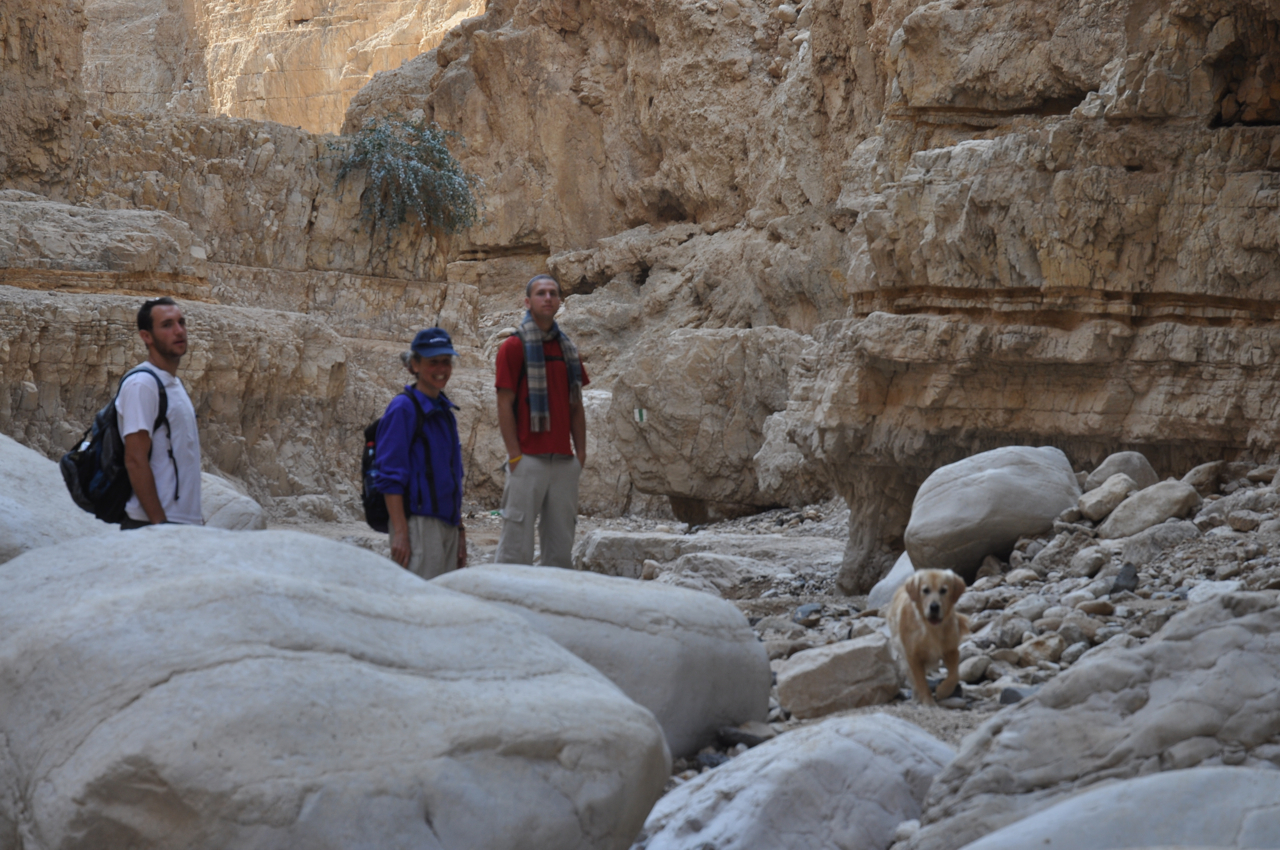
This is a real gem of a hike. Nahal Og is less than a half hour from Jerusalem in the Judean desert. It’s picturesque in a rugged, desert kind of way so it’s a good opportunity for taking photographs of the scenery and of course your family/group.

You might find that parts of the hike are challenging but this is a hike that is doable by parents and kids. There are three places where metal rungs have been hammered into the rock to give you hand and foot holds to help you traverse the steep rock faces. In the winter months there will be parts of the trail that have filled with water that you will have to cross.

The trail is a loop so you end back where you parked your car and in fact, you can do the trail in either direction, depending on whether you want to ascend or descend the rungs. Most people find that climbing up the rungs is easier than going down. The hike itself should take you about two hours.


To fill out your day combine the hike with one of the many other attractions in the area, the mosaics at the Inn of the Good Samaritan, St George’s monastery in Wadi Qelt, the archaeological site at Qumran, a float in the Dead Sea.

Walking underground to Robinson’s Arch

The 12th annual City of David Archaeological conference marked the official opening to the public of Jerusalem’s central drainage channel in the Tyropean valley from the Second Temple period. Thanks to the excavations by Reich and Shukron it is now possible to begin on the Herodian street beside the Siloam Pool, walk underground up the hill on the western stairs and then take a left to the drainage channel and continue, exiting on the Herodian street by the western wall below Robinson’s Arch, a distance of 650m. This is an incredible experience or in Hebrew, a havaya. You are walking on 2000 year old paving stones and in the drainage channel where Josephus writes that Jerusalem residents hid from the Romans until either they succeeded to flee the city or were discovered; you can see paving stones smashed so Roman soldiers could enter the channel.

It was Bliss and Dickie who in 1898 first discovered and documented the stepped street with a stone pavement and an underlying large drainage channel when they excavated a line of 9 shafts sunk across the width of the Tyropean 425m to the south of where Warren had excavated. In this southern section the channel is built of ashlars (large square cut stones) on bedrock and is covered with heavy stone slabs that are actually the paving stones of the street above.

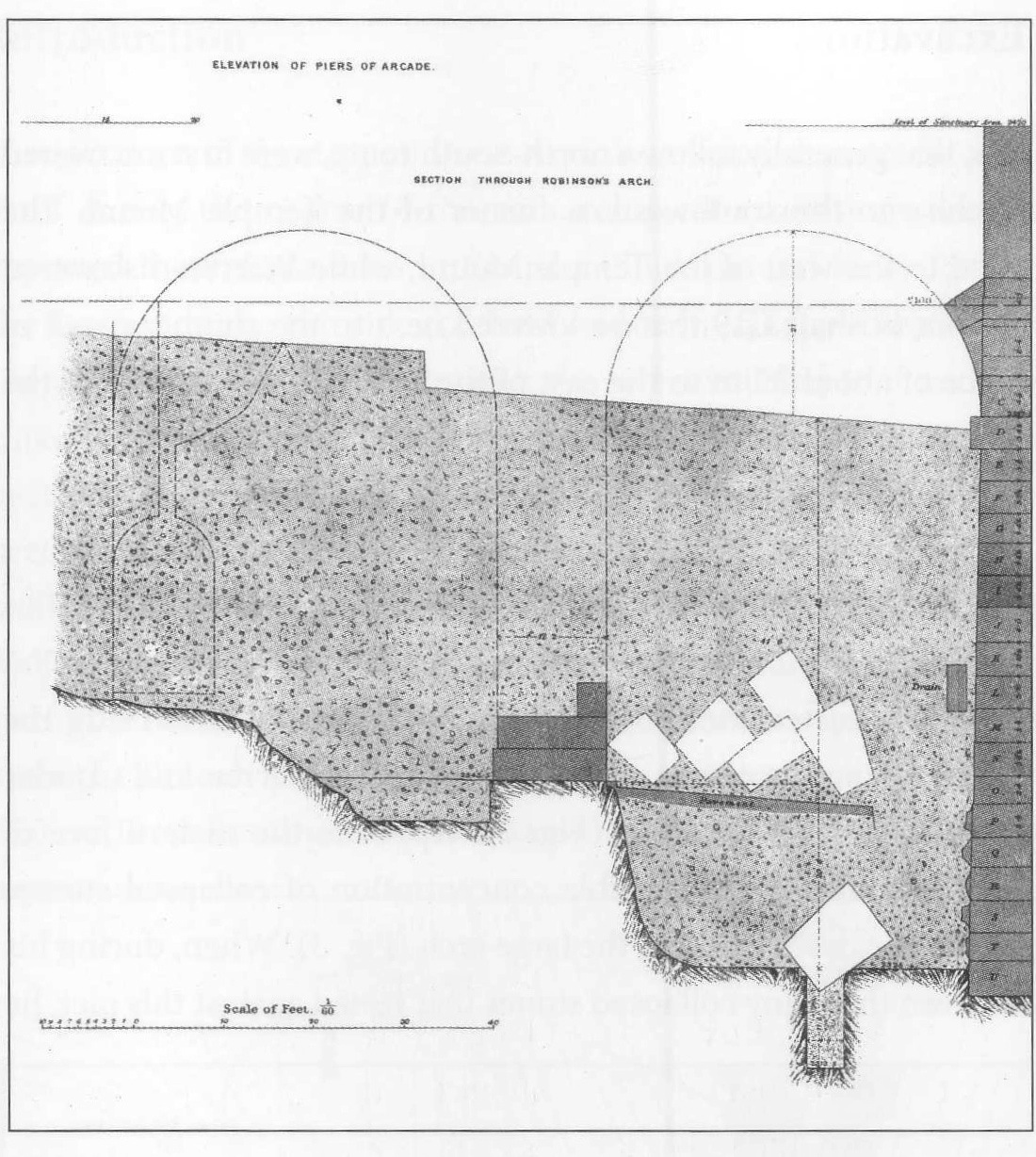
Earlier Warren had sunk 7 shafts across the Tyropean at Robinson’s Arch. In a report for the Palestinian Exploration Fund (PEF) in 1867 he described two drainage channels, running generally north south, the western channel was unearthed about 4m from  the western wall and the eastern channel about 37m east of the southwestern corner. The western channel is quarried into the bedrock, about 4m deep and 1.2 m wide and roofed with an elongated vault. In two places, a large voussoir (a wedge-shaped stone used to construct an arch) fell during the building of Robinson’s arch and wedged itself  in the top of the channel; the vaulted roof was built around these stones. According to Mazaar and Ben-Dov who excavated this area in the 1970s, these stones fell before the street pavement was installed. They concluded from this that the channel was built earlier, in the time of Herod, while the street was paved afterward. Excavations by Reich and Billig in 1990s discovered 15 coins in the earth fill between the street and the vault, the latest of which was from the time of Pontius Pilate (23-26CE), implying a late dating of the middle of the first century for the street paving (time of Agrippa II).

In 1869, William “Crimea” Simpson (widely known for his firsthand coverage of the British campaign in the Crimean War) was sent by his employer the Illustrated London News to sketch the opening ceremony and scenes of the Suez Canal. On his way, he took the opportunity to visit Jerusalem on behalf of the PEF and made sketches of the excavations which Warren had undertaken of some ancient water tunnels. To provide sufficient light for him to sketch, they had to burn magnesium wire (Edison only invented the incadescent light bulb in 1879). This sketch was made into a watercolor painting – Henry Birtles, Warren’s assistant, leaning against the wall of the drainage channel with the large voussoir in the foreground. Interesting that we have illustrations and paintings from Warren but no photographs although the process was known from 1839. The daguerreotype, with its silver surface and minute detail, was very popular in both Europe and the US. At virtually the same time, Talbot published working methods for his photogenic drawing and the negative-positive calotype process in 1840. These provided the basis for photography until the digital age. Today you can stand where Birtles stood and take your photograph under the same stone still lodged in the channel.

Discovering Sussita

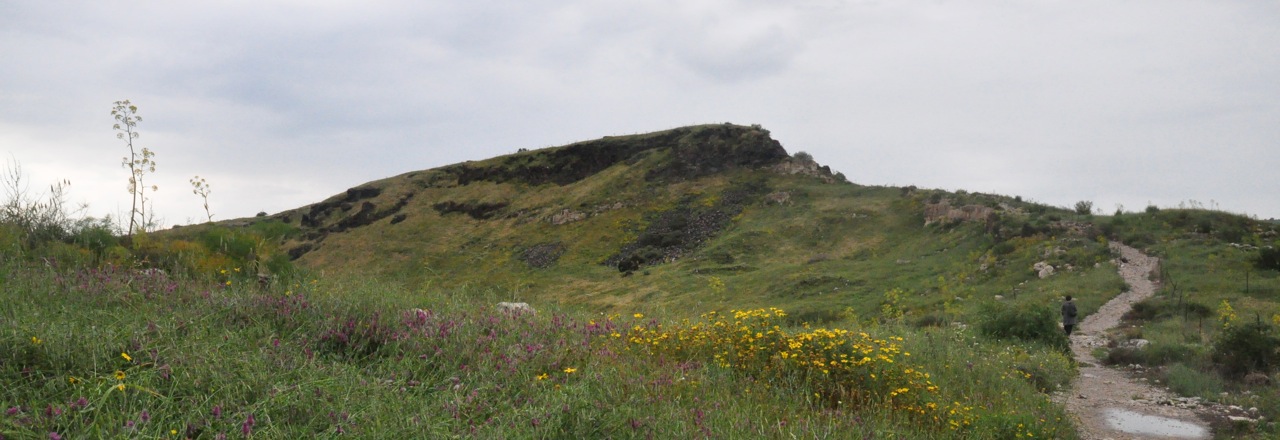
To the east of the Sea of Galilee across from Kibbutz Ein Gev is a road off the main highway <92> that passes beside a field of banana plants and winds its way onto the Golan plateau just south of Afik. About halfway, to the left of the road is a hill and on its summit (350 meters above the lake) the remains of the Byzantine city of Sussita (known as Hippos in its earlier Hellenistic incarnation).

With General Pompey’s conquest of Sussita in 63BCE it became one of the cities of the Decapolis, a group of ten cities on the eastern frontier of the Roman empire, grouped together because of their language, culture, location, and political status (each had a certain degree of autonomy and self-rule, for example, Sussita was allowed to mint its own coinage with a symbol of a horse). The Decapolis cities were centers of Greek and Roman culture in a region that was otherwise Semitic (Nabatean, Aramean, and/or Jewish). According to Josephus, Hippos had a mixed population of Christians, pagans and Jews. Of the ten cities, eight are in Jordan and two, Bet Shean and Sussita are in present day Israel.

The earliest survey and excavations, date back to the work done in the late 19th century by Gottlieb Schumacher (the German Templer railway engineer) and that of archeologist Claire Epstein in the 1950s. The University of Haifa (in conjunction with Concordia University of Minnesota and the Polish Academy of Sciences) will be excavating for their 12th season this summer.

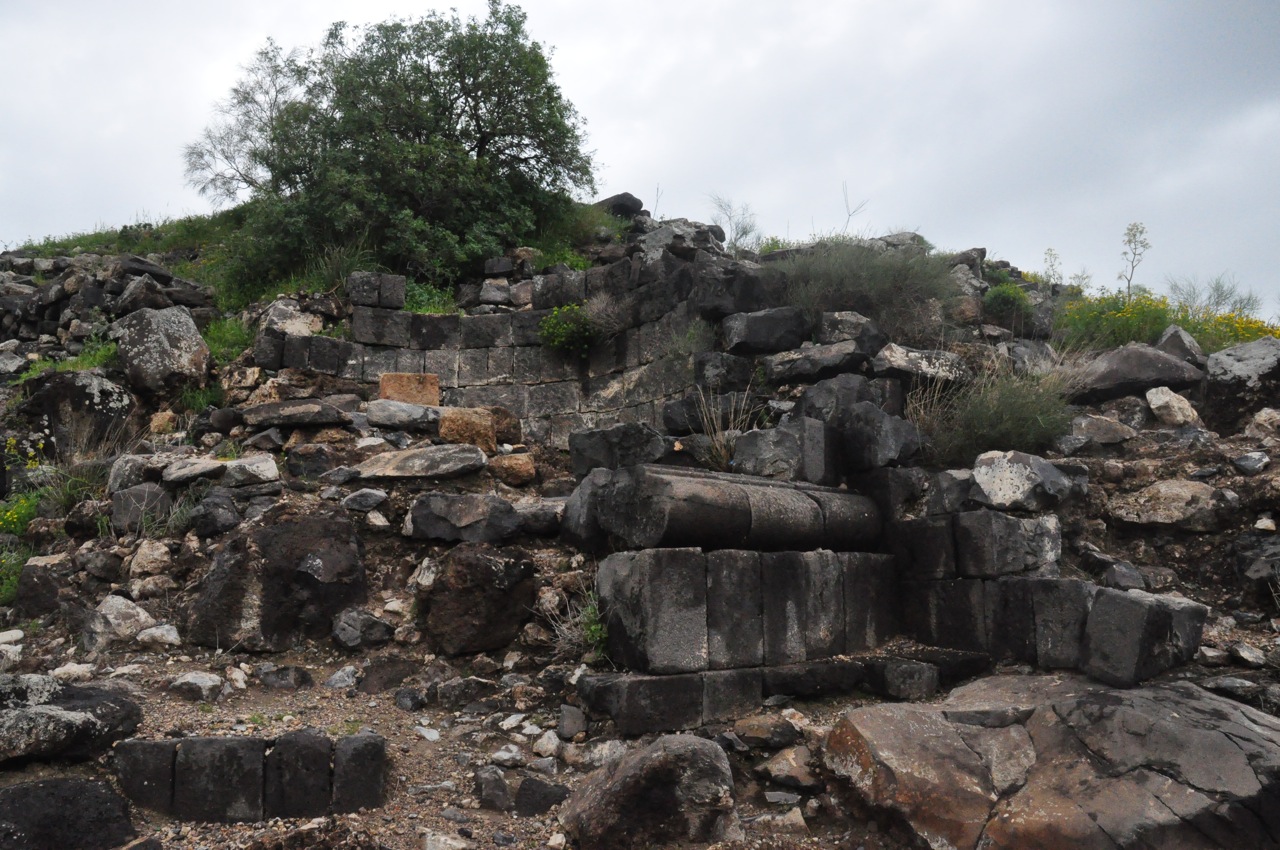
Sussita is a remarkable archaeological site and yet is virtually unknown and unvisited; a guide will help you discover little known places and explain them. It is quite different from other cities, for example, most of the building and the street paving stones are of black basalt (rather than white limestone), the main Roman street that runs for a total length of about 500 meters like a spine across the top of the site is not the usual Cardo but actually the Decumanus.

As you walk up the path towards the site the first thing you come to is the east gate. It had a tower on each side, one round and one square – a unique feature (most towers are the same). The round tower is well built of accurately cut basalt stones laid without the use of mortar. The square tower is poorly formed and preserved, and seems to have been repaired with cement at a later stage.

Just inside the gate you can see two interlocking stone rings part of an ingenious water system built by the Romans.

Originally Sussita collected its water from rainfall that was stored in a large underground vaulted cistern 9 meters deep at the western end of the city; smaller cisterns have been uncovered under other buildings. When this was insufficient for the needs of the growing city the Romans built an aqueduct starting from the waterfall in Nahal El-Al (btw this is a great hike) about 25 kilometers away. The problem was how to get it across the valley and up into the city. The Romans engineered a pipe made up of interlocking stone rings, made airtight with caulking, in which the water flowed down into the valley and then was drawn up into the city by siphonic action (like sucking a hose to siphon gas from your tank into a container) – the first time in this region.

On the left side is the South-East Church, also called the Cathedral,  the largest and most magnificent of the eight churches uncovered in Sussita. It was excavated by Claire Epstein, as a rescue dig during the years 1951-1955 when the IDF fortified the hill against clashes with the Syrian army. Like at Beit Shean, the columns have been toppled over (like a row of wine bottles on a table covered by a tablecloth when the cloth is yanked), each one parallel to its neighbor, by the earthquake of 749CE .

Continuing along the Decumanus, one arrives at the forum on the south (left) side and opposite it, the Hellenistic (third century BCE) compound on the north side. At one end of the forum, there appears to have been a triumphal arch, marking the crossroads with the Cardo (the “heart”). Next to the arch is a monumental building (dated to the third century CE) which may have been a nymphaeum, the major water distribution point, but as no pipes or basins were found here, it could also have been part of an open-air shrine.

On the south side of the Northwest Church are two rectangular pools, the walls are plastered and there are steps leading down to the bottom. They look like they could be ritual baths (mikve) but actually these basins were used to collect grape juice. Next to the basins is a large area, the treading floor, where the grapes were placed and crushed by the feet of the workers in order to extract their juice. Besides  three wine presses in the area there is also an oil press and storage area for agriculture products used by the priests and monks.

In 2009 archaeologists identified the Roman public structure to the west of the forum that had puzzled them – an Odeon (in Greek, to sing), a roofed mini-theater with about 600 seats used for musical shows and poetry reading, the first to be discovered in Israel. One of the most recent discoveries at Herodium was a small Roman theater and loggia on the other side of the main staircase, across from the tomb area. It would be interesting to compare these two theaters.

Although we know that Jews were a minority living in the city so far no synagogue has been found. An eagle-carved lintel, typical of a synagogue (perhaps originally from a synagogue and re-used), was found on the west side of the hill, but it turned out to be another church, the Southwest Church (read the post about the Byzantine church recently uncovered at Hirbet Midras that scholars thought was a synagogue because of the lintel).

Sussita and Bet Shean, both cities of the Decapolis;  small theaters, synagogues and churches, aquaducts at Sussita and Herodium; earthquakes that levelled cities until archaeologists re-discovered them – there is much to experience with a guide.


You can read more about the excavations at their website http://hippos.haifa.ac.il/

Springs in Jerusalem Hills

Around Jerusalem there are some special hikes that let you combine nature, history and archaeology. Two that I’ve already written about are Nahal Katlav and Shaar HaGai. Before heading out pick up some artisan bread, cheese, wine, hummus (you can find zatar growing wild) and salads for a picnic, drive into the hills, hike the trail and enjoy. In Psalms it says

הַמְשַׁלֵּחַ מַעְיָנִים בַּנְּחָלִים בֵּין הָרִים יְהַלֵּכוּן God sends the springs into the valleys, between the mountains. (Psalms 104:10)

A hike to a maayan, a natural spring where water finds its way out of the limestone hillside, is a great outing for the whole family. At some point someone cut into the bedrock to make a pool, perfect for a dip on a hot summer day. There is even a trail, Shvil HaMayaanot, from just before Even Sapir that goes by a number of springs and pools. Drive out to the Jerusalem Biblical Zoo near Malcha (itself a fun destination for the whole family) and park the car at the farthest parking lot, a road with a blue trail marker continues west to 2 springs (it’s also possible to drive it but then it won’t be a hike).  To your right the hill above the trail is called Rekhes Lavan (White Ridge) because of the kirton (chalk, a soft kind of limestone) and the valley below to the left with the train tracks is Nahal Refaim (Valley of Ghosts). After following the winding road you will come to a small parking area, a green Parks sign and steps on your right. Climb the stairs to Ein Lavan that fills 2 pools, a shallow one for smaller children or for cooling your feet and a deeper one, about 1.5 meters, great for swimming. After your picnic follow the spring back towards it source to find a burial cave from the Second Temple period. The second spring, Ein Itamar (also known as Ein Balad), is farther and more challenging to find. Our youngest son, AdirChai, who is the family expert on maayanot told me about it.
 

From Ein Lavan descend the steps and continue along the road. At the fork stay right, you will see that the blue trail joins the black. The road becomes paved again, there is a gravel path that forks to the left (don’t take it, follow the black trail). When the road turns right and is climbing there’s a dirt path to the left that leads down (marked with a blue trail marker), follow it until it turns sharply to the left. Look for the ruins of a stone building, the pool is below it. If you need a guide contact me.

Sites around Akko

There are many well-known sites in Israel that are popular, that visitors see again and again while missing out on other hidden gems. Many people have seen the Chagall Windows at Hadassah hospital in Jerusalem but far fewer probably know about the stained-glass windows that Israeli artist, Mordecai Ardon designed. Many people have visited Yad Vashem but far fewer have visited Lohamei HaGetaot, a kibbutz near Akko founded by those who fought and survived the Nazis.

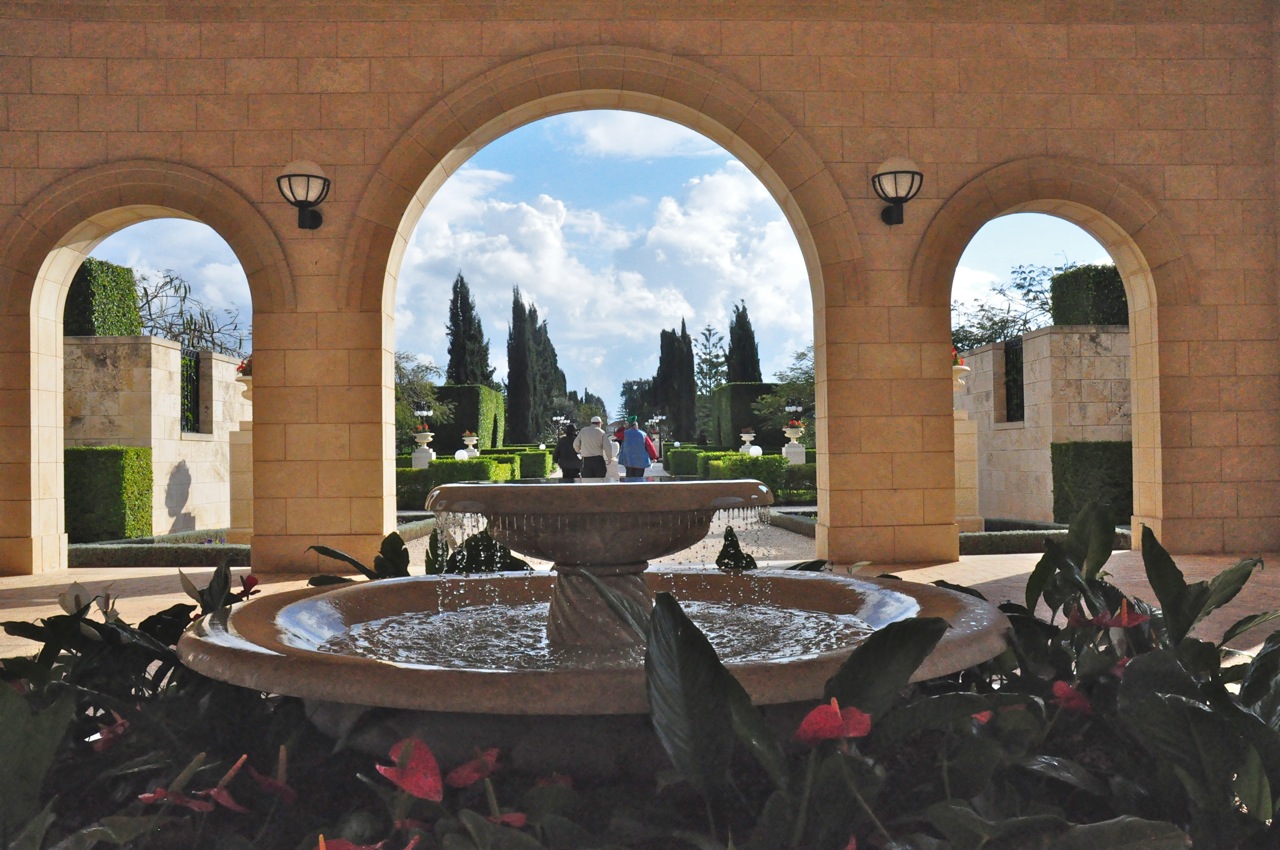
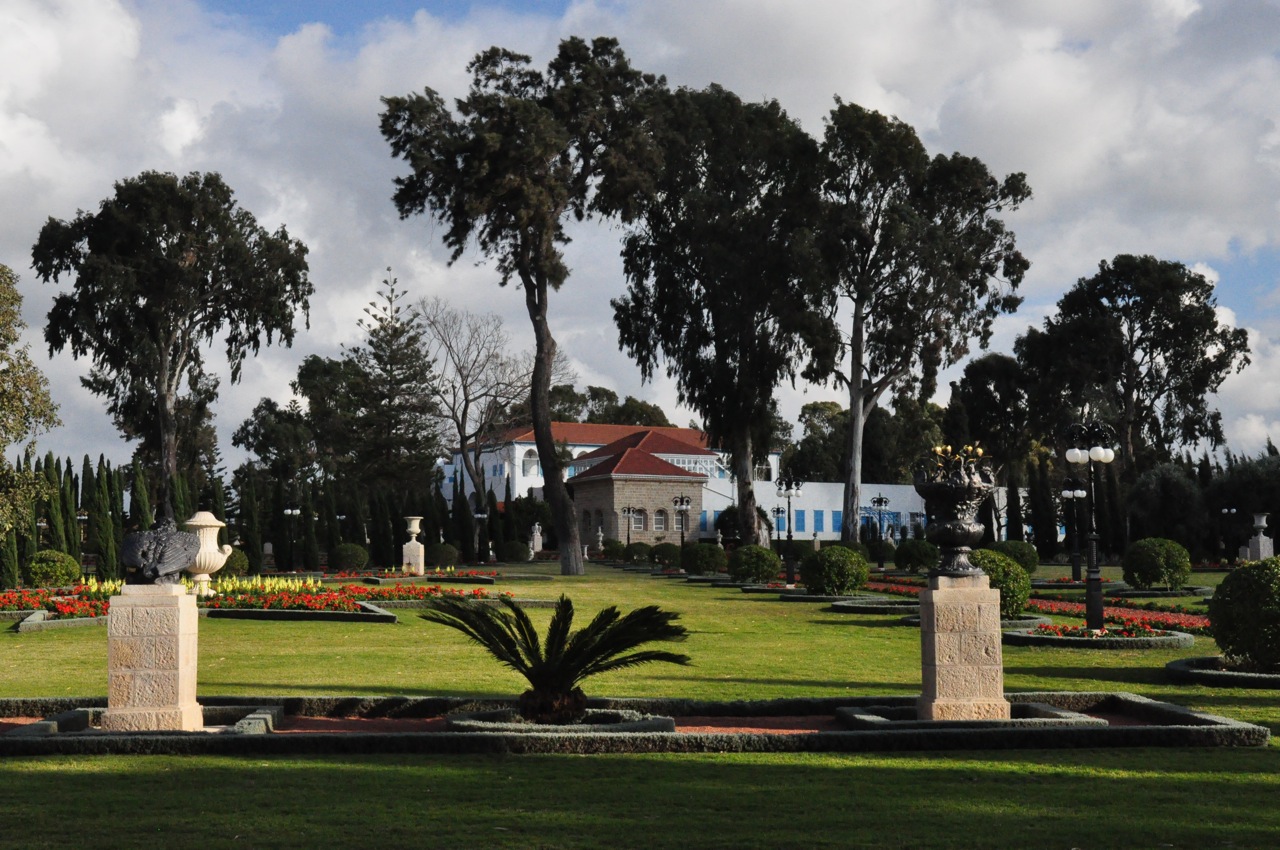
Many people are familiar with the Bahá’í gardens in Haifa but far fewer have visited the Bahá’í gardens just north of Akko. The gardens in Haifa comprise a staircase of nineteen terraces extending all the way up the northern slope of Mount Carmel. The golden-domed Shrine of the Báb, the resting place of the Prophet-Herald of the Bahá’í Faith, stands on the central terrace, looking across the bay towards Akko. There the gardens at Bahjí reflect the beauty and serenity of the Haifa gardens.

The gardens form a large circle surrounding the historic mansion where Bahá’u’lláh, the Prophet-Founder of the Bahá’í Faith, lived during the final years of his life after he was released from Acre Prison by the Ottoman Turks and the shrine where he is buried.

Later during the British Mandate period, Jewish resistance fighters were held in the Acre prison and 9 died there on the gallows. Today the prison is a museum and has been recently updated to dramatically retell the story of the Hagana, Irgun and Lehi struggle with the British, definitely worth a visit. There is another less well-known museum to the underground prisoners in Jerusalem in the Russian compound.

The Old City of Akko was designated a UNESCO World Heritage site in 2001. In July 2008, the Bahá’í Gardens in Haifa and Akko were listed as UNESCO World Heritage sites, in recognition of their “outstanding universal value” as holy places and places of pilgrimage. Like all great works of art, these extraordinary sites are tangible expressions of the human spirit.

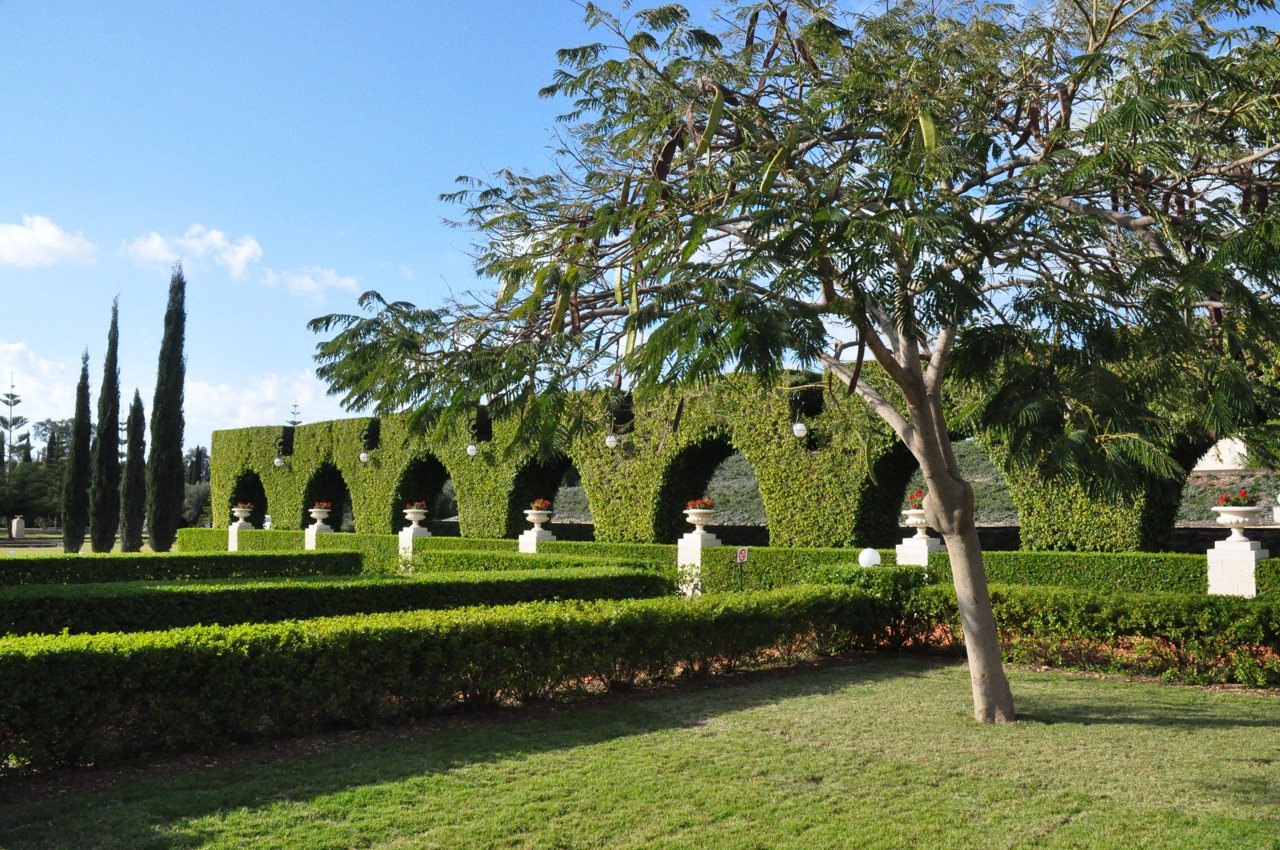
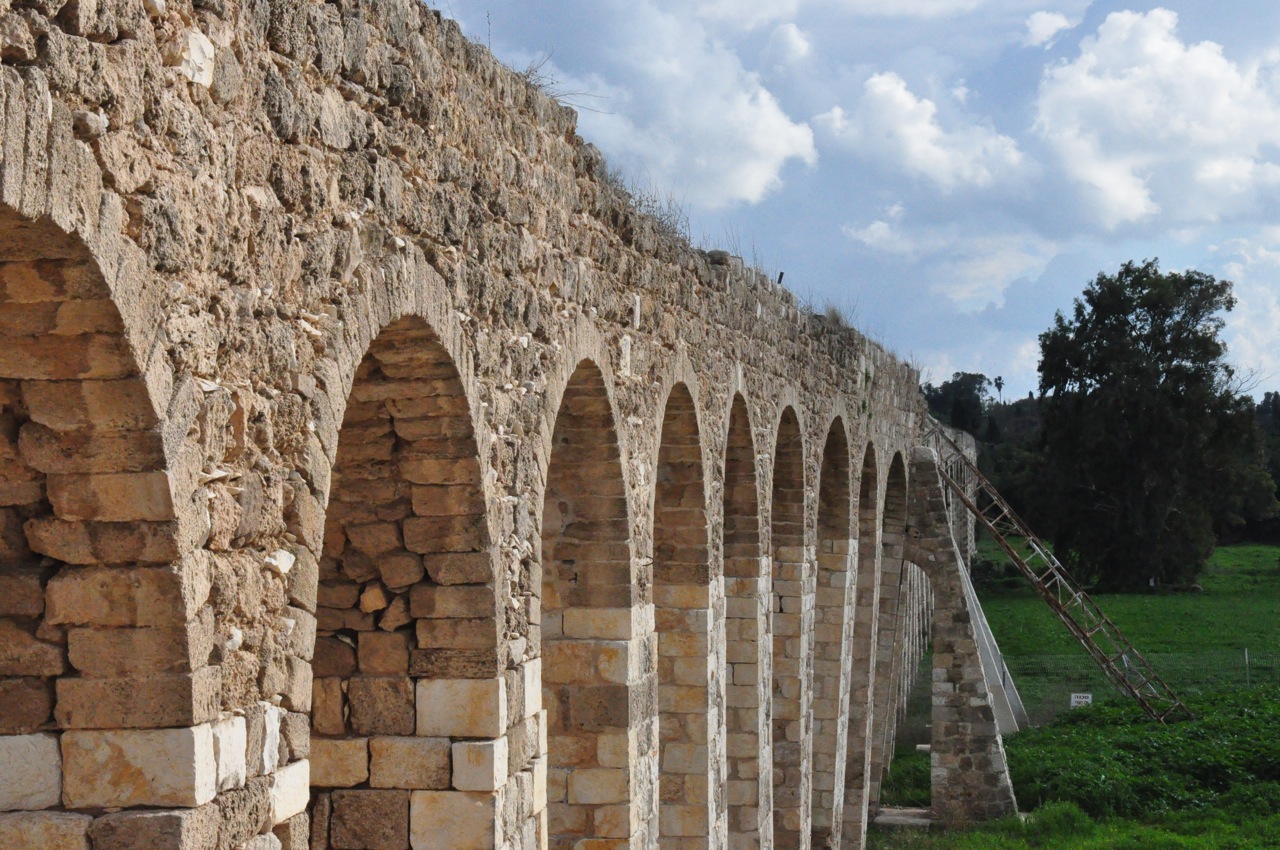
One of the striking formations near the entrance is a trimmed hedge in the form of an aqueduct. Many people are familiar with the aqueduct that Herod built, onto which the Romans tacked a second aqueduct to bring water to Caesarea but there is another less well-known aqueduct. Just north of Akko, by Kibbutz Lohamei HaGetaot is an aqueduct from the Ottoman period built on an earlier one from the Hellenistic period that was built to bring water from the Cabri springs to Akko.

Kibbutz Lohamei HaGetaot was founded in 1949 by a community of Holocaust survivors, members of the Jewish underground in the ghettos of Poland, and veterans of partisan units. Integral to the kibbutz from the beginning was the Ghetto Fighters’ House – Itzhak Katzenelson Holocaust and Jewish Resistance Heritage Museum for documenting and researching the Holcaust. The museum serves as a testimony to the stories of the survivors and an expression of the return of the Jewish people to our land.

Beside it is Yad Layeled (Monument to Children), an educational center commemorating the one and a half million Jewish children murdered in the Holocaust. The building was designed by Ram Carmi of two main architectural elements: a central 3-story cone and a descending ramp that encircles the cone and defines the path through the space. The space is lit by natural light that enters through a circular stained-glass window on the domed ceiling of the cone that becomes dimmer as you descend until you reach the innermost sanctum and eternal flame.

Yad Layeled gives the visitor an intimate view of the children’s world during the Holocaust and opens a door to their dramatic experiences and pain. It is unique in that it is intended to reach out to young people (ages 10 and up). The other permanent exhibitionis dedicated to Dr. Janusz Korczak, a Polish-Jewish doctor, author and educator who devoted his life to children. Many people visit Yad VaShem but fewer people know about Lohamei HaGetaot. That’s a good reason to hire a guide – a guide can take you places and share experiences that you probably won’t discover on your own.