Category Archives: Photography

Every Sunday I post a photo that I’ve taken somewhere in Israel. You can click on the image for a larger view (which may take some time to load depending on your Internet connection). I write something about the photo – where it was taken, the technical details of the photo, etc. If I don’t tell you where the photo was taken, I’m asking you to guess and add the location of the photo as a comment (in the end I’ll tell you). Please share this post via email, on Facebook or Twitter by clicking on the icons at the end of this message.

Red Canyon, near EilatThis photo was taken with a Nikon D90 (digital SLR) camera with a Nikon 18-70mm lens in the afternoon of March 27th,  (ISO 200, 18mm, F5.6 at 1/125 sec).

The photo is of the sculpted walls of the Red Canyon. For directions on how to get there and suggestions on other sites in the area check out my blog post.

Photographs on this website are © Shmuel Browns (unless marked otherwise) – if you are interested in purchasing one of my photos or using one of my photos for your own project please contact me.

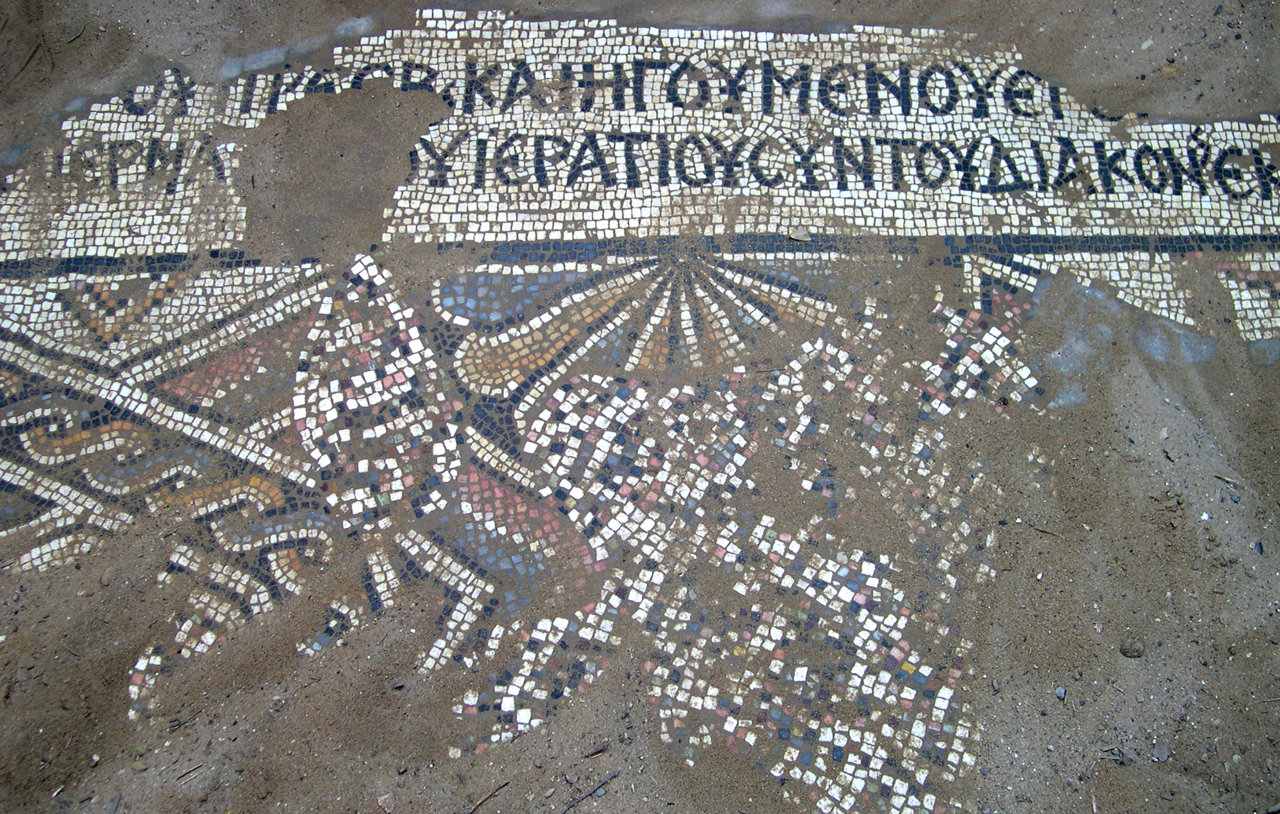
Khirbet Hanut Mosaic Vandalized

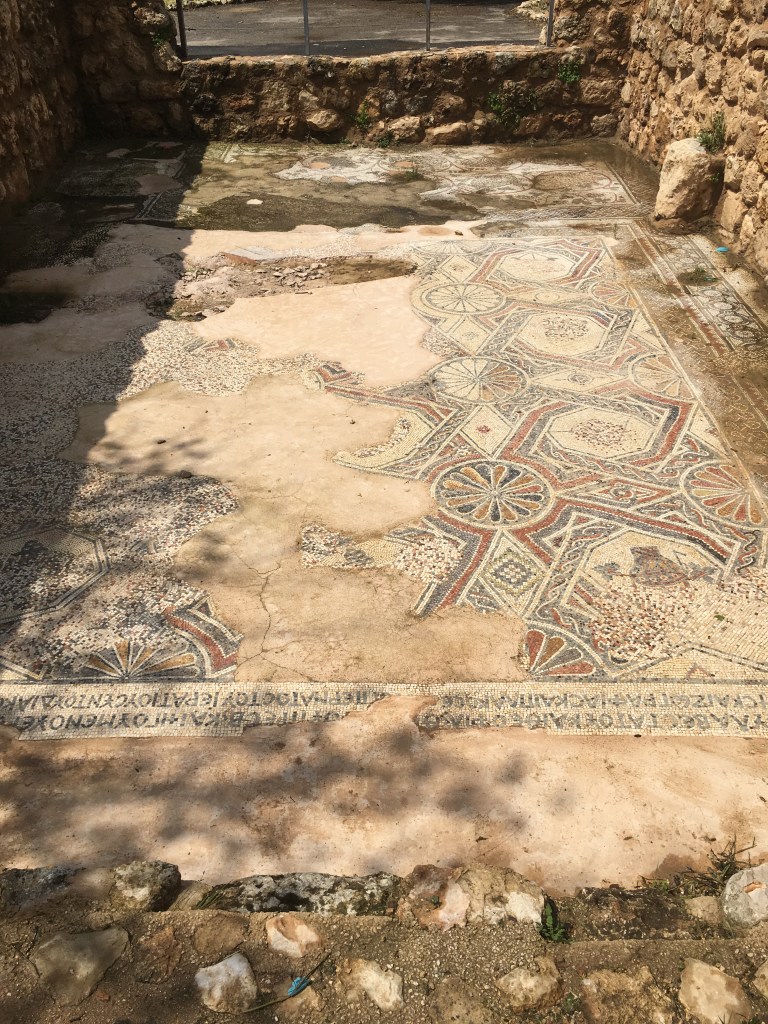
When you hire me as your guide I can take you places and show you things you probably won’t find on your own. Out of Jerusalem along highway 375 is the shell of a small stone building where the floor is covered with sand.

The site is from the Byzantine period, the ruins of a monastery with a mosaic floor including an inscription in Greek dated to 563CE. To see it, all you have to do is sweep aside the sand covering the mosaic – a simple way to protect it.

Image

Unfortunately, because the location is accessible somebody took advantage and two days ago badly damaged the mosaic. According to the report in YNet Israel Antiquities Authority staff collected 23 bags full of the scattered stone cubes (tesserae) from the mosaic. I had even driven by the site on two different days last week on my way to photograph a field covered with thousands of red poppies and had thought to stop and take photographs but didn’t.

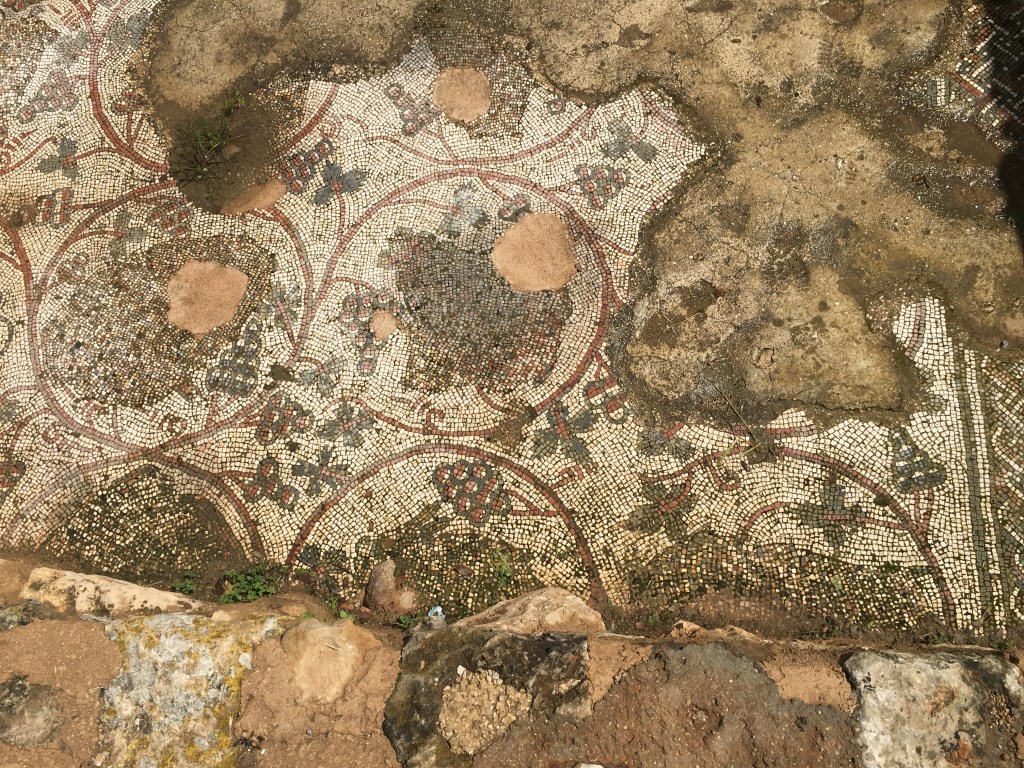
So these photographs are from a few years ago and I post them here so there is a record and you can see parts of the mosaic. It is terrible when something like this happens.

Good news. The site has been repaired and here are some photographs.

Khirbet Hanut is not far from Khirbet Midras where the stunning mosaics uncovered in a Byzantine church were vandalized just over a year ago. I posted photographs of those mosaics in my article Khirbet Midras Mosaics.

Lights over Egypt, Israel and Jordan from Space

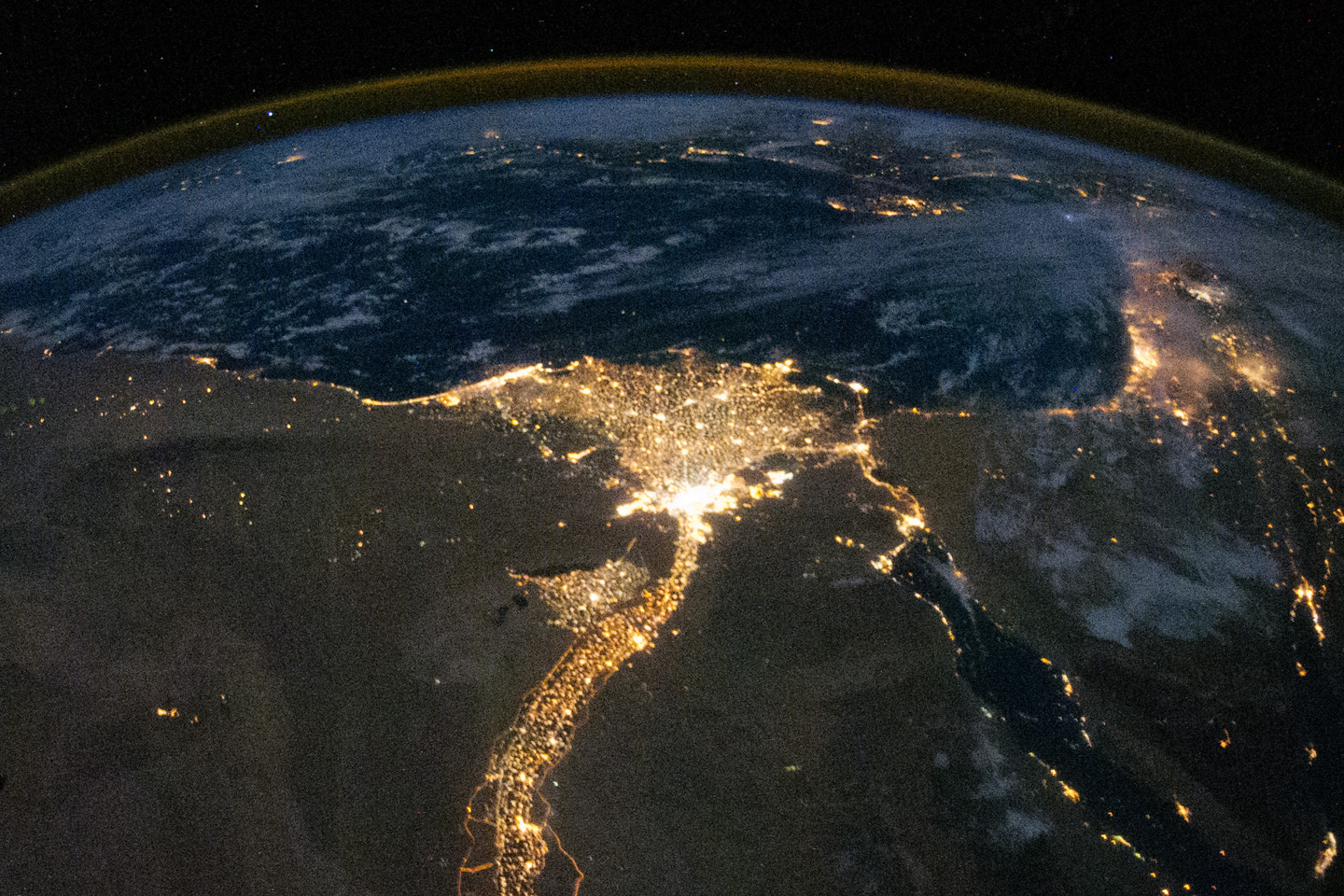
Nasa’s EarthObservatory site is a great website about our Earth. After posting the photos about the changes in the Dead Sea I remembered another image of this region, the Nile delta in Egypt and neighboring Israel and Jordan taken at night from Space. You can see clearly based on the lit up areas where the major populations are situated. Israel is pretty brightly lit up suggesting that a) we use a lot of electricity for lights and/or b) the northern part of our small country is relatively densely populated.

From the EarthObservatory website:

The Nile River and its delta look like a brilliant, long-stemmed flower in this astronaut photograph of the southeastern Mediterranean Sea, as seen from the International Space Station. The Cairo metropolitan area forms a particularly bright base of the flower. The smaller cities and towns within the Nile Delta tend to be hard to see amidst the dense agricultural vegetation during the day. However, these settled areas and the connecting roads between them become clearly visible at night. Likewise, urbanized regions and infrastructure along the Nile River becomes apparent.

Another brightly lit region is visible along the eastern coastline of the Mediterranean—the Tel-Aviv metropolitan area in Israel (image right). To the east of Tel-Aviv lies Amman, Jordan. The two major water bodies that define the western and eastern coastlines of the Sinai Peninsula—the Gulf of Suez and the Gulf of Aqaba—are outlined by lights along their coastlines (image lower right).

Scattered blue-grey clouds cover the Mediterranean Sea and the Sinai, while much of northeastern Africa is cloud-free. A thin yellow-brown band tracing the Earth’s curvature at image top is airglow, a faint band of light emission that results from the interaction of atmospheric atoms and molecules with solar radiation at approximately 100 kilometers (60 miles) altitude.

Astronaut photograph ISS025-E-9858 was acquired on October 28, 2010, with a Nikon D3S digital camera using a 16 mm lens, and is provided by the ISS Crew Earth Observations experiment and Image Science & Analysis Laboratory, Johnson Space Center. The image was taken by the Expedition 25 crew.

Hiking the Makhtesh

Approximately 50km from the development town of Dimona named after the Biblical city of the same name mentioned in Joshua 15:21-22 are two examples of makhteshim or erosion cirques, unique to the Negev and Sinai deserts. So far geologists have only identified 7 makhteshim, Makhtesh Ramon, Makhtesh HaGadol, Makhtesh HaKatan and two even smaller ones on Har Harif in the Negev; there are two in the Sinai. One of the special things about the Makhtesh HaKatan is that because of its small size you can view it in its entirety, a 5km by 7km oval shaped bowl with steep walls of resistant rock, in this case limestone and dolomite that covered a softer layer of chalk and Nubian sandstone that comes in colors of pink, purple, yellow and green.

There are two access points into the makhtesh, Maale Hatzera on the northern wall is more gentle, an ancient camel pass and Maale Eli. We started our hike from Maale Eli a route originally discovered by local Bedouin that traverses the steep limestone (from the Cenomanian epoch 100 million years ago) walls of the makhtesh connecting the floor of the makhtesh with Hatzera Ridge. I’ve heard various reasons for the name – Eli means upper from the same root as ascend; Eli means pestle to the bowl-shaped mortar of the makhtesh. In fact, it is named after Eli Ben Zvi, son of Rahel Yanait and Yitzhak Ben Zvi who was the second president of Israel. Eli was wounded during a training exercise with the Palmach in the makhtesh in the 1940s and this ascent was discovered in evacuating him to the nearest road joining Beersheva to Maale Aqrabim, the Scorpion Ascent built by the British. Like Masada the Makhtesh HaKatan became a symbol of knowing the desert and the land of Israel by a people who had come home after 2000 years of exile.

We descended the steep walls of the makhtesh on a serpentine trail with the aid of rungs and railings, 400 meters to the floor of the makhtesh. From there we followed the red trail east (also marked as part of the Israel trail) passing hills and cliffs of colored sandstone to the mouth/exit of the makhtesh. The colors are produced by iron oxides, the sand from erosion of the Arabo-Nubian Massif carried all the way here by riverbeds. The hike is suitable for good hikers and should take about 4 hours.

By the paved road that leads to the exit is an electricity tower and piled at various levels are branches that look like the nest of some large bird – they were deposited there in 1994 and 2004 when there were torrential rains and the water reached that high.

For those looking for a long day hike you can follow the Israel trail starting at the Tamar fortress and descending into the makhtesh at Maale Hatzera. You walk south on the blue trail to the mouth of the makhtesh and when you get to the water pumping station you take the red trail west across the makhtesh climbing up at Maale Eli. Continuing another 10km to the Makhtesh HaGadol will take you past the spring of Ein Yorqeam, definitely worth a visit.

The British figured that it would be worth drilling for oil in the makhtesh, erosion has already gotten rid of the hard rock and hundreds of meters of sand. They did not find any but for the same reason it is worth drilling for water. The sand in the makhtesh acts as a large aquifer though the water is quite salty. The water is piped to a reservoir on Mount Tzafit from where it is used by industries on the Rotem Plain.
Dome of the Rock

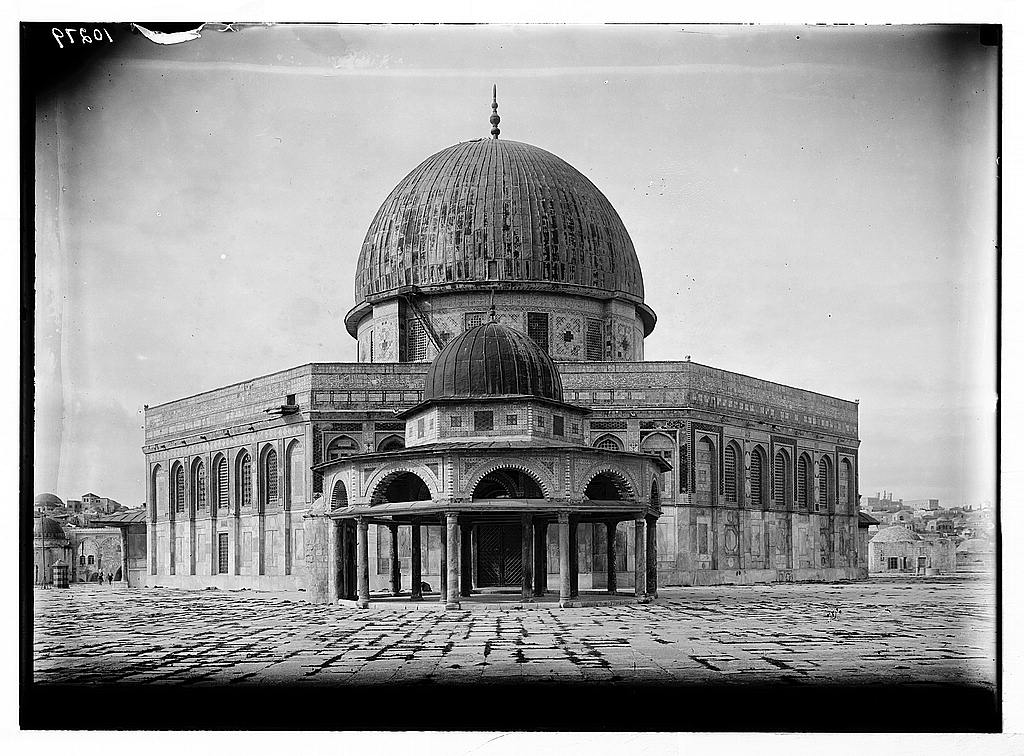
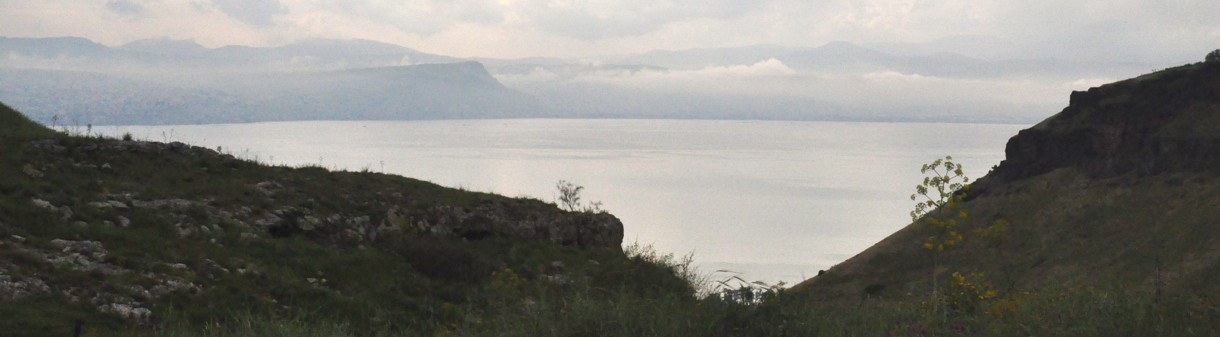
When viewing the Old City skyline probably the most striking sight is the gold dome of the Dome of the Rock. The Umayyad Caliph Abd el-Malik had this shrine built like a Byzantine martyrium, octagonal in shape, in 691CE over a rock on the Temple Mount.

Dome of the Rock ~1934, Matson collection

Over the years various metal coverings have been tried on the dome. In 1993 King Hussein of Jordan donated $8.2 million to cover the dome with a layer of  gold, 80kg in total. In Muslim tradition the rock is the place where the prophet Mohammed ascended to heaven on his Night Journey. The platform is called the Haram el-Sharif, the Noble Sanctuary.

In Jewish tradition the rock is the foundation stone from which the whole world was created, where later Abraham was commanded to go and sacrifice his son Isaac. King David purchased the area from Araunah the Jebusite who was using it as a threshing floor (2 Samuel 24) and built an altar there marking the place where Solomon built the First Temple. The platform was extended by King Herod in 20BCE while renovating the Second Temple.

There is a special feeling on the Haram el-Sharif, away from the hustle of the Old City – you can feel a lot of history there. While most of the buildings are Islamic there are remnants of Crusader architecture and even capitals from the Byzantine period, Roman marble columns and a sarcophagus (check out the similarity to the one discovered at Herodium). The First and Second Temples stood for 1000 years on this site. It is important to understand the centrality of the Old City of Jerusalem to Judaism, Christianity and Islam.

The other day I visited the Haram el-Sharif in the early morning light. I passed through the airport-like security by the Western Wall plaza and walked up the wooden ramp that leads to the Mugrabi gate and shot these photos. Click on an image below to view it full-size. I’d be interested in hearing your comments.


Hiking Nahal Og

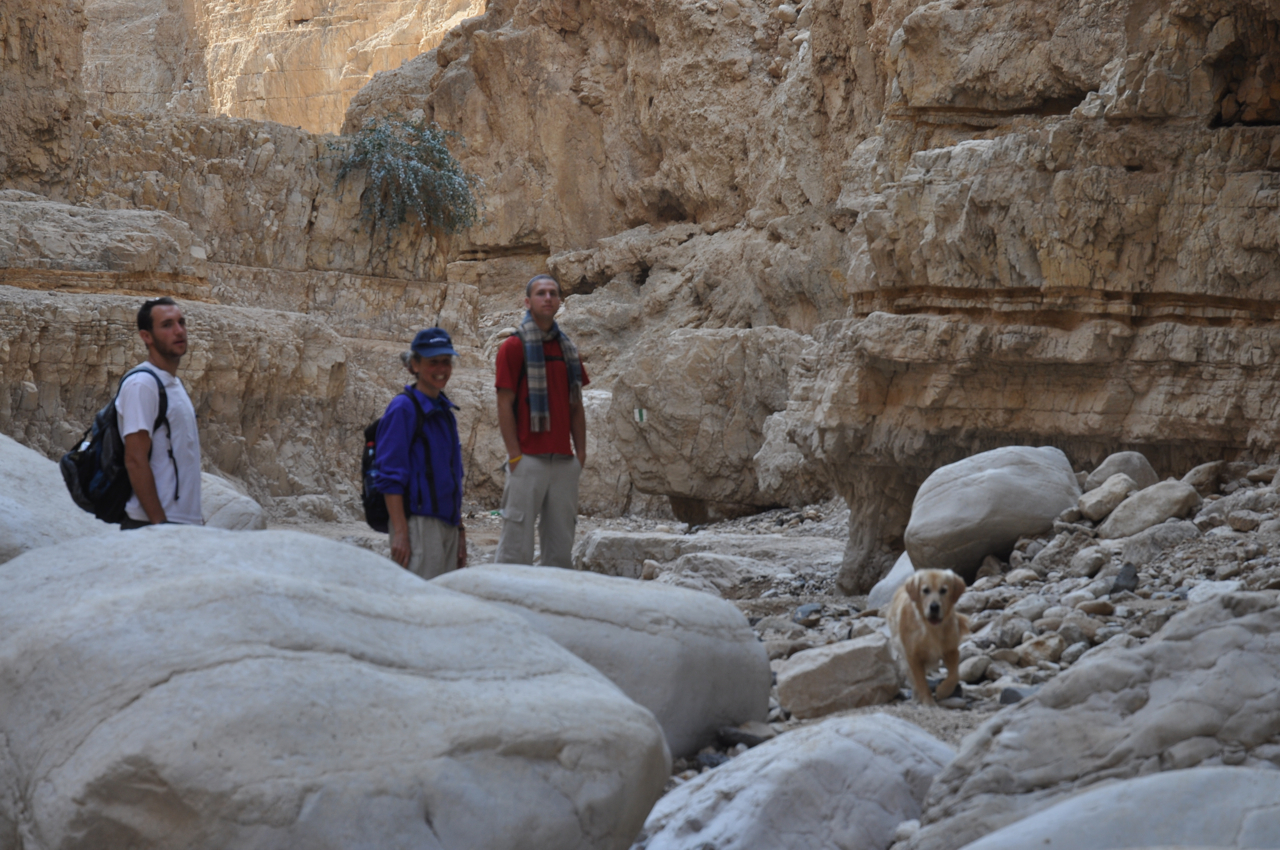
This is a real gem of a hike. Nahal Og is less than a half hour from Jerusalem in the Judean desert. It’s picturesque in a rugged, desert kind of way so it’s a good opportunity for taking photographs of the scenery and of course your family/group.

You might find that parts of the hike are challenging but this is a hike that is doable by parents and kids. There are three places where metal rungs have been hammered into the rock to give you hand and foot holds to help you traverse the steep rock faces. In the winter months there will be parts of the trail that have filled with water that you will have to cross.

The trail is a loop so you end back where you parked your car and in fact, you can do the trail in either direction, depending on whether you want to ascend or descend the rungs. Most people find that climbing up the rungs is easier than going down. The hike itself should take you about two hours.


To fill out your day combine the hike with one of the many other attractions in the area, the mosaics at the Inn of the Good Samaritan, St George’s monastery in Wadi Qelt, the archaeological site at Qumran, a float in the Dead Sea.