Category Archives: Nature

View from Herodium

Not more than a half hour drive from Jerusalem and you find yourself in an arid, biblical landscape with a view all the way to the Dead Sea. Looking back you can see the ridge of the Mount of Olives east of Jerusalem with 3 landmark towers jutting above the horizon, the steeple of the Russian Orthodox Church of the Ascension, the bell tower of Augusta Victoria and the tower on the Hebrew University campus. You can read my first blog post in the Times of Israel about Jerusalem landmarks at http://blogs.timesofisrael.com/jerusalem-landmarks-montefiore-to-calatrava/.

Herodium is one of my favorite archaeological sites and when I guide we focus on the palace/fortress complex built by King Herod in about 20 BCE. But that is not to say that it’s not worth looking up and taking in the incredible view, a great place for taking photographs.
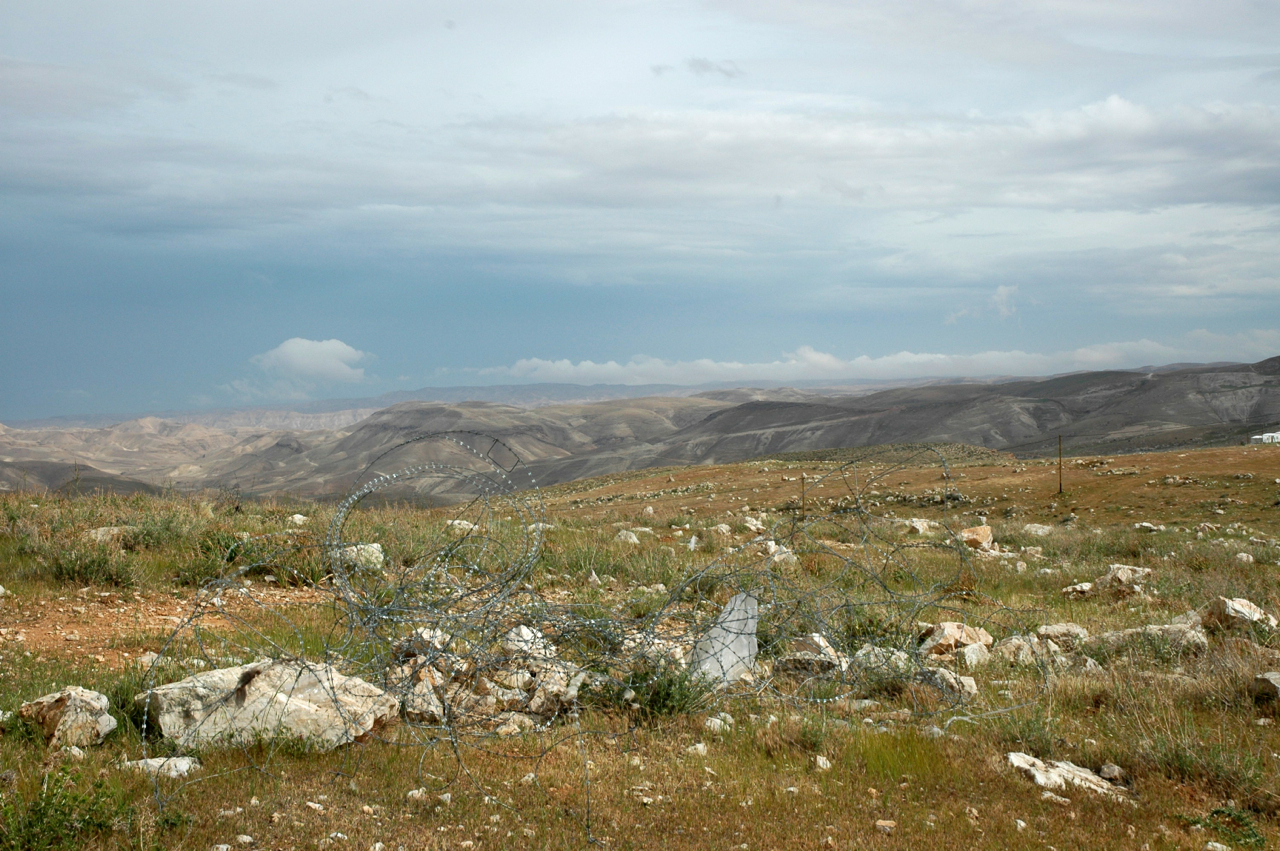
View from Herodium

Clicking on the image will display it larger. Please share this post with your friends by clicking on the icons at the end of this message.

The technical details, shot with a Nikon DSLR camera, ISO 200, 31mm, F10 at 1/400 sec.

Photographs on this website are © Shmuel Browns (unless marked otherwise) – if you are interested in purchasing one of my photos or using one of my photos for your own project please contact me.
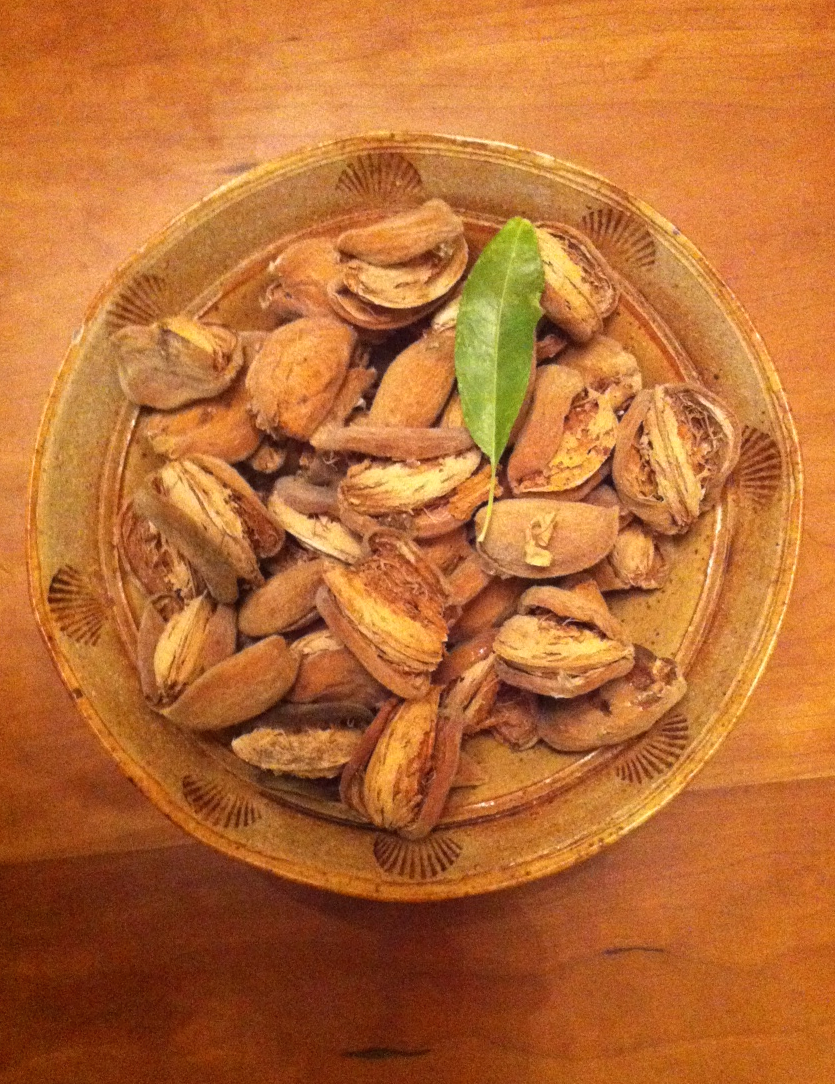
Rosh Hashana 2014

Bowl of almondsThis week is Rosh Hashana, the Jewish New Year. The upcoming year is special because it is a shmita year, a sabbatical year, the seventh year of the agricultural cycle where according to the Bible the land in Israel is to be left fallow. So in the next few days we are taking time to work in the small garden beside our house in Jerusalem, pruning the grape-vine and fruit trees, clearing the vegetable bed, harvesting, planting. At other times we can sit under our vine and fig tree as recounted in Micah 4:4.  We discovered and harvested the almonds on our almond tree. Our pomegranates are ripe in time for the holiday.

Maya Pomegranate Sumsum

It wasn’t the easiest year. The fighting between Israel and Hamas caused a sharp drop in tourism, I had some cancellations and only one day of guiding over the summer. We had two sons who were in Gaza with their army units. But now tourists are coming back and I’m guiding.

We wish you dear friends, subscribers, readers of my blog, would-be clients, travelers to Israel, pilgrims, a Shana Tova, a very good year. May your year be as full as a pomegranate with blessings, health and happiness.

Photo of the Week – Zavitan on Golan

Because Israel is a small country (the size of New Jersey) the relatively large expanse of the Golan makes it one of my favorite areas and it is a great place for hiking. One of my favorite hikes was Nahal Yehudia but that trail was closed and only a shorter section of it recently reopened. So when clients were looking for a place to hike I chose Nahal Zavitan, also a great place for photographs. This is a photo taken just past the hexagonal columns on the trail where it opens onto a small pool.

Nahal Zavitan on Golan

Clicking on the image will display it larger. Please share this post with your friends by clicking on the icons at the end of this message.

The technical details, shot with a Lumix point and shoot camera, ISO 80, 4.1mm, F4 at 1/320 sec.

Photographs on this website are © Shmuel Browns (unless marked otherwise) – if you are interested in purchasing one of my photos or using one of my photos for your own project please contact me.
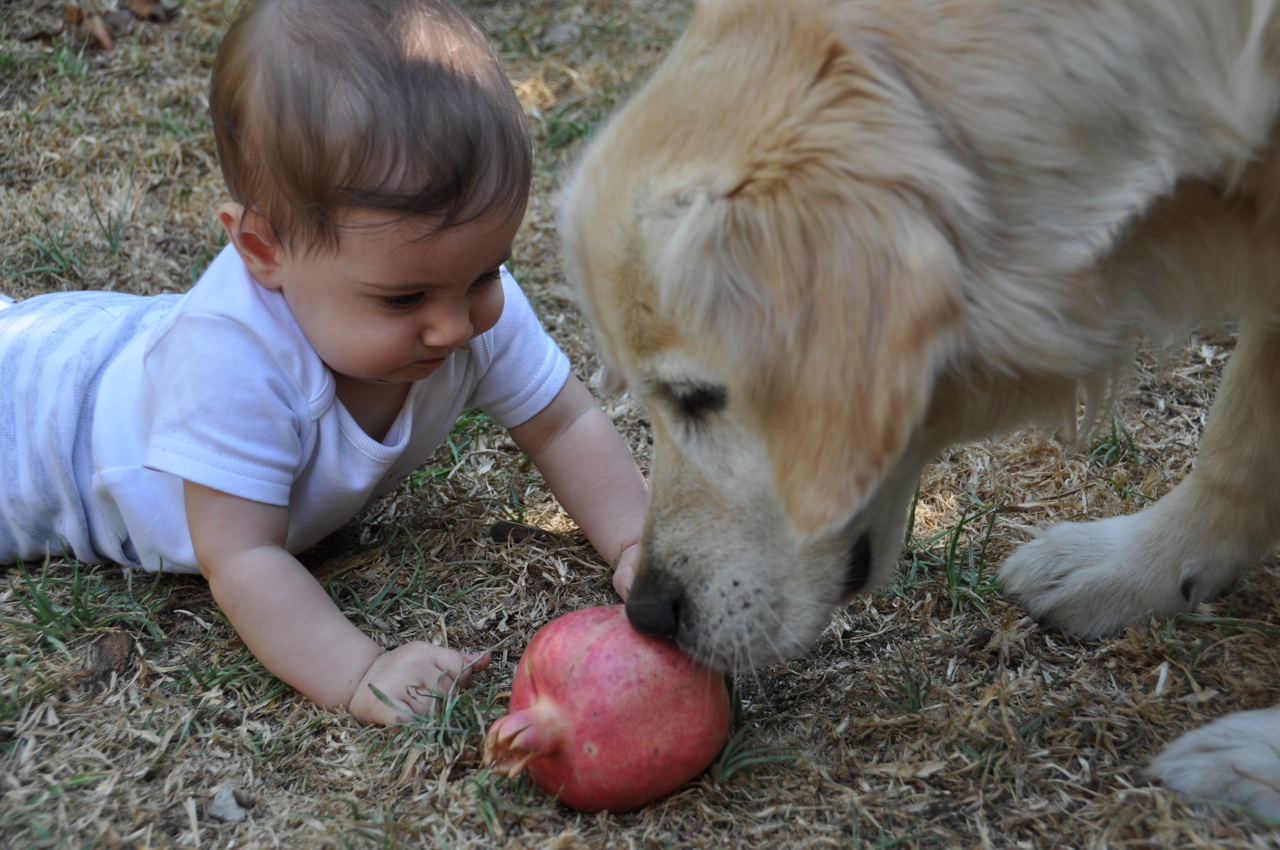
Sodom Apple

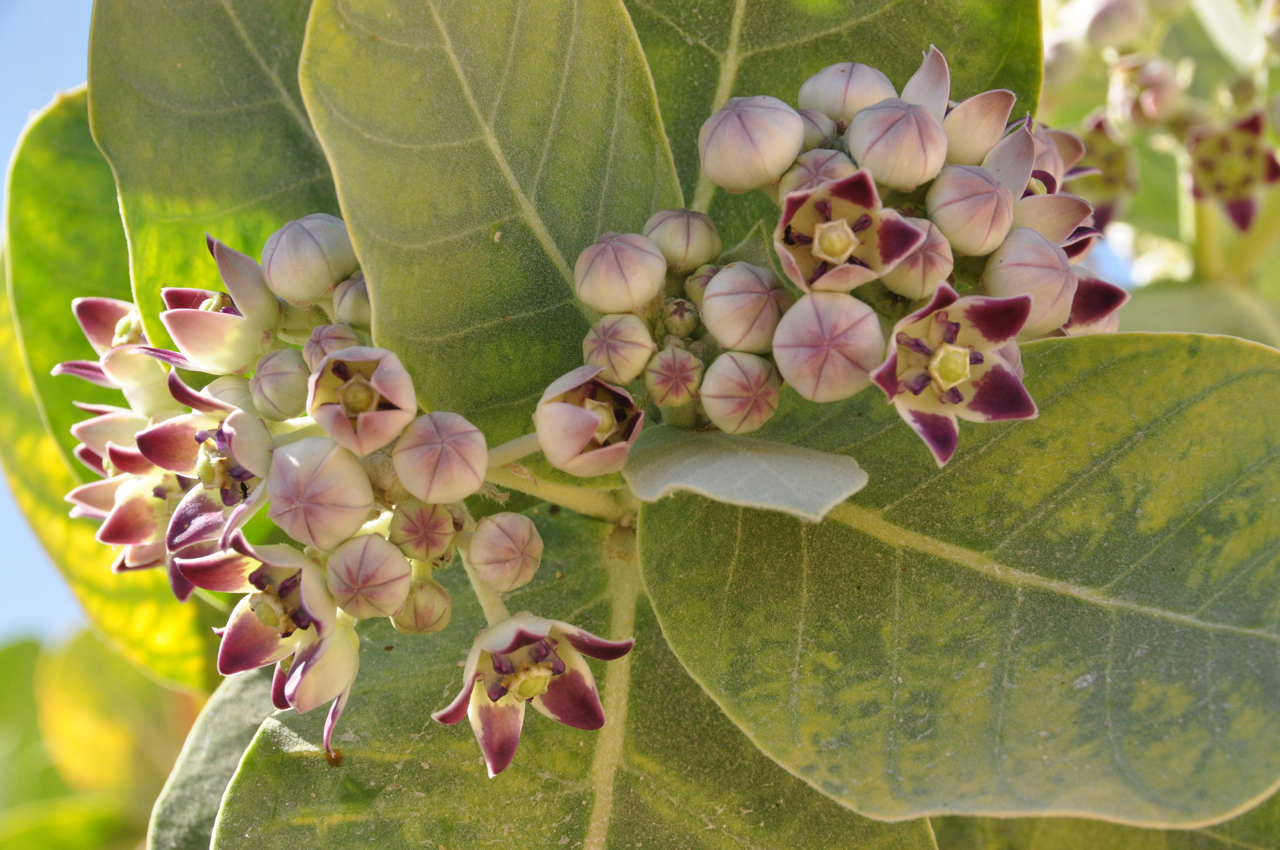
If you do a tour with me in the area of the Judean desert I can show you an interesting flowering plant called the Sodom Apple (Calotropis procera).

Sodom Apple flowers

The plant occurs throughout the tropical belt and is native to North Africa, Western and South Asia, and as far as Indochina and the West Indies.

Sodom AppleThe Jewish Roman  historian describes the plant “which fruits have a color as if they were fit to be eaten, but if you pluck them with your hands, they dissolve into smoke and ashes.” The “apple”, a green soft globe, is filled mostly with air and some fine fibers and seeds. The plant is also mentioned in the Mishna but though the fibers can be used as wicks, they are not permissible for use on the Sabbath. The flesh contains a toxic milky sap that is extremely bitter and contains a complex mix of chemicals, some of which are steroidal heart poisons known as “cardiac aglycones”.


Hiking the Makhtesh

Even from space Makhtesh Ramon appears as a masterpiece of the spirit of the earth.
(from Space Shuttle Columbia monument)

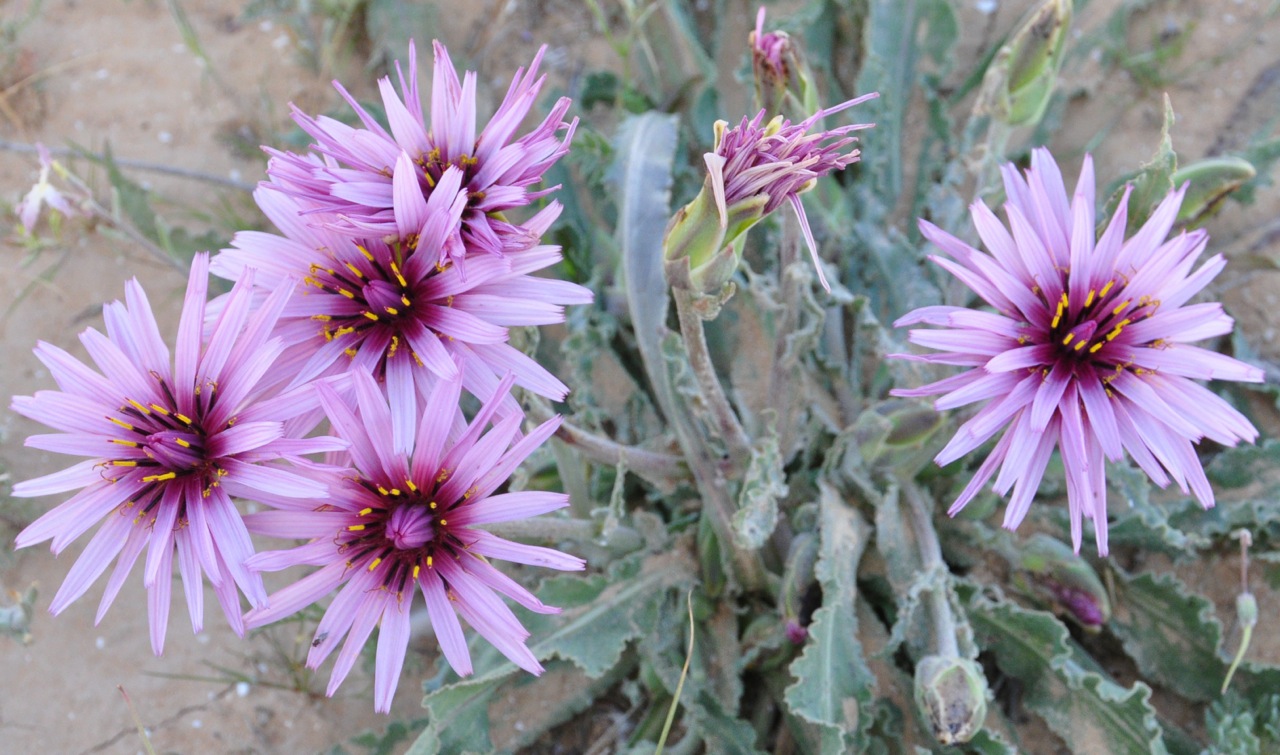
This week I did a very nice 13 km hike in the Har HaNegev reserve to Har Ramon, the highest mountain in the Negev at 1037 meters above sea level. After the winter rains we saw many plants blooming even though this area is a desert.

DSC_0286

Along the way we passed a number of tumuli, piles of rocks that are ancient tombs, and a 4.6 km stone wall running between the mountains Ramon and Romem estimated to be from the Intermediate Bronze period, more than 4000 years ago. Further along the red trail we reached a lookout on the basalt hills of Karne Ramon below, where a monument has been established to the 7-person crew of the space shuttle Columbia that disintegrated on re-entry into the Earth’s atmosphere in 2003. One of the crew was Israeli, Ilan Ramon, who had taken his surname from this area.

From Karne Ramon lookoutFrom there we descended in a winding path to Nahal Ramon at the bottom of the makhtesh. We then joined the green trail through the Canyon of Prisms and ascended the trail out of the makhtesh.

Canyon of Prisms

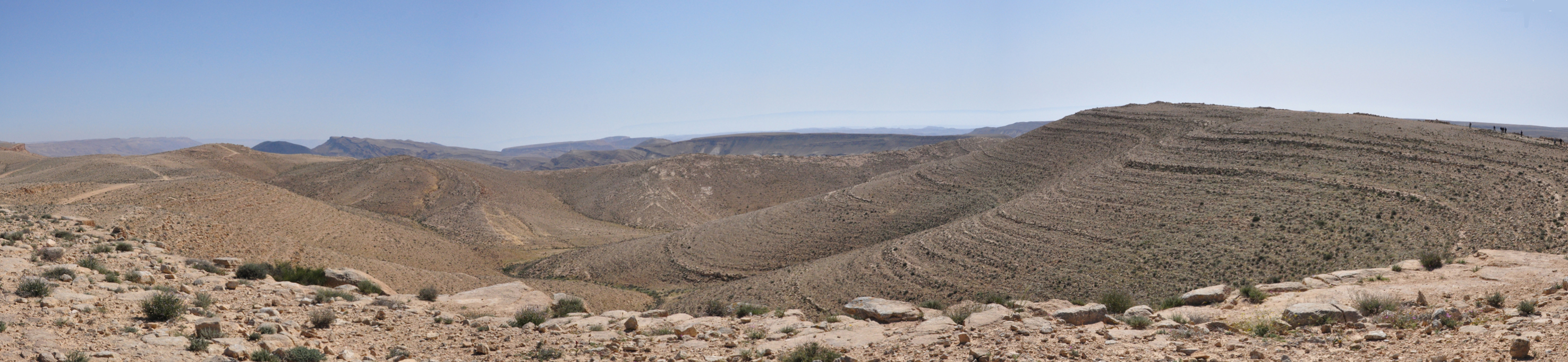
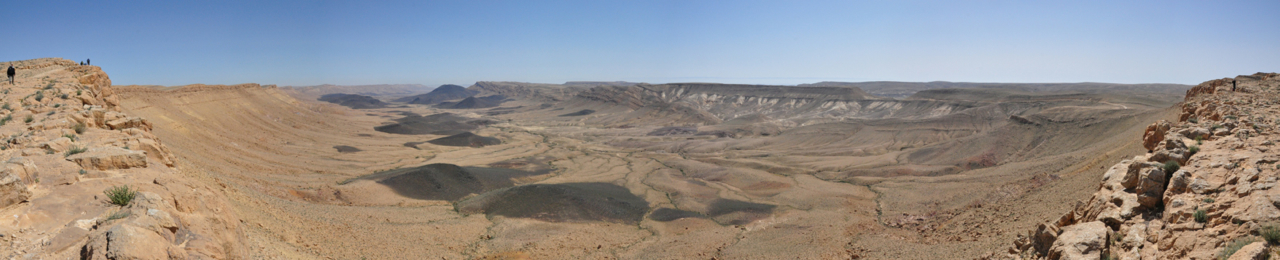
It’s hard to capture the expansiveness of this “hole” in the earth because the makhtesh is so large. The makhtesh is 40 km long, 2–10 km wide and 500 meters deep, and is shaped like an elongated heart. I took a sequence of overlapping photographs with the intention of stitching them together to try to give you an idea of the view. Click on each of these images to see it full-size.

The image below is made up of 2 photos “stitched” together.Makhtesh Panorama1This image is made up of 3 photos.Makhtesh Panorama2

This image is made up of 4 photos, a pan of 180º, overlooking Karne Ramon at the southern end of the makhtesh.Makhtesh Panorama

Sunset in the Desert

The makhtesh, the Hebrew word for mortar, is the geographic term for an erosion cirque. Unique to the Negev and Sinai deserts, a makhtesh has steep walls of resistant rock (limestone and dolomite) surrounding a deep closed valley that was created when the core of softer rock (in this case colored sandstone)  was eroded and carried away by a stream bed. After a day of exploring we arrived at the colored sands in the Makhtesh HaGadol just around sunset, a perfect time for photographs. (Wish I had had my Nikon DSLR, I only had a Lumix point and shoot). Colored sand makhtesh 3 Colored sand makhtesh 2 Large Makhtesh sunset The Dead Sea, the lowest place on earth, is in the Judean desert. After a day of climbing the snake path to the top of Masada and exploring the site, we did a hike in the Ein Gedi reserve, including the Dodim cave, the Chalcolithic temple, Tel Goren and the 6th century synagogue. When we went down to the Dead Sea for a float it was just around sunset, a perfect time for photographs. Dead Sea sunset Dead Sea sunset 2