Category Archives: Nature

Israel Trail Encounter

The Israel Trail or Shvil Yisrael is a national hiking trail inaugurated in 1994 that zigzags the entire country from Tel Dan in the north near the Lebanese border to the southernmost tip of Israel at the Red Sea, approximately 940 km. You may have seen sections of the trail on other hikes (the Israel Trail was created by connecting some of the existing, favorite hiking trails), for example, if you’ve visited the Small Makhtesh from the western lookout point the trail descends and crosses to the mouth of the makhtesh and then north via Maale Hatzera. You can recognize the trail by its 3 colored stripes, white (signifying the snow on Mount Hermon, north), blue and orange (like sand or south to Eilat).

I have Zvi Gilat’s excellent guidebook to the Israel Trail in Hebrew; there is one guide book, Israel National Trail by Jacob Saar, including topographical maps in English. The official website is at http://www.israelnationaltrail.com/ which includes a forum that enables you to connect with other hikers to discuss the trail.

I just got back from 8 days hiking on the southern part of the trail from the border crossing with Egypt at Taba to Shaharut in the Negev (incommunicado with the outside world, walking the desert landscape – which is why there was no blog post). Walking for a number of hours through a narrow canyon, climbing a ridge or mountain for a 360 degree view of your surroundings and watching the changing forms of the sandstone cliffs as you hike by is a different experience than driving up to a site by car.

The trail lets you experience nature throughout Israel with the opportunity to relate to the history of the country. I joined the annual Avi B’shvil Yisrael, an incredible project that brings together a third component, encounter with Israelis from throughout the country, young and old, religious and secular. There is a daily group discussion about the significance of kibbutz and an evening guest who talks about his/her experience related to kibbutz (the subject being examined this year). They also handle a lot of the logistics, you can pay 10NIS for fresh fruit, vegetables and bread to have for lunch and 10NIS for a communal dinner, the organizers ensure that there is enough water for the next day, provide a guide and arrange transportation (back to where you left your car, car pooling or a main road where you can get a bus). They are hiking the Israel Trail until Thursday, April 28, 2011 when they reach She’ar Yeshuv so if you can find the time, check out the itinerary at http://www.avi-beshvil-israel.org.il/luz.php and join them. I strongly recommend it.

The project is in memory of Avi Ofner and 72 other soldiers who died on February 4, 1997 when two IDF Sikorsky CH-53 helicopters collided in midair over She’ar Yashuv. The helicopters were hovering waiting for clearance to cross the border into Israel’s “security zone” in Lebanon.

For recommendation on some dozen other hikes, click on “Hiking” under Categories in the right hand column or https://israeltours.wordpress.com/category/hiking/

Jewish Hirbet Midras

About 45km south of Jerusalem in the Ella valley, where David fought Goliath, are the ruins of an ancient agricultural settlement beginning in Iron age II, Hirbet Midras. With the recent discovery of a Byzantine church thought to be the burial place of the prophet Zechariah* people may lose sight of the fact that the site also contained a large, important Jewish settlement that dates from the Second Temple period (3rd century BCE) until its destruction during the Bar Kokhba uprising.

The site is part of a JNF park and nature reserve covering about 5000 dunam with typical Mediterranean woodlands, Kermes oak, Atlantic pistachio, terebinth and buckthorn. When I visited there were pink cyclamen (rakafot רקפות), red anemones (kalaniot כלניות) and Common Asphodel in bloom. With the recent rains, hyssop (zatar) had come up.

There were also many clumps of mandrakes (dudaim) in bloom, the fruit, which is reported in the Bible to be an aphrodisiac, will be ready late summer, at the time of the wheat harvest.

וַיֵּלֶךְ רְאוּבֵן בִּימֵי קְצִיר-חִטִּים, וַיִּמְצָא דוּדָאִים בַּשָּׂדֶה, וַיָּבֵא אֹתָם, אֶל-לֵאָה אִמּוֹ; וַתֹּאמֶר רָחֵל, אֶל-לֵאָה, תְּנִי-נָא לִי, מִדּוּדָאֵי בְּנֵךְ

Reuven went out and found mandrakes in the field and brought them to his mother, Leah. Then Rachel said to Leah, “Give me, I pray thee, of your son’s mandrakes”.  Genesis 30:14

Among the remains at the site are various buildings, agricultural installations and an extensive complex of caves and tunnels, including a columbarium and tombs.

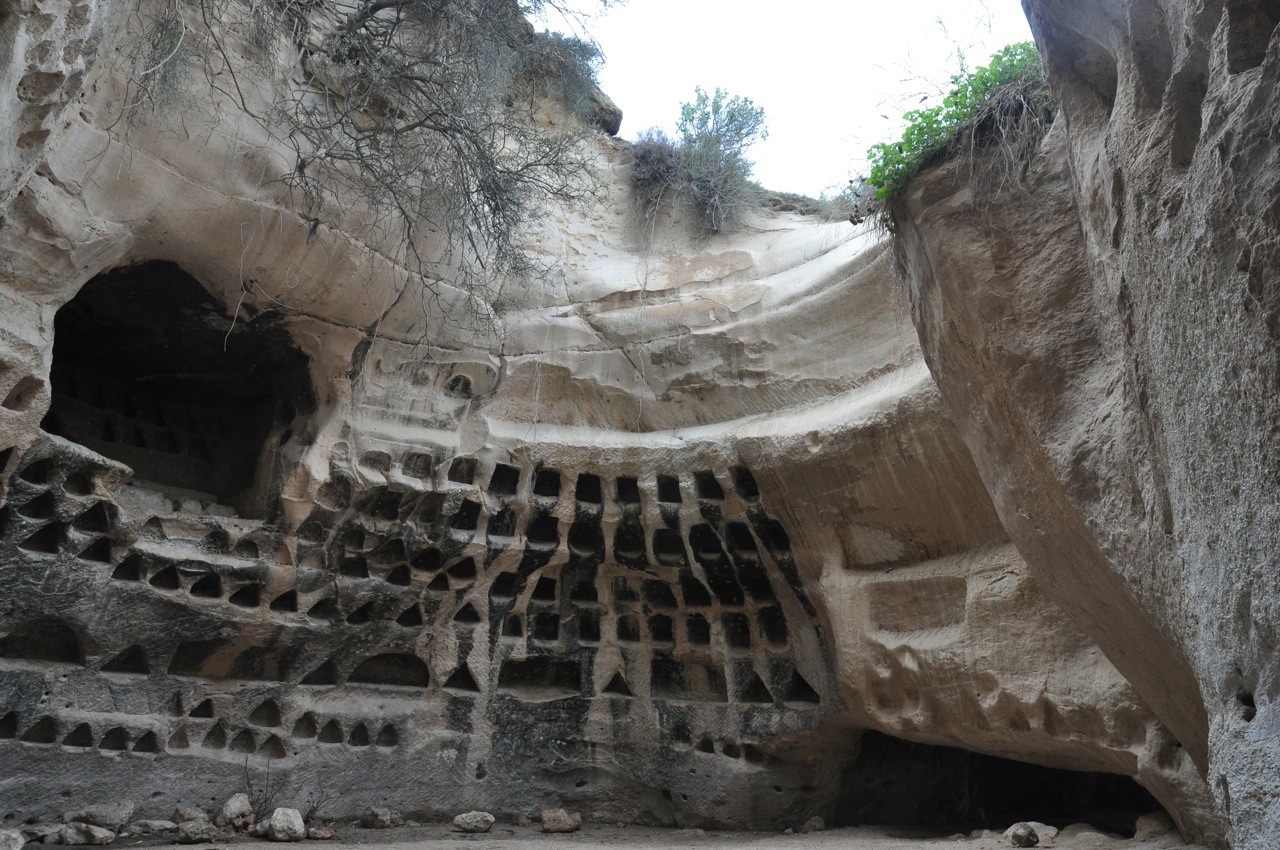
Cut out of the soft limestone is a bell cave with square and triangular niches carved in the walls that was used as a columbarium (dovecote). The pigeons were raised for food and the dung used as fertilizer. Other bell caves were used for storage and hiding during the Bar Kokhba revolt – a collection of chambers were quarried and connected to each other by tunnels. For those who like spelunking you can walk and crawl (about 20 minutes and you’ll need a flashlight and a map) from the bell cave through a circular maze of tunnels through some dozen chambers that takes you back to where you started.

At the top of the hill with a great view of the coastal plain is a stepped, pyramid-shaped structure of dressed stone, the only one of its kind in Israel. The base is about 10 meters and the present height is 3.5 meters but 3 rows of stones are missing bringing the original height to 5 meters. This structure is a nefesh or monument marking a Jewish burial cave.

There is a wall of dressed stones up the hill near the stepped pyramid and nearby part of a niche which leads scholars to identify the building as a 4th century synagogue.

On the way back down you will pass a system of subterranean burial chambers cut in the limestone. The original opening of the cave was from a square patio, the tomb opening was sealed by a large stone disc that rolled on a track in the rock.

Nearby on the western side of highway 38 is a site with Roman milestones from the third century CE, from the days of Marcus Aurelius, with inscriptions of one of the caesars names (Septimius Severus) and his achievements.


*According to Jewish and some Christian traditions the burial place of Zechariah, along with Hagai and Malachi, the last three Hebrew prophets who are believed to have lived during the 5th-6th centuries BCE is in a large catacomb on the Mount of Olives (31.783333°N 35.250833°E). Archaeological research shows that the complex dates from the 1st century BCE, when this style of tombs came into use for Jewish burial. Some Greek inscriptions discovered at the site suggest the cave was re-used to bury Christians during the 4th and 5th centuries CE.

Earthquakes in History and Archaeology

Israel and Jordan lie along the African Rift, that runs from the heart of Africa through the Red Sea, Dead Sea and Jordan River valley, the deepest known break in the earth’s crust. The rift was formed by adjacent continental plates. As the plates move, stress accumulates gradually which is relieved periodically through sudden jolts, experienced as an earthquake. There are many events in the Bible that can be explained by major earthquakes. The destruction of Sodom and Gomorrah on the eastern shore of the Dead Sea in the time of Abraham about 1900BCE is vividly described (Genesis 19). Archaeological research suggests that a great earthquake opened the earth’s crust releasing “brimstone” (sulfur) and volatile petroleum gases which caused a horrific firestorm. The fall of Jericho in 1400BCE was probably associated with a double earthquake. As Joshua and the children of Israel crossed the Jordan River to enter the land, an earthquake-produced landslide at the town of Adam (15 miles to the north) dammed the Jordan.  Historically known quakes have dammed the Jordan River repeatedly, sometimes for several days, in 1160CE, 1267, 1534, 1834, 1906 and 1927. Then God arranged a second tremor, or aftershock, to topple Jericho’s walls (Josh. 6). A major earthquake is reported “in the days of Uzziah king of Judah, and in the days of Jeroboam son of Joash king of Israel” (Amos 1:1), sometime between 760BCE to 749BCE. Geologists believe they have found evidence of this major earthquake in sites throughout Israel and Jordan:

“Masonry walls best display the earthquake, especially walls with broken ashlars, walls with displaced rows of stones, walls still standing but leaning or bowed, and walls collapsed with large sections still lying course-on-course. Debris at six sites (Hazor, Deir ‘Alla, Gezer, Lachish, Tell Judeideh, and ‘En Haseva) is tightly confined stratigraphically to the middle of the eighth century BCE, with dating errors of ~30 years.…The earthquake was at least magnitude 7.8, but likely was 8.2…This severe geologic disaster has been linked historically to a speech delivered at the city of Bethel by a shepherd-farmer named Amos of Tekoa.”

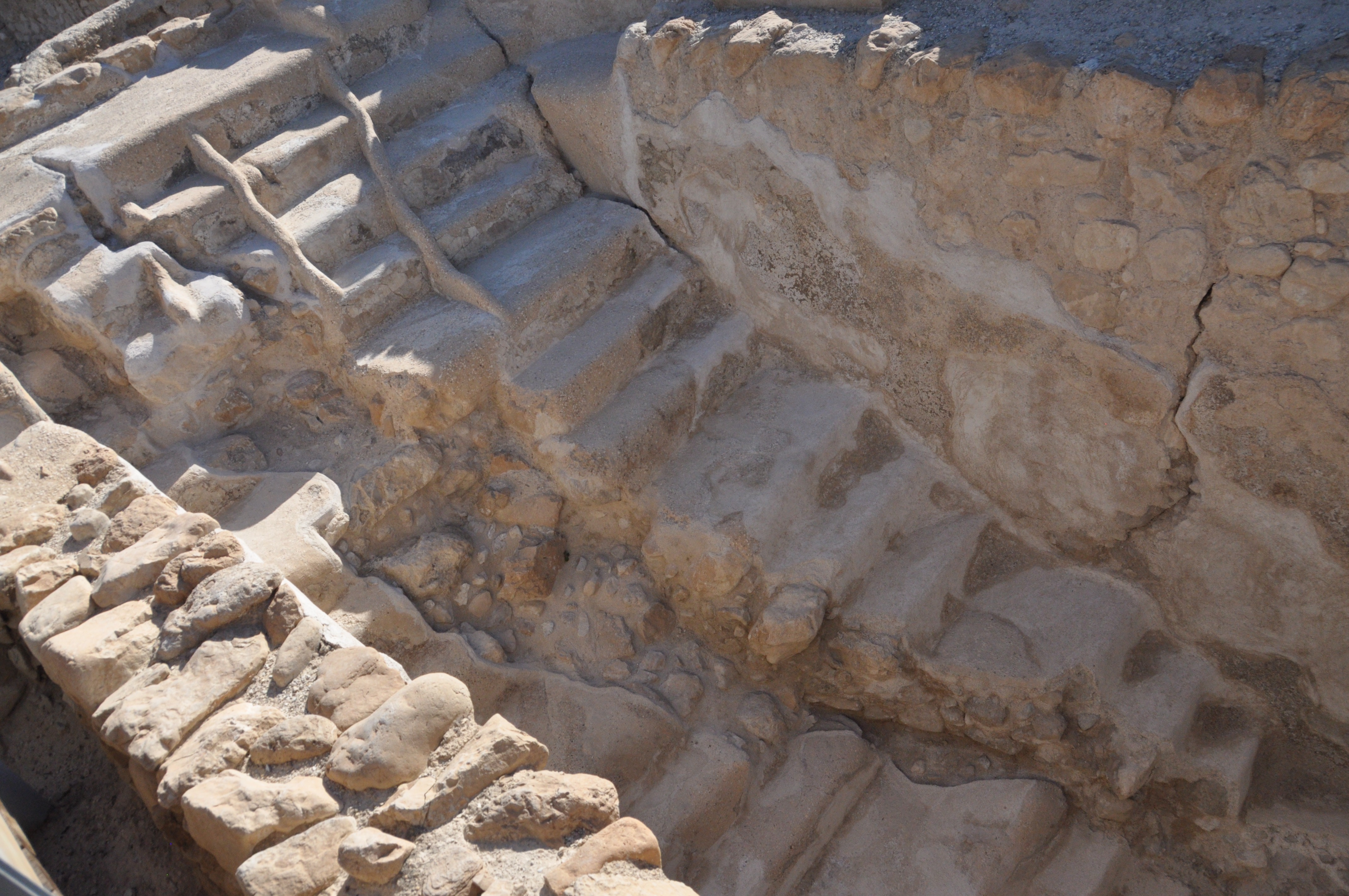
QumranQumran, where the Dead Sea scrolls were found, bears unmistakable evidence of major earthquake destruction in 31BC during the reign of Herod the Great where 10,000 people lost their lives (Josephus). Photo shows staircase to mikve (ritual bath) damaged by seismic activity.

When Jesus died on the cross, the end of his life was punctuated by a severe earthquake, following a strange three-hour darkness covering the land (Matt. 27:50-54) and a second great earthquake occurred on Easter morning at the time of the resurrection (Matt. 28:2). Researchers know that there was an earthquake on April 11, 33CE making it a possible date for the crucifixion. The prevalence of earthquakes during the Second Temple period caused the High Priest when he went into the Holy of Holies on Yom Kippur to include in his prayer a special intention (kavana) that the people who lived on the Sharon plain (a populated area to this day) should be spared the fate of “having their houses become their graves” (Yoma 5b).

A powerful earthquake (7.0 on Richter scale) in 363CE, which caused widespread havoc throughout ancient Israel, destroyed Antipatris (Tel Afek) and Tzippori.

Bet Shean, one of the major Roman cities known from Hellenistic times as Scythopolis, suffered major damage in 363CE and was devastated in the Golan earthquake (6.6 on Richter scale) on January 18, 749CE and never recovered. Photo from the archaeological site at Bet Shean shows toppled columns in a row along the Decumanus, think of a tablecloth jerked under wine bottles. Also on the northeastern side of the Sea of Galilee the other Decapolis city of Sussita and the nearby monastery at Kursi were destroyed and abandoned.

Jerusalem suffered a severe earthquake (6.7 on Richter scale) January 15, 1546: the dome on the Church of the Holy Sepulcher was completely destroyed as were many other buildings. The Dome of the Rock was seriously damaged; the Al-Aqsa Mosque was damaged or destroyed in 749CE, 1033CE, 1546CE and in the 1927 earthquake. The three most destructive earthquakes in Israel since the 18th century happened in 1759, 1837 and 1927. Check out my article about the Nimrod fortress to see a photo of the result of earthquake activity. On January 1, 1837 at 2pm an earthquake “obliterated” Safed, Tiberias and damaged neighboring Arab villages causing more than 5,000 fatalities. Another major quake (6.4 on Richter) occurred on July 11, 1927 at about 16:00 local time. The epicenter of the earthquake was on the western shore of the Dead Sea (31.6, 35.4) just north of Metsoke Dragot. Besides Jerusalem, the cities of Ramle, Tiberias and Nablus were heavily damaged and at least 500 people died. In Jericho, a number of houses collapsed, including several relatively new hotels. In addition, the Allenby Bridge collapsed and the Jordan river was blocked for about 21 hours following the collapse of the marl cliffs on its banks.

Earthquake in Jericho, 1927.  Photo: Matson collection.
Jericho, 1927 earthquake, by American Colony photographer

The last major earthquake to hit Israel was 1927 and on average, there is an earthquake approximately every 80 years. That and the large amount of unrelieved stress (~10 meters) along the African Rift today tells scientists that we are overdue for a major earthquake.

Archaeological Ruins at Cypros

The site of Cypros above Wadi Qelt occupies a commanding position overlooking the Jerusalem-Jericho highway and a spectacular view of the Jericho Plain and the Dead Sea (a good place to take photographs). Originally a Hasmonean fortress, Pompey destroyed it in 63 BCE and King Herod rebuilt it as a palace-fortress and named it for his mother, as recounted by Josephus. After 1967 the Israeli army used it as an outpost of bunkers, today it lies deserted.

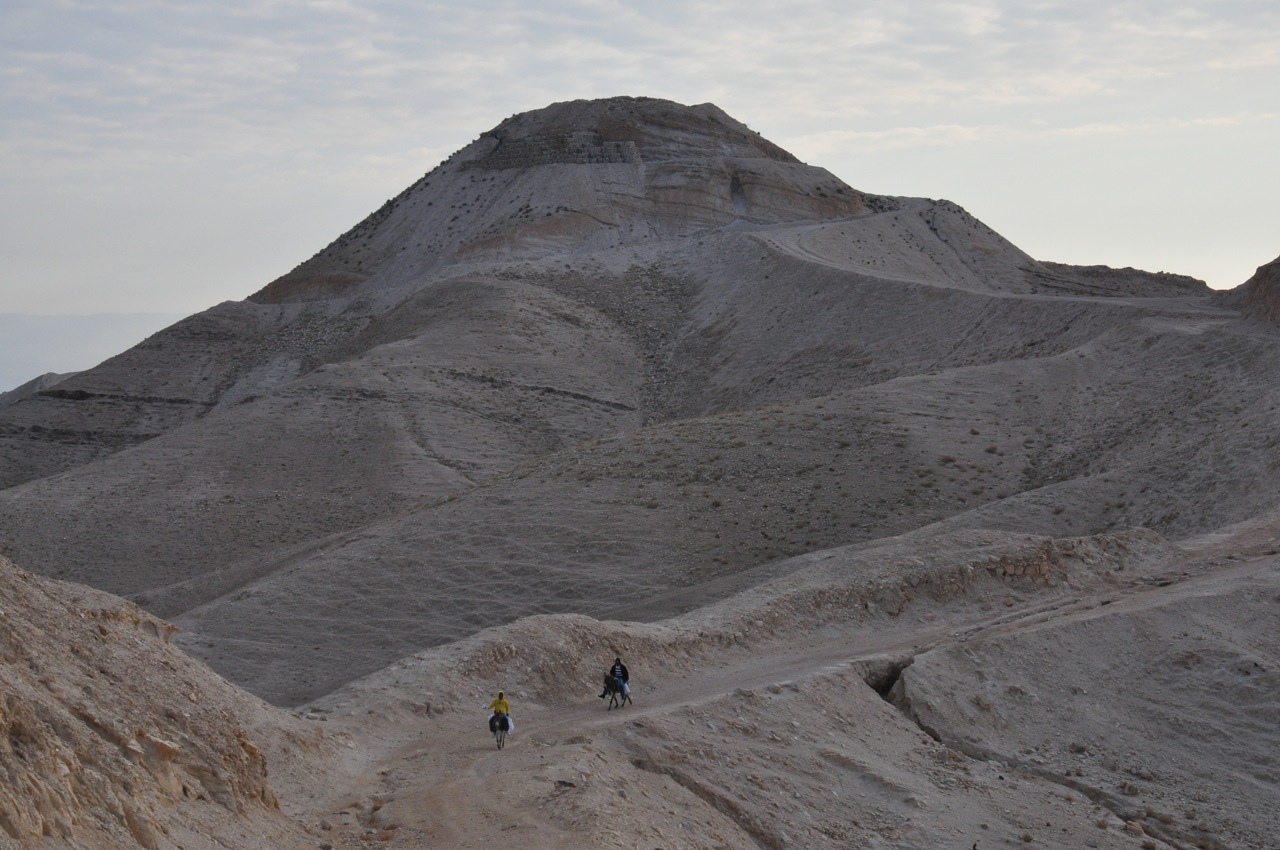
In 1974 Netzer and Damati did preliminary excavations and then left it in ruins. Cypros consists of 2 parts – a palace-fortress on the mountaintop and additional buildings 30 meters below the summit (perhaps Herod got the inspiration for the palace-fortress at Herodium from this site). It’s a short hike from the parking lot entrance to St. George’s monastery in Wadi Qelt to Cypros.

The ruins are not in good condition but there is something special to exploring a site the way an archaeologist might see it as opposed to a site that has been prepared for visitors. The remains of 2 bathhouses are still exposed, one on the mountaintop and the other below that suggest the grandeur of the site in Herod’s time. The remains of a simple white mosaic floor and pieces of plaster with red and yellow from the wall frescoes and the stone pedestals from the hypocaust floor of the calderium can be seen. There are also some sections of columns, one with some of the original plaster.
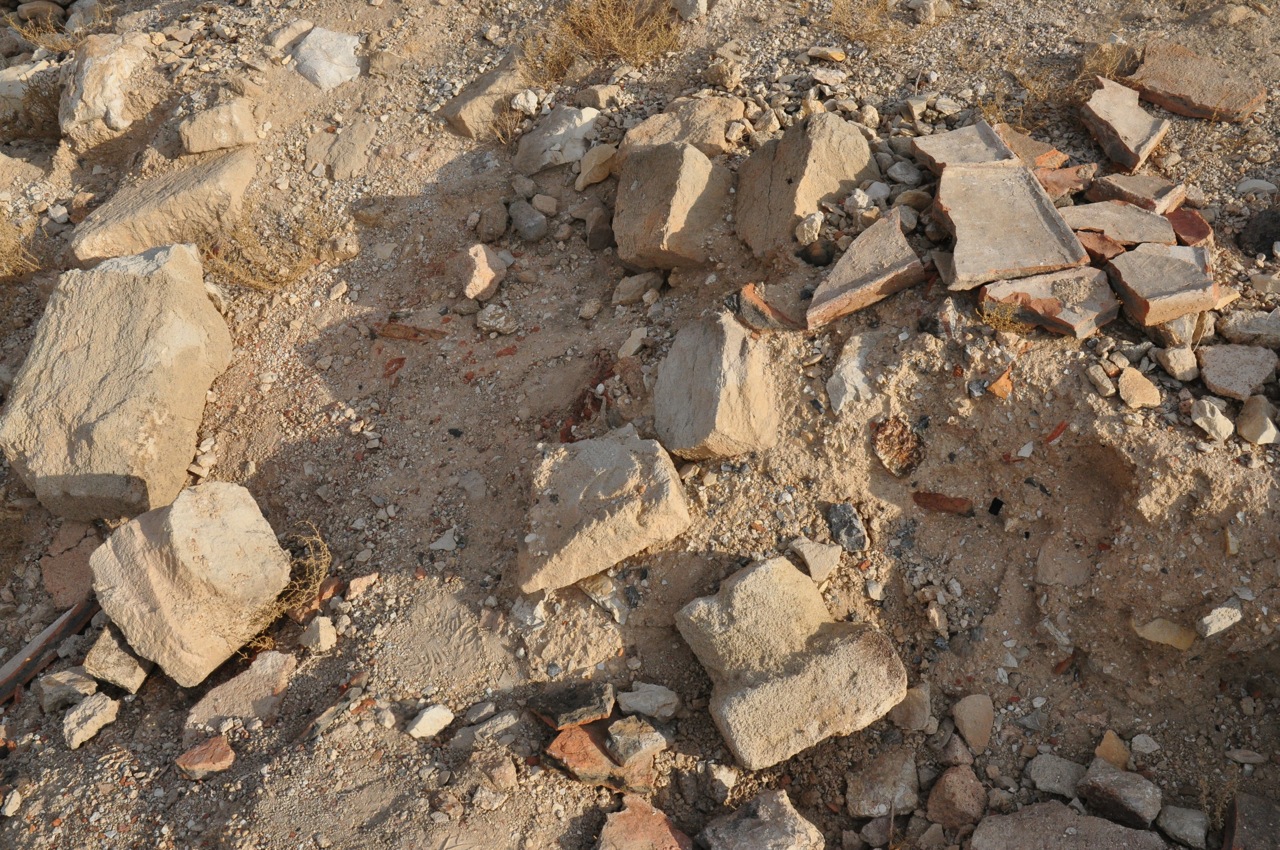
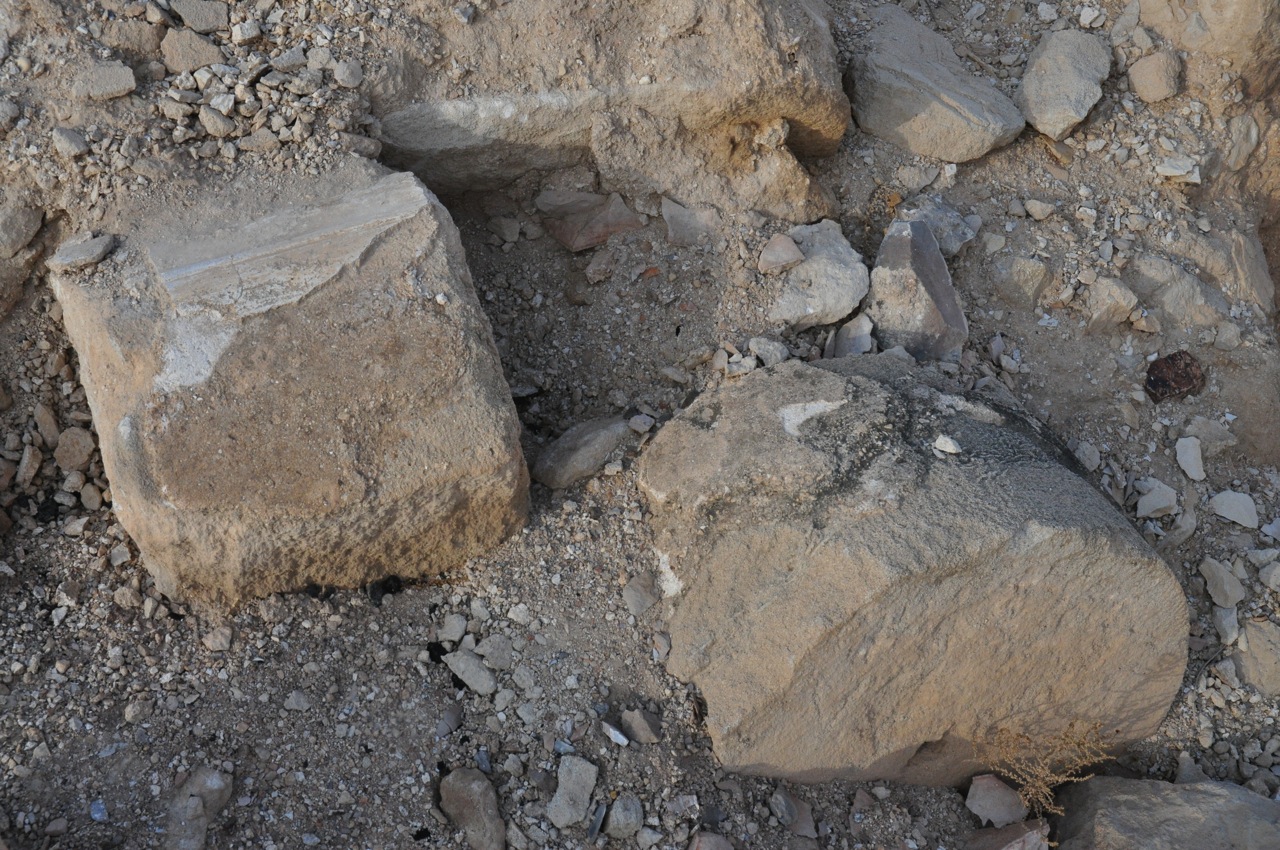

Click on the above thumbnail photos to see larger images.

Beside a mikve (ritual bath) the most unusual element found in situ, is a large stone bathtub – today its position is marked by a concrete recess, the bathtub is at the Rockefeller museum.

Down below in the bathhouse pieces of ceramic pipes that were attached to the walls of the calderium and broken ceramic discs that were piled one on another to hold up the hypocaust floor can be seen.

Walking around the site I came across a few broken pieces of terra sigillata (the first examples that I’ve found at an archaeological site), a type of fine, red-gloss Roman pottery that would have been imported from Italy or Gaul, additional evidence of Herod’s grand lifestyle.

Rosh HaNikra – Cliffs and Grottos

Geography

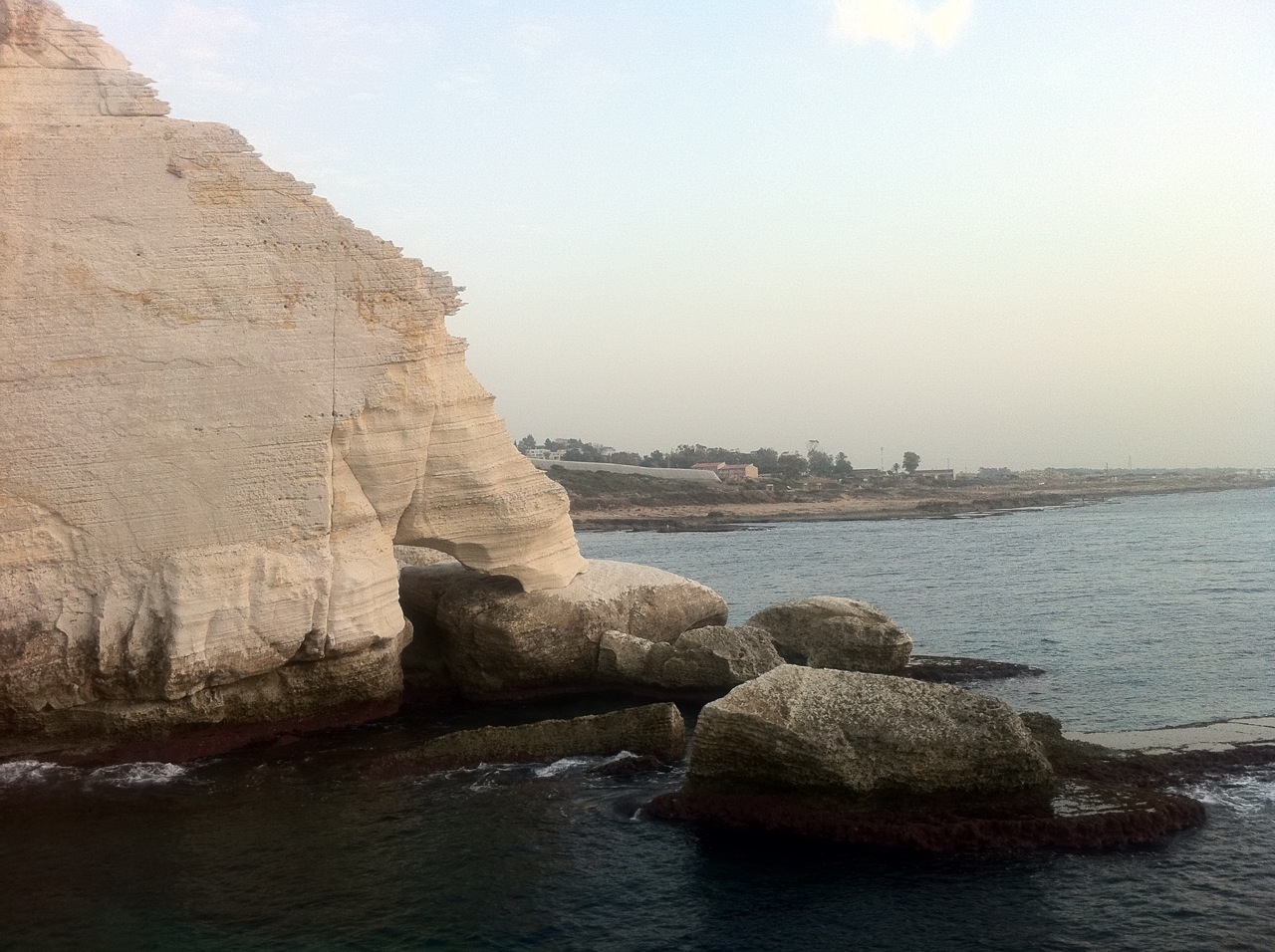
The chalk cliffs of Rosh HaNikra (Head of the Grottos: 33°5′35.24″N 35°6′17.16″E) along the Mediterranean coast mark the border between Israel and Lebanon. The cliffs are a unique geological formation in Israel, made of soft chalk, they descend from the ridge into the sea without an intervening section of beach, consequently they block and hinder movement along the coast.

The cliff consists of 3 layers of rock from the Cenoman period 100 million years ago:

  1. the bottom layer is hard limestone, most of which is under the sea,
  2. the middle layer reaching a height of 70 meters is soft chalk with dark flint and fossils embedded in it,
  3. the top layer is hard chalk and dolomite, similar to limestone.

The grottos are cavernous tunnels started by geological and biological  processes: cracks in the rock formed when seeping rainwater made small caves; duckweeds and other microorganisms on the soft chalk cause it to crumble. Crashing waves took over (with an estimated power of 250 tons per square meter during winter storms) and over thousands of years eroded the soft chalk to form the grottos.

History

Alexander the Great in 323 BCE passed this way, then the Selucids and Ptolemies and later the Arabs, then the Crusaders. The British army cut a road for vehicles during WWI; in 1943 they blasted three tunnels through the cliff joined by a bridge over the grottos so trains could carry soldiers and supplies between Cairo and Istanbul. On the nights of June 16 and 17, 1946, under cover of darkness and cloudy weather, the Carmel unit of the Haganah blew up the bridge during the operation Night of the Bridges. In one night the Haganah destroyed eleven bridges linking Palestine to the neighboring countries Lebanon, Syria, Jordan and Egypt, immobilizing transportation and a blow to British prestige. Twelve days after the attack the British authorities retaliated by imposing a curfew on Jewish communities and launching a security operation known as Operation Agatha or Black Saturday. With the involvement of 100,000 British troops they arrested 2,700 Jews, including many in senior leadership positions. In addition the British confiscated important papers about the Jewish underground which were taken to military headquarters at the King David Hotel in Jerusalem. On July 22, 1946, the Irgun in consultation with the Haganah bombed the King David Hotel. When the telephone warnings went unheeded and the hotel was not evacuated, 92 people were killed and the southern wing of the hotel destroyed.

Rosh Hanikra was the site where in 1949 Israeli and Lebanese officials signed an armistice agreement ending the War of Independence.

In the past, the only access to the grottos was from the sea and experienced divers were the only ones capable of visiting. In 1968, a tunnel was hewn into the cliff to give access to the grottos and then a cable car, “the steepest in the world” was installed to take visitors up and down. If you like cable cars, try to ride the other 3 in Israel, at Masada, Menara cliffs and from Bat Galim up to Stella Maris – all have great views (so don’t forget your camera)!

There is also a promenade along the shore that follow the British railroad tracks, through the Rosh HaNikra nature reserve to the Betzet beach, where every year giant sea turtles lay their eggs. Along the way, you can see some pools that the Phoenicians quarried and used to evaporate seawater to get salt,  grow snails for the blue techelet and purple dyes and as wine vats.

Nubian Ibex

Wild goats are very agile and hardy, able to climb on bare rock and survive on sparse vegetation. The Nubian ibex (Capra ibex nubiana) is a rocky desert dwelling goat found in mountainous areas of Israel and throughout the Middle East that eats mainly grasses and leaves. Archaeologists have found evidence of the ibex on cylinder seals and painted on pottery. You can find rock drawings of ibex on a hill above Carmei Avdat, a family farm where grape vines grow on original Nabatean terraces.

Ibex rock drawings

Across from the farm is the En Avdat nature reserve. I was hiking with a client in the canyon mid-morning and the sun was perfectly backlighting a grove of Euphrates poplar trees for a great photo. Near the entrance is a large Pistachio Atlantic tree with gnarled branches and strong roots anchoring it in a field of rocks. This tree was ablaze in reds and yellows – one of the things I miss is the beautiful autumn colors I used to see in Canada. As I looked up among the branches I saw an ibex that had climbed 10 feet up into the tree. Unfortunately, I didn’t have my camera.

There is a good chance to see ibex at nearby Sde Boker, overlooking Nahal Zin. Farther south, you can see ibex in the parks and on the edge of the makhtesh at Mitzpe Ramon.

Ein Gedi is a great place for a hike, to take a family to experience springs, waterfalls and pools in the desert. Today as we pulled into the parking lot, we saw a male ibex on the roof of a Eldan rental car so that it could reach the leaves of a nearby tree. I know ibex are good climbers and the ibex in the Ein Gedi reserve are used to people but that was certainly a surprise.

Ibex at Ein Gedi on car roof