Category Archives: Museum

Prince of Wales Pine Tree

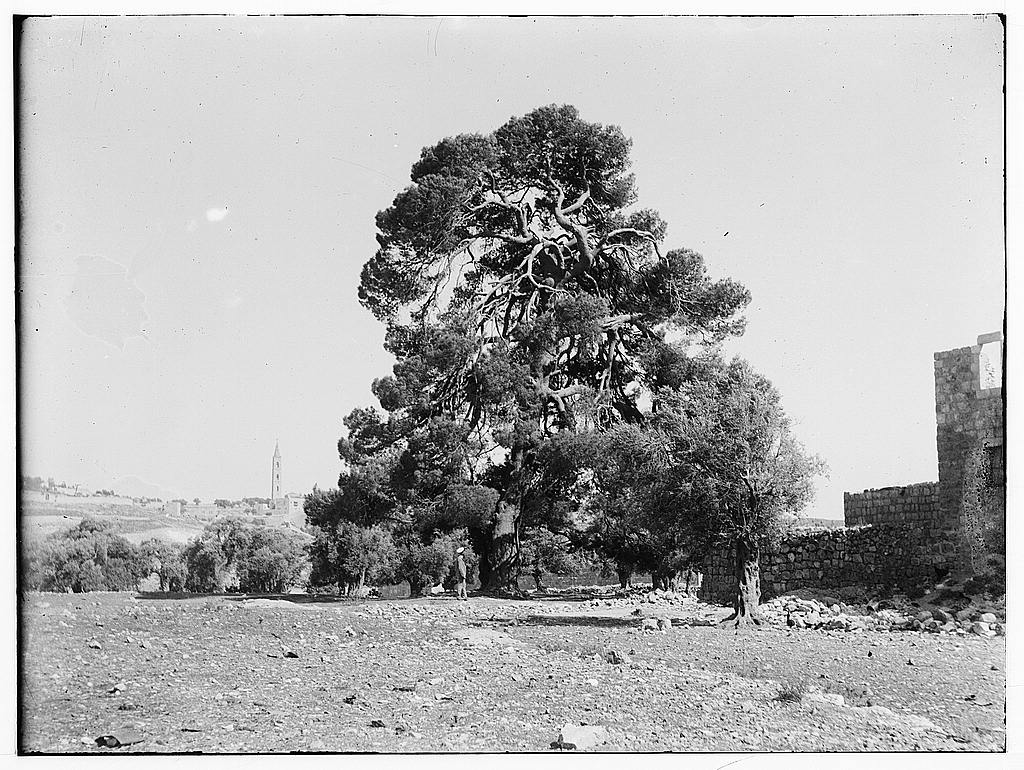
I was visiting with friend and fellow tour guide, Tom Powers, in Bethlehem and we were talking about our interest in photography and what you can learn by comparing photographs taken 100 years ago or more with the same scene today. I mentioned Francis Bedford’s photographs from Edward, Prince of Wales visit to this area in 1862 and my guiding for the BBC to Mar Saba and my blog post https://israeltours.wordpress.com/2013/03/19/mar-saba-and-judean-desert-revisited/. This reminded Tom of a photograph from the Matson collection, image #00776, titled “Prince of Wales Tree near Palestine Museum” (link to the image online at http://lcweb2.loc.gov/service/pnp/matpc/00700/00776v.jpg).

Prince of Wales Pine Tree

Tom did the research and wrote the captions for several hundred high-resolution photographs taken between 1898 and the 1940s in the American Colony and Eric Matson Collection. The complete set of photographs, some 4,000 images has been produced as two DVDs by Todd Bolen – http://www.lifeintheholyland.com/49_matson_american_colony_8_volumes.htm
Here is the writeup for the Prince of Wales Tree:

The area pictured lies north of the northeast corner of the Old City. The view is to the southeast, with the Russian Ascension Tower on the Mount of Olives visible on the skyline (left). The Rockefeller Museum buildings, if they are visible at all (through the trees), would be in an early stage of construction.
A late 19th century observer describes this area as “a large field on the north-east side of the town, which extends from the town-ditch [rock-hewn Crusader moat at the Old City’s NE corner] to the splendid pine tree near an oil-press worked by the Moslems. This region is known by the general name of Kerm esh Sheikh [the Sheikh’s Vineyard]”
— Charles Clermont-Ganneau in Archaeological Researches (1899), Vol. 1, p. 248
The “Sheikh” was Muhammad al-Khalili a prominent member of an aristocratic Muslim family from Hebron who settled in Jerusalem in the 17th century and owned this plot of ground. In antiquity it was a cemetery, whose many documented burials stretch back to the Hellenistic period, and in Crusader times it served first as the staging-ground for Godfrey de Bouillon’s successful assault on the nearby city wall on July 15th, 1099, and later as a farm called by the Crusaders “Belveer.”
Muhammad al-Khalili, who served for a time as Mufti of Jerusalem, built a two-story summer residence here in 1711, the structure seen at right, which came to have the name Qasr el-Sheikh. It had an olive press on the ground floor and living quarters above and was one of the first buildings ever erected outside the Turkish city walls. Such buildings were especially useful for guarding the agricultural fields that covered the area, and the property of “Karem esh-Sheikh” was planted with olive and fig trees, date palms, and of course grapevines.
As for the tree, it is said that Muhammad al-Khalili brought the pine seedling from Hebron, wrapped in his head-covering, and planted it here. When it was grown, the venerable pine seems to have become a well-known local landmark, and over the years numerous dignitaries, including members of the British royal family, enjoyed its shade. Among them was Edward, Prince of Wales (later to be crowned King Edward VII) who visited Jerusalem in 1862 and made his encampment here, hence the tree’s name. In 1865 Prince Arthur likewise camped at the site.
In the late 19th century the Muslim Rashidiyah School was built on part of Karm el-Sheikh and it remains in use today as part of Jerusalem’s public school system. At the beginning of the 20th century the Arab neighborhood of Bab a-Sahairah, named after the nearby city gate (Herod’s Gate), grew up in the surrounding area. Then in 1919 the Mandatory government selected the site for the construction of an archaeological museum, although it was only in 1930 that the eight-acre tract, Karm el-Sheikh, was purchased from the al-Khalili family and the cornerstone was laid. Construction was completed in 1935, and the museum officially opened to the public in 1938.
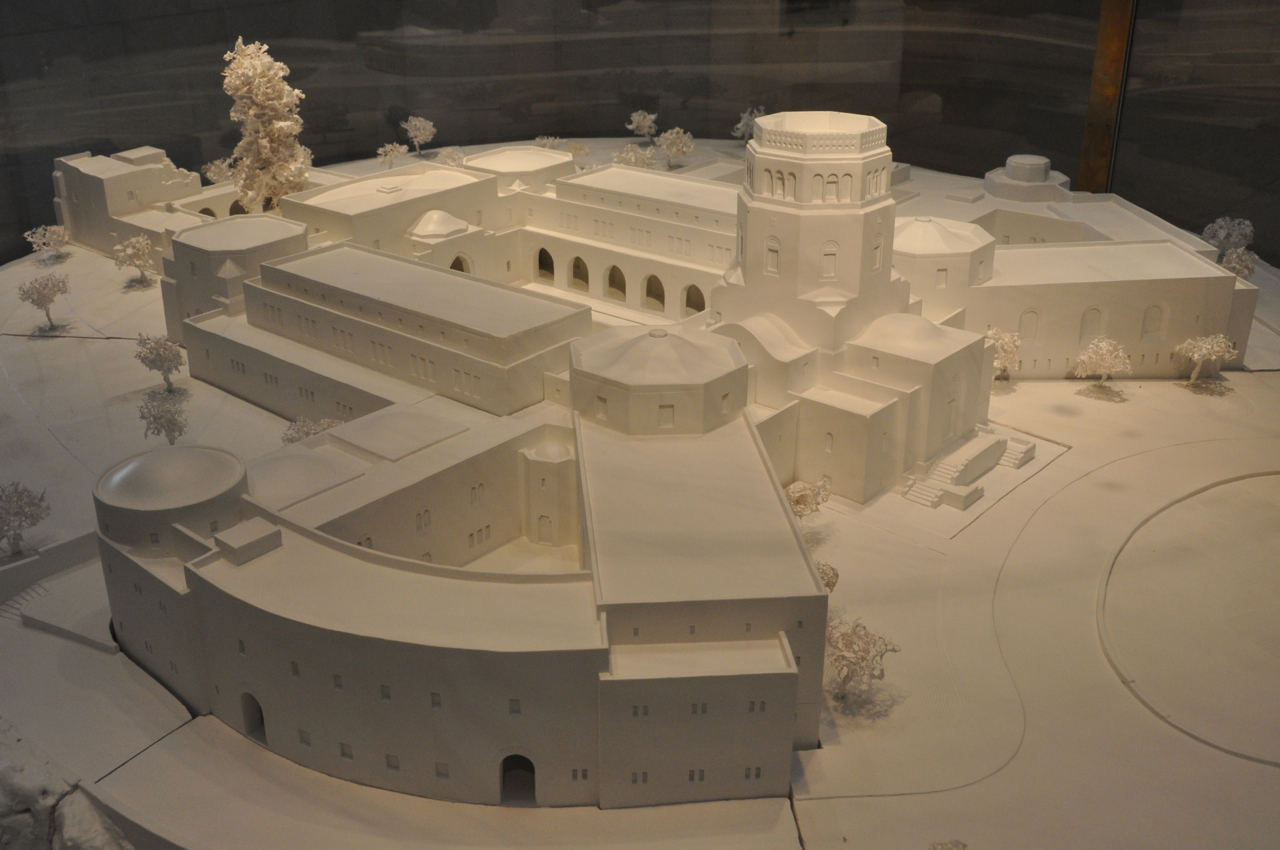
At the time the Rockefeller Museum was coming into existence, the old “Prince of Wales Tree” still stood here, just to the west of the main museum site. In fact, the original architectural plan called for a rear (western) courtyard surrounded by cloisters, which would communicate between the historic villa structure, Qasr el-Sheikh, and the main museum building. And the old pine tree, at the suggestion of Rockefeller himself, was to have pride of place at the center of this court, as “an ‘organic’ counterpart to the imposing tower” at the front of the building. This meant, in concrete terms, that the central axis of the entire museum complex was aligned on the tree!
Rockefeller museum model
In the end, the envisioned rear courtyard was never realized, nevertheless the venerable tree — through all the vicissitudes of British, international, Jordanian and then Israeli control – stood as a silent witness behind the museum. In its later years it was actually propped up by a special concrete buttress, however by 1988 the so-called Prince of Wales Tree – then close to 300 years old – had finally died and had to be cut down. The great stump is still visible behind the museum. As for the historic villa, Qasr el-Sheikh, much of it remains intact; restored and modernized, it today houses the Restoration Department of the Israel Antiquities Authority.
Rockefeller museum and pine tree

Sources:
  1. A. Mertens, “Who was a Christian in the Holy Land? (Edward VII)”, an on-line resource at www.christusrex.org
  2. West Meets East: The Story of the Rockefeller Museum (2006), by Fawzi Ibrahim; excerpt online at http://www.imj.org.il/rockefeller/eng/index.html

Photo of the Week – Dor Habonim beaches

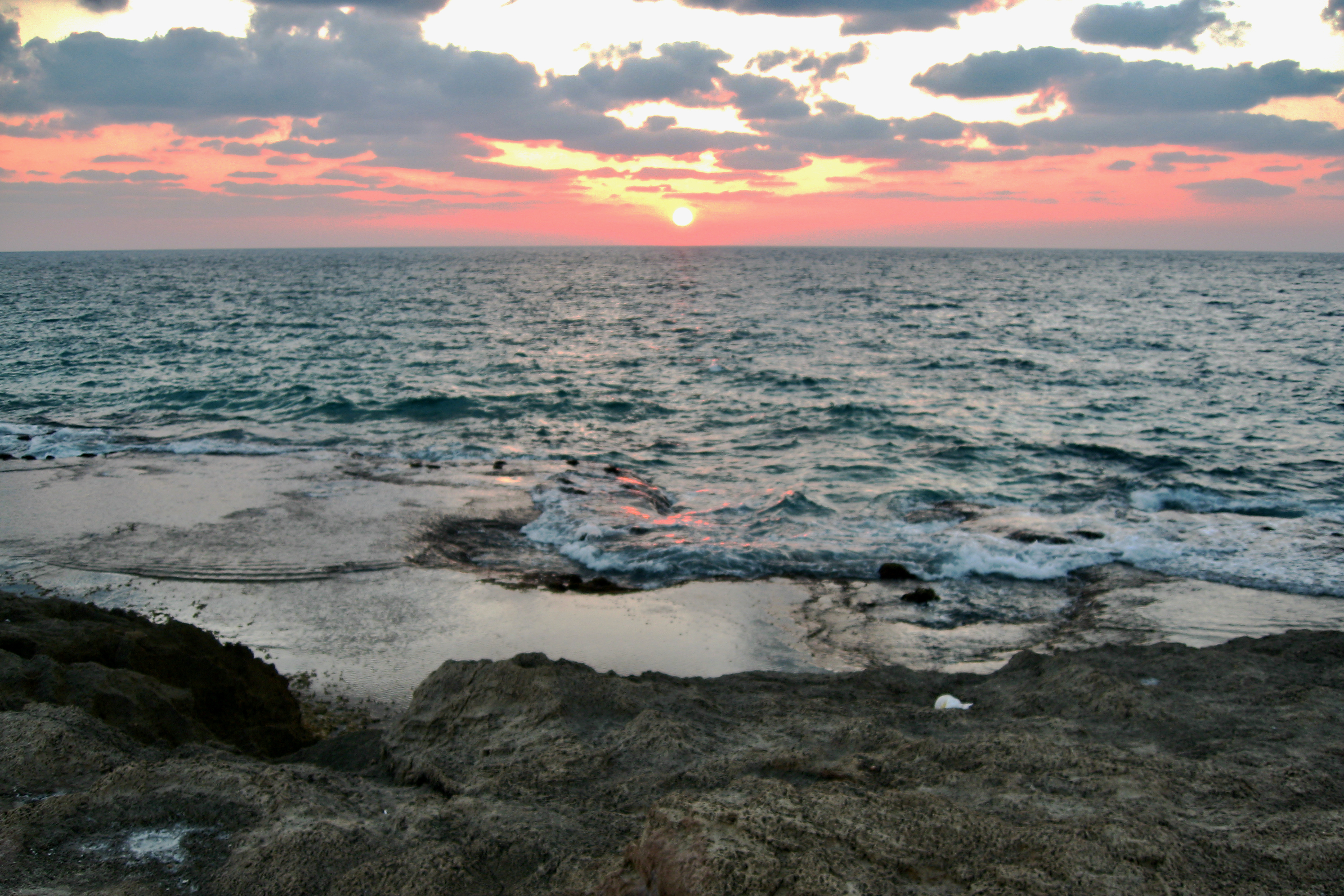
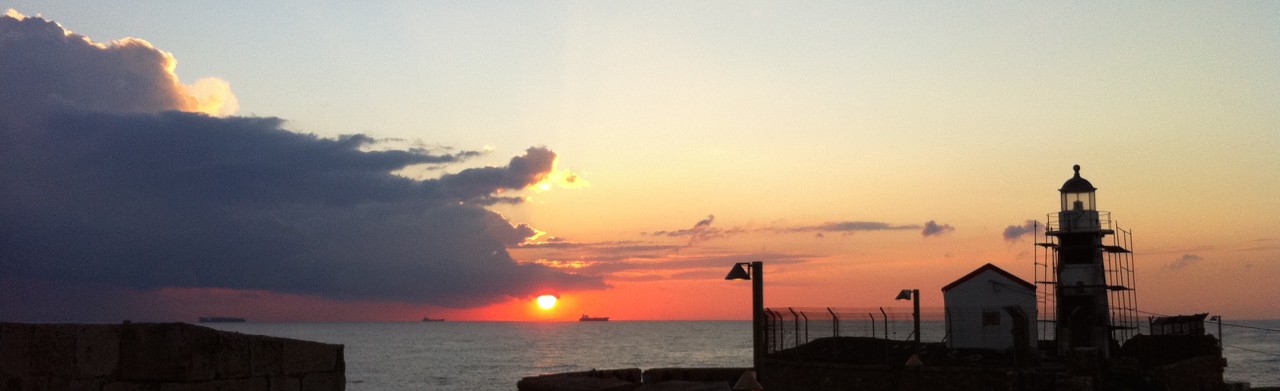
This photo is at sunset at one of my favorite Israeli, Mediterranean coast beaches. Just south of Haifa called Hof Habonim, it is part of a coastal nature reserve under the Israel Parks Authority. There are two natural lagoons protected by natural rock jetties, picturesque and calm.

HaBonim IMG_0204

The technical details – the photo was taken with a Canon point and shoot camera in October (ISO 50, 12.5mm, F3.5 at 1/160 sec).

If you tire of hanging out at the beach there is a lovely walk along the coast south to the beach at Dor-Nachsholim. There you can rent sea kayaks, check out the excavations at the tel and visit the Mizgaga museum. The museum, housed in the 1891 factory that attempted to manufacture wine bottles for Baron de Rothschild’s wines, displays regional and nautical archaeological finds.

You can click on the image for a larger view (which may take some time to load depending on your Internet connection). Please share this post with your friends by clicking on the icons at the end of this message.

Photographs on this website are © Shmuel Browns (unless marked otherwise) – if you are interested in purchasing one of my photos or using one of my photos for your own project please contact me.

Israel Roundup

ARTIFAX magazine and The Book & The Spade radio program have published the Top Ten Discoveries in Biblical Archaeology in 2012. At #3 is a First Temple period cistern with a 250 cubic meter capacity that was discovered by chance during the ongoing clearing of the drainage channel near Robinson’s arch. Press release at http://www.antiquities.org.il/article_Item_eng.asp?sec_id=25&subj_id=240&id=1958&module_id=#as

Photo credit: Courtesy of the Israel Antiquities Authority/Vladimir Naykhin

Photo credit: Courtesy of the Israel Antiquities Authority/Vladimir Naykhin

Found while sifting material from City of David, at #4 is a fiscal bulla, a clay seal impression with three lines of script, related to the taxing of shipments at the time of King Hezekiah, the earliest mention of Bethelehem. Found while sifting material from drainage channel near Robinson’s arch, at #5 a personal seal with the name Matanyahu inscribed on it dated to the end of the First Temple period, see https://israeltours.wordpress.com/2012/05/03/first-temple-period-seal/

Jewish National Fund (JNF) has published a map of Israel with 110 “great old” trees marked. One example, #91, a Common Oak, called the “Lone Tree” symbolizing the Gush Etzion bloc south of Jerusalem that has a height of 10 meters, trunk circumference of 3.5 meters and is estimated to be 500 years old. I do a tour that includes the moving audio-visual presentation on the history of the Gush at Kibbutz Kfar Etzion, gourmet lunch at Gavna in the forest with a view all the way to the Mediterranean and a tour of the Lone Tree microbrewery.

Lone Oak

Herod the Great: The King’s Final Journey exhibit at the Israel Museum is an exceptional opportunity to encounter the material opus of Herod the Great – his architecture and aesthetics, and the work of his chief archaeologist, Professor Ehud Netzer. Evidence of Herod, the meaning, struggles, and accomplishments of his life beckon beyond the exhibit halls, to the sites where he fought, ruled, dreamed, and built – Herodium, Masada, CyprosSebasteCaesarea, Banias and Omrit

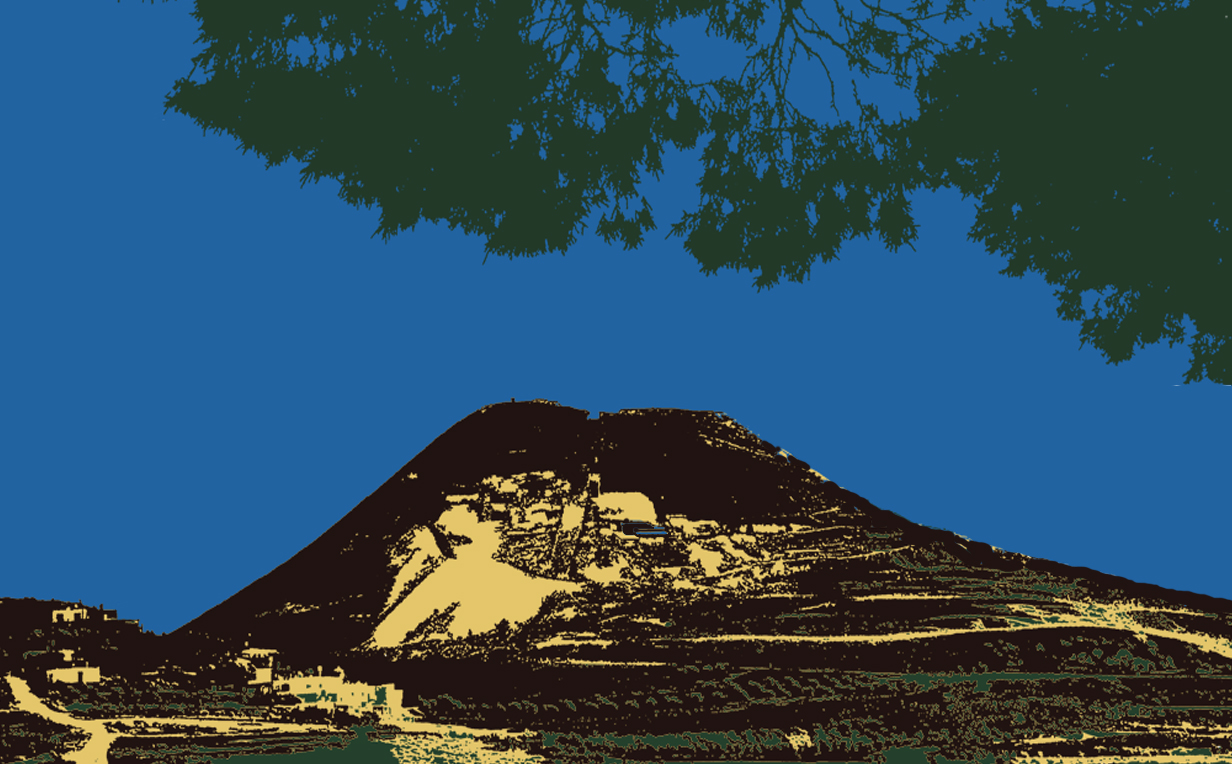
Herodium-4colourFor those who will be in Israel, I am leading in-depth full-day tours of Herodium and the Israel Museum’s Herod exhibit, for details see https://israeltours.wordpress.com/herod-the-great-tour

For those who will not be able to visit Israel, I posted a few articles with photos of the exhibit.
Here are the links to check for photos:

The Israel museum has published a 277 page hardcover catalog of the exhibit. You can order a copy by sending an email to shop at imj.org.il
ARIEL has released volume 201-200 Art and Architecture in Jerusalem and Israel in the Second Temple Period (in Hebrew) in memory of Prof. Ehud Netzer.

From the pantry at Herod’s palace-fortress at Masada, amphorae – large clay jars that held imported delicacies – attest to the luxury and sophistication of Herod’s palate: apples, honey, fine wine, and garum, a savory Roman fish sauce. One amphora bears an inscription of Herod’s name in Latin and Greek. For more about garum, https://israeltours.wordpress.com/2010/11/25/food-discoveries-masada-garum/

Film documentary: Volunteers with military experience, many from America, came to Israel around 1947 to help the fledgling Jewish state. Their acronym, Mahal (MH”L}, stands for מתנדבי חוץ לארץ. The 3 large Hebrew letters, מח’’לֹ, stand as a monument at Sha’ar Hagai, on the road to Jerusalem. Playmount Productions has released a sample from their upcoming documentary Above and Beyond: The Birth of the Israeli Air Force.

Emek Habacha project: Estimated at €250 million to install 50 130 meter tall (height of the Azrielli Towers in Tel Aviv) wind turbines able to produce 120 megawatts has received approval. These will replace the 10 wind turbines that produce 6 megawatts at Tel Asania. I blogged about the old wind turbines in May 2011 at https://israeltours.wordpress.com/2011/05/02/wind-turbines-on-golan-trail/

Herodium, Netzer, King Herod and the Israel Museum

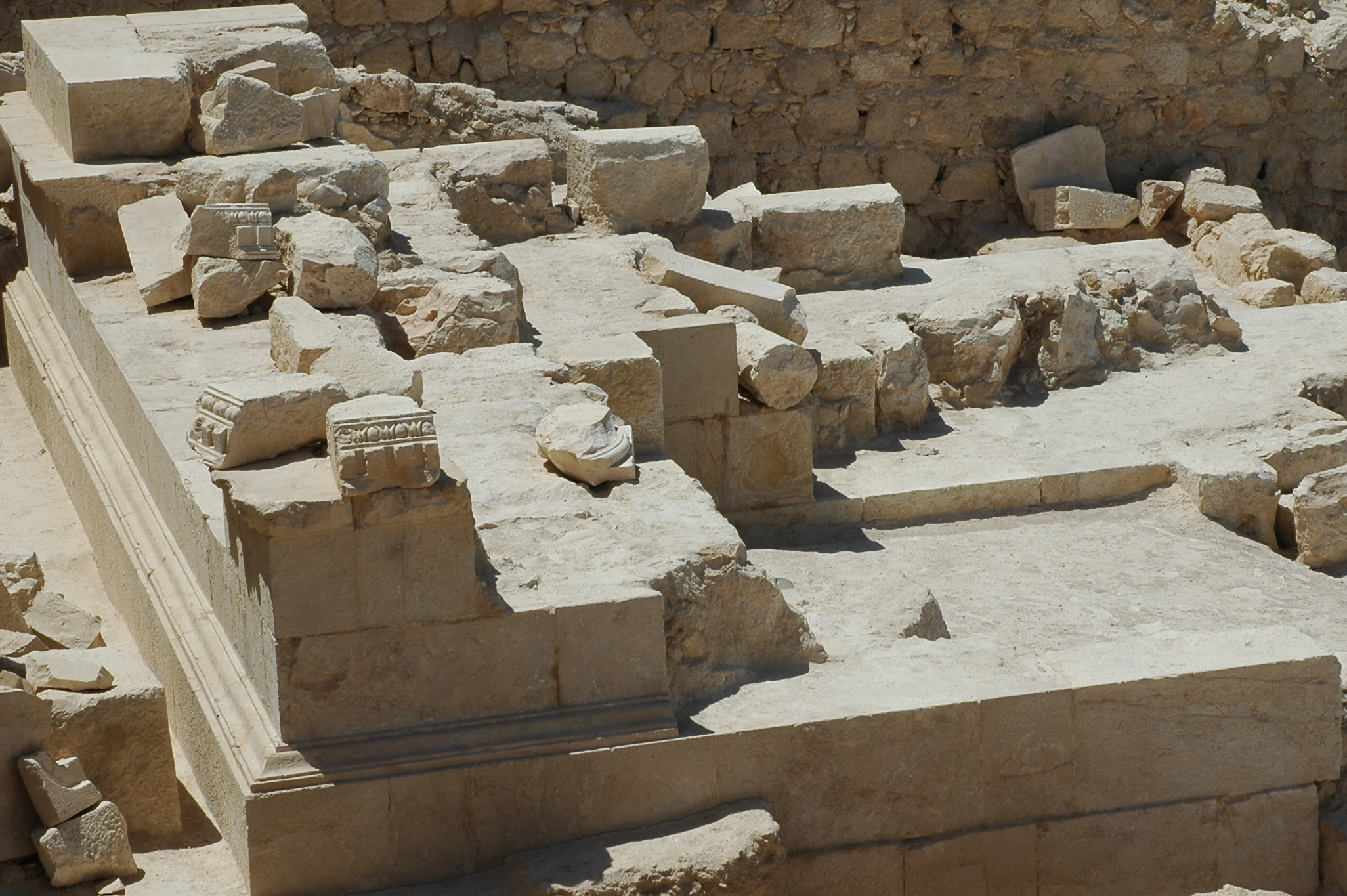
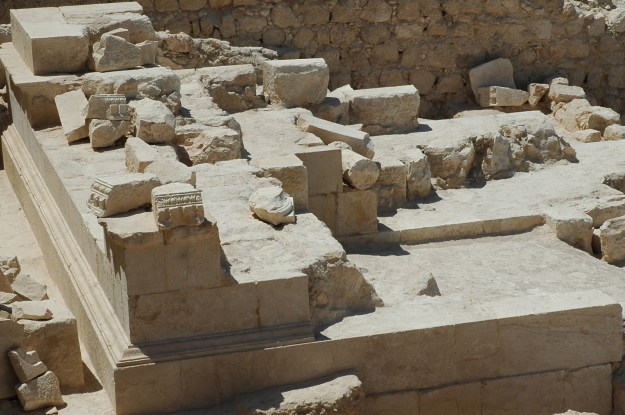
Each day we rose before dawn and the unrelenting desert heat to continue digging east of the monumental staircase. In the summer of 2007, after Professor Netzer had discovered the base of the mausoleum, I volunteered at the archaeological site at Herodium. Among seas of pottery shards, we dug up baseball-sized stones hurled by a Roman catapult (ballista). Scanning with a metal detector, we found tiny, encrusted bronze coins, from the period of the Great Revolt.
Herodium Tomb area

We uncovered a few well-carved stones strewn about – an egg and dart pattern, two five-petaled flowers from a decorative frieze. The high-quality limestone is meleke, from the root “king”, is not local to the site; it had been brought to Herodium specially for the mausoleum. At Herodium last week, these pieces were not to be found.
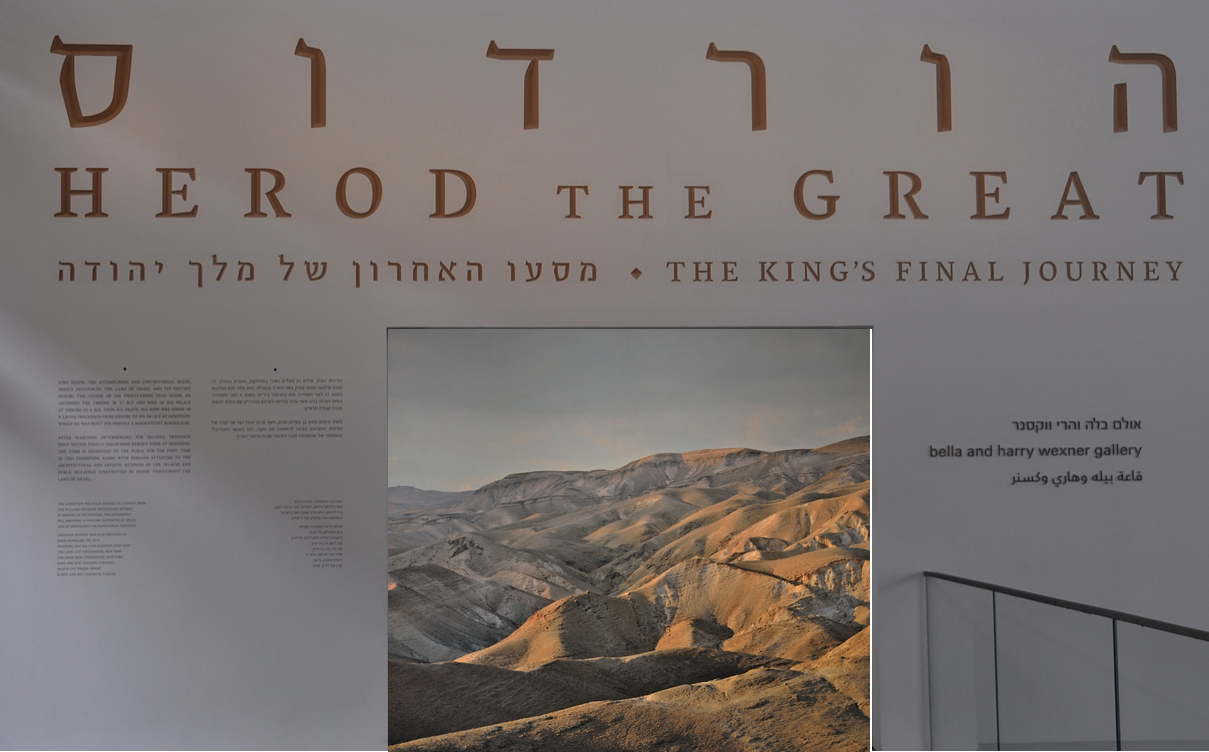
Herod the Great exhibit

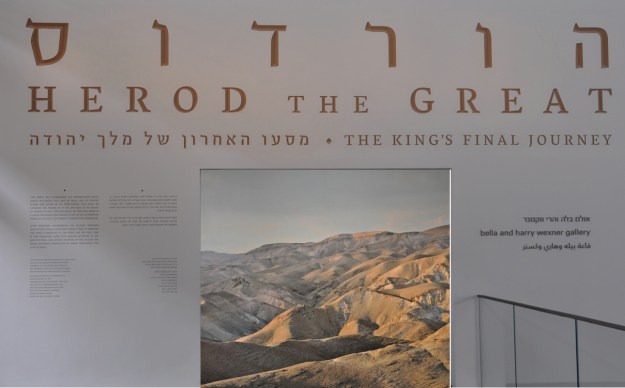
The first image at the entrance to the Herod exhibit at the Israel museum opening today is neither architecture or artifacts, but the Judean desert – the site where Herod built his monuments is important.

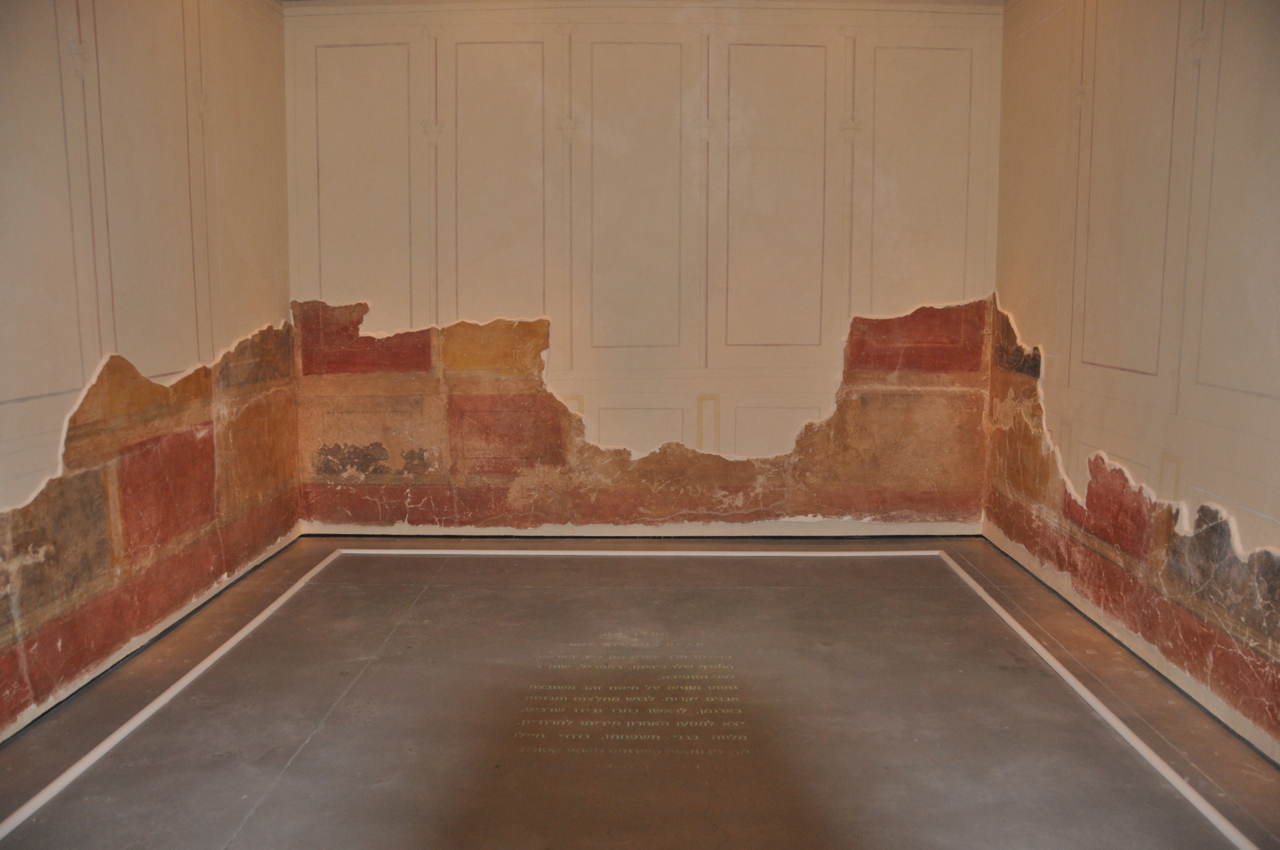
Throne Room, JerichoFollowing Herod the Builder, museum staff re-constructed three rooms from Herod’s palaces at the museum. The first room you enter is a replica of the throne room from Herod’s third palace at Jericho, excavated by Netzer for his doctorate. The original frescoes with their intense natural colors were removed from the palace and moved to the museum. So fond of Herod, Augustus had permitted him to mine cinnabar, a red mineral pigment, from his private property in Almadén, Spain.

When Marcus Agrippa, Augustus’ deputy visited Judea in 15 BCE, he was so impressed by Herod’s building projects that he sent Roman builders and artists to Judea to contribute their sophisticated skills. Opus recticulatum is a technique for strengthening walls to resist earthquake damage. All three examples of this Roman technique are found in Herod’s projects, discovered by Ehud Netzer: in the palace at Jericho, at the remains of a building north of Damascus gate rumored to be Herod’s Family tomb, and in a section of temple wall at Banias.

Bathtub Opus Sectile

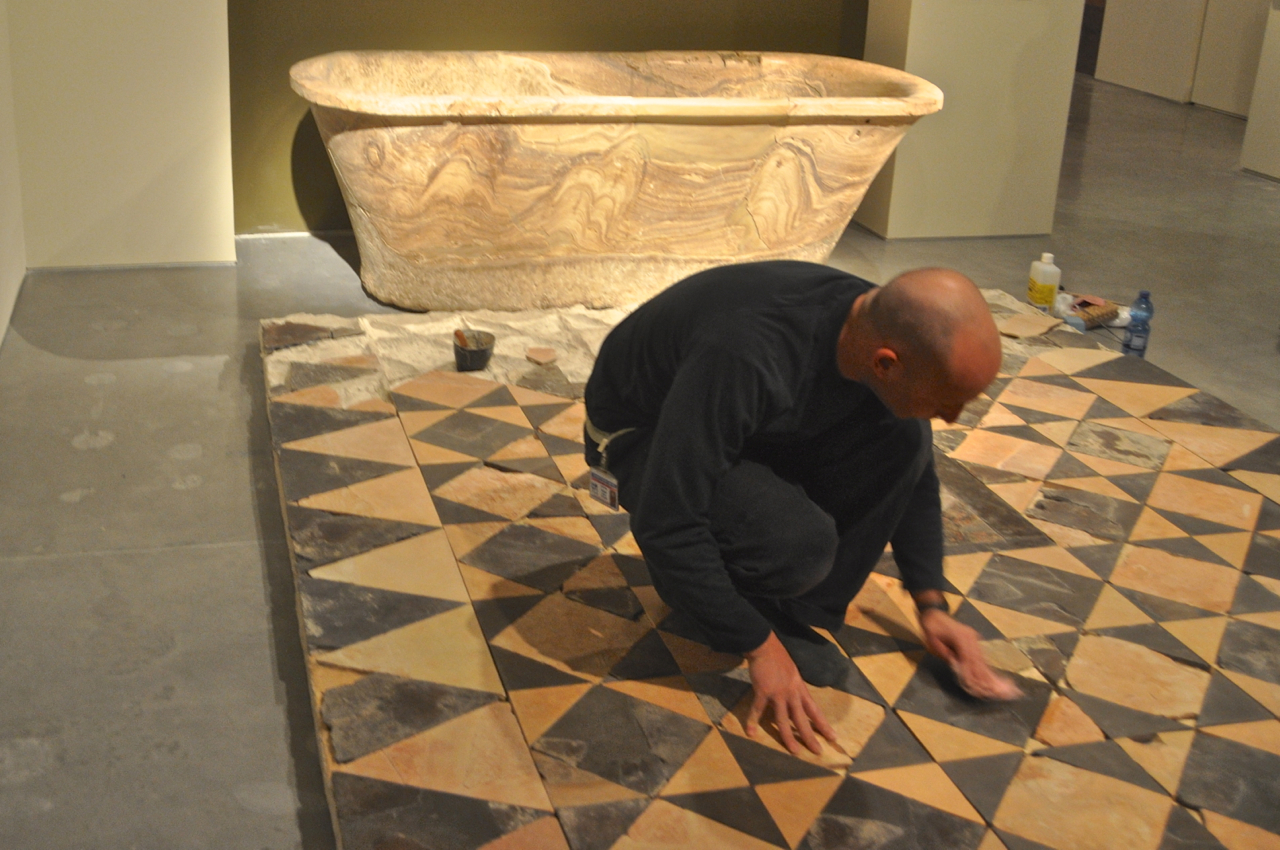
The second room displays Herod’s private stone bathtub uncovered by Netzer at the palace in Cypros. The museum displays floors from Cypros and Herodium laid with a Roman technique, opus sectile. Natural-colored stone tiles are cut in geometric shapes and laid in repeated patterns. In other cases, the floors are mosaic – two mosaic floors from the bathhouse at Lower Herodian, one in an opus sectile pattern and the other geometric shapes with pomegranates.
Secco - loggia

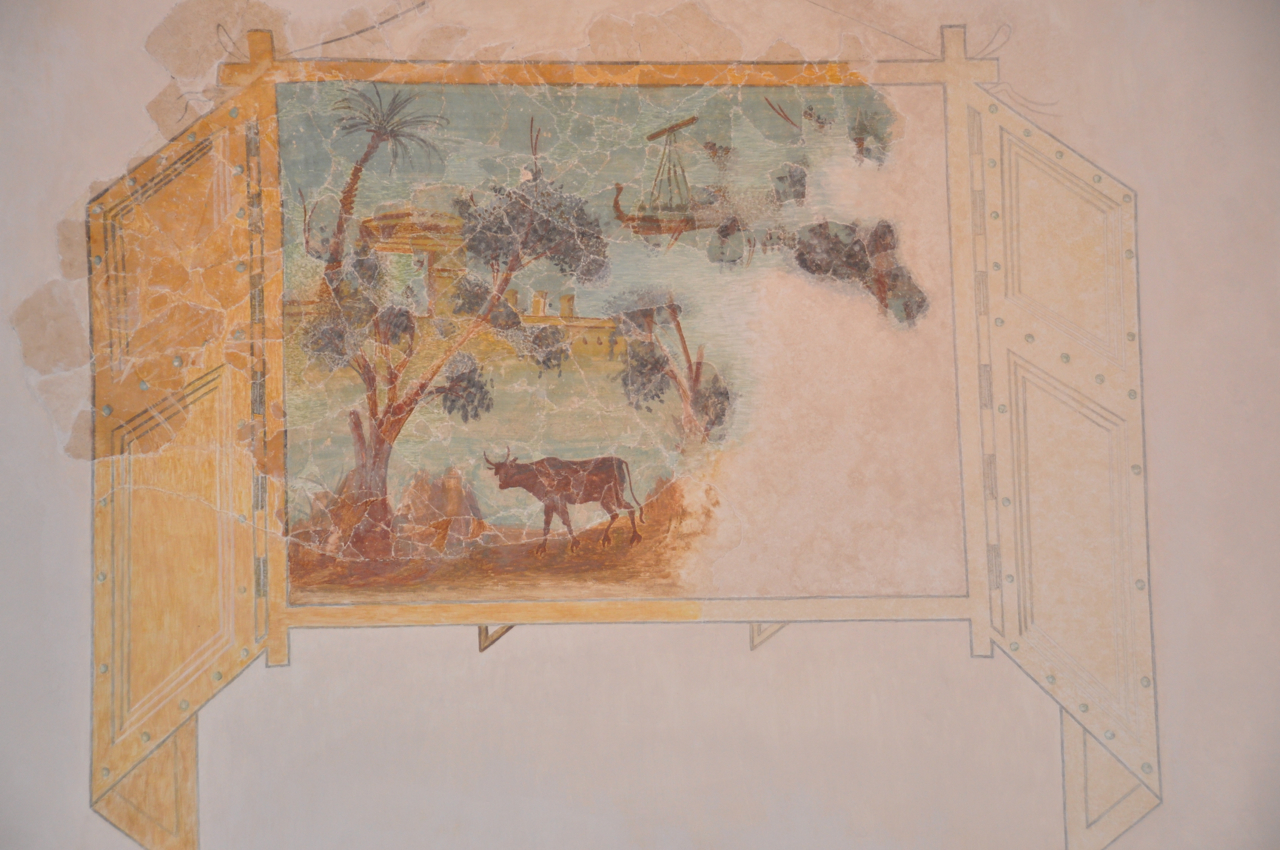
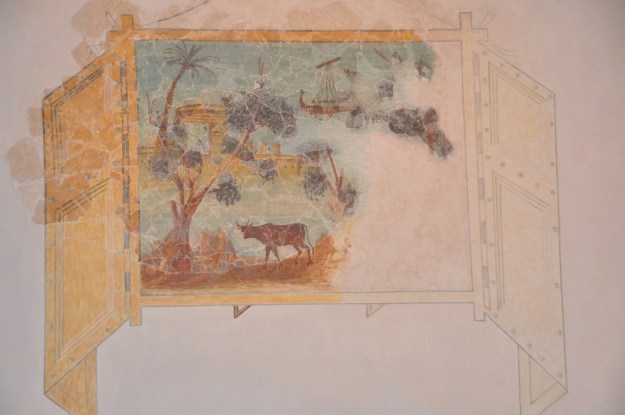
The third room is a reconstruction of the loggia, the VIP box from the Herodium theater with its unique secco wall paintings. According to this Roman technique, paint is added to dry plaster compared with the more usual fresco – fresh, wet plaster technique. These paintings are trompe de l’oeil views of an open window, with wooden shutters, that look out onto a natural scene, at the artistic standard found in the finest palaces and villas in Rome and Pompeii.

Herodium Mausoleum

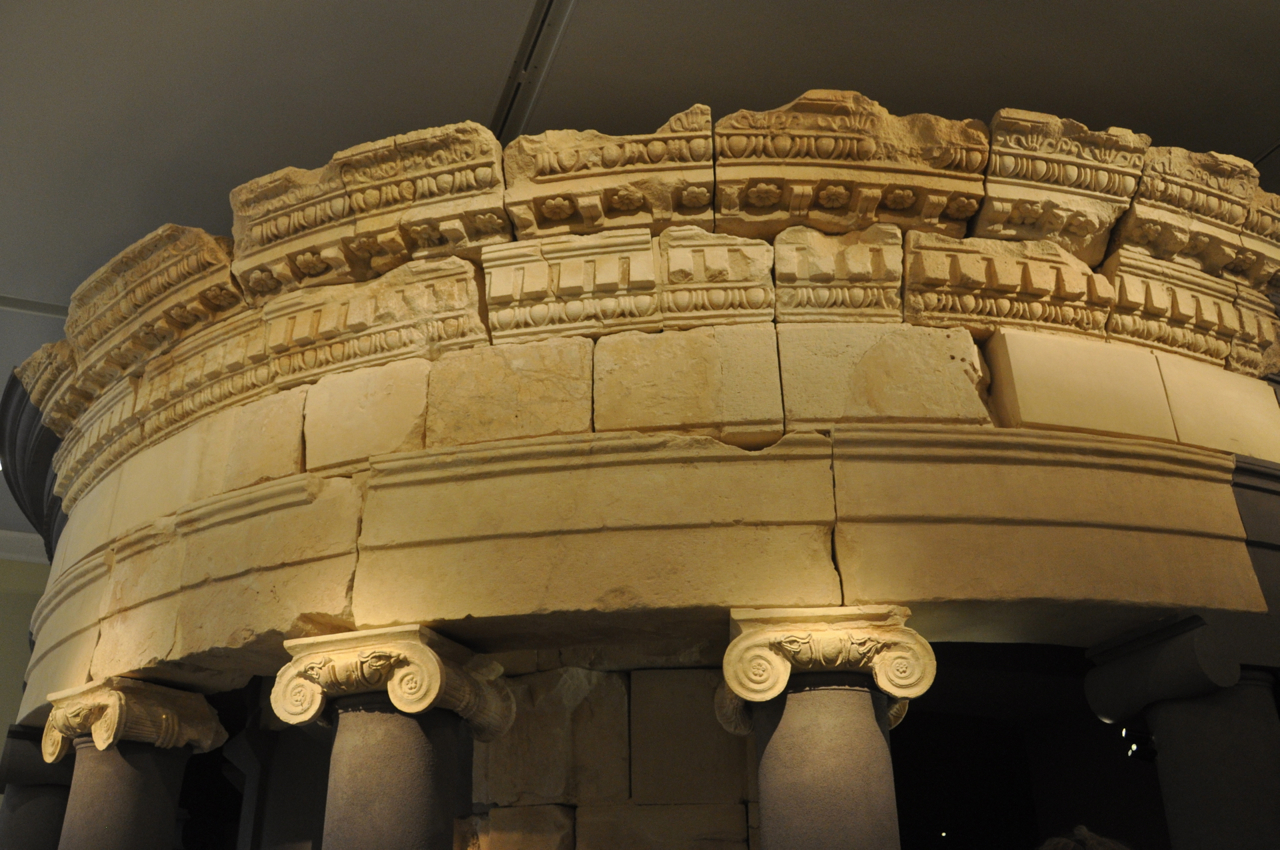
The exhibit is laid out faithfully to the site at Herodium where the loggia and the mausoleum flank the staircase. At the museum, we move through the viewing platform toward the full life-size reconstruction of the top-level of the mausoleum. The very decorative stones I excavated at Herodium are in their proper places in the frieze. A microchip was attached to each stone of 30 tons that were transported from Herodium to the Museum – as an aid to tracking and assembly. For the same purpose, the Hebrew letter “chet” can be seen on one stone, a sign left by the ancient Jewish stone masons. The structure is so heavy that the floor had to be specially reinforced.

In 1982, while Netzer was excavating, he came upon a water cistern in the mountain. He was puzzled that the cistern had been reinforced to support a great weight. Unbeknown to him, he had come within a meter of discovering the mausoleum. Why would Herod have insisted that the mausoleum be built on top of a cistern? According to the curator, Dudi Mevorah, Herod chose this precise location because it is best seen from Jerusalem. Once the mausoleum was complete, Herod dismantled the stage and buried his theater in order not to distract the eye.
The Israel Museum

The Israel Museum

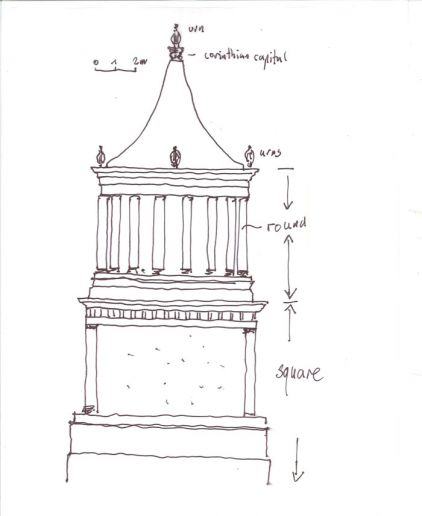
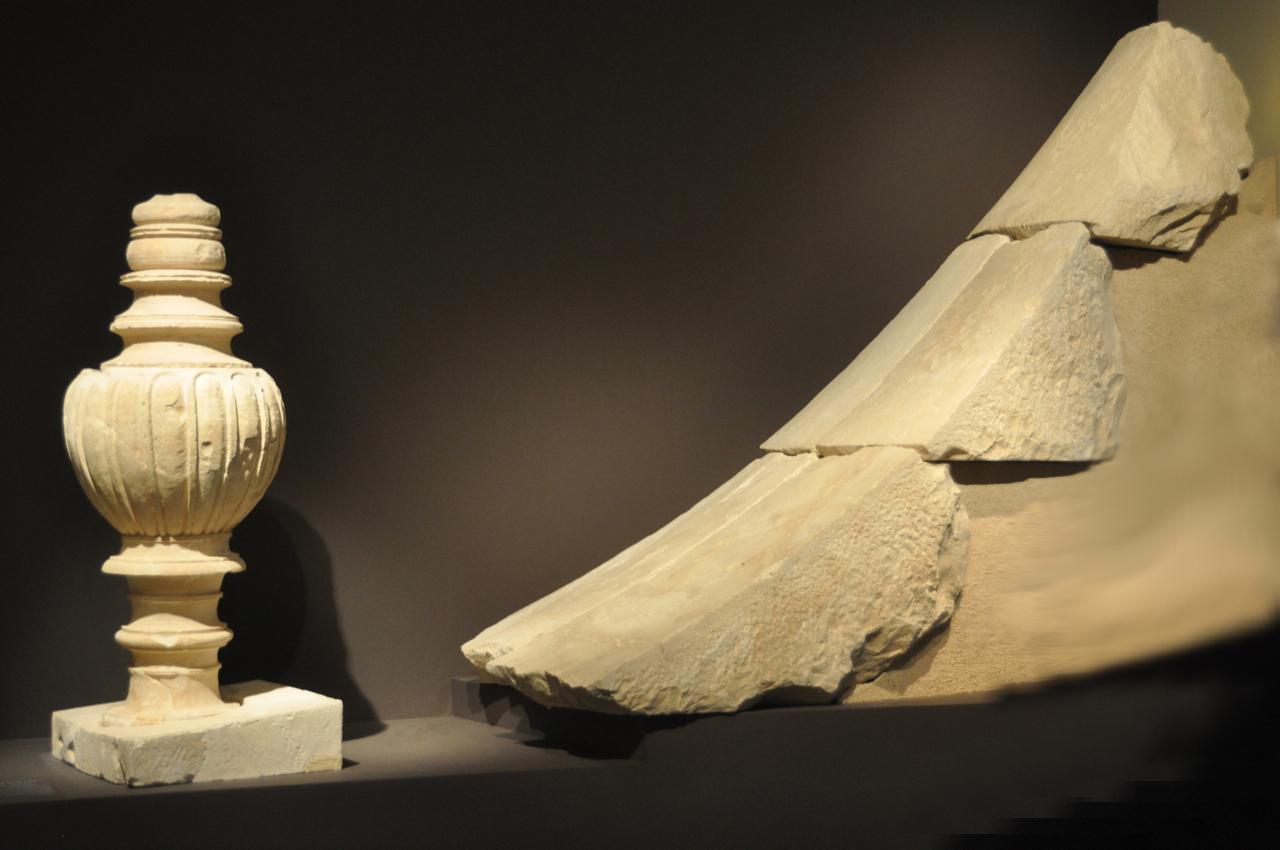
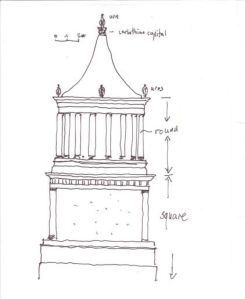
Netzer drew on his familiarity with Herod’s oeuvre and his expertise as an architect and archaeologist to imagine the mausoleum. Netzer conceives a colossal three-story monument – 25 meters high. The first level is cube-shaped – only the base exists and can be viewed at Herodium halfway up the mountain on the north side. The second level is a tholos, a cylindrical structure with Ionic columns and crowned with a conical roof. In addition to the Roman style, there are Nabatean elements to memorialize Herod’s Nabatean mother Cypros – two stone replicas of Nabatean funerary urns are on display out of five that adorned the roof.Nabatean Funerary urn
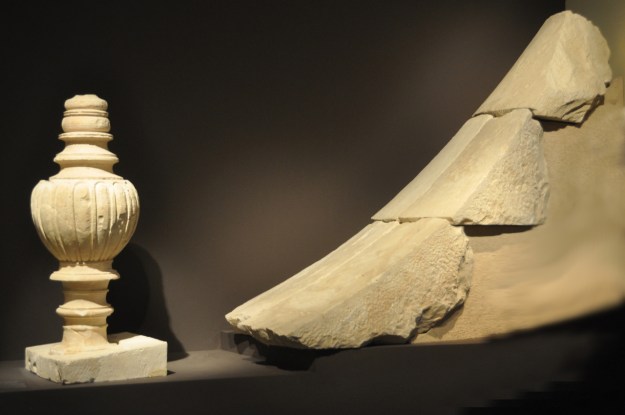
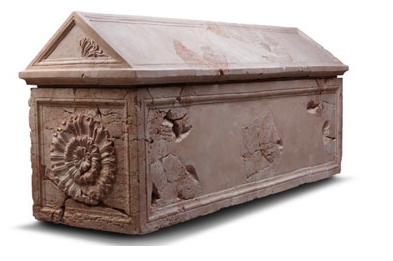
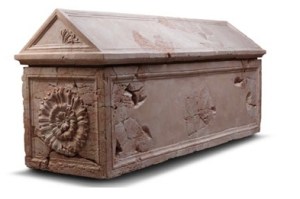
Entering within the structure, the sarcophagus that Netzer claims was Herod’s rests. Netzer found its shards – the stone box had been smashed in antiquity and reconstructed by museum staff.
The Israel Museum/Meidad Suchowolski

The Israel Museum/Meidad Suchowolski

Made of reddish limestone, mizzi ahmar, from the Arabic, this is very hard stone and would have been difficult to carve – perhaps that made it all the more appealing. Originally, Netzer suggested that the side panels of the sarcophagus were decorated with five flower medallions. There are sarcophagi like that, one in the Louvre taken from the Tomb of the Kings, one outside the Islamic museum on the Haram el-Sharif. Based on the museum reconstruction, it seems that these panels are plain.

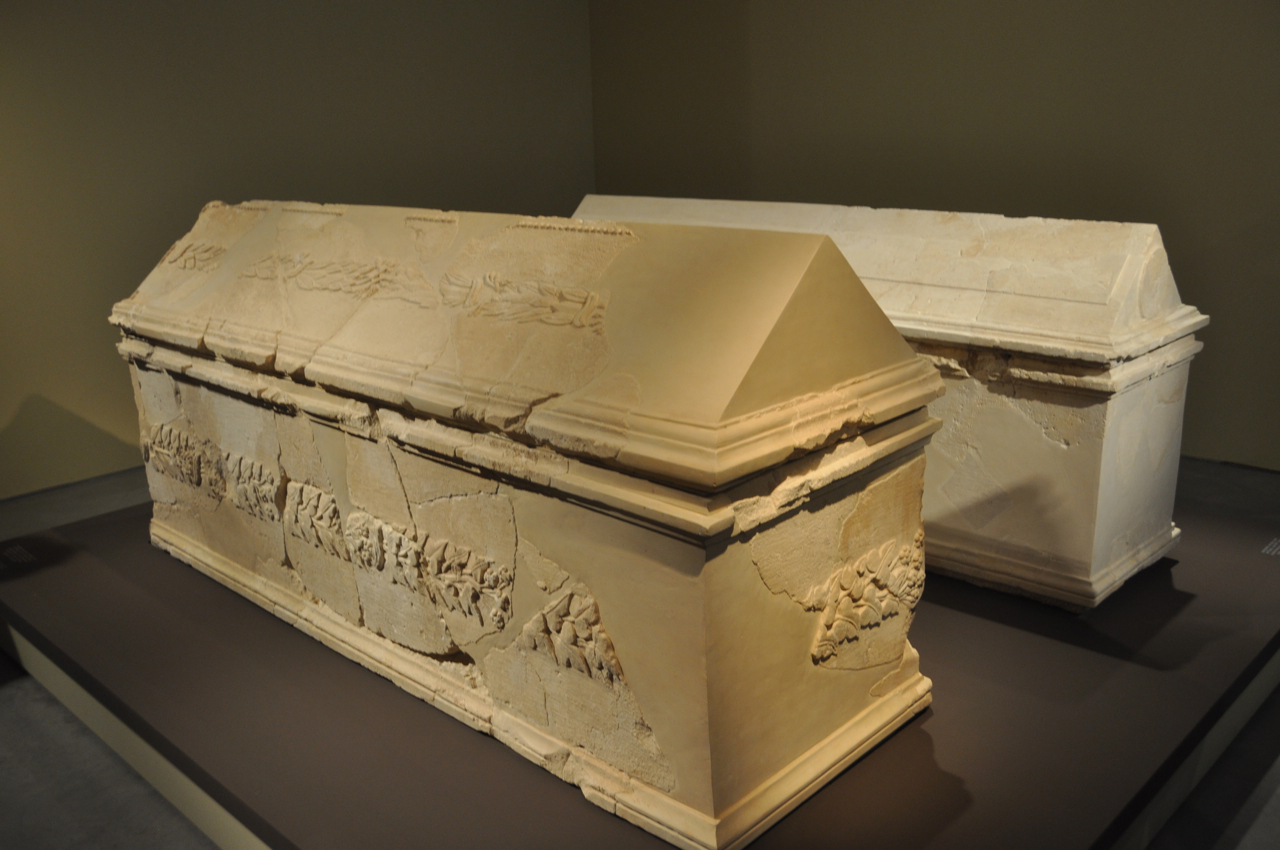
Two sarcophagi

Beside the mausoleum, the other two sarcophagi that Netzer discovered are displayed. Netzer posits that these belonged to Herod’s family members. One is decorated with a vine pattern – very similar to the stucco decorations in Herod’s theater box. The other sarcophagus, displayed for the first time, is completely plain as if waiting for the stone-carver.

The Israel museum has built a monumental exhibit that expresses Herod’s architecture and aesthetics as discovered by archaeologist, Professor Ehud Netzer – Herod would have been pleased with the result. To understand more requires going beyond the exhibit halls, to experience the drama of Herod’s life in situ, at the sites that Herod built.


For an in-depth full-day tour of Herodium and the Israel Museum’s “Herod the Great: The King’s Final Journey” exhibit and/or personalized guided tours of Herod’s other sites and more, contact Shmuel.
Monumental enough for Herod the Great?

My article with Bonna Devora Haberman in Jerusalem Post:

So they went eight furlongs [a mile, per day] to Herodium; for there by his own command he was to be buried. And thus did Herod end his life.  Josephus, Antiquities, XVII, 8.3.

Herodium

From 37 B.C.E. until his grisly demise in 4 B.C.E., Herod the Great ruled over Judea. World history has anointed few with the epithet “the Great”. He masterminded and engineered the Jerusalem Temple – among the magnificent temples in the ancient world, the fortress-complex at Masada – the most-visited site in Israel, Caesarea – in its day, the largest all-weather harbor built in the open sea, imposing cities, aqueducts, and finally, Herodium – the most spacious palace known to us in the Greco-Roman world before the common era. A giant who moved mountains, Herod was respected, feared, and despised. Reckoning with Herod is indispensable to interpreting the historical and material landscape of Israel.

Herod’s passion lives on. Herod proved to be archaeology professor Ehud Netzer’s nemesis. The Israel Museum staff have been toiling for three years to present Netzer’s discoveries in the first exhibit in the world dedicated to Herod. Commensurate with his life and work, “Herod the Great: The King’s Final Journey” is unprecedented in grandeur and expense – displayed in 900 square meters, approximately 250 artifacts related to Herod are exhibited, many for the first time. To show even this tiny sampling of his massive production, Herod fittingly required the museum to reinforce its very foundations.

The Jewish Roman historian Josephus Flavius records extensive narrative about Herod – nearly a century after the events. Though he describes in precise detail Herod’s majestic funeral procession to Herodium – performed according to Herod’s own orders – Josephus mysteriously neglects to mention the location of Herod’s tomb. [Read more]


For an in-depth day with Herod – at Herodium and the Israel Museum and/or personalized guided tours of Herod’s other sites and more, please contact Shmuel.

Archaeology in Israel Tour

I’m delighted to announce that Dan McLerran at Popular Archaeology and I are creating a phenomenal tour of archaeological sites in Israel that I will be guiding October 2013.
I invite you to join us on this adventure, 12 days of touring in Israel, where we’ll cover the famous sites like Megiddo and Hazor and uncover some of the less well-known gems like Sussita-Hippos, one of the Decapolis cities overlooking the Sea of Galilee that was destroyed in the earthquake of 749CE and never rebuilt.

Sussita excavation

We’ll start by going back 6500 years to the Chalcolithic period and tour up on the Golan Heights to learn about burial at that time. We’ll see dolmens, the megalithic tombs consisting of a flat rock resting on two vertical rocks that mark a grave. We’ll hike to the cultic site of Rujm el Hiri – is it a site that is connected to the calendar or to burial? At Ein Gedi we’ll see the ruins of a Chalcolithic temple. We’ll see artifacts at the Israel museum, examples of clay ossuaries and fine bronze castings of ritual objects.

We’ll follow in the path of the Kings from 1000BCE to 586BCE by traveling from Dan where a piece of a basalt victory stella in Aramaic was found mentioning the kings of Israel and the house of David. We will explore the City of David, the walled Jebusite city on the ridge between the Kidron and Tyropean valleys. We’ll walk through Hezekiah’s tunnel that brought the water of the Gihon spring to the Siloam pool inside the walls. From there we will follow in the steps of pilgrims to the Temple mount. Part of the 650m distance will be in Jerusalem’s drainage channel until we come out right under Robinson’s Arch. We’ll see the Broad wall, the remains of an 8 meter high wall that protected Jerusalem from the north in the time of the Kings.

Khirbet Qeiyafa

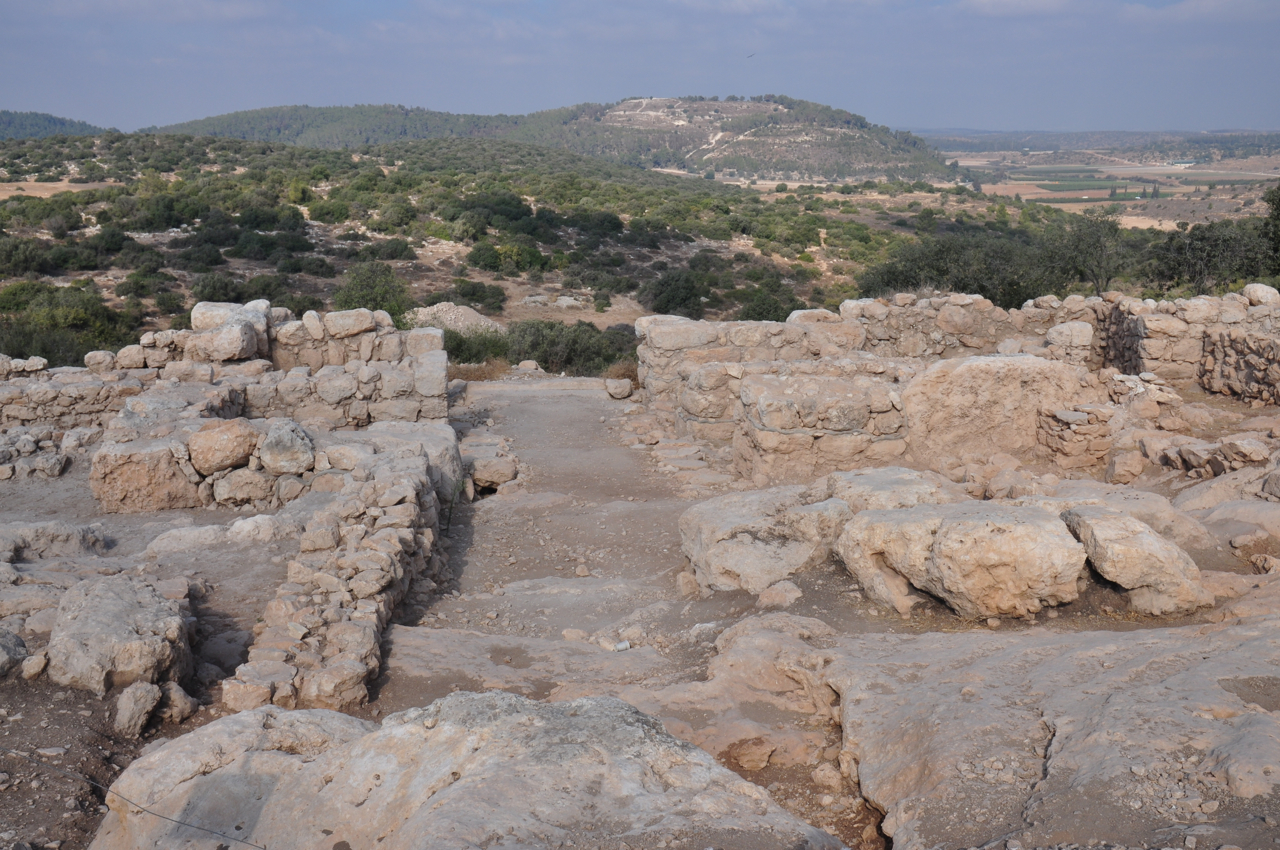
We’ll explore the walled Judean city of Khirbet Qeiyafa, with two gates and hence identified as Shaarayim, situated on the border of Judea facing the Phillistines.

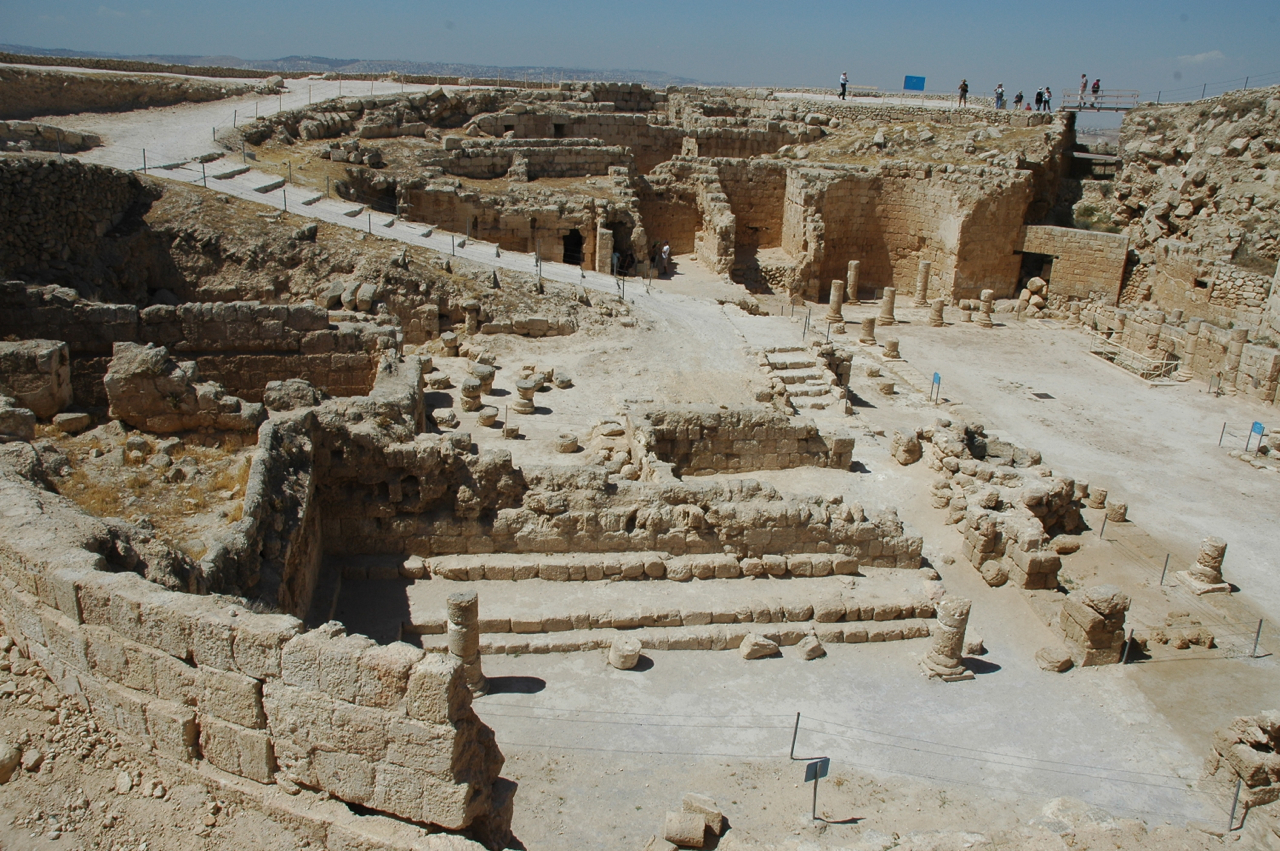
We’ll learn about the Second Temple Period, specifically the time of the Hasmoneans and King Herod who ruled under the auspices of the Romans. We’ll check out Herod’s impressive building projects. At Caesarea, we have the temple to Augustus, the protected harbor, the palace as well as a theater and a hippodrome later used as an amphitheater. At Sebaste there is another temple to Augustus. Josephus writes that Herod built a third temple at Banias. It’s unclear whether the temple was at Banias or nearby, perhaps at Omrit. We’ll visit Herod’s palaces at Masada, the Western palace and the 3 tier hanging palace on the northern end of the site. We’ll explore the palace and administrative complex at Lower Herodium and the palace/fortress on the top of a manmade mountain where the base of a mausoleum was discovered by Prof. Ehud Netzer in 2007.

Herodium Palace:fortress

We’ll visit the newly opened exhibit at the Israel museum Herod the Great: The King’s Final Journey, artifacts from Herodium on display for the first time. We’ll also visit the Second Temple period model that displays Jerusalem at its peak just before its destruction at the hand of the Romans. We’ll visit the Shrine of the Book that houses the Dead Sea scrolls and other artifacts and combine that with the archaeological site of Qumran by the Dead Sea where the scrolls were found.

We’ll focus on the architecture of sacred space and check out various churches, in the basilica and martyrium form from the Byzantine period (4th to 7th century) and synagogues from the same period. We’ll see some amazing mosaics by visiting the  museum at the Inn of Good Samaritan, the archaeological sites of Sepphoris/Tzippori, and the synagogue at Beit Alfa. We’ll visit sites off the beaten path like the Kathisma church on the way to Bethlehem and Samaritan site on Mount Gerizim.

Synagogue mosaic floor at Israel Museum

Besides the Western wall, Judaism’s holy site, we will visit the Church of the Holy Sepulcher, the holiest site to Christianity and go up onto the Haram el-Sharif to see the Dome of the Rock and the Al Aqsa mosque, the third holiest site to Islam.

We’ll travel around the Sea of Galilee stopping at sites important to Christianity like Kursi, Capernaum and Magdala. We’ll even go up to the Golan Heights to the Jewish city of Gamla, the Masada of the north.

Gamla

For anyone who enjoys taking photographs, there will be plenty of opportunities and as an special incentive to join the tour, participants will be able to submit their best photographs from the tour to a special Pinterest site and will have a chance to win up to $1000. for the “best photo”.

If you’re interested in participating in an archaeological tour of the Holy Land, contact  me.