Category Archives: Jerusalem

Photographs 1900

Walking around in the Arab shuq you might notice that many of the shops have matted black and white photographs from the turn of the century of Jerusalem and Israel for sale. It’s not clear who the photographers are or when the photos were taken but you can learn a lot about how Jerusalem developed at the end of the Ottoman period and transition to the British mandate from these photos. It’s interesting to compare a photograph taken today at the same place with the similar early photo.

If you are walking through the Muslim quarter toward the Church of the Holy Sepulcher on Al Khanka Street you will find the shop Elia’s Photo with black and white photographs going back to the 1920s in the window. On entering you will meet Kevork Kahvedjian a delightful gentleman who I’ve heard speak English, Hebrew and Arabic (he’s Armenian so most likely he speaks that too) who will be happy to talk with you and show you the photographs. Most of the photos on display were taken by his father Elia (reprinted from the original negatives) but some are even earlier that Mr Kahvedjian has collected. There is also a hardcover book of 131 of his father’s photographs, “Jerusalem Through My Father’s Eyes” (their website lists it at 230 NIS, on Amazon  it’s $200. – it makes a great present or souvenir).

Elijah Meyers founded the American Colony Photo Department in 1898 (though some photos are earlier). Meyers, who emigrated from India, was a Jewish convert to Christianity. 1898 was the year of the German Kaiser Wilhelm II and Augusta Victoria’s visit, an auspicious start to the photographic enterprise as people were interested in photos of the visit.

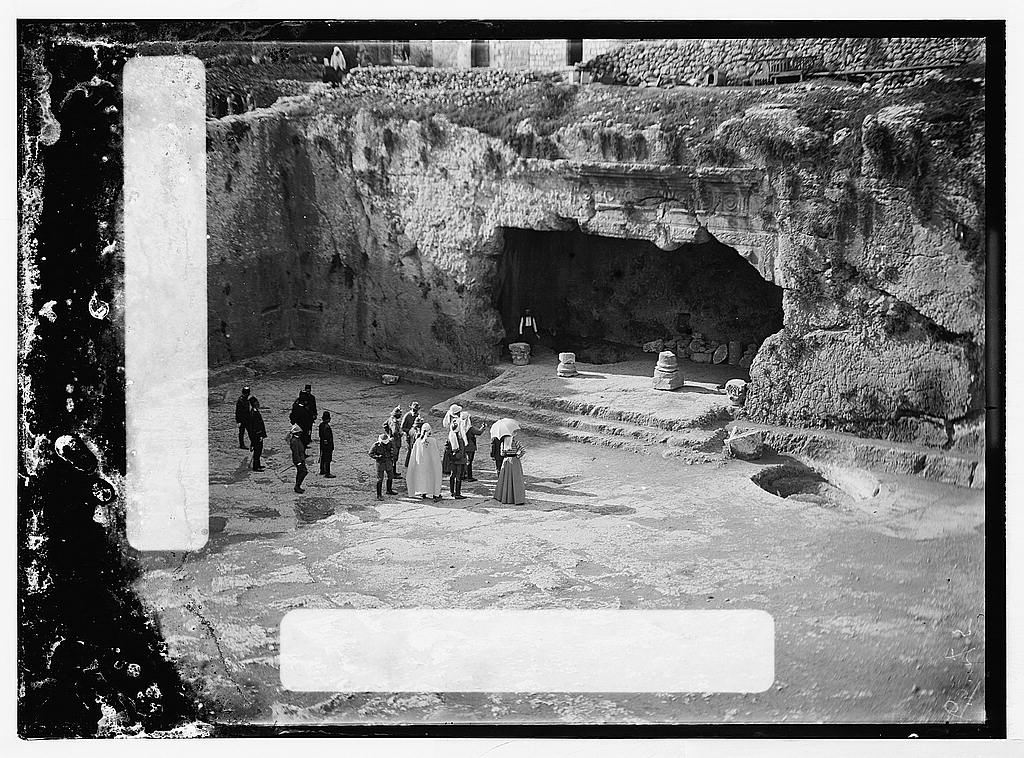
Meyers instructed the young Swede Lewis Larsson in photography. Larsson (1881?-1958) was among the original group of Swedish colonists who arrived in Jerusalem in 1896 and became one of the most skillful of the photographers. Not only a keen observer, Larson travelled extensively in the Middle East between 1903 and 1910.
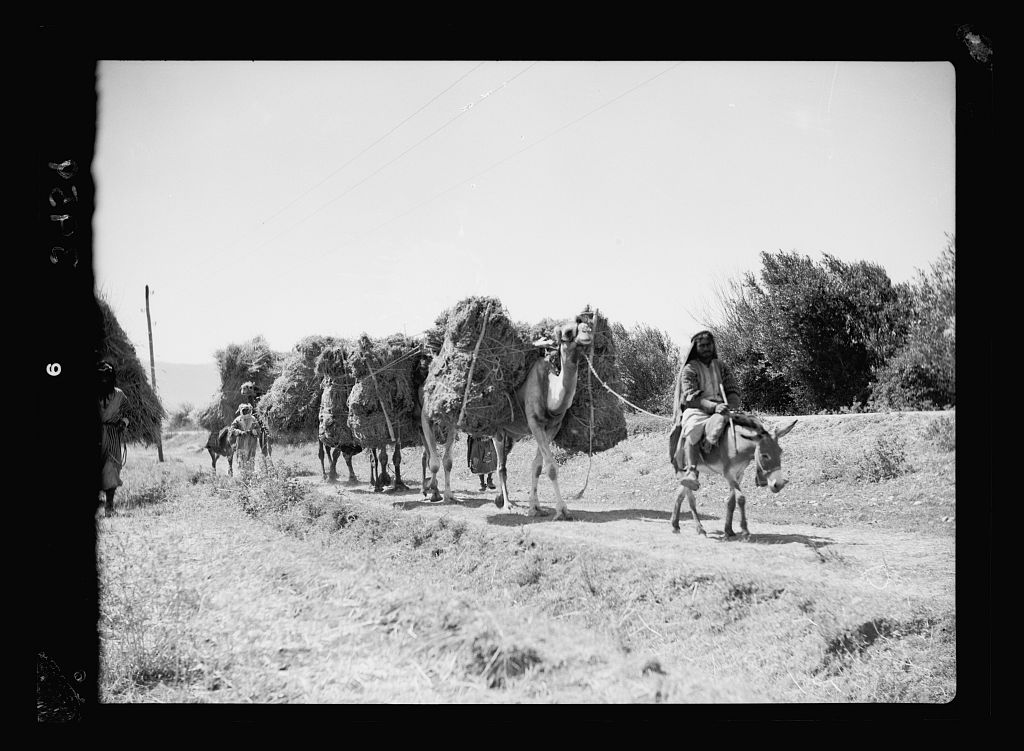
Larson knew what scenes were important to capture visually – he photographed landscapes, scenes of village life, the violent struggles at the end of World War I with the collapse of Ottoman empire. In 1904, Lewis Larsson succeeded Elijah Meyers as head of the Photo Department. Larsson ran the department for the next thirty years, even while he served as Vice Consul and later Swedish Consul for Palestine from 1920 to 1925.
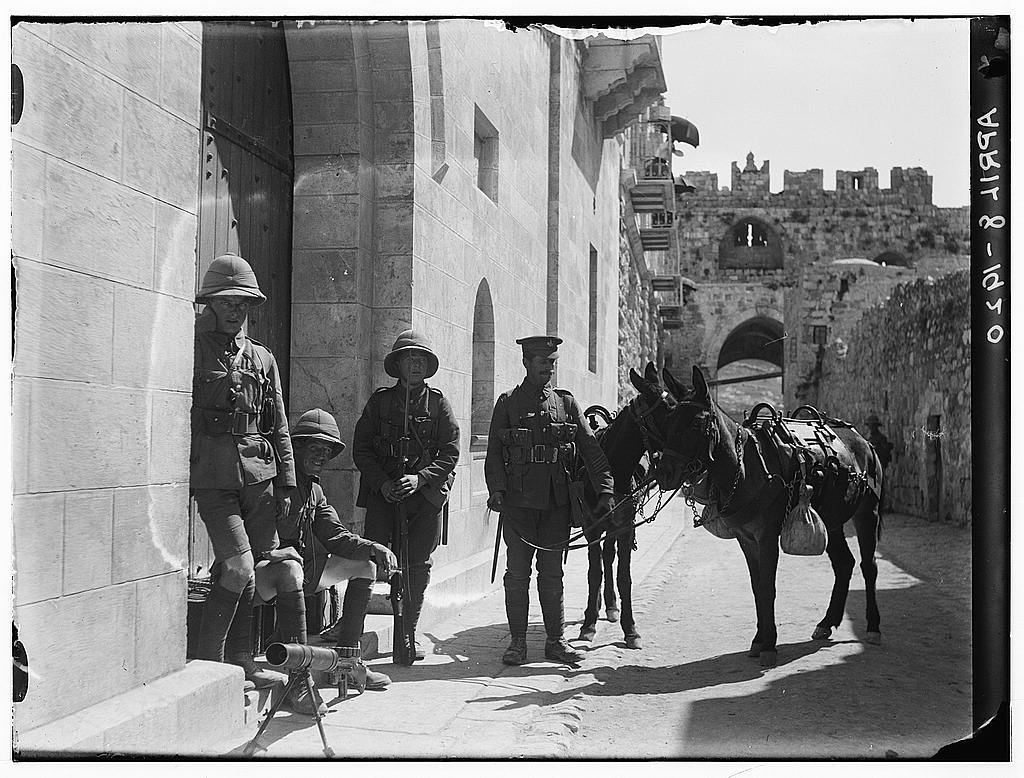
G. Eric Matson (1888-1977) also came to the American Colony from Sweden in 1896 with his family as a young child. He began working in the Photo Department darkroom as a teenager in the early 1900s, although it is uncertain when he actually began taking photographs. Matson married an American, Edith Yantiss who also worked in the darkroom.

Together the Matsons excelled in innovative techniques, such as coloring photographs with oil paint, producing double stereoscopic photographs to create 3-D pictures, taking photographs with infrared film and aerial shots.

In 1934, the original colony disbanded and Matson gained control of the Photo Department with its large collection of photographs. The Matsons continued their photographic work under the American Colony Photo Department name until 1940, when they renamed the business the “Matson Photo Service.” In 1946, in the face of increasing violence in Palestine, the Matsons left Jerusalem for southern California. The staff shipped the bulk of the glass plate negatives to the United States, with the remaining negatives relocated to the basement of the International YMCA for safekeeping (unfortunately when retrieved in 1970 they had sustained water damage). By the early 1950s, with tourism on the decline, the Photo Service’s staff dispersed, forcing the closing of the Jerusalem operation.

Realizing the Collection’s historic value, in 1966 Eric Matson donated the thousands of negatives and 11 albums of contact prints to the Library of Congress who have digitized the images and made them freely available on the Internet at http://www.loc.gov/pictures/collection/matpc/ – a great record of Jerusalem and Palestine during the first 50 years of the 20th century.
Temple on 17 Tammuz

Today is the fast day of 17 Tammuz where we remember the breach of the walls of Jerusalem. Less than a month later on the 9 Av the Temple was destroyed.

Photo from City of David website

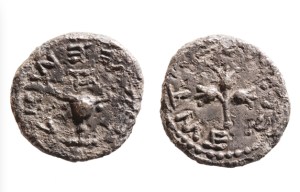
A silver half shekel coin was discovered at the Emek Tzurim National Park during the sifting of rubble from the Temple Mount dumped by the Waqf in the Kidron Valley. The coin, weighing 7 grams, is from the Great Revolt against the Romans (66-70CE). A branch with three pomegranates and the words “Holy Jerusalem” appear on one side of the coin, while the words “Half Shekel” appear on the other, in proto-Hebrew script. The use of Hebrew (and not Jewish Aramaic that came into wide use during the Second Temple) and proto-Hebrew script is popular on Jewish coins from that period. During the period of the Great Revolt, they replaced the Tyrian shekels for the annual half shekel tax that every Jewish male adult gave to the Temple treasury and Jerusalem.

Photo from City of David website

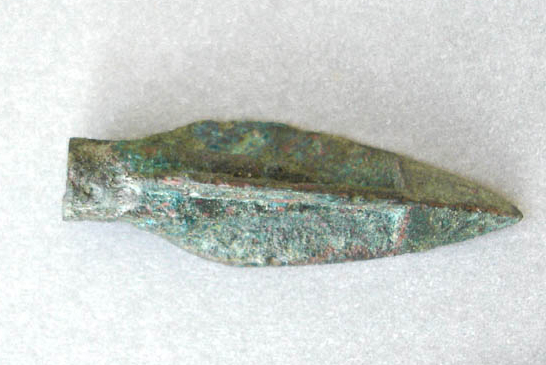
A Babylonian arrowhead was also discovered in the sifting of archaeological rubble from the Temple Mount. Only a small number of arrowheads from the 6th century BCE, the period of the destruction of the First Temple, was found as it was Babylonian army practice to gather up the used arrows. Arrowheads were found close to the top of the City of David hill, in the Jewish Quarter of the Old City and in Ketef Hinnom evidence of the heavy fighting.

Today is very appropriate to see the multi-media presentation about this period at the Burnt House in the Jewish quarter in the ruins of a house destroyed during the Great Revolt.

Technology at Israel Museums

The Google Art Project spent months mapping the Israel Museum with cameras mounted atop bicycles and photographing 520 objects, artifacts and artwork from the Museum’s collection. The outcome is an online compilation of high-resolution images accessible over the Internet and a virtual tour of the museum using Google’s Street technology. The Israel Museum was among 151 museums in 40 countries taking part in the second phase of the project. Currently more than 30,000 high-resolution objects from museums around the world are available for viewing and items can be found by various keywords, location, artist, collections, etc.

Archaeological items included are the only dedicatory inscription mentioning Pontius Pilate, the procurator of Judea in the time of Jesus found at Caesarea, the oldest Biblical text, Priestly Blessing from Numbers 6:23 on silver amulet found in tomb at Ketef Hinnom in Jerusalem (you can read my blog post at https://israeltours.wordpress.com/2011/03/16/ketef-hinnom-silver-amulet/ ) and Theodotus synagogue inscription in Greek found near the Temple Mount. There is also artwork, for example, the triptych Gates of Jerusalem by Mordecai Ardon (you can read my blog post on the Ardon Windows at https://israeltours.wordpress.com/2011/02/09/ardon-windows-isaiah-vision-peace/).

The Google Art Project creates images larger than 1 billion pixels in size, the zoom-in feature allows viewers to get inside cracks in the parchment and other details that are not visible to the naked eye – a really fascinating collection of treasures worth exploring. Kudos to the Israel Museum for making these images available.

The project follows last year’s collaboration with Google to make the famed Dead Sea Scrolls accessible in high resolution on the Internet. When announced the site drew a million viewers within the first few days. Five of the Scrolls, including the Great Isaiah Scroll 1QIsaone of the original seven Dead Sea Scrolls discovered in Qumran in 1947 are viewable at http://dss.collections.imj.org.il/isaiah.

Google has also partnered with Israel’s Holocaust memorial, Yad Vashem, to make its photographs and documents searchable on the Internet.

“Mendel takes out his camera. No more flowers, clouds, natures, stills or landscapes. Amid the horror all around him he has found his destiny: to photograph and leave behind a testimony for all generations about the great tragedy unfolding before his eyes.”

Mendel Grossman’s photos constitute a small portion of the historical photos in Yad Vashem’s collection. The project will facilitate preservation of and access to the world’s largest historical collection on the Holocaust. Google implemented experimental optical character recognition (OCR) technology to carry out this project, making previously difficult to locate documents now searchable and discoverable online. As of today, 130,000 photos from Yad Vashem’s archive, the largest of its kind in the world, are viewable in full resolution online. The collections are visible at http://collections.yadvashem.org/photosarchive/en-us/photos.html. This is a first step towards bringing the vast Yad Vashem archive online over time.

Yad Vashem has also launched a YouTube channel to showcase a series of videos of Holocaust survivor testimonials. The YouTube channel is available at www.youtube.com/yadvashem. There is also a YouTube channel with more than 400 hours of original video footage from the landmark 1961 Jerusalem trial of Nazi mastermind Adolf Eichmann at http://www.youtube.com/user/EichmannTrialEN.

If you know of other technology projects that are being developed in Israel please share by leaving a comment about them. If you peruse the images leave a comment here of your impression.

First Temple period Seal

First Temple period Seal

Courtesy of Israel Antiquities Authority.

A small stone seal at least 2,600 years old in Paleo-Hebrew script has been found in the continuing excavations of the main drainage channel along the western side of the Temple Mount in Jerusalem the Israel Antiquities Authority announced. The name on the seal is Matanyahu, meaning ”gift of God”, son of but only two letters survived – “Ho”. The seal was found in a structure that dates to the First Temple period – between the end of the 8th century BCE and 586 BCE. No more than two dozen seals this old have been found since excavations began in Jerusalem in the 1800s, according to archaeologist Eli Shukron.

The drainage channel runs from the City of David (you reach it by climbing the stairs from the Siloam pool), under the excavations in the Givati parking lot, under the current street and under the walls of the Old City to the Davidson archaeological park where you exit near Robinson’s Arch. Work is continuing on clearing the drainage channel and   my guess is that they have already passed the Western Wall plaza.

Check out my article on walking the drainage channel. The City of David and Davidson archaeological parks are great sites (there’s a combination ticket) and I’m happy to guide you there.

Cable over Hinnom valley

Walking along Derekh Hevron towards the Old City you pass the Mount Zion Hotel on your right. Without a guide it is doubtful that you will notice the coat of arms sculpted in the stone of the building or recognize its significance. This is the emblem of the Order of St. John, a British charitable organization dating back to the time of the Crusades. They arrived in the Holy Land in 1882 and purchased land opposite Mount Zion overlooking the Hinnom valley with the aim of establishing an eye hospital. The hospital served Muslims, Jews, and Christians from all over the Middle East until WWI.

During the war the Ottomans took over the building for use as an arms warehouse and parts of the hospital were destroyed by British shelling. An earthquake with epicenter near Jericho on July 11, 1927 damaged buildings in Jerusalem, including the hospital. British architect Clifford Holiday was in charge of the renovations of the hospital in the 1930s adding two new wings, the second on the other side of the road (today the Jerusalem House of Quality, a gallery and artists’ workshops, worth a visit). Holiday also built  the nearby Scottish Church on Ketef Hinnom and the original Jerusalem City Hall.

Without a guide it is doubtful that you would notice a box hanging on a cable from the corner of one of the buildings or understand its significance. During the Israel War of Independence the terrain and Jordanian sniper fire made it difficult to move men and supplies between the western part of the city and Mount Zion, both in Israeli hands. A tunnel was dug crossing the wadi but this only provided limited access. So in December 1948 Uriel Hefetz, an engineering corps commander at the Etzioni Brigade, conceived of the idea of stretching a 200-meter steel cable across the Hinnom Valley from a room in the hospital to the Israeli post at the Eretz Hatzvi school on Mount Zion. It was used during the night to transfer medicine and arms to Mount Zion and the wounded to the hospital. During the day the cable was lowered to the ground so it would not be discovered by the Jordanians. The cable was inclined with a maximum height of about 50 meters above the wadi. The cart that ran on the cable was just large enough for one person but could carry a weight of about 250 kilos. The original room has been made into a small museum housing the winch mechanism and other period artifacts.

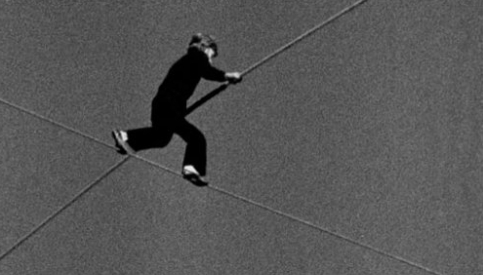
PetitYou won’t find this anecdote in any of the guide books, another advantage to hiring a guide. In 1987, Teddy Kollek, the mayor of Jerusalem invited the French high-wire performer, Philippe Petit (earlier, on August 7, 1974 Petit had walked between the Twin Towers of the World Trade Center in New York City), to walk the inclined cable across the Hinnom valley as part of that year’s Israel Festival. The performance,  A Bridge for Peace, drew a crowd of 50,000 people from all parts of the city who stood in amazement. An Israeli, Uri Dromi wrote an Op-Ed piece in the December 16, 2009 edition of the New York Times where he reminisces about watching Petit.

This was just few months before the first Intifada, but the excited crowd that gathered there on a sunny day had no clue of the lava ready to erupt below. Their eyes were glued onto the brave Frenchman and they held their breath for an agonizingly long time until he finally touched the safe ground on the other side.

From the hotel you look across the Hinnom valley at Mount Zion, the Arab-Jewish neighborhood of Abu Tor and the Arab villages on the surrounding hills.

“This was a very important memory for me,” said Petit. “That’s what the wire can do, when you link two mountains, you link the people who live on those mountains.”

Kathisma Church

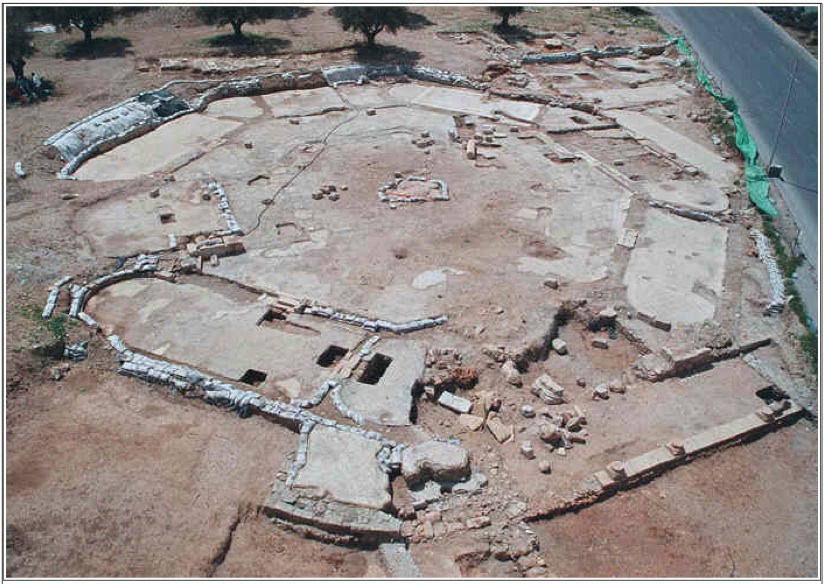
Aerial photo of Kathisma site, IAA

Despite the many people traveling along the main road to Bethlehem (or Gilo or Gush Etzion) before the turnoff to Har Homa and Herodium few notice the ruins of a 5th century Byzantine church and monastery. Discovered by chance in 1992 when the road was paved and excavated briefly in 1999 by Rina Avner, the site is worth exploring but lies abandoned due to lack of money, time and initiative. Called the Kathisma church, after the word in Greek for seat (καθισμα), according to Christian tradition it is where Mary rested on the way to Bethlehem just before giving birth to Jesus.

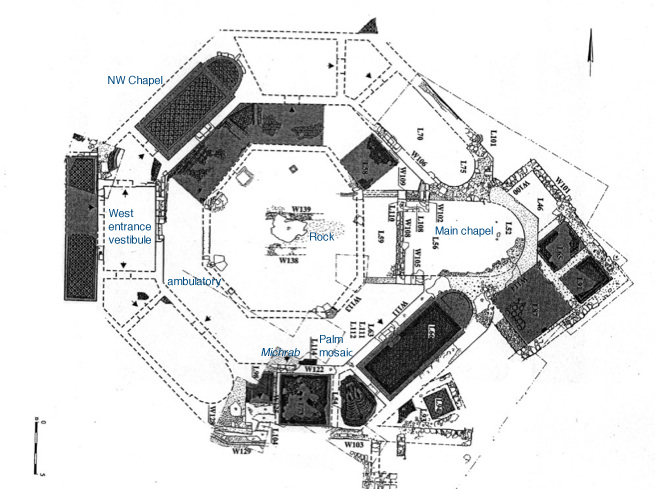
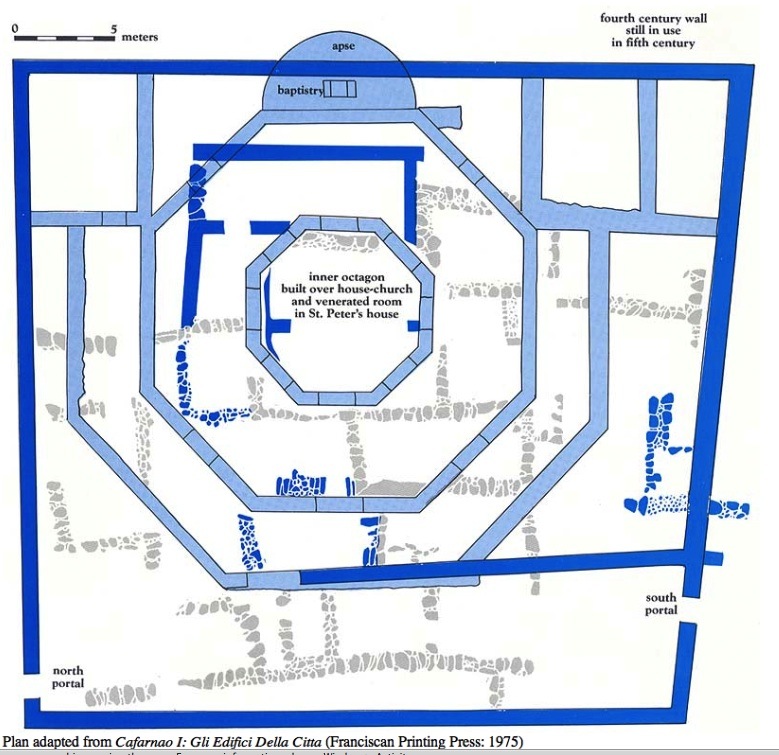
Most Byzantine churches are in the shape of a basilica, a rectangular plan with a central nave and two aisles, with a semicircular apse at the far end. Not exactly a church, the Kathisma is a martyrium, a special structure that functions as a church (or mosque) and marks the site of a holy event. Rather than a basilica, the church is octagonally shaped and built over a flat, protruding rock in the center. There are 3 concentric octagons, the innermost one around the rock, the second a walkway (ambulatoria) with one chapel and the outer one made up of 4 chapels and smaller rooms.

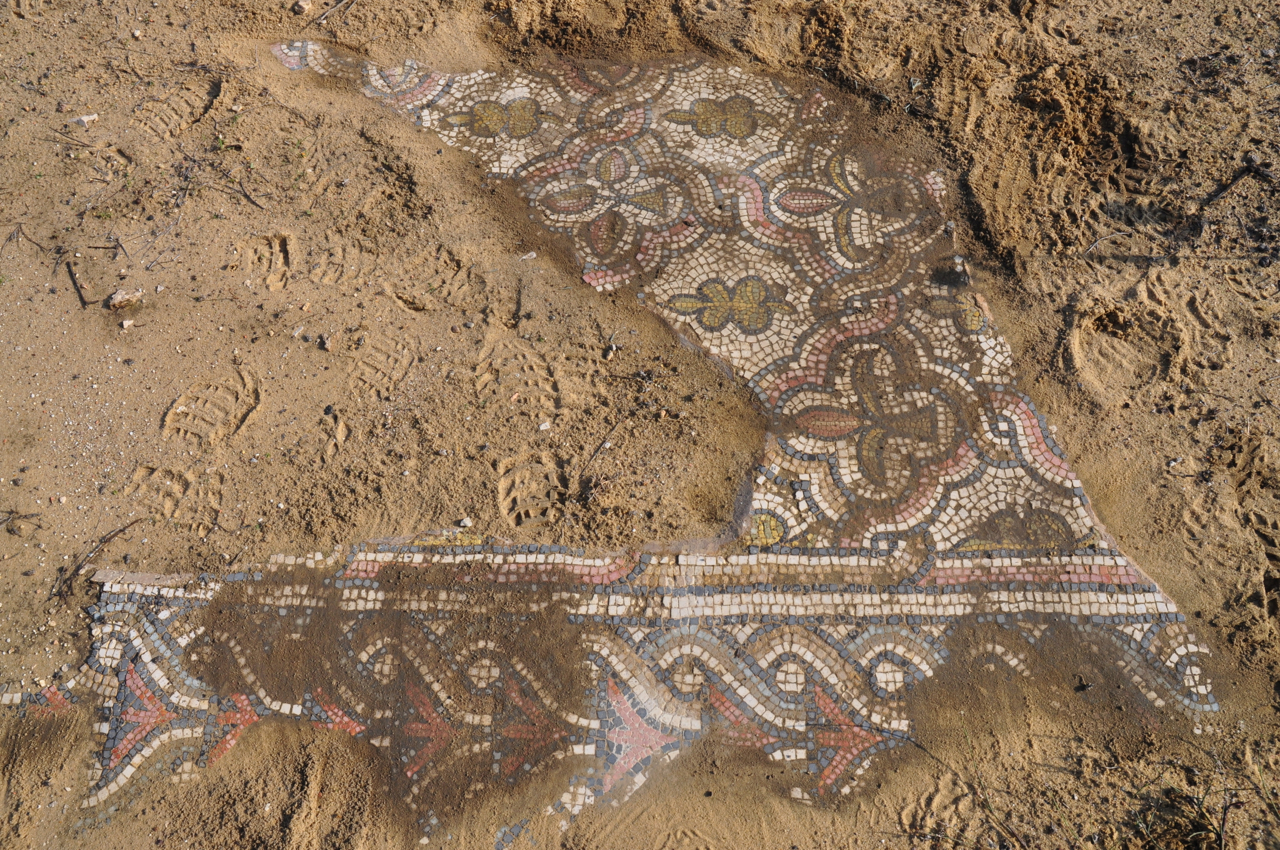
The floors are covered in mosaics in geometric and floral designs in white, black, yellow, green and red stone tesserae. The mosaics have been mostly covered with felt mats and sand to protect them.

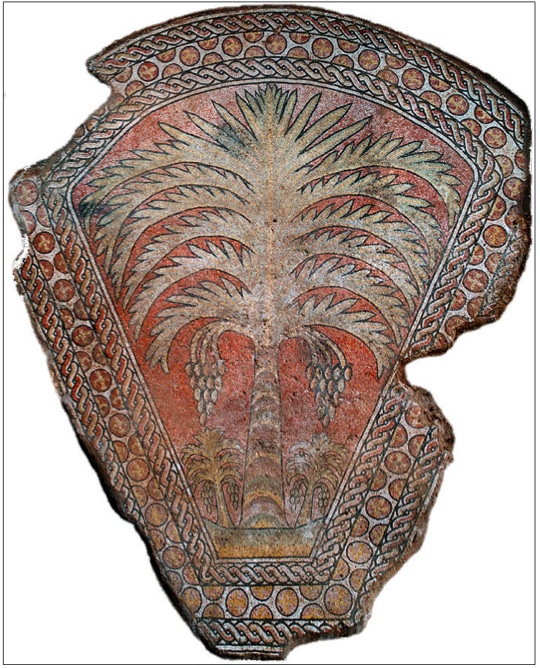
Kathisma palm mosaic from Arab period, IAA

One of the finest mosaics is from the Arab period, an ornate mosaic of a date palm in the southeastern corner. According to the Koran, Mary sat and rested under a palm during the onset of her labor.

There are ruins of another octagonally shaped church at Capernaum. The remains of a 5thC church were uncovered that consist of a central octagon with eight pillars, an exterior octagon with thresholds still in situ, and a portico. Later an apse with a pool for baptism was constructed in the middle of the east wall. The central octagon was placed directly on top of the walls of Simon Peter’s house with the aim of preserving its exact location.

The floor of the portico is a geometric patterned mosaic. In the area of the external octagon, the mosaics represented plants and animals in a style similar to that found in the Basilica of the Heptapegon at Tabgha. In the central octagon, the mosaic was composed of a strip of flowers, a field of fish with small flowers and a circle with a peacock in the center.

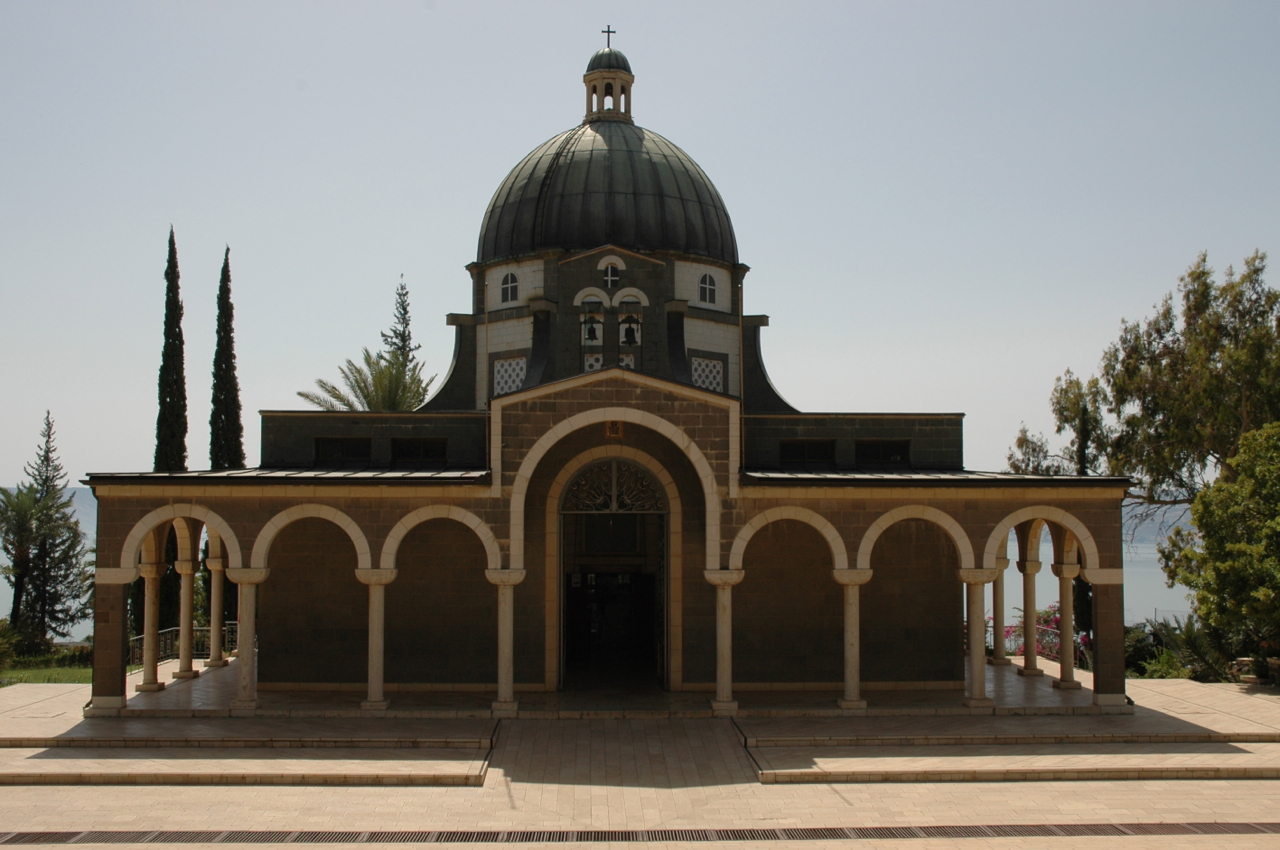
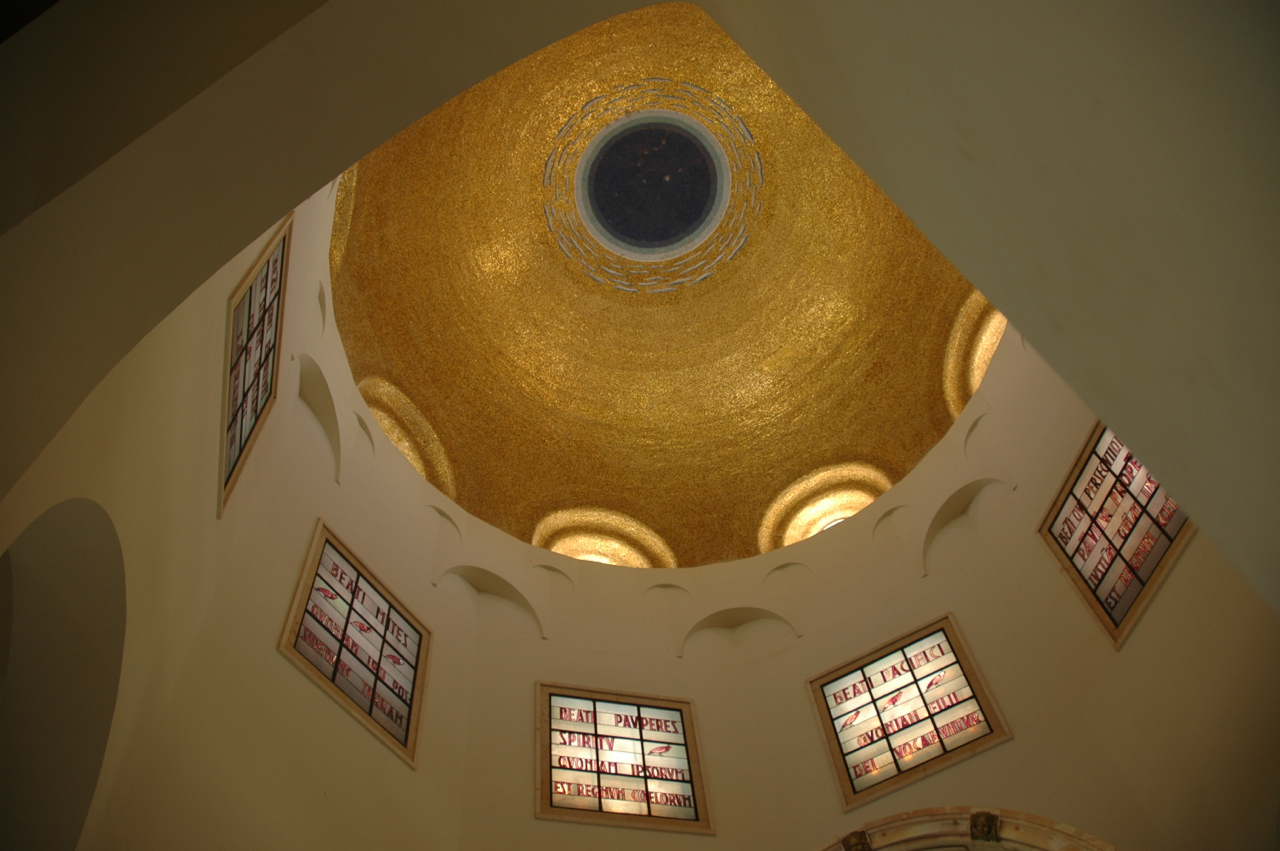
Another church that is octagon-shaped and crowned by a copper dome though enclosed in a rectangular envelope is the church on the Mount of Beatitudes. The church is from 1938 and was designed by the Italian architect Antonio Barluzzi in neo-Renaissance (Byzantine) style.

He chose the octagonal shape to match the eight beatitudes from the Sermon on the Mount (Matthew 5:1-5) and on the eight stained glass windows beneath the dome are verses from the Sermon.

There are only a couple of other churches that have been built over a rock, the Basilica of the Agony and the Basilica of the Heptapegon but neither is an octagon.

According to our understanding the Kathisma church was renovated in the 6thC and used as a mosque in the 8thC after which it was destroyed. A mihrab, or prayer niche facing Mecca was built into the southern wall of the outermost octagon. This means that the church was not destroyed during the Persian conquest and existed at the time of Abd el-Malik who commissioned the building of the Dome of the Rock, a martyrium in octagon shape over a rock – it may have been the inspiration for what has been called the earliest example of Islamic architecture.