Category Archives: Jerusalem

Crusader Jerusalem

A reader asked me to post something about the Crusaders in Jerusalem. I am happy to and also to lead tours focussing on the Crusader period.

Raymond of Aguilers, who wrote a chronicle of the First Crusade (1096–1099), relates that on the morning of June 7, 1099, the Crusaders reached the summit of Nebi Samuel, from which they saw Jerusalem for the first time. The elated Crusaders fell to the ground and wept with joy, calling it Mons Gaudi, mount of joy. The same day they reached the walls of Jerusalem.
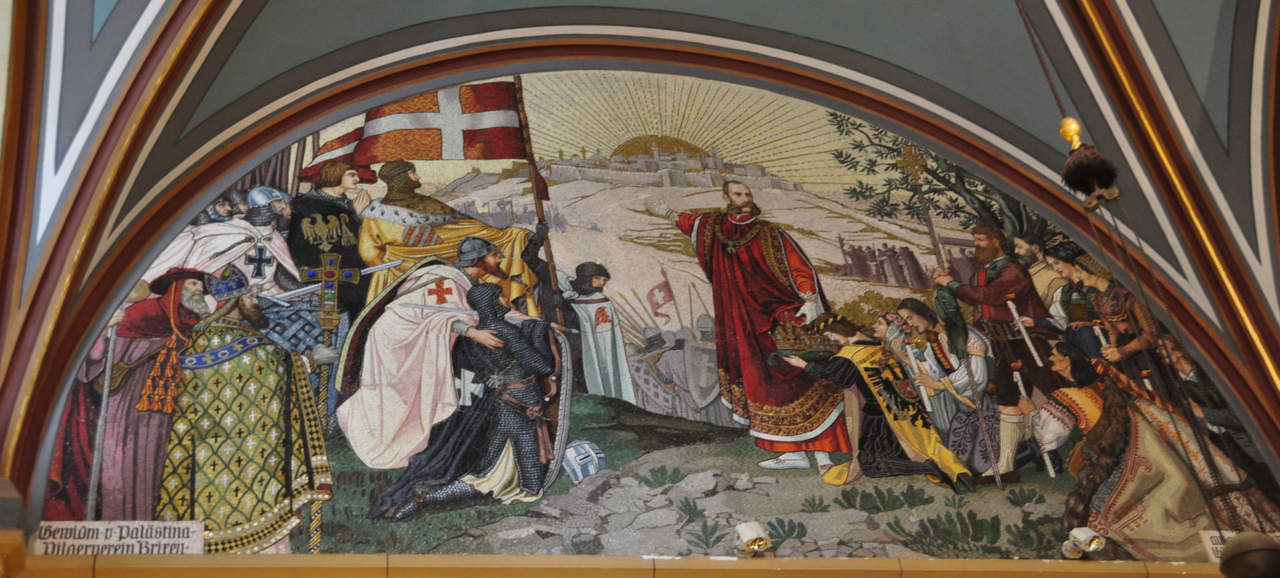
Austrian Emperor Franz Joseph as Crusader

With insufficient troops and supplies and rumor of a Fatimid advance, the Crusaders could not besiege the city for long but had to organize a direct assault.  After about a month they were able to get skilled builders and wood by cannibalizing Genoan ships that had arrived at Jaffa port for siege towers. This enabled the Crusaders to breach the walls in 3 places on July 15th. The Crusaders massacred most of the Muslims and Jews and evicted the remainder leaving Jerusalem almost uninhabited until Christians could be encouraged to settle there. On 22 July, a council was held in the Church of the Holy Sepulcher that chose Godfrey as the princeps for the newly created Kingdom of Jerusalem which became an important Christian center.

Crusader sites in Jerusalem

In 1160 the Crusaders added a glacis to the tower at the Citadel and dug a moat around it.

The Roman Cardo was subdivided into 3 covered markets: Vegetable or Spice market, Market of Malcuisinat and Covered market – this property was donated to the convent at Santa Anna. Nearby along David St. today, was the poultry market selling eggs, milk, cheese.

The Crusaders built a church in Kidron valley that contained the Tomb to the VIrgin Mary  and Queen Melisende was buried there. Beside it was Gethsemane and a Barluzzi church in 1920s was built on earlier Byzantine and Crusader ruins.

The remains of the Church of Mary of Latina can be seen in part of the German Lutheran Church of Redeemer that was dedicated in 1898 during the German Kaiser’s visit.
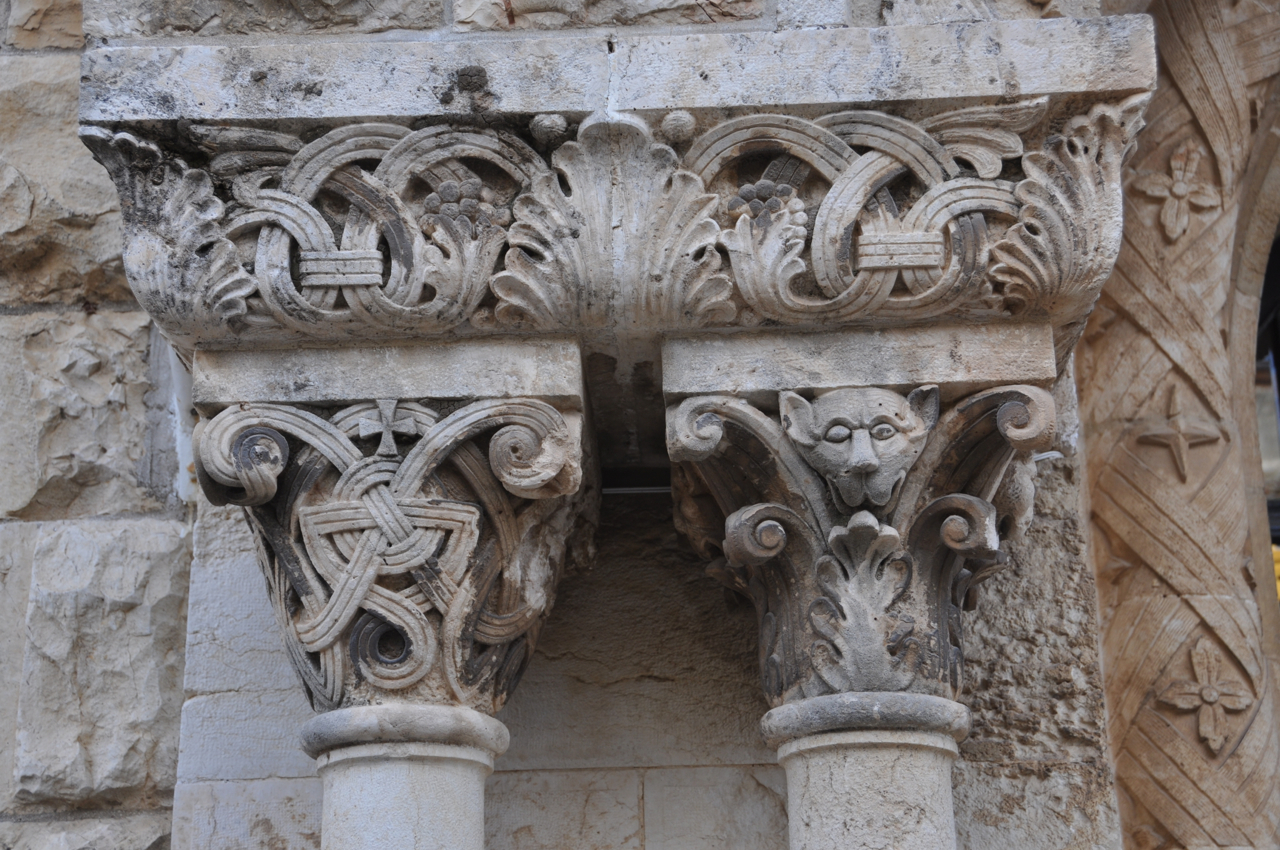
Capitals outside German Lutheran church

Close by is the Church of Holy Sepulcher, rebuilt by the Crusaders and dedicated in 1149. The sculpted marble panels on lintels over the two main doors, in Romanesque style, are now in the Rockefeller museum.
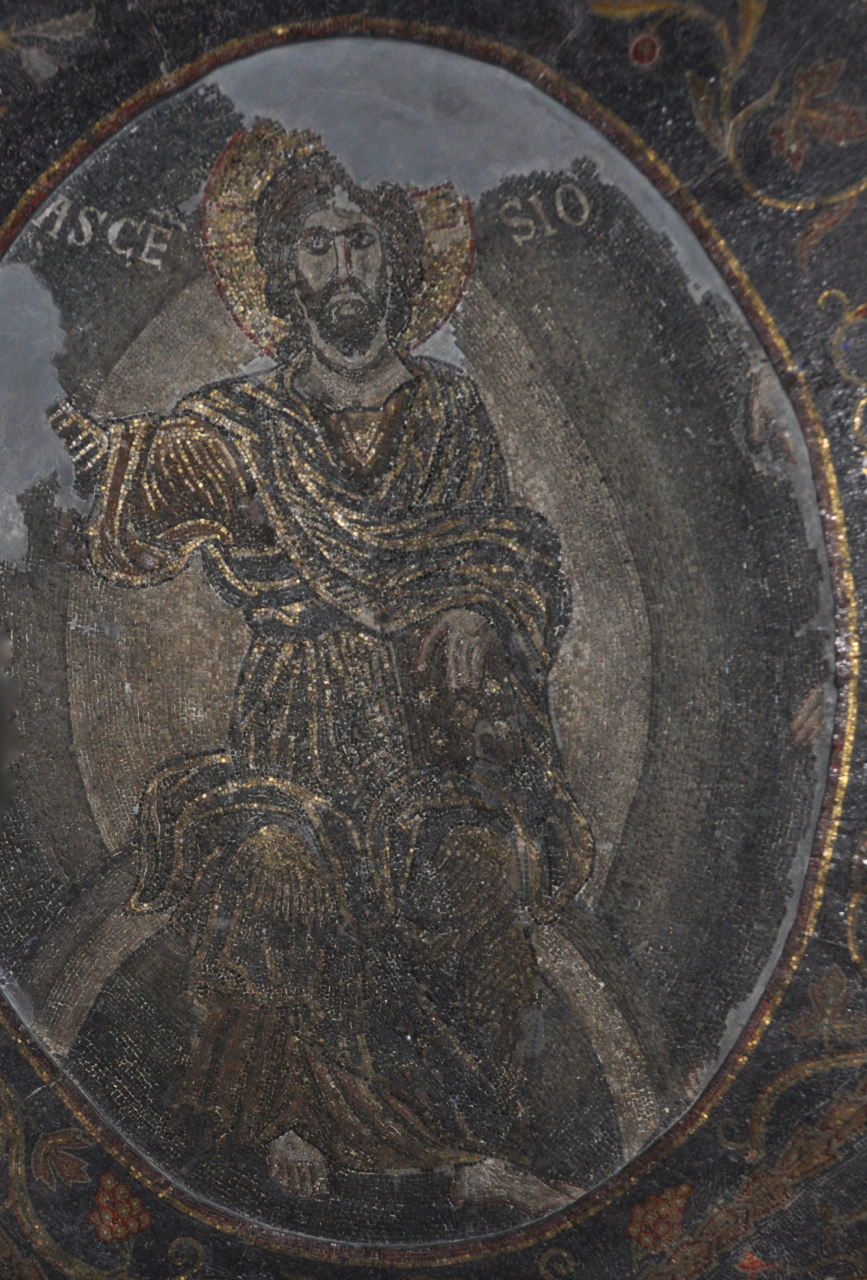
Ascension of Jesus Crusader mosaicOn the ceiling of the Catholic Chapel of the Nailing to the Cross (11th station) is a 12th-century medallion of the Ascension of Jesus — the only surviving Crusader mosaic in the building. Small geometric-shaped pieces of marble inlaid in the floor is a style known as Cosmati or Cosmatesque a traditional technique from the Crusader period though it was done when the chapel was renovated in 1937 by Barluzzi.

There are Hospitaler sites in the Muristan and German knights in the Jewish quarter, remains of a hospice, hospital and church, St. Mary of Germans.

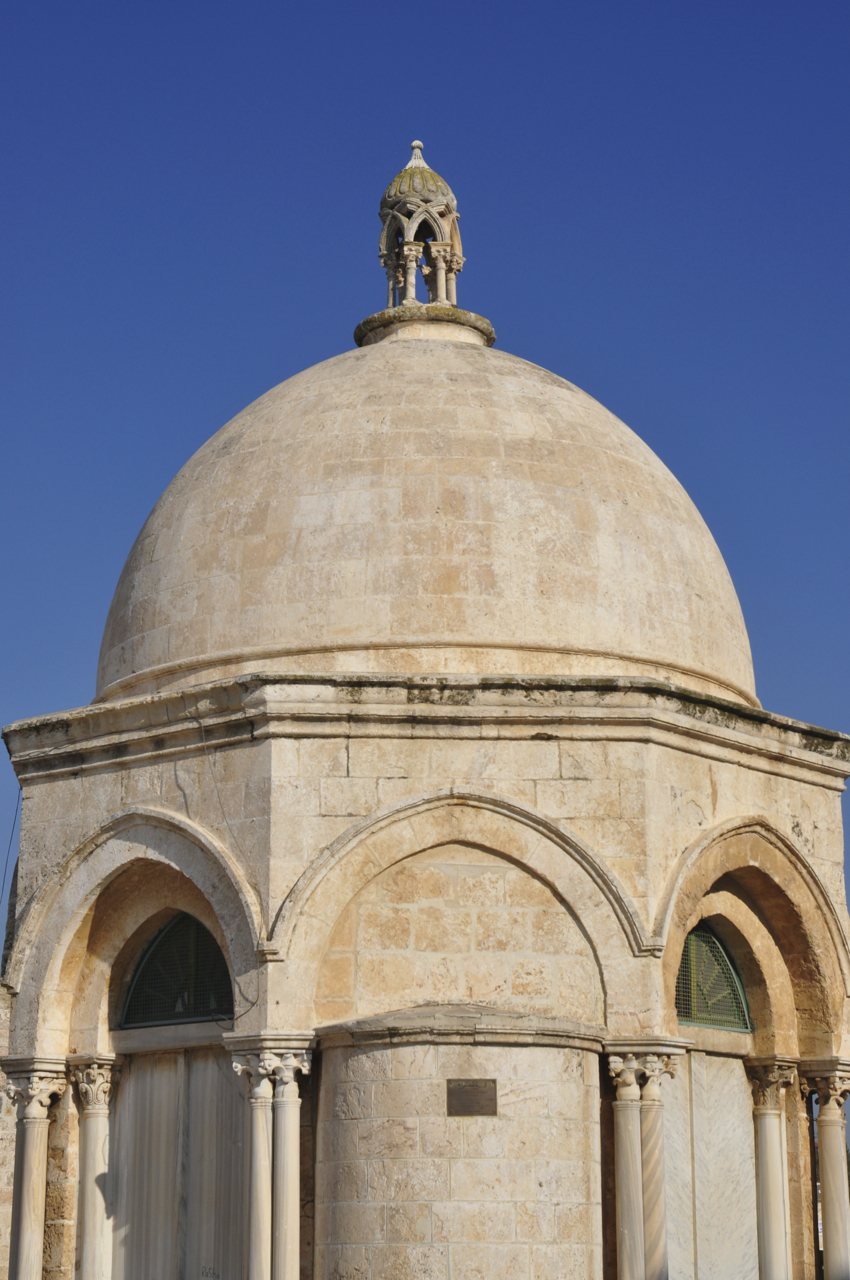
Up on the Haram el-Sharif, the Knights Templar, used the Al Dome of AscensionAqsa mosque, called Templum Solomonis by the Crusaders, and the underground arches of Solomon’s stables. The Dome of the Rock functioned as a church, Templum Domini. A short distance to the northwest, is the Dome of the Ascension, which served as its baptistery. The Dome of the Chain to the east was a Christian chapel to St. James.
If you have the chance, visit the Temple Mount Sifting Project to try some hands-on archaeology and take the opportunity to see artifacts like arrowheads, coins and relics from the Crusader period.

At Bethesda Pools is the ruins of a Crusader chapel, Mary of Bethesda, built on the ruins of a much larger Byzantine church from the 5th century named for St. Mary (Church of the Probatica) and the Church of Santa Anna, one of the most exquisite examples of Crusader architecture in the country.
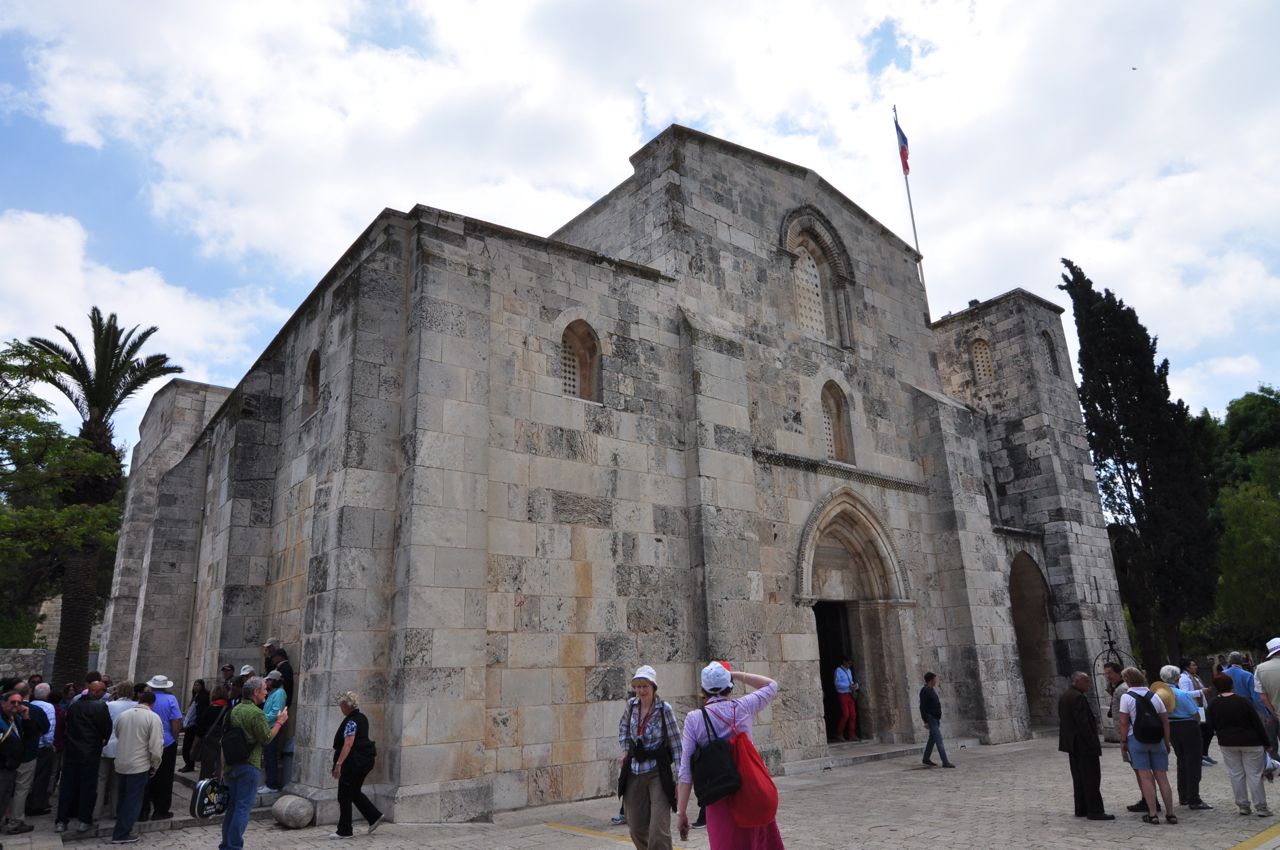
Santa Anna

On Mount Zion, the German Dormition Abbey was built on the ruins of the Crusader church of St Mary of Mount Zion which includes an upstairs room which can be visited today, the Coenaculum or Room of the Last Supper.

The Crusaders built many buildings which affected the city’s image, adding a Christian flavor to the 450 year old Muslim city and many of these changes can still be seen in the Old City today.
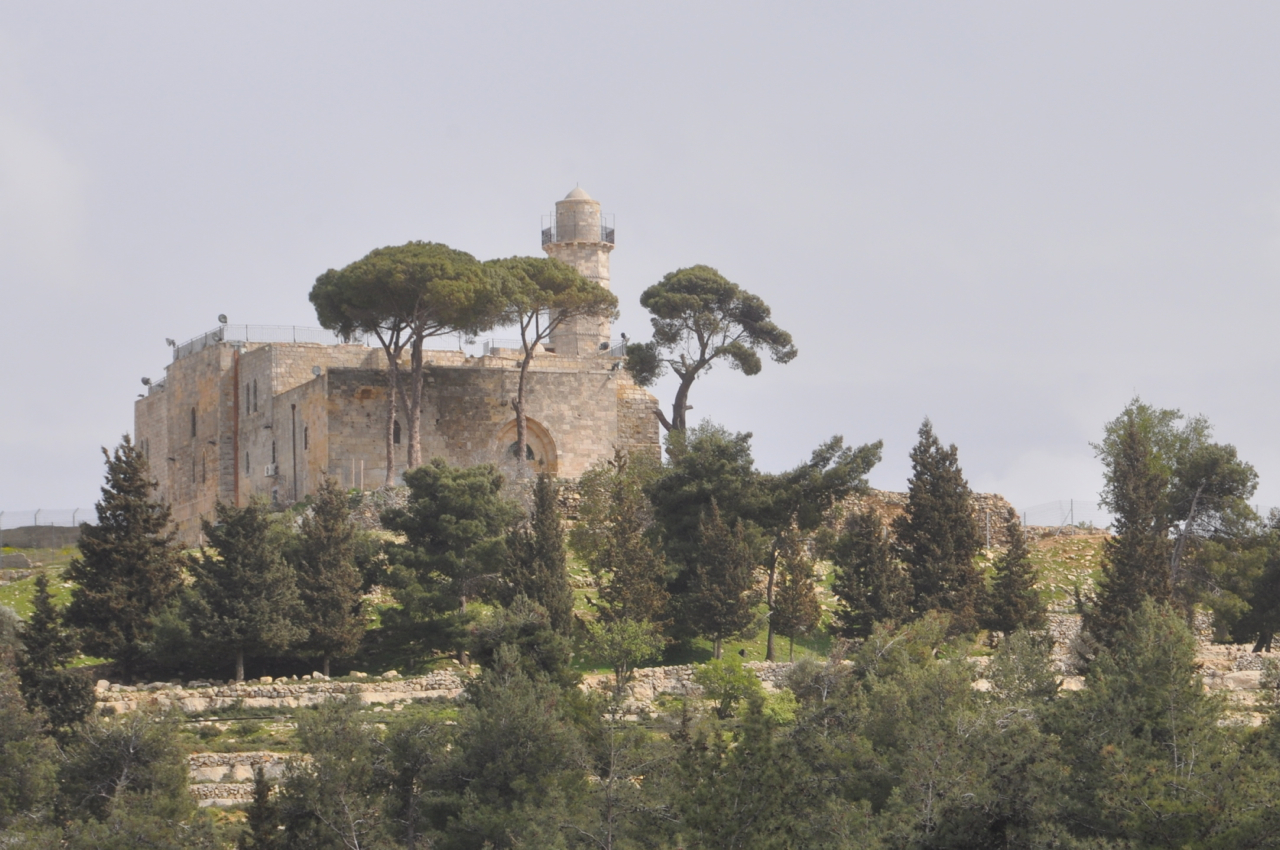
Nebi Samuel

Nebi Samuel Overlooking the ancient route from Beit Horon to Jerusalem (today highway <436>) is a tree-covered, limestone mountain (885 meters high) that gets its name from the Hebrew prophet Samuel who according to Judaism, Christianity and Islam is buried there. Another tradition, supported by archaeological evidence, is that this site is Mizpeh, where Samuel anointed Saul, the first King of Israel and where King Solomon made a thousand burnt offerings at the high-place of Gibeon – the biblical city of Gibeon is only 1.5 km north of the site, today the Palestinian village of el-Jib, behind the separation wall. Excavations, still ongoing, have uncovered the remains of settlements from both the First Temple (7th century BCE) and Second Temple (Hasmonean) periods.

Nebi Samuel, Second Temple

According to the Biblical text I Samuel 25:1 it says that “Samuel died and all Israel gathered and lamented him and buried him in his home(town) in Ramah”. If this site is Mizpeh, then there would be a problem. In the Byzantine period (6th century), Christian tradition said that the prophet’s bones were relocated here and a monastery was built at the site to honor Samuel. In 1099, during the First Crusade, the Crusaders saw Jerusalem for the first time from here and named the mountain, Mons Gaudi (Mountain of Joy). There is still a great view of Jerusalem but of course a much different view than what the Crusaders saw. As part of the fortress that they built there in the 12th century, was a Romanesque style church over the burial cave and a hostel for Christian pilgrims on their way to Jerusalem. When the Crusaders were defeated by the Arabs under Salah a-Din in 1187 the fortifications were destroyed. In the 14th century the Mamelukes converted the church to a mosque. The building and minaret we see today is neither Mameluke nor Ottoman (though the lovely inscription over the door is) but rebuilt by the British after WWI – in the heavy fighting between the Turks and British and aerial bombardment by the British for the strategic hill damaged the building. Jewish armies fought here, from forces led by Judah the Maccabi against the Seleucid-Greeks in 165 BCE to the Harel Brigade who failed to capture the mountain during the War of Independence (1948) but were successful in the Six-Day War (1967).

Preparation of moat

On the western side you can see a section of the moat that was never completed, the large blocks of limestone stand detached ready to be quarried. The path continues past a small Muslim cemetery through an orchard of old olive and fig trees to a spring, named for Hannah, Samuel’s mother, that flows out of a cave in the bedrock.

Hannah's Spring

Israel Roundup

ARTIFAX magazine and The Book & The Spade radio program have published the Top Ten Discoveries in Biblical Archaeology in 2012. At #3 is a First Temple period cistern with a 250 cubic meter capacity that was discovered by chance during the ongoing clearing of the drainage channel near Robinson’s arch. Press release at http://www.antiquities.org.il/article_Item_eng.asp?sec_id=25&subj_id=240&id=1958&module_id=#as

Photo credit: Courtesy of the Israel Antiquities Authority/Vladimir Naykhin

Photo credit: Courtesy of the Israel Antiquities Authority/Vladimir Naykhin

Found while sifting material from City of David, at #4 is a fiscal bulla, a clay seal impression with three lines of script, related to the taxing of shipments at the time of King Hezekiah, the earliest mention of Bethelehem. Found while sifting material from drainage channel near Robinson’s arch, at #5 a personal seal with the name Matanyahu inscribed on it dated to the end of the First Temple period, see https://israeltours.wordpress.com/2012/05/03/first-temple-period-seal/

Jewish National Fund (JNF) has published a map of Israel with 110 “great old” trees marked. One example, #91, a Common Oak, called the “Lone Tree” symbolizing the Gush Etzion bloc south of Jerusalem that has a height of 10 meters, trunk circumference of 3.5 meters and is estimated to be 500 years old. I do a tour that includes the moving audio-visual presentation on the history of the Gush at Kibbutz Kfar Etzion, gourmet lunch at Gavna in the forest with a view all the way to the Mediterranean and a tour of the Lone Tree microbrewery.

Lone Oak

Herod the Great: The King’s Final Journey exhibit at the Israel Museum is an exceptional opportunity to encounter the material opus of Herod the Great – his architecture and aesthetics, and the work of his chief archaeologist, Professor Ehud Netzer. Evidence of Herod, the meaning, struggles, and accomplishments of his life beckon beyond the exhibit halls, to the sites where he fought, ruled, dreamed, and built – Herodium, Masada, CyprosSebasteCaesarea, Banias and Omrit

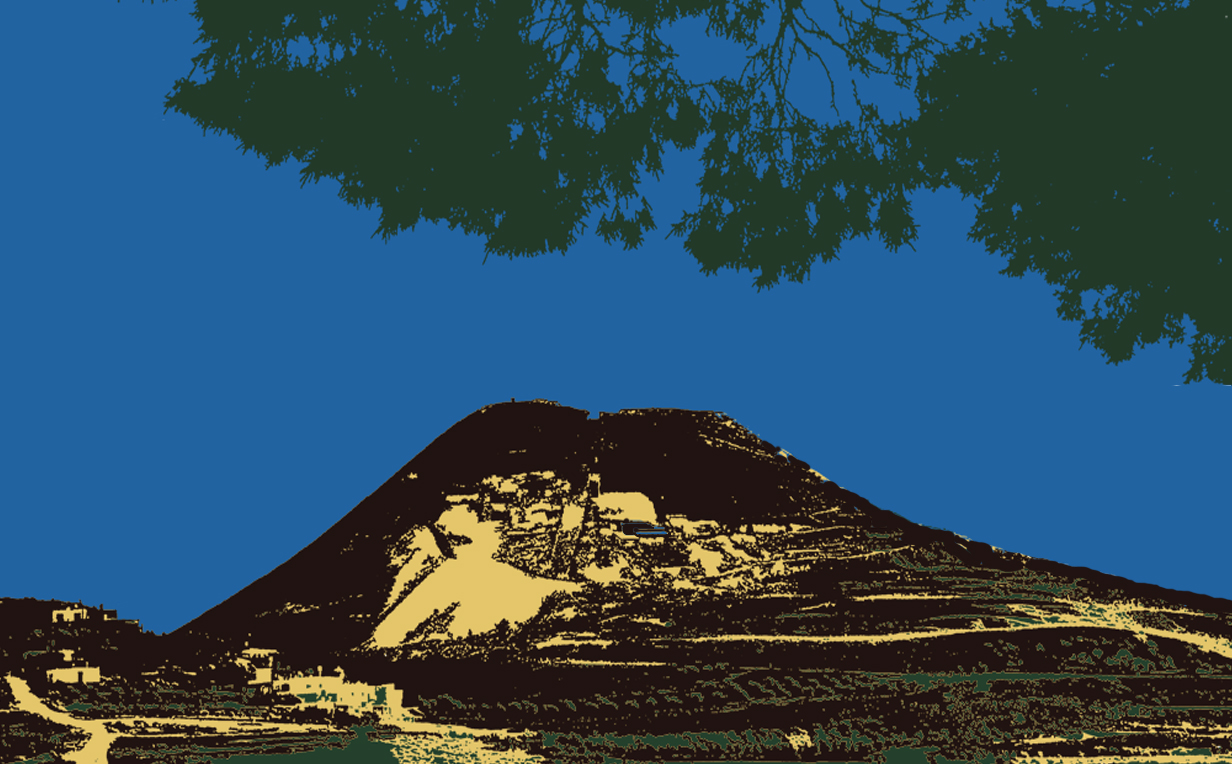
Herodium-4colourFor those who will be in Israel, I am leading in-depth full-day tours of Herodium and the Israel Museum’s Herod exhibit, for details see https://israeltours.wordpress.com/herod-the-great-tour

For those who will not be able to visit Israel, I posted a few articles with photos of the exhibit.
Here are the links to check for photos:

The Israel museum has published a 277 page hardcover catalog of the exhibit. You can order a copy by sending an email to shop at imj.org.il
ARIEL has released volume 201-200 Art and Architecture in Jerusalem and Israel in the Second Temple Period (in Hebrew) in memory of Prof. Ehud Netzer.

From the pantry at Herod’s palace-fortress at Masada, amphorae – large clay jars that held imported delicacies – attest to the luxury and sophistication of Herod’s palate: apples, honey, fine wine, and garum, a savory Roman fish sauce. One amphora bears an inscription of Herod’s name in Latin and Greek. For more about garum, https://israeltours.wordpress.com/2010/11/25/food-discoveries-masada-garum/

Film documentary: Volunteers with military experience, many from America, came to Israel around 1947 to help the fledgling Jewish state. Their acronym, Mahal (MH”L}, stands for מתנדבי חוץ לארץ. The 3 large Hebrew letters, מח’’לֹ, stand as a monument at Sha’ar Hagai, on the road to Jerusalem. Playmount Productions has released a sample from their upcoming documentary Above and Beyond: The Birth of the Israeli Air Force.

Emek Habacha project: Estimated at €250 million to install 50 130 meter tall (height of the Azrielli Towers in Tel Aviv) wind turbines able to produce 120 megawatts has received approval. These will replace the 10 wind turbines that produce 6 megawatts at Tel Asania. I blogged about the old wind turbines in May 2011 at https://israeltours.wordpress.com/2011/05/02/wind-turbines-on-golan-trail/

Euthemius, Judean Desert Monastery

The history of the third monastery of Euthemius, which bears his name, illustrates the history of Christian monasticism in the Judean desert. Young monks were drawn to the holy Euthemius and the monastery became the most important and central among the Byzantine monasteries in the 5th century CE.

Northern wall Euthemius

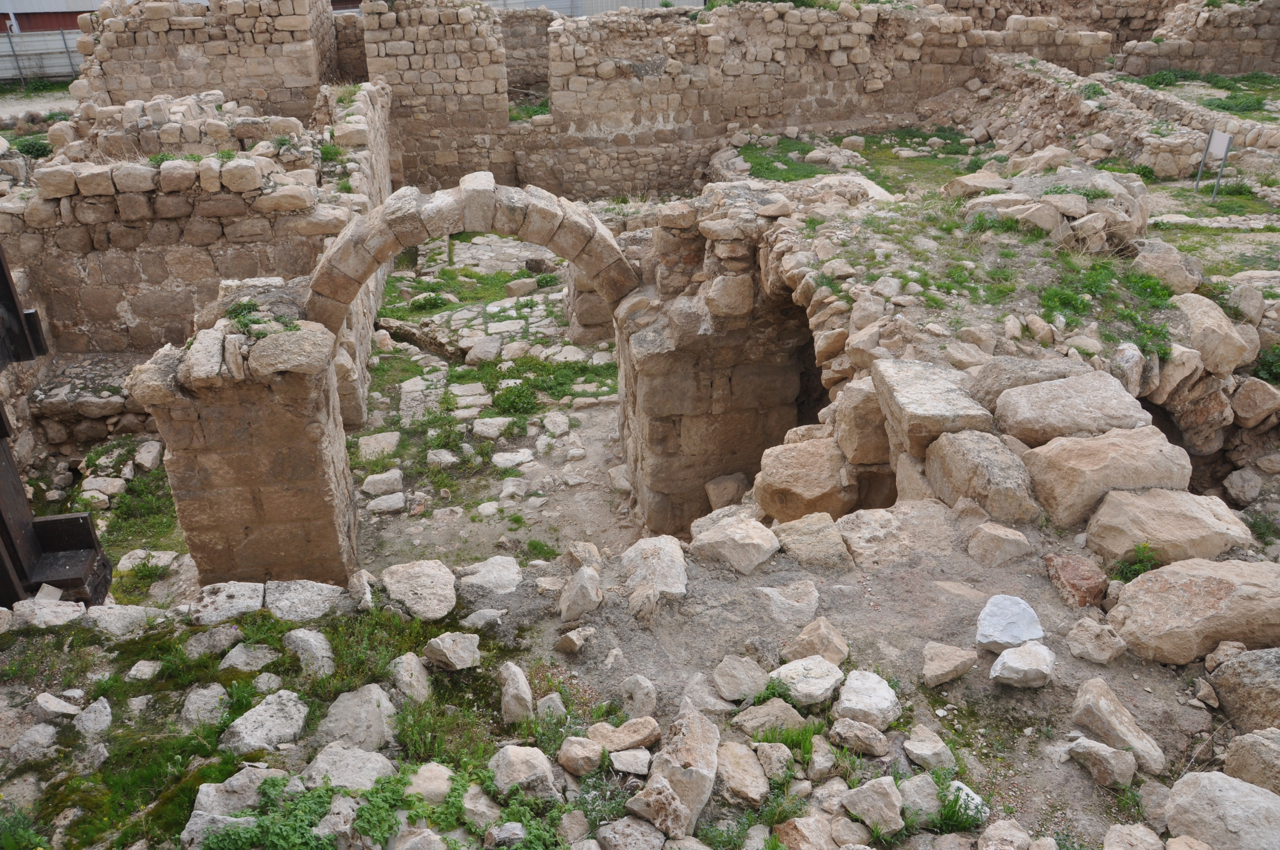
Euthemius came to the Holy Land as a pilgrim in 406 from Armenia and stayed at the laura of Faran, founded by the monk Chariton at Wadi Qelt. A laura is a cluster of caves or cells where monks live in seclusion and meditation. They gathered centrally once a week, generally on Sunday, for prayer. After five years, he and a fellow hermit, Theoktistus, moved to a cave on the cliffs of Nahal Og. With additional monks attracted to Euthemius, the site became the first coenobium in the Judean desert. A coenobium is a communal monastery where the monks live together with a strict daily schedule of work and prayer, a walled complex that consists of living quarters, refectory and church.

Inside Euthemius monasteryTo continue in solitude, Euthemius and a fellow hermit, left the monastery and moved to the ruins of Masada. In 428 CE he returned to the monastery of Theoktistus but preferring solitude went to live in a cave to the west of the monastery off the main Jericho-Jerusalem road. When other monks joined him, it grew into a laura. In 475, after a full life, Euthemius died at the age of 97.  After his death, the laura became a coenobium and a crypt was built in the center of the monastery around the same cave where the monastery had begun and his bones re-interred there. Pilgrims came to visit the monastery to pay their respects to Euthemius and a tradition arose to pour wine down a chute to the crypt which poured over his bones – the wine was collected as a keepsake.

By the end of the fifth century many important monasteries were established, including Mar Saba, Martyrius, Gerasimus and St. George – all of which can be visited on a tour of monasteries in the northern Judean desert, also called the desert of Jerusalem because of its proximity to Jerusalem and Bethlehem.

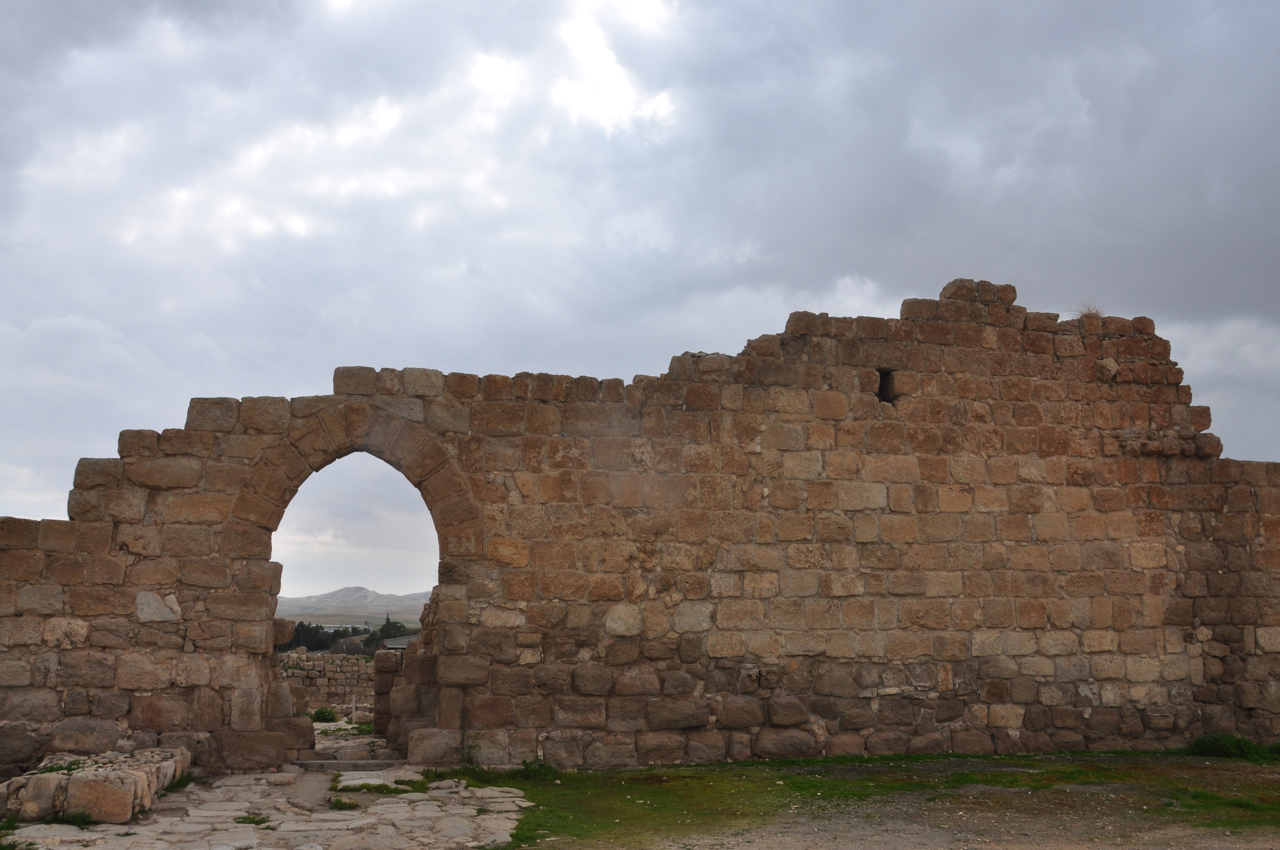
Unlike most Christian sites, the monastery was not damaged by the Islamic conquest of 638. However, it was severely damaged in the 659 earthquake – the ruins of the church that we see today are from after the earthquake, the mosaic floor is from the Byzantine period.

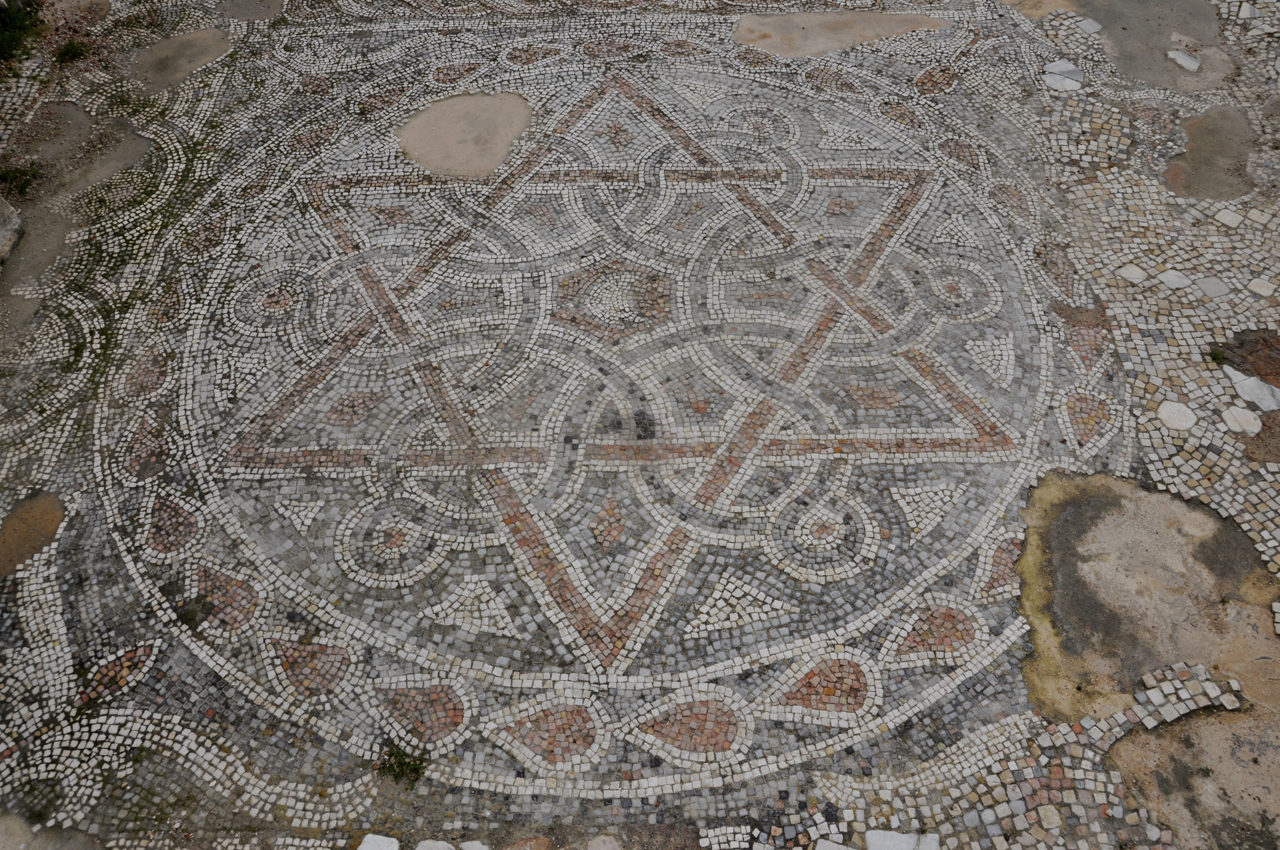
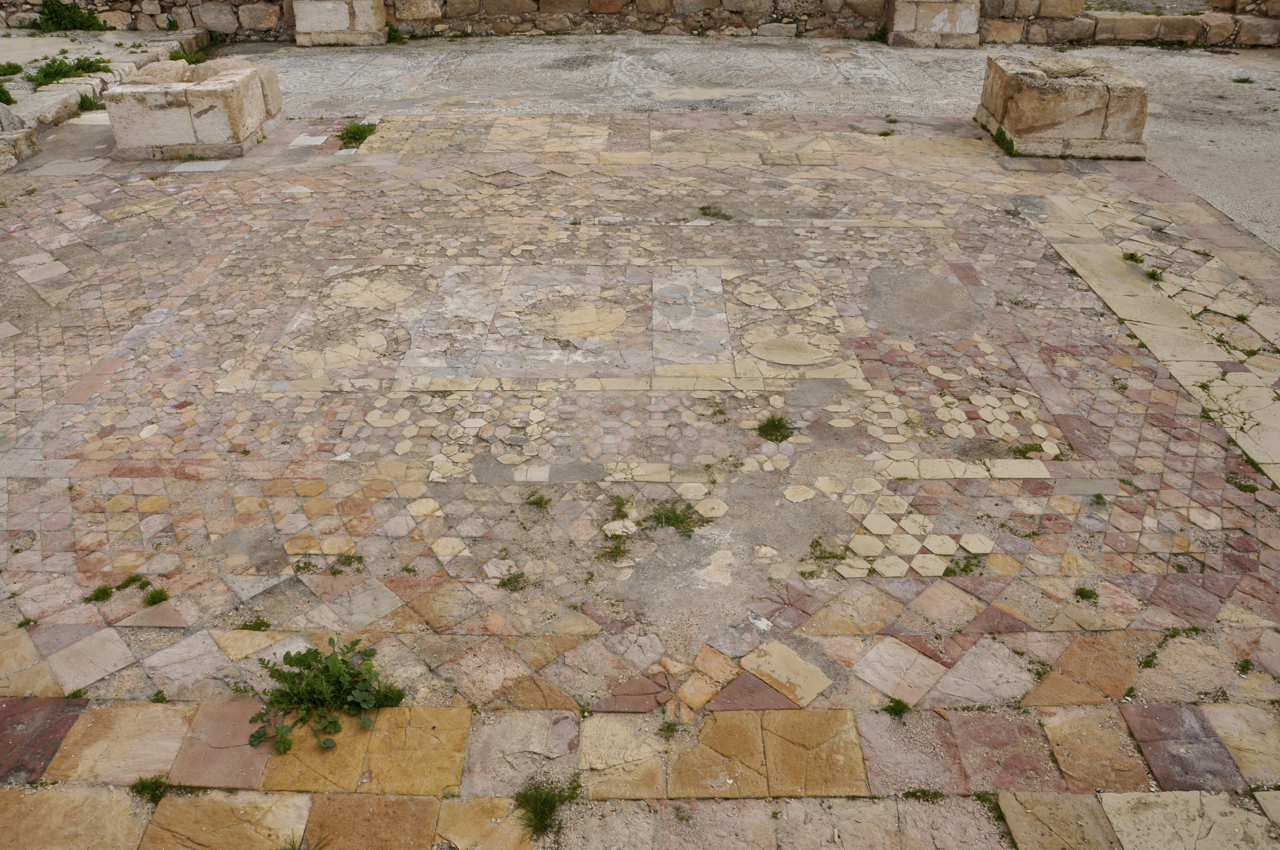
Mosaic floorThe monasteries in the Judean desert were frequently attacked during the Islamic period and in 809 the monastery was plundered and destroyed in the 12th century. The main arched gate on the northern wall and the eastern wall and the opus sectile floor in the church are from the Crusader period.

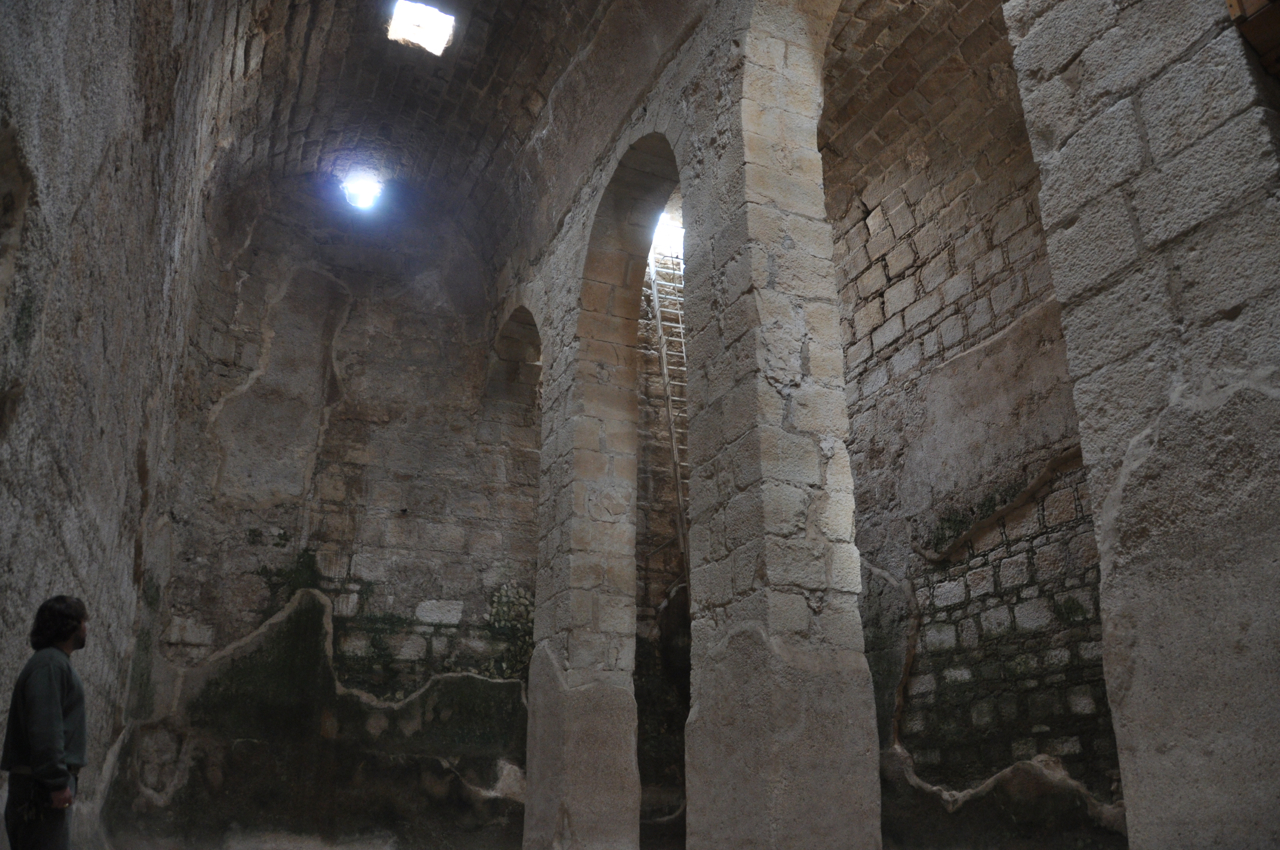
Crusader opus sectileThe other important aspect of the Judean desert monasteries are their water systems, for little rainfall falls in the region and water had to be accumulated or it would be impossible to live there. Four tremendous cisterns were discovered in the monastery. You can enter the largest one (12 meters by 18 meters and 12 meters deep that would hold 3000 cubic meters) which is outside the eastern wall. Channels bring water from runoff to a collecting pool and then to the covered cistern.

Large cistern Euthemius

Herodium, Netzer, King Herod and the Israel Museum

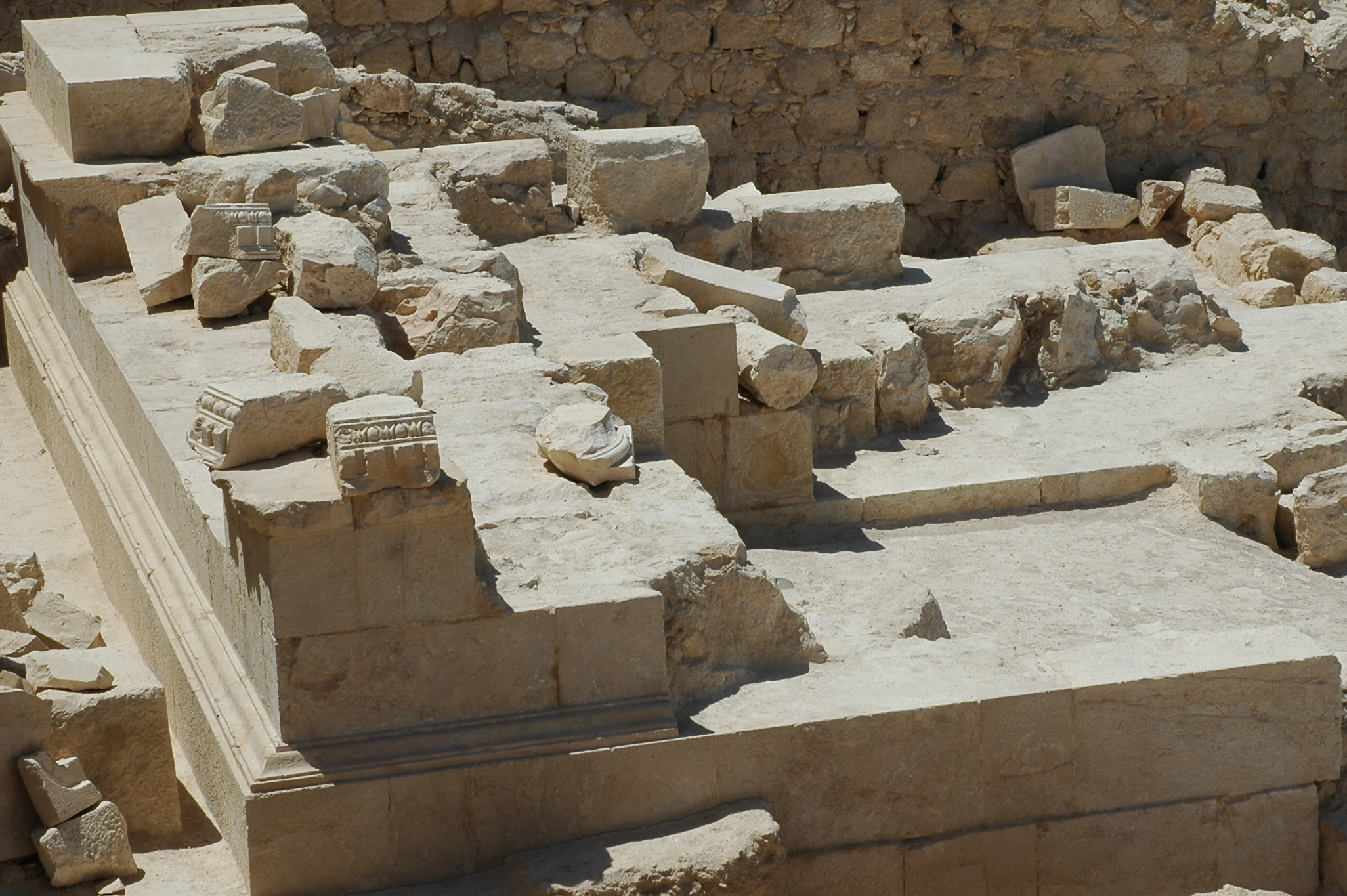
Each day we rose before dawn and the unrelenting desert heat to continue digging east of the monumental staircase. In the summer of 2007, after Professor Netzer had discovered the base of the mausoleum, I volunteered at the archaeological site at Herodium. Among seas of pottery shards, we dug up baseball-sized stones hurled by a Roman catapult (ballista). Scanning with a metal detector, we found tiny, encrusted bronze coins, from the period of the Great Revolt.

Herodium Tomb area

We uncovered a few well-carved stones strewn about – an egg and dart pattern, two five-petaled flowers from a decorative frieze. The high-quality limestone is meleke, from the root “king”, is not local to the site; it had been brought to Herodium specially for the mausoleum. At Herodium last week, these pieces were not to be found.

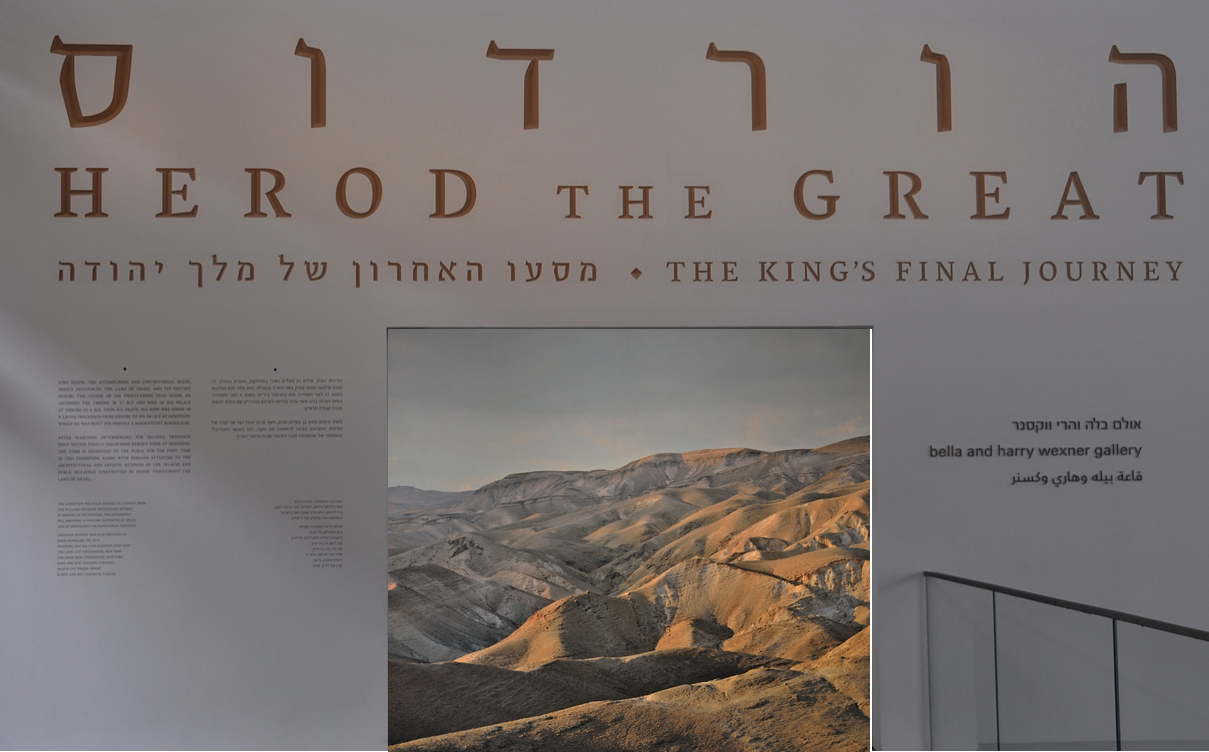
Herod the Great exhibit

The first image at the entrance to the Herod exhibit at the Israel museum opening today is neither architecture or artifacts, but the Judean desert – the site where Herod built his monuments is important.

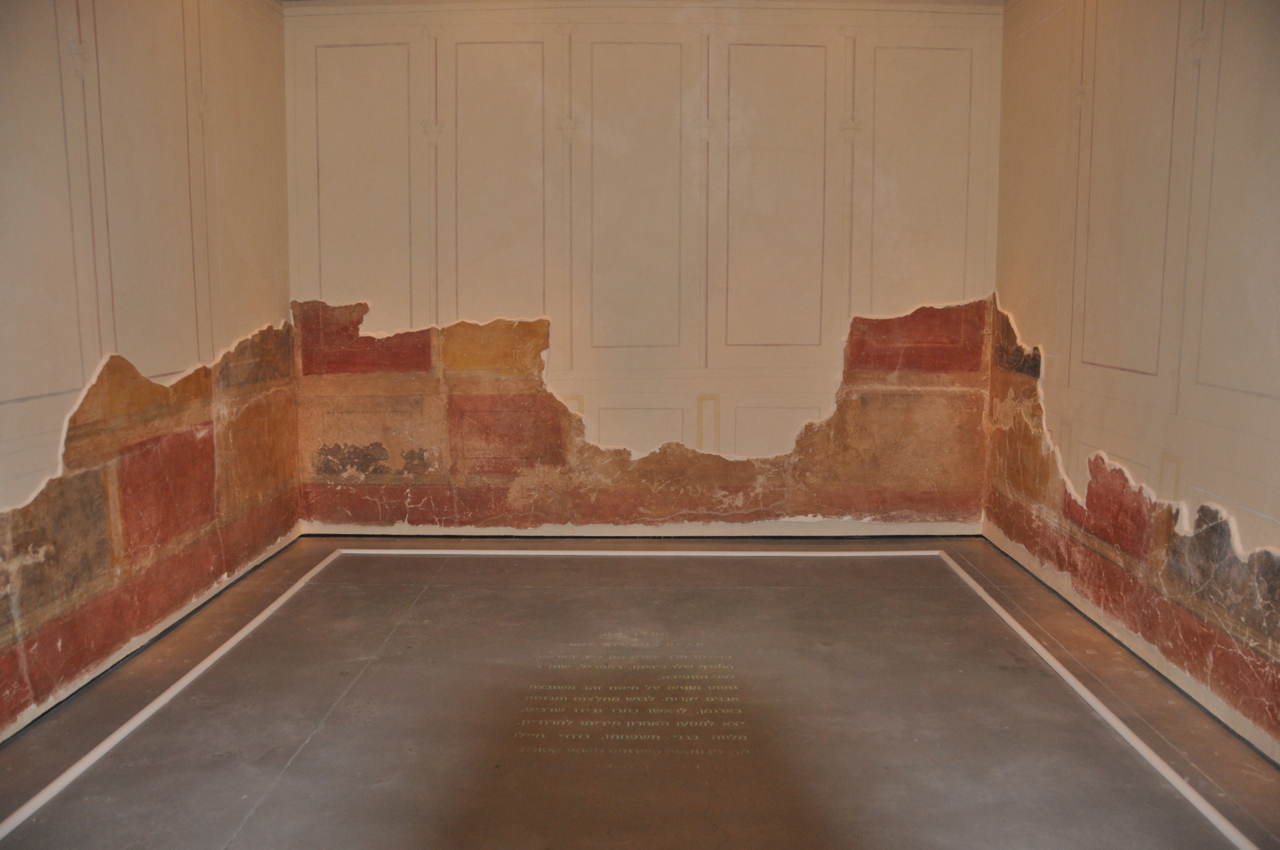
Throne Room, JerichoFollowing Herod the Builder, museum staff re-constructed three rooms from Herod’s palaces at the museum. The first room you enter is a replica of the throne room from Herod’s third palace at Jericho, excavated by Netzer for his doctorate. The original frescoes with their intense natural colors were removed from the palace and moved to the museum. So fond of Herod, Augustus had permitted him to mine cinnabar, a red mineral pigment, from his private property in Almadén, Spain.

When Marcus Agrippa, Augustus’ deputy visited Judea in 15 BCE, he was so impressed by Herod’s building projects that he sent Roman builders and artists to Judea to contribute their sophisticated skills. Opus recticulatum is a technique for strengthening walls to resist earthquake damage. All three examples of this Roman technique are found in Herod’s projects, discovered by Ehud Netzer: in the palace at Jericho, at the remains of a building north of Damascus gate rumored to be Herod’s Family tomb, and in a section of temple wall at Banias.

Bathtub Opus Sectile

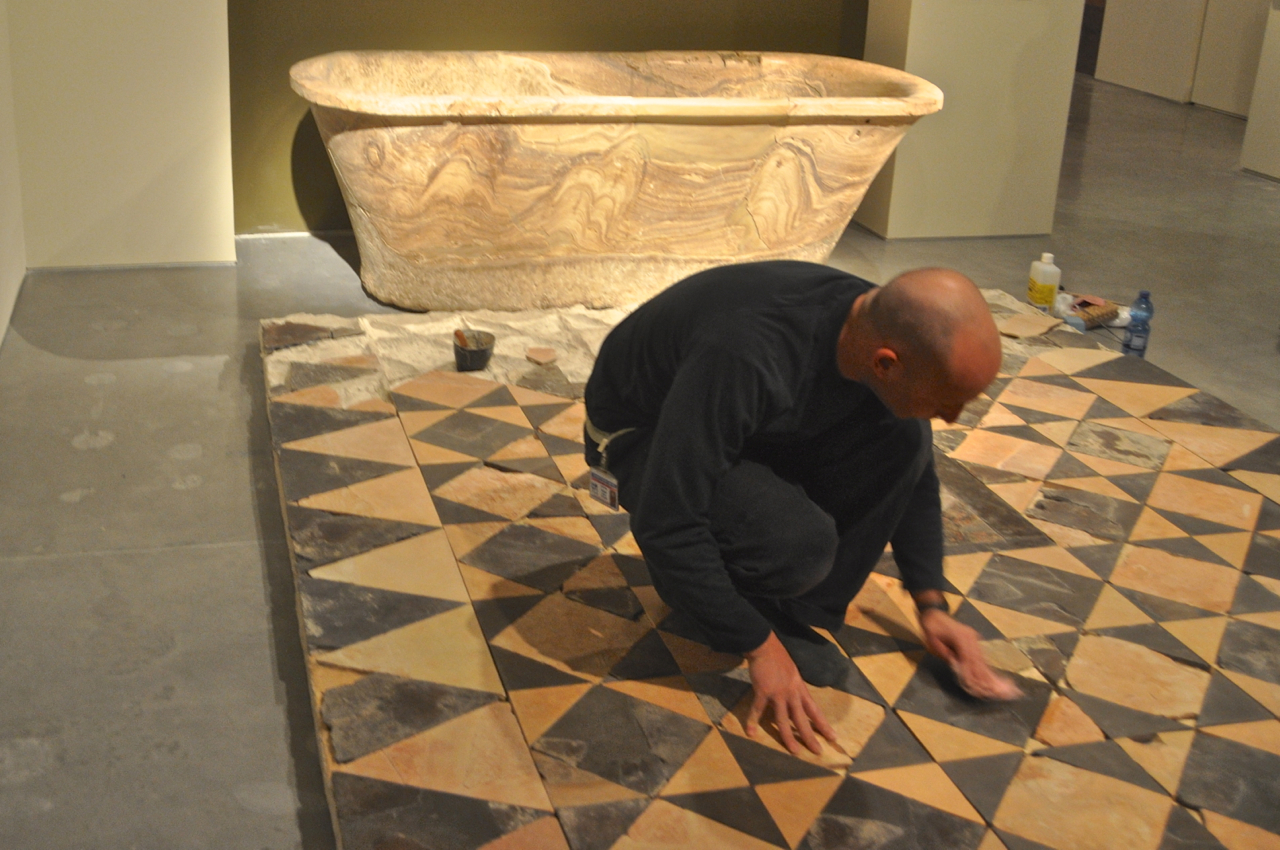
The second room displays Herod’s private stone bathtub uncovered by Netzer at the palace in Cypros. The museum displays floors from Cypros and Herodium laid with a Roman technique, opus sectile. Natural-colored stone tiles are cut in geometric shapes and laid in repeated patterns. In other cases, the floors are mosaic – two mosaic floors from the bathhouse at Lower Herodian, one in an opus sectile pattern and the other geometric shapes with pomegranates.

Secco - loggia

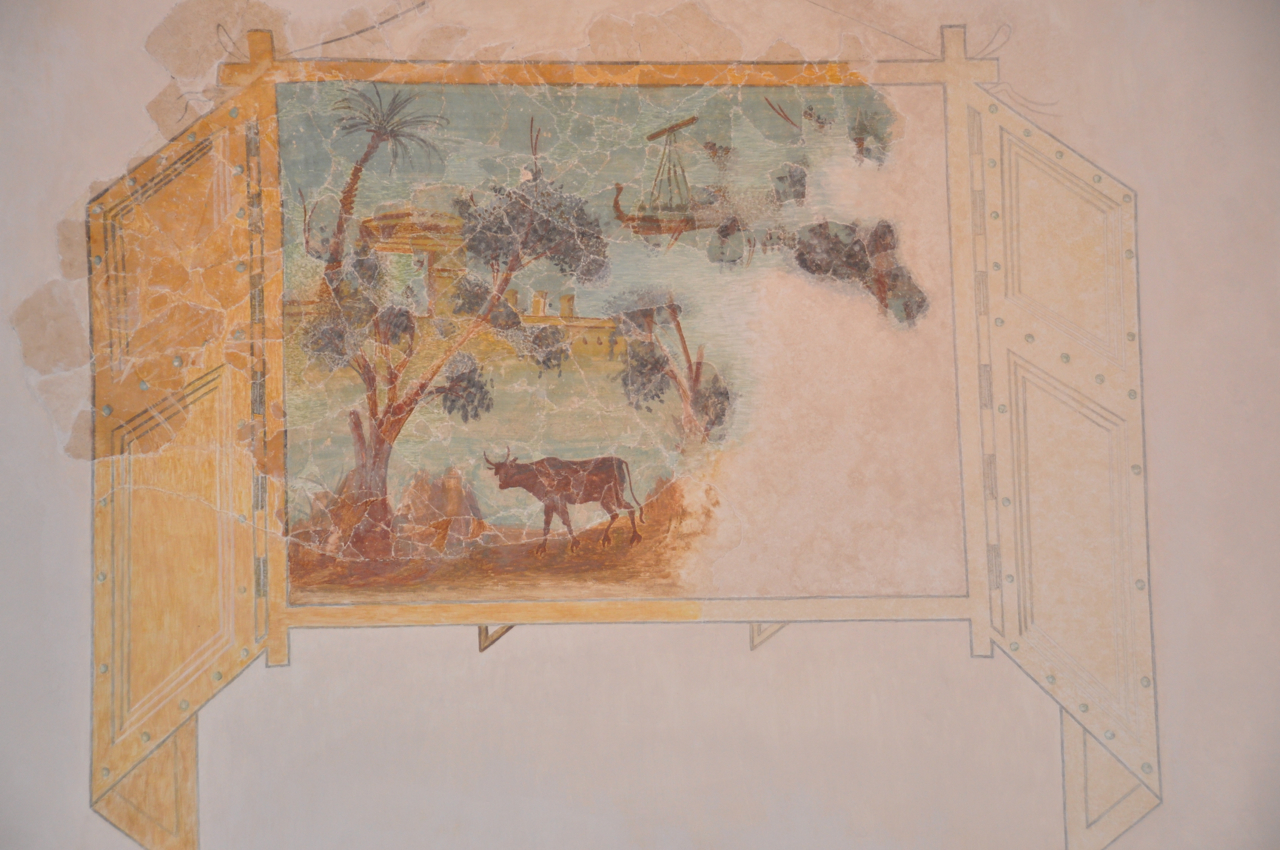
The third room is a reconstruction of the loggia, the VIP box from the Herodium theater with its unique secco wall paintings. According to this Roman technique, paint is added to dry plaster compared with the more usual fresco – fresh, wet plaster technique. These paintings are trompe de l’oeil views of an open window, with wooden shutters, that look out onto a natural scene, at the artistic standard found in the finest palaces and villas in Rome and Pompeii.

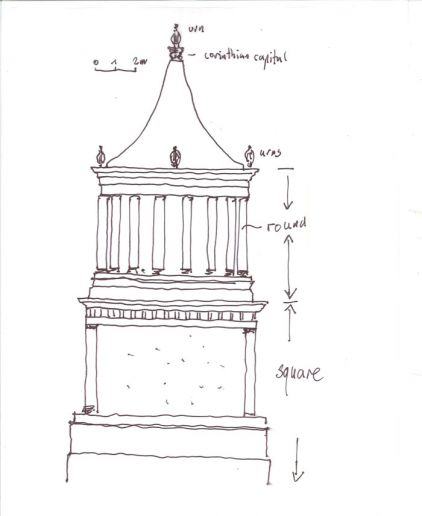
Herodium Mausoleum

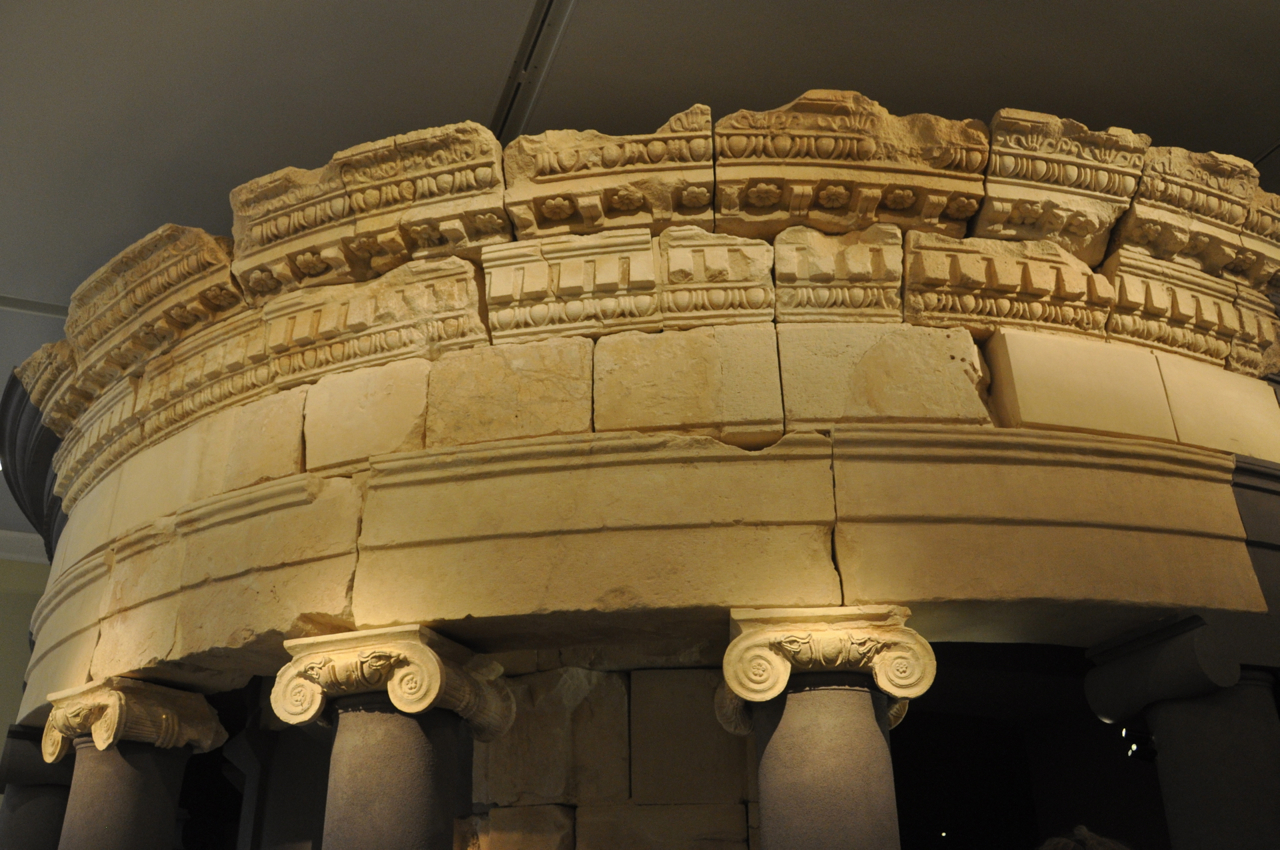
The exhibit is laid out faithfully to the site at Herodium where the loggia and the mausoleum flank the staircase. At the museum, we move through the viewing platform toward the full life-size reconstruction of the top-level of the mausoleum. The very decorative stones I excavated at Herodium are in their proper places in the frieze. A microchip was attached to each stone of 30 tons that were transported from Herodium to the Museum – as an aid to tracking and assembly. For the same purpose, the Hebrew letter “chet” can be seen on one stone, a sign left by the ancient Jewish stone masons. The structure is so heavy that the floor had to be specially reinforced.

In 1982, while Netzer was excavating, he came upon a water cistern in the mountain. He was puzzled that the cistern had been reinforced to support a great weight. Unbeknown to him, he had come within a meter of discovering the mausoleum. Why would Herod have insisted that the mausoleum be built on top of a cistern? According to the curator, Dudi Mevorah, Herod chose this precise location because it is best seen from Jerusalem. Once the mausoleum was complete, Herod dismantled the stage and buried his theater in order not to distract the eye.

The Israel Museum

The Israel Museum

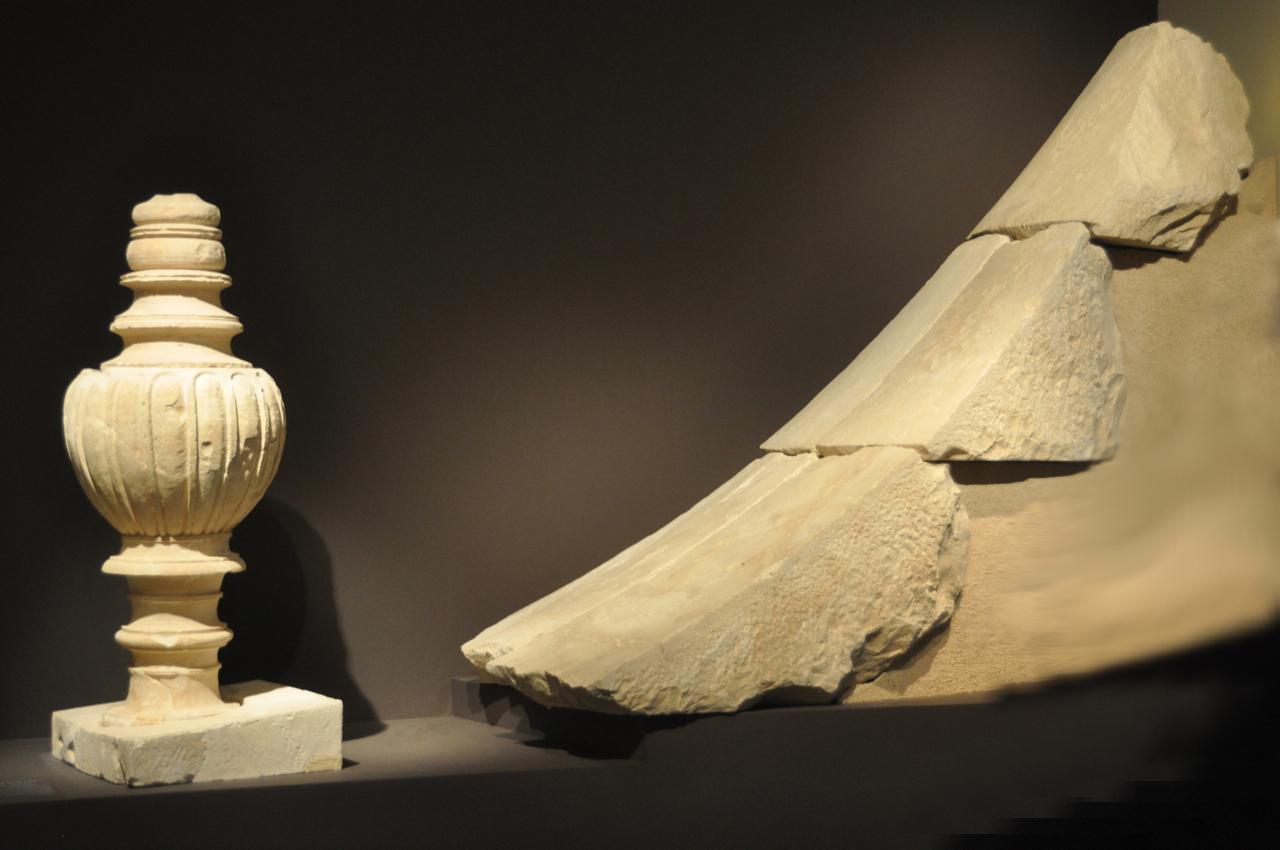
Netzer drew on his familiarity with Herod’s oeuvre and his expertise as an architect and archaeologist to imagine the mausoleum. Netzer conceives a colossal three-story monument – 25 meters high. The first level is cube-shaped – only the base exists and can be viewed at Herodium halfway up the mountain on the north side. The second level is a tholos, a cylindrical structure with Ionic columns and crowned with a conical roof. In addition to the Roman style, there are Nabatean elements to memorialize Herod’s Nabatean mother Cypros – two stone replicas of Nabatean funerary urns are on display out of five that adorned the roof.Nabatean Funerary urn

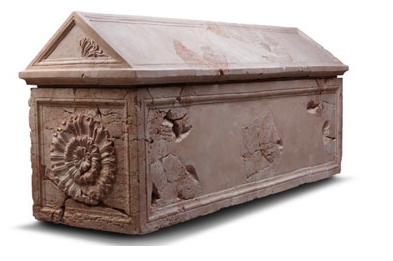
Entering within the structure, the sarcophagus that Netzer claims was Herod’s rests. Netzer found its shards – the stone box had been smashed in antiquity and reconstructed by museum staff.

The Israel Museum/Meidad Suchowolski

The Israel Museum/Meidad Suchowolski

Made of reddish limestone, mizzi ahmar, from the Arabic, this is very hard stone and would have been difficult to carve – perhaps that made it all the more appealing. Originally, Netzer suggested that the side panels of the sarcophagus were decorated with five flower medallions. There are sarcophagi like that, one in the Louvre taken from the Tomb of the Kings, one outside the Islamic museum on the Haram el-Sharif. Based on the museum reconstruction, it seems that these panels are plain.

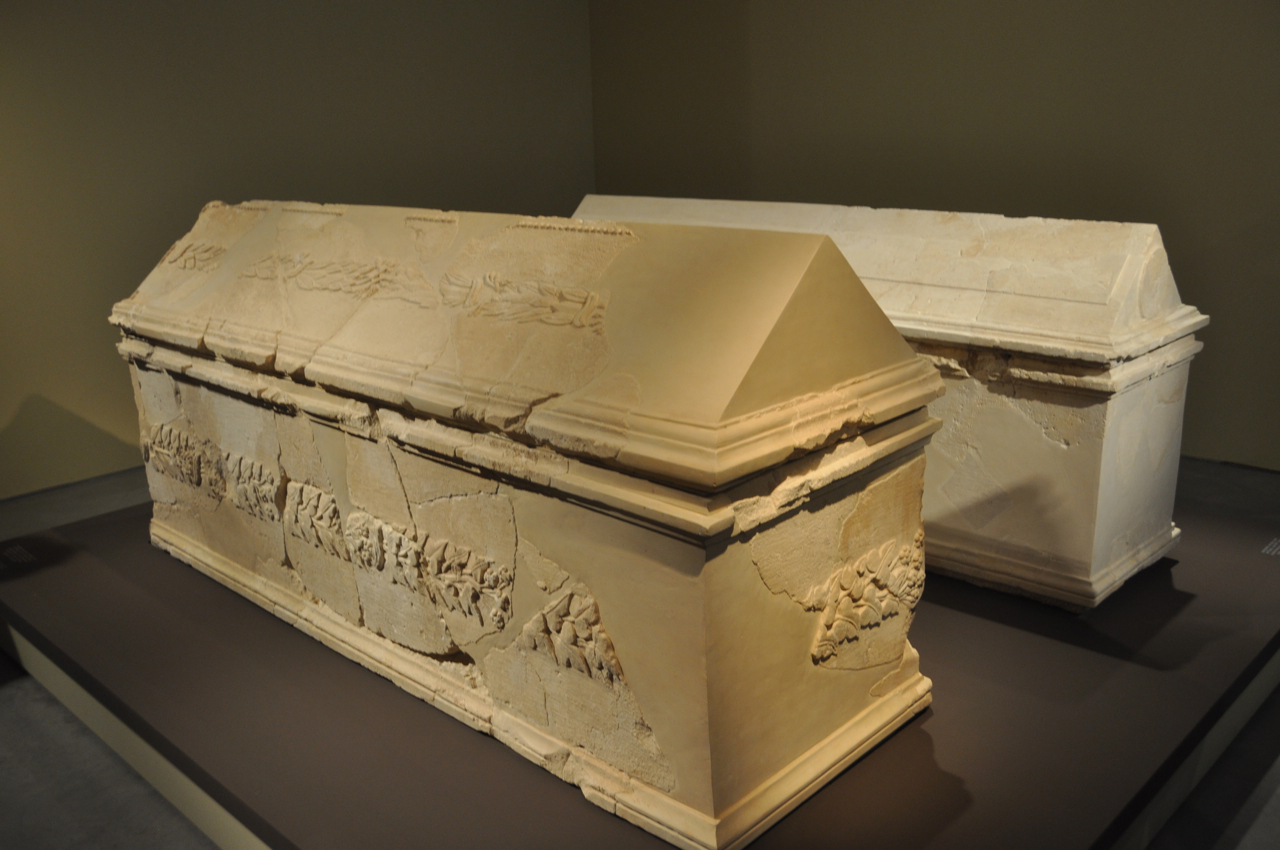
Two sarcophagi

Beside the mausoleum, the other two sarcophagi that Netzer discovered are displayed. Netzer posits that these belonged to Herod’s family members. One is decorated with a vine pattern – very similar to the stucco decorations in Herod’s theater box. The other sarcophagus, displayed for the first time, is completely plain as if waiting for the stone-carver.

The Israel museum has built a monumental exhibit that expresses Herod’s architecture and aesthetics as discovered by archaeologist, Professor Ehud Netzer – Herod would have been pleased with the result. To understand more requires going beyond the exhibit halls, to experience the drama of Herod’s life in situ, at the sites that Herod built.


For an in-depth full-day tour of Herodium and the Israel Museum’s “Herod the Great: The King’s Final Journey” exhibit and/or personalized guided tours of Herod’s other sites and more, contact Shmuel.

From Israel – what to call this?

This week I’m trying something new, a post of some of the interesting things I’ve discovered as a guide this week. If anyone has a good idea what to call this post, leave a comment.

Hansen “Leper” Hospital  The old Hansen “Leper” hospital built by Conrad Schick in 1887 has an interesting exhibit “Behind the Walls” of the history of the place. Plans are underway to turn the hospital into a municipal cultural center, a meeting place for the arts, media and technology.

Jerusalem Train Station  Work continues on the 19th-century abandoned Jerusalem train station to be transformed into a cultural and culinary complex, which developers promise will be open on Shabbat and will serve non-kosher food. “There is something a little kitschy when you try to reconstruct the feeling of the past,” says architect David Kroyanker, but he adds, “The fact is that it attracts people.” from Haaretz

Archaeology Tour  Popular Archaeology is organizing an extraordinary archaeological tour of Israel in April. I’m the guide! Among the highlights will be a visit to the new exhibit at the Israel museum, Herod the Great: The King’s Final Journey.
Additional incentive, if you enjoy taking photographs, submit your best ones to win up to $1000. – plenty of photogenic opportunities, for example, the ruins of a Roman temple on night of a full moon and partial eclipse.
More details at http://popular-archaeology.com/page/archaeological-travel-tours

Shroud of Turin  Fascinating exhibit on the Shroud of Turin at Notre Dame across from New Gate. Also an incredible view of the Old City from their wine and cheese bar on the roof.

Almonds BlossomsCherry Blossoms 桜花見  Just past Tu Bishvat, the New Year of Trees and the almond trees are blossoming. Jerusalem Botanical gardens reports that the Japanese cherry trees behind the visitors center are in bloom. While you’re there check out the newly renovated Bonsai section.

Dead Sea Scrolls  Israel Antiquities Authority and Google announced that 5,000 Dead Sea Scroll fragments found in Cave 4 at Qumran have been digitized at high-resolution and are now available on the Internet. These include fragments containing the Ten Commandments and sections of Genesis, that recount the first three days of creation. I learned that there are more than 100 fragments of documents in Greek as well. Check out the excellent website at http://www.deadseascrolls.org.il/

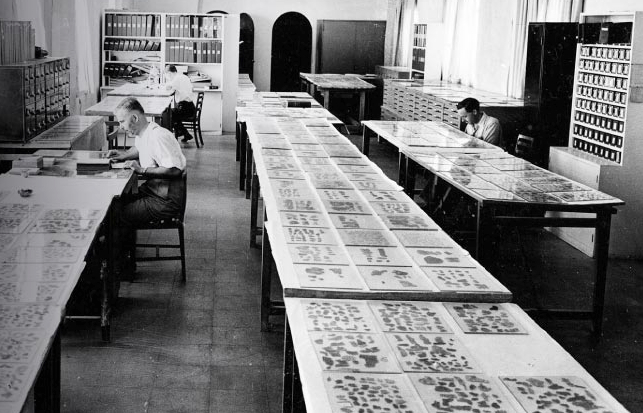
Scrollery room at Rockefeller museumAmazing since for years these fragments were at the Rockefeller museum, only accessible to a few scholars and now they are viewable from the comfort of your home.

Christ Church Exhibit  Not everyone knows about the exhibit at Christ Church that includes some Conrad Schick models, one of Haram al-Sharif (~1:125) and photographs and mementos of Jerusalem’s Old City from the turn of the century. Look closely at this photo to make out part of the sign of VESTER & CO.

In 1904 Bertha Spafford married Frederick Vester, whose father’s curio shop in Jerusalem had recently been bought by the American Colony. Renamed “Fr. Vester & Co., The American Colony Store,” the business greatly expanded its clientele and range of offerings to include photographs and collections of antiquities.

Jerusalem Old City ~1900

Jerusalem Old City ~1900