Category Archives: Jerusalem

New Israel Museum

Today I had the opportunity to visit the Israel Museum before its official opening to the public on July 26th. There have been a lot of changes, to the tune of $100 million and these improve the visitor experience immensely.

James Carpenter Design Associates built new entry pavilions at the entrance to the museum that are connected by a covered “route of passage” to a new gallery entrance pavilion which acts as the central hub giving access to the Museum’s 3 collection gallery wings, Archaeology, Judaica and Art, from a main Cardo. Each of the new buildings is basically a glass cube shaded by cast terracotta louvered shade panels that diffuse the bright Mediterranean light and still allow the visitor a view of and interaction with the exterior. With this design the new pavilions resonate with Alfred Mansfeld and Dora Gad’s original modular and modernist design. I am pleased to offer an architecturally focussed tour of the new Israel Museum, including highlights like the Shrine of the Book, that has been called “a milestone in the history of world architecture”.

In the above photo, the view from the Carter Promenade looking back towards the entrance pavillions; below, looking up the hill to how the new gallery pavillion fits into the plan.

Light and glass comprise the firm’s signature architectural focus. The passageway has a wall of glass and is covered by a swatch of translucent glass panels that were designed and made especially for the project. Outside above the passageway a stream of water cascades down the hill over the glass panels. During the day the water and glass let light into the passage which animates the wall with a moving pattern and at night the light illuminating the passageway lights up the water stream above.

Efrat-Kowalsky Architects redesigned the interior gallery spaces of the existing buildings and the way the museum has organized the art and artifacts suggests some interesting connections among objects and between the particular and the universal. The emphasis is on what cultures have in common and there is an attempt to place Jewish history and practices in a broader context.

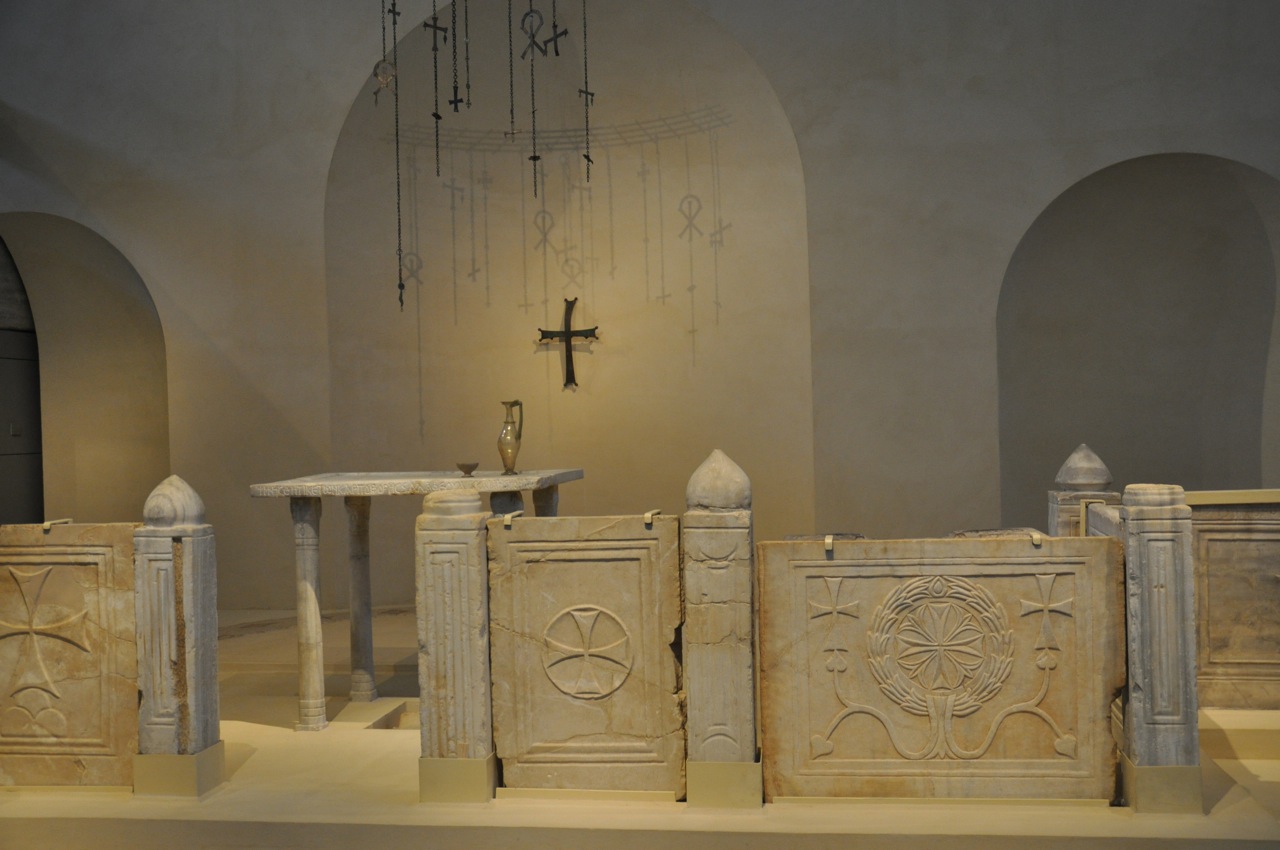
One example is a very impressive new installation in one large room that focuses on the 5th to 7th Century where part of a restored synagogue is displayed, the facade of the interior of the synagogue with its particular decorations and objects and a beautiful mosaic floor. Next to it a Byzantine church and across the room the michrab or prayer niche from a mosque. Roughly contemporary structures, they are placed in a way that highlights both their distinctiveness and their commonality.

The new galleries and displays are stunning. The museum is a wondrous place to explore.

Oskar Schindler’s grave

Oskar Schindler died on September 10, 1974 in Hildesheim, Germany at the age of 66. He had requested to be buried in Israel and his Schindlerjuden survivors arranged for him to be buried in Jerusalem. You can visit his grave in the Catholic cemetery on Mount Zion. For those with GPS the coordinates are 31.770164, 35.230423

The cemetery is on the main road, Ma’ale HaShalom that goes to the Mount Zion parking lot. The cemetery has 2 levels and Schindler’s grave is on the second, lower level. There are a set of steps on the left side of the cemetery after you enter that let you descend to the lower level. The grave is right beside one of the paths, recognizable from afar because of the many stones on the gravestone. It’s a Jewish custom to put a small stone on the gravestone when you visit a person’s grave. On his grave, the Hebrew inscription reads ‘Righteous Gentile’, and the German inscription reads ‘The Unforgettable Lifesaver of 1200 Persecuted Jews’.

In 1962 a tree was planted in Schindler’s honor in the Avenue of the Righteous at Yad Vashem. Oskar and Emilie Schindler were recognized as Righteous Among the Nations in 1993.

In 1999 a suitcase belonging to Schindler was discovered in the attic of the house in Hildesheim, containing over 7,000 photographs and documents, including the list of Schindler’s Jewish workers. The contents of the suitcase, including the list of the names of those he had saved and the text of his farewell speech before leaving his Jewish workers in 1945, are now at the Holocaust museum of Yad Vashem in Israel.

Before or after visiting the cemetery you may want to visit the small Holocaust museum on Mount Zion.

Roman Cardo

When guiding in the Old City I take tourists on the same main roads that were built in antiquity. From Damascus gate we walk along the Cardo, the main north-south route in a Roman city, traverse the Muslim and Jewish quarters until we reach Zion gate. When entering from Jaffa gate we walk along the Decumanus, the main cross street, through the Arab shuq until we reach the Cardo. From there we need to zigzag along the Via Dolorosa to continue to Lions gate on the east of the city to the Kidron valley.

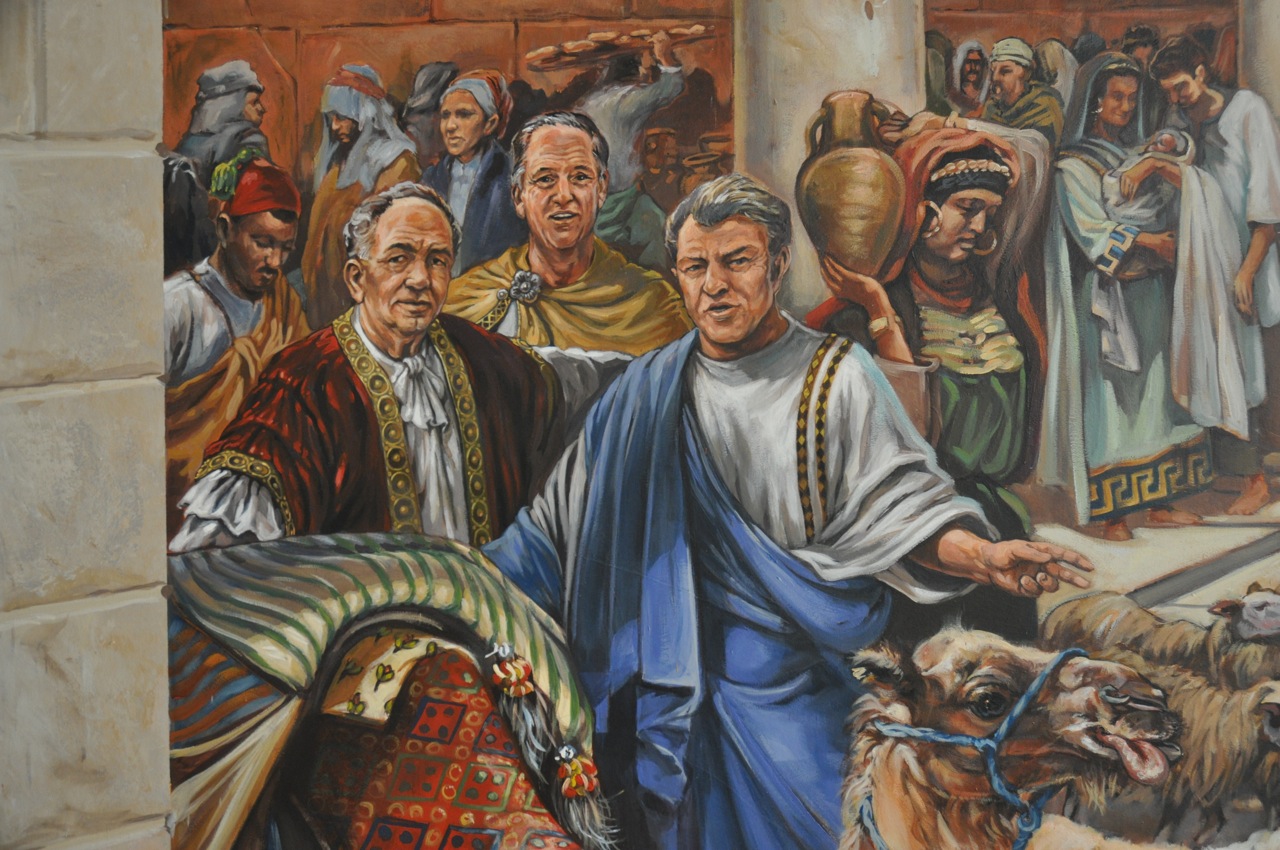
One day while walking along the Cardo I found the French group of artists, Cite Creation (http://www.cite-creation.com/realisations.php), painting a mural of the Cardo on a wall in the Jewish quarter. If you have trouble imagining what the Cardo was like the mural will help you see the main market street, like it was. I like their work – keep your eyes open and you will find other examples as you explore. Note the little boy with baseball cap, backpack and water bottle accepting a pomegranate, one of the 7 species of the land of Israel and the hoopoe bird flying overhead (chosen as Israel’s national bird in a vote on the Internet).

Check out the 3 gentlemen on the left side of the painting. Although they are dressed in traditional garb, there’s something about them that gives them an air of modernity. If you’re familiar with painting, often the artist includes family members or even a portrait of the artist. Not in this case – come on a tour and find out who they are and more.

The Cardo was 22.5 meters wide, flanked with rows of stone columns on either side and five meter-wide covered passageways. A wooden beam construction supported the roofing, probably of ceramic tiles. The columns, five meters high, of hard limestone, were found in fragments, incorporated into later structures, the capitals are Corinthian. You will be able to walk on the original well-hewn paving stones from the Roman period.

The Cardo connected the Church of the Holy Sepulcher, the holiest site to Christianityto the 6th C Nea Church of Justinian. In Byzantine times there were processions along the Cardo between these two churches. Today you can find the remains of the apse of the Nea church along the road and under the elementary school in the Jewish quarter. Along the sidewalk of the Cardo you can see columns (sitting on the earlier city wall from the Hasmonean period) and at the 7th Station of the Cross there is a column in the chapel. Access to the Holy Sepulcher is no longer from the Cardo, now we enter from the parvis (courtyard) on the side of the church.

Hurva Synagogue views

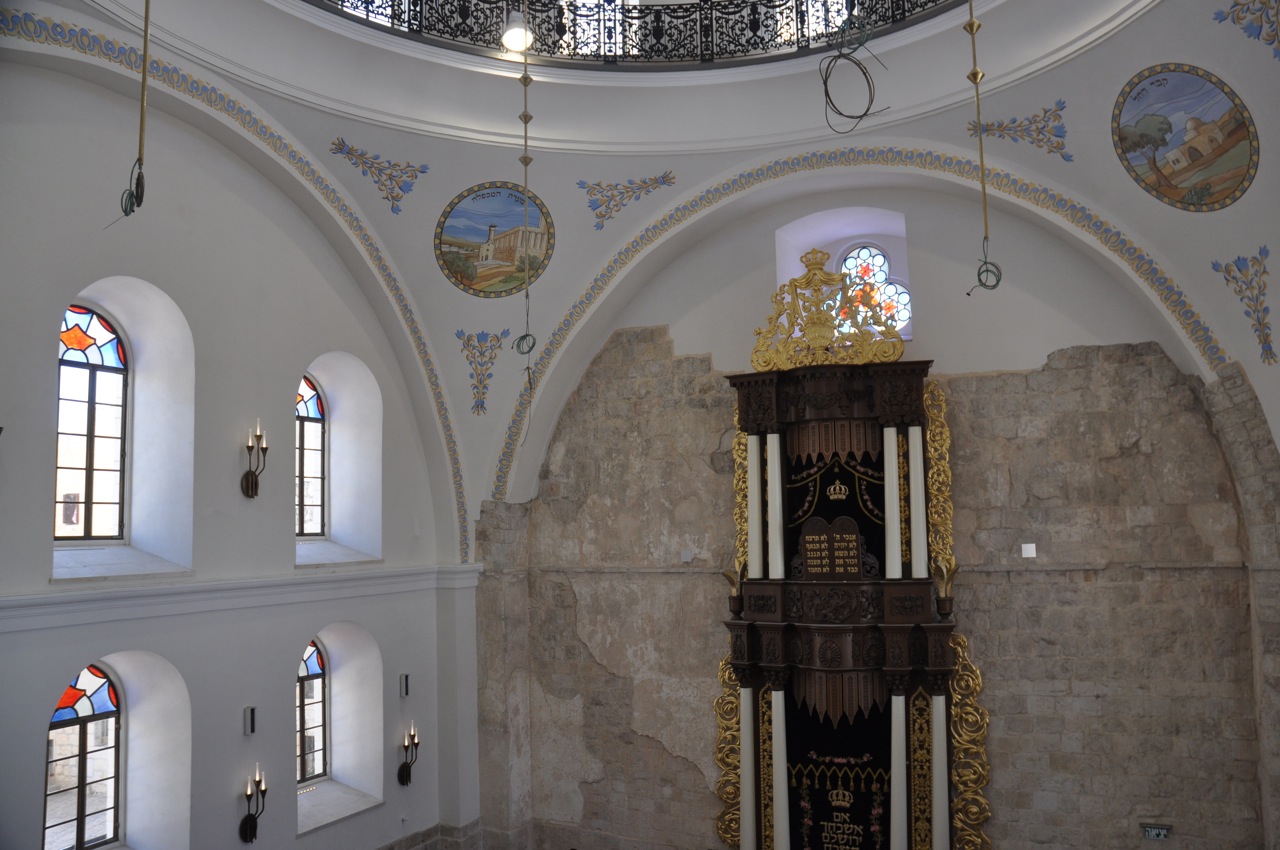
The Hurva was the main Ashkenazi synagogue of the Old City and stood as a landmark for almost 100 years until it was blown up by the Jordanian Legion after they had captured the Jewish quarter on May 27, 1948. It took until 2005 to decide to rebuild the synagogue which was completed in March 2010. I visited it shortly afterwards on a Shabbat morning for services. Make sure to go down into the basement (by the washrooms) to see the discovery of a mikveh (ritual bath) from the Second Temple period and an east-west Byzantine street. The second time I joined a weekday tour of the synagogue but we weren’t allowed into the main sanctuary. The guide was only able to show us the inside of the synagogue from the women’s balcony but we were allowed to go up to the roof. The Hurva synagogue is the only site that I am not permitted to bring people (therefore I skip the Hurva and tell its fascinating story outside) – that privilege goes to local guides that work for the Western Wall Heritage Foundation and you have to reserve a place in advance.

One of the highlights was the view of Jerusalem from the balcony around the dome. Here are 5 photos (shooting clockwise) taken from the height of the dome: 1) looking towards the Christian quarter, domes and bell tower of the Church of the Holy Sepulcher, bell tower of German Church of Redeemer and dome of Alexander Nyevsky Church, 2) view over the Jewish and Muslim quarters with Mount Scopus in the background, 3) Dome of the Rock, Mormon University and Augusta Victoria, 4) dome of Al Aqsa Mosque and Jewish cemetery on Mount of Olives 5) view towards Armon HaNatziv, Mount Zion, Dormition Abbey, Armenian quarter.

This slideshow requires JavaScript.

4–Day Itinerary

I’m happy when people contact me looking for a multi-day itinerary based from Jerusalem. It’s definitely worth a few days if you have the time. I’d like to share one itinerary that I guided for clients a couple of weeks ago. Of course, this itinerary is just to give you the idea – when you hire me as your guide you get a personalized itinerary that matches your interests.

Day 1

  • We started with an overview of Jerusalem from the promenade at Armon HaNatziv, learned about the aquaduct that brought water to the city from Hasmonean times (100 BCE). From there we drove to Herodium for a comprehensive tour: the lower city (pool, Roman bath, monumental building, Byzantine church) outside the park and the palace/fortress on the manmade mountain top built by King Herod including the latest excavation by Netzer of the tomb and Roman theater discovered on the north-east side of the mountain.
  • Visit to Gush Etzion (Etzion Bloc) to learn about the history of the Gush and memorial to the defenders of Kibbutz Kfar Etzion in 1948. Lunch at a lovely restaurant called Gavna in the forest of Kibbutz Massuot Yitzhak with a view all the way to the coastal plain.
  • Visit to Hebron and the Cave of Machpela, that Abraham purchased to bury Sarah in which our forefathers and 3/4 mothers are buried. The building over the cave was built by Herod. Walk around the city to try to understand the current political reality.

Day 2

  • Walking tour of the Old City covering the 4 quarters, the 3 religions and 3000 years of history, including Herodian, Roman, Byzantine, Arab, Crusader periods. Views of the city from above and exploring underground. Tastes of the city for lunch.

Day 3

  • Visit the Israel museum to see the 2nd Temple model of Jerusalem. Tour of the Shrine of the Book, the unique architecture, the exhibits of artifacts from Qumran and the Dead Sea Scrolls.
  • Opportunity to stroll through the Sculpture garden.
  • Visit the City of David, the walled Jebusite city captured by King David in 1004BCE and made the capital of his kingdom. Learn about the extensive archaeology going on there and the politics. Possibility of walking through Hezekiah’s tunnel.

Day 4

  • Drive from Jerusalem to the Dead Sea and Judean desert, the lowest point on earth, only 42 km away but 1170 meters lower. Learn about the African Rift valley, water, shrinking of Dead Sea, sink-holes, flora and fauna.
  • Qumran where the Dead Sea Scrolls were discovered in passing.
  • At Ein Gedi, hike Nahal David to waterfalls and natural pools (it’s delightful to take a dip even in the winter months). Visit the ruins of the Jewish synagogue with mosaic floor.
  • Continue south to Masada, Hasmonean fortress in the desert extensively renovated by Herod, used by the Jewish rebels against the Roman and later by some Byzantine monks. Visit the new museum at Masada.

Someone to Tour With – Kids Tour with a Golden Retriever

This is a tour of Jerusalem sites based on David Grossman’s prize-winning novel Someone to Run With/משהוא לרוץ איתו (written in Hebrew but translated into English, available at Amazon and made into a movie). The story is about two young people: Assaf, who gets a summer job with the Jerusalem municipality and is given the task of returning a lost and found dog to it’s master and Tamar, a talented musician who goes looking to rescue her brother who has gotten into trouble at the edge where youth, music and drugs overlap. As the dog, a golden retriever named Dinka, runs through Jerusalem with Assaf in tow, we too become entangled in the story.

Familiar Jerusalem landmarks pass by: the midrahov/Ben Yehuda pedestrian mall, music store, Yoel Salomon neighborhood, Jaffa Street, Mahane Yehuda market, the Central bus station, Independence Park, the historic Palace Hotel.

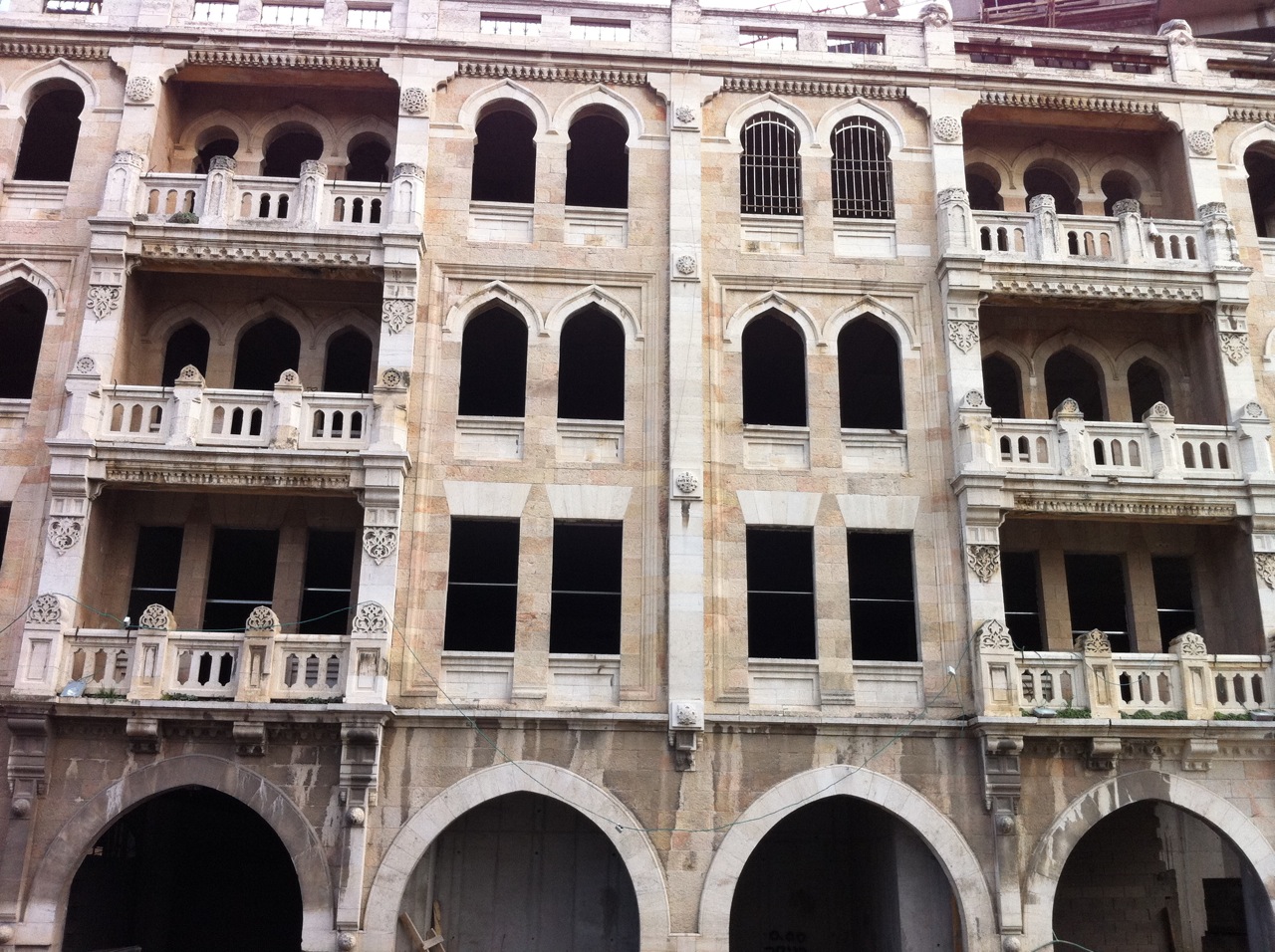
The Palace was built in 1929 by the Waqf, Supreme Muslim Council headed by the mufti of Jerusalem, Haj Amin al-Husseini. In its day it was a beautiful building with stone carvings and arches, a combination of Moorish, Roman and Arab architecture. The Reichman Brothers and the Hilton chain renovated the hotel to the tune of $100 million, to become a Waldorf-Astoria, only the 6th in the world.

Another scene takes place outside the facade of Talitha Kumi (from Mark 5:41), all that is left of the girl’s orphanage and school and the Mashbir (the large department store) that stood on King George Street where Tamar sings HaTikva, the Israeli national anthem to her brother’s electric guitar accompaniment. To me it is reminiscent of Jimi Hendrix playing the Star Spangled Banner at Woodstock (unfortunately, the clip on YouTube has been removed).

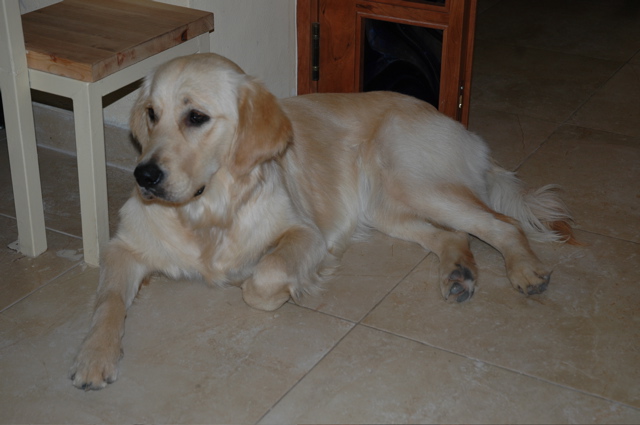
I have a golden retriever, whose name is Sumsum (which is Hebrew for sesame, the seeds that they make tehina from and also a kind of finish on Jerusalem stone which is her color) who is an offspring of one of the dogs who starred in the movie.

Sumsum1yr

Join me and Sumsum as we explore Jerusalem following in the footsteps of Assaf and Dinka, experience the Mahane Yehuda market, head down to Ben Yehuda Street to listen to the buskers, have pizza, walk through Independence Park, check out the Palace Hotel, have hummus and felafel at a local restaurant. Having read the book or seen the movie before taking this tour adds to the experience.