Category Archives: Desert

Mar Saba and Judean Desert Revisited

I received an email a few weeks ago from Kevin with the BBC in England that he gave me permission to share here.

Dear Shmuel,

I’m producing  a BBC radio series, presented by the British broadcaster John McCarthy. We have been commissioned by BBC Radio 4 to make a series of ten 15 minute programmes to follow in the footsteps of Edward Prince of Wales who toured much of the Middle East in 1862.  I’ve been looking at your blog, and saw your excellent entry Photography and Visitors to the Holy Land about his time in Israel.

As you know, he visited Egypt, the Holy Land, Lebanon, Syria, Turkey and Greece. His journey and the sights along the way were recorded by the photographer Francis Bedford. This was the first time that a royal tour was captured by the still new medium of photography.

As you are clearly interested in this tour, I would very much like to discuss our recording with you, perhaps with a view to interviewing you as a part of the programme.  We will be intending to visit each of these sites, to take a new photograph to match the old one, and to discuss the changes over the intervening 150 years in each location.

Very best and thanks for your time.
Kevin

Here are another few Bedford photographs.
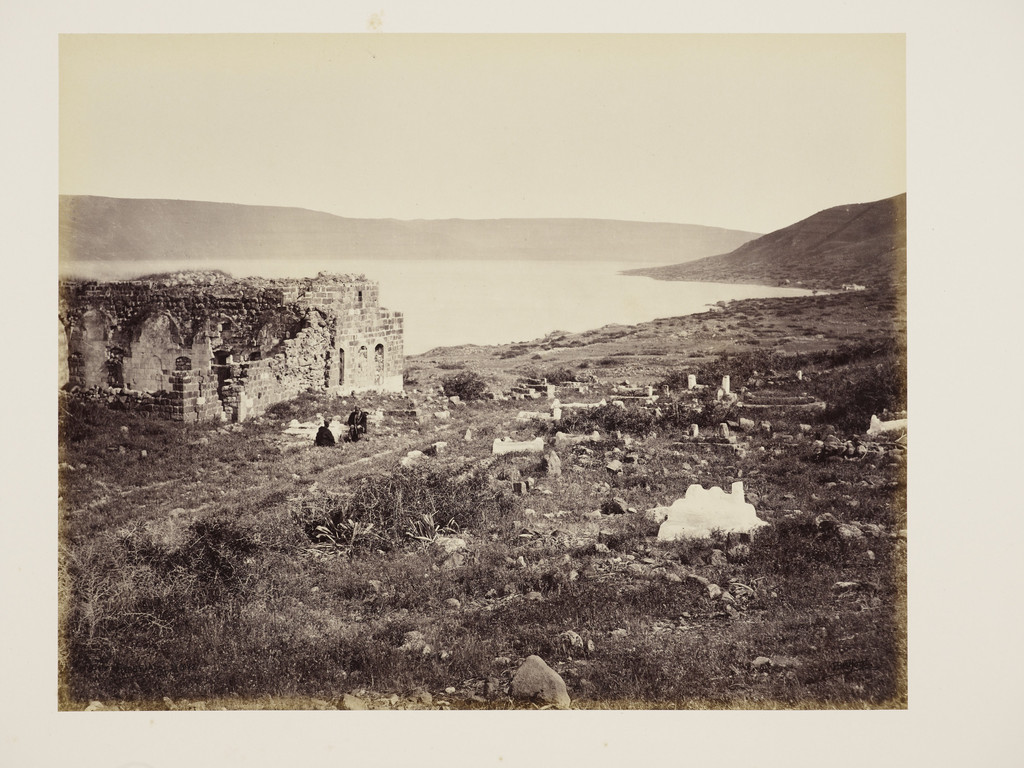
Tiberias-Sea-Galilee-Bedford

Tomb of Absalom

Mar-Saba-Kidron-Bedford

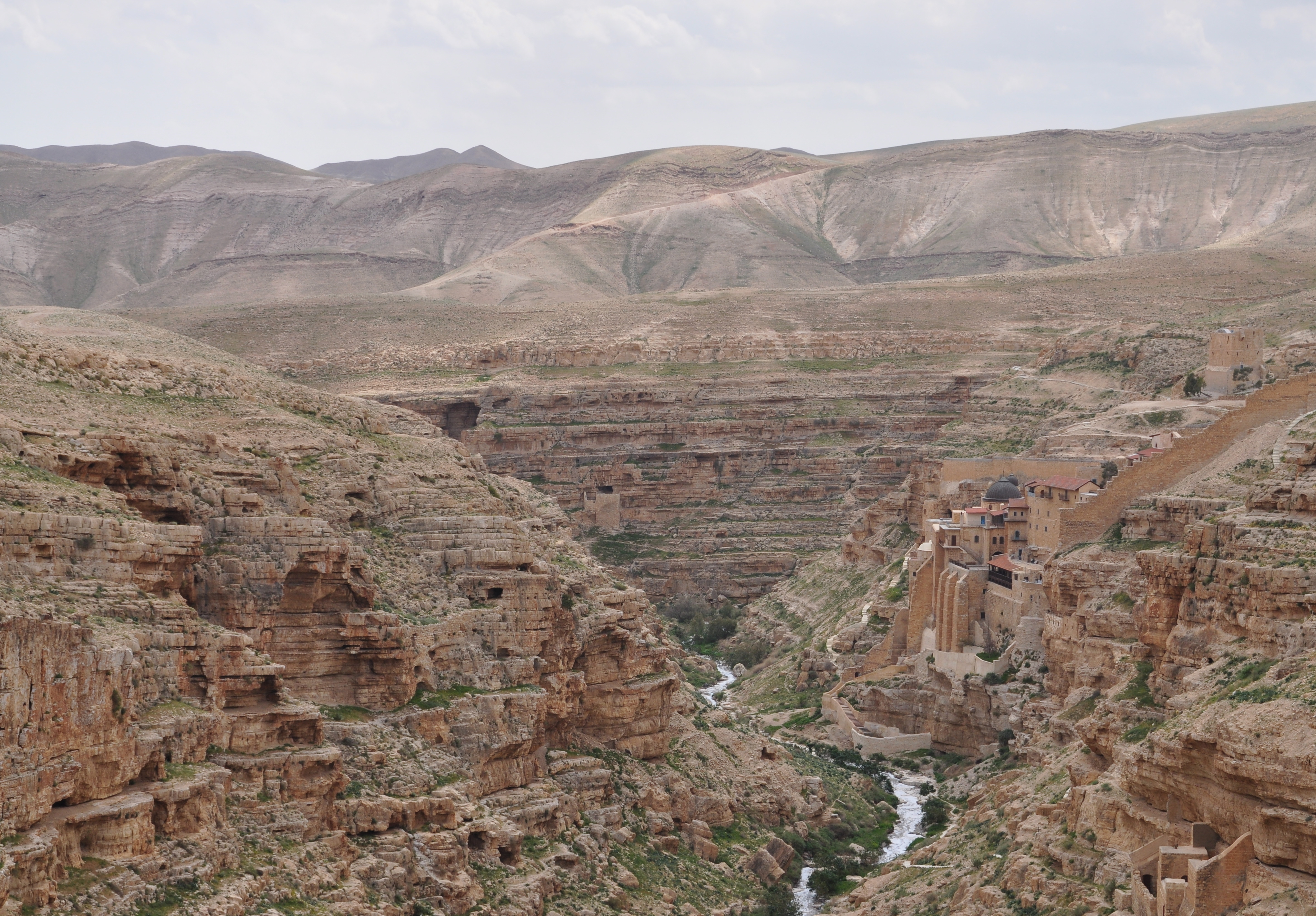
In reviewing the photographs taken by Bedford in Israel and talking with Kevin we decided to do Mar Saba, the monastery in the Judean desert.
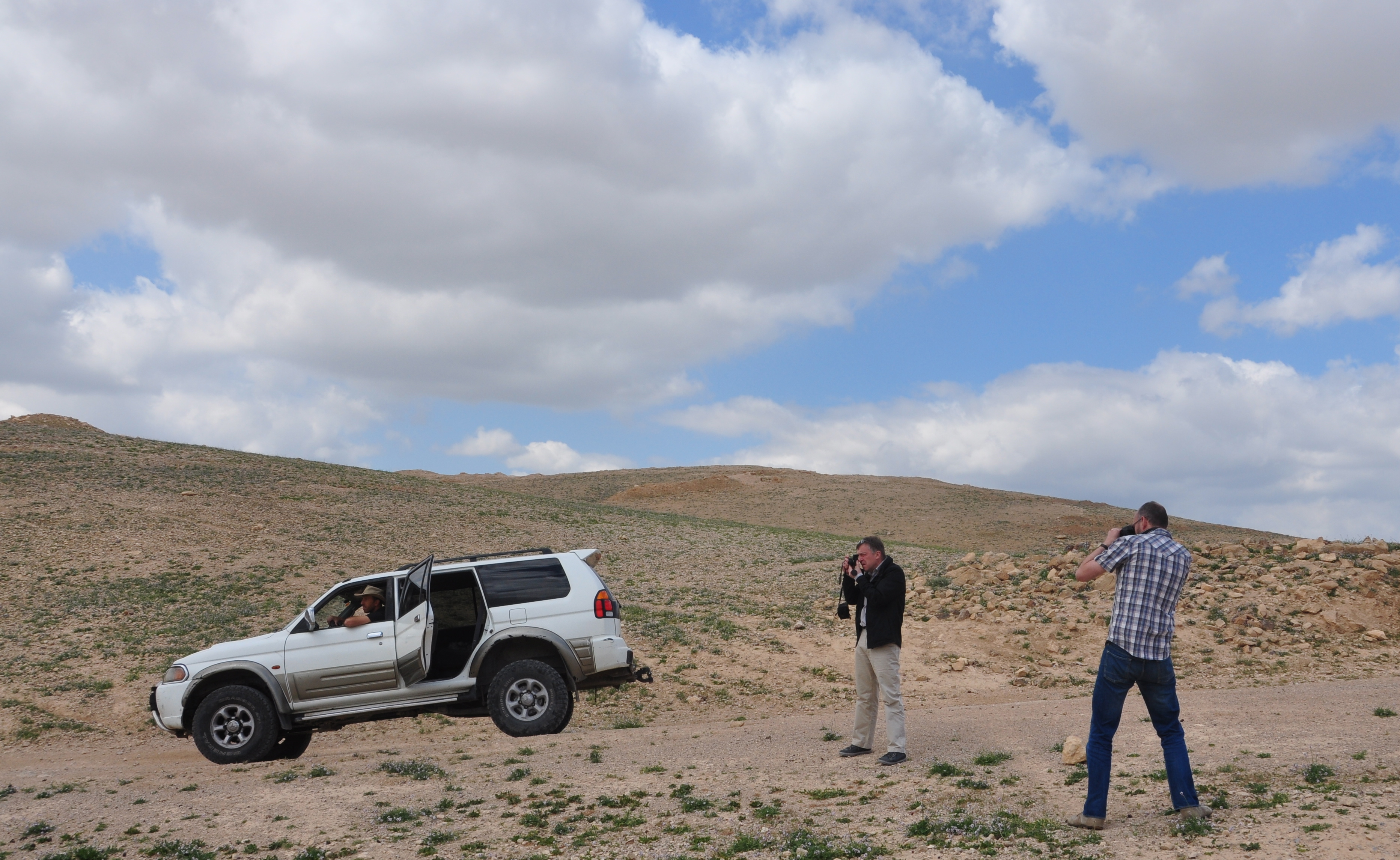
Jeep tour

So we met up with Raanan, a great jeep driver, who took us off-road across the Judean desert to the overlook of the monastery in the Kidron valley. The desert is very green after the winter rains we had this year. We saw sheep, goats, donkeys and camels grazing on the plants and wildflowers. I took the opportunity to photograph some wildflowers (but that’s for another post).

Our challenge was to try to shoot a photograph that matched the one Bedford took 150 years ago. Bedford’s is a very interesting image because of the angle. Bedford had a good eye and chose to shoot the monastery complex cascading down the cliff, focussing on the channel of the Kidron stream between the two cliffs. Here is my image shot March 18, 2013 with a Nikon D90 digital SLR camera and 18-200mm zoom lens (ISO 200 50 mm f/10 1/320) in black and white and color.
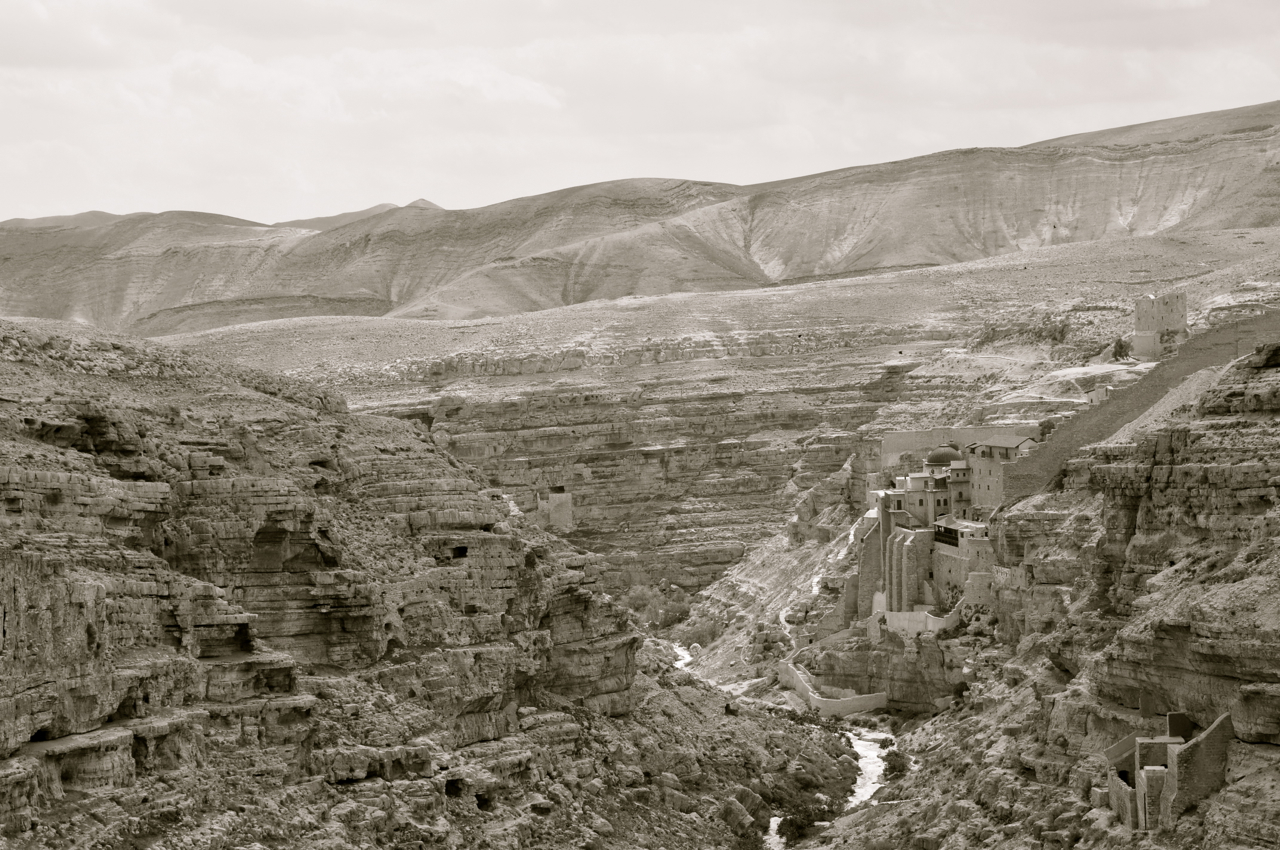
Mar-Saba-Kidron-B&W

Mar-Saba-Kidron-Browns

Camels in the Bible

The image displayed below “Ploughing with Camel and Cow” is a scanned copy of a small gelatine silver print (probably from the mid-1920s) of an American Colony photograph taken between 1898 and 1911 and published by Fr. Vester & Co. whose shop was in Jerusalem, just inside Jaffa Gate. The photograph shows a ploughing scene probably taken in southern Palestine. The plough is driven by the farmer and the animals are led by a boy in front.

Ploughing w camel and ox

There is something very jarring about this scene. The camel, tall and lithe, suited to journeys across the desert and the cow or ox, short and heavier-set, expected to pull the plough together. The yoke sits at an extreme angle on the animals’ backs. The Biblical text in Deuteronomy 22:10 immediately springs to mind: Thou shalt not plow with an ox and an ass together.
The rabbis explained that “Scripture spoke what was customary,” that is, people were accustomed to plow with an ox or an ass, but the prohibition applies equally to plowing with any two other species and in fact other activities like riding, leading, and driving with them (Mishna Kilaim 8:2).

Camels are first mentioned in the Bible in Genesis 12:16

And because of her [Sarai], it went well with Abram; he acquired sheep, oxen, asses, male and female servants, she-asses, and camels.

The word “camel(s)” appears 23 times in 21 verses in the book of Genesis. The first book of the Bible declares that camels existed in Egypt during the time of Abraham (12:14-17), in Palestine in the days Isaac (24:63), in Padan Aram while Jacob was working for Laban (30:43), and were owned by the Midianites during the time Joseph was sold into Egyptian slavery (37:25,36).

Most scholars, including W.F. Albright, American archaeologist and biblical scholar, who supports the historicity of the patriarchal narratives, conclude that references to camels and hence the domestication of camels are an anachronism, added by a later scribe.

Finkelstein and Silberman confidently asserted:

We now know through archaeological research that camels were not domesticated as beasts of burden earlier than the late second millennium and were not widely used in that capacity in the ancient Near East until well after 1000 BCE.

However, more recent archaeological discoveries: a pottery camel’s head and a terra cotta tablet with men riding on and leading camels from predynastic Egypt (before 3150 BCE), three clay camel heads and a limestone vessel in the form of camel lying down (3050-2890 BCE), a petroglyph depicting a camel and a man (2345-2184 B.C.) and a rope made of camel’s hair found in the Fayum oasis suggest that camels were domesticated as early as the third millennium, before the time of Abram, dated to the earliest part of the second millennium BCE.

Much of this evidence has been examined by MacDonald of the University of Oxford who concludes:

Recent research has suggested that domestication of the camel took place in southeastern Arabia some time in the third millennium BCE. Originally, it was probably bred for its milk, hair, leather, and meat, but it cannot have been long before its usefulness as a beast of burden became apparent.

On a jeep tour of the Judean desert we saw this herd of camels. Doesn’t the hill in the background look just like a camel hump?

Camels

Photo of the Week – Tumulus in Negev

In a hike in the Negev, in the area of Mount Arkov (across the road from Avdat) to see the rock drawings and tulips in bloom, I took this photo of a tumulus, a mound of stones raised over a grave. The tumulus and rock drawings or petroglyphs may be from early hunter-gatherers, dated to the fourth millennium BCE.

Tumulus NegevYou can click on the image for a larger view (which may take some time to load depending on your Internet connection). Please share this post with your friends by clicking on the icons at the end of this message.

The technical details – the photo was taken with a Nikon D90 DSLR and 18-200mm lens in November (ISO 200, 36mm, F11 at 1/500 sec).

Photographs on this website are © Shmuel Browns (unless marked otherwise) – if you are interested in purchasing one of my photos or using one of my photos for your own project please contact me.

Photo of the Week – Nahal Darga

A limestone canyon formed by water erosion over many years beckons – Nahal Darga runs to the Dead Sea. Water fills depressions in the stone floor of the canyon so there are places on this hike where you have to swim across pools of water. Make sure to put your camera (I brought along a smaller one on this hike), car key and cell phone in a watertight container so they won’t get wet.

Please share this post with your friends by clicking on one of the icons below

Nahal Darga

The technical details – the photo was taken with a Lumix (point and shoot) digital camera on March 26 (ISO 80, 4.1mm, F3.5 at 1/100 sec).

Photographs on this website are © Shmuel Browns (unless marked otherwise) – if you are interested in purchasing one of my photos or using one of my photos for your own project please contact me.

Photo of the Week near Avdat

Route <40> connects the city of Beersheva in the middle of the Negev to the makhtesh, a unique geological formation at Mitzpe Ramon. Avdat, founded by the Nabateans in the 3rd century BCE, was the most important city on the Incense Route after Petra, “the rose-red city half as old as time” for some eight centuries until its destruction by earthquake in the early 7th century CE. This photo was taken across from Avdat in the area of Ramilye cisterns.

near AvdatYou can click on the image for a larger view (which may take some time to load depending on your Internet connection). Please share this post with your friends by clicking on the icons at the end of this message.

The technical details – the photo was taken with a Nikon D90 DSLR and 18-70mm lens in November (ISO 200, 18mm, F10 at 1/320 sec).

For more information about the Negev see my post at https://israeltours.wordpress.com/2009/10/26/negev-desert/

Photographs on this website are © Shmuel Browns (unless marked otherwise) – if you are interested in purchasing one of my photos or using one of my photos for your own project please contact me.

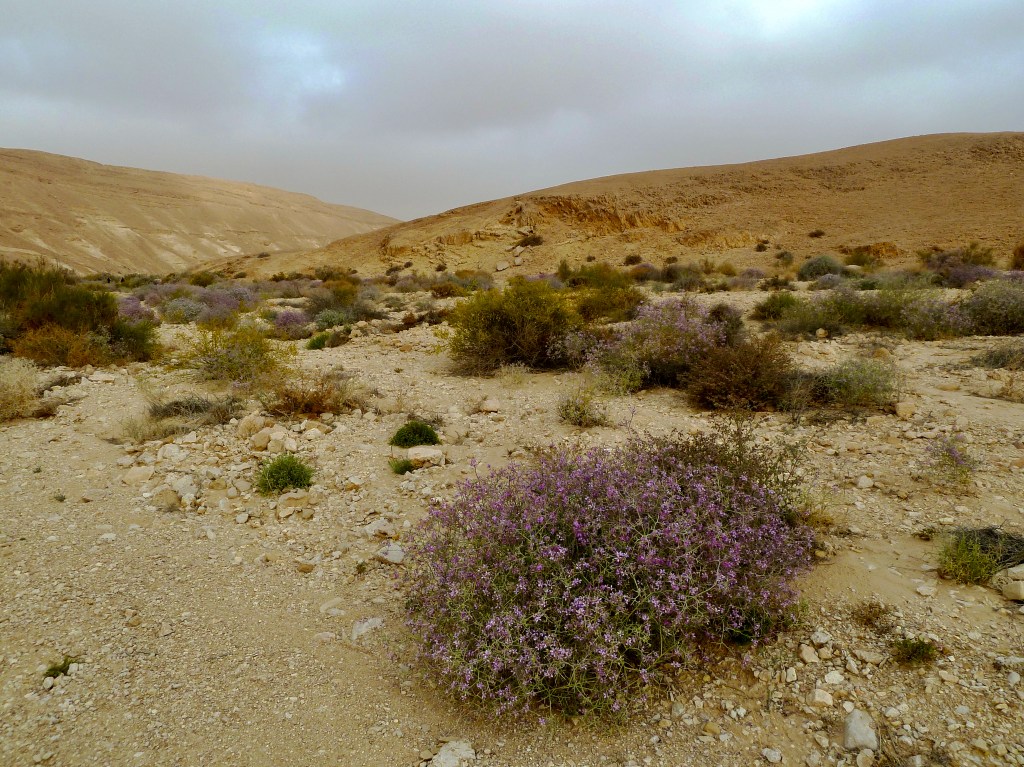
Just north of Timna continuing along the Israel trail you follow the Milhan ridge, a great area for hiking and photographs. We stayed overnight at the nearby campground, Be’er Milhan, a site that affords some protection from the wind (no toilets or running water). This photo was taken in the morning. Purple flowering bush is Spiny zilla (Zilla spinosa), a member of the brassicaceae family, you can eat the purple flowers which taste like cabbage.

Milhan well

The technical details – the photo was taken with a Lumix point and shoot camera in March (ISO 80,4.1mm, F4 at 1/320 sec).

For more information about desert wildflowers see my post at https://israeltours.wordpress.com/2011/03/14/desert-wildflowers/

Photographs on this website are © Shmuel Browns (unless marked otherwise) – if you are interested in purchasing one of my photos or using one of my photos for your own project please contact me.