Category Archives: Art

Bird Mosaic at Caesarea

Caesarea Maritima was a city and harbor built on the ruins of Strato’s Tower by Herod the Great about 25–13 BCE. It’s a very popular site, the archaeological park lies on the Mediterranean coast of Israel about halfway between the cities of Tel Aviv and Haifa. The city of Caesarea was described in detail by the 1st century Roman Jewish historian Josephus.

The city became the seat of the Roman praefecti soon after its founding. In 1961 Italian archaeologists excavating the theater found a stone inscription with the name of Pontius Pilate, according to the New Testament the Roman Governor responsible for ordering that Jesus be put to death, the first archaeological evidence that Pilate existed.

While visiting the Herodian, Roman, Byzantine and Crusader ruins of Caesarea make sure to see the Bird mosaic, a large rectangular mosaic ‘carpet’ on the floor of an extravagant mansion first uncovered in 1950 but only conserved and viewable by the public in 2004. It’s a tapestry of the land of Israel and includes fruit trees and animals native to Israel (lion, tiger, bear, wild boar, ibex, dog, elephant, deer and bull) bordering 120 round medallions, each of which contains a different bird.

Bird Mosaic Caesarea

Bird Mosaic


The owner of the mansion is unknown but was obviously extremely wealthy. Built in the sixth century on a hill overlooking the sea, the mansion included a hall with the mosaic floor, columns, an open roofed yard and a second floor. The findings indicate an exceptionally developed water and drainage system that included inclined floors, water canals and recessed wells.

When walking through the hippodrome don’t miss the mosaic floor from a 6th century public building near the public baths with images of birds, animals and people. Interesting to compare it with the Bird mosaic above.

Roman Theater Box at Herodium

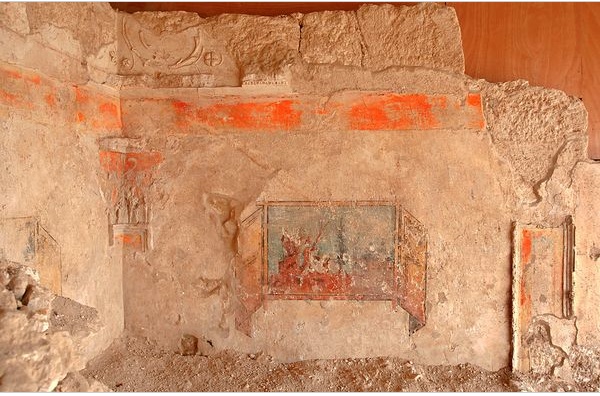
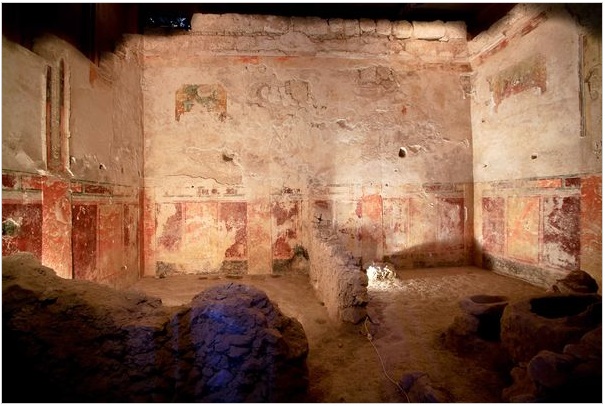
First discovered in 2008, the Royal loggia (theater box) above the regular rows of seats at Herod’s private theater has now been fully excavated.

Herod’s theater box, loggia; photo courtesy of Hebrew University

While ruling over Judea Herod wanted “to put Herodium on the map. In order to attract people, there were gardens and waterworks, and the place became famous.” said archaeologist Ehud Netzer, professor emeritus of archaeology at Hebrew University. “The theater indicates that the experiment worked: there was lots of life there. Hundreds, if not thousands, of guests would visit the place and there was justification to provide them with entertainment.”

On your next visit to Israel make sure that Herodium is on your itinerary. I can take you there and give you a comprehensive and fascinating guided tour.

“There is nothing like this in any other location” in Israel, Netzer said of the paintings and intricate moldings in Herod’s theater box. But the style was fairly common across the Mediterranean and reflects the Roman origins of Herod’s power.

Herod’s theater box, loggia, Herodium; photo courtesy of Hebrew University

“Our art history expert said, ‘Hang on, this is something very familiar from Italy,'” in terms of both style and method, Netzer said. “The technique used here was not particularly accepted in this region; it was secco rather than fresco“—painted on dry, rather than moist, plaster.

Depicting natural landscapes, nautical scenes, animals, and the Nile River, the paintings most closely resemble others in the roughly contemporary Villa Imperiale at Pompeii.

According to Netzer, the pictures are not only Roman style but Roman made, perhaps executed in advance of the visit of Marcus Agrippa to Judea in 15BCE. Agrippa was Augustus’ deputy and the man responsible for many of the building projects in his empire.  “It was a one-time mission. The artists came, they painted, and they returned to Italy.” says Netzer. There are other examples from the same period where Roman techniques and presumably builders and architects were sent to Judea for a specified period of time to assist in building projects. Archaeological excavation have uncovered walls at three sites built using the Roman opus reticulatum and opus quadratum techniques. These sites are Herod’s winter palace at Jericho, a temple at Banias and a round structure north of Damascus Gate in Jerusalem, apparently the mausoleum to members of Herod’s family, all mentioned in Josephus’ writings.

Upside Down, Jerusalem

A newly acquired piece of art, a polished stainless steel hourglass 5 meters tall stands in the plaza at the highest point of the Israel Museum campus. Commissioned by the museum from the London-based Indian sculptor Anish Kapoor it is called “Turning the World Upside Down, Jerusalem”. Kapoor is known for creating visually striking works that inspire interaction. Depending on where you stand you can frame the museum’s buildings, the trees and the sky in the polished surface and the effect is to invert the images, a play on the duality of the heavenly and earthly Jerusalem. And that’s what I did and captured in this photograph (note that the photo is upside down).

New Israel Museum

Today I had the opportunity to visit the Israel Museum before its official opening to the public on July 26th. There have been a lot of changes, to the tune of $100 million and these improve the visitor experience immensely.

James Carpenter Design Associates built new entry pavilions at the entrance to the museum that are connected by a covered “route of passage” to a new gallery entrance pavilion which acts as the central hub giving access to the Museum’s 3 collection gallery wings, Archaeology, Judaica and Art, from a main Cardo. Each of the new buildings is basically a glass cube shaded by cast terracotta louvered shade panels that diffuse the bright Mediterranean light and still allow the visitor a view of and interaction with the exterior. With this design the new pavilions resonate with Alfred Mansfeld and Dora Gad’s original modular and modernist design. I am pleased to offer an architecturally focussed tour of the new Israel Museum, including highlights like the Shrine of the Book, that has been called “a milestone in the history of world architecture”.

In the above photo, the view from the Carter Promenade looking back towards the entrance pavillions; below, looking up the hill to how the new gallery pavillion fits into the plan.

Light and glass comprise the firm’s signature architectural focus. The passageway has a wall of glass and is covered by a swatch of translucent glass panels that were designed and made especially for the project. Outside above the passageway a stream of water cascades down the hill over the glass panels. During the day the water and glass let light into the passage which animates the wall with a moving pattern and at night the light illuminating the passageway lights up the water stream above.

Efrat-Kowalsky Architects redesigned the interior gallery spaces of the existing buildings and the way the museum has organized the art and artifacts suggests some interesting connections among objects and between the particular and the universal. The emphasis is on what cultures have in common and there is an attempt to place Jewish history and practices in a broader context.

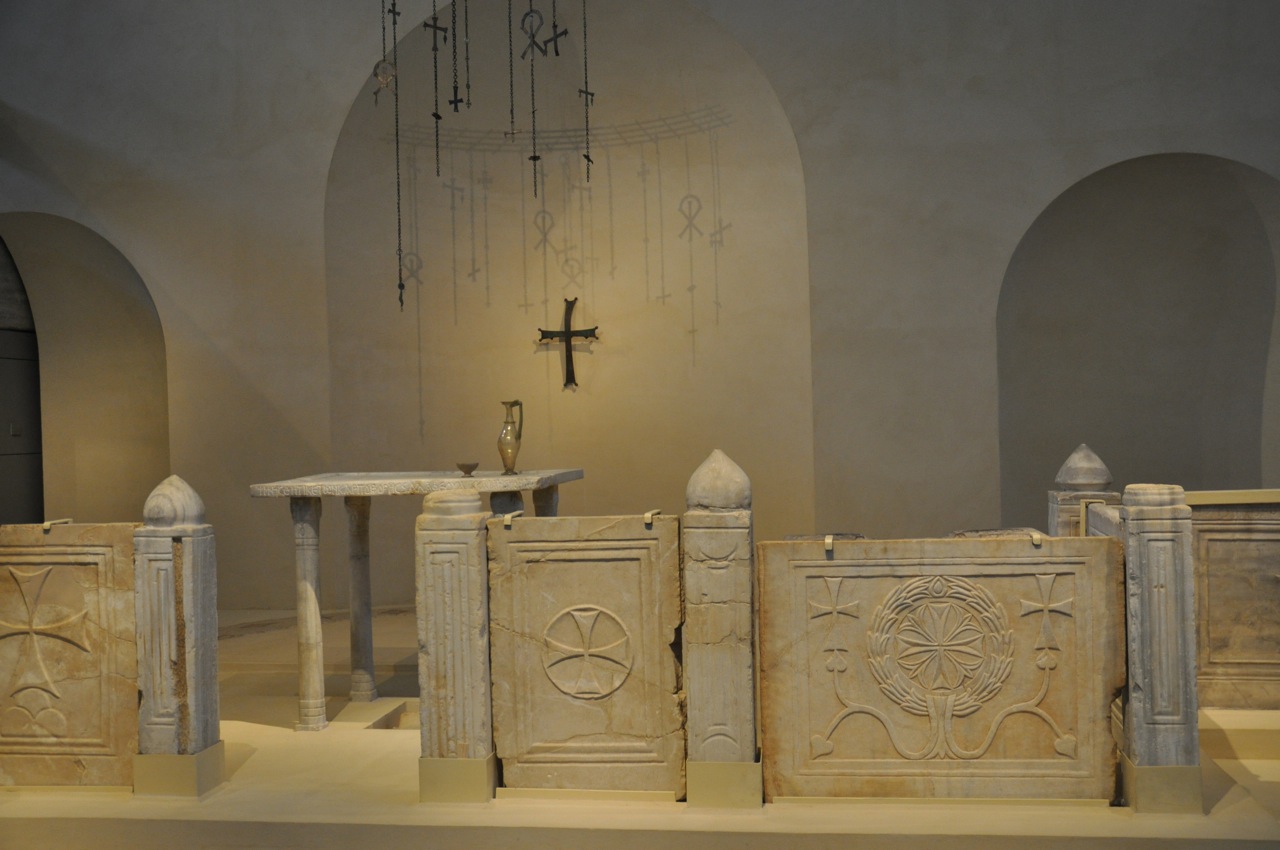
One example is a very impressive new installation in one large room that focuses on the 5th to 7th Century where part of a restored synagogue is displayed, the facade of the interior of the synagogue with its particular decorations and objects and a beautiful mosaic floor. Next to it a Byzantine church and across the room the michrab or prayer niche from a mosque. Roughly contemporary structures, they are placed in a way that highlights both their distinctiveness and their commonality.

The new galleries and displays are stunning. The museum is a wondrous place to explore.

Jaffa

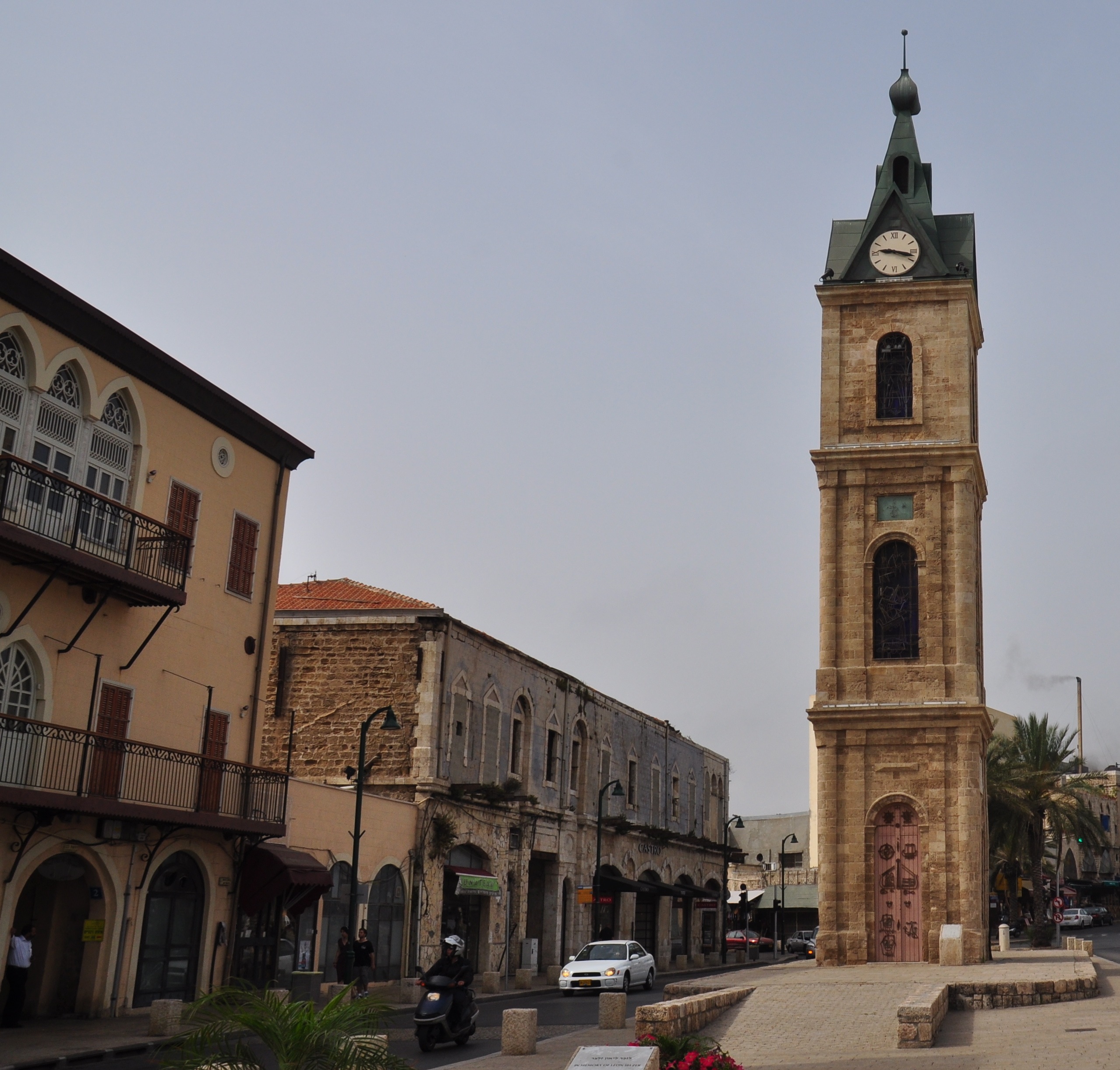
If you want to meet up with a friend in Jaffa all you have to say is “Meet you at the clock tower”. The clock tower in Jaffa is one of seven built by the Ottoman Turks in 1908 on the occasion of the silver jubilee of the reign of the Sultan abd al-Hamid II. From there you can explore the Flea market and shops and restaurants. There’s a funky restaurant called Pua on 3 Rabbi Yohanan Street. For what some people swear is the best humus go to Abu Hassan’s. For a truly middle eastern taste try the stuffed breads at Abulafiya’s.

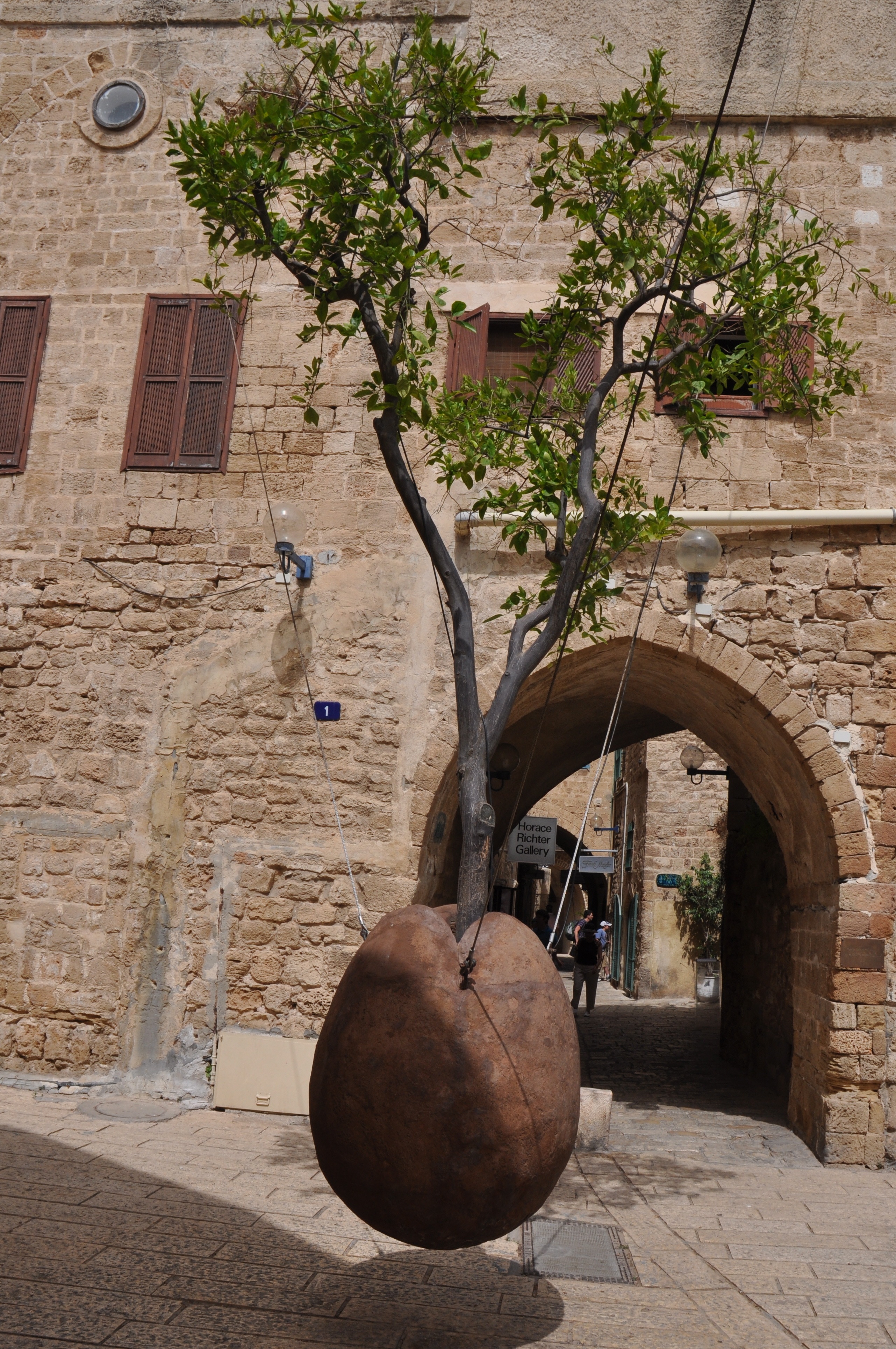
There is something else that Jaffa is known for and that is the shamouti orange which is known throughout the world as the Jaffa orange. The shamouti was a new variety developed by Arab farmers after first emerging in mid-19th century Palestine as a mutation on a tree of the Beladi variety near the city of Jaffa. Orange exports grew from 200,000 oranges in 1845 to 38 million oranges by 1870. Today the orchards described by a European traveller in 1872  “Surrounding Jaffa are the orange gardens for which it is justly extolled…” have disappeared in the face of urban development. But walking through the alleyways of Jaffa you can find an incredible sculpture by the environmental Israeli artist, Ran Morin, called Orange Suspendu that reminds us of the connection between the city of Jaffa, the earth and the orange tree and its fruit. Morin has 2 other tree sculptures that are worth seeing in Jerusalem, one at the Hebrew University on Mount Scopus and one in the Olive park near Kibbutz Ramat Rahel.

From Jaffa, walk north along the promenade to Neve Tzedek, the first Jewish neighborhood that was established outside the walls of Jaffa in 1887 and that some 20 years later grew into the new city of Tel Aviv. Along the way drop in to the old Jaffa train station, that is being renovated and developed into a cultural, artistic and commercial area. For a guided tour of Tel Aviv-Jaffa please contact me. It’s possible to incorporate riding a Segway along the whole length of the promenade as part of your tour.

Makhtesh HaKatan

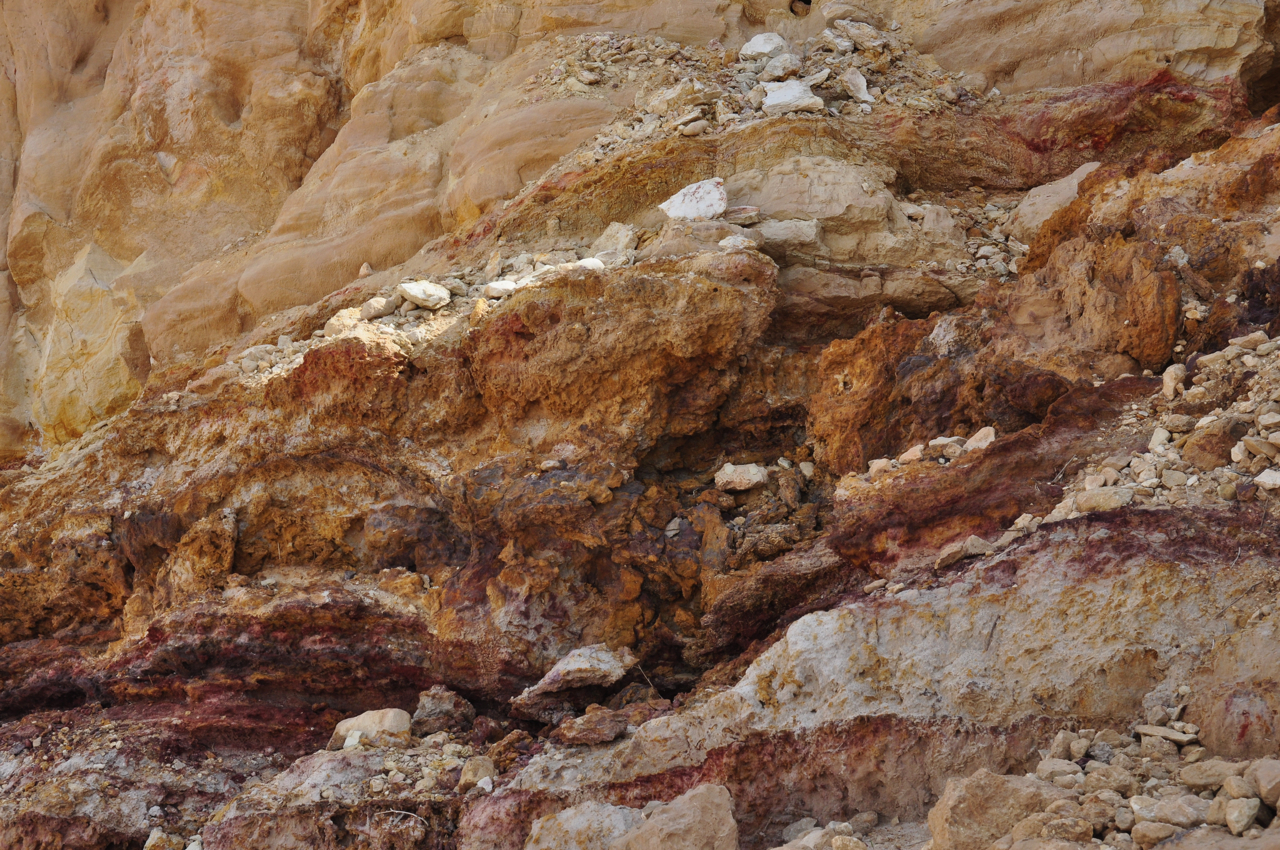
The Makhtesh HaKatan (Small Makhtesh) is the smallest (about 5km x 7km) of 3 makhteshim, a geological land formation in the Negev desert, known also as an erosion cirque. A makhtesh has steep walls of resistant rock surrounding a deep closed valley which is usually drained by a single wadi (stream bed). These walls were made of an outer layer of hard rock, limestone and dolomite, covering a softer layer of chalkstone and sandstone. Erosion washes away the softer layer and eventually the hard layer of rock collapses creating a crater-like valley. The layers of rock can still be seen in the walls of the makhtesh, the sandstone comes in many colors.

The following photos of the multicolored, textured sandstone were taken while hiking in the makhtesh, abstract paintings by the hand of God.