Category Archives: Architecture

Moshe Castel and Israel Art

In Maale Adumim facing the panoramic view of the hills of Jerusalem sits a building that houses the art of Israeli artist Moshe Castel. Castel himself chose the site located between Jerusalem and the Judean desert symbolizing Israel’s past and future and his own connection to Jerusalem and the land of Israel and its history. (http://www.castelmuseum.com) The Israeli architect David Resnick designed the building with input from Castel. Resnick is well known for other architectural landmarks, Yad Kennedy, the “Mushroom” synagogue at Hebrew University, Givat Ram and the Mormon university in Jerusalem.

Moshe Castel (1909-1991) was born in Jerusalem to a Sephardi family from Castile with roots that go back to the expulsion from Spain in 1492. At the age of 13 he began to study at the recently opened Bezalel Art School where he learned the rudiments of painting and painted locally inspired landscapes and images. In 1927 at age 17 he traveled to Paris to study at the Academie Julian. Quickly he exchanged his hat and black tie for vagabond clothing and hung out with his fellow artists in the cafes. He rented a small apartment above the sculptor Giacomettti and joined the circle of great artists, Picasso, Matisse, Miro, Soutine and Chagall.

At the Louvre, he sat before the works of the Old Masters and copied their paintings, paying attention to the technique of layering the paint on the canvas. There Castel learned “That art is not symbolic, but rather material, the material is the main thing, the way the paint is placed, the way the layers are placed on the picture, this is the most essential thing.”

In the 1940s he returned to Israel, settled in the Artist Colony of Tzfat and established the New Horizons group of artists that broke way from the established Artists’ Union to focus on universal artistic elements and a more abstract European style. You can visit the house he lived in, newly renovated as a gallery.

He found basalt rocks on his hikes through the Galilee, in the area of Korazim, and began to use them as raw material – the stones were crushed, mixed with a bonding agent and pigment and applied in a thick coat with a palate knife. This material was applied as the textured background for scrolls, letters, figures that became his signature and unique artwork.

There are three other museums in Israel that are dedicated to the works of a single artist. The former residence of the Israeli painter Reuven Rubin at 14 Bialik Street in the heart of Tel Aviv has been made into a museum that displays his paintings from the different periods in his artistic development and preserves the artist’s studio. There is also an audio-visual slide show on Rubin’s life and work. (http://www.rubinmuseum.org.il/home.asp)

The Nahum Gutman Museum was opened to the public at the reconstructed Writers’ House at 21 Rokach Street in Neve Zedek in 1998 and encompasses works in oil, gouache and watercolor, as well as several thousand drawings and illustrations. (http://www.gutmanmuseum.co.il/Default.aspx)

The Janco Dada Museum in the center of the Ein Hod Artists’ Village south of Haifa exhibits the prolific work of Marcel Janco chronologically from his early works as a boy of fifteen. (http://www.jancodada.co.il/en/ar_01.php)

For other museums in Israel check out http://ilmuseums.com/
Antonio Barluzzi

Antonio Barluzzi is known as an architect but for many years he thought about entering a seminary. It was on the advice of his spiritual mentor and encouragement of his older brother Giulio, already an architect, that he entered the engineering school at university to study to become an architect. After graduation and his army service he worked with his brother on several architectural projects in Rome.

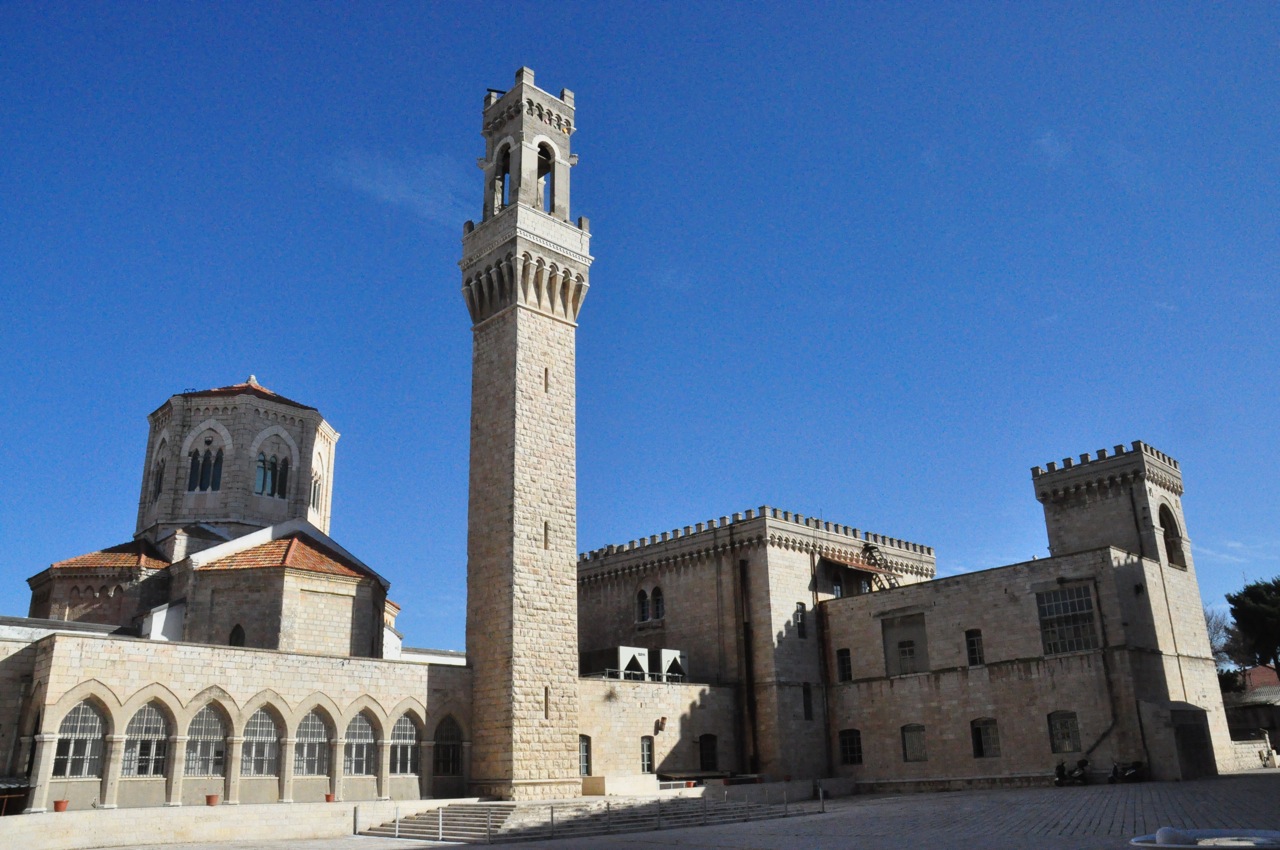
By 1910 Turkey is described as the “sick man on the Bosphorus” and all the European powers were staking their claim to pieces of the Holy Land. Schiaparelli of the Italian Missionaries Association hired Giulio to design and build an Italian hospital in Jerusalem with substantial financial aid from the Italian Ministry of Foreign Affairs. Guilo is overloaded with work and probably prefered Rome to Jerusalem so he sent Antonio.

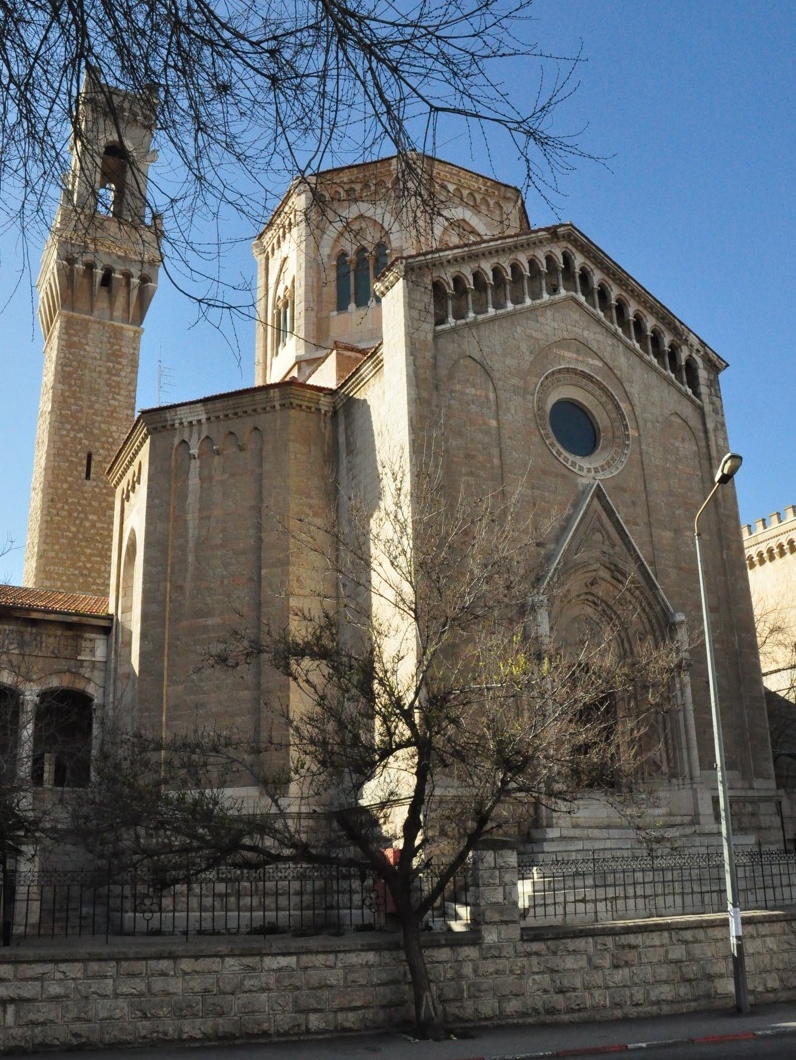
Schiaparelli recommended that “in the new building, a worthy chapel should have a place of honour, which can accommodate, in special circumstances, the Italian colony”. He also suggested that it be named Santa Maria Latina in memory of the old church of the Amalfitans in Jerusalem (today the Crusader part of the German Lutheran Church in the Muristan). So Antonio designed the hospital, definitely Italian looking, a curious mixture of the Palazzo Vecchio on the Piazza Signoria in Florence and the tower of the Mangia in Sienna.

With the outbreak of the First World War Barluzzi left for Italy and entered a seminary and stayed for 40 days, then Italy entered the war and he was called up. Italy allied itself with Britain, Barluzzi was recommended to the Ministry of War as an expert on the Holy Land and so on December 11, 1917, our architect entered Jerusalem on foot through Jaffa gate together with General Allenby.

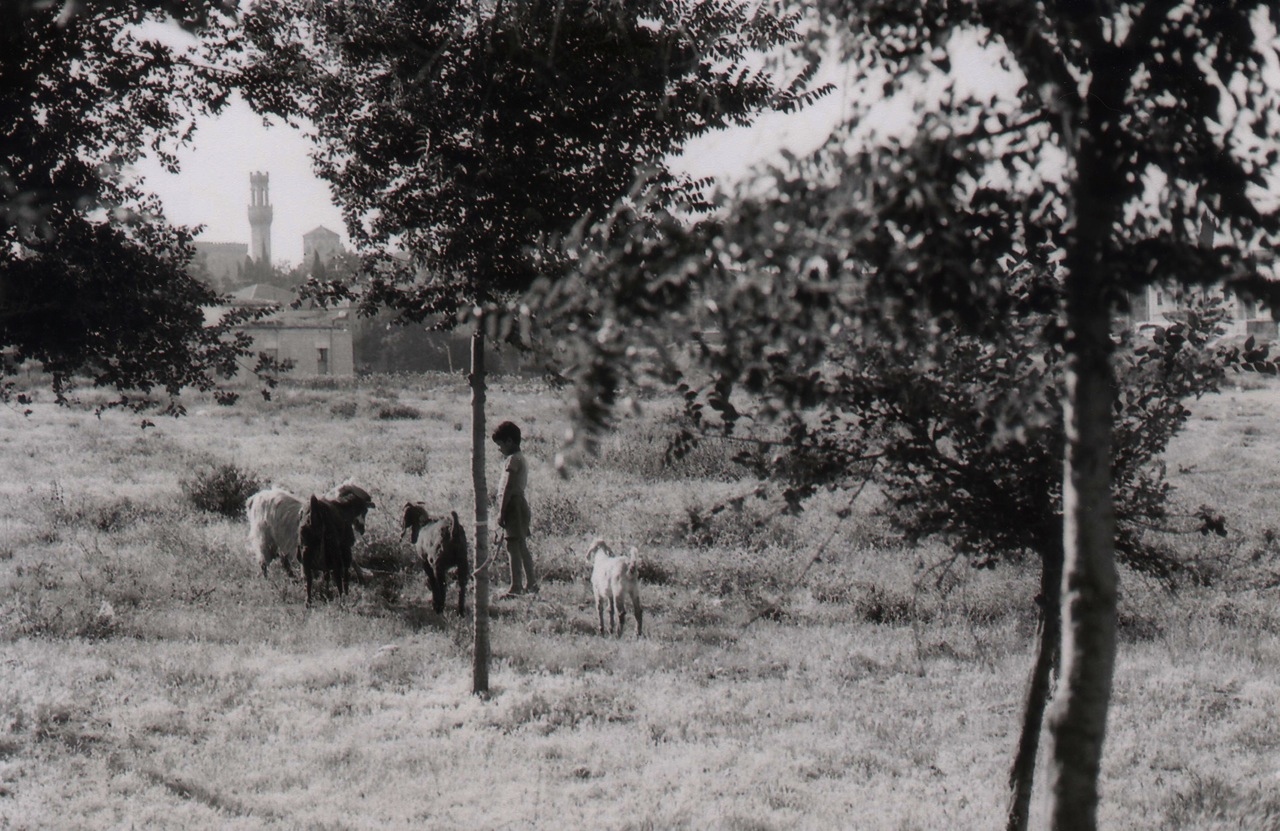
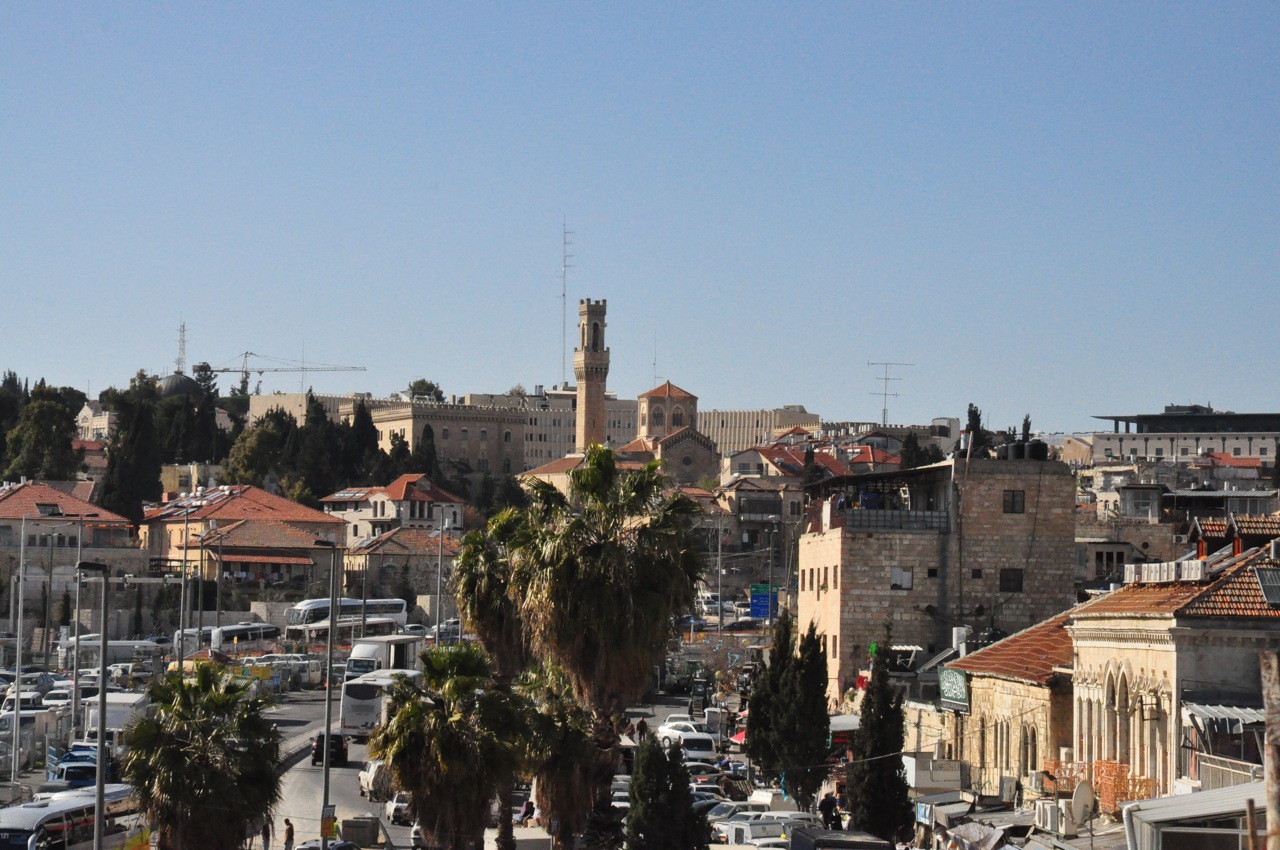
In 1978 while studying in Israel I took some photos of the Old City with a Nikkormat SLR camera using black and white film. One photo in particular I liked quite a lot, a pastoral scene just across from Damascus Gate looking north, of a young Arab boy shepherding four goats in a field. In the distance, framed by two trees is an Italian looking building. Of course, today the field is gone but the building is Barluzzi’s Italian hospital, his first building in Jerusalem.

The question was where would I find that photo from 30 years ago. I started looking through shoeboxes of photos and after about 10 minutes in a box with old letters, lo and behold found the negatives. I took them to be developed and a few hours later had prints of the photos. I shot a similar view the other day from the ramparts at Damascus gate.

From there I walked over to the chapel – the Italian hospital buildings are being used by the Israeli Ministry of Education. Unfortunately the chapel is not open to the public.

Barluzzi was asked to build two churches by the Franciscans, on Mount Tabor and in the Garden of Gethsemane. He returned to Italy to ponder his future. He wrote in his diary: ‘I go to Father Corrado, the confessor of my youth, I explain my circumstances and ask what I must do. ‘Go and build the Sanctuaries, and then we’ll talk again.’ My heart leaps for joy, and I say: ‘It is Gods will’.

So Barluzzi began to build a basilica on the top of Mount Tabor, one of the traditional sites of the Transfiguration. This was a challenging task in 1919 because there was not even a road or water, which had to be carried by mules; even the stone masons were brought from Italy. Again Barluzzi borrowed from an existing church, St. Simeon the Stylite near Aleppo, for his design because of the importance of the Transfiguration in the Syrian liturgy and the triple division of the facade matched the three figures in the story, Moses, Jesus and Elijah. The roof was originally of alabaster tiles in order to let the light in, unfortunately these had to be covered to prevent the rain coming in but Barluzzi used the element of light to the full.

At the same time he was working on the basilica at Gethsemane, called both the Church of All Nations and the Church of the Agony. Here Barluzzi developed his symbolic architecture, in this case Christus dolens et triumphans. The suffering of Jesus and his pain is represented by a building of Byzantine inspiration which evokes the beginning church, a somber interior of dark mosaics with the light filtered by purple glass, with twelve small domes, like the apostles. The glory is  the triumphal facade of classic Roman inspiration, a triple round arch, supported by four large pilasters surrounded by columns topped with Corinthian capitals (a similar capital was found during the excavations and is on display at the Stadium Biblicum archaeological museum).

Barluzzi went on to build numerous other churches, transforming into stone the deepest sentiments of his heart and dedicated his life to honoring and glorifying the earthly Jerusalem. It is a blessing to be able to experience his work.


Just inside Jaffa gate is the Franciscan Christian Information Center. As of the date of this post, there is an exhibit about Antonio Barluzzi that I highly recommend.

Mary Magdalene

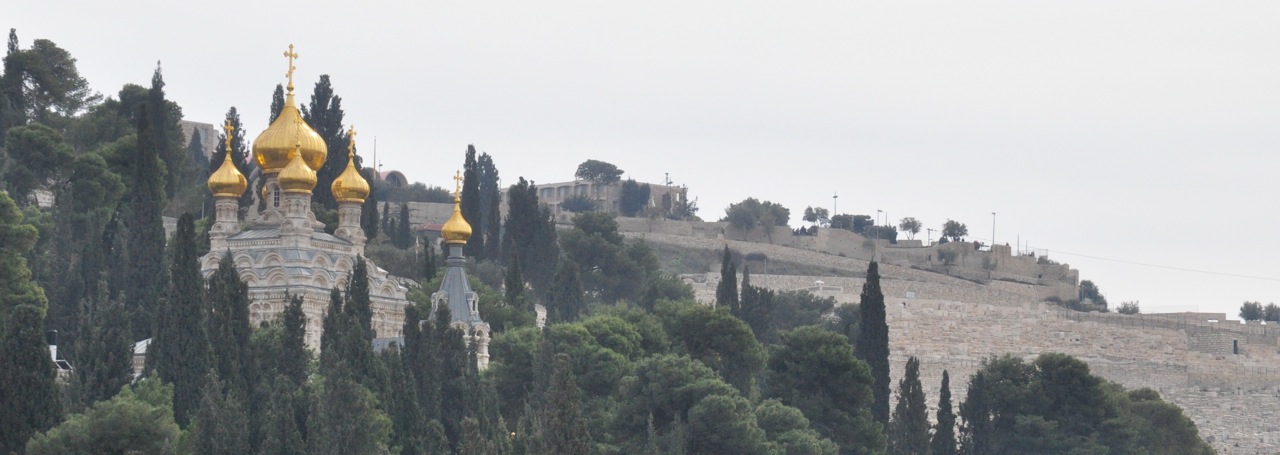
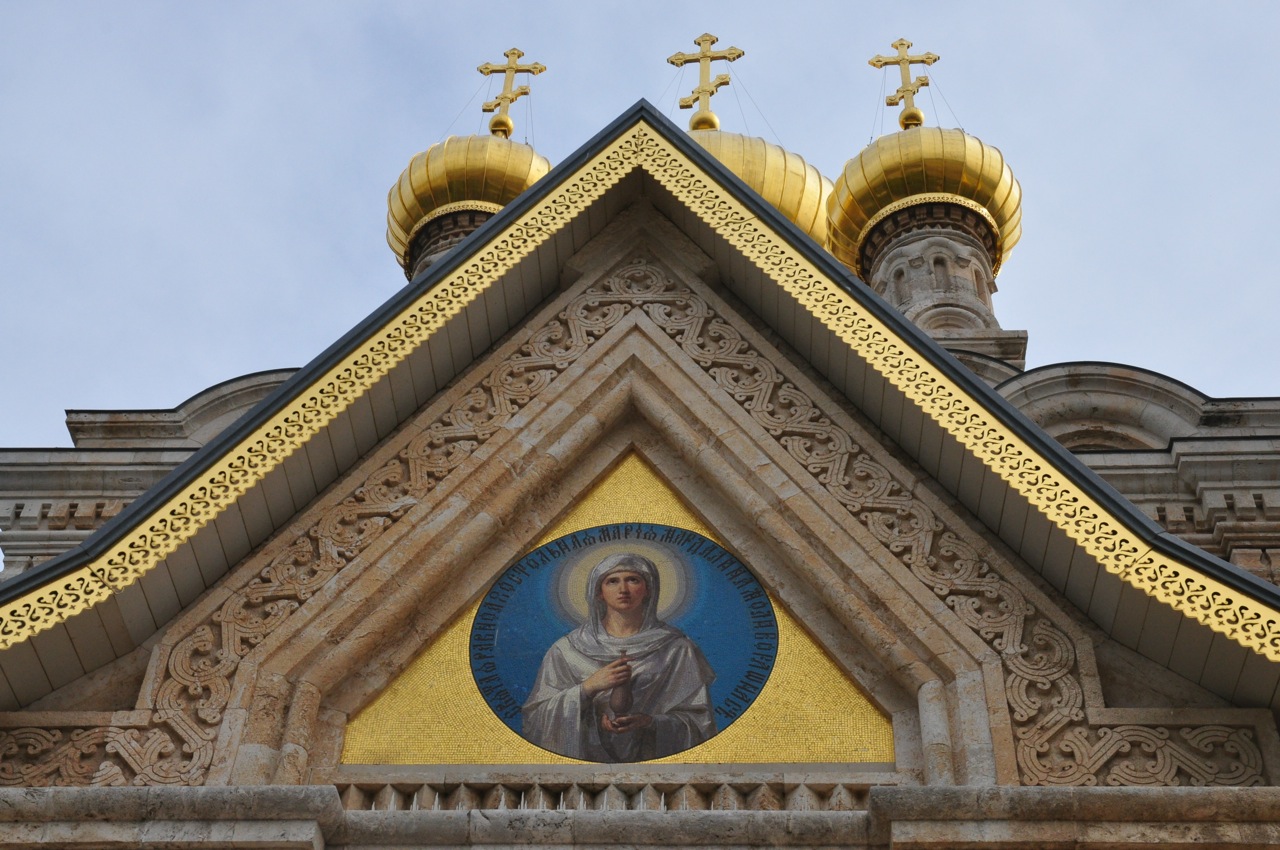
You can’t miss the church on the slope of the Mount of Olives, its seven gilded, onion-shaped domes sparkling in the sunlight. This is the Church of Mary Magdalene built by Czar Alexander III of Russia in 1886. Dedicated to Alexander’s mother Maria Alexandrovna, it was called the Church of Mary Magdalene after her name-saint from the town of Magdala on the western shore of the Sea of Galilee.

Mary Magdalene is mentioned as one of the women who “ministered to him [Christ] of their substance”. The New Testament also tells the story of an exorcism on Mary that cast out seven demons (Luke 8:3). One of the best-known women in the New Testament, Mary accompanied Jesus on his last journey to Jerusalem, was present at the crucifixion and was the first person to see Jesus after the resurrection (Mark 16:9). Though she was very close to Jesus, she was never recognized by Christianity as one of the Apostles.

Above the main entrance to the church, located on the second level, is a gabled roof trimmed with a lace pattern in gold. A circular blue mosaic depicting Mary Magdalene piously robed in white is superimposed on a gold triangle in the gable,which is bordered with an intricately carved stone pattern. On the left side of the building is a bell tower ringed with squat squarish pillars topped by a large grey cone with several dormer like windows, a gold onion dome perched on top.

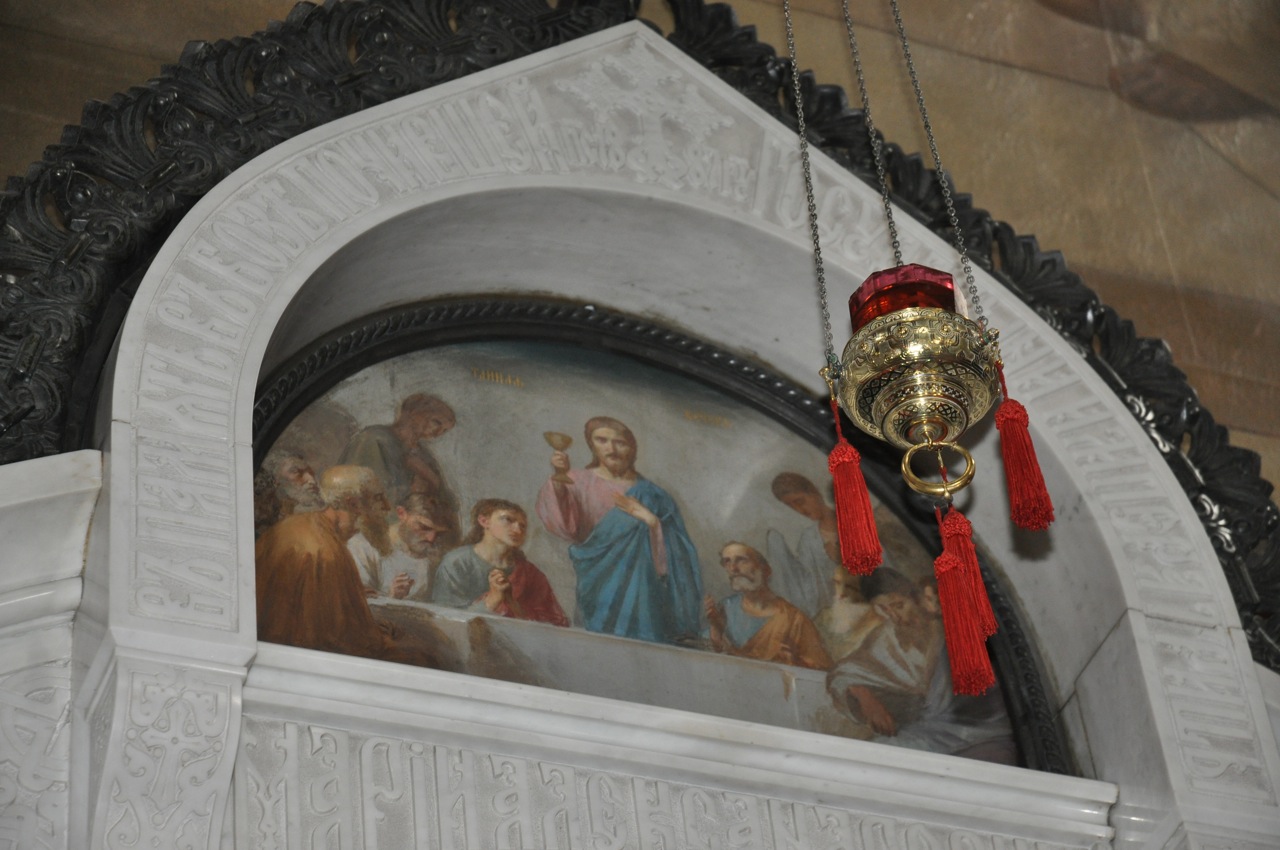
Inside the church decorated in shades of burnt orange in various patterns hangs a large metal chandelier which has small oil lamps for light. The iconostasis, a wall separating the nave from the sanctuary and altar in an Eastern church, consists of a series of arches of beautifully carved white marble, with paintings by Vereshoguine, one of Mary Magdalene. In the middle in an arch above the Holy Doors is the traditional scene of the Last Supper (click on the image to see it larger).

Six tiny paintings on the doors depict the four evangelists, the Virgin Mary, and the angel Gabriel. Over the arches of the iconostasis and high up on the other three walls are scenes with Mary Magdalene painted by Ivanov.

One of Russia’s most extraordinary saints lies in state within the church. She was Russian Grand Duchess Elizabeth Fyodorovna put to death by the Boshevists in 1917, wife of the Czar’s brother Sergei (assasinated in 1905) and sister to the Czar’s wife Alexandra. She was the creative force behind the church and supervised the artwork.

Visiting the church takes planning due to the limited hours it is open (Saturday, Tuesday and Thursday from 10am to noon) so until then check out this virtual tour at http://www.3disrael.com/jerusalem/church_magdalene2.cfm

If you are on the trail of Mary Magdalene search out the church of Saint Etienne, outside of the Old City walls just north of Damascus gate. Named for Saint Stephen, the first Christian martyr, this is a Catholic church of the Dominican order. You can’t help but notice the painting of Mary Magdalene on your right as you enter the church.

For another Russian Orthodox church with gold onions visit the Gorney monastery compound in the village of Ein Kerem southwest of the city where Mary came to visit her sister Elizabeth and where John the Baptist was born (Luke 1:39).

Sites around Akko

There are many well-known sites in Israel that are popular, that visitors see again and again while missing out on other hidden gems. Many people have seen the Chagall Windows at Hadassah hospital in Jerusalem but far fewer probably know about the stained-glass windows that Israeli artist, Mordecai Ardon designed. Many people have visited Yad Vashem but far fewer have visited Lohamei HaGetaot, a kibbutz near Akko founded by those who fought and survived the Nazis.

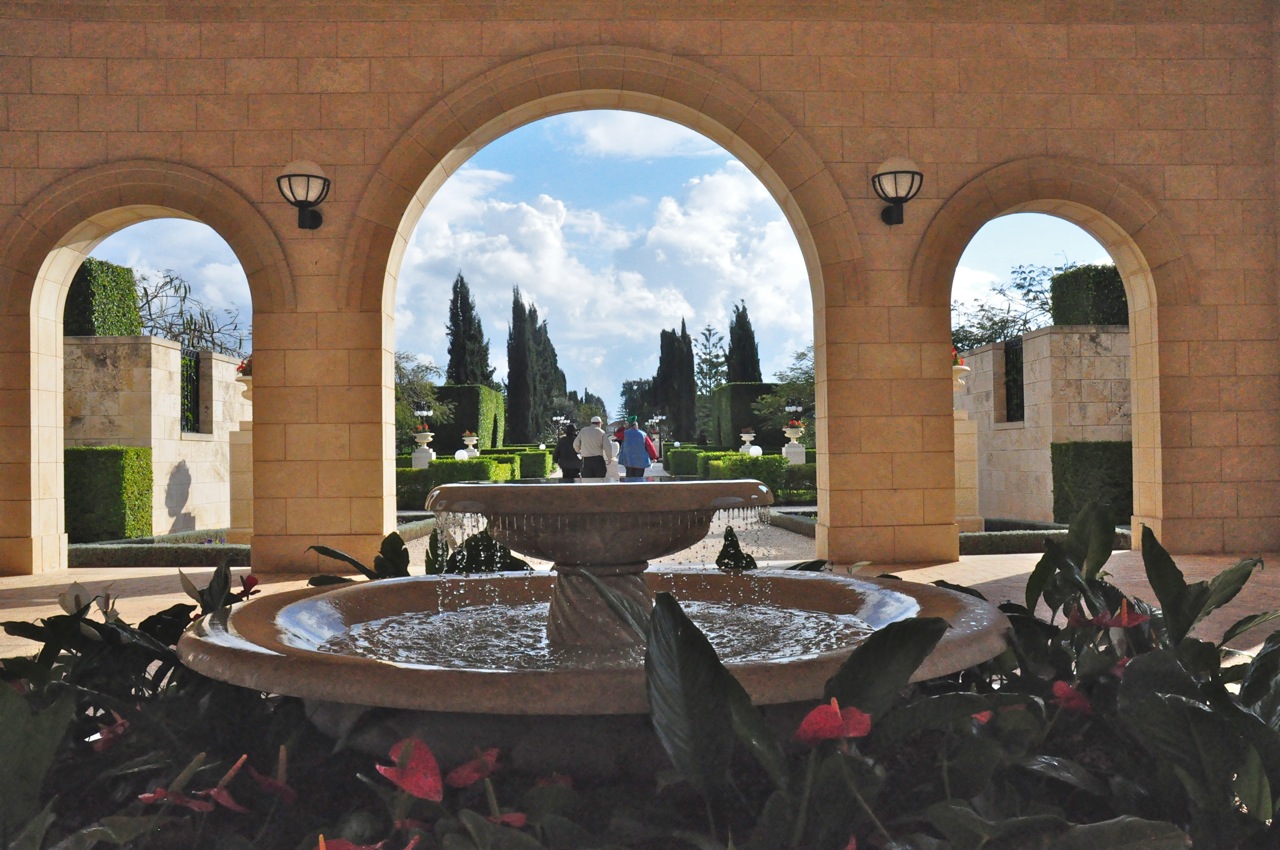
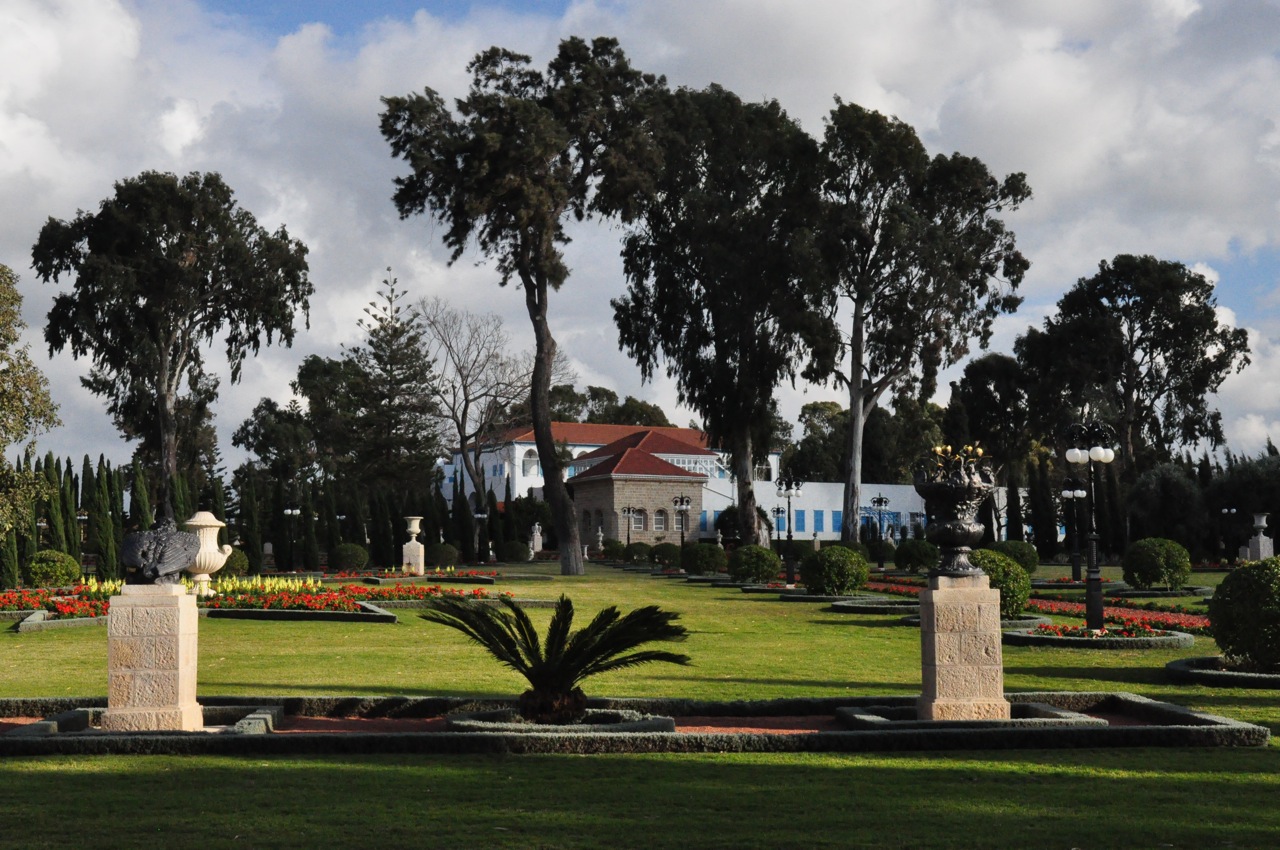
Many people are familiar with the Bahá’í gardens in Haifa but far fewer have visited the Bahá’í gardens just north of Akko. The gardens in Haifa comprise a staircase of nineteen terraces extending all the way up the northern slope of Mount Carmel. The golden-domed Shrine of the Báb, the resting place of the Prophet-Herald of the Bahá’í Faith, stands on the central terrace, looking across the bay towards Akko. There the gardens at Bahjí reflect the beauty and serenity of the Haifa gardens.

The gardens form a large circle surrounding the historic mansion where Bahá’u’lláh, the Prophet-Founder of the Bahá’í Faith, lived during the final years of his life after he was released from Acre Prison by the Ottoman Turks and the shrine where he is buried.

Later during the British Mandate period, Jewish resistance fighters were held in the Acre prison and 9 died there on the gallows. Today the prison is a museum and has been recently updated to dramatically retell the story of the Hagana, Irgun and Lehi struggle with the British, definitely worth a visit. There is another less well-known museum to the underground prisoners in Jerusalem in the Russian compound.

The Old City of Akko was designated a UNESCO World Heritage site in 2001. In July 2008, the Bahá’í Gardens in Haifa and Akko were listed as UNESCO World Heritage sites, in recognition of their “outstanding universal value” as holy places and places of pilgrimage. Like all great works of art, these extraordinary sites are tangible expressions of the human spirit.

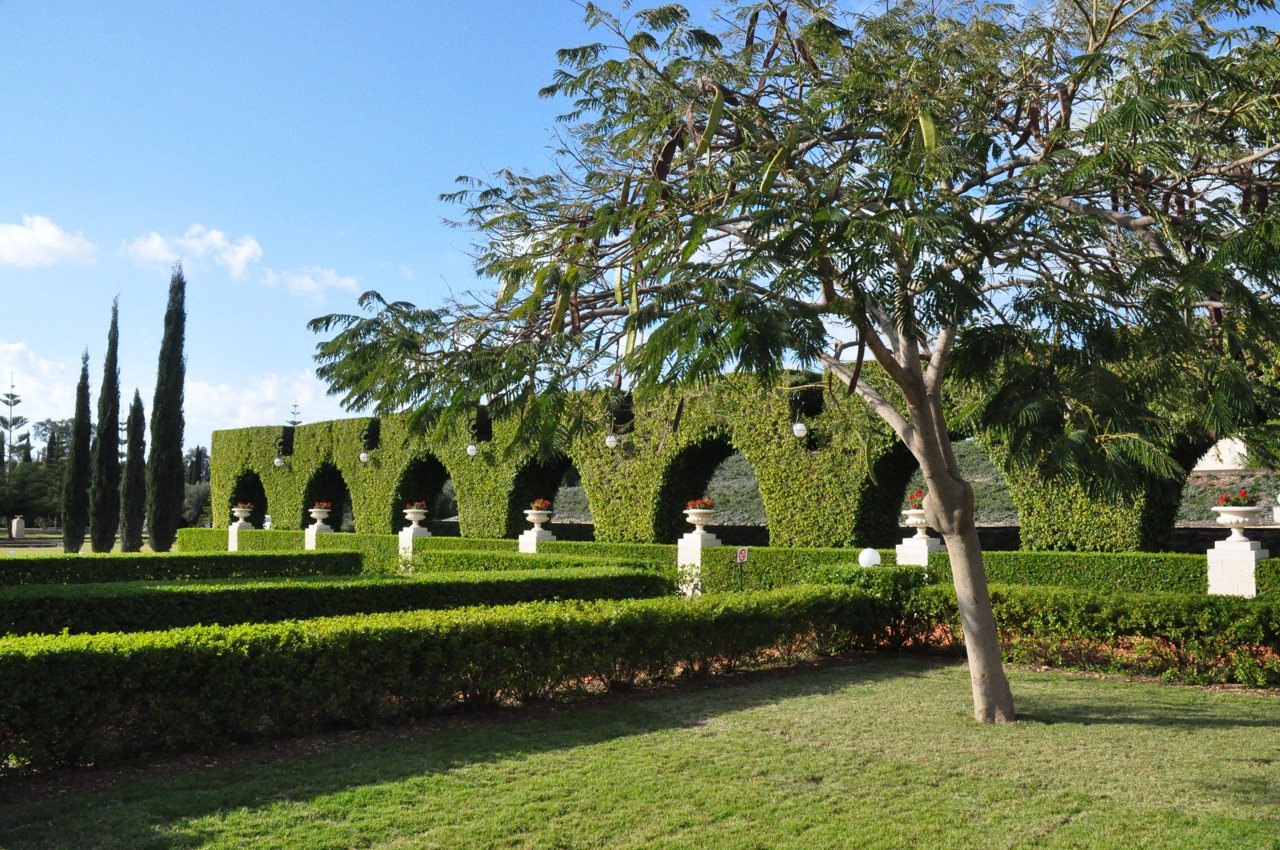
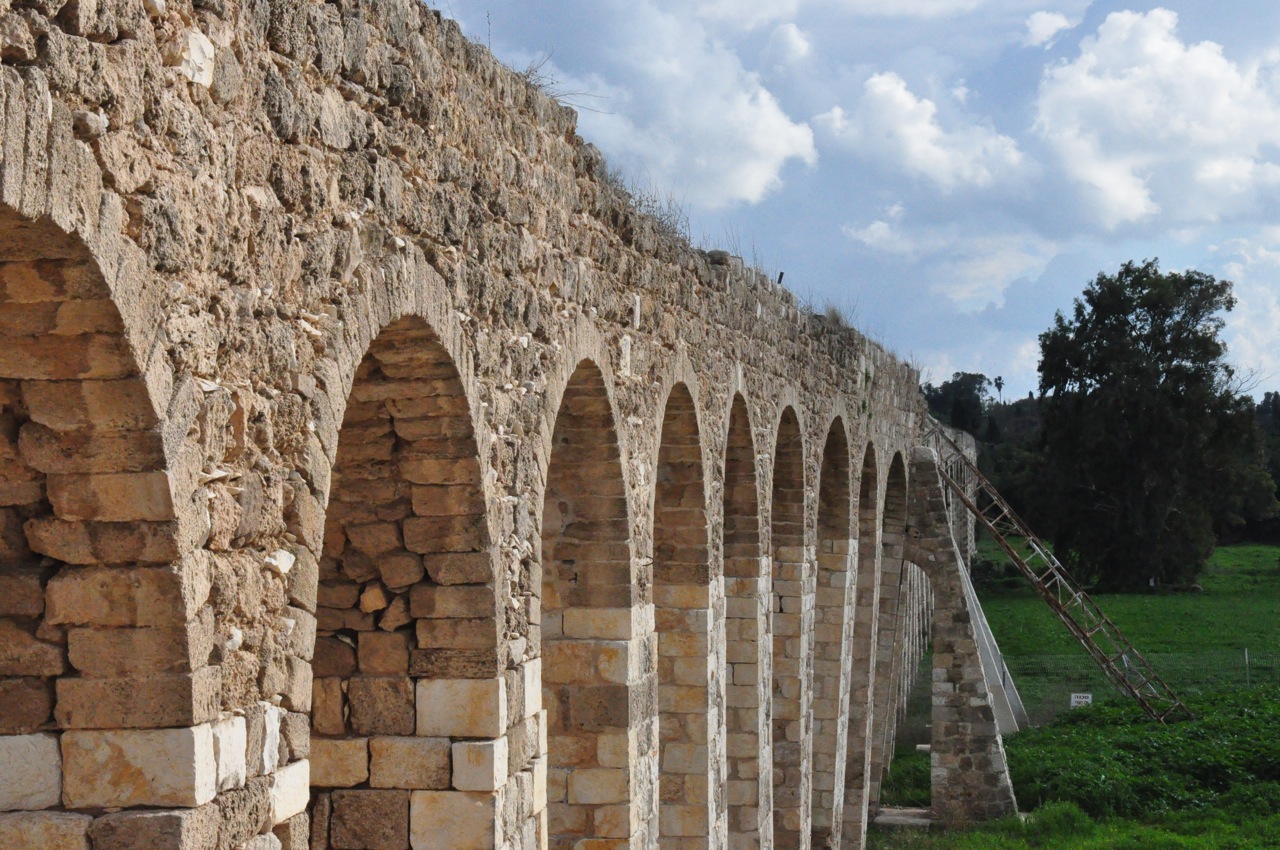
One of the striking formations near the entrance is a trimmed hedge in the form of an aqueduct. Many people are familiar with the aqueduct that Herod built, onto which the Romans tacked a second aqueduct to bring water to Caesarea but there is another less well-known aqueduct. Just north of Akko, by Kibbutz Lohamei HaGetaot is an aqueduct from the Ottoman period built on an earlier one from the Hellenistic period that was built to bring water from the Cabri springs to Akko.

Kibbutz Lohamei HaGetaot was founded in 1949 by a community of Holocaust survivors, members of the Jewish underground in the ghettos of Poland, and veterans of partisan units. Integral to the kibbutz from the beginning was the Ghetto Fighters’ House – Itzhak Katzenelson Holocaust and Jewish Resistance Heritage Museum for documenting and researching the Holcaust. The museum serves as a testimony to the stories of the survivors and an expression of the return of the Jewish people to our land.

Beside it is Yad Layeled (Monument to Children), an educational center commemorating the one and a half million Jewish children murdered in the Holocaust. The building was designed by Ram Carmi of two main architectural elements: a central 3-story cone and a descending ramp that encircles the cone and defines the path through the space. The space is lit by natural light that enters through a circular stained-glass window on the domed ceiling of the cone that becomes dimmer as you descend until you reach the innermost sanctum and eternal flame.

Yad Layeled gives the visitor an intimate view of the children’s world during the Holocaust and opens a door to their dramatic experiences and pain. It is unique in that it is intended to reach out to young people (ages 10 and up). The other permanent exhibitionis dedicated to Dr. Janusz Korczak, a Polish-Jewish doctor, author and educator who devoted his life to children. Many people visit Yad VaShem but fewer people know about Lohamei HaGetaot. That’s a good reason to hire a guide – a guide can take you places and share experiences that you probably won’t discover on your own.

Ardon Windows

photo, Mordecai ArdonMordecai Ardon (1896-1992) was born into an Orthodox Jewish family in Tuchów, Galicia (then Austria-Hungary, now Poland) but lived a secular life. From 1921 to 1924 Ardon studied at the Bauhaus under Klee, Kandinsky, Feininger and Itten. The influence of the Bauhaus and especially Paul Klee on his artistic development was profound. After graduating from the Bauhaus he studied the painting techniques of the Old Masters, especially Rembrandt and El Greco under Max Doerner in Munich. Combining these seemingly contradictory techniques gives Ardon’s colors their depth and richness.

In 1933 he immigrated to Palestine under the British Mandate. He joined the faculty of the newly formed Bezalel Arts and Crafts School in 1935, five years later he was elected director. Through the fifties he lectured at the Hebrew University on art appreciation and was artistic advisor to the Israel Ministry of Education and Culture.

Professor Ronen, of Tel Aviv University in speaking of Ardon said:

Ardon conceived colour as possessing an absolute aesthetic and spiritual value. He therefore always strove to create the most beautiful colours possible, the deepest blue, the warmest red, the most shining yellow, the most saturated green.

Ardon believed in pure art devoid of any political or social message. He believed that a painting should be appreciated and judged solely by its inherent artistic elements, such as colour, composition and their interplay. He rejected literary, symbolic or, indeed, any other additional meaning attributed to a work of art.

Ardon loved colors and ‘pure art’ but filled his works nevertheless with mystical connotations, Jewish symbolism and enigmatic scenery. He was appalled by the horrors of war and injustice and these themes too seeped into his art. Ardon was an artist who chose to use modern, expressionistic and abstract styles, combined with a classic painting technique which created distinctly unique paintings.

As Ardon expressed in a letter he wrote to Willem Sandberg, Director of the Stedelijk Museum, Amsterdam in 1960:

… an odd thing happened on my palette: something foreign sneaked into the group of cadmiums, ultramarines and viridiums – it was Jerusalem – ascetic, with a sack over its head.

What is Jerusalem doing amongst the bright cadmiums? How can one scratch it off the palette? Sometimes it can be scared away and hidden behind the ivory black. But in vain – the next morning it settles down again in the midst of the cadmiums…

One cannot get away from it. The alien Jerusalem always gives orders: “Thou shalt”, “Thou shalt not”, like a black woodpecker Jerusalem keeps knocking on your bark – Thou, Thou, Thou. Thou and the orphan, Thou and the widow…

In 1963 Ardon retired and finally was able to focus solely on his artwork. During these years, moving between Paris and Jerusalem, he created eight monumental triptychs – the last ‘Hiroshima‘ when he was 92. One of these was executed in stained glass by Charles Marq (who had collaborated with Chagall 20 years earlier) at Atelier Simon in Rheims, France between 1982 and 1984. A set of three large stained-glass windows (measuring (6.5×17 meters) cover one wall in the Jewish National and University Library in Jerusalem, dedicated to Isaiah’s vision of eternal peace with visual elements from the Kabbalah.

And many people shall come and say, “Come let us go up to the Mountain of the Lord, to the house of the God of Jacob, that he may teach us his ways and that we may walk in his paths. For out of Zion shall go forth the Law and the word of the Lord from Jerusalem. He shall judge among the nations and decide for many peoples and they shall beat their swords into plowshares and their spears into pruning hooks. Nation shall not lift up sword against nation, neither shall they learn war any more.   Isaiah 2:3-4

Click on the thumbnail above to display a larger image (these are quite incredible stained glass images).

The left panel depicts the winding roads taken by the nations on their way up to Jerusalem, up to the Mountain of the Lord, each road marked with its own language and alphabet (Latin, Greek, English, French, Arabic).

In the central panel Ardon represents Jerusalem, where the city’s stone walls are represented by the Isaiah Scroll (one of the Dead Sea Scrolls), a spiritual wall combined with the Kabbalistic tree of the sefirot, a symbol of the mystical divine presence, a merging of the earthly and heavenly Jerusalems.

The right panel is the vision come true, guns and shells beaten and transformed into spades which hover above.


Ardon was considered by many to be Israel’s greatest painter.
For images of Ardon’s paintings check out the website http://www.ardon.com/

Byzantine Church, Hirbet Midras

Amir Ganor is not your usual archaeologist. Although he works for the Israel Antiquities Authority he packs a handgun because his primary responsibility is apprehending thieves who plunder sites for valuable artifacts to sell on the antiquities market. In this case a group of Palestinians were breaking into the complex of tunnels and caves in the Judean Coastal Plain or shefela in the area of Beit Guvrin, specifically Hirbet Midras, looking for coins and other treasure. This led Ganor to the site where a large stone lintel was uncovered.

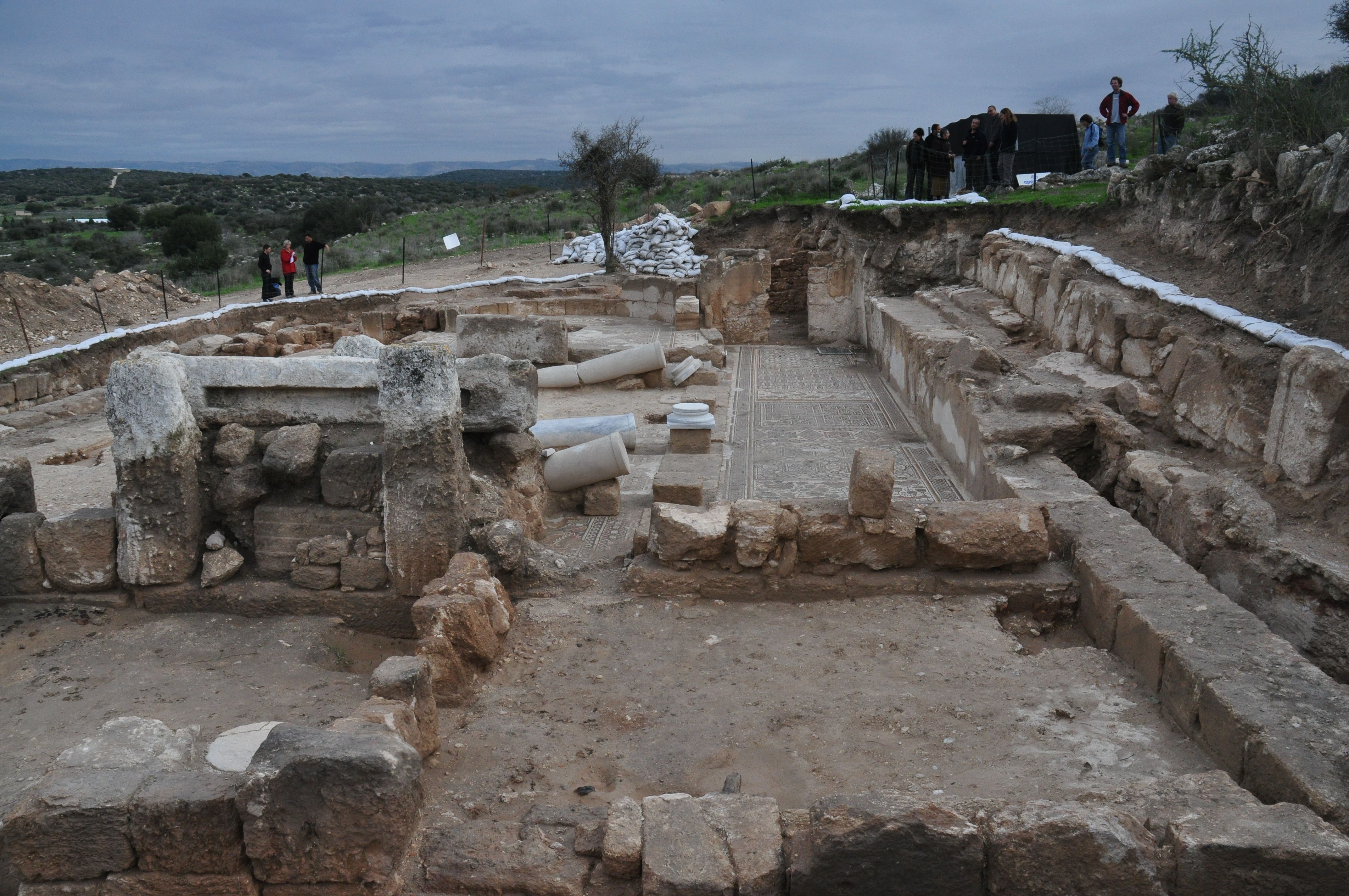
The same lintel was first uncovered in the 1980s and based on the expert opinion of Prof. Amos Kloner was thought to be from a synagogue since it was almost identical to one found in the north at Hirbet Nevoraya. Ganor requested approval and support from the Antiquities Authority to excavate the area to discover more about the public building. Within a short time very impressive and beautiful floor mosaics were uncovered. Large dressed stones with what look like Byzantine crosses were discovered when the plaster covering them fell off. Combined with the architectural details, an apse, a crypt, mosaic floors, it seems that the building was a church. The church was destroyed by an earthquake some 1,300 years ago and lay mostly covered until the 19th century. The columns and capitals are displayed exactly as they were found, lying parallel on the ground and the northern wall is angled out from the movement of the earthquake.

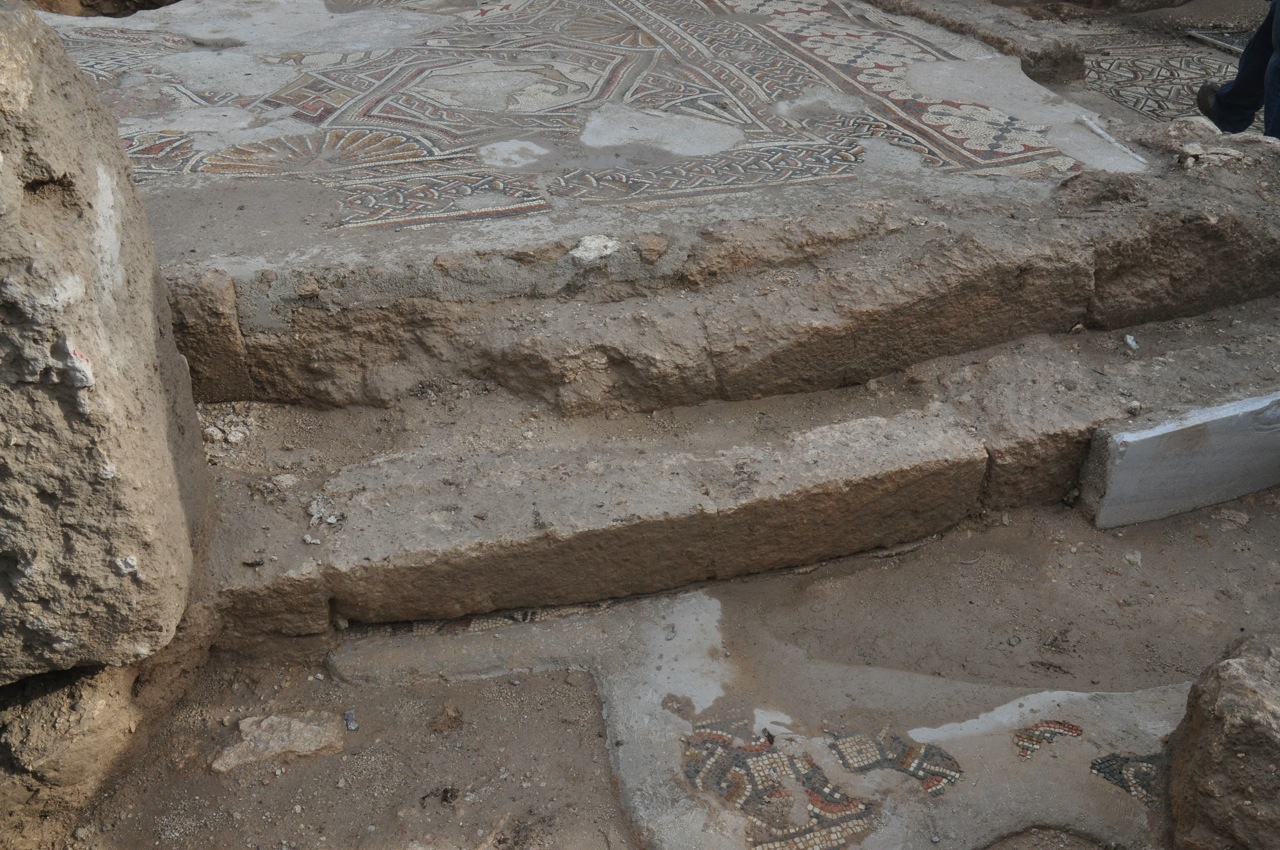
There are several construction phases, in the last two the building was used as a splendid church. However, in the first phase the excavation shows that the later church was built inside a large public compound from the Second Temple period. The church, in its last phases, was built as a basilica, a central nave and two wide aisles that are delineated by eight marble columns with magnificent capitals which were specially imported (the eight bases can be seen but only 3 capitals and columns remain). The front of the church had a large flagstone courtyard, a narthex, and at the end of the nave is a raised bema or platform (that was added later – you can see that the mosaic floor continues under the bema).

All of the floors in the building were adorned with incredible mosaics, that are extraordinarily well preserved; these include both geometric designs and floral, fauna, fish, birds and fruit. Today I went out to the site to photograph the mosaics (before they are covered to protect them until the site can be readied for visitors). You can view them at https://israeltours.wordpress.com/2011/02/04/mosaics-hirbet-midras/

Located behind the bema are two rooms, one paved with a marble floor and the other that led to an underground tomb that was empty.

Beneath the entire building is a subterranean complex in which there are rooms, water installations, traps and store rooms for hiding. Among the artifacts discovered are coins from the time of the Great Revolt (66-70 CE) and the Bar Kokhba uprising (132-135 CE), stone vessels, lamps and various pottery vessels that are characteristic of the Jewish population from the settlement at that time.

Scholars who visited the site during the excavation proposed identifying the crypt as the tomb of the prophet Zechariah. Early Christian sources identified his burial place in the village of Zechariah which was discovered in 415CE. In light of these sources, including the Madaba Map (the building with the apse with the Greek, ΒΕθΖΑΧΑΡ to its left is Bet Zechariah), scholars think the church at Hirbet Midras is a memorial church meant to mark the tomb of the prophet Zechariah.