Category Archives: Architecture

“Top Ten” Jerusalem Sites

The first 3 must see sites in Jerusalem are associated with the 3 monotheistic religions that make up Jerusalem’s religious fabric:

1) the Western wall (Judaism) built by Herod 2000 years ago during his renovation of the Second Temple,

2) the Church of the Holy Sepulcher (Christianity) built originally by Emperor Constantine and extensively rebuilt by the Crusaders in 1149 and

3) the Haram el Sharif, with the Dome of the Rock and Al Aqsa mosque (Islam) built originally in the 8th century by the Umayyad caliph Abd al-Malik.

Here is my personal list of 7 other sites not to be missed. Add a comment to suggest sites you think should be in the “Top Ten”.

4) For a unique view of Jerusalem, take the Ramparts Walk starting at Jaffa Gate where you actually walk on the stone walls built in 1540 by the Ottoman Turkish sultan, Suleiman the Magnificent for a birds eye view of the city. Check out the 8 gates in the city walls, including the remains of the Roman gate below today’s Damascus gate.

5) Visit the Church of Santa Anna in the White Father’s compound, the ruins of a Byzantine church and a Crusader chapel resting on a dike between two pools (there’s no water in them today). This is where Jesus performed one of the two miracles he did in Jerusalem, curing the cripple of 38 years (John 5). There is also a complete Crusader church with incredible acoustics (try it out by singing Amazing Grace or other liturgical melody).

6) Visit the archaeological park at the Davidson Center and see the massive stones that were hurled down onto the Herodian street by the Romans and the steps to the Temple Mount where Jesus would have walked, the Umayyad palaces from the Early Arab period and Byzantine and Crusader ruins.

7) Reserve a Western Wall Tunnel tour and see a model of King Herod’s Second Temple (there is also a model up on the roof of the Aish HaTorah building and a model of Jerusalem in 66CE including the Temple on the grounds of the Israel Museum) and walk 488 meters under the city along the Western Wall on the Herodian street to the spot closest to the Holy of Holies, the holiest site to Judaism.

8) Tour the ancient City of David to understand the importance of water in the history of Jerusalem. Bring “water” shoes and a flashlight and walk 45 minutes through Hezekiah’s Tunnel a manmade canyon cut in the limestone with water up to your knees – quite an experience. The tunnel brought the water of the Gihon Spring to the Siloam Pool, inside the walls of the city. This is where Jesus performed the second miracle in Jerusalem, curing the blind man (John 9).

9) After extensive renovations the new Israel Museum has been open a year and one million people have visited – the Archaeology wing has been completely redone, the Ethnography section has been expanded and the Art gallery includes a new section on Israeli art. The museum includes the Shrine of the Book, where the Dead Sea Scrolls and other artifacts from Qumran are on display. Beside it is the 1:50 model of Jerusalem in 66 CE just before the Jewish Revolt against Rome which led to the destruction of the Second Temple and Jerusalem by TItus. Walk around and enjoy the Billy Rose sculpture garden designed by the Japanese-American sculptor Isamu Noguchi.

10) Take a guided tour of the Mahane Yehuda market or participate in a scavenger hunt. More than an outdoor vegetable market, it is a great place to walk around to get a feel for the characters and local cuisines of Jerusalem. You can request a detailed map of the market at https://israeltours.wordpress.com/2008/05/31/map-mahane-yehuda-market/
A Morning on Mount Scopus

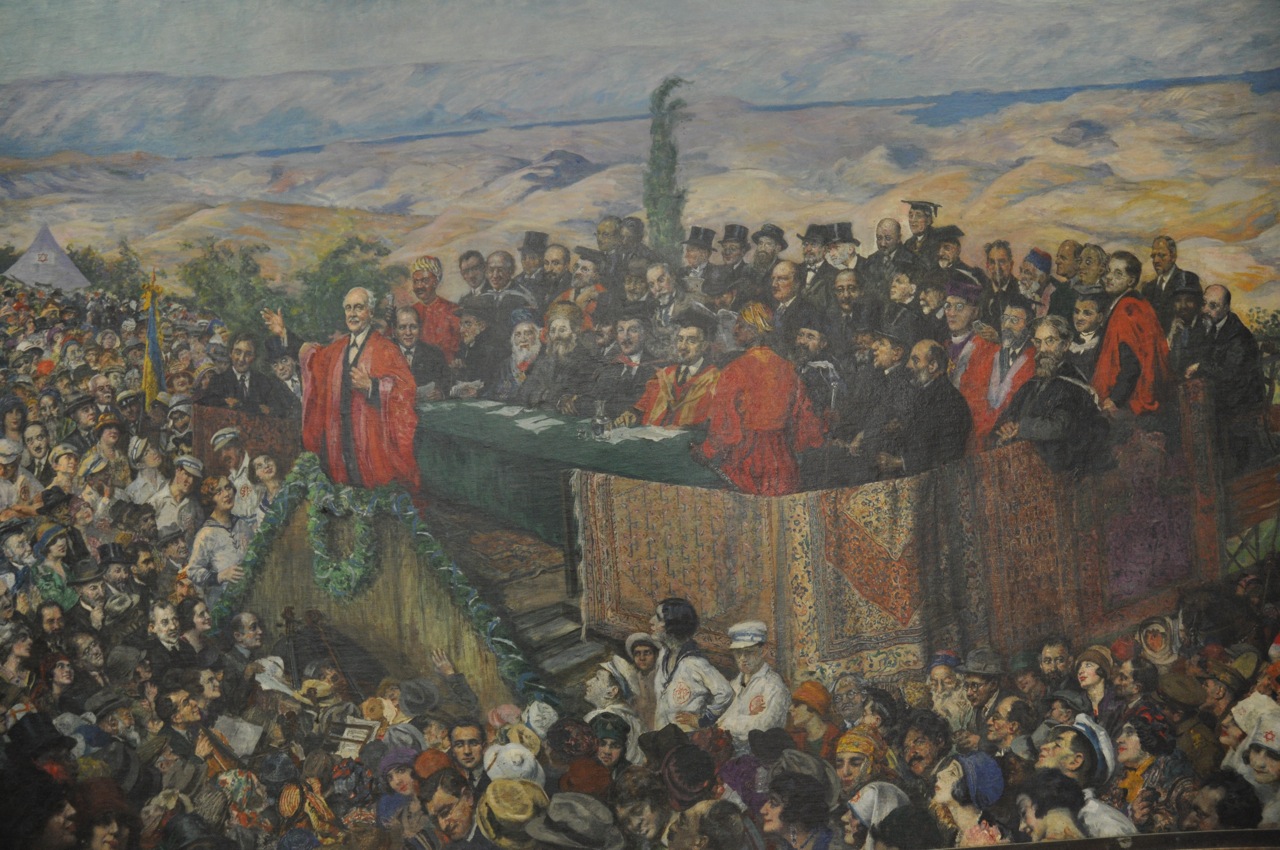
Construction of the campus of the Hebrew University began in 1918 on land purchased from the Gray Hill estate. The dedication ceremony was held in 1925 in the presence of many dignitaries, including Lord Balfour, Viscount Allenby, Sir Herbert Samuel, Chief Rabbi Abraham Isaac Hacohen Kook, the poet Haim Nahman Bialik, Ahad Ha’am, Dr. Chaim Weizmann and many others.

A design for the university campus by Sir Patrick Geddes positioned the university buildings on the slopes of Mount Scopus, below a domed, hexagonal Great Hall recalling the Star of David, as a counterpoint to the octagonal Dome of the Rock in the Old City. This plan was never implemented, but Geddes designed the university library, today the Faculty of Law building. The master plan for the campus was taken over by German Jewish architect Erich Mendelsohn in 1935. Mendelsohn greatly influenced the local Jerusalem International Style (Bauhaus).

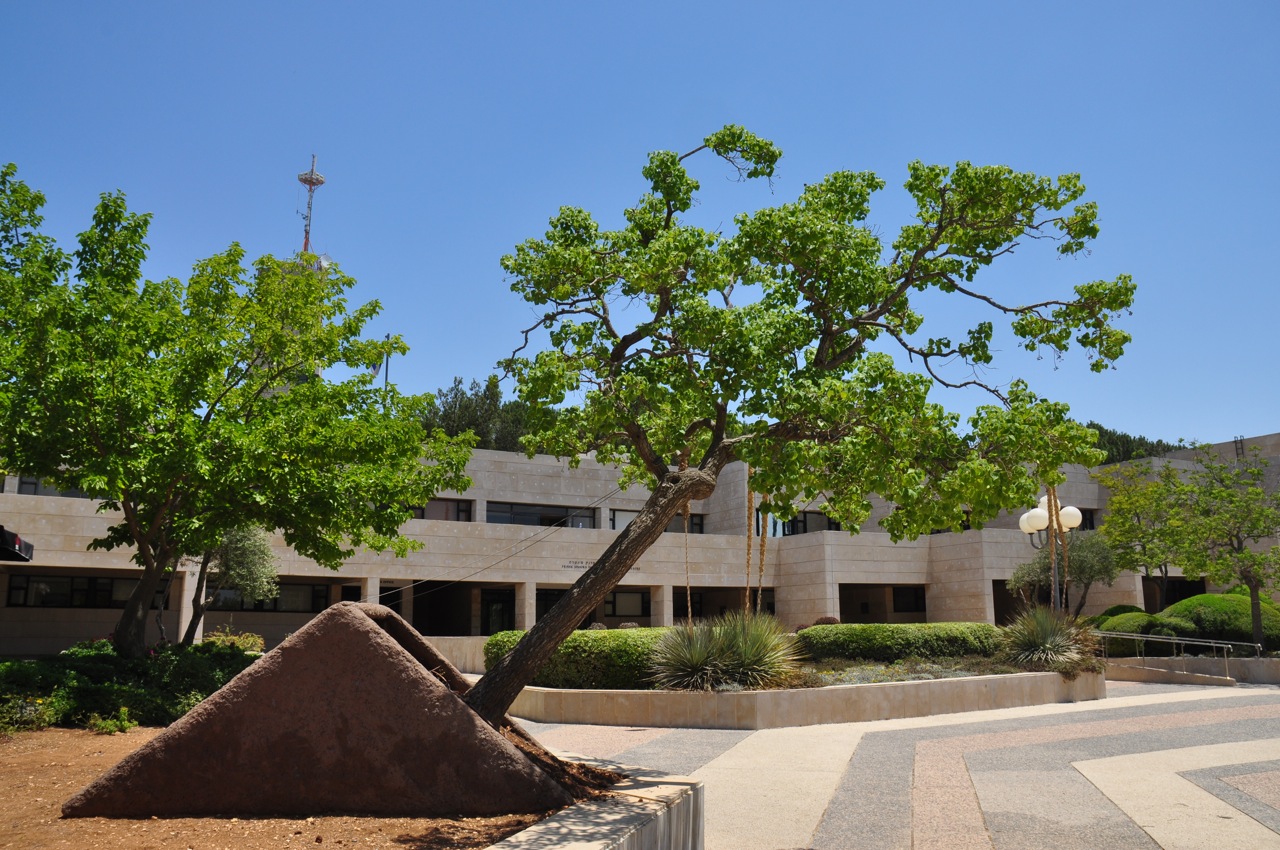
Notice the living sculpture outside of the Sinatra building that commemorates the nine students killed by a bomb left in the university cafeteria in July 2002, a tree growing out of the ground at an angle, by Israeli sculptor, Ran Morin. The Tilted Tree signifies humankind’s ability to withstand even the most disruptive shocks and to continue to grow upwards.

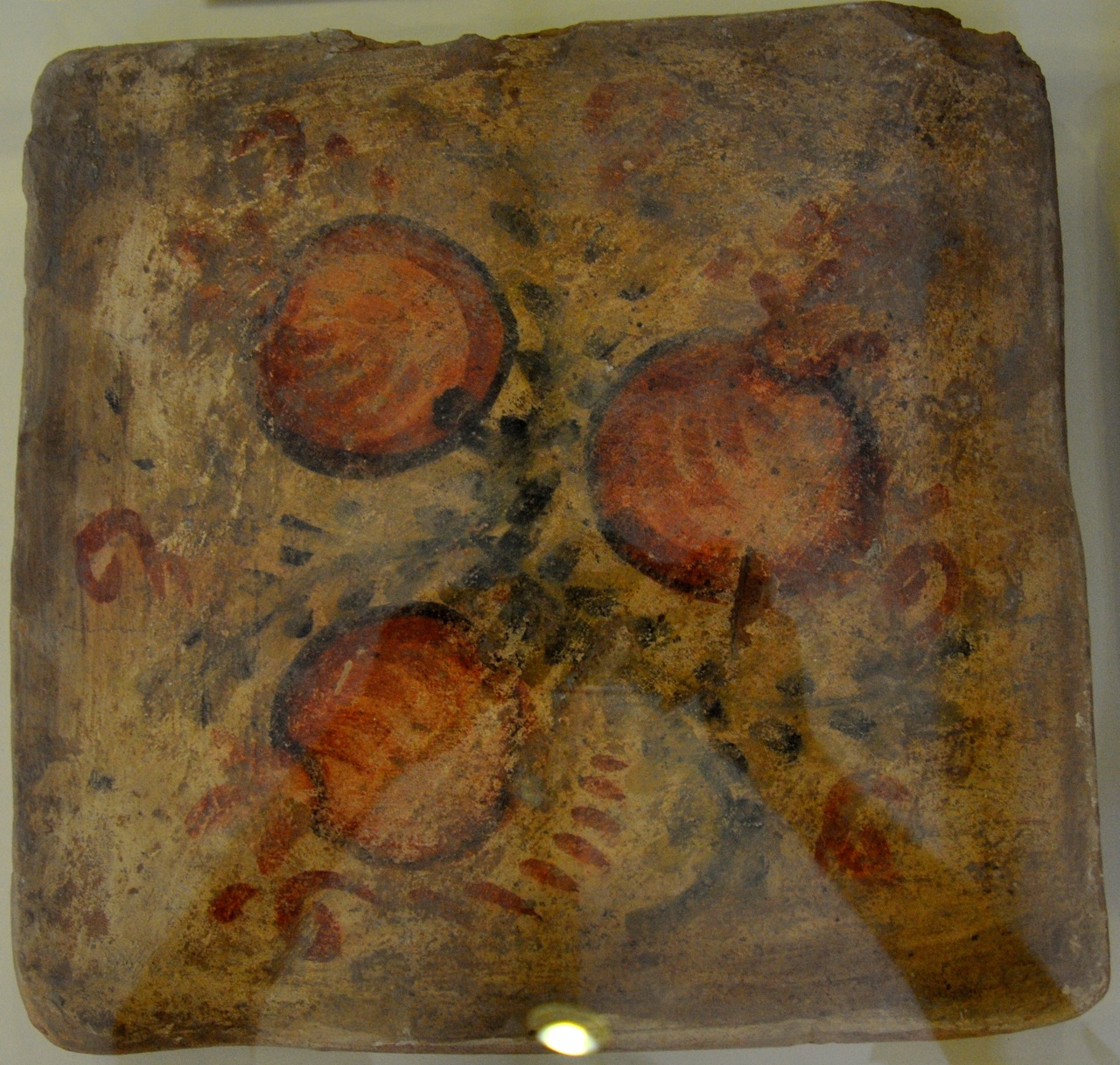
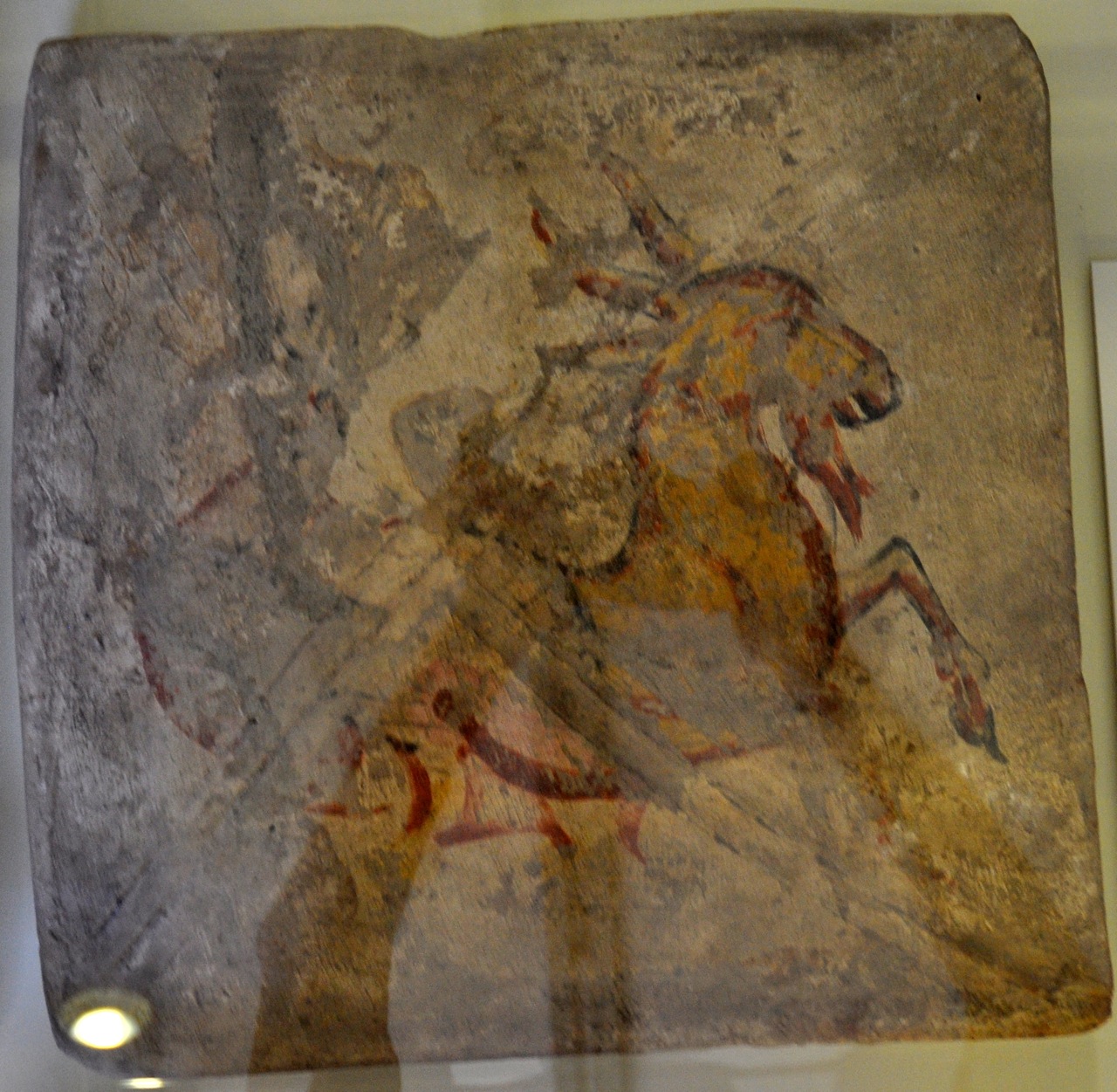
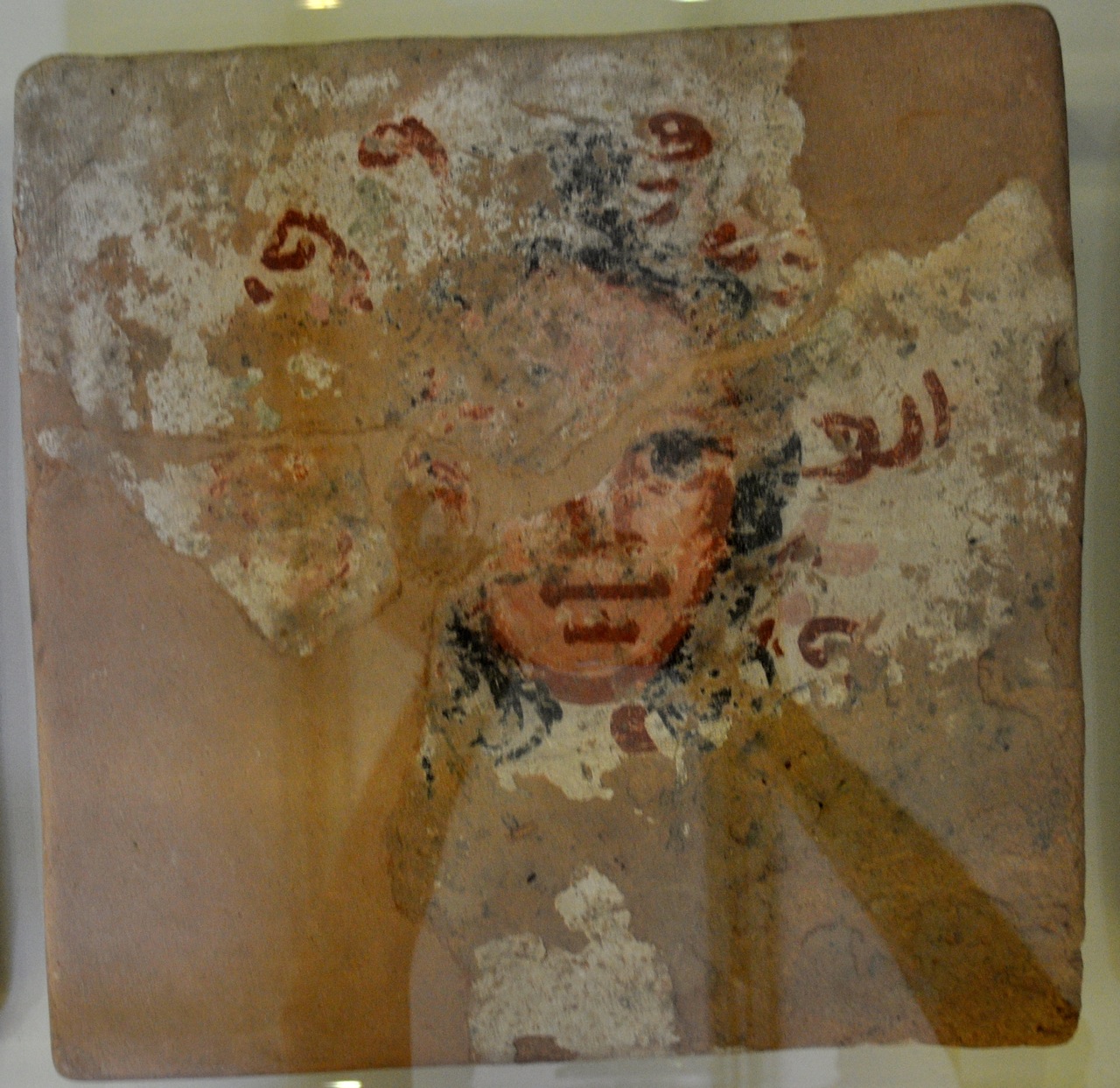
Prof. Sukenik and his colleagues, including Prof. Nahman Avigad, had planned to open a museum on Mount Scopus in 1948 to display items related to the history of the Jewish people in ancient times. Among the artifacts are ceiling tiles from the ancient synagogue* discovered in 1932 in the city of Dura Europos, located in the desert above the banks of the Euphrates in Syria. Sukenik had been invited by the Yale University team to visit the site (in Syria) and join in the publication of the findings. He was given 3 ceiling tiles that he brought back to Israel. The outbreak of the War of Independence with the result that Scopus was isolated within Jordanian-occupied territory made the opening of the museum impossible.


Sixty-three years later, these painted clay tiles and other artifacts have been put on display, including some half dozen ossuaries, mosaics, clay vessels, etc. from excavations in Israel by members of the Archaeology department. The modest museum is open to the public.

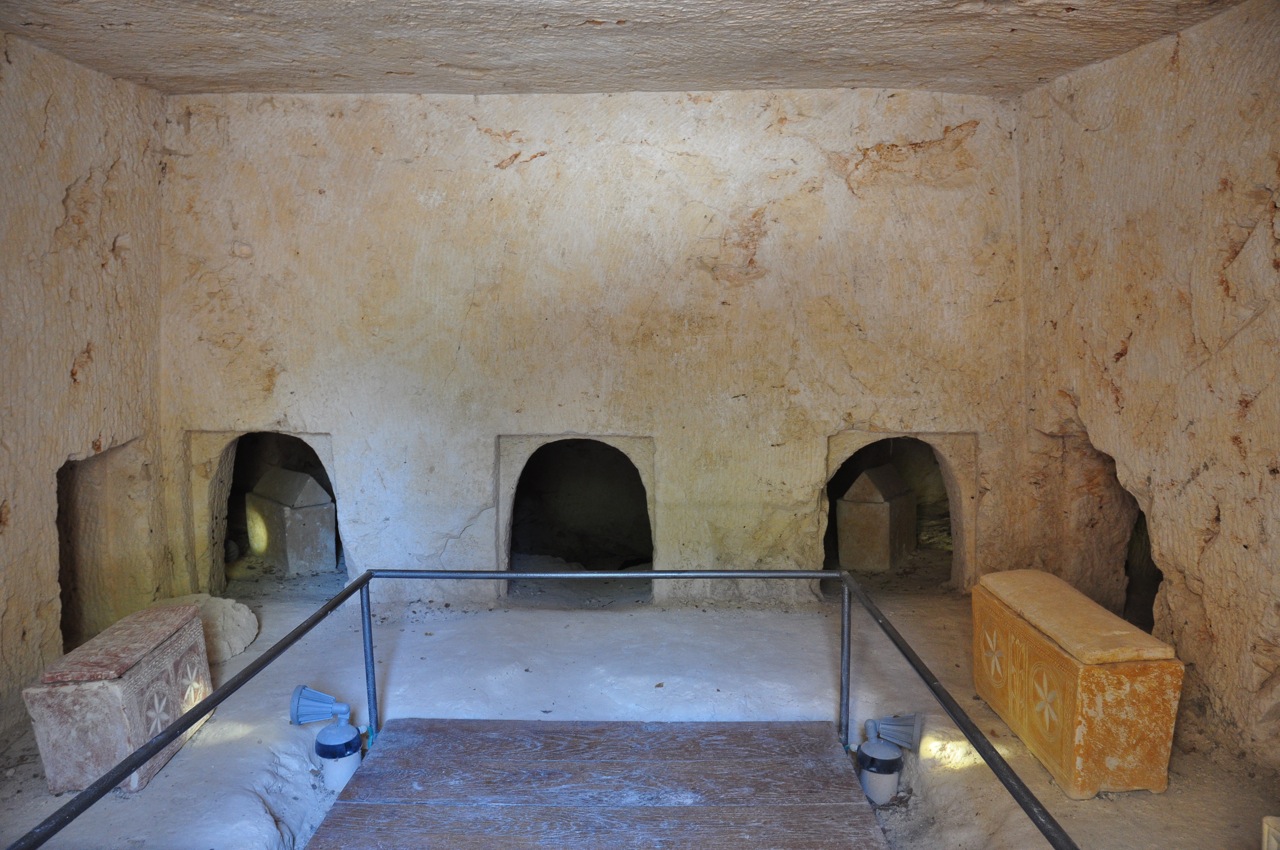
Walk through the botanical gardens organized by Alexander Eig, head of the Botany Department, based on the flora of the Land of Israel planted in 1931 to some caves with Second Temple period tombs. It was here that they found some half dozen ossuaries (the ones displayed on site are replicas, the originals are in the museum) including one with a 4 line inscription in Greek and Hebrew:

[In this ossuary are] the bones of [the family of] Nicanor of Alexandria who made the doors
Nicanor  Alexa

Nicanor is mention in the Babylonian Talmud in Yoma 38a, the donor of the two bronze doors for the Temple. The original ossuary is at the British museum in London.

In 1940s, Pinsker and Ussishkin, early leaders of the Zionist movement, were buried in one of the caves.

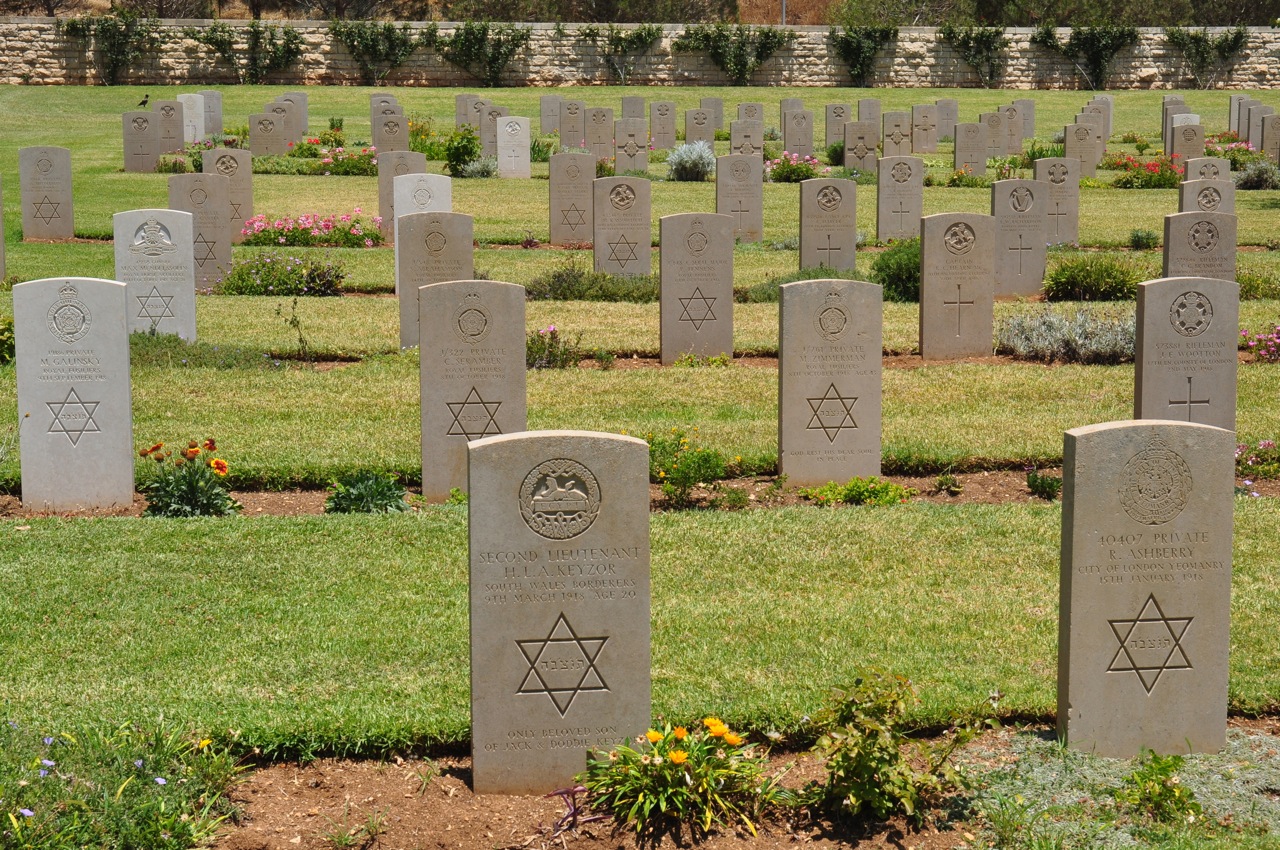
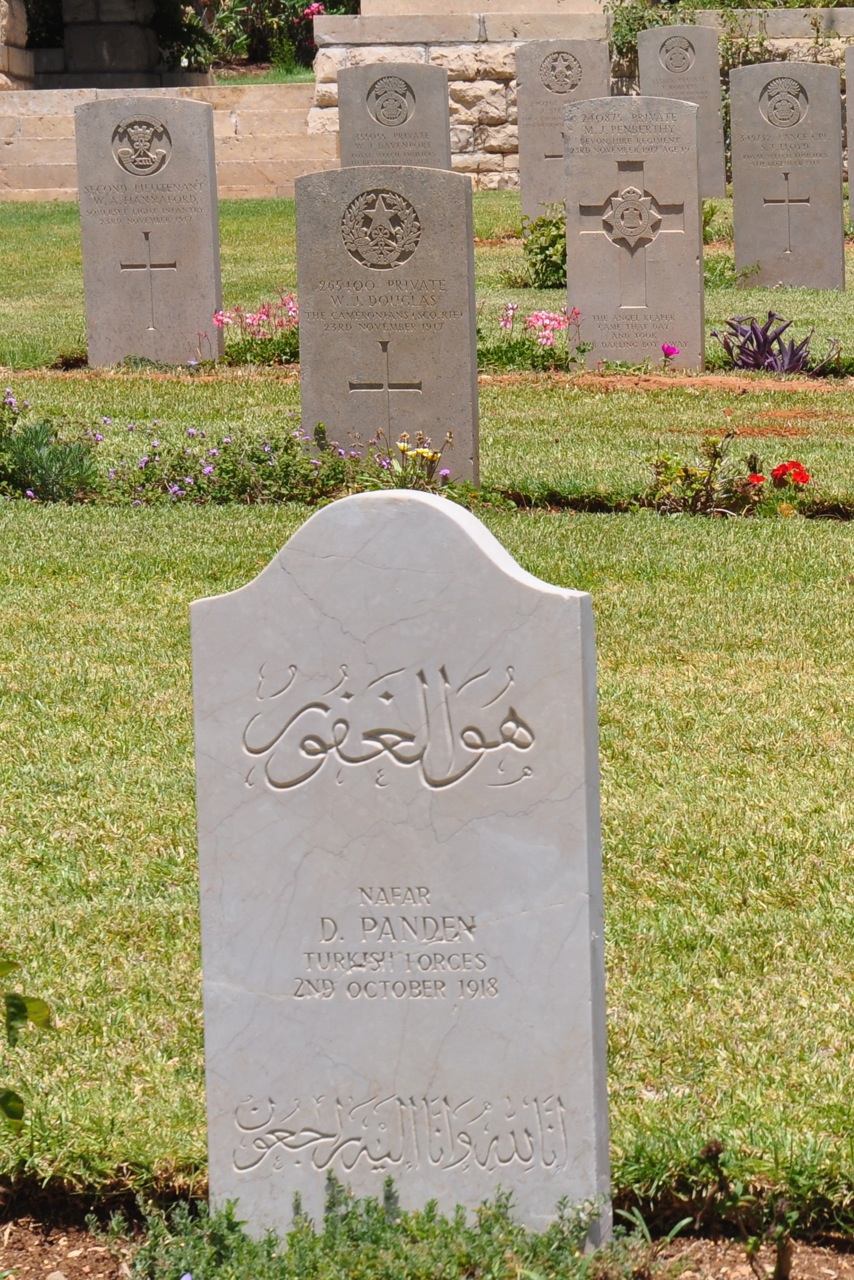
Went back to the Jerusalem War Cemetery on Mount Scopus and found the graves of Jewish soldiers who served in the British army during WWI and fought and died here. In addition, I noticed two gravestones of Turkish soldiers.


Visited the memorial at Givat HaTachmoshet to see the model of Jerusalem and how the city was divided in the ceasefire agreement of Nov 30, 1948 signed by Dayan (Israel) and el-Tell (Jordan). Article VIII of the 1949 Armistice Agreements signed by Israel and Jordan in April 1949 called for a resumption of “the normal functioning of the cultural and humanitarian institutions on Mount Scopus and free access thereto; free access to the Holy Places and cultural institutions and use of the cemetery on the Mount of Olives; resumption of operation of the Latrun pumping station; provision of electricity for the Old City; and resumption of operation of the railroad to Jerusalem.” Jordan did not abide to the agreement. There is a movie with original army footage that relates the events that divided the city in 1948 and shows how Israel recaptured the area from Jordan in 1967 and reunited the city.


http://art-history.concordia.ca/cujah/issue03/3-the-significance-of-the-dura-europos-synagogue.htm

Discovering Sussita

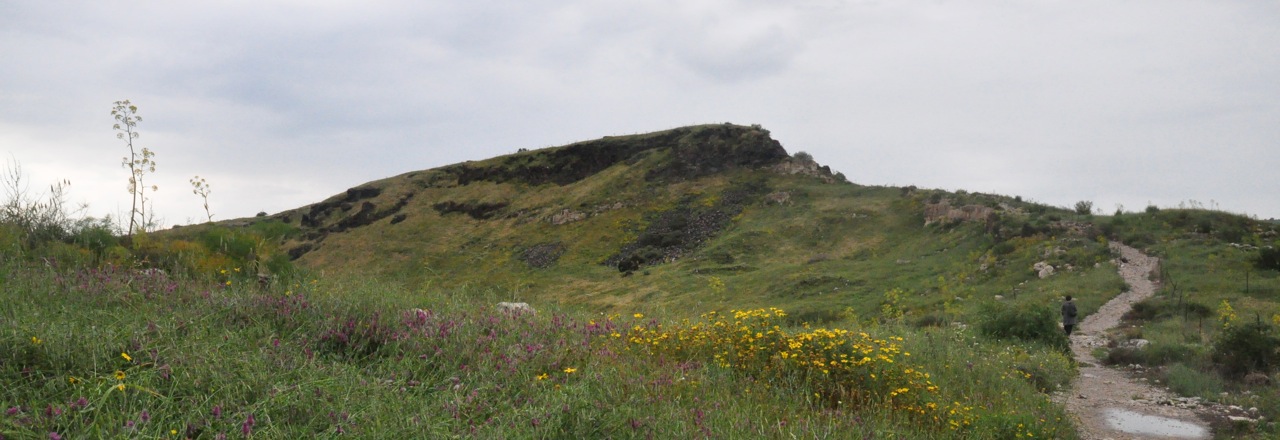
To the east of the Sea of Galilee across from Kibbutz Ein Gev is a road off the main highway <92> that passes beside a field of banana plants and winds its way onto the Golan plateau just south of Afik. About halfway, to the left of the road is a hill and on its summit (350 meters above the lake) the remains of the Byzantine city of Sussita (known as Hippos in its earlier Hellenistic incarnation).

With General Pompey’s conquest of Sussita in 63BCE it became one of the cities of the Decapolis, a group of ten cities on the eastern frontier of the Roman empire, grouped together because of their language, culture, location, and political status (each had a certain degree of autonomy and self-rule, for example, Sussita was allowed to mint its own coinage with a symbol of a horse). The Decapolis cities were centers of Greek and Roman culture in a region that was otherwise Semitic (Nabatean, Aramean, and/or Jewish). According to Josephus, Hippos had a mixed population of Christians, pagans and Jews. Of the ten cities, eight are in Jordan and two, Bet Shean and Sussita are in present day Israel.

The earliest survey and excavations, date back to the work done in the late 19th century by Gottlieb Schumacher (the German Templer railway engineer) and that of archeologist Claire Epstein in the 1950s. The University of Haifa (in conjunction with Concordia University of Minnesota and the Polish Academy of Sciences) will be excavating for their 12th season this summer.

Sussita is a remarkable archaeological site and yet is virtually unknown and unvisited; a guide will help you discover little known places and explain them. It is quite different from other cities, for example, most of the building and the street paving stones are of black basalt (rather than white limestone), the main Roman street that runs for a total length of about 500 meters like a spine across the top of the site is not the usual Cardo but actually the Decumanus.

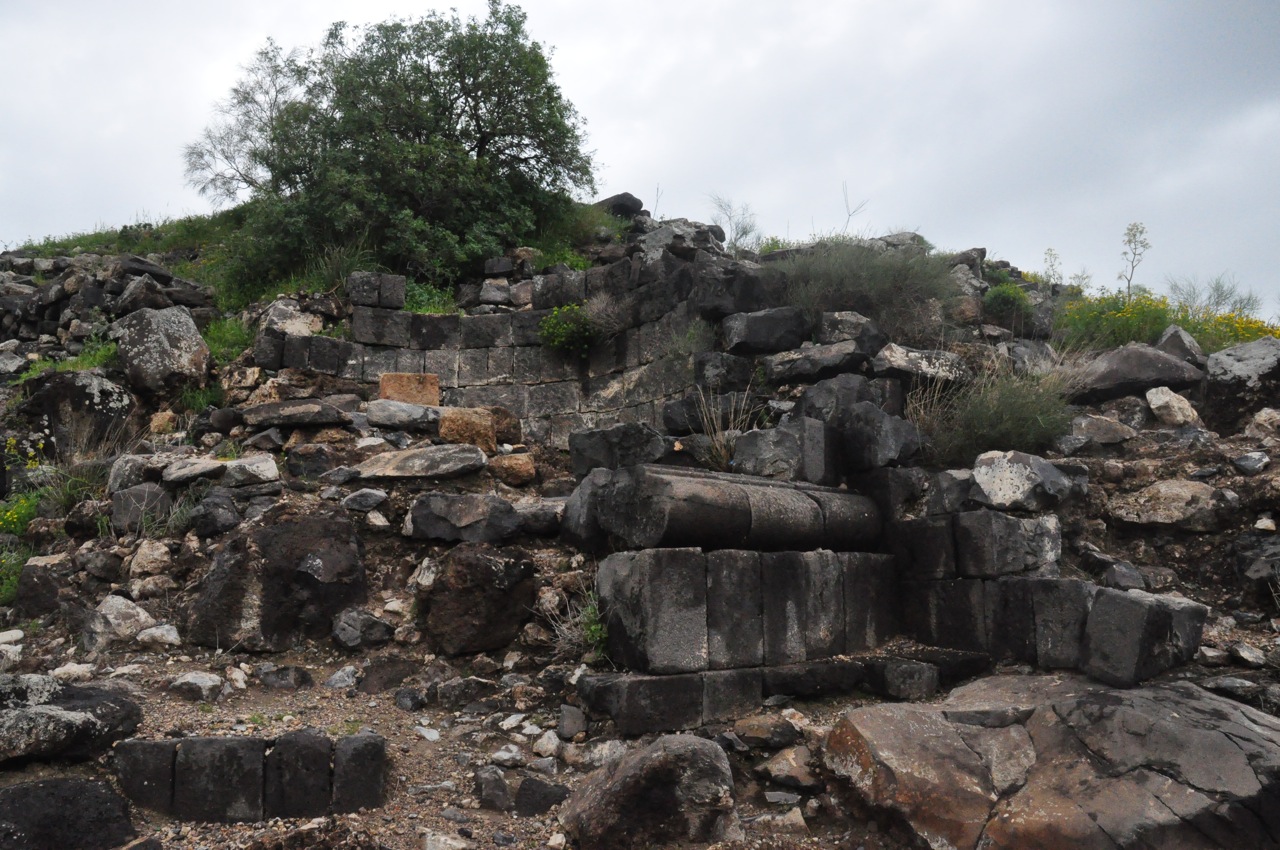
As you walk up the path towards the site the first thing you come to is the east gate. It had a tower on each side, one round and one square – a unique feature (most towers are the same). The round tower is well built of accurately cut basalt stones laid without the use of mortar. The square tower is poorly formed and preserved, and seems to have been repaired with cement at a later stage.

Just inside the gate you can see two interlocking stone rings part of an ingenious water system built by the Romans.

Originally Sussita collected its water from rainfall that was stored in a large underground vaulted cistern 9 meters deep at the western end of the city; smaller cisterns have been uncovered under other buildings. When this was insufficient for the needs of the growing city the Romans built an aqueduct starting from the waterfall in Nahal El-Al (btw this is a great hike) about 25 kilometers away. The problem was how to get it across the valley and up into the city. The Romans engineered a pipe made up of interlocking stone rings, made airtight with caulking, in which the water flowed down into the valley and then was drawn up into the city by siphonic action (like sucking a hose to siphon gas from your tank into a container) – the first time in this region.

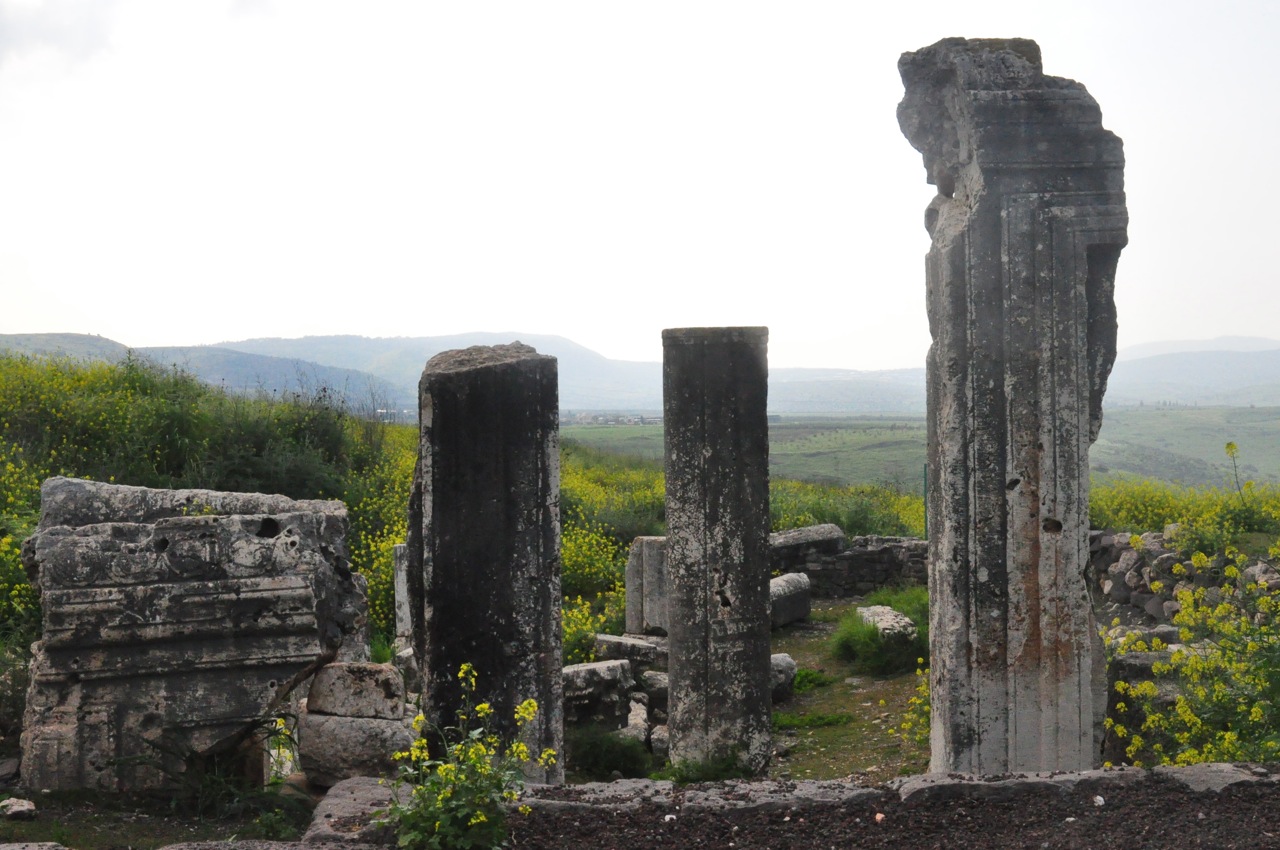
On the left side is the South-East Church, also called the Cathedral,  the largest and most magnificent of the eight churches uncovered in Sussita. It was excavated by Claire Epstein, as a rescue dig during the years 1951-1955 when the IDF fortified the hill against clashes with the Syrian army. Like at Beit Shean, the columns have been toppled over (like a row of wine bottles on a table covered by a tablecloth when the cloth is yanked), each one parallel to its neighbor, by the earthquake of 749CE .

Continuing along the Decumanus, one arrives at the forum on the south (left) side and opposite it, the Hellenistic (third century BCE) compound on the north side. At one end of the forum, there appears to have been a triumphal arch, marking the crossroads with the Cardo (the “heart”). Next to the arch is a monumental building (dated to the third century CE) which may have been a nymphaeum, the major water distribution point, but as no pipes or basins were found here, it could also have been part of an open-air shrine.

On the south side of the Northwest Church are two rectangular pools, the walls are plastered and there are steps leading down to the bottom. They look like they could be ritual baths (mikve) but actually these basins were used to collect grape juice. Next to the basins is a large area, the treading floor, where the grapes were placed and crushed by the feet of the workers in order to extract their juice. Besides  three wine presses in the area there is also an oil press and storage area for agriculture products used by the priests and monks.

In 2009 archaeologists identified the Roman public structure to the west of the forum that had puzzled them – an Odeon (in Greek, to sing), a roofed mini-theater with about 600 seats used for musical shows and poetry reading, the first to be discovered in Israel. One of the most recent discoveries at Herodium was a small Roman theater and loggia on the other side of the main staircase, across from the tomb area. It would be interesting to compare these two theaters.

Although we know that Jews were a minority living in the city so far no synagogue has been found. An eagle-carved lintel, typical of a synagogue (perhaps originally from a synagogue and re-used), was found on the west side of the hill, but it turned out to be another church, the Southwest Church (read the post about the Byzantine church recently uncovered at Hirbet Midras that scholars thought was a synagogue because of the lintel).

Sussita and Bet Shean, both cities of the Decapolis;  small theaters, synagogues and churches, aquaducts at Sussita and Herodium; earthquakes that levelled cities until archaeologists re-discovered them – there is much to experience with a guide.


You can read more about the excavations at their website http://hippos.haifa.ac.il/

Mount Arbel

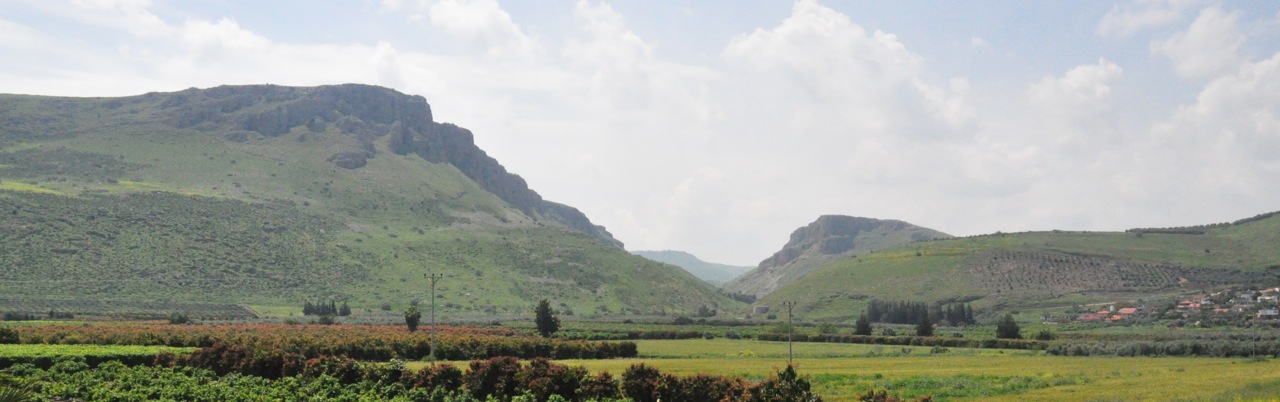
Rising majestically above the western shore of the Sea of Galilee (in Hebrew, Kinneret) are two sheer limestone and dolomite cliffs, facing each other. The Arbel stream flows in the valley between them past Migdal (the home town of Mary Magdalene). Part of a national park and nature reserve, it’s a great place to hike.

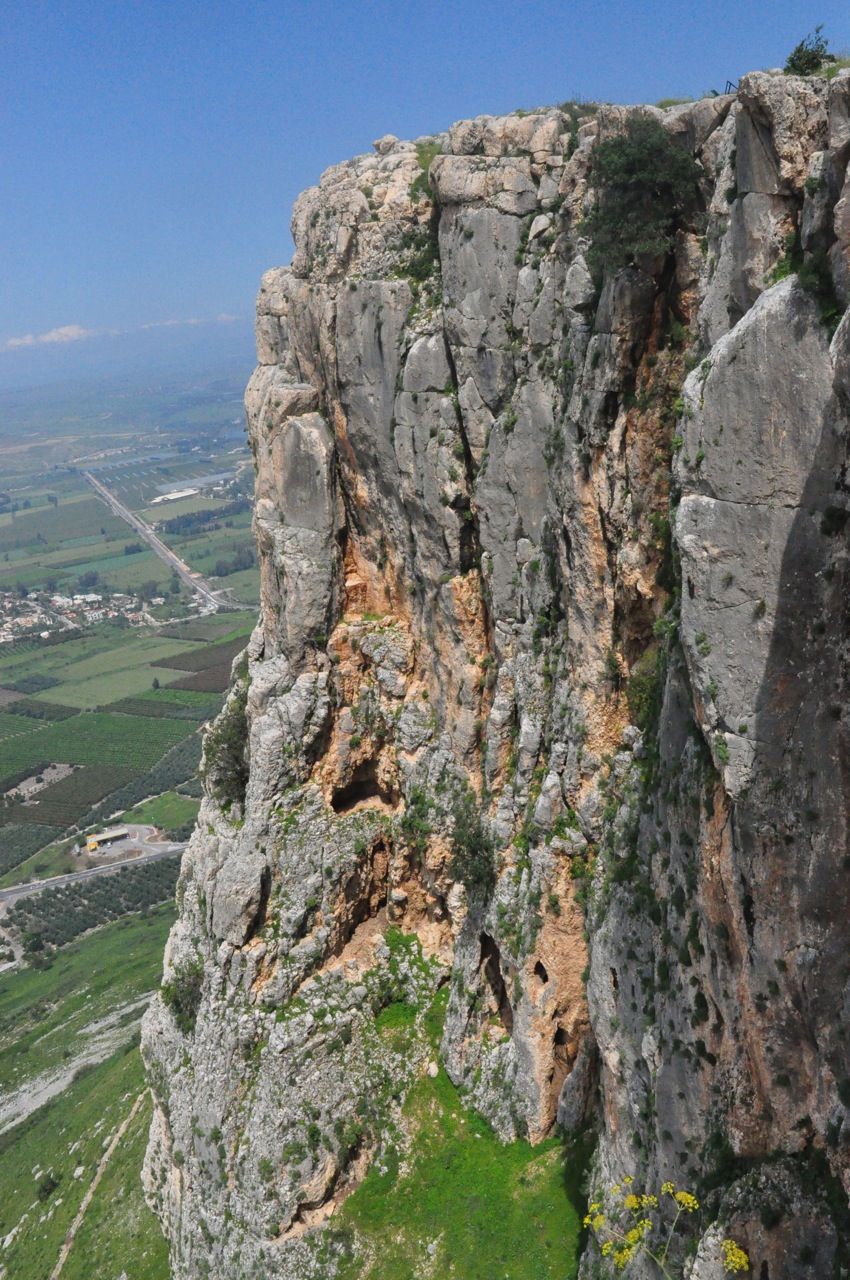
The higher mountain is Mount Arbel, 181 meters above sea level but since the Kinneret is the lowest freshwater lake in the world at 209 meters below sea level Arbel is actually 390 meters above the valley and lake below. The second mountain, north of the stream, is Mount Nitay (98 meters above sea level) but this part of the reserve is closed to visitors to protect the flora and fauna. Looking down over the cliff it is easy to forget that you are standing on a broad plateau and not flying over the valley.

As early as the Hasmonean period there was a town Arbel that overlooked the ancient road from Galilee to the town on the Kinneret. The sage Nittai of Arbela, one of the Tanaim is recorded in Mishna Avot 1,7 where he advises “Keep far from an evil neighbor and do not associate with the wicked and do not lose belief in retribution”. Josephus mentions Arbel when he describes the battle in 37BCE between Herod and Jewish rebels who barricaded themselves in the caves in the cliff. Because the access to the caves was by extremely narrow paths, Herod had soldiers lowered over the cliff in baskets to reach the caves. In the early first century CE, Jesus of Nazareth performed miracles at the foot of the Arbel, moving between Migdal and Capernaum with his followers.

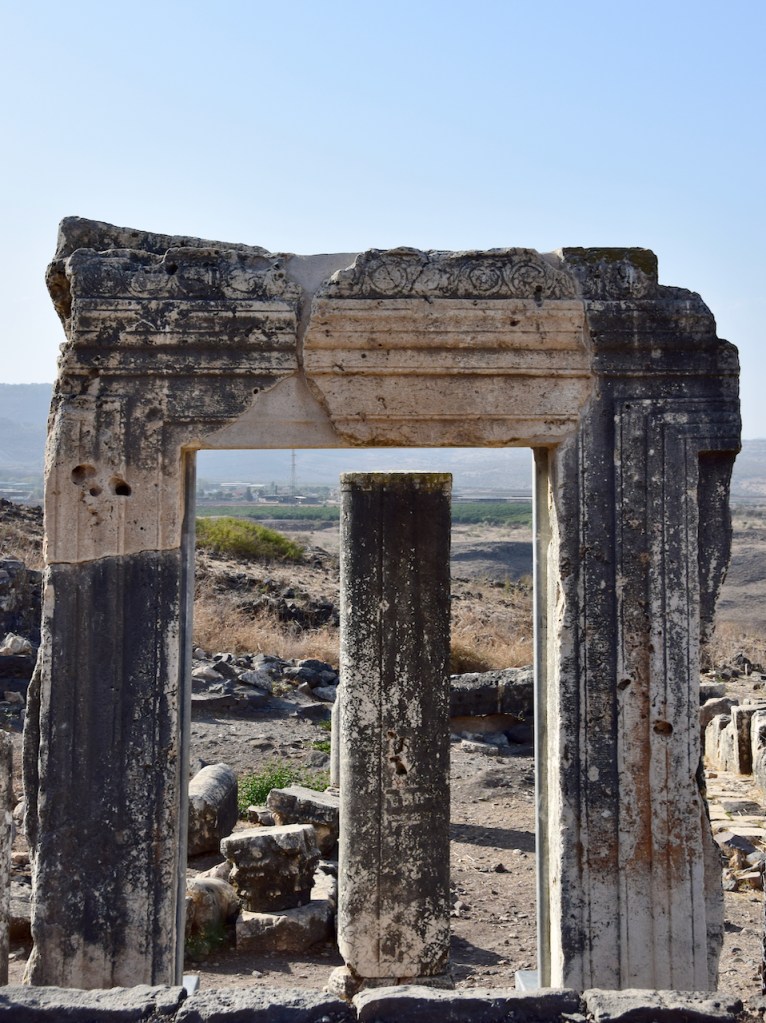
Outside the park, closer to Moshav Arbel are the remains of an ancient synagogue from the 4th century . It was first discovered in 1852 by the explorer and scholar Edward Robinson (who also recognized Herodium, Ein Gedi and Masada and after whom the arch at the the southern end of the Western Wall is named). Situated in the center of the village, it was built from large limestone blocks, in contrast to the other buildings which were of black basalt common to the region.

Drawing of Arbel synagogue by Leen Ritmeyer

The synagogue’s facade faced east which was rare for Galilean synagogues. The entranceway was cut out of a single large stone – three quarters of the frame remain in situ and was reconstructed in 1990.  The synagogue consisted of a main hall with three rows of columns topped by Corinthian capitals in the shape of a “U” that supported a second-story gallery. The hall was lined with stone benches and the floor was about 1.5 m lower than the threshold alluding to Psalm 130 “Out of the depths have I called you O Lord”.

The building seems to have been destroyed and rebuilt in the 6th century. At this time the orientation was changed – a doorway in the northern wall, a round niche in the southern wall facing Jerusalem for the Torah scroll and a platform for Torah reading were added. This synagogue was apparently destroyed by a fire in 749CE, conceivably resulting from the devastating earthquake that destroyed Bet Shean, Zippori, Sussita and other sites.

Related articles

Transfiguration on Mount Tabor

Mount Tabor’s distinctly rounded shape rises 575 meters above the eastern end of the Jezreel Plain and 11 km west of the Sea of Galilee making it easily recognizable. It is a sacred mountain that goes back at least to the second millennium BCE when there was a shrine for the worship of the Canaanite god Baal on the summit. In the 14th century Deborah chose Barak of the tribe of Napthali who gathered 10,000 men and descending from the mountain attacked and vanquished Sisera and his army (Judges 4:5). There was a military fort on top of the mountain during the Hasmonean period and the time of the Jewish Revolt, and likely in Jesus’ day as well. Tabor (along with Sartaba another distinctly shaped mountain rising above the Jordan valley) was one of the mountains where bonfires were lit to relay the beginning of the New Month from the Temple in Jerusalem to the Diaspora.

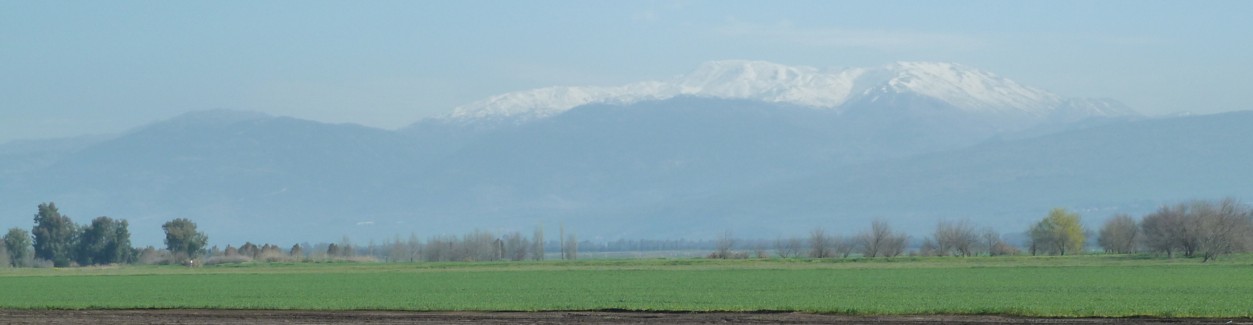
Early Church fathers considered Tabor to be the mountain on which Jesus was transfigured before his disciples, Peter, James, son of Zebedee and John the Apostle and was seen to converse with Moses and Elijah (recorded in the Gospels, Matthew 17:1-9, Mark 9:2-8, Luke 9:28-36). Other possible candidates are mountains nearer to Caesarea-Philippi, Mount Panium (Banias) and Mount Hermon. In Christian teaching, the Transfiguration is a pivotal moment, and the setting on the mountain is presented as the point where human nature meets God: the meeting place for the temporal and the eternal, with Jesus himself as the connecting point, acting as the bridge between Heaven and Earth.

The Anonymous Pilgrim of Piacenza wrote that he saw three basilicas on Mount Tabor in 570. The current church was built in 1924 by Barluzzi on the ruins of a Byzantine church from the fifth or sixth century and a Crusader church from the 12th century, which was built in honor of Tancred, Prince of Galilee, instrumental in capturing Jerusalem for the Crusaders in 1099. The Franciscan friars live next to the church in a monastery established in 1873. There is also a modest East Orthodox church built in 1862.

When archaeological excavations uncovered an ancient crypt with a stairway down to it and the remains of walls of the apse from earlier periods Barluzzi respectfully incorporated these into the new church. Barluzzi chose the west front of the church in Roman-Syrian style (decadent classical with a slightly eastern decoration) of the fourth to seventh centuries with an open arch headed narthex set flush between two towers leading to large bronze doors, designed by Tonnini, each weighing one and a half tons. The two towers allowed Barluzzi to include the remains of the Byzantine-Crusader chapels in the body of the church. In the southern tower are the bells, cast by Bassano del Grappa.

Inside the church has a split level plan with open views down to the barrel vaulted lower level, and upwards to the domed apse. The nave roof is higher on heavy timber trusses with clerestorey windows. The roof tiles and the windows are made of alabaster to let in light. The ornamentation of the central nave is simple, with two friezes, one of stone engraving that follows the line of the arches and the other in a straight line of mosaic under the windows.

Madden described the interior as “a striking vision, a wonderful transfiguration of stone, marble and mosaic [by Umberto Noni]. The central nave gives us a full view of the eastern apse. It has two levels, the upper level commemorating the divine nature of Christ and the lower recalling different manifestations of his humanity.”

The aisles are narrower than the nave and like it end in elevated apses. In the south apse the altar is consecrated to St Francis. The two bronze statues with the sanctuary lamps and the candlesticks are also the work of Tonnini.

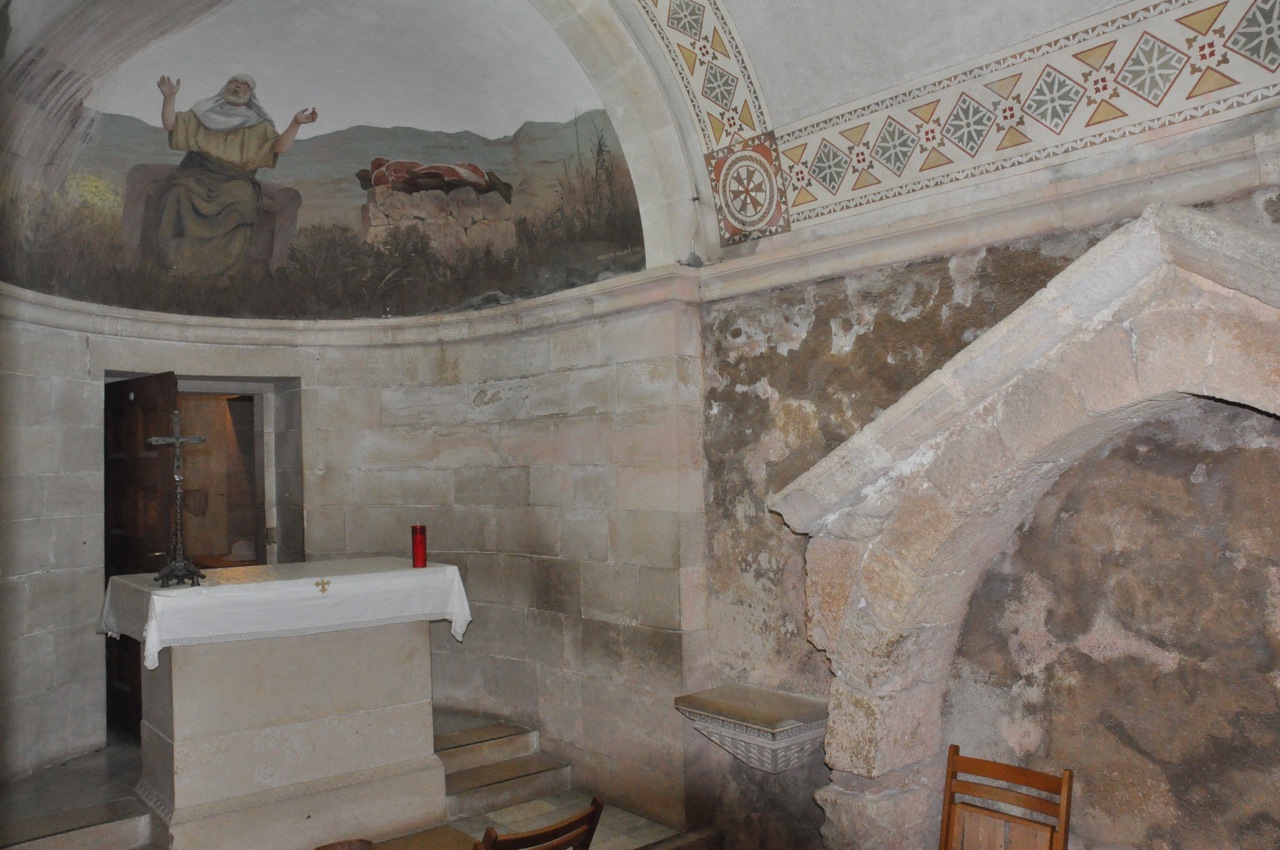
The tower chapels have eastern apses and therefore are entered through doors in their apses. In the southern chapel the apse is decorated with a painting of the prophet Elijah in his confrontaition with the false prophets of Ba’al on the Carmel. On the floor is the original Byzantine mosaic floor with white, black and red tesserae, which was restored once in the Crusader period and which has been taken up and recomposed partially in a new location. The crosses portrayed in the mosaic floor indicate that it must have been laid before 422, when the Emperor Theodosius II prohibited the use of crosses in pavement mosaics out of respect.

The northern chapel, dedicated to Moses, has a modern mosaic floor. In the apse is a painting: Moses holds the Tablets of the Law in his left hand; behind him there is Sinai and on the sides a large burning bush and a rock with water flowing from it (Exodus 17:6).

To conclude with Madden’s words, “Within the building itself we are immediately struck by the skill of an architect who could seize on the essentials of a site a situation and a mystery, express its meaning in stone, mosaic and bronze, and illumine it all through alabaster with the light of the sun itself. It is small wonder that many people think the basilica to be the finest in the Holy Land.”

Bahai Shrine of the Báb

This morning the golden dome above the Shrine of the Báb was unveiled to the delight of viewers and this tour guide and shone with a new splendor above the city of Haifa.

Photo credit: Baha’i World Centre photo. All rights reserved.

The Báb, the precursor to the Bahá’u’lláh, was executed in 1850 in Iran and his remains were later laid to rest on Mount Carmel. The precise location was designated by Bahá’u’lláh himself to his eldest son, `Abdu’l-Bahá, in 1891. `Abdu’l-Bahá planned the octagonal structure crowned by a dome set on an 18 windowed drum, which was designed and completed by his grandson, Shoghi Effendi.

The architect was William Sutherland Maxwell, a Canadian Bahá’í who was a Beaux-Arts architect and the father-in-law of Shoghi Effendi. Maxwell’s design of the Rose Baveno granite colonnade, Oriental-style Chiampo stone arches, and golden dome is meant to harmonize Eastern and Western proportions and style. Some remaining aspects of the dome’s structural engineering were designed by Professor H. Neumann of Haifa’s Technion University. The Bahai gardens and Shrine of the Báb is the second holiest site for Bahai, after Bahji, the Shrine of the Bahá’u’lláh just north of  Akko.

In 2008 an extensive project began to restore and conserve the interior and exterior stonework of the original 1909 structure, as well as measures to strengthen the Shrine against earthquakes. An entirely new retrofit design – combining concrete, steel and carbon fibre wrap technology – was applied to the building. More than 120 rock anchors were fixed into the mountain behind newly fortified retaining walls. Renovations were completed at a total cost of $6.7 million.

In the last stage, 12,000 gold tiles, of 120 different shapes and sizes, had to be fitted like a large puzzle onto the dome. When it was found that the old tiles could not be repaired a Portuguese firm was contracted to produce new tiles using leading-edge technology from pure porcelain, covered with layers of glazing and gold solution, and finished with a highly durable final coating. “The company had never done anything like this before,” said Mr. Samadi, project manager. “They are renowned for museum-quality porcelain artifacts. But the result is perfect. Not only are the tiles beautiful, they are five to six times more abrasion-resistant than the originals.”

An expert mason and tile setter from New Zealand, Bruce Hancock, was flown in to supervise the tile work. “We had to learn as we went,” Mr. Hancock said. “Ordinarily, you lay tiles that are square. These tiles are all shapes and sizes. Every row is curved. Initially, I was concerned how we were going to create that curve, but these tiles were designed and detailed in such a way that they just did it themselves. They seemed to have a life of their own. If we did the right thing – getting the two corners right – they did the right thing. It was just amazing.”

The Bahai Universal House of Justice released a statement that the dome of the Shrine of the Bab “now shines in the plenitude of its splendour.” Bahá’ís consider the Shrine of the Báb and the surrounding gardens to be a “gift to humanity.”

For the complete press release and additional photos see http://news.bahai.org/story/816