Category Archives: Architecture

Bethesda Pool and Church of Santa Anna

Near Lion’s Gate is a large wooden door that gives access to the White Fathers’ compound and one of my favorite sites in Jerusalem’s Old City – Bethesda pools and the Church of Santa Anna.

Mary (mother of Jesus) was born to Anna and Joachim who lived near the Bethesda pools.  Because Jerusalem is on the edge of the Judean desert water has always been crucial for the residents of the city and the first pool was built in the 8th century BCE, when a dam was built across the valley, collecting rain runoff in a reservoir (40×50 meters), known as the Upper Pool. A sluice-gate in the dam allowed the water height to be controlled, and a rock-cut channel brought the water into the city. Around 200 BCE, the channel was enclosed, and a second pool (50×60 meters) was added on the south side of the dam.

Bethesda pool

In the 1st century BC, natural caves to the east of the two pools were turned into small baths, as part of an asclepieion, a healing temple. As it was outside the city walls, scholars think it likely that the Roman garrison of the nearby Antonia Fortress built the site as they would have been able to protect it. According to Christian tradition the site is one of two places in Jerusalem where Jesus performed a miracle, healing a paralytic of 38 years (John 5:1-15).

In the mid 1st century CE, Herod Agrippa built the third wall enclosing the northern area of the city and bringing the asclepieion within the walled city. When Hadrian rebuilt Jerusalem as Aelia Capitolina, he placed a roadway along the dam, and expanded the asclepieion into a large temple to Asclepius and Serapis. In the Byzantine period, 5th century, a large church was built on the dike, requiring support of two rows of arches.

After the Crusader conquest of Jerusalem in 1099, the Byzantine church, destroyed by the Persians in 614 CE, rebuilt by patriarch Modestus and destroyed in 1009 by the Fatimid Caliph Al-Hakim, was rebuilt on a smaller scale. A new Romanesque church, named for Saint Anne was completed in 1138 CE by Arda, widow of Baldwin I, the first Crusader King of Jerusalem, built over the site of a grotto believed by the Crusaders to be the birthplace of Mary. After the conquest of Jerusalem by Saladin it was transformed into a school for Islamic jurisprudence. Over time, the buildings fell into ruin. In 1856, the Ottomans, in gratitude for French support during the Crimean War gave the site to France. It was subsequently restored, but the majority of what we see today is original.

Santa Anna interiorThe three-aisled basilica incorporates cross-vaulted ceilings and columns, clean lines and an unadorned interior. Because of the fine stonework and large volume of the church the acoustics are amazing. The altar is by the French sculptor Philippe Kaeppelin – on the front of the altar are depicted the Nativity, the Descent from the Cross and the Annunciation; on the ends the teaching of Mary by her mother and her presentation in the Temple.

Kaeppelin altar

Tzfat Synagogues

Visitors who are impressed with the architecture and style of the churches in the Holy Land often ask to see similar synagogues. When in Tzfat it’s worth visiting some of the synagogues.

The Ari Ashkenazi Synagogue

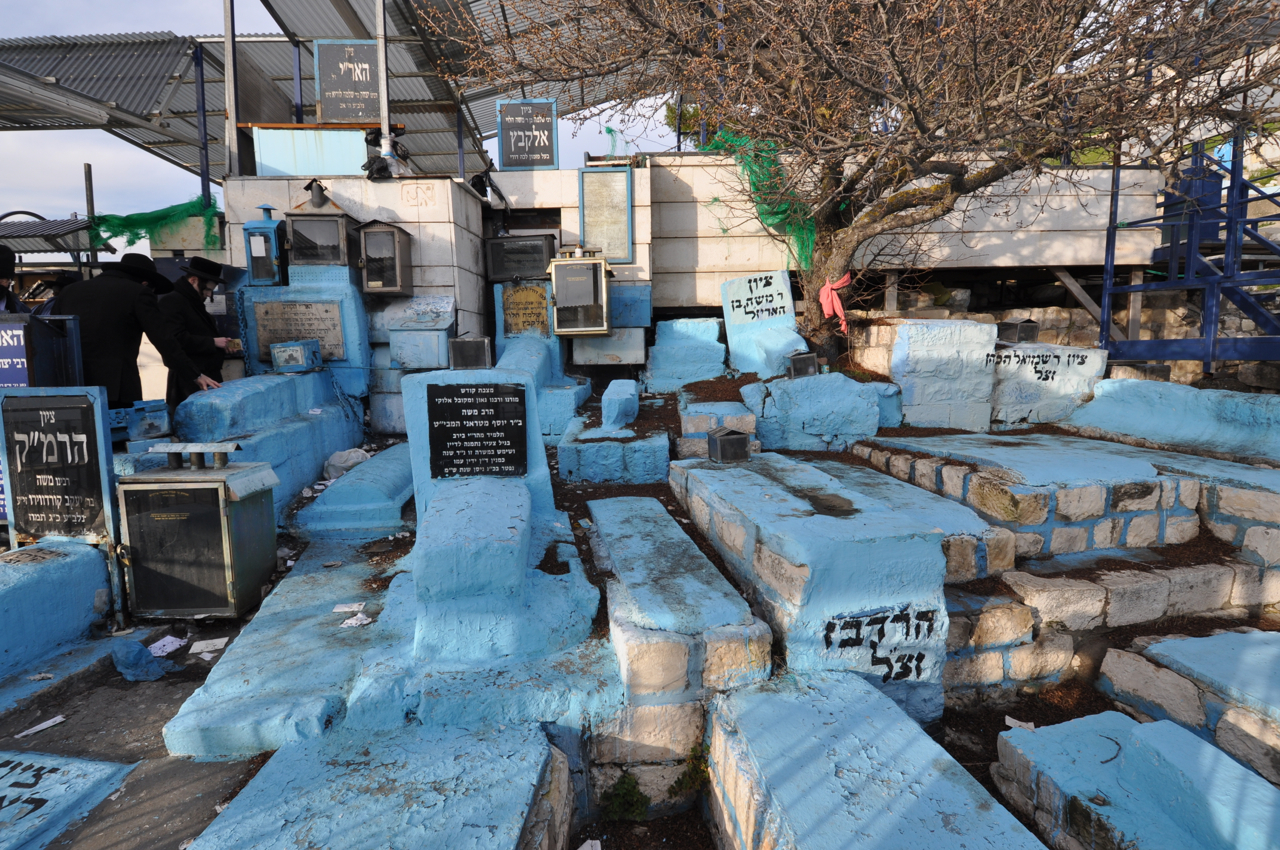
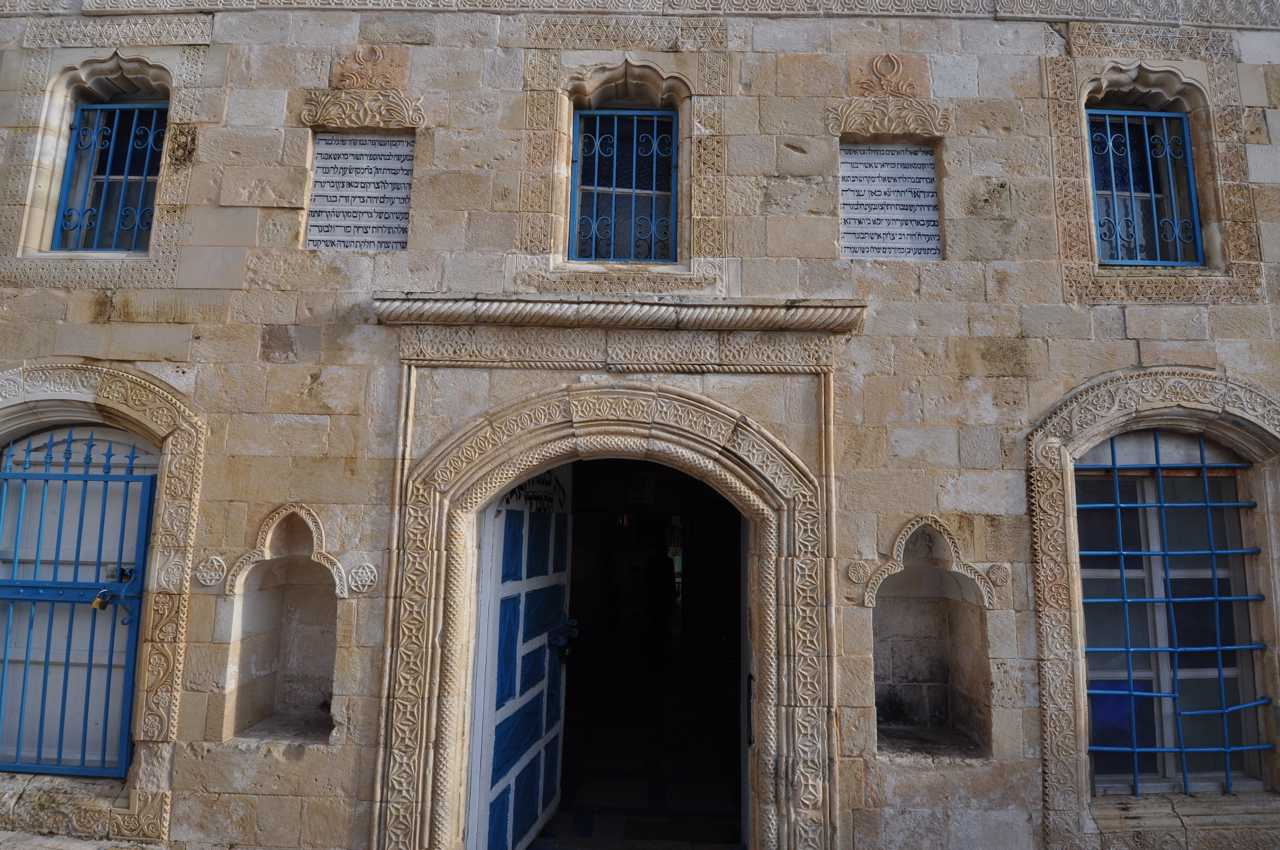
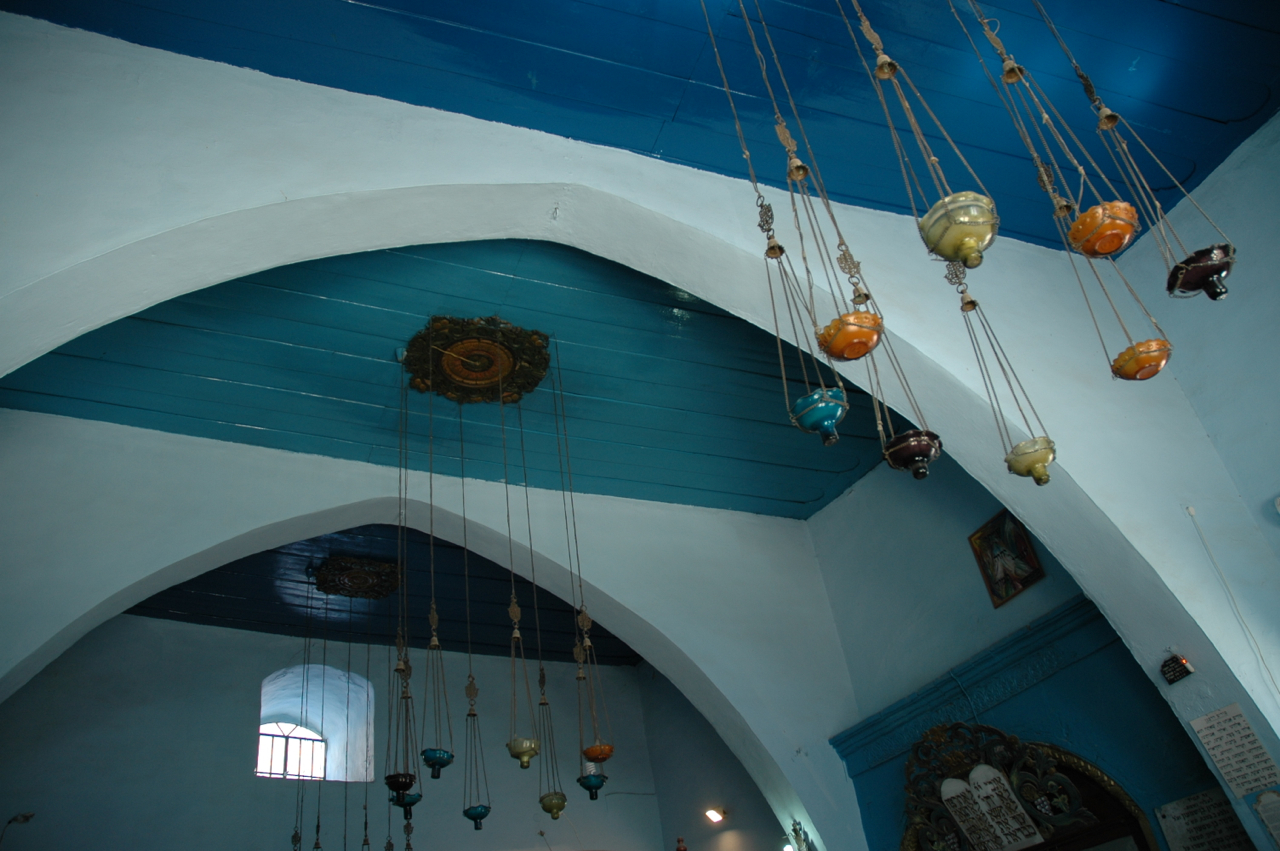
The synagogue was built in the sixteenth century on the northern edge of the Sephardic neighborhood by Spanish exiles who had emigrated from Gerigos, Greece. Kabbalists, mostly followers of Rabbi Moshe Cordovero frequented the synagogue and in 1570 Rabbi Isaac Luria (known by his acronym “the Ari”) joined them – for a short two years until his death. On the Eve of Sabbath, they walked to a nearby field, the Hakal Tapuchin, (apple orchard) to welcome the Sabbath bride to the melody of Lecha Dodi written by Rabbi Shlomo Alkabetz. Cordovero, the Ari, Alkabetz and other kabbalists are buried in the cemetery, their graves covered in bright, sky blue paint.

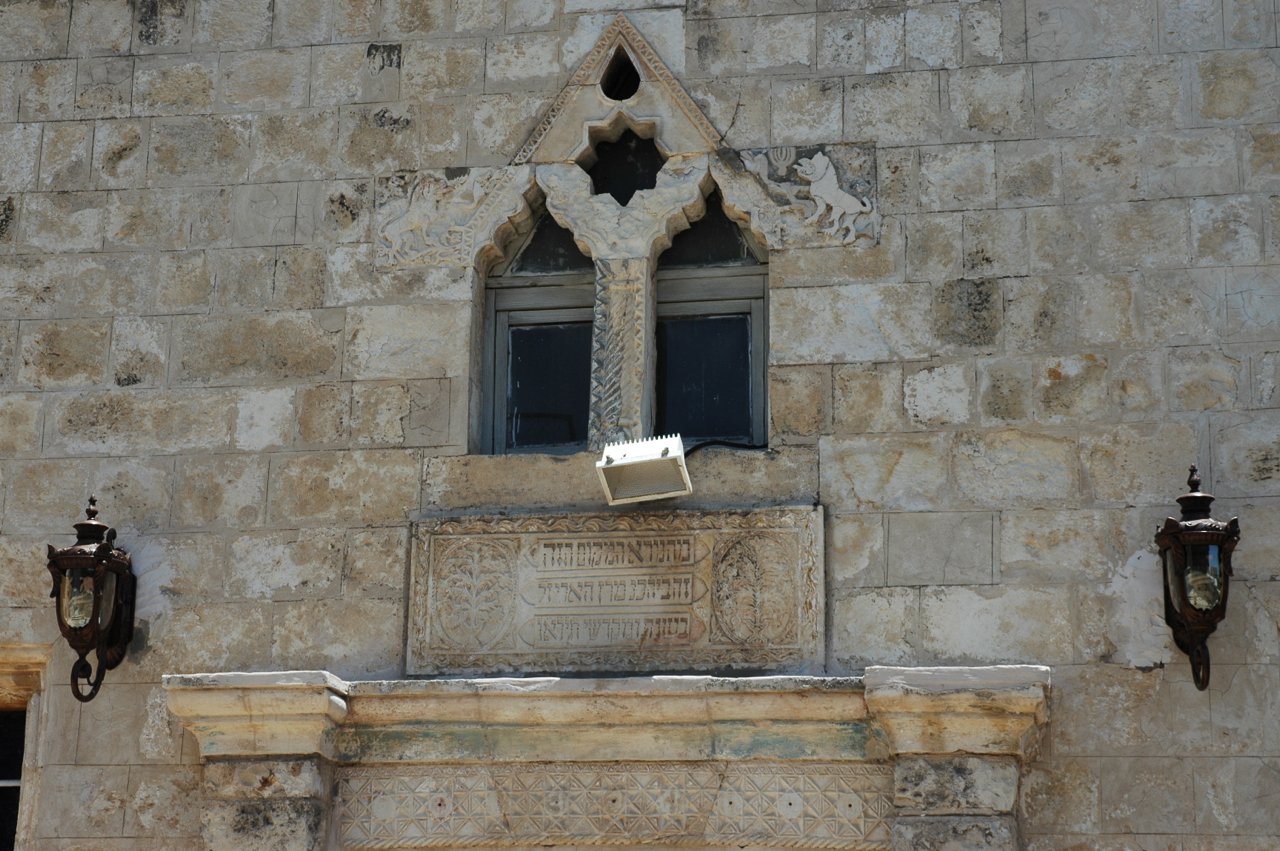
Tzfat cemeteryIn the eighteenth century, a large group of Hasidim from Europe arrived and the synagogue began to be called “the Ashkenazi Ari Synagogue.” It was destroyed in the earthquake of 1837, and rebuilt in 1857. Notice the inscription in Hebrew that appears above the entrance, which in Hebrew numerology is equivalent to “and My Temple shalt thou revere”.

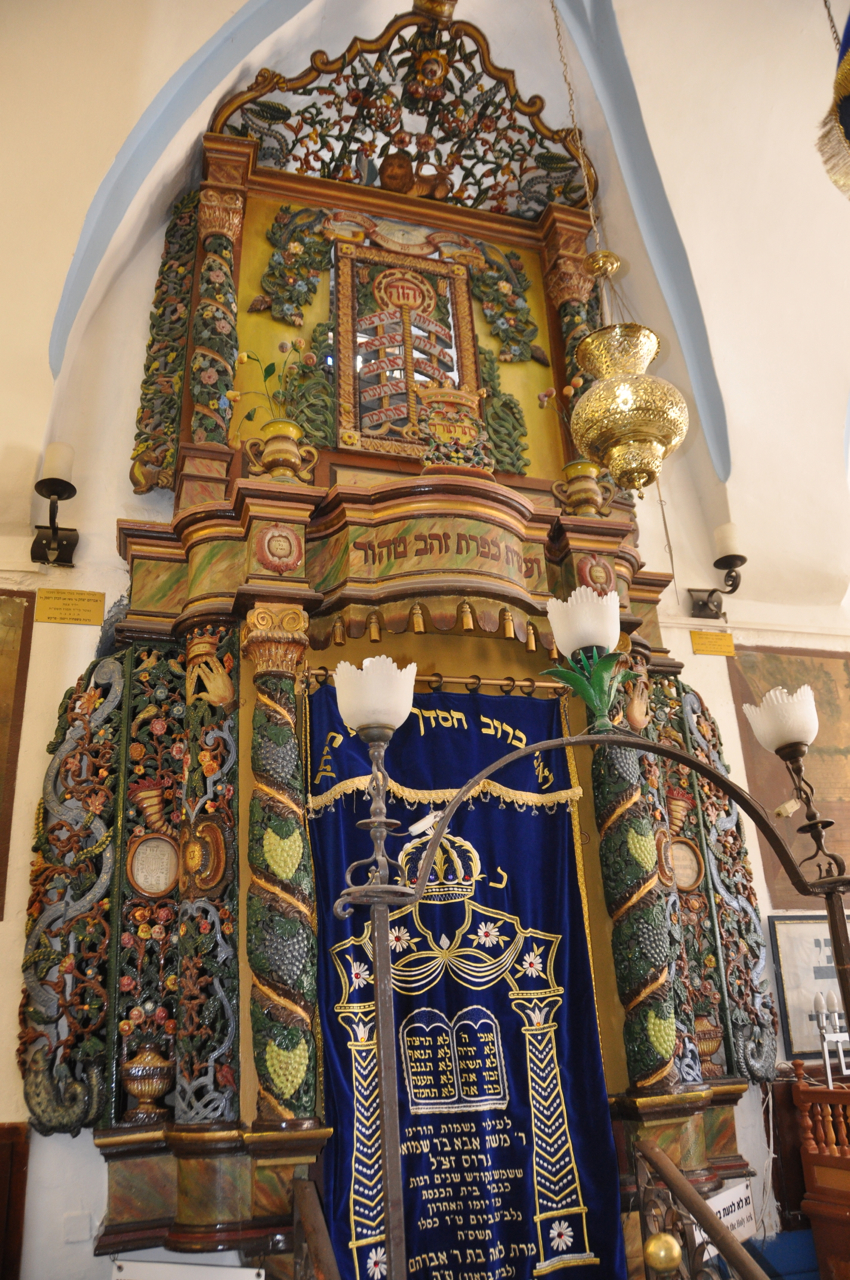
Ari synagogueThe Holy Ark was carved from olive wood by a craftsman from Galicia, Poland, in the style of the synagogues of Eastern Europe. The craftsman was a non-Jew who was unaware of Judaism’s adherence to the second commandment against graven images. At the top of the ark he placed a human face – this was transformed into an anthropomorphic image of a lion, alluding to the acronym Ari, which means lion.

Ark in Ari synagogue

The Ari Sephardic Synagogue

Down by the cemetery there is another synagogue, Eliyahu HaNavi, the oldest synagogue in Safed that historical sources tell us existed as early as 1522 and was used by North African Jews. The Ari frequently prayed in this synagogue, preferring this location over others because of the view of Mt. Meron and the tomb of Rabbi Shimon Bar Yohai. The Ari liked to sit in a little alcove on the eastern side of the synagogue studying Kabbalah, and that while he was absorbed in his studies, the prophet Elijah appeared to him.

Ari Sephardic synagogueMost of the structure was destroyed in the massive earthquakes that struck Tzfat in 1759 and 1837. In 1840, the Italian Jewish philanthropist Yitzhak Guetta donated money for the renovation of the synagogue.

Alsheikh synagogue

The only synagogue in Tzfat which was not destroyed by either the 1759 or the 1837 earthquake is the Alsheich synagogue named after Rabbi Moshe Alsheich, one of the foremost kabbalists of his day. He gave weekly sermons on the Torah portion of the week at the synagogue with kabbalistic commentaries to which the Ari and Rabbi Yosef Karo attended.

Alsheich synagogueThe Alsheich oversaw the construction of the synagogue which was erected in the style of 16th century Sephardic synagogues but had no women’s gallery. After 1759, the synagogue was renovated and the workmen inserted beams and peaked arches in the style of the Bukharan Jews of Samarkand which enabled it to withstand the devastating earthquake of 1837. One of the most valued items in the synagogue is the Torah scroll cover inscribed with the year 1434.

Abuhav synagogue

The synagogue is named after the fifteenth century kabbalist, Rabbi Isaac Abuhav, who is considered one of the great sages of Castile, Spain.

Tradition states that Abuhav, who never left Spain, designed the synagogue and his disciples erected the building when they arrived in the 1490s after their expulsion from Spain. Another legend claims that Abuhav came to Rabbi Ohana, a kabbalist from Fez, Morocco in a dream and asked for his help to transport the synagogue miraculously from Spain to Safed. The kabbalists gathered together at midnight in the House of Study, after fasting and immersing in the mikve (ritual bath) – in Toledo, a whirlwind with frightening power ripped up the synagogue from its foundations and set it down in an empty field in Tzfat.

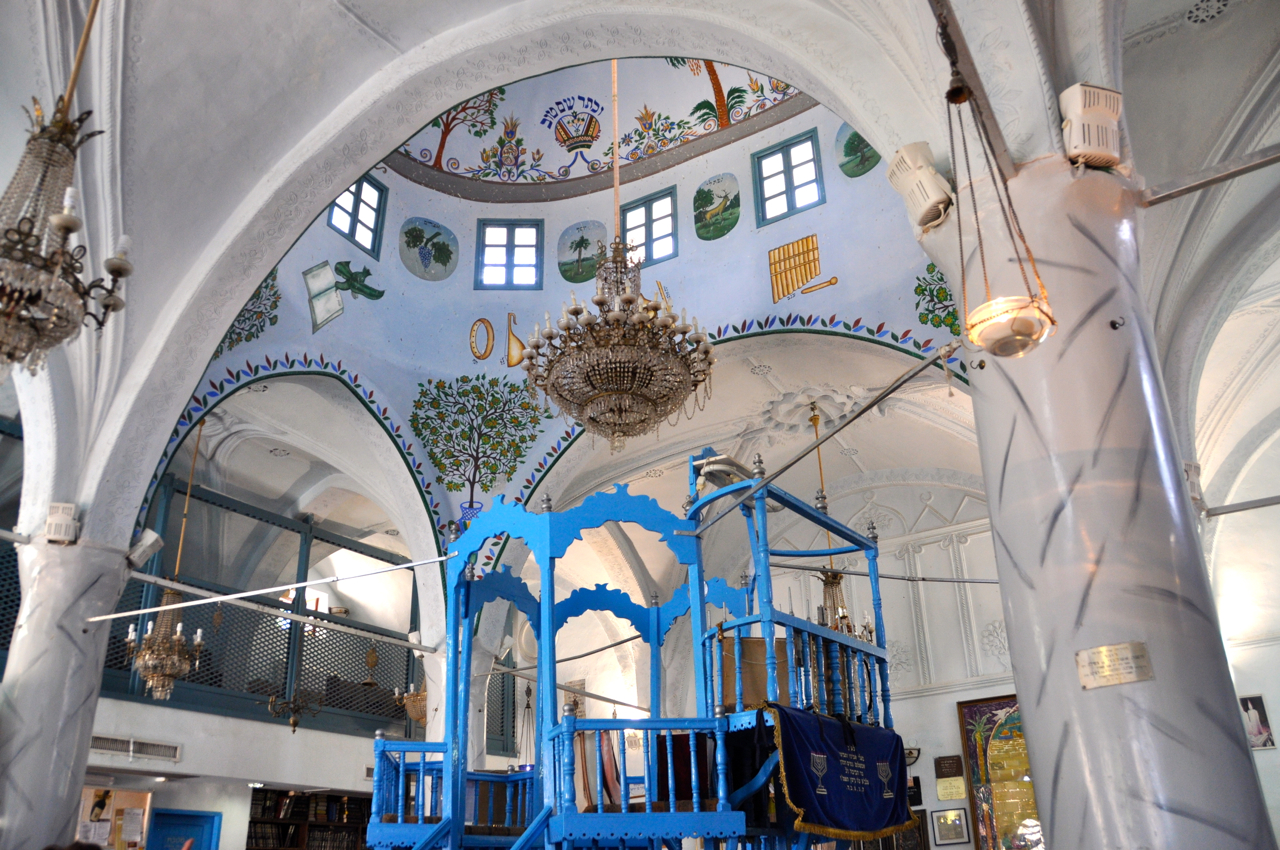
Abuhav synagogueThe synagogue has three Arks on its southern wall, the only wall left standing in the 1837 earthquake. The bima is in the center and the benches for the congregation are arranged around it, as was customary. The interior of the synagogue dome is decorated with paintings of musical instruments that were used in the Temple in Jerusalem. The crowns mentioned in Pirkei Avot 4:13 represent the crowns of Torah, the priesthood, royalty, “a good name” and a crown unique to Tzfat, the crown of redemption. In keeping with the numerological tradition of Kabbalah, the design of the synagogue has numerical significance: 1 bima, 3 Arks, 4 central columns that represent earth, water, air and fire, 6 steps up to the bima, 10 windows in the dome represent the Ten Commandments and there are pictures symbolizing the 12 tribes of Israel.

In the rightmost ark, is a Torah scroll that is 650 years old, written by Rabbi Abuhav, conceivably the oldest Torah scroll still in use. It is only taken out for reading three times a year: Rosh Hashanah, Yom Kippur and Shavuot. Among Abuhav’s pupils was Rabbi Ya’acov Beirav, who later moved to Tzfat and became one of its foremost sages. It may have been Beirav who brought the Torah scroll to Tzfat. Another Torah scroll in the Abuhav Synagogue is the scroll of Rabbi Ohana.

Crusader Jerusalem

A reader asked me to post something about the Crusaders in Jerusalem. I am happy to and also to lead tours focussing on the Crusader period.

Raymond of Aguilers, who wrote a chronicle of the First Crusade (1096–1099), relates that on the morning of June 7, 1099, the Crusaders reached the summit of Nebi Samuel, from which they saw Jerusalem for the first time. The elated Crusaders fell to the ground and wept with joy, calling it Mons Gaudi, mount of joy. The same day they reached the walls of Jerusalem.

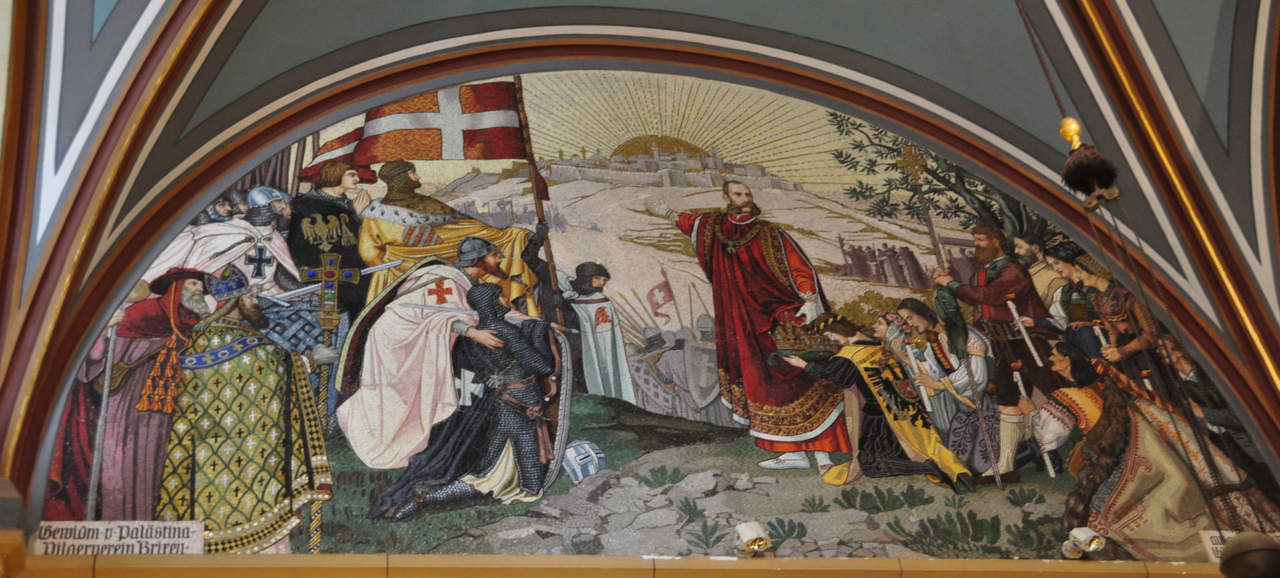
Austrian Emperor Franz Joseph as Crusader

With insufficient troops and supplies and rumor of a Fatimid advance, the Crusaders could not besiege the city for long but had to organize a direct assault.  After about a month they were able to get skilled builders and wood by cannibalizing Genoan ships that had arrived at Jaffa port for siege towers. This enabled the Crusaders to breach the walls in 3 places on July 15th. The Crusaders massacred most of the Muslims and Jews and evicted the remainder leaving Jerusalem almost uninhabited until Christians could be encouraged to settle there. On 22 July, a council was held in the Church of the Holy Sepulcher that chose Godfrey as the princeps for the newly created Kingdom of Jerusalem which became an important Christian center.

Crusader sites in Jerusalem

In 1160 the Crusaders added a glacis to the tower at the Citadel and dug a moat around it.

The Roman Cardo was subdivided into 3 covered markets: Vegetable or Spice market, Market of Malcuisinat and Covered market – this property was donated to the convent at Santa Anna. Nearby along David St. today, was the poultry market selling eggs, milk, cheese.

The Crusaders built a church in Kidron valley that contained the Tomb to the VIrgin Mary  and Queen Melisende was buried there. Beside it was Gethsemane and a Barluzzi church in 1920s was built on earlier Byzantine and Crusader ruins.

The remains of the Church of Mary of Latina can be seen in part of the German Lutheran Church of Redeemer that was dedicated in 1898 during the German Kaiser’s visit.

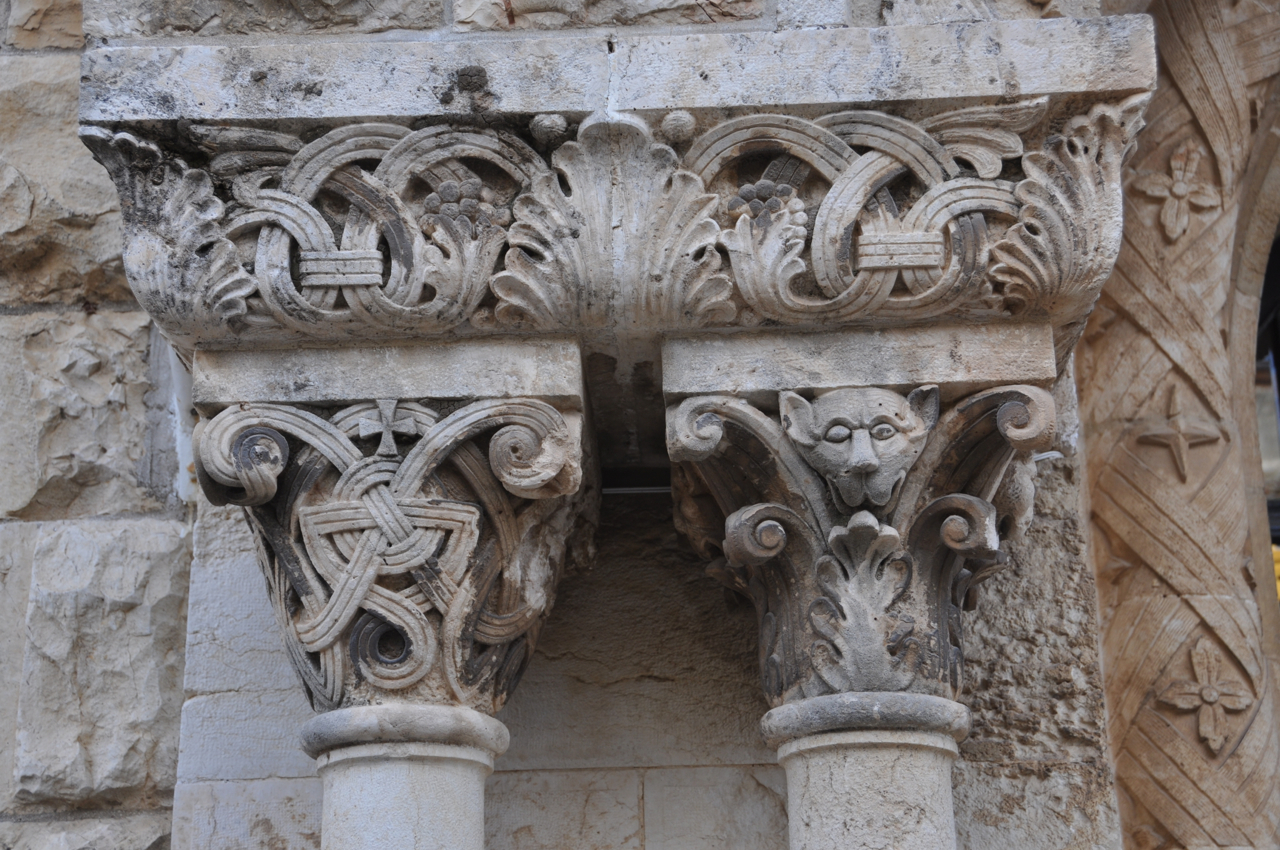
Capitals outside German Lutheran church

Close by is the Church of Holy Sepulcher, rebuilt by the Crusaders and dedicated in 1149. The sculpted marble panels on lintels over the two main doors, in Romanesque style, are now in the Rockefeller museum.

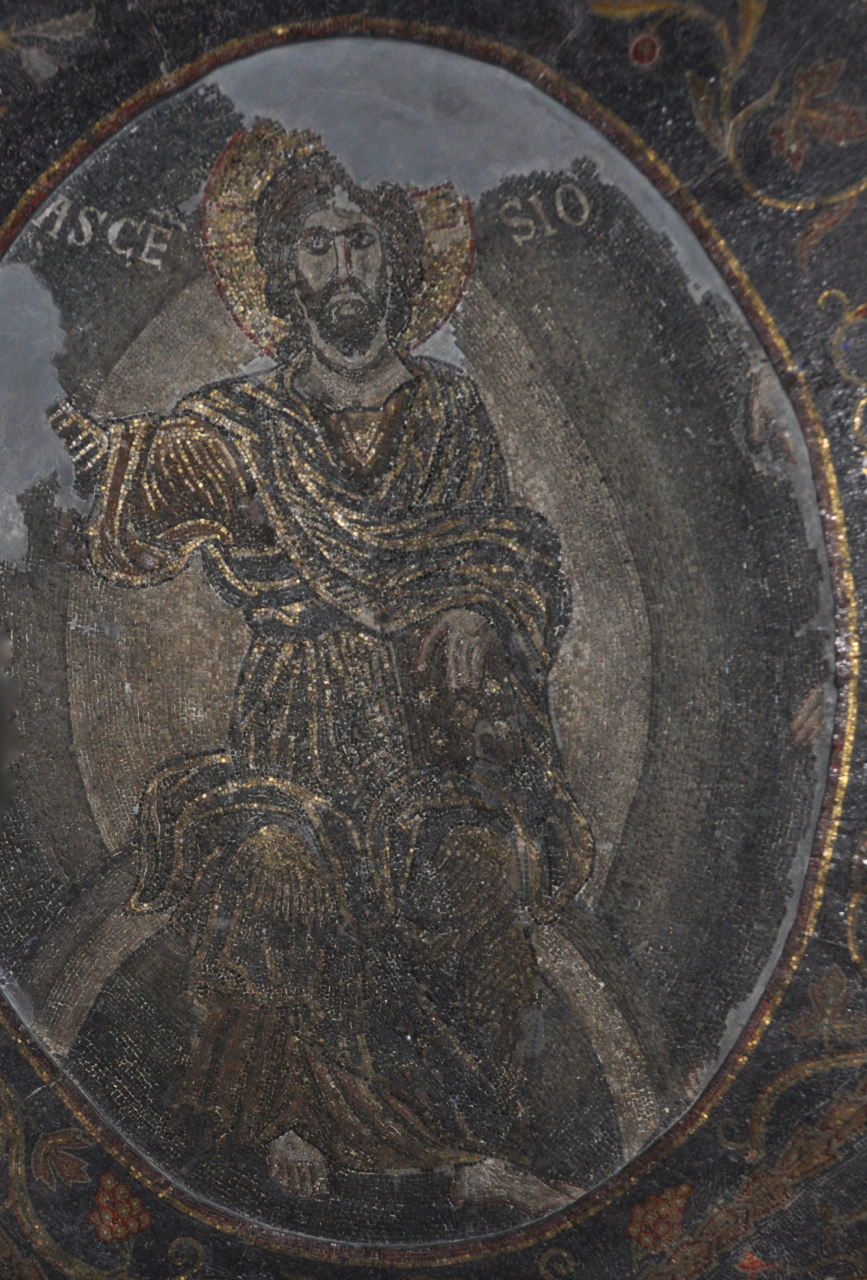
Ascension of Jesus Crusader mosaicOn the ceiling of the Catholic Chapel of the Nailing to the Cross (11th station) is a 12th-century medallion of the Ascension of Jesus — the only surviving Crusader mosaic in the building. Small geometric-shaped pieces of marble inlaid in the floor is a style known as Cosmati or Cosmatesque a traditional technique from the Crusader period though it was done when the chapel was renovated in 1937 by Barluzzi.

There are Hospitaler sites in the Muristan and German knights in the Jewish quarter, remains of a hospice, hospital and church, St. Mary of Germans.

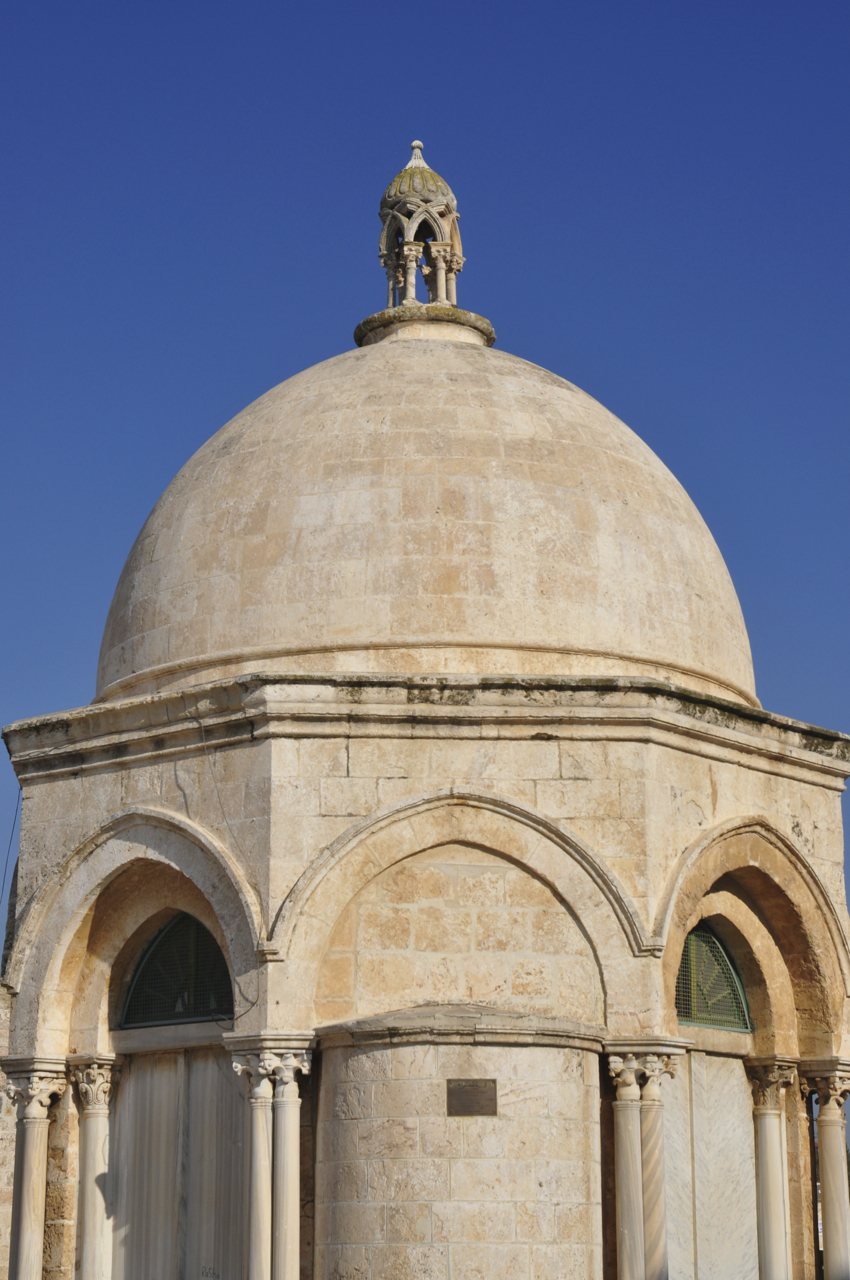
Up on the Haram el-Sharif, the Knights Templar, used the Al Dome of AscensionAqsa mosque, called Templum Solomonis by the Crusaders, and the underground arches of Solomon’s stables. The Dome of the Rock functioned as a church, Templum Domini. A short distance to the northwest, is the Dome of the Ascension, which served as its baptistery. The Dome of the Chain to the east was a Christian chapel to St. James.

If you have the chance, visit the Temple Mount Sifting Project to try some hands-on archaeology and take the opportunity to see artifacts like arrowheads, coins and relics from the Crusader period.

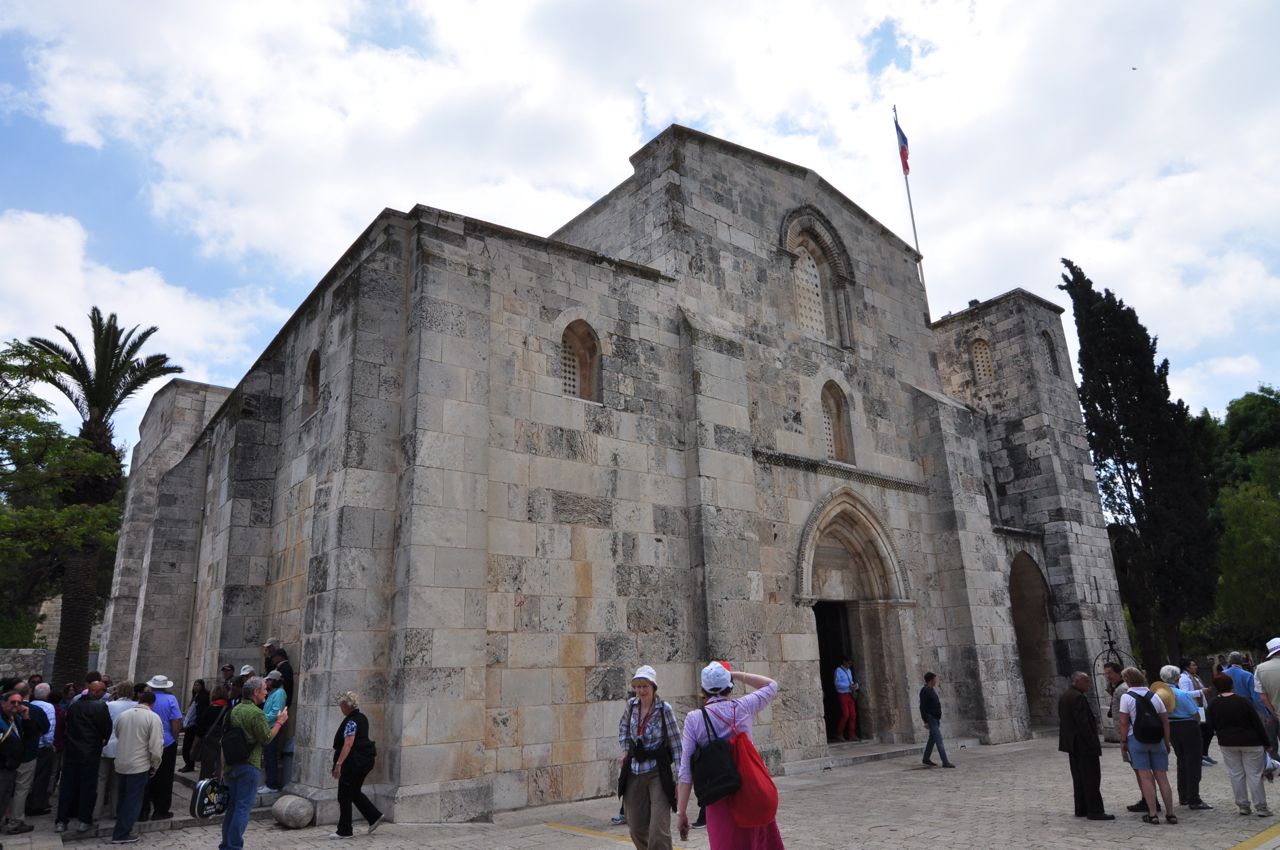
At Bethesda Pools is the ruins of a Crusader chapel, Mary of Bethesda, built on the ruins of a much larger Byzantine church from the 5th century named for St. Mary (Church of the Probatica) and the Church of Santa Anna, one of the most exquisite examples of Crusader architecture in the country.

Santa Anna

On Mount Zion, the German Dormition Abbey was built on the ruins of the Crusader church of St Mary of Mount Zion which includes an upstairs room which can be visited today, the Coenaculum or Room of the Last Supper.

The Crusaders built many buildings which affected the city’s image, adding a Christian flavor to the 450 year old Muslim city and many of these changes can still be seen in the Old City today.

Israel Roundup

ARTIFAX magazine and The Book & The Spade radio program have published the Top Ten Discoveries in Biblical Archaeology in 2012. At #3 is a First Temple period cistern with a 250 cubic meter capacity that was discovered by chance during the ongoing clearing of the drainage channel near Robinson’s arch. Press release at http://www.antiquities.org.il/article_Item_eng.asp?sec_id=25&subj_id=240&id=1958&module_id=#as

Photo credit: Courtesy of the Israel Antiquities Authority/Vladimir Naykhin

Photo credit: Courtesy of the Israel Antiquities Authority/Vladimir Naykhin

Found while sifting material from City of David, at #4 is a fiscal bulla, a clay seal impression with three lines of script, related to the taxing of shipments at the time of King Hezekiah, the earliest mention of Bethelehem. Found while sifting material from drainage channel near Robinson’s arch, at #5 a personal seal with the name Matanyahu inscribed on it dated to the end of the First Temple period, see https://israeltours.wordpress.com/2012/05/03/first-temple-period-seal/

Jewish National Fund (JNF) has published a map of Israel with 110 “great old” trees marked. One example, #91, a Common Oak, called the “Lone Tree” symbolizing the Gush Etzion bloc south of Jerusalem that has a height of 10 meters, trunk circumference of 3.5 meters and is estimated to be 500 years old. I do a tour that includes the moving audio-visual presentation on the history of the Gush at Kibbutz Kfar Etzion, gourmet lunch at Gavna in the forest with a view all the way to the Mediterranean and a tour of the Lone Tree microbrewery.

Lone Oak

Herod the Great: The King’s Final Journey exhibit at the Israel Museum is an exceptional opportunity to encounter the material opus of Herod the Great – his architecture and aesthetics, and the work of his chief archaeologist, Professor Ehud Netzer. Evidence of Herod, the meaning, struggles, and accomplishments of his life beckon beyond the exhibit halls, to the sites where he fought, ruled, dreamed, and built – Herodium, Masada, CyprosSebasteCaesarea, Banias and Omrit

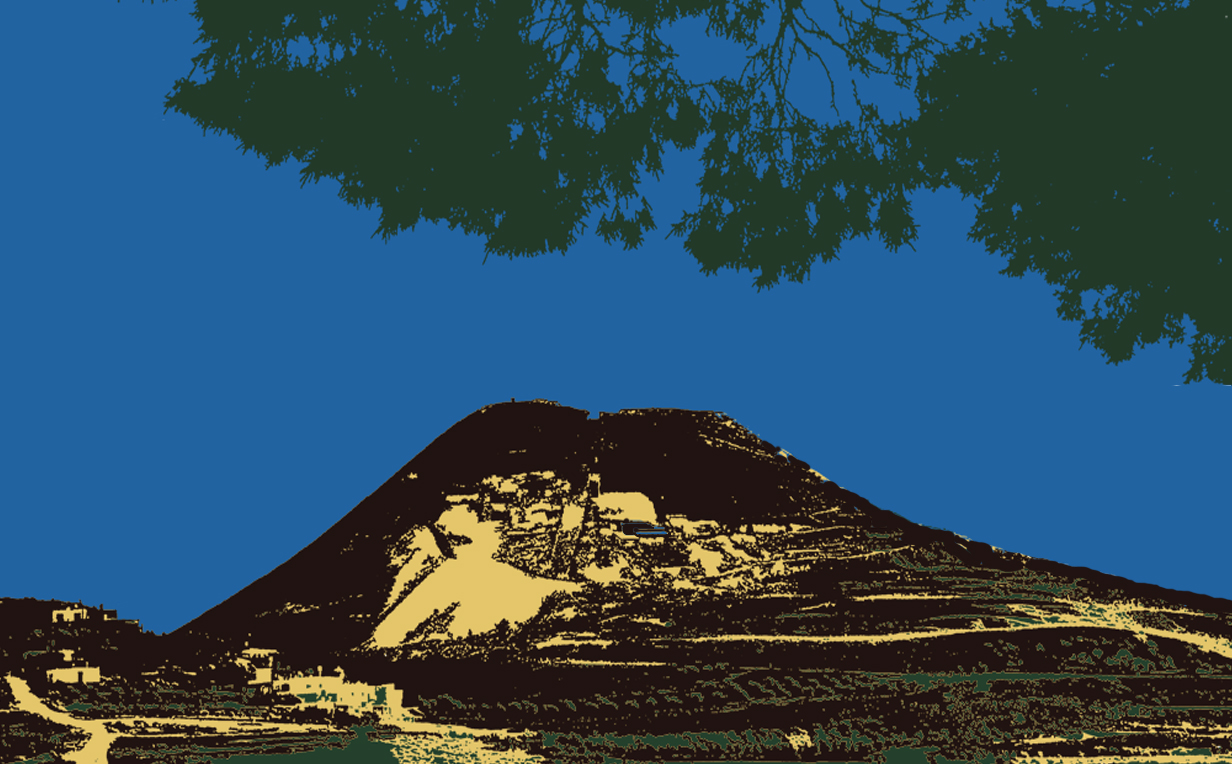
Herodium-4colourFor those who will be in Israel, I am leading in-depth full-day tours of Herodium and the Israel Museum’s Herod exhibit, for details see https://israeltours.wordpress.com/herod-the-great-tour

For those who will not be able to visit Israel, I posted a few articles with photos of the exhibit.
Here are the links to check for photos:

The Israel museum has published a 277 page hardcover catalog of the exhibit. You can order a copy by sending an email to shop at imj.org.il
ARIEL has released volume 201-200 Art and Architecture in Jerusalem and Israel in the Second Temple Period (in Hebrew) in memory of Prof. Ehud Netzer.

From the pantry at Herod’s palace-fortress at Masada, amphorae – large clay jars that held imported delicacies – attest to the luxury and sophistication of Herod’s palate: apples, honey, fine wine, and garum, a savory Roman fish sauce. One amphora bears an inscription of Herod’s name in Latin and Greek. For more about garum, https://israeltours.wordpress.com/2010/11/25/food-discoveries-masada-garum/

Film documentary: Volunteers with military experience, many from America, came to Israel around 1947 to help the fledgling Jewish state. Their acronym, Mahal (MH”L}, stands for מתנדבי חוץ לארץ. The 3 large Hebrew letters, מח’’לֹ, stand as a monument at Sha’ar Hagai, on the road to Jerusalem. Playmount Productions has released a sample from their upcoming documentary Above and Beyond: The Birth of the Israeli Air Force.

Emek Habacha project: Estimated at €250 million to install 50 130 meter tall (height of the Azrielli Towers in Tel Aviv) wind turbines able to produce 120 megawatts has received approval. These will replace the 10 wind turbines that produce 6 megawatts at Tel Asania. I blogged about the old wind turbines in May 2011 at https://israeltours.wordpress.com/2011/05/02/wind-turbines-on-golan-trail/

Herod – Design and Realpolitik

The New York Times article reporting on the Herod exhibit at the Israel Museum concludes with my comments.

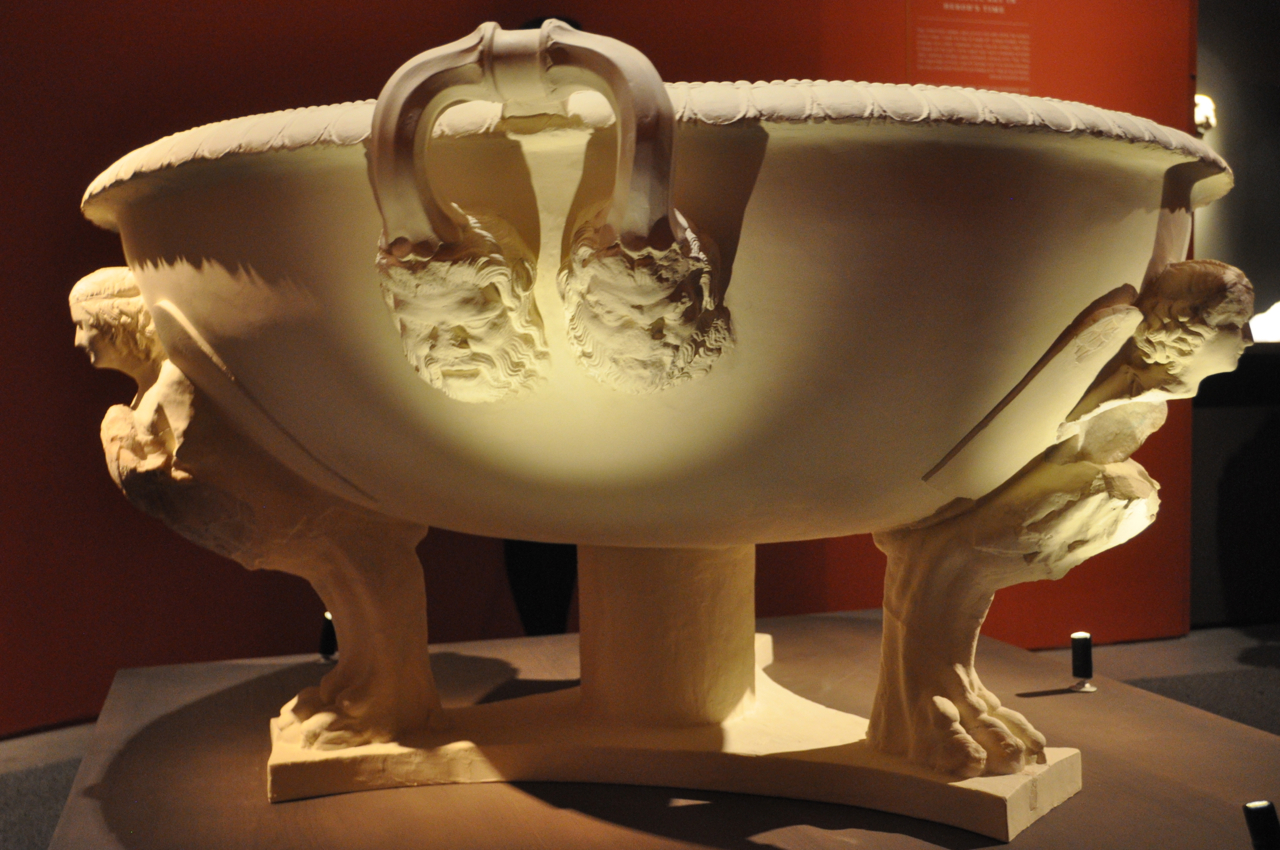
Shmuel Browns, a tour guide and expert on Herodium who helped Netzer excavate the site as a volunteer, said he was awed by the meticulous reconstruction, particularly of a large basin adorned with several heads that was found in pieces in two disparate places at the site, now an Israeli national park.

“They’ve built things from what was found that you could never imagine from what you saw at the site,” Mr. Browns said. “The message is very, very strong about who Herod is and what he did. He wasn’t intimidated by topography, he wasn’t intimidated by material, he wasn’t intimidated by lack of water.

“He’s a fascinating character,” Mr. Browns added. “He just got very, very bad press.”

Silenoi headsWhile excavating Lower Herodium, archaeologist Ehud Netzer found marble pieces of a wash basin in the bath-house, including a pair of Silenoi heads – the companion and tutor of the wine god, Dionysos. Conceivably, it was a gift from the Emperor Augustus that his deputy Marcus Agrippa presented to Herod, on his tour of Judea in 15 BCE and installed as a fountain. Imagine this fragile and heavy object making its journey from Greece to Rome to Judea and the bath-house at Herodium. The conservation staff of the museum painstakingly reconstructed the basin with its ornate decoration.

Greek 3-footed basin

Though it is not known to what degree Herod observed traditional Jewish practices, he appears to have respected them. Aside from this basin, no other human images, in sculptural form, have been found in any of Herod’s palaces.

Loggia trompe l'oeil painting

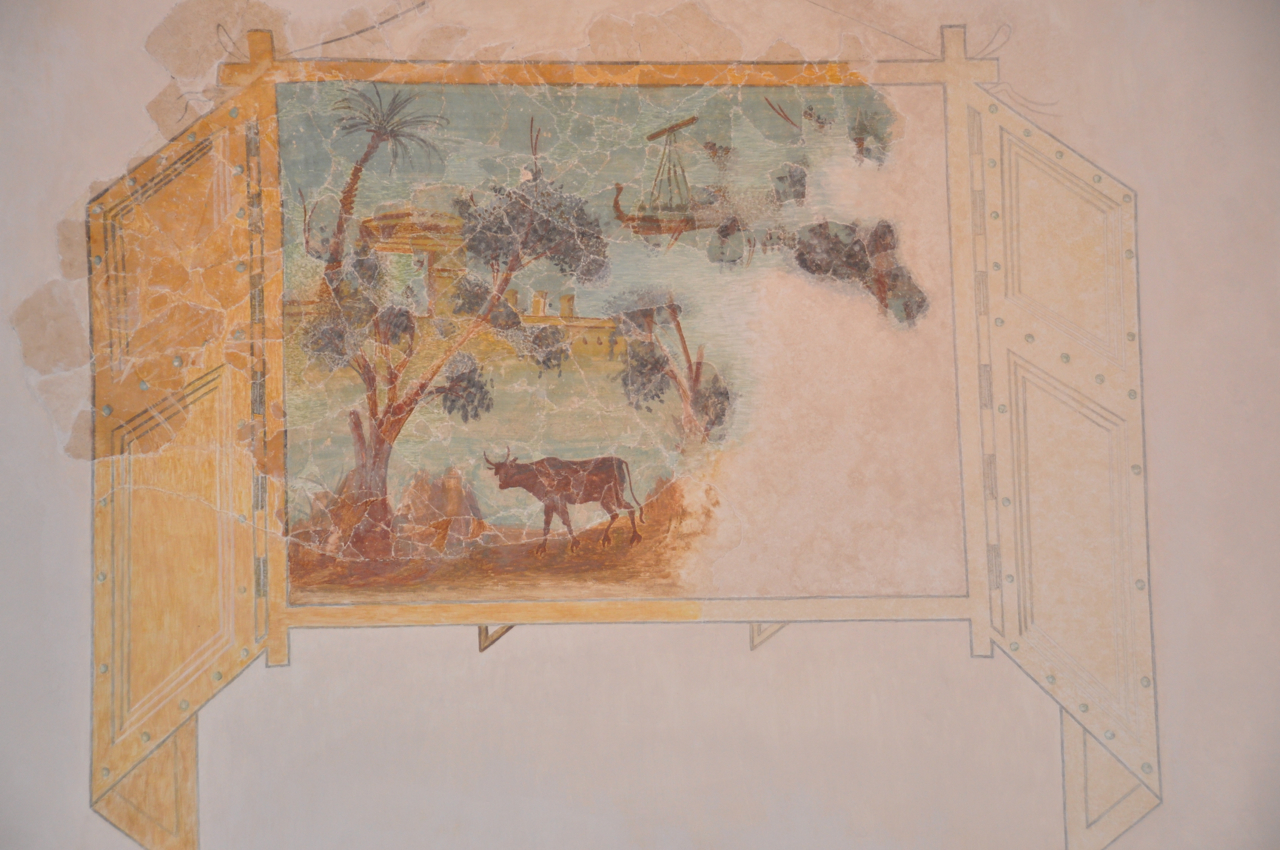
Boat billowed sailWhen Netzer excavated above the theater at Herodium he found the loggia, the VIP box for Herod and his guests, like Marcus Agrippa. Delicate trompe l’oeil paintings were on the walls, done in secco – painting on dry plaster, a technique unusual for this area. Scenes of nature through a painting of an open-shuttered window, itself a painting hanging on the wall. Dudi Mevorah, one of the curators of the exhibit, pointed out a painting of a boat with billowing sail on plaster from the loggia, alluding to Marcus Agrippa’s history-changing victory over Mark Anthony at the naval battle of Actium. Herod dictated the images in the paintings as a lead-in to the discussions that Herod was interested in having with his guest.

Herod the Great: The King’s Last Journey is a monumental exhibit that should not be missed. It gives us new insights into the very complex figure that is Herod, his determination not be constrained by nature, topography or materials and his consummate grasp of realpolitik.

Herodium, Netzer, King Herod and the Israel Museum

Each day we rose before dawn and the unrelenting desert heat to continue digging east of the monumental staircase. In the summer of 2007, after Professor Netzer had discovered the base of the mausoleum, I volunteered at the archaeological site at Herodium. Among seas of pottery shards, we dug up baseball-sized stones hurled by a Roman catapult (ballista). Scanning with a metal detector, we found tiny, encrusted bronze coins, from the period of the Great Revolt.
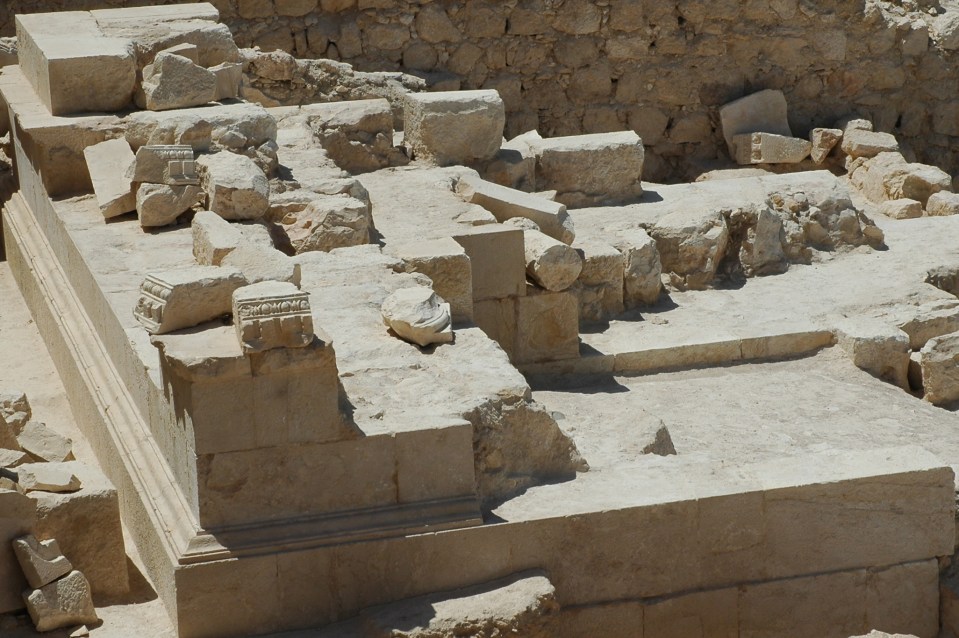
Herodium Tomb area

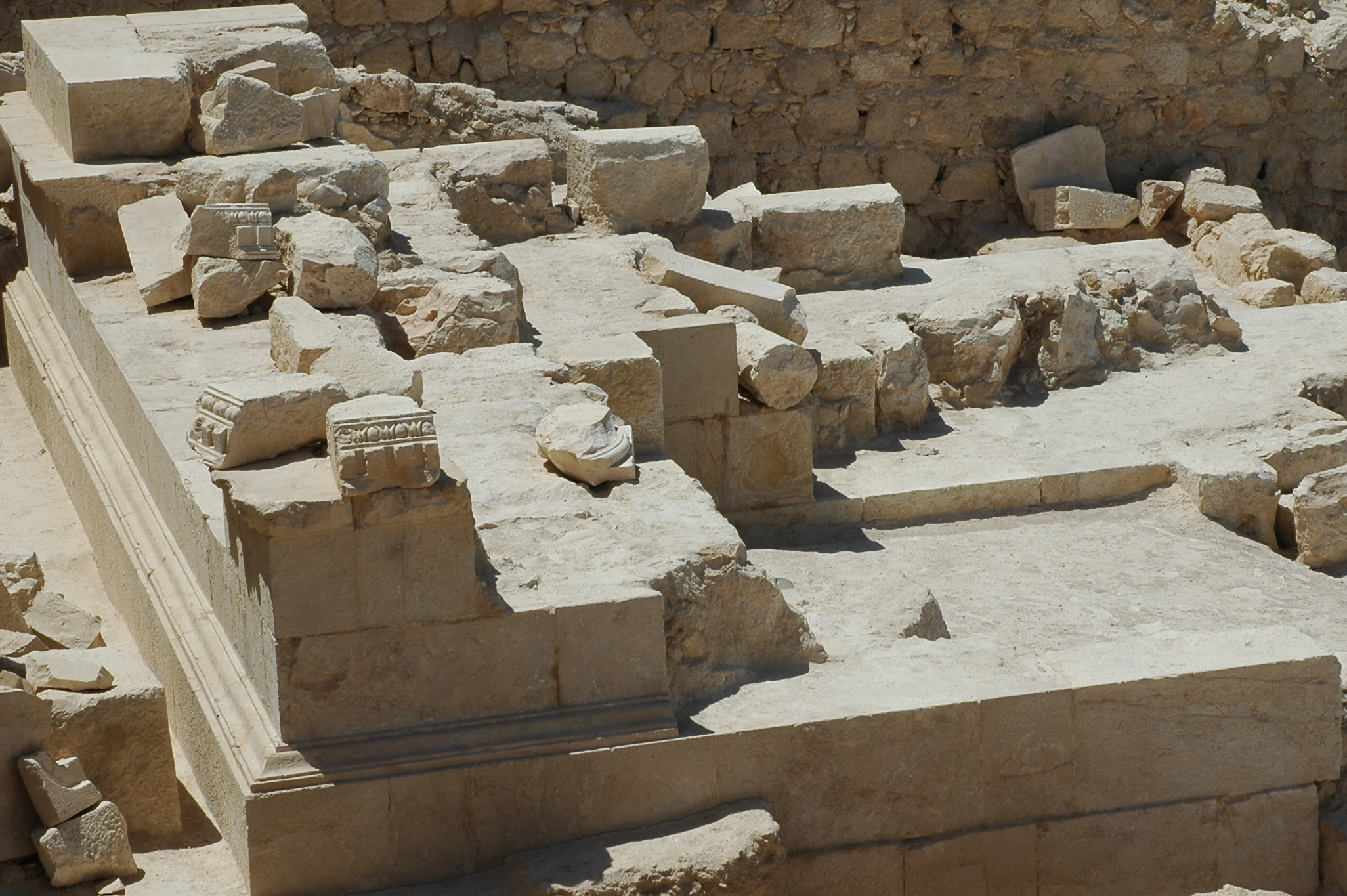
We uncovered a few well-carved stones strewn about – an egg and dart pattern, two five-petaled flowers from a decorative frieze. The high-quality limestone is meleke, from the root “king”, is not local to the site; it had been brought to Herodium specially for the mausoleum. At Herodium last week, these pieces were not to be found.
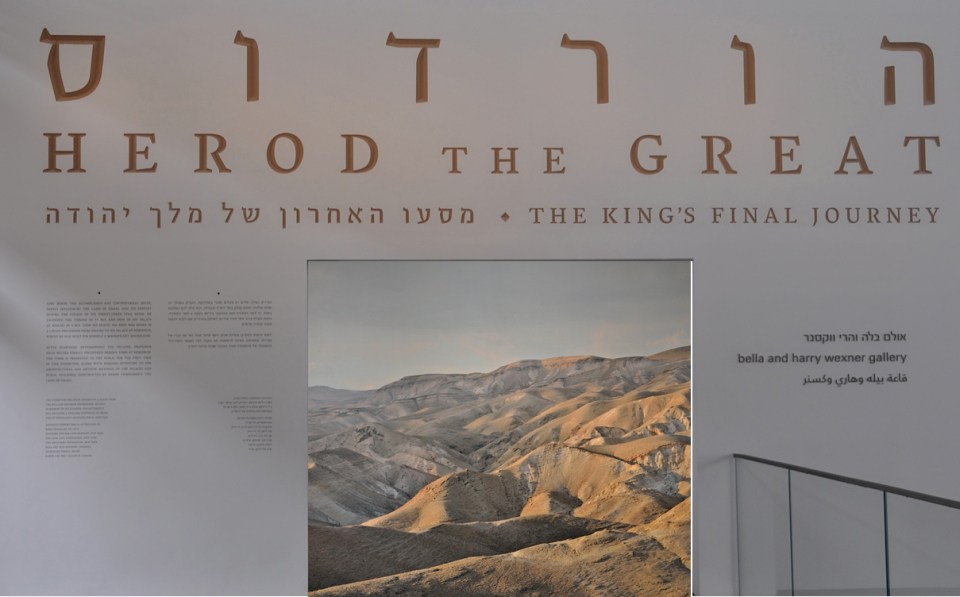
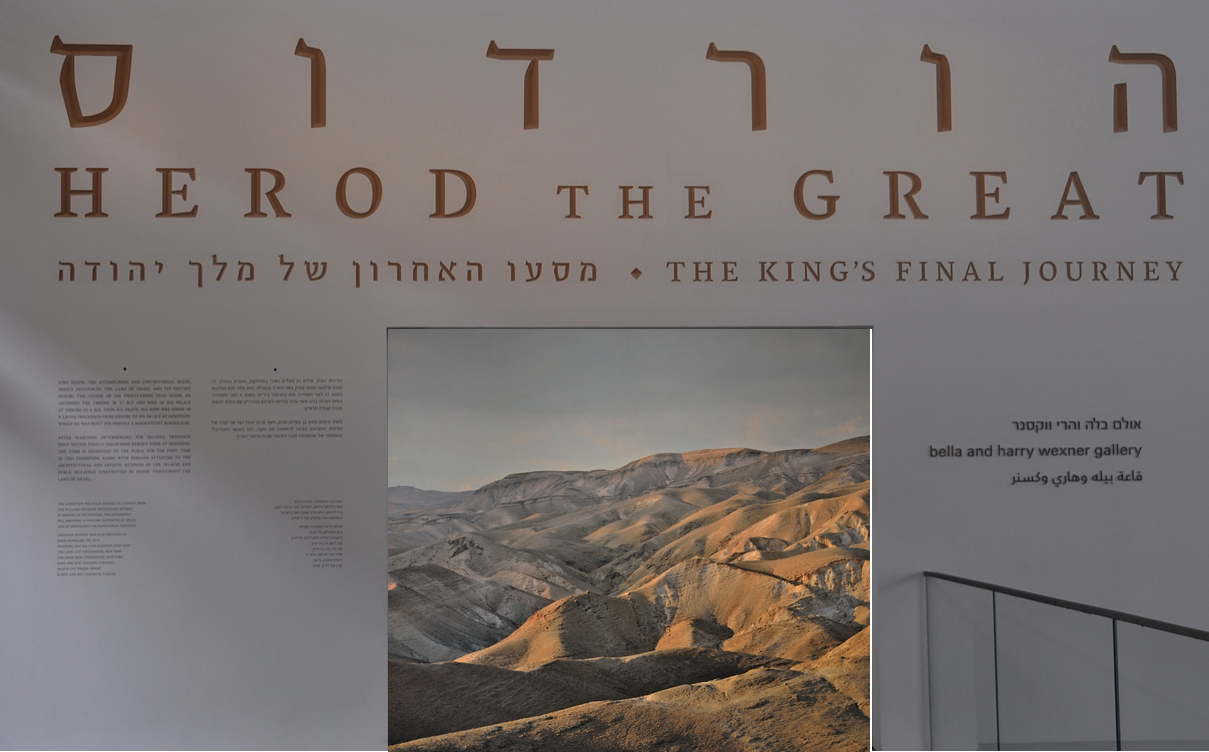
Herod the Great exhibit

The first image at the entrance to the Herod exhibit at the Israel museum opening today is neither architecture or artifacts, but the Judean desert – the site where Herod built his monuments is important.
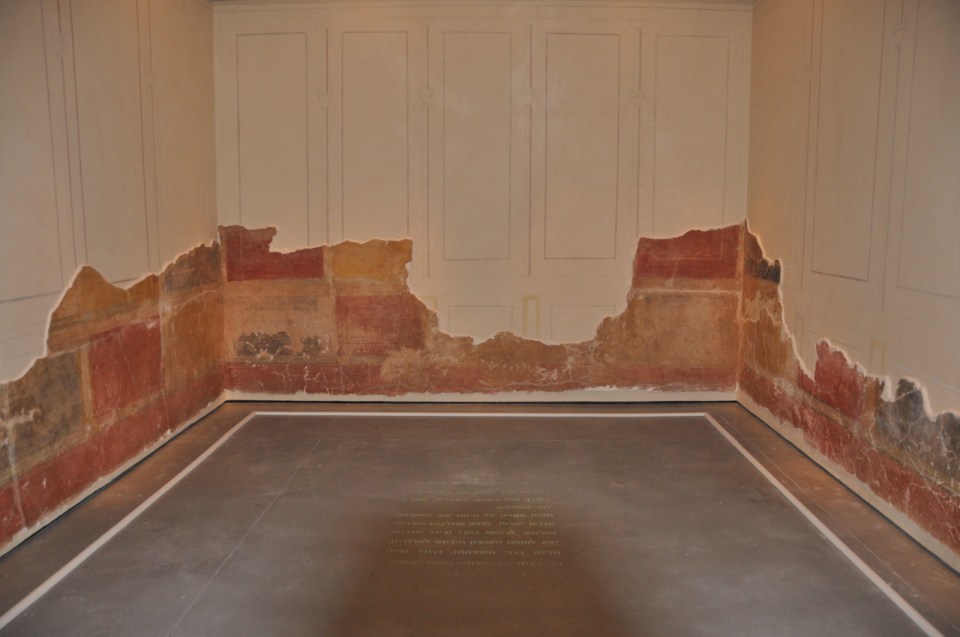
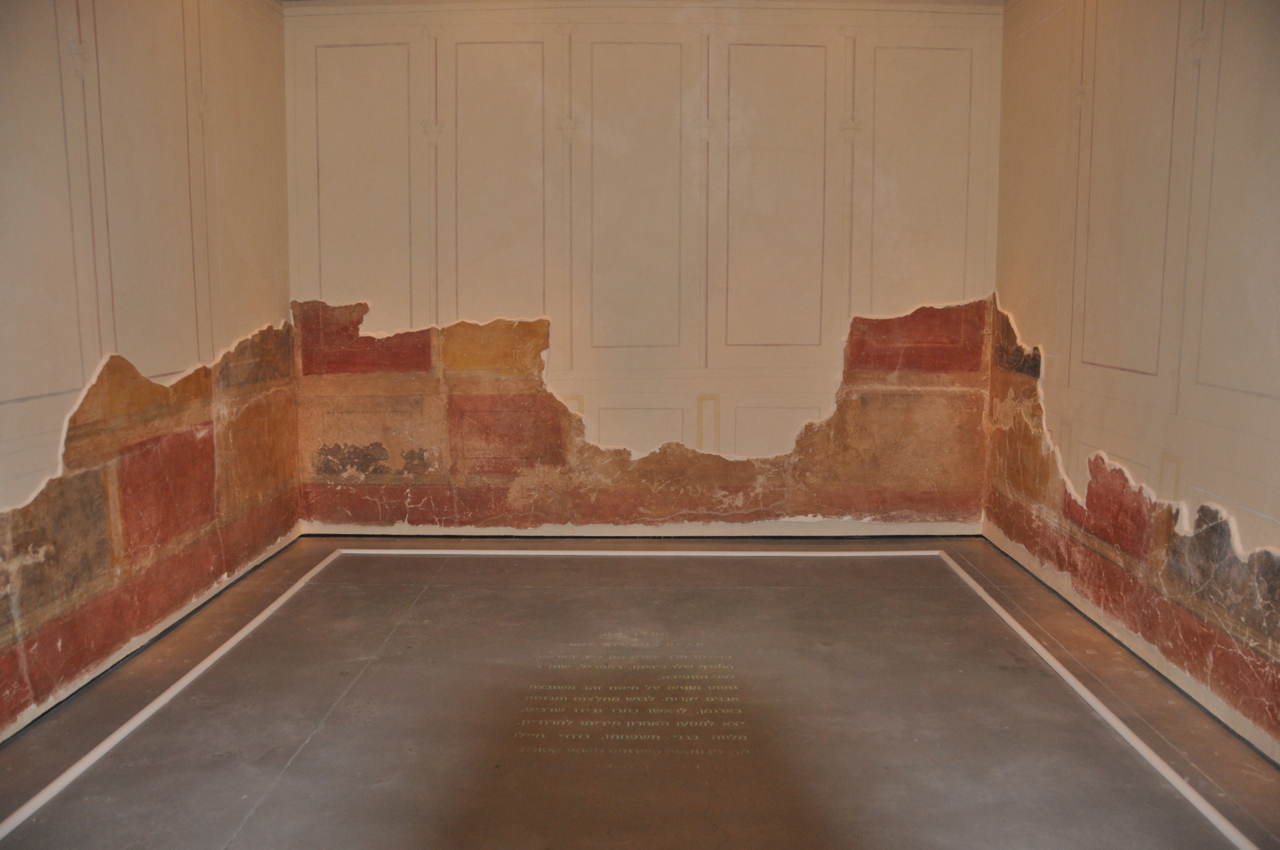
Throne Room, JerichoFollowing Herod the Builder, museum staff re-constructed three rooms from Herod’s palaces at the museum. The first room you enter is a replica of the throne room from Herod’s third palace at Jericho, excavated by Netzer for his doctorate. The original frescoes with their intense natural colors were removed from the palace and moved to the museum. So fond of Herod, Augustus had permitted him to mine cinnabar, a red mineral pigment, from his private property in Almadén, Spain.

When Marcus Agrippa, Augustus’ deputy visited Judea in 15 BCE, he was so impressed by Herod’s building projects that he sent Roman builders and artists to Judea to contribute their sophisticated skills. Opus recticulatum is a technique for strengthening walls to resist earthquake damage. All three examples of this Roman technique are found in Herod’s projects, discovered by Ehud Netzer: in the palace at Jericho, at the remains of a building north of Damascus gate rumored to be Herod’s Family tomb, and in a section of temple wall at Banias.
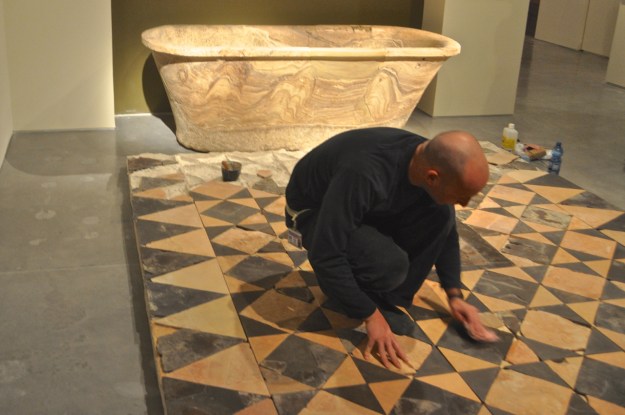
Bathtub Opus Sectile

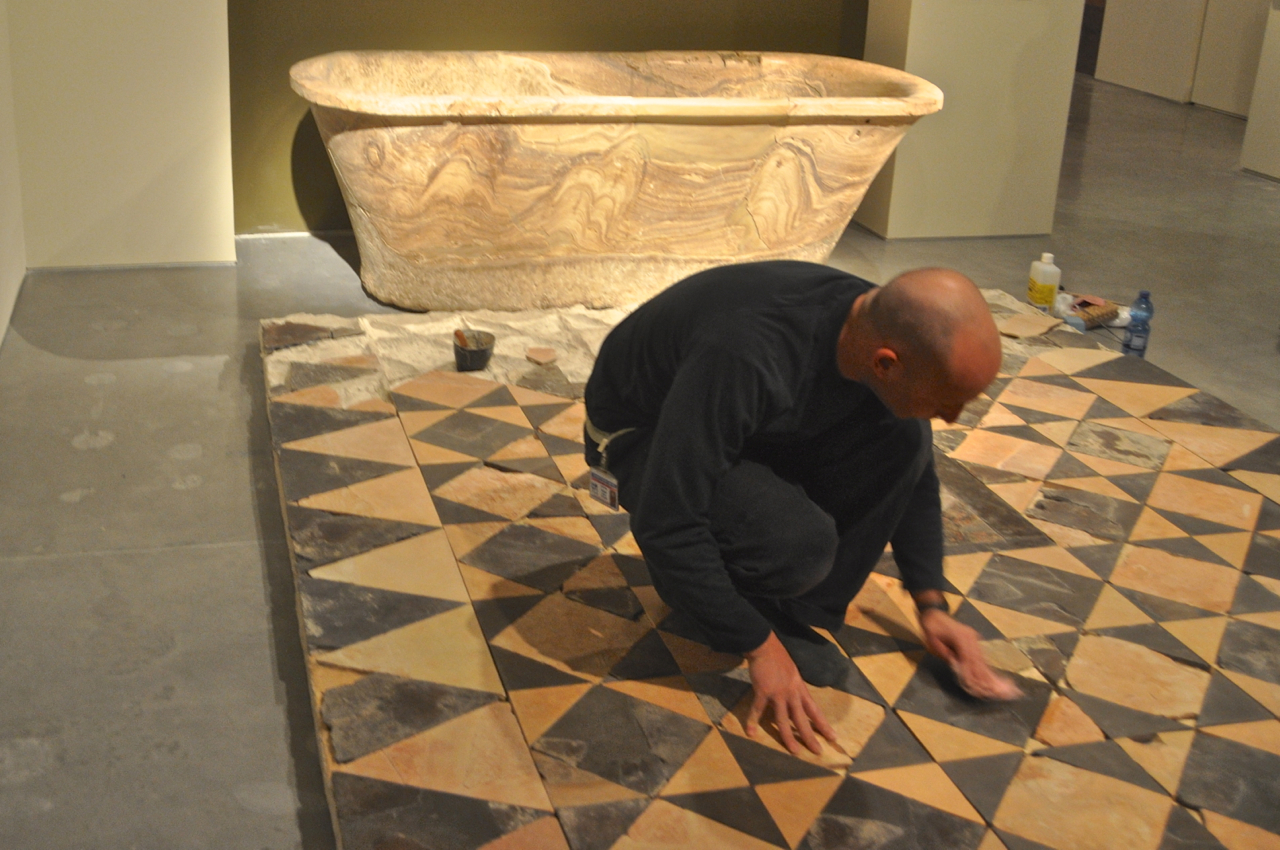
The second room displays Herod’s private stone bathtub uncovered by Netzer at the palace in Cypros. The museum displays floors from Cypros and Herodium laid with a Roman technique, opus sectile. Natural-colored stone tiles are cut in geometric shapes and laid in repeated patterns. In other cases, the floors are mosaic – two mosaic floors from the bathhouse at Lower Herodian, one in an opus sectile pattern and the other geometric shapes with pomegranates.
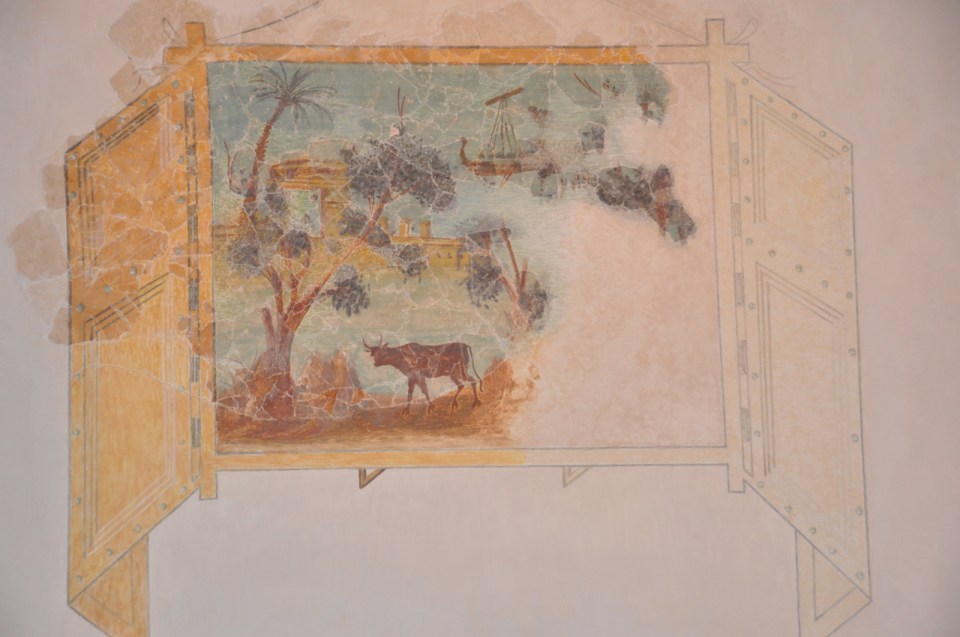
Secco - loggia

The third room is a reconstruction of the loggia, the VIP box from the Herodium theater with its unique secco wall paintings. According to this Roman technique, paint is added to dry plaster compared with the more usual fresco – fresh, wet plaster technique. These paintings are trompe de l’oeil views of an open window, with wooden shutters, that look out onto a natural scene, at the artistic standard found in the finest palaces and villas in Rome and Pompeii.
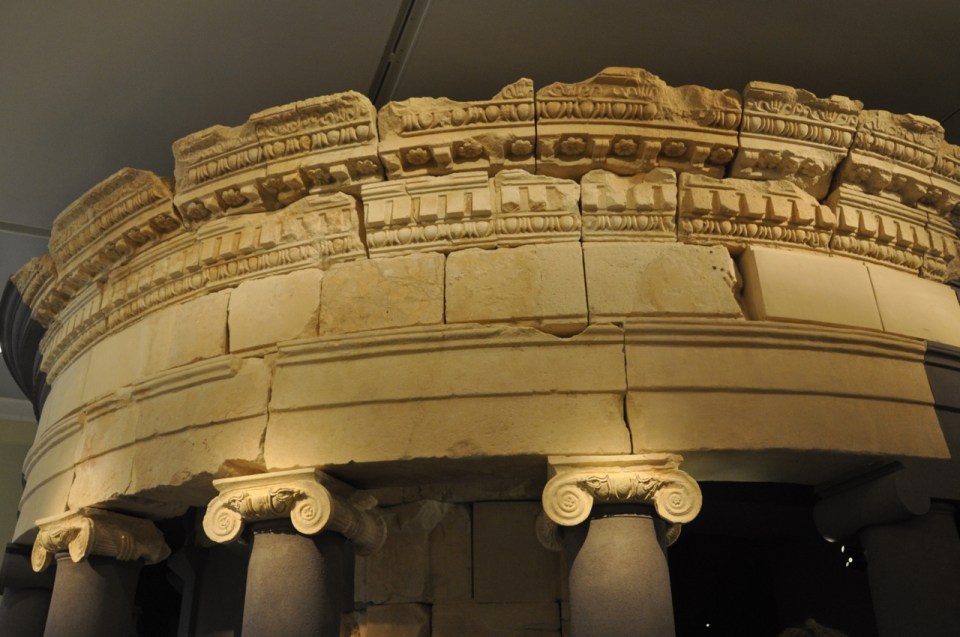
Herodium Mausoleum

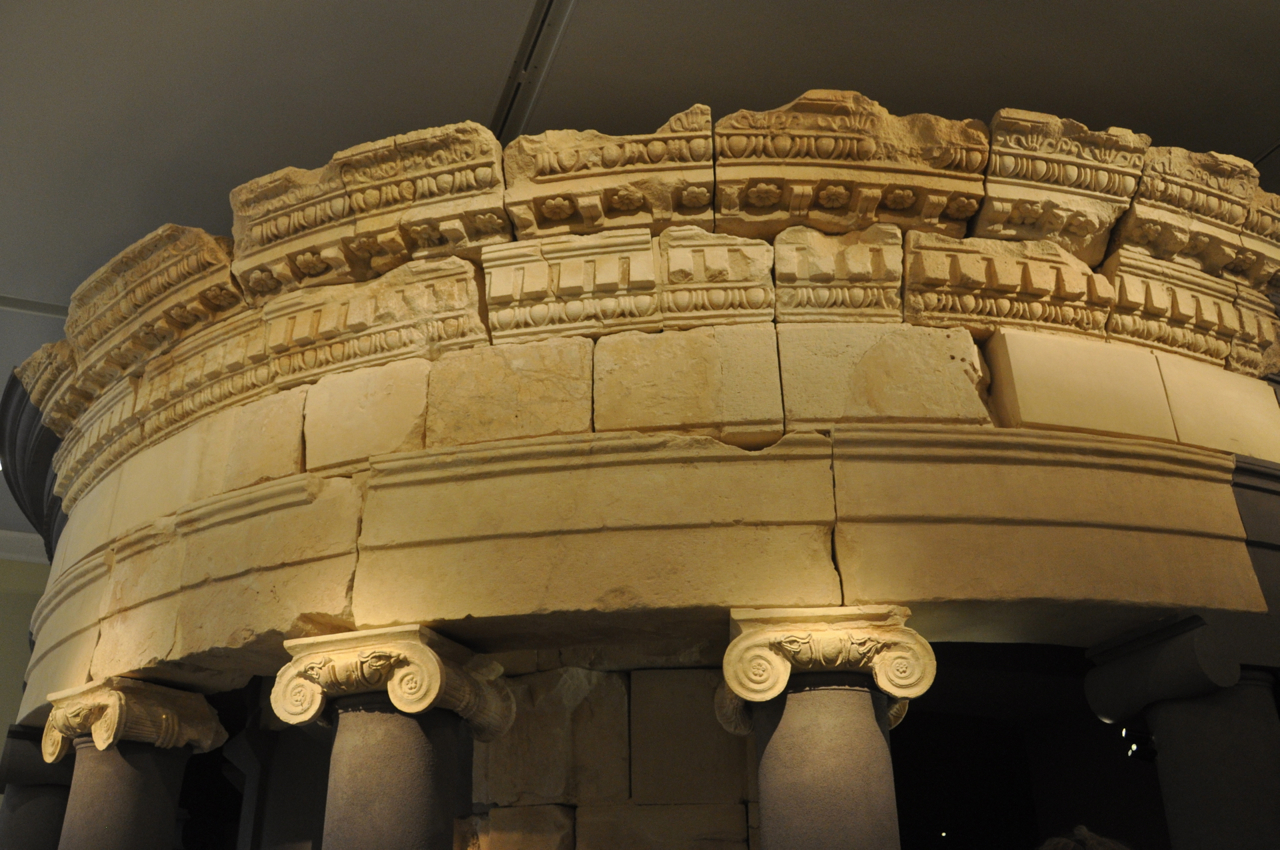
The exhibit is laid out faithfully to the site at Herodium where the loggia and the mausoleum flank the staircase. At the museum, we move through the viewing platform toward the full life-size reconstruction of the top-level of the mausoleum. The very decorative stones I excavated at Herodium are in their proper places in the frieze. A microchip was attached to each stone of 30 tons that were transported from Herodium to the Museum – as an aid to tracking and assembly. For the same purpose, the Hebrew letter “chet” can be seen on one stone, a sign left by the ancient Jewish stone masons. The structure is so heavy that the floor had to be specially reinforced.

In 1982, while Netzer was excavating, he came upon a water cistern in the mountain. He was puzzled that the cistern had been reinforced to support a great weight. Unbeknown to him, he had come within a meter of discovering the mausoleum. Why would Herod have insisted that the mausoleum be built on top of a cistern? According to the curator, Dudi Mevorah, Herod chose this precise location because it is best seen from Jerusalem. Once the mausoleum was complete, Herod dismantled the stage and buried his theater in order not to distract the eye.
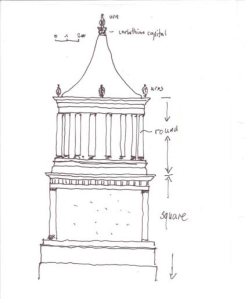
The Israel Museum

The Israel Museum

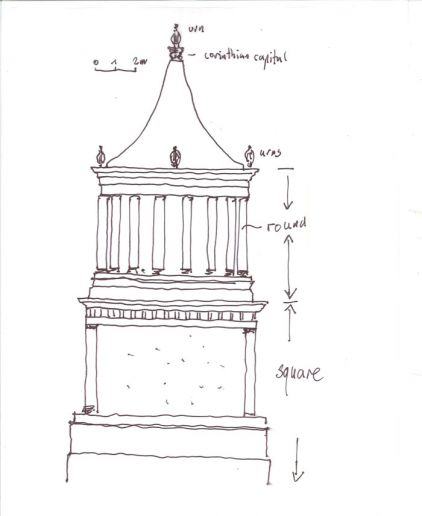
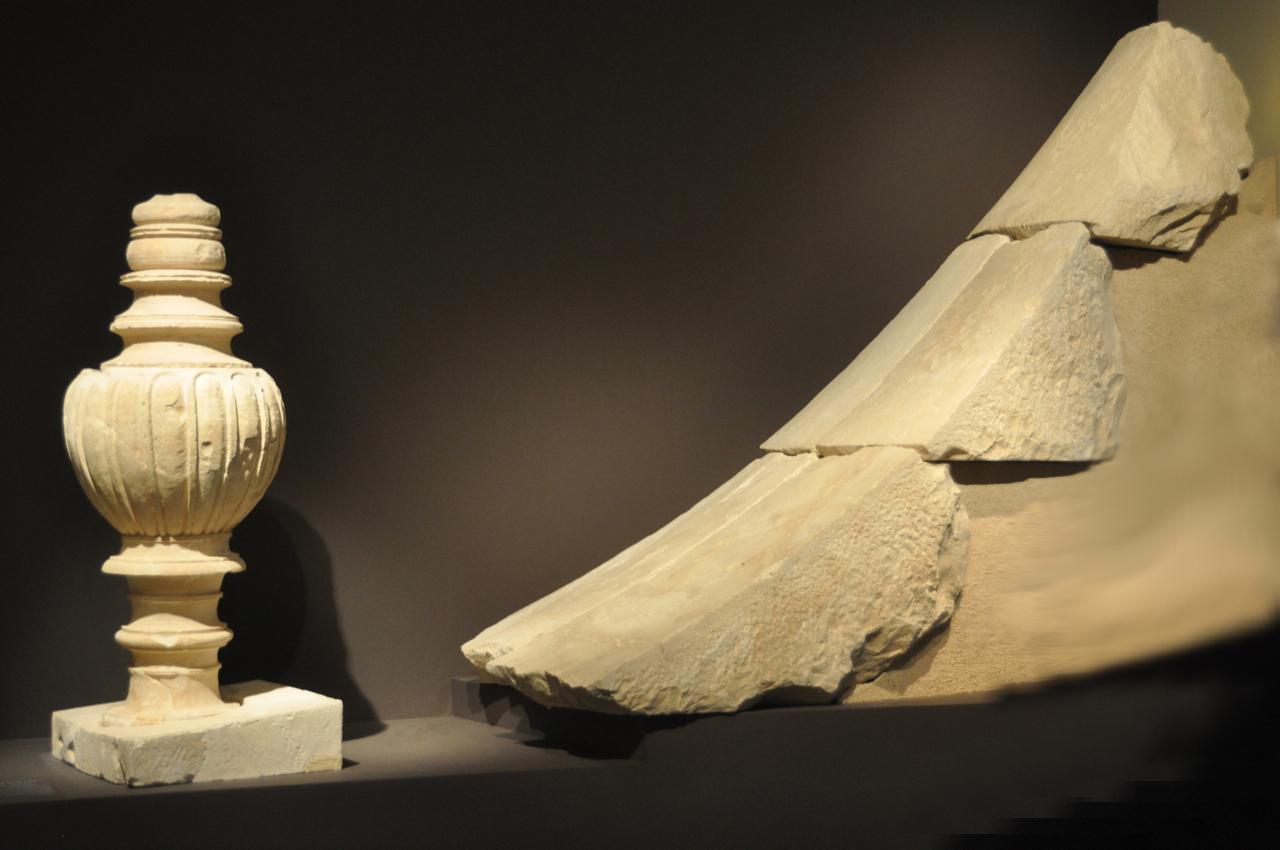
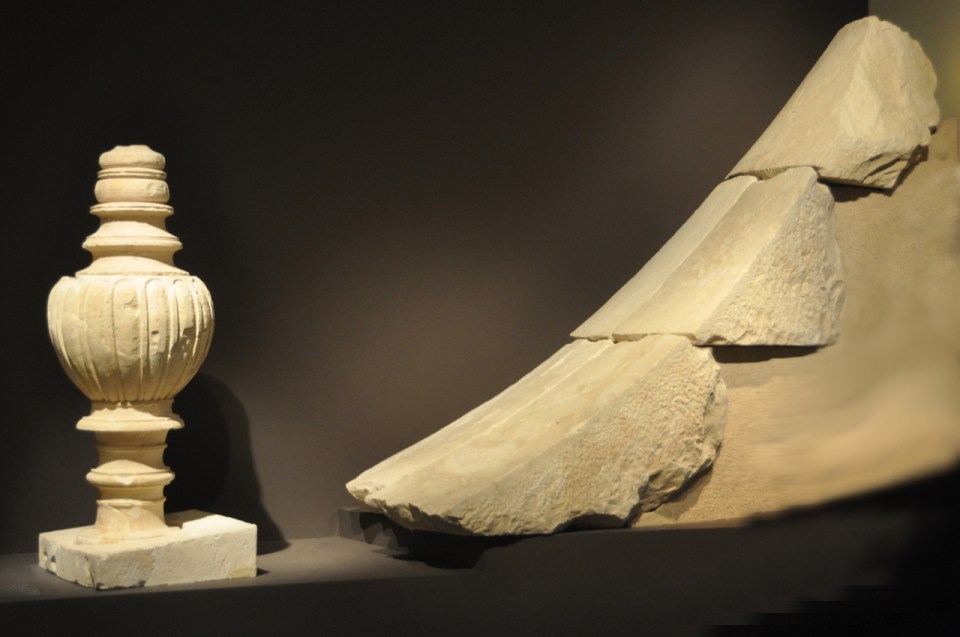
Netzer drew on his familiarity with Herod’s oeuvre and his expertise as an architect and archaeologist to imagine the mausoleum. Netzer conceives a colossal three-story monument – 25 meters high. The first level is cube-shaped – only the base exists and can be viewed at Herodium halfway up the mountain on the north side. The second level is a tholos, a cylindrical structure with Ionic columns and crowned with a conical roof. In addition to the Roman style, there are Nabatean elements to memorialize Herod’s Nabatean mother Cypros – two stone replicas of Nabatean funerary urns are on display out of five that adorned the roof.Nabatean Funerary urn
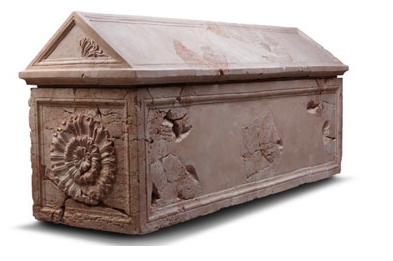
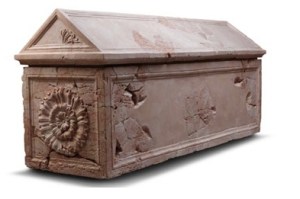
Entering within the structure, the sarcophagus that Netzer claims was Herod’s rests. Netzer found its shards – the stone box had been smashed in antiquity and reconstructed by museum staff.
The Israel Museum/Meidad Suchowolski

The Israel Museum/Meidad Suchowolski

Made of reddish limestone, mizzi ahmar, from the Arabic, this is very hard stone and would have been difficult to carve – perhaps that made it all the more appealing. Originally, Netzer suggested that the side panels of the sarcophagus were decorated with five flower medallions. There are sarcophagi like that, one in the Louvre taken from the Tomb of the Kings, one outside the Islamic museum on the Haram el-Sharif. Based on the museum reconstruction, it seems that these panels are plain.
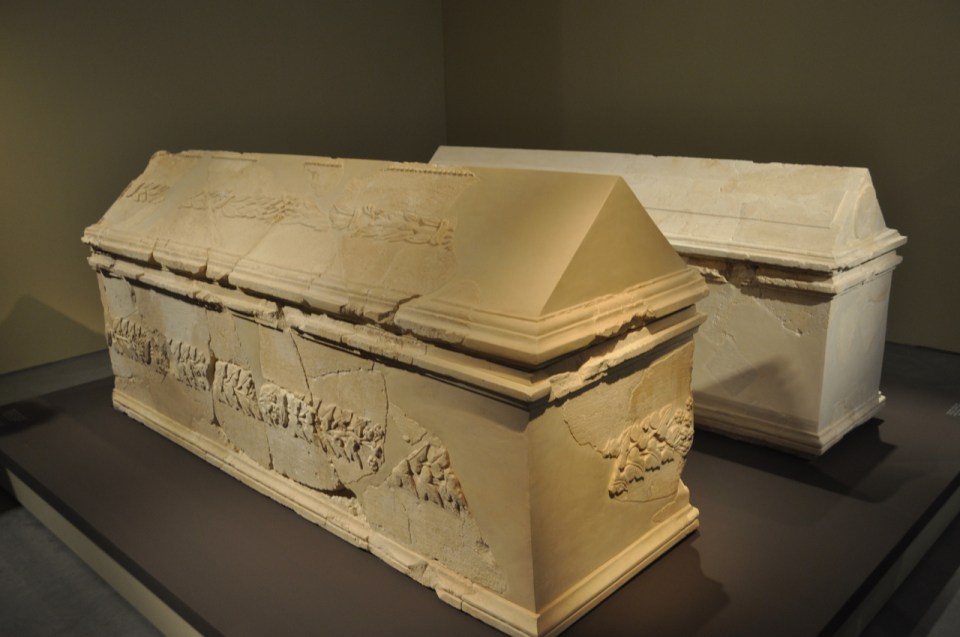
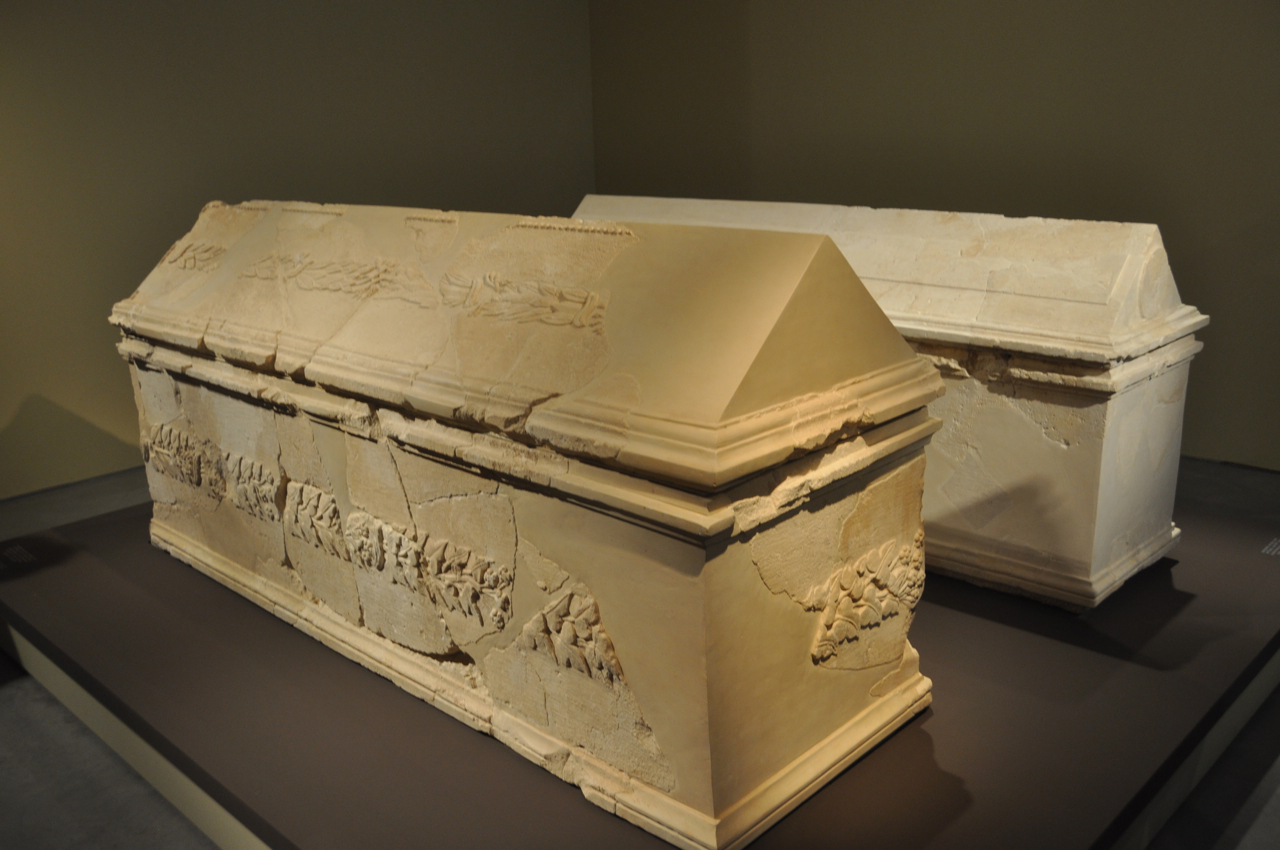
Two sarcophagi

Beside the mausoleum, the other two sarcophagi that Netzer discovered are displayed. Netzer posits that these belonged to Herod’s family members. One is decorated with a vine pattern – very similar to the stucco decorations in Herod’s theater box. The other sarcophagus, displayed for the first time, is completely plain as if waiting for the stone-carver.

The Israel museum has built a monumental exhibit that expresses Herod’s architecture and aesthetics as discovered by archaeologist, Professor Ehud Netzer – Herod would have been pleased with the result. To understand more requires going beyond the exhibit halls, to experience the drama of Herod’s life in situ, at the sites that Herod built.


For an in-depth full-day tour of Herodium and the Israel Museum’s “Herod the Great: The King’s Final Journey” exhibit and/or personalized guided tours of Herod’s other sites and more, contact Shmuel.