Category Archives: Archaeology

Dome of the Rock

When viewing the Old City skyline probably the most striking sight is the gold dome of the Dome of the Rock. The Umayyad Caliph Abd el-Malik had this shrine built like a Byzantine martyrium, octagonal in shape, in 691CE over a rock on the Temple Mount.
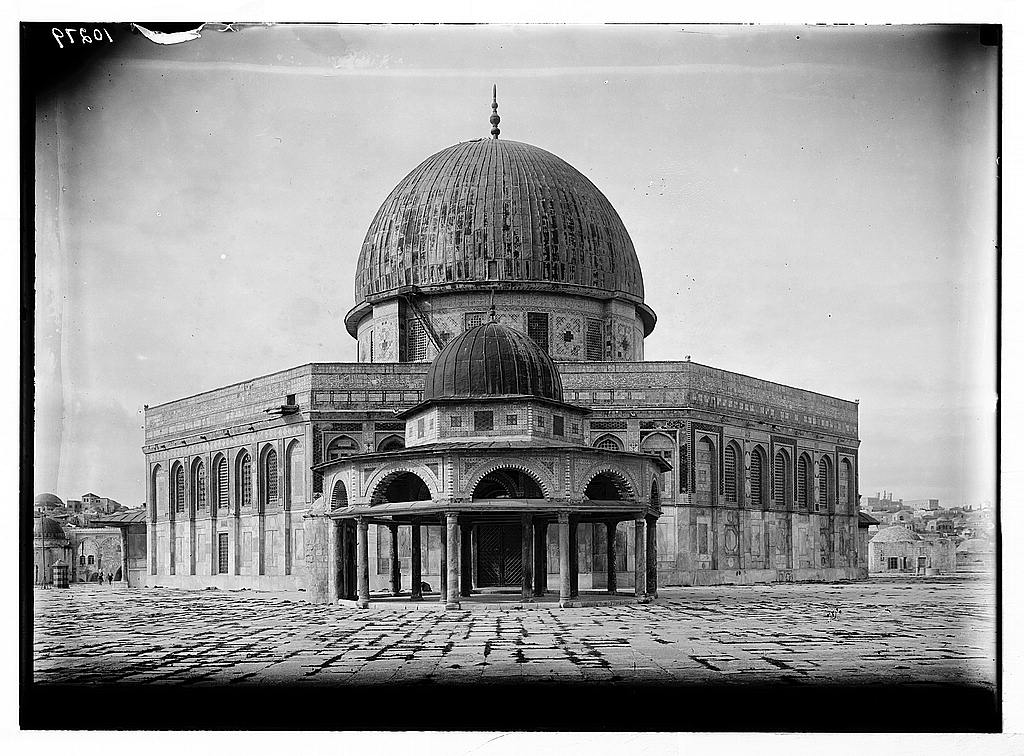
Dome of the Rock ~1934, Matson collection

Over the years various metal coverings have been tried on the dome. In 1993 King Hussein of Jordan donated $8.2 million to cover the dome with a layer of  gold, 80kg in total. In Muslim tradition the rock is the place where the prophet Mohammed ascended to heaven on his Night Journey. The platform is called the Haram el-Sharif, the Noble Sanctuary.

In Jewish tradition the rock is the foundation stone from which the whole world was created, where later Abraham was commanded to go and sacrifice his son Isaac. King David purchased the area from Araunah the Jebusite who was using it as a threshing floor (2 Samuel 24) and built an altar there marking the place where Solomon built the First Temple. The platform was extended by King Herod in 20BCE while renovating the Second Temple.

There is a special feeling on the Haram el-Sharif, away from the hustle of the Old City – you can feel a lot of history there. While most of the buildings are Islamic there are remnants of Crusader architecture and even capitals from the Byzantine period, Roman marble columns and a sarcophagus (check out the similarity to the one discovered at Herodium). The First and Second Temples stood for 1000 years on this site. It is important to understand the centrality of the Old City of Jerusalem to Judaism, Christianity and Islam.

The other day I visited the Haram el-Sharif in the early morning light. I passed through the airport-like security by the Western Wall plaza and walked up the wooden ramp that leads to the Mugrabi gate and shot these photos. Click on an image below to view it full-size. I’d be interested in hearing your comments.


Not in Herod’s Lifetime

Just came back from a press conference with Ronny Reich, archaeologist and professor at Haifa University. Probably every guide talks about the Western Wall, the supporting wall of the Temple Mount built by King Herod in 22BCE. According to the historian Josephus, Herod elongated the square Hasmonean platform (250 meters by 250m) by rebuilding new northern, western and southern supporting walls. The eastern wall was extended and the “seam” between the earlier Hasmonean wall and Herod’s can be seen near the south-eastern corner. Along the western wall Herod designed a main street (Ronnie Reich calls it the original Wall Street, the Palestinians probably call it occupied) and a vault supporting a large staircase crossing over the street and leading to the Royal Stoa, a building 288 meters long with 160 columns (it takes 3 people with arms extended to go around a single column). When Herod moved the western wall he had to move some residences that were in the way, at the bottom of the slope from the Western Hill. These buildings were destroyed but the basements, underground cisterns and mikvaot (ritual baths) were just filled in with debris/earth. One mikva directly under the path of the planned western wall, was filled in and covered with 3 large stones. In clearing out the drainage channel under Robinson’s Arch, the mikva was discovered under the Herodian stones of the western wall.

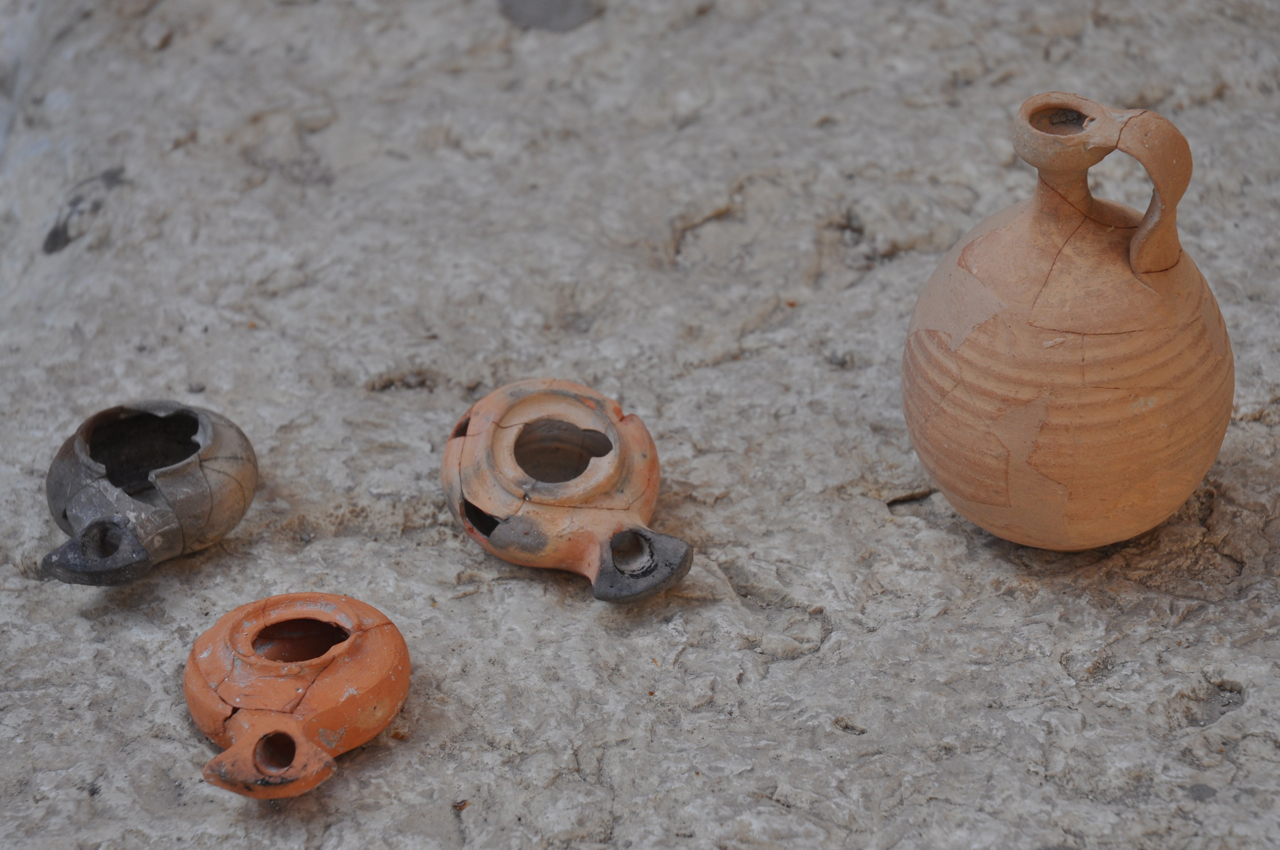
Some clay oil lamps and a small pottery jug typical of the Second Temple period were found.

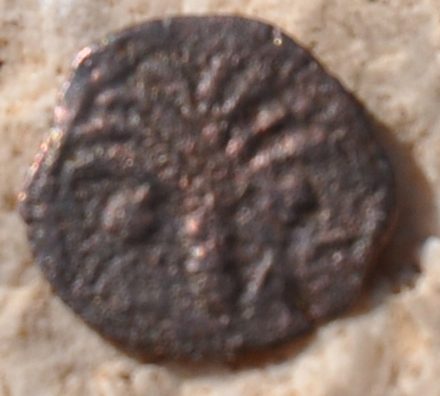
When the mikva was emptied and the soil sifted 19 coins were found, the latest ones were from the rule of Valerius Gratus, the Roman Prefect (governor) of Judaea province under Tiberius from 15 to 26CE. He was succeeded by Pontius Pilate.


Reich said four small bronze coins were found with dates of 15CE and 16CE (IAA press release says 17 coins with dates of 17/18CE). Since the coins were found in the fill in the mikva under the wall, the first (lowest) row of stones in the wall must have been placed there after 16CE so the wall was built more than 20 years after the death of Herod (who died in 4BCE). If that is the case, then the Herodian street, the staircase and probably the Royal Stoa were all later additions, not completed in Herod’s lifetime!

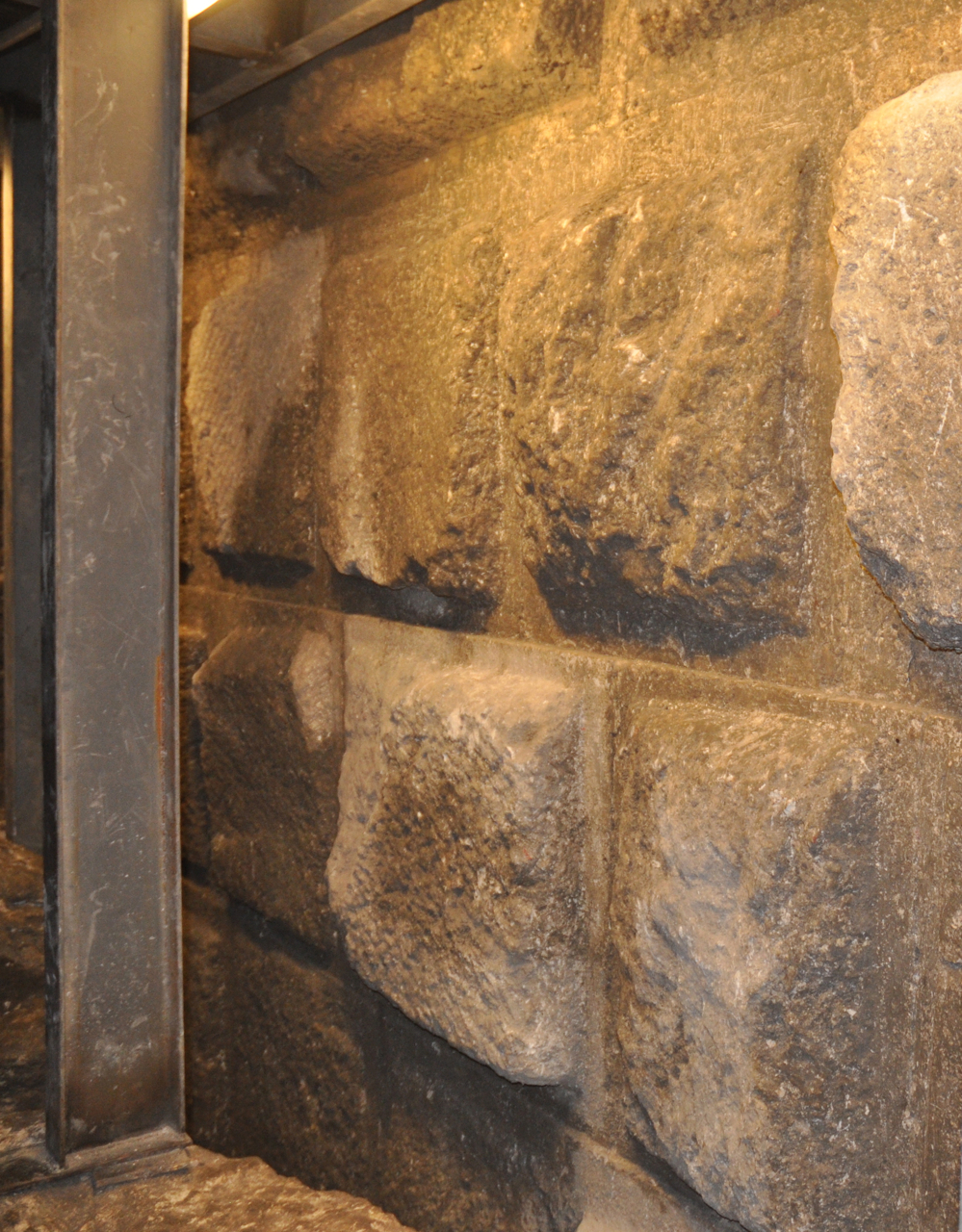
By the way, these stones have the frame but were left with the boss (protuberance) since they were underground and would never be seen.

This confirms Josephus’ account in the last book of Jewish Antiquities that the Temple building project was the largest project the ancient world had ever heard of and was not completed until about 50CE in the rule of King Agrippa II, Herod’s great grandson (even though some 15-18,000 workers were employed on the project).

Rujm el-Hiri Revisited

I wrote about Rujm el-Hiri in a post on May 2009 and concluded with a variety of suggestions about what the structure may have been used for. Now Dr. Rami Arav who has been excavating at nearby Bethsaida since the late 1980s has proposed a new theory reported in the Nov/Dec issue of Biblical Archaeology Review based on a broader look at the local Chalcolithic civilization (4500-3500BCE) and on similarities he noticed with more distant cultures.

Rujm el-Hiri consists of four concentric circles, the outermost more than 150 meters across, made up of an estimated 42,000 tons of basalt rock. Experts believe that these are the remains of massive walls that once rose as high as 8 meters (think of the ruins of the walls of the storehouses and the Roman camps at Masada).

Excavations at Rujm el-Hiri by archaeologist Mike Freikman of Hebrew University in Jerusalem over the past five years have yielded almost no material remains of the kind that are commonly found at most archaeological sites. The lack of artifacts confirms that the site was never inhabited and so was not a town or fortress but most likely a ritual center — possibly linked to a cult of the dead. What is the reason to go to such great lengths to construct something that was never inhabited, whose location was not strategic?

Chalcolithic Ossuary, British Museum

Burial in the Chalcolithic period was in ossuaries, small clay boxes used to house the bones. Stone ossuaries were seen next in the Second Temple period for Jewish burial – bodies were buried for an initial period of about a year in temporary tombs until the flesh decomposed and only the bones remained. In archaeology, this process is called excarnation. But archaeologists have not found evidence of such preliminary graves from Chalcolithic times.


Artifact from Hamatmon Cave, courtesy of Israel Antiquities Authority

Arav found a clue in the treasure of Chalcolithic bronze artifacts discovered in a cave, in the cliffs above the Dead Sea. He looked at a small copper cylinder with a square opening like a gate with figures of birds perched on the edge and saw it as a ceremonial miniature of an excarnation site.

He also noticed a similarity to round, high-walled structures used by Zoroastrians in Iran and India, known as dokhmas or towers of silence. These are structures used for a process known as sky burial — the removal of flesh from corpses by vultures. The winged scavengers perch on the high circular walls, swoop in when the pallbearers depart and can peck a corpse clean in a couple of hours.

Further evidence is a mural showing vultures and headless human corpses several millennia earlier in southern Turkey, where the local Chalcolithic residents are thought to have originated suggesting that excarnation was practiced there.

Arav’s answer is that excarnation was used — vultures did the job. To this day there are Griffon vultures and other large birds of prey that swoop above the valleys of the Golan. Arav concludes that Rujm el-Hiri was an excarnation facility.

Arav also identified a smaller structure consisting of concentric stone circles on a promontory overlooking the Jordan River as an excarnation site, outer circle is 50 meters in diameter and the inner circle 33 meters. Another round structure was recently identified at Palmahim where only ossuaries were found.

It may be hard to come to terms with Arav’s theory given the Judeo-Christian view of honoring the dead and human body but excarnation is practised in other parts of the world and it’s important to remember that the Chalcolithic period predates the Israelites by as much as three millenia.

Four sites in Old City

Most archaeological sites in Israel are part of the Israel Nature and Parks Authority but in the Old City there are a few interesting sites that are run by the East Jerusalem Development Company:

  • Ramparts Walk
  • Roman Plaza
  • Zedekiah’s Cave
  • Davidson Archaeological Park

Together these 4 sites can be the skeleton for a tour of the Old City. Because these sites are under one authority there is a combination ticket that gives you entry to all 4 sites. The current price is 55NIS whereas it would cost 72NIS if you bought  them individually (a saving of 24%) and the ticket is valid for 3 days.

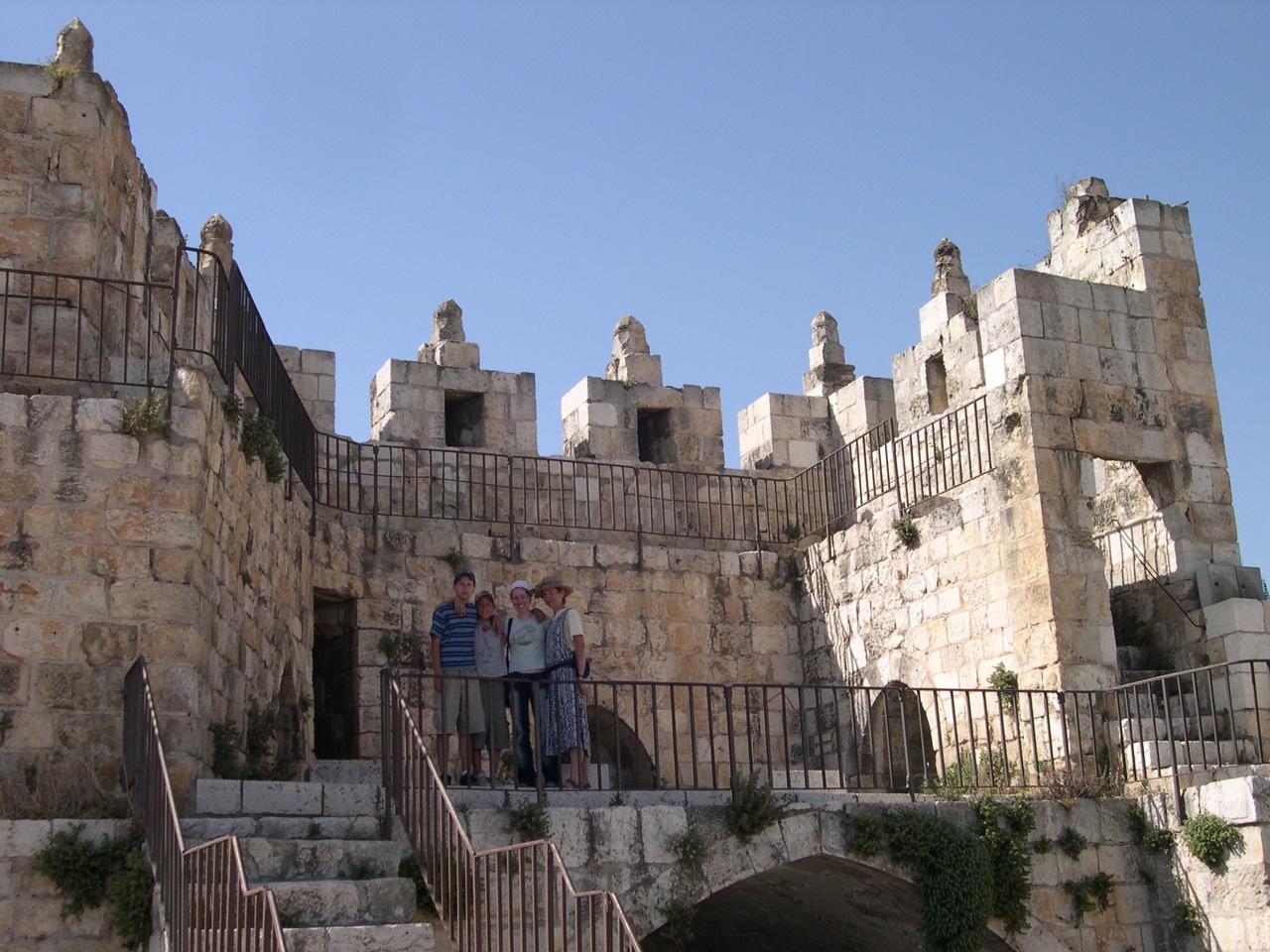
The walls around the Old City were built in 1540 by the Turkish Sultan Suleiman and it is possible to walk on the top of two sections of these walls: 1) from Jaffa Gate around the Christian and Muslim Quarters all the way to Lions Gate (though I would recommend descending at Damascus Gate) and 2) across from Jaffa Gate by the Tower of David Museum around the Armenian and Jewish quarters to Dung Gate.

It’s important when exploring the Old City to go up onto the walls or roofs to get an overview of the city, something you can’t do from the ground. Looking outside the walls lets you see the institutions that were built in the late 1800s by the various European powers as the Ottoman Empire became the sick man on the Bosphorus.

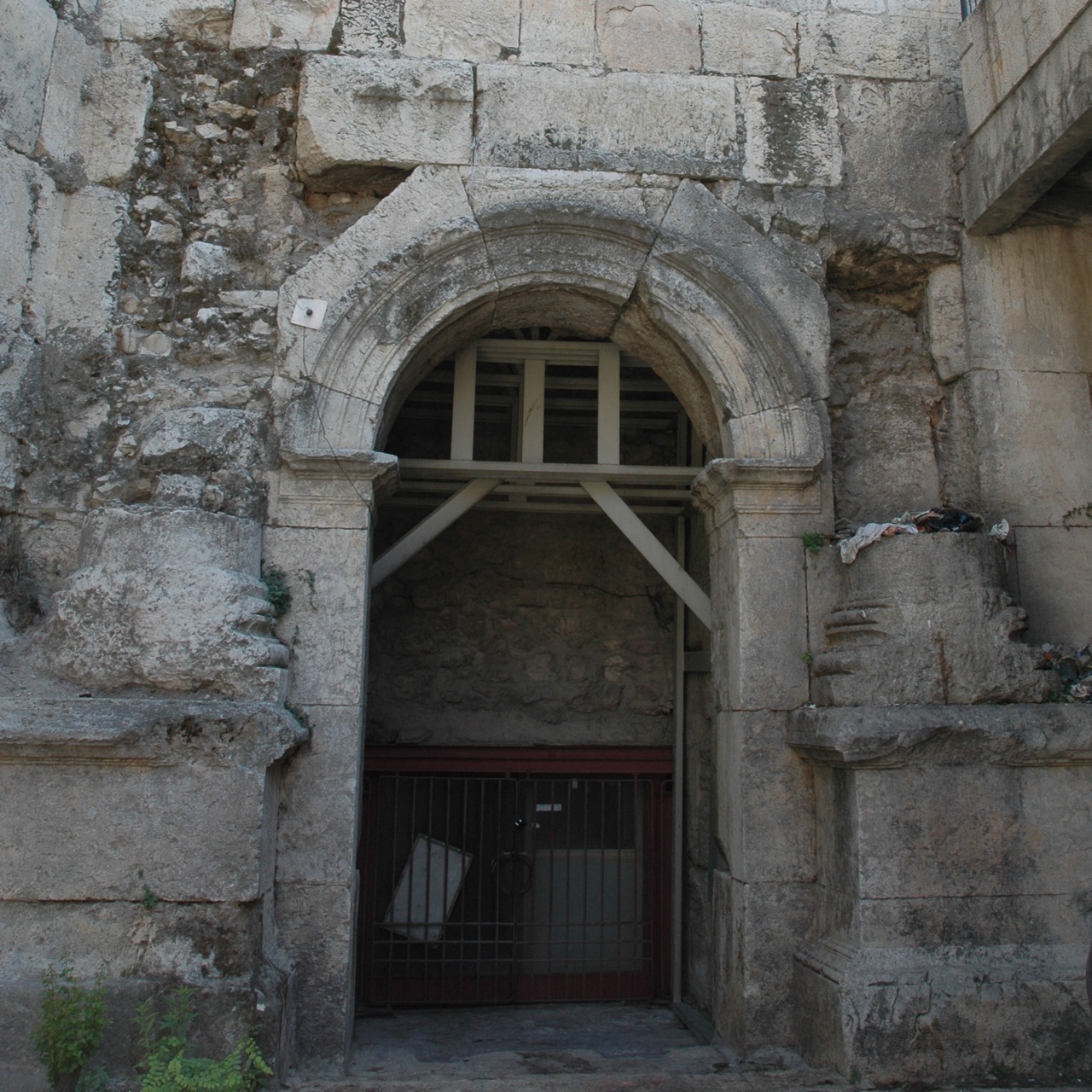
At Damascus Gate you descend back in time to 135CE to the Roman Emperor Hadrian who crushed the Bar Kochba Revolt, destroyed Jerusalem and exiled its Jewish inhabitants. Hadrian rebuilt the city as a Roman city that he called Aelia Capitolina, of which remnants of the city plan exist to this day. The base of the Roman wall and the leftmost arch of three Roman arches can be seen below Damascus Gate. From Damascus Gate going south is El Zeit Street which runs along the route of the Roman Cardo and  El Wad Street that follows the Tyropean valley, above the secondary Cardo. Remains of both Cardos as well as other remains from the time of Hadrian can be visited on your tour.

Not far from Damascus Gate is another site that is called Zedekiah’s Cave or Solomon’s Quarry. This cave was discovered by chance by Dr James Turner Barclay, a physician and missionary who lived in Jerusalem for some years and was interested in biblical scholarship. On a sunny Sunday during the winter of 1854 Dr. Barclay was out walking along the city walls with his son and his faithful dog as he ususally did every Sunday when suddenly the dog vanished as if the earth had swallowed him up. While searching for the dog near the bedrock at the base of the city wall they noticed a deep hole from which they could hear the sound of barking. Excitedly they went home, gathered lanterns, ropes, measuring instruments and other equipment and under cover of darkness returned to the hole – the opening to a man-made cavern that had been created by quarrying stone. This is the largest quarry in the Holy Land, the cave begins at the city’s northern wall and extends under the Muslim Quarter for 230 meters, reaching the Sisters of Zion convent. Barclay is the one who discovered the gate to the Temple Mount that bears his name today (that you can see in the Western wall in the Women’s section of the Kotel plaza).

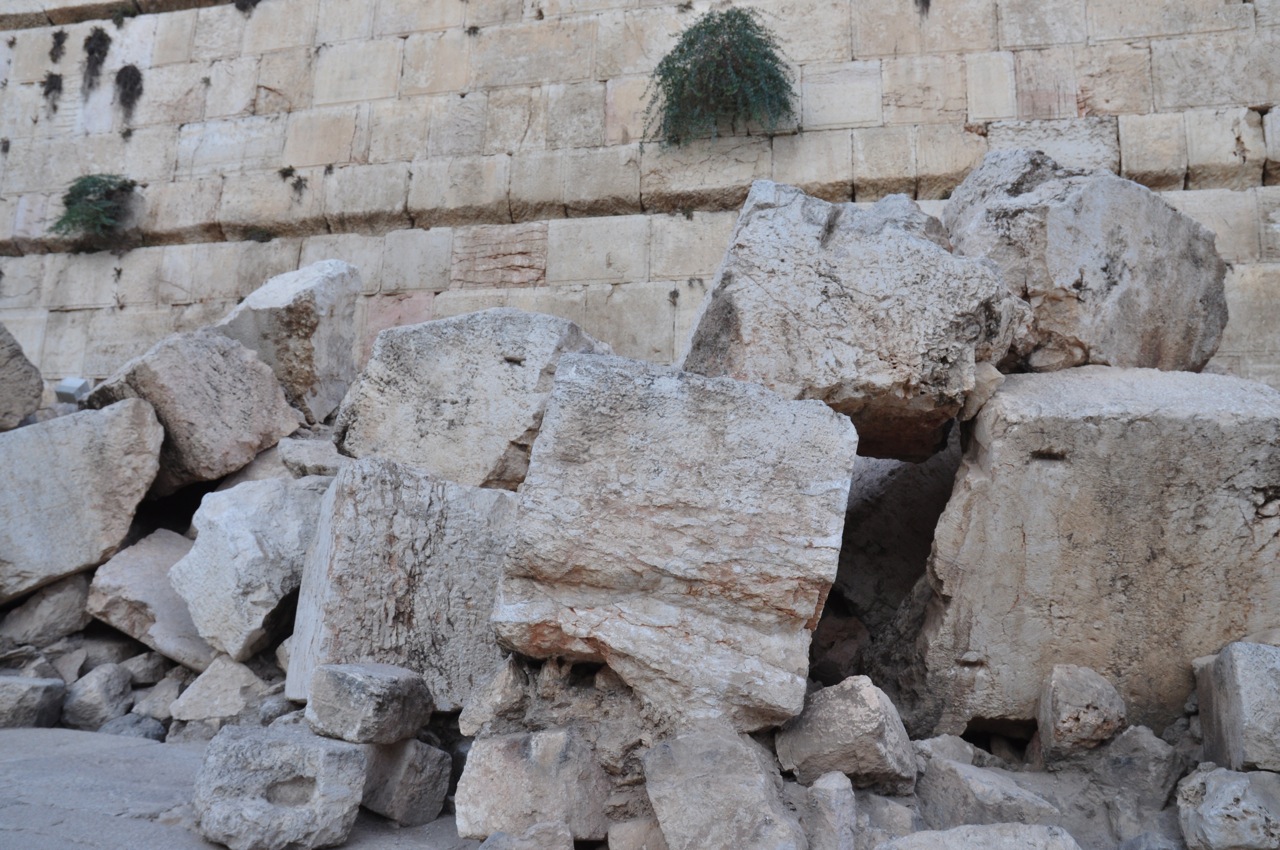
Following the secondary Cardo to the south of the city will bring you to the Davidson Archaeological Park excavated by Benjamin Mazar and Meir Ben Dov from 1968 to 1978 and later in the mid 90s by Ronnie Reich. Perhaps the most impressive sight in Jerusalem is the main Second Temple street, littered with large Herodian stones that the Romans hurled off the top of the wall 15 meters above when they destroyed the Temple and Jerusalem in 70CE. Where the stones under Robinson’s Arch have been cleared away, you can see that the large paving stones are broken and have buckled under the tremendous impact of the arch’s collapse.

In the visitor’s center is a movie of a Jewish pilgrim’s experience coming to the Temple in Jerusalem. The movie uses 3D modelling of the Temple complex based on the archaeological evidence.

Under the street is the main drainage channel for ancient Jerusalem that has been recently opened and that goes as far as the Siloam Pool. Walking through the park you come to the southern steps that lead up to the double and triple gates. Below the steps is Eilat Mazar’s recent excavation of part of a citadel, a 4 chamber entrance gate whose dimensions are almost identical to the palace gate in Megiddo and a building of “royal character” dated to the 9th century BCE.

Khirbet Qeiyafa

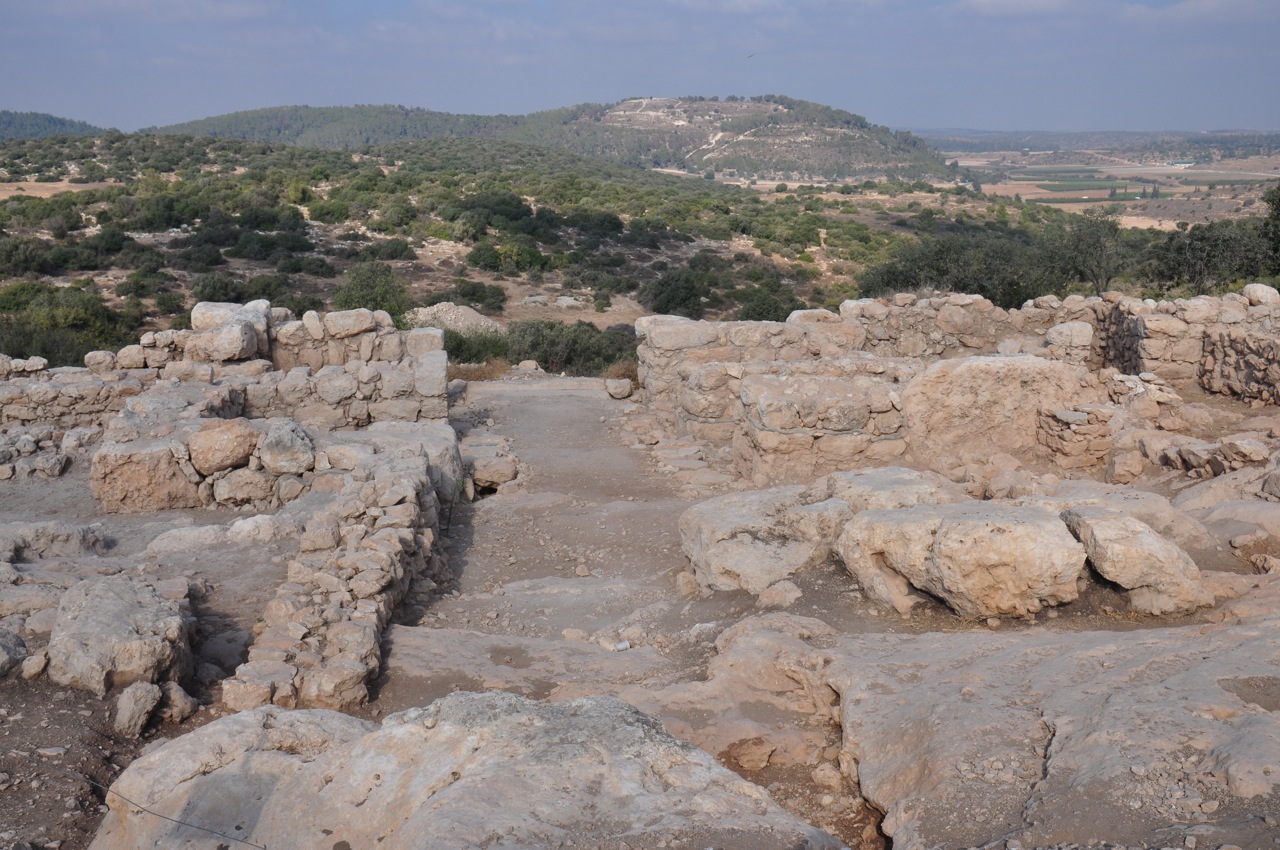
The traditional view based on the Biblical account is that in the 10th century King David ruled over a United Monarchy consisting of Judea in the south and Israel in the north. By the 9th century it had split into two kingdoms, Israel that continued to exist until the Assyrian conquest in 722BCE and Judea that continued until the Babylonian destruction in 586BCE. In contrast the Minimalist school refuted the idea of a United Monarchy and saw David as a mythical figure. The kingdom of Israel established itself first, in the 9th century (low chronology) and a monarchy developed in Judea only after the destruction of the kingdom of Israel in the late 8th century. With the discovery of the House of David stele at Dan the Minimalists had to grudgingly concede that David could exist but was a minor chieftain who ruled over a limited area, not an extensive kingdom ruled from a centralized location. With the discoveries at Khirbet Qeiyafa, a site in the Elah valley Prof. Yosef Garfinkel of Hebrew University is convinced that he has uncovered a Judean town that is dated to the 10th C. To build fortifications like those at Khirbet Qeiyafa, requiring moving 200,000 tons of stone, could not have been a local initiative but would have required a centralized government.

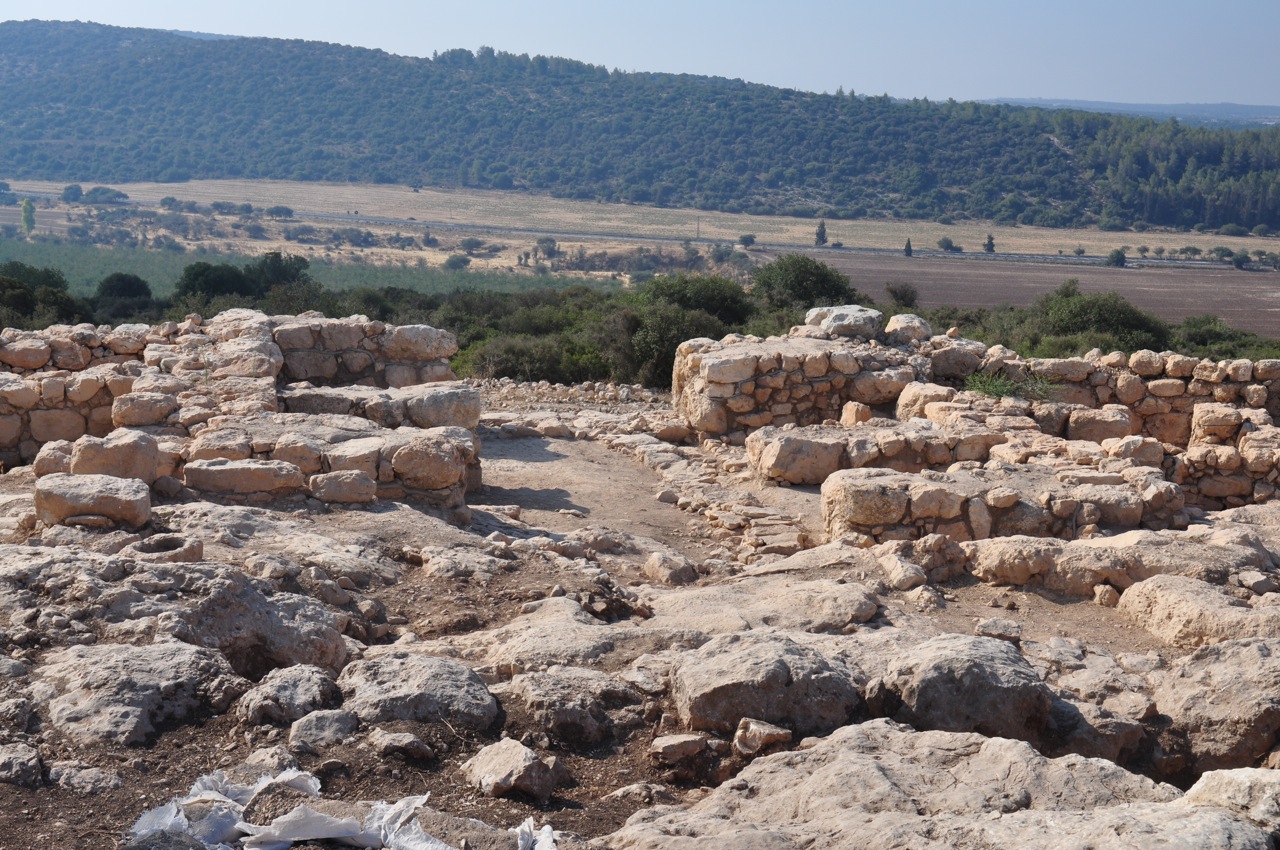
The site is small, 23 dunam enclosed with a casement wall situated on a hill overlooking the Elah valley with human occupation for about 20 years. Garfinkel suggests that the site was destroyed by Phillistine Gath/Tel Safi a larger town only 12 km to the west (Prof. Aren Maier who heads the excavations at Safi concurs); the Bible describes numerous border disputes in the Elah Valley region during the 11th-10th century BCE. There are only 3 building strata layers: 1) the late Roman/Byzantine period, 4th to 6th century when it included a fortress or caravansery at the center of the site, 2) late Persian or early Hellenstic period (ca. 350-270BCE) and 3) the lowest stratum directly on the bedrock dated to Iron Age IIA, existing in the late 11th to early 10th century. The dating is based on pottery and artifacts correlated with the results of radiometric (Carbon 14) dating of 4 burnt olive pits that yield a calibrated date of 1051 to 969BCE with 77.8% probablity which supports the ‘high chronology” of the biblical traditionalists.
Features and artifacts unearthed at the site suggest that it was a Judean settlement.

  • The structural style of the casemate walls was classically Judean, matching similar construction at the ancient excavated sites of Beersheva, Tell en-Nasbeh, and Tell Beit Mirsim.
  • Thousands of animal bones were found (goats, sheep and cattle) but no pig bones, found commonly at nearby Phillistine sites like Ekron and Gath/Tell Safi.
  • Pottery found is different than that at nearby Gath. Fragments of an almost complete pottery baking tray hinted at a culture that was unlike that of the nearby Phillistine sites.

Khirbet Qeiyafa is the only archaeological site discovered in Israel so far that has two gates. Garfinkel says, “Even cities three or four times its size, such as Lachish and Megiddo, have only a single gate.” Based on location, dating and the two gates Garfinkel identifies it as Shaarayim (Hebrew for two gates) mentioned 3 times in the Bible.

  • In the city list of the tribe of Judah it appears after Socoh and Azekah (Josh 15:36). Socoh is located 2.5 km to the southeast of Khirbet Qeiyafa and Azekah 2 km to the west.
  • After David killed Goliath the Philistines escaped through the ““road of Sha’’arayim”” (1 Sam 17:52).
  • In the city list of the tribe of Simeon, Sha’’arayim is mentioned as one of the cities ““until the reign of David”” (1 Ch 4:31––32).

It’s exciting to have the opportunity to attend an annual archaeology conference reporting on the latest research about Israel 3000 years ago. But more than that it’s possible to visit and explore the actual sites. After hearing Garfinkel’s interpretations I drove to the site to see for myself (I do guided tours of Khirbet Qeiyafa). Notice the drainage channel in the Southern gate (and our golden retriever, Sumsum, who likes to go on tours).

Prof. Israel Finkelstein of Tel Aviv University, a proponent of the Minimalist school, also gave a paper at the conference but disappointingly, he didn’t comment at all about Garfinkel’s claim. Instead, he presented a critique of Eilat Mazar’s conclusions about the Large Stone Structure and her dating of the building to the 10th C. Finkelstein argues that

  • the remains of what is called the Large Stone Structure are not one building.
  • Similarly, the Stepped Structure is not monolitic but contains segments from Iron age IIA and Hellenistic periods. There is no connection today between some of the Iron Age IIA components of the Large Stone Structure and the Stepped Structure. The only physical connection is between the walls and the top section of the Stepped Structure which is from the Hellenistic period.
  • Some of the massive walls may be from Iron Age IIA, (he uses low chronology, 9th century) but others are from the Hellenistic period.

Finkelstein concludes that no experienced archaeologist would claim to have uncovered a monumental building from the 10C BCE based on the archaeological evidence.

Walking underground to Robinson’s Arch

The 12th annual City of David Archaeological conference marked the official opening to the public of Jerusalem’s central drainage channel in the Tyropean valley from the Second Temple period. Thanks to the excavations by Reich and Shukron it is now possible to begin on the Herodian street beside the Siloam Pool, walk underground up the hill on the western stairs and then take a left to the drainage channel and continue, exiting on the Herodian street by the western wall below Robinson’s Arch, a distance of 650m. This is an incredible experience or in Hebrew, a havaya. You are walking on 2000 year old paving stones and in the drainage channel where Josephus writes that Jerusalem residents hid from the Romans until either they succeeded to flee the city or were discovered; you can see paving stones smashed so Roman soldiers could enter the channel.

It was Bliss and Dickie who in 1898 first discovered and documented the stepped street with a stone pavement and an underlying large drainage channel when they excavated a line of 9 shafts sunk across the width of the Tyropean 425m to the south of where Warren had excavated. In this southern section the channel is built of ashlars (large square cut stones) on bedrock and is covered with heavy stone slabs that are actually the paving stones of the street above.

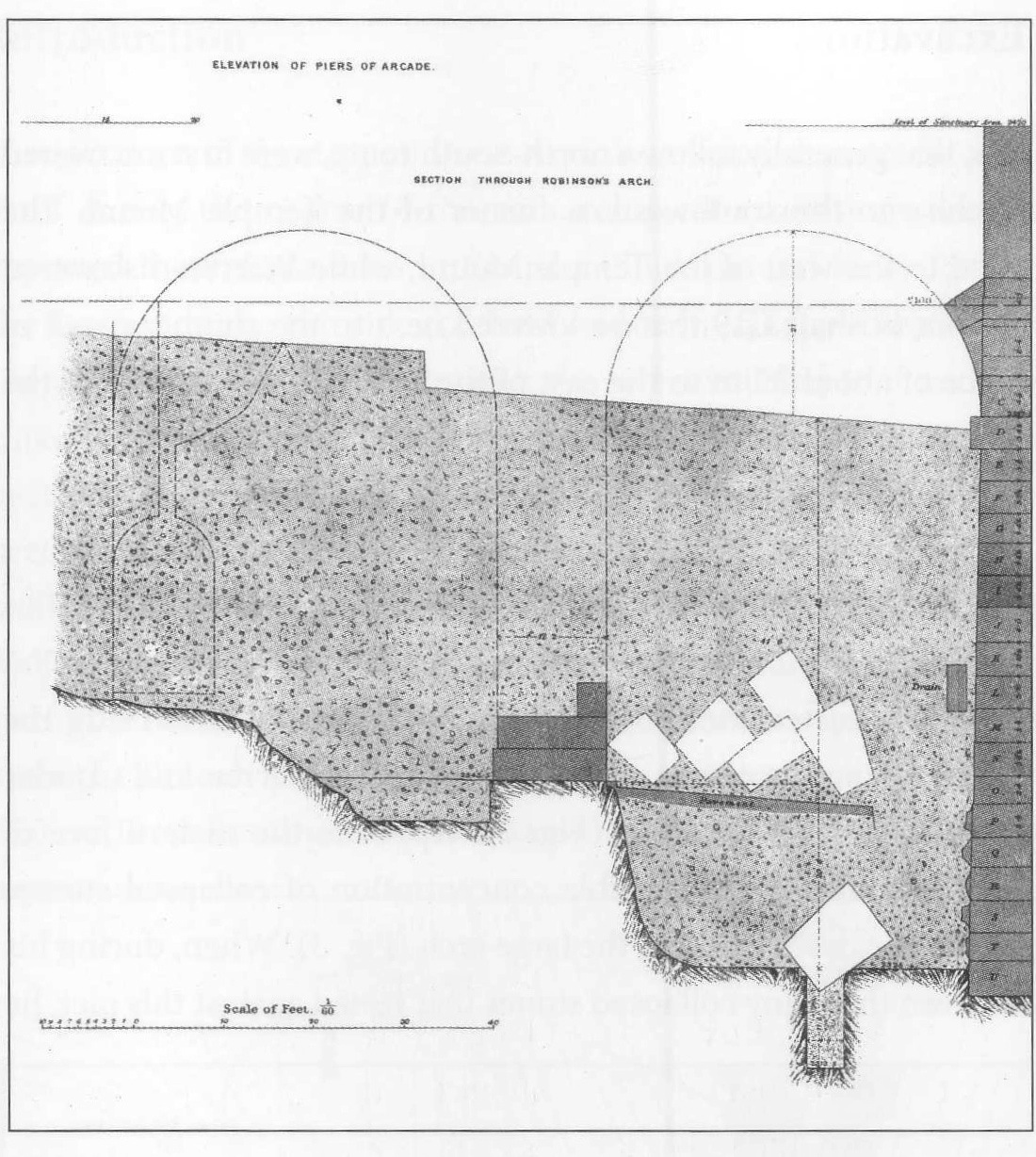
Earlier Warren had sunk 7 shafts across the Tyropean at Robinson’s Arch. In a report for the Palestinian Exploration Fund (PEF) in 1867 he described two drainage channels, running generally north south, the western channel was unearthed about 4m from  the western wall and the eastern channel about 37m east of the southwestern corner. The western channel is quarried into the bedrock, about 4m deep and 1.2 m wide and roofed with an elongated vault. In two places, a large voussoir (a wedge-shaped stone used to construct an arch) fell during the building of Robinson’s arch and wedged itself  in the top of the channel; the vaulted roof was built around these stones. According to Mazaar and Ben-Dov who excavated this area in the 1970s, these stones fell before the street pavement was installed. They concluded from this that the channel was built earlier, in the time of Herod, while the street was paved afterward. Excavations by Reich and Billig in 1990s discovered 15 coins in the earth fill between the street and the vault, the latest of which was from the time of Pontius Pilate (23-26CE), implying a late dating of the middle of the first century for the street paving (time of Agrippa II).

In 1869, William “Crimea” Simpson (widely known for his firsthand coverage of the British campaign in the Crimean War) was sent by his employer the Illustrated London News to sketch the opening ceremony and scenes of the Suez Canal. On his way, he took the opportunity to visit Jerusalem on behalf of the PEF and made sketches of the excavations which Warren had undertaken of some ancient water tunnels. To provide sufficient light for him to sketch, they had to burn magnesium wire (Edison only invented the incadescent light bulb in 1879). This sketch was made into a watercolor painting – Henry Birtles, Warren’s assistant, leaning against the wall of the drainage channel with the large voussoir in the foreground. Interesting that we have illustrations and paintings from Warren but no photographs although the process was known from 1839. The daguerreotype, with its silver surface and minute detail, was very popular in both Europe and the US. At virtually the same time, Talbot published working methods for his photogenic drawing and the negative-positive calotype process in 1840. These provided the basis for photography until the digital age. Today you can stand where Birtles stood and take your photograph under the same stone still lodged in the channel.