Category Archives: Archaeology

Hisham’s Palace in Jericho

The Umayyads ruled from Damascus but built a number of palace complexes in this area – we have found ruins of their palaces in Jerusalem, at the southern corner of the Western wall and at Khirbet al-Minya, on the Sea of Galilee beside Karei Deshe.
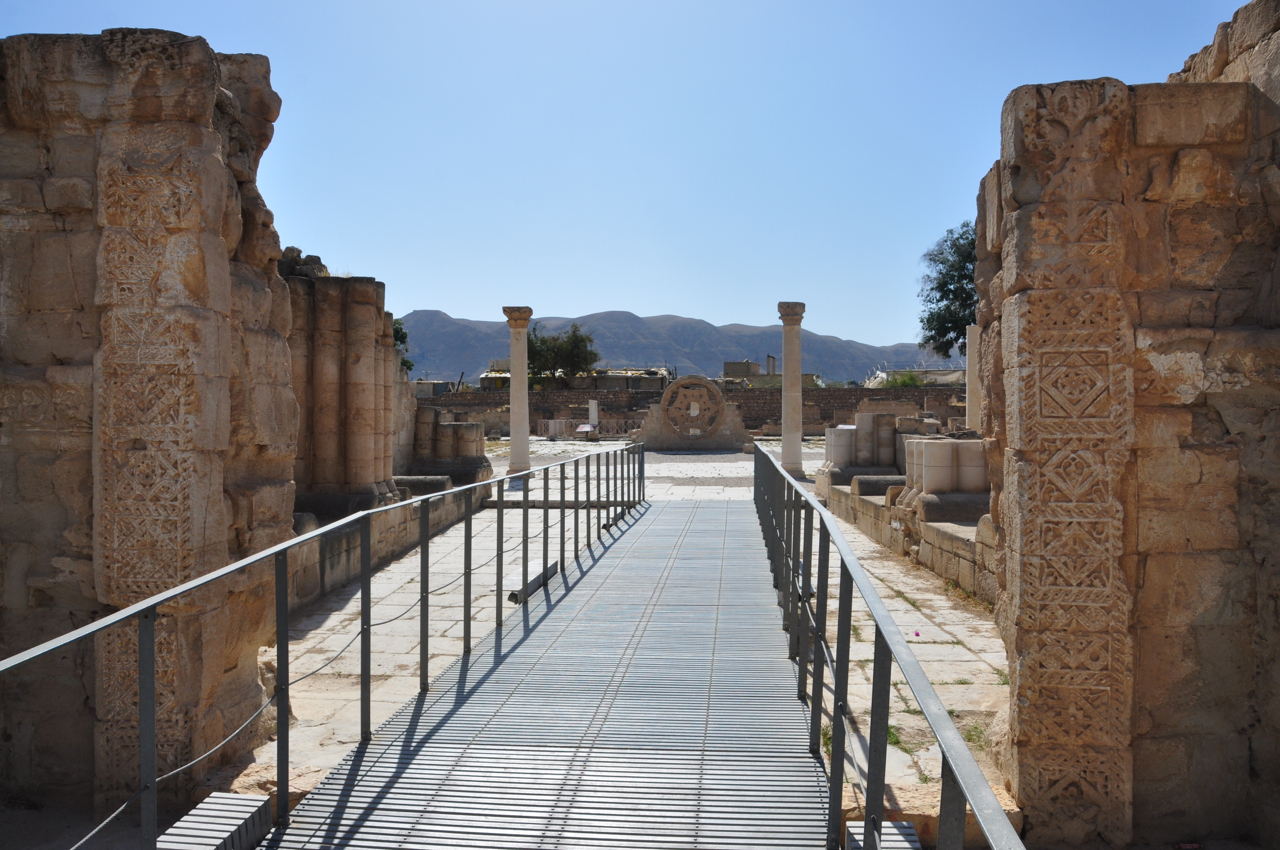
Palace entrance

One of the most impressive sites from the Umayyad period (661-750) is the ruins of Khirbet al-Mafjar (meaning flowing water ruins), popularly known as Hisham’s palace just outside Jericho and I am now authorized to guide tourists there.
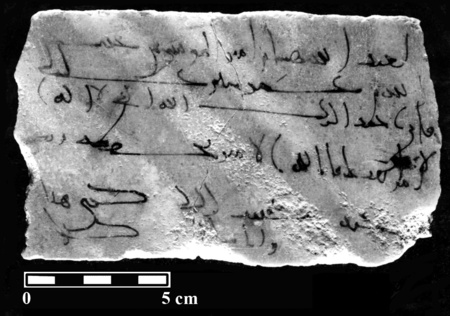
Hisham's name on marble, from Hamilton

Hisham’s name on marble, from Hamilton

The palace is identified with Hisham ibn abd el-Malik (ruled 723-743) because of an inscription containing his name, in ink on a marble slab, found at the site by Dmitry Baramki who excavated there under the British between 1934 and 1948. Based on the artwork that decorated the palace, Robert Hamilton, Director of Antiquities under the British, argued that the palace was a residence of al-Walid b. al-Yazid (ruled 743-744), a nephew of Hisham who was famous for his extravagant lifestyle which probably led to his assassination.  Al-Walid II was a hunter, poet and musician, something of a playboy who loved the good life.
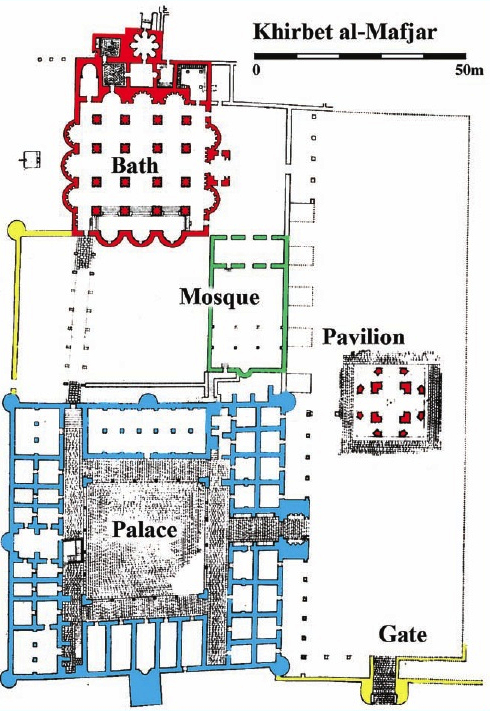
Khirbet al-Mafjar planThe site is thought to have been destroyed by the severe earthquake of 749 CE before it was completed, but an analysis of Baramki’s detailed reports of the ceramic record indicates that the occupation continued through the Ayyubid and Mamluk periods, with a significant phase of occupation between 900–1000.

In walking around the site you will get to view the ruins of the palace, the bath complex, a pavilion and mosque enclosed by a wall; more recently, excavations to the north have uncovered an agricultural estate. The excavations uncovered fine mosaics and elaborate stucco figures, as well as stone sculpture and frescoes. The carved stucco is of exceptional quality in geometric and vegetal patterns; in the bath complex there are even male and female figures, their upper bodies naked.

Pavilion Facade

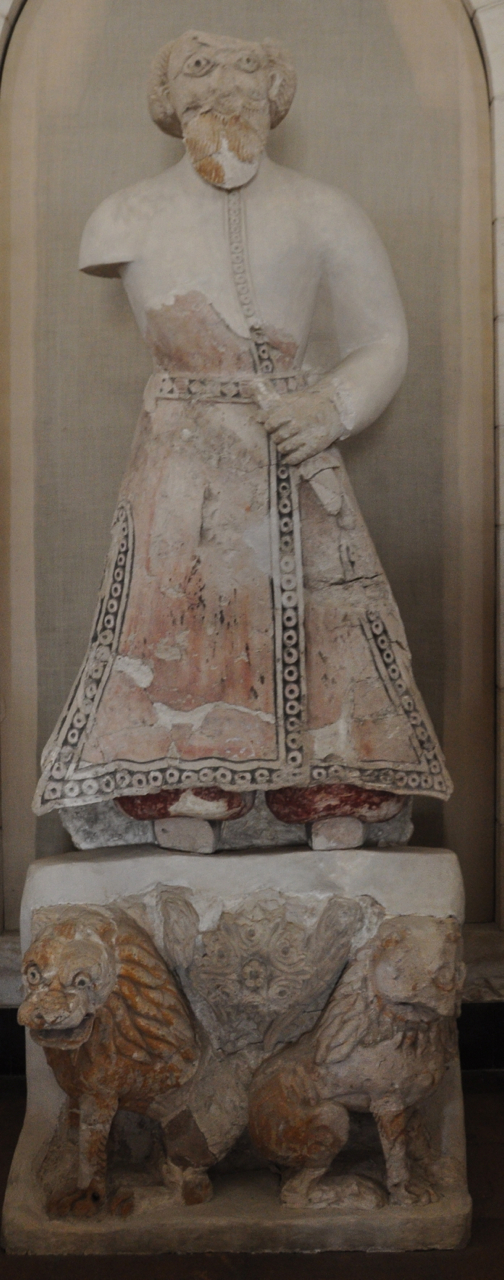
Caliph on Lions

A statue depicting a male standing figure with a sword on two lions, very likely the caliph patron himself, stood in a niche above the entrance to the bath hall.

The floors are decorated with incredible mosaics but unfortunately, besides the well-known Tree of Life mosaic in the bahw or special reception room in the bath complex, most are currently covered. This floor mosaic consists of a fruit tree (apple, lemon or quince) under which on the left are two gazelles grazing and on the right a lion pouncing on a gazelle. Given that the mosaic is in the bahw the image is more than just a popular hunting scene¹. Here the lion represents the ruling Caliph and the gazelles the subjects, living in peace or being subdued.
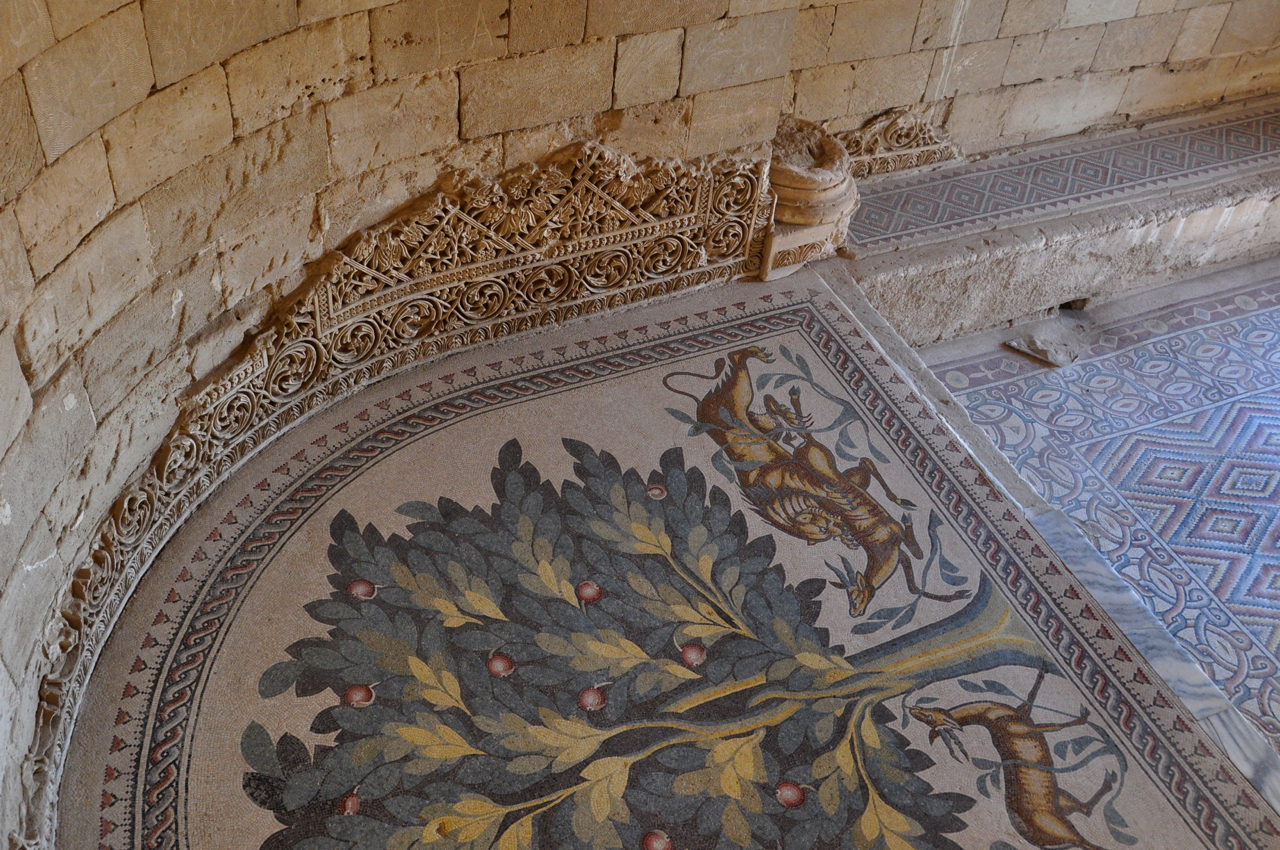
Tree of Life mosaic

While visiting the site, don’t miss the short video and visiting the small but very well-done museum with artifacts from the site. A lot of the plaster sculptures and stucco were removed from the site during the British period and are on display in one hall at the Rockefeller Museum in Jerusalem so it’s worth planning to visit there too.
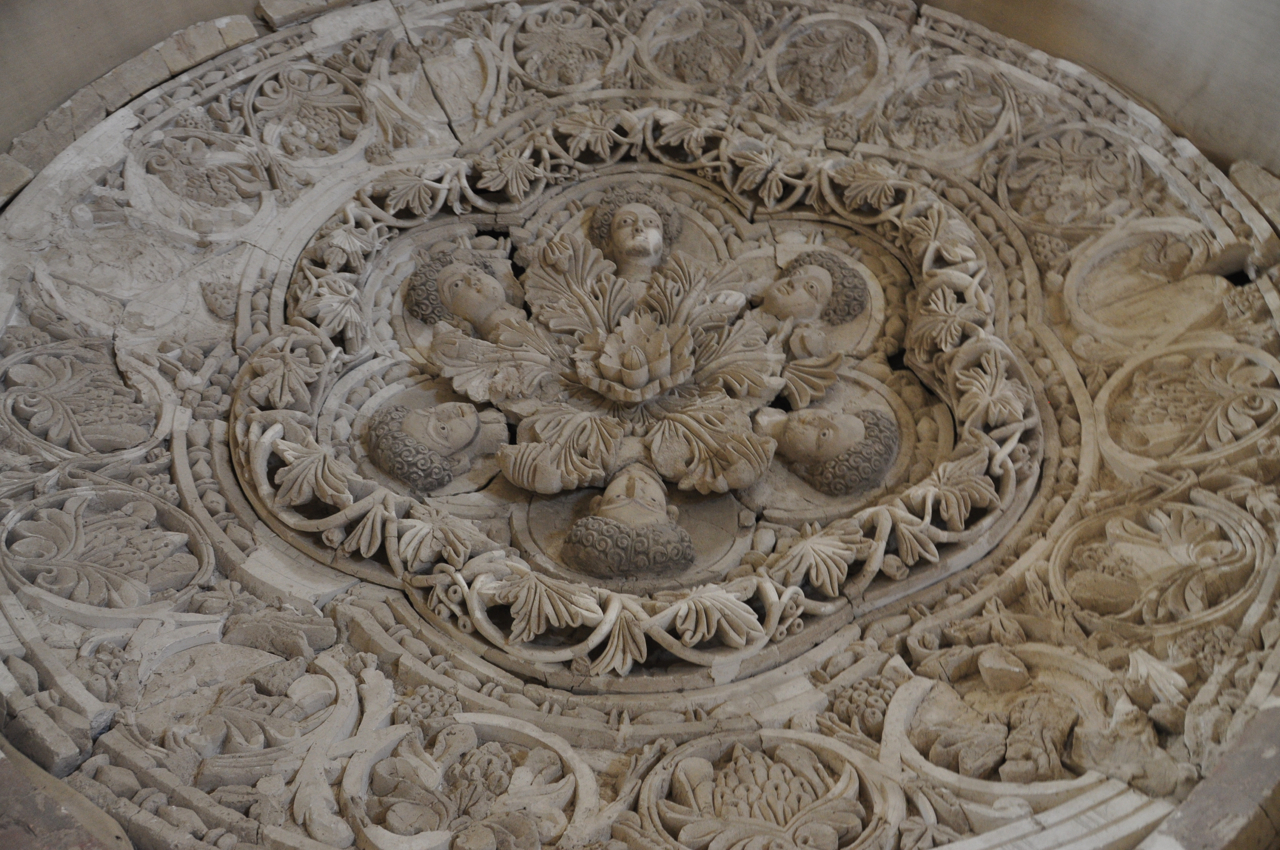
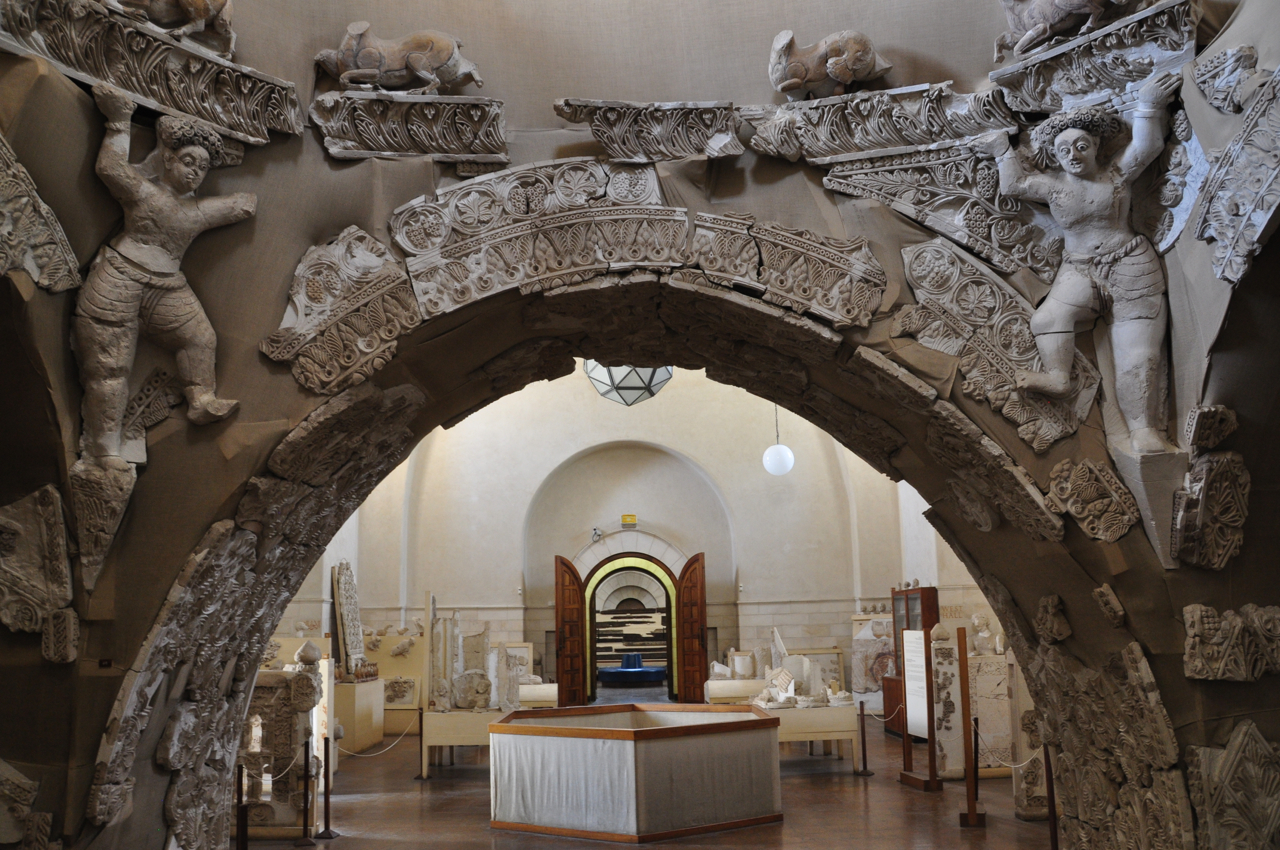
Sculpted ceiling plaster

Entrance

In the back corner of the courtyard are some Umayyad architectural details, part of a sculpted arch with its original paint and an example of a merlon, a step-shaped stone that sits on the top of a wall.
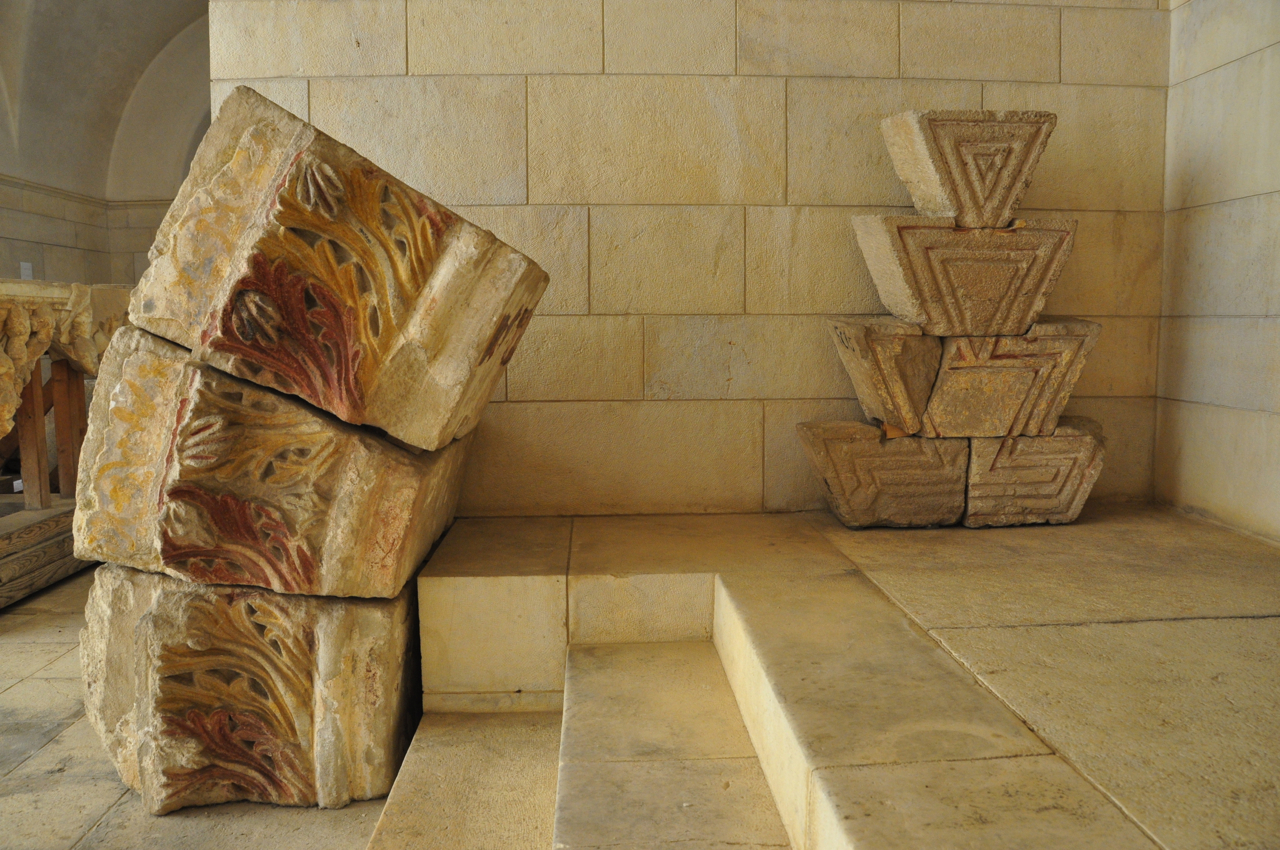
Umayyad

As your guide I can help you create an itinerary that matches your interests and ensures that not only do you get to visit archaeological sites which enable you to understand the context but museums that display and explain the artifacts discovered at the site so that you get the most out of your visit.


Reference
Behrens-Abouseif, Doris, The Lion-Gazelle Mosaic at Khirbat al-Mafjar, 1997.
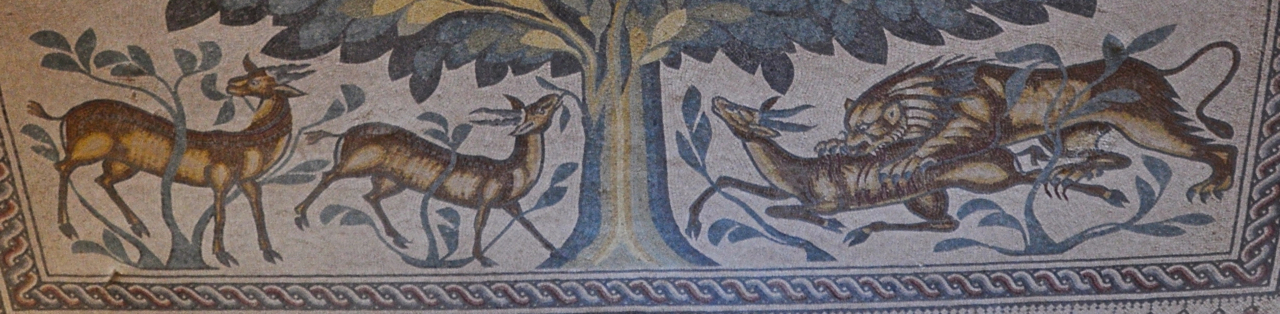
Lion & Gazelles

¹ Interestingly, I saw a similar motif in mosaic from a Byzantine church on display at the Israel Museum.
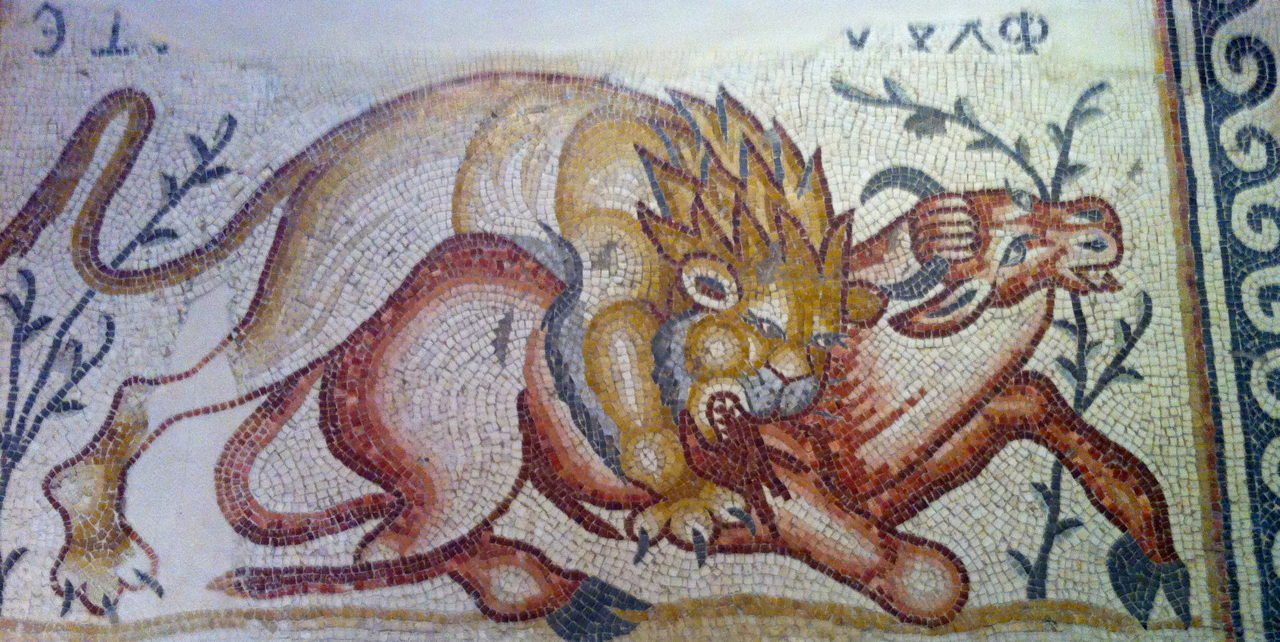
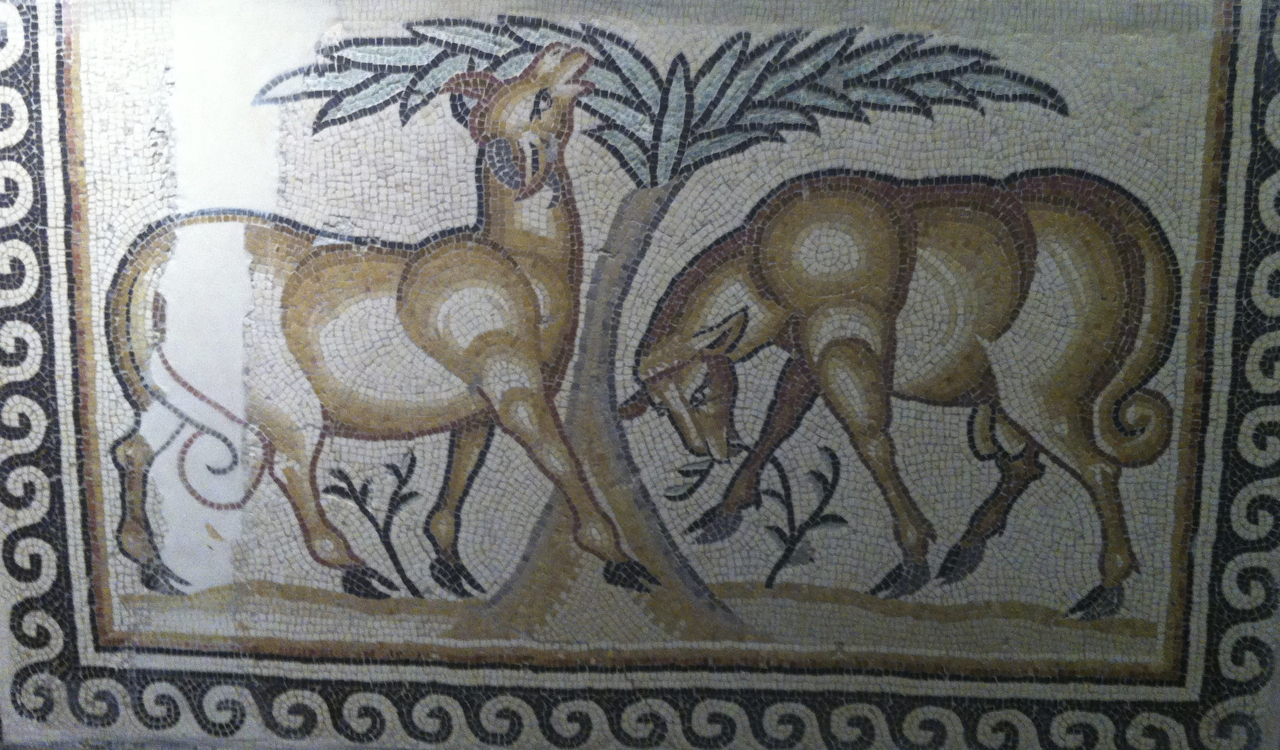
Lion killing ox

Grazing

Photo of the Week – Gamla

Situated in the southern part of the Golan, Gamla was built on a mountain shaped like a camel’s hump, from which it derives its name. The steep ravines precluded the need to build a wall except along the town’s eastern edge, as seen in this photo.

Gamla

The technical details – the photo was taken with a Nikon DSLR camera on June 1 (ISO 800, 65mm, F13 at 1/800 sec).

Please share this post with your friends by clicking on the icons at the end of this message.

Photographs on this website are © Shmuel Browns (unless marked otherwise) – if you are interested in purchasing one of my photos or using one of my photos for your own project please contact me.

Related articles

Photo of the Week – Tel Arad

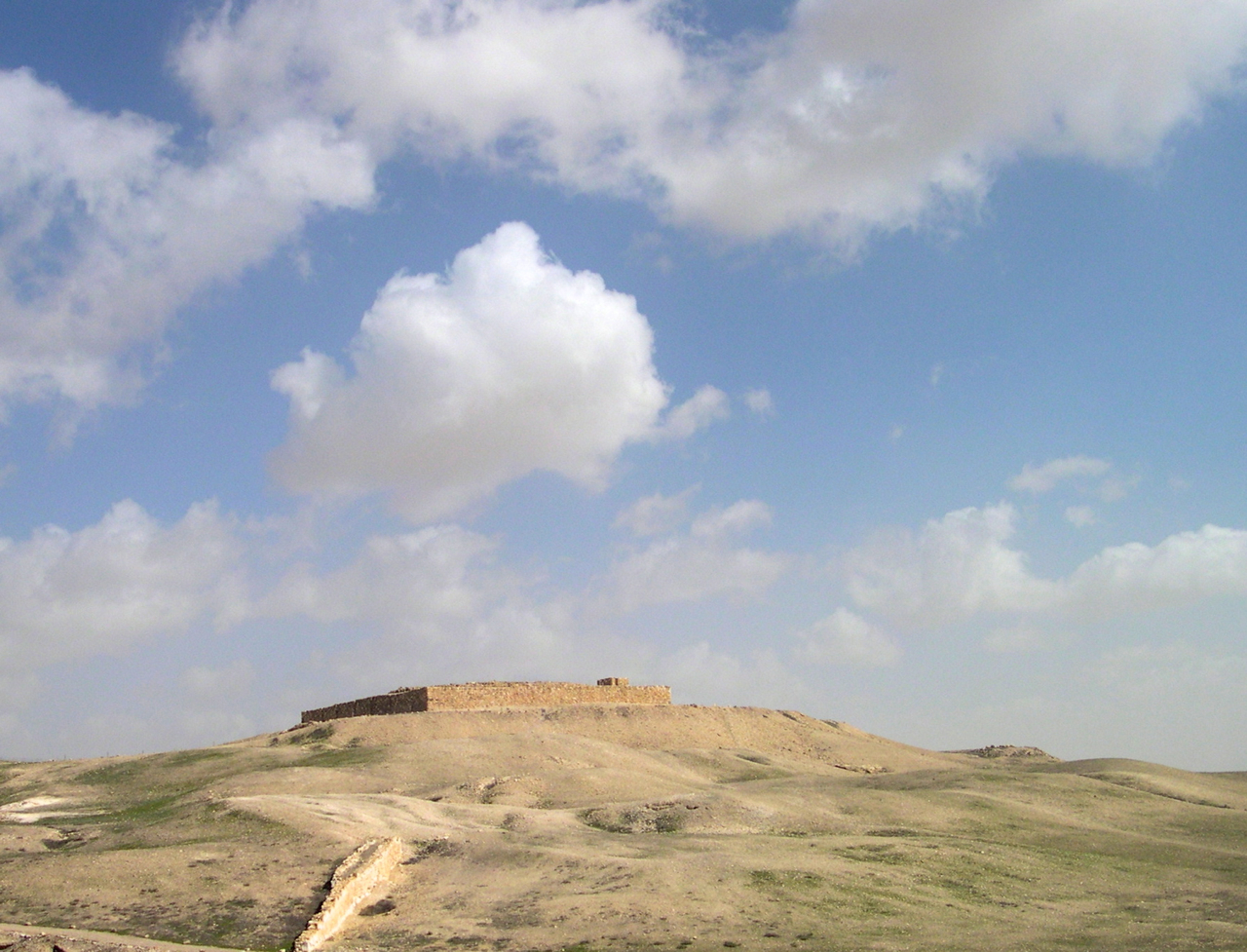
Tel Arad is an Iron Age city in the Negev desert. This week’s photo is of the ruins of a major fortress built on the top of the hill to protect Israel’s southeast border and the Negev trade routes.

In the northwestern corner of the citadel, an Israelite temple with three rooms was discovered, made up of an ulam (entrance hall), heichal (main hall), and dvir (holy of holies). Stone altars for incense flanked both sides of the entrance to the dvir. In front of the temple was an altar built of bricks and stone, measuring 2.5 x 2.5 meters, similar to the altar described in Deut. 27:5 and II Chronicles 6:13This temple was destroyed, apparently as a result of the religious reforms of King Hezekiah at the end of the 8th century BCE.

Tel Arad

The technical details – the photo was taken in December with a Nikon point and shoot camera (ISO 100, 8mm, F7.6 at 1/359 sec).

Please share this post with your friends by clicking on the icons at the end of this message.

Photographs on this website are © Shmuel Browns (unless marked otherwise) – if you are interested in purchasing one of my photos or using one of my photos for your own project please contact me.

Related articles

Bethlehem

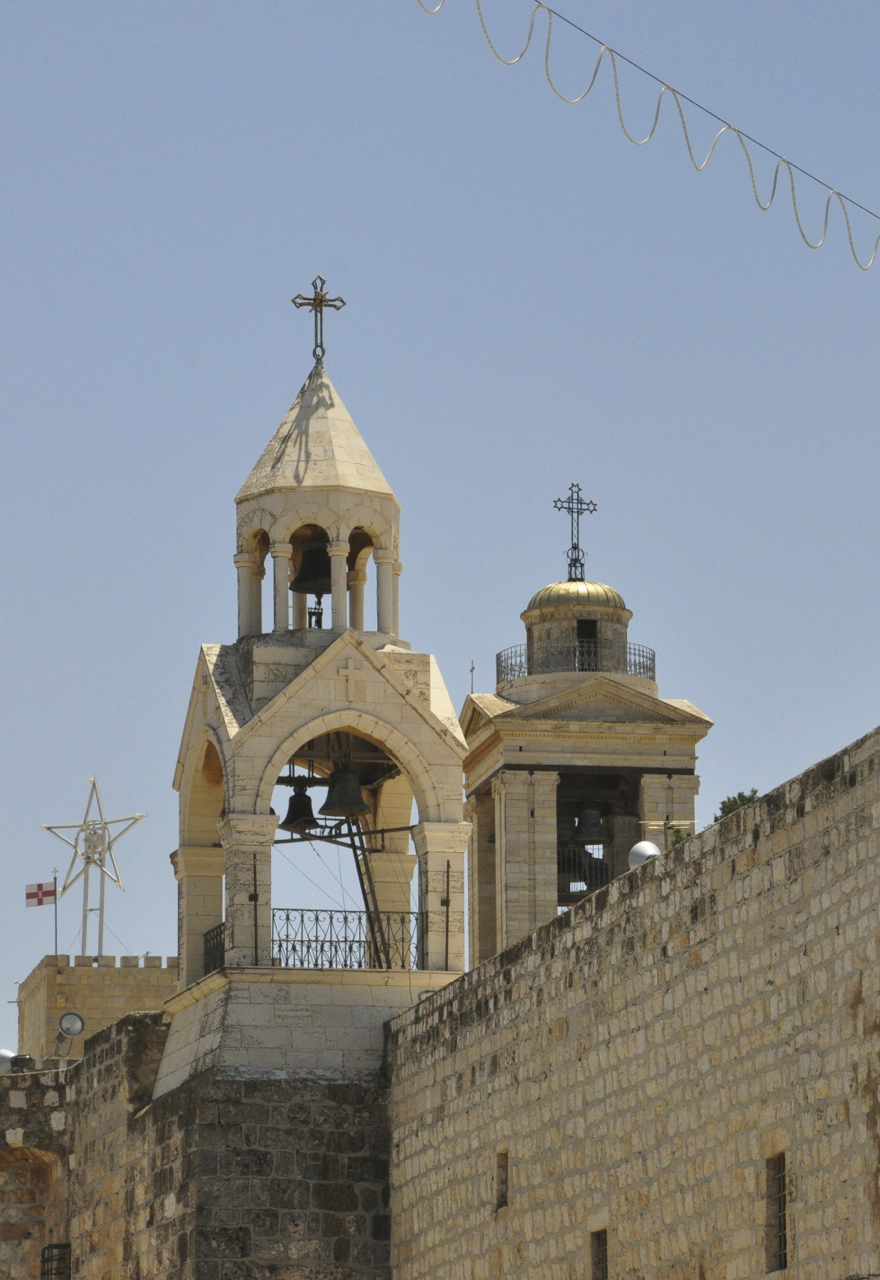
Nativity bell towersBethlehem is a city in the Palestinian Authority with a population of 21,947 and another about 25,000 in the neighboring towns of Beit Sahour and Beit Jalla. The majority (72%) in the district are Muslim today. Christians in Bethlehem constitute less than 15% of the population (Fifty years ago, Christians made up more than 70% of the population). In the Hebrew Bible, the city is described as the birthplace of King David, in the New Testament, as the birthplace of Jesus, and hence is a center of Christian pilgrimage. Although Israelis are not allowed by Israeli law to enter areas of the Palestinian Authority, I have authorization as an Israeli tour guide to take foreign tourists to Bethlehem and Jericho.

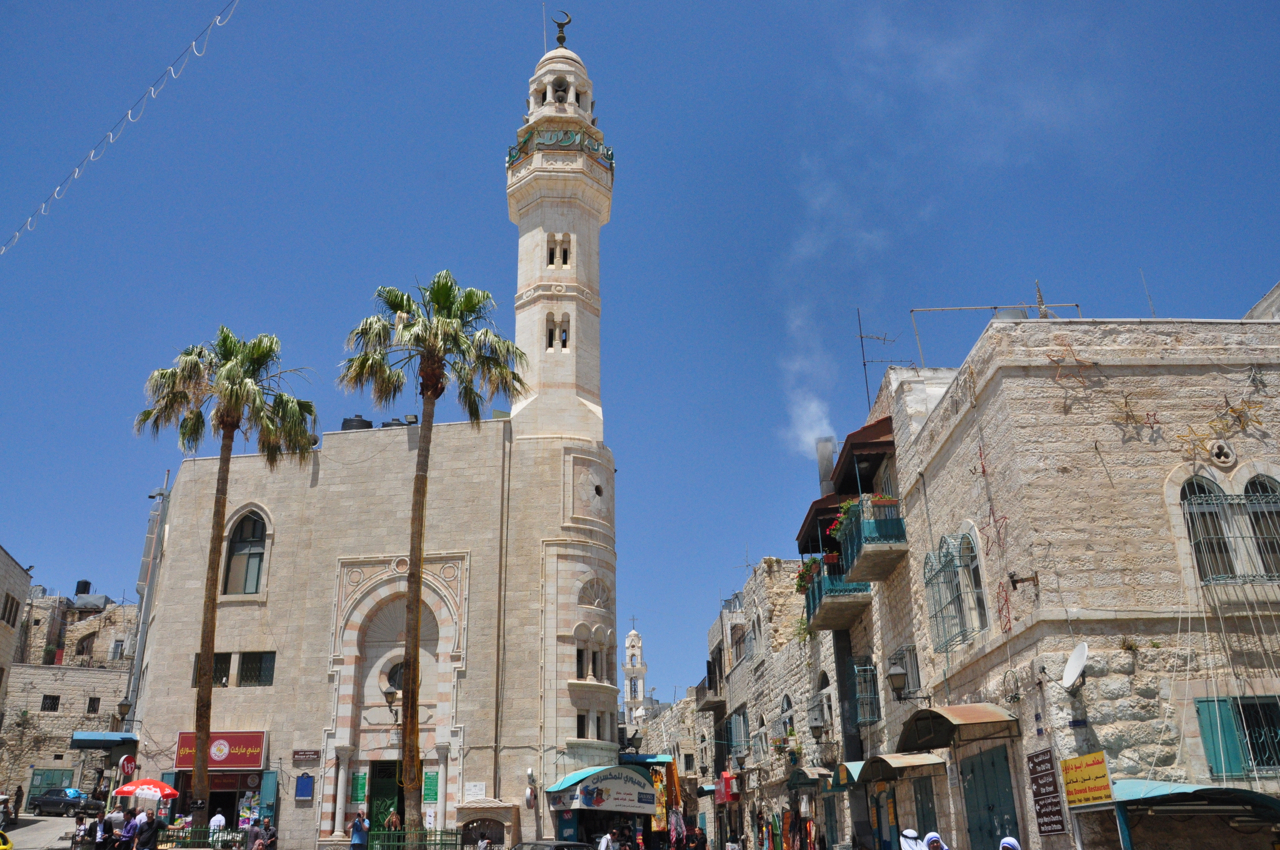
The main attraction in Bethlehem is the Church of the Nativity which stands at one end of Manger Square facing the Mosque of Omar. On the sides of the square are restaurants, souvenir shops, and a modern building that houses the Tourist Information Center, a bookstore, a restaurant and an exhibition hall which currently has a display of creches, the models of Jesus’ birth in the manger from Christian communities around the world, each in their own native style.

Mosque Omar, Manger Sq

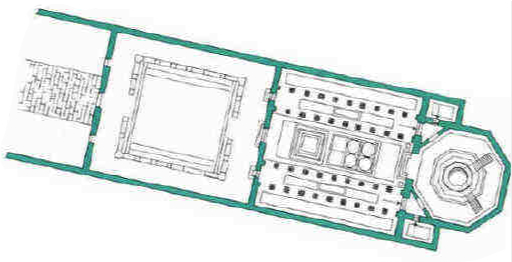
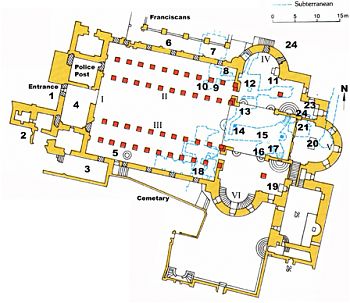
The Church of the Nativity was begun in 327 CE by Emperor Constantine and his mother Helena over the cave that marks the birthplace of Jesus as told in the Gospels of Mathew and Luke; the sanctuary had an octagonal floor plan centered directly above the cave and was completed in 339 CE.

Nativity pre529

Nativity todayThis church was destroyed by fire during the Samaritan Revolts in 529 CE. Justinian rebuilt a new basilica in 565 CE similar to the original, making it one of the oldest surviving churches.  In this plan, the octagonal sanctuary was replaced, being enlarged to three apses. Since then the church has had numerous additions, including its prominent bell towers. The Church of the Nativity is a UNESCO World Heritage Site, the first to be submitted by the Palestine Authority.

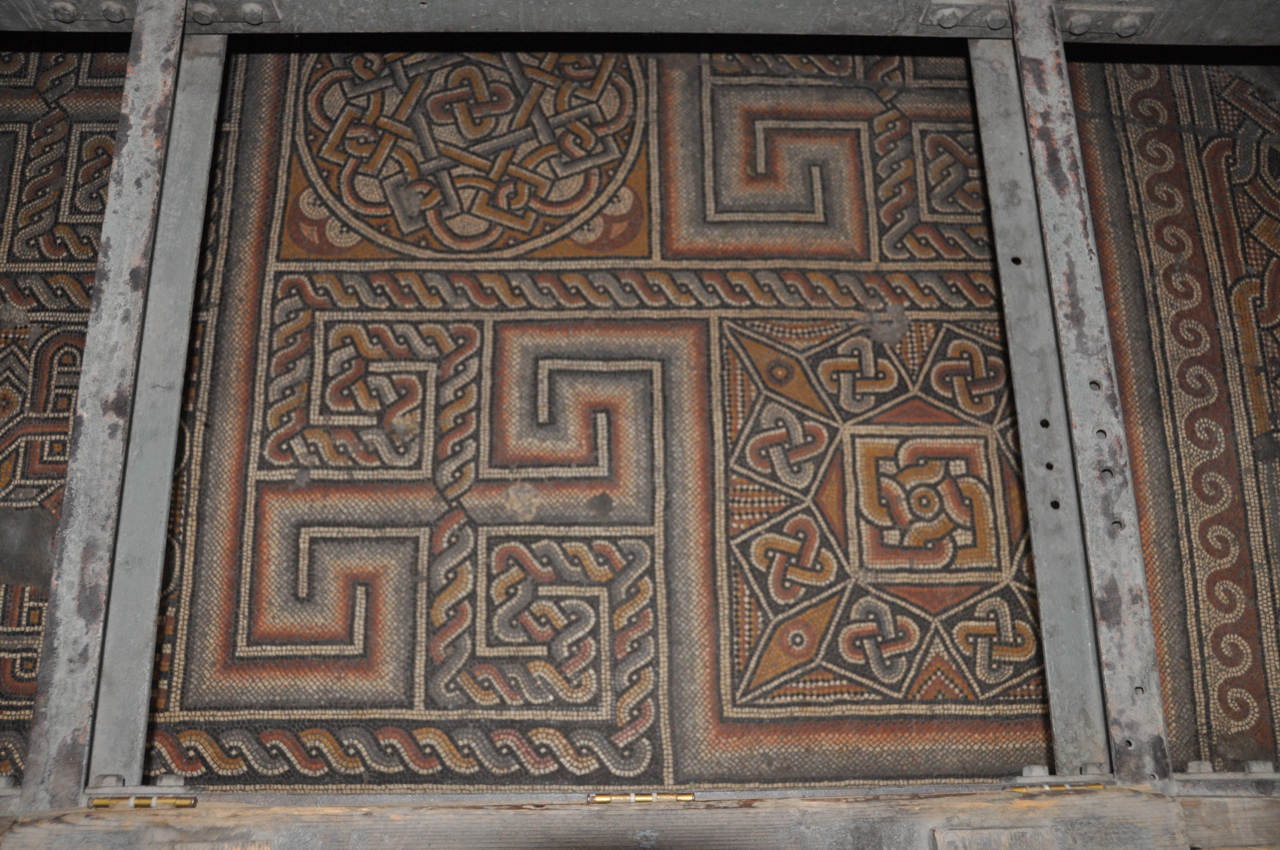
Wooden trap doors give access to portions of the original geometric floor mosaics that survive from Constantine’s church.

C Nativity mosaic

Twice the church was spared, by the Persians during their invasion in 614 CE because, according to legend, they were impressed by a representation of the Magi — fellow Persians — that decorated the building. In 1009 the Muslims prevented the application of el Hakim’s decree ordering the destruction of Christian monuments because, since the time of Omar, they had been permitted to use the south transept for worship.

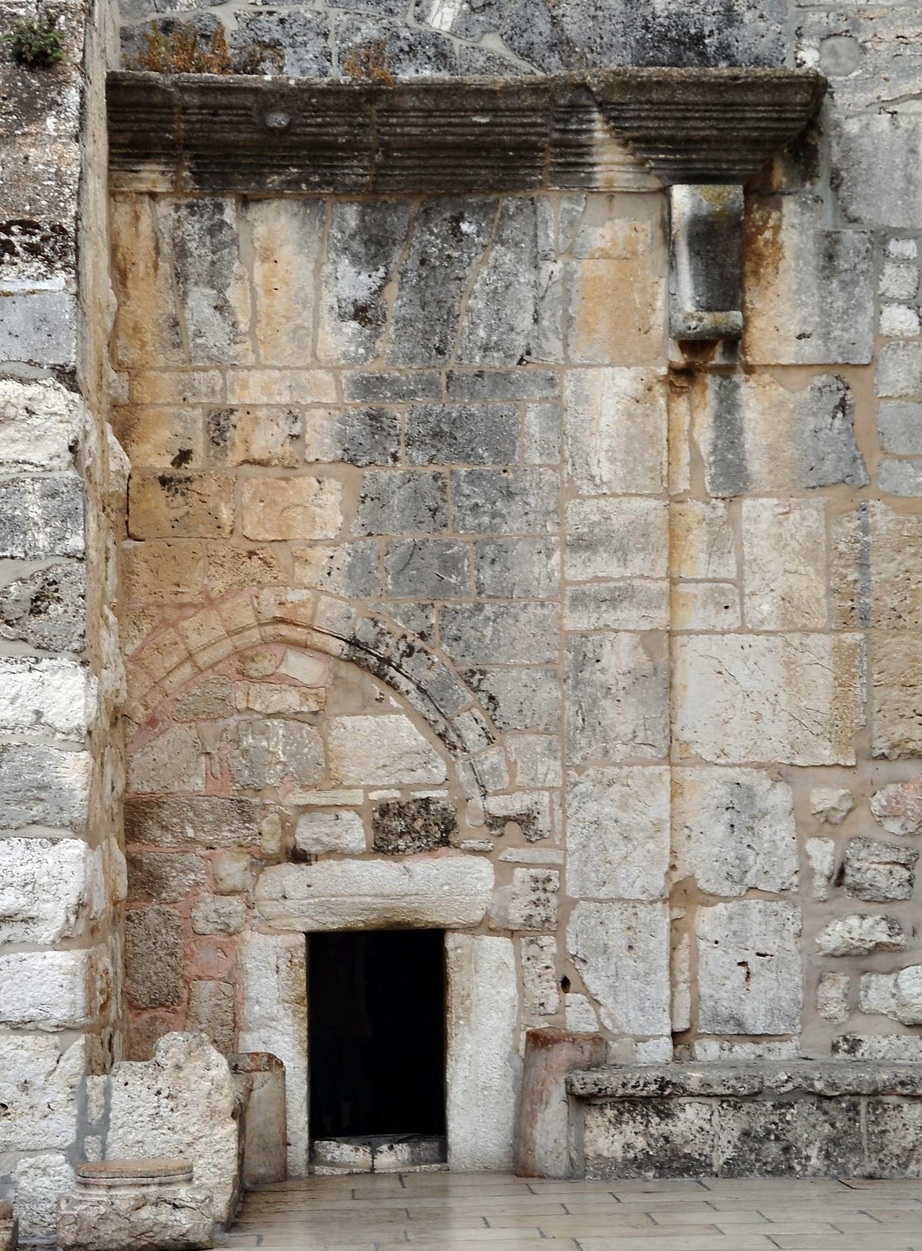
Entrances Church of NativityJustinian’s building had three imposing doorways of which only the central one is now in use (the left entrance is blocked by a buttress, the right by an Armenian hall for pilgrims). The one remaining doorway has been severely constricted – in the Crusader period, it was lowered with a Gothic arch; after 1515, the entrance was further reduced to prevent looters entering with horses and wagons – today it’s called the Door of Humility. Under Crusader rule the church was comprehensively redecorated, the interior walls  covered with gold mosaics. and a unique assembly of Crusader art was painted on the red limestone columns. Access to the grotto is via a pair of Crusader Gothic doorways on either side of the raised sanctuary, the bronze metal doors and baptismal font are from Justinian.

Beside the church is an elegant medieval cloister which was restored in 1948 by Barluzzi. The adjoining Church of St. Catherine is built in a more modern Gothic revival style. Beneath the church is a series of caves where St. Jerome lived and worked on the Vulgate, his translation of the Bible from Hebrew into Latin (having previously translated portions from the Greek Septuagint which came from Alexandria) from 384 CE.

From Bethlehem you can drive east through Beit Sahour to Shepherd’s Field, the site where the shepherds saw the Star of Nativity. There are two rival locations, one Greek Orthodox and the other Franciscan. Both sites have been excavated, and there have been churches and monasteries on both sites since the 4th century. This area is also believed to be where Ruth the Moabite gleaned in the fields of Boaz behind the harvesters. Ruth married Boaz and had a son Oved, the father of Jesse who was the father of King David.

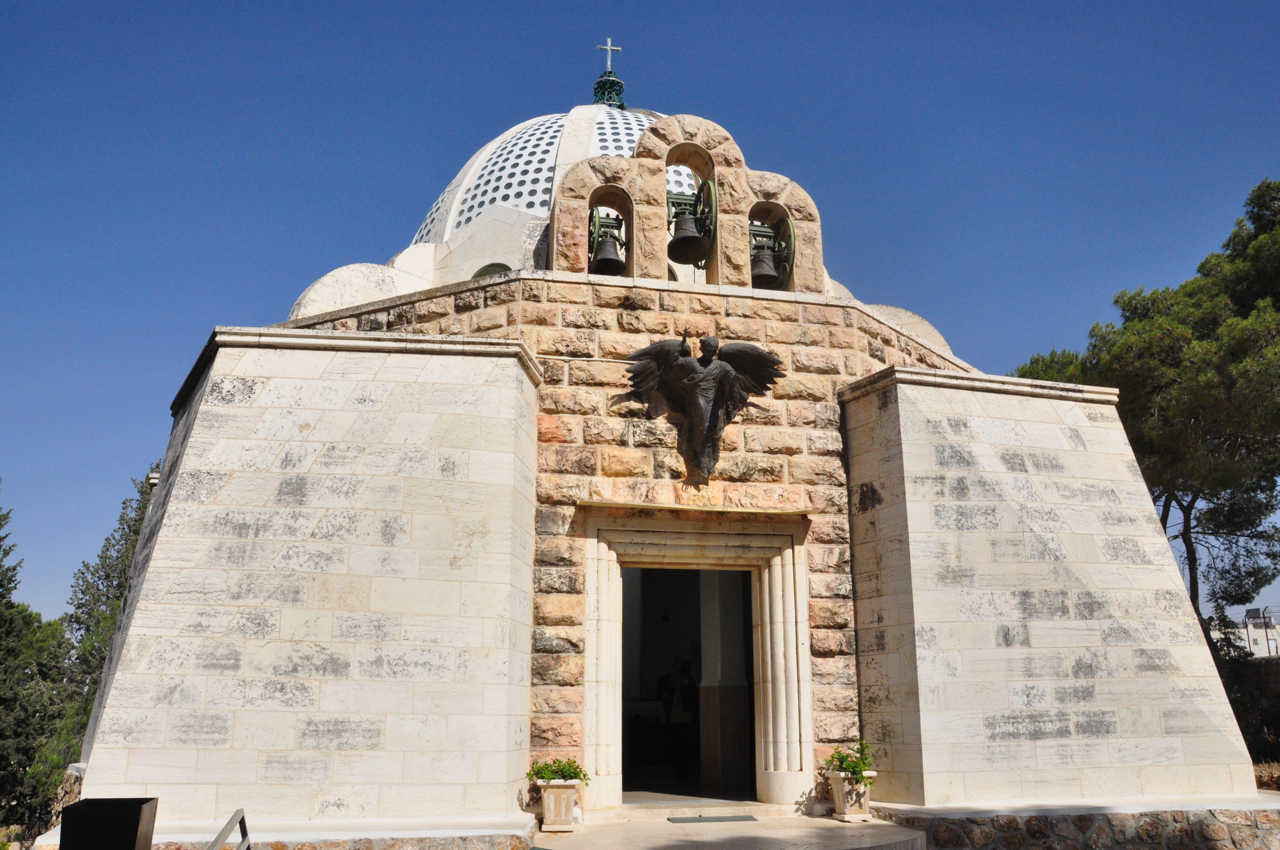
The Greek Orthodox site is at Kanisat al-Ruwat and includes a cave used as a church from the 4th century, of which the barrel-vaulted roof (5th century) still survives; today, a new large church has been built on top. About 600m to the north is the Franciscan site with a low natural cave or rock shelter that is used as a modern chapel. Above is a modern church built by Barluzzi in 1954, shaped like a tent and decorated with a beautiful bronze angel by Duilio Cambellotti.

Shepherd Field Church

If you continue east, perched on the cliff above the Kidron valley is the Monastery of Mar Saba dating back to 483 CE.

Solomons Pool

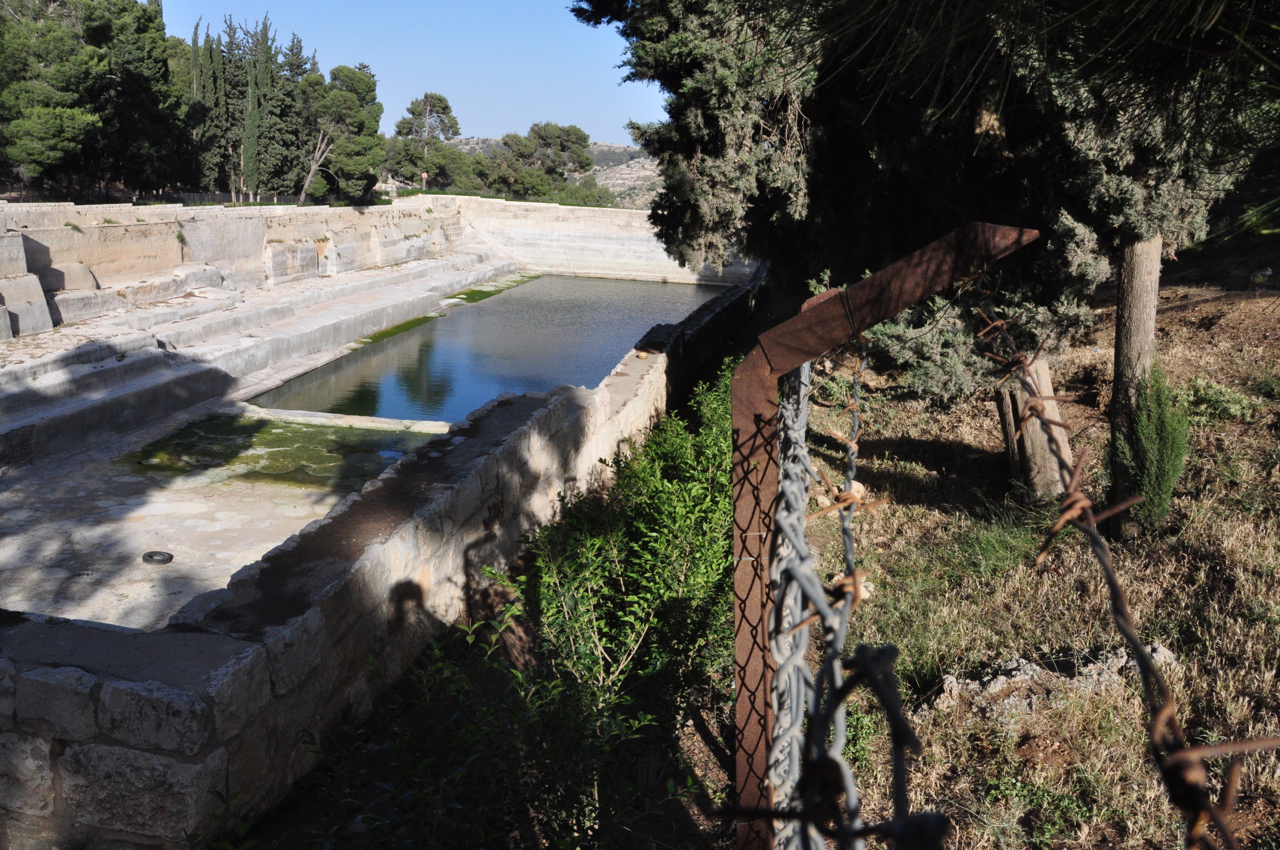
West of Bethlehem are three large reservoirs from the Hasmonean period, called Solomon’s Pools, that stored the water from two aqueducts from springs in the Hebron Hills. From these pools the Upper and Lower aqueducts continued via Bethlehem, Armon HaNatziv, Abu Tor to the Old City (remains of the aqueduct can still be seen along the route); another aqueduct was built by King Herod to bring water to Herodium. The Palestinian Authority have built a large conference center with a restaurant and small archaeological museum overlooking the pools.

Photo of the Week – Nitzana

Nitzana is an ancient Nabataean city in the southwest Negev desert in Israel close to the Egyptian border. It may have been a camel caravansary on the eastern branch of the ancient Spice Route, serving pilgrims and merchants travelling to Sinai. This week’s photo shows the remains of the German-Turkish hospital (1906-1917) built on ruins of a Byzantine fort at Nitzana.

NitzanaThe technical details – the photo was taken in December 8 years ago with a Nikon point and shoot camera (ISO 100, 8mm, F7.6 at 1/263 sec).

Please share this post with your friends by clicking on the icons at the end of this message.

Photographs on this website are © Shmuel Browns (unless marked otherwise) – if you are interested in purchasing one of my photos or using one of my photos for your own project please contact me.

Related articles

Israel Roundup

Rockefeller Museum

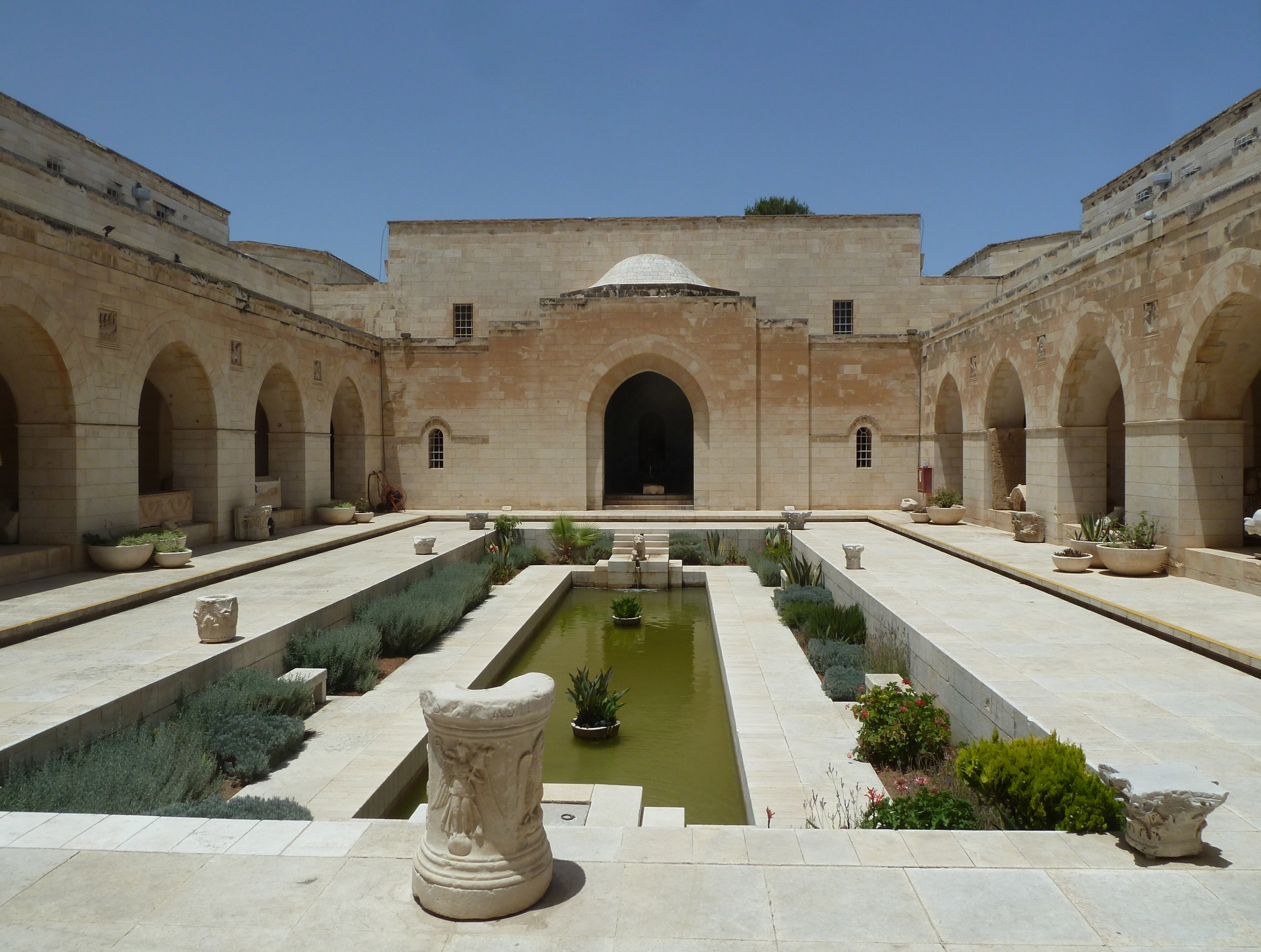
Although few visit, the historic Rockefeller museum in Jerusalem is definitely worth a visit. A blend of western and local eastern architecture, combining historic architecture with modern innovations, the museum was built in 1938, during the Mandate period by the British architect St. Barbe Harrison.

Rockefeller courtyard

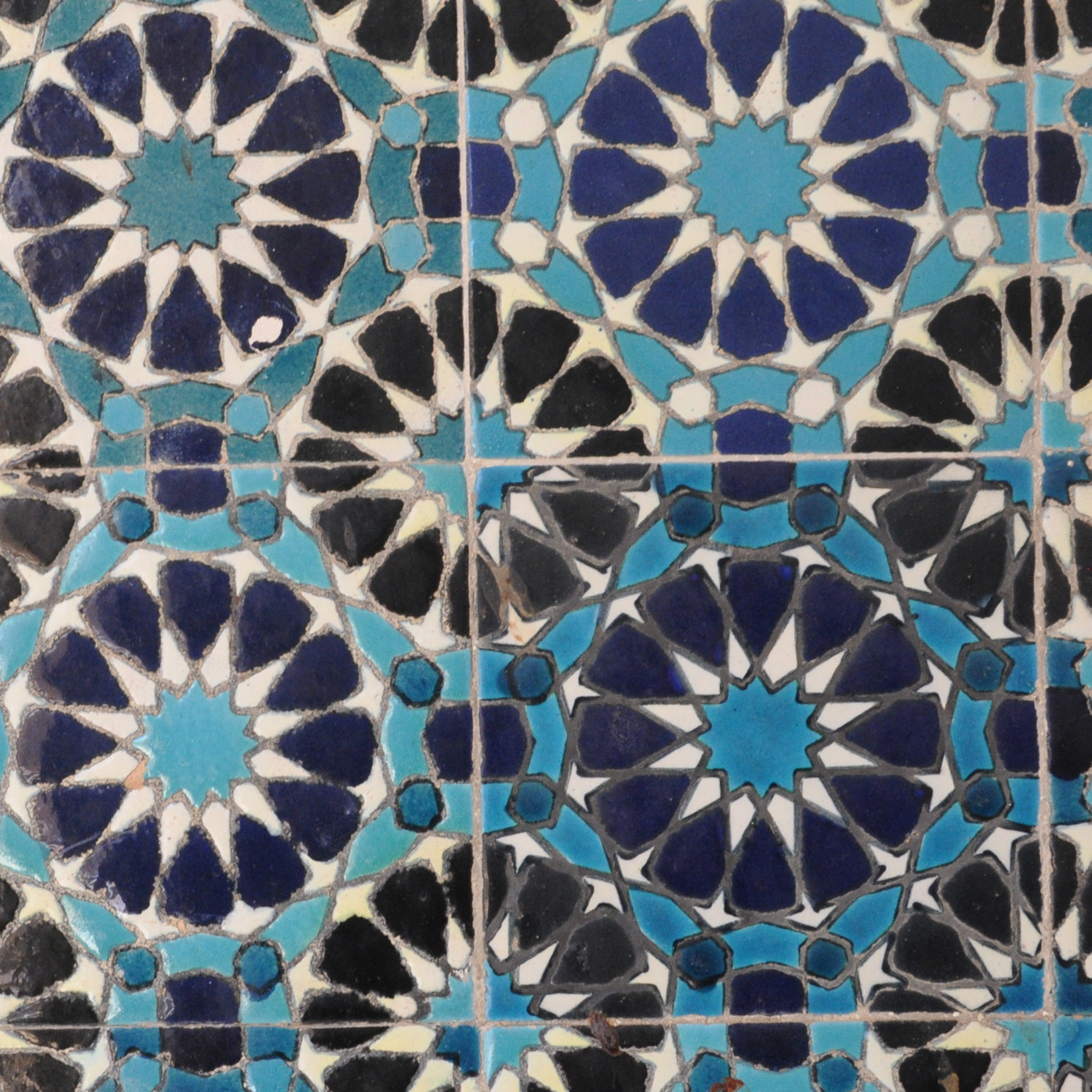
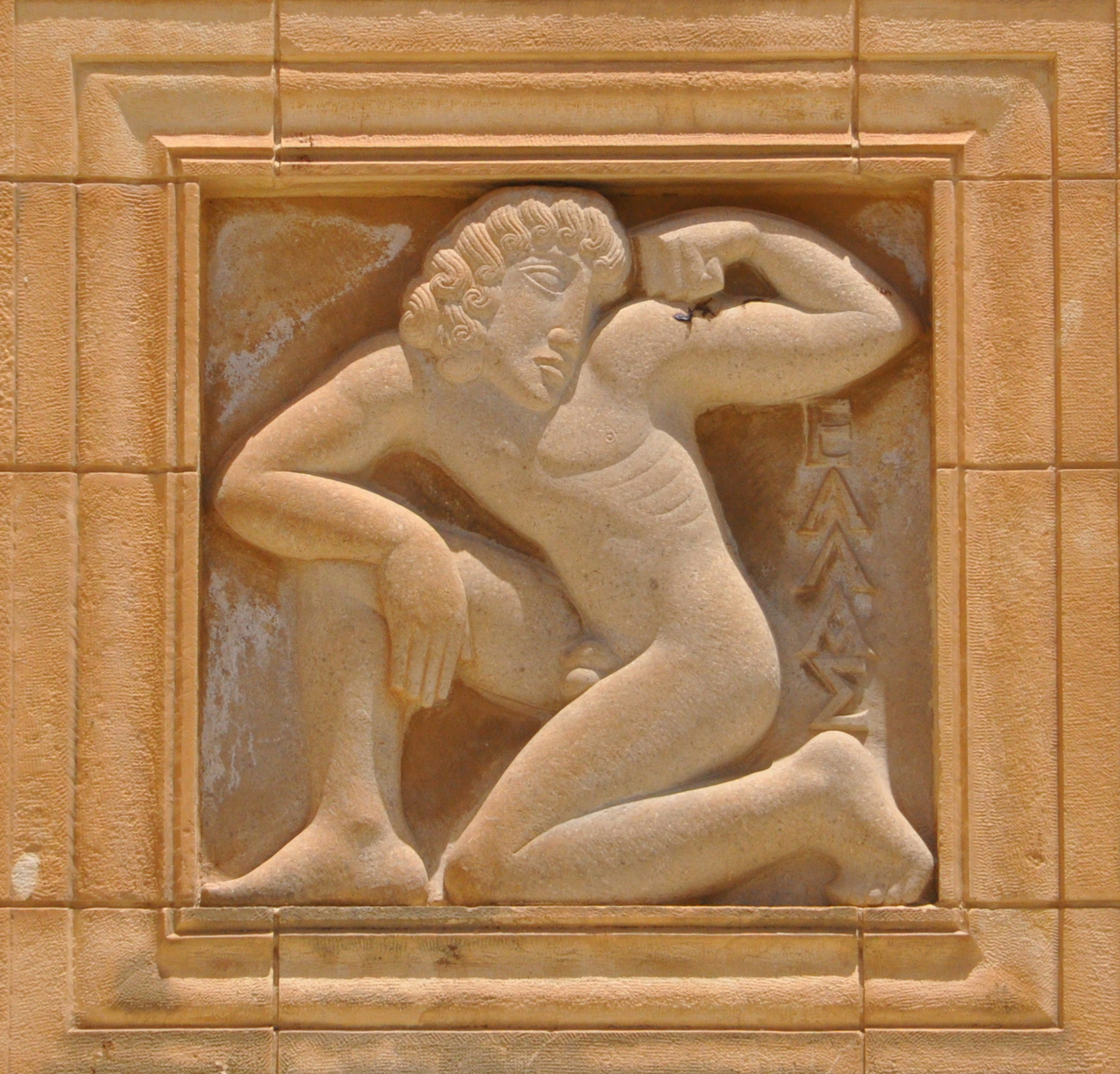
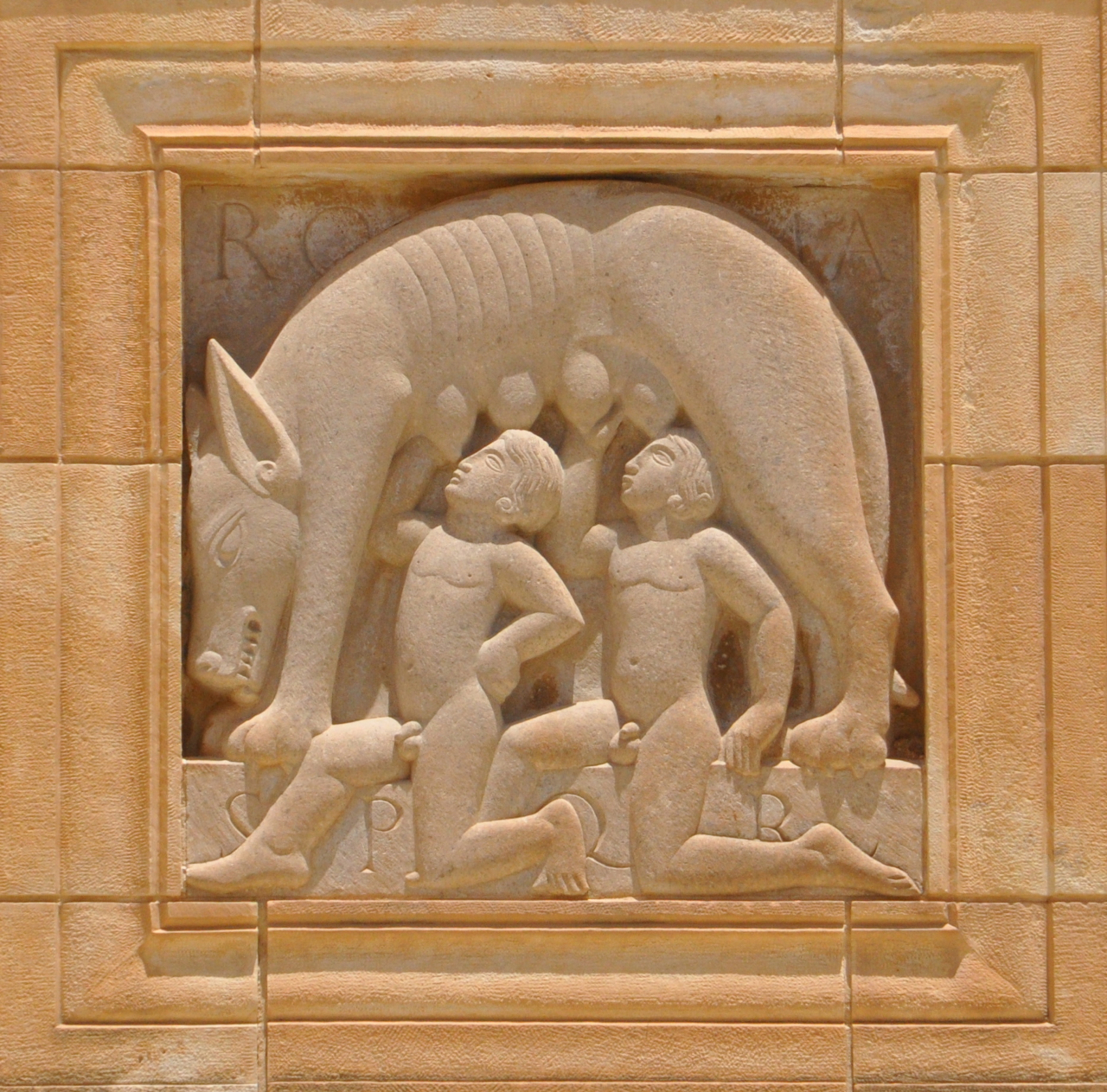
Ohanessian tile workIn the main hall is a model of the museum – exit to the courtyard to see the pool, the Armenian mosaics by Ohanessian and the 10 iconic stone reliefs sculpted by Eric Gill representing the major civilizations that left an imprint on this region. Many of the exhibits in the museum are a little dated, walnut wood framed glass cases with dozen of artifacts each, labelling is just a number which you have to cross-reference with a mimeographed book that you can ask for at security. But they have some important pieces: Greekthe Crusader marble sculpted panels from the lintels of the entranceway to the Church of the Holy Sepulcher, Roman sarcophagi, Umayyad architectural details with their original paint, Crusader capital with goblin from Church of Annunciation, mosaic from an early synagogue, like the one in Jericho also called Peace unto Israel, found in the Druze village of Usifiya.

Having visited the actual site of Hisham’s palace in Jericho and been Romandisappointed at how few of the mosaics and artifacts are on display it was heartening to see the impressive exhibit of sculpture and stucco from Hisham’s palace safe at the museum.

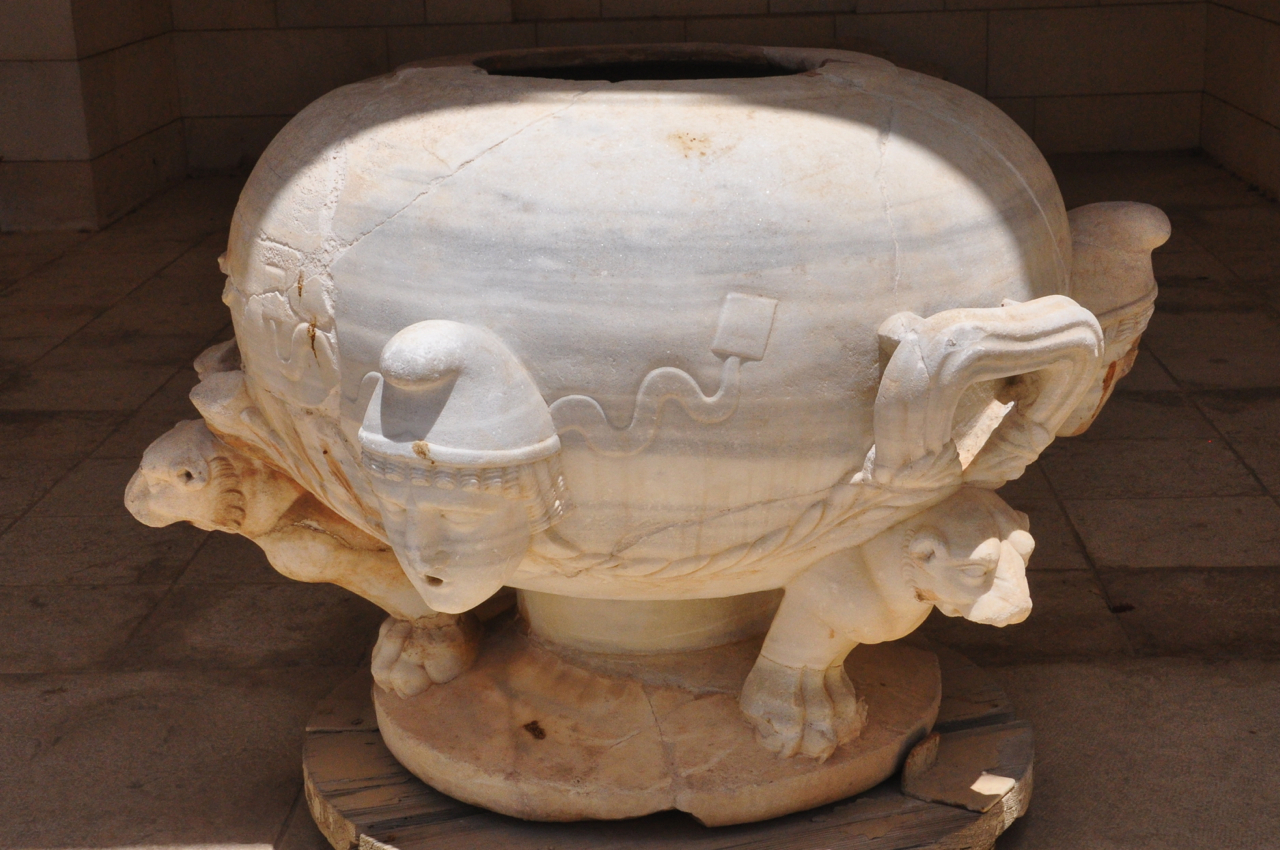
An incredible piece in the courtyard is a Roman wash basin from the 1st century that was found in the Crusader fortress at Montfort – striking how similar it is to the basin that Emperor Augustus sent with Marcus Agrippa as a present for King Herod on display at the Israel museum exhibit on Herod (viewable at https://israel-tourguide.info/2013/02/14/herod-design-realpolitik/).

Wash basin Montfort

There is a very interesting article about architects St. Barbe Harrison and Erich Mendelssohn and their contributions to beautifying Jerusalem. http://www.jpost.com/Opinion/Op-Ed-Contributors/Jerusalem-the-beautiful-312517

BBC has an article about the Hula painted frog at http://www.bbc.co.uk/news/science-environment-22770959

A species of frog that was recently rediscovered after being declared extinct in 1966 has been reclassified as a “living fossil”.

Israel’s Hula painted frog had not been seen for nearly 60 years, but in 2011 one was found lurking in a patch of swampy undergrowth. Tests have revealed that the frog belongs to a group of amphibians that died out 15,000 years ago.


BBC interviewed me for their series, In the Prince’s Footsteps and asked me to take them to the Mar Saba monastery in the Judean desert. We talked about photographer Francis Bedford’s 1862 photograph of the monastery on his travels with Edward, Prince of Wales to the Holy Land. You can read my blog post at Mar Saba and Judean Desert Revisited.

You can hear the interview by clicking on the red button.

I am Gabriel A unique 87 line Hebrew inscription, ink on stone, from the beginning of the Roman period, I am Gabriel, is on display at the Israel museum. Its content is prophetic-apocalyptic, its style literary-religious, and its language reminiscent of the later books of the Prophets. Accompanying it are rare ancient manuscripts, the Hebrew Bible, the New Testament and the Qur’an. The exhibition traces the changing roles of the angel Gabriel in the three monotheistic religions.

While thinking about the Israel museum plan to spend a day with Herod the Great, legendary builder and King of Judea. Combines an in-depth guided tour of Herodium, Herod’s palace complex in the desert and the site of his tomb with the monumental exhibit “Herod the Great: The King’s Final Journey”.  https://israel-tourguide.info/herod-the-great-tour/

Jerusalem Botanic Garden is open for free on Fridays & Saturdays in the month of June 2013 for residents of Jerusalem with presentation of your teudat zehut. This is a great opportunity to wander around the garden and discover the lovely, shaded areas of green that are one of the best kept secrets of the City.  http://en.botanic.co.il/Pages/Show/7