Category Archives: Archaeology

Archaeological Artifacts with Names

Of the myriad names of people that are familiar from the Bible and I’ll expand it to include the New Testament, Josephus and the Talmud, we have very little confirmation from archaeological evidence, inscriptions, papyrus or parchment, that these figures actually existed. I am excluding, for the moment, the names of rulers who appear on coins minted during their reign or names on bullae or seals.

Here are some of the names that have been found on archaeological artifacts:

  • The name Nicanor, from Alexandria who brought 2 large bronze gates to the Herodian Temple in Jerusalem, recounted in the Talmud Yoma 38a, was found on an ossuary in a burial cave on Mt. Scopus.
  • The name of the priestly family of Hezir, mentioned in the Bible (Nehemiah 10:20; 1 Chronicles 24:15), was found in an epitaph in the family mausoleum in the Kidron Valley.
  • The name of the priestly family Qatros, mentioned in the Babylonian Talmud, was inscribed on a stone weight, found in the basement of the Burnt House, a private dwelling on the Western Hill in Jerusalem.
  • The name of the priestly family Caiaphas, mentioned in the New Testament, Josephus and the Talmud was found on two ossuaries found in Jerusalem.
  • The name Yehohanah, a granddaughter of the high priest Theophilus nominated high priest in 37CE the year Herod became king mentioned in Josephus was found inscribed on an ossuary.
  • The name “tzaddan malka” and “tzadda malkata,” the Aramaic equivalent of the Greek “Queen Helena”,  spoken of in Josephus and the Tosefta for her giving of charity to the poor of Jerusalem during a period of famine (Peah 4:1) was found inscribed on a sarcophagus from the Tomb of the Kings in Jerusalem.
  • The name Simon bar Kosiba or Bar Kokhba, the leader of the Second Jewish Revolt (132–135CE) against the Roman was found on letters in caves at Wadi Murabba’at and Nahal Hever and 4 lead weights. You can see images of these weights at this site: http://www.archaeological-center.com/en/monographs/
  • The name David was found in the excavations at Tel Dan when a piece of basalt, part of a victory stele (on display at the Israel Museum in Jerusalem) describing how the Aramaean King Hazael was victorious over the House of David was found in the southern end of the wall by the outer gate.
  • The name Pontius Pilate was found on a stone inscription, part of a larger dedication to Tiberius Caesar in Caesarea. In 2018 a thin, all copper-alloy signet ring found at Herodium in 1969 was deciphered to read PILATO (“for Pilate” in Greek), conceivably some administrator pushing papyrus for Pilate would have worn a ring like this at a southern administrative center like Herodium.
  • The name James (brother of Jesus) was found on an ossuary with the Aramaic inscription Ya’akov bar-Yosef akhui diYeshua, “James, son of Joseph, brother of Jesus” as recorded in the New Testament and Josephus; the authenticity of the inscription has been contested and is the subject of ongoing scholarly debate.
Caiaphas Family Tomb and Ossuary

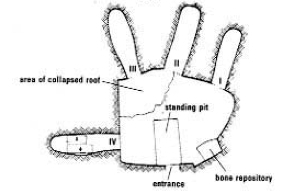
Tomb layout from IAA via Biblical Archaeology Review article

In the winter of 1990 while doing some work in the Peace Forest just below the Haas promenade (in Hebrew known as the tayelet) workers discovered a burial cave made up of 4 recesses (called loculi), rectangular spaces about 6 feet deep and 1.5 feet wide, cut in the limestone bedrock. The promenade, a dream of Teddy Kollek and designed by the Israeli landscape architect, Shlomo Aronson, is built on the ridge with an impressive view of the Old City walls and ancient city of David; I often take people there to begin a tour.

Since many tombs have been found in the Kidron and Ben Hinnom valleys around the Old City it was not a surprise to find this burial cave. Inside were found 12 ossuaries, 6 scattered about indicating that the cave had been robbed in antiquity but 6 in their original places.  Zvi Greenhut, the IAA archaeologist called to the site, identified it as a Jewish burial cave from the Second Temple period. At this time, burial for those who could afford a family tomb, the body was laid out in a recess carved in the wall of the cave and closed off. A year later, after the flesh had decomposed, the family returned, opened the loculus and gathered up the bones and deposited them in a cavern with earlier bones. That’s the explanation of the expression in the Bible “to be gathered up with his forefathers” and why it is a custom to revisit the grave after a year. Later it became customary to put the bones in a special limestone box and to write the name of the deceased on the outside – this coincided with the rise in belief of a physical resurrection at the End of Days.

Of the five ossuaries with inscriptions we find the names of two women: Miryam berat Shimon and Shlom… the full version would be Shlomzion.

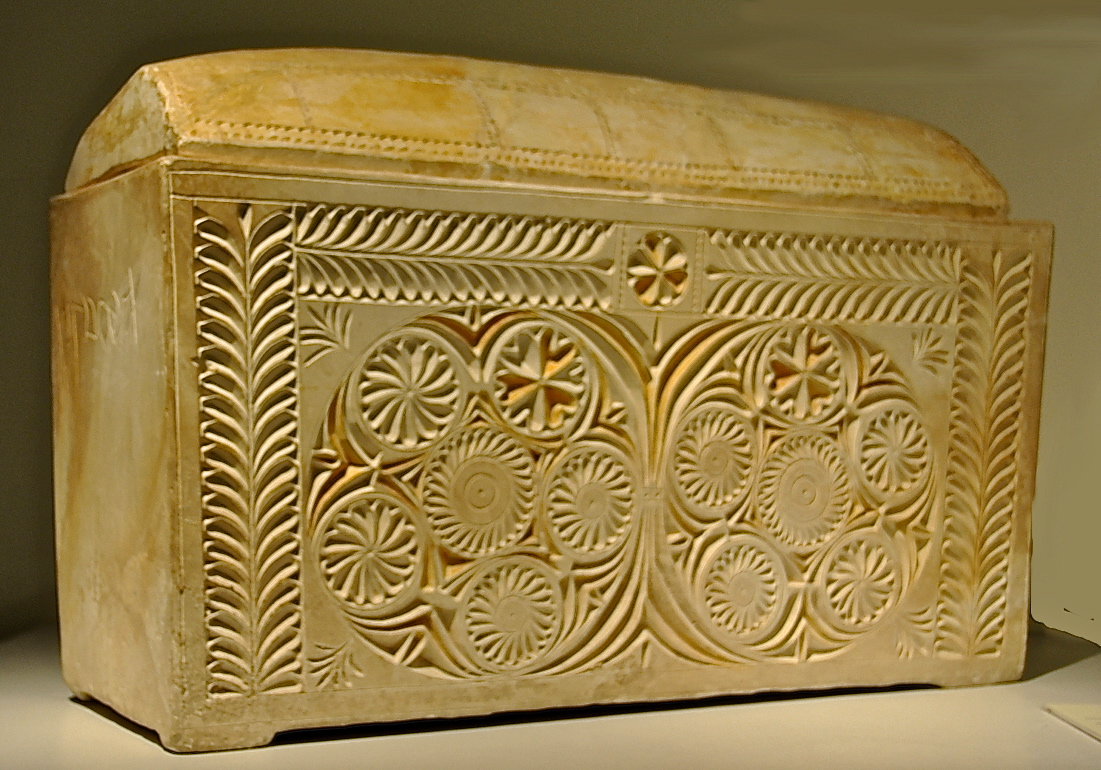
Caiaphas ossuaryFrom the name written on two of the ossuaries the cave seems to be the family tomb of Qafa, in Greek Caiaphas, a name known to us from the New Testament and writings of Josephus, one of whom was the high priest who presided at the trial of Jesus. One of these ossuaries is decorated beautifully in a rare and intricate pattern of two circles, each made up of six whorl rosettes, bordered by a pattern of palm branches. Inside were found bones from six different people, two infants, a child between 2 and 5, a young boy between 13 and 18, an adult woman and a male of about 60.

On the undecorated end is inscribed “Joseph bar Caiaphas” not necessarily “the son of” – here Caiaphas is a nickname which became a sort of family name. A fascinating statistic from the Second Temple period based on personal names mentioned in literary sources and inscriptions is that 28% of men had one of 4 names (Joseph and Shimon being the two most popular), 9 names account for 44% of men (so a family nickname would help identify people); for women it was even more extreme, 50% of women had 2 names, Miryam, which later became Mary and Shlomzion the equivalent of Salome in Greek.

A coin found in one of the ossuaries was minted by Herod Agrippa (37–44 C.E.). This would help us date the two Caiaphas ossuaries perhaps as early as the beginning of the century. The evidence suggests that we may have recovered the burial box (ossuary) and even the bones of the high priest Caiaphas who handed Jesus over to the Romans.

Columbarium for doves

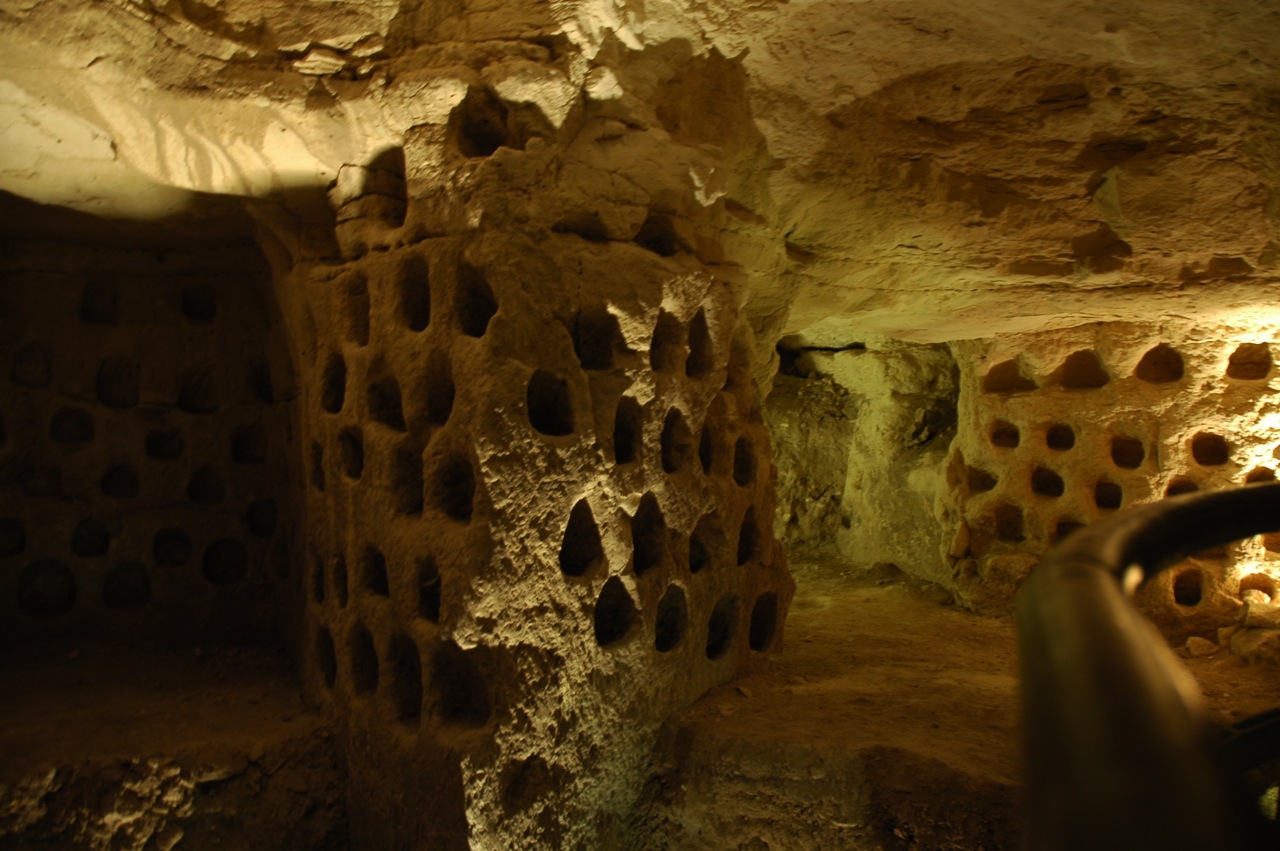
On one of the first trips on the guides course, we were driving along the southern coast with its sand dunes, from Gaza to Ashkelon. Haim Karel, the course coordinator, stopped the bus, we all got out and crossed the road to look at a large pit with rows of niches arranged in the walls built of kurkar blocks. The site is completely unmarked and not visible from the road – as the guide, you have to know where it is. Kurkar, is a kind of rock found along the Mediterranean coast, formed when the ocean spray carrying limestone glues the sand together to form rock. Haim explained that the structure is a columbarium, from the Latin columba meaning dove.

If you look up columbarium on the Internet you’ll find that a lot of the references are to cemeteries and crematorium. In his book on Masada Yadin describes  a circular “columbarium” southwest of the Western Palace from the time of Herod that they uncovered:

It is our conviction that this building, like similar though larger buildings discovered in Italy, was designed to receive the remains of cremations. It is probable that Herod built it for the burial of his servants, ministers or other members of his court who were not Jewish.

Two buildings, square not circular, but with similar niches in their walls, were found in the north-western part of the wall; it is possible that they fulfilled the same function.

Yadin even describes how Moshe Yoffe who worked on the excavation team  and raised pigeons at home brought in a very small pigeon but couldn’t cajole or force it into one of the niches.

In Jewish tradition where burial is outside the city and cremation is against Halacha (Jewish law) it seems unlikely; also, there were no human remains found here nor pottery shards, from the urns which may have held human ashes.

Another suggestion is that these caves were filled with water and used to raise fish. The consensus though is that they were used to raise doves or pigeons. The name columbarium comes from the Latin columba meaning dove. Doves/pigeons were used as a source of food and for sacrifice. My mother tells how in Israel in the 1950s when food was scarce and rationed, our neighbor kept pigeons and I was fed pigeon as a baby. The excrement makes excellent fertilizer for growing vegetables. The birds could be used for communication as they would fly back to their home.

But you don’t have to go as far as Masada, there are columbaria in other parts of Israel, for example, at Maresha/Bet Guvrin. After Alexander the Great’s conquest of Judea in 332 BCE, Maresha developed as a diverse town with Sidonians, Greeks, Jews and Egyptians arriving and settling there. Residents of Maresha took advantage of the naturally soft limestone to quarry water cisterns, olive presses and columbaria beneath their homes.

Don’t miss the columbarium at Tel Maresha where you descend into a tremendous cross-shaped cave with niches for more than 2,000 pigeons; so far more than 60 columbaria have been found in the Maresha region.

Near Nes Harim there is a nice hike through the natural oak, pistachio and carob trees in the Judean hills that takes us to the spring at Hurvat Itab among olive, fig and almond trees. In a large cave nearby is a columbarium for keeping pigeons.

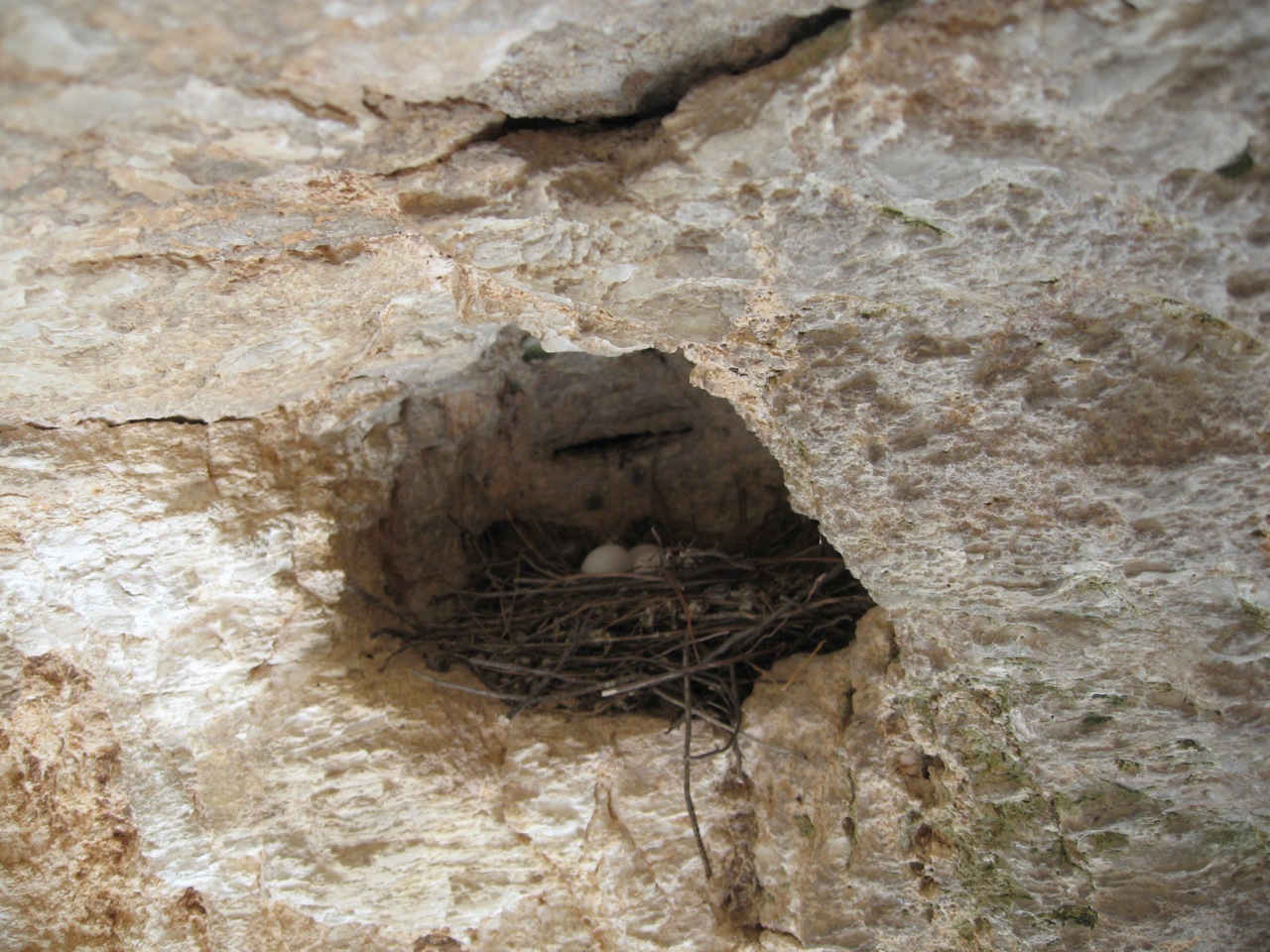
At Ramat Rahel, a burial cave, columbarium and ritual baths characteristic of the Second Temple period were uncovered by Aharoni (1962). The caves and columbarium were hewn into soft nari bedrock. On one of my visits to the archaeological site, I had climbed down into the columbarium to look around and was able to take this photo of one of the niches.

Food Discoveries at Masada

Yigal Yadin led the archaeological excavations at Masada, an inaccessible fortress situated on the western coast of the Dead Sea between the years 1963-1965. The archaeological evidence from Masada suggests the great richness of King Herod’s stores as described by Josephus, who emphasizes that they are a greater object of admiration than the royal palace itself:

But the stores laid up within would have excited still more amazement, alike for their lavish splendour and their durability. For here had been stored a mass of corn, amply sufficient to last for years, abundance of wine and oil, besides every variety of pulse and piles of dates.

Among the finds archaeologists found some clay shards from Roman amphorae with bilingual Latin-Greek writing, garum BασιλέωϚ ‘of the king’ – referring to Herod. As well, they found shards of wine jars datable by a fragment of inscription bearing the consular name C. Sentius Saturninus to 19BCE. The inscription on the jar indicates that the Philonianum wine from the Italian producer L. Lenius was intended for the King himself.  One should probably add to Herod’s shopping list apples from Kyme, honey and olive oil. The inscriptions not only throw light on Herod’s culinary tastes but show that Herod was able to order such luxurious imports. Herod ordered only the best garum, from Spain which the Roman historian, Pliny the Elder, says was only surpassed in price by perfume and you can assume that it would have had to be kosher.

Garum was a type of fermented fish sauce that was an essential flavour and condiment in ancient Roman cooking (think of worcestershire sauce today). Although it enjoyed its greatest popularity in the Roman world, it originated with the Greeks – its name comes from the Greek words gáron (γάρον) the name of the fish whose intestines were used in the condiment’s production.

Garum was traditionally made in one of two ways. The dry-salting method involved placing layers of small whole fish or the guts of larger fish into a vat on a layer of herbs and spices (dill, coriander, fennel, celery, mint, oregano, and others) and covered with salt “two fingers high”. Repeat until the vat is full and leave for 10 days in the sun after which mix it daily for 20 days (some recipes say allow to ferment for three months). Alternatively, garum makers began with a strong salt solution (brine) into which they placed whole fish or fish intestines. The brine was heated over a fire until the liquid had reduced to an acceptable level.

If you’re interested in making up a batch of garum to taste, you can find various recipes by searching for “garum fish sauce” or check out this great Israeli food blog with a recipe for a modern version:

http://www.baronesstapuzina.com/2010/07/17/garum-roman-ketchup/

Tour of Herodium Palace Complex

In Ehud Netzer’s book on the Palaces of the Hasmoneans and Herod the Great he writes:

In its day, Herodium was one of the largest palaces in the Greco-Roman world. It is actually the most spacious one of that time that is known to us from archaeological studies.

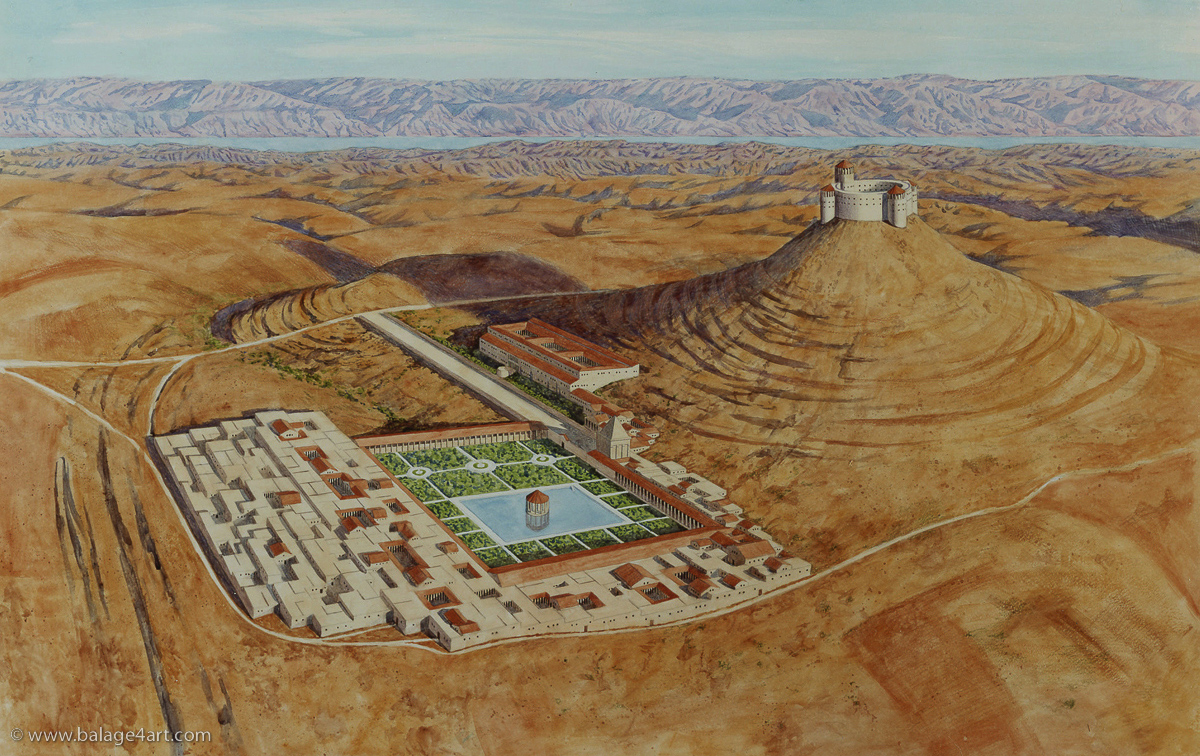
When I guide Herodium, I include a comprehensive tour of Lower Herodium, outside the archaeological park and the area that Prof. Ehud Netzer excavated in 1972 looking for Herod’s tomb. I point out

  • the overall planning of the site – the relationship between the palace/fortress on a man-made mountain south of the site and the palace complex at its foot
  • the concentration of structures around the pool, more characteristic of present day complexes such as a university campus or large hospital
  • the addition of formal gardens against the background of the barren Judean desert
  • where and how Herod overcame the topography and lack of water to build Herodium
  • Netzer’s discovery of the Monumental building where he thought Herod was buried

In its current state it can be difficult to imagine what Herodium must have looked like. Then I was introduced to the Hungarian-born artist and illustrator, Balage Balogh. Balogh has done paintings where he has recreated (Biblical) settings with a startling degree of accuracy based on a combination of intensive archaeological investigation, scriptural and ancient text research and a measured dose of interpretive insight. He has kindly given me permission to include his illustration of Herodium here. To better picture the ancient world check out his website at
http://www.archaeologyillustrated.com/


(Click on the image to view it in more detail)

Ashdod Cruise Ship Tours

A number of people have contacted me about taking a private tour when their cruise ship docks at the Ashdod port. There are a number of ways of getting from the port to Jerusalem or other destination.

  1. I’m on a cruise ship that will be docking in Ashdod for the day – how can I get from the port and organize my own private tour of Jerusalem?
  2. What is the tour itinerary? Will I see as much as the people who take the cruise ship tour?
  3. Are other tours besides Jerusalem available?
  4. What about shopping?
  5. Is it easy and safe to hail a taxi for the journey from Ashdod port to Jerusalem?
  6. Is the intercity bus relatively easy to catch from Ashdod?
  7. How much (approximately) for each, and is US dollars the preferred currency to use or the NIS (New Israeli Shekel)?
  8. Do you recommend a certain company for a sherut (shared minivan) ?
  9. Is your guide rate fixed, or does it increase based on the number of people attending?

I’m on a cruise ship that will be docking in Ashdod for the day – how can I get from the port and organize my own private tour of Jerusalem?

Rather than joining one of the fixed bus tours (walking tour of Old City and Bethlehem being herded along with 45 other tourists) organized by the cruise company contact me to arrange your own personal tour, see the things you’re interested in, at your own pace and because you are a smaller group it is much easier to explore the city, experience the culture, interact with people, eat at local restaurants, etc.

I can make the arrangements for you to be picked up at the port and driven to Jerusalem; after your tour, the taxi will drive you back to your boat. If you’re more adventurous, you can arrange your own transportation which will work out cheaper (see below).

What is the tour itinerary? Will I see as much as the people who take the cruise ship tour?

The itinerary is similar but you’ll get to do and see a lot more and it’s a completely different experience. After their tour I emailed my clients the itinerary. Here’s what the client said:

Thank you so much for your email with the details of our tour itinerary, it will help no end in labeling my photos. I was expecting Jerusalem to be the highlight of the whole trip and it was. Your personal tour made the day and we will highly recommend you to anyone who needs a guide. We spoke to a person on the ship who had taken the cruise tour and was very dissatisfied due to the large crowds and inability to move about or to see properly, which only emphasized how lucky we were to have you guide us.
Pete and Milli

Are other tour destinations besides Jerusalem available?

Yes. A tour of Masada, Ein Gedi and the Dead Sea is a popular one but you don’t have to hope that the cruise ship will be able to organize an alternate tour. With a private tour you can work out whatever itinerary you are interested in, limited by the time available. Click here for some sample tours.

What about shopping?

It’s completely up to you – if you don’t want to take time out from touring we won’t; if you want time to pick up some gifts or souvenirs, we’ll do that. It’s your tour.

Is it easy and safe to hail a taxi for the journey from Ashdod port to Jerusalem?

There are taxis that will be waiting and happy to take you from the port to Jerusalem and I will meet you. Taxi fare one-way Ashdod-Jerusalem is about 350 NIS (approximately $100 US).

To arrange for a taxi you can call these Ashdod taxi companies at +972 8 852-111 or +972 8 854-0540  (from outside Israel) – take the shuttle bus to the gate to meet the taxi.

Is the intercity bus relatively easy to catch from Ashdod?

You would have to get to the Ashdod central bus station by taxi from the port. Bus 448 at 10:30, 11:30, etc. platform 2. It costs 19.70 NIS one way, slightly cheaper if you get a return ticket. Alternatively, there is also sherut (shared 10 person taxi/minivan) service.

How much (approximately) for each, and is US dollars the preferred currency to use or the NIS (New Israeli Shekel)?

Taxis and sherut will accept US dollars but they won’t necessarily give you the best exchange rate. The best deal is to withdraw cash from your US bank account with your Debit card at an ATM in Israel in NIS. For the current exchange rates click on http://www.bankisrael.gov.il/eng.shearim/index.php

I know the drive to Jerusalem from Ashdod is about an hour away, how long will it take the intercity bus?

The Egged bus company says an hour and 23 minutes (depending on traffic), but remember that is bus station to bus station, you’d still have to get from the port to the bus (by taxi) and from the bus station in Jerusalem to the Old City.

Is your guide rate fixed, or does it increase based on the number of people attending?

My guiding rate does not depend on the number of people (within limits). That is because I break out the costs for a tour and the client pays his/her own entrance fees, transportation, food and accommodation (on a per person basis). In this way the client controls the costs. In fact, if you can organize to share the cost of a tour with a few other people that you have met on the cruise that’s fine with me (just let me know the number of people so that I can help arrange the appropriate vehicle).