Oskar Schindler’s grave

Oskar Schindler died on September 10, 1974 in Hildesheim, Germany at the age of 66. He had requested to be buried in Israel and his Schindlerjuden survivors arranged for him to be buried in Jerusalem. You can visit his grave in the Catholic cemetery on Mount Zion. For those with GPS the coordinates are 31.770164, 35.230423

The cemetery is on the main road, Ma’ale HaShalom that goes to the Mount Zion parking lot. The cemetery has 2 levels and Schindler’s grave is on the second, lower level. There are a set of steps on the left side of the cemetery after you enter that let you descend to the lower level. The grave is right beside one of the paths, recognizable from afar because of the many stones on the gravestone. It’s a Jewish custom to put a small stone on the gravestone when you visit a person’s grave. On his grave, the Hebrew inscription reads ‘Righteous Gentile’, and the German inscription reads ‘The Unforgettable Lifesaver of 1200 Persecuted Jews’.

In 1962 a tree was planted in Schindler’s honor in the Avenue of the Righteous at Yad Vashem. Oskar and Emilie Schindler were recognized as Righteous Among the Nations in 1993.

In 1999 a suitcase belonging to Schindler was discovered in the attic of the house in Hildesheim, containing over 7,000 photographs and documents, including the list of Schindler’s Jewish workers. The contents of the suitcase, including the list of the names of those he had saved and the text of his farewell speech before leaving his Jewish workers in 1945, are now at the Holocaust museum of Yad Vashem in Israel.

Before or after visiting the cemetery you may want to visit the small Holocaust museum on Mount Zion.

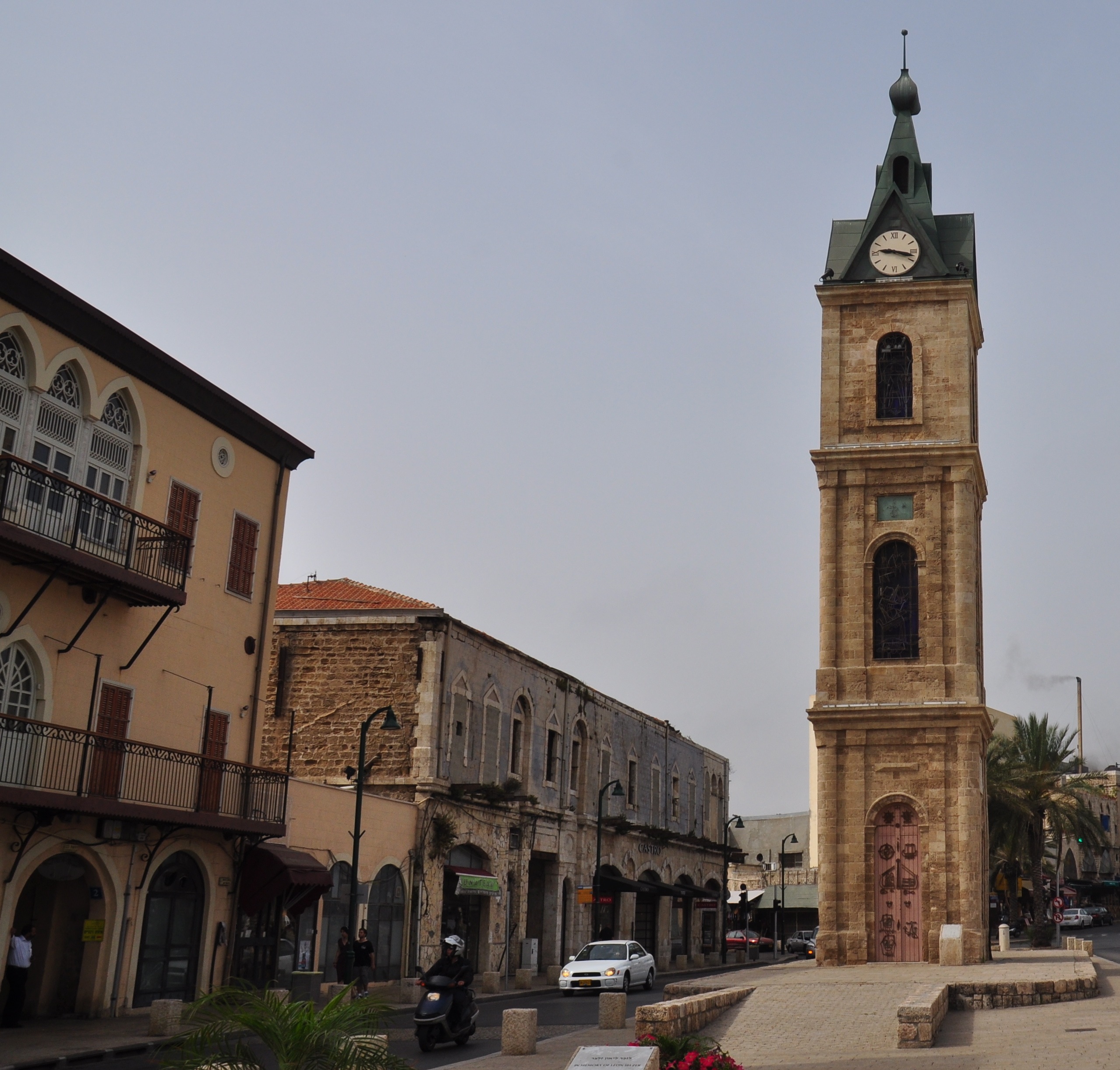
Jaffa

If you want to meet up with a friend in Jaffa all you have to say is “Meet you at the clock tower”. The clock tower in Jaffa is one of seven built by the Ottoman Turks in 1908 on the occasion of the silver jubilee of the reign of the Sultan abd al-Hamid II. From there you can explore the Flea market and shops and restaurants. There’s a funky restaurant called Pua on 3 Rabbi Yohanan Street. For what some people swear is the best humus go to Abu Hassan’s. For a truly middle eastern taste try the stuffed breads at Abulafiya’s.

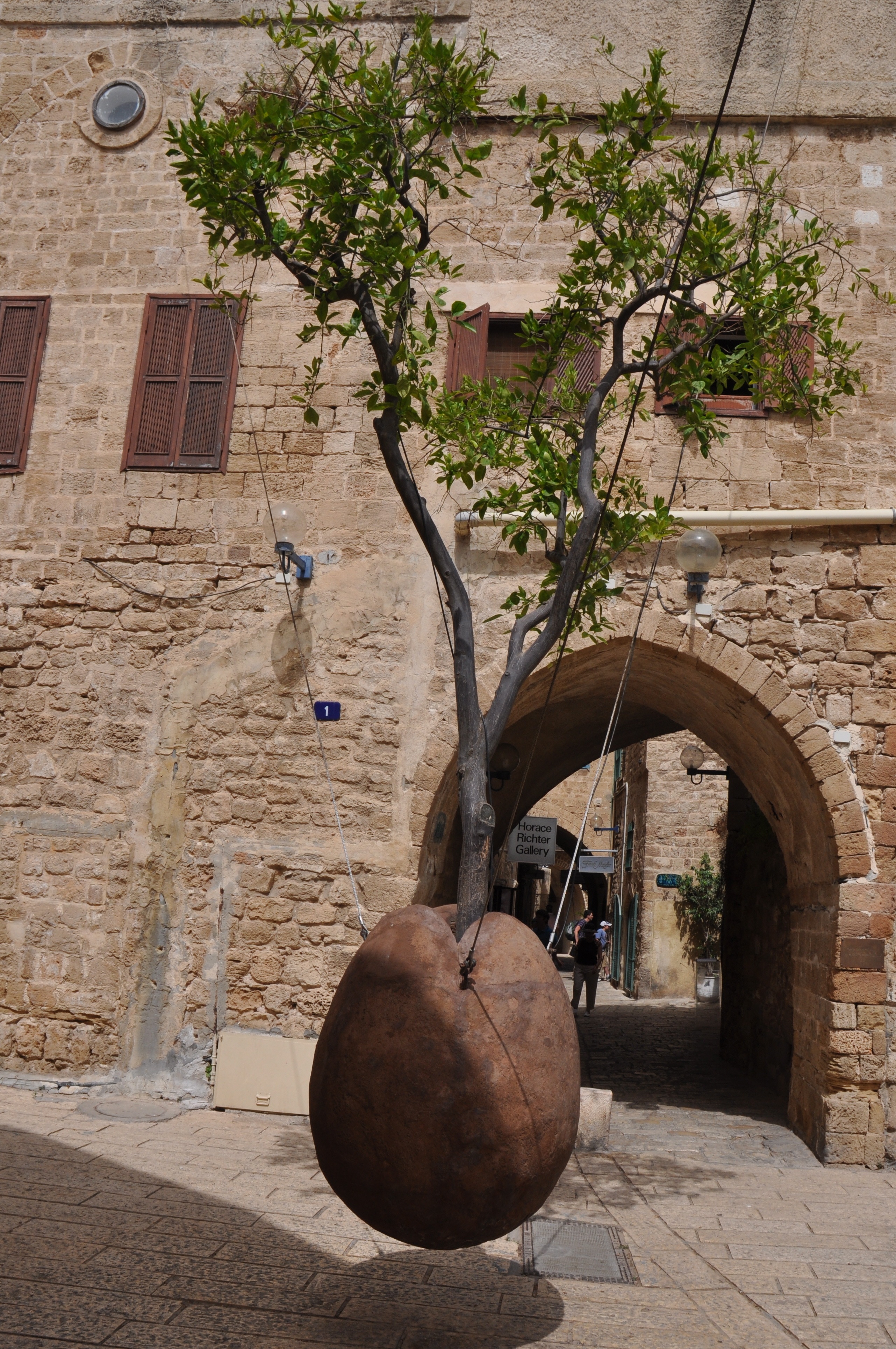
There is something else that Jaffa is known for and that is the shamouti orange which is known throughout the world as the Jaffa orange. The shamouti was a new variety developed by Arab farmers after first emerging in mid-19th century Palestine as a mutation on a tree of the Beladi variety near the city of Jaffa. Orange exports grew from 200,000 oranges in 1845 to 38 million oranges by 1870. Today the orchards described by a European traveller in 1872  “Surrounding Jaffa are the orange gardens for which it is justly extolled…” have disappeared in the face of urban development. But walking through the alleyways of Jaffa you can find an incredible sculpture by the environmental Israeli artist, Ran Morin, called Orange Suspendu that reminds us of the connection between the city of Jaffa, the earth and the orange tree and its fruit. Morin has 2 other tree sculptures that are worth seeing in Jerusalem, one at the Hebrew University on Mount Scopus and one in the Olive park near Kibbutz Ramat Rahel.

From Jaffa, walk north along the promenade to Neve Tzedek, the first Jewish neighborhood that was established outside the walls of Jaffa in 1887 and that some 20 years later grew into the new city of Tel Aviv. Along the way drop in to the old Jaffa train station, that is being renovated and developed into a cultural, artistic and commercial area. For a guided tour of Tel Aviv-Jaffa please contact me. It’s possible to incorporate riding a Segway along the whole length of the promenade as part of your tour.

Segway Tour

This morning I rode a Segway (Personal Transporter) along the promenade at Armon HaNatziv and I can report that it was really fun (as they say in Hebrew, היה כיף). The Segway is a two-wheeled, self-balancing electric vehicle that was invented by Dean Kamen in 2001. There are 5 gyroscopes that with the aid of computers and motors in the base keep the Segway upright and balanced. Users lean slightly forward to go forward, lean back to stop or go backward and turn using a handlebar that can be tilted left or right.

Currently I often start a tour of the Old City or Herodium with an overview from the promenade so I’m happy to be able to add a Segway tour as part of a day’s guiding. Another example, before visiting the Knesset or Israel museum, you can ride through the Valley of the Cross, past a Crusader fortress-like monastery that was one of the first buildings outside of the Old City walls but in fact, goes all they way back to Queen Helena, the mother of the Emperor Constantine. It’s also possible to arrange a tour along the Jaffa-Tel Aviv promenade along the Mediterranean coast as part of a guided tour of Jaffa and/or Tel Aviv.

A Segway tour adds 180 NIS (which comes to less than $50.) per person (minimum of 2-3 people) for about 2 hours, note that children must be 16 years or older. Helmets and knee and elbow pads are provided.

Katlav

Katlav

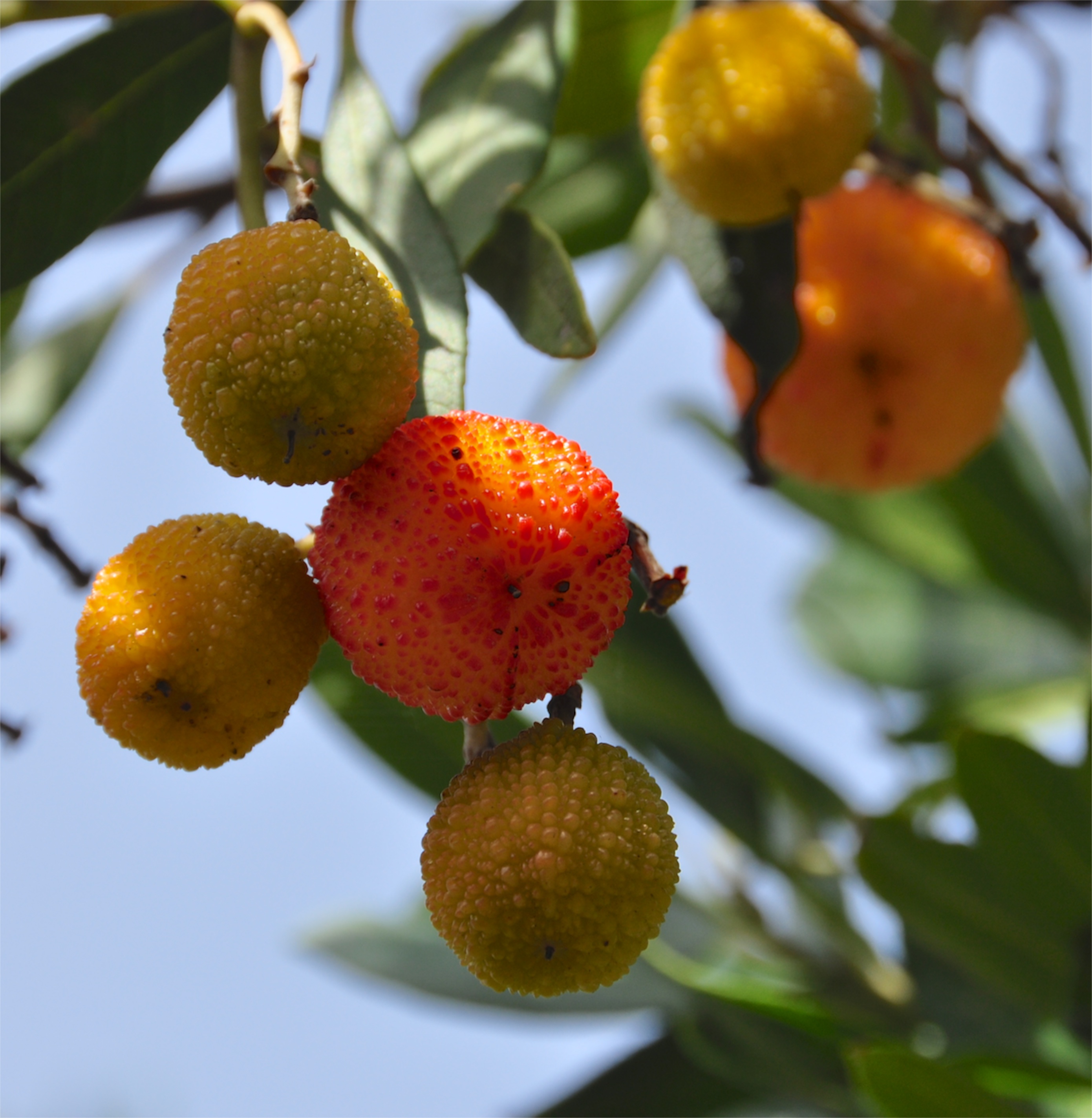
Katlav is the Hebrew name of a striking, red-barked evergreen shrub or small tree native to the Mediterranean region (grows as far north and west as France and Ireland), the Strawberry tree or Arbutus Andrachne. The bark is smooth and sheds during the summer, leaving a pistachio green color, which changes gradually to a beautiful orange brown. The small red berries, tasting a little like tart strawberries, ripen in November.

There is another related tree, Arbutus unedo, that also grows in this region. The leaves have a saw-tooth edge and the fruit is bumply, orange-red when ripe. The name ‘unedo’ is explained by the Roman historian, Pliny the Elder, as being derived from unum edo “I eat one”, which seems appropriate as most people find the fruit bland and mealy.

One advantage of hiring a local guide is that you get the opportunity to get inside, to be initiated into what the locals do, things that most tourists never experience. In and around Jerusalem there are some very special hikes and one in particular is Nahal Katlav in the Judean Hills, named for the abundance of strawberry trees growing there. There is also the possibility of hiking to a maayan, a natural spring that fills a pool cut into the rock, that is just the perfect solution to a hot summer day. Before we head out we will pick up some artisan bread, cheese, salads, etc. for a picnic, drive into the hills, hike to our destination and enjoy. These are outings for the whole family.

Nahal Katlav is a tributary of the Sorek river which is biblical Hebrew for a choice grapevine. Over the years, this region was known for its grapes, and today there are a number of fine boutique wineries in the Judean-Yoav region. For those interested in wine, these outings can be combined with a visit to a winery in the area. There is even a winery called Katlav.

It is very impressive to stand in the presence of an ancient tree. Near Kibbutz Tsuba are 2 very old trees, a 1200 year old olive tree and a 800 year old oak. Although I am not aware of such an old strawberry tree there is a magnificent specimen that is about 80 years old at the Jerusalem War Cemetery on Mount Scopus.

Katlav in cemetery

Roman Cardo

When guiding in the Old City I take tourists on the same main roads that were built in antiquity. From Damascus gate we walk along the Cardo, the main north-south route in a Roman city, traverse the Muslim and Jewish quarters until we reach Zion gate. When entering from Jaffa gate we walk along the Decumanus, the main cross street, through the Arab shuq until we reach the Cardo. From there we need to zigzag along the Via Dolorosa to continue to Lions gate on the east of the city to the Kidron valley.

One day while walking along the Cardo I found the French group of artists, Cite Creation (http://www.cite-creation.com/realisations.php), painting a mural of the Cardo on a wall in the Jewish quarter. If you have trouble imagining what the Cardo was like the mural will help you see the main market street, like it was. I like their work – keep your eyes open and you will find other examples as you explore. Note the little boy with baseball cap, backpack and water bottle accepting a pomegranate, one of the 7 species of the land of Israel and the hoopoe bird flying overhead (chosen as Israel’s national bird in a vote on the Internet).

Check out the 3 gentlemen on the left side of the painting. Although they are dressed in traditional garb, there’s something about them that gives them an air of modernity. If you’re familiar with painting, often the artist includes family members or even a portrait of the artist. Not in this case – come on a tour and find out who they are and more.

The Cardo was 22.5 meters wide, flanked with rows of stone columns on either side and five meter-wide covered passageways. A wooden beam construction supported the roofing, probably of ceramic tiles. The columns, five meters high, of hard limestone, were found in fragments, incorporated into later structures, the capitals are Corinthian. You will be able to walk on the original well-hewn paving stones from the Roman period.

The Cardo connected the Church of the Holy Sepulcher, the holiest site to Christianityto the 6th C Nea Church of Justinian. In Byzantine times there were processions along the Cardo between these two churches. Today you can find the remains of the apse of the Nea church along the road and under the elementary school in the Jewish quarter. Along the sidewalk of the Cardo you can see columns (sitting on the earlier city wall from the Hasmonean period) and at the 7th Station of the Cross there is a column in the chapel. Access to the Holy Sepulcher is no longer from the Cardo, now we enter from the parvis (courtyard) on the side of the church.

Hurva Synagogue views

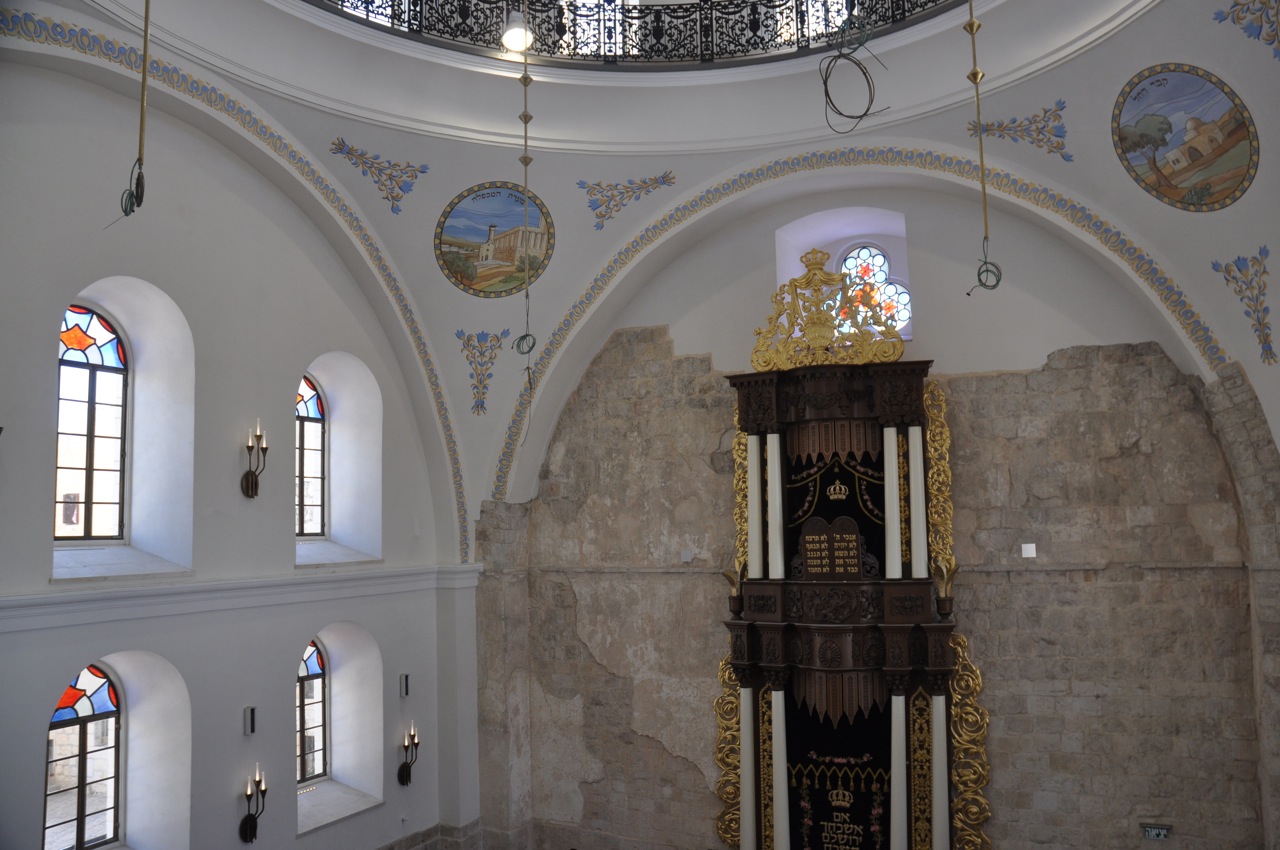
The Hurva was the main Ashkenazi synagogue of the Old City and stood as a landmark for almost 100 years until it was blown up by the Jordanian Legion after they had captured the Jewish quarter on May 27, 1948. It took until 2005 to decide to rebuild the synagogue which was completed in March 2010. I visited it shortly afterwards on a Shabbat morning for services. Make sure to go down into the basement (by the washrooms) to see the discovery of a mikveh (ritual bath) from the Second Temple period and an east-west Byzantine street. The second time I joined a weekday tour of the synagogue but we weren’t allowed into the main sanctuary. The guide was only able to show us the inside of the synagogue from the women’s balcony but we were allowed to go up to the roof. The Hurva synagogue is the only site that I am not permitted to bring people (therefore I skip the Hurva and tell its fascinating story outside) – that privilege goes to local guides that work for the Western Wall Heritage Foundation and you have to reserve a place in advance.

One of the highlights was the view of Jerusalem from the balcony around the dome. Here are 5 photos (shooting clockwise) taken from the height of the dome: 1) looking towards the Christian quarter, domes and bell tower of the Church of the Holy Sepulcher, bell tower of German Church of Redeemer and dome of Alexander Nyevsky Church, 2) view over the Jewish and Muslim quarters with Mount Scopus in the background, 3) Dome of the Rock, Mormon University and Augusta Victoria, 4) dome of Al Aqsa Mosque and Jewish cemetery on Mount of Olives 5) view towards Armon HaNatziv, Mount Zion, Dormition Abbey, Armenian quarter.

This slideshow requires JavaScript.