Crusader Jerusalem

A reader asked me to post something about the Crusaders in Jerusalem. I am happy to and also to lead tours focussing on the Crusader period.

Raymond of Aguilers, who wrote a chronicle of the First Crusade (1096–1099), relates that on the morning of June 7, 1099, the Crusaders reached the summit of Nebi Samuel, from which they saw Jerusalem for the first time. The elated Crusaders fell to the ground and wept with joy, calling it Mons Gaudi, mount of joy. The same day they reached the walls of Jerusalem.
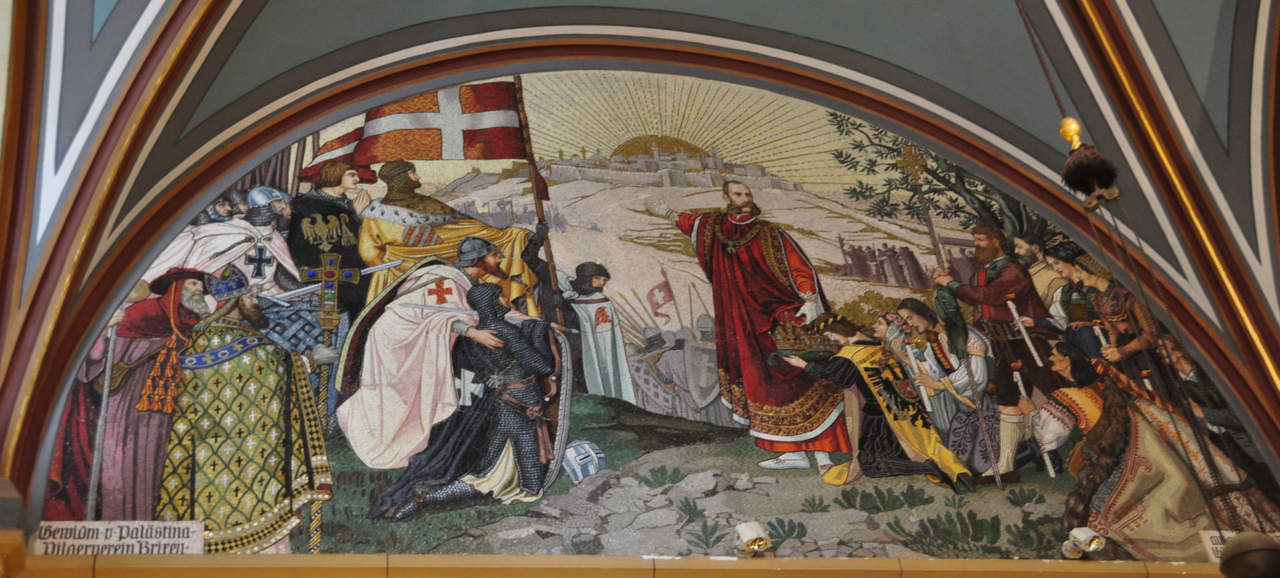
Austrian Emperor Franz Joseph as Crusader

With insufficient troops and supplies and rumor of a Fatimid advance, the Crusaders could not besiege the city for long but had to organize a direct assault.  After about a month they were able to get skilled builders and wood by cannibalizing Genoan ships that had arrived at Jaffa port for siege towers. This enabled the Crusaders to breach the walls in 3 places on July 15th. The Crusaders massacred most of the Muslims and Jews and evicted the remainder leaving Jerusalem almost uninhabited until Christians could be encouraged to settle there. On 22 July, a council was held in the Church of the Holy Sepulcher that chose Godfrey as the princeps for the newly created Kingdom of Jerusalem which became an important Christian center.

Crusader sites in Jerusalem

In 1160 the Crusaders added a glacis to the tower at the Citadel and dug a moat around it.

The Roman Cardo was subdivided into 3 covered markets: Vegetable or Spice market, Market of Malcuisinat and Covered market – this property was donated to the convent at Santa Anna. Nearby along David St. today, was the poultry market selling eggs, milk, cheese.

The Crusaders built a church in Kidron valley that contained the Tomb to the VIrgin Mary  and Queen Melisende was buried there. Beside it was Gethsemane and a Barluzzi church in 1920s was built on earlier Byzantine and Crusader ruins.

The remains of the Church of Mary of Latina can be seen in part of the German Lutheran Church of Redeemer that was dedicated in 1898 during the German Kaiser’s visit.
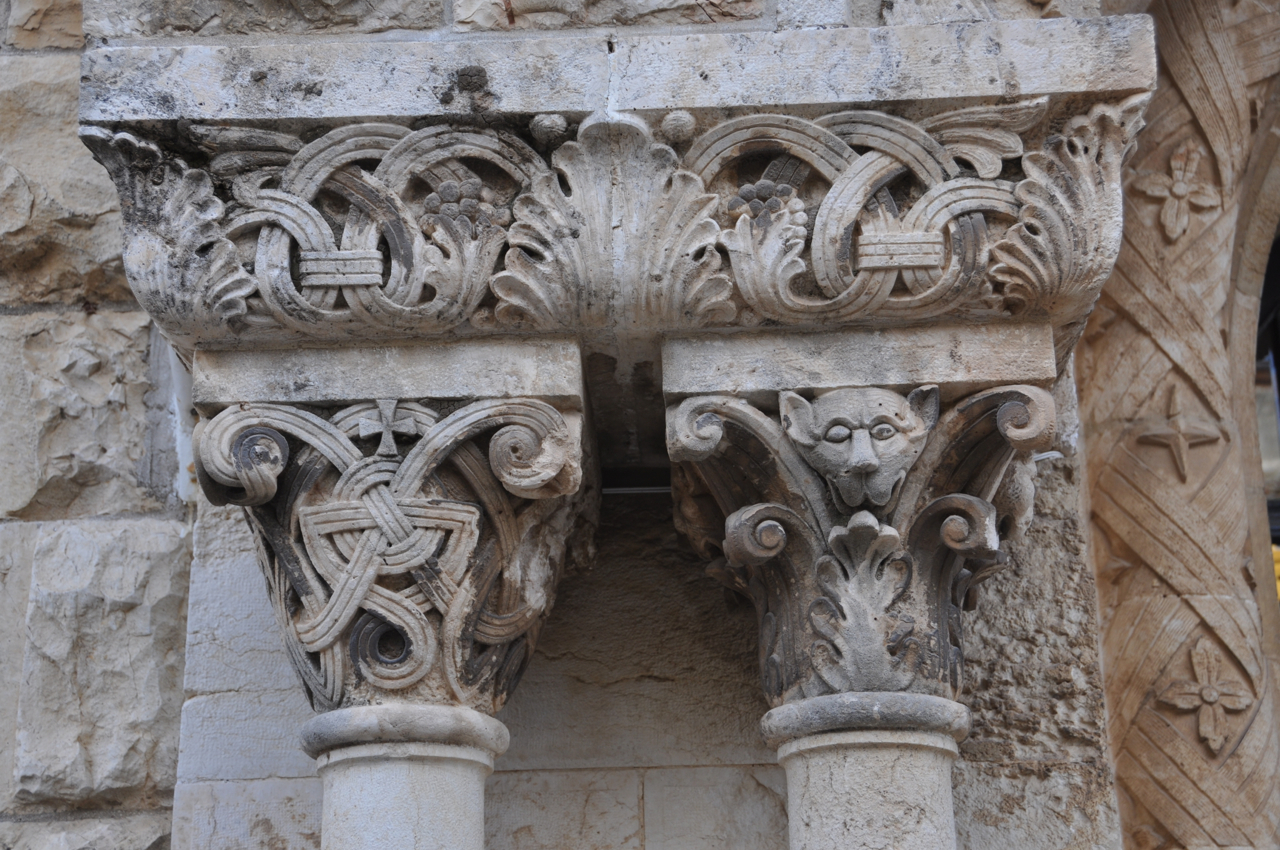
Capitals outside German Lutheran church

Close by is the Church of Holy Sepulcher, rebuilt by the Crusaders and dedicated in 1149. The sculpted marble panels on lintels over the two main doors, in Romanesque style, are now in the Rockefeller museum.
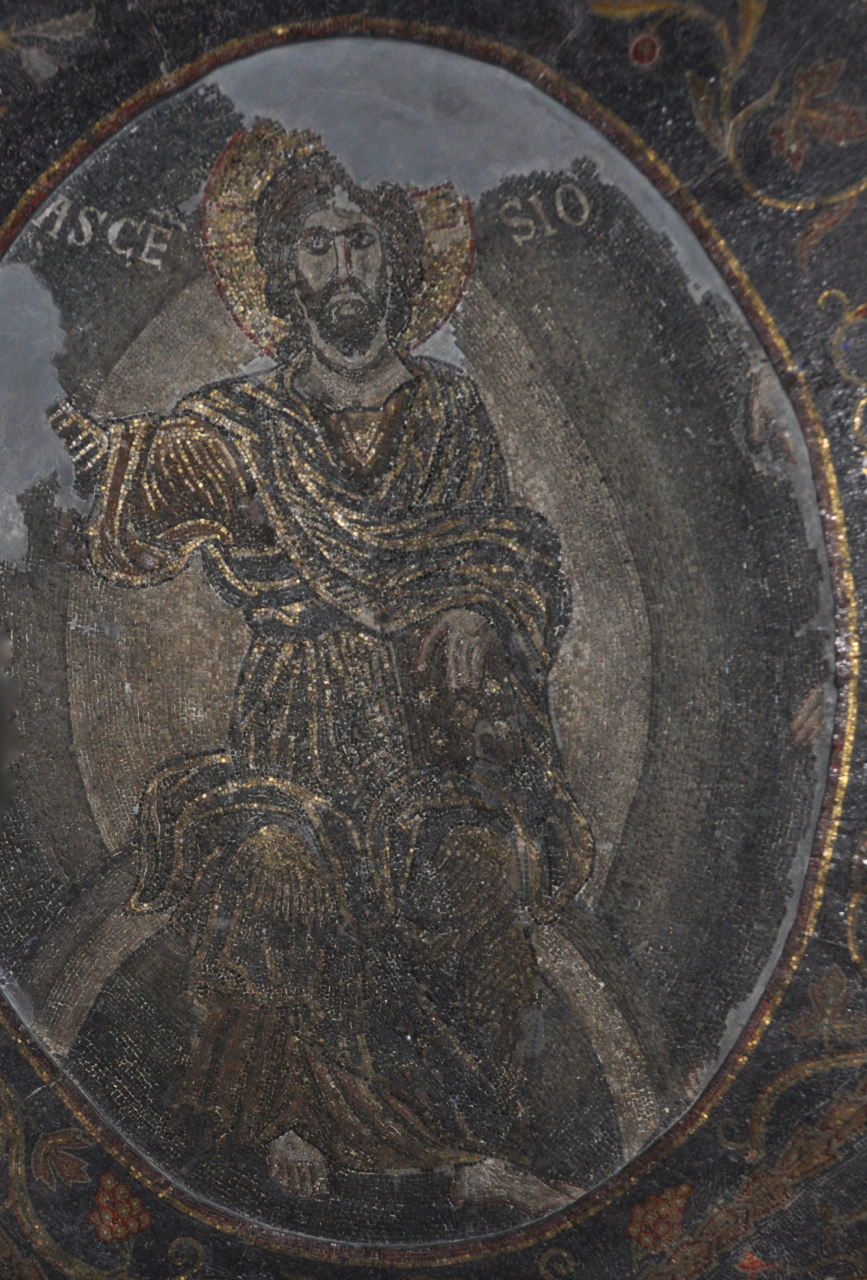
Ascension of Jesus Crusader mosaicOn the ceiling of the Catholic Chapel of the Nailing to the Cross (11th station) is a 12th-century medallion of the Ascension of Jesus — the only surviving Crusader mosaic in the building. Small geometric-shaped pieces of marble inlaid in the floor is a style known as Cosmati or Cosmatesque a traditional technique from the Crusader period though it was done when the chapel was renovated in 1937 by Barluzzi.

There are Hospitaler sites in the Muristan and German knights in the Jewish quarter, remains of a hospice, hospital and church, St. Mary of Germans.

Up on the Haram el-Sharif, the Knights Templar, used the Al Dome of AscensionAqsa mosque, called Templum Solomonis by the Crusaders, and the underground arches of Solomon’s stables. The Dome of the Rock functioned as a church, Templum Domini. A short distance to the northwest, is the Dome of the Ascension, which served as its baptistery. The Dome of the Chain to the east was a Christian chapel to St. James.
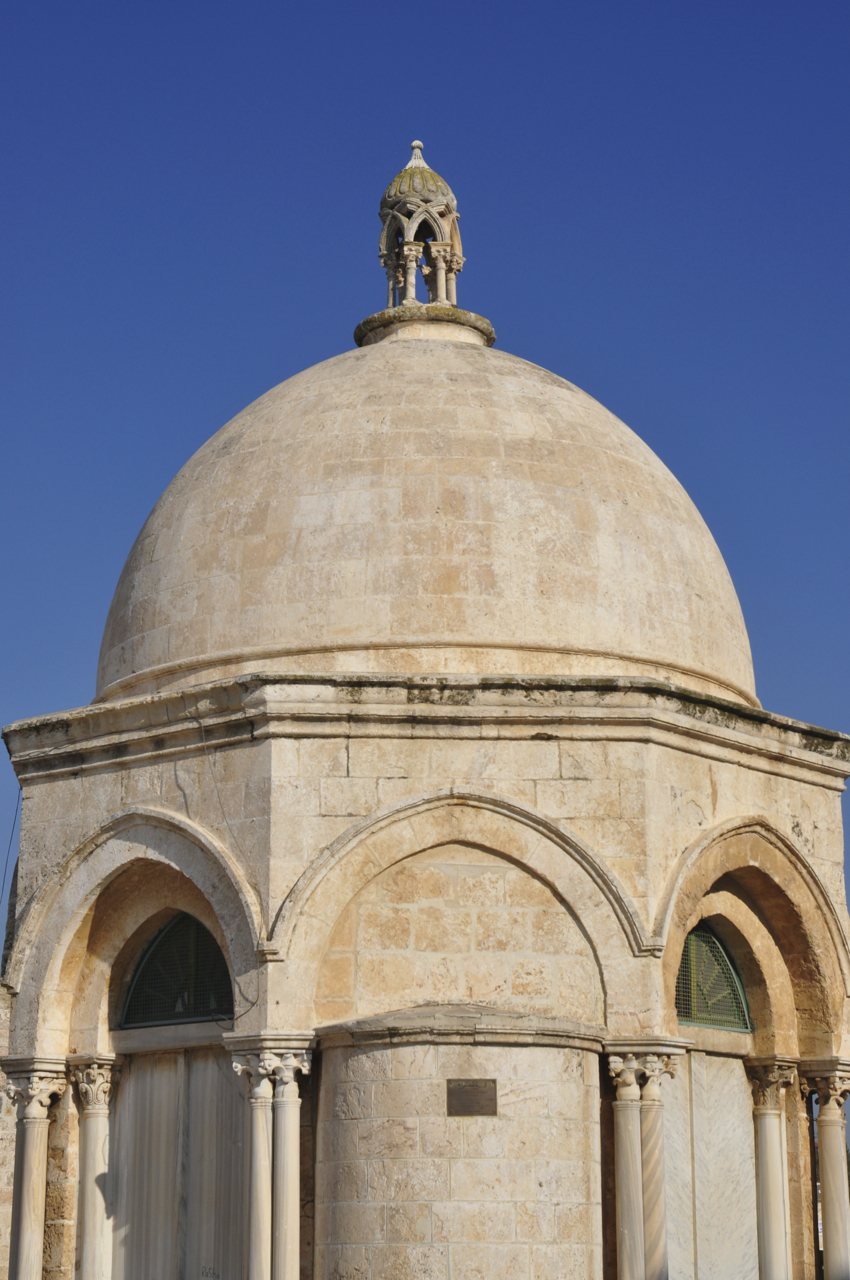
If you have the chance, visit the Temple Mount Sifting Project to try some hands-on archaeology and take the opportunity to see artifacts like arrowheads, coins and relics from the Crusader period.

At Bethesda Pools is the ruins of a Crusader chapel, Mary of Bethesda, built on the ruins of a much larger Byzantine church from the 5th century named for St. Mary (Church of the Probatica) and the Church of Santa Anna, one of the most exquisite examples of Crusader architecture in the country.
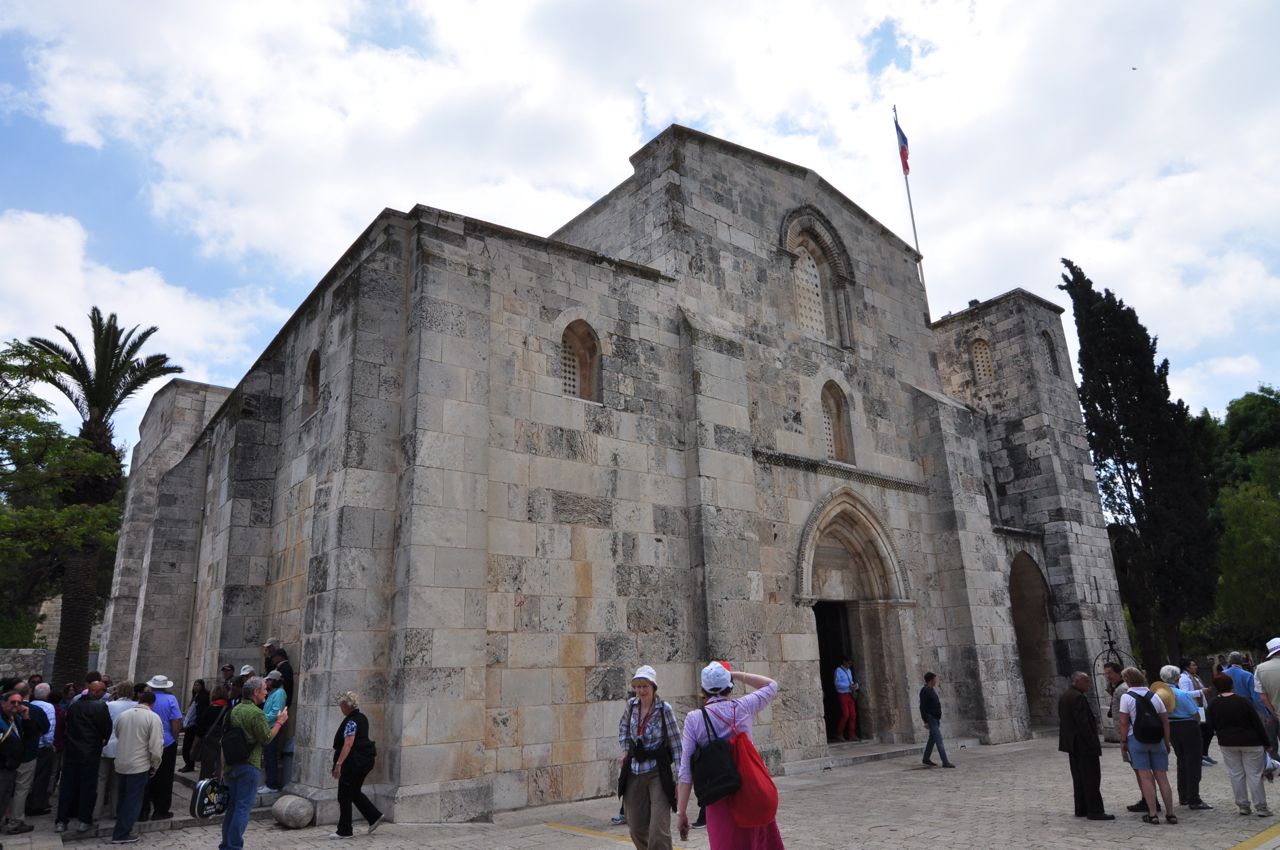
Santa Anna

On Mount Zion, the German Dormition Abbey was built on the ruins of the Crusader church of St Mary of Mount Zion which includes an upstairs room which can be visited today, the Coenaculum or Room of the Last Supper.

The Crusaders built many buildings which affected the city’s image, adding a Christian flavor to the 450 year old Muslim city and many of these changes can still be seen in the Old City today.

Photo of the Week – Negev Brigade Monument

On a hill to the east of the city of Beersheba in the Negev desert is a monument in concrete by Israeli sculptor, Dani Karavan. The memorial is to the soldiers of the Palmach’s Negev Brigade who died in the 1948 Arab Israeli war. This photo is a closeup of one of the 18 sculptural parts that make up the monument, a tunnel that appears as a spiral of rectangles – someone had left an Israeli flag on the floor.

Negev Brigade monument, by Israeli sculptor Dani Karavan

The technical details – the photo was taken with a Nikon E4300, a digital point and shoot camera in March (ISO 100, 8mm, F2.8 at 1/37 sec).

Photographs on this website are © Shmuel Browns (unless marked otherwise) – if you are interested in purchasing one of my photos or using one of my photos for your own project please contact me.

Yom HaZikaron to Yom HaAtzmaut

Today is Yom HaAtzmaut, when we celebrate Israel’s independence and Ben Gurion’s declaration establishing the state of Israel. State of Israel

Yom HaZikaron, where we remember our fallen soldiers, is the day before Yom HaAtzmaut. Israel is the only country I know that puts these two days together.

In Israel’s wars, 23,085 soldiers have died and there isn’t an individual or family in Israel that hasn’t lost a loved one or doesn’t knows someone who has lost someone. As throughout Israel we observe Yom HaZikaron I think every parent, at some point, thinks about their children serving in the Israel Defence Forces.

Med+Heli

Four of our children serve in the IDF, our oldest is serving for 6 years as an officer in Intelligence and 3  serve in combat units. As part of their training, the three did the paratroopers course and jumped from a Hercules transport plane, parachuting onto the sands at Palmachim. When your child does his first jump, it’s a tradition for families to drive to Palmachim to be there when he lands.

Parachutes from Hercules

Returning from jump

The sand, is swept all the way from Nubia in Africa, down the Nile river and then along the Mediterranean coast to Israel’s beaches.

Sand lily While at the beach at Palmachim I noticed a very striking, white flowering plant, the Sand Lily (Pancratium maritimum), also known as the sea daffodil. The Hebrew name for the flower is חבצלת החוף which most people think is the flower mentioned in Song of Songs 2:1 I am the rose of Sharon, a lily of the valleys, the Sharon plain being on the Mediterranean coast. The flowers have a pleasing, exotic and very subtle lily scent, which you only notice during still, windless summer nights. Interestingly, the plant must be cross-pollinated by a specific hawk-moth (Agrius convolvuli) which only visits the flower when there is a light breeze, a wind speed under 2 metres per second. Sprinkled on the sand around the plants were its flat, black seeds which I collected.

The seeds have just sprouted in our garden in Jerusalem. Hopefully they will grow and bloom in about 4 years, at about the same time our youngest completes his army service.

Photo of the Week – Golan

You begin to experience the Golan hikes as soon as you begin climbing the serpentine highway from the Sea of Galilee (212 meters below sea level) to the basaltic plateau at an average height of 1000 meters above sea level created by volcanic eruption 4 million years ago. There is a nice overlook above Hamat Gader and you can see the Yarmuk river meandering below. When taking photographs it is always worth looking around, especially what is behind you. Instead of a photo down into valley I took this photo of the heights behind us.

Golan

The technical details – the photo was taken with a Nikon digital SLR camera and 18-200mm lens in April (ISO 200, 20mm, F10 at 1/250 sec).

Photographs on this website are © Shmuel Browns (unless marked otherwise) – if you are interested in purchasing one of my photos or using one of my photos for your own project please contact me.

Photo of the Week – Sea of Galilee (Kinneret)

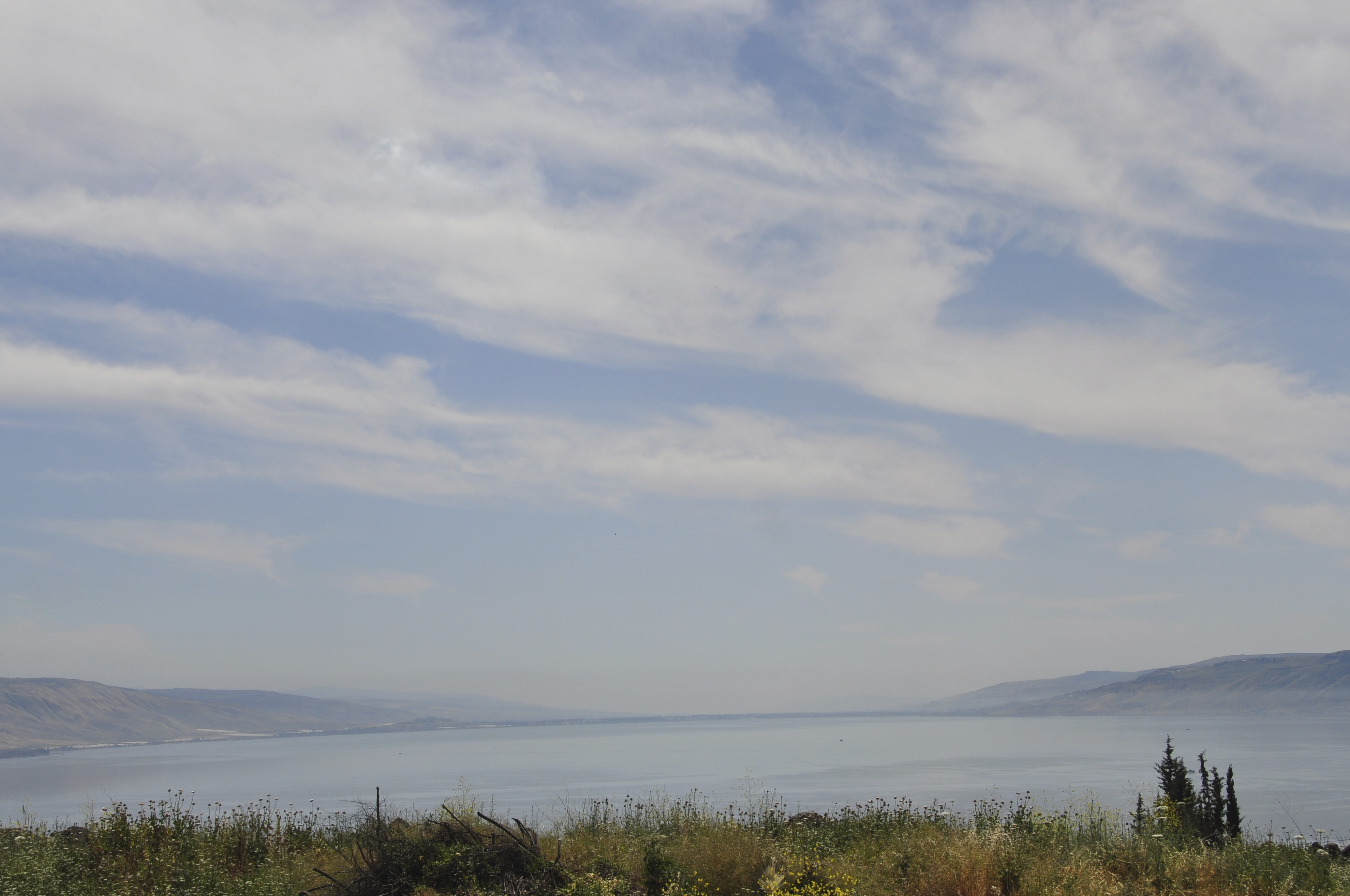
The Sea of Galilee, called the Kinneret in Hebrew, is the lowest freshwater lake in the world at an elevation of 212 meters below sea level, part of the Great African Rift. It is 21 km by 13 km with a circumference of 53km – I’d be happy to take you on a tour around the lake by bicycle. This photo was taken from Almagor, a moshav to the north of the lake, the site of the Battle of Tel Motilla between Syria and Israel in 1951, one of many attacks by Syria from the Golan Heights.

Sea of Galilee from Almagor

The technical details – the photo was taken with a Nikon digital SLR camera and 18-200mm lens in April (ISO 200, 36mm, F11 at 1/500 sec).

Photographs on this website are © Shmuel Browns (unless marked otherwise) – if you are interested in purchasing one of my photos or using one of my photos for your own project please contact me.

From the Golan Heights

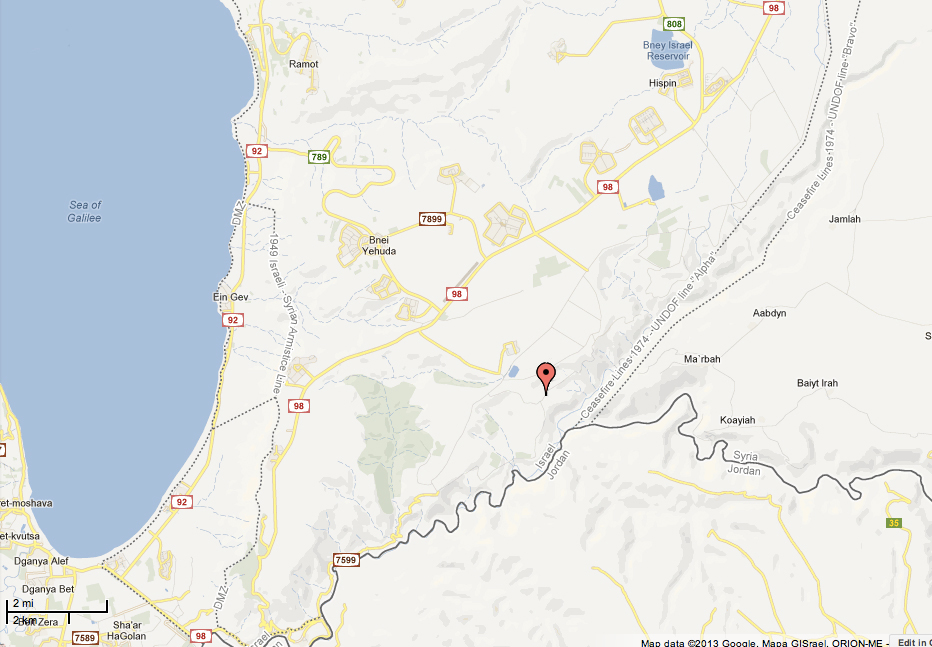
Yesterday I was up on the southern Golan Heights near Kibbutz Meitsar, less than 2 km from the border with Syria and looking east at the point where Israel, Syria and Jordan touch.

Golan map

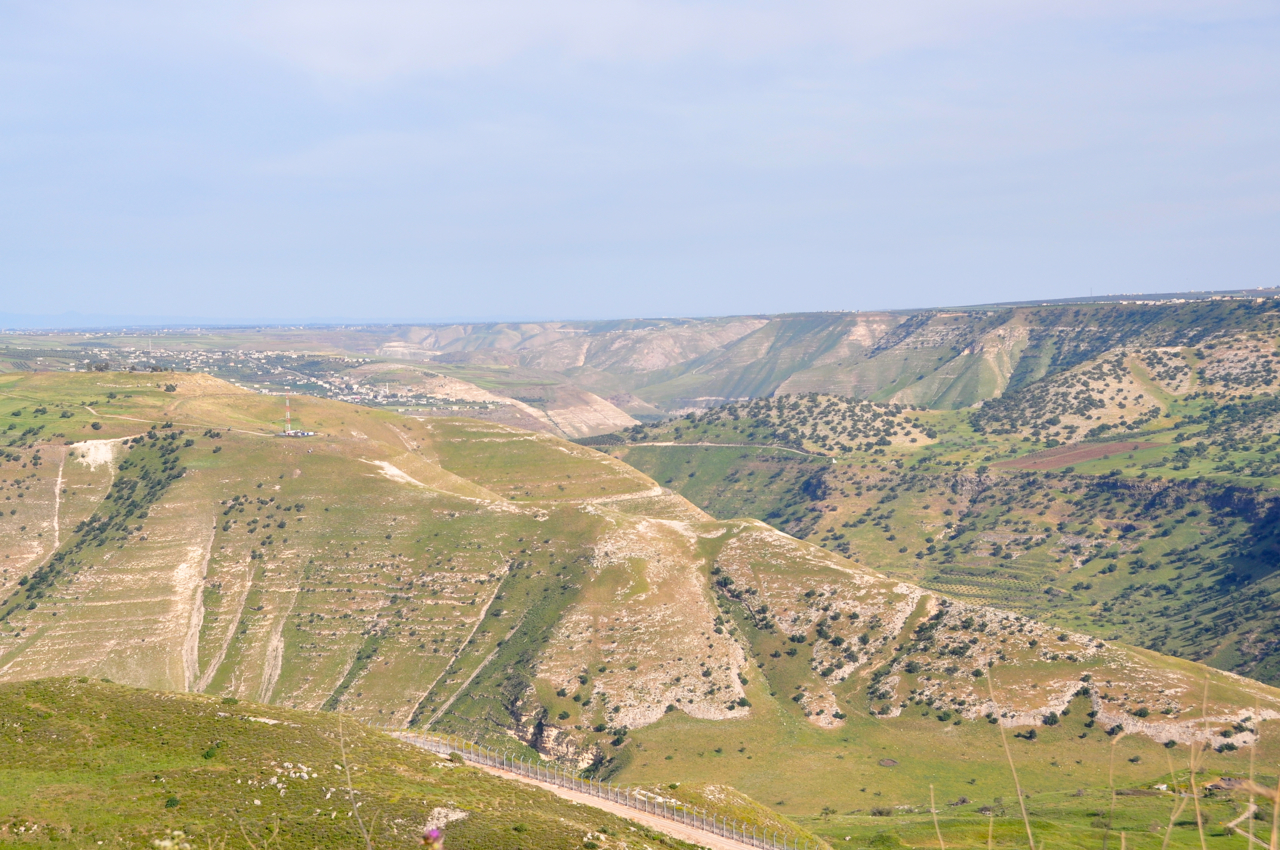
The Rokad river valley separates Israel from Syria – the ridge in the middle of the photograph below is in Syria and the Yarmuk river valley behind the ridge is the border between Syria and Jordan. You can see the new border fence that Israel is building, given the fighting in Syria – in fact, we saw some plumes of smoke to the north, billowing upwards in the distance. Across from where we were standing, near UN post OP55, one of seven observation posts in Israel, is a UN post, one of seven in Syria that monitor the demilitarized zone between Syria and Israel.

Golan Heights

Down below in the valley is Ein Aya, a natural spring that fills a pool, great for a dip on a hot day. Golan view

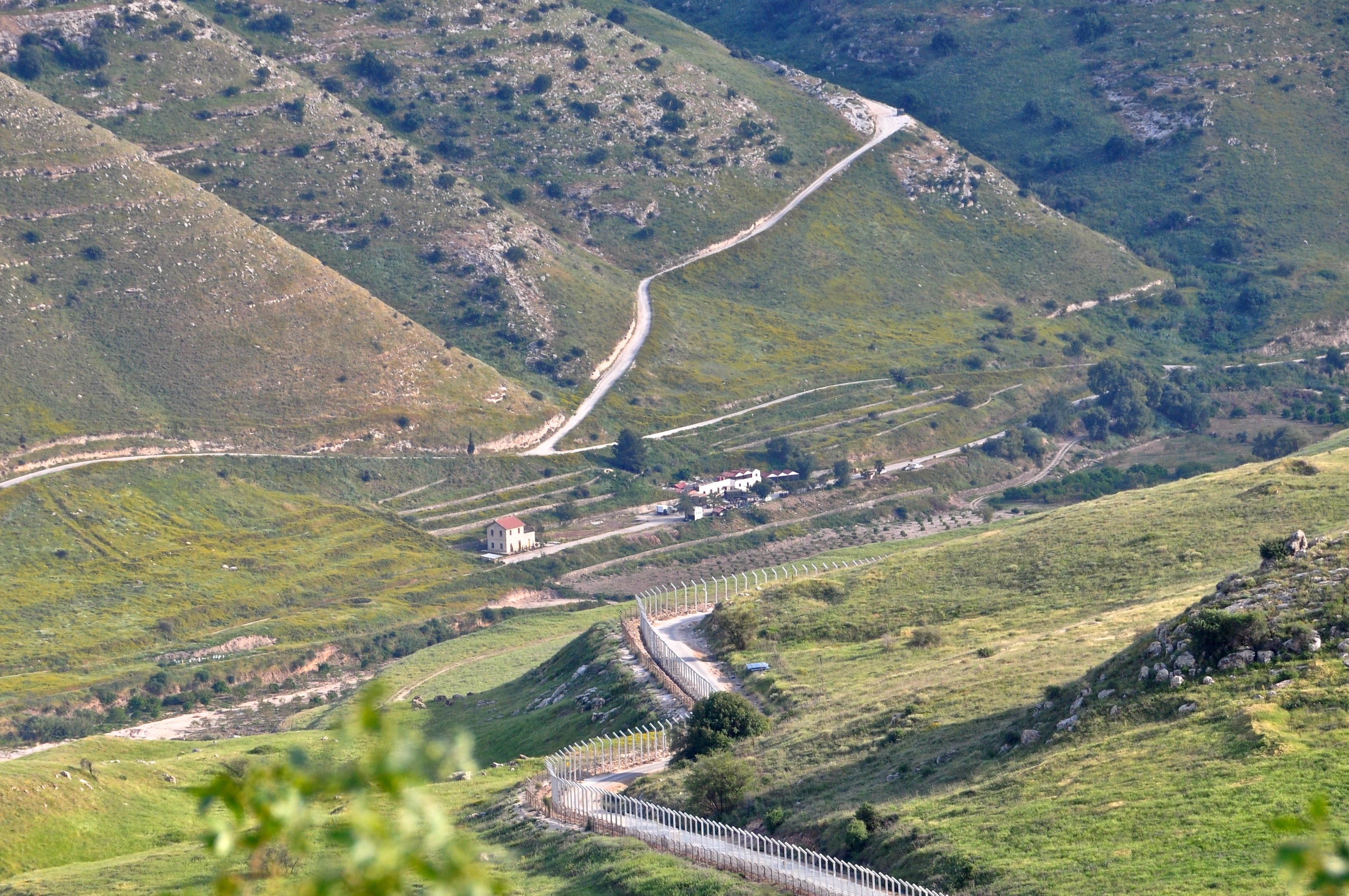
Across the border in Jordan is a two-story stone building with a red tile roof, one of the German railway stations along with the stations at Beit Shean, Tzemach and Al-Hamma (Hammat Gader) for the Jezreel Valley (Rakevet HaEmeq) line that connected Haifa with Daraa (Syria) in 1905.This is the third branch of the ambitious 4000 km Berlin-Baghdad rail project started by Oppenheimer and Meissner after Kaiser Wilhelm II’s 1898 visit to the Holy Land. The Haifa station today houses the Israel Railway Museum that provides an historical overview of railways in the Holy Land and their part in the development of the country – worth a visit.

Golan train station

Coming up the Jordan valley after Beit Shean you can see the remains of the German rail line and some of the bridges that supported the tracks. At Gesher, next to the station, is the Mujami Bridge, destroyed on May 14, 1948 by the Israelis to impede the advance of Iraqi and Jordanian troops, the lowest rail bridge in the world at 257.5 meters below sea level.  The Naharayim station, in Bauhaus style, was constructed near the hydroelectric power plant built in 1927 by Russian-Jewish engineer Pinhas Rutenberg. The site was chosen because it is where the Yarmuk river flows into the Jordan river.

Gunter Hartnagel has posted a wonderful set of his photographs of the railroad built by the Germans on Flickr.