Author Archives: Shmuel Browns

Unknown's avatar

About Shmuel Browns

I am a tour guide, licensed by the Israel Ministry of Tourism. I do tours throughout Israel, personalized to your interests, time and budget.

Photographs 1900

Walking around in the Arab shuq you might notice that many of the shops have matted black and white photographs from the turn of the century of Jerusalem and Israel for sale. It’s not clear who the photographers are or when the photos were taken but you can learn a lot about how Jerusalem developed at the end of the Ottoman period and transition to the British mandate from these photos. It’s interesting to compare a photograph taken today at the same place with the similar early photo.

If you are walking through the Muslim quarter toward the Church of the Holy Sepulcher on Al Khanka Street you will find the shop Elia’s Photo with black and white photographs going back to the 1920s in the window. On entering you will meet Kevork Kahvedjian a delightful gentleman who I’ve heard speak English, Hebrew and Arabic (he’s Armenian so most likely he speaks that too) who will be happy to talk with you and show you the photographs. Most of the photos on display were taken by his father Elia (reprinted from the original negatives) but some are even earlier that Mr Kahvedjian has collected. There is also a hardcover book of 131 of his father’s photographs, “Jerusalem Through My Father’s Eyes” (their website lists it at 230 NIS, on Amazon  it’s $200. – it makes a great present or souvenir).

Elijah Meyers founded the American Colony Photo Department in 1898 (though some photos are earlier). Meyers, who emigrated from India, was a Jewish convert to Christianity. 1898 was the year of the German Kaiser Wilhelm II and Augusta Victoria’s visit, an auspicious start to the photographic enterprise as people were interested in photos of the visit.

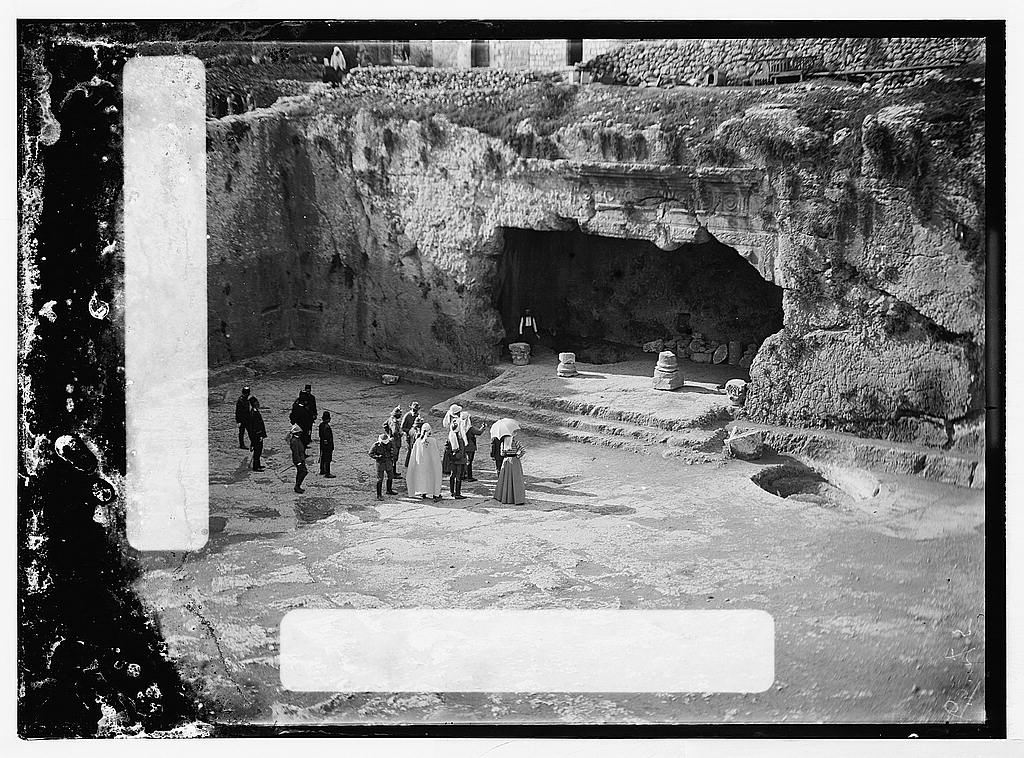
Meyers instructed the young Swede Lewis Larsson in photography. Larsson (1881?-1958) was among the original group of Swedish colonists who arrived in Jerusalem in 1896 and became one of the most skillful of the photographers. Not only a keen observer, Larson travelled extensively in the Middle East between 1903 and 1910.
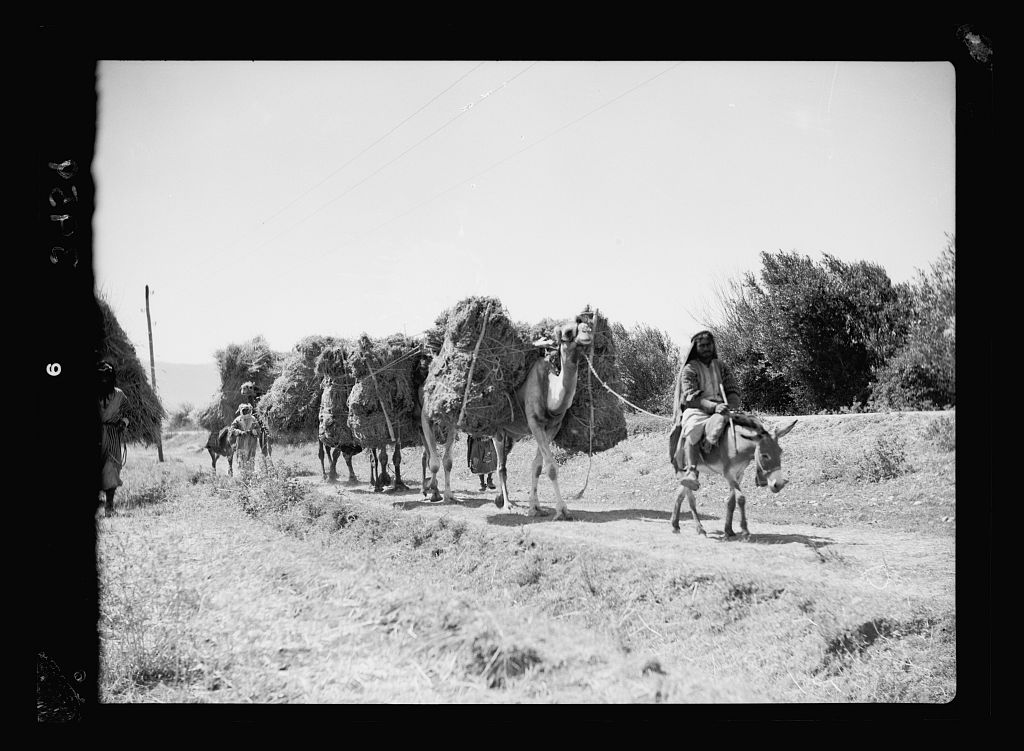
Larson knew what scenes were important to capture visually – he photographed landscapes, scenes of village life, the violent struggles at the end of World War I with the collapse of Ottoman empire. In 1904, Lewis Larsson succeeded Elijah Meyers as head of the Photo Department. Larsson ran the department for the next thirty years, even while he served as Vice Consul and later Swedish Consul for Palestine from 1920 to 1925.
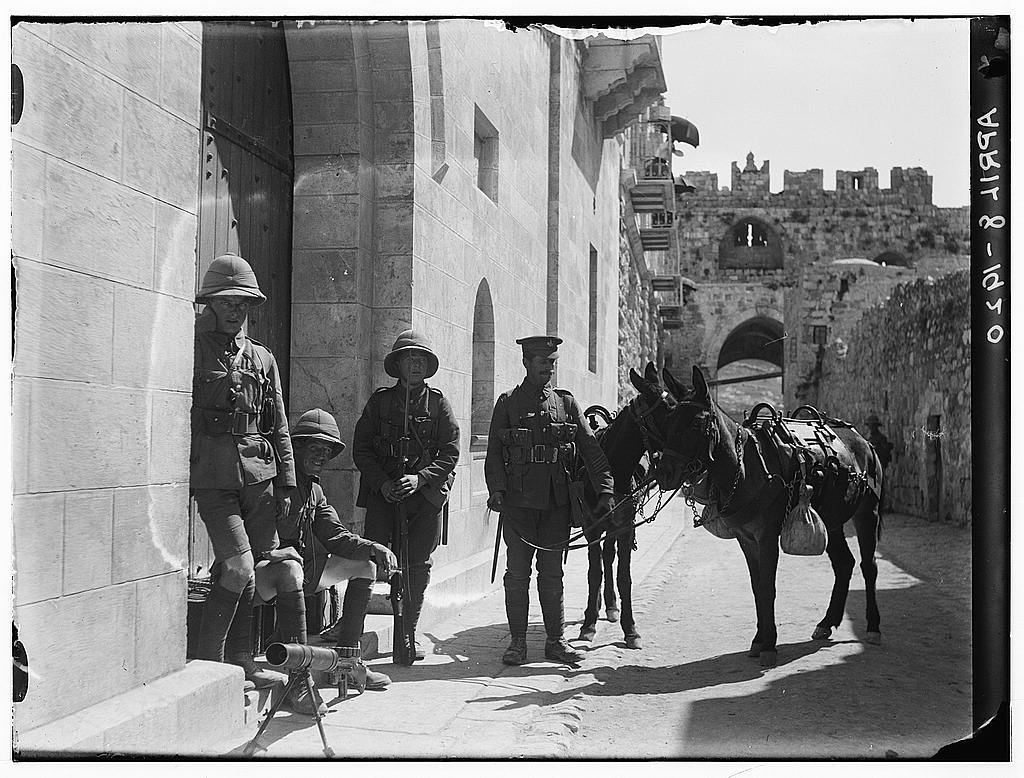
G. Eric Matson (1888-1977) also came to the American Colony from Sweden in 1896 with his family as a young child. He began working in the Photo Department darkroom as a teenager in the early 1900s, although it is uncertain when he actually began taking photographs. Matson married an American, Edith Yantiss who also worked in the darkroom.

Together the Matsons excelled in innovative techniques, such as coloring photographs with oil paint, producing double stereoscopic photographs to create 3-D pictures, taking photographs with infrared film and aerial shots.

In 1934, the original colony disbanded and Matson gained control of the Photo Department with its large collection of photographs. The Matsons continued their photographic work under the American Colony Photo Department name until 1940, when they renamed the business the “Matson Photo Service.” In 1946, in the face of increasing violence in Palestine, the Matsons left Jerusalem for southern California. The staff shipped the bulk of the glass plate negatives to the United States, with the remaining negatives relocated to the basement of the International YMCA for safekeeping (unfortunately when retrieved in 1970 they had sustained water damage). By the early 1950s, with tourism on the decline, the Photo Service’s staff dispersed, forcing the closing of the Jerusalem operation.

Realizing the Collection’s historic value, in 1966 Eric Matson donated the thousands of negatives and 11 albums of contact prints to the Library of Congress who have digitized the images and made them freely available on the Internet at http://www.loc.gov/pictures/collection/matpc/ – a great record of Jerusalem and Palestine during the first 50 years of the 20th century.
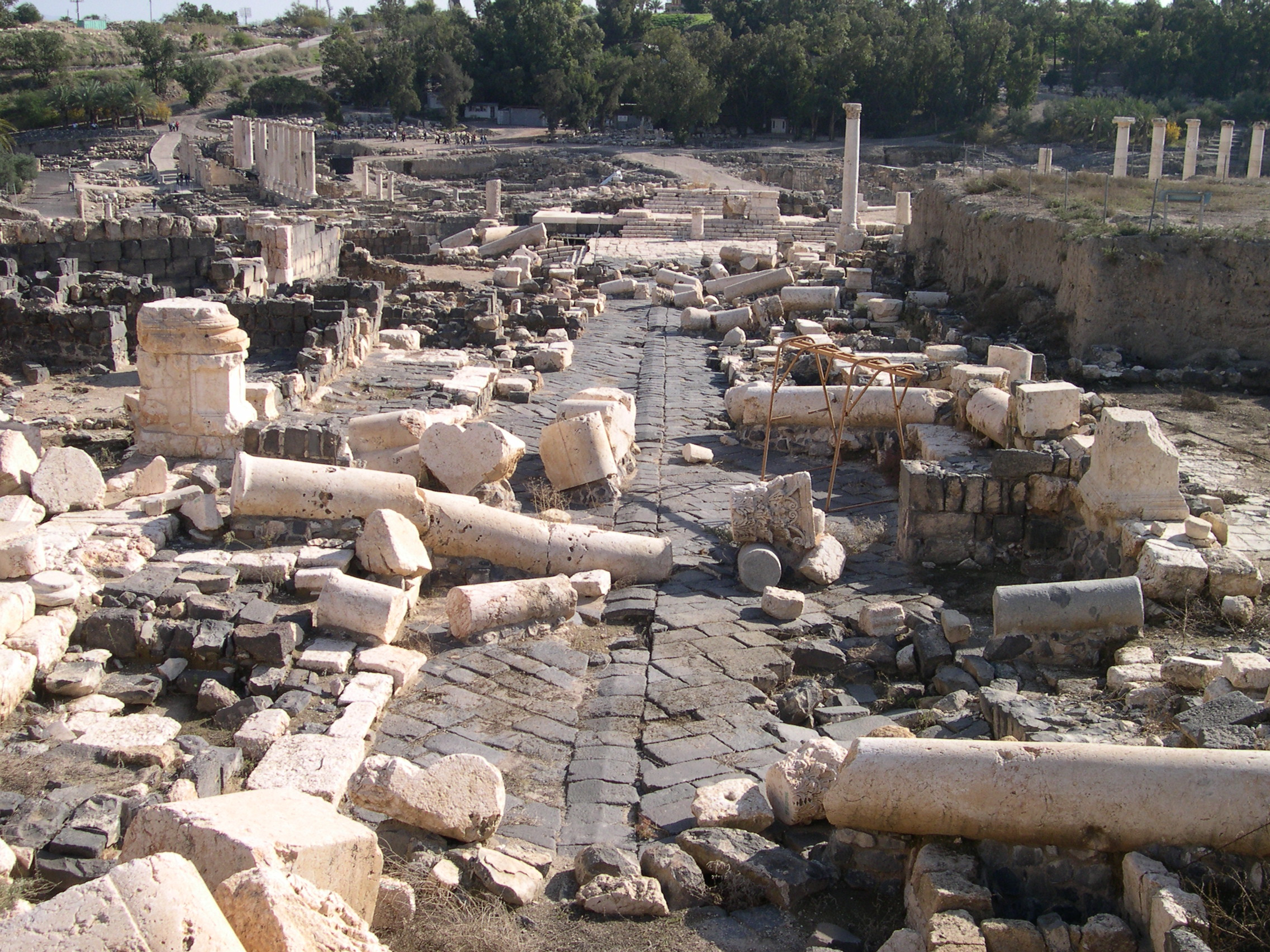
Photo of the Week – Bet Shean

For the last 12 weeks I’ve posted photos of Israel landscapes, today’s post is a photo of an archaeological site in the north of Israel. You can click on the image for a larger view (which may take some time to load depending on your Internet connection). Please share this post with your friends by clicking on the icons at the end of this message.

The photo was taken at Bet Shean in the archaeological park and shows the destruction of the city by the earthquake of 749CE. The technical details – the photo was taken with a Nikon digital point and shoot camera on January 2 (ISO 100, 8mm, F7.6 at 1/135 sec).

Bet Shean is a great site to visit, see my post at
https://israeltours.wordpress.com/2011/01/16/bet-shean-scythopolis/
and if you’re interested in more about earthquakes check
https://israeltours.wordpress.com/2011/01/10/earthquakes-history-archaeology/.

Photographs on this website are © Shmuel Browns (unless marked otherwise) – if you are interested in purchasing one of my photos or using one of my photos for your own project please contact me.

Photo of the Week – Red Sinkhole

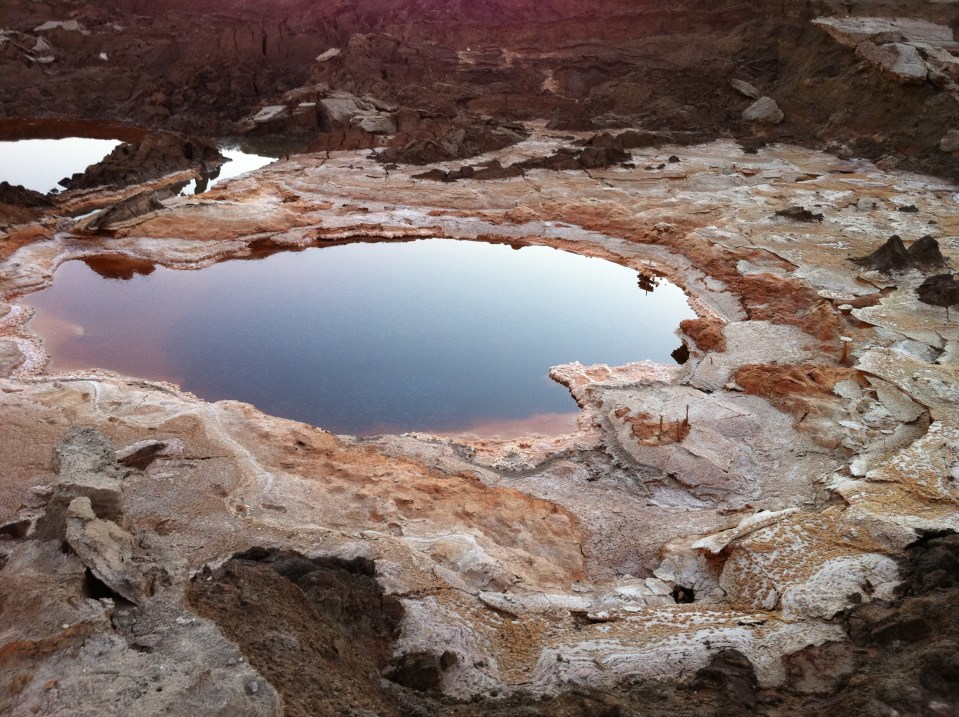
Two weeks ago I posted a photo of a blue-green pool in Nahal Saar on the Golan. This photo of a water filled sinkhole by the Dead Sea was taken across from Ein Gedi with my iPhone (that’s the camera I had with me).

Sinkhole pool
You can click on the image for a larger view (which may take some time to load depending on your Internet connection). Please share this post with your friends by clicking on the icons at the end of this message.

Sinkholes along the Dead Sea are a serious ecological problem, check out my post at https://israeltours.wordpress.com/2009/10/28/dead-sea/.

Photographs on this website are © Shmuel Browns (unless marked otherwise) – if you are interested in purchasing one of my photos or using one of my photos for your own project please contact me.

Photo of the Week – Nahal Darga

WordPress has a Weekly Photo Challenge and this week the subject is BIG so I’m submitting a photo. BIG is not what comes to mind when you think of Israel, the country is very small, about the size of New Jersey and whether it is a lake, a river, a canyon or a mountain it’s not very BIG. The photo was taken on a hike – the young man under the BIG rock is our youngest, AdirChai. If you think you know where the photo was taken leave a comment below; at the end of the week I’ll post the answer so check back.

In the winter during the rainy season, there are flash floods in desert areas and the water is able to move BIG stones which can then get lodged between the walls of the canyon. The water fills depressions in the floor of the canyon so on this hike you have to swim across pools of water. Make sure to put your camera (I brought along a smaller one), car key and cell phone in a watertight container so they won’t get wet. Please share this post with your friends by clicking on the icons at the end of this message.

The technical details – the photo was taken with a Lumix (point and shoot) digital camera on March 26 (ISO 80, 9.7mm, F3.9 at 1/500 sec).
Photographs on this website are © Shmuel Browns (unless marked otherwise) – if you are interested in purchasing one of my photos or using one of my photos for your own project please contact me.

Photo of the Week – Nahal Saar

Along with limestone, dolomite, sandstone and granite, there is also basalt in the north of Israel, an area of extinct volcanoes. Saar Falls is a waterfall that cascades into Nahal Saar in the winter rainy season. The nahal (stream bed) is the divide between the basalt of the Golan and the limestone of the Hermon. You can click on the image for a larger view (which may take some time to load depending on your Internet connection). Please share this post with your friends by clicking on the icons at the end of this message.

The technical details – the photo was taken with a Nikon D90 (digital SLR) camera with a Nikon 18-70mm lens on November 8 (ISO 400, 18mm, F4 at 1/60 sec). For another view check out my post at https://israeltours.wordpress.com/2010/02/26/saar-falls/

Photographs on this website are © Shmuel Browns (unless marked otherwise) – if you are interested in purchasing one of my photos or using one of my photos for your own project please contact me.

Photo of the Week – Shehoret Canyon

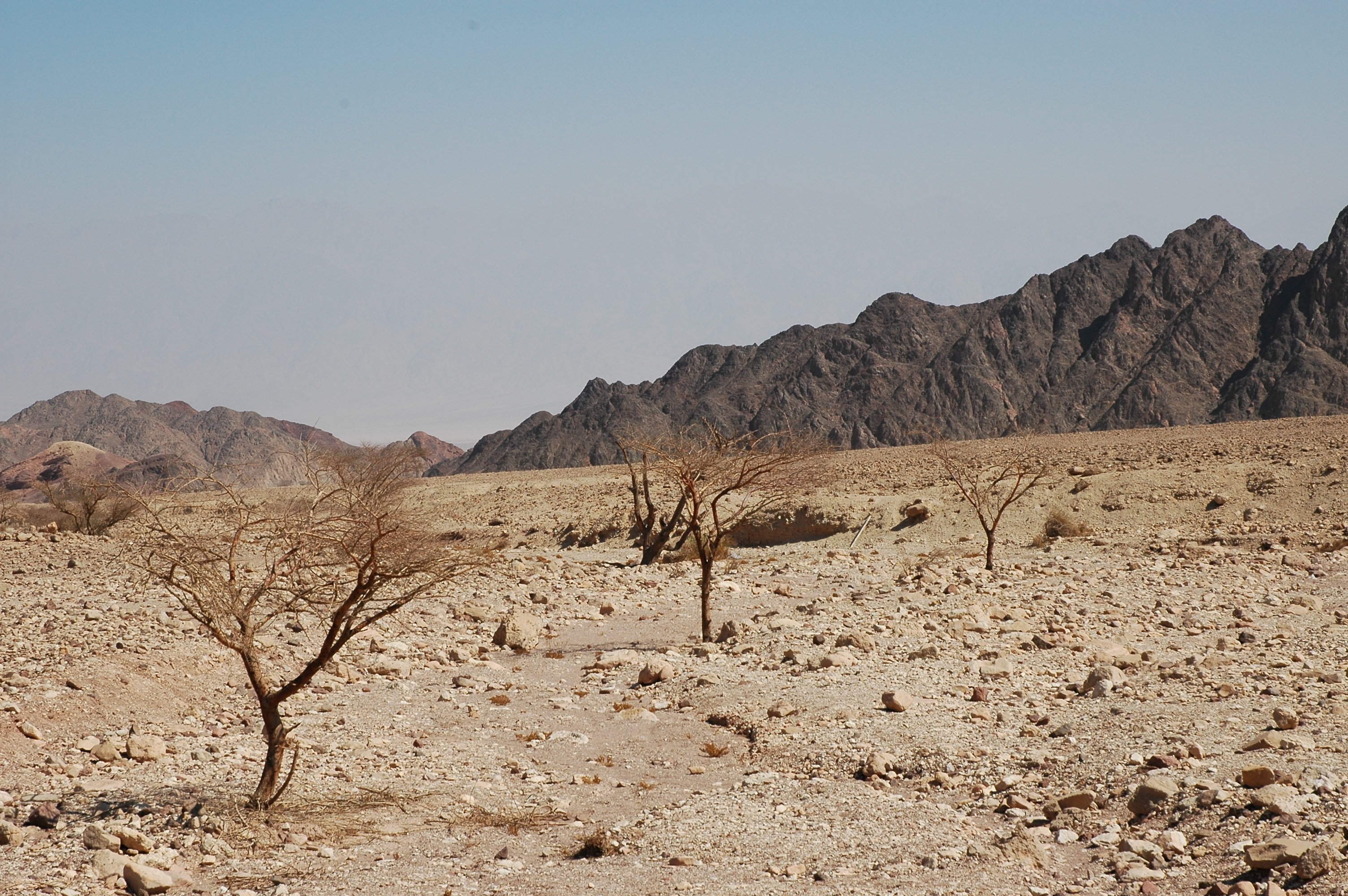
Continuing south from the Dead Sea along highway <90> the geology changes as you approach the mountains around Eilat. Along with limestone there is now sandstone and granite. This photo was taken on a hike in the Shehoret canyon (the black mountain is granite). You can click on the image for a larger view (which may take some time to load depending on your Internet connection). Please share this post with your friends by clicking on the icons at the end of this message.

The technical details – the photo was taken with a Nikon D70 (digital SLR) camera with a Nikon 18-70mm lens in October (ISO 200, 50mm, F11 at 1/400 sec).

For more information about hiking near Eilat check out my post at https://israel-tourguide.info/2011/03/11/israel-trail-encounter/

Photographs on this website are © Shmuel Browns (unless marked otherwise) – if you are interested in purchasing one of my photos or using one of my photos for your own project please contact me.