
Author Archives: Shmuel Browns

Unknown's avatar

About Shmuel Browns

I am a tour guide, licensed by the Israel Ministry of Tourism. I do tours throughout Israel, personalized to your interests, time and budget.

Immigration to Palestine and Israel

Sarig and Rabin

Sarig and Rabin

Under Britain’s White Paper of 1939 Jewish entry to Palestine was restricted to 10,000 immigrants a year. Aliyah Bet was the code name given to the clandestine immigration of Jews to Palestine under the British Mandate that operated from 1934-1948. In total, over 100,000 people attempted to illegally enter Palestine, using 120 ships that made 142 voyages. More than half were stopped by Britain’s Royal Navy, only a few thousand refugees successfully got through the blockade and entered Palestine. Originally the British held the illegal immigrants at the Atlit detention camp built in 1938 just south of Haifa. The Atlit camp was surrounded by three barbed wire fences and guarded by armed sentries in six watch towers and held men, women and children. The camp is eerily reminiscent of the Nazi concentration camps.

On the night of October 9, 1945 Palmach special forces led by Nachum Sarig, later commander of the Negev Brigade, and a youthful Yitzhak Rabin broke into the camp and led the 208 detainees on foot to freedom. After that the British sent the would-be immigrants to internment camps in Cyprus.

My parents entered Palestine on May 7, 1947 ostensibly as visitors but intending to make aliya; the British allowed them entry as they were Canadians and hence, British subjects.

Captured off Haifa by the HMS Pelican on April 26, 1948 after fierce resistance which left a number of people injured, the Nakhson with 553 passengers on board was the last ship stopped by the British. On the morning of May 15, 1948 the British left Palestine.

There is a story that on Saturday, May 15, 1948 Ben Gurion went to the port at Tel Aviv to personally meet the first boat with immigrants to the newly declared State of Israel. The question is “What was the name of the ship?”

This is one account  that I found, submitted to a newsgroup, http://newsgroups.derkeiler.com/Archive/Soc/soc.genealogy.jewish/2008-12/msg00266.html by Rony Golan.

I believe that the first legal boat of immigrants to the State of Israel was the Orchid (“Orchidea”) that left Italy from Gulf Gaeta on May 8, 1948 and was supposed to arrive to the shores of Palestine in mid May 1948. The British discovered the ship while at sea. The boat received a radio transmission from an Israeli radio operator of the Gideon network (used by the Mossad l’Aliya Bet) to stay a day at sea and to change its name to “Medinat Yisrael” (Hebrew of the State of Israel). Hence, the ship entered the port of Tel Aviv on Shabbat May 15, 1948, while the State was proclaimed on Friday.

Some sources say that the ship arrived to Haifa, but this is incorrect, since Haifa port was proclaimed a closed military zone, as the British had not finished withdrawing their troops from Palestine.

There are photos of the arrival of the ship both in the Central Zionist archives in Jerusalem as well as in USHMM in Washington, D.C..

More details and a photograph may be found at the Pal-Yam site (although not all the details are the same as what I have provided): http://www.palyam.org/Hahapala/Teur_haflagot/hf_Medinat_Israel

The source of the above information is my father, who was a crew member of this ship.

Rony Golan
Israel

Medinat Yisrael

The account on the Pal-Yam site which I’ve translated from the Hebrew is somewhat different:

The British discovered the ships (Medinat Yisrael with 243 passengers and LaNitzachon with 189 passengers) that had left Brindisi, Italy on May 8th on May 15th near Tel Aviv but did not intercept them as they had already announced the end of the British Mandate and were departing the country. The next morning the two boats reached the port but were forced to keep away from the shore because of bombing by Egyptian planes. The following day, May 17th the Jewish immigrants disembarked openly on the shore of Tel Aviv in the sovereign State of Israel.
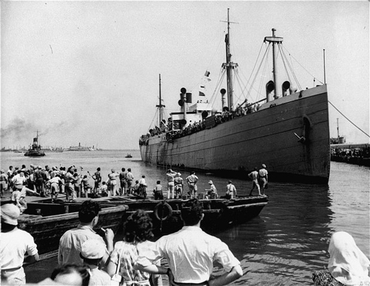
Pan York ship

Photo from the Holocaust Museum in Washington at http://www.ushmm.org/wlc/en/media_ph.php?MediaId=729

There is record of a ship “Pan-York,” carrying Jewish refugees from southern Europe to the newly established State of Israel, via Cyprus, docking at Haifa on July 9, 1948.

In 1987 Atlit was declared a National heritage site. It’s a site very worth visiting to better understand the period that lead up to the establishment of the State of Israel.

Where is Magidovitch Street?

Yehuda Leib Magidovitch was born in Uman, Ukraine in 1861, studied at the Odessa Academy and immigrated to Tel Aviv in 1919. From 1920-23 he worked as the chief engineer of the city of Tel Aviv. He then started his own company and for the next 20 years, as architect and contractor was instrumental in developing the city of Tel Aviv. A sampling of his buildings stands on Rothschild Blvd., along Allenby, Herzl and Lilienblum. I’ve shared a live Google map showing the locations at Magidovitch Tel Aviv.

Magidovitch TA

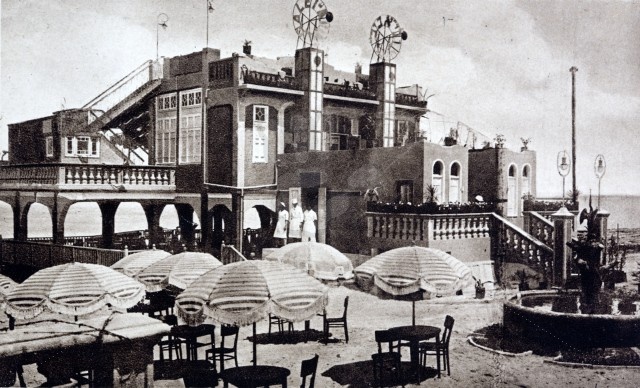
One of his buildings, the most opulent in early 1920s Tel Aviv was known as ‘The Casino.’ Not a gambling house, the Casino Galei-Aviv cafe-restaurant on the beach close to the port was constructed to boost the fledgling nightlife of the new city. It lasted about a dozen years and was destroyed by order of the municipality in 1939.

The Casino Galei-Aviv at Tel-Aviv photographed in 1932

Magidovitch built Levin House, at 46 Rothschild Blvd. in 1924 by as an urban mansion, in the style of 19th century Italian summer houses with neo-classical details. Terraces of greenery set the house apart from the street. Conservation of the building was done as part of a 22-story office high-rise. In order to build a 7-floor underground parking garage under the house it had to be disconnected from its original foundations and a new one incorporating the garage had to be built, an unprecedented engineering feat.

Levin House

Magidovitch built a house on Nahalat Binyamin St. for the Bachar brothers. Today, in keeping with Tel Aviv planning policy, you can see a new 30 floor office tower going up at 22 Rothschild Blvd., that will connect to Bachar House via a glass atrium.

Aviv project-Bachar House

From Google Streetview

At 16 Herzl St. is Fsag Fnsk, the first commercial shopping center under one roof, built by Magidovitch in 1925 with an elevator and his trademark metal dome.

From Google Streetview

From Google Streetview

At the corner of Yavne and Montefiore, what was the Ismailov hotel built in 1925, similar to the Ben Nahum hotel in design, is being renovated to become another boutique hotel.

Ismailov hotel  Ben Nahum hotel

The Nordau hotel is a classic Magidovitch with a silver domed tower.

Nordau hotel

Magidovitch’s House of Pillars was undergoing renovations but that seems to have stopped.

House of Pillars

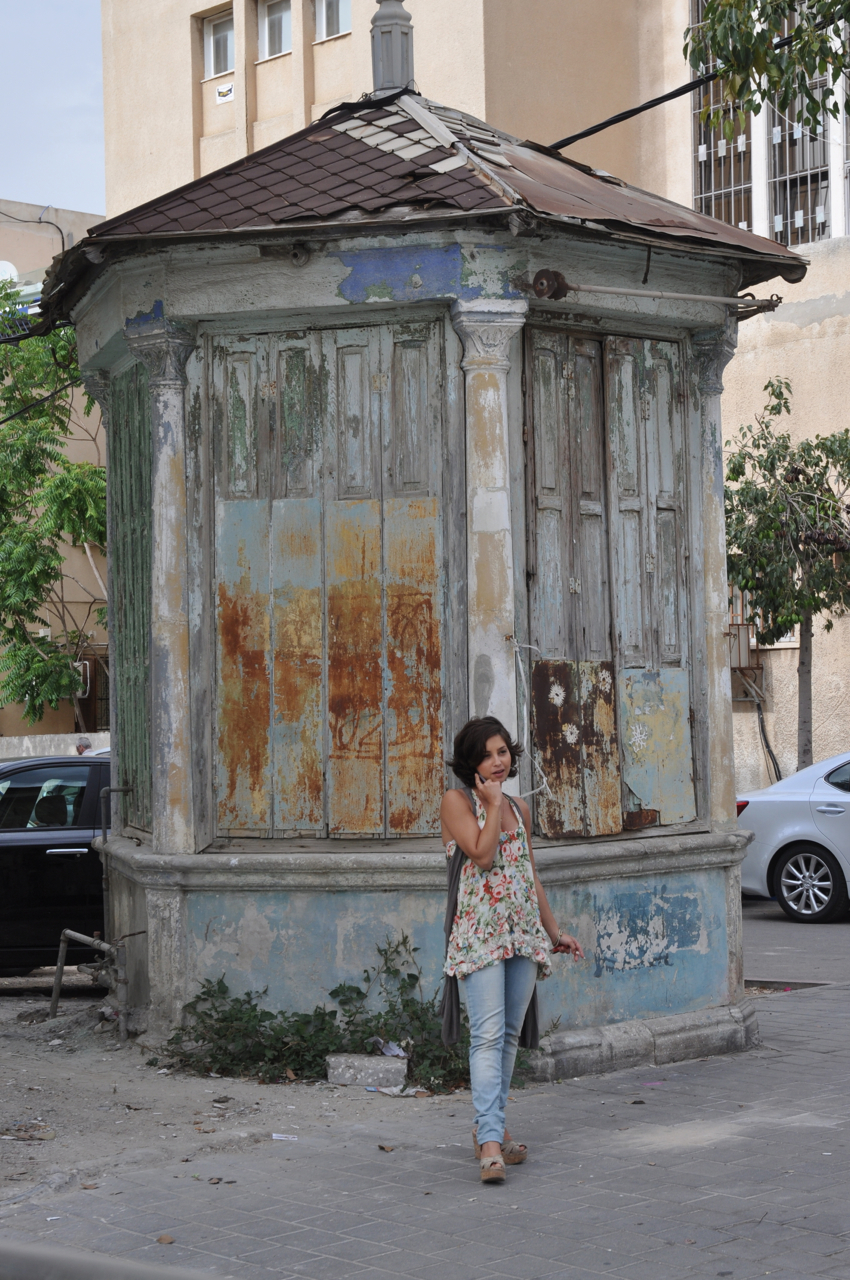
TA Kiosk 3Magidovitch designed the Kol Yehuda synagogue at 5 Lilienblum St. for the Jewish community from Aden in 1934. “The façade of this unassuming building does not give away its inner monumental grandeur. The building is indicative of Magidovich`s virtuosic architectural abilities, having created within it an elegant and rhythmic space by means of a network of exposed construction beams.”

Next to the synagogue is a classic Magidovitch building with his signature corner tower covered with a sheet metal roof. Beside it, on the corner of Lilienblum and Rishonim streets, is the third Tel Aviv kiosk.

From Google Streetview

From Google Streetview

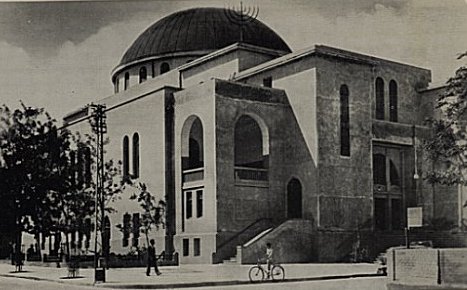
Magidovitch also built the Great Synagogue at 118 Allenby St. In the 1970s the outside of the building was renovated with the addition of arches but this is what it used to look like.

Tel_Aviv_Great_Synagogue

Although most of Magidovitch’s building were in the eclectic style, in the 30s, he also built in the popular Bauhaus style. Two examples are the Esther Cinema, now the Cinema hotel on 1 Zamenoff and a residential building at 90 Rothschild Blvd.

90 Rothschild

From Google Streetview

In all, Magidovitch built some 500 buildings in Tel Aviv over a period of 40 years. There is no street named after him, his many buildings are his monument.

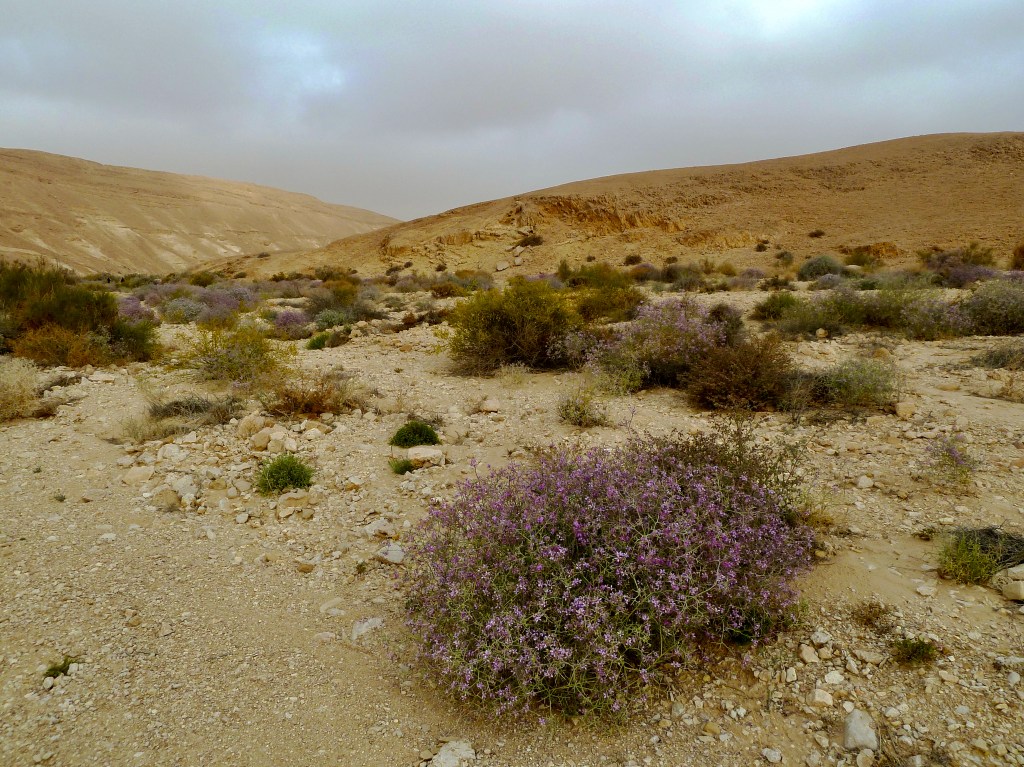
Just north of Timna continuing along the Israel trail you follow the Milhan ridge, a great area for hiking and photographs. We stayed overnight at the nearby campground, Be’er Milhan, a site that affords some protection from the wind (no toilets or running water). This photo was taken in the morning. Purple flowering bush is Spiny zilla (Zilla spinosa), a member of the brassicaceae family, you can eat the purple flowers which taste like cabbage.

Milhan well

The technical details – the photo was taken with a Lumix point and shoot camera in March (ISO 80,4.1mm, F4 at 1/320 sec).

For more information about desert wildflowers see my post at https://israeltours.wordpress.com/2011/03/14/desert-wildflowers/

Photographs on this website are © Shmuel Browns (unless marked otherwise) – if you are interested in purchasing one of my photos or using one of my photos for your own project please contact me.

Introducing Fallow Deer

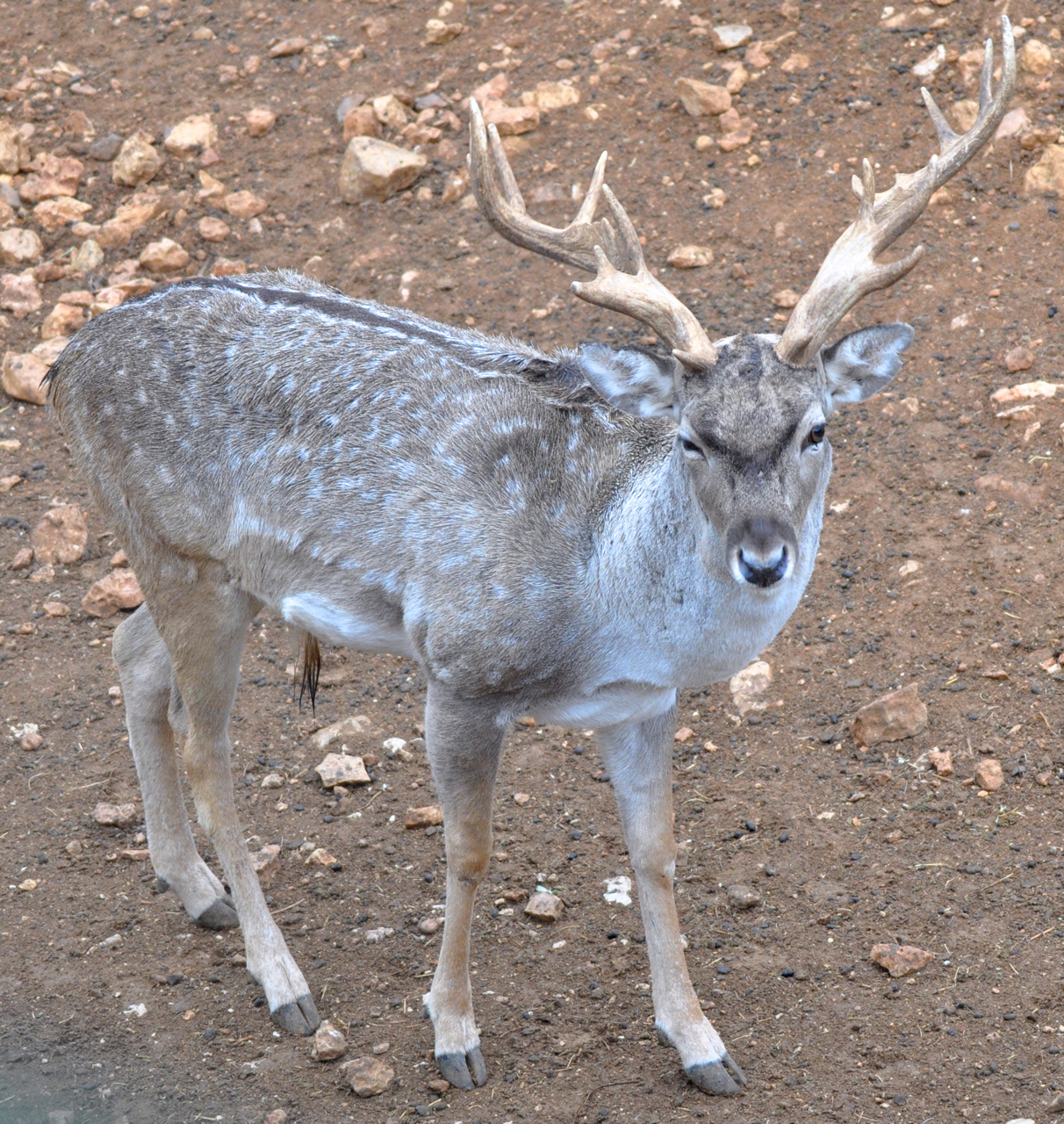
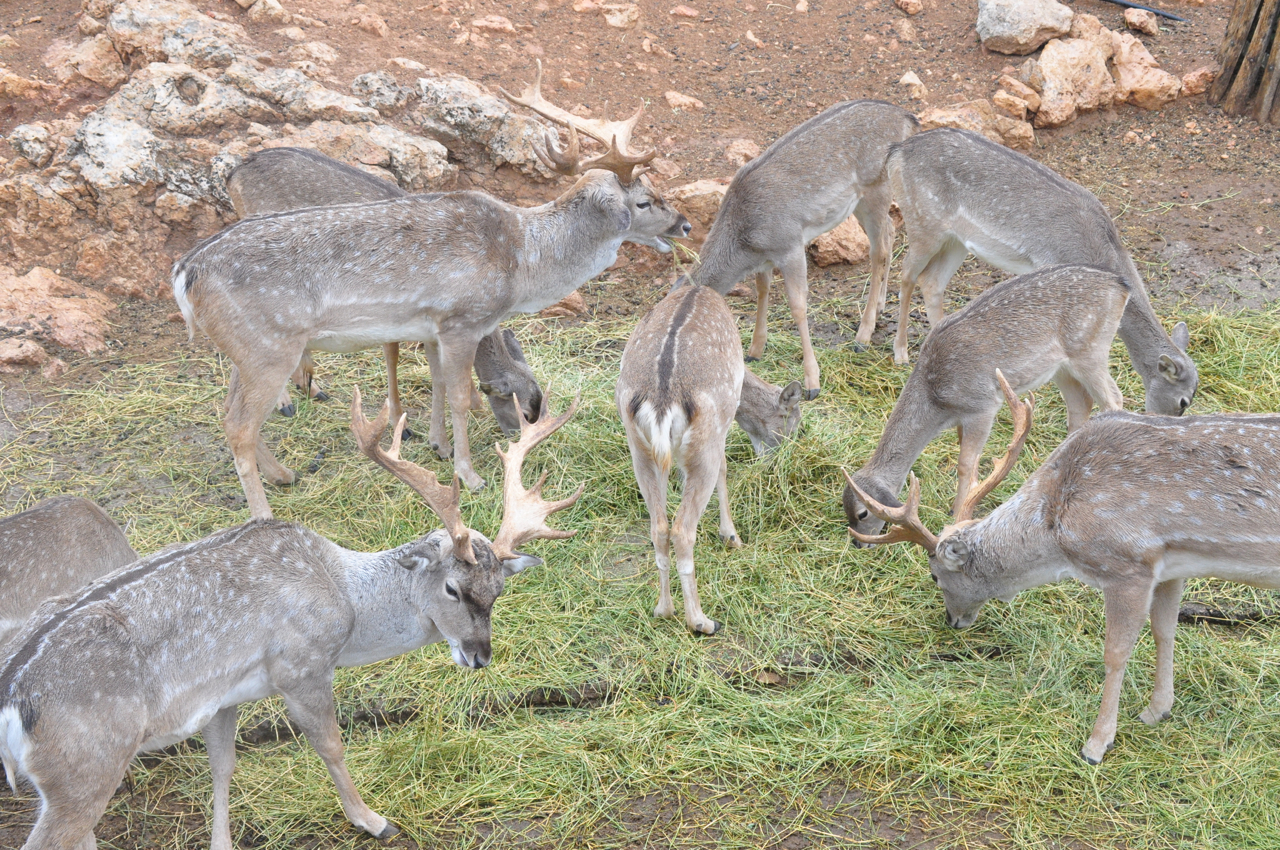
Fallow deerPersian fallow deer (Dama Mesopotamica) native to Israel from Biblical times were hunted to extinction in the early 1900s. The fallow deer is mentioned among the eight other kosher mammals listed in Deuteronomy 14: 4-5 — the roe deer, gazelle, addax, bison, oryx, wild goat, wild ox and ibex. Only the gazelle and ibex remained in Israel by the 1960s. In the biblical Book of Kings, the fallow deer is one of the many animals presented to King Solomon as a tithe. Until the late 1950s the species was thought to be extinct in the world — then a small herd was discovered in Iran. Here is the incredible story of how fallow deer have been introduced again into the Biblical landscape of Israel.

In 1962 the Israeli government enacted a conservation law to help restore the wildlife population decimated by hunting and wars and created the Israel Nature and Parks Authority, headed by General Avraham Yoffe. Yoffe had the idea to resettle fallow deer in Israel so he began courting high-ranking Iranian officials. He invited the Shah’s brother Prince Abdol Reza Pahlavi, an avid hunter, to Israel’s Negev desert to hunt the rare Nubian ibex. Months later, he arranged a second hunting trip for another senior Iranian wildlife official, Rashid Jamsheed, who bagged an ibex with 53-inch horns, the world record to this day. It is against the law to hunt ibex but special permission was granted in this case by then Minister of Agriculture, Ariel Sharon (an Israeli army general who became an important politician). In 1978, with the stirrings of the Iranian Revolution, the prince agreed to give Israel four fallow deer.

When Yoffe arrived in Tehran, he suffered a mild heart attack. As he was being airlifted out he left instructions with General Segev, the Israeli military attaché in Tehran to fulfill his mission to bring the deer to Israel. Segev made the rounds to obtain the necessary export licenses. Meanwhile, Dutch zoologist Dr. Van Grevenbroek who was in charge of the project arrived from Israel to capture four deer. He was armed with a blow-dart gun disguised as a cane. Passing burned-out storefronts throughout the city, burning tires, angry mobs and the acrid smell of tear gas Segev reported, “There was shooting all over the streets, and there I was, an Israeli general, going to the zoo”. Van Grevenbroek assembled his supplies, and left Tehran on a 10-hour drive to a game reserve on the Caspian Sea. He spent five days tracking, capturing and crating four female deer. He returned safely to Tehran. On December 8th, the deer were loaded on the last El Al flight out of Tehran, packed between piles of carpets and the personal effects of Iranian Jews and Israeli officials fleeing the country. Fallow deer These four deer arrived in Israel to the Carmel Hai Bar Reserve where they were cared for and bred. Today there are also fallow deer herds in the Yotvata Hai Bar reserve, Jerusalem zoo and Neot Kedumim. The Jerusalem Biblical Zoo was involved in the initial reintroduction of fallow deer into the wild in Israel in the Nahal Kziv area (the route of the Yam l’Yam hike from the Mediterranean coast to the Sea of Galillee). In December 2009 officials released a small group of fallow deer from their acclimation enclosure into Nahal Sorek in the Jerusalem hills. Since then other Biblical animals, onagers, oryx and roe deer have been acquired and reintroduced into Israel’s wild, as part of Israel’s conservation efforts.

Photo of the Week – Flamingo

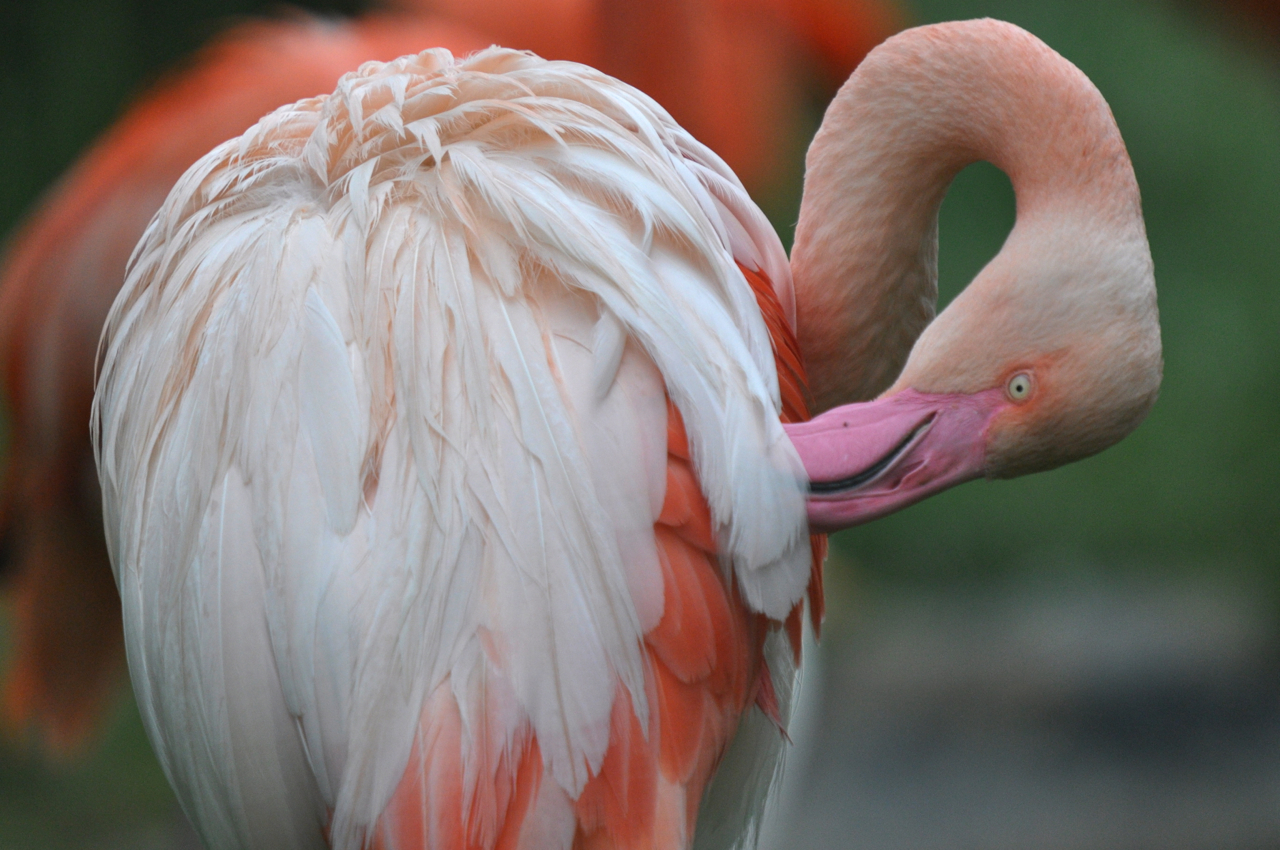
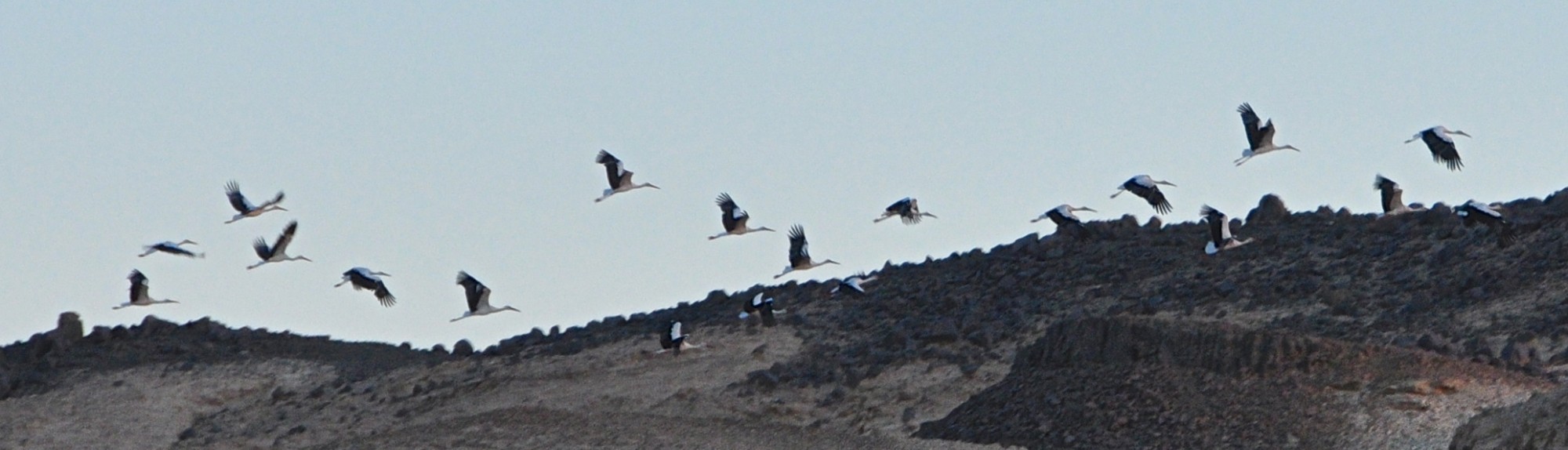
The Greater Flamingo (Phoenicopterus roseus) is the most widespread species of the flamingo family. At the salt marsh you can find a colony of more than 100 flamingos that vacation just north of Eilat most of the year. According to expert Keith Marsh from Bird Forum besides the flamingos you will be able to spot white storks, herons, waders and a wide variety and number of raptors, especially in the autumn and spring during migration. There are few better birding areas in the Western Palaearctic than Eilat on the Red Sea coast of Israel where more than 420 species of birds have been recorded.

DSC_0458You can click on the image for a larger view (which may take some time to load depending on your Internet connection). Please share this post with your friends by clicking on the icons at the end of this message.

The technical details – the photo was taken with a Nikon D90 digital camera and a 50-500mm Sigma lens in November (ISO 800, 500mm, F6.3 at 1/400 sec).

FlamingosEven to get a group portrait (shot at 270mm) my regular 18-200mm lens would not have been enough.

Photographs on this website are © Shmuel Browns (unless marked otherwise) – if you are interested in purchasing one of my photos or using one of my photos for your own project please contact me.

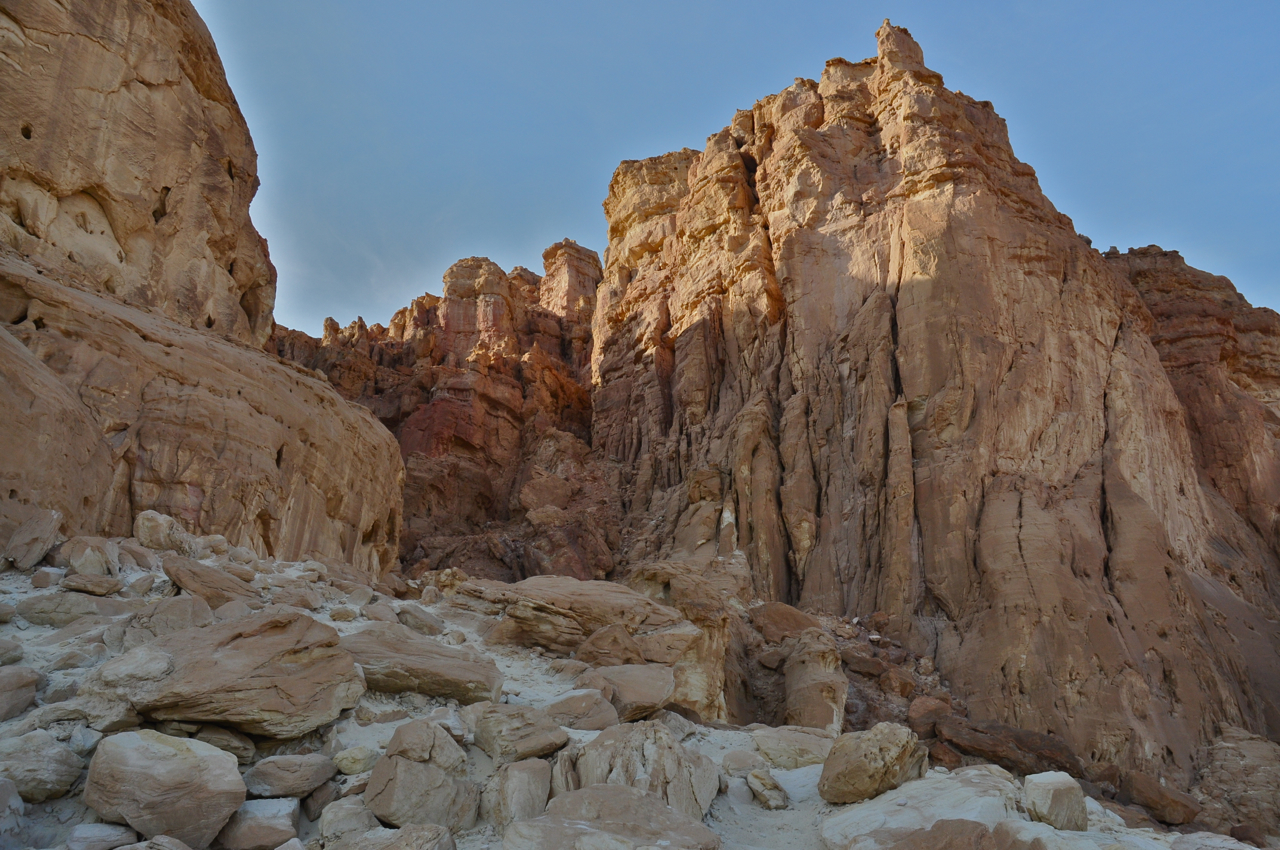
Timna is a horseshoe-shaped valley in the south of Israel in the southwestern Arava about 30 km north of the Eilat just off of highway <90>. The area is rich in copper ore and has been mined by humans as far back as the 6th millennium BCE. An Egyptian temple from the end of the 14th century BCE dedicated to Hathor, the Egyptian goddess of mining was discovered. Water and wind erosion have created several unique rock formations and there are remains of fossilized trees that grew here some 150 million years ago. In 2002 it was declared a nature reserve. There are marked trails and paved roads to the various attractions; the Israel Trail traverses the valley.

Timna cliffs

You can click on the image for a larger view (which may take some time to load depending on your Internet connection). Please share this post with your friends by clicking on the icons at the end of this message.

The technical details – the photo was taken with a Nikon D90 DSLR camera with Nikkor 18-70mm lens in February (ISO 400,18mm, F10 at 1/200 sec).

Photographs on this website are © Shmuel Browns (unless marked otherwise) – if you are interested in purchasing one of my photos or using one of my photos for your own project please contact me.