Author Archives: Shmuel Browns

Unknown's avatar

About Shmuel Browns

I am a tour guide, licensed by the Israel Ministry of Tourism. I do tours throughout Israel, personalized to your interests, time and budget.

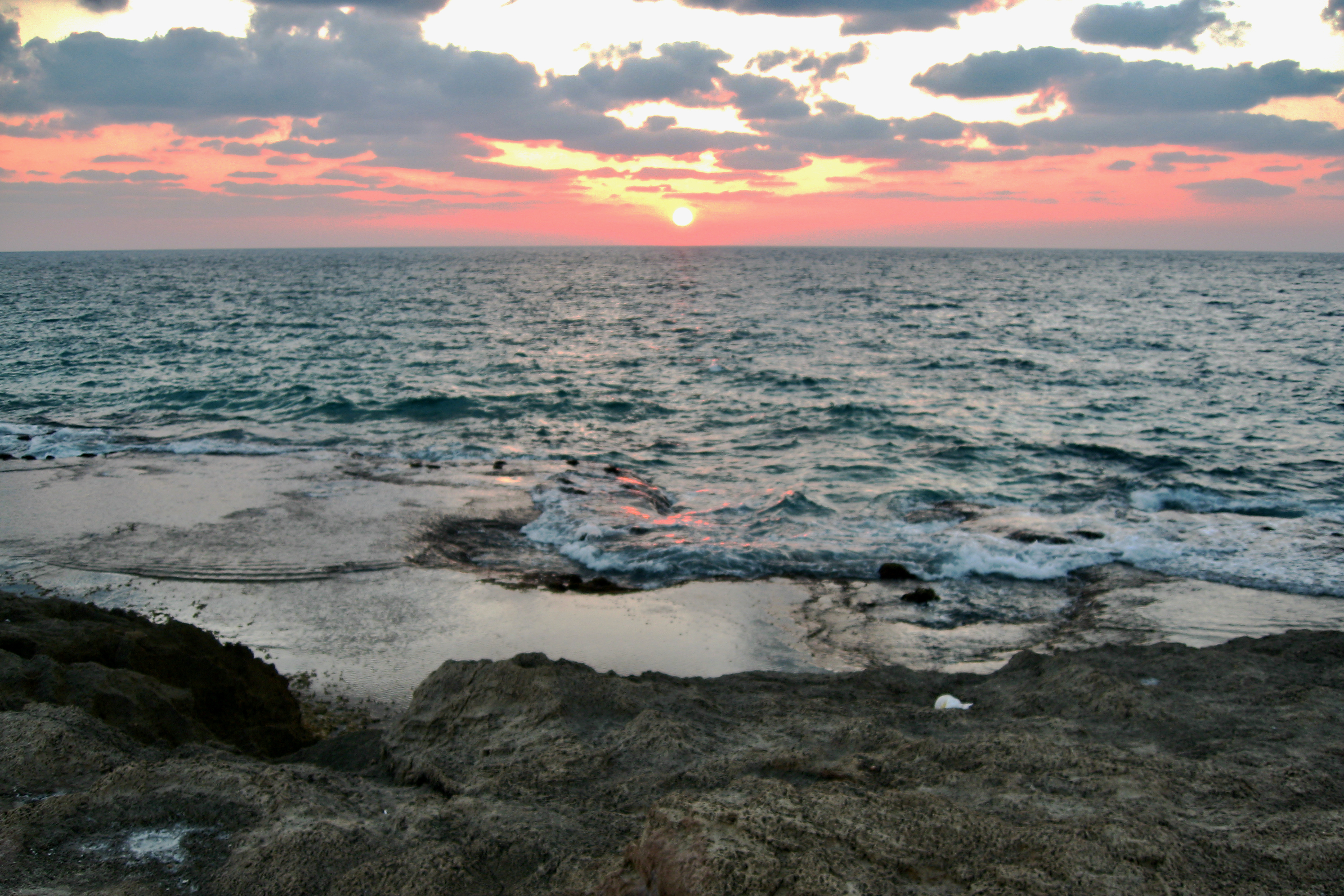
Photo of the Week – Dor Habonim beaches

This photo is at sunset at one of my favorite Israeli, Mediterranean coast beaches. Just south of Haifa called Hof Habonim, it is part of a coastal nature reserve under the Israel Parks Authority. There are two natural lagoons protected by natural rock jetties, picturesque and calm.

HaBonim IMG_0204

The technical details – the photo was taken with a Canon point and shoot camera in October (ISO 50, 12.5mm, F3.5 at 1/160 sec).

If you tire of hanging out at the beach there is a lovely walk along the coast south to the beach at Dor-Nachsholim. There you can rent sea kayaks, check out the excavations at the tel and visit the Mizgaga museum. The museum, housed in the 1891 factory that attempted to manufacture wine bottles for Baron de Rothschild’s wines, displays regional and nautical archaeological finds.

You can click on the image for a larger view (which may take some time to load depending on your Internet connection). Please share this post with your friends by clicking on the icons at the end of this message.

Photographs on this website are © Shmuel Browns (unless marked otherwise) – if you are interested in purchasing one of my photos or using one of my photos for your own project please contact me.

Camels in the Bible

The image displayed below “Ploughing with Camel and Cow” is a scanned copy of a small gelatine silver print (probably from the mid-1920s) of an American Colony photograph taken between 1898 and 1911 and published by Fr. Vester & Co. whose shop was in Jerusalem, just inside Jaffa Gate. The photograph shows a ploughing scene probably taken in southern Palestine. The plough is driven by the farmer and the animals are led by a boy in front.
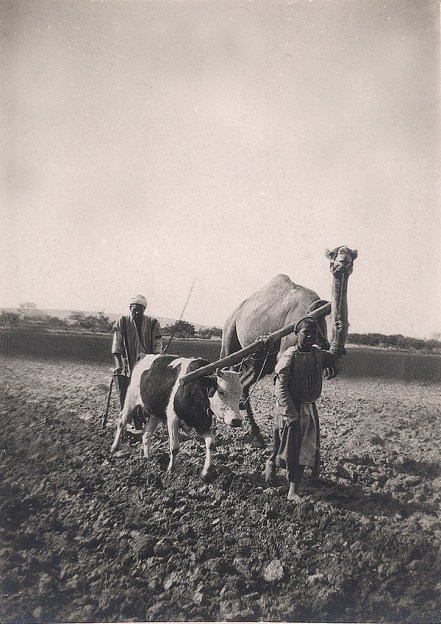
Ploughing w camel and ox

There is something very jarring about this scene. The camel, tall and lithe, suited to journeys across the desert and the cow or ox, short and heavier-set, expected to pull the plough together. The yoke sits at an extreme angle on the animals’ backs. The Biblical text in Deuteronomy 22:10 immediately springs to mind: Thou shalt not plow with an ox and an ass together.
The rabbis explained that “Scripture spoke what was customary,” that is, people were accustomed to plow with an ox or an ass, but the prohibition applies equally to plowing with any two other species and in fact other activities like riding, leading, and driving with them (Mishna Kilaim 8:2).

Camels are first mentioned in the Bible in Genesis 12:16

And because of her [Sarai], it went well with Abram; he acquired sheep, oxen, asses, male and female servants, she-asses, and camels.

The word “camel(s)” appears 23 times in 21 verses in the book of Genesis. The first book of the Bible declares that camels existed in Egypt during the time of Abraham (12:14-17), in Palestine in the days Isaac (24:63), in Padan Aram while Jacob was working for Laban (30:43), and were owned by the Midianites during the time Joseph was sold into Egyptian slavery (37:25,36).

Most scholars, including W.F. Albright, American archaeologist and biblical scholar, who supports the historicity of the patriarchal narratives, conclude that references to camels and hence the domestication of camels are an anachronism, added by a later scribe.

Finkelstein and Silberman confidently asserted:

We now know through archaeological research that camels were not domesticated as beasts of burden earlier than the late second millennium and were not widely used in that capacity in the ancient Near East until well after 1000 BCE.

However, more recent archaeological discoveries: a pottery camel’s head and a terra cotta tablet with men riding on and leading camels from predynastic Egypt (before 3150 BCE), three clay camel heads and a limestone vessel in the form of camel lying down (3050-2890 BCE), a petroglyph depicting a camel and a man (2345-2184 B.C.) and a rope made of camel’s hair found in the Fayum oasis suggest that camels were domesticated as early as the third millennium, before the time of Abram, dated to the earliest part of the second millennium BCE.

Much of this evidence has been examined by MacDonald of the University of Oxford who concludes:

Recent research has suggested that domestication of the camel took place in southeastern Arabia some time in the third millennium BCE. Originally, it was probably bred for its milk, hair, leather, and meat, but it cannot have been long before its usefulness as a beast of burden became apparent.

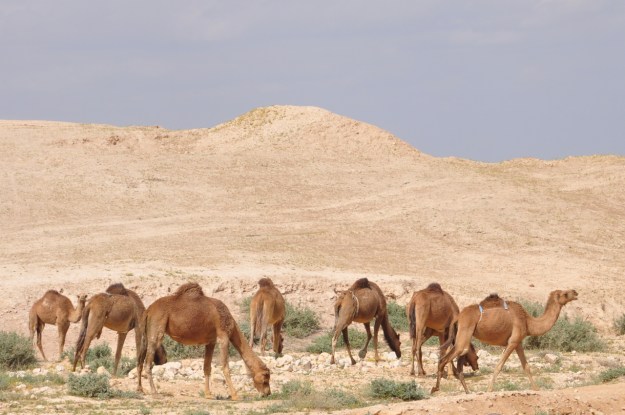
On a jeep tour of the Judean desert we saw this herd of camels. Doesn’t the hill in the background look just like a camel hump?
Camels

Photo of the Week – Tumulus in Negev

In a hike in the Negev, in the area of Mount Arkov (across the road from Avdat) to see the rock drawings and tulips in bloom, I took this photo of a tumulus, a mound of stones raised over a grave. The tumulus and rock drawings or petroglyphs may be from early hunter-gatherers, dated to the fourth millennium BCE.

Tumulus NegevYou can click on the image for a larger view (which may take some time to load depending on your Internet connection). Please share this post with your friends by clicking on the icons at the end of this message.

The technical details – the photo was taken with a Nikon D90 DSLR and 18-200mm lens in November (ISO 200, 36mm, F11 at 1/500 sec).

Photographs on this website are © Shmuel Browns (unless marked otherwise) – if you are interested in purchasing one of my photos or using one of my photos for your own project please contact me.

Nebi Samuel

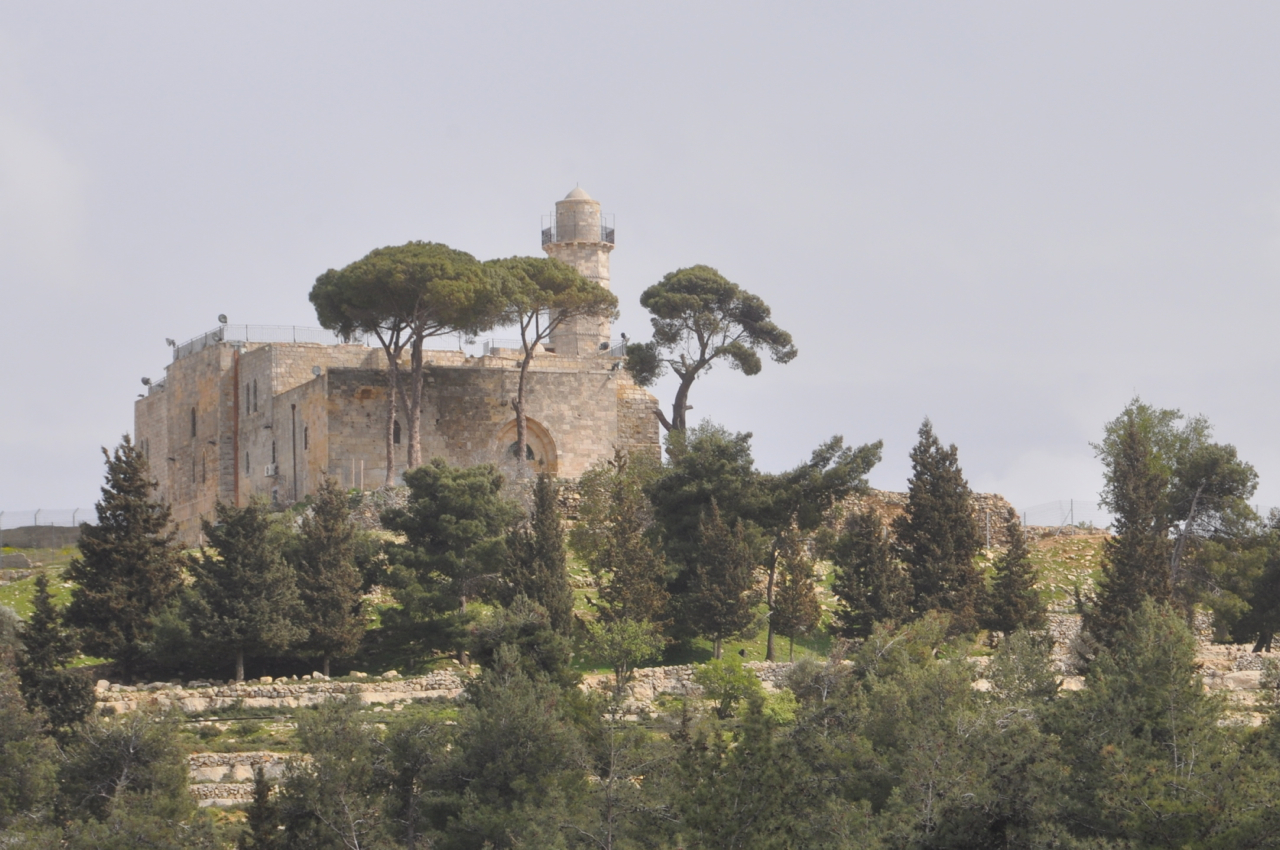
Nebi Samuel Overlooking the ancient route from Beit Horon to Jerusalem (today highway <436>) is a tree-covered, limestone mountain (885 meters high) that gets its name from the Hebrew prophet Samuel who according to Judaism, Christianity and Islam is buried there. Another tradition, supported by archaeological evidence, is that this site is Mizpeh, where Samuel anointed Saul, the first King of Israel and where King Solomon made a thousand burnt offerings at the high-place of Gibeon – the biblical city of Gibeon is only 1.5 km north of the site, today the Palestinian village of el-Jib, behind the separation wall. Excavations, still ongoing, have uncovered the remains of settlements from both the First Temple (7th century BCE) and Second Temple (Hasmonean) periods.

Nebi Samuel, Second Temple

According to the Biblical text I Samuel 25:1 it says that “Samuel died and all Israel gathered and lamented him and buried him in his home(town) in Ramah”. If this site is Mizpeh, then there would be a problem. In the Byzantine period (6th century), Christian tradition said that the prophet’s bones were relocated here and a monastery was built at the site to honor Samuel. In 1099, during the First Crusade, the Crusaders saw Jerusalem for the first time from here and named the mountain, Mons Gaudi (Mountain of Joy). There is still a great view of Jerusalem but of course a much different view than what the Crusaders saw. As part of the fortress that they built there in the 12th century, was a Romanesque style church over the burial cave and a hostel for Christian pilgrims on their way to Jerusalem. When the Crusaders were defeated by the Arabs under Salah a-Din in 1187 the fortifications were destroyed. In the 14th century the Mamelukes converted the church to a mosque. The building and minaret we see today is neither Mameluke nor Ottoman (though the lovely inscription over the door is) but rebuilt by the British after WWI – in the heavy fighting between the Turks and British and aerial bombardment by the British for the strategic hill damaged the building. Jewish armies fought here, from forces led by Judah the Maccabi against the Seleucid-Greeks in 165 BCE to the Harel Brigade who failed to capture the mountain during the War of Independence (1948) but were successful in the Six-Day War (1967).

Preparation of moat

On the western side you can see a section of the moat that was never completed, the large blocks of limestone stand detached ready to be quarried. The path continues past a small Muslim cemetery through an orchard of old olive and fig trees to a spring, named for Hannah, Samuel’s mother, that flows out of a cave in the bedrock.

Hannah's Spring

Photo of the Week – Geomorphology

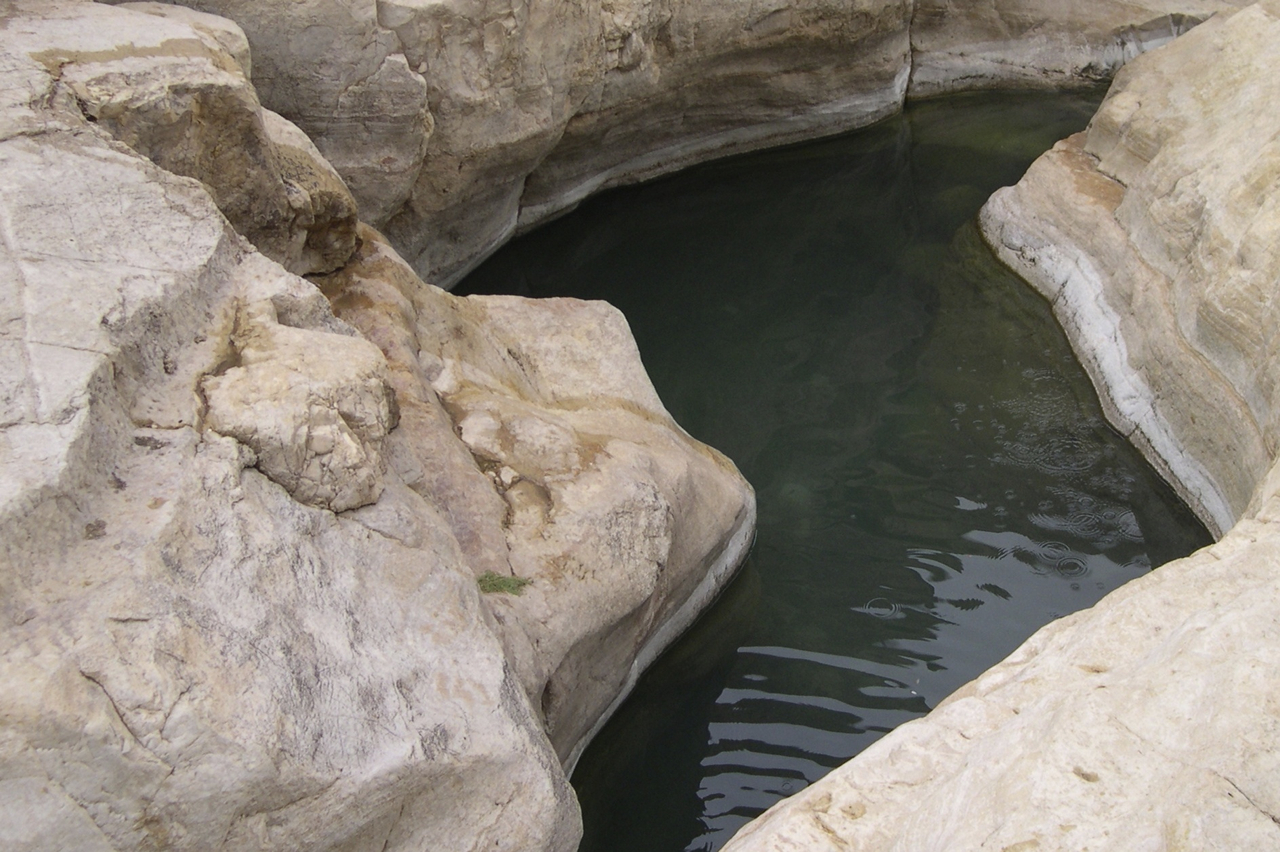
Geomorphology is the is the scientific study of landforms and the processes that shape them. My teacher, Menahem Marcus called it פיסול הנוף, the sculpting of the landscape by surface processes that comprise the action of water, wind, ice, fire, and living things on the surface of the Earth. This photo of a natural pool in Wadi Qelt, itself a stream bed sculpted by the action of water, has been sculpted into an interesting shape.

Wadi Qelt poolYou can click on the image for a larger view (which may take some time to load depending on your Internet connection). Please share this post with your friends by clicking on the icons at the end of this message.

The technical details – the photo was taken with a Nikon point and shoot camera in October (ISO 100, 8mm, F2.8 at 1/50 sec).

Photographs on this website are © Shmuel Browns (unless marked otherwise) – if you are interested in purchasing one of my photos or using one of my photos for your own project please contact me.

Photo of the Week – Look over Jordan

The Great Rift valley is a unique geographical formation, a crack in the earth’s crust that runs approximately 6000 km from Mozambique to northern Syria. The section from the Dead Sea to the Sea of Galilee is called the Jordan Rift valley and separates Israel from Jordan. This photo was shot in the late afternoon, looking east towards the mountains of Jordan, biblically the mountains of Moab and Edom.

Look over Jordan

The technical details – the photo was taken with a Nikon D90 DSLR and 18-200mm lens in February (ISO 200, 70mm, F10 at 1/320 sec).

Photographs on this website are © Shmuel Browns (unless marked otherwise) – if you are interested in purchasing one of my photos or using one of my photos for your own project please contact me.