Category Archives: Wildflowers

Hiking the Makhtesh

Even from space Makhtesh Ramon appears as a masterpiece of the spirit of the earth.
(from Space Shuttle Columbia monument)

This week I did a very nice 13 km hike in the Har HaNegev reserve to Har Ramon, the highest mountain in the Negev at 1037 meters above sea level. After the winter rains we saw many plants blooming even though this area is a desert.
DSC_0286

Along the way we passed a number of tumuli, piles of rocks that are ancient tombs, and a 4.6 km stone wall running between the mountains Ramon and Romem estimated to be from the Intermediate Bronze period, more than 4000 years ago. Further along the red trail we reached a lookout on the basalt hills of Karne Ramon below, where a monument has been established to the 7-person crew of the space shuttle Columbia that disintegrated on re-entry into the Earth’s atmosphere in 2003. One of the crew was Israeli, Ilan Ramon, who had taken his surname from this area.

From Karne Ramon lookoutFrom there we descended in a winding path to Nahal Ramon at the bottom of the makhtesh. We then joined the green trail through the Canyon of Prisms and ascended the trail out of the makhtesh.

Canyon of Prisms

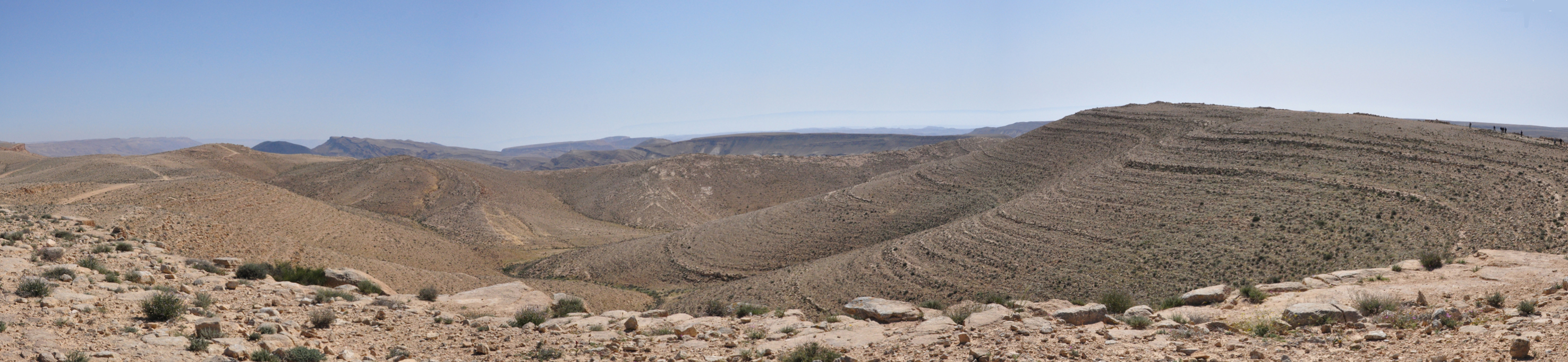
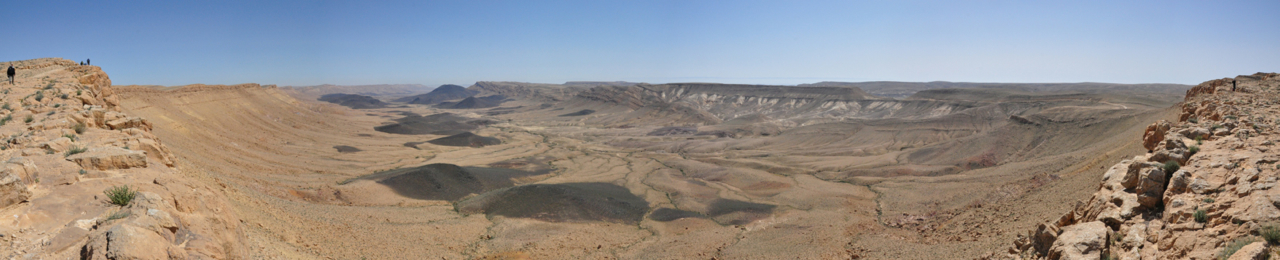
It’s hard to capture the expansiveness of this “hole” in the earth because the makhtesh is so large. The makhtesh is 40 km long, 2–10 km wide and 500 meters deep, and is shaped like an elongated heart. I took a sequence of overlapping photographs with the intention of stitching them together to try to give you an idea of the view. Click on each of these images to see it full-size.

The image below is made up of 2 photos “stitched” together.Makhtesh Panorama1This image is made up of 3 photos.Makhtesh Panorama2

This image is made up of 4 photos, a pan of 180º, overlooking Karne Ramon at the southern end of the makhtesh.Makhtesh Panorama
Flora of Israel – Broomrape

Broomrape

Broomrape (Cistanche tubulosa) is a flowering plant that grows in arid areas in Israel – I’ve seen them in the Large Makhtesh, Judean desert and while hiking the Israel trail north of Eilat. They are recognizable by a 30cm spike of densely packed yellow flowers. When they are not flowering, no part of the plant is visible above ground. There are no leaves, in fact, the plant contains no chlorophyll and so cannot do photosynthesis. The broomrape is a parasitic plant, one that derives some or all of its sustenance from another plant. Parasitic plants have a modified root, the haustorium, that penetrates the host plant. Amazingly about 4100 species in about 19 families of flowering plants like this are known.  On my tours, I always try to point out some interesting flower, plant or tree.


Related articles


Flora of Israel – Mandrake

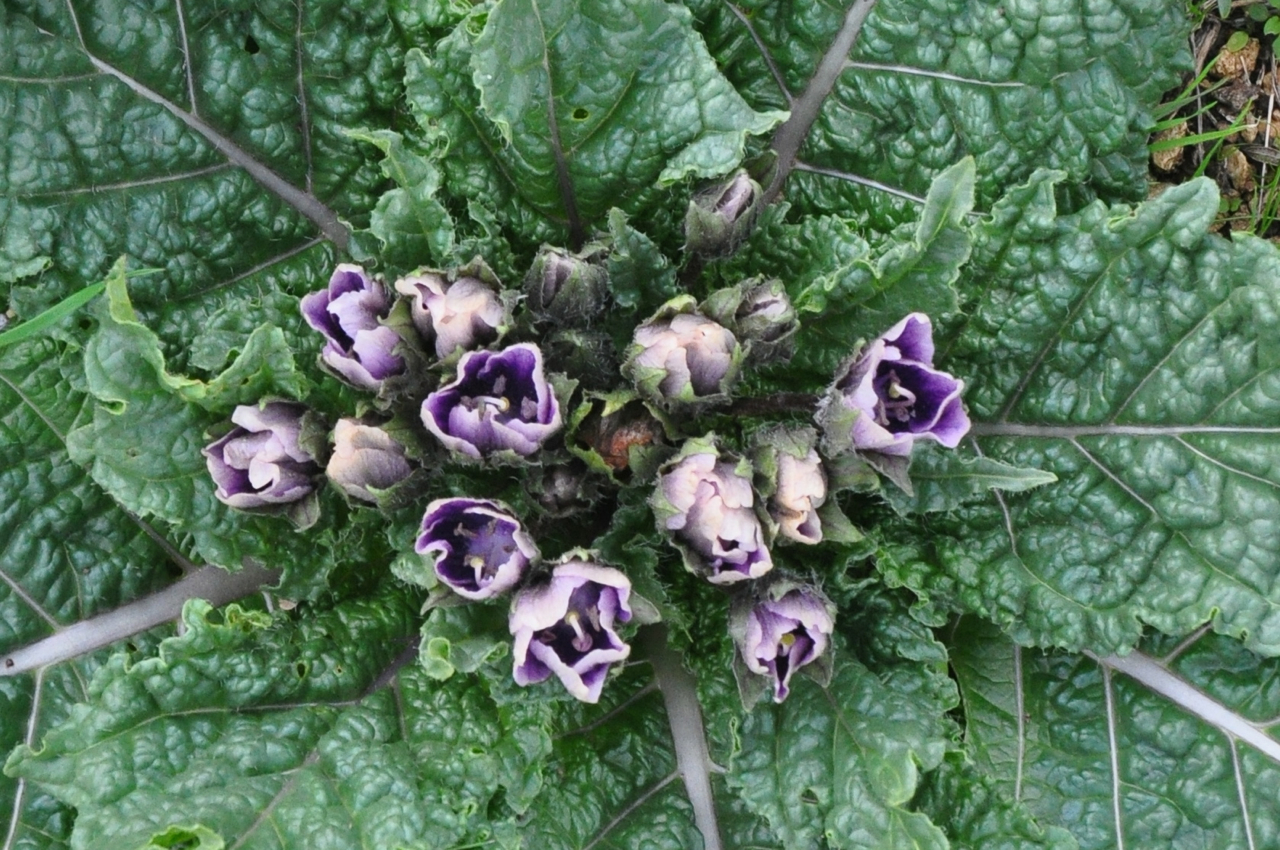
There are two places I have found clumps of mandrake (Mandragora autumnalis) or dudaim in bloom, Neot Kedumim, the Biblical Landscape Reserve and Khirbet Midras; they can also be found at the Jerusalem Botanical Gardens in the Mediterranean section, blooming in December/January. Mandrakes are mentioned in two places in the Bible, in Genesis and Song of Songs, suggesting that it is an aphrodisiac.

Reuben went out and found mandrakes in the field and brought them to his mother, Leah. Then Rachel said to Leah, “Give me, I pray thee, of your son’s mandrakes”.  Genesis 30:14

The mandrakes send out their fragrance, and at our door is every delicacy,
both new and old, that I have stored up for you, my beloved.  Song of Songs 7:13

Mandrake

This perennial has a clump of dark green leaves, resembling somewhat the leaves of chard; in the center appear purple flowers. The fruit, orange to red berries, resembling cherry tomatoes, ripen by late summer, at the time of the wheat harvest. The plant has a tap-root (splits into two sometimes) that has a peculiar shape resembling a miniature person. All parts of the mandrake plant are poisonous; it acts as a parasympathetic depressant, hallucinogen, and hypnotic.


This post is for Bonna, my life partner and mother of our 5 children – in heartfelt gratitude for 32 years together. In Hebrew the word lev or heart is equal to 32.

Flora of Israel – Caper

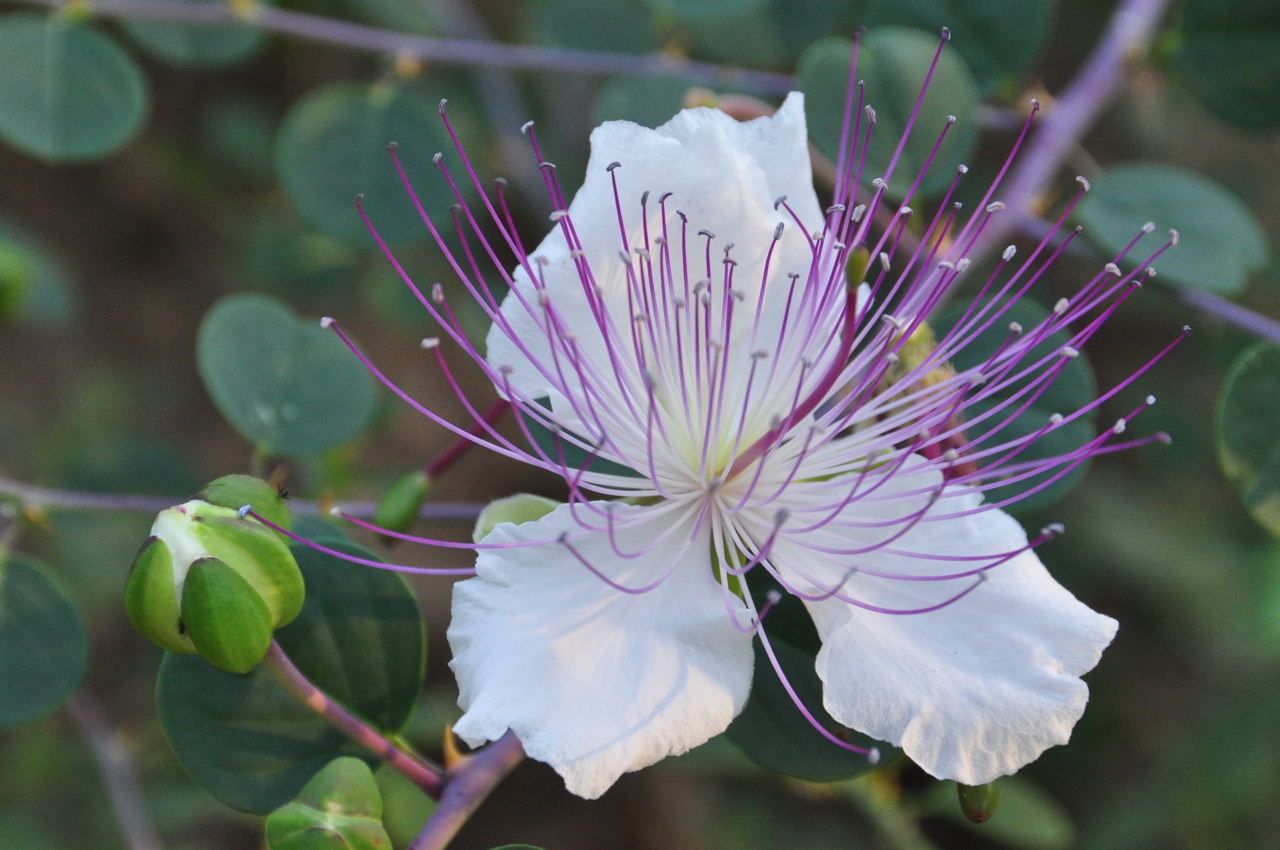
Whether growing in the cracks of the Western Wall or in the Judean desert, in places like Ein Gedi, people are surprised when I point out this bush and they learn that it is a caper bush (Capparis spinosa) and that the flower buds are the capers that they’ve eaten pickled in salads or with salmon. The caper is a perennial winter-deciduous plant that bears rounded, fleshy leaves and large white to pinkish-white flowers.

Caper

The flowers are complete, sweetly fragrant, showy, with four sepals, and four white to pinkish-white petals, many long violet-colored stamens, and a single stigma usually rising well above the stamens. The caper flower is the emblem of Neot Kedumim, the Biblical Landscape Reserve. The caper plant is a citizen of the world, native to the Mediterranean, East Africa, Madagascar, south-western and Central Asia, Himalayas, the Pacific Islands, Indomalaya and Australia.

Wildflowers in Judean Desert

After the winter rainy season is a great time to get out and tour the land of Israel. The Judean desert is a half hour from Jerusalem, in fact, it is sometimes called the Jerusalem desert, because the city is on the edge of the desert. A great way to explore the Judean desert is by taking a jeep tour. At this season, the desert is still green from the winter rains and there are many wildflowers. It is really something to see the desert bloom. I took the opportunity to shoot these flowers at the overlook across from Mar Saba. Thanks to Dr. Ori Fragman-Sapir of the Jerusalem Botanical Garden who has helped me identify them.

This is also the season of the children of Israel’s exodus from Egypt, the beginning of their wandering in the desert which brings them to the land of Israel. The Passover seder ends with the intention of Next year in Jerusalem so hopefully you will plan to visit in the coming year.

If you haven’t heard of the current invasion of locusts from Egypt into the south of Israel check out the article in Haaretz that includes a great Reuters photo of the pyramids at Giza, the view obscured by locusts.

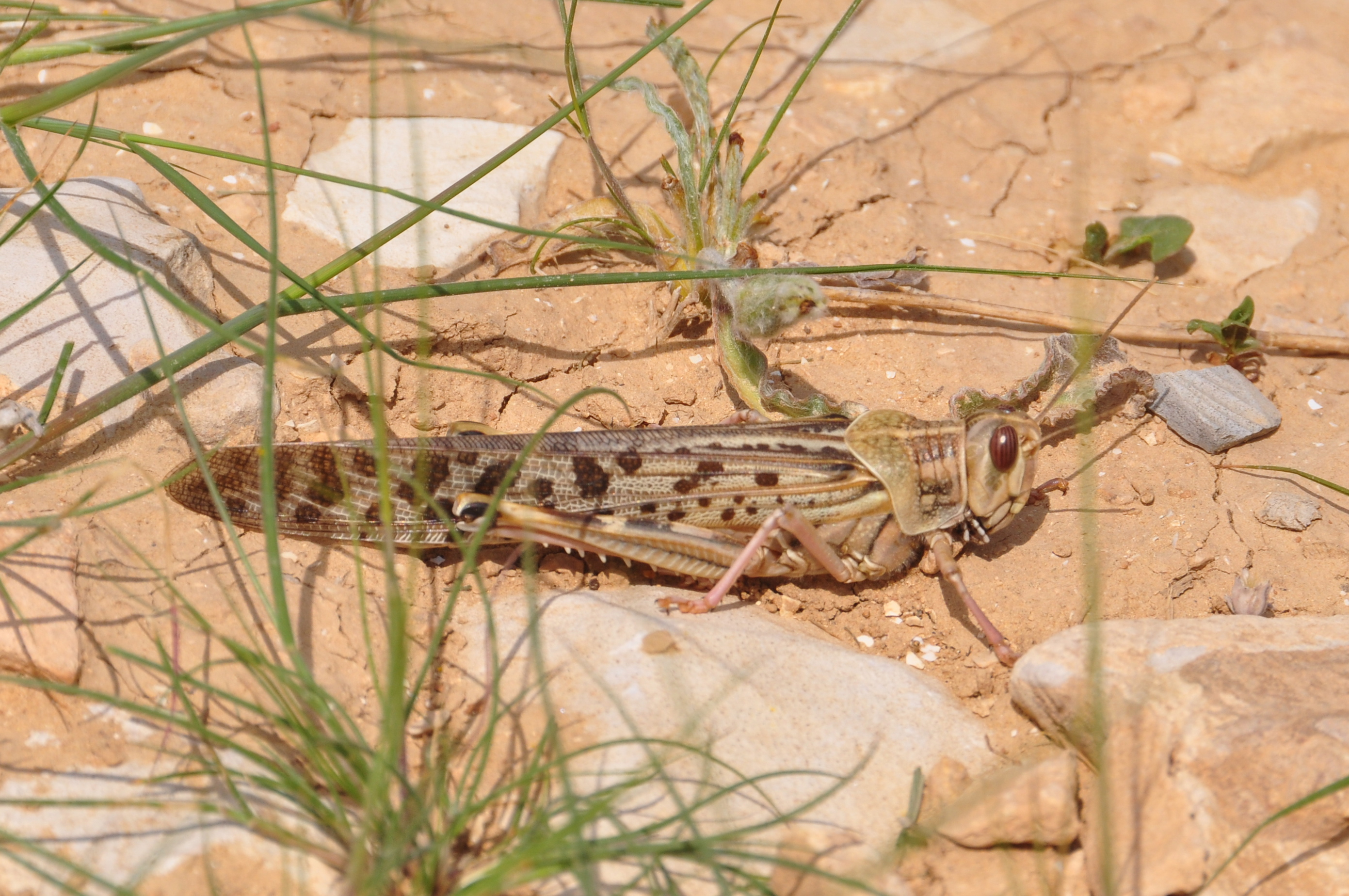
While photographing flowers, Raanan, our jeep driver, pointed out a locust and I got a close-up photo, something to add at your Pesach seder when recounting the ten plagues: blood, frogs, lice, wild beasts, cattle disease, boils, hail, locusts, darkness, killing of first-born.

דם, צפרדע, כנים, ערוב, דבר, שחין, ברד, ארבה, חשך, מכת בכורות.

locust

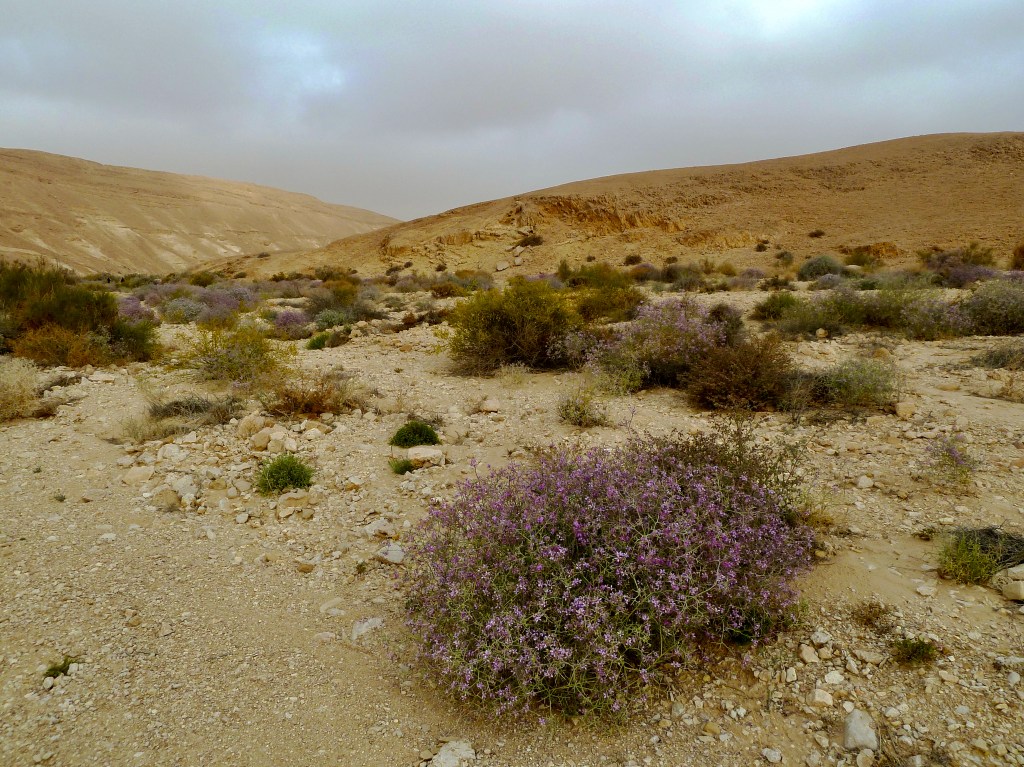
Just north of Timna continuing along the Israel trail you follow the Milhan ridge, a great area for hiking and photographs. We stayed overnight at the nearby campground, Be’er Milhan, a site that affords some protection from the wind (no toilets or running water). This photo was taken in the morning. Purple flowering bush is Spiny zilla (Zilla spinosa), a member of the brassicaceae family, you can eat the purple flowers which taste like cabbage.

Milhan well

The technical details – the photo was taken with a Lumix point and shoot camera in March (ISO 80,4.1mm, F4 at 1/320 sec).

For more information about desert wildflowers see my post at https://israeltours.wordpress.com/2011/03/14/desert-wildflowers/

Photographs on this website are © Shmuel Browns (unless marked otherwise) – if you are interested in purchasing one of my photos or using one of my photos for your own project please contact me.