Category Archives: Photography

Autumn on Mount Hermon

Last week, on a crisp autumn day up on the Golan, I had the opportunity to visit the Hermon and take these photos.

Hermon Autumn foliage

Mount Hermon is actually a cluster of mountains extending for about 150 km in a northeast-southwest direction with three distinct summits that straddle the border between Syria and Lebanon. The southern slopes of Mount Hermon extend to the Golan Heights and a peak in this area rising to 2,236 meters is the highest elevation in Israel. The Hermon range covers an area of about 1000 square km, of which about 70 km² are under Israeli control.

Trees and Rocks Hermon

As a geological and biogeographical region, the Golan Heights is a basaltic plateau bordered by Mount Hermon in the north, the Yarmouk River in the south, the Sea of Galilee and Hula Valley in the west and the Raqqad Wadi in the east. The western two thirds of this region is currently controlled by Israel, whereas the eastern third is controlled by Syria.

Clouds over Hermon

Because of its height the Hermon captures a great deal of precipitation in a very dry area of the world; because of the elevation plants grow and bloom later, in August instead of the spring. One that I saw still blooming under the ski lift was the Lotus Sweetjuice. Water from the snow-covered mountain’s western and southern bases seeps into the rock faults and channels in the Jurassic limestone, feeding springs at the base of the mountain. At the important archaeological sites of Banias and Tel Dan the water forms streams and rivers that merge to become the Jordan River. From the Hermon it’s about a 40 minute drive to these streams, fascinating sites that I can take you to to experience the nature of Israel’s north.

Sinkholes at Dead Sea

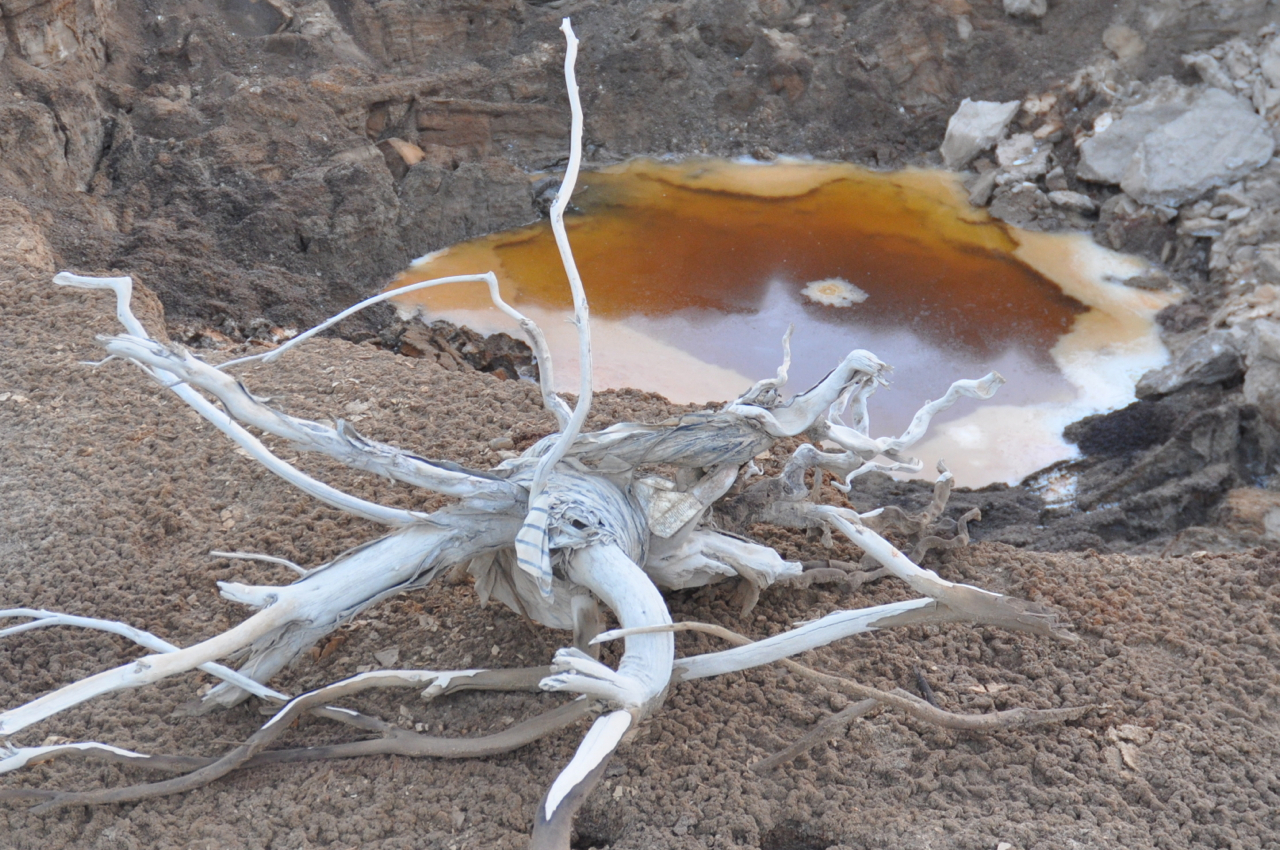
Sinkholes have appeared on the Israeli and Jordanian shoreline of the Dead Sea as the water level recedes. The first sinkholes appeared in 1980, there were 40 in 1990 and there are more than 5500 today. Fresh water from runoff dissolves the salt in the newly uncovered salt-laden earth creating an empty cavern. When the top crust of earth collapses a sinkhole is formed. The holes fill up with water and the naturally occurring minerals create pools of different colors, red, orange, yellow, green and indigo with borders of encrusted salt, incredible to see and photograph. I took these photos along the shore of the Dead Sea over a period of months.

Sinkhole driftwood

Photographing Wildlife at Ein Gedi

These two wildlife photos were taken on a hike in Nahal Arugot in the Ein Gedi Nature reserve. Nahal David is the more popular, family oriented part of the reserve which makes Arugot great for a more off the beaten track outing, less crowded and great for photographers. If you follow the stream bed to the end of the wild and photogenic canyon you will reach the hidden waterfall.

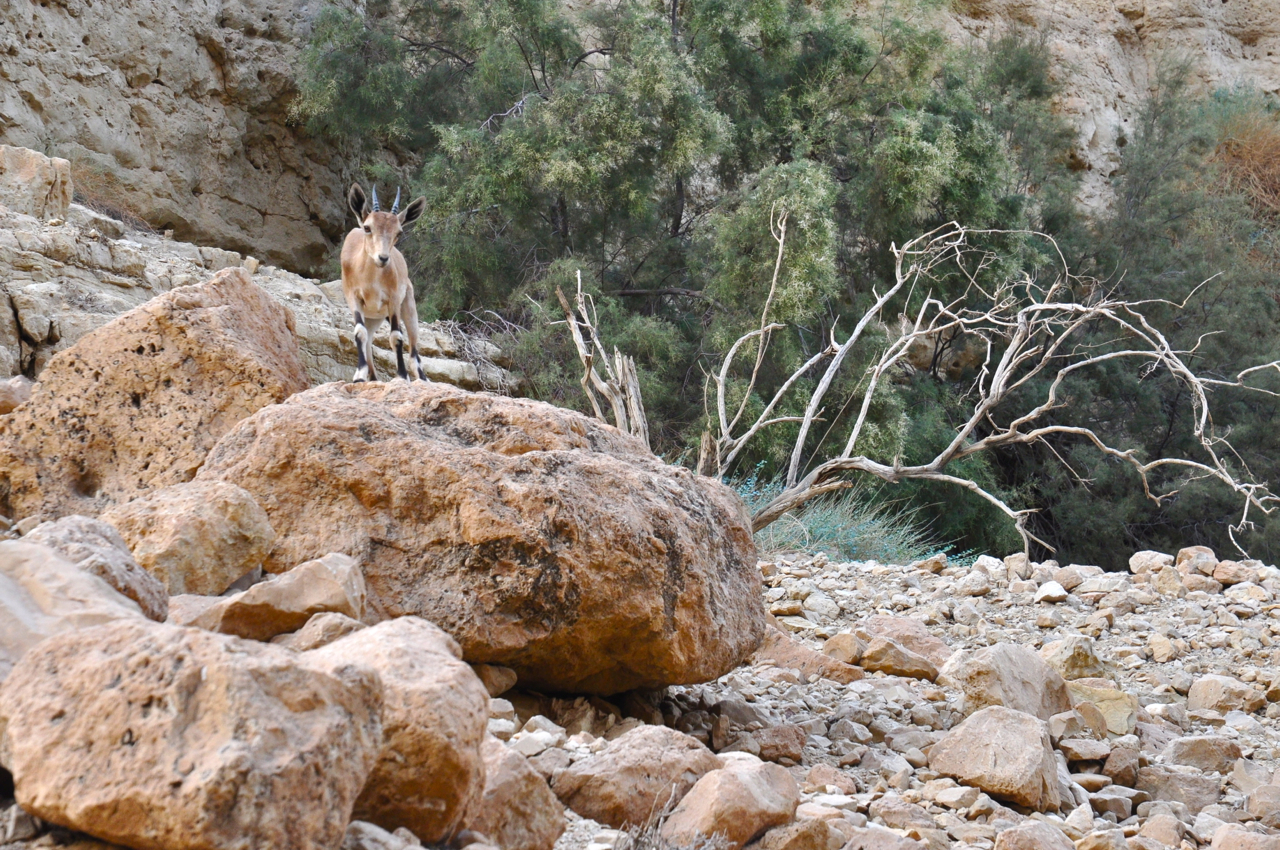
Ibex at Ein Gedi

The ibex (Capra nubiana) is one of 9 species of wild goats (the North American Rocky Mountain goat is in a separate genus, Oreamnos). The ibex is a ruminant, meaning they have four-chambered stomachs and chew their cud so they are kosher, along with addax, antelope, bison, deer, and giraffe. Evidence of the ibex is widely present in the archaeological record, for example, rock drawings, pottery and seals, particularly in the Near East and Mediterranean regions.

The technical details – the above photo of a young ibex was taken with a Nikon D90 digital SLR camera with Nikkor 18-70mm lens at the end of October (ISO 500, 70mm, F9 at 1/125 sec) in Nahal Arugot.

Rock Hyrax

The rock hyrax (Procavia capensis, in Hebrew שפן הסלע) is a medium-sized (~4 kg) terrestrial mammal, superficially resembling a guinea pig with short ears and tail but, in fact, the hyrax is related to the modern-day elephant. The rock hyrax inhabits rock crevices which protect it from predators as written in Psalms 104,18  סלעים מחסה לשפנים, rocks hide the hyrax; it also uses sentries, one or more animals take up position on a vantage point and issue alarm calls on the approach of predators. Among at least 21 vocalizations that the hyrax can make, it makes a loud grunting sound while moving its jaws as if chewing which may be the reason that the hyrax is listed in Leviticus 11,5 as a non-kosher animal that chews its cud. Unique to hyraxes is the dorsal gland, which excretes a skunk-like odor used for social communication and territorial marking. Hyraxes typically live in groups of 10–80 animals, and forage as a group. The rock hyrax has incomplete thermoregulation and so can be seen sunning itself on rocks – it spends approximately 95% of its time resting.

Weekly Photo Challenge: Sea

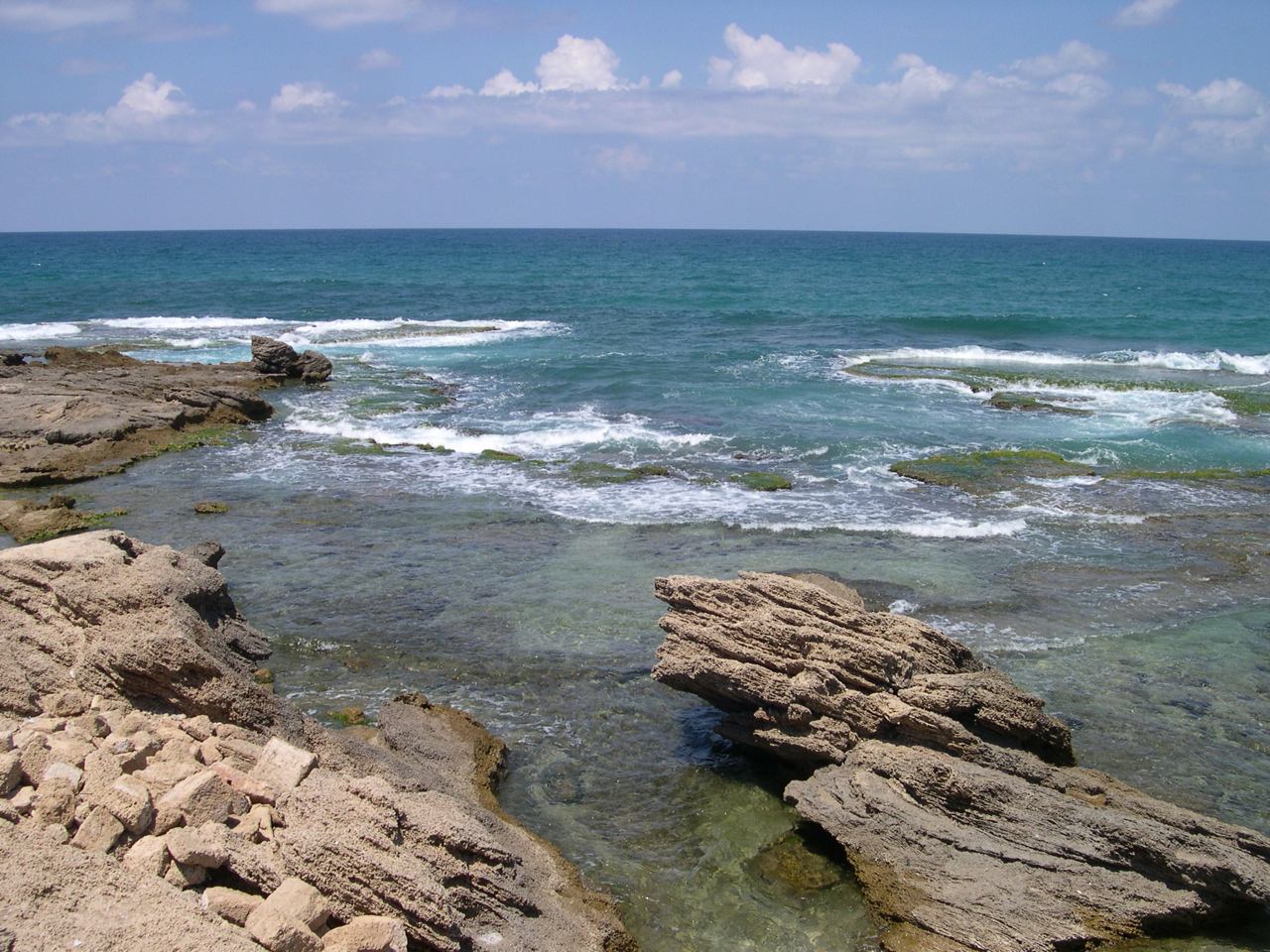
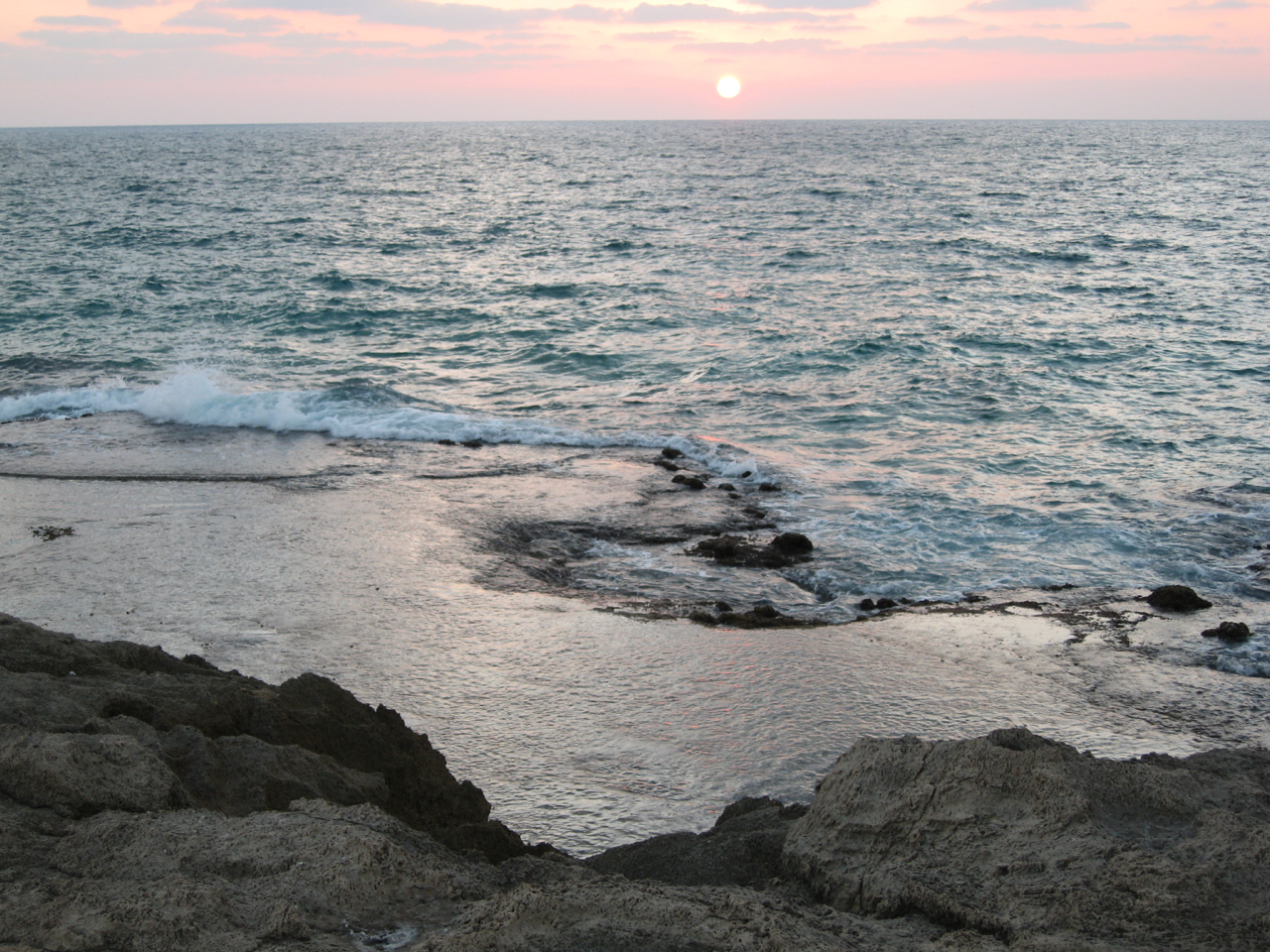
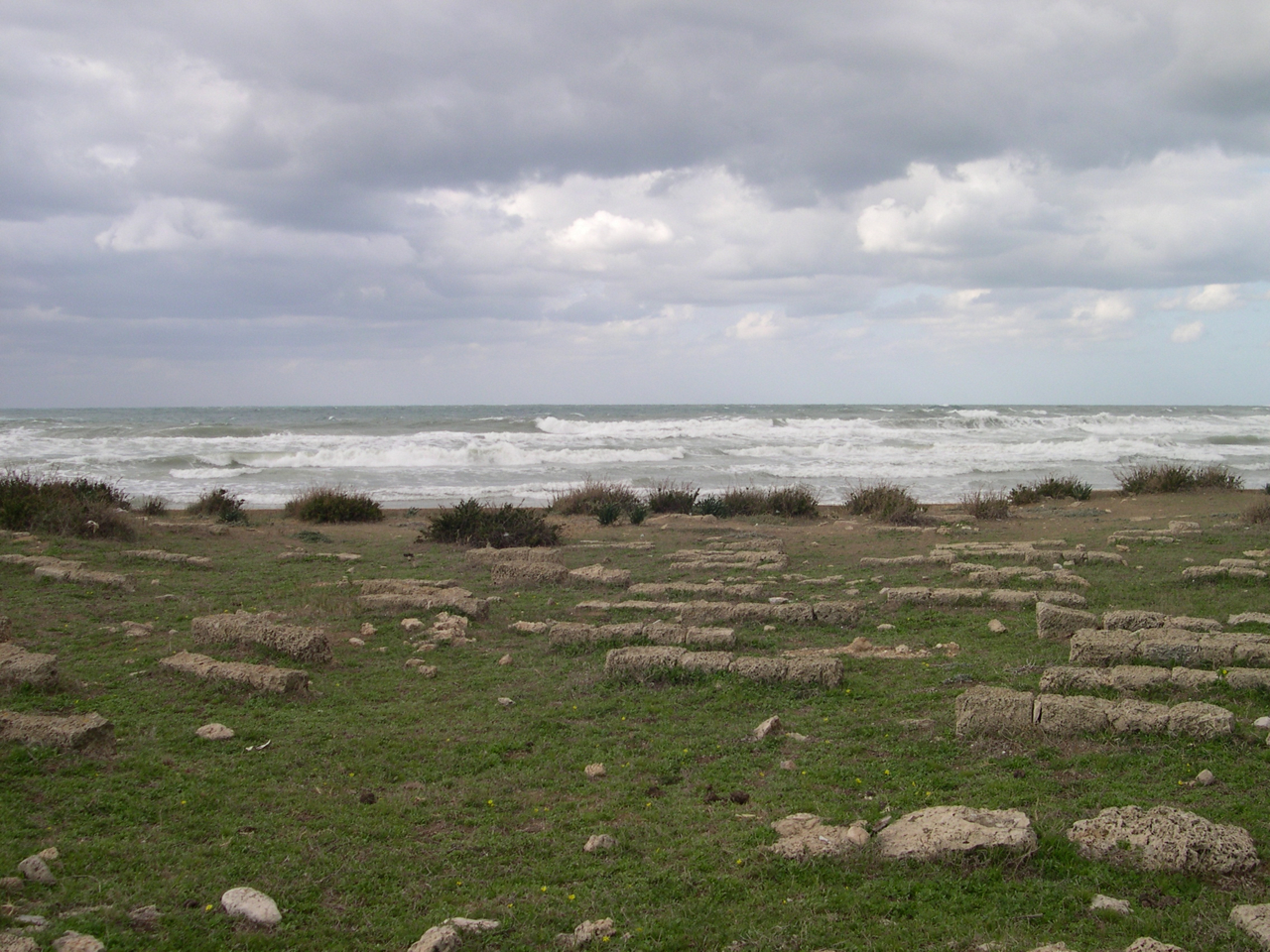
Although Israel is a small country it has about 200 km of Mediterranean coastline. There are many places along the coast where you can stand and look out to sea. In this post I’ve included 5 photographs of the sea, along the coast, from Ashkelon, Ashdod, Caesarea, HaBonim and Atlit – same sea but different geological features as we move up the coast.


Related articles

Jerusalem Landmarks, Montefiore to Calatrava

A landmark is an object or feature of a landscape or place that is easily seen and recognized at a distance, especially one that enables someone to establish their location.

As a photographer one of the things that I often do is look at a scene and choose a feature that is interesting, that stands out in some way. The city of Jerusalem has any number of landmarks, the bell tower of the International YMCA, the old train station or the Rockefeller museum. Leave a comment on what is a Jerusalem landmark for you?

As you approach Jaffa gate, one of the popular entries to the Old City, you’ll see a tower and minaret peering above the walls. Here is a photo of the landmark, a little less usual in that it is covered with a light dusting of snow.
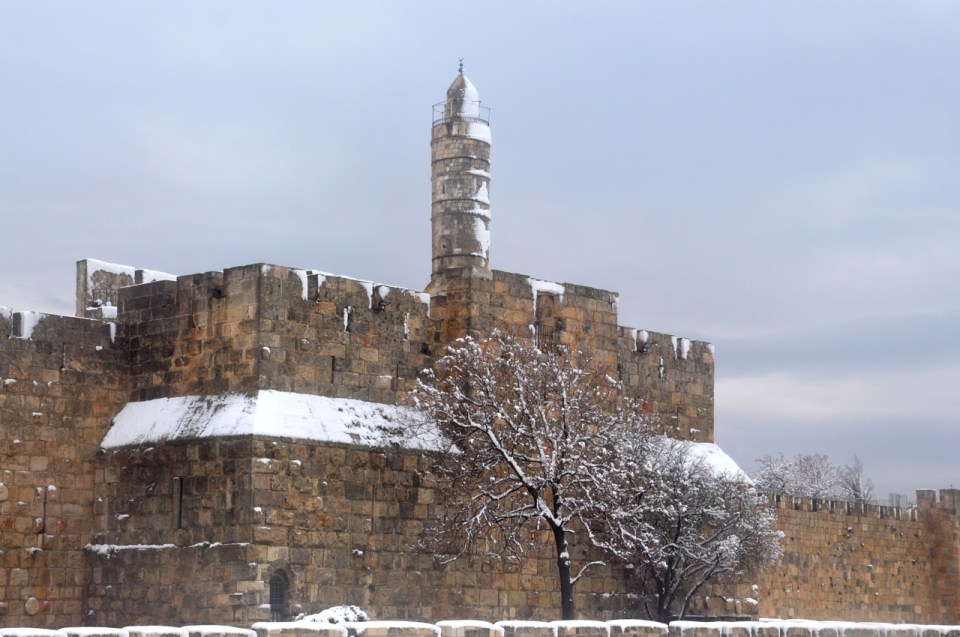
Tower of David

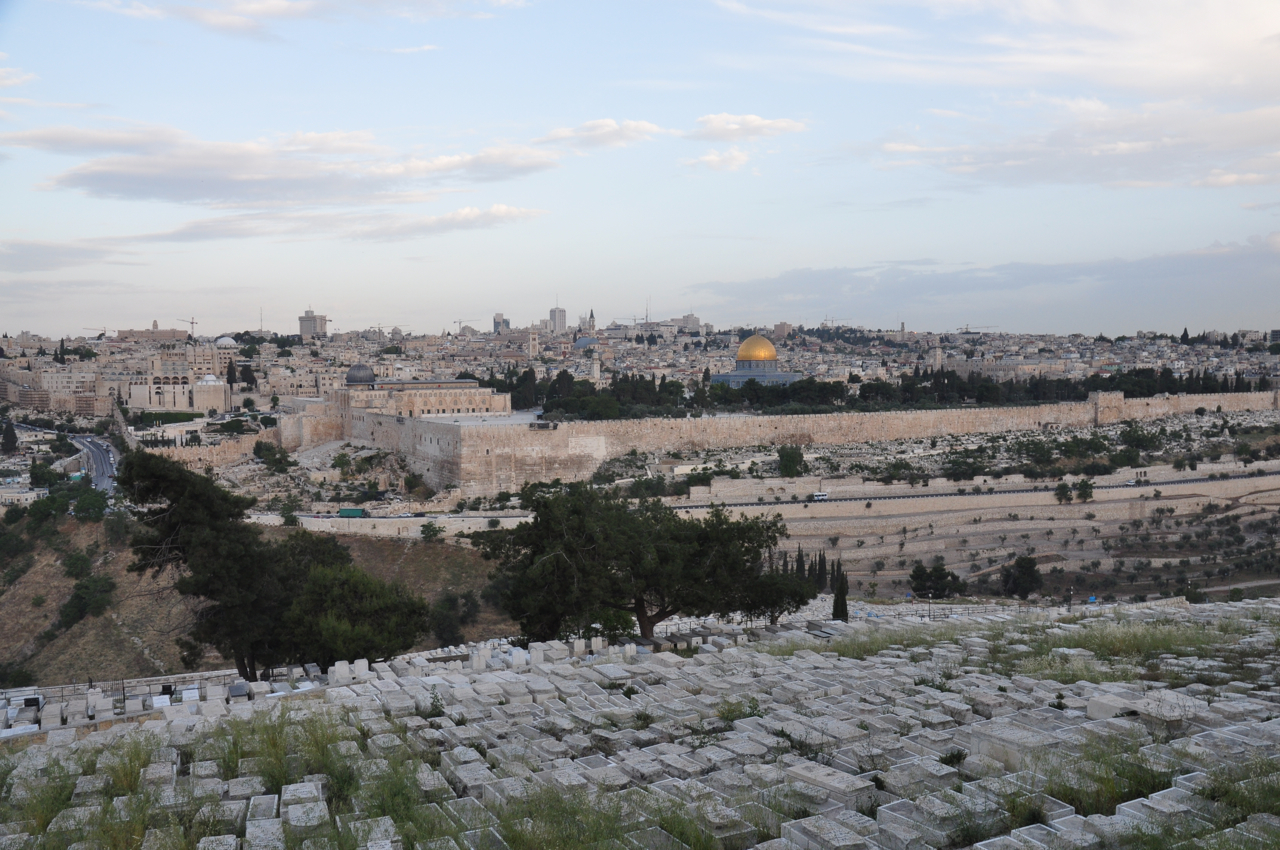
Another striking landmark is the golden dome of the Dome of the Rock. The building goes back to 691 CE Umayyad Caliph Abd al-Malik and is considered the earliest example of Islamic architecture. During the reign of Suleiman the Magnificent (1520-1566) the mosaics on the exterior of the Dome of the Rock were replaced with ceramic tiles. By 1919 when some tiles needed replacement the British invited three Armenian families who worked in ceramics, Ohannessian, Balian and Karakashian, from the city of Kutahya, Turkey to Jerusalem but the project fell through due to lack of funds (an Armenian told me that the Muslims would not let the Armenian Christians work on the shrine). In 1955, an extensive program of renovation was begun by the Jordanian government, with funds supplied by Arab countries and Turkey. The work included replacement of large numbers of tiles which had become dislodged by heavy rain. In 1965, as part of this restoration, the dome was covered with a gold-colored durable anodized aluminum bronze alloy made in Italy, that replaced the gray colored lead covering. In 1993, the dome was refurbished with 80 kilograms of gold when King Hussein of Jordan sold one of his houses in London and donated $8.2 million to fund it.
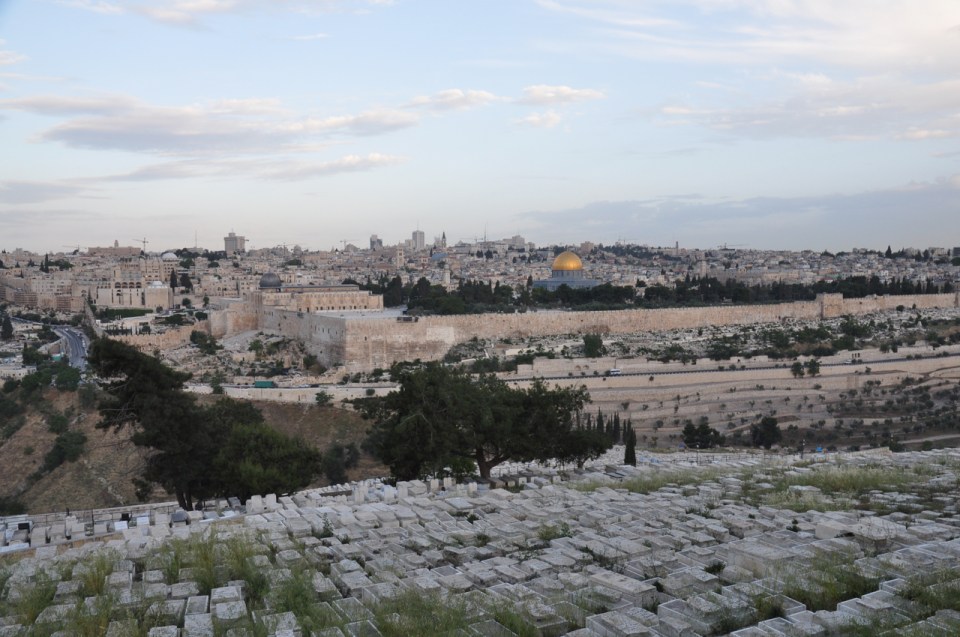
Jerusalem Dome of Rock

In the 1850s, several institutions including the Russian Compound, the Bishop Gobat School, and the Schneller Orphanage marked the beginning of permanent settlement outside Jerusalem’s Old City walls. The public institutions were followed by the development of two philanthropically supported Jewish neighborhoods, Mishkenot Sha’ananim and Mahane Israel.
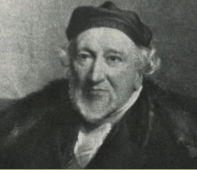
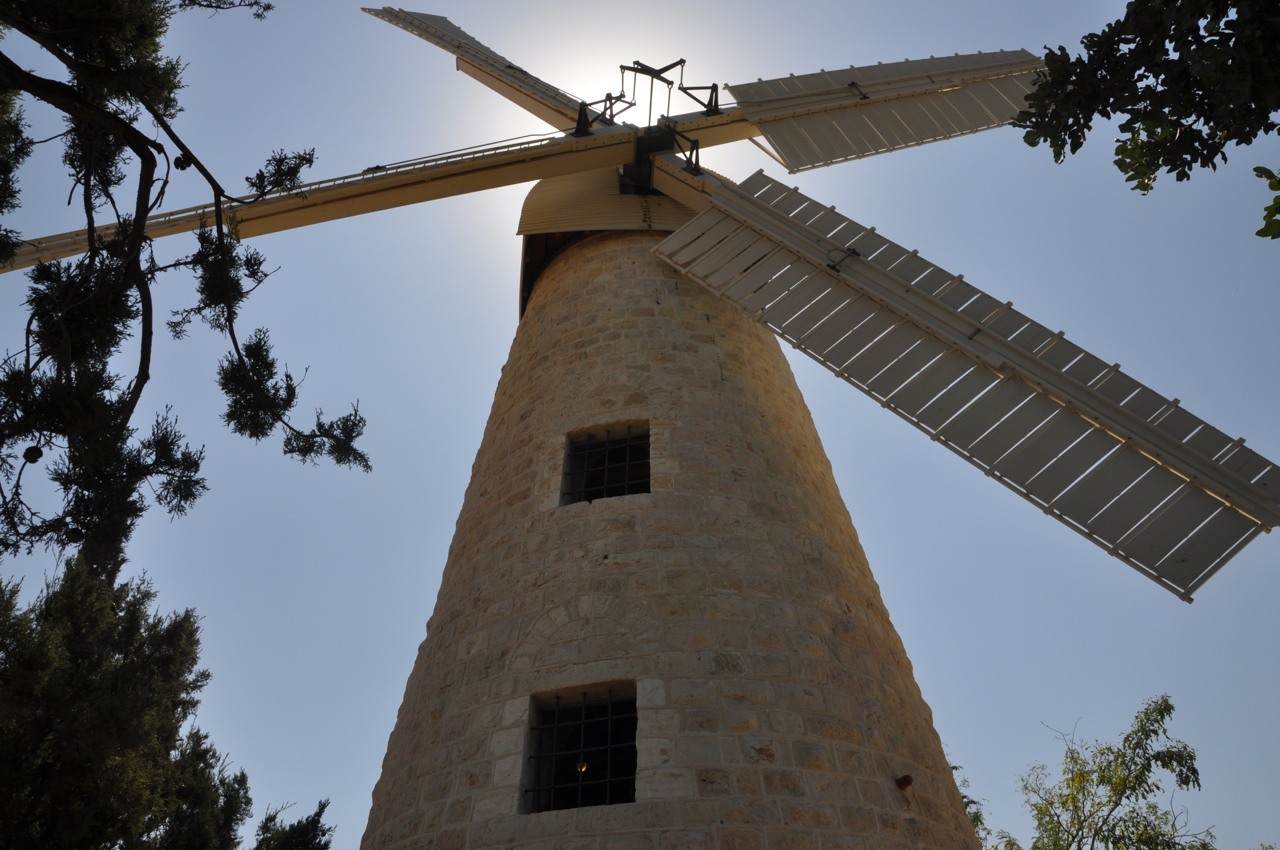
MMMishkenot Sha’ananim was the first Jewish neighborhood built outside the walls of the Old City by Sir Moses Montefiore in 1860 as an almshouse, paid for by the estate of a wealthy Jew from New Orleans, Judah Touro. Nearby is another well-known landmark, Montefiore’s windmill. In 1857 Montefiore imported a windmill from Canterbury, England and erected it on this plot of land to provide Jerusalem’s poor Jews with an inexpensive source of flour.
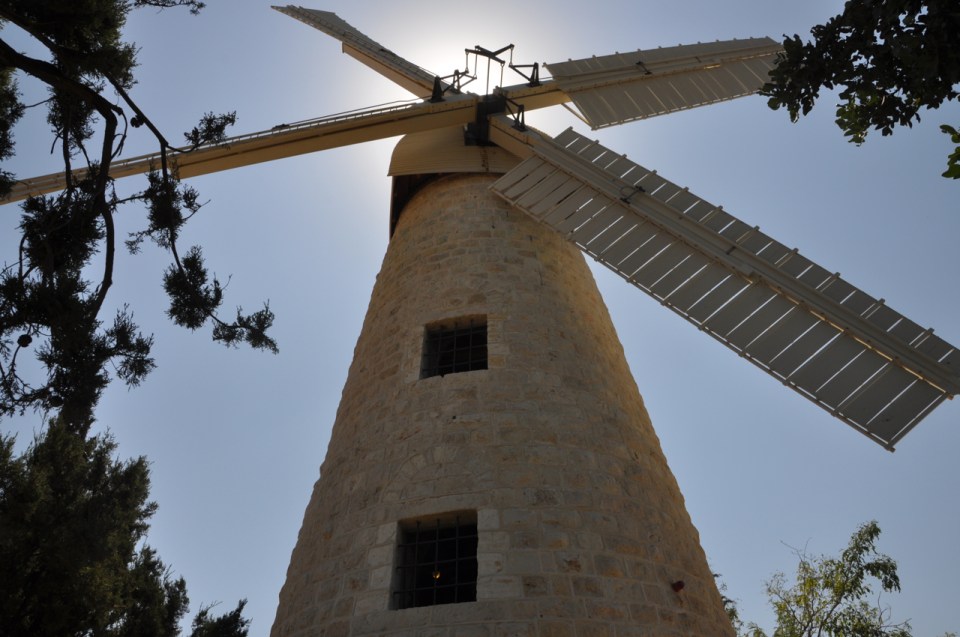
Montefiore windmill

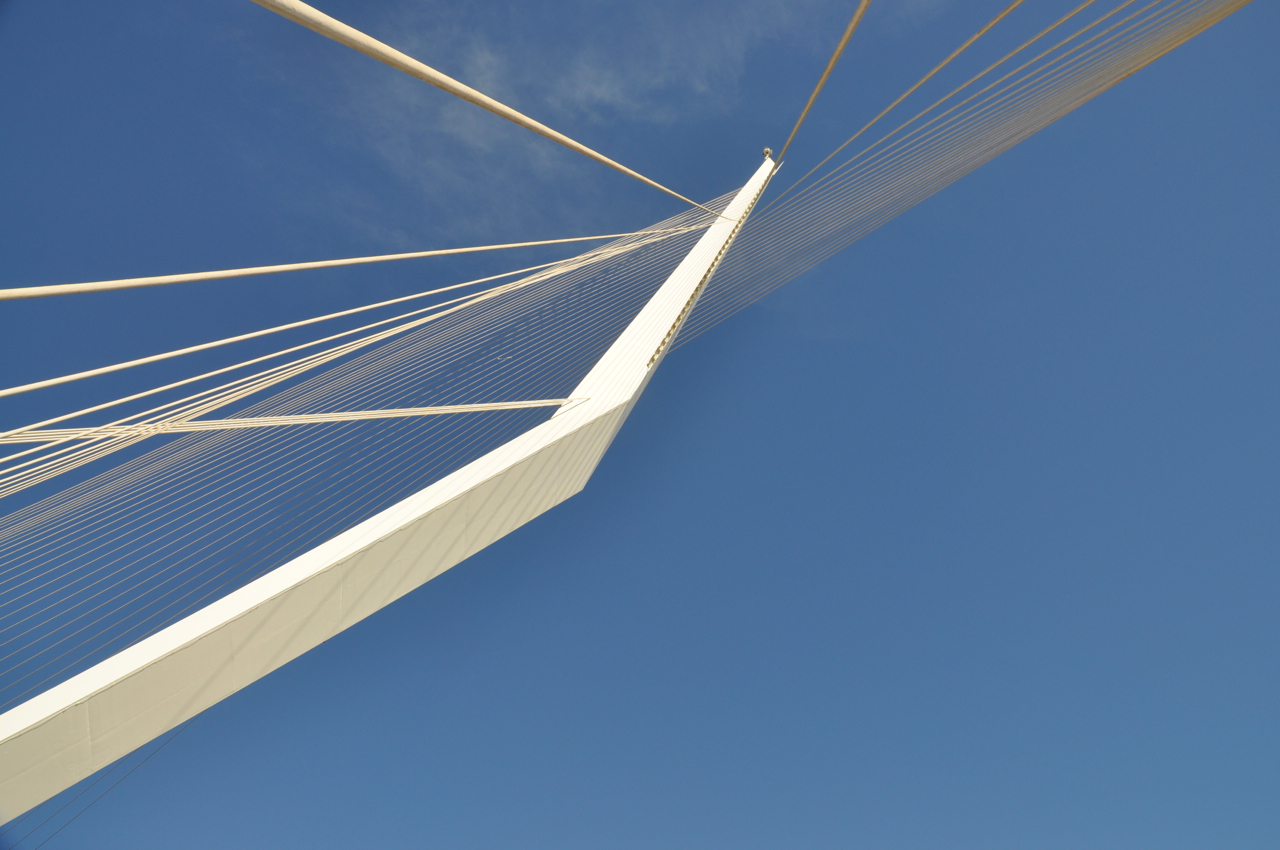
Many years have passed and now Jerusalem has a light rail system that connects the suburbs with the center. As the light rail crosses the main entrance at the west of the city it passes over an eye-catching suspension bridge built by Spanish architect, sculptor and civil engineer Santiago Calatrava that is probably the newest Jerusalem landmark. Called the Bridge of Strings, the 2600 ton curving bridge, only 340 meters long, will be supported by 66 cables from a single angular pylon 118 meters high.
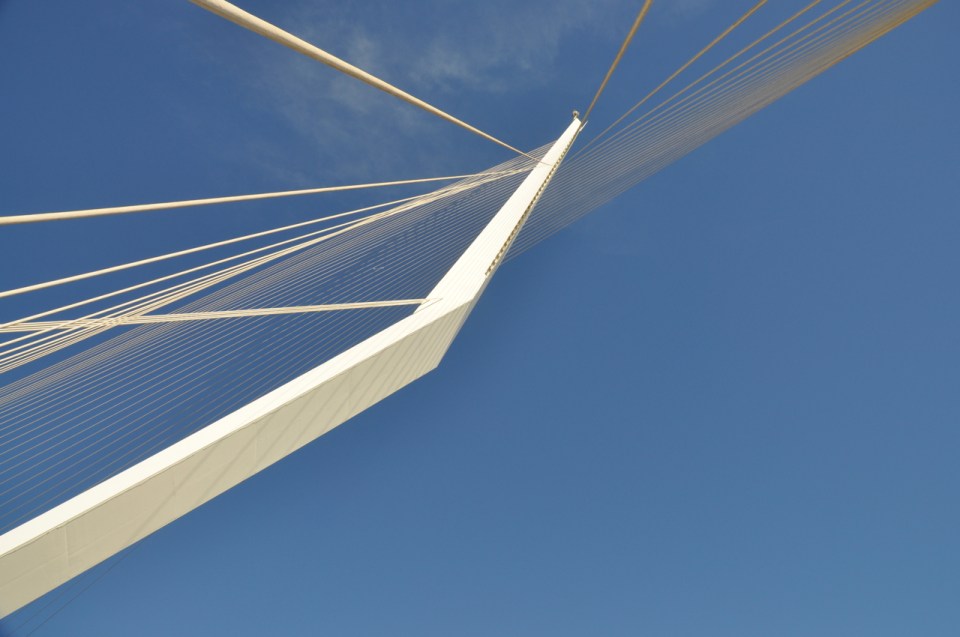
Calatrava Bridge of Strings

This is how Calatrava described his plans for the bridge.

“Along the pedestrian walkway is a band of pastel blue light, like the blue of the Israeli flag and also the tallit (Jewish prayer shawl),” Calatrava says. “When you see the bridge from far away, it will appear like a modern obelisk. And at the top we would like to put a bronze plate, something that will reflect in the sun like a golden dome.”

Through My Lens at Israel Museum

Here is this week’s series of photos, week #3, of different views of Israel Through my Lens. These photos were taken at the Israel museum, Israel’s leading cultural institution and one of the leading encyclopedic museums of the world. The museum has nearly 500,000 objects of fine art, archaeology, Judaica and Jewish ethnography, representing the history of world culture from nearly one million years ago to the present day and should be on every visitor’s itinerary.

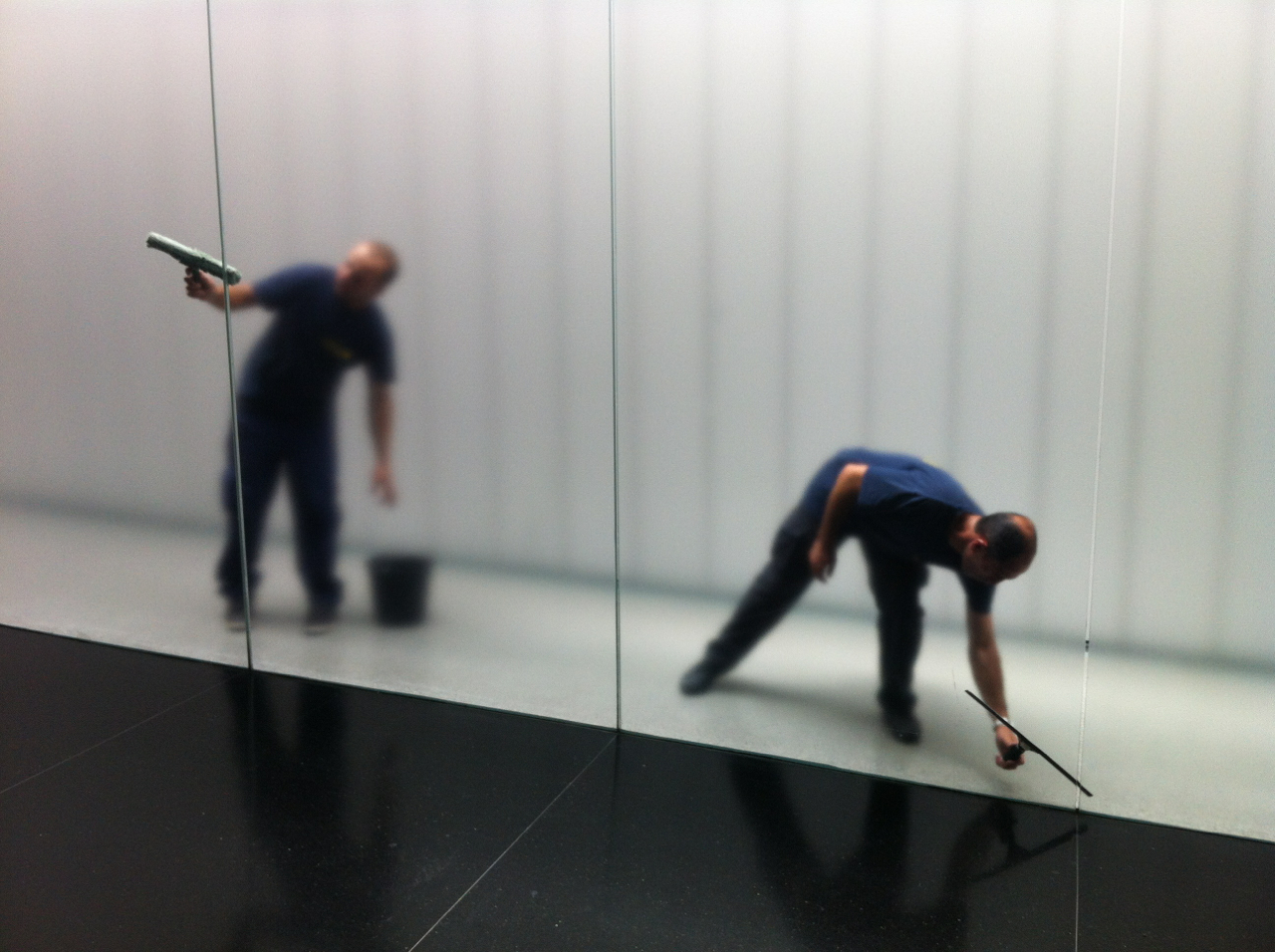
The museum campus underwent a major renovation in 2010 that included new entrance pavilions and an underground walkway, lit from the side by natural light with a view of streaming water that cascades down the steps above your head. This photo captures two custodians cleaning the glass side wall.

Cleaning glass

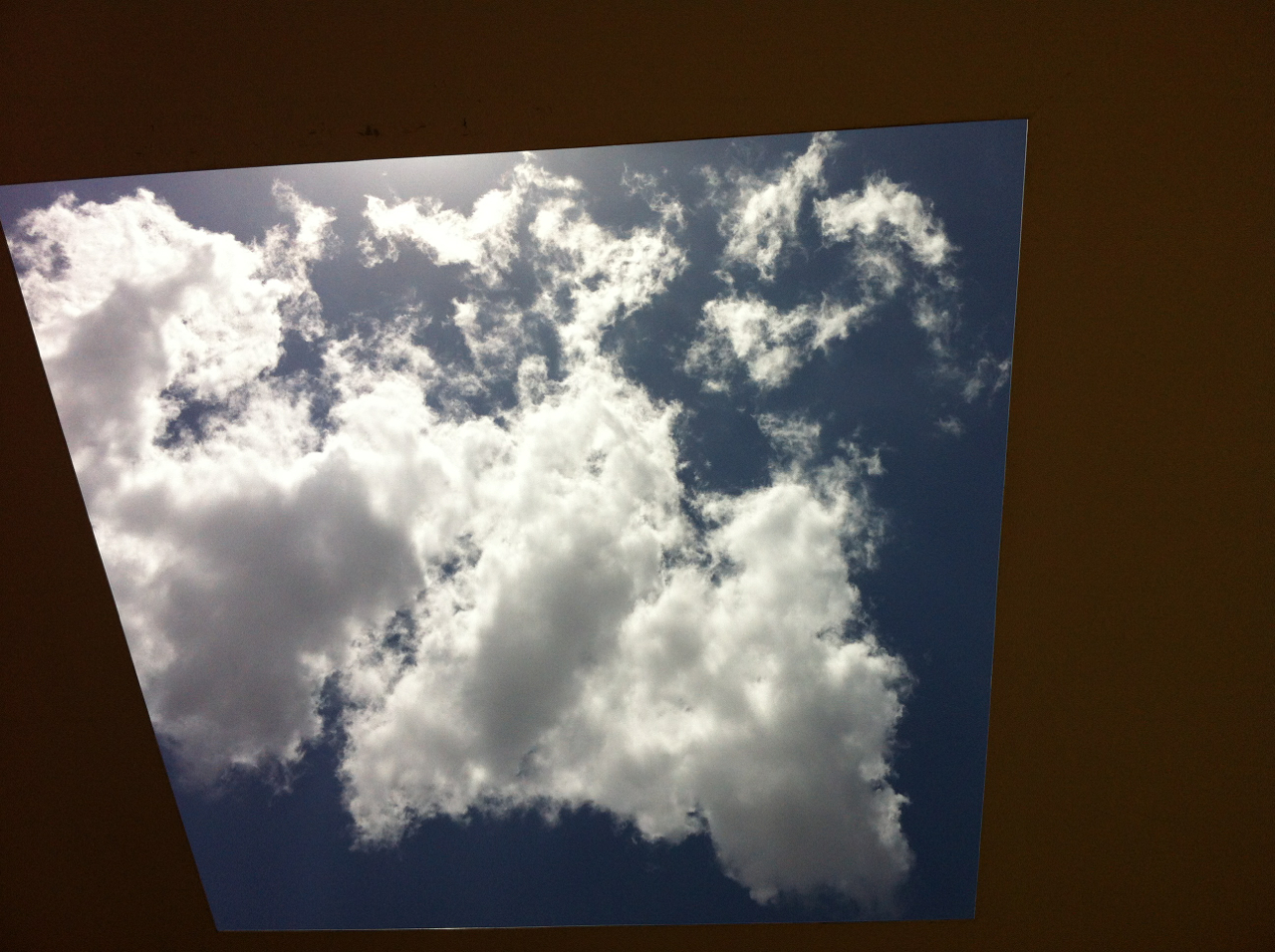
When you visit the museum plan some time to experience James Turrell’s installation in the sculpture garden, Space That Sees (1992) part of his “Skyspace” series. Observing the shifting hues and patterns of the sky from inside a pristine, rectilinear space, a shrine-like inner space evoking places of worship like pyramids, mausoleums, or temples, viewers can connect to the heavens. A square opening in the ceiling makes a frame for an ever-changing “picture” of the sky. Turrell, by confronting us with the empty space, turns our mind to our own way of seeing.

Turrell sky view

Another interesting structure is the Shrine of the Book that has been called “a milestone in the history of world architecture”. The two architects who designed it were an odd couple – the pragmatic Armand Phillip Bartos was evidently chosen based on his being married to Gottesman’s daughter (Gottesman was the philanthropist who had purchased the Scrolls as a gift to the State of Israel and donated the money to build the Shrine that houses the Scrolls); the oddball visionary Frederick John Kiesler who critics said had never built anything and was primarily an avant-garde stage designer who taught occasionally.

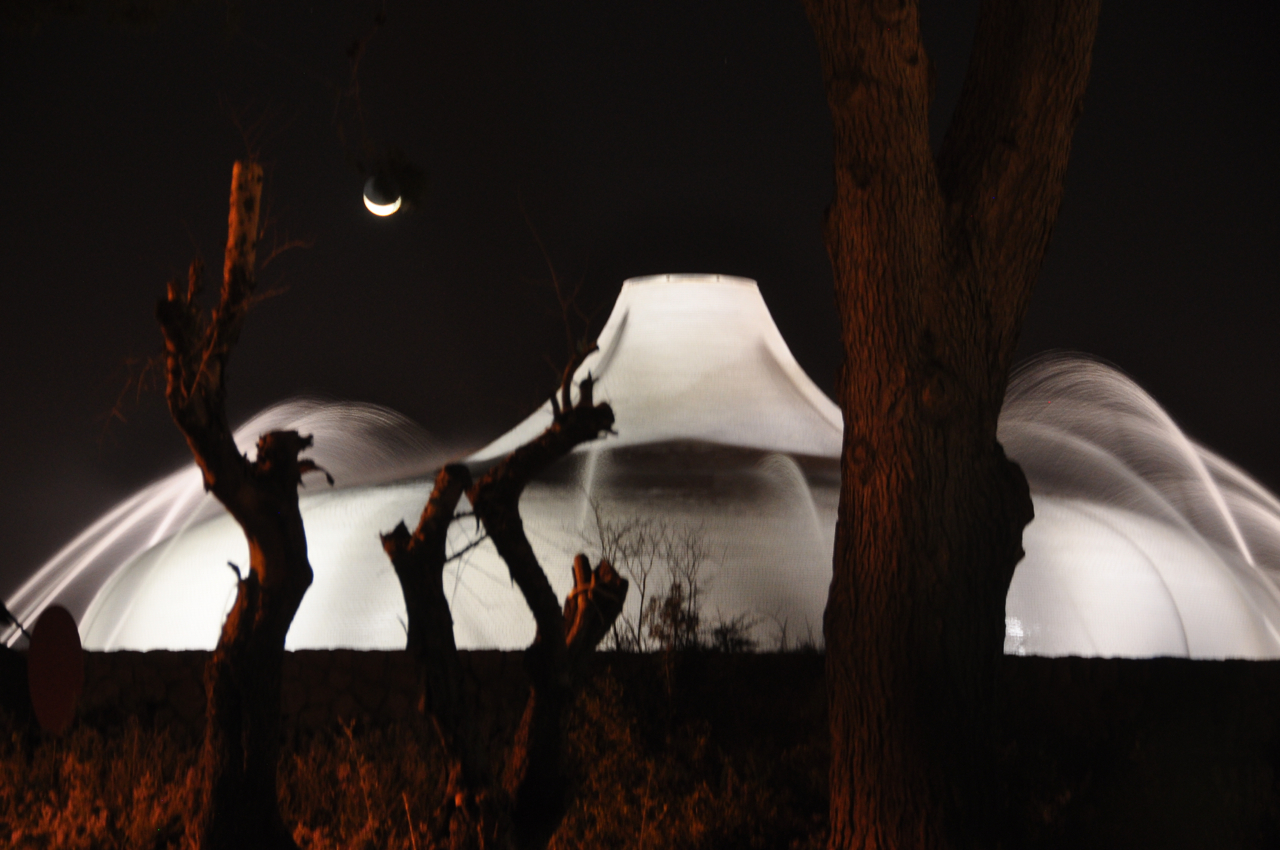
The exterior is dominated by two unique architectural features: a shimmering white dome reflected in a pool of water, representing the “Sons of Light” and a freestanding, polished black basalt wall, standing for the “Sons of Darkness” so vividly described in the War scroll. This photo captures the white dome under a cascade of water at night.

Shrine water light