Category Archives: Nature

Aftermath of Carmel Fire

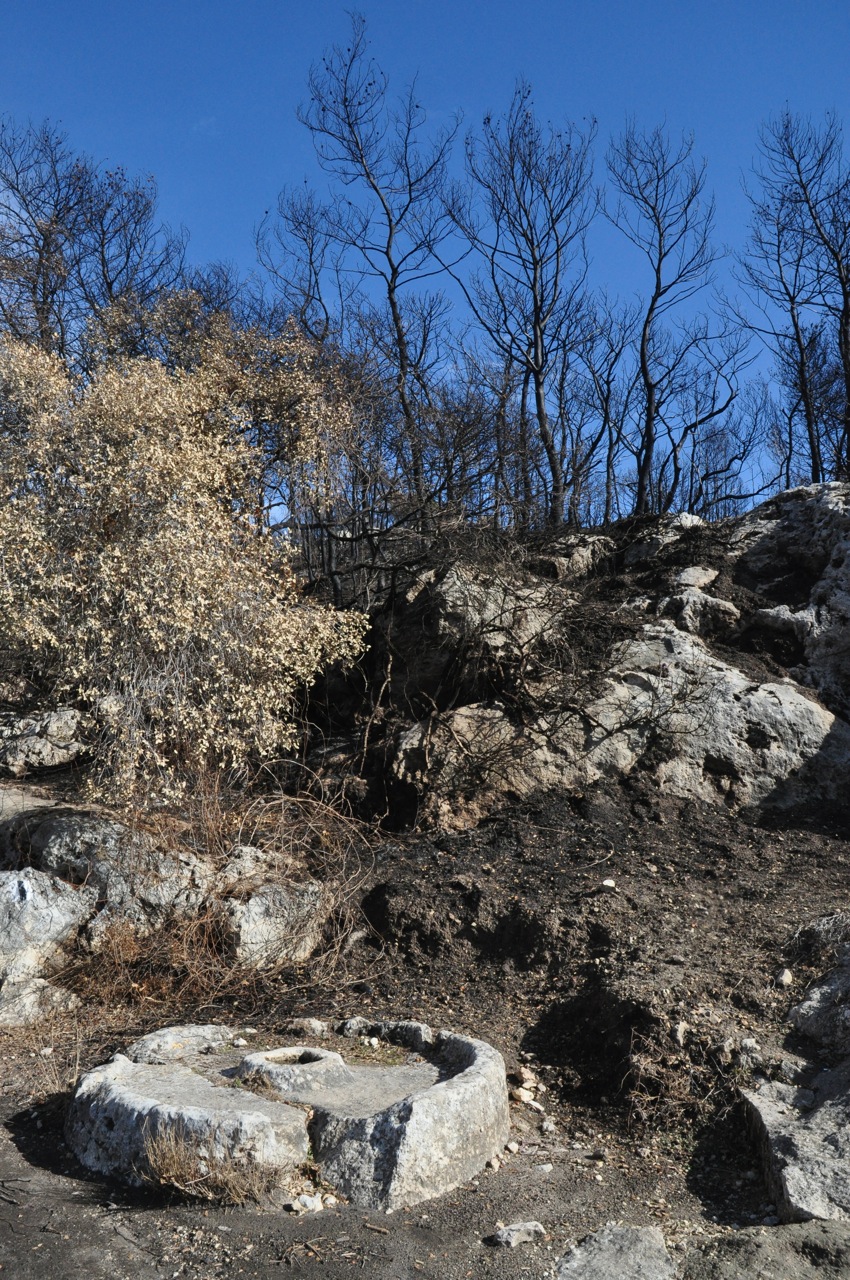
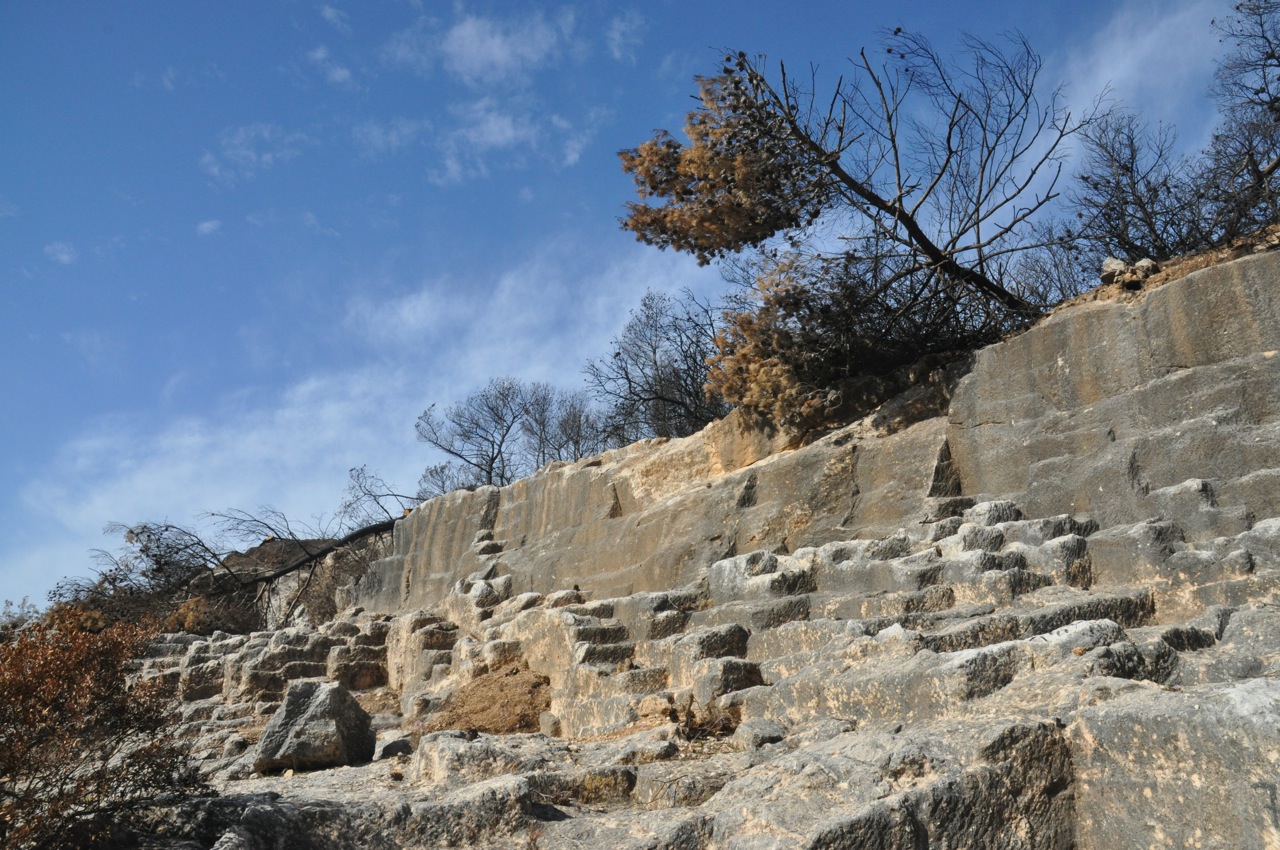
Mount Carmel rises from the Mediterranean Sea to about 500 meters above sea level, wth the city of Haifa built on its western slope. The mountain is rich in biological, geological and geomorphologic diversity with contrasting landscapes, a mixture of agricultural areas and prehistoric and archaeological sites. In the area we were in there was a Roman quarry and part of an olive press.

Mount Carmel is covered mainly with a natural forest of Mediterranean oak shrubland (Quercus calliprinos) and mixed pine (Pinus halepensis). In 1996 UNESCO desgnated Mount Carmel a bio-sphere reserve in recognition of its specialness.

On December 2, 2010 a fire erupted on Mount Carmel burning for 4 days until fire fighters could get the blaze under control and destroyed over 50,000 dunam of forest. The JNF estimates that 1.5 million trees were burnt in the fire, some estimates raise the total figure to 5.5 million trees and the Carmel Hai-Bar nature reserve was damaged. We learned that pine trees, soft woods with a lot of resin, are usually killed by the intense heat; their survival mechanism is that the pine cones open in the heat and hundreds of seeds are  scattered. The oak trees, being a hardwood, often are able  to live, the  branches are burned and die but the roots survive and send up new shoots. According to officials, nearly half of the 150,000 dunams of the Carmel Forest reserve have been destroyed in the fire and it will take at least 20 years for the forests to grow back.
On Friday I went up to the Carmel on a tour organized by Israel’s Green party, where experts from the Technion and Ben Gurion universities taught us about the forest ecology. There were a lot of differences of opinion among the experts – some experts said that authorities had been warned about the situation, Israel had a very long, hot summer and almost no rain this winter and a drought for the last 3 years, that there were not enough resources put to addressing the problem. Other experts said that fires are natures way of clearing old forests and that a fire every 20 years is a good thing, that with the very dense underbrush, once the fire broke out, it was impossible to contain, no matter what resources would have been applied. Unfortunately, it seems clear that climate change and human intervention is accelerating the number and size of fires.

The fire damaged 74 buildings in Kibbutz Beit Oren, Ein Hod, Nir Etzion and Yemin Orde and  forced the evacuation of more than 17,000 people. Tragically, at least 44 people lost their lives – a falling tree trapped a bus carrying police and prison services personnel on their way to evacuating the Damun prison in a fireball. Beit Oren and the youth village of Yemin Orde where our daughter Tiferet had volunteered in 2002 sustained damage, the library was badly damaged and the young people, mostly Ethiopian and Russian students, lost most of their possession and homes when they were forced to evacuate. For more information about Yemin Orde and the work they are doing check their website at http://www.yeminorde.org.

Related articles

Red Canyon

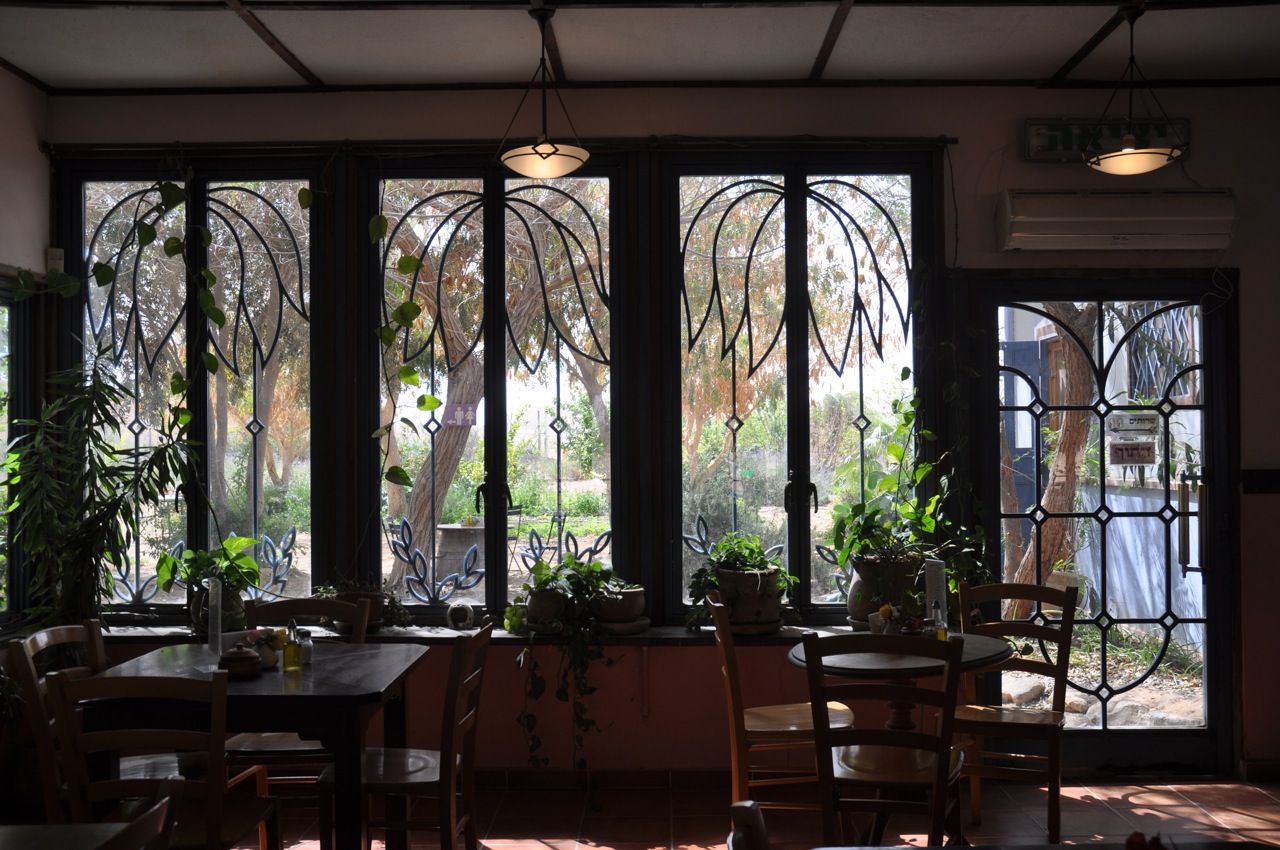
Rather than driving all the way down to Eilat on highway 90 you might want to consider a detour, taking a right onto highway 13 and then a left onto 40 which follows the Israel Trail. After 38 km you’ll come to Shizaphon Junction where you’ll find an organic, vegetarian restaurant run by the folks of Kibbutz Naot Smadar, a lovely place to take a break.

At the Pundak you can also buy products from the kibbutz, artisan goat cheeses, bread, jams, fruit leather, dates and wine – everything you’d need for a picnic. I highly recommend that you try their goats yoghourt ice cream with the homemade apple cake. Mmmm, delicious.

From the junction if you continue on highway 40 you’ll come to the kibbutz itself, like a magical kingdom appearing out of the desert. Many of the kibbutznikim are artists and they’ve built a studio space and gallery that you can visit.

Afterwards retrace your steps and take highway 12. After about 3 km there will be a dirt road to your left that will take you to Shaharut where you can sleepover and go on camel trips. Afterwards retrace your steps and continue on highway 12 south for about 50 km until you see the cutoff for the Red Canyon – Wadi Shani on your left. Follow the dirt road to the parking area.

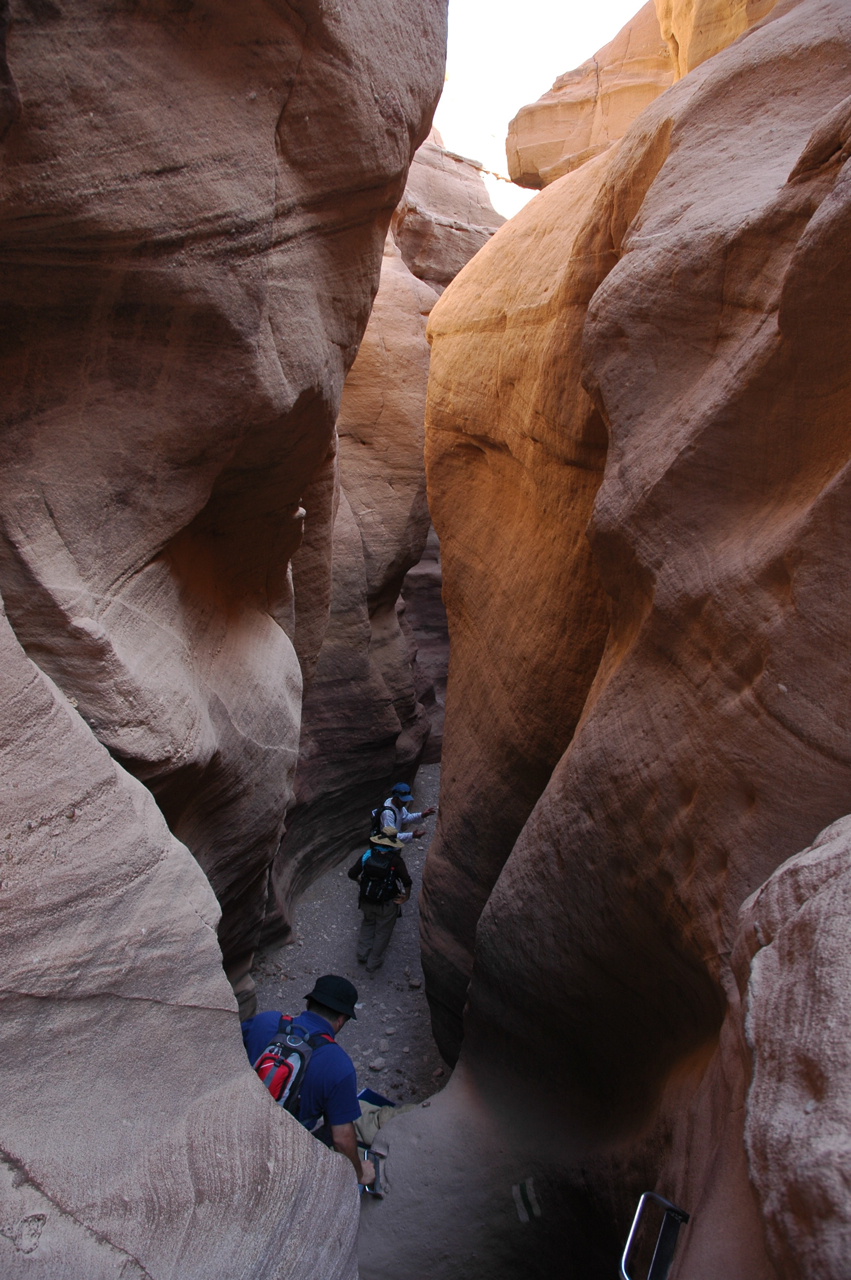
From there you follow the green trail markers and descend into the small canyon, no more than 3 meters in width with a height of up to 30 meters, created over years by water erosion of the sandstone.

Red Canyon

The dominant color of the rock is red with shades of pink and purple. It reminded me of a smaller version of the canyon at Petra. The hike is suitable for families. To return either retrace your steps through the canyon (if there aren’t a lot of people) or climb up out of the canyon where the streambed widens and take the path with a great view of the canyon below. The Red Canyon is one of the places that I recommend to people who are interested in a tour focussed on photography.

If you are continuing to Eilat there are 2 lookout spots that are worth stopping at: Har Hizqiyahu at 838 meters for a view east to the Edom Mountains in Jordan and west to Moon Valley in Egypt and Mount Yoash at 734 meters from which you can see 4 countries on a clear day: Jordan, Egypt, Saudi Arabia and Israel.

Olive Park, Ramat Rahel

Concepts of rootedness and disconnection which mark the complex relation of our civilization with the earth are central to the world of oppositions manifested in the sculpture’s plastic form. Olive trees, ancient symbol of strength, fertility and peace, continue their life in a transplanted and disconnected state.

Ran Morin, environmental sculptor

The park lies at an elevated and windy location overlooking Jerusalem and Bethlehem with views over the Judean desert, Herodium and as far as the Dead Sea. In preparing the park, mature olive trees were transplanted in 1987 from the experimental orchard of Prof. Shimon Lavee of the Vulcani Institute in Rehovot. Besides various types of olives that grow in Israel, there are olive trees that originate from Greece, Italy, Spain, France, Turkey, Algeria, Morocco, Argentina and the USA.

In the center of the park is a structure of 3 steel columns covered with basalt stone aggregate that form a triangle, sitting on a stepped platform of concrete and Jerusalem boulders. On the top of the columns, 11 meters in the air, three 80 year old olive trees are growing, supported by a customized drip irrigation system.

Part of the artistic project deals with the properties and spiritual harmonies of the number three: 3 monotheistic religions, 3 forefathers of the Jewish people, 3 Magi who came to visit Jesus, etc. The location at the edge of the desert and near a blood-stained political border connects the different elements in its surroundings and relates to more ancient periods when olive trees and plowed earth were characteristic of man’s intervention in this arid landscape.

Morin’s projects can be construed to have political undertones, mainly because it can’t be avoided in Jerusalem and the areas where he works. Personally, however, Morin tries to stay away from such sensitive issues. It’s hard though: “I am dealing with earth and olive trees and actual places where there are borders. A Palestinian once told me, ‘Okay we don’t have to fight over the land; we can grow the trees in the sky’.”

Yerushalayim shel maala, heavenly Jerusalem. If we could only bring it down to earth.

Bird Mosaic at Caesarea

Caesarea Maritima was a city and harbor built on the ruins of Strato’s Tower by Herod the Great about 25–13 BCE. It’s a very popular site, the archaeological park lies on the Mediterranean coast of Israel about halfway between the cities of Tel Aviv and Haifa. The city of Caesarea was described in detail by the 1st century Roman Jewish historian Josephus.

The city became the seat of the Roman praefecti soon after its founding. In 1961 Italian archaeologists excavating the theater found a stone inscription with the name of Pontius Pilate, according to the New Testament the Roman Governor responsible for ordering that Jesus be put to death, the first archaeological evidence that Pilate existed.

While visiting the Herodian, Roman, Byzantine and Crusader ruins of Caesarea make sure to see the Bird mosaic, a large rectangular mosaic ‘carpet’ on the floor of an extravagant mansion first uncovered in 1950 but only conserved and viewable by the public in 2004. It’s a tapestry of the land of Israel and includes fruit trees and animals native to Israel (lion, tiger, bear, wild boar, ibex, dog, elephant, deer and bull) bordering 120 round medallions, each of which contains a different bird.

Bird Mosaic Caesarea

Bird Mosaic


The owner of the mansion is unknown but was obviously extremely wealthy. Built in the sixth century on a hill overlooking the sea, the mansion included a hall with the mosaic floor, columns, an open roofed yard and a second floor. The findings indicate an exceptionally developed water and drainage system that included inclined floors, water canals and recessed wells.

When walking through the hippodrome don’t miss the mosaic floor from a 6th century public building near the public baths with images of birds, animals and people. Interesting to compare it with the Bird mosaic above.

Hiking Nahal Dragot

Driving along the shore of the Dead Sea on our way to Masada and Ein Gedi, I usually point out the cutoff to Nahal Dragot – there are some great hikes here if you are up to the challenge. In fact, Nahal Darga as it is also called, is a kind of test for Israelis.

Nahal Dragot

From the center at Metzukei Dragot, there is an unpaved road (if you were to continue north you could go as far as Herodium), take the turn to a lookout point with a great view of the canyon, the deepest part of Nahal Darga and a hint of what awaits.

IMG_1055

Returning to the main road and continuing westward we come to the start of the black trail. From there it is a short hike to the Murabat Caves, 3 caves, side by side on the northern cliff. It was here that letters signed Bar Kosiba were found, evidence that the mythical leader of the Bar Kochba Revolt against the Romans in 132-135CE did in fact exist.

Letter of Shimeon bar Kosiba to Yehonathan, son of Be’ayan:
Peace! My order is that whatever Elisha tells you, do to him and help him and those with him. Be well.

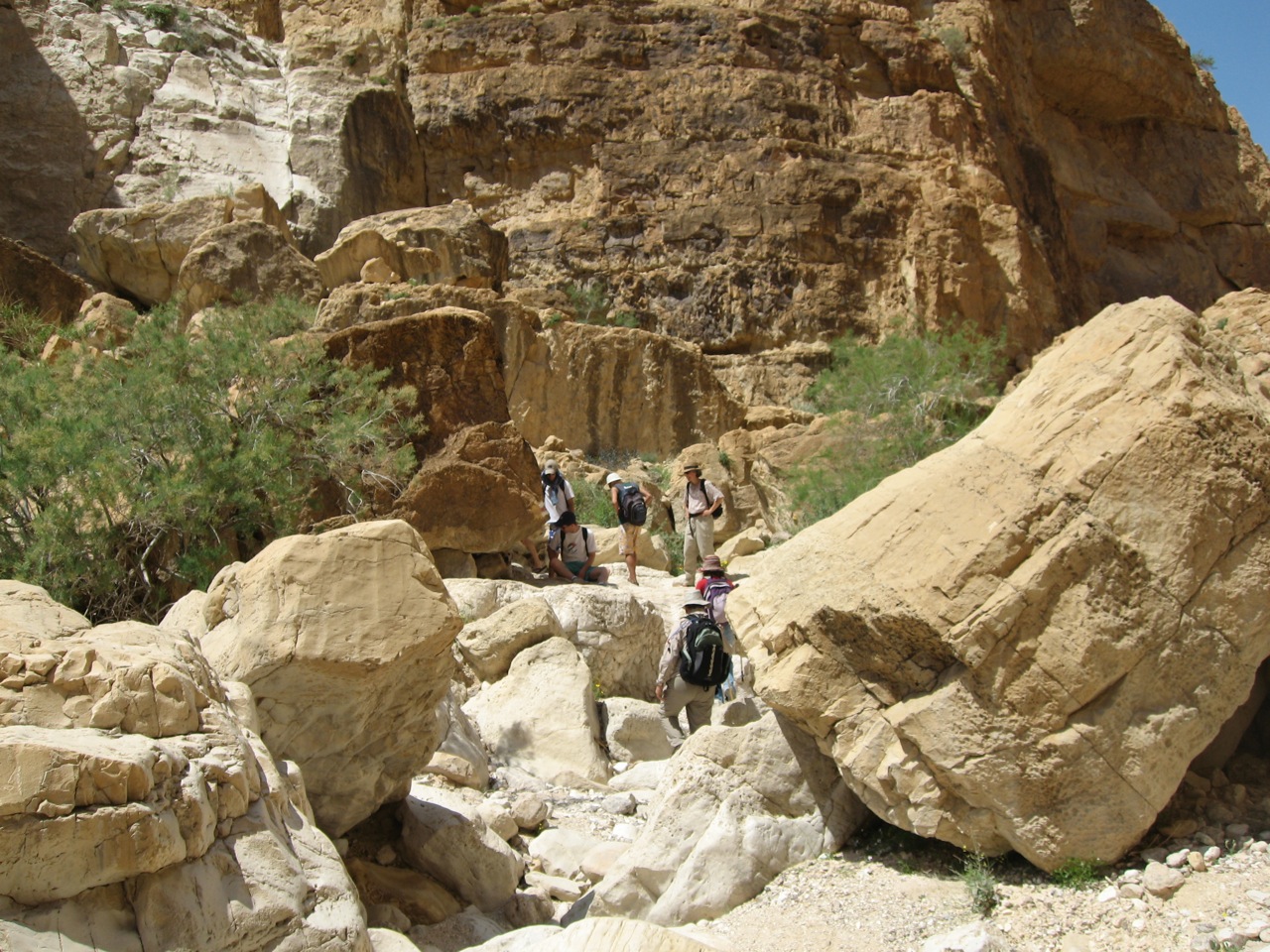
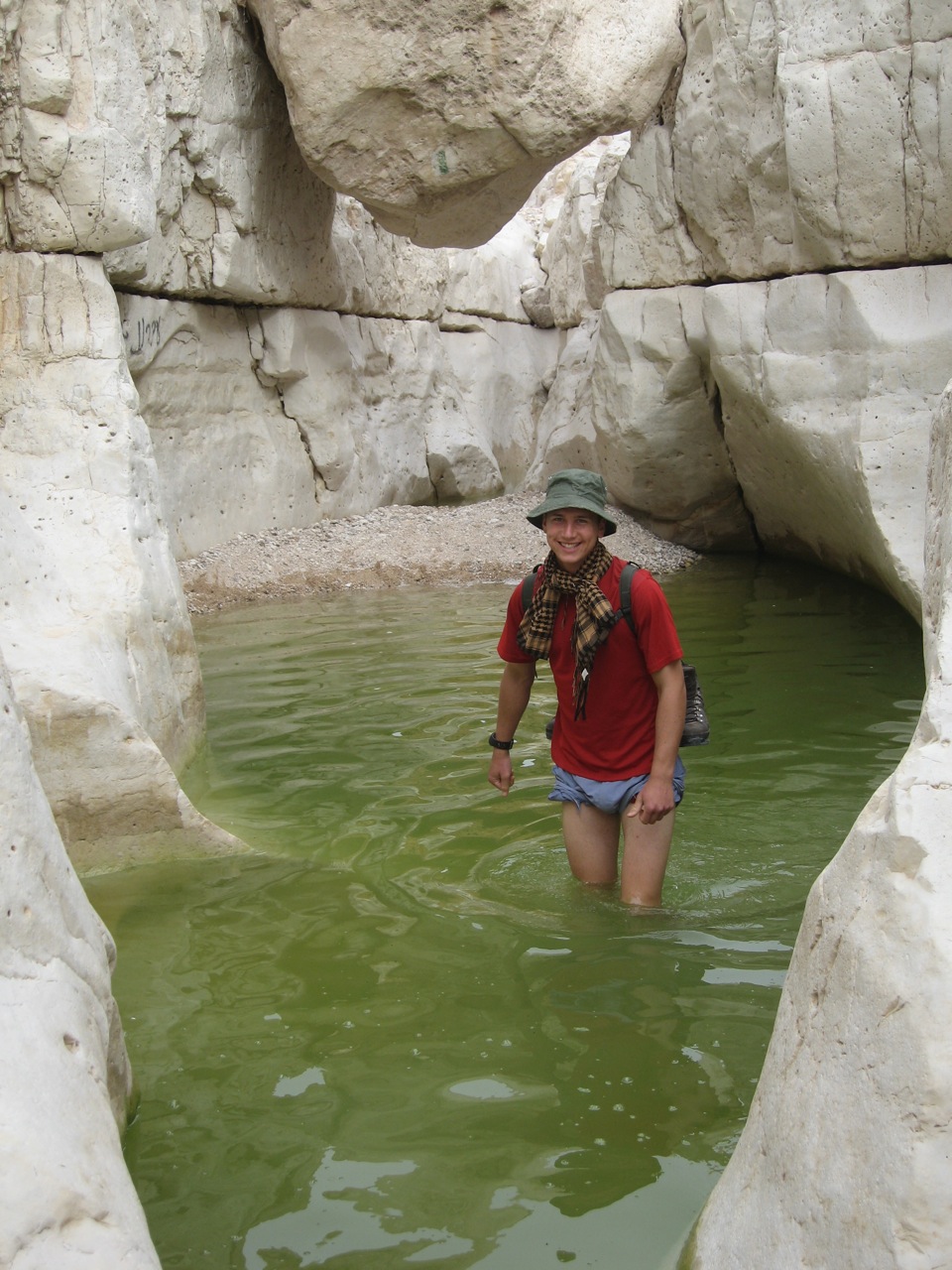
From here it’s about a 150 m. descent to the start of the canyon. It will take 4-6 hours (4 km) to hike this part of the narrow canyon with more than 50 meter high walls, dry waterfalls and pools of water in natural craters (note there are places you will have to swim across). At the end of the hike the wadi widens and crosses highway <90> about 1½ km from the Mezuke Dragot cutoff, estimate that to complete the hike will take a full day. There are metal D-shaped rings hammered into the rock in places to help you on the descents but it’s probably also worth having at least 20m. of rope. A guide is recommended.


Amitai in Nahal Darga, photos AdirChai Haberman-Browns, used with permission.

You should also read this article http://www.jpost.com/Travel/AroundIsrael/Article.aspx?id=135713

Katlav

Katlav

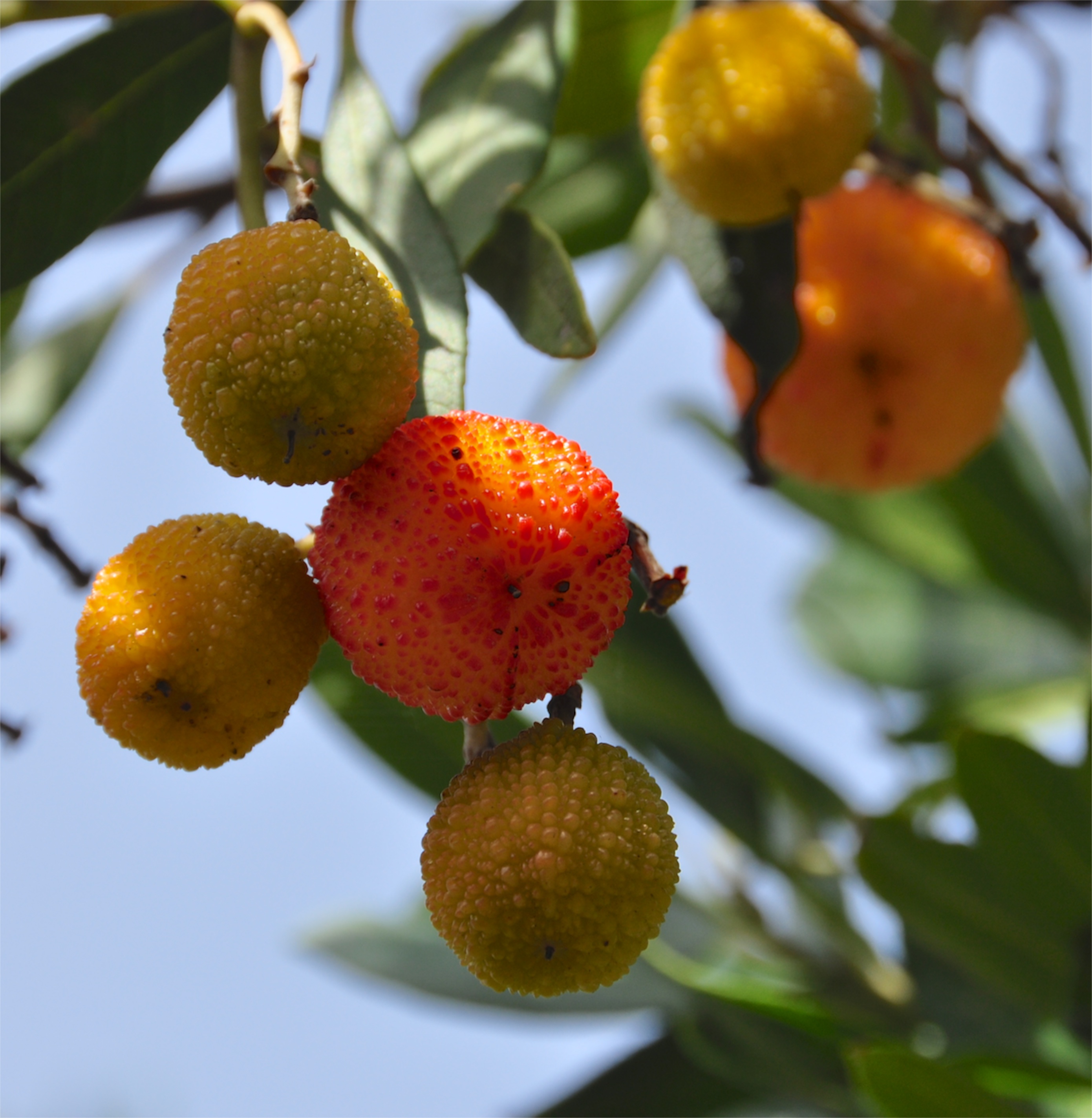
Katlav is the Hebrew name of a striking, red-barked evergreen shrub or small tree native to the Mediterranean region (grows as far north and west as France and Ireland), the Strawberry tree or Arbutus Andrachne. The bark is smooth and sheds during the summer, leaving a pistachio green color, which changes gradually to a beautiful orange brown. The small red berries, tasting a little like tart strawberries, ripen in November.

There is another related tree, Arbutus unedo, that also grows in this region. The leaves have a saw-tooth edge and the fruit is bumply, orange-red when ripe. The name ‘unedo’ is explained by the Roman historian, Pliny the Elder, as being derived from unum edo “I eat one”, which seems appropriate as most people find the fruit bland and mealy.

One advantage of hiring a local guide is that you get the opportunity to get inside, to be initiated into what the locals do, things that most tourists never experience. In and around Jerusalem there are some very special hikes and one in particular is Nahal Katlav in the Judean Hills, named for the abundance of strawberry trees growing there. There is also the possibility of hiking to a maayan, a natural spring that fills a pool cut into the rock, that is just the perfect solution to a hot summer day. Before we head out we will pick up some artisan bread, cheese, salads, etc. for a picnic, drive into the hills, hike to our destination and enjoy. These are outings for the whole family.

Nahal Katlav is a tributary of the Sorek river which is biblical Hebrew for a choice grapevine. Over the years, this region was known for its grapes, and today there are a number of fine boutique wineries in the Judean-Yoav region. For those interested in wine, these outings can be combined with a visit to a winery in the area. There is even a winery called Katlav.

It is very impressive to stand in the presence of an ancient tree. Near Kibbutz Tsuba are 2 very old trees, a 1200 year old olive tree and a 800 year old oak. Although I am not aware of such an old strawberry tree there is a magnificent specimen that is about 80 years old at the Jerusalem War Cemetery on Mount Scopus.

Katlav in cemetery