Category Archives: Jerusalem

Springs in Jerusalem Hills

Around Jerusalem there are some special hikes that let you combine nature, history and archaeology. Two that I’ve already written about are Nahal Katlav and Shaar HaGai. Before heading out pick up some artisan bread, cheese, wine, hummus (you can find zatar growing wild) and salads for a picnic, drive into the hills, hike the trail and enjoy. In Psalms it says

הַמְשַׁלֵּחַ מַעְיָנִים בַּנְּחָלִים בֵּין הָרִים יְהַלֵּכוּן God sends the springs into the valleys, between the mountains. (Psalms 104:10)

A hike to a maayan, a natural spring where water finds its way out of the limestone hillside, is a great outing for the whole family. At some point someone cut into the bedrock to make a pool, perfect for a dip on a hot summer day. There is even a trail, Shvil HaMayaanot, from just before Even Sapir that goes by a number of springs and pools. Drive out to the Jerusalem Biblical Zoo near Malcha (itself a fun destination for the whole family) and park the car at the farthest parking lot, a road with a blue trail marker continues west to 2 springs (it’s also possible to drive it but then it won’t be a hike).  To your right the hill above the trail is called Rekhes Lavan (White Ridge) because of the kirton (chalk, a soft kind of limestone) and the valley below to the left with the train tracks is Nahal Refaim (Valley of Ghosts). After following the winding road you will come to a small parking area, a green Parks sign and steps on your right. Climb the stairs to Ein Lavan that fills 2 pools, a shallow one for smaller children or for cooling your feet and a deeper one, about 1.5 meters, great for swimming. After your picnic follow the spring back towards it source to find a burial cave from the Second Temple period. The second spring, Ein Itamar (also known as Ein Balad), is farther and more challenging to find. Our youngest son, AdirChai, who is the family expert on maayanot told me about it.
 

From Ein Lavan descend the steps and continue along the road. At the fork stay right, you will see that the blue trail joins the black. The road becomes paved again, there is a gravel path that forks to the left (don’t take it, follow the black trail). When the road turns right and is climbing there’s a dirt path to the left that leads down (marked with a blue trail marker), follow it until it turns sharply to the left. Look for the ruins of a stone building, the pool is below it. If you need a guide contact me.
Last Supper Passover

Every year the Passover seder concludes with a rousing “Next Year in Jerusalem”. As we clean and make our preparations this year I am struck at how fortunate I am to be living in Jerusalem and celebrating Passover here.

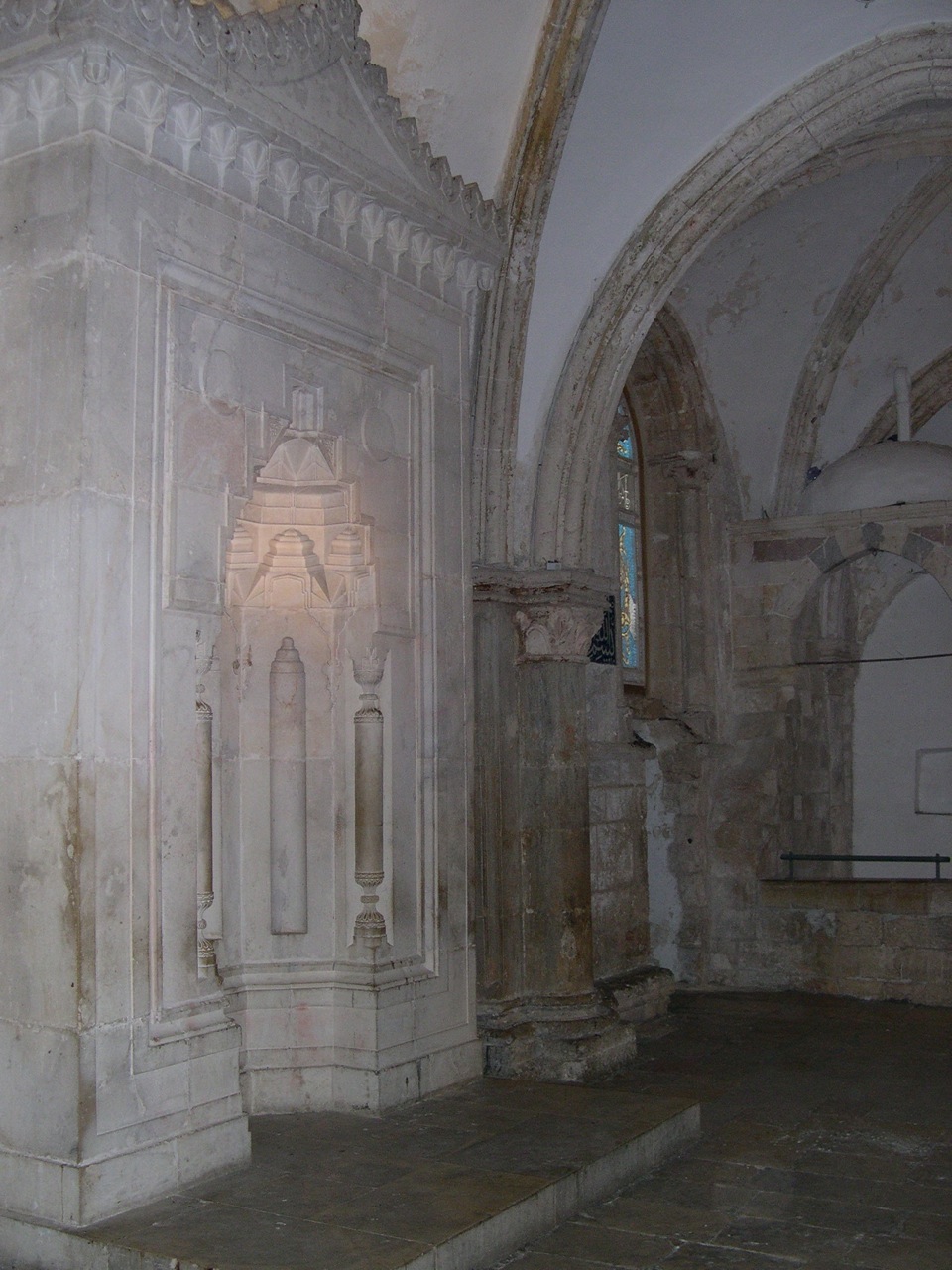
Just this week I went for a walk with a friend to the Old City. Our steps led us to Mount Zion and we visited the Coenaculum, the Upper Room where according to Christian tradition Jesus celebrated the Passover, the Last Supper.

… Where is my guest room, where I may eat the Passover with my disciples? He will take you upstairs to a large room that is already set up. That is where you should prepare our meal. The disciples left, went into the city and found things just as Jesus had told them. So they prepared the Passover.          Mark 14: 14-16

There are various suggestions about the date of the present chapel. It may have been built by the Franciscans in 1335 on the remains of an earlier Crusader church or by Crusaders just before Saladin’s conquest of Jerusalem in 1187 or later by Holy Roman Emperor Frederick II, after he arrived in the city in 1229. From repair work on the flooring it seems that the original building was a domus ecclesia that existed at the time of the Second Temple and perhaps used by early Jewish-Christians. Note that the building was converted to a mosque in 1523 by the Ottoman Turks with the addition of a michrab.


To bake matzah, the unleavened bread for the Passover seder, you need flour which we will freshly grind from organic wheat berries. We need spring water to mix with the flour and bake the dough (in less than 18 minutes). So today we went to Ein El Henya, a spring in the valley of Nahal Refaim, just south of Jerusalem.

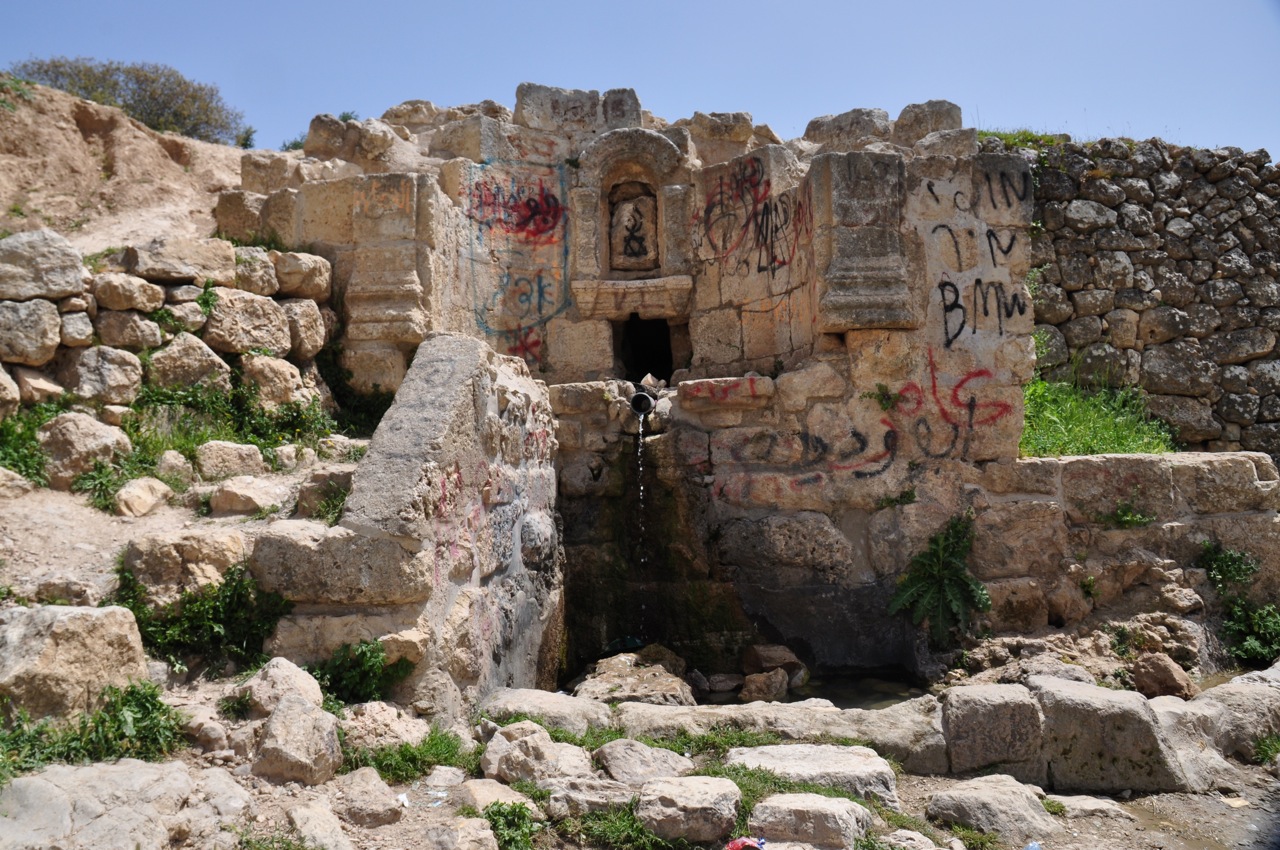
The spring is typical of those found in the Jerusalem area, consisting of a dugout chamber where the water flows from the contact between the water porous limestone and a layer of marl which as it contains clay is more impervious to water. A 39 meter underground tunnel channels the water to the ruins of a building, the apse of a 6th C Byzantine church, where it cascades down into a small pool in front of the apse framed by two pilasters. The apse gave the spring its Arabic name because henya is a round niche carved out of stone. From there it follows a channel to fill a large (11 x 7 meter, 2 meters deep) rectangular pool (though I noticed that now the pool is almost empty).

The church is named after Philip the Evangelist according to the story in Acts 8:26-40

Then an angel of the Lord said to Philip, “Get up and go towards the south to the road that goes down from Jerusalem to Gaza.”

There he met a court official of the Queen of Ethiopia in charge of her entire treasury who was sitting in his chariot reading from the prophet Isaiah. He had come to Jerusalem to worship at the Temple and was returning home. The official/eunuch asked Philip to explain what was written and was so impressed that when they came to the spring he requested that Philip baptize him there.

“Top Ten” Biblical Archaeological Discoveries

Several months ago Tim Kimberley of the Parchment and Pen posted his “Top Ten” list of biblical discoveries in archaeology. I found the link via Todd Bolen’s Bibleplaces blog who wrote that the list corresponds closely to what he would have suggested. So drumroll please, here is the list in reverse order of importance:

10. Sennacherib’s Siege Reliefs of Lachish

9. Black Obelisk of Jehu’s Tribute to Shalmaneser III

8. Caiaphas Ossuary

7. Hezekiah’s Tunnel

6. Pontius Pilate Inscription

5. The Crucified Man (nail through heel)

4. Ketef Hinnom Silver Amulet Scroll (Priestly Blessing)

3. Jericho (Tel es-Sultan)

2. Tel Dan Stele with House of David

1. Dead Sea Scrolls

To see most of these finds, specifically #1, 2, 4, 5, 6, and 8 only requires a visit to the Israel Museum in Jerusalem. The British Museum holds #9 and 10 but there is an excellent replica of #10, Sennacherib’s Siege Reliefs at the Israel Museum. You can experience #7 Hezekiah’s Tunnel by visiting the City of David archaeological park. Just last week I took a family, we started at the sifting project at Emeq Tsurim, walked along the Jerusalem trail to the Kidron to the City of David and walked Hezekiah’s Tunnel – everyone had a great time. Site #3 Jericho is off limits for a lot of Israeli guides but I am authorized to take tourists to Jericho – there is a lot of discussion about whether the archaeology supports the Biblical account.

One of the things Tim talks about is provenance, where the artifact was found. Besides seeing the objects at the museum, this is where you would have to go to see where they were discovered:

#1 Qumran, 2 Tel Dan, 3 Jericho, 4 Ketef Hinnom, 5 Givat haMivtar, a suburb north of Jerusalem, 6 Caesarea, 7 City of David, 8 Peace Forest at tayelet/promenade, 9 and 10 you’d have to go to Iraq; you can visit Tel Lachish off of highway 3415 between Jerusalem and Tel Aviv.

You might want to add these places to your itinerary on your next trip to Israel, you’ll learn a lot. I can take you to and guide these sites except for Iraq.

Ketef Hinnom Silver Amulet

I wrote this post about First Temple Period tombs found in Jerusalem in 2011 and over the years the post got 1 Like, a few hundred views a year which is an average of less than 1 view a day, until this year! Since 2021 the post has 1672 views or 30 views on average per day and I can’t figure out why. If you’re reading this post could you please leave a comment about how you found it and why it is of interest. Thanks so much.

In 1979 Prof. Gabriel Barkay decided to do some archaeological research outside the walls of Jerusalem’s Old City and chose a ridge above the Hinnom valley by the Scottish Church of St. Andrew.

He called the area Ketef Hinnom (ketef means shoulder in Hebrew) and did a survey that uncovered the remains of a Byzantine church with mosaic floor and some tombs hewn in the rock whose roofs had collapsed. With the help of 12-13 year olds from a youth group from Tel Aviv run by the Society for the Protection of Nature he began excavating. They found one bead – it was clear that the tombs had been looted in antiquity.

A boy by the name of Nathan was assigned to clean a nook underneath one of the burial benches. By chance he also had a hammer and after cleaning, he got bored and started banging on the floor of the nook. To his surprise the stone bottom broke revealing an entryway to another room full of treasure. The burial chamber with its objects has been faithfully recreated at the Israel Museum.

As Prof. Barkay explained:

“In [that] one chamber more than a thousand objects were found.  They included 125 objects of silver, 40 iron arrowheads, gold, ivory, glass, [ceramics, oil lamps,] bone and 150 semi-precious stones.  There was 60 centimeters (two feet) of accumulation filled with objects and skeletal remains…

Judy Hadley, a girl from Toledo Ohio, now a professor of Bible at Villanova University in Philadelphia, showed me a purplish-colored object looking like a cigarette butt.  It took us three years to unroll it properly.  It was 2.5 cm wide, about 1 inch.  When unrolled, it was 10 cm in length.  It was made of pure silver, 99% silver. Very delicately scratched on the silver were ancient Hebrew characters.  I saw it at the Israel Museum lab and immediately recognized the four letters of the Divine Name, YHVH.”

Courtesy of the Israel Museum

All the dirt removed from the tombs was stored in large plastic boxes donated by Tnuva [Israel’s largest dairy and today a billion dollar food conglomerate] and sifted under lab conditions. In the sifting, a second, smaller silver object, 4 cm in length, was also found. Both objects have the Priestly Blessings from Numbers 6:24-26 engraved on the silver in proto-Hebrew script.

The Lord bless you and protect you.
The Lord make His face to shine upon you and be gracious to you.
The Lord lift up His countenance upon you and grant you peace.

Because of the pottery and the script, the objects are dated to the 7th century BCE (while the First Temple was still standing), to the time of the prophet Jeremiah. These are the oldest examples that we have found of a Biblical text on an archaeological artifact, about 400 years older than the Dead Sea Scrolls.

The discovery of the silver amulets received very wide public interest.  In the 1990s Dr. Bruce Zuckerman from the University of Southern California, an expert who specializes in photographing ancient texts (various Dead Sea Scrolls and the Leningrad Codex) arranged to photograph the amulets using the latest photographic and computer imaging techniques.  This made it possible to zoom in on every letter and even superimpose complete letters on broken letters, reconstructing broken letters in the scribe’s own peculiar style to better decipher those that were unclear. The result was that they were able to identify another biblical verse on the larger scroll, from Deuteronomy 7:9.

Know, therefore, that only the Lord your God is God, the steadfast God, who keeps His covenant faithfully to the thousandth generation of those who love Him and keep His commandments.

Read the Life and Land blog for a first-hand report from Gordon Franz who as a 25-year old was at Ketef Hinnom working with Prof. Gaby Barkai. The two amulets are on display in the Archaeology wing of the Israel Museum. I can take you to Ketef Hinnom to see the First Temple period tombs where the amulets were found.

Chagall Windows

Using the medium of stained glass enables the painter to create intense and fresh colors. “When Matisse dies”, Pablo Picasso remarked in the 1950s, “Chagall will be the only painter left who understands what colour really is.” It was not until 1956, when Chagall was nearly 70 years of age, that he began to design stained-glass windows, first for the church at Assy and then for the Metz Cathedral. One of Chagall’s major contributions to art has been his work with stained glass.

Chagall collaborated with Charles Marq of Atelier Simon in Rheims, France; together they worked on the project, during which time Marq developed a special process for applying color to the glass. This allowed Chagall to use as many as three colors on a single pane, rather than being confined to the traditional technique of separating each colored pane by a lead strip.

French art historian Leymarie writes that in order to illuminate the synagogue at Hebrew University’s Hadassah Medical Center in Jerusalem both spiritually and physically Chagall decided that the twelve windows, representing the twelve tribes of Israel as blessed by Jacob and Moses in the verses which conclude Genesis and Deuteronomy, were to be filled with stained glass. This is very traditional, the Hurva synagogue had 12 windows with stained glass for the twelve tribes around the dome and the ceiling of the Chabad synagogue was decorated with illustrations of the twelve tribes. Chagall envisaged the windows as “jewels of translucent fire”. Each of the twelve windows is approximately 3.35×2.4 meters, much larger than anything he had done before. They are probably Chagall’s greatest work in the field of stained glass.

Leymarie goes on to describe the spiritual and physical significance of the windows:

The essence of the Jerusalem Windows lies in color, in Chagall’s magical ability to animate material and transform it into light. Words do not have the power to describe Chagall’s color, its spirituality, its singing quality, its dazzling luminosity…

At the dedication ceremony in 1962, Chagall described his personal feelings about the windows:

For me a stained glass window is a transparent partition between my heart and the heart of the world. Stained glass has to be serious and passionate. It is something elevating and exhilarating. It has to live through the perception of light. To read the Bible is to perceive a certain light, and the window has to make this obvious through its simplicity and grace… The thoughts have nested in me for many years, since the time when my feet walked on the Holy Land…

You probably notice that there are no photographs of the Chagall Windows accompanying this post. I contacted Hadassah for permission to photograph and was told that I would have to contact an agency in Paris, Société des Auteurs dans les Arts Graphiques et Plastiques, that handles such requests. The ADAGP wants me to pay €7 per image per month, which comes to €84 per year royalties to display one of my photographs on my website. In a quick search for “Chagall Windows” on Google I found 42,700 images that are already online (either ADAGP is bringing in more than €3.5 million per year or these images are not authorized, I’ll let you guess). I suggest that you check some of these images to get some appreciation for Chagall’s stained glass work.

What do Hadassah Ein Karem and Hebrew University Givat Ram have in common? In 1948 the Hadassah medical center and campus of Hebrew University on Mount Scopus built in 1925 were cut off from Israeli held western Jerusalem. For 19 years, a convoy travelled up to Scopus every 2 weeks under Red Cross auspices to exchange people and bring supplies. Consequently, these two institutions are a second hospital and university campus.

Mary Magdalene

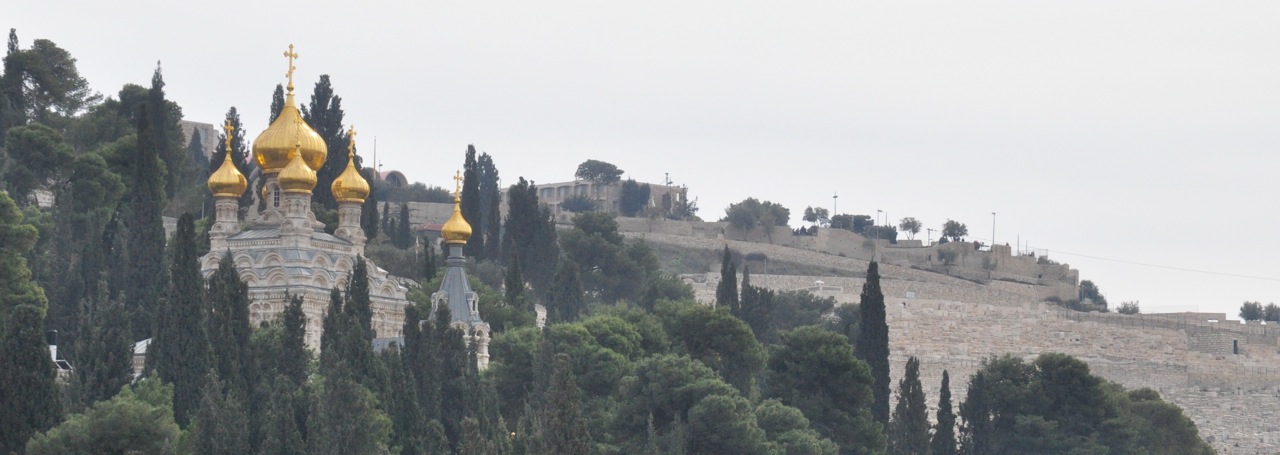
You can’t miss the church on the slope of the Mount of Olives, its seven gilded, onion-shaped domes sparkling in the sunlight. This is the Church of Mary Magdalene built by Czar Alexander III of Russia in 1886. Dedicated to Alexander’s mother Maria Alexandrovna, it was called the Church of Mary Magdalene after her name-saint from the town of Magdala on the western shore of the Sea of Galilee.

Mary Magdalene is mentioned as one of the women who “ministered to him [Christ] of their substance”. The New Testament also tells the story of an exorcism on Mary that cast out seven demons (Luke 8:3). One of the best-known women in the New Testament, Mary accompanied Jesus on his last journey to Jerusalem, was present at the crucifixion and was the first person to see Jesus after the resurrection (Mark 16:9). Though she was very close to Jesus, she was never recognized by Christianity as one of the Apostles.

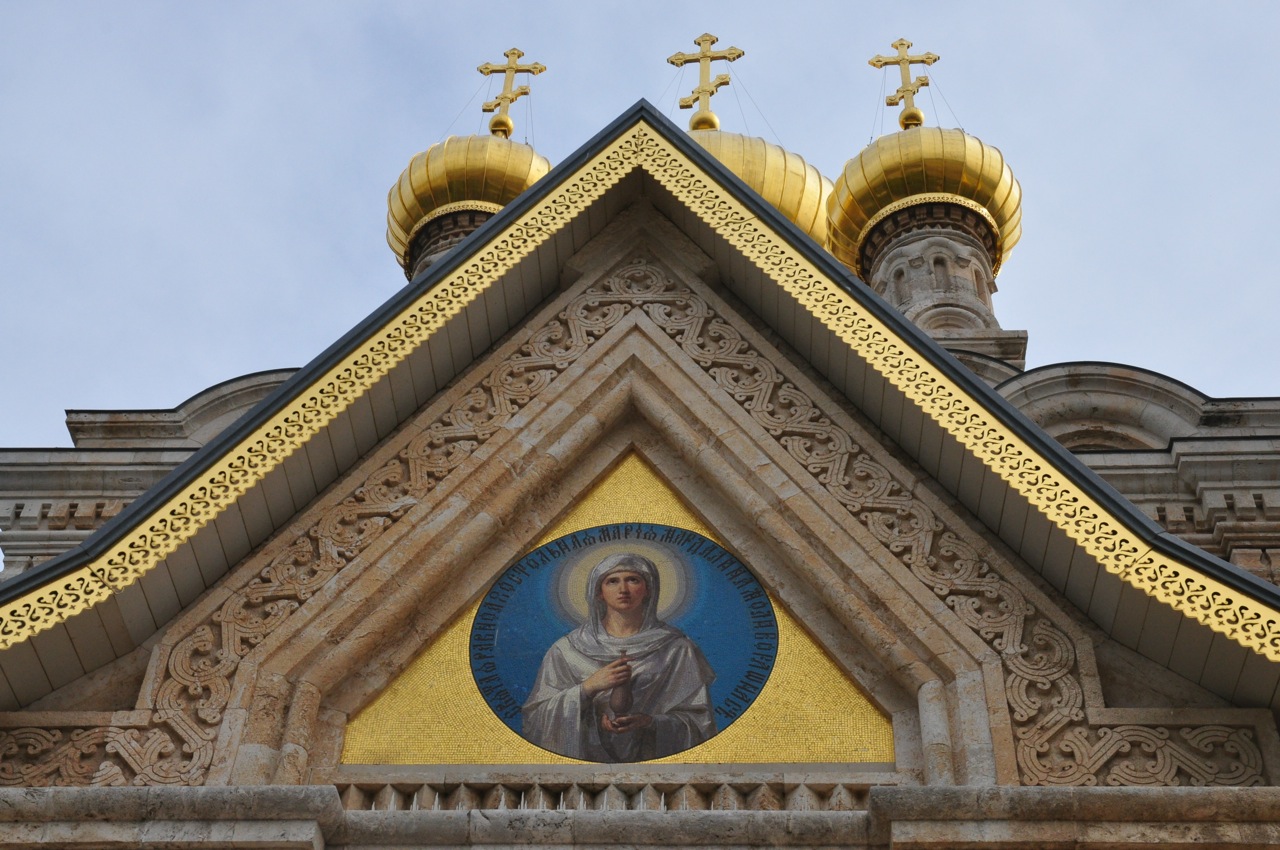
Above the main entrance to the church, located on the second level, is a gabled roof trimmed with a lace pattern in gold. A circular blue mosaic depicting Mary Magdalene piously robed in white is superimposed on a gold triangle in the gable,which is bordered with an intricately carved stone pattern. On the left side of the building is a bell tower ringed with squat squarish pillars topped by a large grey cone with several dormer like windows, a gold onion dome perched on top.

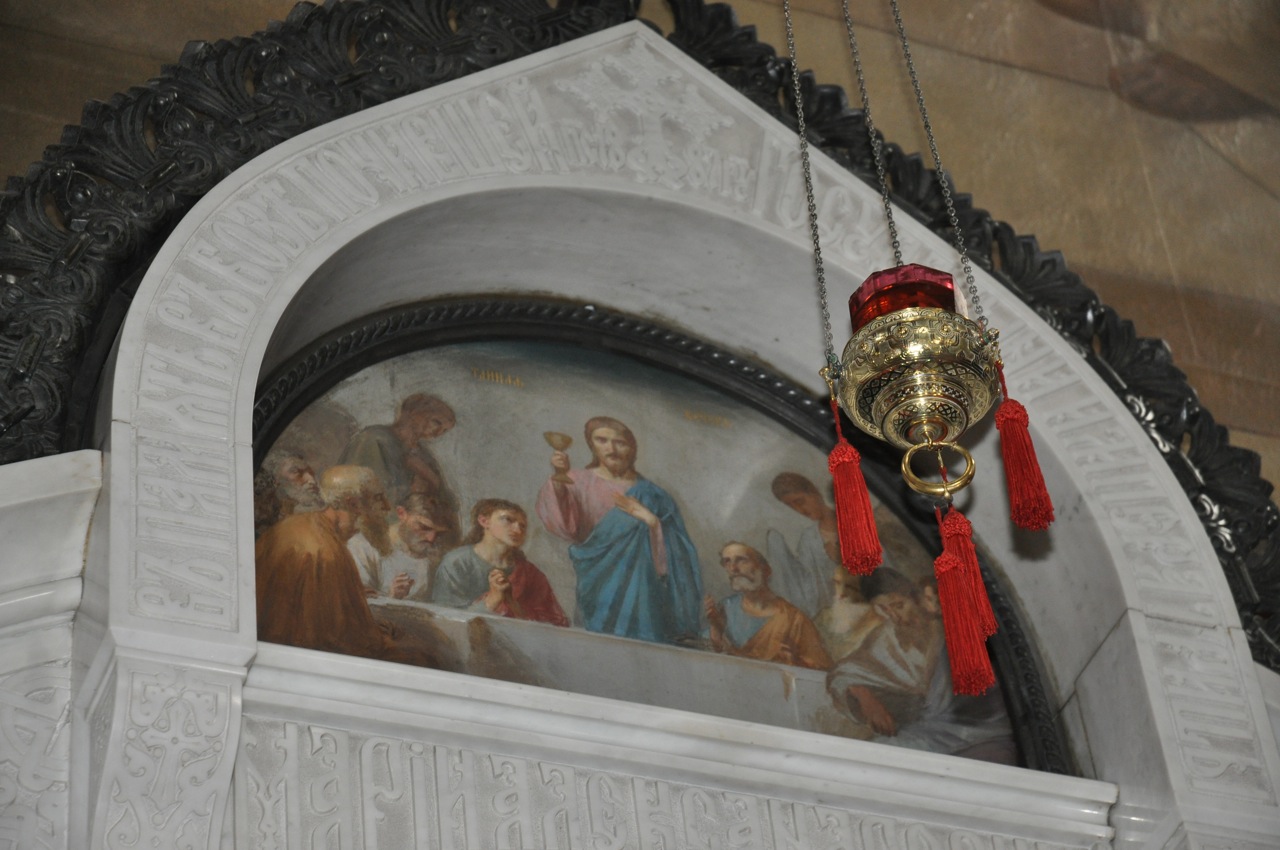
Inside the church decorated in shades of burnt orange in various patterns hangs a large metal chandelier which has small oil lamps for light. The iconostasis, a wall separating the nave from the sanctuary and altar in an Eastern church, consists of a series of arches of beautifully carved white marble, with paintings by Vereshoguine, one of Mary Magdalene. In the middle in an arch above the Holy Doors is the traditional scene of the Last Supper (click on the image to see it larger).

Six tiny paintings on the doors depict the four evangelists, the Virgin Mary, and the angel Gabriel. Over the arches of the iconostasis and high up on the other three walls are scenes with Mary Magdalene painted by Ivanov.

One of Russia’s most extraordinary saints lies in state within the church. She was Russian Grand Duchess Elizabeth Fyodorovna put to death by the Boshevists in 1917, wife of the Czar’s brother Sergei (assasinated in 1905) and sister to the Czar’s wife Alexandra. She was the creative force behind the church and supervised the artwork.

Visiting the church takes planning due to the limited hours it is open (Saturday, Tuesday and Thursday from 10am to noon) so until then check out this virtual tour at http://www.3disrael.com/jerusalem/church_magdalene2.cfm

If you are on the trail of Mary Magdalene search out the church of Saint Etienne, outside of the Old City walls just north of Damascus gate. Named for Saint Stephen, the first Christian martyr, this is a Catholic church of the Dominican order. You can’t help but notice the painting of Mary Magdalene on your right as you enter the church.

For another Russian Orthodox church with gold onions visit the Gorney monastery compound in the village of Ein Kerem southwest of the city where Mary came to visit her sister Elizabeth and where John the Baptist was born (Luke 1:39).