Category Archives: Jerusalem

Hike above Bab el Wad

We’ve just passed Tu B’Shvat, the New Year of the Trees – the almond trees are blossoming in the hills of Jerusalem. There’s a special hike in the Masger reserve, overlooking the road to Jerusalem above Bab el Wad, the gorge that marks the entrance to the hills that leads to the city. We should remember that in 1948, the convoys of trucks carrying food for the inhabitants of Jerusalem were attacked along this road and Israelis lost their lives. Just like in the Haim Gouri poem, Bab el Wad, the cyclamen and anemones were blooming.

יום אביב יבוא ורקפות תפרחנה,
אודם כלנית בהר ובמורד.

באב אל וואד
לנצח זכור נא את שמותינו,
באב אל וואד בדרך אל העיר.

A spring day will come, the cyclamens will bloom,
Red of anemone on the mountain and on the slope.

Bab-el-wad,
Do remember our names forever,
Bab-el-wad on the way to the City.
img_1975

To hear Shlomo Gronich singing Bab el Wad and see some film footage from the 1948 War of Independence check out this URL on YouTube.

Mahane Yehuda market

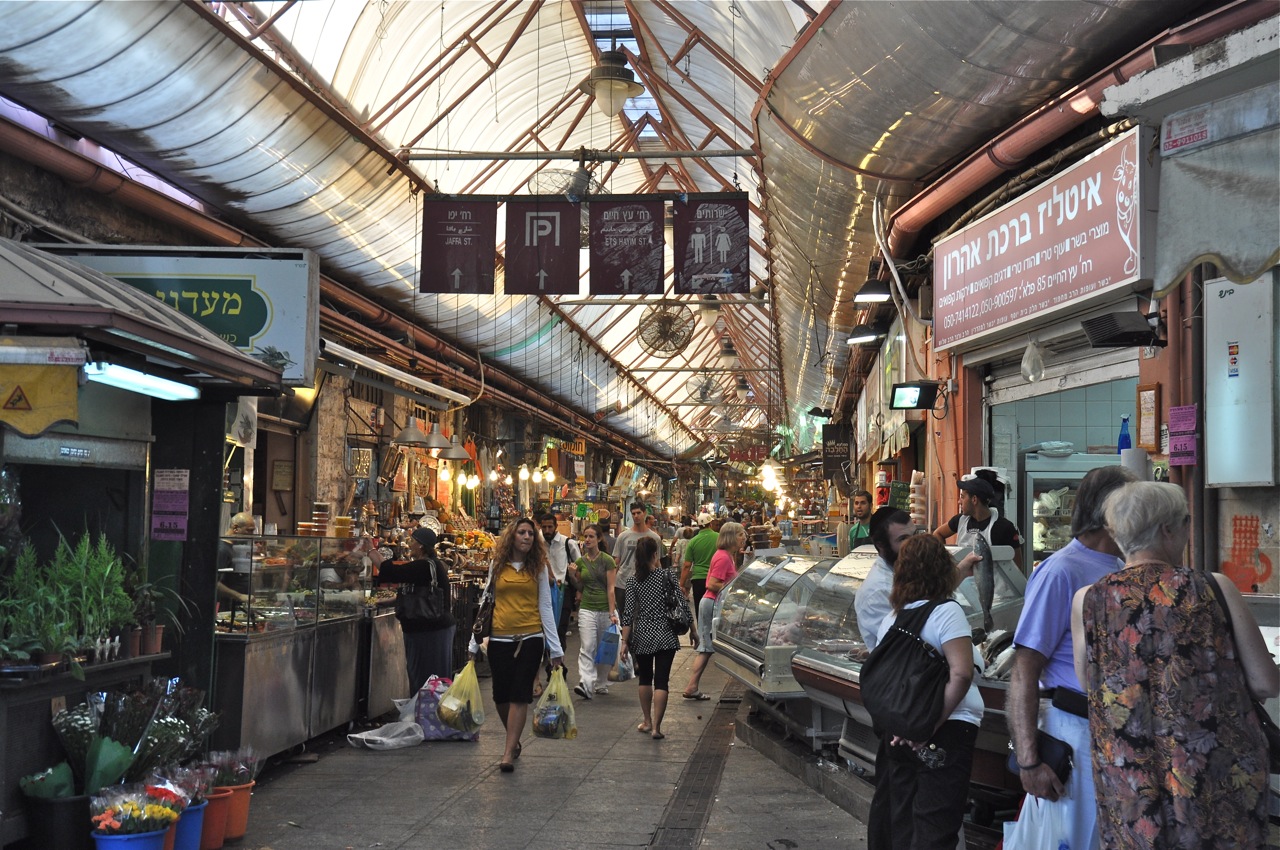
Mahane Yehuda, also just called the Shuk, is an outdoor, covered market (so you can visit even on one of those cold and rainy Jerusalem winter days) that sells fruit, vegetables, grains, legumes, spices, halva, baklava, bread, pastries, chocolate, cheeses, salads, fish, meat, housewares, clothes, flowers – almost any food you could think of.

Mahane Yehuda Market

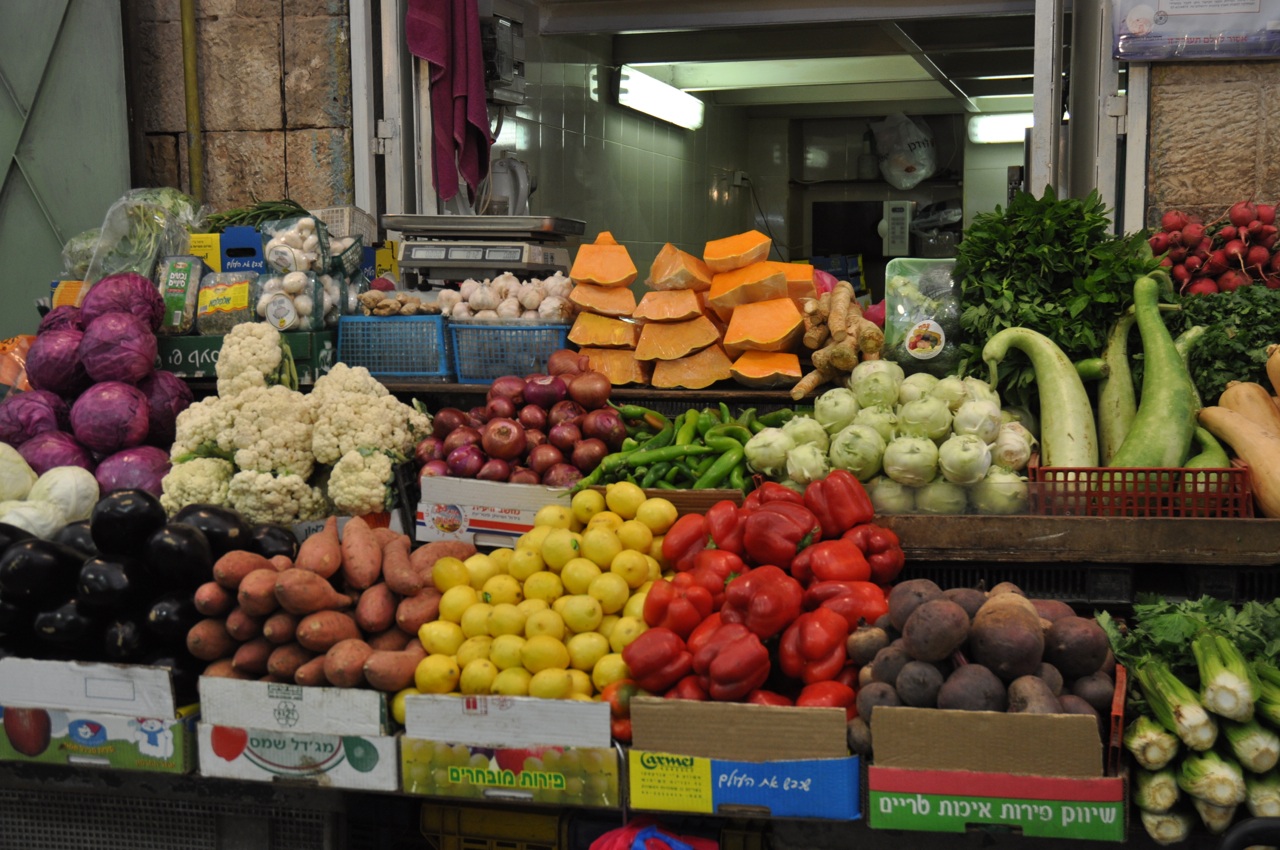
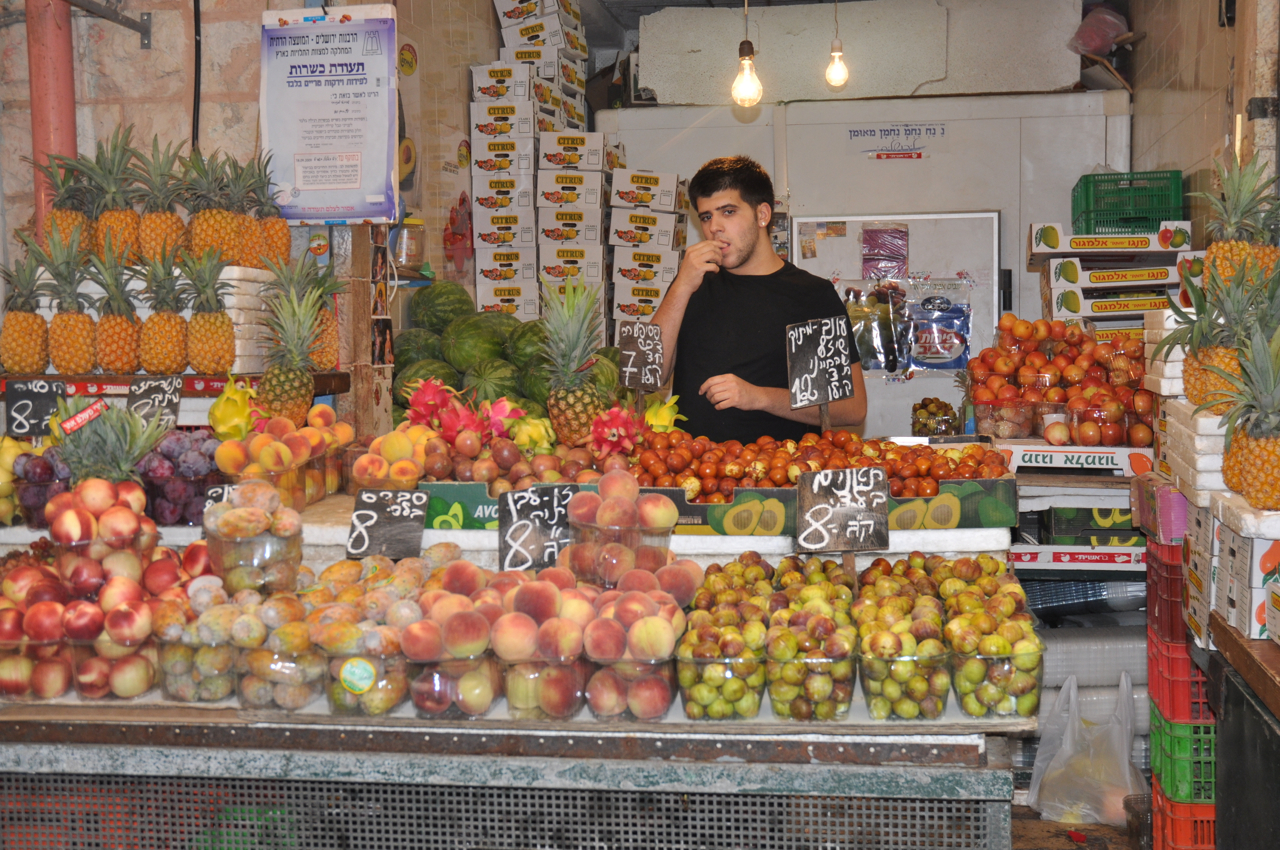
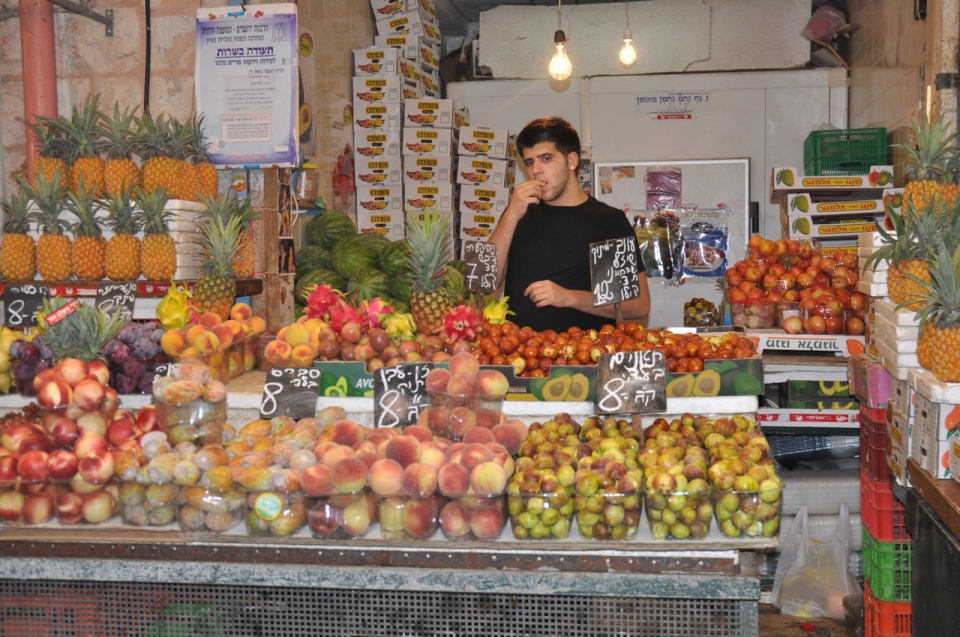
When walking around Mahane Yehuda you stimulate all your senses: sight – check out the arrangements and colors of the fresh fruit and vegetables, sound – listen to the vendors hawking their wares, Middle Eastern music on CDs, davvening/prayers, smell – fresh breads and pastry, taste – free tastes of halva, often new fruit in season, you can always ask if you can have a taste and touch.
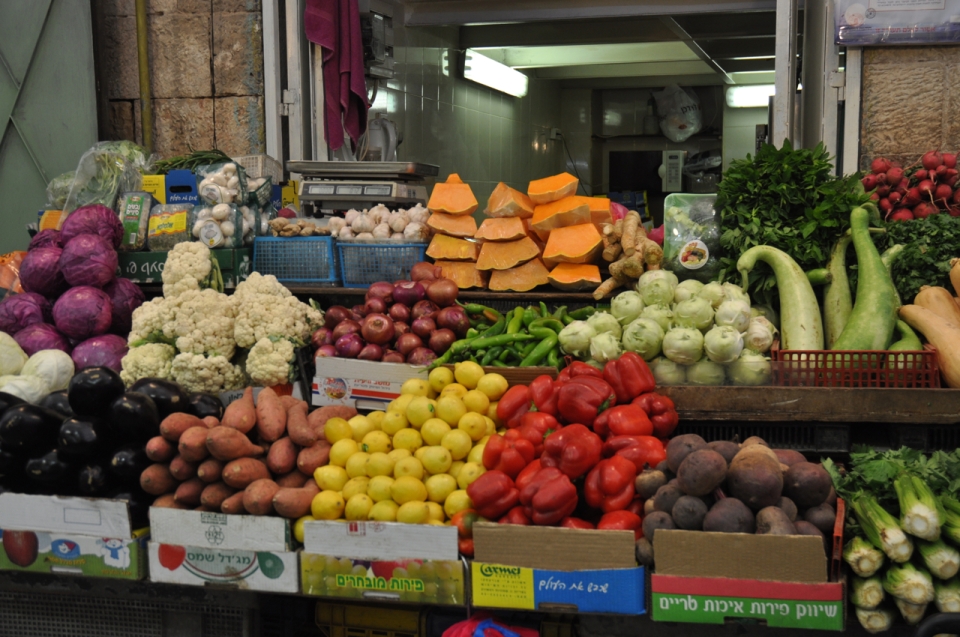
Colors of Vegetables

Tropical FruitThe busiest times are late Thursday and on Friday when many people are buying things for Shabbat but if you don’t mind the bustle you’ll have a great experience. Invited to dinner, the shuk (market) is a great place to pick up something to show your appreciation to your hosts.

The Shuk is bounded by Jaffa Road on the north and Agrippas Street to the south; the 2 main streets of the Shuk are Mahane Yehuda Street and Etz Hayyim Street, with a number of smaller cross streets, named after fruits: Tapuah=Apple, Afarsek=Peach, Agas=Pear, Shezif=Plum, Shaked=Almond, Tut=Berry. If you agree to receive an email with my latest blog post I’m happy to email you my *FREE* map of Mahane Yehuda to help you navigate the market. If you’re interested in learning about the history of the market, discovering and experiencing its specialness rather than exploring on your own then contact me to guide you.

Wine, beer and liquor, both local and imported, are available at a number of stores, the drinking age in Israel is 18 – imbibe responsibly. Israel now produces many fine wines – besides the Golan and Yarden brands, there are smaller boutique wineries all over the country (Galil, Dalton, Yatir, Etzion, Tabor to name just a few) and the prices are a fraction of what you would pay back home. Another great idea is to visit a winery while you are touring Israel and are in the area.

If you’re going to pick up some Israeli wine then why not cheese and make it a party. When I lived in Cambridge MA the corner store we walked to was a Whole Foods and if you’ve ever been to one you know that their cheese department is incredible – it was one of the things that I knew I was really going to miss about living in Jerusalem. And then one day, while walking through Mahane Yehuda I discovered Basher’s, cheeses imported from all over the world (many are kosher, exercise due diligence) plus some fine Israeli cheeses; just for your information they also carry an assortment of artisan breads, fine wines and chocolates. Be careful as it’s easy to spend more money than you budgeted.

If you begin to feel a little hungry, there are a lot of restaurants and cafes where you can sit down and enjoy a meal from hummus and felafel to a full, multi-course meal. Two of my favorites are Topolino, a small, family-run restaurant at 62 Agrippas that serves pasta, pizza and fish dishes (kosher) and Ichikadana, an Indian vegetarian restaurant (kosher) at 4 HaEshkol Street – the cook and owner is originally from India (in either case, please tell them that Shmuel recommended them).

Mahane Yehuda is no longer just a fruit and vegetable market but has gentrified – today there are some fine restaurants and cafes, designer clothes, gift shops.

Addendum:

Teller now has a stall in the shuk in addition to the bakery on Agrippas which now is also a cafe.

HaEshkol Street has some unique eateries: Alfonso, a cafe with some organic items; Bistro Mimi run by a chef from France; Mousseline which may be the best ice cream in Israel and HaKhachapuriya, a cafe with Georgian specialties.

Another artisan bakery at 2 HaDekel, they also have a stall in the market.

Basher has opened a Wine & Cheese Bar at 21 Agrippas Street.
Finding a guide at the last minute

In Hebrew there’s an expression daka tish’im which means at the last minute. I’ve been able to help people who realized at the last minute that they wanted to see a particular site – the best way to do that is to hire a guide who can arrange everything. One couple hoped they would get to visit Herodium, King Herod’s palace/fortress in the desert but it was the day before they were leaving. They searched on Google and found an article I’d written and contacted me. I picked them up at their hotel, drove them to Herodium and guided them. This is what they had to say:

The tour of Herodium was awe-inspiring, largely because of Shmuel Browns, our guide. He is highly knowledgeable, and comes equipped with graphic documentation that fills the gaps of what one sees. He gave us a taste of the detective work of archaeologists. Further, Shmuel is very professional and a real “mensch”.

A businessman was flying to Zurich, Switzerland in the afternoon, but at the last minute he had the morning available so he contacted me to take him around the Old City before his flight (I ensured that we were back in time to meet his taxi to the airport; alternatively, after the tour I can take you to the airport, I’m a licensed chauffeur). So if you have limited time but want to have the fullest experience while here in Israel (good reasons for hiring a guide) I can guide you for as little as ½ day. The tour will be personalized to your interests and you can book at the last minute. If you’re staying in Jerusalem then phone me at +972 53 280 6537 (also WhatsApp or Telegram) when you wake up and tell me what you’d like to do, then you can go for breakfast. If I’m available, I’ll meet you within the hour to start your tour.

Here is what one traveler who hired me shared on TripAdvisor:

First off, I made the very grave error of only booking a private tour guide for one day. That caused me a lot of stress while on vacation. I did a lot of research prior to my departure and based on the forum discussions I decided that one day of touring with a guide would be enough and decided that I was enough of a ‘seasoned’ traveller to be able to guide my party on my own.

The other reason I was swayed away from hiring a guide was the costs involved. I’ve used private guides in China and Africa and the costs for a private guide were very very inexpensive compared to guides in Israel – I had a hard time justifying the $500. per day.

Boy was I ever wrong and was I ever sorry for having listened to the feedback that you can do Israel on your own with a good guide book. This was not the case for me or my travel companions. We found we really needed the professional assistance of a guide for there is just so much a guide book can teach you. Few sights have good signage telling you where you are and what you are seeing or much historical reference. The cost of a guide definitely reflects what you get, an organized and informative visit to a land filled with a very rich narrative history!

If you decide at the last minute that you really do need a guide whether for one day or a week contact me. You can hire an expert, licensed guide at the last minute and for less than $500. per day.

Dead Sea: Hiking and Qumran

For a great day trip from Jerusalem visit the archaeological site at Qumran in the Judean desert. It takes just ½ hour by car to travel the 42 km from Jerusalem and descend the 1170 meters to the northern shore of the Dead Sea. Another option is to take a jeep ride across the desert to the site. Qumran is where scrolls written on parchment were discovered in a cave by Beduin shepherds. Take a guided tour of the site to learn who lived at Qumran, how they were able to live in such an isolated place in the desert without a natural source of water and how they supported themselves.

The settlement at Qumran is named after the wadi (stream bed) that during the winter rainy season brings flood waters via channels to the pools and cisterns dug at Qumran. There is a nice hike in Wadi Qumran where you climb up to the top of the cliffs, along the plateau with great views of the Dead Sea and descend at Ein Feshka – the whole trek takes about 4 hours and can be done by families.

Hiking at Qumran

Hiking up above Wadi Qumran and the Dead Sea.

Hiking Qumran cliffs

Hiking the cliffs above Wadi Qumran with Sumsum.

Complete your day back in Jerusalem by visiting the Shrine of the Book at the Israel Museum to see the Dead Sea Scrolls and other artifacts discovered at Qumran. As your guide I will point out the conceptual design of the building by Kresler and Bartok, described as “a milestone in the history of world architecture”. The combination of experiencing the Qumran site and the very special artifacts discovered there on display at the museum is the key to understanding this historical period.

German Colony Walking Tour

I have lived in Jerusalem, in the German Colony for more than 15 years. We bought our house in 1988 from the widow who had been given it in 1948 when she and her family had fled from Persia and arrived here as refugees. Just in the last 4 years we’ve renovated it twice – I don’t think Mrs. Hakimian would recognize it. The neighborhood too has changed, hardware stores and green grocers have made way for fancy restaurants and shops. Walking down the street you hear English and French spoken as much as Hebrew.

The land that became the German Colony was purchased in 1872 by Mattheus Frank from Arabs in Beit Safafa, as a farm for his father-in-law. Frank came to Israel from Germany in 1867 with a sect of Protestants called the German Templers. Unfortunately, the father-in-law died on his way to Israel and so it was decided to divide the parcel of land into 1 dunam lots and build a colony, planned as a street village, a strassendorf. Even with all the changes you can recognize the same layout today – individual stone houses of one or 2 stories, with gardens surrounded by stone walls, green wooden shutters and red peaked roofs along Emeq Refaim Street. Often on the lintel over the front entrance of the house is a Biblical verse in German. At the entrance to the colony was the gemeindehaus, their community center and house of worship built in 1882.

  • Learn the stories, history, culture, and architecture of this popular Jerusalem neighborhood from a licensed guide.
  • Become acquainted with the personalities and the experiences of the settlers – Germans who came to Israel in 1867 and built one of the first neighborhoods outside the walls of the Old City.
  • Find out about their contributions to the development of Israel and the intrigues that led to their deportation.
Take a guided walking tour of the popular German Colony neighborhood. Contact me to book your tour. Ask about combining a tour with lunch or dinner at one of the restaurants in the German Colony.

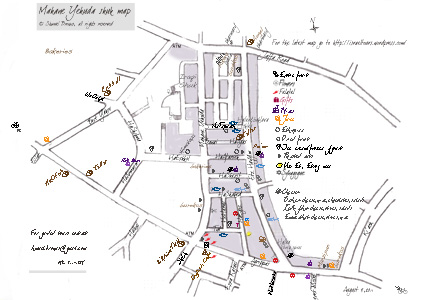
Map of Mahane Yehuda Market

You can tell a lot about a city by whether it has an outdoor market and Jerusalem has a great market. In 1982 for a book called “Israel Sprouts: A Vegetarian Guidebook (to Israel)” I drew a map of Mahane Yehuda to help people find their way around. I scanned that map and added a lot of new information so that it better reflects Mahane Yehuda today – it’s not just a fruit and vegetable market with shops selling dried goods. It has gentrified and there are restaurants and cafes, designer clothes shops, health food stores, artisan bakeries, shops that sell imported cheeses, fine wines, chocolates, halva.

In the 5 years that the map has been on my website, it has been viewed more than 6,000 times. The map is © Shmuel Browns, you are free to use it for personal, non-commercial use as long as you do not modify it. If you have corrections or suggestions please contact me by email.

To help organize the information I’ve separated the information into 3 maps and color coded them, one for restaurants, one for gifts and one for food shopping. To get your FREE copy of the latest maps I’d appreciate it if you would subscribe by entering your email address in the right hand column under FOLLOW BLOG – then just send an email to mahane.yehuda.map at gmail dot com. With these maps in hand you’re ready to head out to explore the shuk on your own or contact me for an insider’s guided tour of Mahane Yehuda. Have fun exploring the shuq.

Some ideas about things to do with the help of this map:

  1. Mid-morning and you went out without breakfast – check out the health food stores on Agrippas Street, buy some fresh fruit, like pineapple, star fruit, kiwis, mangos; try a bureka, a filo pastry with cheese and/or spinach.
  2. Want organic? There is organic produce and products at TevaNet on Agrippas and an organic restaurant on #1 Agas Street, note that Agas is called Banai at Mahane Yehuda Street.
  3. Picnic? Head for one of the stores like Basher or Zedkiyahu and pick up an assortment of cheeses & salads. Get artisan breads at Teller. Wine? Fruit for desert. Walk down Agrippas Street (west, away from town) to the park, Gan Sacher.
  4. Snack – felafel (in our family, the favorite is the brothers Levi on the corner of Mahane Yehuda and Agrippas Street). For hummus try Rachmo, Agas 1 or Azura.
  5. Feel like eating something else – Ichikadana is a vegetarian Indian restaurant on HaEshkol Street, Topolino is a cozy, Italian restaurant, both are family run.
  6. Looking for a present for loved ones back home – check out handicrafts at Roza, pottery at Pri HaAdama, Moroccan crafts at Rika.