Category Archives: Food

Red Canyon

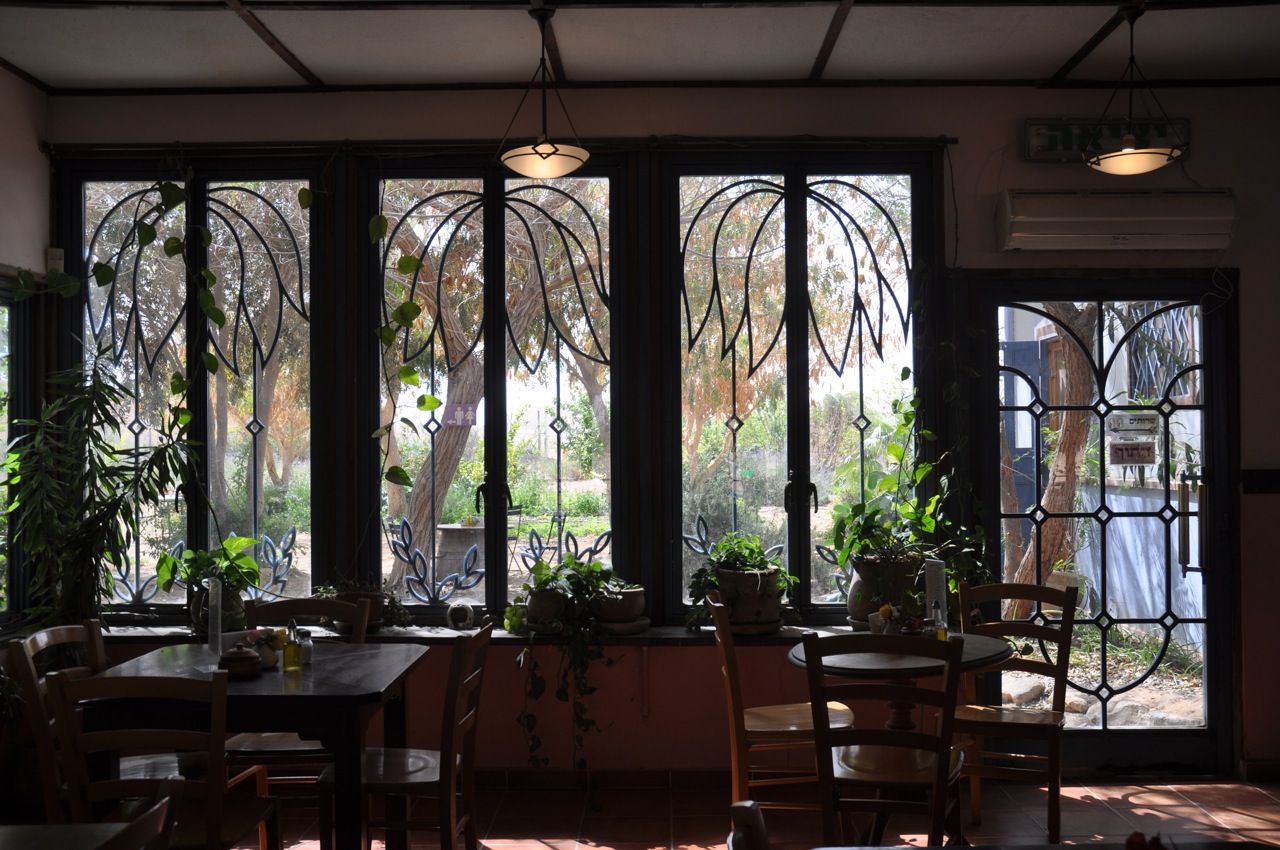
Rather than driving all the way down to Eilat on highway 90 you might want to consider a detour, taking a right onto highway 13 and then a left onto 40 which follows the Israel Trail. After 38 km you’ll come to Shizaphon Junction where you’ll find an organic, vegetarian restaurant run by the folks of Kibbutz Naot Smadar, a lovely place to take a break.

At the Pundak you can also buy products from the kibbutz, artisan goat cheeses, bread, jams, fruit leather, dates and wine – everything you’d need for a picnic. I highly recommend that you try their goats yoghourt ice cream with the homemade apple cake. Mmmm, delicious.

From the junction if you continue on highway 40 you’ll come to the kibbutz itself, like a magical kingdom appearing out of the desert. Many of the kibbutznikim are artists and they’ve built a studio space and gallery that you can visit.

Afterwards retrace your steps and take highway 12. After about 3 km there will be a dirt road to your left that will take you to Shaharut where you can sleepover and go on camel trips. Afterwards retrace your steps and continue on highway 12 south for about 50 km until you see the cutoff for the Red Canyon – Wadi Shani on your left. Follow the dirt road to the parking area.

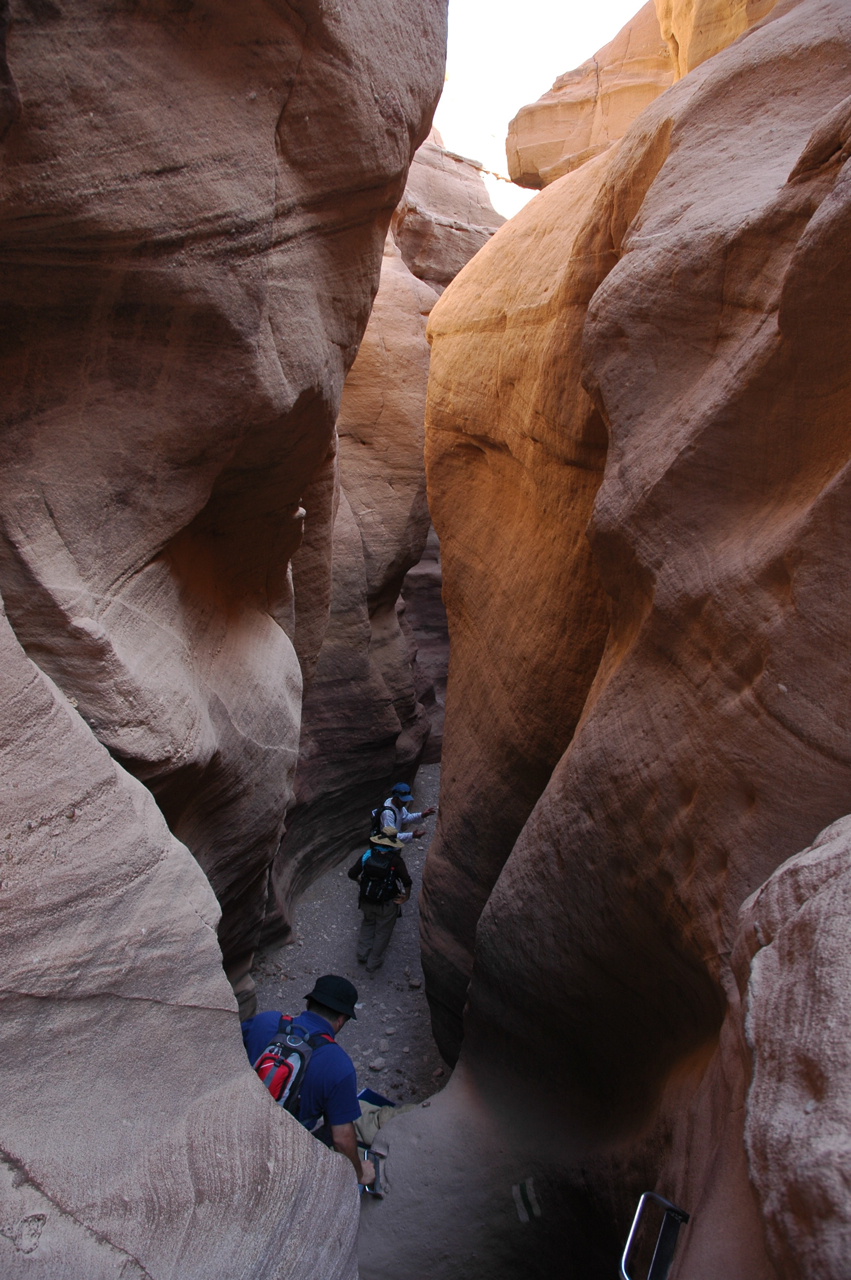
From there you follow the green trail markers and descend into the small canyon, no more than 3 meters in width with a height of up to 30 meters, created over years by water erosion of the sandstone.

Red Canyon

The dominant color of the rock is red with shades of pink and purple. It reminded me of a smaller version of the canyon at Petra. The hike is suitable for families. To return either retrace your steps through the canyon (if there aren’t a lot of people) or climb up out of the canyon where the streambed widens and take the path with a great view of the canyon below. The Red Canyon is one of the places that I recommend to people who are interested in a tour focussed on photography.

If you are continuing to Eilat there are 2 lookout spots that are worth stopping at: Har Hizqiyahu at 838 meters for a view east to the Edom Mountains in Jordan and west to Moon Valley in Egypt and Mount Yoash at 734 meters from which you can see 4 countries on a clear day: Jordan, Egypt, Saudi Arabia and Israel.

What to see in Jerusalem

What to see in Jerusalem and Not Hire a Guide

I’m often asked by people who are planning a trip to Israel what they should do if they have a couple of days to see and experience Jerusalem. Of course, there are many answers, it really depends on what you are interested in. Assuming that this is your first visit, you’ll probably want to start in the Old City so here are my recommendations – note some sites charge an entrance fee.
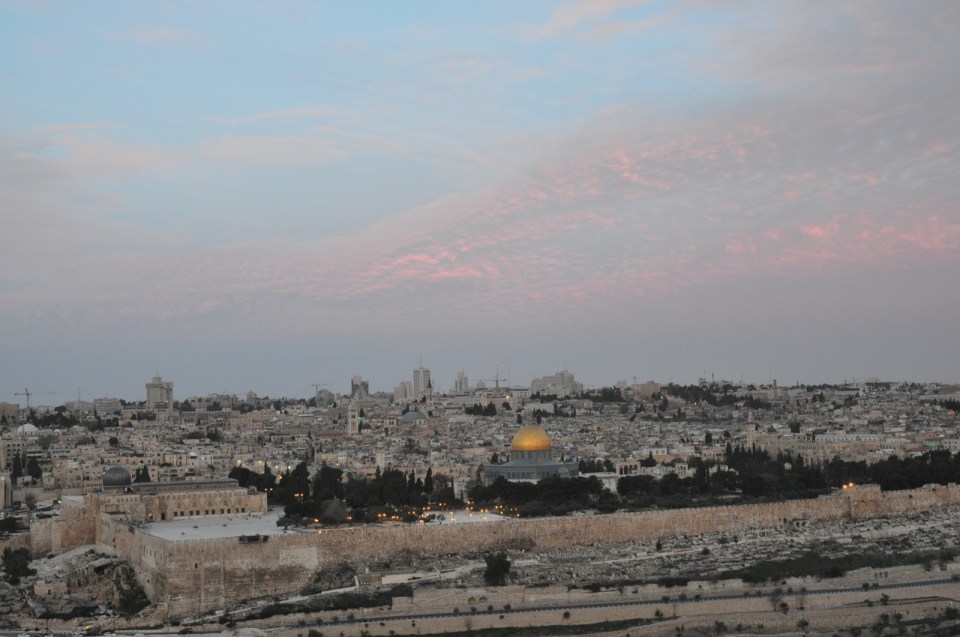
First, drop by the Tourist Information Center at Jaffa Gate, in the Old City and get a free map and a list of sites to see; say hi to Jennifer, she’ll help by marking sites on the map for you and answering your questions. Then walk around, exploring the 4 Quarters, Armenian, Jewish, Muslim and Christian.

Another possibility is to take the Ramparts Walk starting at Jaffa Gate where you actually walk on the walls built in 1537 by the Ottoman Turkish sultan, Suleiman the Magnificent – looking in gives you a birds-eye view of the Old City, looking out gives you a view of the new city.

In terms of churches, I would visit the Church of the Agony/All Nations and the Garden of Gethsemane outside of the city walls, re-enter the Old City at Lions Gate, visit the Church of Santa Anna, a Crusader church with incredible acoustics (try singing Amazing Grace or other liturgical melody). Continue and you will come to Station I of the Via Dolorosa, follow the Via Dolorosa counting 8 stations to the Church of the Holy Sepulcher, the holiest site to Christianity, where Jesus was crucified and buried and according to Christian tradition rose again, stations IX to XIV are at the Church.

Walk through the Arab shuq and take a right at the Cardo to get to the Jewish Quarter. Visit the Wohl archaeological museum to get a feeling for Jerusalem in the Second Temple Period, in the time of Herod and Jesus. If you are interested in more archaeology, then visit the southern wall excavations at the Davidson Center; there is also a movie that describes life at that time.

Visit the Western Wall, the holiest site to Judaism, write your prayer on a paper and tuck it into a crack in the stones of the wall. Try to reserve a Western Wall Tunnel tour in advance, either on their website (if you know some Hebrew) at http://english.thekotel.org/VisitorInfo.asp?id=1 or you can call them at (02) 627-1333 between 8:30-17:00.

It’s worth taking a guided group tour of the City of David – exit the Old City through Dung gate, take a left and then right and the entrance is on your left. If you have “water” shoes and aren’t claustrophobic, you can even walk 45 minutes through Hezekiah’s Tunnel with water up to your knees (you’ll need a flashlight which you can buy at the site or use your cell phone), which is quite an experience.

You might want to walk up onto the Haram el Sharif to see the Dome of the Rock and al Aqsa mosque (the third holiest site to Islam) close up (the Muslim Waqf won’t allowed you to enter them unfortunately) but if so you’ll have to do it in the morning and it takes between 1/2 and 1 hour to pass through security at the entrance to the Western Wall Plaza. Make sure you have no religious articles, prayer books or Bibles and no Swiss Army knife, etc. with you – they will be confiscated.

The new Israel Museum is open after extensive renovations and it is now much easier to find your way (for more information check out my blog entry) – the Archaeology wing has been completely redone, the Ethnography section has been expanded and called Jewish Life and the Art gallery includes a new section on Israeli art. The museum includes the Shrine of the Book, where the Dead Sea Scrolls and other artifacts from Qumran are on display. From the same period, the Holyland model of Jerusalem is now housed on the museum campus. If the weather is cooperative, walk around and enjoy the sculpture garden. If you’re interested in archaeology, you can also visit the Rockefeller museum (on the same admission, there’s even a shuttle bus) which will get you back to the Old City.

For an overview of Jerusalem, there’s a red double-decker bus that takes you for a 2 hour audio tour (explanations in 8 languages) of the whole city:
http://city-tour.co.il/ntext.asp?psn=8375

The Arab shuq/market and the Mahane Yehuda market are great places to get a feel for Jerusalem. There’s the Ben Yehuda Street pedestrian mall, called the Midrahov, and at the bottom Zion Square and the pubs, restaurants and boutique galleries in Nahalat Shiva. There’s live music at the Yellow Submarine in Talpiot.

Explore the German Colony: for a local movie theater from the British Mandate period with restaurant/pub check out the Smadar; for artistic films, check Cinemateque. For music, dance and theater try the Mabada. There are plenty of places to eat in this neighborhood (including my house 8-))

All this without hiring a guide, but to be fair how about reading my post, Why hire a guide?

Jaffa

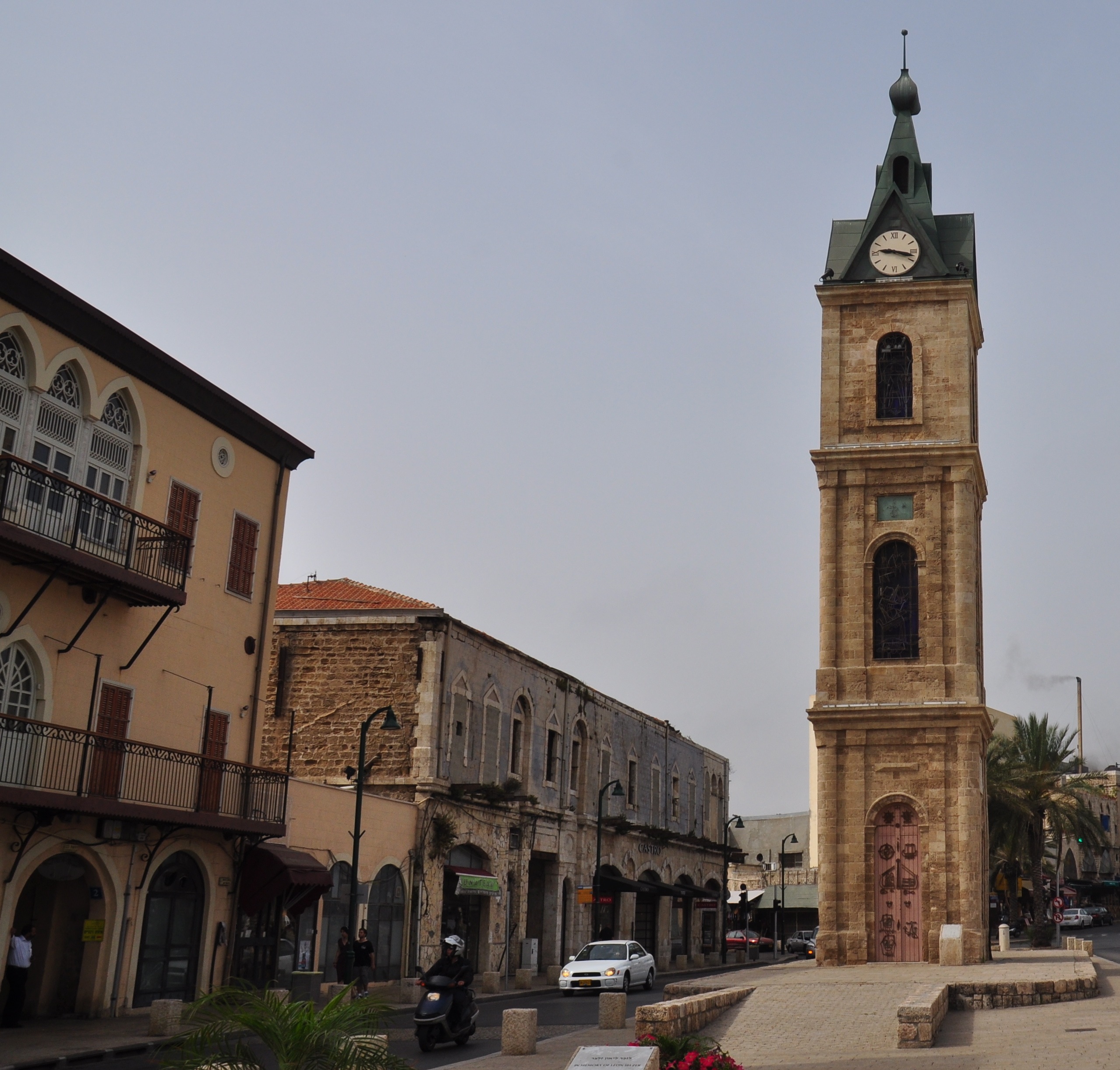
If you want to meet up with a friend in Jaffa all you have to say is “Meet you at the clock tower”. The clock tower in Jaffa is one of seven built by the Ottoman Turks in 1908 on the occasion of the silver jubilee of the reign of the Sultan abd al-Hamid II. From there you can explore the Flea market and shops and restaurants. There’s a funky restaurant called Pua on 3 Rabbi Yohanan Street. For what some people swear is the best humus go to Abu Hassan’s. For a truly middle eastern taste try the stuffed breads at Abulafiya’s.

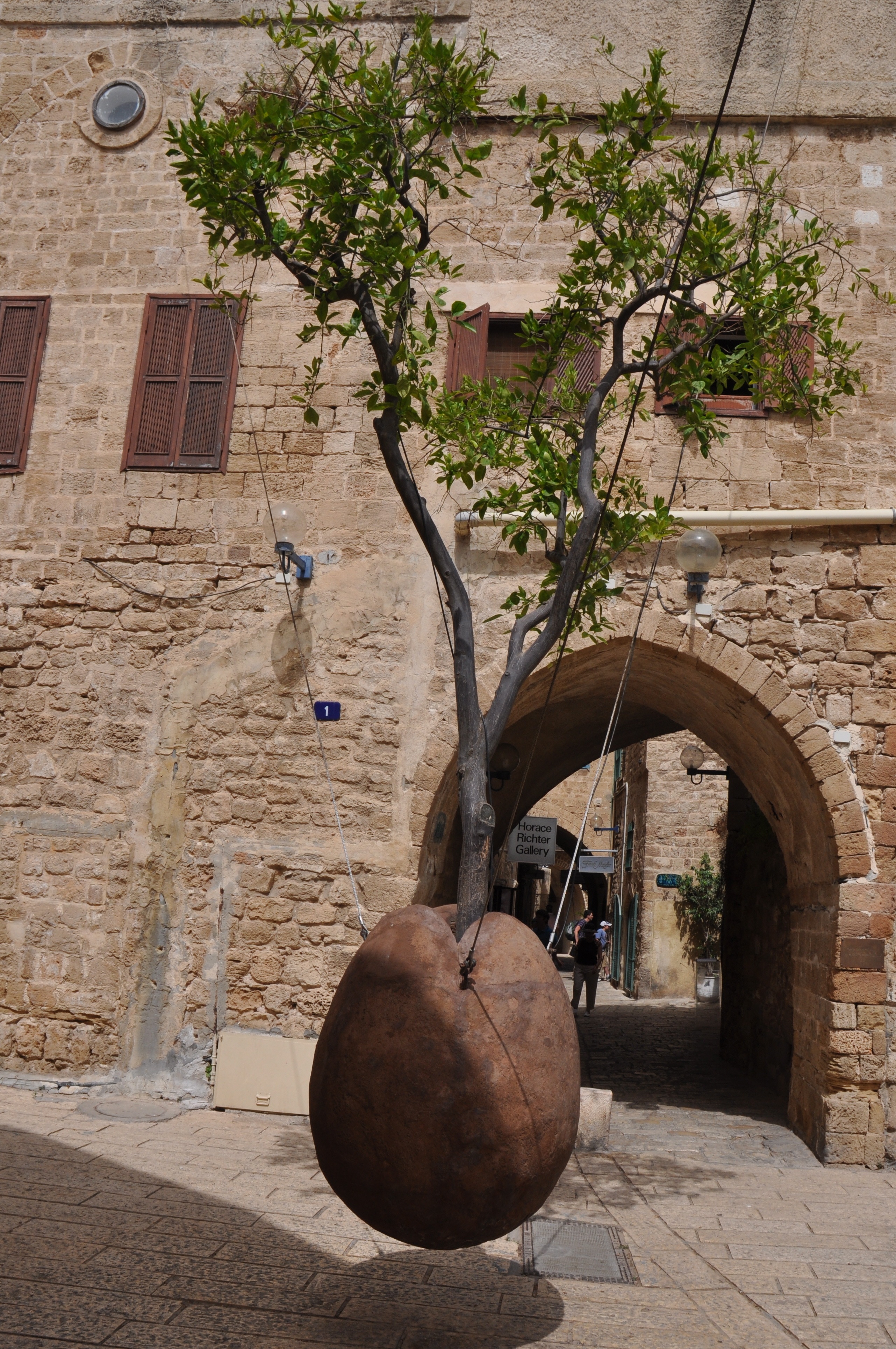
There is something else that Jaffa is known for and that is the shamouti orange which is known throughout the world as the Jaffa orange. The shamouti was a new variety developed by Arab farmers after first emerging in mid-19th century Palestine as a mutation on a tree of the Beladi variety near the city of Jaffa. Orange exports grew from 200,000 oranges in 1845 to 38 million oranges by 1870. Today the orchards described by a European traveller in 1872  “Surrounding Jaffa are the orange gardens for which it is justly extolled…” have disappeared in the face of urban development. But walking through the alleyways of Jaffa you can find an incredible sculpture by the environmental Israeli artist, Ran Morin, called Orange Suspendu that reminds us of the connection between the city of Jaffa, the earth and the orange tree and its fruit. Morin has 2 other tree sculptures that are worth seeing in Jerusalem, one at the Hebrew University on Mount Scopus and one in the Olive park near Kibbutz Ramat Rahel.

From Jaffa, walk north along the promenade to Neve Tzedek, the first Jewish neighborhood that was established outside the walls of Jaffa in 1887 and that some 20 years later grew into the new city of Tel Aviv. Along the way drop in to the old Jaffa train station, that is being renovated and developed into a cultural, artistic and commercial area. For a guided tour of Tel Aviv-Jaffa please contact me. It’s possible to incorporate riding a Segway along the whole length of the promenade as part of your tour.

Nimrod, Golan

The alarm clock went off at 5am Sunday morning. We were to drive our 2 sons, Amitai and AdirChai and his friend Ariel, from Jerusalem to the Hermon to hike the Golan Trail. We had 2 days to explore the area.

Day 1: Nimrod
After seeing the boys off, we drove to Nimrod, just 5 families on the southern slope of the Hermon and at 1110 meters above sea level, the highest settlement in Israel.  There is a great view of Birkat Ram to the south-east and the Nimrod fortress to the west. As you enter, there’s a blue boxy concrete building, a gallery of paintings by Diego Goldfarb and next to it a restaurant (not kosher) called the Witch and the Milkman. They carry artisan cheeses from the HaNoked Dairy and give tastes. We bought two cheeses, a hard Tome style (French) goat cheese treated with red wine and a Manchego like (Spanish) sheep’s cheese treated with Chardonnay to go with the crackers I had made (I think I’m the only tour guide who bakes homemade organic whole wheat crackers to share with my clients).

DSC_0124

From there we drove 8 km to the Nimrod fortress off of highway <989>, part of the Parks Authority with an entrance fee of 20 NIS per person.  The fortress controlled one of the main roads that ran from Tyre to Damascus. It was built around 1229 by the Ayyubid ruler Al-Aziz Uthman, nephew of Salah ad-Din. Later additions by the Mameluk sultan Baybars in 1260 (actually his second in command Bilik) are commemorated by a large, beautifully carved inscription in Arabic.

DSC_0071.JPG

Also found was a stone relief of a very cute looking lion, the symbol of Baybars.

DSC_0128

The fortress is the largest in Israel and includes a large water cistern and a donjon (keep), surrounded by a moat, probably the two most important things against a siege.

There are 2 incredible things about this fortress that I experienced when I visited it for the first time on the guide course:

  1. I took this photo of the arch above the entrance to the northwest tower where a number of stones have slipped due to an earthquake in 1759 and are hanging suspended to this day.
    DSC_0075.JPG
  2. Nearby is the vaulted stairway  of the secret tunnel. I noticed that it was quite damp and in looking up I saw stalactites growing from the ceiling and I understood that since the fortress is built of limestone from the Hermon (as opposed to the basalt of the Golan) the water seeping through is dissolving the limestone blocks just like in a natural cave.
    DSC_0142

Nature and Nurture

You’re on vacation. It might seem weird to shop for food in the local outdoor market of a foreign country and then go to someone’s house that you don’t know and cook up the produce you just bought, set the table and serve. But it’s a lot of fun for the whole family and you don’t have to do the dishes afterwards. After eating out at restaurants, day after day, it can be a refreshing break and in this case, you’re being invited to a renovated 100 year old house in Abu Tor, a mixed Jewish and Arab neighborhood that was right on the border between Israel and Jordan from 1948 to 1967 with a great view of the Old City. In consultation with Ruti Yudecovitz of Shuk and Cook you choose what you’ll be preparing for dinner then you all head out to Mahane Yehuda market to buy the ingredients and then come back to Ruti’s and prepare the meal. Then when everything is ready, you sit down with a glass of fine Israeli wine and enjoy your meal. A unique Israel experience.

And if you are interested in tasting locally prepared foods and visiting other areas in Israel, Orly Ziv of Cook in Israel offers a number of culinary tours, one day tours in Tel Aviv and Jerusalem and a two-day tour of the Galilee, including accommodation at a boutique hotel and traditional hospitality and dinner in an Arab-Israeli home. Each tour includes a cooking lesson or workshop where you will not only learn about cooking in Israel and Israeli cuisine, but prepare a full meal using local and in season ingredients to be enjoyed by all.

DSCN3153

These culinary focused tours can be combined with nature tours throughout Israel. In the hills of Jerusalem and in the Galil we can harvest zatar, the green oregano-like herb (hyssop in English) used in Middle Eastern cookery.

DSC_0007

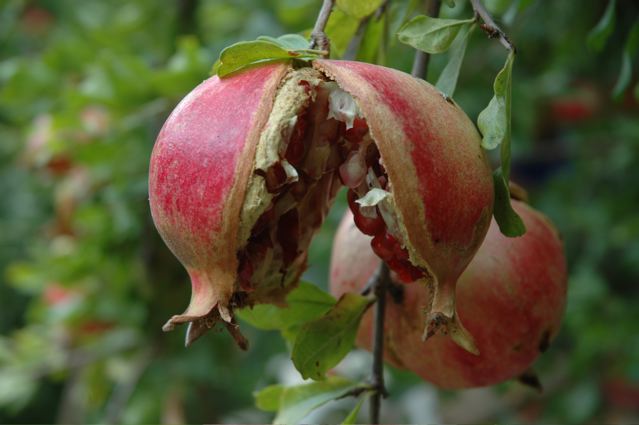
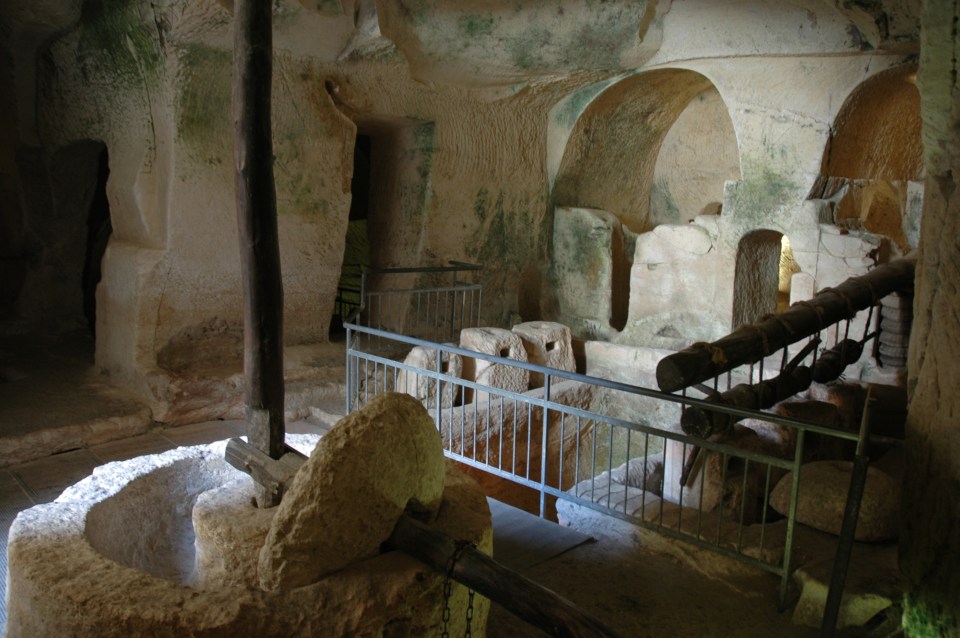
Depending on the season we will be able to find the 7 species that grow here: wheat, barley, grapes, figs, pomegranates, olives and oil and dates (honey). Vines are grown throughout Israel – you’ve probably heard of the vineyards growing in the volcanic soil of the Golan but there are also vineyards in the Galil, the hills of Jerusalem, the Shfela and even the plateau of the Negev. There are some 200 wineries throughout Israel and most encourage you to visit and taste their wines. There are also olive presses that go back thousands of years that we can find on our hikes and we can visit places to learn how olives are pressed into oil today.

DSC_0025

Brandy

DSC_0023

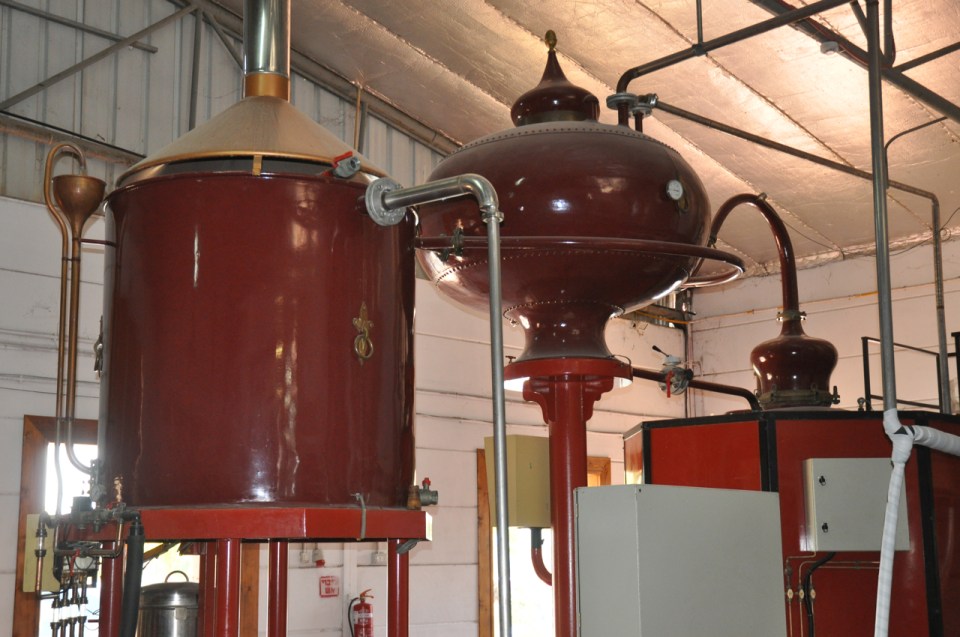
In a previous post about wine tours I mentioned that one of the unique things about the Tishbi winery is that it makes a fine brandy, 40% alcohol, aged 12 years in oak barrels giving it “a beautifully golden rich and smooth experience of oak and vanilla overtones, blended with delicate floral and hazelnut scents”. Tishbi does this by distilling its own wine from the finest Columbard grapes in a 1912 Remy Martin original charentais alembic (a fancy way to say a melon-shaped distilling apparatus), a contraption that looks right out of Willy Wonka.