Dead Sea – Lowest Place on Earth

From Jerusalem (elevation of 750 meters above sea level) it is about a half hour drive, on routes <1> and <90> down to the northernmost end of the Dead Sea (elevation 420 meters below sea level), the lowest place on earth. As the highway continues along the western shore of the Dead Sea you will pass Qumran, Ein Gedi, Masada, Ein Boqeq and the Dead Sea Works. There are numerous places along the route to take photos of the Dead Sea and the mountains that rise above it. In one day I took almost 150 photographs, filling all 3 of the CompactFlash cards (digital film) that I had with me, more photos than I have ever taken in one day.

It is very hot in the Judean desert so a stop for a dip at the springs at Ein Gedi is delightful. While enjoying the cool water pool in Nahal David, a family asked if I would take a photo of them under the falls – little did they know that they were getting someone who was so practised. With a little patience you will be able to observe the wildlife that lives in the reserve: hyrax, ibex, tristram grackle and red dragonfly.

If you drive along the Dead Sea in the late afternoon you will be able to watch the setting sun as it paints the blue-green sea different colors of pink and purple. This photo is at Ein Boqeq – only as I was focussing on my composition in the viewfinder did I notice the full moon rising over the mountains of Moab.
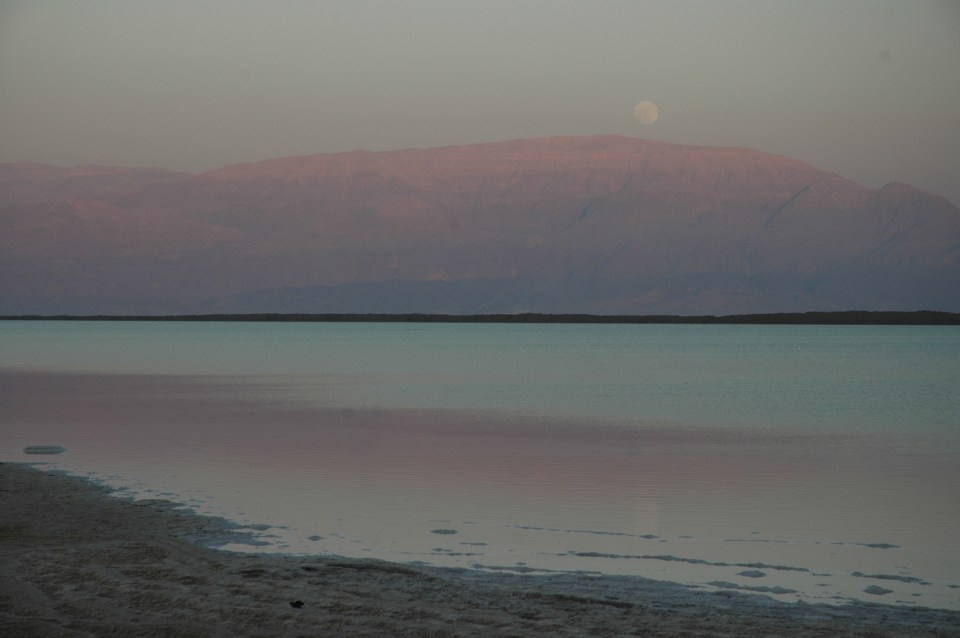
Moonrise over Dead Sea at sunset
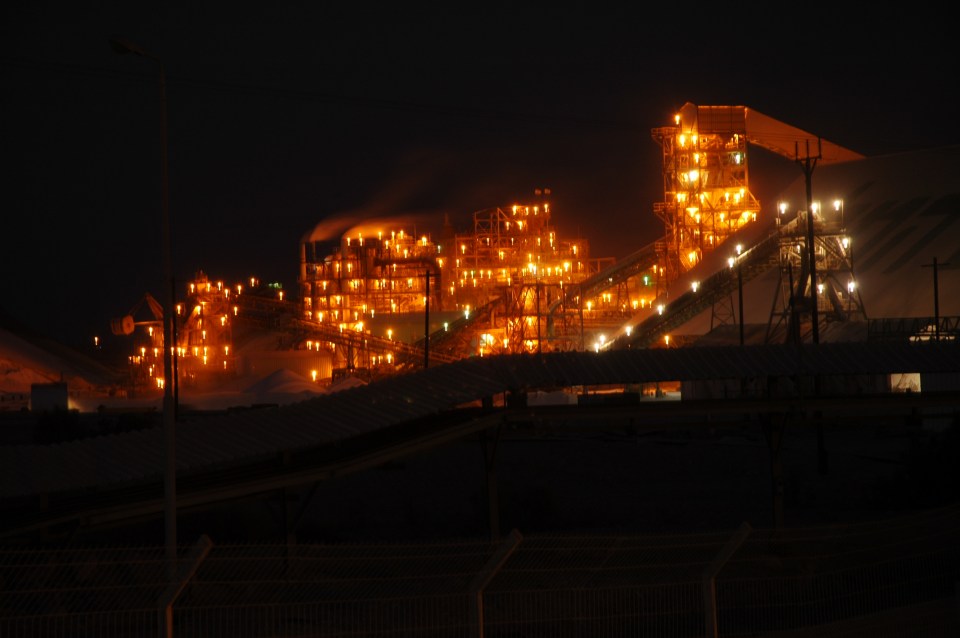
From there it is a short drive south to the Dead Sea Works, these are a series of photos of the industrial complex as night fell.
Full moon over Dead Sea Works
Nightfall at Dead Sea Works
Dead Sea Works lit up at night

I would be happy to arrange a tour and guide you if you want to focus on Israel through a camera lens.

In the last 3 years I’ve taken more than 4000 photographs in Israel. In July I am going to Kathmandu, in the foothills of the Himalayas, the highest place on earth–I am looking forward to an exhibit of my photos “From the Lowest Place on Earth” that will be on show there in August. To view the photos click here.
Tour of Herodium and Herod’s Tomb

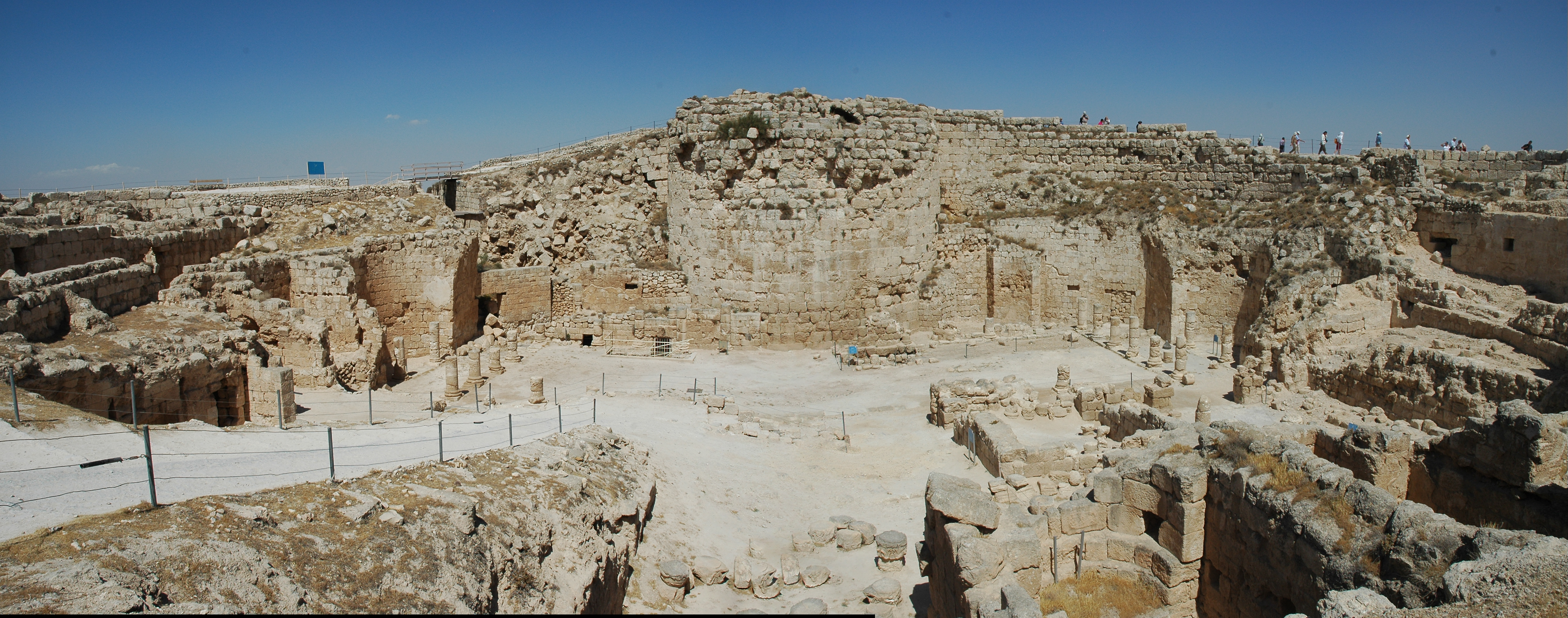
herodium mountain top palace fortress panorama

Panoramic view looking down into Herod’s palace-fortress

A guided tour of an archaeological site like Herodium can be a unique birthday present for a friend or family member. It was a hot and sunny day but there was a cool breeze on the mountaintop and you could understand one reason why Herod would have chosen this site.

When I guide Herodium I often start in the Old City to show people the remains of the buildings at the Wohl museum and the stones of the walls and streets from the Herodion period along the western wall below Robinson’s Arch. Also, the Herodion stones forming the base of the tower at the Roman Gate are impressive. Seeing examples of Herod’s architecture help people know what to look for when we get to Herodium.

Last summer, I participated for a few days in the latest excavations that Ehud Netzer is leading on the eastern side of the mountain, excavating the tomb area. We were working on the pool and besides many pottery shards we found some catapult stones (size of snowballs, not to be confused with the larger ones rolled down from the walls by the Jewish rebels) and some coins from the Great Revolt.

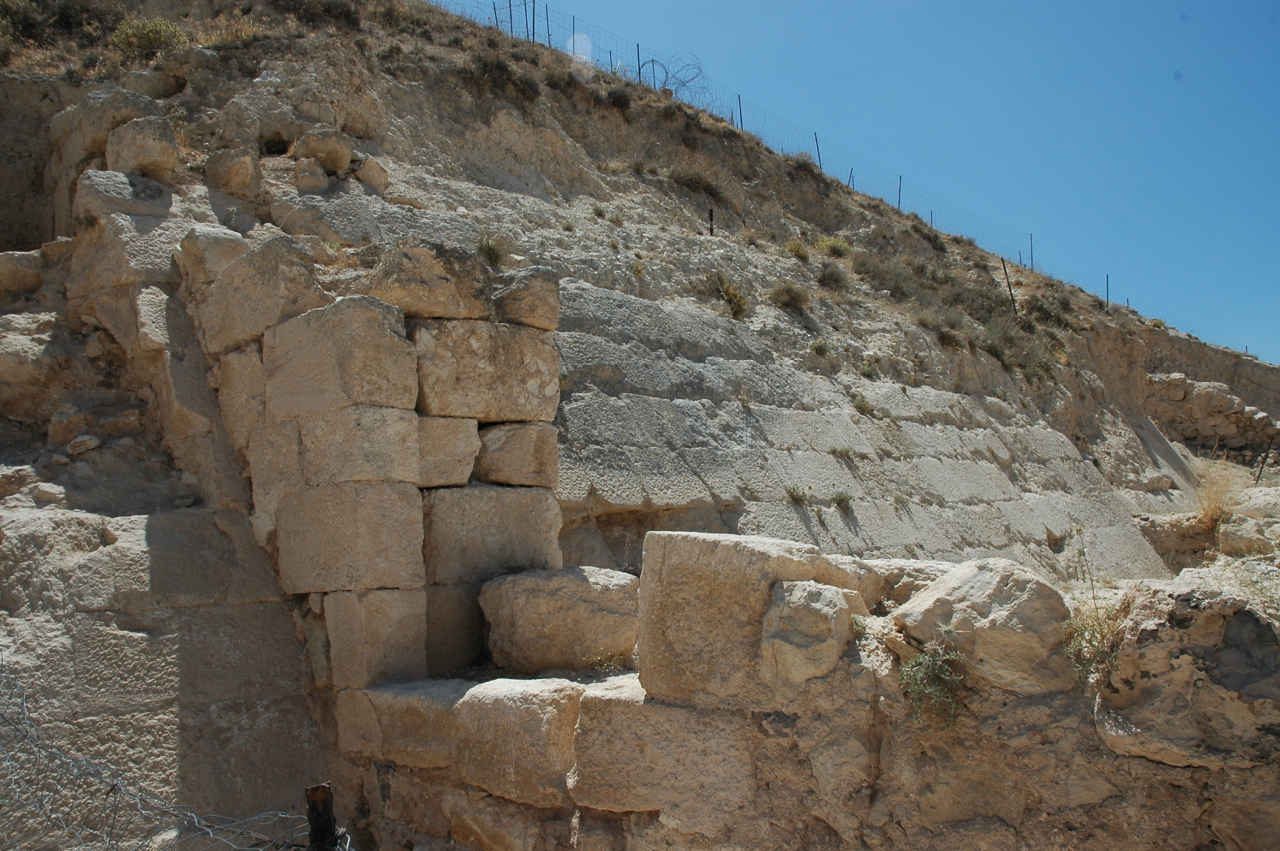
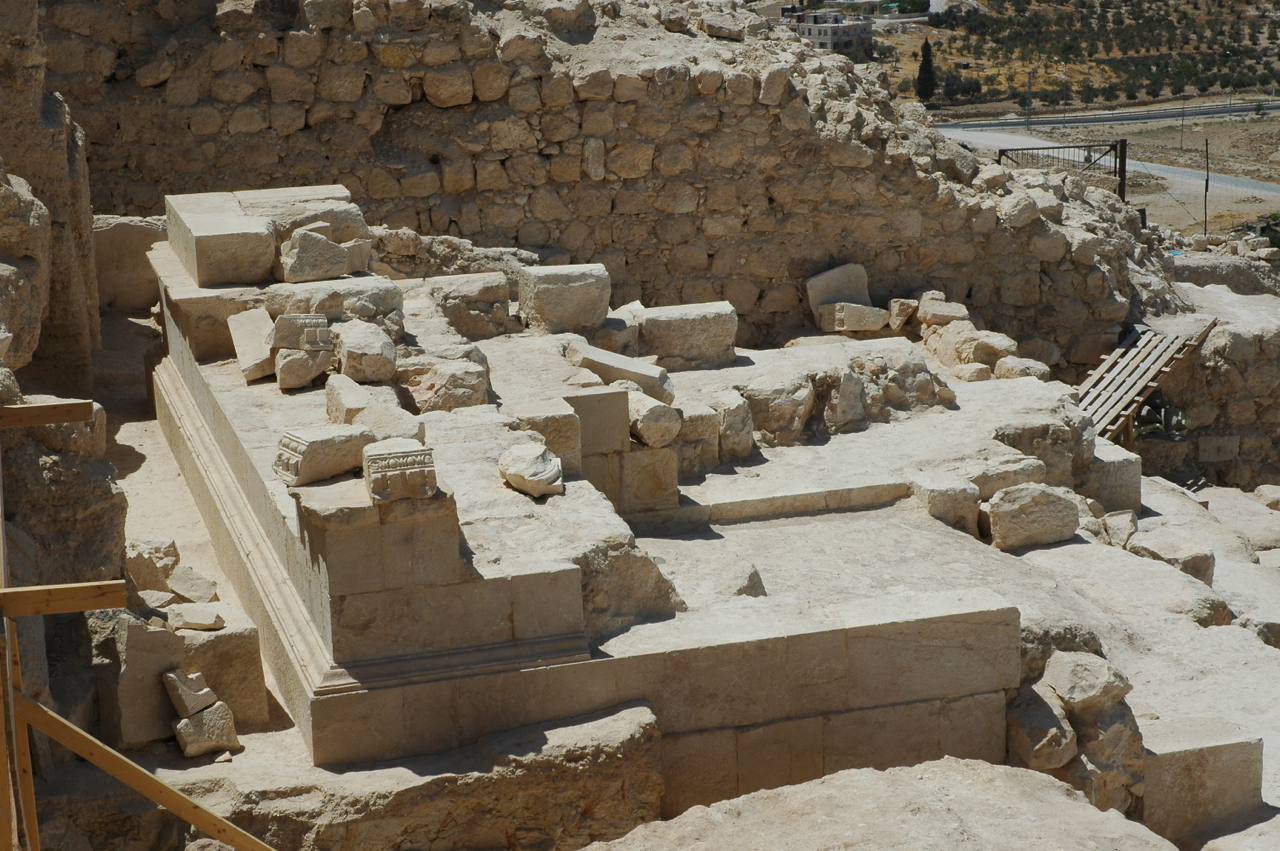
Excavations are continuing and they’ve excavated a much larger area now. More of the base of the mausoleum is now exposed. Additional stone architectural details of a very high quality can be seen. These are not of the local soft limestone but a more royal stone, called meleke, that would have been quarried some distance away and brought here. Netzer thinks that the base supported a nefesh or monument, cylindrical in shape, something like Yad Avshalom in the Kidron Valley.

Tomb area at HerodiumThe latest findings are changing our understanding of Herodium. For example, it seems that the earth that was piled up around the mountain palace/fortress is not from the time of Herod but later. Originally, there was a glacis, a sloping wall, that circumvented the mountain.

Glacis at Herodium

Also, the archaeological evidence suggests that the staircase that is described by Josephus “and provided an easy ascent by two hundred steps of the purest white marble” was built later, that originally there was a “snake path” like at Masada. Archaeologists are left with some interesting unanswered questions: When was it done, why and by whom?

I’ve uploaded additional photographs of Herodium to Flickr at http://www.flickr.com/photos/27944012@N06/sets/72157615671440473/

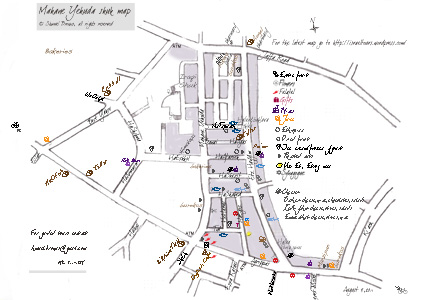
Map of Mahane Yehuda Market

You can tell a lot about a city by whether it has an outdoor market and Jerusalem has a great market. In 1982 for a book called “Israel Sprouts: A Vegetarian Guidebook (to Israel)” I drew a map of Mahane Yehuda to help people find their way around. I scanned that map and added a lot of new information so that it better reflects Mahane Yehuda today – it’s not just a fruit and vegetable market with shops selling dried goods. It has gentrified and there are restaurants and cafes, designer clothes shops, health food stores, artisan bakeries, shops that sell imported cheeses, fine wines, chocolates, halva.

In the 5 years that the map has been on my website, it has been viewed more than 6,000 times. The map is © Shmuel Browns, you are free to use it for personal, non-commercial use as long as you do not modify it. If you have corrections or suggestions please contact me by email.

To help organize the information I’ve separated the information into 3 maps and color coded them, one for restaurants, one for gifts and one for food shopping. To get your FREE copy of the latest maps I’d appreciate it if you would subscribe by entering your email address in the right hand column under FOLLOW BLOG – then just send an email to mahane.yehuda.map at gmail dot com. With these maps in hand you’re ready to head out to explore the shuk on your own or contact me for an insider’s guided tour of Mahane Yehuda. Have fun exploring the shuq.

Some ideas about things to do with the help of this map:

  1. Mid-morning and you went out without breakfast – check out the health food stores on Agrippas Street, buy some fresh fruit, like pineapple, star fruit, kiwis, mangos; try a bureka, a filo pastry with cheese and/or spinach.
  2. Want organic? There is organic produce and products at TevaNet on Agrippas and an organic restaurant on #1 Agas Street, note that Agas is called Banai at Mahane Yehuda Street.
  3. Picnic? Head for one of the stores like Basher or Zedkiyahu and pick up an assortment of cheeses & salads. Get artisan breads at Teller. Wine? Fruit for desert. Walk down Agrippas Street (west, away from town) to the park, Gan Sacher.
  4. Snack – felafel (in our family, the favorite is the brothers Levi on the corner of Mahane Yehuda and Agrippas Street). For hummus try Rachmo, Agas 1 or Azura.
  5. Feel like eating something else – Ichikadana is a vegetarian Indian restaurant on HaEshkol Street, Topolino is a cozy, Italian restaurant, both are family run.
  6. Looking for a present for loved ones back home – check out handicrafts at Roza, pottery at Pri HaAdama, Moroccan crafts at Rika.

Christian 4-day itinerary

This is a sample multi-day itinerary that I created for a woman who was traveling with her 16 year old son. They have a family tradition that for the child’s 16th birthday s/he can choose a destination that s/he would like to visit. This son choice Israel. I met them at Masada on their way from Eilat to Jerusalem.

“Thank you for helping to make our trip to Israel so memorable!
Without your vast grasp of the beautiful land of Israel and Jerusalem we would have been lost…
Thanks for your great service. Take care and good luck with your guiding.”
Day 1
  • Masada
  • Dead Sea: PEF marker, sink holes
  • Qasr el Yahud baptismal site
  • Saint George’s monastry, Wadi Qelt

Day 2

  • City of David: Hezekiah’s tunnel, Siloam Pool, Herodian street
  • Walking tour of Old City
    • Arab shuq
    • Roman Cardo, Madaba map
    • Mount Zion: Dormition Abbey; King David’s Tomb; Last Supper


Day 3

  • Peace Forest at Ramat Rahel and archaeological excavations
  • Israel Museum: 2nd Temple model; Shrine of Book
  • Mahane Yehuda
  • Back to Old City
    • Bethesda Pools; Church of Santa Anna
    • Tomb of Virgin Mary in Kidron valley
    • Garden of Gethsemane; Church of the Agony
    • Via Dolorosa
    • Church of the Holy Sepulcher

Day 4

  • Emmaus
  • Trappist monastery at Latrun
  • Walking tour of Jaffa
  • To airport

Fastfood Slowfood

I was doing some guiding in the Old City yesterday and as lunch time came around I began to think about a little fastfood, how about hummus, my favorite is with snobar, toasted pine nuts. Which hummus place should you choose? Everyone has their favorite so here are some of mine:

  1. Old City: a small place, there’s no sign but on the bill is written Cafeteria Ziad, on the right just up from Station VII of the Via Dolorosa (peek in and notice the column, in the exact place where it stood on the Roman Cardo). Lena is along the same street past Station VIII, on the left. Abu Shukri is on el Wad Street at Station V of the Via Dolorosa.
  2. Jerusalem: Pinati, on Melekh George Street corner of HaHistadrut (one block from the Midrahov, the pedestrian mall). Check out the photos of celebrities who have eaten there.
  3. Jerusalem: Rachmos, in the Mahane Yehuda market on 5 HaEshkol Street (see the map of Mahane Yehuda here). A lot of their clientele are still people who work and shop in the market.
  4. Jerusalem: Azura, in the Iraqi shuk area of Mahane Yehuda, a family-run restaurant serving hummus and meat dishes.
  5. Jerusalem: Hummus Bar, way down Agrippas Street, left side walking west, towards the park, Gan Sacher.
  6. Jerusalem: Hummus Ben Sira because it’s at 3 Ben Sira Street.
  7. Tel Aviv: On our way  to Jaffa we found a small restaurant, Aba Gil, that serves soups, salads, bulghur, and hummus, organic, with whole wheat pita. 55 Yehuda HaLevi Street, 03 566-3320 and even its own website here.

If it’s a special occasion you want something more creative, more unique as a repast, food prepared with intention – slowfood. Then the place to go in Jerusalem is Eucalyptus in Hutzot HaYotzer, the artists colony just across from Jaffa Gate, to have a taste of chef Moshe Basson’s Biblical cooking.

One afternoon, a Jewish chef and a Muslim chef got together to cook for peace. Moshe Basson of the Eucalyptus restaurant in Jerusalem and Nabil Aho of the Restaurant Notre Dame of Jerusalem Center made a menu from traditional Biblical food, including green wheat soup and musakhan chicken with hummus (and let’s just say it was the best hummus I ever tasted).”

Negev touring and Dead Sea

Here’s a 2-day itinerary to explore and understand the desert.

Day 1 – Arad to Avdat: geology, water and Nabateans
  • Ein Yorqeam
  • Makhtesh HaGadol: colored sand, petrified trees
  • Ben Gurion’s tomb
  • Lake Yeruham, we saw 1000s of storks
  • Avdat, Nabatean/Byzantine city
  • overnight at Carmei Avdat (on cheese/wine route) on site of Nabatean farm, rock drawings, wine tasting
Day 2 – Negev to Dead Sea to Jerusalem
  • Makhtesh Ramon: HaMinsara – black prismatic rocks, Ein Saharonim – Nabatean caravanseri on the Spice route,
  • Synagogue at Ein Gedi from Roman/Byzantine period
  • St George’s monastery, perched on the cliff at Wadi Qelt