Golan Wineries

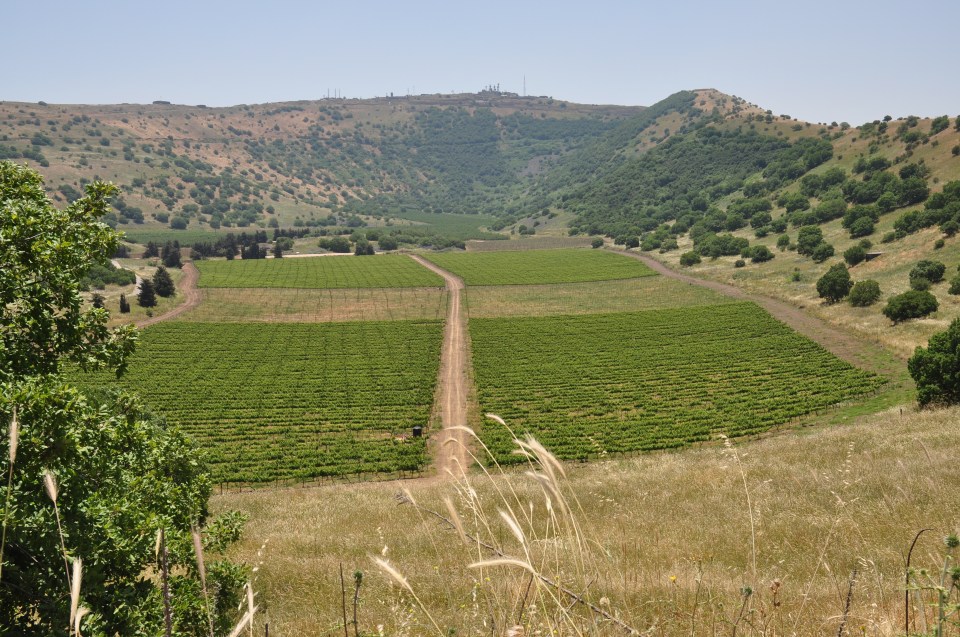
When you are planning to do some touring up in the Golan it is worth including a visit to some of the vineyards that have been planted in the volcanic soil that is unique to this area in Israel and learn about how grapes are grown and harvested. Follow up with a visit to a winery to learn about how wine is made. If you are really into wine I am happy to arrange a wine tour for you.
DSC_0017

Golan Heights Winery

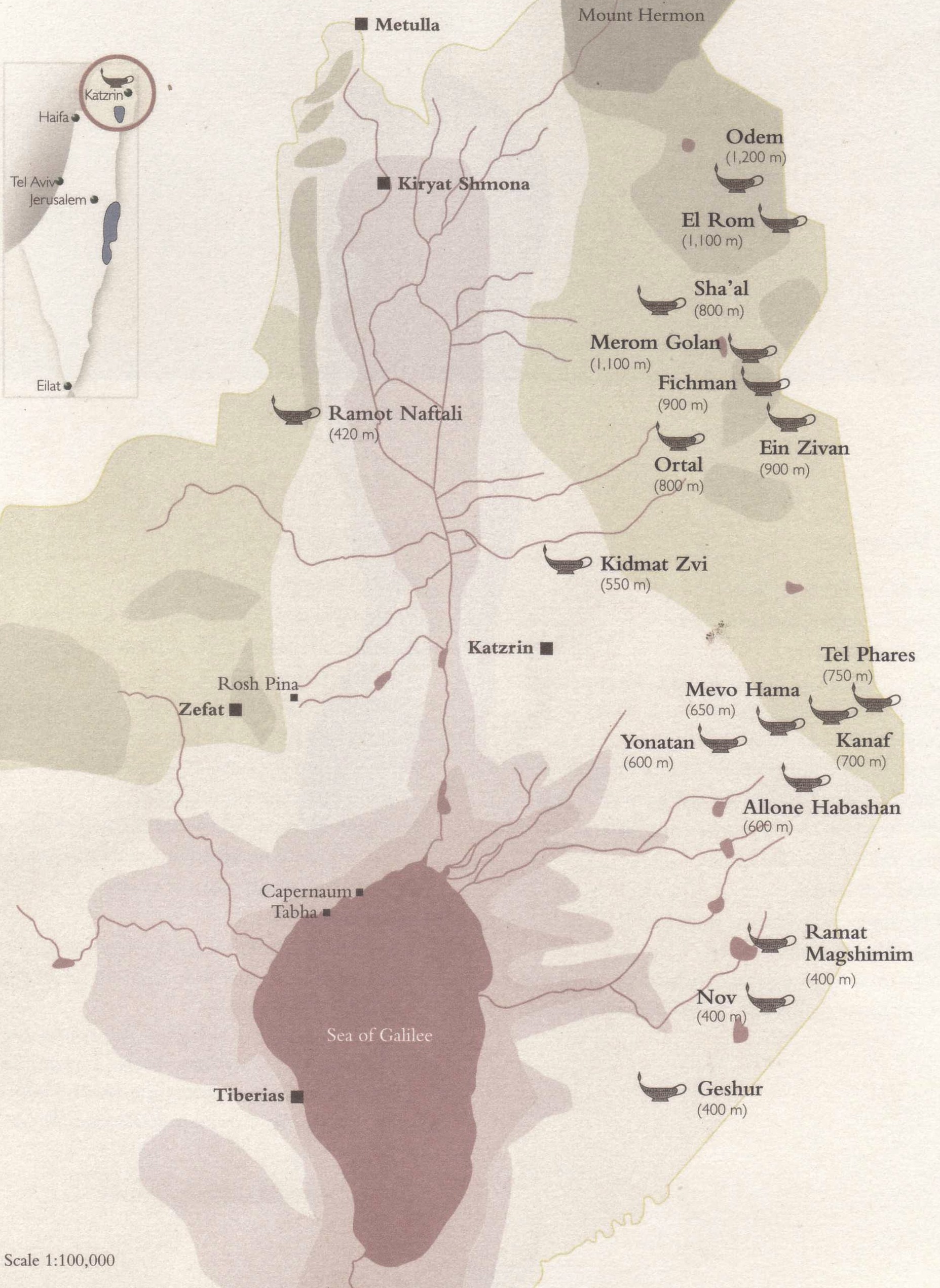
I think it’s fair to say that the Golan Heights winery founded in 1983 in the town of Katzrin, high up on the Golan Heights changed the world’s impression of Israeli wines and placed Israel firmly on the international wine map. Unique to Israel, the winery is owned by 4 kibbutzim and 4 moshavim. They manage 16 vineyards on the Golan (and one in the Upper Galillee), from Geshur and Nov which rise above the Sea of Galilee to Odem and El Rom below the snow-capped Mount Hermon, processing 6,000 tons of grapes and producing 6 million bottles of wine annually at 3 levels: Golan, Gamla and Yarden. They are also the parent of Galil Mountain Winery with Kibbutz Yiron.

I can arrange a tour of the facility including a visit to the oak barrel cellar, viewing of the bottling line (when in operation) and of course wine tasting.

Pelter Winery

Tal Pelter established his boutique winery in 2002, after studying enology in Australia, on the grounds of the family farm in Moshav Zofit near Kfar Saba where he produced four vintages of wine. During the summer of 2005 the winery was transferred to Kibbutz Ein Zivan adjacent to Merom Golan and resulted in a production of approximately 24,000 bottles. Pelter produces a sparkling wine in the traditional way, as well as 3 white wines, a Sauvignon Blanc, an unwooded Chardonnay and a Gewurztraminer, a first of this varietal for Pelter, described as “Sweet peach, liche, melon, citrus on a lively acidic background”. He also produces a series of red wines at two levels from Cabernet Sauvignon, Cabernet Franc, Merlot and Shiraz grapes grown on the Golan Heights and the hills of Jerusalem.

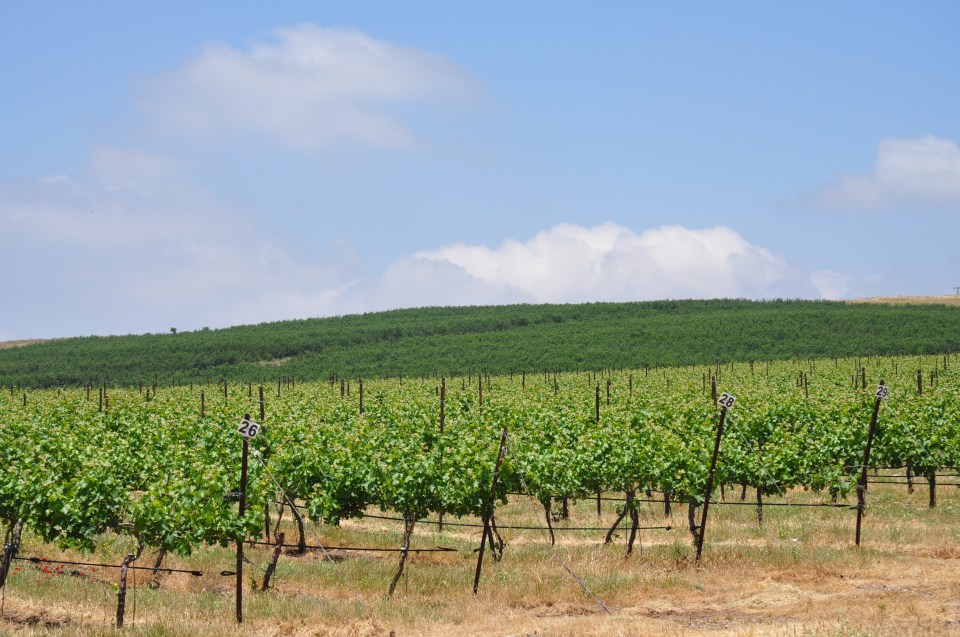
At the end of August 2005, Pelter supervised the planting of a new vineyard on the Golan, that he calls Vineyard of the Wind with a view of Mount Bental and the Hermon, 35 dunams (8.75 acres) of vines. Pelter is pursuing his dream of a quality winery on the Golan. I can arrange a visit to the facility for serious wine afficionados.
DSC_0034

There are other small wineries on the Golan. In the midst of an ancient oak forest at Odem is the Odem Mountain Winery. Next to a natural spring is the Bazelet HaGolan winery and not far, the Assaf winery. Farther south you’ll find the Bashan Organic Winery and the Chateau Golan Winery. For a complete and up-to-date overview of the wine industry in Israel, I recommend Rogov’s Guide to Israeli Wines available at bookstores and the Internet.
Someone to Tour With – Kids Tour with a Golden Retriever

This is a tour of Jerusalem sites based on David Grossman’s prize-winning novel Someone to Run With/משהוא לרוץ איתו (written in Hebrew but translated into English, available at Amazon and made into a movie). The story is about two young people: Assaf, who gets a summer job with the Jerusalem municipality and is given the task of returning a lost and found dog to it’s master and Tamar, a talented musician who goes looking to rescue her brother who has gotten into trouble at the edge where youth, music and drugs overlap. As the dog, a golden retriever named Dinka, runs through Jerusalem with Assaf in tow, we too become entangled in the story.

Familiar Jerusalem landmarks pass by: the midrahov/Ben Yehuda pedestrian mall, music store, Yoel Salomon neighborhood, Jaffa Street, Mahane Yehuda market, the Central bus station, Independence Park, the historic Palace Hotel.

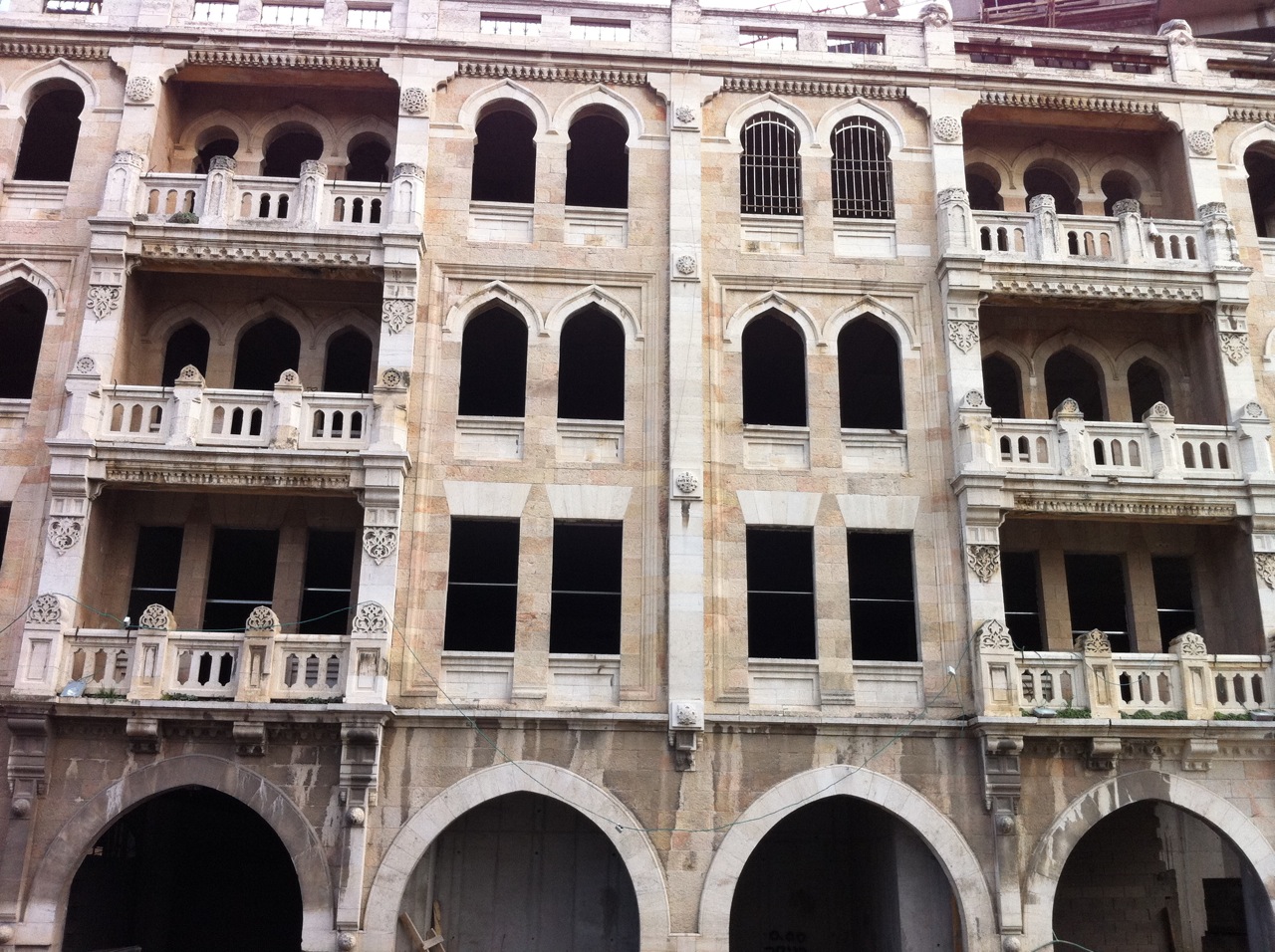
The Palace was built in 1929 by the Waqf, Supreme Muslim Council headed by the mufti of Jerusalem, Haj Amin al-Husseini. In its day it was a beautiful building with stone carvings and arches, a combination of Moorish, Roman and Arab architecture. The Reichman Brothers and the Hilton chain renovated the hotel to the tune of $100 million, to become a Waldorf-Astoria, only the 6th in the world.

Another scene takes place outside the facade of Talitha Kumi (from Mark 5:41), all that is left of the girl’s orphanage and school and the Mashbir (the large department store) that stood on King George Street where Tamar sings HaTikva, the Israeli national anthem to her brother’s electric guitar accompaniment. To me it is reminiscent of Jimi Hendrix playing the Star Spangled Banner at Woodstock (unfortunately, the clip on YouTube has been removed).

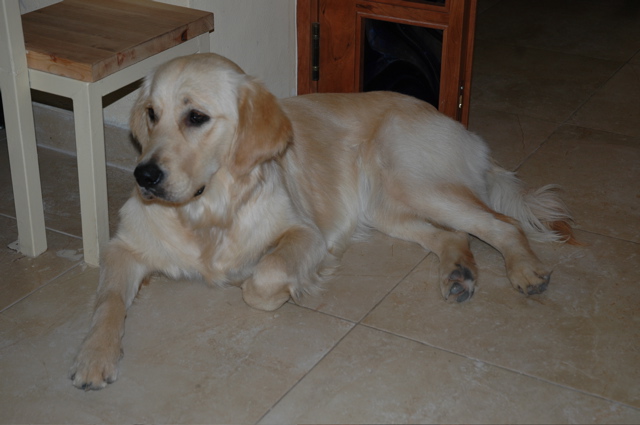
I have a golden retriever, whose name is Sumsum (which is Hebrew for sesame, the seeds that they make tehina from and also a kind of finish on Jerusalem stone which is her color) who is an offspring of one of the dogs who starred in the movie.

Sumsum1yr

Join me and Sumsum as we explore Jerusalem following in the footsteps of Assaf and Dinka, experience the Mahane Yehuda market, head down to Ben Yehuda Street to listen to the buskers, have pizza, walk through Independence Park, check out the Palace Hotel, have hummus and felafel at a local restaurant. Having read the book or seen the movie before taking this tour adds to the experience.

Nature and Nurture

You’re on vacation. It might seem weird to shop for food in the local outdoor market of a foreign country and then go to someone’s house that you don’t know and cook up the produce you just bought, set the table and serve. But it’s a lot of fun for the whole family and you don’t have to do the dishes afterwards. After eating out at restaurants, day after day, it can be a refreshing break and in this case, you’re being invited to a renovated 100 year old house in Abu Tor, a mixed Jewish and Arab neighborhood that was right on the border between Israel and Jordan from 1948 to 1967 with a great view of the Old City. In consultation with Ruti Yudecovitz of Shuk and Cook you choose what you’ll be preparing for dinner then you all head out to Mahane Yehuda market to buy the ingredients and then come back to Ruti’s and prepare the meal. Then when everything is ready, you sit down with a glass of fine Israeli wine and enjoy your meal. A unique Israel experience.

And if you are interested in tasting locally prepared foods and visiting other areas in Israel, Orly Ziv of Cook in Israel offers a number of culinary tours, one day tours in Tel Aviv and Jerusalem and a two-day tour of the Galilee, including accommodation at a boutique hotel and traditional hospitality and dinner in an Arab-Israeli home. Each tour includes a cooking lesson or workshop where you will not only learn about cooking in Israel and Israeli cuisine, but prepare a full meal using local and in season ingredients to be enjoyed by all.

DSCN3153

These culinary focused tours can be combined with nature tours throughout Israel. In the hills of Jerusalem and in the Galil we can harvest zatar, the green oregano-like herb (hyssop in English) used in Middle Eastern cookery.

DSC_0007

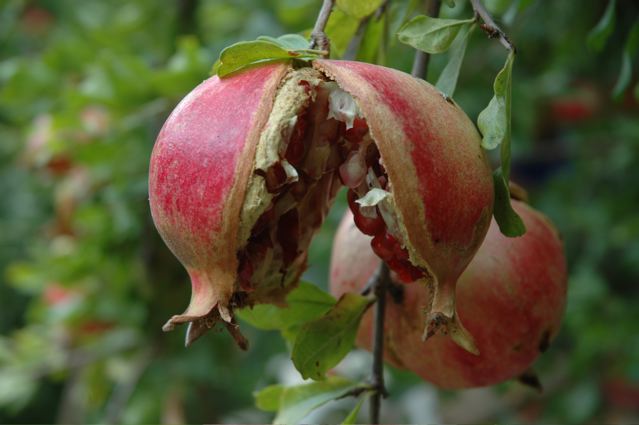
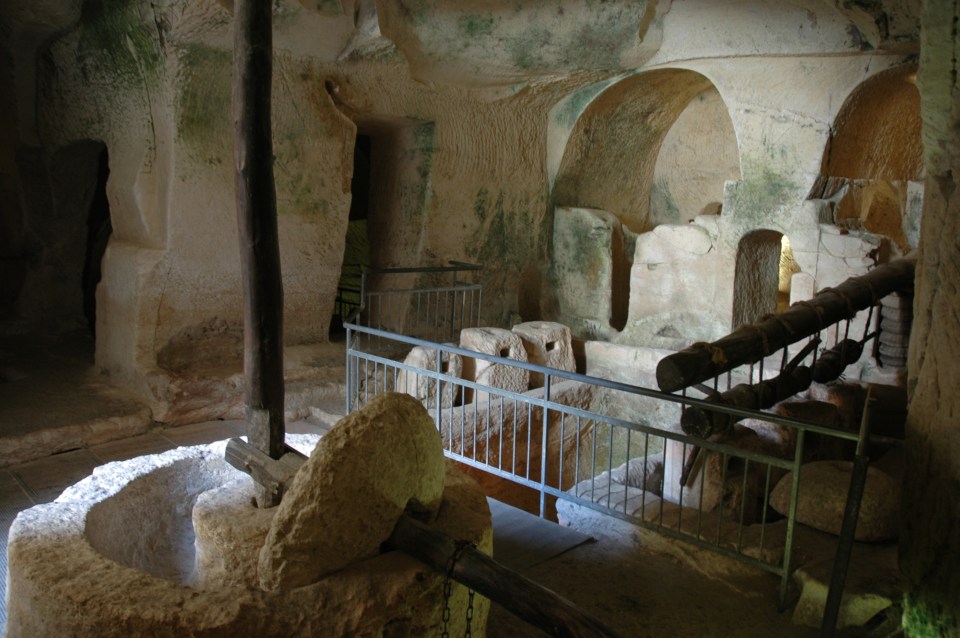
Depending on the season we will be able to find the 7 species that grow here: wheat, barley, grapes, figs, pomegranates, olives and oil and dates (honey). Vines are grown throughout Israel – you’ve probably heard of the vineyards growing in the volcanic soil of the Golan but there are also vineyards in the Galil, the hills of Jerusalem, the Shfela and even the plateau of the Negev. There are some 200 wineries throughout Israel and most encourage you to visit and taste their wines. There are also olive presses that go back thousands of years that we can find on our hikes and we can visit places to learn how olives are pressed into oil today.

DSC_0025

Golan Vineyards and Wineries

I was on the Golan this week near Har Avital. It was delightful – the weather was superb, the wheat was golden, there were still poppies, the grapevines are blossoming. You can feel the broad expanse of the Golan, it lets you breathe.

We visited vineyards on the Golan, one growing in a caldera, a large crater caused by the violent explosion of a volcano that collapses into a depression. The caldera creates a different micro climate from the surrounding area. We visited an organic vineyard at Odem and learned about how the growers control aphids and grapevine fan leaf virus using natural methods. We visited vineyards growing around Tel El-Makhfi right beside abandoned Syrian bunkers. The Golan Heights Winery has 16 vineyards on the Golan and 1 in the Galil.

We ended the day with wine tasting (Yarden Blanc de Blancs, Gewurztraminer, Chardonnay, a blend of Pinot Noir, Merlot and Syrah and a Heights wine, their version of iced wine for desert) at the Golan Heights Winery in Katzrin.

Golan Sparkling Wine

I was up on the Golan this week visiting the Pelter winery at Kibbutz Ein Zivan and learning about the traditional way that Pelter makes his sparkling wine (in France it’s called champagne). The cuvée is a Chardonnay grape grown at Neve Atiq that is picked early so that it is tart, the grapes are pressed and centrifuged to get rid of the skins and pips and then sugar and yeast are added, the concoction is called the tirage and the mixture put in special, thick glass bottles with a cap. These bottles are stored upside down for 3 years in a cool place so that they ferment slowly producing alcohol and carbon dioxide. Since the bottle is sealed, the carbon dioxide cannot escape, producing the sparkle. The yeast eats the sugar for about 6 months and then dies ending the fermentation. The dead yeast cells are removed by a process called riddling where the bottles are rotated everyday until the yeast drops down into the neck of the bottle. The final step is to freeze the neck in an ice bath at -25ºC for 4-5 minutes resulting in a frozen plug. The bottles are then opened and the pressure pops out the plug (with the yeast). The bottles are then adjusted topped off with a dosage, a mixture of sugar, sweet wine, grape juice. Pelter adds champagne from previous years. The final alcohol content is 10.5%.

Pelter is able to produce between 1000 and 2000 bottles of sparkling wine. Only 3 wineries in Israel produce sparkling wines and only Pelter and the Golan Heights Winery do it in this tradional way (though Golan is much more automated).

Israel with kids

Israel is a great place to visit with kids. The country is small but varied. One day you can be bumping along in a jeep on the Golan Heights with a view into Syria and hear the stories of Israel’s capture of the area during the Six Day War in 1967. The next day you can be riding on a camel across the sands in the Negev, sleeping in a Beduin tent or under the stars. On the Mediterranean coast, in Akko there is a Crusader fortress that was buried in sand by Al Jazar in order to build his citadel that we can explore. At Masada there is a Herodian fortress in the desert later used by Zealots in the Great Revolt against the Romans. There is an opportunity to climb through caves more than two thousand years old, an experience out of “Raiders of the Lost Ark”. In Jerusalem you can walk around the Old City on the ramparts from the time of Suleiman the Magnificent, walk on paving stones that go back to Roman times and even the Second Temple period or walk underground along the length of the Western Wall.

Check out this article by Nancy Better in the May 17th edition of the New York Times, Taking the Kids – In Israel, With a Whiff of Adventure.

All the sites mentioned in the NY Times article can be incorporated into your personalized tour. There are less expensive accommodations for those on a tighter budget.