Mount Sodom

Mount Sodom

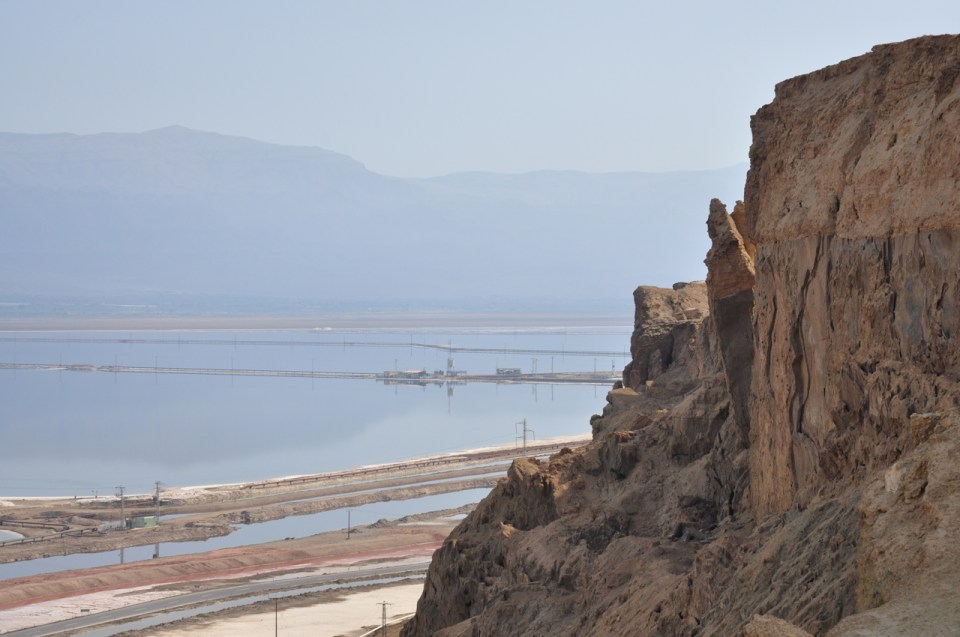
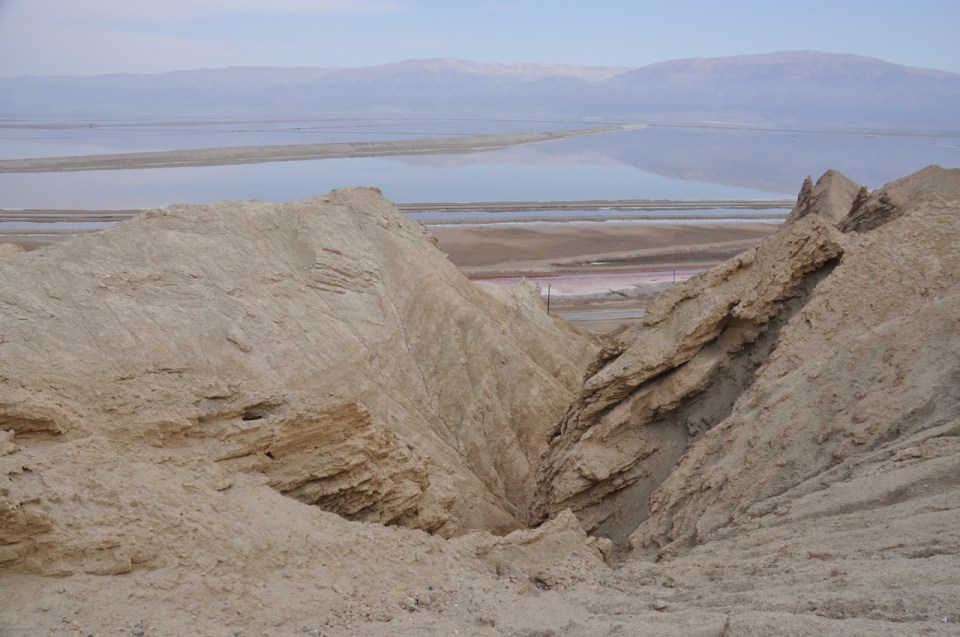
South of Masada along highway 90 there is a hike up Mount Sodom, a hill that is made up almost entirely of halite or rock salt. It is 226 meters above the Dead Sea with some great views (and photography opportunities) but still 170 meters below sea level. Don’t miss the rock formation that has separated from the cliff face due to weathering. It is known as Lot’s wife, a reference to the Biblical story of the destruction of Sodom and Gomorrah and how Lot’s wife looked back as they left and was turned into a pillar of salt. Interestingly there are other rock outcrops that are called Lot’s wife in other parts of the world, check Wikipedia for some fascinating accounts like a basalt pillar, a deserted, volcanic island in the Philipines Sea, at the southernmost tip of the Izu archipelago in Japan.

Lot's wife as a pillar of salt, © 2009 Shmuel Browns

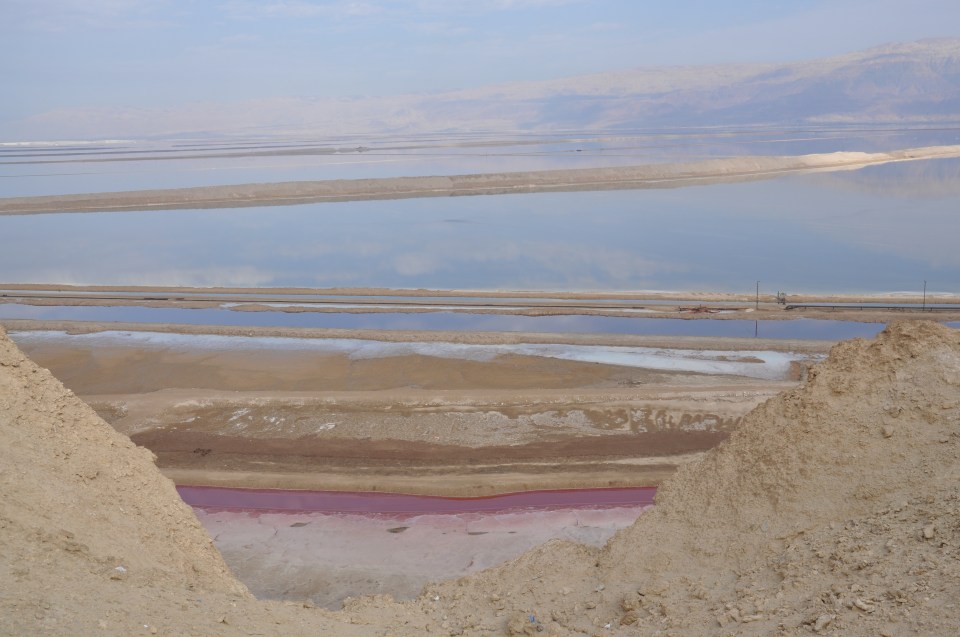
Dead Sea pools

Masada at Sunrise

Masada is one of the most visited historical/archaeological sites in Israel, an isolated rock cliff in the Judean desert overlooking the Dead Sea.

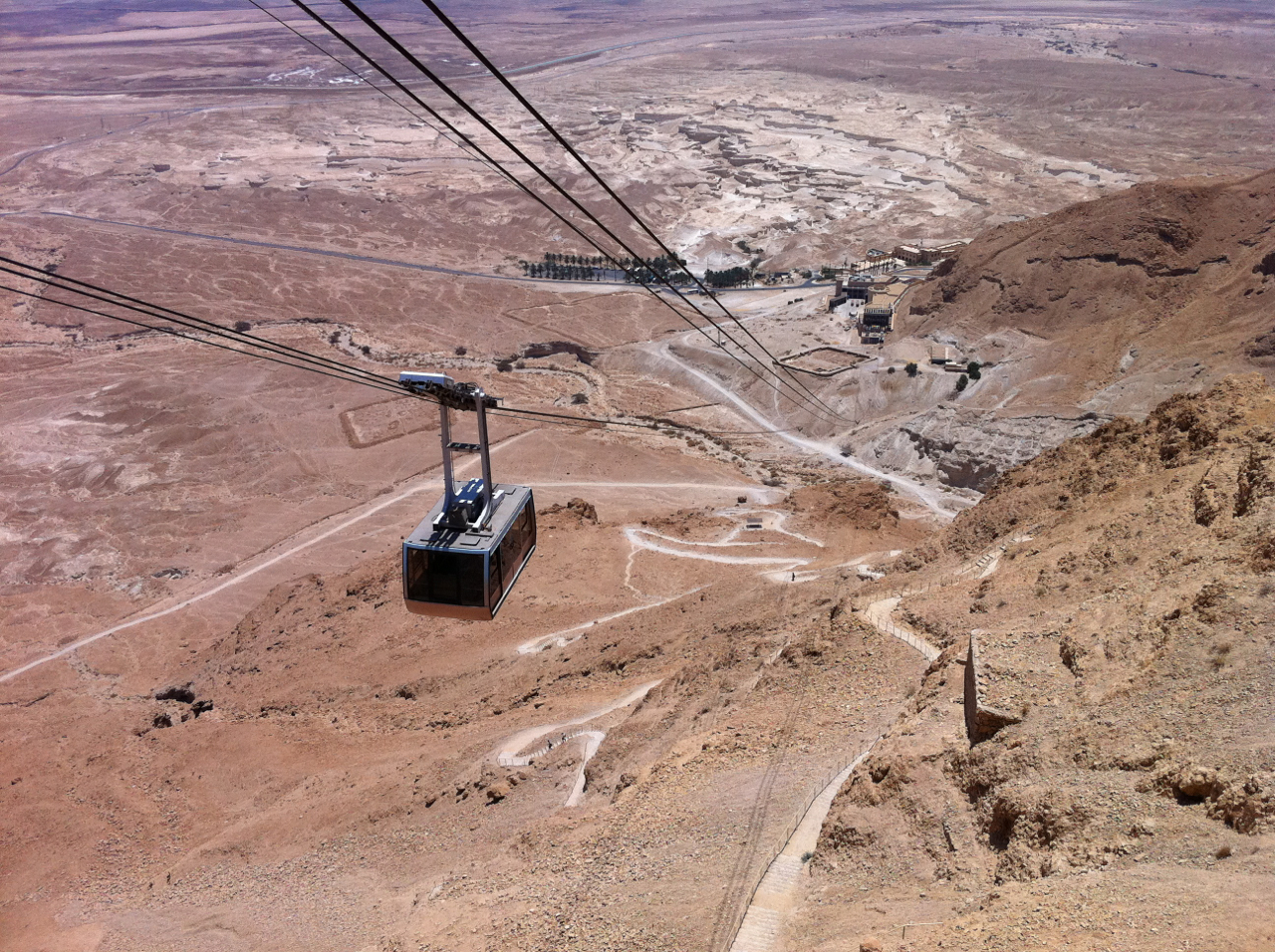
Masada cable carAlthough there is a cable car that will take you to the top of the mountain, a tradition has grown up to climb the Snake Path, a zig-zag trail, early in the morning in order to reach the summit in time to watch the sunrise – that’s what we did. The top is only 59 meters above sea level but remember that you’re starting at about 400 meters below sea level. You should be able to climb it in 45 minutes to 1 hour. If you want to do this the best place to stay the night before is the youth hostel at the base of Masada.

I recently read an article on the Israelity website about a group of 7 seniors from the Cedar Village retirement community near Cincinnati who came to Israel to celebrate their bar/bat mitzvahs and tour Israel including climbing Masada – their average age was 85 years old, the oldest was 97!

I guided two families traveling together, a group of four adults and five children, during their time in Israel. When we reached Masada and saw the mountain some were interested in climbing the Snake path. We didn’t really have enough time so one of the Dads suggested running it. At first no one took him seriously, so Chris said he’d do it. I showed him where the path started and he was off. The rest of us took the cable car and on our way up looked for Chris. I finally saw him on the last turn of the path before the summit – his time 17 minutes! For Bernie’s description of their experience check out their blog at http://keepingupwiththemounts.blogspot.co.il/2011/11/masada.html

Masada (from Arad)

Another option is a nice hike that starts at the same but splits from the Snake Path, you walk north on the red trail following the circumvallation wall built by the Romans around the mountain. You pass the 4th siege camp (northernmost) and follow the trail west and then south. As you climb there’s a great view of the Northern Palace hanging on the cliff and the water cisterns on the western side. You can go to see the cisterns and/or climb the Roman ramp to the summit.

Wildflowers, after the rain

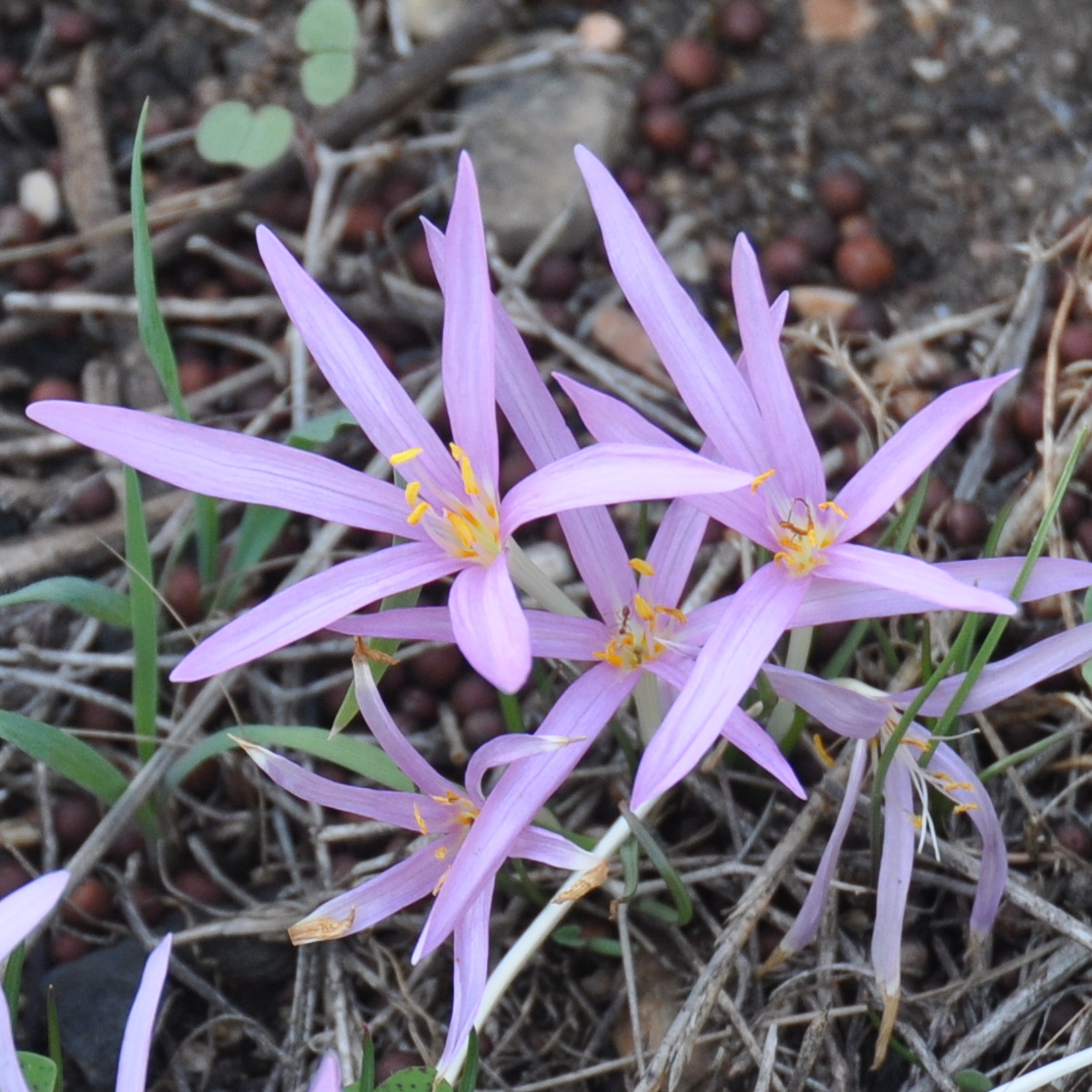
Shortly after the first autumn rains, a perennial called Steven’s meadow saffron (Colchicum steveni, סתונית היורה), with small, delicate pink flowers appears in the fields and woods. I don’t know who Steven is but in Hebrew some clever person called it Sitvanit from Stav meaning autumn and HaYoreh, the first rain.

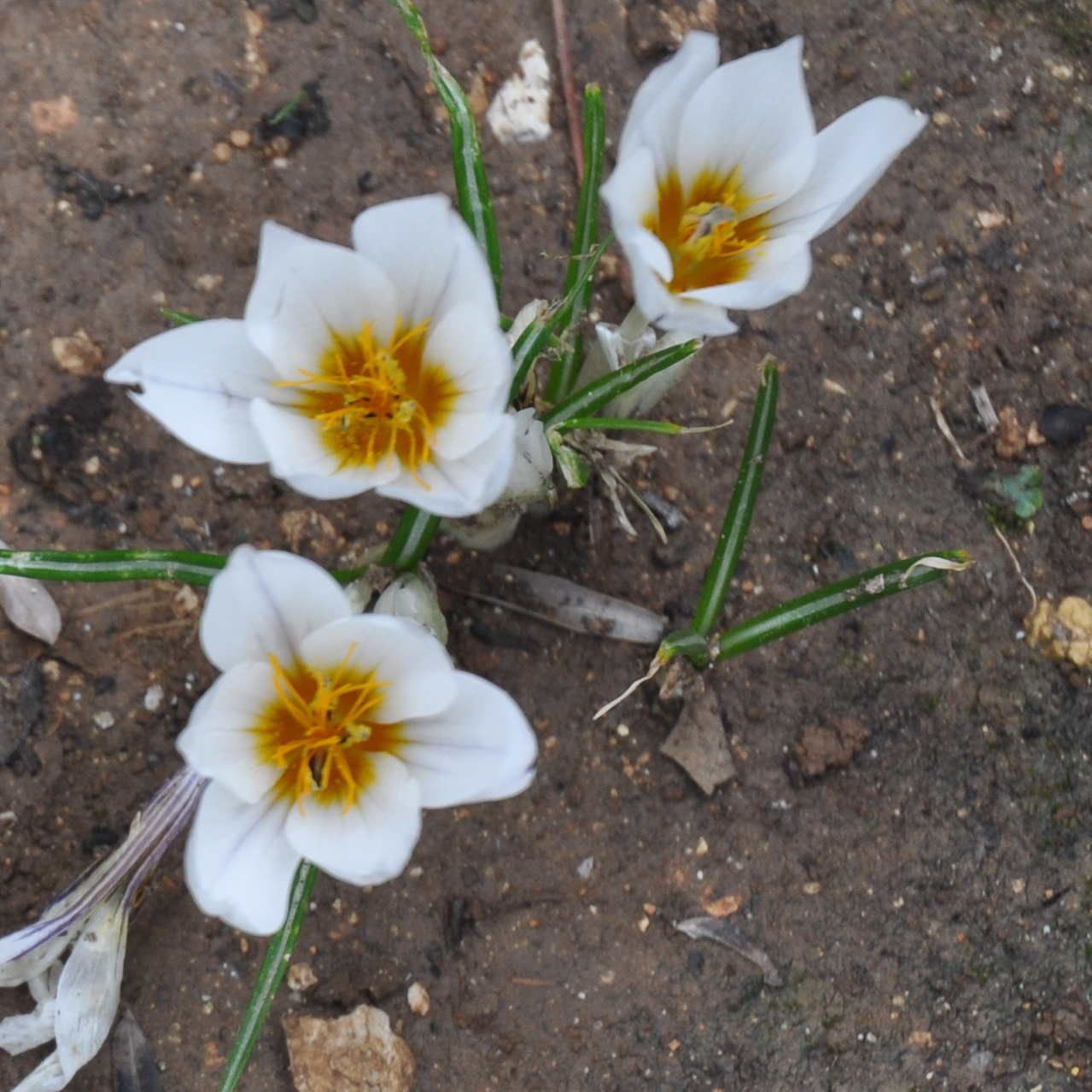
Another flower that comes up at this time is crocus. These flowers are  Winter crocus (Crocus hyemalis, כרכם חרפי) and I saw bunches of them while hiking in Nahal Katlav just south of Jerusalem.

On the Golan, specifically Nahal Yehudia, I saw some narcissus (Narcissus tazetta, נרקיס) with white petals and yellow crowns and cyclamen (Cyclamen persicum, רקפת) already in bloom. I saw the leaves of lupines (Lupinus varius, תורמוס ההרים) just pushing out of the earth.

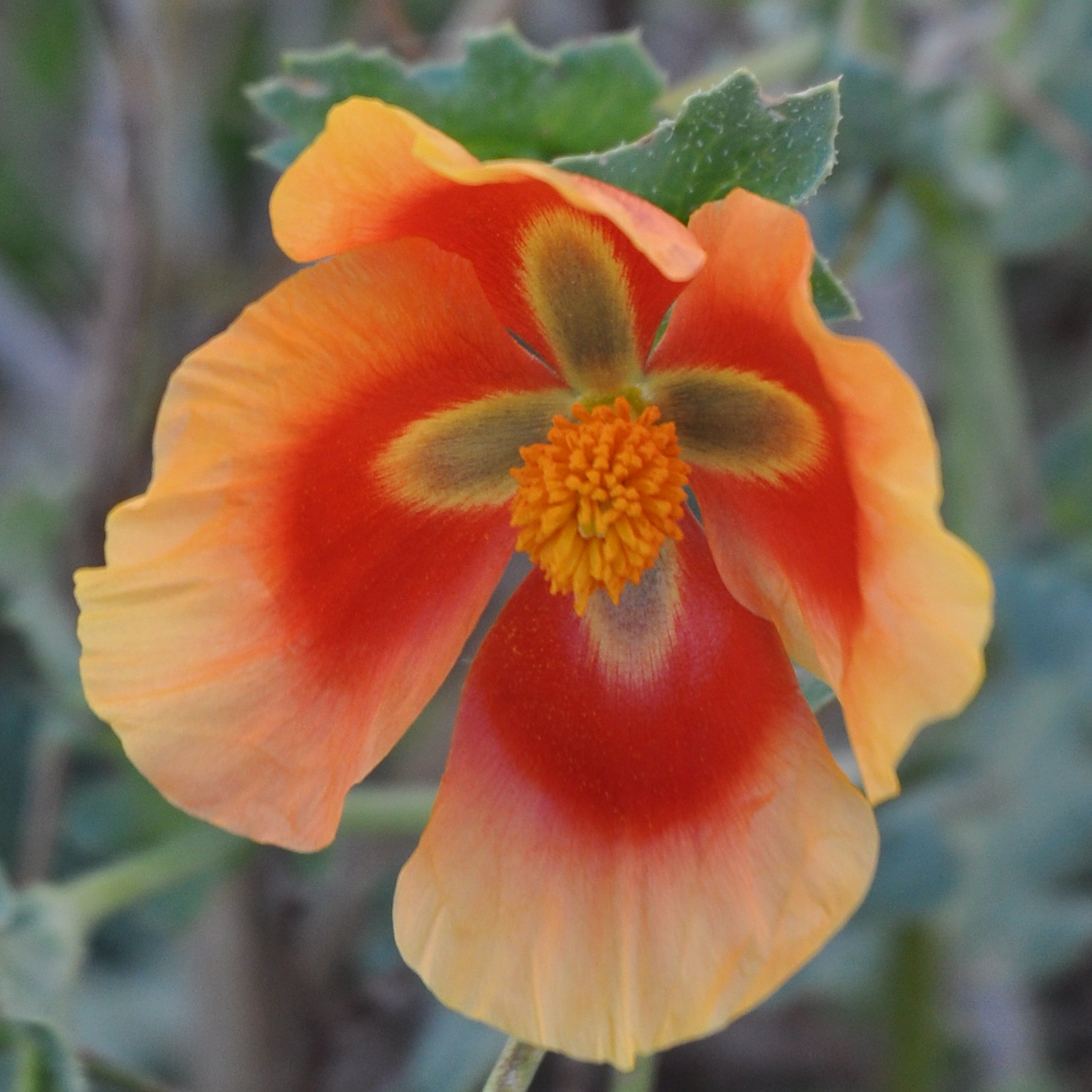
I was hiking under the ski lifts on the Hermon and found this flower, which I learned from my very knowledgeable colleague Zvi Bessin is Lotus Sweetjuice (Glaucium leiocarpum, פרגה קירחת). This perennial grows only in the area of the Hermon and is left over from the summer.

Also check out the post Wildflowers, before the rain.

Nimrod, Golan

The alarm clock went off at 5am Sunday morning. We were to drive our 2 sons, Amitai and AdirChai and his friend Ariel, from Jerusalem to the Hermon to hike the Golan Trail. We had 2 days to explore the area.

Day 1: Nimrod
After seeing the boys off, we drove to Nimrod, just 5 families on the southern slope of the Hermon and at 1110 meters above sea level, the highest settlement in Israel.  There is a great view of Birkat Ram to the south-east and the Nimrod fortress to the west. As you enter, there’s a blue boxy concrete building, a gallery of paintings by Diego Goldfarb and next to it a restaurant (not kosher) called the Witch and the Milkman. They carry artisan cheeses from the HaNoked Dairy and give tastes. We bought two cheeses, a hard Tome style (French) goat cheese treated with red wine and a Manchego like (Spanish) sheep’s cheese treated with Chardonnay to go with the crackers I had made (I think I’m the only tour guide who bakes homemade organic whole wheat crackers to share with my clients).

DSC_0124

From there we drove 8 km to the Nimrod fortress off of highway <989>, part of the Parks Authority with an entrance fee of 20 NIS per person.  The fortress controlled one of the main roads that ran from Tyre to Damascus. It was built around 1229 by the Ayyubid ruler Al-Aziz Uthman, nephew of Salah ad-Din. Later additions by the Mameluk sultan Baybars in 1260 (actually his second in command Bilik) are commemorated by a large, beautifully carved inscription in Arabic.

DSC_0071.JPG

Also found was a stone relief of a very cute looking lion, the symbol of Baybars.

DSC_0128

The fortress is the largest in Israel and includes a large water cistern and a donjon (keep), surrounded by a moat, probably the two most important things against a siege.

There are 2 incredible things about this fortress that I experienced when I visited it for the first time on the guide course:

  1. I took this photo of the arch above the entrance to the northwest tower where a number of stones have slipped due to an earthquake in 1759 and are hanging suspended to this day.
    DSC_0075.JPG
  2. Nearby is the vaulted stairway  of the secret tunnel. I noticed that it was quite damp and in looking up I saw stalactites growing from the ceiling and I understood that since the fortress is built of limestone from the Hermon (as opposed to the basalt of the Golan) the water seeping through is dissolving the limestone blocks just like in a natural cave.
    DSC_0142

Hiking Nahal Yehudia

Day 2: Hiking Nahal Yehudia
After a breakfast of fruit and homemade granola we drove to Nahal Yehudia off highway <87>. The hike is listed as appropriate for good hikers who can swim as there are a couple of places where you have to climb down the rock face with the help of handholds or a ladder into a deep pool that you have to swim across. The trail is one of eleven listed in the Park’s brochure on the Yehudia Forest Reserve, including Nahal Zavitan, the Meshushim (hexagonal basalt pillars) pool and Gamla which includes the archaeological remains of the Jewish town that fought against Vespasian at the start of the Jewish Revolt in 66CE and Griffon vultures that can be seen flying overhead. There is parking, bathrooms, drinking water, a snack bar and information center (the park warden we spoke to was very helpful); the entrance fee was 20 NIS per person. Note that you must start out on the trail by noon.

DSC_0161

The hike starts above the wadi, walking through a deserted Syrian village built on the remains of an earlier Jewish one of basalt field stones from the Roman-Byzantine period. Remains of a wall have led archaeologists to suggest that Yehudia is Soganey, one of the three fortresses (the other two are Gamla and Sele’ukya) in the Golan built by Josephus at the time of the Roman Revolt. You walk on a path strewn with basalt, by pasture land where you may see cattle grazing.

DSC_0171

Then you walk down into the wadi to the Yehudia Falls and the first pool, good for a cool dip especially if it’s a hot day.

DSC_0177

At this point we changed out of our hiking boots and into water sandals as there are places where you walk in the water. Continuing along the wadi you get to the first descent. U-shaped handholds have been attached to the rock to help you get down about 4 meters. This is just your warm up. The trail brings you to a cliff where you descend 9 meters by metal ladder into a pool. There is no place to stand, you step off the bottom rung of the ladder and swim across to the other side of the pool.

DSC_0184

The challenge is what to do to keep your gear dry (and in this day and age with cell phones, cameras, car keys with electronic locks, etc. we have stuff that won’t work if it gets wet). We used the double garbage bag technique but also saw a group float their packs across on a small inflatable boat, you can rig up a rope and omega your pack across or probably safest, pack in professional waterproof bags used for kayaking.

After traversing the pool you come to another descent, this time about 4 meters with only handholds. At the bottom you have the option of swimming or walking across the pool as it isn’t that deep. Be careful as it is slippery walking on the rocks. The water can be quite cold so it’s great that there is a place in the sun to sit on some large rocks and have a snack.

DSC_0182

Using the 2 large plastic bags that we had brought for our packs, we picked up a bunch of garbage that we carried out with us. We continued along the wadi, sometimes walking on the rocks, sometimes in the water. At the well marked junction you can leave the red trail to take the green back to the Syrian village or continue  along the wadi a bit further to one last pool and waterfall. Then we backtracked and took the green trail up out of the wadi, back to the Syrian village and the trail head. It was just the middle of November but there were already cyclamen and narcissus in bloom.

You can view a fuller set of photographs from this Golan trip on Flickr at http://www.flickr.com/photos/27944012@N06/sets/72157622790431204/
The Dead Sea

Driving on highway 90 from Jerusalem down to the Dead Sea takes half an hour as you descend from more than 700 meters above sea level to 400 meters below sea level. The Dead Sea is situated at the lowest point on earth, in the Great Rift valley that runs from Turkey in the north to Mozambique in the south, in the crack in the earth’s crust created when Asia and Africa were torn apart five million years ago. Originally it was an ancient larger sea connected to the Mediterranean when water flowed across the Jezreel valley and Jordan River to fill the rift. Although it has no outlet, evaporation in the hot Judean desert reaches 25 mm per day in the summer so in four days it loses the equivalent of the annual rainfall. When the amount of water flowing into the Dead Sea from the Jordan River was equal to the amount lost to evaporation, 1.2 billion cubic meters, the level stayed in equilibrium. Today the Dead Sea is receding at the alarming rate of one meter a year as Israel and Jordan divert the waters flowing into it. The sea is still 1100 meters deep at the northern end so it isn’t going to disappear tomorrow but it is a serious problem that needs to be addressed.

Hilton, Dead Sea

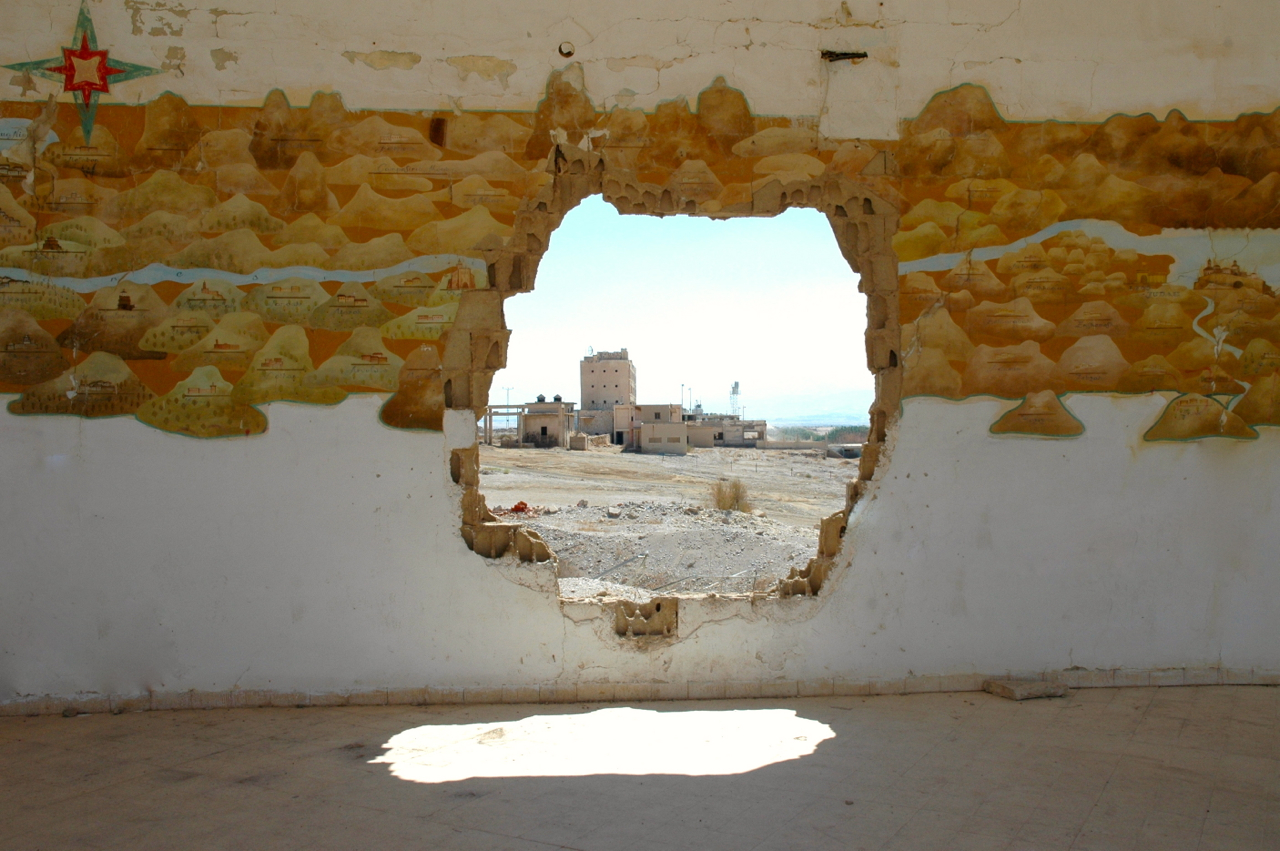
At Lido junction at the northern end of the Dead Sea I often stop to show people the replica of a Crusader map painted on the curved walls of what was a fancy Jordanian restaurant on the shores of the Dead Sea. The artwork was done in March 1973 by Kohavi, who served like me as a reserve soldier at the nearby “Hilton” hotel, now an Israeli army base. Here you can see the trickle that is the Jordan River today flowing into the Dead Sea.Jordan River flowing into Dead Sea

Continuing south along highway 90 we’ll pass some private beaches on your left where you can float in the salty water of the Dead Sea and cover yourself in mineral rich mud. The mud contains magnesium, potassium, sodium, bromide and calcium, all beneficial to our skin; in fact, as the mud dries it even draws out toxins from your skin.

On your right we’ll pass Qumran where the Dead Sea scrolls were discovered in the nearby caves. At that time, Qumran was a land terminal, you couldn’t continue southward except by boat. The Dead Sea was an important transportation route because even heavily-laden barges would float easily (the Madaba mosaic map shows 2 such boats carrying salt and grain). On your left is En Feshka (also called Einot Tsukim). Excavations were carried out here in 1958 by de Vaux (when he was excavating Qumran) and in 2001 by Hirshfeld. The concensus is that this was a farm that prepared balsam perfume. Today it is a nature reserve, 1500 dunam of which has restricted access and can only be visited with an authorized guide like me.

Just before we reach En Feshka look up on the cliffs to your right for the PEF markings, 2 black horizontal lines drawn in 1900 and 1927 by members of the Palestine Exploration Fund and the letters PEF in red. To help you understand how much the Dead Sea has receded these lines were painted from a boat floating on the Dead Sea in the 1900s.

East of the main highway (on your left) we’ll see a few sinkholes and more across from Ein Gedi. As the Dead Sea recedes fresh water from runoff dissolves the salt in the newly uncovered salt-laden earth creating an empty cavern. When the top crust of earth collapses a sinkhole is formed. More than a 1000 sinkholes have appeared on the Israeli and Jordanian coasts of the Dead Sea in the past 15 years. The holes fill up with water and the naturally occurring minerals create pools of orange, yellow, green and indigo with borders of encrusted salt, incredible to see. I’ve taken a series of photographs of sinkholes that you can see on my Flickr site http://www.flickr.com/photos/27944012@N06/sets/72157621040678204/

Sinkholes at Dead Sea © Shmuel Browns