Photo of the Week – Nahal Saar

Along with limestone, dolomite, sandstone and granite, there is also basalt in the north of Israel, an area of extinct volcanoes. Saar Falls is a waterfall that cascades into Nahal Saar in the winter rainy season. The nahal (stream bed) is the divide between the basalt of the Golan and the limestone of the Hermon. You can click on the image for a larger view (which may take some time to load depending on your Internet connection). Please share this post with your friends by clicking on the icons at the end of this message.

The technical details – the photo was taken with a Nikon D90 (digital SLR) camera with a Nikon 18-70mm lens on November 8 (ISO 400, 18mm, F4 at 1/60 sec). For another view check out my post at https://israeltours.wordpress.com/2010/02/26/saar-falls/

Photographs on this website are © Shmuel Browns (unless marked otherwise) – if you are interested in purchasing one of my photos or using one of my photos for your own project please contact me.
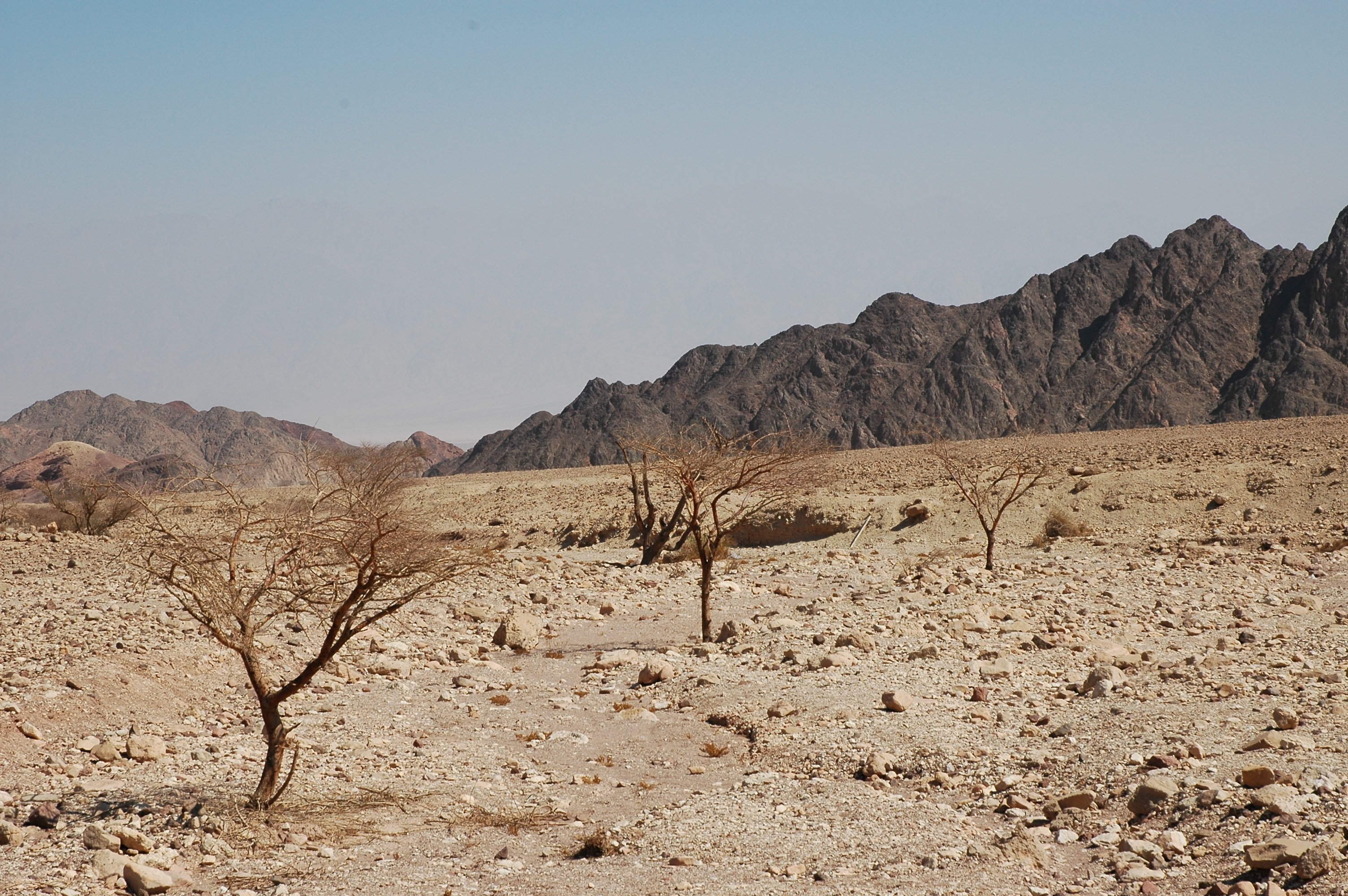
Photo of the Week – Shehoret Canyon

Continuing south from the Dead Sea along highway <90> the geology changes as you approach the mountains around Eilat. Along with limestone there is now sandstone and granite. This photo was taken on a hike in the Shehoret canyon (the black mountain is granite). You can click on the image for a larger view (which may take some time to load depending on your Internet connection). Please share this post with your friends by clicking on the icons at the end of this message.

The technical details – the photo was taken with a Nikon D70 (digital SLR) camera with a Nikon 18-70mm lens in October (ISO 200, 50mm, F11 at 1/400 sec).

For more information about hiking near Eilat check out my post at https://israel-tourguide.info/2011/03/11/israel-trail-encounter/

Photographs on this website are © Shmuel Browns (unless marked otherwise) – if you are interested in purchasing one of my photos or using one of my photos for your own project please contact me.

Photo of the Week – Dead Sea

Last week I posted a photograph of a natural sculpture on the cliffs above En Gedi. If you continue south along the Dead Sea you come to the area of Biblical Sodom and Gemorah, a rock salt mountain. A short hike up gives a great view of the Dead Sea. You can click on the image for a larger view (which may take some time to load depending on your Internet connection). Please share this post with your friends by clicking on the icons at the end of this message.

The technical details – the photo was taken with a Nikon D90 (digital SLR) camera with a Nikon 18-70mm lens on December 16 (ISO 200, 25mm, F9 at 1/320 sec).

For more information check out my post at https://israeltours.wordpress.com/2009/12/30/mount-sodom/

Photographs on this website are © Shmuel Browns (unless marked otherwise) – if you are interested in purchasing one of my photos or using one of my photos for your own project please contact me.

Roman Mausoleum

Because our son Amitai is training new recruits for the Border Police I attended the swearing-in ceremony at Tel Hadid. Hadid is mentioned in Nehemiah 7 in the list of cities to which Jews returned from the Babylonian exile. In excavations at Tel Hadid archaeologists found a typical four room house,  numerous potsherds from the Iron Age (9th-8th centuries BCE) and two complete tablets, written in cuneiform, Assyrian legal documents one recording the sale of land dating from 698BCE and the other a promissory note from 664BCE. The tablets are evidence that with the conquest of Judea by Sargon II foreigners from Babylonia were settled at Hadid.

Continuing north past Tel Hadid along highway 444 (which follows the route of the Via Maris) is a small stone building, a Roman mausoleum, amazingly intact and graced with a magnificent temple-like façade in classical style, two columns with Corinthian capitals framing a single entrance (closed originally with a stone door, note the recesses on the doorposts for a mezuza).

According to the style of the building and the remnants of two sarcophagi (stone coffins) in the floor of the main chamber, archaeologists conclude that it was built in the beginning of the 4th century CE for a wealthy landowner and his wife, although their identities remain a mystery.

A second chamber to the left is a columbarium with about 60 “pigeonholes” where doves were raised for sacrifice to Aphrodite. Of interest is a cantilevered stone staircase leading up to the opening at ceiling level.

Later the Muslims added a michrab, a niche in the southern wall signifying the direction of Mecca, and dedicated the site to Nebi Yihya, associated by local tradition with John the Baptist. In this way, the building was preserved through the ages.


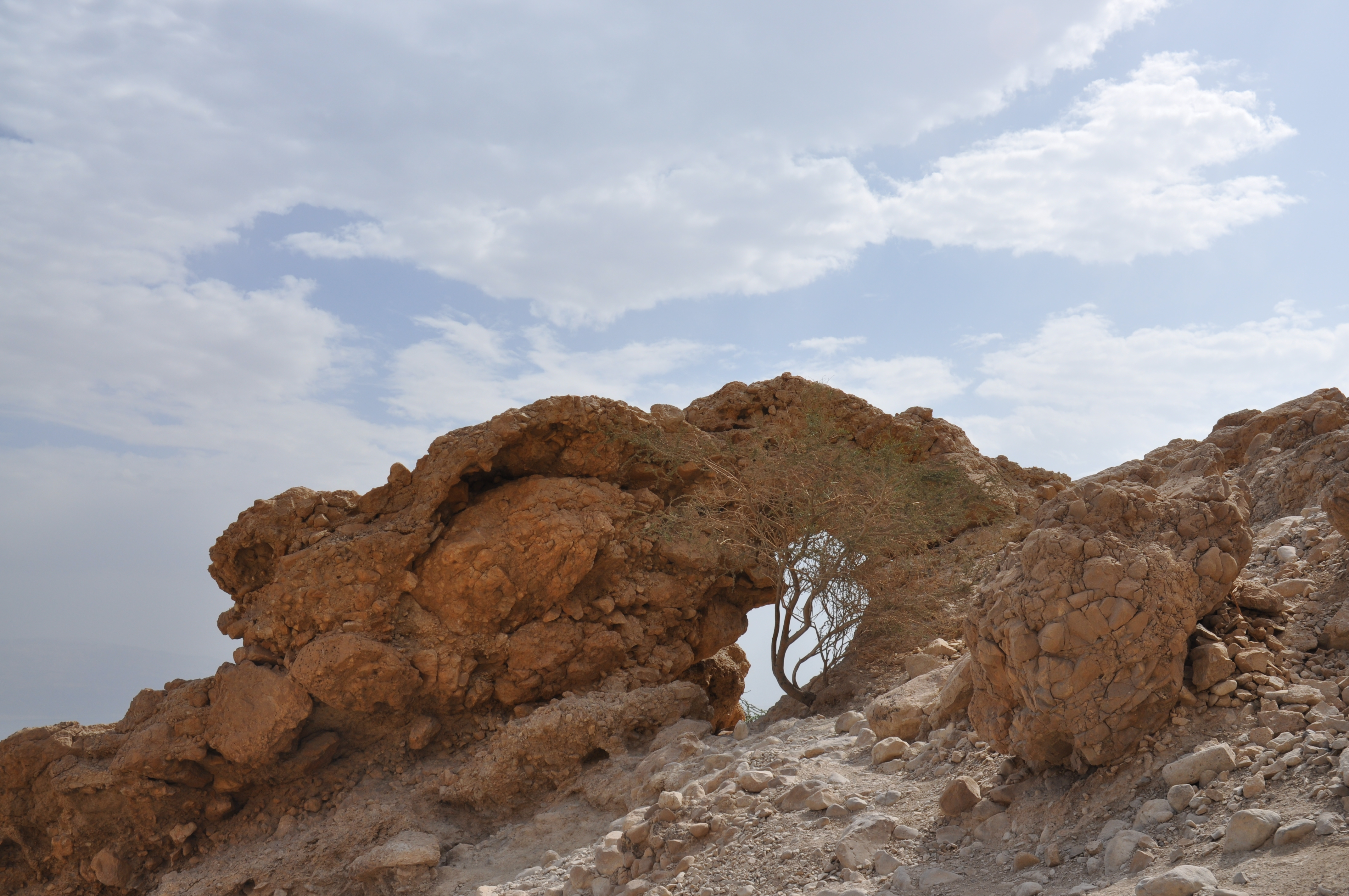
Photo of the Week – Ein Gedi

Last week a shot of sinkholes on the shore of the Dead Sea with the cliffs above En Gedi in the background, this week a shot of a hole in the rock, a natural sculpture on the cliffs. You can click on the image for a larger view (which may take some time to load depending on your Internet connection). Please share this post with your friends by clicking on the icons at the end of this message.

The technical details – the photo was taken with a Nikon D90 (digital SLR) camera with a Nikon 18-70mm lens on October 27 (ISO 200, 25mm, F10 at 1/400 sec).

For more ideas on other hikes in the area check out my post at https://israeltours.wordpress.com/hiking-israel/.

Photographs on this website are © Shmuel Browns (unless marked otherwise) – if you are interested in purchasing one of my photos or using one of my photos for your own project please contact me.

Stone Age Figurines discovered near Jerusalem

Here in Israel you can feel the seasons changing and the focus is directed towards Rosh Hashana, the Jewish New Year when we read the story of the Sacrifice of Isaac. God commands Abraham to take his son, his only son, the one he loves and sacrifice him as a test of Abraham’s faith. At the last moment an angel stops Abraham, who looks up and sees a ram caught in a thicket by its horns and sacrifices it instead.

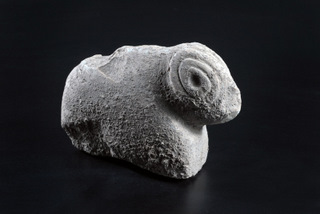
Road work continues in Israel to widen the highway just outside Jerusalem on the way to Tel Aviv. Whenever there is new construction archaeologists have to do a salvage dig. The excavations at Tel Moza uncover stone figurines in the shape of animals estimated to be 9500 years old (pre-Pottery Neolithic period).

According to Anna Eirikh and Dr. Hamoudi Khalaily, directors of the excavation at the site on behalf of the Israel Antiquities Authority, “The figurines, which are 9,000-9,500 years old, were found near a large round building whose foundations were built of fieldstones and upper parts of the walls were apparently made of mud brick. The first figurine, in the shape of a ram with twisted horns, was fashioned from limestone and is c. 15 cm in size. The sculpting is extraordinary and precisely depicts details of the animal’s image; the head and the horns protrude in front of the body and their proportions are extremely accurate. The body was made smooth and the legs of the figurine were incised in order to distinguish them from the rest of the body. The second figurine, which was fashioned on hard smoothed dolomite, is an abstract design; yet it too seems to depict a large animal with prominent horns that separate the elongated body from the head. The horns emerge from the middle of the head sideward and resemble those of a wild bovine or buffalo”.

   Photo credit: Yael Yolovitch, courtesy of the Israel Antiquities Authority

The Pre-Pottery Neolithic B period (the eighth millennium BCE) is considered one of the most fascinating chapters in the history of humankind. There were many changes that shaped human society for thousands of years – the transition began from nomadism, based on hunting and gathering, to a life based on permanent settlement, farming, domestication of animals, even preliminary architectural planning. These figurines are a connection to our past as we work to create a better future. May this new year be a year of blessing and peace for all the people in this region.