Tag Archives: Negev

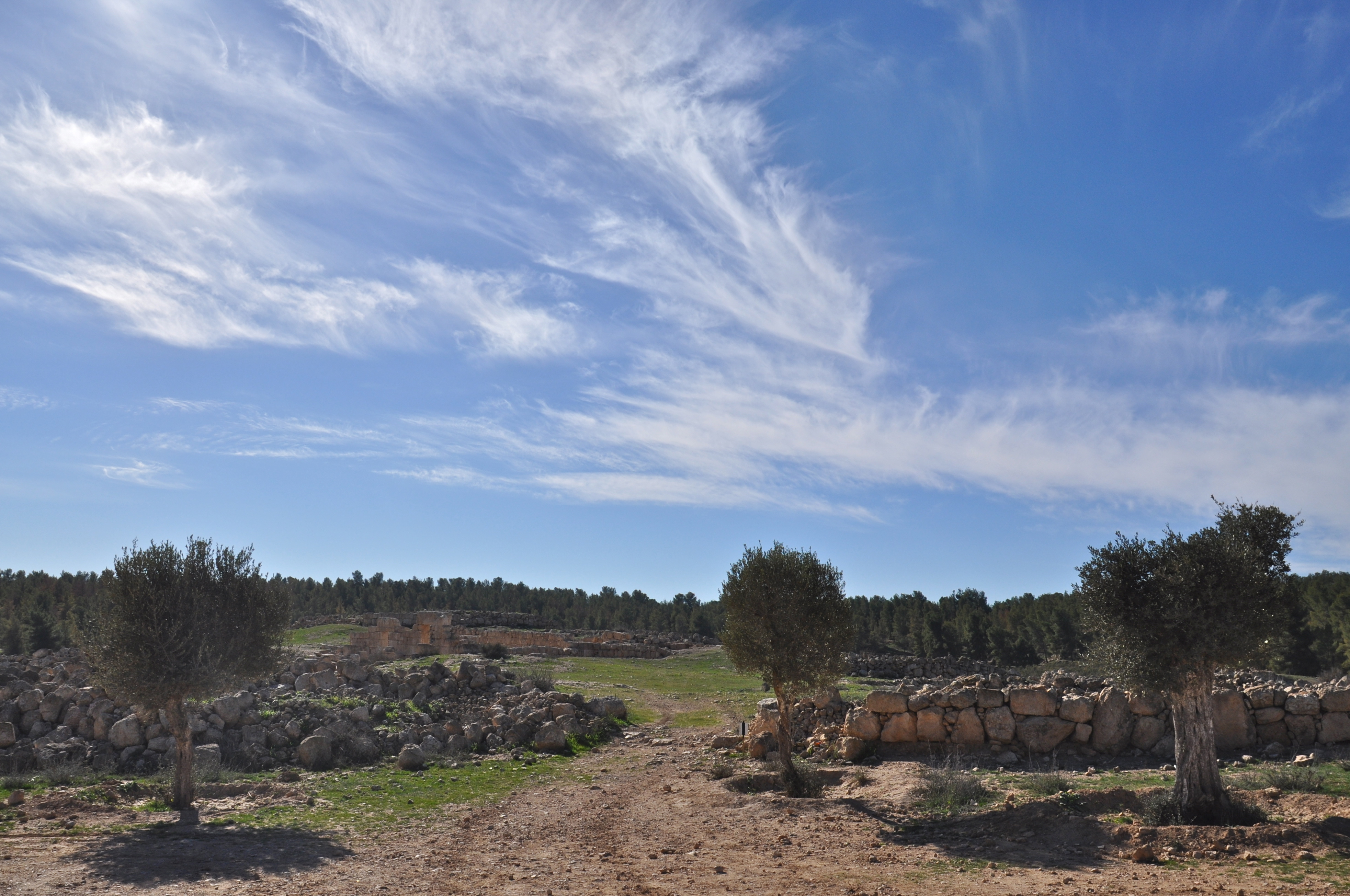
Probably very few people have visited this site although it is in the middle of the country, on the edge of the Yatir Forest in the northern Negev, the largest planted forest in Israel. You can click on the image for a larger view (which may take some time to load depending on your Internet connection). Please share this post with your friends by clicking on the icons at the end of this message.

The photo was taken at Khirbet Anim – olive trees with the ruins of a 4thC synagogue in the background. The technical details – the photo was taken with a Nikon D90 DSLR camera on January 7 (ISO 200, 18mm, F10 at 1/400 sec).

For a closer view of the ruins of the synagogue see my post at https://israeltours.wordpress.com/2009/03/22/yatir-forest/

Photographs on this website are © Shmuel Browns (unless marked otherwise) – if you are interested in purchasing one of my photos or using one of my photos for your own project please contact me.

Desert Wildflowers

If you are going to be in the south of Israel, there is a nice hike from the Timna valley through Nahal Mangan climbing onto the Milhan ridge; from there you can descend and camp at the Milhan well. This area gets less than 100mm of rain per year but in March we saw a lot of plants in bloom for a desert.

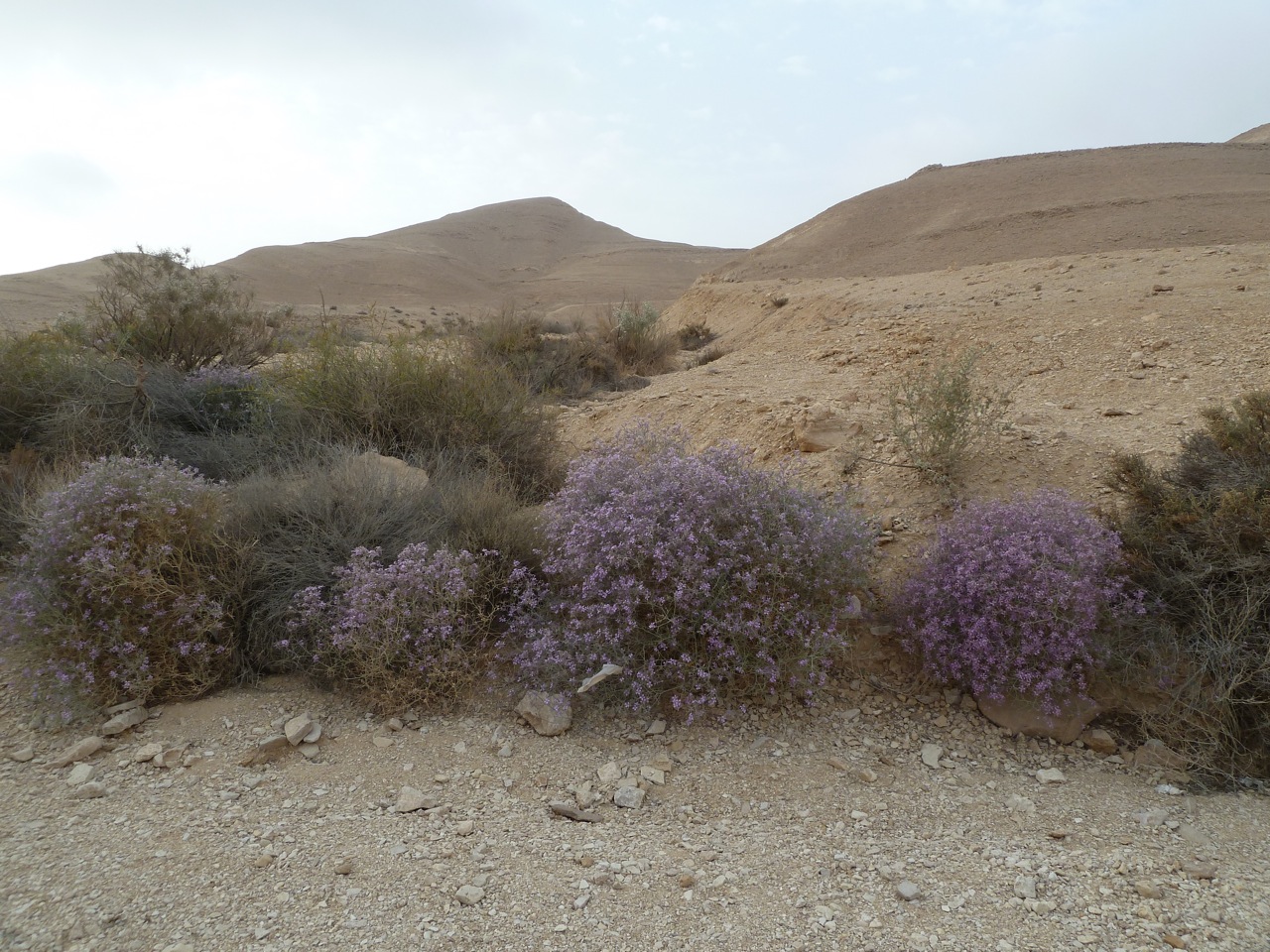
The Silon Kotzani (Zilla spinosa) is a perennial but only lives a couple of years dying from drought or flash floods. The plant grows into a sphere of stems and thorns that is typical of thorny plants in the desert. The peak of its flowering is March, afterwards it dries up. The small purple flowers are edible and have a mild cabbage taste. When dry the stems of the bush can be used as kindling to start your campfire.

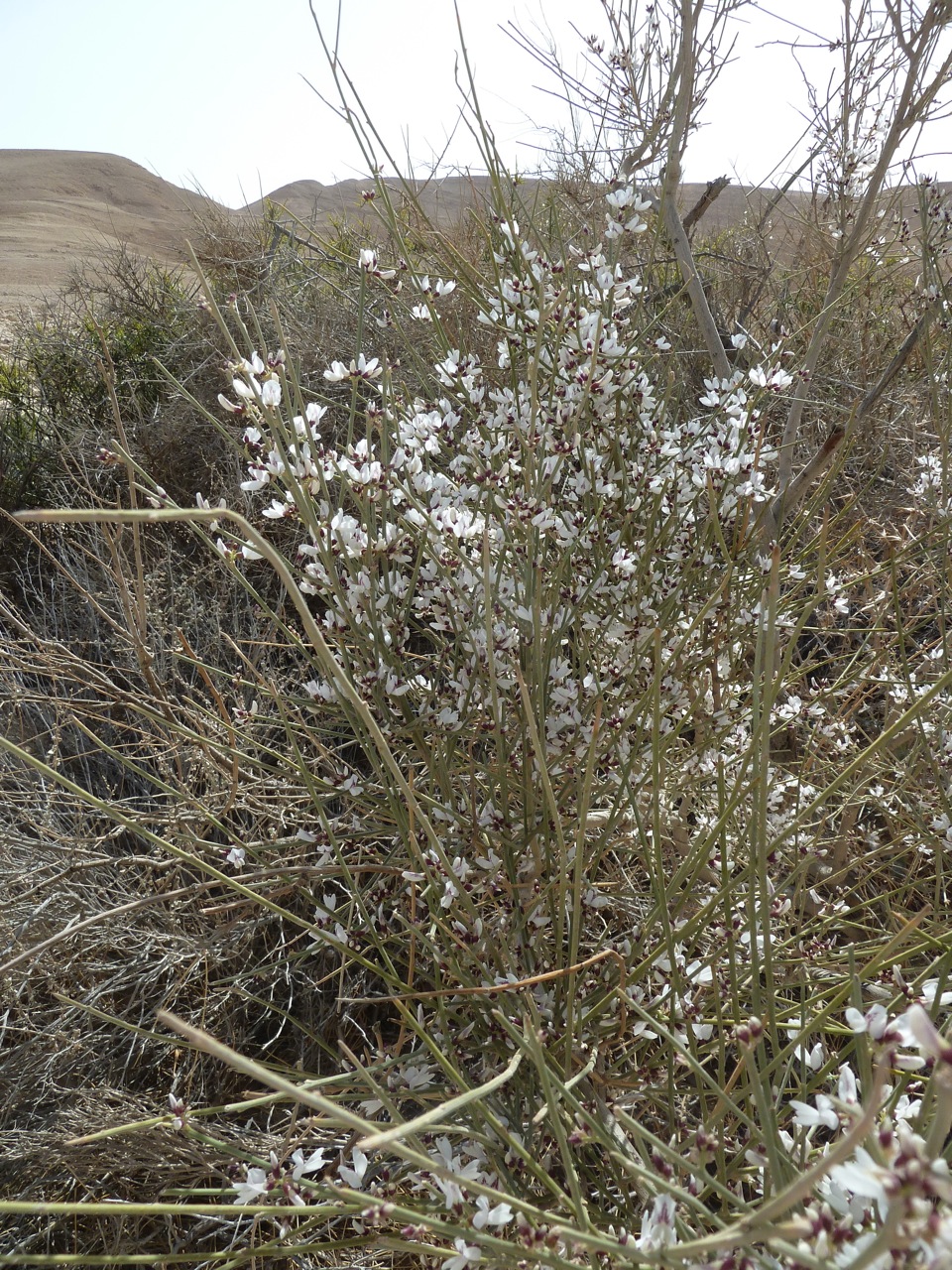
The White Broom, Rotem HaMidbar (Retama raetam) was blossoming, bunches of small, delicate white flowers. This is the bush under which the prophet Elijah sat.

But he went a day’s journey into the wilderness, and came and sat down under a broom-bush. Kings I 19, 4

The Broomrape, Yahnuk HaMidbar (Cistanche tubulosa) is a parasite that grows on and gets its nourishment from the roots of other plants. There are no leaves, just a spike of yellow flowers.

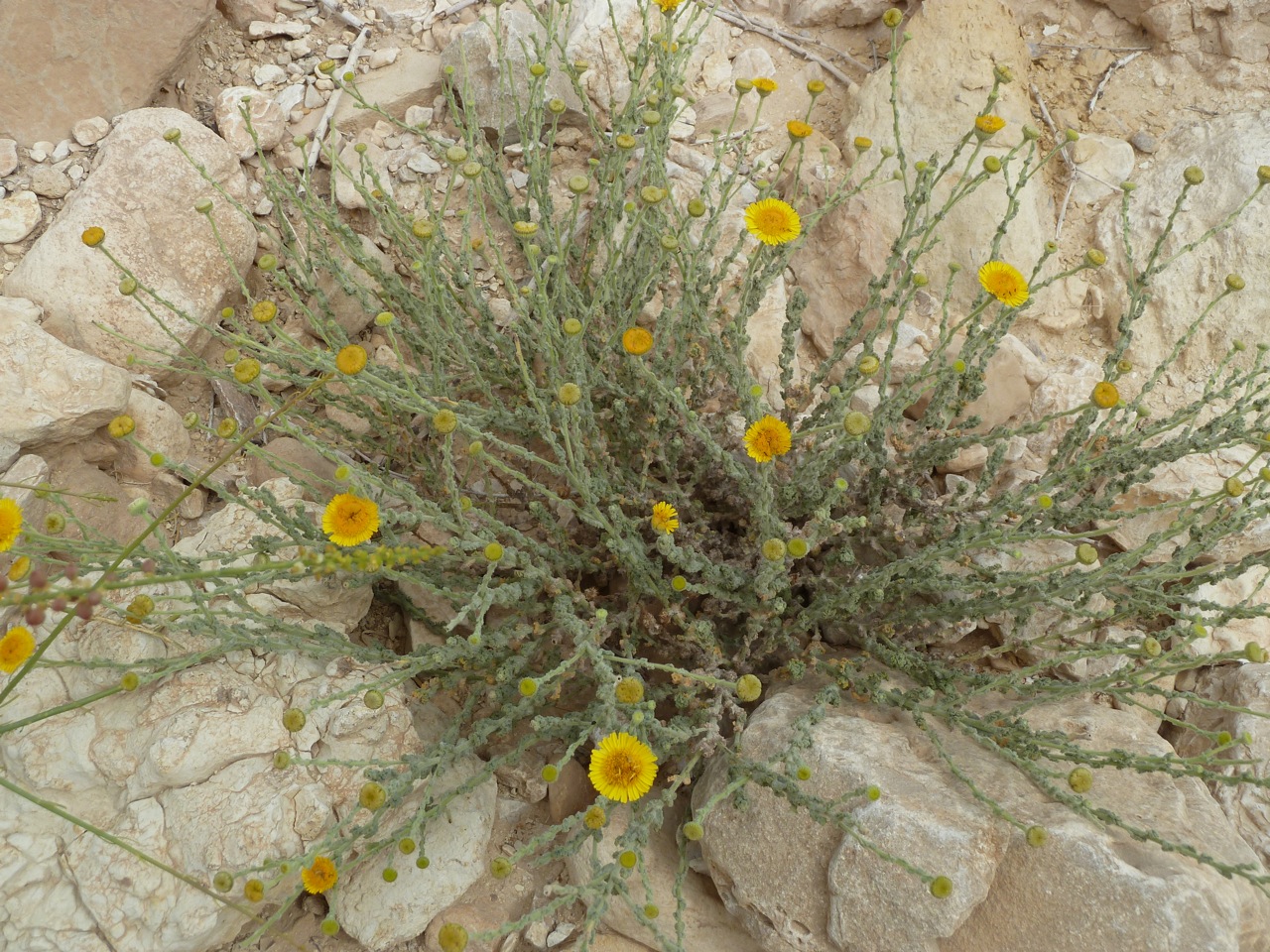
Parosheet Galonit (Pulicaria desertorum) is a low-lying plant with yellow flowers that grows in desert areas. The leaves and flowers can be used to make tea, the plant has a pleasant scent.

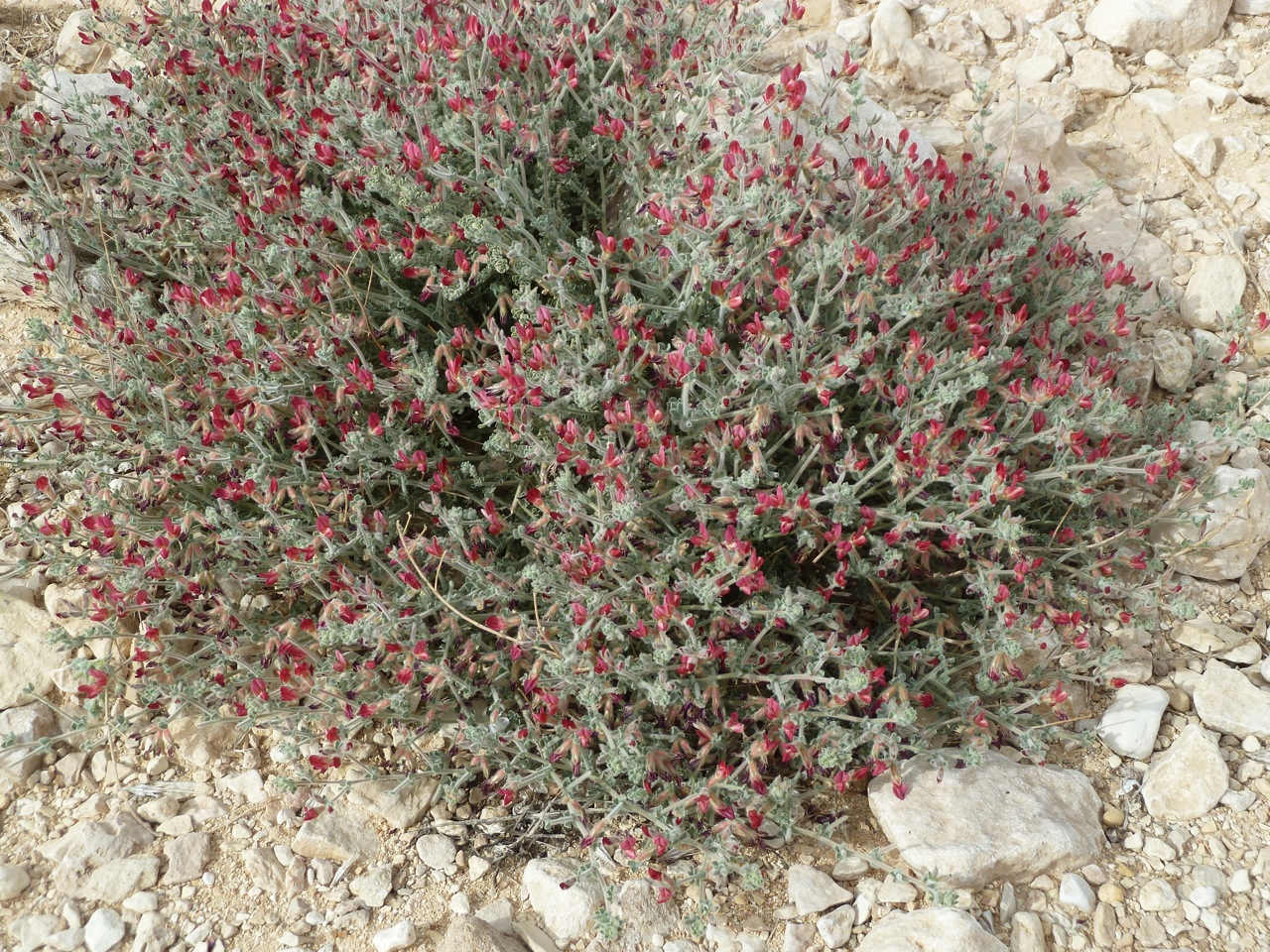
Lotus HaMidbar, Desert Lotus (Lotus lanuginosus) is a low-lying perennial with small red flowers that grows in desert areas.

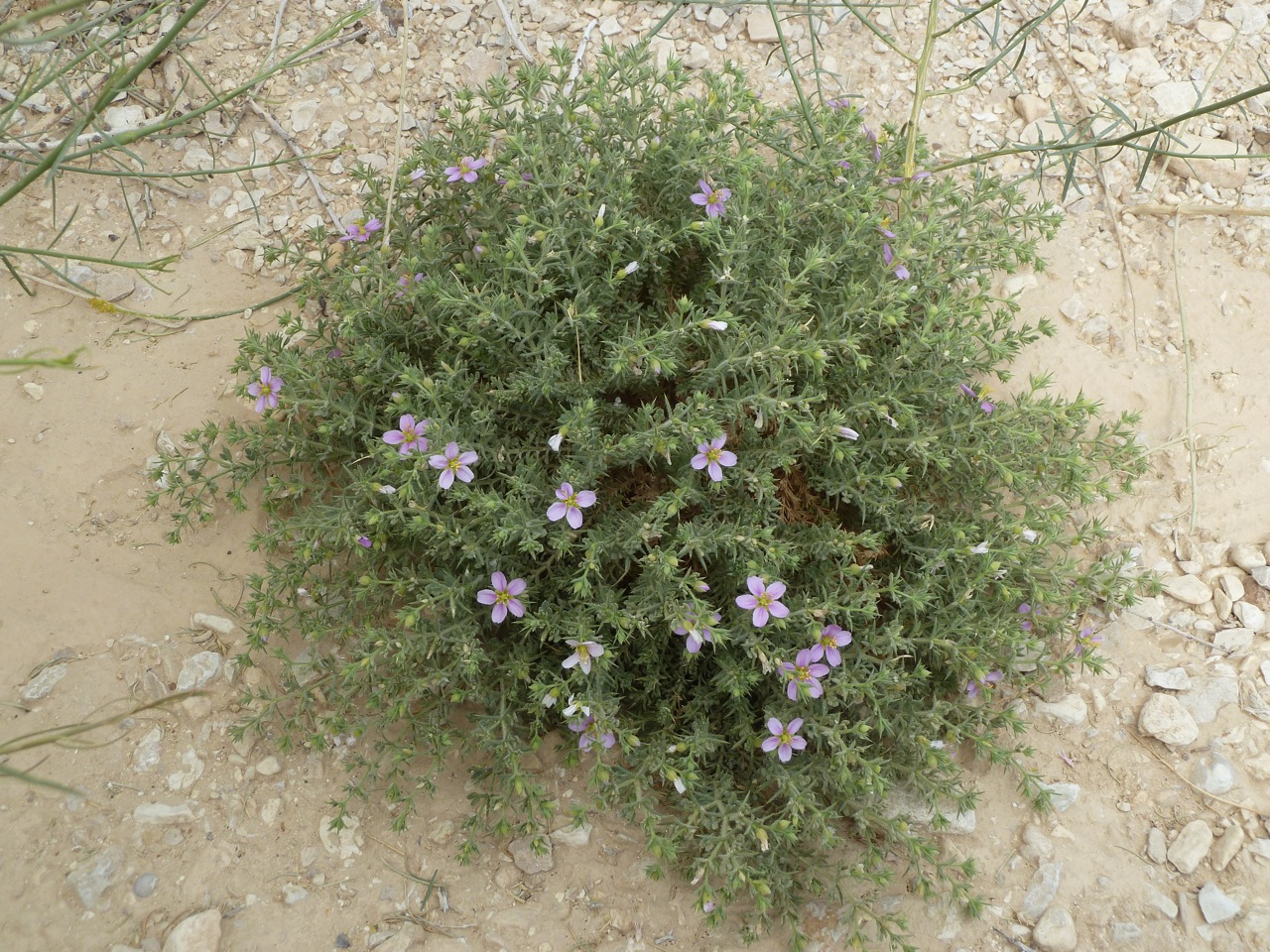
Fagonia Rakah (Fagonia mollis) is one of the typical and most widespread plants that grows in the desert.

For other posts about wildflowers click on “Wildflowers”  under Categories in the right hand column or https://israeltours.wordpress.com/category/wildflowers/

Israel Trail Encounter

The Israel Trail or Shvil Yisrael is a national hiking trail inaugurated in 1994 that zigzags the entire country from Tel Dan in the north near the Lebanese border to the southernmost tip of Israel at the Red Sea, approximately 940 km. You may have seen sections of the trail on other hikes (the Israel Trail was created by connecting some of the existing, favorite hiking trails), for example, if you’ve visited the Small Makhtesh from the western lookout point the trail descends and crosses to the mouth of the makhtesh and then north via Maale Hatzera. You can recognize the trail by its 3 colored stripes, white (signifying the snow on Mount Hermon, north), blue and orange (like sand or south to Eilat).

I have Zvi Gilat’s excellent guidebook to the Israel Trail in Hebrew; there is one guide book, Israel National Trail by Jacob Saar, including topographical maps in English. The official website is at http://www.israelnationaltrail.com/ which includes a forum that enables you to connect with other hikers to discuss the trail.

I just got back from 8 days hiking on the southern part of the trail from the border crossing with Egypt at Taba to Shaharut in the Negev (incommunicado with the outside world, walking the desert landscape – which is why there was no blog post). Walking for a number of hours through a narrow canyon, climbing a ridge or mountain for a 360 degree view of your surroundings and watching the changing forms of the sandstone cliffs as you hike by is a different experience than driving up to a site by car.

The trail lets you experience nature throughout Israel with the opportunity to relate to the history of the country. I joined the annual Avi B’shvil Yisrael, an incredible project that brings together a third component, encounter with Israelis from throughout the country, young and old, religious and secular. There is a daily group discussion about the significance of kibbutz and an evening guest who talks about his/her experience related to kibbutz (the subject being examined this year). They also handle a lot of the logistics, you can pay 10NIS for fresh fruit, vegetables and bread to have for lunch and 10NIS for a communal dinner, the organizers ensure that there is enough water for the next day, provide a guide and arrange transportation (back to where you left your car, car pooling or a main road where you can get a bus). They are hiking the Israel Trail until Thursday, April 28, 2011 when they reach She’ar Yeshuv so if you can find the time, check out the itinerary at http://www.avi-beshvil-israel.org.il/luz.php and join them. I strongly recommend it.

The project is in memory of Avi Ofner and 72 other soldiers who died on February 4, 1997 when two IDF Sikorsky CH-53 helicopters collided in midair over She’ar Yashuv. The helicopters were hovering waiting for clearance to cross the border into Israel’s “security zone” in Lebanon.

For recommendation on some dozen other hikes, click on “Hiking” under Categories in the right hand column or https://israeltours.wordpress.com/category/hiking/
Yatir forest

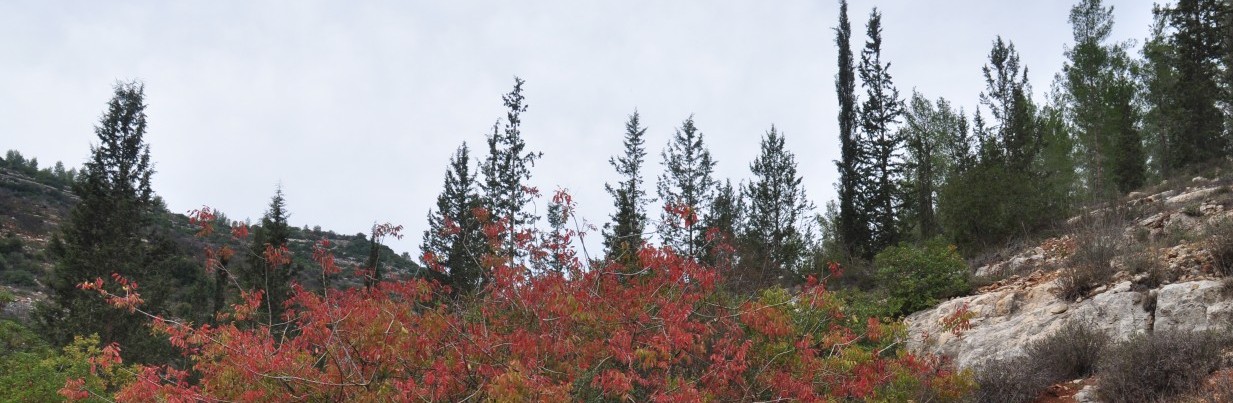
In 1964 the Jewish National Fund planted tens of thousands of trees in the barren lands just south of the Hebron hills on the edge of the Negev. Today Yatir forest is the largest of Israel’s planted forests, including pine trees, carob and pistachio. In the spring, this is one of the areas where you can see the yellow, crocus-like Sternbergia flower blooming (another place is the wadi below Maale Rehavam, near the site of Herodium).

dscn2506

The area includes Jewish and Beduin settlements, a fine winery, vineyards, orchards, agricultural fittings from the 3rd and 4th C and the ruins of a synagogue at Hurvat Anime.
dscn2499

Yatir is just one of the JNF forests and recreational areas. Check their website at
http://www.kkl.org.il/eng/tourism-and-recreation/forests-and-parks/yatir-forest.aspx

Along the trails in the Yatir forest you will see ancient wine presses, cisterns and olive presses, evidence of settlement and wine and oil production 2500 years ago. Tel Arad, another archaeological site that goes back to the Chalcolithic period is nearby. On the upper hill is the only Judean temple discovered by archaeologists to date. The incense altars and two “standing stones” may have been dedicated to Yahweh and Asherah. The Yatir winery sits at the foot of Tel Arad and tours of the winery should be arranged in advance.

Related articles

Negev touring and Dead Sea

Here’s a 2-day itinerary to explore and understand the desert.

Day 1 – Arad to Avdat: geology, water and Nabateans
  • Ein Yorqeam
  • Makhtesh HaGadol: colored sand, petrified trees
  • Ben Gurion’s tomb
  • Lake Yeruham, we saw 1000s of storks
  • Avdat, Nabatean/Byzantine city
  • overnight at Carmei Avdat (on cheese/wine route) on site of Nabatean farm, rock drawings, wine tasting
Day 2 – Negev to Dead Sea to Jerusalem
  • Makhtesh Ramon: HaMinsara – black prismatic rocks, Ein Saharonim – Nabatean caravanseri on the Spice route,
  • Synagogue at Ein Gedi from Roman/Byzantine period
  • St George’s monastery, perched on the cliff at Wadi Qelt