Category Archives: Tomb

Roman Mausoleum

Because our son Amitai is training new recruits for the Border Police I attended the swearing-in ceremony at Tel Hadid. Hadid is mentioned in Nehemiah 7 in the list of cities to which Jews returned from the Babylonian exile. In excavations at Tel Hadid archaeologists found a typical four room house,  numerous potsherds from the Iron Age (9th-8th centuries BCE) and two complete tablets, written in cuneiform, Assyrian legal documents one recording the sale of land dating from 698BCE and the other a promissory note from 664BCE. The tablets are evidence that with the conquest of Judea by Sargon II foreigners from Babylonia were settled at Hadid.

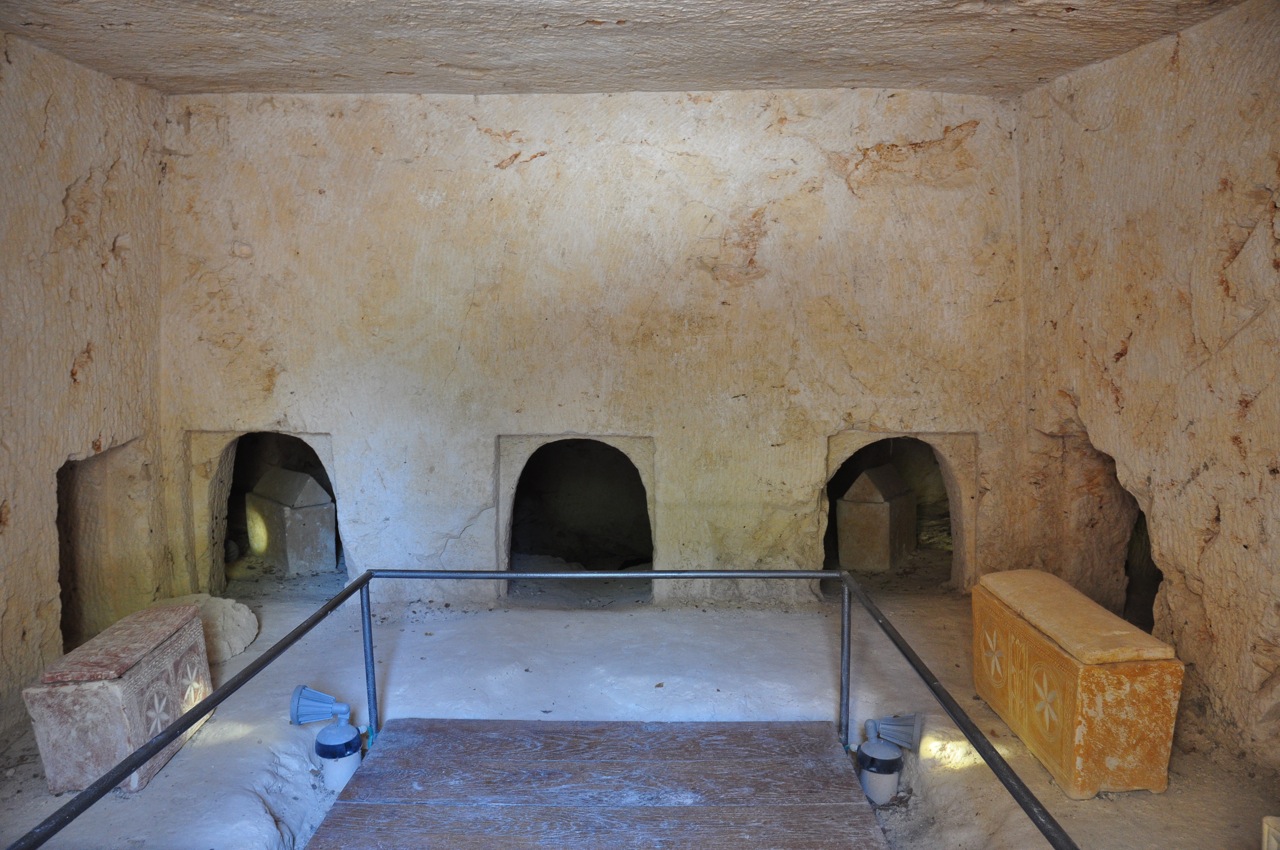
Continuing north past Tel Hadid along highway 444 (which follows the route of the Via Maris) is a small stone building, a Roman mausoleum, amazingly intact and graced with a magnificent temple-like façade in classical style, two columns with Corinthian capitals framing a single entrance (closed originally with a stone door, note the recesses on the doorposts for a mezuza).

According to the style of the building and the remnants of two sarcophagi (stone coffins) in the floor of the main chamber, archaeologists conclude that it was built in the beginning of the 4th century CE for a wealthy landowner and his wife, although their identities remain a mystery.

A second chamber to the left is a columbarium with about 60 “pigeonholes” where doves were raised for sacrifice to Aphrodite. Of interest is a cantilevered stone staircase leading up to the opening at ceiling level.

Later the Muslims added a michrab, a niche in the southern wall signifying the direction of Mecca, and dedicated the site to Nebi Yihya, associated by local tradition with John the Baptist. In this way, the building was preserved through the ages.


Model of Herod’s Tomb

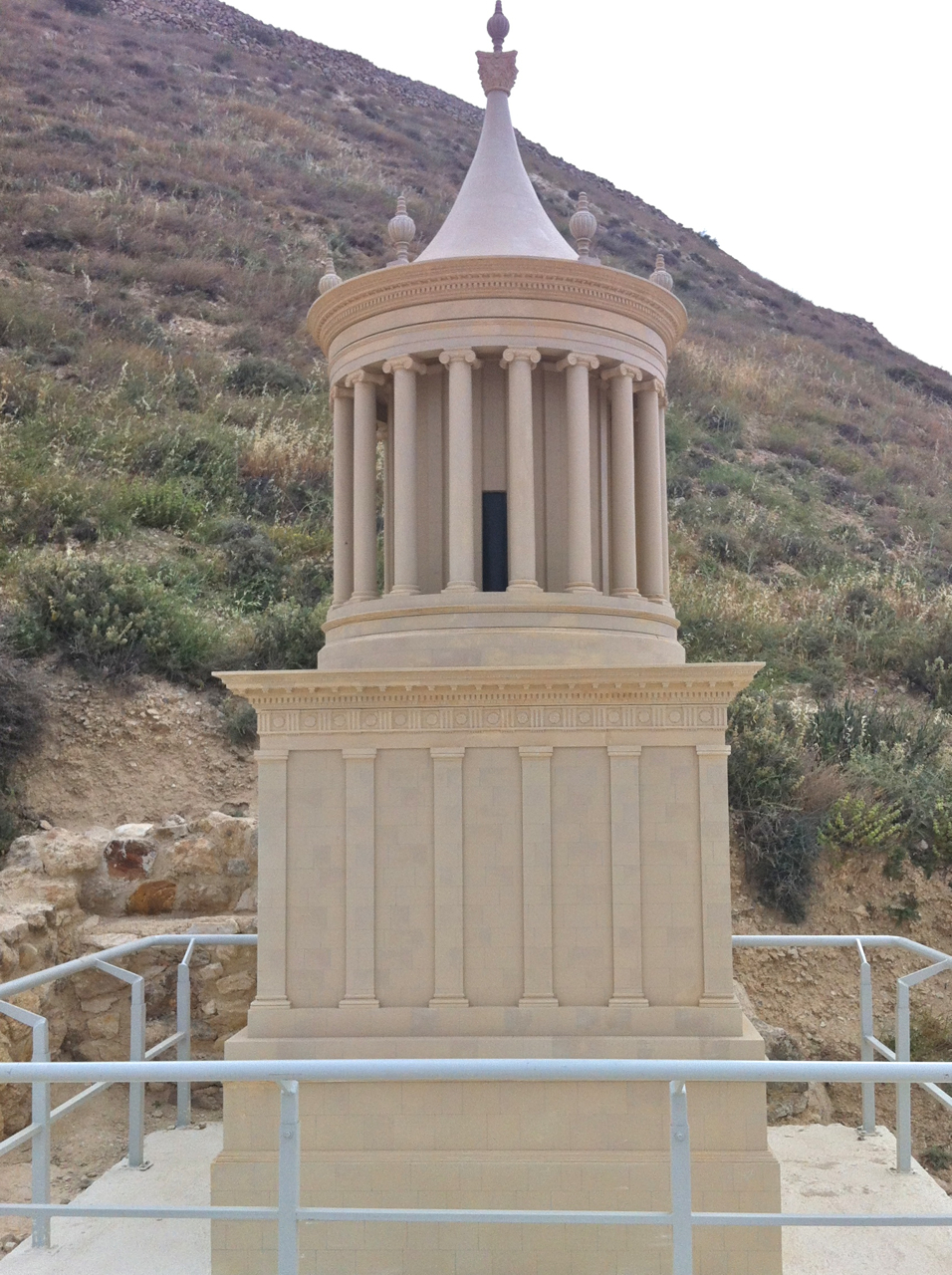
I was at Herodium today and took the opportunity to photograph the new smaller than life-size model of Herod’s tomb which has been installed by the path that leads to the palace-fortress. The model was built from drawings by Prof. Ehud Netzer based on the base of the mausoleum uncovered and Netzer’s expertise as both an architect and archaeologist on the Herodian period. Netzer estimates the nefesh as 25 meters high, with a cube-shaped lower level with two rows of decorations below the roof line, a row of egg and dart pattern and below it a row of medallions and vertical bars. On top of this cube sits a cylindrical second level, a tholos with columns and a conical roof. The model shows Nabatean funerary urns in four places along the roof line and the peak of the cone. We found two pieces of stone carved in the egg and dart pattern a few years ago when I volunteered at the dig.

There is also a short video, currently only in Hebrew, that attempts to illustrate the account by Josephus of Herod’s death.

Archelaus omitted nothing of magnificence therein, but brought out all the royal ornaments to augment the pomp of the deceased. There was a bier all of gold, embroidered with precious stones, and a purple bed of various contexture, with the dead body upon it, covered with purple; and a diadem was put upon his head, and a crown of gold above it, and a secptre in his right hand; and near to the bier were Herod’s sons, and a multitude of his kindred; next to which came his guards, and the regiment of Thracians, the Germans. also and Gauls, all accounted as if they were going to war; but the rest of the army went foremost, armed, and following their captains and officers in a regular manner; after whom five hundred of his domestic servants and freed-men followed, with sweet spices in their hands: and the body was carried two hundred furlongs, to Herodium, where he had given order to be buried.

There were a half dozen people working at the tomb site. I noticed the remains of some additional structures that have been uncovered. Unfortunately, access to the tomb area is still closed.

Rujm el-Hiri Revisited

I wrote about Rujm el-Hiri in a post on May 2009 and concluded with a variety of suggestions about what the structure may have been used for. Now Dr. Rami Arav who has been excavating at nearby Bethsaida since the late 1980s has proposed a new theory reported in the Nov/Dec issue of Biblical Archaeology Review based on a broader look at the local Chalcolithic civilization (4500-3500BCE) and on similarities he noticed with more distant cultures.

Rujm el-Hiri consists of four concentric circles, the outermost more than 150 meters across, made up of an estimated 42,000 tons of basalt rock. Experts believe that these are the remains of massive walls that once rose as high as 8 meters (think of the ruins of the walls of the storehouses and the Roman camps at Masada).

Excavations at Rujm el-Hiri by archaeologist Mike Freikman of Hebrew University in Jerusalem over the past five years have yielded almost no material remains of the kind that are commonly found at most archaeological sites. The lack of artifacts confirms that the site was never inhabited and so was not a town or fortress but most likely a ritual center — possibly linked to a cult of the dead. What is the reason to go to such great lengths to construct something that was never inhabited, whose location was not strategic?

Chalcolithic Ossuary, British Museum

Burial in the Chalcolithic period was in ossuaries, small clay boxes used to house the bones. Stone ossuaries were seen next in the Second Temple period for Jewish burial – bodies were buried for an initial period of about a year in temporary tombs until the flesh decomposed and only the bones remained. In archaeology, this process is called excarnation. But archaeologists have not found evidence of such preliminary graves from Chalcolithic times.


Artifact from Hamatmon Cave, courtesy of Israel Antiquities Authority

Arav found a clue in the treasure of Chalcolithic bronze artifacts discovered in a cave, in the cliffs above the Dead Sea. He looked at a small copper cylinder with a square opening like a gate with figures of birds perched on the edge and saw it as a ceremonial miniature of an excarnation site.

He also noticed a similarity to round, high-walled structures used by Zoroastrians in Iran and India, known as dokhmas or towers of silence. These are structures used for a process known as sky burial — the removal of flesh from corpses by vultures. The winged scavengers perch on the high circular walls, swoop in when the pallbearers depart and can peck a corpse clean in a couple of hours.

Further evidence is a mural showing vultures and headless human corpses several millennia earlier in southern Turkey, where the local Chalcolithic residents are thought to have originated suggesting that excarnation was practiced there.

Arav’s answer is that excarnation was used — vultures did the job. To this day there are Griffon vultures and other large birds of prey that swoop above the valleys of the Golan. Arav concludes that Rujm el-Hiri was an excarnation facility.

Arav also identified a smaller structure consisting of concentric stone circles on a promontory overlooking the Jordan River as an excarnation site, outer circle is 50 meters in diameter and the inner circle 33 meters. Another round structure was recently identified at Palmahim where only ossuaries were found.

It may be hard to come to terms with Arav’s theory given the Judeo-Christian view of honoring the dead and human body but excarnation is practised in other parts of the world and it’s important to remember that the Chalcolithic period predates the Israelites by as much as three millenia.

Jerusalem Tombs

With a history that goes back 4000 years, you can find a lot of tombs in and around Jerusalem. I’ve already blogged about Nicanor’s tomb, tombs at Ketef Hinnom, Caiaphas tomb, Mary’s tomb – you can see all the articles by clicking on Tombs in the right hand column under Categories. Todd Bolen posted a link to a Jerusalem Post article about some significant Jerusalem tombs, King David’s tomb, a Mamluk tomb, Herod’s so-called family tomb (Herod himself chose to be buried at Herodium – one of my favorite sites to guide) and Jason’s tomb and suggested that a couple of photos would enhance the article. I’m happy to oblige and I even mapped out the sites on Google Maps to make them easier to find.


A Morning on Mount Scopus

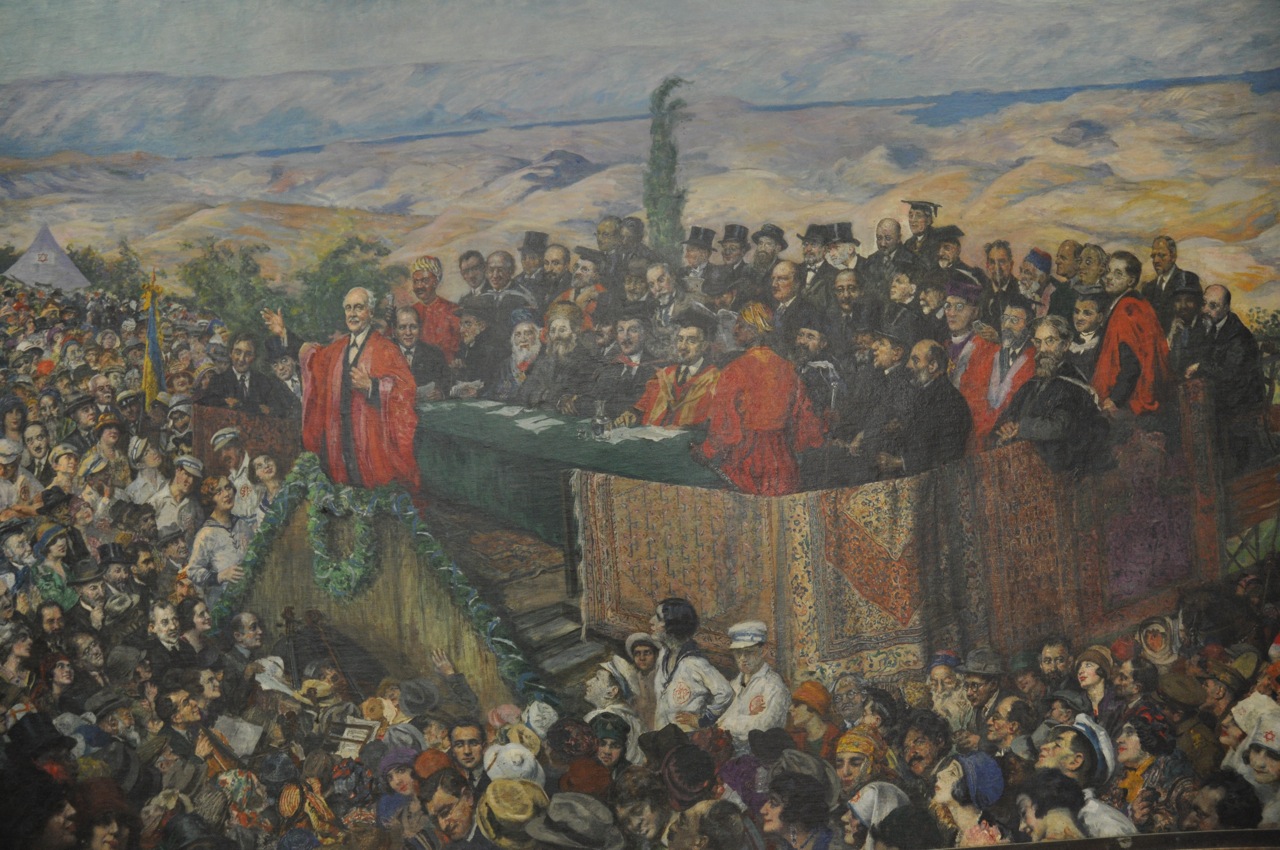
Construction of the campus of the Hebrew University began in 1918 on land purchased from the Gray Hill estate. The dedication ceremony was held in 1925 in the presence of many dignitaries, including Lord Balfour, Viscount Allenby, Sir Herbert Samuel, Chief Rabbi Abraham Isaac Hacohen Kook, the poet Haim Nahman Bialik, Ahad Ha’am, Dr. Chaim Weizmann and many others.
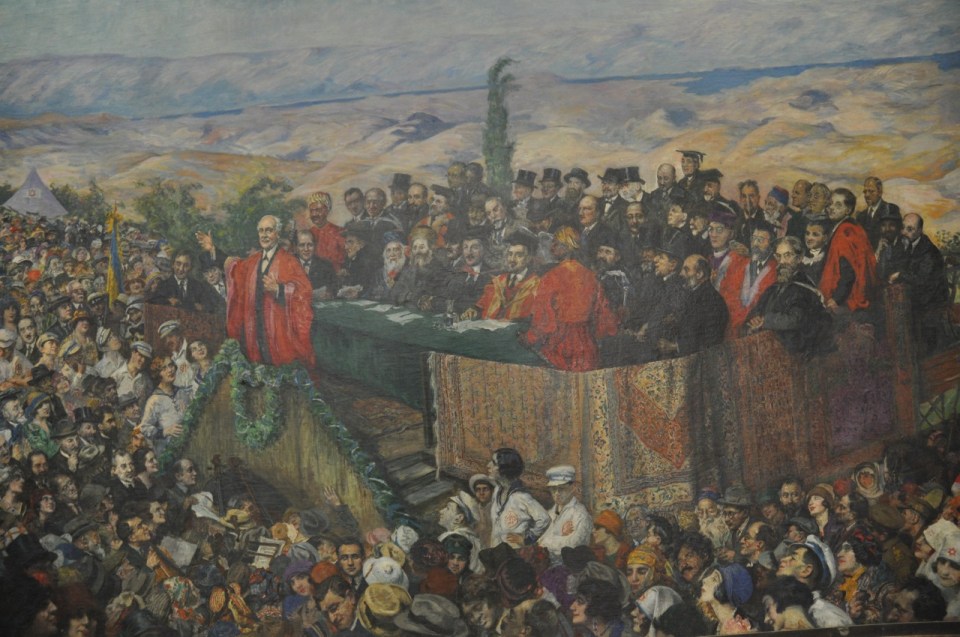
A design for the university campus by Sir Patrick Geddes positioned the university buildings on the slopes of Mount Scopus, below a domed, hexagonal Great Hall recalling the Star of David, as a counterpoint to the octagonal Dome of the Rock in the Old City. This plan was never implemented, but Geddes designed the university library, today the Faculty of Law building. The master plan for the campus was taken over by German Jewish architect Erich Mendelsohn in 1935. Mendelsohn greatly influenced the local Jerusalem International Style (Bauhaus).
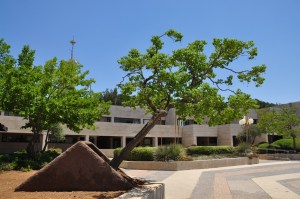
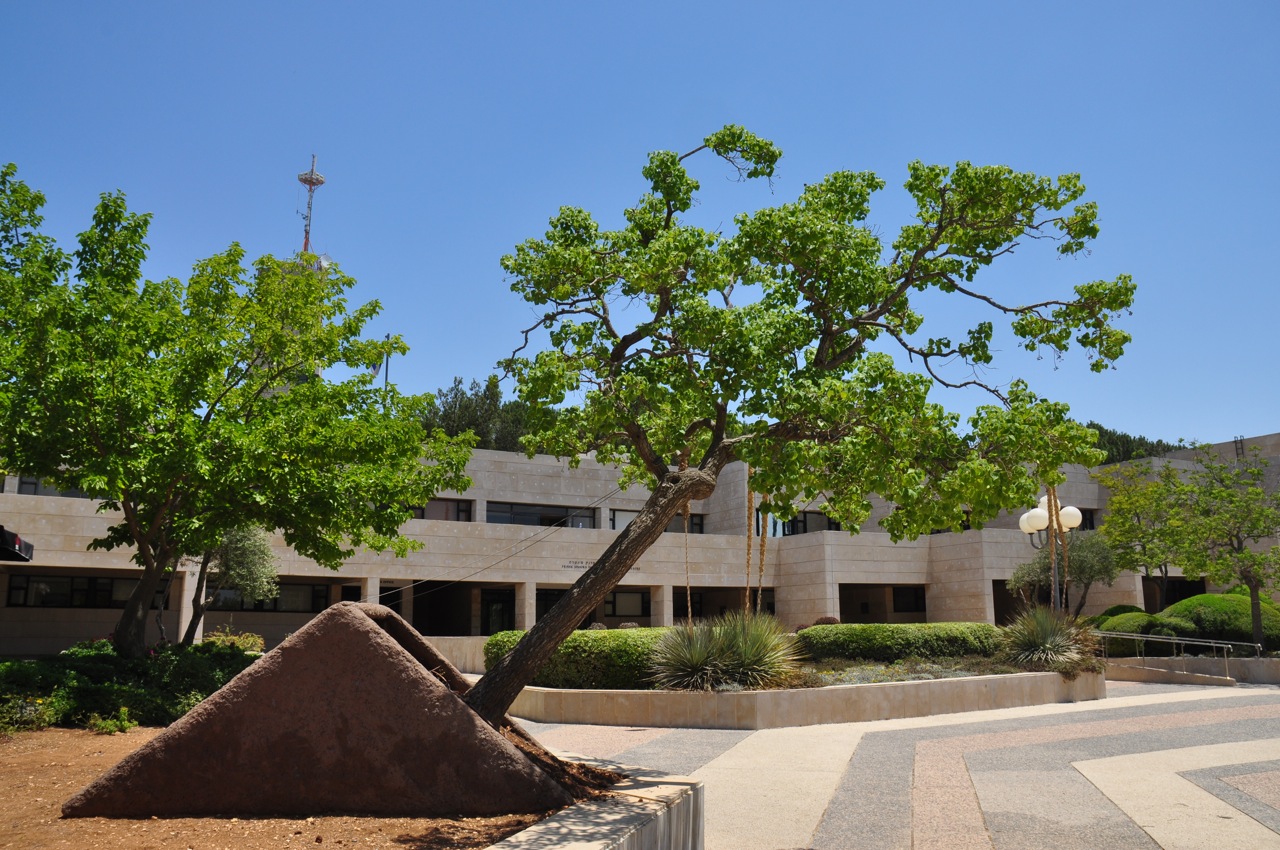
Notice the living sculpture outside of the Sinatra building that commemorates the nine students killed by a bomb left in the university cafeteria in July 2002, a tree growing out of the ground at an angle, by Israeli sculptor, Ran Morin. The Tilted Tree signifies humankind’s ability to withstand even the most disruptive shocks and to continue to grow upwards.

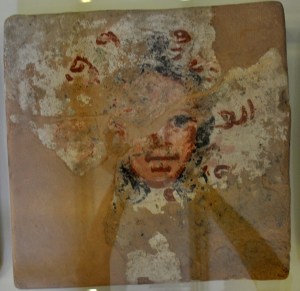
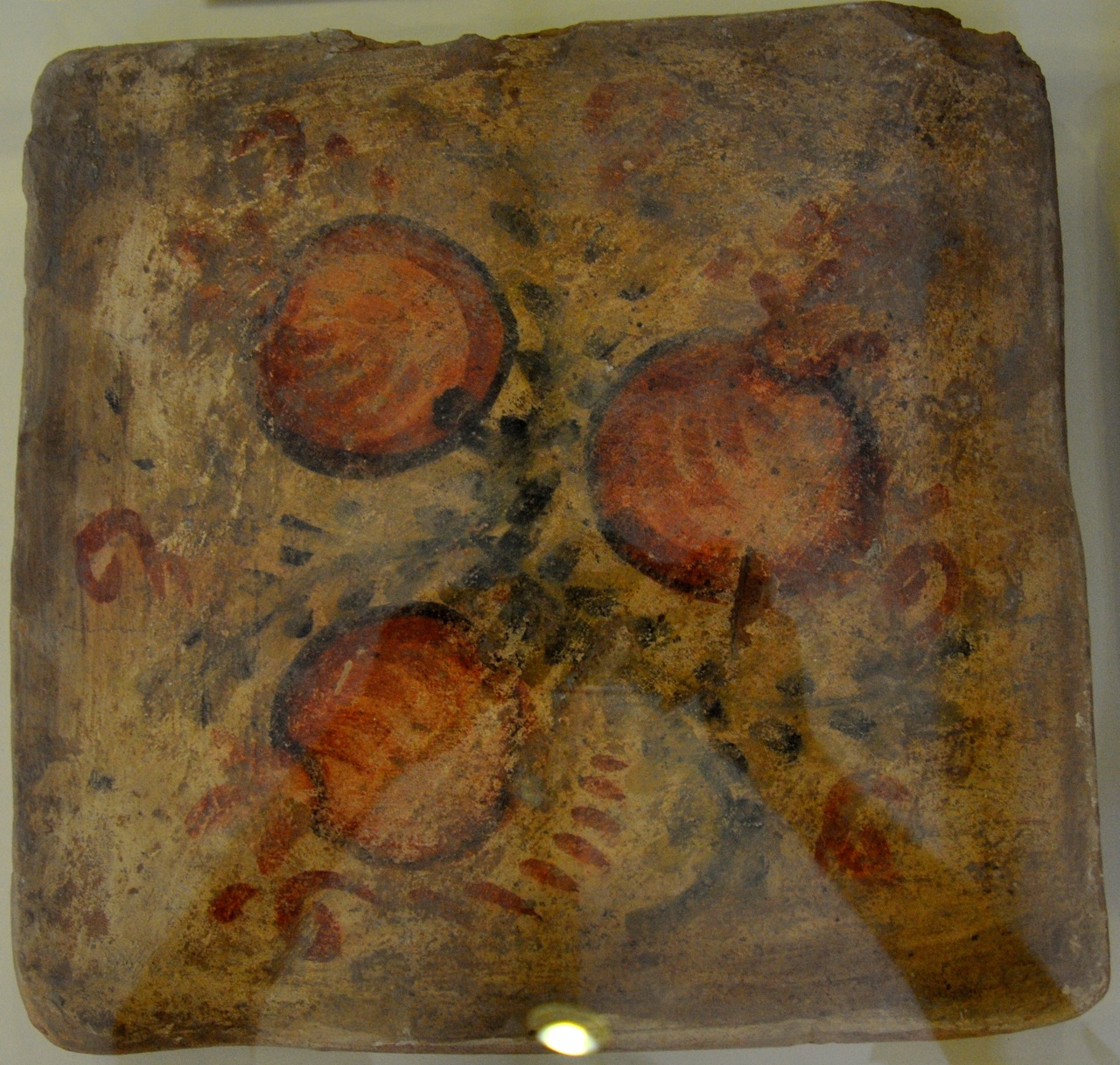
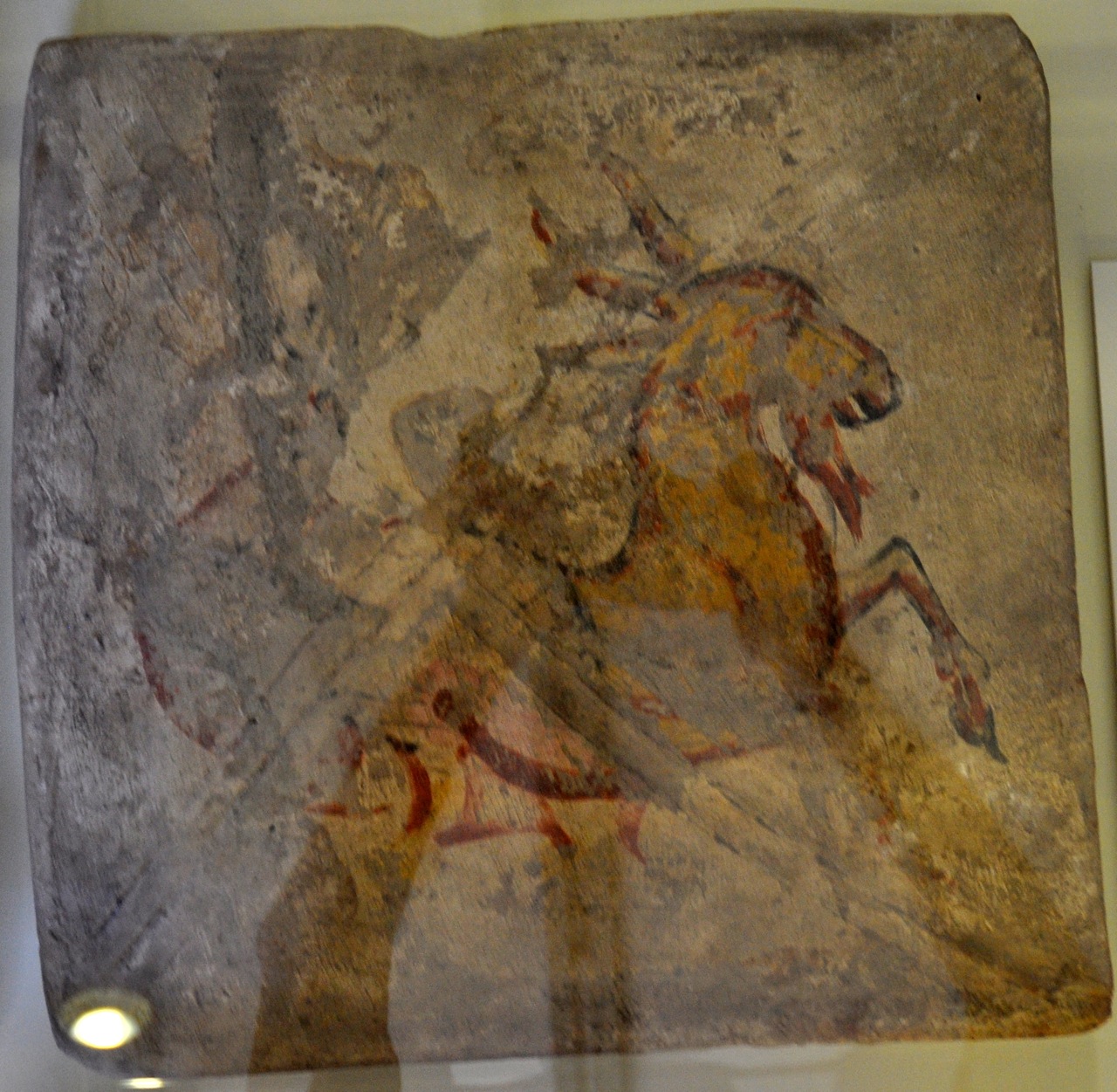
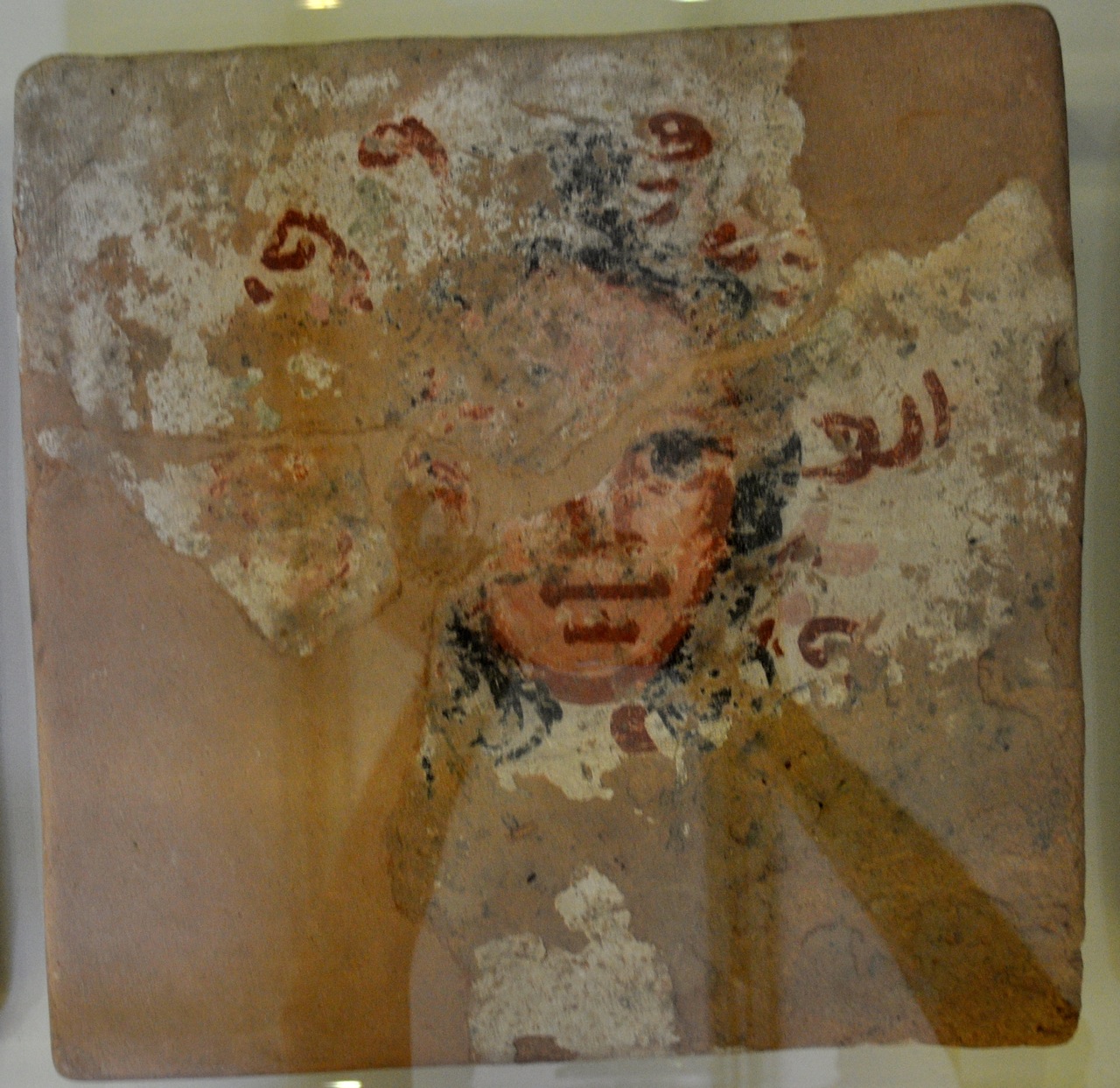
Prof. Sukenik and his colleagues, including Prof. Nahman Avigad, had planned to open a museum on Mount Scopus in 1948 to display items related to the history of the Jewish people in ancient times. Among the artifacts are ceiling tiles from the ancient synagogue* discovered in 1932 in the city of Dura Europos, located in the desert above the banks of the Euphrates in Syria. Sukenik had been invited by the Yale University team to visit the site (in Syria) and join in the publication of the findings. He was given 3 ceiling tiles that he brought back to Israel. The outbreak of the War of Independence with the result that Scopus was isolated within Jordanian-occupied territory made the opening of the museum impossible.
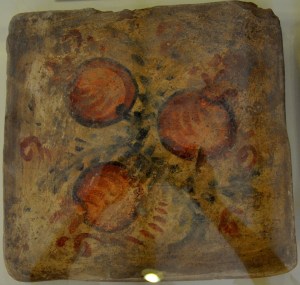
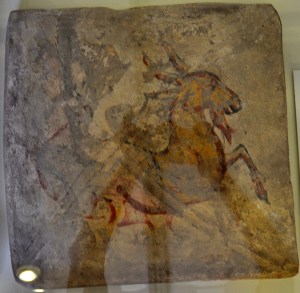
  

Sixty-three years later, these painted clay tiles and other artifacts have been put on display, including some half dozen ossuaries, mosaics, clay vessels, etc. from excavations in Israel by members of the Archaeology department. The modest museum is open to the public.
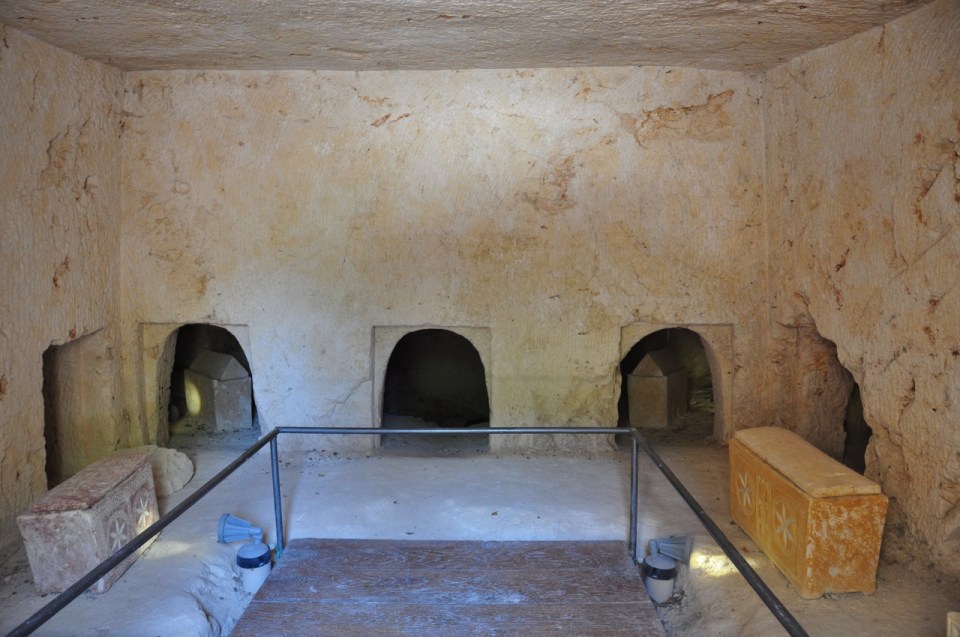
Walk through the botanical gardens organized by Alexander Eig, head of the Botany Department, based on the flora of the Land of Israel planted in 1931 to some caves with Second Temple period tombs. It was here that they found some half dozen ossuaries (the ones displayed on site are replicas, the originals are in the museum) including one with a 4 line inscription in Greek and Hebrew:

[In this ossuary are] the bones of [the family of] Nicanor of Alexandria who made the doors
Nicanor  Alexa

Nicanor is mention in the Babylonian Talmud in Yoma 38a, the donor of the two bronze doors for the Temple. The original ossuary is at the British museum in London.

In 1940s, Pinsker and Ussishkin, early leaders of the Zionist movement, were buried in one of the caves.

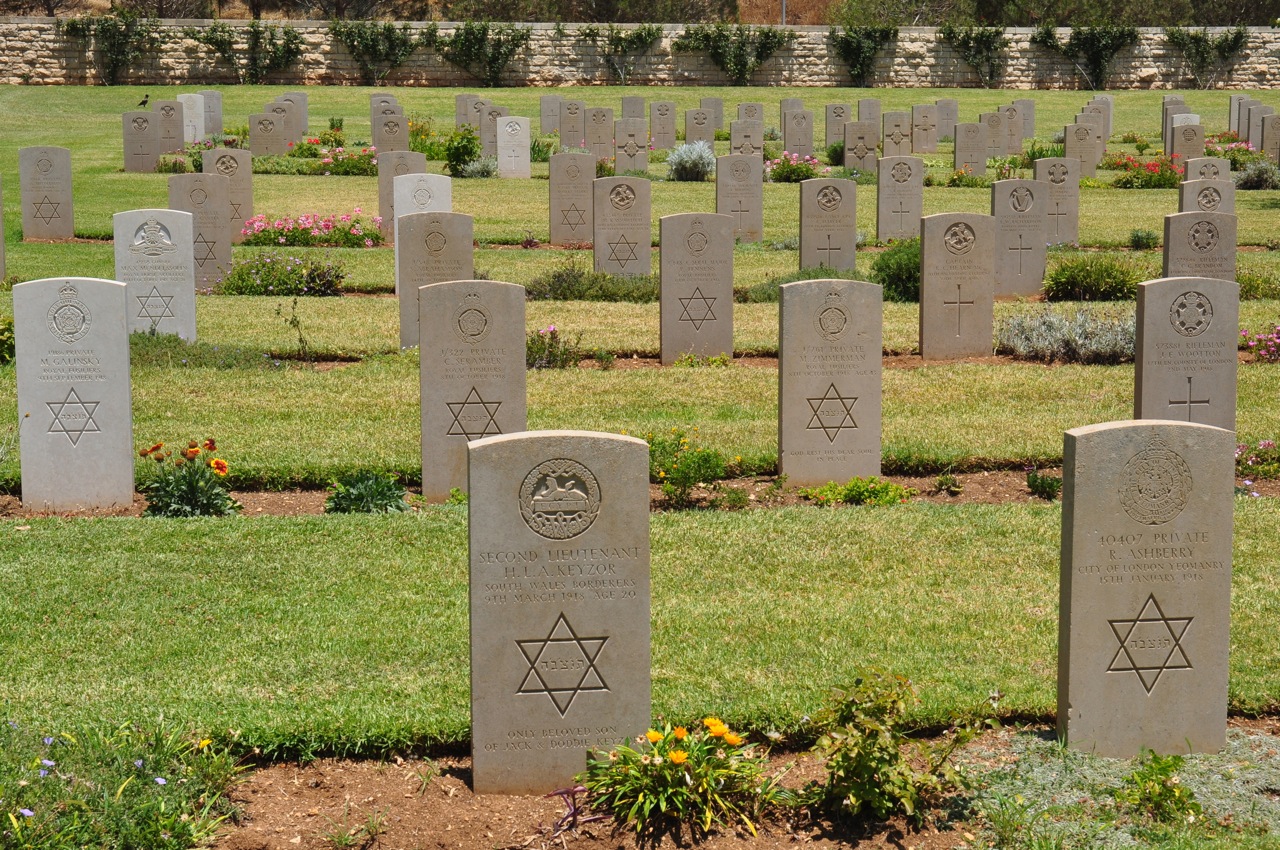
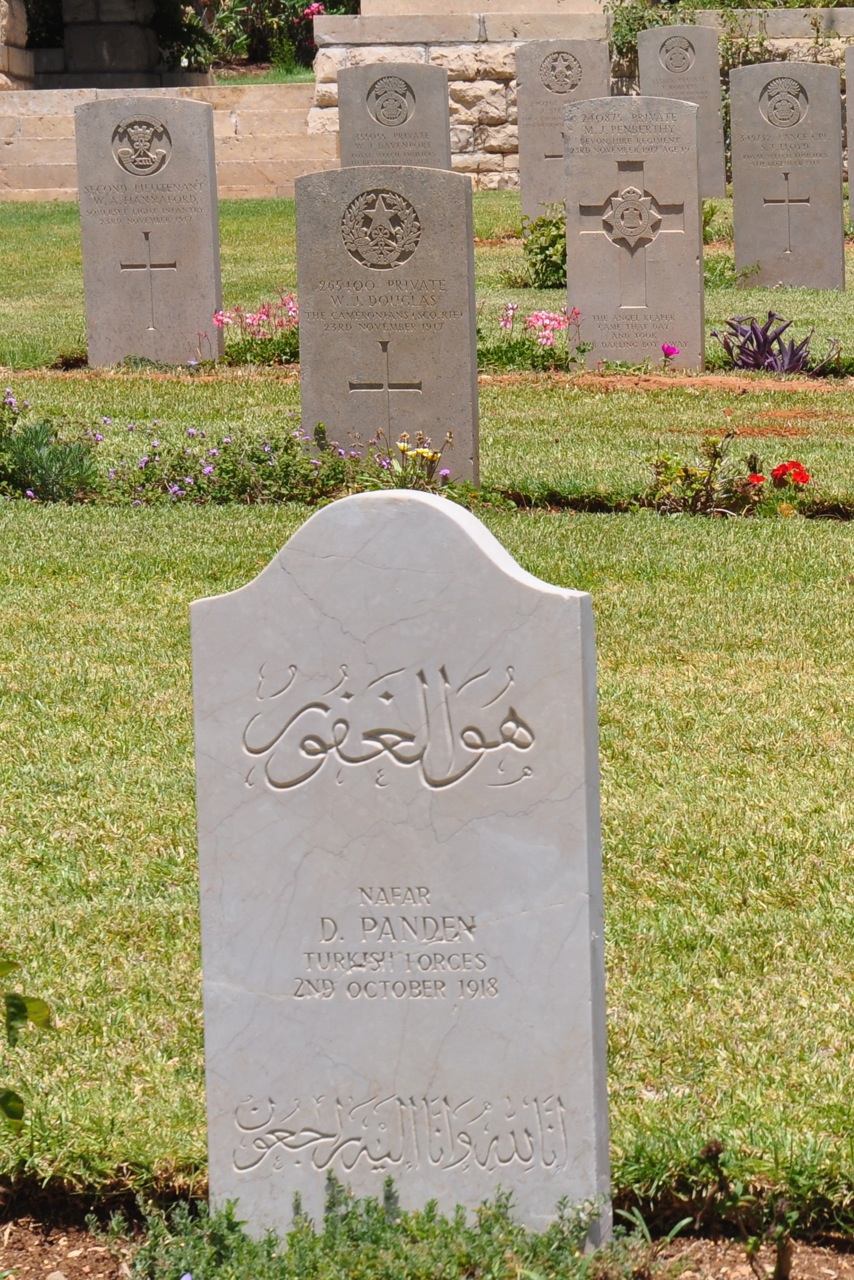
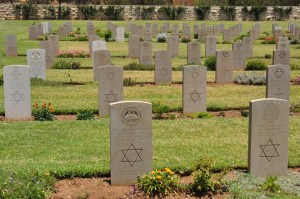
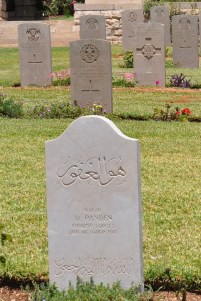
Went back to the Jerusalem War Cemetery on Mount Scopus and found the graves of Jewish soldiers who served in the British army during WWI and fought and died here. In addition, I noticed two gravestones of Turkish soldiers.
  

Visited the memorial at Givat HaTachmoshet to see the model of Jerusalem and how the city was divided in the ceasefire agreement of Nov 30, 1948 signed by Dayan (Israel) and el-Tell (Jordan). Article VIII of the 1949 Armistice Agreements signed by Israel and Jordan in April 1949 called for a resumption of “the normal functioning of the cultural and humanitarian institutions on Mount Scopus and free access thereto; free access to the Holy Places and cultural institutions and use of the cemetery on the Mount of Olives; resumption of operation of the Latrun pumping station; provision of electricity for the Old City; and resumption of operation of the railroad to Jerusalem.” Jordan did not abide to the agreement. There is a movie with original army footage that relates the events that divided the city in 1948 and shows how Israel recaptured the area from Jordan in 1967 and reunited the city.


http://art-history.concordia.ca/cujah/issue03/3-the-significance-of-the-dura-europos-synagogue.htm
Miriam… Caiaphas Ossuary

The Israel Exploration Journal (Vol. 61) recently published an article by Zissu and Goren which summarizes the importance of and confirms the genuineness of a decorated ossuary bearing an engraved inscription. The Israel Antiquities Authority Unit for the Prevention of Antiquities Robbery acquired the ossuary three years ago from antiquity robbers who had plundered a Jewish tomb from the Second Temple period. Although the provenance of the ossuary is unknown investigations have led the IAA to determine that the ossuary came from a burial cave in the area of the Elah Valley.

The front of the ossuary that was found is decorated with a stylized floral motif above which is a long Aramaic inscription engraved in Jewish script:

מרים ברת ישוע בר קיפא כהן דמעזיה דבית עמרי

‘Miriam Daughter of Yeshua Son of Caiaphas, Priest[s] of Ma’aziah from Beth ’Imri’
or, an alternative reading
Miriam, Daughter of Yeshua Bar Qayafa, Priest of (the course of) Ma’aziah of the House of ‘Omri

In the conclusion of their study Zissu and Goren write, “the prime importance of the inscription lies in the reference to the ancestry of the deceased – Miriam daughter of Yeshua – of the Caiaphas family, indicating the connection to the family of the Ma’aziah course of priests of Beth ’Imri”. Caiaphas is the name of Yeshua’s father, and Miriam‘s grandfather.

Ma’aziah is the last of the twenty four priestly courses (service shifts) that served in the Temple in Jerusalem (the list of courses was formulated during King David’s reign and appears in I Chronicles 24:18). This is the first reference to the Maʽaziah course in an epigraphic find from the Second Temple period. For the first time we learn from an inscription that the Caiaphas family was related to the Ma’aziah course.

The ending “from Beth ’Imri” can be interpreted two ways:

  1. The first possibility is that Beth ’Imri is the name of a priestly family – the sons of ’Immer (Ezra 2: 36-37; Nehemiah 7:39-42) whose descendents include members of the Maʽaziah course.
  2. The second possibility is that Beth ’Imri is the place of origin of the deceased or of her entire family. The name of the ancient settlement was probably preserved in the name Beit ’Ummar, a village in the northern Hebron Hills. In that village and in nearby Khirbet Kufin, remains of a Jewish settlement were identified from the Second Temple period and the time of the Bar Kokhba Revolt. It is possible that the village of Kufin preserves the name of the Caiaphas family.

Since the ossuary in question was not found in a controlled archaeological excavation and because of the importance of its inscription, it was subjected to microscopic examinations using an environmental scanning electron microscope/energy dispersive spectrometer (ESEM/EDS), the purpose of which was to evaluate its authenticity. The patina covering the sides was checked, with emphasis on the patina covering the inscription. The examinations determined that the inscription is genuine and ancient.