Category Archives: Photography

Hiking Wadi Qelt – St George Monastery

Hiking Wadi Qelt is best in the early morning on the way down to the Dead Sea, a great place to experience the Judean desert and for photographs of the desert landscape.

From Jerusalem on highway <1> take the left at Mizpe Yericho, left again and left at the T. Park the car here for a great view of Wadi Qelt/Nahal Prat. Follow the black trail down to the stream bed. Here you will see the remains of the stone arches of the bridge of the aquaduct.

Continuing another 450 meters you’ll come to a wooden bridge that crosses Nahal Prat and to your left is the Ein Qelt pool. There are two possibilities from here: hike west along the streambed to a string of pools in Lower Nahal Prat or east along the red trail which will take you after about 2 kilometers to the monastery of St George of Koziba perched on the northern cliff.

From the monastery you can climb up to the road where you drive back to the highway or continue to the ruins of Herod’s fortress at Cypros.

Christian monks began to settle in the Judean Desert in the early 4th century identifying with Moses, Elijah, Jesus and others who spent time in the desert, as a respite from the secular world. By the fifth to seventh centuries, there were some 65 monasteries in the area: St. George, Martyrius, Euthymius, Deir Hijla, Mar Saba can be visited to this day.

Originally founded as a laura, a cluster of cells or caves for hermits about 420 CE, a small chapel was added later and about 480CE St. John of Thebes transformed the site into a monastery. In the 6th century it became known as St. George under the leadership of Gorgias of Koziba, born in Cyprus about 550 CE. The Persians destroyed it in 614 and it was rebuilt during the Crusader period but abandoned when the Crusaders were defeated and was reported in ruins by a pilgrim who visited in 1483. In 1878 a Greek monk, Kalinikos, settled here and restored the monastery, completing it in 1901.
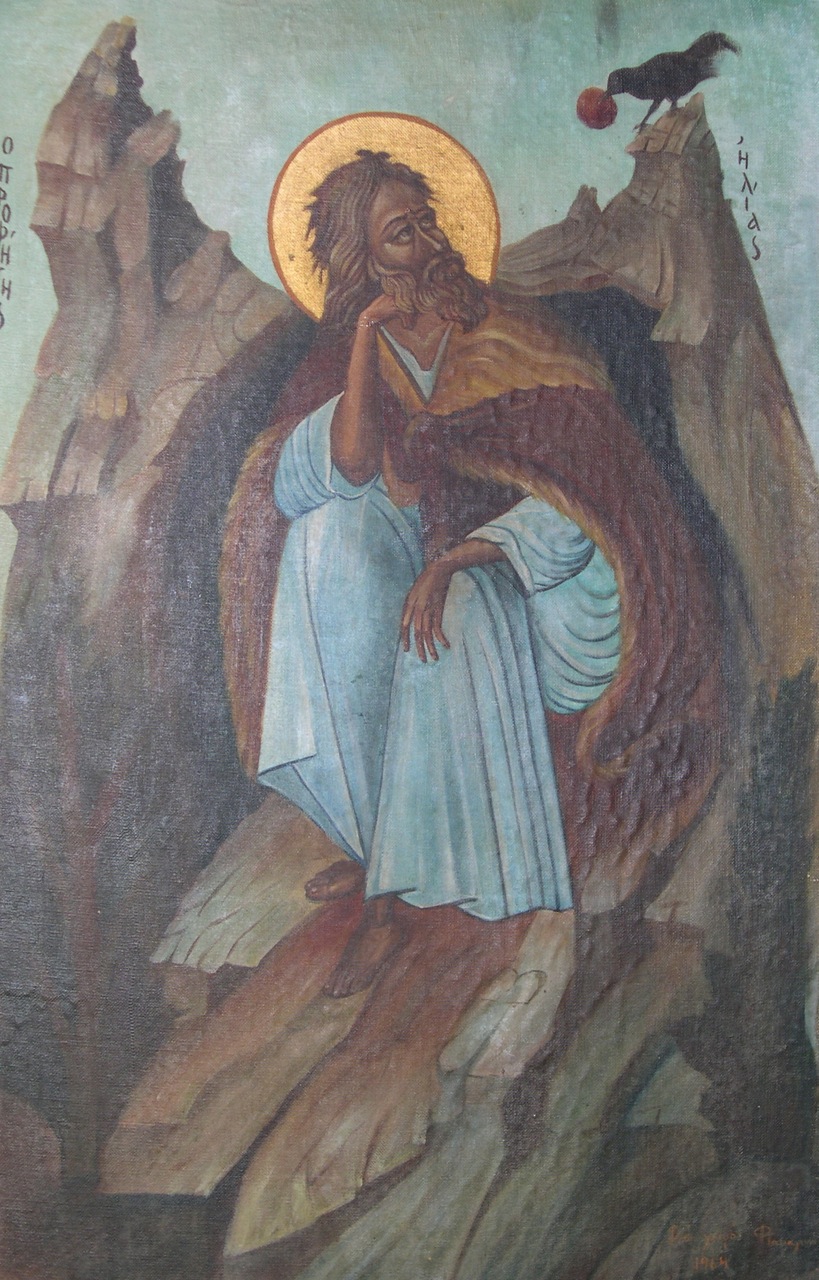
According to tradition this is the place where Elijah stayed when God commanded him to leave King Ahab during the drought and was fed by ravens:

5 So he went and did according unto the word of the LORD; for he went and dwelt by the brook Cherith, that is before the Jordan.

6 And the ravens brought him bread and flesh in the morning, and bread and flesh in the evening; and he drank of the brook.

I Kings 17

There is also the story that Joachim, father of the Virgin Mary, hid here for forty days bewailing the barrenness of his wife Anne, whereupon an angel came to him to announce that Anne was pregnant with a daughter.
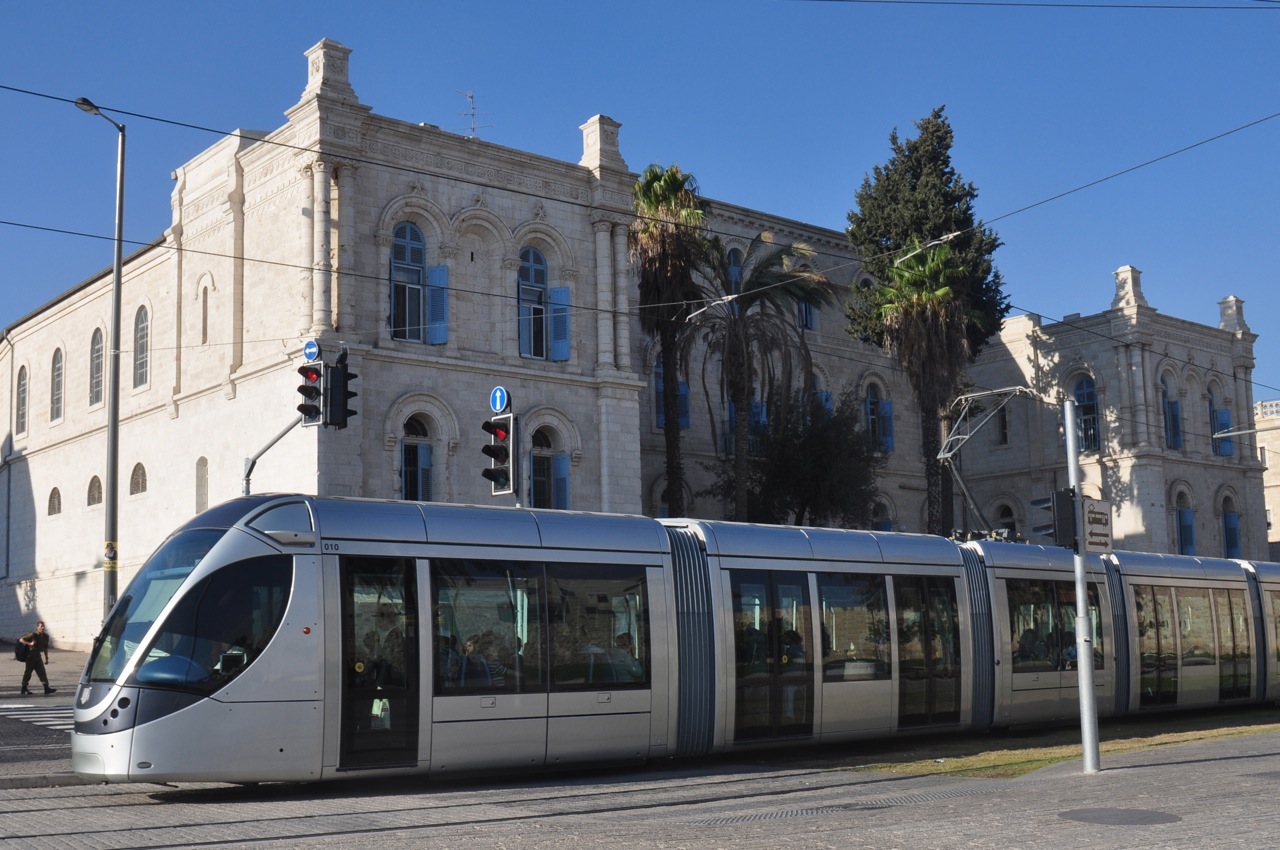
Photo Walk

I spent 3 hours yesterday afternoon on a photowalk, in this case, walking through the Old City taking photos, one of about 30 photographers. We started at Kikar Tzahal, walked through the Mamilla mall, entered Jaffa gate, followed the main road through the Armenian quarter to the Jewish quarter, down the steps to the Western Wall plaza and back to Jaffa gate via the Arab shuq. The route was chosen by a photographer – I think a guide could have taken people to some places that would have been more interesting to shoot. I was hoping for some photos with a background sky with a pink and blue sunset but the weather just didn’t cooperate yesterday.

In this post I’m sharing what I think are my best 7 photos. It gives you one particular view of Jerusalem on a particular day. A photowalk is an interesting photographic exercise.

The first day that you could ride Jerusalem’s new Light Rail was August 19. I rode it for the first time last week with clients. For the time being it’s free.

One of Jerusalem’s newest and fanciest hotels designed by Israeli architect, Moshe Safdie, as part of the Mamilla project. Across the street is the David Citadel Hotel also designed by Safdie. On the opposite corner the new Waldorf-Astoria is being built which incorporates the original Palace Hotel.

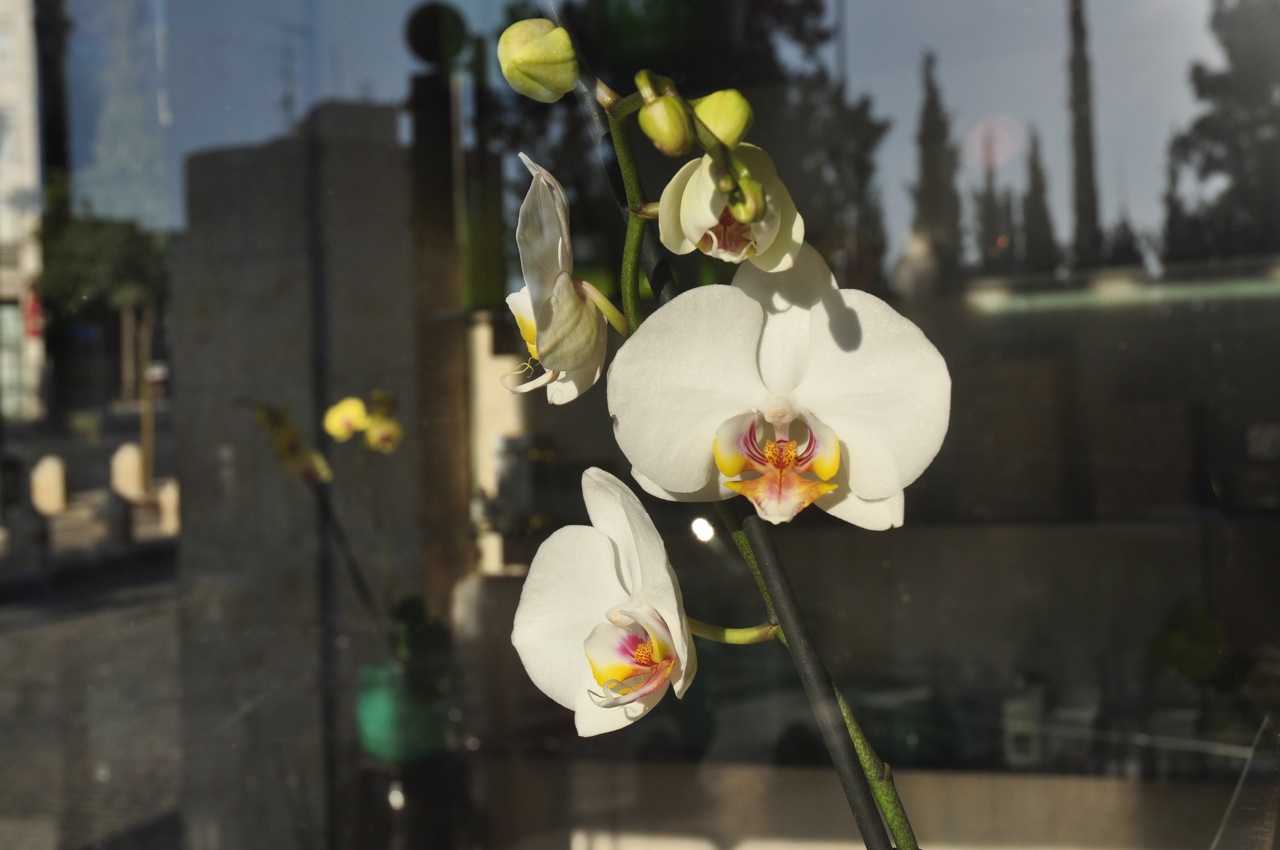
A really incredible flower shop, Aleh Koteret, with Jerusalem being reflected in the window.

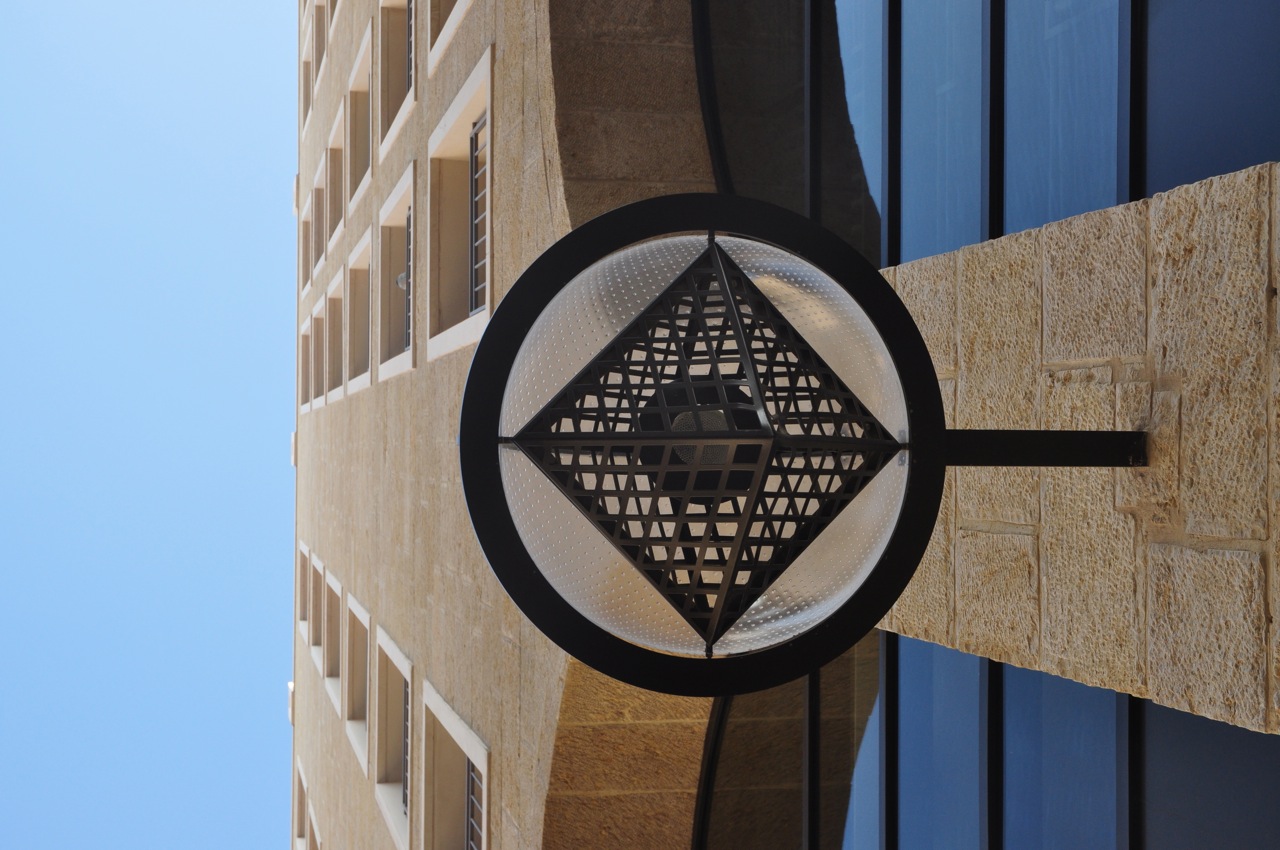
The juxtaposition of metal and Jerusalem limestone, old and new.

Crossing through the Armenian quarter, you take an alleyway that turns left and under an arch is a view north to the Christian quarter and the Church of the Holy Sepulcher and the Mosque of Omar (Ibn Khattab). But Jerusalem, even the Old City, is not a living museum, so there are also water tanks, dude shemesh (sun heated water panels) and satellite dishes.

I can only submit one of these photos to the competition. Comment to make your choice.

Archaeological Ruins at Cypros

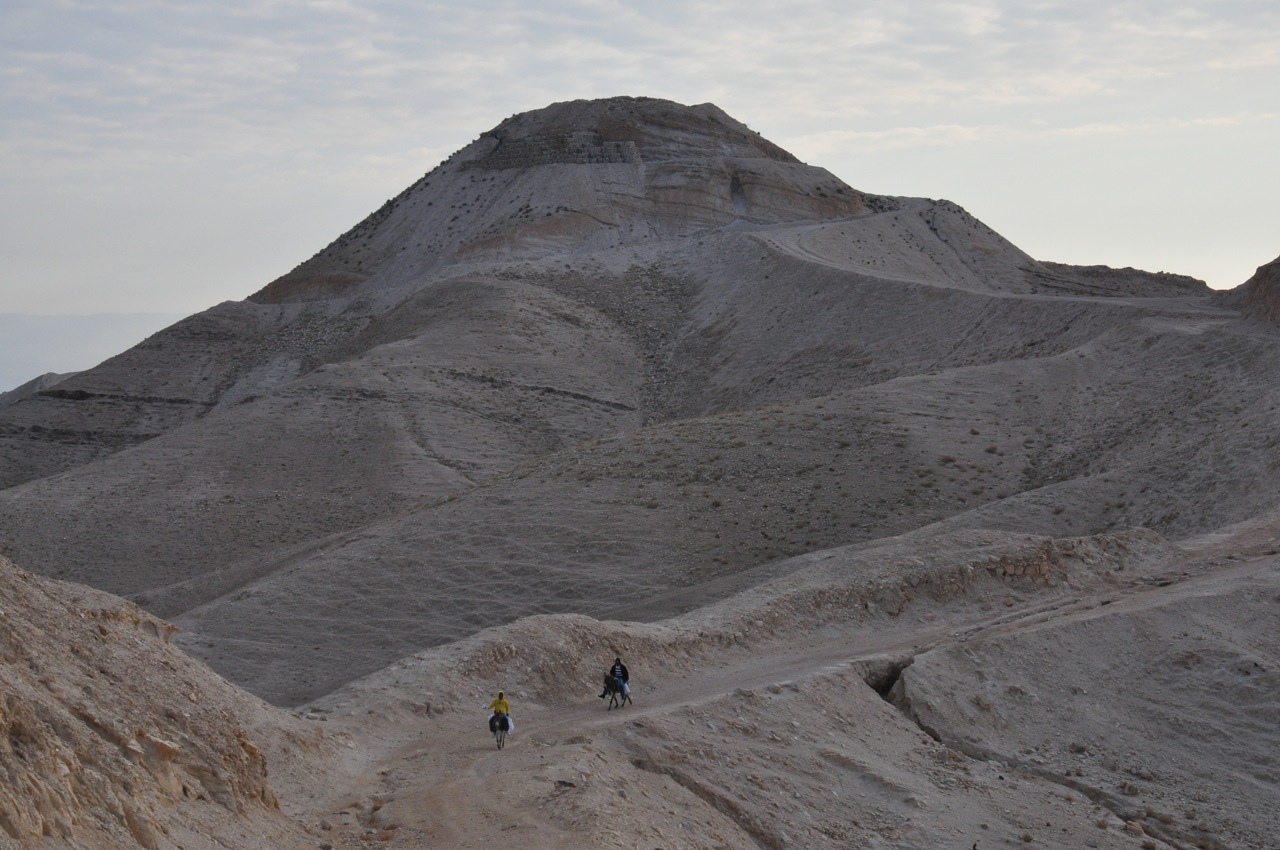
The site of Cypros above Wadi Qelt occupies a commanding position overlooking the Jerusalem-Jericho highway and a spectacular view of the Jericho Plain and the Dead Sea (a good place to take photographs). Originally a Hasmonean fortress, Pompey destroyed it in 63 BCE and King Herod rebuilt it as a palace-fortress and named it for his mother, as recounted by Josephus. After 1967 the Israeli army used it as an outpost of bunkers, today it lies deserted.

In 1974 Netzer and Damati did preliminary excavations and then left it in ruins. Cypros consists of 2 parts – a palace-fortress on the mountaintop and additional buildings 30 meters below the summit (perhaps Herod got the inspiration for the palace-fortress at Herodium from this site). It’s a short hike from the parking lot entrance to St. George’s monastery in Wadi Qelt to Cypros.

The ruins are not in good condition but there is something special to exploring a site the way an archaeologist might see it as opposed to a site that has been prepared for visitors. The remains of 2 bathhouses are still exposed, one on the mountaintop and the other below that suggest the grandeur of the site in Herod’s time. The remains of a simple white mosaic floor and pieces of plaster with red and yellow from the wall frescoes and the stone pedestals from the hypocaust floor of the calderium can be seen. There are also some sections of columns, one with some of the original plaster.
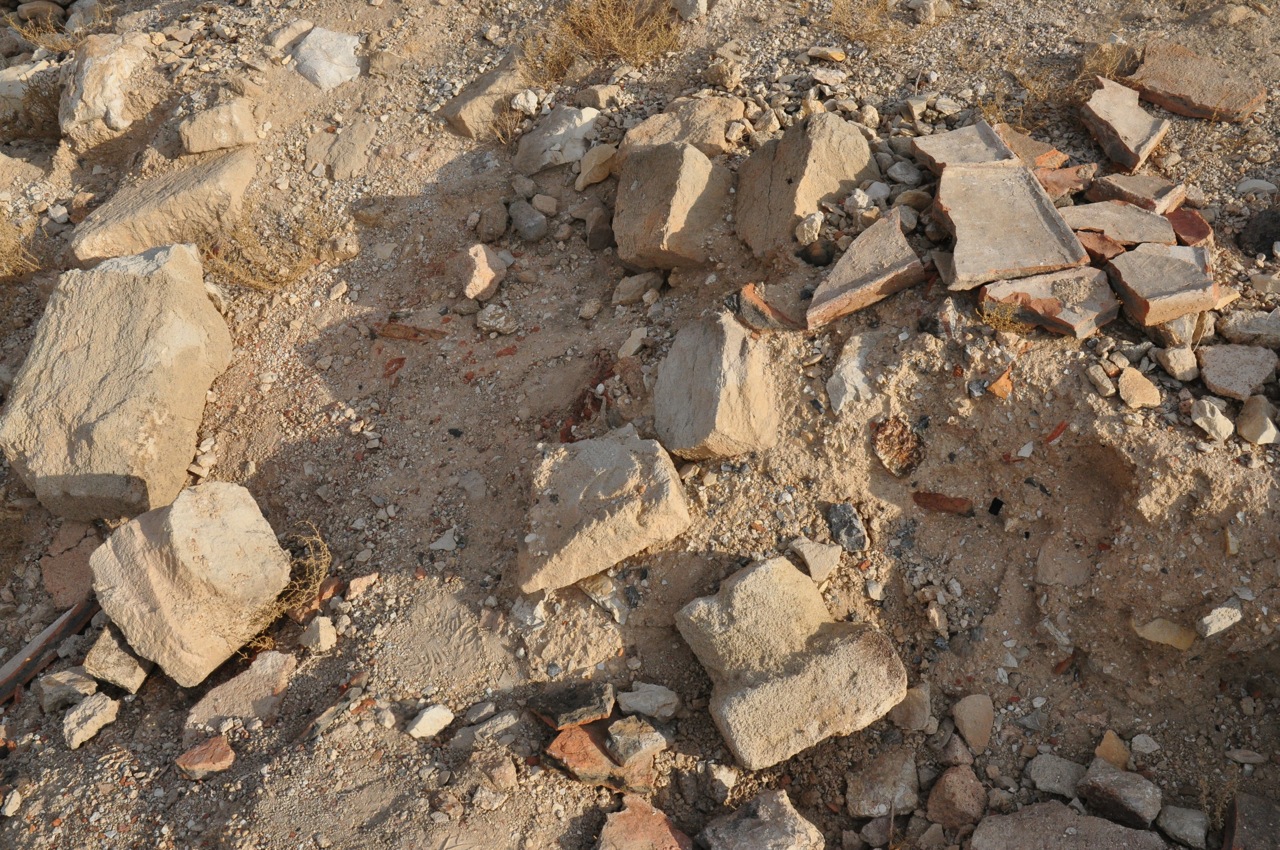
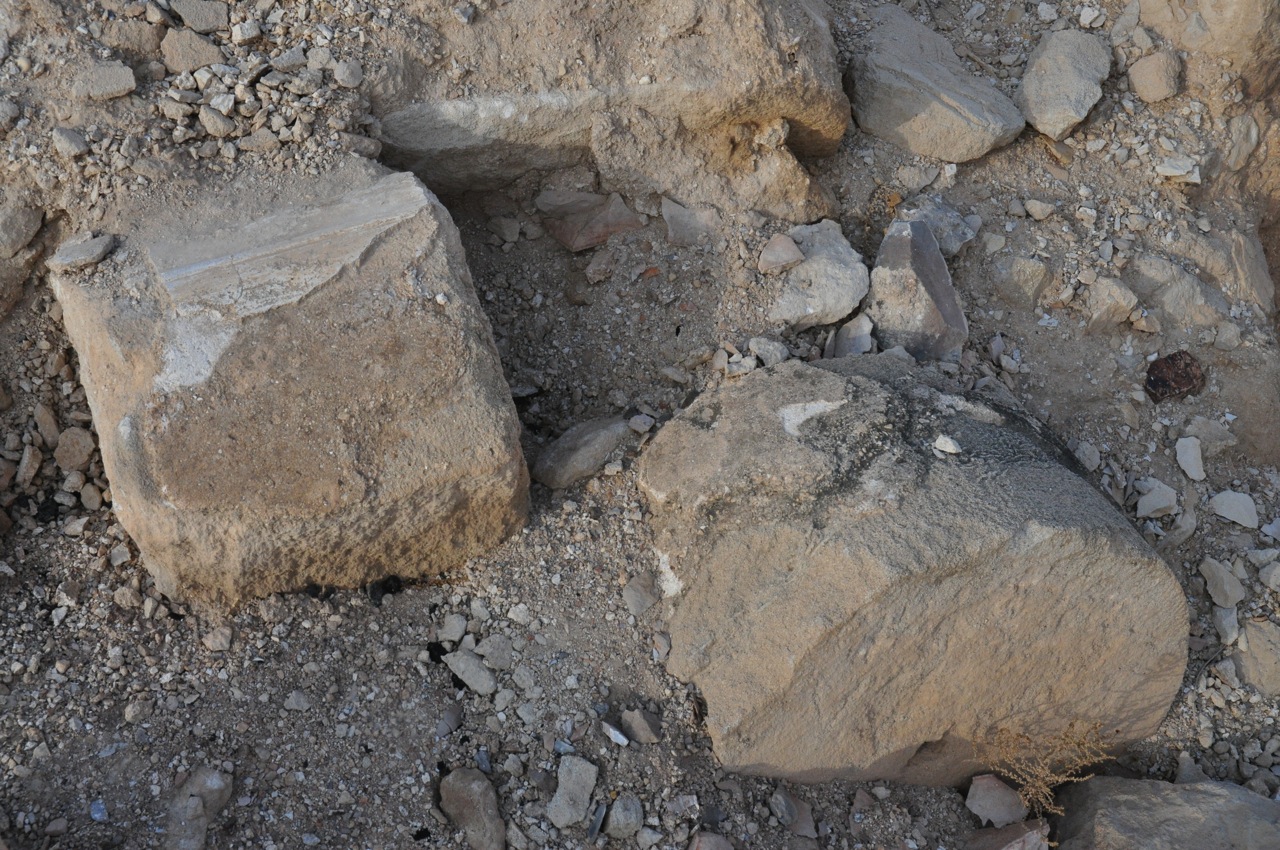

Click on the above thumbnail photos to see larger images.

Beside a mikve (ritual bath) the most unusual element found in situ, is a large stone bathtub – today its position is marked by a concrete recess, the bathtub is at the Rockefeller museum.

Down below in the bathhouse pieces of ceramic pipes that were attached to the walls of the calderium and broken ceramic discs that were piled one on another to hold up the hypocaust floor can be seen.

Walking around the site I came across a few broken pieces of terra sigillata (the first examples that I’ve found at an archaeological site), a type of fine, red-gloss Roman pottery that would have been imported from Italy or Gaul, additional evidence of Herod’s grand lifestyle.

Rosh HaNikra – Cliffs and Grottos

Geography

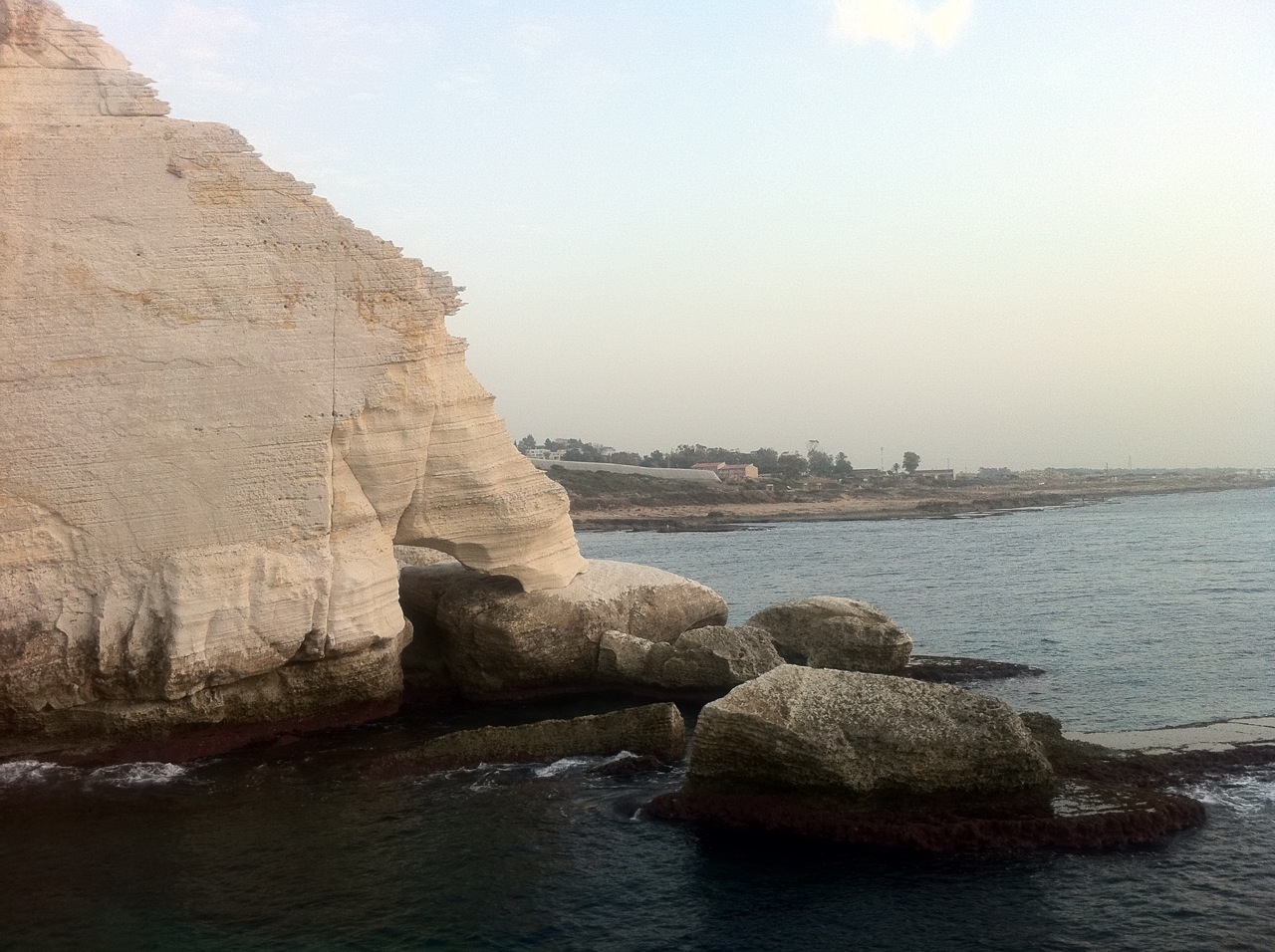
The chalk cliffs of Rosh HaNikra (Head of the Grottos: 33°5′35.24″N 35°6′17.16″E) along the Mediterranean coast mark the border between Israel and Lebanon. The cliffs are a unique geological formation in Israel, made of soft chalk, they descend from the ridge into the sea without an intervening section of beach, consequently they block and hinder movement along the coast.

The cliff consists of 3 layers of rock from the Cenoman period 100 million years ago:

  1. the bottom layer is hard limestone, most of which is under the sea,
  2. the middle layer reaching a height of 70 meters is soft chalk with dark flint and fossils embedded in it,
  3. the top layer is hard chalk and dolomite, similar to limestone.

The grottos are cavernous tunnels started by geological and biological  processes: cracks in the rock formed when seeping rainwater made small caves; duckweeds and other microorganisms on the soft chalk cause it to crumble. Crashing waves took over (with an estimated power of 250 tons per square meter during winter storms) and over thousands of years eroded the soft chalk to form the grottos.

History

Alexander the Great in 323 BCE passed this way, then the Selucids and Ptolemies and later the Arabs, then the Crusaders. The British army cut a road for vehicles during WWI; in 1943 they blasted three tunnels through the cliff joined by a bridge over the grottos so trains could carry soldiers and supplies between Cairo and Istanbul. On the nights of June 16 and 17, 1946, under cover of darkness and cloudy weather, the Carmel unit of the Haganah blew up the bridge during the operation Night of the Bridges. In one night the Haganah destroyed eleven bridges linking Palestine to the neighboring countries Lebanon, Syria, Jordan and Egypt, immobilizing transportation and a blow to British prestige. Twelve days after the attack the British authorities retaliated by imposing a curfew on Jewish communities and launching a security operation known as Operation Agatha or Black Saturday. With the involvement of 100,000 British troops they arrested 2,700 Jews, including many in senior leadership positions. In addition the British confiscated important papers about the Jewish underground which were taken to military headquarters at the King David Hotel in Jerusalem. On July 22, 1946, the Irgun in consultation with the Haganah bombed the King David Hotel. When the telephone warnings went unheeded and the hotel was not evacuated, 92 people were killed and the southern wing of the hotel destroyed.

Rosh Hanikra was the site where in 1949 Israeli and Lebanese officials signed an armistice agreement ending the War of Independence.

In the past, the only access to the grottos was from the sea and experienced divers were the only ones capable of visiting. In 1968, a tunnel was hewn into the cliff to give access to the grottos and then a cable car, “the steepest in the world” was installed to take visitors up and down. If you like cable cars, try to ride the other 3 in Israel, at Masada, Menara cliffs and from Bat Galim up to Stella Maris – all have great views (so don’t forget your camera)!

There is also a promenade along the shore that follow the British railroad tracks, through the Rosh HaNikra nature reserve to the Betzet beach, where every year giant sea turtles lay their eggs. Along the way, you can see some pools that the Phoenicians quarried and used to evaporate seawater to get salt,  grow snails for the blue techelet and purple dyes and as wine vats.

Red Canyon

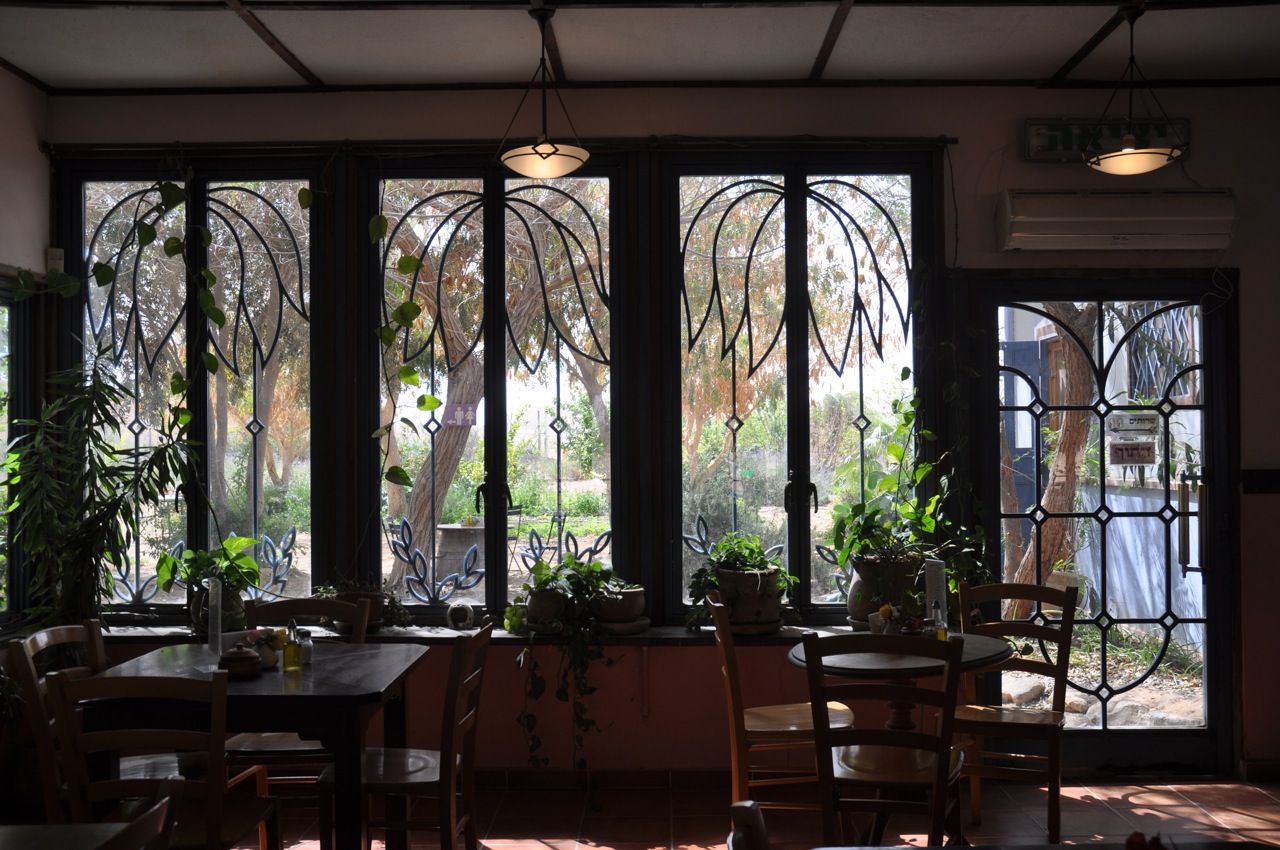
Rather than driving all the way down to Eilat on highway 90 you might want to consider a detour, taking a right onto highway 13 and then a left onto 40 which follows the Israel Trail. After 38 km you’ll come to Shizaphon Junction where you’ll find an organic, vegetarian restaurant run by the folks of Kibbutz Naot Smadar, a lovely place to take a break.

At the Pundak you can also buy products from the kibbutz, artisan goat cheeses, bread, jams, fruit leather, dates and wine – everything you’d need for a picnic. I highly recommend that you try their goats yoghourt ice cream with the homemade apple cake. Mmmm, delicious.

From the junction if you continue on highway 40 you’ll come to the kibbutz itself, like a magical kingdom appearing out of the desert. Many of the kibbutznikim are artists and they’ve built a studio space and gallery that you can visit.

Afterwards retrace your steps and take highway 12. After about 3 km there will be a dirt road to your left that will take you to Shaharut where you can sleepover and go on camel trips. Afterwards retrace your steps and continue on highway 12 south for about 50 km until you see the cutoff for the Red Canyon – Wadi Shani on your left. Follow the dirt road to the parking area.

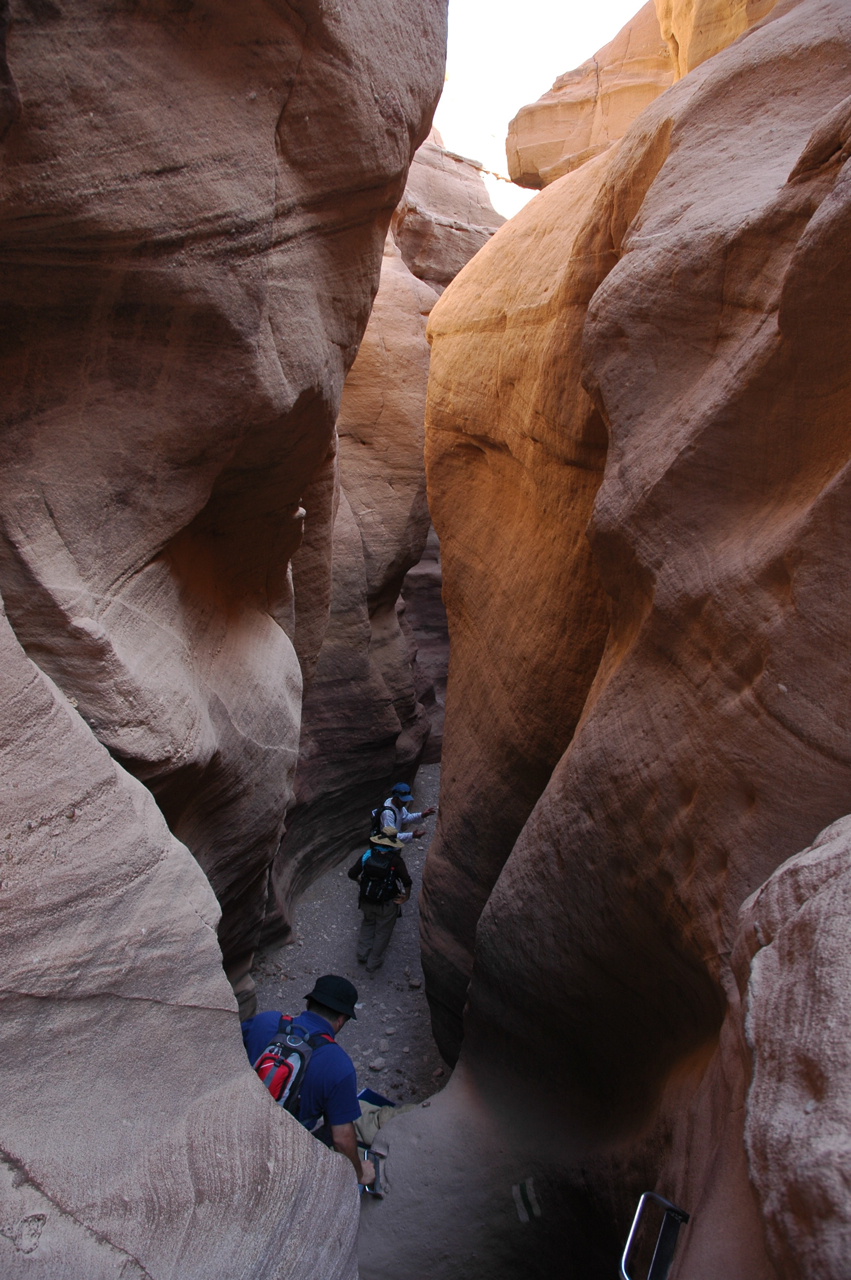
From there you follow the green trail markers and descend into the small canyon, no more than 3 meters in width with a height of up to 30 meters, created over years by water erosion of the sandstone.

Red Canyon

The dominant color of the rock is red with shades of pink and purple. It reminded me of a smaller version of the canyon at Petra. The hike is suitable for families. To return either retrace your steps through the canyon (if there aren’t a lot of people) or climb up out of the canyon where the streambed widens and take the path with a great view of the canyon below. The Red Canyon is one of the places that I recommend to people who are interested in a tour focussed on photography.

If you are continuing to Eilat there are 2 lookout spots that are worth stopping at: Har Hizqiyahu at 838 meters for a view east to the Edom Mountains in Jordan and west to Moon Valley in Egypt and Mount Yoash at 734 meters from which you can see 4 countries on a clear day: Jordan, Egypt, Saudi Arabia and Israel.