Category Archives: Nature

Hike Sea to Sea

Israel packs a lot into a small country, mountains, desert, coast, forests (over the past 100 years, the Jewish National Fund has planted over 240 million trees and in fact, Israel is the only country that entered the 21st century with a net gain in its number of trees). There are 4 seas, the Mediterranean, Red, Dead and the Sea of Galilee (at 209 m below sea level, the lowest fresh-water lake in the world), in Hebrew, the Kinneret.

Because Israel is small, it’s possible to hike the width of the country in a few days, from sea to sea, yam l’yam, from the Mediterranean to the Sea of Galilee.
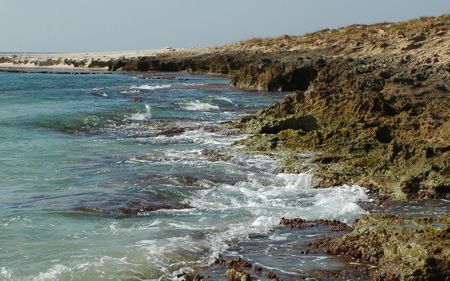
Mediterranean Sea

Coastline of Mediterranean Sea

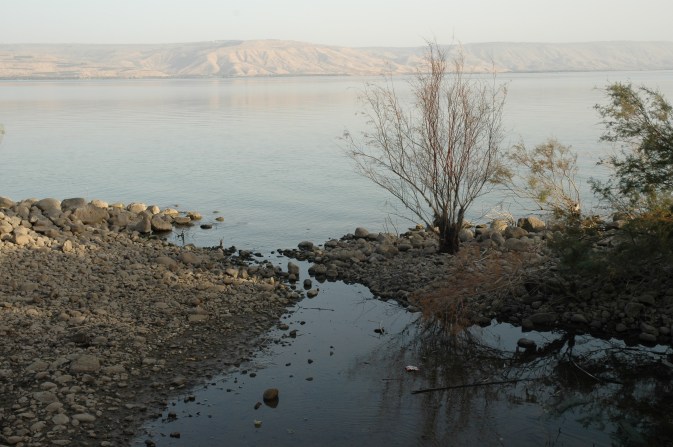
Kineret Sea of Galilee

Overlooking the Kinneret, Sea of Galilee

There are even rituals to perform, you start and end by immersing all or part of your body in each sea and you carry some water with you from one sea which you pour into the other sea when you arrive.

The hike starts at Achziv, follows Nahal Kziv past the Crusader Montfort Castle, Ein Tamir and on to the Druze village of Horpish. From there we join the Israel Trail, past Har Meron to Nahal Amud. We climb to Mizpe Yamim with a view of the Mediterrranean Sea from whence we came and below us the Sea of Galilee where we will end our hike. This hike takes 3 to 4 days, accommodation can be arranged at Bed & Breakfasts along the route.

You can also hike or drive between the other seas: 2) from the Red Sea at Eilat, along the southern part of the 940 km. Israel Trail to the area of the Dead Sea, 3) from the Mediterranean to the Dead Sea, 4) follow the Great Rift valley and drive between the Dead Sea and the Kinneret. Before you do, you might want to read Haim Watzman’s personal account in his recent book, A Crack in the Earth: A Journey up Israel’s Rift Valley:

“This rift is one of the globe’s largest features, clearly visible from space, and I live on its edge. It forms an intricate landscape that makes the human soul turn end over end in wonder…”

Hike above Bab el Wad

We’ve just passed Tu B’Shvat, the New Year of the Trees – the almond trees are blossoming in the hills of Jerusalem. There’s a special hike in the Masger reserve, overlooking the road to Jerusalem above Bab el Wad, the gorge that marks the entrance to the hills that leads to the city. We should remember that in 1948, the convoys of trucks carrying food for the inhabitants of Jerusalem were attacked along this road and Israelis lost their lives. Just like in the Haim Gouri poem, Bab el Wad, the cyclamen and anemones were blooming.

יום אביב יבוא ורקפות תפרחנה,
אודם כלנית בהר ובמורד.

באב אל וואד
לנצח זכור נא את שמותינו,
באב אל וואד בדרך אל העיר.

A spring day will come, the cyclamens will bloom,
Red of anemone on the mountain and on the slope.

Bab-el-wad,
Do remember our names forever,
Bab-el-wad on the way to the City.
img_1975

To hear Shlomo Gronich singing Bab el Wad and see some film footage from the 1948 War of Independence check out this URL on YouTube.

Family Trip (7-day tour)

I’d like to share a 7-day tour that I created for a family’s first trip to Israel. They had 2 days in Jerusalem before I met them. Here is the itinerary I worked out with them:

Day 1

  • pickup 8am at hotel in Jerusalem, day trip
  • 9am Dig for a Day, archeological excavations at Tel Maresha
  • drive down to the Negev via Beersheva, picnic lunch at Park Golda
  • 2pm Sfinat Hamidbar for 1 hour camel ride
  • drive through Large Makhtesh, petrified trees and colored sand
  • back to Jerusalem, dinner recommendations: Fish & Olive, Ima, Darna, Eucalyptus

dsc_0012

Day 2

  • drive from Jerusalem to Masada
  • Ein Gedi nature reserve
  • Rachel, Charlotte and Celia enjoyed a winter float in the Dead Sea

Day 3

  • City of David tour, including walking through Hezekiah’s Tunnel where the water reached Celia’s (who is 6 years old) waist
  • braid challah & meet Sumsum, our golden retriever
  • Friday night dinner with family

Day 4, Shabbat

  • afternoon, walk to Israel museum to see Second Temple model and Shrine of the Book

Day 5

  • drive up the Jordan Rift valley
  • Old Gesher: Rutenberg hydroelectric project, kibbutz life in 1948
  • Bet Shean, Roman/Byzantine city and the tel, where Charlotte figured out that the clay brick buildings could be Egyptian and Michael asked how we knew it was a tel and not just a hill
  • Dinner at Decks in Tiberias – the sweet potatoes baked in a wood-fired oven were a hit, on to our B&B at Had Ness in the Golan

Day 6

  • tour the Golan Heights
  • Banias archaeological site, quiz on archaeology and layers at the entrance overlooking the excavations of Byzantine church; cave of Pan, temples, Herod’s temple, opus reticulatum, 7 species of Eretz Yisrael and what kind of tree is this? Linda figured out that it was a walnut and we tasted a nut
  • Banias nature reserve (w. waterfall) and then it started raining
  • planned to have lunch at Witch and the Milkman at Nimrod but instead drove to Druze village of Ma’asade for humus, salads, etc.
  • got some water from Kinneret/Sea of Galilee for our Yam l’yam/Sea to sea journey
  • dinner at Shiri in Rosh Pina

Day 7

  • Akko: underground Crusader Halls – for some reason there was a piano so Charlotte played a piece from her recital, Okashi museum, Turkish Bath-house, Templar tunnel
  • Haifa: Bahai gardens, German Colony
  • drive down the coast
  • stop at aquaduct at Caesarea, poured our water from the Sea of Galilee into the Mediterranean Sea, completing our Yam l’yam journey
  • drop off at airport

Dead Sea: Hiking Nahal Zohar

Friends have told me that they’ve already had snow and that it’s bitter cold in Ottawa, Canada (where I grew up) but here in Israel the weather is fantastic, sunny and in the 70s. It’s great weather to go hiking and yesterday I hiked Nahal Zohar. Since it is at the southern end of the Dead Sea it takes longer to drive there from Jerusalem, about 2 hours, than the hike I posted 2 weeks ago, starting at Qumran. The hike took us 5 hours at a leisurely pace including a stop for lunch.

The hike can be walked in either direction – this time we did it from the lookout on the Sodom-Arava Road to the Dead Sea, you come out of the wadi near the hotels at Ein Boqeq.

View of Nahal Zohar and where we started our hike

View of Nahal Zohar and where we started our hike

Nahal Zohar was used as early as Israelite times 7th C BCE and during Roman-Byzantine times as a way to carry products from the Dead Sea: salt, asphalt, afarsimon perfume and dates to ports on the Mediterranean coast, Gaza and Ashkelon. In order to safeguard the way and collect the appropriate custom taxes there were forts, the remains of which can be seen today.

Remains of Byzantine fortress in Nahal Zohar with water system

Remains of Byzantine fortress in Nahal Zohar with water system

canyon-pool

Pool in rock, Nahal Rom

From Nahal Zohar we switched into Nahal Yizrakh and then Nahal Rom, the last part of the hike through a very lovely canyon with Acacia trees and pools of water.

Finding a guide at the last minute

In Hebrew there’s an expression daka tish’im which means at the last minute. I’ve been able to help people who realized at the last minute that they wanted to see a particular site – the best way to do that is to hire a guide who can arrange everything. One couple hoped they would get to visit Herodium, King Herod’s palace/fortress in the desert but it was the day before they were leaving. They searched on Google and found an article I’d written and contacted me. I picked them up at their hotel, drove them to Herodium and guided them. This is what they had to say:

The tour of Herodium was awe-inspiring, largely because of Shmuel Browns, our guide. He is highly knowledgeable, and comes equipped with graphic documentation that fills the gaps of what one sees. He gave us a taste of the detective work of archaeologists. Further, Shmuel is very professional and a real “mensch”.

A businessman was flying to Zurich, Switzerland in the afternoon, but at the last minute he had the morning available so he contacted me to take him around the Old City before his flight (I ensured that we were back in time to meet his taxi to the airport; alternatively, after the tour I can take you to the airport, I’m a licensed chauffeur). So if you have limited time but want to have the fullest experience while here in Israel (good reasons for hiring a guide) I can guide you for as little as ½ day. The tour will be personalized to your interests and you can book at the last minute. If you’re staying in Jerusalem then phone me at +972 53 280 6537 (also WhatsApp or Telegram) when you wake up and tell me what you’d like to do, then you can go for breakfast. If I’m available, I’ll meet you within the hour to start your tour.

Here is what one traveler who hired me shared on TripAdvisor:

First off, I made the very grave error of only booking a private tour guide for one day. That caused me a lot of stress while on vacation. I did a lot of research prior to my departure and based on the forum discussions I decided that one day of touring with a guide would be enough and decided that I was enough of a ‘seasoned’ traveller to be able to guide my party on my own.

The other reason I was swayed away from hiring a guide was the costs involved. I’ve used private guides in China and Africa and the costs for a private guide were very very inexpensive compared to guides in Israel – I had a hard time justifying the $500. per day.

Boy was I ever wrong and was I ever sorry for having listened to the feedback that you can do Israel on your own with a good guide book. This was not the case for me or my travel companions. We found we really needed the professional assistance of a guide for there is just so much a guide book can teach you. Few sights have good signage telling you where you are and what you are seeing or much historical reference. The cost of a guide definitely reflects what you get, an organized and informative visit to a land filled with a very rich narrative history!

If you decide at the last minute that you really do need a guide whether for one day or a week contact me. You can hire an expert, licensed guide at the last minute and for less than $500. per day.

Dead Sea: Hiking and Qumran

For a great day trip from Jerusalem visit the archaeological site at Qumran in the Judean desert. It takes just ½ hour by car to travel the 42 km from Jerusalem and descend the 1170 meters to the northern shore of the Dead Sea. Another option is to take a jeep ride across the desert to the site. Qumran is where scrolls written on parchment were discovered in a cave by Beduin shepherds. Take a guided tour of the site to learn who lived at Qumran, how they were able to live in such an isolated place in the desert without a natural source of water and how they supported themselves.

The settlement at Qumran is named after the wadi (stream bed) that during the winter rainy season brings flood waters via channels to the pools and cisterns dug at Qumran. There is a nice hike in Wadi Qumran where you climb up to the top of the cliffs, along the plateau with great views of the Dead Sea and descend at Ein Feshka – the whole trek takes about 4 hours and can be done by families.

Hiking at Qumran

Hiking up above Wadi Qumran and the Dead Sea.

Hiking Qumran cliffs

Hiking the cliffs above Wadi Qumran with Sumsum.

Complete your day back in Jerusalem by visiting the Shrine of the Book at the Israel Museum to see the Dead Sea Scrolls and other artifacts discovered at Qumran. As your guide I will point out the conceptual design of the building by Kresler and Bartok, described as “a milestone in the history of world architecture”. The combination of experiencing the Qumran site and the very special artifacts discovered there on display at the museum is the key to understanding this historical period.